Category: Speeches

  • Caroline Nokes – 2022 Speech on Black Maternal Health Awareness Week

    Caroline Nokes – 2022 Speech on Black Maternal Health Awareness Week

    The speech made by Caroline Nokes, the Conservative MP for Romsey and Southampton North, in Westminster Hall on 2 November 2022.

    It is a pleasure to serve under your chairmanship, Mr Gray. I thank the hon. Member for Streatham (Bell Ribeiro-Addy) for leading this debate on a crucial issue.

    The Women and Equalities Committee has twice held one-off evidence sessions—although there is a slight conundrum in twice having one-off sessions—looking at black maternal health. It has taken evidence from campaign groups, such as Five X More, and experts in obstetrics and gynaecology, yet the picture does not change. Looking at the evidence, we have known that there is a disparity in the health outcomes for black mothers since the early 2000s. For 20 years, we have known that there is a problem, yet still it continues. It has been a huge privilege for me to serve on panels alongside people such as Clo and Tinuke from Five X More, who have done so much incredible campaigning to highlight the issue, as has the hon. Member for Streatham. It is crucial that we begin to see progress; we cannot, 12 months or 10 years down the line, continue to have the same debate.

    Raising awareness in Parliament is vital, but what we actually need is Government action. The hon. Member for Streatham made a slight dig about Government reshuffles. I am delighted to see the Minister in her place; this is an issue on which we have engaged before and she takes it seriously. I hope that the Secretary of State for Health will himself grasp the issue, and ensure that we drive it forward to see progress.

    We have heard that one of the challenges is data, and the lack of specific data being collected on maternal health outcomes for black and Asian women. I pay tribute to Five X More, which carried out its own experiences survey that included 2,000 women—a huge number—reporting their experiences and findings. The thing that really hits home for me is the repeated use of the phrases, “I didn’t feel listened to,” “We weren’t listened to,” and, “What I was experiencing was being ignored.”

    I am loth to say that we sometimes have very gendered healthcare, but look at the evidence. Look at the fact that when there is medical research, it is almost exclusively carried out on men; look at the fact that drug trials are carried out on men; look at the fact that some of the highest backlogs as we come out of the pandemic are in health conditions predominantly affecting women. Whether it is in cardiac, obstetrics or another sphere of medicine, too often the experience is, “I didn’t think they were listening to me.” I am sure every Member hears that from their constituents, and that has been my experience as a constituency MP. I hear from my constituents that, specifically in the area of maternity, “I wasn’t listened to. Nobody paid attention. It was my body, and I knew something was wrong.”

    Only last week, I received an email from a constituent who had lost his daughter-in-law moments after she gave birth. He was with his son, helping to bring up a baby and pursue a complaints procedure against the hospital in question. Throughout his email, he kept making the point that they had not been listened to. His daughter-in-law had been a midwife, and even she was not listened to.

    Talking to black and particularly Muslim women—I should declare an interest as chair of the all-party parliamentary group on Muslim women—they feel that their voices are doubly ignored, and that there is that intersectionality. Whenever I talk to journalists about intersectionality, they look at me and say, “Please don’t use that word. Nobody understands that word.” It is imperative that we all understand that word. You will be discriminated against if you are a woman, and you will be discriminated against if you are a woman from a black, Asian or other minority ethnic group; when the two come together, as we find in maternity units in particular, women’s voices are not heard or listened to.

    When we talk to the Royal College of Obstetricians and Gynaecologists, as the hon. Member for Streatham has done, it calls for specific targets for black maternal health outcomes, and it is right to do so. Although it may be a small number as a percentage of births every year, it is still a significant number. The loss of one mother is one too many.

    Jim Shannon

    It is always a pleasure to listen to the right hon. Lady; she brings lots of wisdom and knowledge to these debates. Ministers in other debates we have had in Westminster Hall, in different positions in the Department of Health and Social Care, have always spoken about the issue of data. The hon. Lady is outlining examples of where data could be used to formulate a Government and ministerial response. Does she agree that the Government really need to grasp the data issue? They can then prioritise their strategy to respond.

    Caroline Nokes

    I thank the hon. Gentleman for his intervention. I did not think he would be entirely able to resist speaking in the debate. He is right: policies must be data-driven and evidenced, but the evidence is there and has been for many years. We are augmenting and adding to that body of evidence the whole time.

    I will not be entirely negative, because we have some great opportunities. I was pleased to see Dame Lesley Regan appointed women’s health ambassador earlier this year. I welcome, reinforce, champion and offer anything I can to help the women’s health strategy. Finally, we have one of those, and I pay tribute to the Minister who was instrumental in getting that published. What we now need from the strategy is outcomes. That has to be the focus. What is happening to drive outcomes, and to ensure that the disparities we know exist are recognised, acted on and reduced? Our goal has to be to reduce that horrendous figure of four times as many maternal deaths for black women. We have to improve the outcomes for black babies, so that there is not, as I think the hon. Member for Streatham said, a more than 100% likelihood of stillbirth—

    Bell Ribeiro-Addy

    Increased risk.

    Caroline Nokes

    Increased risk. The hon. Lady is absolutely right to highlight that as an imperative. We must ensure that we reduce the inequity, of which there are many drivers. She was with me when the Women and Equalities Committee took evidence from Professor Sir Michael Marmot, who talks so compellingly about health inequalities and their drivers.

    I will not say that there is anything wrong with black women’s bodies—there is not—but we have to look at housing conditions, air quality and the areas where they live. Air quality is a significant driver of poor health outcomes. We have to look at what we are doing around smoking cessation, which is good for not just black women, but all women. We have to look at obesity, which is, again, a crucial factor for all women.

    I look forward to seeing, in the remainder of this Parliament, focused and determined action around obesity, smoking cessation and air quality. There are targets on all those things, but—how can I put this gently?—there has been a little backsliding on some of them. Targets have been pushed into the dim and distant future, and there is less commitment around drives to reduce obesity and smoking, which are incredible drivers of poor health outcomes across the population. We should double down on our commitment to those targets.

    I hope that in due course—I get fed up of saying “in due course”, which is a standard ministerial answer—to see a White Paper on health disparities. It is imperative that we get that done, and that the women’s health strategy is seen as a driver to ensure that we improve outcomes. First and foremost, I reiterate the calls from the hon. Member for Streatham for targets. I am never a great fan of targets if they are just there for the collection of targets, but if they work, and we see that in many instances they do, we should have them.

    We should have time-limited targets, so that in maybe three years we can look and say, “Nothing has changed.” Looking at the data and the evidence from campaign groups, I see that over 20 years, nothing has changed. I do not want to be here in 20 years’ time giving the same speech on this important issue, feeling that nothing has changed. I look forward to the Minister’s comments, and reiterate my congratulations to the hon. Member for Streatham on calling for today’s debate.

  • Bell Ribeiro-Addy – 2022 Speech on Black Maternal Health Awareness Week

    Bell Ribeiro-Addy – 2022 Speech on Black Maternal Health Awareness Week

    The speech made by Bell Ribeiro-Addy, the Labour MP for Streatham, in Westminster Hall on 2 November 2022.

    I beg to move,

    That this House has considered Black maternal health awareness week.

    Thank you very much, Mr Gray; it is a pleasure to serve under your chairmanship. I thank my colleagues for their kind points of order. I am thankful, as always, that this debate has been awarded, so that we can once again have this vital discussion about the issues surrounding black maternal health.

    Whenever I discuss black maternal health, I always take time to repeat the statistics around black maternal mortality. The reason I do that is twofold. First, the statistics are harrowing, and it is only by confronting them that we can truly begin to address the issue. Secondly, the statistics have not changed at all—the findings that I repeat have not improved, despite this issue having been raised for a number of years. I know that it may take time before we see a real change in statistics, but the Government are yet to introduce any meaningful measures that give us confidence that the statistics will change any time soon. Most notably, they will not even look at producing a target.

    I repeat it for everyone who may not have heard that black women are four times more likely to die in pregnancy or childbirth, women of mixed heritage are three times more likely to die in pregnancy or childbirth, and Asian women are twice as likely to die in pregnancy or childbirth. Black babies have a 121% increased risk of stillbirth and a 50% increased risk of neonatal death. Asian babies have a 55% increased risk of stillbirth and a 66% increased risk of neonatal mortality. Black women have a 43% higher risk of miscarriage, and black ethnicity is now regarded as a risk factor for miscarriage.

    The last time we had this debate, one of the key themes that kept coming up was data, whether it was Members such as myself raising the fact that the data exists and research has been done—we just need the Government to engage with it—or the Minister who responded, the right hon. Member for Mid Bedfordshire (Ms Dorries), stating that black women are under-represented in the Government’s data. I am pleased to say to the Minister responding today that there is now even more research out there.

    Since the last time we had this debate, Five X More has carried out and released the findings of its black maternal experiences survey. This is the largest survey of black women’s maternal experiences ever conducted in the UK. It gathered responses from over 1,300 women and looked at their experience of maternal care. The report highlights all the negative interactions that women experienced with healthcare professionals, from feeling discriminated against in their care to receiving a poor standard of care, which put their safety at risk, and being denied pain relief because of the ridiculous trope that black women are less likely to feel pain.

    The report goes on to reveal how the discriminatory behaviour and attitudes that black, Asian and ethnic minority women face have been shown negatively to impact women’s clinical outcomes and their experiences of care. More than half the respondents reported facing those challenges with healthcare professionals during maternity care, and 43% of women reported feeling discriminated against, while 42% of women reported feeling that the standard of care they received during childbirth was poor or very poor, and 36% reported feeling dissatisfied with how their concerns during labour were addressed by professionals.

    Further to that, 42% of respondents reported feeling that their safety had been put at risk by professionals during labour or during the recovery period. Of the women who experienced negative maternity outcomes, 61% reported that they were not even offered additional support to deal with the outcome of their pregnancy.

    Jim Shannon

    I am pleased that the hon. Lady has brought this debate to Westminster Hall, and although there might not be big numbers here today to discuss the matter, it is of great importance. Does she not agree that health trusts, which she has referred to, must ensure that no matter the level of the black, Asian and minority ethnic population, staff are adequately trained to deal with the differences with respect to different ethnic groups? Does she further agree that the messaging that comes from the Minister and the Department in this debate is the most important tool that health trusts have to ensure that women of all ages and all ethnic groups are clearly understood and supported, no matter where they are and no matter what the statistics and numbers may be?

    Bell Ribeiro-Addy

    I thank the hon. Member for his intervention, and he is absolutely right. I will come to training soon enough, and to what I believe individual trusts should be doing.

    In addition to the Five X More report, Birthrights has recently published the findings of its inquiry into racial injustice and human rights in maternity care. The report uncovers the stories behind the statistics and demonstrates that it is racism—not broken bodies, as we are often told—that is the root of many of the inequalities of maternity outcomes and experiences. The study found that on a number of occasions, black women’s safety was put at risk while they were receiving care. They were ignored or their pain was dismissed, and they experienced direct or indirect racism from care givers. They were subject to dehumanisation. Their right to informed consent was violated and they faced structural barriers to receiving healthcare. Those women were going through one of the most painful experiences of their lives—one that can leave them at their most vulnerable—yet they faced institutional racism that impacted their health and the health of their babies.

    During a debate on this subject last year, I called on the Government to launch an inquiry into institutional racism and racial bias in the NHS, as well as in the field of medical education. I reiterate that call today and hope the Minister will address the issue of systemic racism in medical care.

    In addition to those two reports, the Muslim Women’s Network recently published a study that reviewed the experiences of Muslim women in maternity care. The report encompasses the maternity experiences of over 1,000 Muslim women, and it once again revealed that a huge proportion of respondents received poor or very poor quality care. There are many examples of substandard care by health professionals, such as dismissing concerns and, again, pain; not offering treatment to relieve symptoms; inconsistency in the way that foetal growth was measured; substandard clinical knowledge; and vital signs being missed, which contributed to poor healthcare.

    Some 57% of women felt that they were not treated with respect and dignity in the way they were spoken to or in other acts of care giving, but perhaps the most shocking finding of the report was that 1% of the women who responded reported that their baby had died before or during labour, or within 28 days of birth. In a sample of this size, that equates to 10 women, which is way higher than the three to four who should have been expected.

    Those statistics are shocking, but the stories are even more shocking. Each of those reports includes harrowing stories of women being neglected, and of their pain being ignored and their concerns dismissed, resulting in a near miss or, indeed, the loss of their baby. In one account, a woman was not believed when she informed the midwife that she was ready to push. It states that when she eventually began to push,

    “Her baby came out still enveloped in the placenta. Several doctors came and she was taken to theatre as it became an emergency situation. It was touch and go but she survived. Due to heavy blood loss she was in a coma for three days. Her baby had to be given intensive care.”

    In another account, a woman reports that her baby was struggling to breathe after birth. She says:

    “I was told that it was a normal thing for newborns. No checks were done to put my mind at ease. After about 20 mins, my baby stopped breathing. Efforts were made to resuscitate her, but she later died in NICU.”

    One woman recalled that during her first check-up, a nurse said that she was shocked that she knew who the father of her baby was because people like her do not usually know.

    There are thousands of similar stories of black, Asian and minority ethnic women having negative experiences with healthcare professionals and maternity care. There is an urgent need to address the crisis in maternity care, and I sincerely hope that the Minister will set out concrete steps that her Department and the Government will take to address the problem.

    I sincerely hope those measures will look beyond treating black, Asian and minority ethnic women as a problem. We are not the problem and our bodies are not broken. There is no flaw in our genetics and we do not need to be dealt with in a way that reduces negative statistics by just pushing the problem away. The suggestion that black women should be induced earlier because a lot of these issues present after 40 weeks is ridiculous.

    The solutions need to address the distinct problems in maternity care; all the evidence suggests institutional racism. We must address biases and assumptions about black women, train medical staff to recognise common symptoms in black women, and tackle the barriers that prevent black women from receiving the quality of maternity care they deserve. That is where the problems lie, and we will overcome them by directly addressing racial disparities.

    Last year when we debated this subject, the responding Minister asked me and others to continue to hold her feet to the fire on this issue. I thought they were really receptive and that we were finally going to see some meaningful steps to tackle maternal health disparities. I left the debate feeling slightly hopeful because so much awareness had been raised by the fantastic campaign groups I mentioned earlier, and there was a lot of support across the House. I was therefore really surprised and quite deflated when the next day the Minister moved Departments in a reshuffle. I know Cabinet reshuffles happen all the time—

    David Linden

    All the time.

    Bell Ribeiro-Addy

    They are a standard part of government, but we have lost count of the Health Secretaries and Ministers covering this brief. Today, we have a Minister from a different Department addressing us. I know it may seem like I am making a party political point, but regardless of reshuffles, Government priorities and resignations, the problems in maternity care continue. Although we cannot have continuity in Government for whatever reason, we need continuity in care and a strategy for dealing with racial disparities in maternity care.

    It is hard to see the Government taking action when things are changing so frequently, but I sincerely hope the Minister will assure us that the Government are focused on this issue, regardless of the changes, and that her time in this role will be spent tackling black maternal health disparities.

    Black women cannot afford to wait any longer for action to be taken. I do not want to have to stand up in another debate and cite exactly the same statistics without any improvement. I know things take time, but it would be sensational to come back next year and report that at least something had changed. The best way for Ministers to exact that change is to set out clearly what the Government are doing and set a clear target.

    The answer I have been given in the past when I have asked for a target is that this does not happen to that many women, so a target does not need to be set. I would flip that round: if it is not that many women, surely we can set a target to address it.

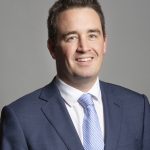
  • James Davies – 2022 Speech on Menai Suspension Bridge Temporary Closure

    James Davies – 2022 Speech on Menai Suspension Bridge Temporary Closure

    The speech made by James Davies, the Parliamentary Under-Secretary of State for Wales, in the House of Commons on 1 November 2022.

    Diolch yn fawr, Mr Dirprwy Lefarydd. It is a pleasure to be at the Dispatch Box for the first time, particularly in relation to an important matter affecting north Wales. I congratulate my hon. Friend the Member for Ynys Môn (Virginia Crosbie) on securing this debate, and I thank my hon. Friend the Member for Aberconwy (Robin Millar) and the hon. Member for Carmarthen East and Dinefwr (Jonathan Edwards) who have also contributed.

    I know just how important Thomas Telford’s iconic Menai suspension bridge is to people and businesses on Anglesey and across the whole of north Wales. It is therefore right that we are having a debate on the sudden and unexpected closure of the bridge at 2 pm on Friday 21 October, since when all traffic has been diverted via the Britannia bridge, which—through the innovative design by Robert Stephenson and with some modifications since—carries the railway and main road traffic from the A55 north Wales expressway. Good connectivity between Anglesey and the mainland is crucial for the people and economy of north-west Wales, and the whole of the United Kingdom. The Government are committed to good connectivity, as evidenced by Sir Peter Hendy’s Union connectivity review.

    I understand the concerns that local residents and businesses have about the disruption. This matters to them and it matters to Members of Parliament and the UK Government. As my hon. Friend the Member for Ynys Môn made clear, the UK Government are not responsible for roads in Wales. Many aspects of transport, including the construction and maintenance of roads and road bridges, have been devolved matters for more than 23 years.

    The Menai suspension bridge carries the old London to Holyhead trunk road, the A5, for which the Welsh Government in Cardiff Bay are responsible. The closure of the Menai bridge was therefore a decision made by the Welsh Government. It was informed by the private company contracted by them to maintain the route, the UK Highways A55 Ltd, and their structural engineers who had concerns about the brittle nature of hangers installed in 1938. There are questions to be answered about the specification of the contracted maintenance schedule for the bridge and the stalled consideration of a third crossing of the Menai straits. Those concerns tie in with understandable frustration at the Welsh Government’s roads review, which has led to road projects across Wales having been put on hold since June 2021.

    Good government does not coast along in neutral. In the immediate term, the Welsh Government should publish a timetable for the completion of repairs and the reopening of the bridge. That reassurance is the least that residents facing ongoing uncertainty while maintenance is carried out should receive. As a matter of urgency, I also urge the Welsh Government to allow access across the Menai bridge for emergency vehicles if that can be safely facilitated.

    Robin Millar

    I welcome the Minister’s remarks and I take the opportunity to welcome him to his place. It gives me great pleasure to see a north Wales Member restored to one of the offices of the Wales Office.

    The Minister makes an important point when he talks about the ownership and operation of assets. In between what he has said about maintenance and a third crossing, however, there is a gap where Sir Peter Hendy’s review talked about the establishment of a UK-wide transport infrastructure network, and the ownership and investment into that. I do not think that anybody is saying—the Minister was not suggesting—that the bridge should not have been closed if that was required on safety grounds, but there is a question of capacity and resilience, how that is managed and where that planning can take place. Perhaps the capacity for that would lie in a UK-wide transport infrastructure network. Does he think that this road and that bridge would fit well within that characterisation?

    Dr Davies

    I thank my hon. Friend for those comments. He is right that this is a strategic route and a trunk road. The Union connectivity review highlights the importance of such roads. When the Government respond to that review, we need to consider his comments.

    There is no emergency department in any hospital on the island of Ynys Môn and such facilities are located at Ysbyty Gwynedd on the mainland in Bangor, which is why emergency vehicle crossing is imperative. I urge Welsh Ministers at Cardiff Bay to improve access across the Menai bridge as soon as it is safe to do so to minimise disruption to residents and the economy.

    I accept that maintaining the world’s first major suspension bridge with grade I-listed status poses challenges, but the Welsh Government are well funded to deliver their devolved responsibilities. They receive 20% more funding per person from the UK Government than is the case in England. At the 2021 spending review, the Government allocated an additional £2.5 billion a year on average to the Welsh Government over the period through the Barnett formula. That was on top of their annual £15.9 billion baseline. The Conservative Government therefore put in place the largest annual block grants, in real terms, of any spending review settlement since devolution.

    I take the opportunity to remind hon. Members of the Government’s excellent record of investment in north Wales. We have provided £120 million for the north Wales growth deal as part of more than £790 million for city and growth deals across Wales. In addition, the levelling-up application submitted by my hon. Friend the Member for Clwyd South (Simon Baynes) led to the awarding of £13 million towards the Pontcysyllte aqueduct world heritage site project. That was one of 10 Welsh projects that received a total of £121 million in round one of the levelling-up fund. A further £126 million has been allocated to north Wales through the UK shared prosperity fund as part of £585 million over the next three years. The shared prosperity fund is one of the successors to EU structural funding. The core UK Government allocation equates to a generous £150 per head for north Wales. These investments, plus the community renewal fund and the community ownership fund, demonstrate the UK Government’s commitment to Anglesey and north Wales as we continue to level up all parts of our country.

    Residents will naturally remain as concerned as I am about the disruption caused by the closure of the Menai suspension bridge. I reassure them that connectivity is a priority for the UK Government. I thank hon. Members for this afternoon’s debate. I will write to the Welsh Ministers highlighting the concerns that have been raised by my hon. Friend the Member for Ynys Môn, along with the Government’s own observations, and urging the Welsh Government to reconsider long-term solutions to address the issues that have been underscored by the temporary closure of the Menai suspension bridge.

  • Virginia Crosbie – 2022 Speech on Menai Suspension Bridge Temporary Closure

    Virginia Crosbie – 2022 Speech on Menai Suspension Bridge Temporary Closure

    The speech made by Virginia Crosbie, the Conservative MP for Ynys Mon, in the House of Commons on 1 November 2022.

    This debate is particularly poignant in the light of the recent collapse of the Gujarat suspension bridge in India with the loss of so many lives. I want to put on record that my thoughts are with those affected and that I am grateful that safety measures have been put in place on the Menai Bridge and that no one has been hurt there—yet.

    The Menai suspension bridge was designed by Thomas Telford and went into use in 1826. It is a masterpiece of 19th-century engineering, a grade I listed structure and, until the Britannia bridge opened to traffic in 1980, it was the only road connection between Ynys Môn—the isle of Anglesey—and mainland Wales. Responsibility for this bridge and the road going over it is devolved to the Welsh Government, who contract a commercial company—UK Highways A55 Ltd—to carry out repair and maintenance works.

    Members may ask: why I have brought this debate to Westminster? There are two reasons. The first is that the link to the mainland is critically important to my Ynys Môn constituents and the businesses on Anglesey. The bridges are an important link for local commuters, students and residents of Ynys Môn, for those visiting Anglesey for shopping, holidays or work, and of course for freight transport. The second is that both bridges form a vital link in the transport infrastructure of the United Kingdom. They form part of the land bridge between continental Europe and the UK, and the island of Ireland via the port of Holyhead. The land bridge is used by thousands of hauliers and freight vehicles, and a failure in either bridge over the Menai straits impacts the route and, as a result, the British economy.

    Indeed, Sir Peter Hendy, in his 2021 Union Connectivity Review described the A55, which includes the Britannia bridge, as

    “a key route for communities and businesses with connections to Manchester and Liverpool Airports and the island of Ireland via Holyhead”.

    He further noted:

    “Stakeholders in North Wales regard capacity and journey times on the A55 as a significant barrier to growth”,

    with the road becoming

    “vulnerable and overstressed during incidents or significant road work events”

    and lacking “viable diversion routes”. He recommended that work was needed to improve the A55.

    Until Friday 21 October, the Menai and Britannia bridges between them carried around 46,000 vehicles over the Menai straits every day. Then, suddenly, at 2 pm on a normal working Friday, that stopped. The Menai bridge was closed by the Welsh Government with immediate effect and no advance warning, on the urgent advice of structural engineers. I completely agree that safety must be our priority. If the Menai bridge needs to be closed to protect people and vehicles then that must of course happen. What has been shocking is the closure of such an important bridge without warning, without contingency plans and without thought for the local and national impact.

    Local people were taken completely by surprise. Many Anglesey residents were at work on the mainland in places such as Bangor University and our general hospital, Ysbyty Gwynedd. Children and young people were in lessons in mainland schools and colleges. They were effectively left stranded, finding themselves stuck along with lorries going to and from the port of Holyhead, as the Britannia bridge gridlocked.

    Robin Millar (Aberconwy) (Con)

    I was canvassing in my constituency the morning after the closure, and spoke to a couple of residents who told me that they work at Ysbyty Gwynedd, the hospital in Bangor, and, as a consequence of the closure, on the Friday afternoon and evening it had taken them three and a half hours to leave the car park. Does my hon. Friend agree that that kind of knock-on effect from such a sudden and unplanned closure could perhaps have been avoided with a little more thought and a little more notice?

    Virginia Crosbie

    My hon. Friend makes the point clearly that the impact of the bridge closure is far-reaching, touching not only other constituencies but every single person’s life in mine—and yes, it should have been avoided.

    The Welsh Government have said that the bridge will be closed for 14 to 16 weeks. The impact on my constituents has been huge. I have had parents on the phone in tears because they do not know when or how their children will get home from school. For those working on the mainland, attending appointments, visiting loved ones in Ysbyty Gwynedd or simply trying to go shopping, a journey that previously took 20 minutes now takes two to three hours.

    Jonathan Edwards (Carmarthen East and Dinefwr) (Ind)

    I congratulate the hon. Lady on securing this debate; this is a vital issue, and it is right and proper that it is addressed and discussed in this House. Does she support the words of Anglesey or Ynys Môn council, which is asking drivers travelling to the mainland not to go off the A55 at Gaerwen and take the shortcut, because it is creating more problems at a pinch point nearer the bridge in Llanfair?

    Virginia Crosbie

    I thank the hon. Gentleman; he makes a very good point about Isle of Anglesey County Council’s directing traffic. The closure has huge implications for local traffic and local businesses, which I will go into further in my speech. Constituents in Llanfairpwllgwyngyll cannot leave their homes because the roads through the village are blocked by drivers trying to shortcut the A55 queues.

    Businesses in Menai have seen their takings plummet; one shop holder contacted me to say that the usually bustling town centre was empty and one day last week she had taken no money at all for the first time in her shop’s history. People on Anglesey, already worried about how long it takes to get an ambulance in an emergency, now know that ambulances will also have to tackle huge traffic jams in both directions.

    Hauliers using the port of Holyhead are already looking for alternative routes to Ireland because of the extra hours now being built into transportation time. Holyhead is the second busiest roll on-roll off port in the UK and a hugely important link for passengers and freight between the UK and Ireland. It is also a major local employer, both directly and indirectly.

    One would think that, with such an important strategic piece of infrastructure, a sudden and unplanned closure would be the result of some kind of unforeseen event. However, in a statement in the Senedd a week ago, Lee Waters, the Deputy Minister for Climate Change—the Welsh Government does not have a Transport Minister—said:

    “As part of the last principal inspection in 2019, a concern about the resilience of hangers that support the suspension bridge were identified and led to a weight restriction being imposed on the bridge while further studies were carried out.”

    In a meeting last week with local Arriva UK Bus managers, we discussed the fact that the weight restriction was put in place only in June 2022, almost three years after the review. Arriva told me that because it was introduced at very short notice, it had been forced to restrict bus services because of the extra time now needed to cross the Britannia bridge instead of the Menai bridge. The impact locally has been most severely felt at a care home in Penmon that the bus service can no longer serve, affecting carers, residents and visitors.

    The delays now being caused by the full closure of the Menai bridge mean that Arriva has had to rip up its timetable completely. It now faces the financial burden of increased fuel costs, longer trips, bus drivers unable to get to work and the loss of some passengers.

    I spoke earlier about the port of Holyhead, which is a significant UK port. In 2019, 1.9 million people and 5.3 million tonnes of goods moved via the port of Holyhead to and from the island of Ireland. Back in 2020, in the run-up to Brexit, amid concerns about delays at the port, the Welsh Government recognised the importance of Holyhead when it said:

    “Holyhead is the second busiest roll on/roll off port in the UK…The Welsh Government is responsible for the trunk road network, and we must ensure that plans are in place to deal with any potential disruption at this major port. We want to ensure access to the port of Holyhead remains as easy as possible. We want to minimise disruption for the communities of Anglesey and the travelling public”.

    [Interruption.] It is disappointing that they did not extend that consideration when it came to maintaining the Menai bridge. It is disappointing too that, for what effectively constitutes a local emergency, they are not meeting key stakeholders to answer these important questions until 8 November—20 days after the closure.

    Robin Millar

    As a schoolboy, I did a project on the rebuilding of the Britannia bridge, which, as my hon. Friend will know, parallels the Menai crossing to the Menai straits. At the time, it was seen as a great step forward and an advancement that would increase the capacity of the crossings and alleviate some of the load on the Menai bridge. That was, dare I say it, more than two decades ago now—nearly four decades ago, even. Perhaps my hon. Friend will be in a position to agree with me in a moment that the loads on these roads and these bridges, including the Menai bridge, will have increased significantly over that time. There are two questions that she is bringing out well in her speech: the question of capacity, which has grown over the years, and the question of resilience, planning and forethought. Does she have a comment to make on how those might be addressed better in the future?

    Virginia Crosbie

    I thank my hon. Friend for intervening at a critical time; diolch yn fawr. He makes a valid point about the importance of this bridge and the fact that we need to hear from the Welsh Government what their plans are, so that we are not in this situation again.

    Until July this year, when the weight restriction was introduced, the Menai bridge had transported high-sided and vulnerable vehicles when wind restrictions prevented them from travelling over the Britannia bridge. Indeed, the winds are sometimes so bad that the Britannia bridge is closed completely, and all vehicles have to use the Menai bridge. That can also happen when there is an accident on or near the Britannia bridge. This is exactly what Sir Peter Hendy referred to in his review. I am sure Members will appreciate that, as we move into the winter months, the risk of high winds in north-west Wales increases significantly. With the Menai bridge closed, vehicles will not have a fallback during restrictions and closures on the Britannia bridge. That is a further discouragement for hauliers who would normally use the port of Holyhead.

    For years, the Welsh Government have been talking about putting a third bridge across the Menai straits. The 2019 report on the Menai bridge might have been the perfect time and reason to progress such a scheme. Sir Peter Hendy’s connectivity review adds meat to the argument. The Welsh Government’s own report into a third bridge, carried out in 2016, says:

    “The impact of not investing in the scheme has been clearly set out, with detrimental effects on the economy of the Isle of Anglesey and north west Wales, poor international connectivity and worsening performance of the trunk road network in terms of journey times, reliability and resilience. All of which will constrain the opportunity for future growth in Anglesey, surrounding areas and in particular impact on the ability of the Nuclear Power Programme to achieve its full potential.”

    A third bridge would make Anglesey much more accessible, as well as making it more attractive to businesses interested in locating there. Instead, the Welsh Government simply put all road building on hold in June 2021 to carry out a road review—a review that, incidentally, we have heard nothing further from. That is not such a problem around Cardiff, where there is good public transport infrastructure, but it is less helpful for someone working in a nursing home in Penmon whose bus is suddenly withdrawn due to weight restrictions on the Menai bridge.

    I mentioned that the Welsh Government contract with a company called UK Highways A55 Ltd to maintain and repair the A55 across Anglesey, including the Menai bridge spur. They have repeatedly and, some might say, disingenuously referred to this company as “UK Highways” in statements, press releases and posts about the closure. That has led many local people—including, bizarrely, the local Labour party—to assert incorrectly that this is a UK Government issue. What could be the reason for that? With so many seats in north Wales now Conservative, are the Welsh Labour Government concerned that local people feel closer to Westminster than they do to Cardiff? Do they feel the need to drive a wedge between north Wales and Westminster?

    My constituents have felt at first hand the neglect of north Wales by the Welsh Labour Government—huge disinvestment, one of the lowest GVAs in the UK, poor educational outcomes, a local health authority in crisis, transport links annihilated, the loss of major local employers and an annual haemorrhage of young people in search of work. It is small wonder if they want to align themselves with Westminster instead of Cardiff, and yet the Welsh Government’s priority is to increase the number of Senedd representatives from 60 to 96 at an estimated cost of £100 million. That will mean one representative in the Senedd for every 33,000 people in Wales. In Westminster the number is more like one representative for every 100,000 people. One hundred million pounds—just think how many doctors that would employ or bridge hangers it would repair.

    The closure of the Menai bridge is typical of the disdain in which Cardiff holds north Wales and the United Kingdom. It is the critical infrastructure of the UK that is being destroyed by a Welsh Labour Government that simply do not care, supported by a co-operation agreement with Plaid Cymru—a party, incidentally, which would rather see Wales an independent third-world nation than bring new nuclear and good quality jobs to Ynys Môn, simply because a large power station at Wylfa would generate more energy than Wales alone needs so some might go to England.

    I have done all within my power to support my constituents and raise this matter. I requested an urgent question last Monday; I raised the matter at both business questions and Cabinet Office questions last week; I have called this debate; and I have the support of the Leader of the House who has written to the Secretary of State for Wales expressing her concern.

    I urge the Minister— llongyfarchiadau, congratulations to him on his appointment as Parliamentary Under-Secretary for Wales—to get answers from the First Minister of Wales, not just for the people and business owners of Ynys Môn but for the people of the United Kingdom. Why did the Welsh Government allow that critical piece of transport infrastructure to fall into such poor repair that an emergency closure was necessary? What steps will be taken to support and compensate local people for the loss of earnings, increased fuel and childcare costs, distress and inconvenience caused by their incompetence? What will they do to minimise the impact on the port of Holyhead, its employees and the people and businesses that rely on it? How will they make sure this does not happen again? How will they ensure that we have robust transport and communication links with the mainland, because without those, Ynys Môn cannot possibly attract the investment and opportunity that our young people so desperately need? Finally, when will they start to realise that the country they are responsible for extends further north than Merthyr Tydfil?

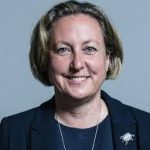
  • Anne-Marie Trevelyan – 2022 Statement on North Korea Missile Tests

    Anne-Marie Trevelyan – 2022 Statement on North Korea Missile Tests

    The statement made by Anne-Marie Trevelyan, the Foreign Office Minister, on 2 November 2022.

    The UK condemns North Korea’s launch of an unprecedented number of missiles on 2 November. We call on the regime to immediately stop all activity that violates UN Security Council Resolutions. This is the first time a ballistic missile has been fired so close to South Korean territorial waters and demonstrates North Korea’s reckless actions.

    The UK continues to work closely with our partners to urge North Korea to return to dialogue and take credible steps towards denuclearisation in a complete, verifiable and irreversible manner. We call on North Korea to prioritise the well-being of its people instead of the unlawful pursuit of nuclear and ballistic missile programmes.

  • Julie Morgan – 2022 Statement on Childcare Offer for Wales National Digital Service

    Julie Morgan – 2022 Statement on Childcare Offer for Wales National Digital Service

    The statement made by Julie Morgan, the Welsh Deputy Minister for Social Services, in the Welsh Parliament on 31 October 2022.

    Through the Childcare Offer for Wales, the Welsh Government provides 30 hours a week of funded childcare and early education for three and four-year-olds, 48 weeks of the year. This enables parents to go to work or increase their working hours. We have extended the offer to parents studying on many higher and further education courses.

    We are making a further significant investment in this policy area by developing an all-Wales digital service, to make accessing the Childcare Offer even easier and providing a more consistent experience across Wales. The new service will also simplify the processes childcare providers have had to follow to claim payments via the different local authority systems. It will streamline administration of the Childcare Offer for local authorities, bringing efficiencies of scale.

    The application window for the January 2023 uptake of funded childcare will start on 7 November, and that is the point at which the new digital service will open to parents. Local authority legacy services for delivering the Offer will continue until August 2023 for parents already in receipt of the Offer.

    While the Childcare Offer national digital service will only be available online, a range of offline support options will be available to people to enable them to interact with the online service, for example by phone or through face-to-face support.

    As the service is available via devices connected to the internet, people will be able to access the service via free-to-access devices in public libraries.

    In moving to the national digital service, we have worked closely with all 22 local authorities, and with parents and childcare providers across Wales, to develop the digital platform and support service. Over the summer a controlled test of the new service was undertaken in live conditions, producing positive results and feedback.

    As a result, all childcare settings providing Childcare Offer hours have been invited to register onto the new platform by the end of October. Local authority staff have been supporting them to do this since early September.

    This statement is being issued during recess to keep Members informed. Should Members wish us to make a further statement or to answer questions on this when the Senedd returns we would be happy to do so.

  • Keir Starmer – 2022 Comments on Rishi Sunak Now Attending COP27

    Keir Starmer – 2022 Comments on Rishi Sunak Now Attending COP27

    The comments made by Keir Starmer, the Leader of the Opposition, on Twitter on 2 November 2022.

    Caving in to criticism is not leadership.

    Real leadership is seizing your seat at the table.

    For UK jobs. For clean energy. For our environment.

    Rishi Sunak acts in the name of political management.

    Labour acts in the national interest.

  • Rishi Sunak – 2022 Statement Confirming Attendance at COP27

    Rishi Sunak – 2022 Statement Confirming Attendance at COP27

    The statement made by Rishi Sunak, the Prime Minister, on 2 November 2022.

    There is no long-term prosperity without action on climate change. There is no energy security without investing in renewables. That is why I will attend @COP27P next week: to deliver on Glasgow’s legacy of building a secure and sustainable future.

  • Chris Philp – 2022 Speech on Monkey Dust Drug

    Chris Philp – 2022 Speech on Monkey Dust Drug

    The speech made by Chris Philp, the Minister of State at the Home Office, in Westminster Hall on 1 November 2022.

    It is a great pleasure to serve under your chairmanship, Dame Maria. I begin by congratulating my hon. Friend the Member for Stoke-on-Trent South (Jack Brereton) on securing this important debate, supported as always with enthusiasm, passion, conviction and ability by his colleagues, my hon. Friends the Members for Stoke-on-Trent North (Jonathan Gullis), for Newcastle-under-Lyme (Aaron Bell), and for Stoke-on-Trent Central (Jo Gideon). They are phenomenal advocates for their city and their part of Staffordshire.

    My hon. Friend the Member for Stoke-on-Trent South has made an extremely moving and compelling case for the terrible effects that monkey dust, and in particular the forms of monkey dust known in Stoke-on-Trent as either fluff or tan, has on his constituents—not just those who are taking it but those affected by their behaviour. I was struck by the eloquent description towards the end of his excellent speech where he described the shocking activities of people under the influence of the drug, and the impact that that has on their partners and innocent members of the public going about their daily business or even asleep at home late at night. It is very clear the drug can have a devastating impact, both on those who use it and on law-abiding members of society.

    As my hon. Friend the Member for Stoke-on-Trent South set out, monkey dust is the street name for drugs that form part of a family called cathinones, which are central-nervous-system stimulants that act in a similar way to amphetamines. My hon. Friend has raised concerns about that previously, including in a 2018 Westminster Hall debate on synthetic cannabinoids. He has at least a four-year track record of raising the issue in the House.

    As he set out, drugs, including monkey dust, are a corrosive and destructive force in society. This Government are very focused on preventing drug misuse through the criminal justice system and policing, as well as through treatment and recovery. The Government have a 10-year drugs strategy. We want to force down drug supply though the criminal justice system. That is one of the reasons why we are recruiting 20,000 extra police officers—a key focus for them will be combating drugs. Of those officers, over 15,000 have already been recruited, I think. As of 30 September this year, 265 extra officers are now policing the streets of Staffordshire, and part of their focus is on the drug problem.

    We also need to ensure that people who are suffering from drug addiction are treated. There is a whole programme of expenditure that the Government have set out in our 10-year strategy published last December. In the current three-year period, £780 million has been allocated specifically for treatment and recovery to cure people’s addiction. That is on top of the existing public health grant expenditure. Stoke-on-Trent is in the first wave of authorities receiving that extra money; the funding this year specifically for Stoke-on-Trent is approximately an additional £1 million, over and above the existing public health grant, to try and treat addiction. If we can stop people becoming addicted it removes the market from the people who are supplying those drugs, and it stops members of the public being harassed and intimidated in the way that has been described.

    Jonathan Gullis

    We are, of course, delighted with the 265 brand-new police officers in Staffordshire, which has been welcomed by the commanders of Staffordshire police. Sadly, our former chief constable was an abomination. That meant we had a really poor neighbourhood policing plan, which sadly led to a tough inspectorate report of Staffordshire police by His Majesty’s inspectors. That is why any additional support that can be given to enable our fantastic new chief constable, Chris Noble, and our police and fire commissioner, Ben Adams, to get the technology and to get the officers and police community support officers time in the community to build intelligence on where criminal gangs and county lines are organising would be of great help. Will the Minister ensure that he takes that case of additional funding back to the Home Office?

    Chris Philp

    We will look at police funding in the relatively near future. Next year’s settlement will be published in draft form for consultation in December and then finalised, typically, in late January or early February. I will certainly take on board that representation for Staffordshire.

    I am delighted to hear from my hon. Friend the Member for Stoke-on-Trent North that his new chief constable is taking a good approach to policing, including by focusing on neighbourhood policing, getting police visible on the streets and spending time tackling criminals, rather than anything else. It is that focus on protecting the public and being visible that has worked in the Greater Manchester force, which has just come out of what is sometimes called special measures, because its chief constable took a similar approach to frontline policing and getting the basics of policing right.

    My hon. Friend also mentioned time and ensuring that police spend time fighting crime, catching criminals and patrolling the streets, instead of being tied up in what can be counterproductive or wasteful bureaucracy. A report is currently being conducted by Sir Stephen House, a former senior Metropolitan police officer who is now working with the National Police Chiefs Council, to look at ways of reducing and stripping back bureaucracy and burdens on police time, such as administration and reporting of non-crime matters. I will work closely with Sir Stephen on that to try to ensure that police officer time is spent on the streets protecting our constituents, not doing counterproductive administration.

    Aaron Bell

    To reiterate what my hon. Friend the Member for Stoke-on-Trent North (Jonathan Gullis) has just said, there really needs to be a focus on our town centres. In lots of the so-called red wall seats, our town centres have been hollowed out, with people on drugs on the streets. I am very pleased not only with our new chief constable, Chris Noble, but with my new borough commander in Newcastle, John Owen, both of whom are really focusing on antisocial behaviour in the town centre. We have so much money coming into Newcastle from the town deal and the future high streets fund, but it will not go for anything if people do not feel safe in the town centre.

    Chris Philp

    I completely agree about the importance of visible, active town-centre policing. In fact, I have seen it in my own town centre in Croydon. I met our borough commander, or basic command unit commander —the chief superintendent—only last Friday, and he made exactly the same point. The police uplift programme has delivered officers to police Croydon town centre, which does make a difference. We want to see that replicated in towns and cities across the country. The police uplift programme provides the numbers of officers to do exactly that.

    I should probably turn to the central ask of the debate—I am not trying to avoid the question or obfuscate in any way—which is the question of how this family of drugs, cathinones, is classified. It may be worth reminding colleagues of the maximum prison sentences available for those convicted of the supply and possession of class A, B and C drugs. These are the maximum sentences, which courts often do not use because sentencing guidelines set out the sentence that should be used in practice, having regard to the circumstances of each case. These are the current maximum sentences that the courts have at their disposal for supply: for class A drugs, it is life in prison; for class B drugs, 14 years; and for class C drugs, a maximum, again, of 14 years. For possession, the maximum sentences are: for class A drugs, a maximum of seven years; for class B drugs, a maximum of five years; and for class C drugs, a maximum of two years.

    I stress that those are maximum sentences and a court will very often sentence a long way below the maximum, depending on the circumstances of the case. Increasing the classification obviously increases the maximum, but it will also increase the likely actual sentence, because courts will look at the maximum when they sentence in each individual case. The sentencing guidelines are pegged off the maximum sentence. I thought it was worth setting that out as a little bit of background.

    On the classification of drugs under the Misuse of Drugs Act 1971, the Government have a statutory obligation to consult the Advisory Council on the Misuse of Drugs before making any change to the classification. That was last looked at in relation to cathinones in 2010, when the ACMD advised the Government to maintain the class B classification. From what I have heard from my hon. Friends the Members for Stoke-on-Trent South, for Stoke-on-Trent North, and for Newcastle-under-Lyme, what has been happening in those places since 2010 represents a significant escalation, or deterioration, in what has been happening on the ground. Indeed, it sounds like a phenomenon that has been happening in the last three, four or five years.

    In response to the debate, I intend to commission Home Office officials to advise on whether we should submit the cathinone family of drugs to the ACMD for an updated evaluation to see whether reclassification is needed. We need to make sure that does not displace some other drug from the pipeline, but I will ask for that advice today and I am happy to revert to my hon. Friends the Members for Stoke-on-Trent South, for Stoke-on-Trent North, and for Newcastle-under-Lyme once that advice has been received and considered. I hope that that shows that this Westminster Hall debate has prompted action which otherwise would not have taken place. We will start the process of considering whether to submit this to the ACMD, while taking into account whether there is space in the pipeline. That demonstrates the value of these debates. I have only been in this job for three working days, but were it not for this debate the matter would not have come to my attention.

    Jack Brereton

    I thank the Minister for his efforts and words. That will make a huge difference. I recognise that there is an independent process, but I hope the decision ultimately results in the reclassification of the drug. I thank the Minister for all his efforts in just three days; I am sure he will continue in that regard.

    Chris Philp

    I thank my hon. Friend for his comments. There are three steps in the process. First, we need internal Home Office advice on whether we should submit this to the ACMD, which I will commission today. Secondly, having analysed the situation, if the advice concurs with what my hon. Friend said, we will make the submission. However, it depends on what the advice says. Thirdly, after submission, the ACMD will then have to do its work. I should be honest and say that none of those steps are guaranteed, but I will initiate the first step today.

    We are almost out of time, so on that note, I thank my hon. Friend the Member for Stoke-on-Trent South for initiating the debate, my hon. Friends the Members for Stoke-on-Trent North and for Newcastle-under-Lyme for their extremely valuable contributions and the passionate eloquence that, as always, they show, and Home Office officials who have been supporting work in this area. I look forward to further debates on topics of importance in this new role.

  • Jack Brereton – 2022 Speech on Monkey Dust Drug

    Jack Brereton – 2022 Speech on Monkey Dust Drug

    The speech made by Jack Brereton, the Conservative MP for Stoke-on-Trent South, in Westminster Hall on 1 November 2022.

    I beg to move,

    That this House has considered the reclassification of the drug Monkey Dust.

    It is a pleasure to speak with you in the Chair, Dame Maria, although this is not a pleasurable subject for debate. My aim is to see monkey dust, a new psychoactive substance that is currently a class B drug, reclassified as class A. There are compelling reasons for doing so. I have received considerable local support in my constituency for reclassification, including through the survey and petition that is currently live on my website, which calls for the reclassification of that horrific drug.

    If I explain that up to two thirds of all monkey dust-related incidents in the west midlands region are reported to occur in Stoke-on-Trent, the House will understand why local feelings in my home city are running so high. Monkey dust is a class B drug from a set of stimulants known as cathinones, which include the class C drug khat. Unlike khat, which is a reasonably mild, natural stimulant, monkey dust is a powerful synthetic drug. It is a stimulant that can make the user euphoric or hallucinate, lose control of their body, become aggressive and/or fall into a deep depression. It is a fine off-white powder costing £10 to £15 per gram, with only 3 mg needed for a hit. That means that a hit can cost as little as £2 on the street, making it cheaper than alcohol. Its effects usually last a few hours, but they can last for several days.

    Jim Shannon (Strangford) (DUP)

    I commend the hon. Gentleman for securing this debate. He is absolutely right to refer to the cost factor. Does he not agree that the fact that monkey dust can be bought for such a small fee means that our young teenagers can afford to use that toxic substance, which can spiral to using other drugs? Immediate reclassification is needed to send a clear message that any abuse of drugs will not be tolerated, that the consequences will be substantial and that it is simply not worth the risk to sell or buy monkey dust, Spice, or any other new fad that is making the rounds.

    Jack Brereton

    I entirely agree with the hon. Member. That is a key factor. It is very sad to see that a lot of the people who are addicted and taking the drug are very young. That is one of the biggest tragedies.

    Both the effect of monkey dust and its duration are unpredictable. In Stoke-on-Trent, it is known simply as “dust”, and it comes in sub-categories that include the street names of fluff and tan. Dust can be snorted, injected, piped or bombed. Piped, as it sounds, means smoked in a small pipe, and bombed, also called parachuted, means wrapped in edible paper and swallowed. That can include the use of cigarette paper or toilet tissue, which are not obviously palatable, but such is the strength of the addition that synthetic cathinones can hold, users will endure great indignities to consume it, never mind acquire it, and there is scant dignity in the effects.

    Dust can lead to a psychotic state. Because it dulls all pain, it can lead users to harm themselves while feeling nothing short of invincible. Police officers have described tackling those under the influence as like trying to wrestle with the Incredible Hulk. Dust can also cause convulsions and lead users to overheat. Death from hyperthermia is a result of the most extreme cases of overheating.

    Sometimes users will combat the feeling of heat by stripping off clothing—which, as they are totally disinhibited by the drug, can mean any and all clothing. There are also the risks of hypoventilation and acute respiratory distress. The collapse of users into a seemingly comatose state is a sight that residents fear is becoming normalised in our city.

    Jonathan Gullis (Stoke-on-Trent North) (Con)

    I thank my hon. Friend and Stoke-on-Trent buddy for securing this fantastic and important debate. In 2018, it was described as an epidemic in Stoke-on-Trent and, sadly, we are back there again. The drug takes advantage of vulnerable people and creates severe mental health issues. That is why I implore the residents of Stoke-on-Trent North, Kidsgrove and Talke to sign my hon. Friend’s petition. Does he agree with me that what we want is not just a reclassification, but additional support for Staffordshire police to catch the criminals who push such filth on our streets?

    Jack Brereton

    I entirely agree with my hon. Friend that we are seeing an epidemic on our streets in Stoke-on-Trent. We do need additional support for many of those services, because what we see on the streets of Stoke-on-Trent is totally unacceptable.

    With such unpredictable and severe effects, it is little wonder that this drug is also known in other parts of the world as zombie dust and, most disturbingly, cannibal dust, after reports of face-eating in America. In my constituency, a user actively ate through a glass window of a local shop.

    Tragically, Stoke-on-Trent has been hit with an unenviable reputation as the centre for monkey dust abuse. The human cost of this awful drug and the gangs pushing it is a continuing problem for the city and local services, despite considerable efforts from Staffordshire police. The consequences of this illicit drugs trade hit residents, who live in fear of violence from dealers and users.

    I can give many examples of those fears and the reality behind them. The responses to my survey fall into roughly five categories of concern. The first focuses on the effects on the users, and includes a response from an ex-user with first-hand experience of what they called “this poison”. Another respondent said:

    “You become unrecognisable as a person.”

    Secondly, there are concerns about the consequences for neighbours and communities, particularly children and pensioners. Comments include:

    “As a hard-working, law-abiding citizen, I don’t feel I should have to walk among zombies.”

    “It is frightening walking around with our children seeing people high, shouting at the top of their voices.”

    “Monkey dust creates antisocial behaviour and misery that does not belong in any decent society.”

    “We saw a man standing on a bus shelter. He was throwing things at people and shouting abuse.”

    Thirdly, there are concerns about the strain on the time and financial resources of the emergency service, and other local services in responding to dust-related incidents, or fighting the addiction. A respondent who works for the rough sleepers’ team told me:

    “I and many professionals have been of the opinion that monkey dust needs to be correctly classified urgently, in order to reduce the impact it is having.”

    Another, from a community church, wrote of feeling

    “so helpless in how to care for and support people who have become addicted to monkey dust. I see them ruining or losing their lives.”

    There was a suggestion that dust is

    “taking up hundreds of hours of emergency services’ time every month.”

    Fourthly, there are concerns about the problems caused for local businesses, and the viability of our high streets and town centres. That was a common theme in responses. Comments include:

    “Another nail in the coffin for our town centres.”

    “I feel unsafe when shopping.”

    “A terrible impression of our town. People after taking drugs are stumbling around and begging outside supermarkets.”

    “The theft if rife. Everything you work hard for gets taken.”

    “It is intimidating to leave the office late at night when there is a gang of six, eight or more drug dealers and/or drug users loitering on a private office car park. The dealers consider themselves to be above the law.”

    Fifthly, there is the devastating, tragic situation of family and friends. Those comments are particularly distressing. On respondent wrote simply:

    “My son is a drug addict.”

    Another said her children’s father turned to the drug when they split up:

    “My children now have an absent father. He was a man that worked all the hours God sent until he had a momentary weakness and accepted this drug.”

    Another said:

    “My daughter was introduced to this horrendous drug, which was instrumental in causing her death.”

    Another wrote that her daughter, aged 37, when on the drug had her three children taken off her:

    “I am at my wits’ end how I can help her off this vile poison.”

    There was also a case where a couple were raising her sister’s four children because the sister had fallen to this addiction. These are truly tragic cases that are becoming far too frequent.

    How would reclassifying monkey dust help? As one respondent to my survey put it:

    “Authorities need to come down hard on the dealers. Reclassifying dust at cat A sends a clear message that this won’t be tolerated.”

    Several respondents compared monkey dust to heroin in its effects and its addictiveness, and could not understand why dust is not in the same category. In fact, there are examples of users and people around users confirming that monkey dust is in some ways worse than heroin—there is, for example, no equivalent of methadone as a synthetic replacement, because dust itself is a synthetic drug. In a documentary produced by the University of Westminster called “Stoke-on-Dust”, a user said that the psychological effects of dust were, to her, worse than heroin, which she had been addicted to since the age of 14.

    That documentary features a campaigner called Baz Bailey. Baz tragically took his own life in July 2020, having struggled with his own mental health. He was a great man who did amazing charitable work, and his efforts to rescue his son from monkey dust became for him, typically, a campaign to rescue everyone’s son and everyone’s daughter. Baz said:

    “I 100 per cent believe the drug should be reclassified because it’s something that can take over someone. We want to send a message to these dealers that the community won’t just lie down and take what they’re doing.”

    He was right: we won’t—we can’t. That reclassification needs to be part of a wider push that includes much more action on preventative work to reduce the root causes of drug abuse and addiction.

    Aaron Bell (Newcastle-under-Lyme) (Con)

    I thank my hon. Friend for paying tribute to my constituent Baz Bailey. Monkey dust is a big problem in Newcastle-under-Lyme, which borders Stoke-on-Trent. We have had a number of deaths associated with monkey dust; we have also had a number of intimidatory behaviours, with people climbing on to buildings or breaking into people’s houses naked at 3 am. We have seen people in Newcastle town centre in the zombie-like state that my hon. Friend referred to. I urge him to continue his campaign to get monkey dust upgraded to category A, and to work with me and my colleague and hon. Friend, the Member for Stoke-on-Trent North (Jonathan Gullis), to help the police treat this issue with the seriousness it deserves in north Staffordshire.

    Jack Brereton

    I entirely agree with my hon. Friend about the need to take a holistic approach to this issue. The local police, local authorities, health services, schools and third-sector organisations should work together to address the wider issues in our communities. It is very positive that earlier this year, Stoke-on-Trent City Council was awarded more than £5 million by the Office for Health Improvement and Disparities to invest over the next three years to develop the substance misuse service locally. We also need a wider conversation about how we divert young people from gang culture in the first place and protect the vulnerable, who are targeted by drug pushers, from being criminally exploited. Reclassification will help to disrupt supply by increasing the risks and consequences associated with being involved in supply; prevention and rehabilitation will help to disrupt demand. We must not neglect either side of the drugs market equation, and we have yet to do enough to tackle monkey dust—demand and supply, which go hand in hand—because we are failing to punish with the sanctions required.

    My constituents are regularly aghast at the lenient sentences reported in our local newspaper, The Sentinel. Those include a 12-month sentence, suspended for 18 months, for a user who terrified a pensioner by climbing into her house at 5.30 in the morning, leaving her with ongoing flashbacks, before going on to undertake shoplifting. Another user stabbed her partner in the hand with a kitchen knife before going to Tesco, having twice attacked him with a meat cleaver previously—she got just 12 months. We need to be much, much clearer that the sanctions for supplying and acting under the influence of monkey dust will be severe.

    Jonathan Gullis

    My hon. Friend makes a great point: it is essential that we get the additional support that we urgently need as a city. We are trapped in part between Birmingham, Manchester and Liverpool, where gangs operate and come into our city—there are also gangs within the city of Stoke-on-Trent. That is why we need additional resources: this cannot just be left to the local authority, which is the second poorest in England when it comes to collection of council tax, to deal with. Does my hon. Friend agree that for that reason, the Minister needs to make sure that the Home Office comes up with a special taskforce, almost, for Stoke-on-Trent to tackle this scourge?

    Jack Brereton

    I agree entirely with my hon. Friend. Stoke-on-Trent is fantastically located right at the heart of the UK, but that also means that we are more exposed to those county line drug issues and the trade of drugs that is coming through our country from Liverpool through to other larger cities. It is absolutely vital that we get those resources and support.

    To conclude, I again turn to a comment from my survey, because it sums everything up:

    “Monkey dust is a scourge, similar to heroin, and should be treated as such.”

    I hope the Minister will have time in his diary to visit Stoke-on-Trent. My fellow local MPs, along with Ben Adams, the Commissioner for Police, Fire & Rescue and Crime, Councillor Abi Brown, the leader of the council, and I would all welcome the opportunity to show him some of those issues on the ground in our area.