Category: Speeches

  • Jim Shannon – 2022 Speech on Climate Change and Human Security

    Jim Shannon – 2022 Speech on Climate Change and Human Security

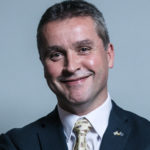
    The speech made by Jim Shannon, the DUP MP for Strangford, in the House of Commons on 3 November 2022.

    It is an absolute pleasure to serve under your chairmanship, Mr Efford. I thank the hon. Members for Bath (Wera Hobhouse) and for Glasgow South (Stewart Malcolm McDonald) for leading this debate. It is also a real pleasure to follow my friend and colleague the hon. Member for Glasgow North (Patrick Grady); he and I agree on this subject. I agree with the hon. Lady on it, too.

    I am pleased to add my contribution to this debate. There has been some confusion over the past few days regarding the confirmation of the attendance of the Prime Minister at the COP27 summit in Egypt, which starts this Sunday. I am pleased that the original decision was reviewed and that the Prime Minister will now attend the summit to commit to our COP26 promises, as he should because he leads this country.

    We all recognise the commitment that the Government gave at COP25 and COP26. I know that the Minister will respond to confirm the positive direction that the Government have taken and how important that is. As Members have rightly stated, climate change is set to exacerbate worldwide challenges such as rising sea levels, poverty and malnutrition. To say that we have a role to play is clearly an understatement: we have a massive role to play, not just singularly but collectively with other countries.

    I look forward to hearing the Minister’s comments from a human security perspective, too, as that is just as important. I know he will respond in a positive fashion. As my party’s spokesperson on human rights, human security means a great deal to me and my party. Like other Members, I receive hundreds of emails each week about many different and pressing issues from my constituents in Strangford; however, I must say that climate change and its impact on human security feature highly in my mailbox, so I am pleased to support Members in this debate.

    Some notable events in the past couple of years have posed a real potential threat to human security. For example, the United Kingdom’s Climate Change Committee has found a 16 cm rise in UK mean sea levels since the start of the 20th century. That cannot be ignored: it is a fact of life. We have to address those things. Can we address them in a way that will make a difference? I think we can.

    Like other areas of the United Kingdom, Northern Ireland has fallen victim to multiple extreme weather events in the past couple of years. We used to say that these sorts of floods happened every 100 years, but no: the 100-year floods happen every four or five years now. They happen regularly. On Tuesday night, I phoned my mother, as I do every night, and she said she had never rain quite like it. She is 91 years old, by the way, so she has been in this world for a long time. If she says that to me, I tell you what: I can say there has been some exceptional rainfall. The yellow warnings and the floods are there.

    Most memorably, in summer 2018 we saw the warmest June since 1910, with the mean temperature 2.1° above the 1981-2010 average. That is another example of extreme weather—another 100-year event. It ultimately resulted in a hosepipe ban, which some laughed at at the time, thinking it was ridiculous. In hindsight, it shows the impact that climate change has had on our daily lives and security. In the summer of ’22, we had extreme heat that I cannot recall having experienced for a long time, and water levels fell in many places.

    I am interested in planning matters. I see an example of the practical, physical way that change is coming in my constituency, where planning conditions have been introduced in the past couple of years to stop people building on floodplains, which they should not be doing, by the way. Ten or 20 years ago, and whenever I first joined Ards Borough Council in 1985—that was not yesterday either—that was not an issue: people were able to build on that land. Now, they cannot. Why is that happening? It is because climate change is coming and things are changing. With what it can see and from its plans, the planning department has projected where the floodplains will be. In some areas, we would have to go back to the beginning of the century to see where the land flooded in some exceptional conditions.

    The Northern Ireland Assembly’s equivalent of the Department for Environment, Food and Rural Affairs is the Department of Agriculture, Environment and Rural Affairs. DAERA has released its climate change adaptation programme for 2019-24. It underlined the impacts of the “beast from the east”—that is not Russia, by the way. The “beast from the east” was a spell of extreme weather conditions. We all experienced them in the United Kingdom of Great Britain and Northern Ireland. They were exceptional. Northern Ireland experienced a spell of severe weather with low temperatures and significant snow, the likes of which we had not seen for a lifetime. It caused a real problem for travel and, moreover, healthcare provision was significantly interrupted. We must take into consideration the effects that climate change has on our local businesses and especially our food security. That is why today’s debate is so important.

    Food security is described as people having physical, social and economic access to sufficient, safe and nutritious food. It is important for human security reasons such as poverty. We should expect to see a rise in poverty as our access to food decreases. It is my understanding—I am sure the Minister will confirm this—that the United Kingdom imports some 46% of our food. I know that the Government have committed to producing more food at home, as I believe we should—we need to be more self-sufficient—but the fact is that we import 46% of our food products from around the world.

    We are ever mindful that we cannot grow everything here, so there will always be some imports. Northern Ireland has a population of 2 million but we have a highly productive farming sector. We export some 75% to 80% of our produce overseas to mainland EU and further afield. We are bucking the trend in relation to the rest of the United Kingdom, and that indicates how important our farming sector is to us in Northern Ireland.

    It is clear this is not a domestic concern alone: internationally, we must come together as nations. This is a world crisis. We are here debating this issue at Westminster, in the mother of Parliaments, but we need buy-in from the rest of the world to make it happen. We need to take a joint approach to tackling climate change. There are widescale human security issues that can apply globally if we do not commit to our prior engagements, including the Paris agreement and the Kyoto protocol.

    I know this is something that the hon. Member for Glasgow North is interested in, as, I suspect, everyone is. I chair the all-party parliamentary group for international freedom of religion and belief. In 2018, we published our report “Nigeria: Unfolding Genocide?” Why is that applicable to today’s debate? This debate is not about food; it is about more than that. The FCDO response to the report was that it was climate change driving violence in Nigeria, not attacks on religious minorities. The fact is that it is a combination of both.

    When the APPG visited Nigeria in May and June this year, we had discussions and talks with Government officials and some of the landowners in north-east Nigeria where things are happening. The Fulani herders are losing their grassland to the encroachment of sand and desert, so they moved further south into the land that just happens to be owned by Christians, along with some Muslims. In other words, the Fulani herdsmen are moving their cattle and herds closer to and encroaching on land that farmers need to grow their crops and look after their families.

    Climate change is affecting us all, but not equally. The latest correspondence this week between Open Doors and some of the APPG’s members indicated that tensions are continuing to rise in Nigeria to an even greater level than when we visited back in May and June. When it comes to the issue of human security and climate change, that is a supreme example of what is happening. That is why we need to do things collectively and better together.

    Minority groups and often religious minorities find themselves facing the worst impacts of climate change. In many cases, families want to produce food just to feed their families—not necessarily to sell on, although they may barter on occasions—and for Christians in north-east Nigeria, for example, land degradation is combined with the constant threat of attacks from Boko Haram or the Fulani herders.

    Climate change and human security is not a topic that will be going away any time soon. The hon. Member for Glasgow North is absolutely right: we might have talked about the matter six or seven years ago, saying “the threat of”, but no, the threat and the reality is here today. I agree with him absolutely. We have the opportunity to respond in a timely and vital fashion. Delay can no longer be looked upon as acceptable in any way. We must ensure our commitments to our promises made at COP 25, COP26 and this weekend at COP27 and do what we can to curb national disasters, not just here in the United Kingdom of Great Britain and Northern Ireland but for all nations around the world. We all need to live together and do our best for everyone.

  • Patrick Grady – 2022 Speech on Climate Change and Human Security

    Patrick Grady – 2022 Speech on Climate Change and Human Security

    The speech made by Patrick Grady, the Independent MP for Glasgow North, in Westminster Hall on 3 November 2022.

    It is a pleasure to serve under your chairmanship, Mr Efford. I congratulate the hon. Member for Bath (Wera Hobhouse) on securing such an important debate and my hon. Friend the Member for Glasgow South (Stewart Malcolm McDonald) on supporting it, as numerous Members have done.

    In 2007 the Stern report stated that climate change was the greatest and widest-ranging market failure that the world had ever seen, but here we are—all these years later—and it seems that warning is still falling on deaf ears. I used to stand in Westminster Hall debates and say that climate change threatens to undo progress towards the millennium development goals and the sustainable development goals. After only seven years since I was elected in 2015, we can now say that climate change is undoing progress towards the millennium development goals and the sustainable development goals. It is making it harder to reach poverty eradication targets, gender equality targets, and education and health targets. In some cases, we are going backwards on those indicators, after a period of progress that should be acknowledged.

    Climate change is not something that is happening somewhere else, in faraway parts of the world; as the hon. Member for Bath said, it is beginning to disrupt our own way of life in these islands, across western Europe and across what we call the developed world, and it is becoming increasingly clear that things are going to get worse before they start to get any kind of better. This is an issue of huge concern to my constituents in Glasgow North, who I hear from regularly on all the points raised by the hon. Lady.

    Glasgow could not have been prouder to host COP26 last year, but the conference was not a one-off: the clue is in the name. It is part of a process, and in the very near future—next week—COP27 will take place, where the work must continue on the progress towards making real the commitments to which Governments have pledged, whether that is coming up with the funds that have been committed to mitigation and adaptation measures, or making clear statements and demonstrations of action towards the targets that have been agreed upon and that we need to go further and faster to reach. The security implications—in the broadest meaning of that word—can already be seen all around the world.

    The scarcity of vital natural resources, water scarcity and crop failure are often the root of instability in so many of the flashpoints and troubled parts of the world that we debate not infrequently here in Westminster Hall, including the situation in Tigray, Ethiopia. I firmly suspect that if people had more confidence in predicting the rains and being able to grow crops to feed themselves and their families, the chances are that the instability there and in so many other parts of the world would be significantly lessened. Many of the roots of such conflicts are to do with scarcity, particularly of water and food, the supply of which is directly affected by climate change.

    Wera Hobhouse

    Does the hon. Gentleman agree that we always look at these things in silos and do not make the connections, and that if we put climate change in the centre of the connections we created, we might tackle these issues much better?

    Patrick Grady

    The hon. Lady is absolutely right. I will reflect a little more on those interconnections later. This is exactly about that kind of domino effect, because the Government are really concerned about the small boats crisis and people coming to the United Kingdom, but what are many of those people fleeing? They are fleeing scarcity and instability in their home countries. The changing climate is leading to the massive displacement of populations across the world. Difficult though the UK Government might think the migrant crisis is on the shores of Great Britain, it is considerably greater in other parts of the world, such as Africa and Asia, where there are massive movements of populations—and climate change is at the root of it all.

    It is worth reflecting on the instability that even the concept of climate change is starting to cause; and I will return to some of these ideas later. There is climate change denial in so many parts of the world, even in so-called western liberal developed democracies. When climate change starts to become an ideological divide, that in itself causes instability and is part of a polarisation that we are seeing across the world, particularly in the United States, which the hon. Member for Bath mentioned. The extremes of response to the climate crisis that we have seen in the space of the change of one Administration—and the risk of that swinging back in the other direction—is in itself a significant challenge to the world’s ability to respond to climate change. That has an impact on the politics of those countries and, perhaps, to a certain extent here.

    Here at home we are also experiencing the effects of climate change. Just in the past 12 months we have experienced increasing extremes of weather. There was a heatwave not just down here in London: we even had record temperatures up in Scotland. Although on one level people might make a joke about that and say it is quite a nice thing—“It makes a change” and so on—it is becoming a new reality that we have to adapt to, and that is not cost-free.

    As the hon. Lady said, climate change also affects the food supply and food security in Scotland and across these islands. Last week, there was a Westminster Hall debate about global food security; we used to talk about food security as a problem elsewhere, but it is becoming a real challenge in the United Kingdom too. That is also true of our energy security, as she set out.

    There is a real danger of a feedback loop: we have a shortage of energy so we dig more coal out of the ground and burn it, but that worsens the problem of climate change and increases the challenge and the costs to the Government in the long run. The Government have to grasp that tackling climate change is the ultimate idea of preventive spend. We are going to have to pay for the costs of a changing climate, which has largely been brought about by the process of industrialisation in the west over the past 150 years or so, and we can do that either now in such a way that we prevent, mitigate and adapt to the changes, or later as the changes become more extreme and severe. That will cost us more in the long run, so it makes financial sense to start to invest now in tackling the causes and effects of climate change. It will also enhance our security.

    That brings me to my challenges to the Government. I do not know what the right word is, but this is not about ideology. There may be free market, right-wing solutions to the climate crisis—setting aside what Lord Stern said back in 2007—so bring them forward. Let the market compete to find the most effective form of renewable energy and the most effective way to maximise crop yields, but not in a way that continues to cause problems. Externalising the costs of those things in the first place led to where we are.

    Some of us might think that we need a bit more in the way of state intervention and direction of spending, but we should all start from an agreement that the climate and nature emergency is real. Sadly, I am not 100% convinced that everyone on the Government Benches would be willing to stand up and say that. In the Chamber, I asked the previous Secretary of State for Business, Energy and Industrial Strategy, the right hon. Member for North East Somerset (Mr Rees-Mogg)—in the short time he was in post—whether he believed that the climate emergency is real and that anthropogenic climate change is happening today, and he completely dodged the question. Ministers in the western world in this day and age should not be dodging that kind of question. The answer to the question, “Is anthropogenic climate change happening today in front of us?” is yes. There might be a debate about how we tackle it, how we respond and how we prevent it from getting worse, but the answer to the question is yes.

    I am sure the Minister will confirm that the Government’s position is that the climate change that is being experienced all over the world is the direct result of human behaviour over the past 150 years or so. It might be a bit difficult to get the Government to start to adopt the language of climate justice and to recognise the historical obligation that we in the west have to people in other parts of the world who are being hit by climate change first and hardest, but the point of debates such as this is to put those points to them and hear them argue either why that is not necessary or why they do not agree.

    In among all that is the mainstreaming of our net zero targets. We should put that at the heart of Government policy and then, yes, debate how things will be delivered and the best way to invest resources, and the best way to let the market respond, if that is what people believe, or whether to let the state intervene more heavily, if that is what people believe.

    Wera Hobhouse

    The hon. Gentleman is generous to give way again. He is coming to the issue of delivery. Ultimately, we all agree that the pathway is there but the delivery is not happening fast enough. That really worries me, which is why I said at the very beginning of the debate that this is not a bus that we can miss: we have to get on with things now. Does the hon. Gentleman agree with the Climate Change Committee, which has said that the Government must now urgently focus on the delivery of their own targets?

    Patrick Grady

    Yes, absolutely. The Government have agreed to the targets and achieved a certain amount of cross-party consensus on them. That is important given how some people want to use the very concept of climate change as a political wedge issue, when in fact it is something that should unite us as far as possible. Especially among all the chaos and revolving doors for Ministers of late, the Government should speak with one voice on these issues. Irrespective of which Department or Minister happens to respond to this debate, we should hear the voice of the UK Government, with all the weight that that is supposed to carry.

    Even though we do not have a Foreign, Commonwealth and Development Office Minister responding to today’s debate, it is important to address the question of the aid budget, its diminution, the cuts to it that are being applied across the board and the risk of further cuts to come. I come back to my point about preventive spend. If we do not support small farmers in different parts of Africa to grow sustainable crops without the need for expensive and polluting fertilisers, if we do not support communities to access fresh and clean water, and if we do not support girls to get into education so that they can raise healthier and stronger families and contribute to their economy, we really should not be surprised if, further down the line, those people start to get quite annoyed and upset about the kind of lifestyle that is being forced upon them and decide to take matters into their own hands. Indeed, they may decide to get on a small boat and come across to the United Kingdom, where everything seems to be much more comfortable. The Government must realise the importance of preventive spend and not just address the issues of climate justice and poverty eradication but understand that it is to everybody’s benefit to tackle such issues.

    We all have to agree that this is the defining challenge of our times. By all means we should have a debate about the precise way in which we can reach our goals, but let us not argue about whether those goals have to be met, because not meeting them will simply make matters considerably worse, not just for people overseas but for people on these islands, too. We have to continue to hold the Government to account in the way that our constituents want us to, and we have to hope that the Government are prepared to recognise the consensus that can exist and get us forward and closer to tackling the causes and effects of climate change.

  • Wera Hobhouse – 2022 Speech on Climate Change and Human Security

    Wera Hobhouse – 2022 Speech on Climate Change and Human Security

    The speech made by Wera Hobhouse, the Liberal Democrat MP for Bath, in Westminster Hall on 3 November 2022.

    I beg to move,

    That this House has considered climate change and human security.

    It is a pleasure to serve under your chairship, Mr Efford. I am grateful to the Backbench Business Committee for granting me this debate, which follows on from the debate we had last year on global human security. There is an urgent need to consider how compatible the UK’s security approach is with tackling the climate emergency.

    The climate threat is one of the largest threats facing humans. Too many politicians are still treating our vital net zero targets, which will keep temperature rises below 1.5° C by 2050, like buses: if we miss one, we can just catch the next. We must comprehend that there will be no coming back and no next time if we miss net zero by 2050. Doing so would be catastrophic, exacerbating worldwide challenges such as rising sea levels and the loss of natural resources. It would contribute to increased conflict, poverty, malnutrition and gender inequality. Some 1.2 billion people are set to be displaced due to climate change by 2050. If people are concerned about migration now, they have not seen anything yet.

    Climate change can no longer be seen as a problem for the future; it is having a material impact on people worldwide now. Between 1970 and 2019 global surface temperatures increased at a higher rate than in any period over the past 2,000 years. Since 1950 the global number of floods has increased by a factor of 15 and wildfires have increased by a factor of seven. The abnormally hot and cold temperatures experienced worldwide contribute to as many as 5 million deaths a year—that is now, not in the future. Climate change is causing havoc around the world. Last month a new study of the Greenland ice cap concluded that a major rise in sea levels of 27 cm is now inevitable, even if fossil fuel burning worldwide were to end overnight. That is terrible news for the 150 million people globally who live less than 1 metre above sea level.

    Earlier this year Pakistan was just one of the countries across south Asia that experienced a heatwave that took temperatures over 50° C. That country has now faced floods that have directly affected 33 million people, causing at least $10 billion in damage. Spring rains in Somalia have been the weakest in 60 years, contributing to drought and famine across east Africa, which has put 22 million people at risk of hunger and starvation. Devastating climate change effects can also be seen at home. The World Weather Attribution group found that human-induced climate change made the recent UK heatwave at least 10 times more likely. The Joint Committee on the National Security Strategy has declared that the UK’s critical national infrastructure is

    “very vulnerable to extreme weather and other effects of climate change”.

    Over 570,000 UK homes are not suitable for high temperatures.

    We are not just in the middle of a climate crisis; nature is in crisis too. Our way of life, especially in developed nations, is exploiting our global resources in a way that is becoming increasingly unsustainable for our planet. As nature declines, so does the quality of human life. Pollution and poor air quality alone cost millions of lives every year across the globe. We in the UK are not excluded, and all those things beg the question of whether the way in which we currently look at security policy limits the extent to which the Government keep us safe.

    We are used to the Government declaring that their first duty is to keep citizens safe and the country secure. However, the way that they define our security matters. For years, we have thought that security is about the risks to our nation from hostile actors. That narrow conception risks sidelining the climate threat. The Russia-Ukraine war has shown that temptation. We have already seen countries such as Germany move back to using coal. Even in the UK, the former Prime Minister used the war to lift the fracking ban, and announce more than 100 new licences for oil and gas drilling in the North sea. It is of course important that we are properly aware of and equipped to tackle risks from hostile actors. However, the need for energy security should never lead us to downplay the existential threat that the climate crisis poses to humanity.

    The term “human security” was first championed by the United Nations Development Programme in its annual report on human development. It is about security for people, and emphasises economic, food, health, environmental, personal, community and political security. Human security puts the experience and wellbeing of the individual at the centre of security policy, prioritises international co-operation over national competition, and focuses on the shared security of all humanity. The concept of human security is acknowledged by multiple influential international organisations, including the UN, the International Committee of the Red Cross, and the World Bank.

    The climate threat goes beyond national borders, and has far-reaching consequences. State-centric security practices cannot comprehend the vast array of threats that we face. We must move towards a model of security that cares for people above all else. If we do so, the true scale of the climate threat is thrust into the spotlight. Countries must be incentivised to prioritise it. After all, the sooner we act, the more people can be protected. The Intergovernmental Panel on Climate Change suggests that limiting global warming to 1.5°C rather than 2°C may save around 520 million people from frequent exposure to heatwaves.

    Putting climate action at the heart of any Government plan is the best way to protect the UK against hostile actors. Putin’s war has shown how long-term dependence on fossil fuels can power hostile regimes. Russia has used Europe’s dependence on its natural gas as a weapon. If the UK had moved towards renewables harder, faster and earlier, Putin would not have that leverage, and our constituents would not be paying the price for the war.

    What must be done to protect people from the climate threat? How can a human security approach help the world to reach net zero? A human security approach addresses the root causes of vulnerabilities, and takes early action on emerging risks. Threats such as climate change are predictable and incrementally destructive, yet consecutive Governments have failed to do anything meaningful about them in the long term. The worst impacts of climate change stretch well beyond average election cycles. The evidence is clear that the costs of climate change are dwarfed by the consequences of inaction.

    The country’s finances are already straining under the weight of recent Conservative Government incompetence. They are set to shatter completely if we do not get a grip of the climate emergency now. The London School of Economics predicts that we will lose £340 billion a year by 2050 because of this Government’s refusal to take action fast enough. University College London issued similarly stark warnings about the world’s financial system, which is set to lose 37% of global GDP by the end of the century as a result of the climate crisis. Such losses will be unrecoverable.

    That economic dark age is not inevitable. A green future should be seen as a prosperous one. A recent University of Oxford report states that if we move to a decarbonised energy sector by 2050, the planet will save $12 trillion. A net zero economy is an opportunity for this country. We can be the world leaders in this financial age.

    Change must begin at home. The Liberal Democrats are calling on the Government to announce an action plan, backed by a £150 billion public investment programme, to fire up progress to reach net zero. Our plan proposes a major restructuring of the UK’s economic and financial model, and investment in renewables is vital to it. Renewables are the world’s cheapest source of energy now. Investing in them is good for the planet. It secures our energy and protects our wallets. As the Committee on Climate Change notes, reducing demand for fossil fuels will help to limit our constituents’ energy bills.

    The UK must invest in renewable power so that at least 80% of electricity is generated from renewables by 2030. That is a tough target. We set the targets, but fail to deliver them. We must press ahead to make more of our renewable energy targets. The Government must now deliver on the many promises and targets they have set for the nation. We desperately require a department at the heart of Government that is dedicated to co-ordinating the many fragmented activities across Government and society. We urgently need to bring back the Department of Energy and Climate Change, which provided essential leadership during the coalition years. Will the Minister tell us whether the Government have any intention of re-establishing such a Department, given that we are falling behind in the delivery of our net zero targets?

    The climate crisis should be at the forefront of every decision the Government make between now and the time that net zero is reached. We Liberal Democrats propose having both a department of climate change and a Cabinet chief secretary for sustainability to co-ordinate all Government activity in response to the climate emergency. That would ensure that climate change is given the priority it deserves in every Government action and in every Department.

    The UK must put aside its damaging approach of isolation and the language of division. Climate change is a huge problem that can be solved only through collaboration with everybody else. I recently met John Kerry, who noted that the approach to climate change in the US changed completely when Joe Biden became the new President. Leadership matters, and we need such leadership from our Government now.

    Ahead of COP26, the then Chancellor, the right hon. Member for Richmond (Yorks) (Rishi Sunak), cut air passenger duty on domestic flights. Last May, he brought in a windfall tax that incentivised firms to invest in fossil fuel extraction. During the latest Conservative leadership campaign, he pledged that he would make it more difficult to build onshore wind farms in England. To have our new Prime Minister effectively dragged along to COP27 is humiliating for the UK. That is not the leadership we need from our new Government. The UK must lead from the front to encourage others to act. As the Committee on Climate Change suggests, it should prioritise strengthening the ambitions of countries around the world while preparing for a focus on climate finance and adaptation at COP27 next week, and COP28 next year.

    For too long our response to climate change has been complacent. Climate action cannot be ditched in favour of status quo interests. After all, people can never be secure in a world ravaged by extreme weather events. It is time the world moved away from viewing our security simply at state level and started looking at the bigger picture. We cannot be safe until the world is safe from the worst fallouts of the climate emergency. The floods, heatwaves, wildfires and storms of 2022 are alive in our minds. There is no better time than now to put in long- lasting protections to save current and future generations from the crippling consequences of climate change.

    Climate change must become part of the UK’s security thinking. The Conservatives must get a grip and take the lead on this issue. I hope that the UK Government will look at my recommendations. We are all in a war against climate change and must begin to treat it as such.

  • Jeremy Hunt – 2022 Letter to Andrew Bailey on Measures to Restore Gilt Market Functioning

    Jeremy Hunt – 2022 Letter to Andrew Bailey on Measures to Restore Gilt Market Functioning

    The letter sent by Jeremy Hunt, the Chancellor of the Exchequer, to Andrew Bailey, the Governor of the Bank of England, on 4 November 2022.

    Letter (in .pdf format)

  • Andrew Bailey – 2022 Letter to Jeremy Hunt on Measures to Restore Gilt Market Functioning

    Andrew Bailey – 2022 Letter to Jeremy Hunt on Measures to Restore Gilt Market Functioning

    The letter sent by Andrew Bailey, the Governor of the Bank of England, to Jeremy Hunt, the Chancellor of the Exchequer, on 4 November 2022.

    Letter (in .pdf format)

  • Louise Haigh – 2022 Comments on Rail in the North

    Louise Haigh – 2022 Comments on Rail in the North

    The comments made by Louise Haigh, the Shadow Secretary of State for Transport, on Twitter on 4 November 2022.

    60 times the Tories promised to level up the North with the rail infrastructure we need to grow our economy. While they break their promises, Labour will build the Elizabeth Line for the North we deserve.

  • Chris Heaton-Harris – 2022 Comments on the Situation in Northern Ireland

    Chris Heaton-Harris – 2022 Comments on the Situation in Northern Ireland

    The comments made by Chris Heaton-Harris, the Secretary of State for Northern Ireland, on Twitter on 4 November 2022.

    The people of Northern Ireland deserve a strong devolved government. I have had valuable conversations with Party leaders and people across Northern Ireland over the past week and have listened to their concerns about the impact and cost of an election at this time.

    I can confirm that no Assembly election will take place in December. Current legislation requires me to name a date for an election to take place within 12 weeks of 28 October. Next week, I will make a statement in Parliament to lay out my next steps.

    Full Statement

  • Suella Braverman – 2022 Comments on Visit to Manston

    Suella Braverman – 2022 Comments on Visit to Manston

    The comments made by Suella Braverman, the Home Secretary, on 3 November 2022.

    Today I met with our expert teams at Dover and Manston who work tirelessly to save lives and protect the UK’s borders. I saw first-hand how we’re working to reduce the number of people in Manston, support people there, and thank staff for all their efforts.

    I am incredibly proud of the skill and dedication shown to tackle this challenging situation here on a daily basis.

    This is a complex and difficult situation, which we need to tackle on all fronts. We need innovative solutions. To break the business model of the people smugglers, we need to ensure that the illegal migration route across the Channel is ultimately rendered unviable.

  • Jeremy Hunt – 2022 Comments on Inflation

    Jeremy Hunt – 2022 Comments on Inflation

    The comments made by Jeremy Hunt, the Chancellor of the Exchequer, on Twitter on 3 November 2022.

    Inflation is the enemy and is weighing heavily on families, pensioners & businesses across the country. So our number one priority is to grip inflation and today the Bank has taken action in line with their objective to return inflation to target.

  • Suella Braverman – 2022 Statement on the Manchester Arena Inquiry Report

    Suella Braverman – 2022 Statement on the Manchester Arena Inquiry Report

    The statement made by Suella Braverman, the Home Secretary, in the House of Commons on 3 November 2022.

    Today the Manchester Arena inquiry has published volume 2 of its report, which has been laid before the House. The report can be found at www.manchesterarenainquiry.org.uk and on gov.uk. The third and final volume of the inquiry’s report will be published at a later date.

    This report relates to the emergency response into the Manchester Arena attack. I am grateful for the strength and courage of the victims’ families and the survivors, and the engagement of all those who have shared their experiences to ensure the inquiry can deliver its vital work. I am grateful too for the bravery of the emergency services who responded to the attack.

    Steps have already been taken to implement learning from the attack to improve joint working between the emergency services when responding to terrorist attacks. The Government will review this report and consider where further improvements can be made and will respond to its content in due course.

    I would also like to thank Sir John Saunders for his continued and considerable efforts in ensuring that the inquiry is a success and that lessons are learned for the future from this tragic attack.