Category: Speeches

  • Nia Griffith – 2022 Speech on Scottish Independence and the Scottish Economy

    Nia Griffith – 2022 Speech on Scottish Independence and the Scottish Economy

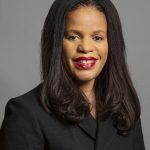
    The speech made by Nia Griffith, the Labour MP for Llanelli, in the House of Commons on 2 November 2022.

    It is very important that we do not confuse the institution of the UK Government with this shambles of a Tory Government. Their performance over the past 12 years, compounded by the disastrous Budget on 23 September and followed by four weeks of inaction in which they were too slow to stop the damage, has left people up and down the country in real difficulties. It has left our allies shocked and our reputation on the international stage trashed. People now face higher mortgage payments, higher interest rates, a 12-year squeeze on public sector pay and benefits, and rampant inflation—all because of this Tory Government’s obsession with tax cuts for the rich.

    To that extent, I very much agree with the first part of the motion, but we must separate the failure of this Tory Government from the concept of being in the United Kingdom. I am very proud to be Welsh and to speak Welsh, and I know that Scottish people are rightly proud to be Scottish, but I am also proud to be British. We in Wales and Scotland have so much to gain from being part of the UK. It is not about nostalgia or an outdated view of the United Kingdom; it is about a recognition of the UK’s current position in the world.

    Admittedly, this Tory Government have done their best to trash our reputation. Nevertheless, we are an important economy—the sixth largest national economy in the world—and we are in the G7. That gives us influence—an influence that Wales and Scotland would never have on their own, and an influence that can be used for good, as we saw when the banks crashed the economy and caused the financial of crisis of 2008. The Labour Prime Minister, Gordon Brown, was instrumental in persuading other world leaders to take the necessary mitigating action, showing real leadership. That same Gordon Brown had secured an agreement from the G7 in 2005 to get the debts of the 18 poorest countries in the world cancelled by the World Bank and the International Monetary Fund. I could go on, talking about his tackling the AIDS and HIV crisis, and providing education for girls worldwide. That is the sort of influence that we can wield as the United Kingdom.

    The same applies to climate change, which is of huge concern to many people in Wales and Scotland. We all recognise that tackling it has to be a joint effort, not just throughout the UK but by nations across the world. As the UK we have much greater influence—notwithstanding the appalling pantomime we have seen from the current Prime Minister, first snubbing COP27, the success of which is vital to the very future of life on earth, and then finally being shamed into grudgingly attending—but in the past, we as the UK have used our influence for good. When Labour was in government we passed the Climate Change Act 2008, a world first, and we showed leadership on the world stage in conferences from Kyoto to Copenhagen.

    Labour has delivered on devolution to Wales and Scotland, which has enabled us to do things differently. In Wales, for example, Labour placed a moratorium on fracking. It has allowed and encouraged the roll-out of onshore wind. It provides a wide range of additional support grants to help the poorest, and is now consulting on radical changes in business rates. Scottish Labour has called on the Scottish National party to use its power to do more by topping up the Scottish welfare fund, writing off school meals arrears, and providing extra funds for money advice services.

    However, critical to getting the best from devolution is a good relationship between the UK Government and the devolved national Governments. Our Labour vision for that relationship is a vision of respect and co-operation—of a Union of nations which want to work together for the greater good of all. Unfortunately, that has not always been the case with this Tory Government, as we saw most recently when the former Tory Prime Minister failed to pick up the phone to the Welsh or the Scottish First Minister during her term of office. That is precisely the sort of behaviour that we do not want, because of course it breeds resentment and makes us feel angry, and the Tory Government are just feeding the calls for independence.

    Similarly, with the passing of the United Kingdom Internal Market Act 2020 we saw a Tory Government ride roughshod over the devolved nations, driving forward acceptance of the lowest common denominator in terms of environmental standards. We could have had a much more constructive and consensual dialogue. We must not forget that things could be different. At the time of the recent trade treaties with Australia and New Zealand, the officials in the Department for International Trade were helpful in working with the Welsh Government, but that should not be left to chance. We need a proper concordat, enshrining proper processes and consultation, to accord the devolved nations the respect and influence that they deserve on issues that affect Wales and Scotland respectively.

    So yes, we definitely need to improve the working of devolution and the relationship between devolved Governments and the UK Government, but the answer is not independence—not because Scotland could not be independent, but because there are substantial issues which need to be considered but which the SNP tends to gloss over. For instance, as my hon. Friend the Member for Edinburgh South (Ian Murray) explained so clearly, there is the issue of a new currency being devalued. That would cause major difficulties, with people being paid in the new currency but having to make mortgage payments at the value of the UK pound. There is also the problem of how Scotland would cope with its share of the UK national debt, not to mention, of course, the uncertainty over pensions.

    We have all seen the complications that Brexit has thrown up. Given that the majority of Scottish exports go to the rest of the UK, the idea of a hard border, as proposed by the First Minister of Scotland, will be sending shudders through Scotland’s economy. Ultimately, however, it is the opinion of the people in Scotland that matters. As has been mentioned already, 18 of the last 19 opinion polls have shown that a majority are not in favour of independence. They want the Scottish Government to concentrate on helping them with their day-to-day problems, and to stop obsessing about independence.

  • Ronnie Cowan – 2022 Speech on Scottish Independence and the Scottish Economy

    Ronnie Cowan – 2022 Speech on Scottish Independence and the Scottish Economy

    The speech made by Ronnie Cowan, the SNP MP for Inverclyde, in the House of Commons on 2 November 2022.

    Norway has been mentioned a lot this afternoon, has it not? I had the good fortune to visit Norway last week. I met representatives from Parliament, Government, academia, the civil service, trade unions and non-governmental organisations, and I was struck by the way that they worked together with respect and trust to create a better Norway for everyone. Had I suggested to them that they were too small to be an independent nation, and that they would be better sharing their governance or their financial levers with their Scandinavian neighbours, they would have laughed me out of the room. I noticed that none of the Unionist MPs on the trip with me asked that question either. It is strange how that respect is afforded to Norway—a small, northern European, independent, sovereign nation of 5 million people—but not to Scotland.

    Norway has alliances with other countries within which they co-operate. All of that is negotiated between equals who respect one another. Norway became independent in 1905 and has never looked back. It has experienced some tough times, but Norwegians took on the problems and solved them. That is how normal countries work.

    That reminded me of Hugh MacDiarmid’s poem, ā€œScotland small?ā€:

    ā€œScotland small? Our multiform, our infinite Scotland small?

    Only as a patch of hillside may be a clichƩ corner

    To a fool who cries ā€˜Nothing but heather!’ where in September another

    Sitting there and resting and gazing around

    Sees not only the heather but blaeberries

    With bright green leaves and leaves already turned scarlet,

    Hiding ripe blue berries; and amongst the sage-green leaves

    Of the bog-myrtle the golden flowers of the tormentil shining;

    And on the small bare places, where the little Blackface sheep

    Found grazing, milkworts blue as summer skies;

    And down in neglected peat-hags, not worked

    Within living memory, sphagnum moss in pastel shades

    Of yellow, green, and pink; sundew and butterwort

    Waiting with wide-open sticky leaves for their tiny winged prey;

    And nodding harebells vying in their colour

    With the blue butterflies that poise themselves delicately upon them;

    And stunted rowans with harsh dry leaves of glorious colour.

    ā€˜Nothing but heather!’—How marvellously descriptive! And incomplete!ā€

    That is how it works. If the Unionists think Scotland is too small, they make it so because of their crushing lack of ambition and confidence in themselves and their fellow Scots, but they will not enforce their dystopian vision of an impoverished Scotland on me. I choose MacDiarmid’s view of a flourishing Scotland over the barren views of the Unionists any and every day of the week. Maybe they should ask themselves why Scotland has not voted for the Conservatives and Unionists in any significant numbers since 1955.

    Among the statistics that outline Scotland’s wealth and, importantly, its potential, it is interesting to note that we have 61% of the seawater of the United Kingdom and the majority of the natural gas, crude oil, coal reserves, timber production and so on. That is not what we would expect of a country that is told that it is dependent on Westminster and that we are too poor to be independent.

    As we transition away from fossil fuels, however, there are two figures that interest me more. First, Scotland has more than 25% of all the wind and wave energy potential in Europe. That is where our energy will come from as part of a clean, green, renewable energy package, providing for today’s needs while safeguarding the future for generations to come. The second figure is that Scotland has 90% of all the UK’s surface freshwater. Economists predict that water will be the new oil. We have more water in Loch Ness than all of England and Wales combined. Scotland has 31,000 freshwater lochs, equating to 100 times more water than it uses.

    We can be self-sufficient in beef, sheep, dairy, pigs, cereal and potatoes. We are not too poor. We must not allow ourselves to be drawn down into the poverty mindset of the Scottish Unionist parliamentarians. Their poverty of aspiration does not reflect the economy of an independent Scotland; it reflects their desire to maintain the status quo and scare the people of Scotland into compliance with a UK Government who have shown themselves to be economically illiterate, out of touch with the needs of the majority of people and interested only in the inner machinations of their own party.

    There is only one way in which Scotland can experience the benefits of our own resources, which is for all political decisions made for the people of Scotland to be made by the people of Scotland. There is only one path that leads to greater ownership and responsibility. There is only one outcome that provides the autonomy and the power required to grow and develop a strong, vibrant, inclusive and sovereign nation: independence from the corrupt and moribund United Kingdom of Great Britain and Northern Ireland.

    With an independence referendum, we have an opportunity to re-establish an independent nation and, importantly, design that nation. With all the financial levers, together we can design welfare, banking, taxation, land ownership, foreign policy, defence, education, energy, health and transport in a fashion and to a standard that we feel is fitting and appropriate, built by Scotland for all of Scotland.

    The wind of change is blowing. It will bring with it a nation full of hope, ambition, opportunity, respect, co-operation and equality. It is up to everyone who believes that Scotland must be a free and independent sovereign nation if it is to reach its potential to work together to achieve that aim. If we allow ourselves to become fractionalised as a force, we are beaten. We must keep our eyes on the prize, and we shall achieve our goal.

  • Christine Jardine – 2022 Speech on Scottish Independence and the Scottish Economy

    Christine Jardine – 2022 Speech on Scottish Independence and the Scottish Economy

    The speech made by Christine Jardine, the Liberal Democrat MP for Edinburgh West, in the House of Commons on 2 November 2022.

    I will do my best, Mr Deputy Speaker, and thank you very much for calling me to speak.

    This is one Scot who can and will speak but who will not repeat the nonsense we have heard from the SNP Benches this evening. When I saw the motion I, like my hon. Friend the Member for Edinburgh South (Ian Murray), was pleased. I thought that, at last, we were going to talk about the economic damage that has been done to our country—by which I mean the United Kingdom—by the Conservative Government. At last, we were going to talk about the damage done by their financial event, or whatever we want to call it, last month, about the need for the triple lock, and about the damage that has been done to our economy and the mismanagement throughout the pandemic. That is what my constituents in Edinburgh West talk to me about when I go to their doorsteps. They want a change. They want a different Government. They want a different approach. What they do not want, and what they regularly tell me they are fed up hearing about, is independence. That is why, like my hon. Friend the Member for Edinburgh South, I am disappointed that yet again this obsession is being brought up in the House.

    Regardless of what might be claimed, the Scottish National party does not speak for the people of Scotland. The Scottish National party does not even speak for the majority of the people of Scotland. At the last count for Westminster, the hon. Members on the SNP Benches spoke for 45% of the people of Scotland, which means that those of us elsewhere in this House speak for the majority of the people in Scotland. The majority of the people in Scotland want the Government, both Governments in fact, to focus on—[Interruption.] I listened to the hon. Member for Na h-Eileanan an Iar (Angus Brendan MacNeil), so if he does not mind. The people of Scotland want both of their Governments to focus on the problems they are facing, including the energy prices we all face this winter and the cost of living, which is forcing families to choose between feeding their children and heating their homes. And they tell me that they want the First Minister of Scotland to drop the independence obsession and focus on the problems they face now.

    Another issue that has been raised with me recently on the doorstep in Edinburgh is Europe and Brexit, and the SNP claim that the people of Scotland were dragged out of Europe against their will. One of my constituents said to me angrily a few weeks ago, ā€œCan you please tell the Scottish National party to stop appropriating my vote? I did not vote for Scotland to be in the European Union; I voted for the United Kingdom to be in the European Union and I voted to stay in the United Kingdom.ā€ I believe in the free will of the people of Scotland and I believe in the settled will of the people of Scotland. I worked for a Scottish Parliament, unlike the Scottish National party until the very last minute. I believe that the people of Scotland have free will and I believe that they exercised it in 2014 when they voted to stay in the United Kingdom.

    The second half of the motion talks about the economic plans for Scotland and the Scottish Government’s independence papers series. I am well aware that if I now start to criticise those papers and talk about their flaws, I will be accused of speaking on behalf of Project Fear. [Interruption.] That is why I am going to quote some independent assessments. David Phillips, of the Institute for Fiscal Studies, said that the Scottish Government’s new paper on post-independence economic plans

    ā€œskirts around what achieving sustainability would likely require in the first decade of an independent Scotland: bigger tax rises or spending cuts that the UK government will have to pursue.ā€

    Richard Murphy, professor of accounting practice at Sheffield University Management School, said:

    ā€œI think this paper lays out a policy that would be disastrous for Scotland.ā€

    Robin McAlpine has been mentioned, and rather than use unparliamentary language I will not use his full quote, except to say that he does not really have any solutions for the border. Writing in The Scotsman, economist John McLaren concluded that

    ā€œthe report is incoherent as it refuses to acknowledge exceptional circumstances and necessary trade-offs.ā€

    The problem that a great many of us in Scotland have is that we believe that the United Kingdom is not perfect. It needs reform. We need to move forward to a more federal system. What we do not need to do is break it up, particularly at a time of economic crisis and hardship for our people, which would only be made worse by some wanting to pursue an ideological obsession that is not in the best interests of the majority of the people of Scotland.

    I will make one last point. A Labour Member—the hon. Member for Wythenshawe and Sale East (Mike Kane)—was ridiculed for using the example of Orkney. I point out to hon. Members that, during the last independence referendum, there was a saying, ā€œIt’s Shetland’s oilā€. Orkney and Shetland have never voted for the SNP at Holyrood, and for more than 70 years they have voted for Liberal Democrats at Westminster. The people of Scotland are a diverse, wonderful body who have many different voices, which they do not want to be silenced by SNP Members in the way that they constantly try to do. So please have respect for the many voices, listen to the people of Scotland when they say, ā€œIt’s the economy, stupidā€, and focus on that.

  • Steven Bonnar – 2022 Speech on Scottish Independence and the Scottish Economy

    Steven Bonnar – 2022 Speech on Scottish Independence and the Scottish Economy

    The speech made by Steven Bonnar, the SNP MP for Coatbridge, Chryston and Bellshill, in the House of Commons on 2 November 2022.

    I take the opportunity to remind the House that no asylum seeker raided or looted pension funds, no asylum seeker used fire and rehire tactics to sack an entire workforce, no asylum seeker tanked the economy, and no asylum seeker is illegal.

    I rise to speak in favour of the motion on the Order Paper. The UK that Scotland voted to remain part of in 2014 has gone—Brexit has seen to that. The security and freedoms of our place in the EU, as promised with that no vote, are gone—Brexit has seen to them. The financial stability of the ā€œbroad shouldersā€ of the UK has gone—Brexit continues to see to that. The previous Prime Minister, the right hon. Member for South West Norfolk (Elizabeth Truss), and her Chancellor, the right hon. Member for Spelthorne (Kwasi Kwarteng), assisted with that in a spectacular fashion for all the world to see.

    The Tory cost of living crisis is spiralling completely out of control. It is putting lives and livelihoods at risk, with the poorest households in our communities being hit hardest. The reality is that we can no longer afford not to be independent in Scotland. As things stand, the poorest people in the UK are the poorest people in the whole of western Europe, while the richest in the UK are the wealthiest in the whole of western Europe. That is right: the poorest people in western Europe are in London, not Lisbon or Larne. The hardest working and poorest paid people with the poorest pensions are in Bellshill, not Berlin or Bern.

    That gap between the richest and poorest tells people all they need to know about this right-wing Tory Government and their priorities after 12 painful years in power, including the coalition of chaos with the Liberal Democrats. The economy is broken, the NHS is decimated, immigration is out of control and our standing in the world is a laughing stock. It is a shameful record.

    If the Government have any desire at all to change that and ease the pressures on Scottish households, it is imperative that they uprate all social security benefits in line with current rates of inflation. All hon. Members, as representatives of the people, must do all we can to support the most vulnerable through this cost of living crisis. The Tories must ensure that the universal credit uplift is reinstated for all and increased to Ā£25 a week, and that it is extended to all those who have been left, as if they are some Tory afterthought not worthy of the Government’s attention, on legacy benefits.

    We must also protect our pensioners. The Government’s triple lock betrayal with regard to the state pension is an undiluted attack on pensioners’ incomes. The Prime Minister refused again today to give them some peace of mind by committing to the triple lock. Those same pensioners, who are the poorest in western Europe with the lowest pensions, are among those most hard hit by this cost of living crisis. Over a decade of Tory policies have pushed people deeper into poverty and further into destitution, and families are out there right now fighting hunger. This is the Union.

    Drew Hendry

    My hon. Friend is making a very powerful speech. He is talking about those people fighting poverty. Does he agree with me that it is a disgrace that, because of the actions of this place and Brexit, we have seen food inflation pushed to such high levels that basic items are now 60% up on a few years ago? It is really hard for people to survive in those circumstances, is it not?

    Steven Bonnar

    I thank my hon. Friend for his intervention. We are being attacked from every possible angle, whether it is food or—in the case of mortgage rates—housing. The Government are sitting on their hands—rearranging the chairs on a sinking ship every now and again—and it is doing no good for the people out there.

    The last few months have made it abundantly clear that Scotland cannot rely on this UK Government as we attempt to get Scotland through this cost of living crisis. It is vital that we have a choice, and the choice is thus: we can choose the insular chaos of this place, and to continue to live amid the ruins of this broken Union and among the self-destructive whims of these two parties; or we can choose a different way, and be free from the perennial damage of Brexit, the worst of which is still to bite. We can also have the choice of the Scottish people’s priorities, the choice of how we plan and deliver on our green future, the choice of how we treat the most vulnerable in our communities—as I have said, no person is illegal—and, of course, the choice of the Scottish people to determine their own futures free of Westminster rule.

    Patricia Gibson

    My hon. Friend is making a powerful and impassioned speech. Does he share my deep disappointment that the Labour party in Scotland would rather work with the Tories to keep Scottish households locked into this destructive Union than help Scotland work towards a better future when it governs its own affairs?

    Steven Bonnar

    I thank my hon. Friend for her intervention, and I agree with every single word she said. I am here from North Lanarkshire, and while Labour talks about having no coalitions, Labour in North Lanarkshire Council is being propped up not only by the Conservatives there, but by a sole British Unionist politician. That is the Labour party, and it plays two sides of the same coin because it has to appeal to Tory voters to squeeze a couple of them in and get them through the doors. Would the hon. Member for Edinburgh South (Ian Murray) like to intervene? No, so I will continue.

    I was talking about choices, and we can choose to be a member of the European Union. We can choose our independence, and with that Scotland could be part of a huge single market that is seven times the size of this shrinking UK market. If we look north to Norway, we see that its national income per head is around 48% higher than that of the UK, while Ireland’s is 45% higher, Denmark’s 30% higher, the Netherlands’s 25% higher and Austria’s 24% higher. Those are all nations comparable with our wee bit of highland glen.

    Mike Kane

    On looking north to Norway, will the hon. Gentleman give way?

    Steven Bonnar

    If the hon. Gentleman wants to get up on his feet, he can intervene, but if he is going to chunter, he can stay sitting down and keep quiet, and we will get on with it.

    Mike Kane

    On looking north to Norway and the Union, I have some statistics. I can tell the hon. Gentleman who looks north to Norway: it is probably Orkney. Orkney voted against devolution in 1997 and it voted against independence. It has never voted for the SNP, and it has a Government it has never voted for, who are in Holyrood. So will Orkney have independence?

    Steven Bonnar

    The hon. Gentleman has made some pretty ridiculous points, which I will not entertain. I am going to move quickly on, because you are really pushed for time, Mr Deputy Speaker, and so am I.

    Through its membership of the European Union, independent Ireland dramatically reduced its trade dependence on the UK. It has diversified into Europe, and in the process its national income per head has, once again, overtaken that of the UK. Scotland simply cannot afford to be part of the UK any longer. The positive case for the Union has evaporated. Now is the time to leave the broken Westminster system behind, and to have full powers of independence so we can begin to set Scotland on the right path.

    Finally—let me make this perfectly clear—the Better Together no campaign, in which the Labour and Conservative parties cosied up to each other, was based on lies and built on fear. Brexit and its ramifications for our freedoms has rendered the 2014 referendum out of date and, quite simply, to the people I represent the result is no longer valid. No Government in this place—not Tory, not Labour—offer Scotland’s people a route back to Europe. They both back Brexit, while we back Scotland, and the only route back to Europe for Scotland is through Scottish independence.

  • Kenny MacAskill – 2022 Speech on Scottish Independence and the Scottish Economy

    Kenny MacAskill – 2022 Speech on Scottish Independence and the Scottish Economy

    The speech made by Kenny MacAskill, the Alba MP for East Lothian, in the House of Commons on 2 November 2022.

    It is a pleasure to speak in this debate, which covers the two crisis issues of our time: the collapse of the British economy and the kick-on effects on our society, and the vital need for Scottish independence. That is encapsulated in the perversity that Scotland is energy rich, yet Scots will be fuel poor this winter. The economy is faltering as a result of the Truss experiment, but the rot started before that. It started with a hard Brexit forced upon Scotland, and the situation has worsened and the pace has accelerated.

    As a consequence, we have another perversity in that, as we have been taking part in this debate in this Chamber, the Deputy First Minister of Scotland has been speaking in Holyrood imposing swingeing public service cuts that will have an impact on Scotland’s poorest. What a perversity that that has happened. Of course, the responsibility rests with the budgetary situation in the UK and the Scottish Government’s limited ability to react, but it is why we should be moving fast for independence, and that is why we have to ask, ā€œWhat has been done?ā€

    Mandates have come and mandates have gone, just as maƱana follows maƱana. We are now told there is to be a referendum next year, just as I was told there was going to be a referendum next year ever since I first went into the SNP group in December 2019. Maybe there will be a referendum next year, but I do not see a great deal of preparation by the SNP or the Scottish Government to ensure that it will actually take place or that we are going to win it. That takes away from the need for Scotland to be sovereign. All the preparation we have had has been a few papers.

    I will not go further on that, but the reference to the Supreme Court, far from being a wizard wheeze by the Scottish Lord Advocate, is frankly a counsel of despair. We will see what the outcome of that will be but, at the end of the day, it is the right of the Scottish people to choose their own destiny, and that cannot be usurped either by a UK Supreme Court or by a British Parliament.

    The situation has changed as a result of Brexit. We did lose the referendum in 2014, but we came remarkably close. The UK had to call in favours from all and sundry, including President Obama, and just about did it, but we can do it the next time. The risk has also changed, because in 2014 the risk was that we would lose our EU membership. The risk was that people would lose their pension or the NHS that is so dear to us. The risk was having an unstable currency. The risk was not being part of a British force for good. But the situation is that we have had Brexit and been ripped out of the EU, sterling is plummeting, the NHS and our pensions are being privatised and undermined, and Britain, far from being a force for good, is an international laughing stock. What is so great about being British when people can see the turbines turning from their home but will not be able to heat their house this winter?

    What is being done? Where is the action? That question is why I have to move on to what needs to be done. First, the Bill for a Scottish independence referendum should be launched in the Scottish Parliament. If the Lord Advocate is not prepared to do it, get a Minister or another member of the SNP to do it. Launch it forthwith, so that when it comes before the Supreme Court for a decision, it will not be a simple referral from the Scottish Government, but have standing behind it the sovereign will of the Scottish people, decided by their Parliament. The Scottish National party still has the time to get out of the fire and ensure that Holyrood passes that Bill.

    Secondly, let us call a Scottish constitutional convention. At the end of the day, the people of Scotland are sovereign. As we have heard from speaker after speaker, especially on the SNP Benches, they should be sovereign through the Government that they elect, not one that they have not elected since 1955. Why do we need our Scottish countrymen? Let us look around. How many people do we have on the Tory Benches? Five. How many are sitting on the Labour Benches? Four. Will that make any difference? What matters is that the people of Scotland’s elected representatives should decide.

    In February 2020, the First Minister of Scotland said that she would call a constitutional convention. Let us call that convention and make it clear that it is the Scottish people, through their democratically elected Scottish representatives whether in this Chamber or other Chambers or as senior members of local government—

    Mike Kane

    Will the hon. Gentleman give way?

    Kenny MacAskill

    No, I am running out time. I am the only speaker from my party. The hon. Member’s party has undermined the cause of independence and sided with the Tories, which is why it paid the electoral price.

    As I was saying, we need a constitutional convention. We need the First Minister to lead from the front and get active in demonstrations in support of Scottish democratic sovereignty and the legitimate right of our people. We need to pursue this through not just the UK Supreme Court but international courts and aspects. This is a position on which we have to make a stand.

    The Scots will struggle this winter. That an energy-rich Scotland will probably see people dying as a result of a fuel crisis is simply perverse. We have had enough mandates; it is time to have our choice, as is our right. That has to be delivered through a referendum. If the Government will not give us a referendum, another route needs to be chosen. The Scottish people will not get any satisfaction from the Government or the Opposition in this Chamber, which is why we have to make sure that there is a convention and that the democratic right of the Scottish people prevails.

  • Owen Thompson – 2022 Speech on Scottish Independence and the Scottish Economy

    Owen Thompson – 2022 Speech on Scottish Independence and the Scottish Economy

    The speech made by Owen Thompson, the SNP MP for Midlothian, in the House of Commons on 2 November 2022.

    A few weeks ago, Christine Grahame MSP and I co-hosted a cost of living support event in Gorebridge in my constituency. We invited along energy providers, community groups, food banks and suicide prevention charities. As constituents arrived and were able to access the help they needed, I started to think that it was a great success and that it was brilliant to see so many people there. But then I had to stop myself, because I started to think, ā€œHow did we get here? How did we become a society where food banks are normal and where we simply accept that poverty is growing and that suicide prevention charities face record numbers of calls?ā€ The fact that we needed to hold that event at all is an alarming sign that the UK state has failed. When a country cannot guarantee its citizens a decent standard of living, with a roof over their head, heat in their home and food on the table, that country has failed to uphold its end of the social contract.

    The most shocking thing about this crisis is that so much of it is inflicted by the Government. For instance, the energy crisis is far worse in the UK than it is elsewhere, because the Government have kept the energy companies private, ensuring that the money from bills goes towards profit, not investment that could help to ensure security of supply. The severity of the cost of living crisis has been exacerbated by the Government’s incompetence, with a kamikaze Budget sending mortgage rates skyrocketing and the pound crashing, which means that there is less money in people’s pockets and that the money that remains is worth less.

    The truth is that the UK has been the poor man of Europe for years because the economy is set up to funnel wealth to the super-wealthy—to people such as the current Prime Minister—rather than to distribute it fairly to support those who need it most. Now, we are reaping what has been sown.

    There is no doubt that this is a global crisis, but while other societies have been ready to catch the poorest in their safety nets, the net in the UK is a glaring hole. Somehow, British exceptionalism has kept its grip on policymaking, and although we are no longer a particularly well-off society but one where a tiny number of people have immense wealth, the idea that we are exceptional has meant that the Government have refused time and time again to look abroad and follow best practices.

    To take the windfall tax, other countries have got serious about taxing the record profits that oil and gas companies have been making, but we have ignored the issue for months. Now we are left reeling from a failed Thatcherite experiment and looking down the barrel of austerity 2.0, with an economy so deliberately trashed that there is little option but to put money directly into people’s pockets, although the Government cannot even get that right. I recently met an 89-year-old constituent who cannot afford to heat her home because she, like thousands across Midlothian, relies on heating oil. The price of heating oil has skyrocketed to the point where she has spent Ā£2,000 on it this year and expects to fork out at least another Ā£1,000 over the coming winter. Yet the Government’s proposed support package for people using heating oil is Ā£100—not even enough to get through a tenth of the winter.

    Angela Crawley (Lanark and Hamilton East) (SNP)

    Constituents in my area of Lanark have written to me about the fact that oil prices have continued to go up and that Government support is frankly woeful. Does my hon. Friend agree that the Government must do more to support those who are off the grid, especially in rural communities, because they simply have no other choice?

    Owen Thompson

    I absolutely agree with my hon. Friend. The support that is in place is welcome—I do not deny that, and I do not think anyone else here would—but we need much more, because far too many people, and especially those who are off the grid, have been left behind.

    At the moment, we are on a sinking ship. The UK’s future is not bright, and there is little reason to doubt that our children’s economic prospects will only become worse than ours. Therefore, the question is whether we look around the sinking ship, shrug our shoulders and say, ā€œIt’s been fine up till now. There’s no point trying to change it. We’ll be just fine,ā€ or we try something different. We do not have to go down with this sinking ship. Certainly for those of us in Scotland, there is a lifeboat; it might be smaller than the boat we are currently on, but we get to be its captain, and the folk we share it with have the same direction in mind as us. Once we are out on the open water, we will realise that there are plenty of other wee boats out there that are the same size as us and that they are working together so that they can weather the storms far better than the lonely old SS Britannia ever could.

    That is what independence promises; it is not an instant fix, but it is the only reasonable path to a better future. Now, in a context where being part of the UK has left us with record inflation and soaring poverty, the idea that Scotland cannot afford independence is simply laughable. Norway was one of Europe’s poorest countries when it became independent in the early 20th century, and Ireland’s era of independence began with war and destruction. For them, however, independence was not the problem; it was the solution. Independence allowed them to grab hold of all the economic powers at their disposal and to respond to crises however they wished. Now, we look to both countries as models of stunning economic success.

    The truth is that we are in pretty dire straits as part of the UK. Even if we choose independence, we will inherit the mess that being part of the UK has left us with. That is not an argument against independence; it is a fundamental part of why we need it now. We can no longer afford to remain a part of this broken Union, and the people of Scotland need to be able to have that say, and have it soon.

  • Allan Dorans – 2022 Speech on Scottish Independence and the Scottish Economy

    Allan Dorans – 2022 Speech on Scottish Independence and the Scottish Economy

    The speech made by Allan Dorans, the SNP MP for Ayr, Carrick and Cumnock, in Westminster Hall on 3 November 2022.

    Madam Deputy Speaker, you will have heard from many of my SNP colleagues this afternoon. They have spoken eloquently and brought to the attention of the House many reasons, backed by an impressive range of views, statistics, hard facts and reasoned arguments, why Scotland should be an independent country.

    I want to introduce a bit of history. It is fair to say that the history of Scotland and England has been marked by frequent periods of insurrection by Scots against English domination and frequent invasion of each other’s countries, resulting in ongoing wars of independence. From the late 13th century, those include Scottish victories at Stirling Bridge, with the Scots being led by William Wallace, who was tried here in Westminster Hall in 1305 and hanged, drawn and quartered for an alleged crime of treason—an offence for which he could not have been guilty, because he had sworn no allegiance to the English Crown. Following the battle of Bannockburn in 1314, in which the Scots were led by Robert the Bruce, King Edward III and the English Government recognised Bruce as King of an independent Scotland in the treaty of Edinburgh 1328.

    It is recognised that the basis for the current Union began with the Act of Union 1707, which is used by Unionists to justify the continuation of this form of government. What is less well known is that, at the time of the Act, the majority of people in Scotland opposed the Union. It was negotiated by a very small minority of wealthy and influential people widely regarded as acting for their own benefit rather than that of the people of Scotland.

    Rioting in Edinburgh and towns across Scotland was widely reported when the signature of the Act of Union was announced. Scotland—or the wealthy elite, at least—was also pressurised into agreeing with the Union by the introduction of the Alien Act 1705. That stated that, unless Scotland agreed to negotiate terms for union and accepted the Hanoverian succession by December 1705, there would be a ban on the import of all Scottish staple products into England. Scots would also lose the privileges of Englishmen under English law, thus endangering rights to any property they held in England. Many in Scotland considered themselves betrayed by their own elite. Christopher Smout, the eminent academic and historiographer royal in Scotland, argues that the Act of Union was able to pass only thanks to English bribery.

    The point was also recognised by Rabbie Burns, our national bard. He was born in my constituency of Ayr, Carrick and Cumnock, where he decried and condemned those Members of the Parliament of Scotland who signed the Act of Union. His poem ā€œSuch a Parcel of Rogues in a Nationā€, which he penned in 1791, concludes with the declaration:

    ā€œBut pith and power, till my last hour,

    I’ll mak’ this declaration;

    We’re bought and sold for English gold—

    Such a parcel of rogues in a nation!ā€

    He was clearly referring to the wealthy elite of Scotland at that time.

    I turn to the 2014 referendum, when the people of Scotland were bombarded with anti-independence propaganda with the full weight of the United Kingdom Government and other Unionist-supporting politicians in what has rightly become known as Project Fear. During the incessant campaign by a Unionist-biased media, including the BBC, several Unionist-supporting newspapers and an army of clandestine trolls on social media, the Scottish voting public were essentially scared out of voting for independence.

    Pensioners were terrified and influenced by the false assertions and the prospect that their pensions would not be paid in an independent Scotland, that a number of large businesses would relocate to England, and that an independent Scotland would no longer be part of the European Union—we all know how that turned out, Mr Deputy Speaker. The people of Scotland are now wiser to this blatant pro-Unionist propaganda, including the discredited vow. The people of Scotland will not be fooled again.

    Patricia Gibson (North Ayrshire and Arran) (SNP)

    I am sure my hon. Friend would agree that what the people in Scotland are now seeing, as they have been since 2014, is that the Tories and Better Together are absolutely in lockstep, hand in glove, working together, exerting every effort, and straining every sinew to keep the people of Scotland trapped in this rotten Union. In the next referendum they will continue going round chapping pensioners’ doors and terrifying them into voting against Scottish independence by telling them lies about losing their pensions.

    Allan Dorans

    I welcome the intervention of my hon. Friend and I totally agree with her.

    A significant reason for the need to be independent is the demographic deficit that exists in this United Kingdom. No matter how the people of Scotland vote, they will always be overruled by the Government of the United Kingdom. We are dictated to by a Government for whom the people of Scotland did not vote. This is clearly demonstrated by Brexit where 62% of the people in Scotland in all 32 local council areas voted to remain in the European Union, but, as we all know, Scotland was dragged out of Europe against our will.

    Ian Murray

    I thank the hon. Member for allowing me to intervene. I really take a great deal of offence at what he says about pensioners. While we are on pensioners, if he thinks that they were fearful about voting yes because of propaganda from the BBC and so on, can he tell us now, for the pensioners of Scotland, who will pay their pension in an independent Scotland?

    Allan Dorans

    The people of Scotland have paid into their pensions all of their working lives and will continue to be paid by the Scottish Government after independence.

    Scotland has a clear and unprecedented political mandate to be an independent country, as witnessed at the ballot box. This is shown by the number of SNP Members elected to the Westminster Parliament, to the Scottish Parliament and in the Scottish local authority elections.

    In the 2019 general election, the SNP won 49 of the 59 available Scottish parliamentary seats in Westminster. This is a clear and indisputable mandate for Scottish independence. Since the elections for the Scottish Parliament in May 2021, the SNP holds 64 of the 129 seats available, with the Conservatives achieving only 31 and Labour 22. That is an outstanding achievement with a voting system designed to prevent a significant majority by any one political party.

    In the Scottish local elections held earlier this year, the SNP won 453 of the 1,227 seats available across the 32 local authority areas. Again, this was more than any other single party. It must be emphasised that the SNP MPs, MSPs and councillors won the highest number of seats of any party in every one of these elections and were all elected on a clear manifesto commitment to Scottish independence. In short, Scotland has a clear political mandate to be independent and to hold a referendum on independence, and it intends to do so on 19 October 2023.

    Scotland has what it takes to be a modern, forward-looking, successful, welcoming independent country in the European Union, not tied to a Government in London whom they did not vote for and whose decisions and policies are not in the interests of the people of Scotland. We will always have a social and cultural relationship with our neighbours in England, but what we seek to change is the political relationship where decisions that affect the people of Scotland are best made by the people of Scotland. Decisions involving immigration, the economy, the environment, defence and foreign policy should be best suited to the wishes and needs of the people of Scotland.

    Some of the unique benefits introduced since the reintroduction of the Scottish Parliament, which are the envy of our neighbours in the British Isles and throughout the world, include enhanced childcare provision, free prescriptions and sanitary products, free bus travel for those over 60, disabled people and those under 22, the Scottish child payment—described as game-changing—and additional support for care experienced young people. They also include free university tuition based on the ability to learn rather than the ability to pay, which has enabled people to obtain university education, and many other outstanding initiatives that demonstrate that Scotland is leading the world as a more equal, caring and compassionate country.

    Scotland has a long history of contributing to the modern world. Winston Churchill commented, ā€œOf all the small nations on this Earth, perhaps only the Ancient Greeks surpass the Scots in their contribution to mankind.ā€ It was reported only last weekend in The Guardian that the University of St Andrews was assessed as the top university in the United Kingdom, beating Oxford and Cambridge. Scotland also had a further four universities in the top 18 in the United Kingdom.

    Most important to the country is our people. They are innovative, inventive people, who have contributed to developing all aspects of the modern world, including the previously mentioned Robert Burns, Adam Smith, David Hume, Alexander Fleming, David Livingstone, Sir Sean Connery, Sir Alex Ferguson, Charles Rennie Mackintosh, J. M. Barrie—

    Angus Brendan MacNeil

    Allan Dorans!

    Allan Dorans

    Thank you—James Watt, Andy Murray, Sir Arthur Conan Doyle, Sir Chris Hoy and many more, and outstanding politicians including Keir Hardie, John Smith and, of course, Nicola Sturgeon, First Minister of Scotland.

    My hon. Friend the Member for Stirling (Alyn Smith) memorably said in the European Parliament in 2019, prior to our having Brexit forced upon us, that

    ā€œif we in Scotland are removed from our family of nations against our will—against our clearly democratically expressed view—independence will be our only route back…I am asking you to leave a light on so that we can find our way home.ā€

    There is much support in the European Union, which indicates that Scotland will be warmly welcomed back into the European Union as a free and politically independent country.

    Scotland has its own unique identity, history and culture and a diverse modern economy, with an abundance of renewable energy resources, a world-class food and drink industry, a booming tourism sector and advanced manufacturing, financial and business services. We are at the cutting edge of the industries of the future, such as life sciences, which are the envy of countries across the world.

    Mike Kane (Wythenshawe and Sale East) (Lab)

    On advanced manufacture, will the hon. Gentleman give way?

    Allan Dorans

    No, I am almost finished. I will not give way, because the hon. Gentleman has only been in the Chamber a few minutes and this debate has been going on for three and a half hours.

    In addition, Scotland has one of the most innovative, highly skilled, educated and resourceful people in the world. With independence, we will always get the Government we voted for; we will not have to waste money on Westminster priorities such as Brexit and Trident and we will be able to have economic and social policies fully tailored to Scotland’s own circumstances. Decisions affecting Scotland must be made by the people of Scotland. Our future should be in our hands, not those of a Conservative Government that Scotland—as we have heard many times—has not voted for since 1955.

    I confidently predict that Scotland will be a thriving, more equal, fairer, greener and more successful independent country and that we will find our way home and again be part of the European Union very soon. It is only a matter of time.

  • Greg Hands – 2022 Speech at the Chatham House Global Trade Conference

    Greg Hands – 2022 Speech at the Chatham House Global Trade Conference

    The speech made by Greg Hands, the Secretary of State for International Trade, on 3 November 2022.

    Thank you Alan, many thanks for that kind introduction.

    I’d like to thank Chatham House for inviting me here to discuss the future of global trade and the pivotal role the United Kingdom can play in helping to shape it.

    Great to see our former Permanent Secretary John Alty in the audience.

    I was here at the inception of the Department in the summer of 2016, and returned again in the lead up to the Trade Cooperation Agreement and leaving the end of the transition period 2020-21, and returned again as I see you today.

    Actually the last time I was here, I did so in my former role as energy minister. And one has certainly needed energy to keep up with events in Westminster over recent weeks, as you may have noticed!

    Last time I was here, there was actually a demo about energy – just sometimes thinking that the world of trade is sometimes more erudite than you might get in the world of energy.

    But what has remained unwavering throughout is this government’s fierce commitment to free trade and open markets as the key to unlocking the UK’s economic potential and kickstarting growth.

    And this is a cause I have championed during my three stints as Minister of State for Trade, during which I have witnessed the transformative power of global commerce at first hand.

    This is a commitment to trade that our new Prime Minister shares. I’ve had quite a few discussions with him over the summer recently about trade and so it’s a cause that I know is close to Rishi Sunak’s heart, as it is to mine.

    Because trade is the most powerful force for human progress we have at our disposal.

    A force that has lifted hundreds of millions of people out of poverty since the turn of the century.

    And that will drive the engine of global growth over the next decade too.

    Delivering enormous benefits for the United Kingdom and the global community alike, creating new jobs, fostering innovation and delivering prosperity worldwide.

    But trade as we know, is a truly global endeavour.

    And to deliver the greatest benefits it must be free and fair for all.

    That is why we are working with our global partners in Europe, Africa, Asia and the Americas to put in place the building blocks of this freer, fairer future.

    Calling out nations that don’t play by the rules and helping to build a global free trading coalition with Britain at its heart.

    I mentioned my recent return to the department, so if I had to outline my three immediate priorities I’ve identified in my work in trade policy (it’s not the whole of the department, we also have ministers for exports, investment and so on).

    But my three main priorities:

    The first is making sure the UK joins the CPTPP trading area as soon as possible. The Comprehensive and Progressive Agreement for Trans-Pacific Partnership. 11 countries around the Pacific Rim, four continents, 5 million people, a GDP of around 9tn pound sterling.

    It’s a perfect deal, a great match for the UK. With really modern rules of origin, digital trade. I was interested to see a really good session earlier on digital trade. And it will help to set new rules and standards for trade across the world, encompassing many of the world’s great progressive nations, Japan, Australia, Canada, New Zealand, Singapore. These are the countries that in my view are leading the debate on trade policy, and it’s a free trade area without a political union. It is in many ways everything that the UK has always wanted to join in my opinion.

    The second area is India, just the size and the prospect of India alone as a market is too impossible to ignore. And I think the UK’s traditional links and connections there are incredible, it’s not just the trade relationship but the investment we have with India, means that it’s an immediate priority for us to potentially be the first G7 country to do a trade deal with India.

    And the third area is to focus on the nitty gritty of trade work, the trade barriers, making sure we are focusing on removing trade barriers around the world, I’m talking anything from lot codes on Scotch whisky bottles to Taiwan through to German labour market rules, discriminatory Spanish customs practices – a whole host of different issues out there that prevent UK goods and services being sold and prevent them coming the other way.

    So those are my three priorities. And I’m going to return to each of those three throughout the course of this speech.

    So, first and foremost, we must work with our international partners to navigate a path through the economic storm unleashed by Russia’s illegal invasion of Ukraine…

    … which has of course sent shockwaves through the world’s financial system, unleashing rising prices for energy and commodities…

    …Bringing about let’s be frank about it scenes of destruction – and I studied history as an undergraduate at university, and my main focus was 20th century Central and Eastern European history, and that is a period of an enormous amount of human and material destruction. And I think the sort of scenes that we’ve seen throughout the course of this year have been all too reminiscent of the first half of the 20th century. Something which is happening here in the first half of 21st century.

    But Britain is helping lead the West’s response to this crisis by supplying military assistance to Ukraine.

    And we are using the power of trade to support Ukraine in its struggle for freedom economically too.

    By removing tariffs on all goods from that nation under the UK-Ukraine Free Trade agreement.

    And providing other economic support – including Ā£1bn in loan guarantees.

    While working with our allies around the world to impose unprecedented trade sanctions on Russia.

    But we know that our work is far from done.

    The invasion has revealed the fragility of global peace and security. And there was a fascinating session you’ve just had on supply chains which after pandemic has revealed lots of global vulnerabilities which many of us thought or suspected were there but have been brought into sharp focus this year.

    A line has been drawn in the sand between liberty and tyranny.

    And as we look to the future we must ask ourselves what kind of country we wish to be.

    A nation that looks outwards to the world? An open, interconnected, truly global Britain that builds new bridges of trade and investment?

    Or a country that battens down the hatches and hides behind protectionist trade barriers?

    And we must decide what kind of world we wish to build.

    A world in which liberty, democracy and security are the norm – and in which free, fair, rules-based trade can come to the fore.

    I’m very much in that camp and this government is as well.

    Or a world in which authoritarianism, protectionism and corruption hold sway?

    It is clear to this government which path the United Kingdom must take.

    We must work with our democratic allies to help shape the international order of the future. With free trade forged at its heart.

    Britain and our allies must push hard for reform of the World Trade Organisation for example so that the rules underpinning global trade are fit for purpose.

    Strengthening the dispute resolution mechanism and holding states that break the rules to account.

    Standing with our partners to confront shared challenges.

    As we did earlier this year at the 12th Ministerial WTO Conference in Geneva – our first as a renewed independent member of the WTO…

    …Where we signed a joint declaration on trade’s key role in underpinning global food security.

    Strengthening our multilateral partnerships will be more important now than ever before as the global economic axis shifts eastwards.

    China’s increasing international assertiveness and the growing importance of the Indo-Pacific will be among the most significant geopolitical and geo-economic shifts this decade.

    And our response will help define our relationship with the world that emerges in the decades ahead.

    The UK’s future prosperity is dependent on deepening our economic relationships with countries in the Indo-pacific region in particular.

    Which is why we are concentrating on building new bonds of trade and investment with nations across this region.

    Opening up fresh opportunities for British business in the cutting-edge industries that are shaping the world of tomorrow.

    Crucial to that is the UK’s accession to CPTPP – and another of my highest priorities is agreeing a deal with India which promises to be a game-changer for Britain’s economic ties with the world’s largest democracy and fifth largest economy.

    India is set to become the world’s third largest economy by 2030, and we are committed to building upon the living bridge of people, businesses and culture that bind our nations together.

    A shared commitment with India that Prime Minister Modi underlined when he welcomed the appointment of Rishi Sunak as our new Prime Minister.

    And our governments are making good progress in negotiating an ambitious FTA which could boost trade between us by as much as £28 billion.

    Setting British and Indian businesses free to trade and invest in each other’s markets.

    An FTA with India is a key plank of our work to position the United Kingdom at the centre of a network of free trade agreements across the globe.

    We have signed deals with 71 countries plus the EU so far, accounting for over £800bn-worth of trade last year.

    Including far reaching and innovative agreements with countries such as Japan, Australia and New Zealand that go further in cutting edge sectors such as digital and data.

    And we are working alongside our biggest single bilateral trade partner and closest ally the United States at both federal and state level to remove barriers to business… again with a very strong focus on services and digital trade.

    …Strengthening a trade and investment relationship worth more than Ā£230bn.

    Beyond these deals we are making it easier for British firms to sell their goods and services overseas in other ways… my third priority

    …by tackling often complex trade rules and practical obstacles that block their path to growth

    Over the past two years, my department has removed over 400 such barriers to business – we have a database of trade barriers that we are seeking to remove… opening the door to global markets for British exports of all kinds.

    Successes so far include:

    Opening the way for first shipment of Welsh lamb exported to the US in more than 20 years…

    second…Tackling banking restrictions for British firms in Colombia, worth an estimated Ā£55 million over 5 years…

    …And lifting restrictions that enable British apples, pears, quince to be exported to India for the first time.

    A broad cross section of goods and services.

    And we are going further and faster by using intelligence gathered from industry to target a ā€œmost wantedā€ list of obstacles standing in the way of British exporters.

    Unlocking a potential £20 billion-worth of new opportunities for our economy.

    And as we look ahead at the opportunities emerging worldwide, we are determined to strengthen our ties in our own neighbourhood too.

    Building on our trade and investment relationships with our allies across Europe – which still accounts for around half [around – 45%] of our total global trade.

    These are relationships that I am leading the way in strengthening in my role at DIT – as I travel across the continent to meet with politicians and businesses to help smooth the path for British trade and investment.

    Inevitably Britain leaving the European Union has changed that relationship, we are outside the single market, outside the customs union. But we have the most comprehensive Free Tree Agreement between the UK and EU, so we need to continue to make sure it works well for British businesses and British exporters.

    Whether by addressing French customs procedures, Spanish labour laws or German business regulations. Flavour of the work we’re doing there.

    And this government is committed to using the power of trade to support global development too.

    Helping open the door to trade-led growth for nations across the developing world.

    This isn’t just right morally, it makes sense economically too.

    Because trade not aid is the path to long-term prosperity.

    And, if demography is destiny, then the future of the global economy surely lies in the developing world.

    Where the youngest, most dynamic and most rapidly diversifying economies are emerging.

    With developing nations offering the greatest trade potential on the planet.

    By the middle of this century alone, Africa is set to account for one in four of the world’s consumers.

    Which is why the UK has made tearing down barriers to business with developing nations central to our global trade policy.

    We’ve agreed Economic Partnerships with 33 African, Caribbean and Pacific countries so far, covering more than Ā£20 billion-worth of trade.

    And we have removed almost all tariffs on goods from 65 nations through our Developing Countries Trading Scheme. Building on the situation we inherited from the EU but making sure we greened our tariff, lowered our tariff, simplified our tariffs to really benefit developing world.

    While using our position as a global finance hub to provide the investment developing nations need to build their critical infrastructure.

    We are making progress towards our goal of building a freer, fairer future for global trade with UK right at the centre of it as one of the most progressive trade policy countries in the world.

    A future that will develop for the UK but also for our friends and allies around the world.

    But we know there are many hard miles yet to travel on this journey – the department is six and a half years into its existence – and we’ve achieved an enormous amount in that time but there’s still a huge amount for us to do.

    The big decisions on trade we take today will help define the world of tomorrow.

    And we must have the courage to stand by our conviction that free trade and open markets hold the key to prosperity.

    So that millions more people worldwide can be set free to realise their economic potential.

    And embrace the bright future that lies ahead. That is the UK ambition, both for our own trade policy and for that globally.

  • Amanda Spielman – 2022 Speech at the National Children and Adult Services Conference

    Amanda Spielman – 2022 Speech at the National Children and Adult Services Conference

    The speech made by Amanda Spielman, the Chief Inspector of Ofsted, in Manchester on 3 November 2022.

    Good morning, it’s great to be with you here in Manchester and to be talking to people from across the sector on my visits to children’s homes, local authorities and schools.

    What is clear from those conversations, and from everything we have seen through the year, is that this is still a challenging time for education and social care.

    So, I also want to take the time to say thank you and your teams for the hard work you do, whether in education, social care or wider children’s and adults’ services.

    There are more than a few pinch points in our sectors including workforce shortages, capacity pressures, and places for children with the most complex needs. There are also the big external factors such as an increase in asylum seeking unaccompanied children and your work supporting Ukrainian and other refugee families.

    But despite this, we do know that you are un-deterred in your ambitions for children.

    And I want to reassure you that we are too.

    Our strategy

    So, what are we at Ofsted doing?

    Like you, we have continued with our work while adjusting to big changes in context. But we have also been looking to the future. We recently published a newĀ five-year strategyĀ taking us to 2027. This is a strategy that reflects on the last 5 years, especially the pressures the pandemic put on our sectors, but it does also look forward to recovery and beyond.

    The strategy has been designed to understand and meet the challenges I mentioned. It will also support your sectors while maintaining our distinct role and perspective.

    We have set ourselves 8 strategic priorities and I want to talk about 5 of them:

    • ā€˜inspections that raise standards’
    • delivering ā€˜right touch regulation’
    • ā€˜keeping children safe’
    • ā€˜keeping pace with sector changes’
    • and making sure children get ā€˜the best start in life’

    The best start in life

    I am sure that these will resonate with you, and I will talk through each of them, but I want to begin with ā€˜the best start in life.’

    Children only get one childhood. Each of us has a role in making sure we are getting it right from the start. We make no apology for prioritising the early years.

    Over the last year we have publishedĀ reports highlighting the serious impact the pandemic has had on some of the youngest children. We, like you, have been very concerned about the harm to them.

    There are clear concerns about the impact on children’s social and wider development. Many have gaps in communication and language skills and are behind where they should be in personal, social, emotional, and physical development.

    There is also a challenging backdrop as the early years sector adapts to the post-pandemic landscape. Parents are struggling to find childcare that is flexible to their needs and at a price they can afford. Alongside this, many workers are leaving the sector and those who stay are often struggling on low wages, exacerbated by significant rises in the cost of living. Making childcare affordable, while attracting well trained and motivated staff is incredibly difficult. We are very aware of this.

    In the past, there has been a well-intentioned policy aim to treat childminders and nurseries alike. But part of what we are trying to do is to respect their different natures while maintaining high standards, wherever care is happening.

    A young child’s development and learning, wherever they are, is crucial. It is why Ofsted is emphasising the importance of early years curriculum; what children are learning.

    We are also going to extend specialist training for our early years inspectors; and we are continuing our early years research programme allowing us to share our insights quickly.

    Inspections that raise standards

    Which brings me on to our next strategic priority – ā€˜inspections that raise standards.’

    Coming out of the pandemic, schools and nurseries told us they wanted stability and continuity, including in the inspection model. That is why we are allowing the Education Inspection Framework (EIF) to embed properly rather than change it to focus on pandemic recovery.

    However, we have clarified how theĀ EIFĀ works for childminders. We updated theĀ early years inspection handbookĀ in September to include specific guidance for childminder inspections. It includes information on the practical process, how our inspectors gather and evaluate evidence, and how they come to a judgement.

    Inspection judgements are important because they inform parents, commissioners, and government about the standards being achieved. Our reports highlight good practice and areas for improvement.

    The inspection process itself is designed around professional dialogue. Good leaders are the main drivers of improvement in their services. Professional dialogue helps them to improve and us to recognise and report good practice.

    Joint Targeted Area Inspections (JTAIs)

    We also want our inspections to encourage cross-sector working.

    We have recently published our new guidance forĀ Joint Targeted Area Inspections (JTAIs). We will look at how children’s social care, education, health, and the police, work together to reduce risks and harm to children and to give early help.

    We know that getting the right help at the right time can prevent longer-term intervention. All these agencies must contribute to this.

    OurĀ JTAIsĀ will also look at how early help works and how children move between the categories of early help and children in need.

    We hope that this work will make sure everyone in local areas thinks about their role in early support for families. We also expect that it will help the government as it considers children’s social care reform.

    Right touch regulation

    We know that our ā€˜right touch regulation’ strategic priority is so important to the sector right now.

    Proportionate and risk-based regulation is critical to ensuring good outcomes for children.

    The principles of good regulation are straightforward: * proportionality * accountability * consistency * transparency * and targeting

    There have been several recent reviews and reports with recommendations for Ofsted and for the sectors we work with. We welcome these contributions and the ongoing discussions that they bring. We’ll continue to support improvement based on the recommendations we and you have been making for a number of years to deliver the best possible outcomes for children.

    Where there are lessons for Ofsted to learn, we will take that on board. We constantly strive to improve and change where we can see it will help.

    We will continue to use our regulatory powers with careful thought and only where we have serious concerns. But, when we find care that is simply not good enough, it is right that we continue to act.

    We know this can contribute to pressures on supply, but we cannot and will not accept sub-standard care for children. We know that there is increased demand, but the solution to that is not lower standards. It is increased supply.

    But we are making changes that we believe will help you.

    I want to give you 3 examples of where we are doing this.

    Multi-building registration

    The first is multi-building registration.

    We recognised a need for more flexible and responsive provision for children, and an increasing demand for solo and specialised placements. Late last year we introduced theĀ multi-building registration of children’s homes.

    It means that a provider can now apply to register a single home where the care and accommodation is provided in more than one building. This reflects the changing ways in which services for children are being delivered and should help increase system capacity. We know some providers are already benefitting from this.

    But I am worried about the growth in single child homes. They can isolate children, be very expensive, and create additional safeguarding risks. They can be right for some children but is not a trend we should uncritically welcome.

    Streamlining the application process

    The second example is our streamlining the application process for childcare to make it simpler and quicker.

    We are simplifying our GP health checks and making sure we have all the evidence we need to make informed decisions. We are also working on changes to the registration process to do more parts in parallel and get to registration visits sooner.

    All of this will help childminders and nurseries get registered more quickly.

    Inspecting local authority children’s services (ILACS)

    The third example I want to give is the work we’re doing to recognise the experiences of care leavers. We want to capture a child’s entire journey through the care system, and especially their experiences when they leave it. From January, ourĀ ILACSĀ inspections will include a new judgement on the experiences and progress of care leavers.

    We’ve consulted you and the wider sector and received very strong support for this new judgement. We will be publishing the updated framework in December. The criteria will reflect the areas that you and young people who have lived in care think make the most difference to young people’s lives.

    We will look at young people’s relationships and participation; their health, both physical and mental; their learning and employment; and the local offer and support for care leavers as they transition to adulthood.

    AreaĀ SENDĀ framework

    As part of our better regulation priority, I would also like to talk to you about the work we are doing on the new areaĀ SENDĀ framework. Thanks to everyone who responded to theĀ consultation on the framework.

    This work is a priority for me. I have long had concerns about the significant weaknesses in the system, backed up by the evidence from our inspections and research on the pandemic’s impact.

    I welcomed the government’s vision to reform the system set out in the green paper. But I have always been clear that it would not be right to wait until reforms are made to introduce a new inspection framework. Our aim is to promote improvement in the existing system, while helping areas prepare for further reforms.

    Our proposed changes include strengthening the accountability of local area partnerships by having more clarity about who recommendations are aimed at. Critically, we want to put the experiences and outcomes for children withĀ SENDĀ at the centre of our inspections.

    Keeping pace with sector changes

    As well as making changes at Ofsted, we want to continue to recognise changes and innovations in the sector.

    I do understand that you can sometimes feel blamed when things don’t work out, and that can hinder innovation.

    We understand that you can’t make an omelette without breaking eggs. It’s important to try new things to improve outcomes for children. But you should also make sure that when things don’t work, you learn from them and improve.

    So, we know the sector is changing and it is important not to overburden the system. As changes and reforms become clear, we will continue to be an intelligent regulator.

    In my conversations with Ministers, they have always been clear about the importance of changing things carefully and managing change well, while maintaining high ambitions. I couldn’t agree more, and I hope that this spirit will continue.

    Ofsted will do what it can to bring systems together, recognising a world where not everything is achievable.

    We are making sure that we are working with other inspectorates and regulators to hold the right organisations to account. It’s a complicated regulatory landscape and we are not the only people who inspect you.

    That’s why we have been working closely with CQC and HMI Probation so that we don’t all inspect at once. We want to give you the space to do what you do well and avoid simultaneous inspections that stretch your resources. This is good for everyone, including your staff, and lets us get to a better reflection of quality.

    Keeping children safe

    This brings me to the last strategic priority I want to talk about today – ā€˜keeping children safe.’

    It is vital through their whole journey – from childhood to adulthood. And there are aspects of safeguarding that have often gone under the radar but are getting more attention.

    Supported accommodation

    Supported accommodation is currently in the spotlight. We start registering these providers in April. Some of you are already planning and working to be ready for that, and we encourage all of you to do so.

    We recognise that supported accommodation is hugely varied – quite rightly, as it should reflect the diverse and changing needs of individual young people.

    So, we won’t have a one-size-fits-all, overly prescriptive approach.

    Unaccompanied asylum-seeking children

    We’re also seeing more asylum seekers, and particularly unaccompanied asylum-seeking children. Children who arrive at our shores have often travelled for months and may have endured hardships and harm along the way.

    These children need care and compassion, but we also have to be practical and plan for the increased pressures and extra demands.

    Unfortunately, many children are getting stuck in unsuitable accommodation such as hotels.

    Once in England, children should transfer to the care of a local authority and become a ā€˜child in care.’ This should happen swiftly. But we know that growing numbers, pressures on foster care, and the failings of some authorities to take ā€˜their share’ has led to unacceptable delays.

    We take this very seriously. We have already helped the Chief Inspector of Borders and Immigration on their inspections of hotels housing these children. Their recent report highlighted safeguarding concerns, very limited education, and unclear or poor oversight.

    The Home Office’s reply committed them to eliminating the use of such accommodation as quickly as possible. You all have a part to play in achieving that.

    It is also vital that asylum seekers are in places which are appropriate for their age. Adults being in spaces for children raise obvious safeguarding concerns. We are also very concerned about increasing numbers of children being found in hotels, mistakenly identified as adults. We have raised this with the DfE (Department for Education) and have seen swift action from local authorities. But we are concerned that vulnerable children could be lost from sight and at risk of future exploitation.

    We know that many of you are working hard to develop local provision for these very vulnerable children and accommodating the increased quotas. When we inspect, we will recognise those making good efforts as well as where progress is too slow.

    Conclusion

    I know we all face an extremely challenging landscape. I want to finish by saying that the solutions to the challenges we face do not lie in the gift of any one of us. We must all continue to work on the areas where we can make a difference to improve the outcomes for all children.

    Thank you for all the work you are doing in this area and will continue to do.

  • Sadiq Khan – 2022 Comments on Interest Rate Rises

    Sadiq Khan – 2022 Comments on Interest Rate Rises

    The comments made by Sadiq Khan, the Mayor of London, on 3 November 2022.

    Today’s rates rise is more bad news for the thousands of Londoners trying to get on the ladder or who must renegotiate their mortgages in the next year. The Tories took a gamble with the British economy, and households will pay the price for years to come.