

The speech made by Andrew Hauser, the Executive Director for Markets at the Bank of England, on 4 November 2022.
Category: Speeches
-
Ursula von der Leyen – 2022 Speech at the Berlin Process Summit for the Western Balkans
The speech made by Ursula von der Leyen, the President of the European Commission, on 3 November 2022.
Indeed, we had a very good meeting today. And with Albania in the driving seat for next year, I know that the Berlin Process continues to be in very good hands. Our aim is very clear: It is the aim to bring our Western Balkan partners as close as possible, as fast as possible. And here we have two tracks: One track of work is of course the accession process. There, we have made good progress. The Commission has put enlargement back on the table, from the very first day of my mandate. We have been securing agreement on a new enlargement methodology that opened up ways, not only to unblock decisions – that was very important – but it also brought back credibility to the whole process. Then, we have put on the table a substantive Economic and Investment Plan. It brings EUR 30 billion of investment to the region, which is overall approximately one-third of the GDP of the whole region.
In addition, last year, we had an Intergovernmental Conference with Montenegro. We opened one cluster with Serbia. And this year, we were very happy that we finally managed to have the first Intergovernmental Conference with Albania and North Macedonia and started the screening process. And we made the proposal to Council to give Bosnia and Herzegovina candidate status. I must say, this progress, which is good progress, dear Edi Rama, was possible because of the progress made in the Western Balkan countries themselves, so it is your success.
Indeed, a second track of action is the Berlin Process. And here, the goal is to deepen our economic integration. And yes, we are facing manifold challenges, first and foremost Russia’s invasion of Ukraine that marks a geopolitical shift on our continent. But the longer the Russian war lasts, the more determined we are to stand together and to withstand. We know that our investments in the Western Balkans are not only important for a conducive business environment – this is also the case – but we also know that these investments are investments for peace, stability and prosperity of Europe as a whole.
Against this backdrop, indeed, we discussed in depth the knock-on effects of the Russian war on energy. Therefore, today’s declaration on energy security and the green agenda for the Western Balkans marks a very important step. As the Chancellor already said, we are united in the goal of climate neutrality by 2050 and our climate targets by 2030. If we look at the immediate crisis, it is important that we synchronise our steps. We are in an energy community. Therefore, in the short term, this means for all of us: diversification of energy sources, the reduction of our dependency on Russian fossil fuels, and to keep energy prices in check with joint action.
But we are also aware of the fact that unprecedented crises demand or need unprecedented steps and action. Therefore, I am pleased to announce that the Commission will put forward a substantial energy support package for the Western Balkans. It is EUR 1 billion in grants and it has two different parts. The first part is EUR 500 million in grants as a very immediate financial support for the six Western Balkan countries to put them in a position for the very short term to support vulnerable households and vulnerable businesses. This budget support will be adopted in December and available in January – in other ways: very shortly. The second part, the other EUR 500 million in grants, will be dedicated to investments in energy infrastructure. These are mainly investments in gas and electricity interconnectors to really have a common grid and interconnection in the region with the European Union. Very important is the emphasis on investments in renewable energy – because this gives us independence, it is clean energy and it creates good jobs at home – and, of course, energy efficiency measures.
In addition, we will strengthen the security of supply by improving and facilitating the access in each other’s energy pipelines and storages. This is for the emergency. So that in case somebody is in trouble, there is solidarity from all of us. And the European Union and the Western Balkans will harmonise their crisis and emergency plans and measures, in a spirit of solidarity and increased neutral resilience. Finally, we are also inviting our partners from the Western Balkans to join us in our European attempt to have a joint procurement platform, so really to develop the strong market power we have if we stick together.
And this brings me to the second point, the regional integration. That is the development of the common regional market. It is for us a very important stepping stone towards the EU Single Market. Indeed, in this regard, I welcome today’s signature of three very important agreements. The freedom of movement is key to both. It is of course key to the development of the common regional market, but it is also key to the integration of the Western Balkans in the European Single Market. It is about the people – be it students, be it professionals. They will bring the region forward.
Therefore, the agreement is so important for 18 million people to move freely within the region. Professionals can tap their full potential, regardless of where they work. The professional qualifications – be it of skilled workers, students, researchers, medical doctors, dentists or architects – will all be recognised throughout the Western Balkans. Very important is also that the national ID cards will be accepted at every border. These measures will not only boost intra-regional travel in the Western Balkans, but it will also strengthen personal and cultural bonds between the people of the region. In the very end, it is always the same good old story that has always been at the heart of the European project. It is enhanced cooperation and harmonisation that bring peace and prosperity to all. We should use every opportunity to get closer with our Western Balkan friends.
Thank you, once more, for a very good Berlin Process.
-
Alok Sharma – 2022 Speech at the Ceremonial Opening Speech at COP27
The speech made by Alok Sharma, the COP26 President, on 6 November 2022.
Distinguished delegates, ladies and gentlemen, it gives me great pleasure to declare open the twenty-seventh session of the Conference of the Parties to the United Nations Framework Convention on Climate Change.
Friends, let me begin by thanking our friends here in Egypt for such a warm welcome.
My team and I know just how demanding hosting such a conference is, and how many people have worked incredibly hard to get us to this point.
So congratulations, and thank you again.
Now as the UK Presidency comes to an end, I want to reflect on what we achieved together in Glasgow,
and also what has happened since in our Presidency year.
Last November, the world gathered at COP26 against a fractured and fractious geopolitics, as a once-in-a-century pandemic dragged mercilessly on.
And yet, leaders recognised that, despite their differences, often profound, cooperation on climate and nature is in our collective self-interest.
And thanks to that spirit of cooperation and compromise, we forged together the Glasgow Climate Pact.
Collectively we achieved something historic, and something hopeful.
With your help:
We closed the Paris Rulebook.
We made unprecedented progress on coal, and on fossil fuel subsidies.
We committed to rapidly scale up finance, and to double adaptation finance by 2025.
We reiterated the urgency of action and support for loss and damage, and established serious work on funding arrangements.
We hope that this will pave the way for a formal agenda item and tangible progress here in Egypt.
And every Party, and I repeat this, every Party agreed to revisit and strengthen their 2030 emissions reduction targets, to align with Paris.
I want to thank the 29 countries which have already updated their NDCs since Glasgow.
From Australia to Micronesia.
India to Vanuatu.
Norway to Gabon.
And we also made progress outside the negotiating rooms, with commitments from business, from finance, from philanthropy.
Friends, thanks to the work we did together, we achieved our objective, the goal at the heart of the Paris Agreement:
we kept 1.5 degrees alive.
Now, none of us could have anticipated the year that followed.
We have been buffeted by global headwinds that have tested our ability to make progress.
Putin’s brutal and illegal war in Ukraine has precipitated multiple global crises: energy and food insecurity, inflationary pressures and spiralling debt.
These crises have compounded existing climate vulnerabilities, and the scarring effects of the pandemic.
And yet, despite this context, there has been some progress in implementing the commitments we delivered in Glasgow.
Over 90 percent of the global economy is now covered by a net zero target, up from less than 30 percent when the UK took on the COP26 role.
The biggest companies and financial institutions in the world have committed to net zero and they have done so in force,
with a global wall of capital creating green jobs, and directing billions into the green industries of both today and tomorrow.
Countries and companies are making tangible sectoral progress,
from Zero Emission Vehicles to our Breakthrough Agenda,
and are accelerating the rollout of renewable energy across the world.
The Secretary General has been clear: our shared long-term futures do not lie in fossil fuels and I agree with him wholeheartedly.
Every major report published this year underscores the point that progress is being made.
Thanks to the commitments we garnered ahead of and at COP26, and indeed in our Presidency year, emissions in 2030 are expected to be around six gigatons lower.
That is the equivalent of 12 percent of today’s global annual emissions.
And with full implementation of all the commitments in place today, including NDCs and net zero targets, the reports suggest that we are heading to 1.7 degrees warming by the end of the century.
Not 1.5.
But still, progress.
So, to those who remain sceptical about the multilateral process, and of the COP process in particular, my message is clear:
as unwieldy and sometimes as frustrating as these processes can be, the system is delivering.
And there are many people to thank for that.
And certainly too many to name.
The Prime Ministers and Presidents who have sensed the changing wind, and indeed sought instead to harness it.
The Ministers to the miners who have recognised a just and sustainable future can only be delivered with a clean energy transition.
The civil society organisations, youth representatives and indigenous peoples who pushed us to consider and reconsider what was possible in Glasgow, have continued to do so since.
And, of course, the brilliant officials, the brilliant civil servants around the world, not least in the UK’s COP Unit, who have helped to deliver progress.
And yet, despite this progress, I fully recognise the scale of the challenge still in front of us.
Just as every report shows that we are making some progress, they are equally clear that there is so much more to be done in this critical decade.
Friends, we are not currently on a pathway that keeps 1.5 in reach.
And whilst I do understand that leaders around the world have faced competing priorities this year,
we must be clear,
as challenging as our current moment is, inaction is myopic, and can only defer climate catastrophe.
We must find the ability to focus on more than one thing at once.
How many more wake-up calls do world leaders actually need?
A third of Pakistan under water.
The worst flooding in Nigeria in a decade.
This year, the worst drought in 500 years in Europe, in a thousand years in the US, and the worst on record in China.
The cascading risks are also clear.
Entire economic sectors becoming unsustainable and uninsurable,
entire regions becoming unlivable,
and the strain on the global movement of goods,
and the pressure on people to relocate because of the climate crisis, becoming almost unimaginable.
So, this conference must be about concrete action.
And I hope that when the world leaders join us today, they will explain what their countries have achieved in the last year, and how they will go further.
It is very simply, a matter of trust.
Without its constituent members delivering on their commitments, and agreeing to go further, the entire system falters.
I will do everything in my power to support our Egyptian friends.
The UK is here to reach ambitious outcomes across the agenda, including on mitigation, on adaptation, and on loss and damage.
And we know that we have reached a point where finance makes or breaks the programme of work that we have ahead of us.
So whilst I would point to some of the progress shown on the $100 billion,
I hear the criticisms, and I agree that more must be done, by governments and by the Multilateral Development Banks,
including on doubling adaptation finance by 2025, and establishing a post-2025 goal.
Ultimately though, I remain hopeful.
Look back to where we were before Glasgow.
Look back to where we were before Paris.
Indeed, as we mark the thirtieth anniversary, look back to where we were before Rio.
With thanks to all of you, the UK’s Presidency ends as a demonstration that progress is possible, is happening and is continuing.
Yes, we need to accelerate that progress in the remainder of this decisive decade.
But I believe fundamentally that we can.
We know what we need to do to keep 1.5 degrees alive.
We know how to do it.
And Sameh, you and your team have our full support.
So now friends, let’s make sure we delivery, let’s make it happen.
Thank you.
-

Angela Rayner – 2022 Comments on Conduct of Gavin Williamson
The comments made by Angela Rayner, the Deputy Leader of the Labour Party, on Twitter on 5 November 2022.
The latest episode of Whips at dawn reveals a toxic Tory culture. Yet another misjudged and irresponsible Rishi Sunak ministerial appointment. Anneliese Dodds and I demand answers on why Gavin Williamson has been allowed to resurface in Cabinet.
-
Robert Jenrick – 2022 Statement on Harmondsworth Immigration Removal Centre
The statement made by Robert Jenrick, the Immigration Minister, on 5 November 2022.
There was disruption overnight at Harmondsworth Immigration Removal Centre after a loss of power.
Thankfully no staff working or individuals detained there were hurt, despite clear evidence of unacceptable levels of violence and disorder.
The public should be reassured that offenders and others waiting removal from the UK are being held securely. The perpetrators of this disturbance will be held to account and, where appropriate, removed from the country as swiftly as is practicable.
The Home Secretary and I have been kept abreast of events throughout the night and today by our hard-working teams.
I have visited the site tonight and I expect the centre to be empty by the end of the day.
I am grateful to Home Office staff, contractors and officers from HMPPS and the Metropolitan police for their professionalism and practical support.
-
John McDonnell – 2022 Comments on Peoples Assembly March in London
The comments made by John McDonnell, the Labour MP for Hayes and Harlington, on Twitter on 5 November 2022.
Great turnout for Peoples Assembly march showing the determination & solidarity of the trade union and progressive movement to resist the Tories plans for another round of austerity and attack on trade union rights. Privilege to address the marchers in Trafalgar Square.
-
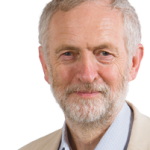
Jeremy Corbyn – 2022 Comments on Peoples Assembly March in London
The comments made by Jeremy Corbyn, the Independent MP for North Islington, on Twitter on 5 November 2022.
Today, thousands have mobilised on the streets to fight back against 12 years of cuts, division and destruction. We have wasted too much time already delaying transformative change. We cannot afford to waste any more.
-
Angela Rayner – 2022 Comments on Rishi Sunak’s Wife and Infosys
The comments made by Angela Rayner, the Deputy Leader of the Labour Party, on 5 November 2022.
Rishi Sunak’s wife is earning tens of millions from her shares in a company still operating from Moscow.
His tough talk on Putin’s regime is compromised by private conflict of interest. Why is he still refusing to answer questions about Infosys?
-
Prince William, the Prince of Wales – 2022 Speech at the 10th Tusk Conservation Awards
The speech made by Prince William, the Prince of Wales, on 2 November 2022.
I am personally delighted to be here at the Tusk Conservation Awards, to celebrate their tenth year alongside so many alumni from past events.
Our shared goal is to draw the world’s attention onto some truly remarkable people working on the frontline of conservation in Africa today.
I am sure you will all agree with me that the commitment, innovation and courage shown by each of our winners and finalists is deeply humbling. And as always, it’s been wonderful to see their outstanding work on the big screen.
These short films brilliantly bring to life the work which the Tusk Awards champion. Thank you to all the talented filmmakers behind them.
Tonight’s event provides a perfect moment not only to reflect on the remarkable achievements of our nominees, but also take stock of the immense challenges that we continue to face in preserving the natural world.
The many ecosystems of Africa are precious; they underpin economies and livelihoods and support an extraordinarily rich biodiversity that plays a critical function in reversing climate change.
As Sir David Attenborough reminded us at this ceremony five years ago, Africa’s wildlife is truly special. What the Awards alumni, their dedicated teams and local communities are protecting is ‘one of the great natural treasures of the world’.
And yet, we also know that it is just a fragment of what there once was. That is why it is vital that we do everything in our power to halt the frightening decline in species that our planet has witnessed over the last 50 years.
It is also why the work of Tusk and its partners is so critical. It’s only by collaborating and building partnerships across communities, organisations, and the public and private sectors that we can foster lasting, meaningful change.
Tusk has taken the lead, both through its Conservation Symposium and new Collaboration Fund, to encourage initiatives that deliver impact, share solutions and build partnerships to scale up conservation efforts.
We must empower communities that face the challenges of coexisting with wildlife and we must promote grass-roots organisations to establish community-led approaches that preserve and enhance their natural heritage.
We are living through turbulent times and it is all too easy to lose sight of how critical it is that we look after our natural world. But we must remain focused on investing in nature and the environment, protecting it for future generations. We must not pass on the baton to our children and grandchildren, apologising for our lack of collective action.
Instead, we must do all we can to support those who support our natural world, often at great risk to themselves.
The Roll of Honour that we saw earlier serves as a shocking reminder of the ultimate price paid by too many men and women on the frontline of conservation.
The work that rangers and game scouts do as nature’s guardians is truly remarkable.
They patrol thousands of miles each year, putting their lives on the line every day, protecting wildlife and eco-systems, supporting communities, and mitigating harmful human-wildlife conflict.
They do vital work in collecting data to monitor species and deepen our understanding of the world around us. They inspire the next generation to love and respect nature and they teach our children about the fragility of the natural world.
For this reason, I want to applaud Tusk and its partners for its ambitious Wildlife Ranger Challenge campaign that has now raised over $16m to support the salaries and operations of some 9,000 African rangers impacted by the pandemic. We owe a huge debt of gratitude to the dedication and bravery of these men and women.
Let me finish by congratulating our finalists and award winners again. David, Ian – when we spent time together earlier this year, I was reminded of both your commitment and dedication – it is truly inspiring. And to Achilles, Neddy, Miguel and Dismas – I know that your work is helping to ensure that Africa’s incredible natural heritage is protected for future generations. I look forward to working alongside all of you during my future visits.
You all should be rightly proud to join the remarkable Tusk Alumni whose incredible achievements over the last ten years have helped lead these efforts.
To everyone else who has made this evening and these awards possible, including those behind the scenes tonight and Tusk’s partners and sponsors, I say ‘thank you’.
I wish you all a wonderful evening.
-

Chris Philp – 2022 Speech on the HMI Report into the Police Service
The speech made by Chris Philp, the Minister of State at the Home Department, in the House of Commons on 3 November 2022.
I thank my constituency neighbour, the hon. Member for Croydon Central (Sarah Jones), the shadow Minister, for her question on this extremely important topic. The report published yesterday by His Majesty’s inspectorate of constabulary and fire and rescue services makes for deeply troubling reading. The inspection was commissioned by the previous Home Secretary, my right hon. Friend the Member for Witham (Priti Patel), following the horrific murder of Sarah Everard by a then serving officer, as well as the emergence of wider concerns about policing culture.
The report concludes that it has been far
“too easy for the wrong people both to join and to stay in the police.”
The inspectorate found that on too many occasions vetting was not thorough enough and that in some cases it was inadequate. The Government take the view, as I am sure Members from across the House do, that that is unacceptable. It is particularly unacceptable and disappointing to hear about these vetting failures given that the Government have provided very substantial additional funding to fund the extra 20,000 police officers and additional resources for the police more widely.
The inspectorate concluded that, although the culture has improved in recent years, misogyny, sexism and predatory behaviour towards female officers and staff members “still exists” and is too high in many forces. That is shameful and must act as a wake-up call. That sort of disgraceful conduct undermines the work of the thousands—the vast majority—of decent, hard-working police officers who perform their duties with the utmost professionalism. More damagingly, it undermines public trust. This matters a great deal to all of us, which is why my right hon. and learned Friend the Home Secretary has made it clear that things must change.
Since the report was published yesterday, we have been studying it carefully; this has been my first week in this position, but I have been studying it carefully. It contains 43 recommendations: three for the National Police Chiefs’ Council; nine for the College of Policing; 28 for chief constables and three for the Home Office. The Home Office will most certainly be implementing those three recommendations. The NPCC said in a statement yesterday that it expects police to act on their recommendations urgently. That is most certainly my expectation as well: all of these recommendations will be acted on as a matter of urgency.
We should keep it in mind that the vast majority of police officers are hard-working and dedicated. They put themselves at risk to keep us safe, and we should pay tribute to the work that the vast majority of officers do on our behalf. The report has uncovered obviously unacceptable behaviour and we expect the recommendations to be implemented urgently.
Sarah Jones
I welcome the Minister to his place. However, I have to say that I am disappointed that the Government are not taking more responsibility and leading from the front following such a grim report.
Yesterday’s report is 160 pages of failure—failure to bar the wrong people from joining the police; failure to get rid of them; failure to protect female staff and officers, and failure to protect the public. A lack of proper action to root out racism, misogyny and serious misconduct means that some communities do not trust the police.
This is by no means the first time that serious failings and horrific examples of unacceptable behaviour have been exposed. After the murder of Sarah Everard by a serving officer, the Opposition came to this place and called for change. After the horrific murders of Bibaa Henry and Nicole Smallman, we came to this place and called for leadership. After the shameful case of Child Q, we came to this place and called for reform. After the shocking Charing Cross station report, we came to this place and demanded action. After the Stephen Port inquiry, we came to this place and called for reform. If the Government had acted and led from the front, we could have stopped people being harmed. Leadership must come from the top.
Yesterday, we learned that Metropolitan police officers had been sentenced to prison after sharing racist, homo- phobic and misogynistic WhatsApp messages. For years, there had been warnings—for example, from the independent inspectorate—about serious problems in the police misconduct system, including long delays, lack of disciplinary action, disturbing and systematic racial disparities and lack of monitoring.
We have heard anecdotal evidence of forces expediting the vetting process to meet the Government’s recruitment targets. What does the Minister know about that? What is he doing to ensure that it does not happen? Will the Minister confirm that the roles of police staff, who do a lot of the vetting work and have been subject to cuts, will be protected so that forces can introduce the right systems? Will the Minister follow Labour’s lead and introduce mandatory safeguards and professional standards, led from the top, into every police force in the country to keep everybody safe?
Chris Philp
I thank the hon. Lady for her initial remarks and for her questions.
The Government have taken action. Indeed, the report we are debating was commissioned by the former Home Secretary directly in response to the issues that were raised. The fact that those issues have seen the light of day is thanks to that Government response. The Angiolini inquiry is also under way for exactly the same reason. We work closely with operational policing colleagues to ensure that the issues are properly addressed. I discussed the issues with Mark Rowley, the Metropolitan Police Commissioner, a few days ago, before the report was published.
As for ensuring that there are adequate resources for vetting and related purposes, the spending review settlement that the police currently receive has meant an additional £3.5 billion since 2019 over the three years of the police uplift programme, not just to pay the salaries of extra police officers but to provide the support and resources required to ensure that they are properly trained and integrated.
The hon. Lady was right to ask about professional standards, which are extremely important. In 2017, national vetting standards were set out in statutory guidance, which the College of Policing published. The report recommends updating some elements of that. Misconduct procedures are set out in statute. We expect the recommendations about improving those areas to be implemented, and we expect police forces around the country to ensure that the report’s recommendations are fully implemented.