Category: Foreign Affairs

  • Ursula von der Leyen – 2022 Comments at Press Conference with President Michel and President Macron

    Ursula von der Leyen – 2022 Comments at Press Conference with President Michel and President Macron

    The opening remarks made by Ursula von der Leyen, the President of the European Commission, on 24 June 2022.

    Today, we had the opportunity to hold an in-depth discussion on the economy during the Euro Summit. The euro area is forecast to continue growing both in 2022 and 2023 although by less than we anticipated before the war. Obviously, the war in Ukraine is having a heavy impact, both on growth and on inflation. We have seen Russia’s disruptive action on gas. And we are seeing price increases beyond energy, on food and elsewhere in the economy. Therefore, we discussed how to mitigate the economic and social impacts, especially on the most vulnerable of our societies.

    This starts with being adequately prepared to deal with potential further disruptions in deliveries of Russian gas to Europe. We are working hard on this. We have reviewed all the national emergency plans to help make sure everyone is ready for further disruptions. And we are working on a common European emergency demand reduction plan with industry, but also with the 27 Member States. We do this because we have learnt our lesson from COVID-19. There we have seen that, when we act together as 27, when we avoid fragmentation, we are strong and we have an enormous impact. I will present this plan in July to the Leaders. There will not be a return to cheap fossil fuels, I think. And therefore, alongside temporary and targeted support to vulnerable families and businesses, it is essential to help our economies and societies adapt to the new conditions. The root cause of our problem is our dependence on fossil fuels, which we must get rid of.

    This is basically the essence of REPowerEU. We are providing through REPowerEU resources of round about EUR 300 billion to do three things: The first pillar is to diversify our energy supply. The second pillar is to increase the energy efficiency. And the third pillar is the supply of our own green renewable energy. We are already seeing results. If I may give you an example for the first pillar, the diversification away from Russian gas: We see that the US LNG deliveries to the European Union are up by 75% this year compared to last year. We have just signed a Memorandum of Understanding with Israel, Egypt and the European Union to make sure that there is natural gas from Israel, liquefied in Egypt and then brought via LNG to the European Union. The Norwegian pipeline gas is up by 15%; Azerbaijan is up by 90%. So there is a lot on the move to really diversify away from the Russian gas to other trustworthy suppliers. Looking at the renewables, I think that there is one interesting figure: The European Union was and is the second largest market globally in terms of increased capacity of renewables in 2021, and will be in 2022. So you also see the big move forward of heavy investment in renewables. That is the energy of the future. That is the way to go.

    A second topic that we have been discussing is, in parallel, that we are working on the review of the economic governance. We know that debts and deficits have soared in all Member States after COVID-19. And at the same time, investment needs are very large for a successful transition to a green, digital and resilient EU society and economy. Therefore, we need to design rules that in a way reconcile these higher investment needs – they are necessary – and at the same time to safeguard sound fiscal finances. One goes with the other: that is fiscal sustainability and growth.

    And let me also end, dear Emmanuel, by congratulating you on an extremely successful French Presidency. The work you have done was colossal. I witnessed every day how intensive your team – and I really want to thank you and your team – has been working on progress in the European Union. It really made a difference. We should keep in mind that when you started, there was a lot on your plate, but you had no clue that there was a war coming. In record time, we delivered together six packages of heavy sanctions. And I think that it was a hallmark and a very defining moment to see the determination of the European Union and the speed at which we can move forward. We have, in this time, welcomed 7.5 million refugees from Ukraine. 3 million are still here. And you and your team, as Presidency, made it possible that we very quickly granted temporary protection, that is access to the labour market, to the education system, to the social security system. All this thanks to the French Presidency.

    I thank you personally for the enormous progress that we have made on the European Green Deal – and here, specifically the huge package of Fit for 55. Dozens of proposals have now been pushed forward. And this is a real step forward. The same goes, and I know that this is very close to your heart, for the DSA and the DMA, so putting the online world in order as well as we have it in the offline world, to protect our citizens and to keep up the competitiveness of our businesses in the online world. This has been – the DSA and the DMA – negotiated with ambition and adopted in record time. You really delivered. There was the Conference on the Future of Europe.

    But I am personally very proud on one specific file that you have concluded during the French Presidency, and this is Women on Boards. It took ten long years; it was stuck for ten years. The French Presidency made it possible that it reappeared and was negotiated and adopted in record time. So not only did you put an end to an injustice for women, but also to an enormous loss of earnings for companies. It is a real big step forward that we have now this agreement on Women on Boards.

    Last but not least, and I would not miss to mention it, we have made good progress on the Pact on Migration and Asylum, especially on the voluntary solidarity mechanism and on the governance of Schengen. Important files. They were difficult to manage, you really pushed it forward. I stop here, but as you can see, dear Emmanuel, I think that France can be very proud of this Presidency. It was outstanding. Many thanks for that.

  • Liz Truss – 2022 Comments on Support for Afghanistan Following Earthquake

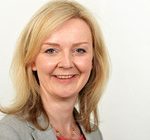
    Liz Truss – 2022 Comments on Support for Afghanistan Following Earthquake

    The comments made by Liz Truss, the Foreign Secretary, on 24 June 2022.

    The recent earthquake is a tragedy for the people of Afghanistan. The scale of need was already severe before the earthquake struck, with more than half of the population requiring humanitarian assistance.

    UK support will enable lifesaving supplies to be provided on the ground. Our aid budget for Afghanistan is one of the UK’s largest bilateral programmes and we will continue to work urgently with our international partners to respond to the unfolding humanitarian crisis.

  • Boris Johnson – 2022 Comments at CHOGM in Rwanda

    Boris Johnson – 2022 Comments at CHOGM in Rwanda

    The comments made by Boris Johnson, the Prime Minister, on 24 June 2022.

    It is an extraordinary and moving experience to be here in Rwanda today. A country that experienced some of the worst horrors of the 20th century in recent memory, and now finds itself with a thriving social and economic life and near-universal primary education.

    Today, Rwanda is hosting leaders representing two-thirds of the world’s population, stretching from the remotest islands of the Pacific to the southern tip of Africa.

    Rwanda was never a British colony – it joined the Commonwealth of its own volition in 2009, recognising the benefits that come from being part of a progressive alliance representing two thirds of the world’s population and some of its fastest-growing economies.

    As many British Prime Ministers before me – and of course both her Majesty the Queen and the Prince of Wales – have recognised, there are few forums more quietly important for our nation’s peace, prosperity and global influence.

    We benefit from the incredible Commonwealth advantage – the ‘fertilizer’ I talked about yesterday – of shared language and institutions, which opens doors and cuts the costs of doing business.

    We want to seize those opportunities, and that’s why I announced this week major new British investments in green infrastructure projects, as well as trade schemes designed to break down the barriers to doing business.

    This is where the UK is positioning ourselves post-Brexit, in close alliance with our European neighbours but also deepening our ties with old friends in Asia, Africa, the Caribbean and the Pacific.

    More trade, more commerce brings prosperity and stability to other countries, but it also cuts costs for British consumers and opens opportunities for UK businesses – jobs and growth at home.

    Unfortunately, that global prosperity and stability is being threatened by Vladimir Putin’s unprovoked assault on Ukraine.

    Many of the countries represented here in Kigali today find themselves bearing the brunt of Putin’s folly, their populations brought closer to poverty by spiralling food and energy costs.

    I know of course, and deeply appreciate, that many families and businesses in the UK have been hit hard as well by the rising cost of living.

    That is why in our country the Chancellor has introduced an unprecedented package of financial support to support the most vulnerable households.

    But we should also recognise the challenges around the world.

    The UN estimates that an additional 48 million people will be pushed into acute hunger this year – that is, to the point of starvation – caused by climate change and post-pandemic supply shortages but also by the war in Ukraine.

    I spoke to President Zelenskyy last week in Kyiv last week about how we can unblock Russia’s blockade of Ukraine’s grain exports.

    But today we are also announcing a new £372 million package of UK aid.

    That funding will support the UN’s emergency response in the hardest-hit countries, as well as providing cutting-edge science partnerships to look at drought-resistant crops and new agricultural techniques.

    And as I go tomorrow night to the G7 in Germany we will also commit to looking at what more richer countries can do to bring down global commodity prices and increase food supplies to get the world economy back on track and stick up for the freedoms in which we all believe.

    Thank you very much.

  • Boris Johnson – 2022 Comments on Food Security

    Boris Johnson – 2022 Comments on Food Security

    The comments made by Boris Johnson, the Prime Minister, on 24 June 2022.

    While Vladimir Putin continues his futile and unprovoked war in Ukraine and cravenly blockades millions of tonnes of grain, the world’s poorest people are inching closer to starvation.

    The Government has put in place an unprecedented package of support to help the most vulnerable households in the UK deal with the rising cost of living.

    But it is also right that we step up to support countries on the frontlines of conflict and climate change, where an increase in the price of bread can mean the difference between a child living or dying. From emergency food aid to reviewing our own biofuel use, the UK is playing its part to address this pernicious global crisis.

  • Boris Johnson – 2022 Comments at Opening of CHOGM in Kigali

    Boris Johnson – 2022 Comments at Opening of CHOGM in Kigali

    The comments made by Boris Johnson, the Prime Minister, in Kigali on 24 June 2022.

    Your Royal Highness, President Kagame, Madam Secretary General, Your Excellencies, ladies and gentlemen, I’m honoured to perform the final duty of the United Kingdom as Chair-in-Office of the Commonwealth and hand over the baton to President Kagame, and wish him every success as Chair of our unique association, encompassing 54 countries and a third of humanity.

    One of the newest members is now at the helm, and more nations are seeking to join, which tells you everything about the health and vitality of our Commonwealth, because for all the differences between us, we are united by an invisible thread of shared values, history and friendship.

    The Head of the Commonwealth, Her Majesty the Queen, incarnates everything that brings us together and it’s fitting that in the year of her Platinum Jubilee, the association she cherishes should be gathering in the continent where she became Queen.

    When the UK became your Chair-in-Office in 2018, the word “Covid” had not been invented many of us had no idea what a “coronavirus” was, and nobody could have known that the worst pandemic for a century would soon claim millions of lives.

    The British government put together the partnership between Oxford University and AstraZeneca that produced the world’s most popular vaccine, and during our time as Chair-in-Office, the UK supported the delivery of more than 1.4 billion doses of Covid vaccines to Commonwealth countries.

    The pandemic posed a common threat to all humanity and the same is true of catastrophic climate change.

    No-one understands this better than our Commonwealth friends in the Caribbean, the Pacific and the Indian Ocean who can see the incoming tides surging ever higher up their beaches, threatening to inundate their villages and towns, and, in time, the entire land mass of some island states.

    For them, the baleful effects of climate change are not vague or theoretical, but already happening before their eyes.

    When we hosted COP26 in Glasgow last November, it was these fellow Commonwealth leaders who spoke with greatest urgency and authority about the perils of quilting the earth with greenhouse gases.

    And we in the developed world have an obligation to help our friends to cope with a danger they had no hand in causing, and during the UK’s time as Chair-in-Office, the Commonwealth Finance Access Hub mobilised over $38 million for the most vulnerable members, but of course we must press on and do more.

    And if I could imagine a silver bullet that would solve an array of problems and transform countless lives, it would be to give every girl in the world the chance to go to school.

    At the last CHOGM in London in 2018, the UK announced £212 million for the Girls’ Education Challenge, and I’m delighted to say that this initiative is now at work in 11 Commonwealth countries, ensuring that girls are able to gain at least 12 years of quality education.

    We need to empower them to play their full part in the economy when they leave school, so the UK is funding the “She Trades” Commonwealth programme, which has already helped over 3,500 women-owned businesses to become more competitive and generate more than £32 million of sales.

    And if there is anyone who doubts the ability of the Commonwealth to speak with one voice, it was in 2020 that the UK delivered the first ever Joint Statement by all 54 Commonwealth members before the Human Rights Council in Geneva, recalling – and I quote – our “proud history of acting to strengthen good governance and the rule of law”.

    One of the gravest affronts to everything we stand for is Russia’s invasion of Ukraine and Putin’s blockade of the ports that would otherwise be shipping food to the world’s poorest people.

    At this moment, nearly 25 million tonnes of corn and wheat is piled up in silos across Ukraine, held hostage by Russia.

    Britain supports the United Nations plan to get that food out and we will invest over £370 million in global food security this year, including £130 million for the World Food Programme.

    We want to work alongside our Commonwealth friends to understand your needs and priorities and deliver joint solutions to a crisis that Putin has deliberately engineered.

    For now, it only remains for me to thank every Commonwealth member for having given the United Kingdom the chance to serve as Chair-in-Office.

    And as I pass on this responsibility to President Kagame, a close friend and partner, I know that he shares my boundless optimism about the future of the Commonwealth at the forefront of the international agenda, and benefiting all our peoples.

    Thank you all very much.

  • Fabian Hamilton – 2022 Speech on British Council Contractors in Afghanistan

    Fabian Hamilton – 2022 Speech on British Council Contractors in Afghanistan

    The speech made by Fabian Hamilton, the Labour MP for Leeds North East, in the House of Commons on 23 June 2022.

    I am grateful to the hon. Member for Basildon and Billericay (Mr Baron) for securing this important urgent question.

    On behalf of the Labour Opposition, I extend my thoughts to all those currently suffering in Afghanistan following the dreadful earthquake earlier this week.

    In February it was revealed that hundreds of British Council staff were left stranded in Afghanistan following this Government’s botched evacuation from Kabul. The Minister told the House at the time that the Government were supporting those in need and that 50 British Council contractors had been evacuated. Four months on, we are faced with the same problem: hundreds of former British Council contractors are stranded, with reports that they are being attacked and beaten by the Taliban due to their previous work on behalf of the United Kingdom.

    Many of those still in Afghanistan are security guards who protected British staff at the embassy as they undertook an extremely difficult task during the evacuation last August. We owe so much to these courageous British Council contractors, and the fact that they are still in Afghanistan and facing daily violence due to their co-operation with the UK is, frankly, nothing short of a disgrace.

    I would therefore be grateful if the Minister could tell us how many British Council staff are still stuck in Afghanistan today. What urgent measures are being put in place to evacuate the rest of the staff who are still stranded in Afghanistan? What engagement has she had with regional partners to facilitate safe passage for the former staff who attempt to leave? Once again, what message does it send to other British Council contractors who work in challenging environments around the world if the UK leaves Afghan contractors stranded in this way?

    It is high time the Government got their act together and stood up for those who worked with the United Kingdom to promote security, tolerance and democracy in Afghanistan.

  • Vicky Ford – 2022 Statement on British Council Contractors in Afghanistan

    Vicky Ford – 2022 Statement on British Council Contractors in Afghanistan

    The statement made by Vicky Ford, the Conservative MP for Basildon and Billericay, in the House of Commons on 23 June 2022.

    Last August, when the situation in Afghanistan was deteriorating so rapidly, the UK Government worked at great speed to evacuate more than 15,000 people from the country within a fortnight. This was the biggest mission of its kind in generations, and the second largest evacuation carried out by any country. We are right to be proud of what our British forces and others achieved at that time. Those evacuated included British nationals and their families and about 500 particularly vulnerable Afghans, including some British Council contractors, journalists, human rights defenders, campaigners for women’s rights, judges, and many others. All former British Council employees who wished to resettle have arrived in the UK, with their family members.

    The British Council played an important role in Afghanistan in working to support the UK mission there and to promote our values. It is right that the Government do the right thing for British Council employees and contractors, and that includes resettling eligible contractors if they are at risk. Therefore, in January this year the then Minister for Afghan Resettlement, my hon. Friend the Member for Louth and Horncastle (Victoria Atkins), announced the launch of a new Afghan citizens resettlement scheme, which will resettle up to 20,000 eligible people over the coming years. There is no application process for the scheme, but people can express an interest in resettlement.

    Eligible individuals will be referred for resettlement via three referral “pathways”. Under pathway 3, we are committed to considering eligible at-risk British Council and GardaWorld contractors as well as Chevening alumni. The Foreign, Commonwealth and Development Office will refer up to 1,500 people from Afghanistan and the region to the Home Office for resettlement, including eligible family members. On 20 June the FCDO opened an online system, whereby eligible individuals can express their interest in resettlement.

  • Boris Johnson – 2022 Article on the Commonwealth

    Boris Johnson – 2022 Article on the Commonwealth

    The article written by Boris Johnson, the Prime Minister, and published in the Telegraph (and issued as a Government news release) on 19 June 2022.

    There was something magical about watching the Platinum Pageant outside Buckingham Palace – the sheer joy and enthusiasm of the crowds, the dash and exuberance of the parade and then the deafening cheer as the Queen appeared on the balcony.

    Below her stood her Guardsmen, scarlet islands in a human sea of acclaim, and nearby were the khaki tunics and varied headgear of soldiers from Commonwealth nations across the world.

    I have no doubt that Her Majesty would have been looking out for the Commonwealth contingents because she never forgets something that her British subjects are occasionally inclined to overlook. She is more than our beloved Queen: she is also Head of the Commonwealth.

    And there is a fact of geopolitics that I never forget: this unique association of sovereign states is becoming ever more significant and valuable.

    This week I will go to Rwanda for a Commonwealth summit and around the table will be 54 countries encompassing about a third of humanity.

    You could point out that Commonwealth members are vastly different in just about every way and of course you would be right. The Pacific archipelago of Tuvalu (population 11,000) will be at the same table as India (population 1.3 billion).

    Yet for all the differences between us, we are joined by an invisible thread of shared values, history and institutions and of course the English language. We will meet on equal terms as old friends who know one another well.

    If you retort that this all sounds vague and whimsical and no job was ever created and no parsnip buttered by invisible threads or shared values I would have to point out that you are mistaken – demonstrably and provably mistaken.

    It is an amazing fact that those invisible threads – particularly a common language and familiar legal and administrative systems – are of immense practical value for trade. Today the “Commonwealth advantage” knocks 21 per cent off the cost of trade between members.

    The same applies to investment, which is 27 per cent higher between Commonwealth nations than for other country pairs.

    All of this creates a unique opportunity for Britain whereby the Commonwealth – and only the Commonwealth – combines vast and rapidly growing markets with a real and quantified trading advantage.

    That is why we are mobilising the UK’s regained sovereignty to sign free trade or economic partnership agreements with as many Commonwealth countries as possible.

    So far we’ve done 33, including Australia and New Zealand, and we’re aiming for India, the biggest of them all, by Diwali in October.

    You only have to look at the sheer scale of economic expansion in many of the club’s biggest members to see why the Commonwealth trade advantage is going to become ever more important for British jobs and livelihoods.

    The Commonwealth’s GDP – $13.1 trillion – has risen by a quarter since 2017. Over the next five years, it’s forecast to jump by close to another 50 per cent to $19.5 trillion.

    Here are the growing markets for British exports that will create jobs at home and, at the same time, ease the pressure on the cost of living.

    Is it just about trade, you might ask? Do those invisible threads amount to anything more than an opportunity for commerce?

    I would reply that of course they do. Next month, we will host the Commonwealth games in Birmingham; once again, athletes and visitors from across the world will converge on the UK.

    And the Commonwealth comprises over a quarter of the total membership of the United Nations: together we have the weight to exert global influence. In the past, the Commonwealth’s quietly effective diplomacy helped to hasten the end of apartheid in South Africa.

    If that sounds a bit far away, it was only in 2020 that Britain delivered the first Joint Statement by all 54 Commonwealth members at the Human Rights Council in Geneva, recalling our “proud history of acting to strengthen good governance and the rule of law”.

    I will go to the Commonwealth summit ever more convinced that our unique association, already proving its worth every day, will become yet more valuable in the decades ahead. Like the Queen, we should all cherish the Commonwealth.

  • James Cleverly – 2022 Statement on the UK-EEA EFTA Separation Agreement

    James Cleverly – 2022 Statement on the UK-EEA EFTA Separation Agreement

    The statement made by James Cleverly, the Minister for Europe and North America, in the House of Commons on 16 June 2022.

    The UK-EEA EFTA separation agreement, which was agreed with Iceland, Norway and Liechtenstein, and signed on 28 January 2020, covers citizens’ rights and separation provisions. The separation agreement established a Joint Committee whose primary role is to supervise and facilitate the implementation and application of the separation agreement, with the power to make decisions. The Joint Committee has a rotating chair which is currently held by Liechtenstein.

    The third meeting of the Joint Committee took place on 8 June 2022 in London, and focused on citizens’ rights. Each of the parties to the agreement gave an update on the implementation and application of the citizens’ rights provisions, and reiterated their commitment to ensuring continued correct implementation and application. The Independent Monitoring Authority and the EFTA Surveillance Authority also attended to give updates on their monitoring and complaints handling functions as required by the separation agreement, and to discuss their annual reports for 2021.

    The Joint Committee adopted a decision to amend part I of annex I of the separation agreement to reflect decisions taken by the EU’s Administrative Commission for the Coordination of Social Security Systems. These decisions relate to the interpretation of the relevant social security co-ordination provisions, including on data processing and data exchange. They do not impact the rights provided for in the separation agreement. Copies of this decision have been deposited in the Libraries of both Houses.

    The Joint Committee will meet at least annually, with Norway holding the next rotating chair. The next meeting is expected to take place in 2023. I commit to continuing to update Parliament following future meetings of the Joint Committee where decisions are taken.

  • Amanda Milling – 2022 Speech on Syria

    Amanda Milling – 2022 Speech on Syria

    The speech made by Amanda Milling, the Minister for Asia and the Middle East, in the House of Commons on 15 June 2022.

    Can I say how grateful I am to the hon. Member for Wirral South (Alison McGovern) for securing this very timely debate? I pay tribute to her for her work as chair of the all-party parliamentary friends of Syria group, and for her passion for Syria, as evidenced in her speech.

    I also want to pay tribute to the legacy of Jo Cox and her commitment to the people of Syria, noting, as the hon. Member mentioned, that it is the anniversary of her horrific murder tomorrow and the fact that Sir David Amess chaired the last debate on this subject. As she said, they are both sorely missed by this House.

    Bashar al-Assad and his allies, including Russia, have inflicted terrible suffering on Syrians for over 11 years now. Children born in Syria in the last decade have been subjected to terrible violence, hunger and deprivation. The UK Government continue to call for an end to this suffering through full implementation of United Nations Security Council resolution 2254, a nationwide ceasefire and progress towards an inclusive, representative political process.

    Much of what we have seen play out in Syria, such as the crushing of dissent, attacks on civilian targets and a brutal conflict that has displaced millions, is now being replayed in Ukraine. Peace is a necessity for Syria, its people and us all.

    Syria’s conflict has killed more than half a million people, displaced 60% of the population, and collapsed the Syrian economy. Under Assad’s regime people have faced arbitrary detention, brutal torture and indiscriminate attacks. There is clear evidence that Assad has used chemical weapons against his own people on at least eight occasions, and has the capability to conduct further attacks. Russia continues to shield Assad from accountability for his crimes, through disinformation and false narratives. Along with Iran, Russia has provided significant military support to the Syrian regime. The conflict has also created space for Daesh and other extreme groups to operate in, which continues to pose one of the most significant global terrorist threats, including to UK citizens.

    The UK has responded to the situation in Syria by delivering our largest ever commitment to a single humanitarian crisis to date. We have committed a total of £3.8 billion since 2012, including up to £150 million pledged this year. Even so, aid is struggling to keep pace with the growing need in the region as the conflict continues. Today more than 14 million people are in need of assistance. Access issues and politicisation are complicating delivery, putting those in need at further risk. As the hon. Lady said, in July the UN Security Council will hold a crucial vote to renew the UN’s mandate to deliver aid cross-border into Syria. Russian cruelty in the past three years has blocked that in the Security Council, and reduced UN access to a single border crossing. I visited Turkey last week to see first hand the importance of that issue, and to raise awareness. We are calling on all Security Council members to renew resolution 2585 and to provide cross-border aid at next month’s vote. We thank our allies and partners for their continued support.

    The UK also supports efforts to maintain the current ceasefire in north-west Syria, including Turkey’s efforts to protect civilians. We will continue to support Syria’s neighbours, so that they can meet the needs of Syrians seeking refuge. As they are so often, women and girls are the worst affected by the conflict. They also face horrific gender-based violence, including sexual violence. Support for women and girls is at the heart of UK foreign and development policy, through three innovation pilots that seek to prevent violence by targeting the widespread inequality that denies women ownership of land and access to economic resources and opportunities. We continue to push for a more robust global response to gender-based violence. The conflict is also denying Syria’s children their basic human right to education, impacting a whole generation of young people. Since 2018, the UK-funded Syria education programme has reached more than half a million children, supporting 85% of children in lower primary school to be enrolled in schools in the north-west.

    Just as we are consistent with aid, so will we continue to hold Assad’s regime and its backers to account, including by sanctioning those close to him, and through our support for international law. There can be no impunity for violations of international, humanitarian and human rights law. Since 2012 the Government have contributed more than £40 million to gather evidence and help victims of human rights abuses and violations, including through the UN. We welcome the release of any detainees, but the regime has denied independent verification of its recent amnesty on prisoners, and there are still 130,000 who remain unaccounted for.

    Our position on the regime’s abhorrent use of chemical weapons during this conflict is well known. The UK has full confidence in the Organisation for the Prohibition of Chemical Weapons and its investigations, which have attributed multiple attacks to the Assad regime. We will continue to push Assad to comply with the Chemical Weapons Convention.

    On the point raised by my right hon. Friend the Member for Clwyd West (Mr Jones) about Daesh, threats from terrorist and extremist groups rooted in Syria remain. The UK is a leading member of the global coalition against Daesh. We remain committed to ensuring it cannot resurge in the region, working with the coalition and our regional allies.

    I also want to pick up on the hon. Lady’s comment about civil society. We recognise the contribution of Syrians in the UK. The Government support and work closely with Syrian civilian society, especially in terms of upholding human rights.

    In conclusion, the UK is committed to supporting the people of Syria. They have not been forgotten. We are clear that the UN-led political process, led by special envoy Pederson, is the only pathway to bring the peace that Syrians need and deserve. The Assad regime craves legitimacy, but continues to bring suffering and oppression to its people, and to stall the political process as it pursues self-preservation over genuine political reform. Until the regime participates in that process in good faith, we will not engage with Assad and will discourage others from doing so. Meanwhile, the UK will continue to deliver lifesaving and life-sustaining humanitarian assistance to protect women and girls, and to hold the regime and its backers to account.