Category: Foreign Affairs

  • Tim Loughton – 2020 Speech on Yemen

    Tim Loughton – 2020 Speech on Yemen

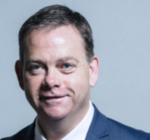
    The speech made by Tim Loughton, the Conservative MP for East Worthing and Shoreham, in the House of Commons on 24 September 2020.

    I beg to move,

    That this House has considered the situation in Yemen.

    I am delighted to move the motion, and I am aware of the very great interest in this debate, so I will make my comments as quickly as possible. If people would not intervene, that would be helpful, and I do not propose to take the few minutes at the end to respond to give as many Members as possible the opportunity to come in. I thank the Backbench Business Committee for granting this debate. We have tried many times—it was aborted some six months ago because of lockdown—but now, at last, we are able to debate this situation.

    The trouble is that the situation has not got any better. I am not surprised that there is so much interest in Yemen today, because it has become the victim of the most lethal and complex cocktail: an extended and ostensibly insoluble civil war with international ramifications; various other man-made disasters; numerous natural disasters and potentially catastrophic environmental ones; an economic meltdown; and now, on top of it all, a deadly pandemic that Yemen was least prepared and equipped to deal with.

    There is also great interest beyond Parliament; I gather that more than 210,000 people have signed a petition calling for a ceasefire, and that that petition has been tagged to this debate. Alas, in the six months spent trying to secure this debate, the situation has deteriorated yet further on multiple fronts. It is vital that, despite all the distractions at home and across the world in dealing with the pandemic, we neither forget nor neglect the world’s worst humanitarian disaster, which Yemen remains.

    I chair the all-party parliamentary group on Yemen, and I pay tribute to my predecessor, my hon. Friend the Member for Meon Valley (Mrs Drummond), who I am glad to see will be participating in the debate, and to the secretariat provided by Jack Patterson, who has kept members updated and arranged briefings, including ​just this Tuesday with the British deputy ambassador in Yemen, Simon Smart, the military attaché and representatives from Oxfam and Médecins Sans Frontières, which, with many other agencies, are doing such an amazing job in almost impossible conditions in Yemen. I pay tribute to all those agencies and workers

    To deal with the political and military situation first, 2020 marks five years of a devastating conflict in Yemen and almost 10 years of chaos since the Arab spring in that country. Yemen desperately needs an effective and lasting ceasefire. Out of a total population of some 30 million, 24 million people rely wholly or partly on aid, and they desperately need protection now.

    Yet ceasefires and peace agreements in Yemen have a reputation for being broken almost as soon as they are brokered. The comprehensive Stockholm agreement, brokered in December 2018, set out a comprehensive peace plan. It was backed in January 2019 by the United Nations’ unanimously adopting the UK-drafted resolution 2452, which established a special political mission and special envoy, Martin Griffiths, who has worked tirelessly to secure a settlement.

    The agreement promised the withdrawal of Houthi and Government-led forces from Hodeidah, a large-scale prisoner transfer, UN observers and various other urgently needed measures. The United Arab Emirates, which had been very involved with the conflict, ostensibly stepped back and withdrew its troops from Yemen. The position has been complicated, though, by the emergence of the Southern Transitional Council, who have taken control of Aden, fragmenting the Government position in trying to present a united resistance to the Houthis.

    Great importance has been placed on the Riyadh agreement, signed in December 2019 between the Yemeni Government and the STC, outlining a series of measures to bring peace to the south of Yemen; but the agreement broke after just eight months, although Martin Griffiths and others work hard to revive it. The fragile pause in the conflict in 2019 broke down in 2020 after an attack in northern Yemen. A unilateral ceasefire by the Saudi-led coalition in April 2020 in the light of covid-19 expired in May, but The Guardian reported that the Houthis had broken a truce no fewer than 241 times in the space of just two days.

    I could talk about abuses on all sides: the 42 airstrikes in July alone, which particularly impacted and killed civilians; drones dropping grenades on civilian targets; and Houthi missile strikes on Riyadh in Saudi Arabia just earlier this month. The catalogue of abuse, devastation, destruction and mistrust on all sides goes on. As a result, 10 new frontlines have emerged since the beginning of 2020, with particularly intense fighting in the past four months, especially around the strategically important areas of Ma’rib, which controls access to the oilfields, Taiz and in the Hodeidah governate on the west coast.

    Peace is as elusive as ever, yet death and suffering are worse than ever. More than 250,000 Yemenis, at least, have died since 2015, including 100,000 as a result of combat and 130,000 from hunger and disease. That is probably a very conservative estimate. It includes an estimated 1,000 civilians killed or seriously injured in the conflict in the first six months of this year, including 100 children. There are more than 2 million internally displaced people, with a majority in and around Ma’rib, which is currently under siege from the Houthis, who ​are throwing everything at that city, despite suffering very high casualties. Clearly they view the lives of their troops as cheap.

    Some 24.3 million people need humanitarian aid—24.3 million out of a population of 30 million. That includes 12.2 million children. A total of 20.1 million people are food-insecure, and 20.5 million people lack clean water or sanitation. There have been more than 2.3 million cholera cases since 2017, as a collapsed health system has been woefully inadequate even before covid hit.

    The exact impact of covid is unknown; the 1,000 cases reported in Sana’a is surely a woeful underestimate of the reality. We all saw the images on the news of mass graves being dug in the capital. The International Rescue Committee projects that the most likely scenario is that covid could infect nearly 16 million people and kill more than 42,000, making the fatality rate in Yemen one of the highest in the world. There is little chance of testing. We might think we have a problem with testing in the United Kingdom, but there are just 118 tests for every 1 million people in Yemen, compared with 41,500 in the UK. Just 0.01% of the population stands a chance of being tested, and there is no clue about how they will cope if they are hit by a second wave.

    Since 2015, air raids have hit water and health facilities more than 200 times. Oxfam reports that those remaining often lack electricity and fresh water, and even if a hospital is operating, fuel is so expensive that people in remoter areas cannot get transport to hospital, and their conditions worsen untreated. Médecins sans Frontières, whose volunteers have done incredible work under fire, reports that many medical staff—if not most—have not been paid for years, and they struggle to survive and carry on their jobs in the most extraordinary circumstances.

    The water shortage has brought big challenges for food supply, as farmers cannot irrigate their crops, and more than 90% of Yemen’s food is now imported. With a collapsing currency and an economy that has shrunk by 45% since 2015, UNICEF forecasts that the number of malnourished children under the age of five will grow by 20% over the next six months, to reach 2.4 million—2.4 million malnourished children.

    Layla Moran (Oxford West and Abingdon) (LD)

    I thank the hon. Gentleman for leading the debate; he is making it clear just how heartbreaking the situation is for the people on the ground in Yemen. Does he agree that that is why we should stand proud and firm by the 0.7% of gross national income that this country gives in aid to other countries? It is so sorely needed, especially during this pandemic.

    Tim Loughton

    I agree with the hon. Lady, and I will finish on the figures about the United Kingdom. We have been the third largest donor and are one of the most important donors at the moment. The reasons are obvious, and the results are so important.

    To cap it all, ironically, recent floods in Hajjah and Amran have destroyed crops, and they have now been hit by swarms of locusts—truly a human tragedy of biblical proportions. Added to that, the Red sea faces a potential environmental catastrophe from the FSO Safer, a 45-year-old oil tanker loaded with more than 1 million barrels of crude oil, anchored 60 km off the rebel-held port of Hodeidah and left to decay for the last five years, with no agreement over access for engineers.​

    So we can see why the country is almost totally dependent on aid from the international community and the heroic efforts of aid organisations and their staff, who are working in extremely dangerous conditions as a result of conflict and disease, with the added challenge of getting aid in through blockaded ports under fire or via the main airport, which has now closed again, as well as the everyday problems of corruption and bureaucracy on all sides using access to aid as a military weapon. Indeed, the Houthis tried to impose a tax on aid supplies coming in. NGO buildings have been looted and aid workers arrested.

    The aid itself is now seriously in question. So far this year, only 37% of the requested funding in the humanitarian response plan has been met, as some of the most generous donors previously—including the US, Saudi Arabia and Kuwait—have reduced or withdrawn their funding at the worst possible time. As the International Rescue Committee points out, it was that funding that narrowly prevented famine two years ago, but now more than 9 million Yemenis have seen their aid cut, driving them to the brink of starvation; 12 of the UN’s 30 major programmes have already been scaled back; and a further 20 programmes could be reduced or closed completely if funding fails to emerge urgently.

    Yemen is facing a perfect storm of a crumbling economy, reducing aid, restrictions placed on humanitarian access by warring parties, the continuing impact of an intractable conflict and now the additional pressures of covid. Amid all this, the support and financial aid from United Kingdom has been a rare, but desperately needed, constant. We are the third largest donor behind the US and Saudi Arabia. The UK has committed nearly £8 billion of assistance since the conflict began, including £160 million at the recent pledging conference. UK support has met the immediate food needs of more than 1 million Yemenis every month. It has treated 70,000 children for malnutrition and provided more than 1 million people with improved water and basic sanitation. The new money in the latest round will provide medical consultations, train 12,000 healthcare workers, boost 4,000 crumbling health centres and help in the fight against covid. The Education Cannot Wait campaign has helped girls, especially, who are missing out on education and helped programmes against the rise in violence against women and girls in particular, and against child labour. These are all problems affecting Yemen, as if it did not have enough problems already.

    As the penholder on Yemen at the UN Security Council, the UK is in a crucial position. It is leading the international community to do more to respond to the Yemen crisis, and Martin Griffiths is doing an extraordinary job. We have a proud record of support and I hope that when the Minister speaks, he will confirm that that support will continue. However, there can be no real progress without a sustainable ceasefire leading to peace talks that are broad and inclusive, not just with Government forces, the STC and the Houthis but with all aspects of civil society and with the support of the regional powers, who will hopefully return to the donor table. Again, I hope the Minister can update the House about the UK continuing to play a leading and proactive role to help to bring this about.​

    Yemen is the world’s worst humanitarian disaster, and the world’s preoccupation with fighting covid at the moment cannot be an excuse for sidelining the unfolding tragedy that continues to engulf the Arab world’s poorest nation. It is difficult to think of a more tragic combination of circumstances affecting a nation and its people quite as toxically and systematically as is happening now in Yemen, and it has been going on for far too long. It is time for peace. It is time for the world to put pressure on the warring factions and their backers, and time to rally around the people of Yemen to regroup, recover and rebuild. I am sure that the whole House will want to show its support for that.

  • Lisa Nandy – 2020 Speech on the Presidential Elections in Belarus

    Lisa Nandy – 2020 Speech on the Presidential Elections in Belarus

    The speech made by Lisa Nandy, the Shadow Secretary of State for Foreign Affairs, in the House of Commons on 24 September 2020.

    Let me start by thanking the Foreign Secretary for this statement and for advance sight of it. It is rare, but it matters when we agree with one another in all parts of the House. It sends a message to the people of Belarus that this whole House stands with them on their right to choose their own destiny, and to resist interference in their elections and freedoms from anywhere, wherever it comes from. That is why we believe he is right to focus support on the people of Belarus and to focus on tackling the human rights abuses—the tear gas, detentions and beatings—we have seen in recent weeks. I know he will also be as concerned as I am about reports of torture, so perhaps he will take this opportunity to reaffirm his Government’s ​commitment to upholding the Geneva convention. I want to pay particular tribute to those brave women who have stood up in recent days to the armed, masked men and shown the face of courage to the world. When they defend democracy and stand up for freedom, they stand up for us all and they must have our support.

    We very much support the Foreign Secretary’s efforts to work with allies to impose Magnitsky sanctions on those involved. Has he had discussion with counterparts about including Lukashenko in these measures? Has he made any progress in ensuring that corruption is in the scope of the Magnitsky legislation that this House recently passed? I welcome the funding the Foreign Secretary has provided to human rights organisations, but will he tell the House what he is doing to protect academics? Is he exploring increasing the number of Chevening scholarships to Belarusians? Has he considered measures to support protesters who have lost their jobs or been blacklisted for the stance they have taken? He will know from his previous work that there is more than one way to harass, intimidate and silence people into compliance, and taking away livelihoods has always been one chief way in which dictatorships seek to silence people. I am particularly concerned about members of the arts and cultural community, more than 50 of whom have been detained, with a greater number having lost their livelihoods. What active steps is the British embassy taking to protect writers and other cultural figures, as well as others involved in the protests, from interference?

    The BBC Russian service is a key source of impartial information for the people of Belarus. I am very concerned about the potential for both funding cuts to the World Service and the targeting of its journalists. So will he commit to ensuring that Foreign, Commonwealth and Development Office funding for this service is protected in any upcoming spending review? What is his Department doing to support BBC journalists and protect them from attacks on them and their families? Has he had any discussions with the Home Secretary about provision for Belarusians seeking asylum in the UK? Will he take this opportunity to reiterate the UK’s support for free and fair elections around the world? I welcome his announcement about the OSCE today. Will he commit to ensure that we play our part in continuing to provide funding to uphold democracy abroad and security at home?

    As the Foreign Secretary moves forward with sanctions, this underlines the importance of the UK safeguarding against the UK and our overseas territories providing a safe haven for money obtained through corruption and human rights abuse—blood money, as he called it. So what progress has been made in implementing the recommendations of the Russia report? The Government have been silent on that matter since it was published before the summer recess.

    Finally, one of the leading figures in the Belarusian opposition council said recently that more than the prospect of detention what he fears is the prospect that nothing will change. We send a message from all parts of this House today that we stand with him and with those who are defending freedom and democracy, in Belarus and around the world.

  • Dominic Raab – 2020 Statement on the Presidential Elections in Belarus

    Dominic Raab – 2020 Statement on the Presidential Elections in Belarus

    The statement made by Dominic Raab, the Foreign Secretary, in the House of Commons on 24 September 2020.

    With permission, Madam Deputy Speaker, I would like to make a statement on the situation in Belarus.

    As the House will recall, on 9 August Belarus held presidential elections that were neither free nor fair. The election campaign was itself characterised by the imprisonment of opposition candidates and the arrests of hundreds of their supporters. On polling day on 9 August, witnesses reported extensive fraud and falsification of results, and local independent observers were barred from witnessing the count, including members of the British embassy, who were threatened and then removed from the polling station. The Belarusian authorities prevented independent international monitoring of the electoral process by refusing to co-operate with the Organisation for Security and Co-operation in Europe’s election monitors. As a result, thousands of Belarusians took to the streets in what can only be described as peaceful protest. They challenged Lukashenko’s claim to have won 80% of the vote and demanded fresh elections, and they have been peacefully protesting in huge numbers right across Belarus ever since.

    The world has watched, frankly, in horror at the response of the Belarusian authorities. They launched a campaign of violence, intimidation and harassment against peaceful protesters. We have seen horrific scenes of militia attacking demonstrators and then dragging them away. UN human rights experts report that the authorities have beaten those that they held in detention and they have threatened female protesters with violence, including rape.

    The Belarusian authorities have targeted journalists, including those of the BBC, and shut down the internet to hide their actions. Opposition leaders set up a co-ordination council to organise peaceful protests. In response, the authorities abducted, imprisoned and expelled all but one of the co-ordination council’s board members. Svetlana Tikhanovskaya has been exiled to Lithuania, and prominent campaigner Maria Kolesnikova has been imprisoned and charged with destabilising the state. Only yesterday, Lukashenko was sworn in at a hastily organised and unannounced ceremony. Frankly, hiding his inauguration from the people of Belarus only serves to reinforce his wholesale lack of legitimacy.

    The UK, the west and the world cannot sit idly by while the Belarusian people’s democratic and human rights are violated so brutally in clear violation of Belarus’s responsibilities as a member of the OSCE. For our part, the UK has worked with our key international partners, first, to promote a peaceful resolution, but also to condemn the actions of the Belarusian authorities and to hold those responsible to account. I discussed the situation and our response with Foreign Ministers from France and Germany at Chevening on 10 September. I also discussed the issue and the situation with the Lithuanian Foreign Minister when he visited London last week. I have also just returned from Washington, where I agreed with Vice-President Pence and Secretary of State Pompeo to co-ordinate the UK and US response. The Minister for Europe has spoken to Svetlana Tikhanovskaya and also Svetlana Alexievich.​
    Let me be clear about the United Kingdom’s position and our approach. First of all, we do not accept the results of this rigged election. Secondly, we condemn the thuggery deployed against the Belarusian people. We have led the way, working with 16 of our international partners, so that on 17 September we triggered the Moscow mechanism in the OSCE, which initiates a full and independent investigation to both the electoral fraud and the human rights abuses carried out by the Belarusian authorities. It is absolutely critical that those responsible are held to account.

    We are willing to join the EU in adopting targeted sanctions against those responsible for the violence, the oppression and the vote rigging, although the EU process has now been delayed in Brussels. Given that delay and given Lukashenko’s fraudulent inauguration, I have directed the Foreign, Commonwealth and Development Office’s sanction team to prepare Magnitsky sanctions for those responsible for the serious human rights violations, and we are co-ordinating with the United States and Canada to prepare appropriate listings as a matter of urgency.

    Next, we must support and strengthen civil society and the brave media outlets struggling to shine a light on the repression that we are seeing inflicted by the Belarusian authorities on their people. The Government have already been working with our partners in Belarus to that effect, but we must do more. I have doubled our financial support to human rights groups, independent media organisations and community groups, providing an extra £1.5 million over the next two years. That includes £800,000 of support for journalists in particular in Belarus. That UK funding will help train journalists, provide support to those who have been detained by the authorities and also help replace equipment that has been destroyed or confiscated. We will apply all the tools at our disposal to hold Lukashenko and his regime to account, and we call on him to engage in serious and credible dialogue with the opposition, via mediation, if necessary, in order to facilitate a peaceful outcome to the current crisis and one that reflects and respects the will of the Belarusian people.

    If the authorities in Belarus fail to respond based on the outcome of the OSCE investigation, which we have triggered, we will consider further actions with our international partners. Our vision for global Britain means standing up for democracy and human rights. That is what we are doing in Belarus, and I commend this statement to the House.

  • Chris Matheson – 2020 Comments on Amal Clooney Resignation

    Chris Matheson – 2020 Comments on Amal Clooney Resignation

    The comments made by Chris Matheson, the Shadow Media Minister, on 18 September 2020.

    It is humiliating that the UK’s special envoy on media freedom has felt unable to continue in her role.

    This shows that by threatening to break international law instead of getting Brexit done as we were promised, the Government is trashing the UK’s reputation around the world.

  • Emily Thornberry – 2020 Comments on Appointment of Tony Abbott

    Emily Thornberry – 2020 Comments on Appointment of Tony Abbott

    The comments made by Emily Thornberry, the Shadow International Trade Secretary, on 4 September 2020.

    There are two factors that should have immediately disqualified Tony Abbott from this role.

    First, his history of offensive statements is so long and repetitive that it speaks to serious defects in his character, which is not one I think should be representing Britain on the world stage.

    And second, the fact that he has no experience of detailed trade negotiations, no understanding of Brexit, no belief in climate change, no concern for workers’ rights, and no compunction about killing off Australia’s car industry mean, to my mind, that he has no credentials for this role.

    Tony Abbott is therefore the wrong appointment on every level, which begs the more important question of why on earth Boris Johnson and Liz Truss have given him the job.

    However, with this shambolic excuse for a government, we may continue to be appalled and disappointed at their serial incompetence, but we should never any longer be surprised.

  • Dominic Raab – 2020 Comments on Alexei Navalny

    Dominic Raab – 2020 Comments on Alexei Navalny

    The comments made by Dominic Raab, the Foreign Secretary, on 2 September 2020.

    I am deeply concerned that Alexey Navalny was poisoned by Novichok, a nerve agent previously used with lethal effect in the UK.

    It is absolutely unacceptable that this banned chemical weapon has been used again, and once more we see violence directed against a leading Russian opposition figure.

    The Russian government has a clear case to answer. It must tell the truth about what happened to Mr Navalny. We will work closely with Germany, our allies and international partners to demonstrate that there are consequences for using banned chemical weapons anywhere in the world.

  • Catherine West – 2020 Comments on Alexei Navalny

    Catherine West – 2020 Comments on Alexei Navalny

    The comments made by Catherine West, the Shadow Minister for Europe, on 2 September 2020.

    Confirmation from German authorities that the nerve agent Novichok was used against the Russian opposition activist Alexei Navalny is a serious and alarming development. The Russian government has serious questions to answer.

    The despicable Salisbury attack in 2018 was a clear example of the willingness of the Russian state to use chemical weapons against opponents and critics anywhere in the world. We must be categorical in our condemnation of the use chemical weapons and support the referral of Alexei Navalny’s poisoning to the OPCW.

    The UK government must work with democratic allies in the EU and NATO to ensure that those responsible are held to account. There must be no impunity for the use of chemical weapons.

  • Lisa Nandy – 2020 Comments on US Not Helping in Global Vaccine

    Lisa Nandy – 2020 Comments on US Not Helping in Global Vaccine

    The comments made by Lisa Nandy, the Shadow Foreign Secretary, on 2 September 2020.

    This is an extraordinary attack on the World Health Organisation in the midst of a global pandemic and a deeply concerning setback in the search for a vaccine.

    This kind of ‘vaccine nationalism’ risks hampering the fight against the spread of Covid-19 and ultimately delaying the development, manufacture and distribution of a vaccine. This is a global fight that demands a coordinated international response.

    It is becoming increasingly clear that the UK government is either unwilling or unable to exert influence across the Atlantic, and that the ‘deep friendship… and special relationship’ heralded by the Foreign Secretary is becoming increasingly one-sided.

    The UK must now show global leadership, begin building alliances with our democratic partners around the world and work collaboratively to prevent a national scramble for a vaccine.

  • Stephen Doughty – 2020 Comments on African Migrants in Saudi Arabia

    Stephen Doughty – 2020 Comments on African Migrants in Saudi Arabia

    The comments made by Stephen Doughty, the Shadow Minister for Africa, on 31 August 2020.

    Emerging evidence of the shocking conditions in which African migrants are being held in Saudi detention centres is deeply disturbing and demands immediate action.

    The Saudi Government must bring an immediate end to this appalling practice and permit access for independent health and human rights experts. It is vital that those being detained are held in line with international migration law and treated with the dignity and compassion they deserve.

    UK Government Ministers must immediately raise this worrying situation with their counterparts in Saudi Arabia, particularly in light of the country’s historically poor record on protecting and upholding human rights.

  • Emily Thornberry – 2020 Comments on the Appointment of Tony Abbott

    Emily Thornberry – 2020 Comments on the Appointment of Tony Abbott

    The comments made by Emily Thornberry, the Shadow Foreign Secretary, on 26 August 2020.

    Any way you look at it, this is an absolutely staggering appointment. On a personal level, it is shameful that Boris Johnson thinks this offensive, aggressive, leering, gaffe-prone misogynist is the right person to represent our country overseas.

    And on a professional level, this is someone with no hands-on experience of negotiating trade agreements, who denies the climate change that we believe should be at the heart of our trade policy, and who clearly has no concept of the importance of Britain’s trade with the EU.

    He was ousted by his own colleagues after just two years in power, and rejected by his own constituents just last year. They are the people who know him best, and wanted rid of him, yet here we are now, hiring him to negotiate our trade deals around the world.

    It’s yet more breathtaking incompetence from a government that has turned it into an art-form.