Category: Foreign Affairs

  • Boris Johnson – 2021 Speech to the Munich Security Conference

    Boris Johnson – 2021 Speech to the Munich Security Conference

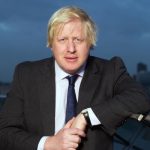
    The speech made by Boris Johnson, the Prime Minister, on 19 February 2021.

    There is a habit of turning up at occasions such as these and announcing portentously that the West is locked in terminal decline, the Atlantic alliance is fractured, and NATO is in peril, and everything we hold dear risks being cast into oblivion.

    And that industry of pessimism has thrived recently, perhaps even in Munich.

    So without wishing for a moment to downplay the challenges and dangers we face, in the teeth of a global pandemic, let me respectfully suggest that the gloom has been overdone and we are turning a corner, and the countries we call the “West” are drawing together and combining their formidable strengths and expertise once again, immensely to everybody’s benefit.

    As you’ve seen and heard earlier, America is unreservedly back as leader of the free world and that is a fantastic thing.

    And it’s vital for our American friends to know that their allies on this side of the Atlantic are willing and able to share the risks and the burdens of addressing the world’s toughest problems

    That is why Global Britain is there and that is exactly what Global Britain is striving to achieve.

    I’m delighted to report that I detected precisely that willingness among my fellow G7 leaders when I chaired a virtual meeting earlier today. The shared goals of the UK’s presidency of the G7 are to help the world to build back better and build back greener after the pandemic and minimise the risk of a catastrophe like this happening again.

    We all have lessons to learn from an experience that none of us would want to repeat.

    At the last UN General Assembly, I proposed a five-point plan to protect the world against future pandemics and today the G7 agreed to explore a Treaty on Pandemic Preparedness, working through the World Health Organization, which would enshrine the actions that countries need to take to safeguard everyone against another Covid.

    I intend to bring together my fellow leaders, scientists and international organisations for collective defence against the next pathogen, just as we unite against military threats.

    The heroic endeavours of the world’s scientists produced safe and effective vaccines against Covid in barely 300 days. In future we should aim to telescope that even more: by drawing together our resources, we should seek to develop vaccines against emerging diseases in 100 days.

    Even in the early weeks of the pandemic, I hope that we in the UK resisted the temptations of a sauve qui peut approach and tried to keep the flame of global cooperation alive.

    We helped to establish COVAX, the global alliance to bring Covid vaccines to developing countries, and today Britain ranks among COVAX’s biggest donors, with the aim of supplying a billion doses to 92 nations, and we will also share the majority of any surplus from our domestic vaccination programme.

    When Oxford University and AstraZeneca began their momentous effort against Covid, their express aim was to design a vaccine that would be cheap to obtain and easy to store, so that it could be speedily administered by every country.

    Protecting ourselves also means tracking the virus’s mutations, and nearly half of all the genome sequencing of possible Covid variants, anywhere in the world, has taken place in the UK.

    Now we need to mobilise our shared expertise to create an early warning system for the next pathogen, enabled by a worldwide network of pandemic surveillance centres, and the UK intends work alongside the WHO and our friends to bring this about.

    If anything good can possibly come from this tragedy, we have at least been given the chance to build a global recovery on new and green foundations, so that humanity can prosper without imperilling the planet.

    To that end, as you’ve just been hearing from John Kerry, Britain will host COP-26 in Glasgow in November and I’m delighted that America under President Biden’s leadership has rejoined the Paris Agreement.

    The UK’s aim will be to help to rally as many countries as possible behind the target of Net Zero by 2050.

    We were the first industrialised nation to adopt this goal and we have made it legally binding and published our plan for a Green Industrial Revolution to show how we will get there, so I hope that other countries will follow the UK’s example.

    But we can only address global problems alongside our friends, and extend Britain’s influence around the world, if the UK itself and our own citizens are safe, including from the terrorist threat we all face.

    The starting point of our Integrated Review of foreign, defence and development policy – which will be published next month – is that the success of Global Britain depends on the security of our homeland and the stability of the Euro-Atlantic area.

    If climate change and pandemics are silent and insidious threats, hostile states may seek to harm our people in direct and obvious ways, as the Russian state did with reckless abandon in Salisbury three years ago, only to collide with the immovable rock of trans-Atlantic solidarity, sanctions and coordinated diplomatic expulsions, an outstanding act of collective security, for which I once again thank our friends.

    If we are to assure our safety, our democracies need to strengthen their capabilities to meet the rigours of an ever more competitive world.

    And it is precisely for that reason, so that we can keep our people safe, by fulfilling our obligations to NATO and enhancing the UK’s global influence, that is the reason I have decided to bolster our armed forces with the biggest increase in our defence budget since the Cold War.

    The UK’s defence spending will rise by £24 billion over the next four years, comfortably exceeding the NATO pledge to invest 2 percent of GDP, and ensuring that we retain the biggest defence budget in Europe and the second largest in NATO, after the United States.

    We will focus our investment on the new technologies that will revolutionise warfare – artificial intelligence, unmanned aircraft, directed energy weapons and many others – so that we stand alongside our allies to deter any adversary and preserve the peace.

    This year, the Royal Navy’s new aircraft carrier, HMS Queen Elizabeth, will embark on her maiden deployment, sailing 20,000 nautical miles to the Indo-Pacific and back.

    On her flight deck will be a squadron of F35 jets from the US Marine Corps; among her escorts will be an American destroyer, showing how the British and American armed forces can operate hand-in-glove – or plane-on-flightdeck – anywhere in the world.

    But investing in new capabilities is not an end in itself. The purpose of the military instrument is to strengthen diplomacy and therefore maximise the chances of success.

    We do not wish to live in a world of unchecked rivalry or decoupling or obstacles to sensible cooperation and global economic growth. Nor are we concerned solely with trade: I hope the UK has shown by our actions that we will defend our values as well as our interests.

    In leaving the European Union we restored sovereign control over vital levers of foreign policy.

    For the first time in nearly 50 years, we now have the power to impose independent national sanctions, allowing the UK to act swiftly and robustly. Our first decision was to create a Magnitsky regime designed to punish human rights offenders. The UK then became the first European country to sanction senior figures in Belarus after the stolen election. We have now imposed sanctions on over 50 human rights violators, including from Russia, Myanmar and Zimbabwe.

    We have consistently spoken out against China’s repression of the Uighur people in Xinjiang province – and we will continue to do so. We have introduced new measures to ensure that the supply chains of UK companies are not tainted by the violations in Xinjiang. After China broke a treaty and imposed a repressive national security law on Hong Kong, the UK offered nearly 3 million of the territory’s people a route to British citizenship. We acted quickly and willingly – with cross-party support at home – to keep faith with the people of Hong Kong.

    Now that we have left the EU, Parliament has a greater say over foreign policy and this has only reinforced our national determination to be a Force for Good in the world.

    Britain is working alongside France, Germany and the United States in a trans-Atlantic quad to address the most pressing security issues, including Iran.

    And I sense a new resolve among our European friends and allies to come together and act again with unity and determination, and we witnessed that spirit after the attempted murder of Alexei Navalny, as he recovered in a hospital bed in Berlin.

    While NATO was being written-off in some places, the supertanker of European defence spending was quietly beginning to turn, and while this delicate high seas manoeuvre is far from complete, and the vessel needs to alter course a good deal more, the fact is that NATO defence spending – excluding the United States – has risen by $190 billion since the Wales summit in 2014.

    When our allies on the eastern flank sought reassurance about their security, NATO responded by deploying a multinational force in Poland and the Baltic states and the UK was proud to make the biggest single contribution, leading the battlegroup in Estonia, showing that we mean it when we say that our commitment to European security is unconditional and immoveable.

    I believe that Europe increasingly recognises the necessity of joining our American friends to rediscover that far-sighted leadership and the spirit of adventure and trans-Atlantic unity, that made our two continents great in the first place.

    A new world is rising up around us, patterns of trade and commerce are changing, the global centre of gravity is moving eastwards, the technological revolution proceeds with blistering speed. But none of us should fear or resent these changes.

    Free societies are united by their faith in liberal democracy, the rule of law and free markets, which surely comprise the great trinity of human progress.

    Free countries – many of them located far beyond the geographical “West”, by the way – possess a boundless and inherent ability to release the talents and enterprise of their people to master and adapt to change.

    It is no coincidence that of the 10 most innovative nations in the world – as ranked by the Global Innovation Index in 2020 – all but one are liberal democracies.

    There is no reason why our countries should not be stronger and safer in 2030 – or indeed 2050 – than today, provided we share the burdens, compete successfully and seek out friends and partners wherever they may be found. I have invited South Korea, and Australia and India to attend the next G7 summit as guests, alongside leading international organisations.

    So let’s resist any temptation to bemoan the changes around us.

    Let’s build a coalition for openness and innovation, reaching beyond established alliances and the confines of geography, proud of our history, but free of any temptation to turn back the clock, and harnessing the genius of open societies to flourish in an era of renewed competition.

    Let’s respectfully dispel the air of pessimism that has sometimes attended our conferences.

    America and Europe, side by side, have the ability to prove once again the innate advantages of free nations, and to succeed in forging our own destiny.

  • Dominic Raab – 2021 Statement on Ukraine

    Dominic Raab – 2021 Statement on Ukraine

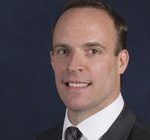
    The statement made by Dominic Raab, the Foreign Secretary, on 20 February 2021.

    The UK stands with Ukraine against the illegal annexation of Crimea and we will continue supporting those whose lives have been impacted by Russia’s illegitimate aggression.

    Russia is trying to cover up its human rights abuses by preventing access to Crimea for international monitors. But we will work closely with the UN and international partners to ensure Russia is held to account.

  • Dominic Raab – 2021 Statement on Myanmar

    Dominic Raab – 2021 Statement on Myanmar

    The statement made by Dominic Raab, the Foreign Secretary, on 20 February 2021.

    The UK condemns the shooting of peaceful protesters, which only places the military regime further beyond the pale. We will consider further measures, with our international partners, to hold to account those responsible for crushing democracy and choking dissent.

  • Dominic Raab – 2021 Comments on Aung San Suu Kyi

    Dominic Raab – 2021 Comments on Aung San Suu Kyi

    The comments made by Dominic Raab, the Foreign Secretary, on 16 February 2021.

    The charges against Aung San Suu Kyi are politically motivated, and the latest example of the Myanmar military undermining democratically elected politicians. Aung San Suu Kyi and all other elected politicians arbitrarily held must be released immediately.

    The UK and likeminded nations will not ignore these violations. We will ensure those responsible are held to account.

  • Lisa Nandy – 2021 Speech on Yemen

    Lisa Nandy – 2021 Speech on Yemen

    The speech made by Lisa Nandy, the Shadow Foreign Secretary, in the House of Commons on 8 February 2021.

    We are not a bystander to this conflict—UK arms, training and technical support sustains the war in Yemen and the worst humanitarian disaster in the world. More than 80% of Saudi’s arms imports come from the US and the UK. The US’s decision to end all support for offensive operations, including relevant arms sales, is welcome, but it leaves the UK dangerously out of step with our allies and increasingly isolated. What is worse is that the UK is the penholder for Yemen at the UN. We cannot be both peacemaker and arms dealer in this conflict.

    It was the Foreign Secretary who said:

    “human rights will be at the forefront of our leadership this year”—[Official Report, 12 January 2021; Vol. 687, c. 178.]

    This is the first test since that statement just four weeks ago, and he has failed it. It is surprising, given the obvious panic in Downing Street about relations with the Biden Administration, that the Government were so reluctant to challenge President Trump’s decision to change the designation of the Houthis and are now determined to continue to be an outlier in arming Saudi Arabia. It puts us out of step with our US and EU allies, despite the compelling moral and diplomatic case to change course.

    When the Foreign Secretary re-emerges, perhaps he could confirm that he will now take long overdue action to end arms sales and support to Saudi Arabia and explain what possible reason there could be for not doing so earlier. Can he tell us whether he spoke with Secretary Blinken about this announcement before it was made and whether the US Government have asked for UK support in this matter? Will he tell us what he will do to live up to our responsibilities to reinvigorate the peace process and help bring this appalling conflict to an end?

  • James Cleverly – 2021 Statement on Yemen

    James Cleverly – 2021 Statement on Yemen

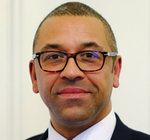
    The statement made by James Cleverly, the Minister for the Middle East and North Africa, in the House of Commons on 8 February 2021.

    I thank my right hon. Friend the Member for Bournemouth East (Mr Ellwood) for asking a question on this important matter. The ongoing conflict and humanitarian situation in Yemen remain a challenge for the international community. The new Houthi offensive in Marib has only made our efforts to bring peace and stability even more difficult. Nevertheless, we continue to work with the international community to find a peaceful resolution, with an emphasis on the political process.

    The UK is playing a leading role in responding to the crisis in Yemen through both our humanitarian response and our diplomatic influence. We actively support the UN special envoy, Martin Griffiths, in his work to reach a political solution, and we pay tribute to his tireless efforts to bring about peace. The UK has pledged over £1 billion in aid to the humanitarian response since the conflict began.

    My right hon. Friend the Foreign Secretary and I have regular calls with partners on Yemen. Recently, the Foreign Secretary spoke to Secretary Blinken in the new United States Administration and to the Saudi Foreign Minister. Last month, I spoke with the Yemeni Foreign Minister to offer my condolences after the attacks at Aden airport. The UK has also used its role as the penholder at the UN Security Council to help move the Yemen peace process forward, working with our partners and allies at the United Nations to ensure that Yemen continues to be a top priority for the international community.

    We welcome the recent statement by President Biden to instigate a review of US foreign policy towards Yemen. Our ambassador in Washington has already spoken with the new US envoy to Yemen. I also welcome reports that the US may reverse the previous Administration’s designation of the Houthis as foreign terrorist fighters. The UK has engaged closely with the US Administration on that very matter.

    However, we cannot—we must not—ignore the Houthi actions. Those include the use of children and sexual violence as tools of war, the persecution of religious minorities and attacks on civilians. On 30 December, the Houthis attacked Aden airport, killing 27 civilians and injuring more than 100 others. We must address the Houthi sense of impunity, to make the peace process meaningful, and that must extend to other actors in the region, notably Iran. I note the US decision to pause its arms exports while it reviews its policy towards Yemen. I reassure the House that the Government take their own export responsibilities extremely seriously and assess all export licences in accordance with strict licensing criteria.

    The political settlement is the only way to bring about long-term peace and stability in Yemen and to address the worsening humanitarian situation. The Government remain committed to bringing an end to the conflict.

    Mr Ellwood

    Last week, President Biden gave his first foreign policy speech, reversing many of the isolationist policies of his predecessor and seeking to re-engage with like-minded allies in order to revisit major global hotspots neglected by the west. The complex civil war in Yemen, now entering its seventh year, was named specifically. Today, it is the largest humanitarian catastrophe in the world. The US President has appointed a new envoy, as we have just heard, and will end support for the offensive operations and connected arms sales, seeking to establish the conditions for a ceasefire and fresh peace talks.

    The war in Yemen is complicated. The country never properly stabilised following unification in 1990, and President Hadi has struggled to handle corruption, unemployment, tribal disputes and, most critically, separatist and extremist agendas pursued by the Houthis and al-Qaeda respectively. The Houthi advance into the capital in 2014 led to UN Security Council resolutions that legitimised a Saudi-led military coalition to support President Hadi. Despite many rounds of talks—some of which I was involved with, as a Minister—six years on, we are no closer to peace. Indeed, the conflict has spilled out into a wider proxy war.

    The US reset is to be welcomed, and this poses our first big test of what global Britain means in practice. In that spirit, I encourage the UK to fully align ourselves with our closest security ally by ending arms exports connected to the war and to reverse the cuts to our overseas aid budget. I recommend that, as the UN Security Council penholder on Yemen, the UK offers to host a UN summit that looks at political options for peace and that the UK is willing to commit British forces to any UN stabilisation effort that may be required once a political settlement is reached. This is a real opportunity for Yemen to end the war. I hope the Minister can confirm today Britain’s resolve to play a leading role.

    James Cleverly

    I thank my right hon. Friend for his thoughtful contribution and the work he did as Minister on this portfolio. I can absolutely confirm that the United Kingdom’s desire to bring about a peaceful settlement in Yemen is unwavering. We will continue to work with our international partners—both the United States and regional partners—to bring that about.

    My right hon. Friend made a number of specific points. The UK has—indeed, I have on a regular basis—spoken with the UN envoy to Yemen, Martin Griffiths, and we fully support his work. We will look at ways to bring together the various parties around the negotiating table. I note my right hon. Friend’s idea about a UK-hosted summit. He will understand that I cannot commit to something like that at the moment, but I welcome his thoughtful contribution. Similarly, he will completely understand that it would be inappropriate for me to speculate about what a military intervention might look like. The Saudi-led coalition was mandated at the UN Security Council; as he said, this is something he worked on during his tenure. We also note that the Kingdom of Saudi Arabia has a legitimate right to defend itself against attacks, and we completely condemn the attacks both within Yemen, at Aden airport, and cross-border, into the Kingdom of Saudi Arabia.

  • Stephen Kinnock – 2021 Speech on the Treatment of Uyghur Women

    Stephen Kinnock – 2021 Speech on the Treatment of Uyghur Women

    The speech made by Stephen Kinnock, the Labour MP for Aberavon, in the House of Commons on 4 February 2021.

    The Chinese Government’s brutal campaign of oppression in Xinjiang is a scar on the conscience of the world. The Labour party stands shoulder to shoulder with the Uyghur people. We already know about the forced labour camps, and yesterday we heard utterly heartbreaking testimonies from Uyghur women who have been systematically raped, sexually abused and tortured. This follows last summer’s harrowing accounts from Uyghur women who are victims of forced sterilisation and forced intrauterine device insertion. The Chinese Government’s own statistics show that birth rates in Xinjiang fell by a third in 2017-18—further evidence that what is happening may meet the international legal definition of genocide, which the new US Administration have already acknowledged.

    Last month the Foreign Secretary rightly condemned the events in Xinjiang as

    “barbarism we had hoped was lost to another era”—[Official Report, 12 January 2021; Vol. 687, c. 160.]

    Surely the time for tangible action has now come. First, where on earth are the Magnitsky sanctions that the Opposition and Members across the House have been calling for since last June? The Foreign Secretary said that the body of evidence in Xinjiang is “large, diverse and growing”, and we know the names of the senior Chinese officials who are responsible for these atrocities. The US sanctioned them last summer. Who in Government is holding this up?

    Secondly, 20% of the world’s cotton comes from Xinjiang. We welcome the steps that the Government have taken to help UK business cease being complicit in forced labour, but they did not go far enough. Companies must be accountable, not simply transparent. Rather than tinkering around the edges of the Modern Slavery Act, will the Minister commit himself to bringing forward legislation that moves us to a system of mandatory due diligence?

    Next Tuesday, when the Trade Bill returns, the House has the chance to send a united message to the world that genocide can never be met with indifference, impunity or inaction. This should not be a partisan issue. Given that it is a long-standing Government commitment that courts, not the Government, must rule on genocide, will the Minister join with us and colleagues across the House to give UK courts the powers to determine genocide and therefore prevent the UK from ever doing trade deals with genocidal states?

  • Nusrat Ghani – 2021 Speech on the Treatment of Uyghur Women

    Nusrat Ghani – 2021 Speech on the Treatment of Uyghur Women

    The speech made by Nusrat Ghani, the Conservative MP for Wealden, in the House of Commons on 4 February 2021.

    I thank the Minister for his powerful statement. Yesterday, the BBC broadcast harrowing footage of Chinese state-orchestrated abuse against Uyghur women on an unprecedented scale.

    “They had an electric stick, I didn’t know what it was, and it was pushed inside my genital tract, torturing me with an electric shock.”

    That is the testimony of Tursunay Ziawudun. “They did whatever their evil minds could think of. They were barbarians. I felt I had died. I was dead.” Then there are the gang rapes of Uyghur women by the police in front of other camp detainees, as a form of re-education, seeking out those who look away to punish them even further.

    These horrifying stories add to the huge and growing body of evidence detailing atrocities perpetrated by the Chinese authorities in Xinjiang—atrocities that may even be genocidal. These horrors have led the Board of Deputies of British Jews to compare the plight of the Uyghurs to the Holocaust. But as everybody in this House knows, there is no prospect of China being held to account through the International Criminal Court or the International Court of Justice. So I ask the Minister: how will the Government get the court judgment they need to act when all international routes are paralysed by China? We cannot be bystanders to the deliberate attempt to exterminate a group of people. Not again.

    Will the Minister make a promise today that no further deepening of ties of any kind will take place with China until a full judicial inquiry has investigated these crimes? Will he commit himself to a meeting with Rahima Mahmut, a Uyghur survivor, who is known by so many in this House? Rahima is a brave woman, risking her safety to save her family and her people. The United Kingdom cannot stand by and do nothing about the extermination of the Uyghur—mass rapes, scalping and forced sterilisations. We can act and we must act.

  • Nigel Adams – 2021 Speech on the Treatment of Uyghur Women

    Nigel Adams – 2021 Speech on the Treatment of Uyghur Women

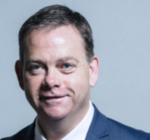
    The speech made by Nigel Adams, the Minister for Asia, in the House of Commons on 4 February 2021.

    I acknowledge the strength of feeling about the human rights situation in Xinjiang, which is shared by hon. Members across the House. The BBC report to which my hon. Friend refers is chilling. It includes deeply distressing testimony of the rape, torture and dehumanisation of Uyghur women in Xinjiang detention centres. It is a further compelling addition to the growing body of evidence of the gross human rights violations being perpetrated against Uyghur Muslims and other minorities in Xinjiang. The evidence of the scale and severity of these violations is now far reaching. It paints a truly harrowing picture. If China wishes to dispute this evidence, it must allow unfettered access to the region for the UN High Commissioner for Human Rights or another independent fact-finding body.

    This Government are committed to taking robust action in respect of Xinjiang. That is why on 12 January the Foreign Secretary announced a series of targeted measures to help ensure that British organisations are neither complicit in nor profiting from the human rights violations in the region. This includes a review of export controls as they apply to Xinjiang, the introduction of financial penalties for businesses that do not comply with the Modern Slavery Act 2015, and support for UK Government bodies to exclude suppliers that are complicit in forced labour.

    These measures demonstrate to China that there is a reputational and economic cost to its policies in Xinjiang, and it is why the UK has played, and will continue to play, a leading role in building international pressure on China to change course. In October 2019 and June 2020, the UK led the first two joint statements on Xinjiang at the UN. In October 2020, 38 countries joined the UK in a robust statement at the UN Third Committee. This diplomatic action is vitally important. More countries than ever are speaking out about Xinjiang. China has already been forced to change its narrative about the camps, and its denial of these violations is increasingly hard to sustain. The Foreign Secretary has made clear the extent of our concern directly to his counterpart, Foreign Minister Wang Yi, and I have raised the issue with the former Chinese ambassador in London.

    On the specific allegations of forced birth control, we have raised these with the Chinese authorities and used our national statement at the UN Human Rights Council last September to draw international attention to this deeply concerning issue.

    I can assure the House that we will continue to work with our international partners, including with the new US Administration and through our G7 presidency, to hold China to account for its actions. The UK has called repeatedly for China to abide by the UN’s recommendation to release all those who have been arbitrarily detained, and I know that right hon. and hon. Members will join me today in reiterating that call.

  • Dominic Raab – 2021 Speech in Cyprus

    Dominic Raab – 2021 Speech in Cyprus

    The speech made by Dominic Raab, the Foreign Secretary, on 4 February 2021.

    Thank you very much. It’s a huge pleasure to be here. Both to renew the connections and friendship we have between the UK and Cyprus, but also, given the upcoming talks, to help make progress to support our friends here in Cyprus.

    I want to thank the President of the Republic, Mr Anastasiades, and also you Foreign Minister for your friendship, your hospitality, and for the constructive discussions that we had today. I also look forward to meeting Turkish Cypriot leader, Ersin Tatar, later this afternoon.

    The UK-Cyprus relationship is strong. We have a lot of history, a lot of water under the bridge in our relationship. We have shared values, shared legal systems, joint membership of the Commonwealth, and a very big web of people-to-people relations, including students – we talked a bit about that as well today.

    We have got great partnerships and a network of personal relations, particularly in education, science, research, and security, all of which serve our joint interests and contribute to our friendship.

    We want to continue strengthening those links and we want to reinforce and nurture these relations, and perhaps widen them as well.

    So we will continue to work together to uphold the values that we both share and deal with the challenges we both face, whether that is including tackling Covid, climate change and regional challenges.

    You can count on our friendship, you can count on our support and you can count on us on playing an active and full role.

    And we also want to play a supporting role in helping the people of Cyprus, both sides of this dispute, to move things forward, to break the deadlock, to find a settlement that works in everyone’s interest.

    We are a problem solving nation by instinct, we are a Guarantor Power, we are a permanent member of the UN Security Council.

    But above all, the UK feels we are also a long standing friend of the Cypriot people across the island.

    So we want to see a permanent, enduring and lasting end to the dispute.

    And I hope that all parties should seize the opportunities that the 5+1 talks present to really change the conversation and give the children, the young people of the island, the brightest prospects for the future in years ahead.

    I think it’s an opportunity to push for a settlement which will benefit both sides but also have a premium dividend, if you like, for regional stability, security and prosperity.

    I think a failure to reach a settlement after so many efforts will benefit no-one.

    So again, I urge all sides to come to the talks with a willingness to demonstrate flexibility and compromise and I was very heartened by my conversations at the scope for that.

    We will work with the Cypriot people and the UN of course, to finally resolve the Cyprus problem and achieve a just and lasting settlement.

    So that, again, the young people, the next generation of Cypriots, can fulfil their aspirations, their dreams and evade their fears and anxieties that appear in both communities.

    A reunited, Cyprus can achieve its full potential as a beacon of democracy, stability, prosperity and, frankly, the underlying values that Nicos and I, that Brits and Cypriots share.

    Thank you very much again for your very warm welcome.