Category: Foreign Affairs

  • James Duddridge – 2021 Statement on Presidential Elections in Uganda

    James Duddridge – 2021 Statement on Presidential Elections in Uganda

    The statement made by James Duddridge, the Minister for Africa, on 16 January 2021.

    The UK Government welcomes the relatively calm passing of the elections in Uganda and notes the re-election of H.E. Yoweri Museveni as President.

    Many in Uganda and beyond have expressed concerns about the overall political climate in the run up to the elections as well as the electoral process. It is important these concerns are raised, investigated and resolved in a peaceful, legal and constitutional manner. We ask that all parties, including the security services, but also all of Uganda’s political movements, act with restraint to ensure the peaceful resolution of disputes.

    We commend the role of the media, observers and civil society throughout the elections. The UK is concerned by the national internet shutdown, which clearly limited the transparency of the elections, and constrained the freedoms that Ugandans are entitled to.

    The UK is a steadfast advocate for Ugandan democracy and we will continue to work to achieve inclusive democratic progress that delivers for future generations. As a longstanding partner, we urge Uganda to continue to strive to meet its own international human rights commitments, including respecting the right to freedom of opinion, freedom of expression and freedom of the media.

  • Dominic Raab – 2021 Statement on Gibraltar

    Dominic Raab – 2021 Statement on Gibraltar

    The statement made by Dominic Raab, the Foreign Secretary, in the House of Commons on 13 January 2021.

    In the UK approach to negotiations on the future relationship with the EU as published in February 2020, the Government stated that they would act in these negotiations on behalf of all the territories for whose international relations the UK is responsible, which includes Gibraltar.

    We have worked side by side with the Government of Gibraltar to honour this commitment. As a consequence of the EU’s negotiating mandate which it adopted in February 2020, Gibraltar was not within scope of the UK-EU trade and co-operation agreement (TCA). The Commission made a declaration alongside the TCA stating that this would “not preclude the possibility to have separate agreements between the Union and the United Kingdom in respect of Gibraltar”, and that it stood ready “to examine any request from Spain, in agreement with the United Kingdom, to initiate the procedure for the negotiation of such separate agreements should they be compatible with Union law and Union interests”.

    To that end, the UK, working side by side with the Governments of Gibraltar and Spain, reached agreement on 31 December over a political framework to form the basis of a separate treaty between the UK and the EU regarding Gibraltar. We have sent this framework to the European Commission in order to initiate negotiations on the treaty.

    The political framework covers issues of key importance to Gibraltar and the surrounding region, including on border fluidity. It creates the basis for a bespoke model for Gibraltar’s future relationship with the EU that will permit an absence of physical checks at the land border with Spain, and therefore ensure fluidity of movement of people and goods between Gibraltar and the EU. The Governments of both the UK and Gibraltar judge that this framework provides a firm basis to safeguard Gibraltar’s interests.

    The UK and Gibraltar are committed to ensuring that cross-border arrangements can continue in the interim, until a new treaty enters into force. Arrangements have been agreed with Spain that include provisions for the border (goods and people), road transport, healthcare, waste disposal, and data. In addition, the UK Government provided financial and other support to ensure that Gibraltar was fully prepared for the end of the transition period.

    We remain steadfast in our support for Gibraltar, and its sovereignty is safeguarded.

  • Ben Wallace – 2021 Statement on No-Cost Supply of Vehicles to Lebanese Armed Forces

    Ben Wallace – 2021 Statement on No-Cost Supply of Vehicles to Lebanese Armed Forces

    The statement made by Ben Wallace, the Secretary of State for Defence, to the House of Commons on 12 January 2021.

    The UK intends to supply a fleet of vehicles at no cost to the Lebanese armed forces (LAF), in recognition of our strong relationship in tackling the shared terrorist threat.

    At present the LAF do not have the capability to fully patrol Lebanon’s border with Syria and have requested the UK’s assistance in providing suitable equipment to fulfil this requirement. The UK has agreed to supply 100 surplus army revised weapon mounted installation kit plus (RWMIK+) vehicles in response to a request from the Lebanese commander-in-chief.

    The supply of these vehicles will greatly enhance the LAF’s capacity to mount long distance patrols across rugged mountainous terrain and allow their land border regiments (LBRs) to more effectively counter the threat of armed smugglers and extremists trying to enter Lebanon.

    The 100 revised weapon mounted installation kit plus (RWMIK+) vehicles, valuing £1,502,000, are surplus to the needs of the British Army. The logistical costs of collating and then transporting the vehicles to Lebanon will be borne by the Conflict Stability and Security Fund, and training in the operation of the vehicles will be borne by the defence acquisition fund (south).

    Delivery of the RWMIK+ to Beirut is expected to commence in January 2021.

  • Lisa Nandy – 2021 Speech on the Situation in Xinjiang

    Lisa Nandy – 2021 Speech on the Situation in Xinjiang

    The speech made by Lisa Nandy, the Shadow Foreign Secretary, in the House of Commons on 12 January 2021.

    The persecution of the Uyghurs has been of great concern to hon. Members in all parts of this House. We have read the reports and heard the testimony, and it is past time to act. There must be a unified message from this whole House: we will not turn away and we will not permit this to go unchallenged. So may I thank the Foreign Secretary for advance sight of his statement but say to him that the Government had trailed in the media long-awaited sanctions on officials responsible for appalling human rights abuses in Xinjiang? We have waited months, and he briefed the papers that he was planning to announce this today. What has happened to this announcement, and who in government has overruled him this time? The strength of his words is, once again, not matched by the strength of his actions, and I am sorry to say that that will be noticed loud and clear in Beijing.

    I was pleased to hear the Foreign Secretary acknowledge that the Modern Slavery Act is not working. The independent review was right to say that it has become a “tick-box exercise”, and we need a robust response to ensure that companies are not just transparent but accountable. But there is little in today’s statement that is new, and I am left slightly lost for words as to why he has chosen to come here today. Back in September the Government said they would extend the Modern Slavery Act to the public sector. He mentioned France, which has already gone further than the UK, with its duty of diligence law, which includes liability for harm. The European Union intends to bring in legislation next year on due diligence, which will be mandatory. Even under the new arrangements, will a company profiting from a supply chain involving forced labour have broken any laws in this country? What law would a company actually be breaking if it profited from what the Foreign Secretary called the “barbaric” forced labour in Xinjiang? If the UK really does intend to set an example and lead the way, he will have to do more than tinker around the edges. One of the best things he could do for those British businesses he rightly praised is to make the playing field level for the many British companies that do the right thing.

    We warmly welcome the Foreign Secretary’s proposed review of export controls. If the Government are successfully able to determine whether any goods exported from the UK are contributing to violations of international law in Xinjiang, that will be a breakthrough, not just in taking robust action against China’s human rights abuses, but as a model that can be used in other countries around the world where British exports risk being misused. So we will pay close attention. He will also know that the House of Lords recently came together to pass two cross-party amendments that put human rights considerations at the centre of our trade policy. I was astonished not to hear any reference to them today. Do the Government intend to get behind those efforts to ensure that our trade policy defends, not undermines, human rights? I can tell him that I will be writing to MPs when the Trade Bill returns to this place to urge them to vote with their consciences. I hope the Government will not find themselves stranded on the wrong side of history.

    We cannot allow this moment to pass us by. The Foreign Secretary was right to say that this is truly horrific, and the House is united in condemnation of what is happening in Xinjiang. Members of all parties want Britain to act as a moral force in the world. Despite today’s disappointing statement, I believe he is sincere when he says that he wants the same, but now he has to make good on his promise to back up words with real action.

  • Dominic Raab – 2021 Statement on the Situation in Xinjiang

    Dominic Raab – 2021 Statement on the Situation in Xinjiang

    The statement made by Dominic Raab, the Foreign Secretary, in the House of Commons on 12 January 2021.

    With permission, Mr Speaker, I would like to update the House on the situation in Xinjiang and the Government’s response.

    The evidence of the scale and severity of the human rights violations being perpetrated in Xinjiang against the Uyghur Muslims is now far-reaching. It paints a truly harrowing picture. Violations include the extrajudicial detention of over 1 million Uyghurs and other minorities in political re-education camps; extensive and invasive surveillance targeting minorities; systematic restrictions on Uyghur culture, education and, indeed, on the practice of Islam; and the widespread use of forced labour. The nature and conditions of detention violate basic standards of human rights. At their worst, they amount to torture and inhumane and degrading treatment, alongside widespread reports of the forced sterilisation of Uyghur women.

    These claims are supported now by a large, diverse and growing body of evidence that includes first-hand reports from diplomats who visit Xinjiang and the first-hand testimony from victims who have fled the region. There is satellite imagery showing the scale of the internment camps, the presence of factories inside them and the destruction of mosques. There are also extensive and credible third-party reports from non-governmental organisations such as Human Rights Watch and Amnesty International, with the United Nations and other international experts also expressing their very serious concerns.

    In reality, the Chinese authorities’ own publicly available documents also bear out a similar picture. They show statistical data on birth control and on security spending and recruitment in Xinjiang. They contain extensive references to coercive social measures dressed up as poverty alleviation programmes. There are leaks of classified and internal documents that have shown the guidance on how to run internment camps and lists showing how and why people have been detained.

    Internment camps, arbitrary detention, political re-education, forced labour, torture and forced sterilisation —all on an industrial scale. It is truly horrific—barbarism we had hoped was lost to another era is being practised today, as we speak, in one of the leading members of the international community.

    We have a moral duty to respond. The UK has already played a leading role within the international community in the effort to shine a light on the appalling treatment of the Uyghurs and to increase diplomatic pressure on China to stop and to remedy its actions. I have made my concerns over Xinjiang clear directly to China’s Foreign Minister Wang Yi. We have led international joint statements on Xinjiang in the United Nations General Assembly Third Committee and the UN Human Rights Council. In the Third Committee, we brought the latest statement forward together with Germany in October last year and it was supported by 39 countries.

    China’s response is to deny, as a matter of fact, that any such human rights violations take place at all. They say it is lies. If there were any genuine dispute about the evidence, there would be a reasonably straightforward way to clear up any factual misunderstandings. Of course China should be given the opportunity to rebut the various reports and claims, but the Chinese Government refuse point blank to allow the access to Xinjiang required to verify the truth of the matter.

    We have repeatedly called for China to allow independent experts and UN officials, including the United Nations High Commissioner for Human Rights, proper access to Xinjiang, just as we in this country allow access to our prisons, our police custody suites and other parts of the justice system to independent bodies who hold us to account for the commitments to respect human rights that we have made.

    China cannot simply refuse all access to those trusted third-party bodies that could verify the facts and, at the same time, maintain a position of credible denial. While that access is not forthcoming, the UK will continue to support further research to understand the scale and the nature of the human rights violations in Xinjiang. But we must do more, and we will.

    Xinjiang’s position in the international supply chain network means that there is a real risk of businesses and public bodies around the world, whether inadvertently or otherwise, sourcing from suppliers that are complicit in the use of forced labour, allowing those responsible for violations to profit—or, indeed, making a profit themselves—by supplying the authorities in Xinjiang. Here in the UK, we must take action to ensure that UK businesses are not part of supply chains that lead to the gates of the internment camps in Xinjiang, and to ensure that the products of the human rights violations that take place in those camps do not end up on the shelves of supermarkets that we shop in here at home week in, week out.

    We have already engaged with businesses with links to Xinjiang; we have encouraged them to conduct appropriate due diligence. More widely, we have made a commitment to tackling forced labour crystal clear. With the introduction of the Modern Slavery Act 2015, the United Kingdom was the first country to require companies by law to report on how they are tackling forced labour in their supply chains. Today, I can announce a range of new measures to send a clear message that those violations of human rights are unacceptable and, at the same time, to safeguard UK businesses and public bodies from any involvement or links with them.

    I have been working closely with my right hon. Friends the Home Secretary, the Secretary of State for International Trade and the Chancellor of the Duchy of Lancaster. Our aim, put simply, is that no company profits from forced labour in Xinjiang, and that no UK business is involved in their supply chains. Let me set out the four new steps that we are now taking.

    First, today the Foreign, Commonwealth and Development Office, and the Department for International Trade have issued new, robust and detailed guidance to UK businesses on the specific risks faced by companies with links to Xinjiang, and underlining the challenges of conducting effective due diligence there. A Minister-led campaign of business engagement will reinforce the need for UK businesses to take concerted action to address that particular and specific risk.

    Secondly, we are strengthening the operation of the Modern Slavery Act. The Home Office will introduce fines for businesses that do not comply with their transparency obligations, and the Home Secretary will introduce the necessary legislation setting out the level of those fines as soon as parliamentary time allows.

    Thirdly, we announced last September that the transparency requirements that apply to UK businesses under the Modern Slavery Act will be extended to the public sector. The FCDO will now work with the Cabinet Office to provide guidance and support to UK Government bodies to exclude suppliers where there is sufficient evidence of human rights violations in any of their supply chains. Let me say that we in the United Kingdom—I think rightly—take pride that the overwhelming majority of British businesses that do business do so with great integrity and professionalism right around the world. That is their hallmark and part of our USP as a global Britain. Precisely because of that, any company profiting from forced labour will be barred from Government procurement in this country.

    Fourthly, the Government will conduct an urgent review of export controls as they apply, specifically geographically, to the situation in Xinjiang, to make sure that we are doing everything we can to prevent the export of any goods that could contribute directly or indirectly to human rights violations in that region. The package that has been put together will help to ensure that no British organisations—Government or private sector, deliberately or inadvertently—will profit from or contribute to human rights violations against the Uyghurs or other minorities. I am of course sure that the whole House would accept that the overwhelming majority of British businesses would not dream of doing so. Today’s measures will ensure that businesses are fully aware of those risks, will help them to protect themselves, and will shine a light on and penalise any reckless businesses that do not take those obligations seriously.

    As ever, we act in co-ordination with our like-minded partners around the world, and I welcome the fact that later today Foreign Minister Champagne will set out Canada’s approach on these issues. I know that Australia, the United States, France, Germany and New Zealand are also considering the approaches they take. We will continue to work with all of our international partners, but the House should know that in the comprehensive scope of the package I am setting out today the UK is again setting an example and leading the way.

    We want a positive and constructive relationship with China, and we will work tirelessly towards that end, but we will not sacrifice our values or our security. We will continue to speak up for what is right and we will back up our words with actions, faithful to our values, determined, as a truly global Britain, to be an even stronger force for good in the world. I commend this statement to the House.

  • James Cleverly – 2021 Statement on Preventing Terrorist Threats

    James Cleverly – 2021 Statement on Preventing Terrorist Threats

    The statement made by James Cleverly, the Minister for Middle East and North Africa, on 12 January 2021.

    Mr President, I would like to thank you for hosting this important debate today, and also Under-Secretary-General Voronkov, Executive Director Coninsx and Ms Fatima Akilu for their informative and important briefings.

    It’s been twenty years since the Security Council established the Counter-Terrorism Committee. Our work has strengthened the cooperation we need to protect all our citizens and counter the scourge of terrorism.

    Subsequent Security Council resolutions have built an effective toolkit for guidance and measures for states to respond to the evolving threat.

    They now cover everything from international legal cooperation to counter-terrorist financing, from specific challenges like aviation security to broad issues like human rights, gender, and civil society.

    With the support of the Counter-Terrorism Executive Directorate, the Committee has helped assess states’ implementation of the resolutions and identified emerging challenges, examples of best practice, and opportunities for technical assistance.

    Of course, the Council and the Committee have not been acting alone.

    In 2014, the Global Coalition against Daesh brought together 83 partners, including the United Kingdom, to combat Daesh and liberate eight million people from its control.

    Organisations such as the Global Counter Terrorism Forum, of which the UK is a founding member, have bolstered international cooperation.

    Other parts of the UN system, most importantly the UN Office of Counter-Terrorism, have also played an important role.

    Through this work, and through the leadership of the United Nations Security Council, we have built a shared understanding of the terrorism threat and developed the tools to counter it.

    Mr President, as a result of our collective efforts, Al-Qaeda has been degraded. Daesh was defeated on the battlefields of Iraq and Syria.

    But sadly, the threat has evolved and remains with us.

    Terrorist groups, including Al-Qaeda and Daesh affiliates, continue to operate around the world.

    Terrorist narratives continue to radicalise individuals in diffuse and unpredictable ways. New threats from extreme right-wing groups have increased.

    So, the work of the Council and of the Committee remains vital.

    Looking forward, I want to stress four key priorities:

    Firstly, the Council should continue to learn and adapt to the latest threats and emerging trends.

    I mentioned extremist right-wing groups. Terrorist misuse of social media and other new technologies needs greater attention. We also need to tune in to how longer-term effects of COVID-19 might influence the terrorism dynamic.

    Secondly, the Council should reaffirm states’ obligation under international law to protect and promote human rights whilst countering terrorism.

    The threats posed by terrorism do sometimes require states to take extraordinary measures. However, too often counter-terrorism is used to justify egregious human rights violations and oppression. States must act within the boundaries of international law. Otherwise, we undermine the very rights and freedoms that the UN was established to promote.

    While it is not the only instance around the world, a case in point is the situation in Xinjiang where the Uyghur and other ethnic minority communities face severe and disproportionate measures, with up to 1.8 million people having been detained without trial.

    These well-documented measures are inconsistent with China’s obligations under international human rights law including the International Convention on the Elimination of All Forms of Racial Discrimination.

    They run counter to the Security Council’s long-standing requirement that counter-terrorism measures comply with States’ obligations under international law, including international human rights law.

    Third, the Council should reaffirm the importance of inclusion and partnerships.

    Effective counter-terrorism requires more than the cooperation of governments. It requires whole societies.

    That means promoting the leadership of women, young people, and minorities, building effective partnerships with the private sector, with religious leaders, and ensuring we listen to all the voices of our peoples.

    And fourth, the Council should push for coherence within the UN system.

    We welcome the existing close cooperation between the Counter-Terrorism Executive Directorate and the UN Office of Counter-Terrorism, as well as the Al-Qaeda and Daesh Monitoring Team and other UN agencies.

    It remains vital that this continues, especially in the area of capacity-building, so that resources are deployed effectively and where they can have the greatest impact.

    Mr President, as the terrorist threat endures and evolves, so too must our resolve to fight it remain firm.

    The Security Council’s counter-terrorism architecture has been an integral part of that fight over the last twenty years, and the United Kingdom will work to ensure it remains relevant, efficient and effective in the years ahead.

    Thank you.

  • Nick Thomas-Symonds – 2021 Comments on Travel Ban from South American and Portugal

    Nick Thomas-Symonds – 2021 Comments on Travel Ban from South American and Portugal

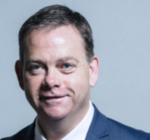
    The comments made by Nick Thomas-Symonds, the Shadow Home Secretary, on 14 January 2021.

    It is a necessary step that arrivals from Brazil, neighbouring countries and Portugal will be banned. However, this is yet another example of government incompetence, lurching from one crisis and rushed announcement to another. The failure to put in place an effective policy on testing before entry and a quarantine system that is checking only one in 100 people is putting lives at risk.

  • Ruth Edwards – 2021 Speech on Global Britain

    Ruth Edwards – 2021 Speech on Global Britain

    The speech made by Ruth Edwards, the Conservative MP for Rushcliffe, on 11 January 2021.

    For centuries, Britain has led the world as a global industrial centre, importing and exporting goods, services and skills around the world. We now have an opportunity to strengthen old friendships and forge new ones. It is an opportunity for businesses large and small, those that have never exported and those that already do. Here in Rushcliffe, we are home to the world-famous Stilton cheese at Colston Bassett and Cropwell Bishop dairies. We make award-winning wines; a taste of Eglantine vineyard’s North Star wine will leave you in no doubt as to why. We develop state-of-the-art fitness equipment such as Wattbike and world-leading nutrition apps such as Nutracheck; I should say that they have kindly given me a year’s complimentary subscription, which is perhaps just as well after all that cheese and wine. The east midlands is also the beating heart of manufacturing, with the highest proportion of manufacturing jobs in England based here. We make planes, trains and automobiles and everything in between.

    The Government’s plan for a network of free ports is a great way to grow our economy, create jobs and encourage investment. Here in the east midlands, there is a fantastic, unique proposal for a free port that would cover East Midlands airport in North Leicestershire, a new advanced manufacturing cluster focused on green jobs in Ratcliffe-on-Soar in Rushcliffe and the east midlands automotive intermodal park in South Derbyshire—all situated at the heart of the country, with access to 90% of the population within four hours, on the site of the UK’s largest dedicated freight airport, connected by rail to our main deep sea ports and located at the centre of our national motorway network. What better place could there be to launch global Britain from?

    East Midlands airport is one of the largest air freight handlers in the UK, with capacity to treble the value of freight handled and create many more jobs on site. A successful bid will act as a catalyst to galvanise redevelopment of the Ratcliffe-on-Soar power station site into a hub for green businesses. What a legacy that would be on the site of one of the last coal-fired power stations left in Britain. It would improve the competitiveness of our region, helping to attract key investment from employers, and it would create jobs and training opportunities for local people. I am excited about the opportunities that lie in store for us as global Britain, and I hope that my right hon. Friends across Government will see the many ways in which a free port in the east midlands will help to deliver these.

  • David Morris – 2021 Speech on Global Britain

    David Morris – 2021 Speech on Global Britain

    The speech made by David Morris, the Conservative MP for Morecambe and Lunesdale, in the House of Commons on 11 January 2021.

    We have heard from most Members about the national benefits of leaving the EU and the prospects for global trade, and in the limited time I have I want to highlight the positive effects this deal will have on my constituency.

    In trade and business, along with the majority of my constituents, we overwhelmingly embraced exiting the EU and the prospects of trading on different global terms. The new link road in my constituency from Heysham port to the M6 is the quickest route in the country from a major transport artery to a major port. Heysham port has had over £10 million in recent years for upgrades from Government and the private sector, gearing up for increased volumes of trade through Ireland and Northern Ireland. It is only a matter of time before Heysham port is awarded freeport status, which I and the Morecambe business improvement district, among many others, would like to see. Indeed, I am in discussions about making this application in the very near future.

    Morecambe and the surrounding area have many international energy interests. After the referendum result had been declared I was given assurances by EDF that the vote to leave the EU would not affect jobs and investment; it was true to its word, and the Hydrogen to Heysham project, which along with EDF includes the European Institute for Energy Research and Lancaster University, has successfully demonstrated the technical feasibility of producing clean hydrogen by co-locating electrolysis facilities at our nuclear site in Lancashire. EDF Energy has confirmed that the project remains on its corporate agenda. EDF is now considering options for building on the learnings of the project to focus on low-carbon hydrogen applications and demonstrate them in the Morecambe bay area. This is clear proof that the EU ought to continue being a partner in the great successes of the energy and academic sectors in my constituency to ensure clean energy for the future.

    The Eden Project is coming to Morecambe, paving the way for Morecambe to move forward to a new golden era of regeneration and prosperity. We welcome Eden North, and in particular the future prospects for our young people, who have recently formed North West Youth for Eden. Lancaster and Morecambe College has, under the leadership of Wes Johnson, reached an agreement to train future generations to work in Eden, a prestigious brand with sites across the world. Likewise, the vice-chancellor of Lancaster University, Dame Sue Black, is already championing the benefits of Eden Project North and partnering for the future prosperity of my district in the next generations.

    On the space industry, the UK will remain a member of the European Space Agency and will continue to participate in the Copernicus project. This will enable intellectual property to be maximised by high-tech industries in my district. Along with other communication platforms, the UK is now a major stakeholder in OneWeb, the Earth-orbiting communication system.

    Finally, I pay homage to the Prime Minister and the previous Prime Minister in getting us to this point. Leaving the EU has not been an easy job, but we will have many options in the future.

  • Rupa Huq – 2021 Speech on Global Britain

    Rupa Huq – 2021 Speech on Global Britain

    The speech made by Rupa Huq, the Labour MP for Ealing Central and Acton, on 11 January 2021.

    Global Britain—a lofty ideal, but with recent months witnessing a dramatic reduction of the UK’s international aid and a hard Brexit, I want to strike a note of realism into the Government’s one-way triumphalism.

    Less than two weeks ago, we saw our relationship with our biggest and closest trading partner, five decades after a Tory Government took us into the European Economic Community in a 12-year process, fizzle out in another of these constrained debates—so much for the sovereignty of Parliament. The Committee on the Future Relationship with the European Union then began examining the detail of the 1,256 pages of trade and co-operation reduction downgrades. That Committee, too, is now having the plug pulled, when there is so much to scrutinise.

    Erasmus—gone, with its replacement set to foster British uniglotism. Touring musicians, facing ruinously costly obstacles for themselves and gear to get in the van and go—gone. Eighty per cent. of our economy is services, the biggest chunk being financial services. It got 90 mentions while fishing, 1% of the economy, featured 368 times. Too much of this is left “TBC”, and other horrors are only now coming to light. There is no end to red tape, as previously promised, for export/import firms that are reporting untold VAT complications and costs.

    The access to criminal databases enjoyed the week before last through the EU arrest warrant—gone. There is no more EU co-operation on defence, the environment, international aid—it is the opposite of global Britain as we shrink on the world stage socially, culturally, and in security and prosperity terms. It is better than no deal, yes, but it is a downgrade none the less, and with no guarantee of keeping up on employment protections and the environment. That is the opposite of levelling up.

    On international aid, Cameron, Brown, Blair, Major and even the last Prime Minister—every living Prime Minister —have condemned the cutting of the 0.7% contribution to the world’s poorest as morally unjustifiable and practically short-sighted, particularly at a time when the world faces the common enemy of coronavirus. It seems that we are going it alone when collective action would be wise. On having the courage to condemn old friends and allies when necessary, the past PM was the first to hold Trump’s hand, but now it is time to hold him to account.

    This Government have made a habit of U-turns—they occur daily nowadays. The next one must be to start off with reinstating the International Development and Brexit Committees and then go further, because otherwise, global Britain just becomes a mere Bozza buzzword.