Category: Foreign Affairs

  • Nigel Adams – 2021 Speech on the Treatment of Uyghur Women

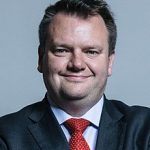
    Nigel Adams – 2021 Speech on the Treatment of Uyghur Women

    The speech made by Nigel Adams, the Minister for Asia, in the House of Commons on 4 February 2021.

    I acknowledge the strength of feeling about the human rights situation in Xinjiang, which is shared by hon. Members across the House. The BBC report to which my hon. Friend refers is chilling. It includes deeply distressing testimony of the rape, torture and dehumanisation of Uyghur women in Xinjiang detention centres. It is a further compelling addition to the growing body of evidence of the gross human rights violations being perpetrated against Uyghur Muslims and other minorities in Xinjiang. The evidence of the scale and severity of these violations is now far reaching. It paints a truly harrowing picture. If China wishes to dispute this evidence, it must allow unfettered access to the region for the UN High Commissioner for Human Rights or another independent fact-finding body.

    This Government are committed to taking robust action in respect of Xinjiang. That is why on 12 January the Foreign Secretary announced a series of targeted measures to help ensure that British organisations are neither complicit in nor profiting from the human rights violations in the region. This includes a review of export controls as they apply to Xinjiang, the introduction of financial penalties for businesses that do not comply with the Modern Slavery Act 2015, and support for UK Government bodies to exclude suppliers that are complicit in forced labour.

    These measures demonstrate to China that there is a reputational and economic cost to its policies in Xinjiang, and it is why the UK has played, and will continue to play, a leading role in building international pressure on China to change course. In October 2019 and June 2020, the UK led the first two joint statements on Xinjiang at the UN. In October 2020, 38 countries joined the UK in a robust statement at the UN Third Committee. This diplomatic action is vitally important. More countries than ever are speaking out about Xinjiang. China has already been forced to change its narrative about the camps, and its denial of these violations is increasingly hard to sustain. The Foreign Secretary has made clear the extent of our concern directly to his counterpart, Foreign Minister Wang Yi, and I have raised the issue with the former Chinese ambassador in London.

    On the specific allegations of forced birth control, we have raised these with the Chinese authorities and used our national statement at the UN Human Rights Council last September to draw international attention to this deeply concerning issue.

    I can assure the House that we will continue to work with our international partners, including with the new US Administration and through our G7 presidency, to hold China to account for its actions. The UK has called repeatedly for China to abide by the UN’s recommendation to release all those who have been arbitrarily detained, and I know that right hon. and hon. Members will join me today in reiterating that call.

  • Dominic Raab – 2021 Speech in Cyprus

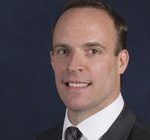
    Dominic Raab – 2021 Speech in Cyprus

    The speech made by Dominic Raab, the Foreign Secretary, on 4 February 2021.

    Thank you very much. It’s a huge pleasure to be here. Both to renew the connections and friendship we have between the UK and Cyprus, but also, given the upcoming talks, to help make progress to support our friends here in Cyprus.

    I want to thank the President of the Republic, Mr Anastasiades, and also you Foreign Minister for your friendship, your hospitality, and for the constructive discussions that we had today. I also look forward to meeting Turkish Cypriot leader, Ersin Tatar, later this afternoon.

    The UK-Cyprus relationship is strong. We have a lot of history, a lot of water under the bridge in our relationship. We have shared values, shared legal systems, joint membership of the Commonwealth, and a very big web of people-to-people relations, including students – we talked a bit about that as well today.

    We have got great partnerships and a network of personal relations, particularly in education, science, research, and security, all of which serve our joint interests and contribute to our friendship.

    We want to continue strengthening those links and we want to reinforce and nurture these relations, and perhaps widen them as well.

    So we will continue to work together to uphold the values that we both share and deal with the challenges we both face, whether that is including tackling Covid, climate change and regional challenges.

    You can count on our friendship, you can count on our support and you can count on us on playing an active and full role.

    And we also want to play a supporting role in helping the people of Cyprus, both sides of this dispute, to move things forward, to break the deadlock, to find a settlement that works in everyone’s interest.

    We are a problem solving nation by instinct, we are a Guarantor Power, we are a permanent member of the UN Security Council.

    But above all, the UK feels we are also a long standing friend of the Cypriot people across the island.

    So we want to see a permanent, enduring and lasting end to the dispute.

    And I hope that all parties should seize the opportunities that the 5+1 talks present to really change the conversation and give the children, the young people of the island, the brightest prospects for the future in years ahead.

    I think it’s an opportunity to push for a settlement which will benefit both sides but also have a premium dividend, if you like, for regional stability, security and prosperity.

    I think a failure to reach a settlement after so many efforts will benefit no-one.

    So again, I urge all sides to come to the talks with a willingness to demonstrate flexibility and compromise and I was very heartened by my conversations at the scope for that.

    We will work with the Cypriot people and the UN of course, to finally resolve the Cyprus problem and achieve a just and lasting settlement.

    So that, again, the young people, the next generation of Cypriots, can fulfil their aspirations, their dreams and evade their fears and anxieties that appear in both communities.

    A reunited, Cyprus can achieve its full potential as a beacon of democracy, stability, prosperity and, frankly, the underlying values that Nicos and I, that Brits and Cypriots share.

    Thank you very much again for your very warm welcome.

  • Michael Gove – 2021 Joint Statement with Vice-President Šefčovič

    Michael Gove – 2021 Joint Statement with Vice-President Šefčovič

    The joint statement issued by Michael Gove, the Chancellor of the Duchy of Lancaster, and Maroš Šefčovič, a Vice-President of the European Commission, on 3 February 2021.

    The Withdrawal Agreement Joint Committee co-chairs held a virtual meeting today with the First Minister and deputy First Minister of Northern Ireland.

    The Chancellor of the Duchy of Lancaster and Vice-President Šefčovič reiterated their full commitment to the Belfast (Good Friday) Agreement, and to the proper implementation of the Protocol – protecting the gains of the peace process, maintaining stability, and avoiding disruption to the everyday lives of the people of Northern Ireland and a hard border on the island of Ireland.

    Both condemned unreservedly any threats or intimidation, noting that the safety and welfare of the people of Northern Ireland and that of our staff would always be the utmost priority.

    After a constructive discussion amongst all parties, the Chancellor of the Duchy of Lancaster and Vice-President Šefčovič concluded that the UK and the EU would immediately work intensively to find solutions to outstanding issues, to be addressed through the Joint Committee.

    The Chancellor of the Duchy of Lancaster and Vice-President Šefčovič will keep in close contact as this work progresses, and will meet again next week in London.

  • Stephen Kinnock – 2021 Speech on Myanmar

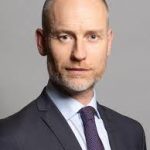
    Stephen Kinnock – 2021 Speech on Myanmar

    The speech made by Stephen Kinnock, the Labour MP for Aberavon, in the House of Commons on 2 February 2021.

    I thank the Minister for advance sight of his statement.

    The Labour party will always speak up for universal rights and freedoms, the rule of law and democracy across the world, including in Myanmar. We know that democracy is in retreat around the world, and for the first time since 2001, democratic Governments are outnumbered by authoritarian regimes. What took place in Myanmar yesterday and over the weekend serves to remind us of the daunting scale and nature of the challenge we face. This military coup is a flagrant breach of the constitution of Myanmar, and must be condemned in the strongest terms. The army’s claims of voter fraud are utterly spurious. This is a naked power grab.

    While Aung San Suu Kyi’s failure to stand up for the human rights of the Rohingya people has been deeply troubling, the fact is that her party secured a landslide victory in the November elections, and Myanmar’s young democracy must be respected and protected. Let us not forget the human cost of this coup: many brave elected representatives and activists were rounded up in the dead of night, their families terrified by the men in uniform on the doorstep. Now they languish in prison cells.

    How has it come to this? Well, for decades, the power-hungry Myanmar military has oppressed and persecuted the Burmese people, committing countless atrocities—most notably against the Rohingya, for which it currently stands accused of genocide in the International Court of Justice. Experts on Myanmar are clear that the tacit support of China, combined with the rest of the world turning a blind eye, has given the military the confidence to enact this coup, based on the assumption that the international backlash will be negligible and lethargic. The UK and the wider international community must act swiftly and effectively to prove the military wrong on this. The UK Government must move from warm words of condemnation to tangible action. As the penholder on Myanmar at the Security Council, the UK has a particular and unique responsibility to lead the international response. We welcome the Security Council session the Government have convened today, but we believe there are further steps that must be taken.

    First, the Government must lead by example by imposing sanctions on the Myanmar military and all its business interests. When I urged the Minister to take this action last year, he argued against such measures on the ground that it would have a negative impact on foreign investment into the Myanmar economy. Well, there is nothing like a military coup to damage foreign investment, so surely the Minister must now accept that his argument no longer stands up to scrutiny and that the Government must immediately impose sanctions that directly target the military and its financial backers. We on the Opposition Benches strongly support the Magnitsky sanctions against individuals in Myanmar, but let us be clear that they are designed predominantly for countries where senior officials have economic interests in the UK, such as Russia and China, and this is not the case for Myanmar.

    Secondly, the UK Government should seek to extend the arms embargo against Myanmar so that it is as close as possible to global in its scale and scope. Clearly, authoritarian regimes such as Russia and China will be unlikely to participate, but we must seek to build the broadest possible coalition of countries committed to not selling weapons to Myanmar.

    Thirdly, now must surely be the time for the Minister to commit the UK to joining the Netherlands and Canada in formally supporting the Gambia in its case of genocide brought against Myanmar at the ICJ. Will he also call for Myanmar’s first report to the ICJ, published last June, to be made public in order to shine a light on the atrocities committed by the military? I would also like the Minister to set out what conversations he has had with the Bangladeshi Government to ensure that humanitarian aid contributed by the UK is sufficiently reaching the Rohingya who have fled to Cox’s Bazar.

    Finally, what consular support are the UK Government offering to UK citizens who are in Myanmar and caught in the middle of this appalling military coup?

    I respect the Minister, and I know that his heart is in the right place on this issue, but I have to say to him that this statement falls far short of what we need and what we expect—nothing on sanctions, nothing on the ICJ. The people of Myanmar need a stronger response, and they need it now.

  • Nigel Adams – 2021 Statement on Myanmar

    Nigel Adams – 2021 Statement on Myanmar

    The statement made by Nigel Adams, the Minister for Asia, in the House of Commons on 2 February 2021.

    I would like to update the House on the situation in Myanmar. On Sunday evening, Myanmar’s armed forces, the Tatmadaw, seized control of the country, declaring a state of emergency in the early hours of Monday morning. The country is now under the effective control of the commander-in-chief and the military vice-president, Myint Swe. At around 0200 hours local time on 1 February, the Tatmadaw began detaining politicians and civil society leaders across the country, including the democratically elected Aung Sang Suu Kyi and President U Win Myint. The Tatmadaw has said that this state of emergency will continue for a year.

    The army has also taken control of the airports. Only military broadcasters are still on air, and phone lines and the internet remain at risk of being disconnected again. The military’s actions follow on from its accusations of fraud during November’s election. Aung San Suu Kyi and the National League for Democracy won by a landslide and the military-backed Union Solidarity and Development party’s share was drastically reduced. While there were significant concerns about the disenfranchisement of minority groups such as the Rohingya, there are no suggestions of widespread irregularities. International observers, such as the Carter Centre and the Asian Network for Free Elections, found no evidence of significant irregularities in the elections. As such, the United Kingdom considers the election result to credibly reflect the will of the people and that Aung San Suu Kyi’s National League for Democracy party is the rightful winner of the election.

    The commander-in-chief has indicated an intention to hold new elections to replace the results of those in November 2020. Any dispute regarding the election results should be resolved through peaceful and lawful mechanisms. The Myanmar Supreme Court is hearing a case on alleged irregularities but has not yet decided whether it has jurisdiction. The reports today of the arrest of the chair of the Union Election Commission are deeply concerning.

    The events of Sunday night have filled us all with a profound sense of revulsion and sadness. Our thoughts are with the people of Myanmar, who have once again been robbed of their inherent democratic rights. The elections in 2020, though by no means perfect, were an important step on Myanmar’s path to democracy. We and others welcomed them as a strong endorsement of Myanmar’s desire for a democratic future. Myanmar’s transition has been troubled, with a constitution rigged in favour of the military, a campaign of atrocities and systematic discrimination against the Rohingya and other minorities, and a faltering peace process.

    This coup threatens to set Myanmar’s progress back by years—potentially decades. As such, we are clear in our condemnation of this coup, the state of emergency imposed in Myanmar and the unlawful detention of democratically elected politicians and civil society by the military. The Prime Minister and the Foreign Secretary both issued statements to this effect on Monday morning. It is essential that Aung San Suu Kyi and all those unlawfully detained are released. We must receive assurances that their safety, wellbeing and rights are being respected. The state of emergency must be repealed, arbitrary detentions reversed, the outcome of the democratic elections respected and the National Assembly peacefully reconvened. We are aware that there is a risk that demonstrations could provoke a violent response, taking Myanmar back to the dark days of the 1988 uprising or the 2007 saffron revolution, in which scores of civilians were killed.

    As for the UK response, we are pursuing all levers to ensure a peaceful return to democracy. First, we have made representations at the highest level within Myanmar to encourage all sides to resolve disputes in a peaceful and legal manner. The Foreign Secretary had a call scheduled for later this week with Aung San Suu Kyi prior to her detention. We are clear in our demands that this call goes ahead and we hope that it will serve as an opportunity to confirm her safety. I formally summoned Myanmar’s ambassador to the UK to the Foreign Office yesterday. In the meeting, I condemned the military coup and the arbitrary detention of civilians, including Aung San Suu Kyi, and made it clear that the democratic wishes of the people of Myanmar must be respected, and the elected National Assembly peacefully reconvened. We are doing all we can, working with those in Myanmar, to support a peaceful resolution to this crisis.

    Secondly, the international community has a role to play. We are engaging with partners globally and in the region to help to align objectives and find a resolution to the crisis. We will work through multilateral fora to ensure a strong and co-ordinated international response. As president, the Foreign Secretary is co-ordinating G7 partners on its response, aiming to build on its quick statement last week on Navalny. The UK has urgently convened the UN Security Council, which will meet later today. As a champion of the rules-based international order and democratic government, we are driving the international response, including in our role as president of both the G7 and the UN Security Council, urging the military to immediately hand back power to the Government that were legitimately elected in November 2020. The Association of Southeast Asian Nations also has an important role to play, as do the principles of the ASEAN charter, including the rule of law, good governance, and the principles of democracy and constitutional government. We continue to engage with ASEAN partners to support a regional response, and I held a meeting with the Thai vice-Foreign Minister this morning.

    Thirdly, it is the military’s actions that instigated this coup. The UK already has a number of measures in place in response to the military’s past and ongoing atrocities. On 19 September 2017, the UK announced the suspension of all defence engagement and training with the Myanmar military by the Ministry of Defence until there is a satisfactory resolution to the situation in Rakhine. The MOD no longer has a defence section in Yangon. The United Kingdom has already imposed sanctions on 16 individuals responsible for human rights violations in Myanmar. We sanctioned all six individuals named by the UN fact-finding mission report, including the commander-in-chief and his deputy, who are the architects of the current political situation and who also have the power to de-escalate the crisis and restore democracy. We will assess how best to engage with the military, if at all. We have also enhanced private sector due diligence to prevent UK funds from going to military-owned companies.

    The UK does not provide direct financial aid to the Myanmar Government, but we provide some targeted support, working through other international organisations and multilateral bodies. In the light of the coup, the Foreign Secretary has today announced a review of all such indirect support involving the Myanmar Government, with a view to suspending it unless there are exceptional humanitarian reasons. It is important that our response holds the military accountable.

    We will continue to support the people of Myanmar. We will continue leading the international response to this crisis and calling on the military leaders in Myanmar to relent, revoke the state of emergency, release members of the civilian Government and civil society, including State Counsellor Aung San Suu Kyi and President Win Myint, reconvene the elected National Assembly, respect the results of the November 2020 general election, and accept the expressed wishes of the people of Myanmar. I commend the statement to the House.

  • Priti Patel – 2021 Statement on Hong Kong British National Route

    Priti Patel – 2021 Statement on Hong Kong British National Route

    The statement made by Priti Patel, the Home Secretary, in the House of Commons on 1 February 2021.

    I am pleased to confirm that the Government have launched the Hong Kong British national (overseas) (BNO) route on 31 January 2021.

    The introduction of the Hong Kong BNO route follows the imposition of the national security law on Hong Kong by the Chinese Government in June 2020, which restricted the rights and freedoms of the people of Hong Kong and breached the joint declaration.

    The basis for this route was established through changes to the immigration rules made on 22 October 2020, creating a route to settlement for BNO status holders from Hong Kong.

    Eligible BNO status holders, and their family members, will be able to come to the UK to live, study and work. After five years in the UK, they will also be able to apply for settlement, followed by citizenship after a further 12 months.

    As I have said throughout the development of this route, this is absolutely the right thing to do, in recognition of the historic commitment of the UK to the people of Hong Kong, and specifically to those who elected to retain their ties to the UK through obtaining BNO status.

    I am also pleased to announce that from 23 February 2021, applications to the route can be made through a fully digital process, using the new technology developed for the UK’s points-based immigration system.

    This means that if an eligible applicant holds a BNO, Hong Kong special administrative region (HKSAR), or EEA biometric passport, they will be able follow a quicker and easier process by submitting their biometrics to validate their identity through a smartphone app, rather than visiting a visa application centre. Successful applicants will receive a digital status, which they will be able to check and prove online.

    BNO status holders and their dependants are the second group after EEA nationals to have access to this new digital process, which further upholds our commitment to them.

    In addition to the new route for BNO status holders, individuals from Hong Kong will also be able to apply to come to the UK under the terms of the new points-based immigration system, which will enable them to come to the UK in a wider range of professions and at a lower general salary threshold than in the past. They are also able to use student routes and have access to the youth mobility scheme.

    Further detail about the route, including detailed applicant guidance, can be found at www.gov.uk/british-national-overseas-bno-visa.

    HMG is working to ensure BNO status holders who take up this offer feel fully supported and welcomed when starting their life in the UK. I look forward to welcoming applications from those individuals who wish to make the UK their home.

  • Dominic Raab – 2021 Statement on Zimbabwe

    Dominic Raab – 2021 Statement on Zimbabwe

    The statement made by Dominic Raab, the Foreign Secretary, in the House of Commons on 1 February 2021.

    On 1 February 2021, I imposed asset freezes and travel bans on four individuals under the Zimbabwe (Sanctions) (EU Exit) Regulations 2019.

    The four individuals designated were involved in brutal crackdowns by the Government of Zimbabwe on public protests. This includes events that led to the deaths of six demonstrators in August 2018 and of 17 demonstrators in January 2019, and resulted from the Zimbabwean security forces’ use of excessive and disproportionate force. As a result, the designations focus on some of the most egregious human rights violations since President Mnangagwa took power.

    This is the first set of designations of individuals under the UK’s autonomous Zimbabwe sanctions regime since the regulations came fully into force on 31 December 2020. These sanctions are not targeted at the wider economy or the people of Zimbabwe. The UK is on the side of the Zimbabwean people and we will continue to work to reduce poverty and help Zimbabweans secure their constitutional freedoms. This sanctions regime seeks to press the Government of Zimbabwe to: respect democratic principles and institutions and the rule of law in Zimbabwe; refrain from actions, policies or activities which repress civil society in Zimbabwe; and comply with international human rights law and respect human rights.

    These sanctions sit alongside the asset freeze on Zimbabwe defence industries, which was transferred from the EU Zimbabwe sanctions regime to the UK’s autonomous Zimbabwe sanctions regime at the end of the transition period on 31 December.

    The full list of designations is below:

    Owen Ncube – Minister of State for National Security

    Anselem Nhamo Sanyatwe – Formerly Brigadier General, Commander of the Presidential Guard and Tactical Commander of the National Reaction Force

    Godwin Matanga – Commissioner General of the Zimbabwe Republic Police

    Isaac Moyo – Director General, Central Intelligence Organisation (CIO).

  • Wendy Morton – 2021 Statement on Alexei Navalny and Human Rights

    Wendy Morton – 2021 Statement on Alexei Navalny and Human Rights

    The statement made by Wendy Morton, the Parliamentary Under-Secretary of State for Foreign, Commonwealth and Development Affairs, in the House of Commons on 27 January 2021.

    The UK is appalled by the politically motivated detention of Alexei Navalny on arbitrary charges. As the Foreign Secretary made clear, Mr Navalny is the victim of a despicable crime, and we call for his immediate and unconditional release.

    The Foreign Secretary has also condemned the Russian authorities’ unacceptable use of violence against peaceful protesters and journalists last weekend, and we have called on the Russian Government to respect their international commitments and to release those detained during peaceful demonstrations.

    The UK has galvanised the international community in condemnation of these deplorable detentions. As G7 president, the UK issued a G7 Foreign Ministers’ statement on 26 January, emphasising our deep concern at these developments and calling on Russia to adhere to its national and international obligations.

    The UK has led international efforts in response to Mr Navalny’s poisoning in August. We have worked closely with our international partners at the Organisation for the Prohibition of Chemical Weapons, to urge Russia to uphold its obligations under the chemical weapons convention. Last December, the UK led a joint statement in the OPCW, supported by 58 states parties, calling for Russia to be held to account.

    We have also taken robust, bilateral action. In October, the UK enforced asset freezes and travel bans on six individuals responsible for the poisoning of Alexei Navalny, as well on one Russian organisation. We keep further sanctions designations under constant review. However, it would not be appropriate to comment at this stage on possible future designations, as that could undermine their impact. We carefully consider all options under the relevant sanctions regimes.

    The UK has been clear in condemning in the strongest possible terms the chemical weapons attack against Mr Navalny last year. He was the victim of a nerve agent attack, and the UK has called repeatedly for the Russian authorities to investigate and explain the use of a chemical weapon on Russian soil and to declare its Novichok programme to the OPCW.

    The confirmed use of chemical weapons against opposition figures further undermines democracy and political plurality in Russia. More broadly, Mr Navalny’s detention is a further demonstration of the concerning deterioration in the human rights situation in Russia. We raise that regularly with the Russian Government, making it clear that Russia must uphold its international human rights responsibilities. I raised the issue myself during my visit to Moscow in November 2020, and our ambassador to Moscow raised Mr Navalny’s case immediately prior to his return to Russia, to underline that the UK was closely monitoring Russia’s actions.

    We condemn the detention of thousands of peaceful protestors and journalists on 23 January and the Russian Government’s continued disregard for the fundamental rights of its people to freedom of expression, association and peaceful assembly. The UK has also urged Russia to fulfil its commitments under the international covenant on civil and political rights, the European convention on human rights and all the relevant instruments of the Council of Europe and the Organisation for Security and Co-operation in Europe, and to guarantee those rights, including the right to freedom of expression, to its citizens.

    The UK’s policy towards Russia is clear: we want a different relationship, but Russia must stop its destabilising behaviour towards the UK and its partners. Russia’s pattern of aggressive behaviour undermines its claim that it is a responsible international partner upholding the rules-based international system.

  • Janet Daby – 2021 Speech on Detention of Anoosheh Ashoori in Iran

    Janet Daby – 2021 Speech on Detention of Anoosheh Ashoori in Iran

    The speech made by Janet Daby, the Labour for Lewisham East, in the House of Commons on 26 January 2021.

    I am grateful to have the opportunity to present the case of my constituent Anoosheh Ashoori today. Anoosheh is the 66-year-old father of Elika and Aryan, and a devoted husband to Sherry. As we speak, Anoosheh is lying in a prison cell in Evin, Tehran. The Minister will know some, if not all, of the details I am about to say, but I am saying them again because, in spite of the Minister and the Foreign Secretary being in full awareness of the facts of Anoosheh’s case, they have not improved their approach in the three and a half years he has been imprisoned.

    I am grateful to Anoosheh’s wife, Sherry, for telling me about his life before his capture. Anoosheh’s dream when he was a teenager was to become an astronaut—not so different from some of our children’s dreams perhaps. He had big ambitions and worked hard to make them happen. When he was 18, he moved to the UK from Iran to study, and he finally gained his masters in aeronautical engineering in 1977. When his father passed away in the 1980s, Anoosheh situated himself in Iran to take over the family civil engineering business, for which he won national awards. Anoosheh, Sherry and their young family moved back to the UK in 2004. Anoosheh spent the next decade working tirelessly to make his business successful in the UK. In 2015, they moved into their dream home, in my constituency of Lewisham East, and planned their retirement.

    It is obvious from Sherry that Anoosheh is absolutely besotted with his family. He uses his creativity to serve those he loves—from building baking machines to support his daughter to making a hobbit house in the family garden. Sherry has spoken of the pride that she and Anoosheh feel for their children: for Elika, who runs her own patisserie business, and for Aryan, who is an academic researcher with his own music label. It is clear that Anoosheh is a selfless, compassionate and caring family man. His devotion to his family is what led him back to visit his elderly mother in Tehran.

    On that horrid day in 2017, just minutes after speaking to his wife on the phone, Anoosheh Ashoori was kidnapped off the street, with a bag over his head, and bundled into a van. He has been detained in Evin prison ever since. He was charged with spying by the Iranian authorities, and given a 10-year prison sentence. There has never been a scrap of evidence presented, and Anoosheh was denied legal support for a trial that should never have happened.

    The conditions Anoosheh has had to endure in the past three and a half years are too painful for his family to recount, and I am confident that he spares them the details. Evin prison is known for the psychological and physical torture of its prisoners. There have been reports of mock executions, beatings, brutal interrogations and solitary confinement—not once or twice, but over and over again—of prisoners. Anoosheh has tried to end his life. He has attempted suicide three times, feeling unable to cope and to survive any longer.

    But what exactly did Anoosheh do to deserve this horrific ordeal? His only crime is his dual British-Iranian nationality. The Minister will know well of the trauma Anoosheh and other British prisoners in Iran go through. We have had several urgent questions—particular thanks to my hon. Friend the Member for Hampstead and Kilburn (Tulip Siddiq)—and we have heard many Government statements expressing their regret at the situation. However, our Government are simply not doing enough. Indeed, they are sitting on their hands when it comes to releasing innocent British citizens being held as hostages.

    In November, the happy news was reported that Australian national Kylie Moore-Gilbert was released from prison in Tehran. This was a bittersweet experience, as Anoosheh’s family wondered when their loved one would return home. We are left to wonder: why can the Australians, and the Americans, make it work for their citizens, but not us?

    The Foreign Office’s current strategy for dealing with consular disputes is not effective enough. It is imperative that the Government call out the hostage status of Anoosheh and those other dual British nationals being held by Iran for political leverage. To quote the international convention against the taking of hostages, international law dictates that:

    “Any person who seizes or detains and threatens to kill, to injure or to continue to detain another person…in order to compel a third party, namely, a State…to do or abstain from doing any act as an explicit or implicit condition for the release of the hostage commits the offence of taking of hostages”.

    Although this specifies individuals who take hostages, this is the precisely the mentality behind Iran’s strategy of hostage diplomacy.

    Related to the imprisonment of Anoosheh and other British citizens is the £400 million debt owed to Iran by the United Kingdom. Iranian officials have told Nazanin Zaghari-Ratcliffe that she is being detained because of the IMS debt. Our Foreign Office has repeatedly insisted that there is no link between Iran’s demand for payment and the taking of British prisoners. That is utter nonsense. For the rest of us, it is plain to see.

    Anoosheh, Nazanin, and other British people in Iranian prisons are not mere “consular cases”. They are not just numbers, but people with families and futures. They are people being brutally mistreated over an international financial dispute. They are hostages. When will the Foreign Office accept that and acknowledge them as such?

    Furthermore, court hearings were due to take place in the autumn to discuss managing the IMS debt, but they were postponed. Will the Minister give an update on the progress that his Department has made in resolving this sticking point? Iran is holding these prisoners in an attempt to hold Britain’s feet to the fire. The Government’s refusal to admit that and to act on that is only keeping the hostages in bondage for longer. To add insult to injury, last month the Foreign Secretary asserted that British citizens being held hostage abroad are not entitled to protection from the British Government. Surely I do not need to explain how absurd and inhumane that is. Will the Foreign Office issue a retraction of this damaging comment and assure the families of those randomly held that their loved ones will, of course, be given consular assistance?

    Ultimately, we need detailed assurances that the UK Government will do all they can to support Anoosheh’s release from prison and to step up their efforts to bring him home. Anoosheh needs hope that his brutal treatment will come to an end; and his family need to know that he will soon be home where he can begin to heal. I implore the Minister to give a commitment today that his Department will not just express “concerns” for Anoosheh’s welfare, but detail a clear plan of action that will explain how they will bring Anoosheh and Nazanin back to London where they belong.

    I also urge the Minister to confirm that the UK Government will not abandon my constituent and his family, but will in fact stand by British citizens who are being unlawfully detained abroad and that my constituent is as entitled to protection from the Foreign Office as the Foreign Secretary himself would be.

  • Dominic Raab – 2021 Comments on Alexey Navalny

    Dominic Raab – 2021 Comments on Alexey Navalny

    The comments made by Dominic Raab, the Foreign Secretary, on 18 January 2021.

    It is appalling that Alexey Navalny, the victim of a despicable crime, has been detained by Russian authorities. He must be immediately released. Rather than persecuting Mr Navalny Russia should explain how a chemical weapon came to be used on Russian soil.