Category: Foreign Affairs

  • Nigel Adams – 2021 Statement on Electoral Reforms in Hong Kong

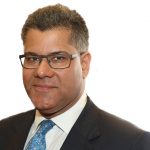
    Nigel Adams – 2021 Statement on Electoral Reforms in Hong Kong

    The statement made by Nigel Adams, the Minister for Asia, in the House of Commons on 10 March 2021.

    The United Kingdom is deeply concerned about the situation in Hong Kong and the erosion of rights enshrined under the Sino-British joint declaration. In response to these worrying developments, the United Kingdom has already taken decisive action. This includes offering a bespoke immigration path for British nationals overseas, suspending our extradition treaty with Hong Kong indefinitely and extending our arms embargo on mainland China to Hong Kong. The United Kingdom has led international action to hold China to account. As recently as 22 February, the Foreign Secretary addressed the UN Human Rights Council to call out the systematic violation of the rights of the people of Hong Kong, making it clear that free and fair legislative elections must take place with a range of opposition voices allowed to take part.

    On the question raised by the hon. Member for Oxford West and Abingdon (Layla Moran), this week meetings of China’s National People’s Congress are taking place behind closed doors. We understand that the agenda includes proposals for changes to Hong Kong’s election processes. Although the detail is yet to be revealed, these measures might include changes to the election of the Chief Executive, the removal of district councillors from the Chief Executive election committee and the possible introduction of vetting for those standing for public office to ensure that they are described as patriots who govern Hong Kong. Such measures, if introduced, would be a further attack on Hong Kong’s rights and freedoms.

    Ahead of possible developments this week, the United Kingdom has raised our concerns, including with the Chinese Ministry of Foreign Affairs, the Hong Kong Government and the Chinese embassy in London, as have many of our international partners. The Chinese and Hong Kong authorities can be in no doubt about the seriousness of our concerns. Given recent developments, including the imposition of the national security law last year, the imposition of new rules to disqualify elected legislators in November and the mass arrests of activists in January, we are right to be deeply concerned. We are seeing concerted action to stifle democracy and the voices of those who are fighting for it.

    There is still time for the Chinese and Hong Kong authorities to step back from further action to restrict the rights and freedoms of Hongkongers, and to respect Hong Kong’s high degree of autonomy. We will continue working with our partners to stand up for the people of Hong Kong and hold China to its international obligations, freely assumed under international law, including through the legally binding Sino-British joint declaration.

  • Dominic Raab – 2021 Statement on Venezuela

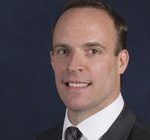
    Dominic Raab – 2021 Statement on Venezuela

    The statement made by Dominic Raab, the Foreign Secretary, on 5 March 2021.

    The decision of the regime in Venezuela to expel the Head of the EU Delegation is unwarranted and deeply regrettable. The UK stands shoulder to shoulder with our EU partners.

  • Dominic Raab – 2021 Comments on Nazanin Zaghari-Ratcliffe

    Dominic Raab – 2021 Comments on Nazanin Zaghari-Ratcliffe

    The comments made by Dominic Raab, the Foreign Secretary, on 7 March 2021.

    We welcome the removal of Nazanin Zaghari-Ratcliffe’s ankle tag, but Iran continues to put her and her family through a cruel and an intolerable ordeal.

    She must be released permanently so she can return to her family in the UK. We will continue to do all we can to achieve this.

    We have relayed to the Iranian authorities in the strongest possible terms that her continued confinement is unacceptable.

  • Preet Kaur Gill – 2021 Speech on Yemen

    Preet Kaur Gill – 2021 Speech on Yemen

    The speech made by Preet Kaur Gill, the Labour MP for Birmingham Edgbaston, in the House of Commons on 2 March 2021.

    The Government’s announcement yesterday at the high pledging conference discarded the British people’s proud history of stepping up and supporting those in need. In the middle of a pandemic, when millions stand on the brink of famine, the Government slashed life-saving support to the largest humanitarian crisis in the world, halving direct aid to Yemen weeks after they announced £1.36 billion in new arms licences to Saudi Arabia. This is a devastating reminder of the real world impact that the Government’s choices to abandon their manifesto commitment on aid will have on the most vulnerable people and shows that this Government just cannot be trusted to keep their word.

    After six years of brutal conflict, two thirds of the Yemeni population rely on food aid to survive and thousands of people in the country are at risk of famine. Cutting aid is a death sentence that this Government have chosen to make, so will the Minister take this opportunity to apologise? Alongside this cut in humanitarian support, the UK continues to sustain the war in Yemen. Will the Minister follow the lead set by President Biden by stopping all UK arms sales to the Saudi-led coalition, so that we can use our role as the penholder on Yemen to help bring this brutal conflict to an end?

    If the Foreign Secretary is willing to brazenly slash support to people living in the world’s worst humanitarian disaster, despite claiming for months that humanitarian crises were a priority, then the question is, what is going to happen to the rest of the aid budget on other priorities? The Minister has refused

    “to talk to the aid and development community about what will be cut”

    because he is ashamed. He is ashamed that the Government’s cuts will put millions of people’s lives at risk. This Government cannot continue to pretend otherwise. So will they publish a full list of the cuts made in 2020 and of the cuts to be made in 2021 by the end of this week?

    What we saw yesterday are not the actions of global Britain. That phrase rings hollow. Make no mistake: as the UK abandons its commitment to 0.7%, it is simultaneously undermining our global reputation. Does the Minister believe that he has the support of this House to make this appalling cut and, if so, will he bring forward a vote on the 0.7% commitment? Tomorrow, the Chancellor has a choice. He must reverse his decision to make the UK the only G7 nation to cut its aid budget. He must reverse his Government’s retreat from the world stage and celebrate Britain’s proud history as a country that stands up for the world’s poorest and most vulnerable in society. That is the true test of global Britain.

  • James Cleverly – 2021 Statement on Yemen

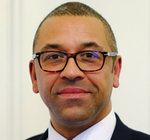
    James Cleverly – 2021 Statement on Yemen

    The statement made by James Cleverly, the Minister for the Middle East and North Africa, in the House of Commons on 2 March 2021.

    I thank my right hon. Friend the Member for Sutton Coldfield (Mr Mitchell) for raising this urgent question. The situation in Yemen remains among the worst humanitarian crises in the world. Two thirds of the entire population—more than 20 million people—require some form of humanitarian assistance. The UN estimates that in the first half of this year, 47,000 people will be in famine conditions and 16.2 million will be at risk of starvation. Improving the dire circumstances faced by so many Yemenis continues to be a priority for this Government.

    Yesterday, I attended the high-level pledging conference for the United Nations humanitarian appeal for Yemen. I announced that the UK will provide at least—I repeat, at least—£87 million in aid to Yemen over the course of financial year 2021-22. Our total aid contribution since the conflict began was already over £1 billion. This new pledge will feed an additional 240,000 of the most vulnerable Yemenis every month, support 400 health clinics and provide clean water for 1.6 million people. We will also provide one-off cash support to 1.5 million of Yemen’s poorest households to help them buy food and basic supplies.

    Alongside the money that the UK is spending to reduce humanitarian suffering in Yemen, we continue to play a leading diplomatic role in support of the UN’s efforts to end the conflict. Yesterday, I spoke to the United Nations special envoy, Martin Griffiths, and we discussed how the UK could assist him in ending this devastating war. Last week, the United Nations Security Council adopted a UK-drafted resolution that reiterated the Council’s support for the United Nations peace process, condemned the Houthi offensive in Marib and attacks on Saudi Arabia and sanctioned Houthi official Sultan Zabin for the use of sexual violence as a tool of war.

    Just last night, a Houthi missile hit and injured five civilians in southern Saudi Arabia. I condemn that further attack by the Houthis on civilian targets in Saudi Arabia and reiterate our commitment to help Saudi Arabia defend itself.

    We are also working closely with our regional and international partners for peace. On 25 February, the Foreign Secretary spoke to the Saudi Foreign Minister, Faisal bin Farhan, about the Yemen peace process, and he also recently discussed this with the US Secretary of State. I discussed Yemen with the Omani ambassador to the UK on 4 February and spoke to the Yemeni Foreign Minister on 20 January regarding the attack on Aden and the formation of a new Yemeni Cabinet.

    The UK is also leading efforts to tackle covid-19 in Yemen and around the world. This month, as part of the UN Security Council presidency, my right hon. Friend the Foreign Secretary called for a ceasefire across the globe to allow vulnerable people living in conflict zones to be vaccinated against covid-19. The UK, as one the biggest donors to the World Health Organisation and GAVI’s COVAX initiative, is helping ensure that millions of vaccine doses get through to people living in crises such as Yemen.

    I thank my right hon. Friend for raising this question and thank hon. Members for their continued interest in Yemen. The conflict and humanitarian crisis deserves our attention, and the UK Government remain fully committed to doing what we can to help secure a better future for Yemenis.

  • Preet Gill – 2021 Comments on Yemen

    Preet Gill – 2021 Comments on Yemen

    The comments made by Preet Gill, the Shadow Secretary of State for International Development, on 1 March 2021.

    Slashing life-saving support to the largest humanitarian crisis in the world in the middle of a pandemic when millions stand on the brink of famine is appalling. This callous move highlights a blatant disregard by this government to fulfil its moral duty.

    This is a devastating reminder of the real world impact the Government’s politically motivated decision to abandon its manifesto commitment on aid will have on the world’s most vulnerable people.

    Ministers must take long overdue action to stop arms sales to Saudi Arabia and in the Budget later this week, the Chancellor has a chance to emphasise Britain’s proud position as a country which supports those in need by reversing his decision to make the UK the only G7 nation to cut its aid budget.

  • Dominic Raab – 2021 Statement on Myanmar

    Dominic Raab – 2021 Statement on Myanmar

    The statement made by Dominic Raab, the Foreign Secretary, on 25 February 2021.

    The UK condemns the coup in Myanmar in the strongest possible terms and we stand with the people of Myanmar who were clear at the elections in November that they want a democratic future.

    Since 1 February the UK has led a strong, co-ordinated international response to support the Myanmar people and put pressure on the military.

    We have led statements by G7 Foreign Ministers on 3 February and 23 February: convened an urgent meeting of the UN Security Council and co-ordinated a statement from all members condemning the coup on 4 February and co-led a special Session of the Human Rights Council on 12 February.

    Last week, alongside our Canadian counterparts, we also announced sanctions on three individuals responsible for serious human rights violations committed by the military and police.

    Today I am announcing further measures to increase the pressure on the Myanmar military following the coup.

    First, the UK will impose sanctions on six military members of Myanmar’s State Administration Council for their role in overseeing human rights violations. This includes the Commander-in-Chief, General Min Aung Hlaing, Secretary of the SAC, Lieutenant General Aung Lin Dwe, Joint Secretary of the SAC, Lieutenant General Ye Win Oo, General Tin Aung San, General Maung Maung Kyaw, and Lieutenant General Moe Myint Tun. The measures prevent these individuals from travelling to the United Kingdom and freeze any assets held in this country.

    Secondly, the UK will temporarily suspend all trade promotion in Myanmar and launch a strategic review of the UK’s trade and investment approach. We are clear that UK businesses should not be supporting the military or their businesses. The joint FCDO-DIT review will look at identifying sectors with limited exposure to the military, opportunities for responsible development and mitigating the risk to Myanmar’s poorest.

    Thirdly, I can confirm that following a review of all UK aid in Myanmar, the UK has suspended all support involving the Myanmar Government directly or indirectly unless there are exceptional humanitarian reasons. Support for Government-led reforms has been stopped and planned programmes will close. Our remaining programmes will focus on reaching the poorest and most vulnerable in Myanmar.

    The international community has sent a clear message to Myanmar. The military must hand back power to the democratically elected Government and release all those detained arbitrarily.

  • Dominic Raab – 2021 Statement on Arrests in Hong Kong

    Dominic Raab – 2021 Statement on Arrests in Hong Kong

    The statement made by Dominic Raab, the Foreign Secretary, on 1 March 2021.

    The decision to charge 47 Hong Kong politicians and activists for conspiracy to commit subversion under the National Security Law is another deeply disturbing step. It demonstrates in the starkest way the use of the law to stifle any political dissent, rather than restore security which was the claimed intention of the legislation. The National Security Law violates the Joint Declaration, and its use in this way contradicts the promises made by the Chinese government, and can only further undermine confidence that it will keep its word on such sensitive issues.

  • Dominic Raab – 2021 Comments on Covid-19 Vaccines in the Ivory Coast

    Dominic Raab – 2021 Comments on Covid-19 Vaccines in the Ivory Coast

    The comments made by Dominic Raab, the Foreign Secretary, on 1 March 2021.

    Today, with UK aid support, people in Côte d’Ivoire are the first to receive vaccinations through COVAX – the biggest ever global vaccine campaign to end the pandemic.

    We’re proud to be one of the biggest donors to COVAX, securing over one billion doses for the most vulnerable around the world. We do it because we want to be a force for good in the world, and because we need a global solution to a global pandemic.

  • Andrew Adonis – 2021 Speech in the House of Lords on Genocide

    Andrew Adonis – 2021 Speech in the House of Lords on Genocide

    The speech made by Andrew Adonis (Lord Adonis) in the House of Lords on 23 February 2021.

    My Lords, my noble friend has just made an enormously powerful speech, and two points in particular will impress themselves on the House. The first is that the Government’s position in saying that it should be for the courts to decide whether a genocide is taking place but not giving them any powers even to offer an opinion on that fact is a recipe for inaction. It is a recipe for inaction in one of the worst causes imaginable because we are talking about genocide. It is a striking fact that, historically, the British Government have never declared a genocide to be in progress before it has been completed. We have to wrestle with the legacy of history. We did not do it in respect of Stalin; we did not do it in respect of Hitler. We have afterwards taught our children in schools about the horrors of genocide against the Jews and against many other races which those dictators and others carried through, so we should learn the lessons and seek to stop genocides in future.

    The second powerful point made by my noble friend is that part of the reason why we should go down the route which the noble Lord, Lord Alton, has so convincingly laid out for us is not simply to reveal a genocide that is currently in progress—or may be; that is to be determined, but there is very good circumstantial evidence which should be tested and courts are good at doing so—but to limit the further extension of that atrocity while it is happening. We should do that rather than doing what may well happen, which is that in 20 or 30 years’ time, when people may talk about Xi Jinping in the same way as they talk about Stalin and Hitler, we ask: what are the lessons and why did we not learn them at the time?

    The course proposed today seems not only deeply moral but relevant in terms of our own capacity to avoid greater horrors and problems that we ourselves will have to face. The noble Lord referred to a red line that he has; we should be much more worried about the red wall which we face in respect of Xi Jinping. That will have to be addressed over time, and it is much better that we get the measure of it earlier rather than later. Surely the lesson from such dictators in the past is that there was a moment when it was possible to stand up to them and find a way through that did not involve extreme action. We could all look at it in due course. The noble Lord, Lord Blencathra, and I had a good-natured exchange last time about what he sees as the great weakness of the Foreign Office. It has not always been weak. My great hero is Ernie Bevin because he stood up to Stalin after 1945 and we did not have to repeat the horrors of another full-scale war. There is plenty of combustible material in respect of China that could lead to war in future. We have only to look at what is going on in Hong Kong and Taiwan, let alone what is going on inside China itself. These matters are weighty. My noble friend said that some votes matter more than others. One reason for that is the consequences of action and inaction, and there is no bigger set of issues than those that we are addressing today.

    The noble Lord, Lord Blencathra, said that the Minister, for whom we have a high regard, had been handed a poisoned chalice. We are very glad to see that he is still well on the Government Front Bench and will be in a condition to reply to this debate at the end. However—if I may use a Chinese analogy—in trying to persuade us not to agree to this amendment, what the Minister has done is offer us a very Chinese artefact: a paper tiger. He has made all kinds of imprecations as to what might happen if we agree to the amendment. Apparently, the constitution is going to be ripped up forthwith, which we are doing by the back door—what a large back door; an extraordinary number of people appear to be walking through it in remarkable unison. We were told that the amendment would somehow go against the wishes of the elected House. On the previous amendment, where the Minister told us not to be seduced by the noble Lord, Lord Lansley, he said that there was a resounding majority in the other place, which was why we should not insist on it. Not only was the majority when the Commons voted on the first of these amendments only 15 but, as the noble Lord, Lord Blencathra, rightly said, there was not a vote on the amendment in the name of noble Lord, Lord Alton; there was a resounding silence on it from the House of Commons. We should therefore resoundingly ask the House of Commons resoundingly to resolve its silence; that is our duty in respect of the amendment before us.

    On the second element of the paper tiger the Minister put forward, he said, in establishing his red line, that the Government would not agree to expand the jurisdiction of the courts to assess the existence of genocide. But we are a parliamentary democracy. It is not for the Government to say whether the courts should assess whether genocide has taken place. It is for Parliament to legislate on whether the courts should have that power.

    The Minister gave us a constitutional lecture on the separation of powers. It is not for the Government to tell the courts what they will and will not consider. That is for Parliament, making the law, to determine. It does not matter what the Government’s red line is; the issue is what Parliament’s red line is, and we do not know that yet, because the House of Commons has not had the opportunity to give its opinion. This House has given its opinion twice, which is unusual, since, normally, in ping-pong, we start to become faint-hearted and susceptible to the arguments about the role of this House and all that. Unusually, this House has had larger majorities as we have considered this matter again. I suspect there will be a very decisive majority at the end of this debate, too. I strongly urge all noble Lords who sympathise with the arguments, but are in doubt about what they should do, to vote for the amendment of the noble Lord, Lord Alton, because that will ensure this has the best possible consideration by the House of Commons.

    I will make one final point about the red line and the red wall. The issues we face are extremely grave. If you read about the conversation between President Biden and President Xi Jinping, although there is a determination to have decent bilateral relationships, there is no clear meeting of minds between those two great powers. As the noble Lord, Lord Blencathra, rightly said, it would be disingenuous of Her Majesty’s Government to pretend that there in respect of the United Kingdom, too.

    Many noble Lords may read a thing called China Daily, which we have circulated free to us—the propaganda sheets of the Chinese Government. China Daily’s account of that conversation should leave one in no doubt about what Xi Jinping said. According to its interpretation, he said:

    “China hopes the US respects China’s core interests and cautiously deals with matters related to Taiwan, Hong Kong and Xinjiang, which are China’s domestic issues concerning the nation’s sovereignty and territorial integrity.”

    On the opposite page, in a remarkable story headlined “Reporting the truth about China”, there is a whole series of assertions and lies about what is going on Xinjiang, including the claim that there are no events that are out of order taking place there, that the re-education camps are to improve the employment prospects of the Uighurs and nothing more, and that in the BBC facts have been “twisted” and the situation

    “has been angled to give a certain, preconceived message.”

    Of course, since we last debated this issue, the BBC has been banned from China and Hong Kong.

    That brings us back to the need to have a clear assessment of what is going on, attracting and weighing evidence. That is the fundamental purpose of this amendment. When this matter was last considered by the House of Commons—in the strange procedure that did not actually allow a vote to take place on the key issue—Greg Hands said:

    “Fundamentally, it is right and proper that Parliament takes a position on credible reports of genocide relating to proposed free trade agreements rather than, in effect, subcontracting responsibility to the courts to tell us what to think.”—[Official Report, Commons, 9/2/21; col. 219.]

    Parliament is not subcontracting responsibility to the courts. On the contrary, it is asking eminent judicial figures and the courts to report on and expose the facts, so we know what is happening. Once those facts have been exposed, it is for Parliament and the Government to decide what action should follow. But we will not get that action unless we have the facts. This is a circular process: we need the facts; we need proper inquiry; we need measured judgments made on them just so that Ministers, such as the noble Lord, Lord Grimstone, can make balanced judgments in due course.

    We do not want, in 20 or 30 years’ time, to have to spend time in our schools teaching our young people about the genocide in China in the 2020s that we did nothing to resist, involving what could be terrible consequences in terms of the relationships between the great powers, because we were not even prepared to consider whether a genocide was taking place.