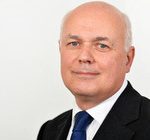
Category: European Union

  • David Jones – 2022 Speech on the Northern Ireland Protocol Bill

    David Jones – 2022 Speech on the Northern Ireland Protocol Bill

    The speech made by David Jones, the Conservative MP for Clwyd West, in the House of Commons on 27 June 2022.

    The status of Northern Ireland in the United Kingdom derives initially from the Act of Union 1800, the sixth article of which provides that, in matters of trade and in treaties with foreign powers, the

    “subjects of Ireland shall have same the privileges…as…subjects of Great Britain.”

    The 1800 Act was augmented, as we know, by the Belfast/Good Friday agreement of 1998, which declares that

    “it would be wrong to make any change in the status of Northern Ireland save with the consent of a majority of its people”.

    As hon. Members have said today, the Belfast agreement is fundamental to the maintenance of peace in Northern Ireland, and preserves its constitutional status. The fact that the agreement is crucial is acknowledged in the Northern Ireland protocol, which says that the protocol

    “is without prejudice to the provisions of the 1998 Agreement in respect of the constitutional status of Northern Ireland and the principle of consent”.

    The essential point is that the protocol, which is part of an international treaty, explicitly acknowledges the primacy of the Belfast agreement—another international treaty.

    The agreement, however, has been undermined by the protocol. It is absolutely clear that the arrangements set up by the protocol are having a detrimental impact on life in Northern Ireland and on the privileges of its people. As we have heard, there are burdensome checks on goods passing from Great Britain to Northern Ireland, and that has created a border in the Irish Sea between constituent parts of the United Kingdom, which cannot be acceptable.

    As we heard from the right hon. Member for Lagan Valley (Sir Jeffrey M. Donaldson), people in Northern Ireland find it difficult to secure many goods that they have traditionally been able to purchase, and there has been a diversion of trade away from mainland Great Britain and towards the European Union. The disruption has also impacted the democratic institutions of Northern Ireland. The Assembly has not been reconstituted since the elections earlier this year, and the Executive remains suspended. This is a worrying and potentially dangerous state of affairs, especially given the sensitive political history of Northern Ireland.

    Angus Brendan MacNeil

    Given the right hon. Gentleman’s concern for the Assembly and for democracy in Northern Ireland, does he think that the protocol should be decided on by that very Assembly?

    Mr Jones

    The Assembly will, in due course, have the right to decide on it, but that will be after the passage of four years.

    Both the UK and the EU recognise the practical problems of the protocol and its impact on Northern Ireland. Both recognise that those problems should, if possible, be resolved by negotiation, and hon. Members in all parts of the House have repeated that today. Everybody would like the issues to be resolved through negotiation, but for that to happen, it would be necessary for the EU to change the negotiating mandate given to Vice-President Šefčovič—and that it refuses to do. As we heard from the Secretary of State, there have been extensive negotiations over 18 months, and they have been fruitless.

    The Government have a clear duty to take action to restore the privileges of the people of Northern Ireland, so that they are equal to those of people in the rest of the UK, and to respect the primacy of the Belfast/Good Friday agreement. The action that the Government have taken is to introduce this Bill, which does not, as has been suggested, tear up the protocol; on the contrary, it respects and protects the integrity of the EU’s single market and the openness of the land border, both of which are matters in which the EU and the Irish Republic are concerned. There will still be checks on goods arriving in Northern Ireland but destined for the European Union, through a red lane arrangement.

    The Bill explicitly protects the EU single market against the movement across the Irish land border of goods on which the correct EU tariffs have not been paid, or which do not comply with EU regulatory standards. It also provides explicitly that no land border infrastructure or checks or controls on the borders may be created. In every respect, that satisfies the European Union’s concerns.

    The Bill also complies with the United Kingdom’s obligations under the Belfast/Good Friday agreement. It preserves the status of Northern Ireland in the United Kingdom by restoring the equality of the privileges of its people with those enjoyed by the people of the rest of the United Kingdom.

    The Bill is wholly necessary. Without it, the peace process established by the Belfast agreement will be dangerously compromised. It is a crucial but proportionate Bill, and it deserves the support of the House.

  • Claire Hanna – 2022 Speech on the Northern Ireland Protocol Bill

    Claire Hanna – 2022 Speech on the Northern Ireland Protocol Bill

    The speech made by Claire Hanna, the SDLP MP for Belfast South, in the House of Commons on 27 June 2022.

    These few years have been frustrating and damaging for Northern Ireland, and the Bill adds to that. They have been bad for the economy—for businesses that need stability, not brinkmanship—and for relationships in each of the Good Friday agreement’s three strands: within Northern Ireland; between the north and south of Ireland; and between east and west. More than that, the Bill is being seen as part of the Government’s departure from the Good Friday agreement’s values of compromise, partnership and the rule of law. The Bill recycles the same distortions and half-truths that the people of Northern Ireland have been listening to for the last six or seven years of the Brexit debate, and there is still a failure to reconcile the dilemmas that Brexit forces and the choices that the UK Government have made with the reality of our geography.

    Some truly mind-bending arguments have been put forth to justify the Bill. It is said that the Bill is about consent and consensus, when in fact the majority of people in Northern Ireland have not consented to Brexit in any form, and a majority of voters and MLAs reject the Bill in the strongest terms. We are told that it is about protecting the Good Friday agreement, while the UK Government and people whom we all saw scuttling away from Castle Buildings when the Good Friday agreement was being forged—they screamed in the windows for the first few years, while we tried to implement it—are in the middle of body-slamming a cornerstone of that agreement.

    We have also heard that the Bill is about rights. If it is truly about rights, the women of Northern Ireland, the LGBT community of Northern Ireland and the minority ethnic community of Northern Ireland would like a word. We have heard that it is about the alleged damage to our economy, when every credible business organisation in Northern Ireland is calling for the retention of the protocol. Business after business lauds the potential of dual market access, and Northern Ireland is the only UK region outside London managing to achieve post-pandemic GDP growth.

    We are told that the Bill is about a democratic deficit. That is being protested against by removing the entirety of Government from the people of Northern Ireland, and it will apparently be solved by handing over Henry VIII powers that allow the Government to ride roughshod over everybody in Northern Ireland. I am old enough to remember the time when Brexit was supposed to be about parliamentary sovereignty. We have been promised that, and we were promised sunlit uplands, but people in Northern Ireland are getting the gaslit uplands, given that there has, for years, been a cynical campaign to distort the causes and effects of the protocol.

    I understand entirely the hurt and frustration of many ordinary Unionists. They have been catastrophically misrepresented by the Democratic Unionist party, and by the Prime Minister, who insisted—[Interruption.] The DUP has been saying all those words for three, four, five years, and we ended up with the protocol. Some of us are here to try to clear up the mess that was created, while the DUP voted down every option that could have prevented the sea border. Unionists and others are wrong to think that the solution is breaking international law and walking away from partnership and compromise.

    I hope that the DUP will understand—I mean this in the best possible way—that hundreds of thousands of us in Northern Ireland who do not identify as Unionists constitutionally compromise every single day; we live in a reality where the governance lines do not directly match up with our identity. We do that because it suits the majority of people, and because Northern Ireland is not a place where hard, sharp lines of sovereignty work, or where the winner can take all. It is a place where governance survives in the shades of grey, as the right hon. Member for Skipton and Ripon (Julian Smith) said.

    I am glad that some very plausible solutions, including on sanitary and phytosanitary arrangements and veterinary deals, are being mentioned, because for some reason, they disappeared off the agenda. We are told, “I would do anything for Northern Ireland, but I won’t do that. I won’t agree to a simple, negotiated solution that could remove 70% or 80% of checks.” There is no doubt that the protocol can be smoothed and its operation can be improved; everybody says that. As I have said before, nobody in Northern Ireland loves the protocol, but the better options were voted down. As with everything that is worth doing in Northern Ireland, that improvement will be achieved through partnership and compromises, not by imposing unmeetable red lines. That would remove the people of Northern Ireland from the single market, and that has no support.

    Instead of doing the hard work and levelling with the people of Northern Ireland, the Government, to whom the DUP has shackled itself, are choosing to distort and deflect. They are using the “stabbed in the back” narrative; they are saying that this is all the fault of remainers, the EU, the Irish, and those who are not patriots, but we know that this is about the DUP. The hon. Member for Stone (Sir William Cash) mentioned Eamon de Valera, and that reminded me of a quote that has echoed down through Anglo-Irish relationships from the last century. Lord Edward Carson, who had been the leader of Unionism, said in the other place, as he reflected in disillusionment on the shambles left by the Conservative party on the island of Ireland,

    “What a fool I was. I was only a puppet, and so was Ulster, and so was Ireland, in the political game that was to get the Conservative Party into power.”—[Official Report, House of Lords, 14 December 1921; Vol. 48, c. 44.]

    The only difference between then and now, when we have this miserable, deceitful Bill before us, is that we are talking about maintaining the Conservative party in power and propping up a failing, discredited Prime Minister. This is also perhaps about the Foreign Secretary currying favour with the malevolent European Research Group and once again pulling the wool over Unionism’s eyes.

    I suspect that we cannot stop the Bill—people will troop through the Lobby and support it—but Members should understand that people on the island of Ireland, and further afield, are watching the Government. They will have to work through the implications of dealing with a Government who are in a very bad place morally, and who are in contravention of the culture of lawfulness that many of us have worked very hard to cultivate in Northern Ireland. The Government’s approach is fundamentally altering the dynamics of relationships on the island.

    Having spent the last six years having the same argument time and again, I do not believe that the Conservative party has it in it to put the people, businesses and economy of Northern Ireland first. I implore my colleagues on the Opposition Benches: please, unshackle yourselves. Work with us—your neighbours, colleagues and friends—on the negotiated solutions that we all know are possible. We have solved bigger problems before; these solutions are available. End this toxic debate. That is what the people of Northern Ireland want. They do not want to have to hear about this day after day on the radio. They want dual market access, and they want our economy to prosper; and that is entirely achievable, with good will.

  • Iain Duncan Smith – 2022 Speech on the Northern Ireland Protocol Bill

    Iain Duncan Smith – 2022 Speech on the Northern Ireland Protocol Bill

    The speech made by Iain Duncan Smith, the Conservative MP for Chingford, in the House of Commons on 27 June 2022.

    I am grateful to be called so early.

    May I start by saying to the right hon. Member for Leeds Central (Hilary Benn) that I agree with all that stuff about the trade issues? They have been on the table for ages. I will just go over one small point. During the breakdown in negotiations when my right hon. Friend the Member for Maidenhead (Mrs May) was Prime Minister, I happened to take a delegation, including Lord Trimble, to see the then chief negotiator. I put to him the fact that the whole issue around trade across the border was easily settled, as long as we were able to trust each other on things like phytosanitary foods and veterinary checks, which the EU does with New Zealand. He completely agreed and said it would be possible, but then it came to another agreement and we have plunged ever since.

    It is wholly feasible not to have these ludicrous checks and ludicrous requirements for customs codes to be banged across to the EU, or for the Court of Justice to sit to rule over what is going on in Northern Ireland. It would have been agreed then, under a thing called mutual enforcement, where both sides take complete responsibility for the enforcement of transgressions in the other’s area when it comes to Northern Ireland. That would have solved that problem straight.

    Here is the problem: the EU has point blank refused to negotiate that. Here is the point about the protocol. I am not saying that the protocol should go completely. I am saying it should be changed—that is the whole point. When I read it before we originally voted on it, I read clearly what its main purpose was. Article 1, paragraphs (1) and (3) make it clear that the primacy in all this is the Good Friday/Belfast agreement. Upholding that is critical—of course it is.

    I served in Northern Ireland. I never want anyone I know to go back to a thing like that again. I lost people in Northern Ireland. It is part of me as much as it is of those who live there. We do not want to go back there. Therefore, the Good Friday agreement must be prime; by the way, it is an international agreement. So we have a problem. We are talking about breaking international agreements, but we have a clash between international agreements. Which one is prime? Paragraphs (1) and (3) of article 1 make it clear that maintenance of the balance in the Good Friday/Belfast agreement is prime. If that is the case, I do not believe—I accept I am not a lawyer; I say to the Minister for the Cabinet Office and Paymaster General, who is on the Front Bench, that that is a badge of pride for me, although I am sure that others would argue differently—[Interruption.] Of course. I always hear him argue and I love it. I have read the text of this. I do not believe this legitimately will break international law. There is a good reason. If the Good Friday/Belfast agreement is so prime in the protocol, it was agreed from the word go that what affected that badly would make this thing fall.

    The rest of the protocol is important. The protocol was never seen as permanent. First, it was negotiated under article 50, which means that it cannot be permanent of its own right. Secondly, article 13(8) of the protocol makes it clear that it can be changed in whole or in part. So what is the problem? It is not working—change it. It could have been changed ages ago. In fact, last year, I asked for article 16 to be triggered simply so we could start that process immediately.

    The point that I want to make is that the Good Friday/Belfast agreement is critical. It is about safeguarding that first, and then there is no hard border, the EU single market and the UK’s territorial integrity. The last one has clearly been badly damaged and we cannot have that reign any further. Northern Ireland is clearly an important part of the United Kingdom, so it must be treated as an important part of the UK, as much as my constituency is. That is critical. Actually, the protocol specifies that that is one of the priorities. So here we go again: why would the EU not change the mandate? It set a narrow mandate that said that it would deal only with issues that affected the running of the protocol. It did not allow its negotiator to have a mandate that would change article 13(8) of the protocol in whole or in part. We are here today with this because we are only going to be able to force this to happen through this Bill.

    There are those who say, “Negotiate, negotiate, negotiate.” Negotiation is not an end in itself. It has a purpose. At some point, you have to leave the room because it no longer works and, until the other side makes a change, you cannot simply go back. That is the real problem that we face. The only time the EU will sit up and look at this is when it realises that the British Government are determined to make this change come hell or high water. If the EU will not agree to the necessity for this, we will have to make it.

    I believe that the Government are acting reluctantly. I have listened carefully to what the ex-Justice Secretary, my right hon. and learned Friend the Member for South Swindon (Sir Robert Buckland), has said about the efficacy of this in international law. He will speak shortly and we will want to hear what he has to say.

    Quite simply, the most important thing is that the EU—including, I might say, Ireland—wakes up to what the challenge really is. The process at the border was wrongly and damagingly weaponised during the negotiations. We got locked down in the original negotiations and ended in this position because it was seen as a stick to beat the dog. The dog was Brexit Britain, and the EU was going to use it no matter what to ensure that it could not be clean. It is time to recognise that that has to stop. So I support the Bill tonight not on technicalities, but on the reality as it has turned out.

    Angus Brendan MacNeil (Na h-Eileanan an Iar) (SNP)

    I am surprised to see the right hon. Gentleman wanting to interfere further on “Brexit means Brexit.” Is he not the one who told the House in October 2019 that this matter had been

    “debated and thrashed to death”

    and said that if anything else needed debating about it, he

    “would love to know what it is”?—[Official Report, 22 October 2019; Vol. 666, c. 853.]

    When was the epiphany?

    Sir Iain Duncan Smith

    I read the protocol—that is why. I do not know whether the hon. Member did. In the protocol, it is clear that if it does not work, it will be changed

    “in whole or in part.”

    He should have read it, and he would have understood. The whole point is that we can change it. The protocol has always been clear: the seeds for its own major change are in it. [Interruption.] I made no resolution on it. I was absolutely right to do so, and I would repeat that. [Interruption.] Whether he wants to hear what I have to say is another matter altogether. He had his moment in the sun and he lost, so I will move on.

    I say to my right hon. and hon. Friends on the Front Bench that we are here out of necessity because of how the EU has behaved, and, I must say, because of how the Irish Government have behaved. Some people, such as the Irish Taoiseach, have been good—he has been much more reasonable—but quite recently the Irish Foreign Secretary celebrated the diversion of trade that was taking place. That contravenes article 16 and makes it clear that the protocol has to be changed. I read the treaty, but I do not think that the hon. Member for Na h-Eileanan an Iar (Angus Brendan MacNeil) did.

    I do not believe that the Bill breaks international law. It is a clash of international treaties, and the most important international treaty is the Belfast/Good Friday agreement. Maintenance of that is critical. I want to see the DUP back in power sharing. I understood the right hon. Member for Lagan Valley (Sir Jeffrey M. Donaldson) to say that he would head in that direction and get back into power sharing once the Bill was through the Commons. I hope so, and I will hold him to that. Let us get the Bill done as quickly as possible, because only then will the EU realise that we mean business.

  • Hilary Benn – 2022 Speech on the Northern Ireland Protocol Bill

    Hilary Benn – 2022 Speech on the Northern Ireland Protocol Bill

    The speech made by Hilary Benn, the Labour MP for Leeds Central, in the House of Commons on 27 June 2022.

    The Bill is proof, if ever it were needed, that Brexit is not done. It was always going to be difficult to reconcile leaving the EU with the challenge of an open border and so it has proved. Let us be absolutely frank from the start: our relationship with the European Union is now in a very bad place. Perhaps that has something to do with the right hon. Member for Uxbridge and South Ruislip (Boris Johnson) because, before he became Prime Minister, he promised he would never ever put a border in the Irish sea. When he became Prime Minister, he promptly did that. He described the protocol, when he negotiated it, as in perfect conformity with the Good Friday agreement. He then said that there would be no checks on goods going from GB to Northern Ireland. That was not true and it is probably one of many reasons why so many people do not trust the Prime Minister, including many EU leaders.

    What can we conclude from that process? Despite the fact that the impact assessment made it very clear that there would be checks—what would happen—the Government either did not fully understand the protocol they had negotiated, thought it would not be a problem, mis-sold it, or always intended to resile from it later. Whatever the explanation is, it does not reflect terribly well on Ministers.

    But having made that point, we are where we are and we have a problem. The problem is that the Northern Ireland Assembly and the Executive are not functioning and all of us should be worried about that. I should have said at the beginning that it is a great pleasure to follow the right hon. Member for Skipton and Ripon (Julian Smith) because I think he spoke extremely wisely.

    As the right hon. Member for Maidenhead (Mrs May) pointed out, I suppose in the Government’s eyes, the test of the Bill is, will it work to bring the institutions back up and running again? None of us knows for sure the answer to that, but in the meantime the Foreign Secretary is taking a very big gamble and in the process in my view she is trashing Britain’s international reputation as a country that can be trusted to keep its word.

    I do not propose to dwell on the detail of the Bill—others have done that effectively—but it is just not the way to solve the problem. I oppose it because it will lead to a prolonged stand-off with the European Union, it will prolong the problems the right hon. Member for Lagan Valley (Sir Jeffrey M. Donaldson), who speaks for the Democratic Unionist party, has just referred to, it will worsen relations and, if everything goes horribly wrong, we could end up in a trade war with the EU at a very difficult time for us economically and when we have a real war on our hands between Russia and Ukraine. So we have to find another way of resolving this, and that requires the UK and the EU to sit down and negotiate.

    I have heard all the arguments from both sides—“It’s the other lot who are not doing the talking; we are willing” and so on and so forth. They can carry on blaming each other until the cows come home but, as long as they do that, both sides will be failing to fulfil their political responsibility to find a political solution to what is a political problem. At the heart of this is the question: how do we protect the integrity of the single market while not interfering unreasonably with goods moving from Great Britain to Northern Ireland? That is why the protocol refers to goods “at risk”. That is the key phrase that we have to bear in mind.

    I think there are some pretty easy places to start. For example, on supermarket deliveries travelling from Cairnryan to Larne, to shops that are only in Northern Ireland, what exactly is the risk of those goods undermining the integrity of the single market? As far as I can see, there is none, so why should they require an export health certificate? In the 18 months for which the grace periods have been extended, can anyone point to a single example of the integrity of the single market having been undermined? I am not aware of one.

    I genuinely cannot fathom why the EU is so insistent on requiring a customs code to be provided by supermarkets and others. What is it going to do with the statistics? Is it actually going to publish stats on the movement of baked beans and baby food between GB and Northern Ireland? We are aware of the other problems—seed potatoes, organic products, divergence on certain ingredients. In making that point—

    Ian Paisley rose—

    Sammy Wilson rose—

    Hilary Benn

    I am not going to give way, as I want to keep to time.

    Of course there are products where it can reasonably be argued that there is a potential risk. I wish we had spent the time talking about those products, one by one, because if there is a good case I am sure the Government will respond. While the EU says it has offered to reduce paperwork, it is important to remember that it is a reduction compared with the full application of the rules; it is an increase compared with what is currently the case because of the extension of the grace periods. That is why I have said to the EU and all I have spoken to that the EU needs to move to make this negotiation work. Surely we can reach some agreement on SPS checks on the basis that almost all the food produced in Britain is produced to exactly the same standards as it was while we were members of the EU.

    I find this very frustrating because we hear Simon Coveney say on the radio, when the idea of a green lane is put to him, “We have proposed something very similar”. Well, why cannot the two parties get on with the negotiation to make this happen? Heaven forbid, if we can negotiate the Belfast/Good Friday agreement—an astonishing achievement, the phrase of my good friend my hon. Friend the Member for Hove (Peter Kyle), the shadow Secretary of State for Northern Ireland—are the Government really incapable, with the EU, of negotiating for a prawn sandwich to cross the Irish sea without a lot of accompanying paperwork? This cannot be beyond the wit and ability of politicians.

    In my view, this is a Bill borne of desperation rather than principle. It is a Bill trying to solve a problem that is entirely of the Government’s own making. It does Britain’s international standing no good whatsoever. And it will make the negotiation, which is the only way this is going to be solved in the end, harder rather than easier. There are so many more pressing things for us to be talking about with the EU—our biggest, nearest and most important trading partner still—not least the war in Ukraine and not least climate change. The current crisis in the Government in respect of Northern Ireland arises from a practical problem and requires a practical solution. We need those old virtues of patient diplomacy and negotiation, which take as their starting point the purpose of the rules, which is to protect the integrity of the single market, rather than the rules themselves. Frankly, it is now time for the Government, together with the EU, to get back around the table and sort this out.

  • Julian Smith – 2022 Speech on the Northern Ireland Protocol Bill

    Julian Smith – 2022 Speech on the Northern Ireland Protocol Bill

    The speech made by Julian Smith, the Conservative MP for Skipton and Ripon, in the House of Commons on 27 June 2022.

    It is a pleasure to speak after the right hon. Member for Lagan Valley (Sir Jeffrey M. Donaldson).

    Powerful and legitimate arguments are being made about the legal basis of this Bill, and I am sympathetic to them. Whatever the motivations and goals behind the Bill and whatever the reasons why we are at this point, it is important to look at what is practical and most likely to succeed regarding the Northern Ireland protocol and what will ensure that we show the people of Northern Ireland we are handling this issue with balance and an even hand. There are real and significant issues, as we have just heard, with the protocol—customs checks east-west and regulatory challenges to name but two. While I do not accept that the protocol is a constitutional threat to the UK, it is clear that it creates many complex challenges.

    I acknowledge those issues, but there is significant support for the Northern Ireland protocol. Business organisations across Northern Ireland have been engaging in good faith with Government for over two years and looking at myriad ways to improve the deal. Their view is that the needed stability and balance can be achieved only through a negotiated settlement, and they want to preserve the opportunities of the protocol. They also want to protect the strong position of the Northern Ireland economy, which has now been shown in multiple reports to be performing among the best in the country.

    There are major concerns that the advantages as well as the disadvantages of the protocol could be lost with this Bill, and that the Henry VIII clauses are there to remove almost all of the protocol should Ministers want to do so. A majority of MLAs also articulated this view in a recent letter to the Government. They accepted that changes need to be made, but they are clear that they want a negotiated approach. Voters across Northern Ireland, many of whom support the need for change, also want a UK-EU negotiated solution: 74% of voters support that.

    I fear that this Bill is a kind of displacement activity from the core task of doing whatever we can to negotiate a better protocol deal for Northern Ireland. I also fear that it risks creating an impression to Unionism that a black-and-white solution is available when the reality is that, once this Bill has been dragged through the Lords and the courts and after EU responses and reprisals, compromise will ultimately be needed. Our sole focus should be on how we shift the EU into a negotiation to get the changes needed for Northern Ireland and from the right hon. Member’s party.

    We risk toxifying further the discussions we are having with the EU and member states, and we risk prolonging instability for Northern Ireland business, not to mention putting the whole of the UK at risk of trade and tariff reprisals. We also risk further entrenching the view of many middle-ground voters in Northern Ireland that the desire to finish Brexit by removing the protocol is against their best interests. This issue of winning hearts and minds is important to bear in mind as we seek to persuade and cajole people to stick with the Union.

    We should be looking at how we persuade the EU to make the changes needed by Unionism. We should be looking at how we encourage the Northern Ireland parties to work together on joint priorities and the EU to understand that it is in its interests to provide much greater political focus on this issue. What else can we do in other parts of the UK-EU relationship to encourage the bloc to shift? Our challenge is to push the EU to move beyond the flexibilities it is proposing and to change the text, but we also need to be realistic about how changes will be made. It will be by more suspensions, more grace periods and turning the eye, and compromises seem more likely than wholesale rewriting. Northern Ireland is very used to these types of deals—shades of grey rather than black and white.

    We know that patient, quiet work can deliver. We have already seen this happen on medicines. The EU has now changed the protocol, and the Government have secured uninterrupted supplies to Northern Ireland. Not only that, but Northern Ireland’s crucial pharma sector has access to both markets. There is no reason why the medicines deal cannot be replicated across agrifood and customs if the political will is there on both sides. However, to do that we need the highest-level focus, leader to leader, with a political negotiation focused on Northern Ireland and challenging the approach the EU took over the May years.

    The announcement yesterday on more joint working with France in other areas could lead to a space in which we can push forward with a crucial member state the changes needed on Northern Ireland, but it is worth bearing in mind that, from the readout of the Macron-Johnson meeting, the Northern Ireland protocol was not raised yesterday.

    We also need to work out how to encourage Dublin. We need its help to get the EU to shift. Ireland should have done more to help when we needed an exit mechanism on the backstop, but we now need to get Dublin, and also the parties in Northern Ireland, to focus on a resolution. We need a new, intensive UK, Northern Ireland, Irish and EU process. That is how we will get the east-west checks resolved so there is no border down the Irish sea. That is how we will fudge issues on regulation. That is even how we might get to fix legal oversight. But we need a sustainable solution.

    The task in Northern Ireland is, as ever, to secure broad consensus and that means that Government, as well as addressing the concerns of Unionism, also have to reflect on the concerns of all communities and the growing centre ground. A new intensive Northern Ireland focus in the negotiation process is the only way to ensure that this fragile but high-performing part of our country is handled with the utmost care, balance and respect.

  • Jeffrey Donaldson – 2022 Speech on the Northern Ireland Protocol Bill

    Jeffrey Donaldson – 2022 Speech on the Northern Ireland Protocol Bill

    The speech made by Jeffrey Donaldson, the DUP MP for Lagan Valley, in the House of Commons on 27 June 2022.

    I welcome the opportunity to speak on Second Reading of this very important Bill. At the outset, it is important to make the point to all right hon. and hon. Members that this is not simply another Brexit-related Bill. Nor is it a technical Bill to remedy problems that have arisen since January 2021, albeit that it will have that effect.

    Fundamentally, the Northern Ireland Protocol Bill seeks to finally and fundamentally reset and restore Northern Ireland’s relationship with the rest of the United Kingdom, given the devastating impact of the protocol on the economic, constitutional, social and political life of Northern Ireland over the past 18 months. Many in this House will remember our opposition to the protocol, and it is an honour to follow the former Prime Minister, the right hon. Member for Maidenhead (Mrs May). She rightly flagged up our opposition from the outset to the protocol. It gives me no pleasure to say that we warned that it would be bad for Northern Ireland and that it would not work. That assessment has been more than borne out in reality.

    The Northern Ireland institutions were restored in January 2020. The former Secretary of State, the right hon. Member for Skipton and Ripon (Julian Smith), is in his place and he was very much involved in bringing about the New Decade, New Approach agreement. At the heart of that agreement was a clear commitment by the UK Government to protect Northern Ireland’s place within the UK internal market, and that it would be respected. On that basis, my party re-entered power sharing.

    We kept our side of the bargain and we were patient. We waited and waited for the Government to take action to protect our place in the internal market. The Secretary of State for Northern Ireland did refer to measures to be introduced to the United Kingdom Internal Market Act 2020 that would have at least partly dealt with the problem, alongside other measures to be proposed to a Finance Bill, but those measures were not brought forward, so still we waited.

    Last July, when I became leader of the party, I warned that if the Government failed to honour their commitment in New Decade, New Approach, we would have a real difficulty, because the consensus that is essential to ensure that power sharing is maintained in Northern Ireland is being undermined.

    Simon Hoare

    The right hon. Gentleman has not said anything up to now that is any way factually challengeable. On the presumption that the Bill secures its Second Reading this evening and begins its parliamentary progress, in the interest of serving those people in Northern Ireland who look to the Executive and Stormont to meet their daily needs, will he instruct his party colleagues who are MLAs to return to the Executive, get it back up and running, discharge their democratic duty, and serve all the communities in Northern Ireland?

    Sir Jeffrey M. Donaldson

    I will come to that point, but I simply ask the hon. Gentleman: if I were to do that, would he then support the Bill? I heard nothing in his contribution to suggest that he would.

    Last July, I made it clear that:

    “The Irish Sea Border is not just a threat to the economic integrity of the United Kingdom, it is a threat to the living standards of the people of Northern Ireland”,

    and so it has proven. The impact of the additional cost of bringing goods from Great Britain to Northern Ireland is contributing to the cost of living situation in Northern Ireland. It is driving up the cost of food in our supermarkets, it is driving up the cost of manufacturing, and it is making it difficult for businesses to operate effectively.

    Bob Stewart

    Further to that point, it seems that the people of Northern Ireland sometimes cannot get goods from Great Britain. Manufacturers here are not sending them to Northern Ireland, because of the additional burden of trying to get them there.

    Sir Jeffrey M. Donaldson

    The right hon. Gentleman is absolutely correct. Many of my constituents, and those of my right hon. and hon. Friends, have experienced that as consumers and businesses. This is about not just businesses, but every citizen of Northern Ireland.

    It is also about the democratic deficit. My Members, who were elected to the Northern Ireland Assembly and are Ministers in the Executive, are expected to preside over the imposition of regulations over which they have no say. They have no democratic input into how those regulations—the ones that regulate how we trade with the rest of our own country—are put in place. How can any hon. Member defend a situation where part of this United Kingdom is treated in such a way that its elected representatives have no say in many of the laws that regulate our trade with the rest of the United Kingdom? That is simply unacceptable and it is part of the problem.

    Karin Smyth

    I agree with the right hon. Gentleman, as I have said in this place many times, about aspects of the Joint Committee. This Bill that he is agreeing with, however, similarly gives absolutely no power to anybody in Northern Ireland—him, his party or anybody else— but gives it all to the Secretary of State. On that basis, how can he support it?

    Sir Jeffrey M. Donaldson

    If enacted, the Bill will restore confidence in Northern Ireland, will restore the consensus essential to operate power sharing, and will therefore give back to the elected representatives in Northern Ireland the power to take the decisions that they have not been able to take.

    I also say to the House that it is a bit rich to hear hon. Members arguing for devolution and the restoration of power when this House, on a number of recent occasions, has overridden devolution and the Northern Ireland Assembly and has enacted powers contrary to the desires of the elected representatives in Northern Ireland.

    I believe that this Bill is essential to the restoration of political stability in Northern Ireland. It will provide a framework for the free movement of goods within the UK internal market in line with the Government’s commitment in New Decade, New Approach. It gives reasonable protection to the EU single market; it does not have an impact on the EU and the integrity of that market. In fact, it protects the integrity of that market as well as the integrity of the United Kingdom’s internal market. I see no reason why this House should not bring forward measures to do that, when it is clear and evident that the protocol has disrupted the integrity of the UK internal market.

    Sir George Howarth (Knowsley) (Lab)

    I know that the right hon. Gentleman gives a lot of thought to these issues and does not arrive at opinions lightly. He is arguing that the Bill as it stands will give Northern Ireland the things it wants—I think that is his main point—but what will happen if he is wrong?

    Sir Jeffrey M. Donaldson

    I am not suggesting that the Bill is perfect. It is rare for legislation that passes this House to be perfect in every sense and not to require subsequent amendment. The benefit of the Bill is that it empowers Ministers to make change where change is necessary to ensure the proper functioning of the UK internal market, which is an entirely valid thing for this Parliament and Government to do.

    Furthermore, as a Unionist, I make no apology for saying that it is important to me that the Bill will restore Northern Ireland’s place within the Union. Some right hon. and hon. Members have referred to the rule of law, yet the High Court and the Court of Appeal in Belfast have stated clearly that the protocol subjugates article 6 of the Act of Union, which is an international agreement —it is the fundamental building block of the Union.

    Article 6 states clearly that I, as a Northern Ireland citizen and a member of this United Kingdom, have the right to trade freely within my own country and that there should be no barriers to trade between the constituent parts of the United Kingdom. In putting in place the Irish sea border, the protocol has broken article 6 and made me a second-class citizen in my own country, because I do not have the right to trade freely with the rest of the United Kingdom. I am simply asking for my rights as a British citizen.

    Simon Hoare indicated dissent.

    Sir Jeffrey M. Donaldson

    The Chair of the Northern Ireland Affairs Committee shakes his head, but if he found his constituents in a position where they were unable to trade freely with the rest of their own country, he might be as annoyed as I am and he might actually have something to say about it.

    Jim Shannon

    My right hon. Friend is putting forward an excellent case for how to do away with the Northern Ireland protocol through this legislation. Does he agree that it removes the direct jurisdiction of the European Court of Justice and brings it back here, and that it should be the people of this House, and of the United Kingdom of Great Britain and Northern Ireland, who make those decisions, not Europe?

    Sir Jeffrey M. Donaldson

    I believe in fairness and that when there is a dispute at an international level, the court of one side should not be left to be the arbiter of that situation. That needs to be rectified.

    On the implications of the Bill, I make it clear that in our view, it will provide for the restoration of the equilibrium that is essential in Northern Ireland—the cross-community consensus that is at the heart of the Belfast agreement and that is absolutely necessary to ensure the proper functioning of the political institutions. As was evident in the May elections, not a single Unionist Member elected to the Assembly supports the Northern Ireland protocol, so there is no cross-community consensus in favour of it.

    This House can bury its head in the sand and pretend that there is no instant solution to the problem. It can say, “Let us just wait for the EU to finally agree to change its negotiating mandate,” but what about Northern Ireland in the meantime? I want to see the political institutions restored, but I am not able to do it if my Ministers are required to impose a protocol that harms Northern Ireland. I am not prepared—my party is not prepared—to engage in an act of self-harm to Northern Ireland’s part of the United Kingdom. We are simply not prepared to do that.

    Therefore, is it the will of this House that it wishes to see Northern Ireland languishing without political institutions able to operate because there is no cross-community consensus while we argue the rights and wrongs and the legalities of this situation? Unfortunately, I do not have a situation for my people whereby we can talk all night and debate this Bill and its legality in international law. I happen to believe there is a necessity, and the necessity is peace and stability in Northern Ireland.

    This House and this Government are charged with the responsibility of ensuring peace and stability in Northern Ireland. That is the necessity, and I do not see and have not heard in this House from anyone opposing the Bill what their solution is beyond saying, “Let’s have more negotiations”—negotiations with an EU that refuses to change its negotiating mandate and will not change the text of the protocol. I have to say to right hon. and hon. Members that refusal to change the text of the protocol simply means that we will not get a solution that will achieve the cross-community consensus required in Northern Ireland, and I believe the Bill offers a solution.

    Sir William Cash

    Does the right hon. Gentleman accept, as he said earlier, that a serious democratic deficit exists at the moment in the making of laws by European institutions—in the Council of Ministers, by a majority vote, behind closed doors? None of his voters has any opportunity to intervene whatsoever, and it is done in a manner completely inconsistent with proper democratic procedures. Is that not the absolutely right reply to my hon. Friend the Member for North Dorset (Simon Hoare)?

    Sir Jeffrey M. Donaldson

    I thank the hon. Member for that intervention and for the excellent work he has been doing in helping to bring about the progress we are making towards the restoration of the political institutions in Northern Ireland.

    As I come to a conclusion, let me say that much of what will happen in the coming period in Northern Ireland will be shaped by attitudes and decisions in this House. If this Bill convincingly passes all its Commons stages in its current form and the Government continue to develop the regulations required to bring to an end the harmful implementation of the protocol, that will of course give substantially greater confidence that new arrangements are on the way, which in turn would provide a basis to take further steps to see the return of our local institutions.

    Therefore, I appeal to Members of this House who genuinely want to see the institutions restored and up and running in Northern Ireland again to prioritise the interests of Northern Ireland over any narrower ideological reservations they may have about this Bill. I urge them to recognise the vital nature of this Bill now progressing rapidly through its legislative stages in the Commons before the summer recess, and of ensuring not only that it receives substantial support in this House, but that it is not subject to either wrecking amendments or other amendments that would dilute the framework and impact of the Bill.

    In conclusion, much harm has been inflicted on the Belfast agreement and its successor agreements. Time is now short to ensure that we arrest this situation, and the only way to do that, finally and fully, is to deal with the protocol and to see Northern Ireland once again focus on moving forward together. We want to see the Northern Ireland Assembly and Executive restored, and that can be achieved when there is a sustainable basis for doing so. We will continue to be condition and not calendar-led as we look forward to this Bill now making rapid progress. I commend the Bill, and we will be supporting it in the interests of Northern Ireland and the integrity of the entire United Kingdom.


  • Theresa May – 2022 Speech on the Northern Ireland Protocol Bill

    Theresa May – 2022 Speech on the Northern Ireland Protocol Bill

    The speech made by Theresa May, the former Prime Minister, in the House of Commons on 27 June 2022.

    I welcome the opportunity to speak in this debate, although I have to say to the lone Minister sitting on the Front Bench that I do not welcome this Bill. I fully understand and share the Government’s desire to uphold the Belfast/Good Friday agreement. I understand and share the desire to keep the Union of the United Kingdom. I recognise the frustration and difficulty when the Northern Ireland Assembly and Executive are not in place and operating. I also share the Government’s desire to get that Assembly and Executive back operating for the good of the people of Northern Ireland. I do not believe, however, that this Bill is the way to achieve those aims.

    In thinking about the Bill, I started by asking myself three questions. First, do I consider it to be legal under international law? Secondly, will it achieve its aims? Thirdly, does it at least maintain the standing of the United Kingdom in the eyes of the world? My answer to all three questions is no. That is even before we look at the extraordinarily sweeping powers that the Bill would give to Ministers.

    The Government’s claim of legality, as we have heard, is based on the doctrine of necessity in international law. The Government, as the Foreign Secretary said, have published a legal position, and that described this term “necessity” in the following way:

    “the term ‘necessity’ is used in international law to lawfully justify situations where the only way a State can safeguard an essential interest is the non-performance of another international obligation…the action taken may not seriously impair the essential interests of the other State(s), and cannot be claimed where excluded by the relevant obligation or where the State invoking it has contributed to the situation of necessity.”

    Let us examine that. First, if the necessity argument is to hold, this Bill must be the only way to achieve the Government’s desires, yet the Government’s legal position paper itself accepts that there are other ways. For example, it says:

    “The Government’s preference remains a negotiated outcome”,

    which was reiterated by the Foreign Secretary in her opening speech. The paper also acknowledges that another way to deal with this issue lies in the existence of article 16. The Government’s preferred option is negotiation, and then there is a second option, which is article 16.

    Article 16 is referred to in the legal position paper, but when I read that I thought it was referred to in a way that seemed to try to say that the existence of article 16 somehow justifies the introduction of this Bill. Article 16 does not justify this Bill; the very existence of article 16 negates the legal justification for the Bill.

    Let us also examine some of the other arguments for invoking the necessity defence. That defence cannot be claimed where the state invoking it has contributed to the situation of necessity. Again, in their legal position paper, the Government set out their argument that

    “the peril that has emerged was not inherent in the Protocol’s provisions.”

    I find that a most extraordinary statement. The peril is a direct result of the border down the Irish sea, which was an integral and inherent part of the protocol that the Government signed in the withdrawal agreement. It is possible that the Government might say, “Ah well, we knew about that, but we did not think the DUP would react in the way that it has.” I say to the Minister that the Government should have listened to the DUP in the many debates that went on over the withdrawal agreement, because it made its position on the protocol very clear at that point, and it was not positive.

    Finally, necessity suggests urgency; “imminent peril” is the phrase used. There is nothing urgent about the Bill. It has not been introduced as emergency legislation. It is likely to take not weeks, but months to get through Parliament. As the former Treasury solicitor Jonathan Jones said in The House magazine,

    “If the UK really did face imminent peril, you might think the government would need to deal with it more quickly than that.”

    My answer to all those who question whether the Bill is legal under international law is that for all the above reasons, no, it is not.

    Question two is whether the Bill will achieve its aims. I am assuming that the aims are either to encourage the DUP into the Northern Ireland Executive, or that the Bill is a negotiating tool to bring the EU back round to the table. On the first of those, so far I have seen no absolute commitment from the DUP that the Executive will be up and running as a result of the Bill. There were rumours that that might happen on Second Reading, but as far as I can see it has not happened. If my right hon. Friend the Foreign Secretary wants to have a discussion with me about negotiations with other parties in this House on various matters, I am happy to do so.

    If the Bill is a negotiating tool, will it actually bring the EU back round the table? So far, we have seen no sign of that. My experience was that the EU looks carefully at the political situation in any country. As I discovered after I had faced a no-confidence vote—and despite having won that vote—the EU then starts to ask itself, “Is it really worth negotiating with these people in government, because will they actually be there in any period of time?”, regardless of the justification or otherwise for its taking that view. I suspect those in the EU are saying to themselves, “Why should we negotiate in detail with a Government who show themselves willing to sign an agreement, claim it as a victory and then try to tear part of it up after less than three years?” My answer to the second question as to whether the Bill will achieve its aims is no, it will not.

    My final question was about the UK’s standing in the world. The UK’s standing in the world, and our ability to convene and encourage others in the defence of our shared values, depends on the respect that others have for us as a country—a country that keeps its word and displays those shared values in its actions. As a patriot, I would not want to do anything to diminish this country in the eyes of the world. I have to say to the Government that this Bill is not in my view legal in international law, it will not achieve its aims and it will diminish the standing of the United Kingdom in the eyes of the world. I cannot support it.

  • Richard Thomson – 2022 Speech on the Northern Ireland Protocol Bill

    Richard Thomson – 2022 Speech on the Northern Ireland Protocol Bill

    The speech made by Richard Thomson, the SNP MP for Gordon, in the House of Commons on 27 June 2022.

    I rise to speak in line with the basis of our reasoned amendment, namely that we believe that this Bill breaks international law.

    We have already had to stumble our way through the consequences of a Brexit deal that was supposedly oven-ready. Quite frankly, what is proposed in this legislation is no better. The fact is that, if this Bill does not break international law, it is an act preparatory to doing so.

    I will start my remarks by being as helpful as I think I can be to the Government. First, I hope I can understand and at least empathise with some of the concerns of people in Northern Ireland over how aspects of the protocol are working or, as they would view it, not working. Secondly, I do not consider it unreasonable in and of itself that, in the light of experience, the Government should seek to try to renegotiate aspects of the deal that has taken effect. However, I am firmly and clearly of the view that this is absolutely not the way to go about trying to achieve that objective.

    I am bound to observe that, although we are here to talk about a Bill on the Northern Ireland protocol, the issues here do not only affect Northern Ireland. We are subject to a withdrawal agreement that does not work for Scotland or, I would contend, any other part of the United Kingdom. There is much rhetoric from the Government about our precious Union, but it is a Union under the stewardship of a Government who did not pay a great deal of attention to the concerns or priorities of the majorities in Scotland and Northern Ireland who opposed Brexit. If relations are to be rebalanced across these islands, whether that is cross-community in Northern Ireland or even cross-Union, some recognition of those points by the Government is long overdue.

    Jim Shannon

    I was very fortunate to have the hon. Gentleman in my constituency, where I gave him the opportunity, which I know he enjoyed it, to meet some of the Unionist community groups, the fishermen and the elected representatives. Every one of those people, as he will remember well, conveyed to him the unfairness of the Northern Ireland protocol and the impact it was having on fishing and on the community. He will know that the local people he met were very fearful of a future where the Northern Ireland protocol was retained. Does he understand those issues, and will he express that in the Chamber as well?

    Richard Thomson

    I recall that visit with great fondness, particularly the discussions we were able to have in Portavogie, and I am extraordinarily grateful to him and to everybody I met when I was last in Northern Ireland for the chance to discuss these matters. As I have said, I certainly hope I can empathise with and understand some of the issues raised there; if he will allow me to make some progress, he might see where there are perhaps areas of agreement and also, inevitably, some areas of divergence.

    Richard Graham

    It seems to me that the fundamental issue of debate is whether the EU would move on the implementation issues that it claims are the only problem. For the EU, it is not a question of renegotiation, but of implementation. It has said that it believes that customs formalities can be reduced by about 80%, and the same with sanitary and phytosanitary checks, and that the expanded trusted trader scheme could solve many of the problems. How confident is the hon. Gentleman that those things will be delivered, given how long this has been going on for and the affect already evident in Northern Ireland?

    Richard Thomson

    It certainly appears to me that there is a potential landing zone between what has been proposed by the European Union and what has been proposed by the UK Government—indeed, there is a bit of an overlap. I would offer to come along with Ministers, but they might feel that reinforcements had arrived and somehow weakened their position. Nevertheless, there ought to be a landing zone here for those of goodwill and good faith.

    Even as a supporter of Scottish independence, I find it utterly inconceivable that any Unionist Government would have signed up to the kind of arrangements that placed a trade border down the middle of the Irish sea while denying they were doing any such thing. All the issues inherent in the protocol could have been avoided had the UK Government maintained a modicum of statecraft and respect for all parts of the Union, acknowledged the limitations of the mandate they had from the Brexit referendum and remained in as close alignment as they could with the single market and customs union, thereby minimising the economic harms we have seen to the UK since then and ensuring that no part of that precious Union was left behind. Yet even now it seems that the Government have not learned from their mistakes. The Scottish Government were not consulted by the UK Government before they took this action. I believe I am right in saying that the UK Government did not even afford the Scottish Government the courtesy of a phone call in advance to advise of these plans.

    It has also been reported that the UK Government did not consult their top legal adviser—the First Treasury Counsel, Sir James Eadie—on the legality of their move. So we have a UK Government who are in contempt both of international law, as we have seen in other matters, and domestic law. Aspects around the Prime Minister’s current travails are bad enough, but to stand up and use the full authority of a ministerial office to say that which is not gets right to the heart not just of the problems being presented by the protocol in its current form but of the fitness of the Prime Minister, or anyone aspiring to replace him.

    Bob Stewart (Beckenham) (Con)

    It is clear that the protocol is not working, and Northern Ireland business is suffering. In what way does this Bill act to the disadvantage of the European Union, because it seems to me that it is a very good way forward?

    Richard Thomson

    Well, it seems to me that whether it disadvantages or not is not something that Her Majesty’s Government get to decide. While I am clear that there are problems with the protocol, clearly there are aspects of it that are working very well, as indeed those on the Treasury Benches have admitted. I will set out some of the examples, particularly over trade, where it is not having the impact that we are told, in all aspects, that it is. I come from the point of view that trust has been broken between the UK Government and the people of all these islands, as well as between the UK Government and our international partners. That gets right to the nub of the issues about trying to renegotiate it.

    We should not really need to say this, but it is absolutely vital that the UK Government should be able to respect the international obligations that they enter into freely. Lord Butler, who was head of the civil service for 10 years, has said that this country has repeatedly criticised states like Russia and China for breaking the rules-based international order and yet now holds that it is perfectly justified in breaching international law itself. It seems that in this Bill we are going from a “limited and specific” breach to something that is potentially extensive and egregious. General Sir Richard Barrons, the former chief of joint forces command, who served in Afghanistan, Iraq and Northern Ireland, has said that

    “what the government is proposing is short-sighted tactics which will do much harm strategically in the wider world. In fact what is being done is particularly stupid.”

    He went on to warn that these moves will empower our adversaries as

    “it will undermine us with our enemies by giving them the opportunity to accuse us of hypocrisy when we call them out for breaking the rules-based international order. It will also undermine us with our allies who will doubt whether they can rely on us to keep to an agreement, keep to our word.”

    Dr Murrison

    I am listening to the hon. Gentleman with a great deal of interest. He is right to defend international law and international treaties. Did he raise the concerns he has just expressed when the European Union was busy breaking those treaties—for example, over subsidies to Airbus?

    Joanna Cherry

    Whataboutery!

    Richard Thomson

    My hon. and learned Friend says it very eloquently in one word: whataboutery.

    We have been brought here by 40 years of political dysfunction in the Conservative party and the various neuroses it has had over Europe. The exceptionalists of the “punch above our weight” brigade to be found extensively, but not exclusively, within the European Research Group, where research seems to be at a premium, have led us to this point, in the process shredding any reputation that the UK might have preserved either for good, stable government or adherence to international norms.

    Whatever the bluff and bluster, and personal agendas that might be at play—I notice that the Foreign Secretary is no longer in her place—it is of course the UK’s exit from the EU rather than the protocol that created this difficult situation, because there were only ever three options that would allow this particular circle to be squared: a return of a border on the island of Ireland, close alignment between UK and EU regulatory standards to reduce the need for checks, or checks to be carried out at the main Northern Ireland ports. The further that there is a diversion from the single market and the customs union, the harder the border then eventually becomes.

    Sir William Cash

    Is the hon. Gentleman aware that in 1937 de Valera himself actually tore up the Anglo-Irish treaty in exactly the same kind of way as he is accusing other people of doing?

    Richard Thomson

    The hon. Gentleman seems to be confusing me with a representative of the Government of Ireland; that is an interesting historical diversion that I would be more than happy to discuss with him later, but I am not exactly certain how germane it is to this particular discussion. It seems a little bit recondite to say the least.

    The Government have presented a precis of the legal advice. The Law Society of Scotland has identified a number of provisions in the Bill that it believes to be inconsistent with the UK’s international law obligations. Because of the amount of time available and the fact that we are only on Second Reading, I do not intend to go into those points in any great depth or delve unnecessarily into the horrors of the empowerment of Ministers that the Bill represents—the Henry VIII powers. However, I just specifically highlight the issues that the Bill creates given that article 4 of the withdrawal agreement states expressly that the UK cannot legislate contrarily to its commitments through primary legislation.

    We now get on to necessity, which is ultimately the justification that the Government are using. As I understand it, that rests on two key points: first, that there is effectively, when viewed from London, no detriment to the single market from these measures; and secondly, that this underwrites the Government’s wishes to protect the UK single market and the Good Friday agreement. That argument was neatly eviscerated by my hon. and learned Friend the Member for Edinburgh South West (Joanna Cherry) in an earlier intervention, but there are three points that instantly leap out at me. First, as I have said, whether or not there is detriment is a largely subjective measure. Whatever unilateral assertions might be made on this, whether or not there is detriment requires to be determined in another manner.

    Secondly, making an invocation of necessity must not seriously impair an essential interest of another party, and it is quite hard to argue that this could not at least be at risk of happening. Thirdly, it is not particularly credible now to cite the protocol as harming the single market or the Good Friday agreement when it was cited by HM Government as a means of protecting both those things. The Prime Minister wanting to override a deal that he himself was happy to claim credit for, in terms of having got Brexit done, during his 2019 election campaign is not the strongest basis for sustaining that argument.

    With regard to the economic effect, Northern Ireland has clearly lagged behind the rest of the UK in economic performance in recent decades. For some reason, it is currently outpacing every other part of the UK, except, perhaps predictably, London. There must be some reason why that might be, and I do not know whether anyone can help me with it, but perhaps there is a clue—

    Sammy Wilson

    If the hon. Gentleman were to examine the economic performance in Northern Ireland, he might find that, surprisingly, it is the service sector that has increased, by seven times more than the manufacturing sector, and of course the service sector is not covered by the protocol at all.

    Richard Thomson

    Manufacturing also seems to be doing quite well, as I recall. Perhaps having a foot in both markets and easier access to both, in contrast to counterparts on the other side of the north channel, might also be a reason for that.

    A survey by the Northern Ireland Chamber of Commerce shows that 70% of businesses now believe that that unique trading position with preferential access to both the EU and UK single markets presents opportunities for Northern Ireland, with the number of businesses reporting a significant problem dropping from 15% to 8%. While I would not seek to diminish in any way the problems that those 8% feel, that is perhaps an indication that many of the problems, at least initially, were because of the short lead-in time that was given and the lack of preparation and clarity ahead of the big changes that came in January 2021.

    To come back to my fundamental point, we need a protocol. The nature of Brexit means that there needs to be a protocol. It does not need to be exactly the same as this version, but what we absolutely do not need, in the middle of a cost of living crisis, is the prospect of increased trade frictions through needless conflict and a developing trade war with our largest and closest overseas market. That is what I very much fear this legislation, if enacted and utilised, would do.

    I believe that the way forward is through negotiations. Like the man asked to give directions, I would not be starting from this point, for a variety of reasons, and I need not detain the House on that. We need negotiations based on trust, good faith and co-operation. The UK Government would stand a much better chance of success if they were driven by that, instead of by this piece of legislative brinkmanship, and if they were to pursue measures that for once were motivated by a genuine desire to deliver the best possible outcomes out of this mess for all peoples on these islands, rather than simply pandering to the agendas of those in the tiny subset of the population who might have an influence over who the next leader of the Conservative and Unionist party might happen to be—a party that no longer seems to be very certain what it is here to conserve or to unify.

  • Simon Hoare – 2022 Speech on the Northern Ireland Protocol Bill

    Simon Hoare – 2022 Speech on the Northern Ireland Protocol Bill

    The speech made by Simon Hoare, the Conservative MP for North Dorset, in the House of Commons on 27 June 2022.

    Thank you, Madam Deputy Speaker. Ten minutes is the time usually taken to make opening remarks, and popularity is something that I have always shunned.

    The shadow Foreign Secretary is right: at the heart of this is trust or the absence of it—or, as she leaves the Chamber, the absence of Truss. Is the protocol perfect? No, it is not. The question, therefore, is not whether but how changes should be made. There are many ways to achieve change, but this Bill is not one of them.

    The Office of Speaker’s Counsel has provided a legal opinion to all members of the Northern Ireland Affairs Committee, and it raises enormous concerns about this Bill’s legality. The Foreign Secretary and others have tried to conflate—they have fallen into the trap of conflating—the resurrection of devolution and the protocol. Those are two very separate and different workstreams, and we need to decouple them. Treaty making is reserved to this place; devolution is the duty of the politicians of Northern Ireland. We can and should be able to see the resurrection of one and negotiation on the other, but to fall into the trap of conflating them, the result of which is this Bill, is very sad indeed.

    This is not a well thought-out Bill, it is not a good Bill and it is not a constitutional Bill. The integrity of the United Kingdom can be changed only via the Good Friday agreement. The protocol and trading arrangements do not interrupt or change the constitutional integrity of the UK, so I do not agree with those who try to position this as a constitutional Bill.

    Gavin Robinson

    Will the hon. Gentleman give way?

    Simon Hoare

    If the hon. Gentleman will allow me, I want to make a few more points.

    This Bill represents a failure of statecraft and puts at risk the reputation of the United Kingdom. The arguments in support of it are flimsy at best and irrational at worst. The Bill risks economically harmful retaliation and runs the risk of shredding our reputation as a guardian of international law and the rules-based system. How in the name of heaven can we expect to speak to others with authority when we ourselves shun, at a moment’s notice, our legal obligations? A hard-won reputation so easily played with—

    Dr Andrew Murrison (South West Wiltshire) (Con) rose—

    Simon Hoare

    I give way to my constituency neighbour.

    Dr Murrison

    My hon. Friend and constituency neighbour is making a good speech. Of course, the Bill is permissive legislation; meanwhile, negotiations are ongoing. He referred to a failure of statecraft—whose failure?

    Simon Hoare

    I think it is probably a failure of both sides, but a presumption of, “If I don’t get my own way on everything, I’m going to take my ball off the pitch; I’m going to act unilaterally, off my own bat” is not the way to do it. As a former distinguished Minister at the Northern Ireland Office, my right hon. Friend knows as well as I do that most Northern Ireland outcomes are based on compromise—on give and take, and on finding the place and the path of least resistance.

    This has been a failure of statecraft. I do not believe that the Bill passes the international test of necessity. It has to pass all the tests set out in the statute, and it does not. What, then, is this Bill? Is it a bargaining chip to try to browbeat the EU? Is it a bribe to right hon. and hon. Members in the Democratic Unionist party to get back around the table at Stormont?

    Sir Jeffrey M. Donaldson

    Will the hon. Gentleman give way?

    Simon Hoare

    Let me just finish on what the Bill might be, and then I shall of course give way to the right hon. Gentleman.

    Is the Bill a muscle flex for a future leadership bid? To sacrifice our national reputation on the altar of personal ambition would be shameful.

    Sir Jeffrey M. Donaldson

    The hon. Member for Bristol South (Karin Smyth) made a point on this subject earlier, but as a result of the protocol we have a democratic deficit in Northern Ireland. Many of the laws that now regulate how we trade with the rest of the United Kingdom are made by a foreign entity over which we have no say whatsoever, and our VAT rates are set by that foreign entity. There should be no taxation without representation. I do not need to be bribed to ask for what is the right of my people: democracy.

    Simon Hoare

    That is a point with which I have much sympathy, and which Committee members discussed with the Commission when we were there last December. The Commission is aware of that. Norway has Ministers of its Government in Brussels to discuss such things week in, week out. The EU and, as the right hon. Gentleman will know, Northern Irish business organisations are really keen to identify platforms whereby that democratic deficit can be in some way addressed. I agree with the right hon. Gentleman entirely. I am tempted to say to him, “Don’t shout at me; shout at the Ministers who advocated for the protocol and for us to sign and support it.”

    Sir William Cash (Stone) (Con) rose—

    Simon Hoare

    I am going to make some progress, if I may.

    I suggest that we have to be the party of the rule of law, or we are nothing. It is sad that we have to be reminded of that. This a power grab, with all these Henry VIII clauses. If we were being asked to pass powers to Ministers so we could polish an already superlative protocol, we might have some faith, but they have admitted that the results of what they negotiated have caught them by surprise—that they did not understand the import of what they were signing up to, or they did not quite understand the terms or the meaning of the words. We are told that they were surprised that the other side would expect us and them to fulfil the obligations we had negotiated.

    Given our deep understanding of the complexities and difficulties of the politics of Northern Ireland— I have little or no doubt that we can all unite on that—I suggest that to enter into something so lightly without understanding precisely all the details, and then to say, “We’re having to do this because we didn’t expect the other side to do it in the way that they want us to do it,” is for the birds. It is totally bonkers. The Government told us that, having reached a difficult compromise on the final text of the protocol, they expected the EU to do something else. With all the history, all we relied on was expectation.

    These Henry VIII clauses really will not stick. Seventeen of the clauses give unspecified powers to Ministers. Was taking back control about this Parliament handing powers to the Executive to use for unspecified purposes? Even worse, one clause tells us that powers will be used to change powers that might have been changed in the Bill if those changes are subsequently thought to have been wrong or ill-advised. That is not only someone marking their own homework, but someone copying somebody else’s homework and then claiming all the credit themselves.

    Sir Bernard Jenkin

    I find it astonishing that my hon. Friend has got eight minutes into his speech and he has still not mentioned the Belfast/Good Friday agreement.

    Simon Hoare

    My hon. Friend was obviously not listening, because I made it very clear at the start that the constitutional integrity of the United Kingdom is not touched by the protocol. The constitutional integrity of Northern Ireland within our United Kingdom is contained within the clauses of the Good Friday agreement—that is the only way. Anybody who tries to position this protocol—

    Gavin Robinson

    Will the hon. Gentleman give way?

    Simon Hoare

    I will not, if the hon. Gentleman does not mind, because of the time.

    Anybody who thinks that this is, in some way, a back door to a speeding up of the reunification of Ireland is fundamentally wrong.

    Colum Eastwood

    Will the hon. Gentleman give way?

    Simon Hoare

    I will not, but I know the hon. Gentleman will understand why.

    The argument of necessity is clearly not made. The Prime Minister himself wants to see this done by negotiation, and I agree with him. There is the option to trigger article 16 if the Government think that that is necessary. If the situation is as bad as some Ministers would have this House believe, one has to ask why they have not used the emergency brake of article 16, but have instead suggested a calm and tranquil Sunday afternoon walk through a bicameral system of legislative progress—something that will take 10 months. Either the data is as bad as they tell us it is—incidentally, it is not—in which case rapid action is required, or we are just going to do this, which suggests to me that this is all gamesmanship and muscle flexing. Belfast port is now handling a record amount of cargo; last year, it handled a record 25.6 million tonnes. The food and drinks sector is benefitting. More Irish businesses are buying stuff from Northern Ireland, which is good for Northern Ireland plc.

    The Henry VIII clauses are wrong, the purpose of the Bill is wrong, and the necessity for it is not proven. I ask this question sincerely of my hon. and right hon. Friends on the Conservative Benches. We are talking about playing fast and loose with our international reputation; playing fast and loose with our adherence to the rule of law; an Executive power grab with Henry VIII clauses; and pandering and giving way to some sort of political brinkmanship on one side of the very sensitive divide in Northern Ireland, which we cannot afford to treat as a plaything. If the Labour party were on the Government Benches and doing what is contained in this Bill, what would our response be, as Conservatives? We would say that this was a party not fit for Government. We would say that it was a party that does not understand or respect our traditions, and that does not understand the importance of reputation. For a fellow Tory to have to point that out to Tories is shameful. I ask my hon. and right hon. Friends to think about what this does to our party’s reputation and to our nation’s reputation, because both are in peril.

  • David Lammy – 2022 Speech on the Northern Ireland Protocol Bill

    David Lammy – 2022 Speech on the Northern Ireland Protocol Bill

    The speech made by David Lammy, the Shadow Foreign Secretary, in the House of Commons on 27 June 2022.

    Less than three years ago, the Prime Minister stood at the Dispatch Box seeking to persuade the House to support the withdrawal agreement that he negotiated with the European Union. It was, he said,

    “a great deal for England, Scotland, Wales and Northern Ireland.”—[Official Report, 19 October 2019; Vol. 666, c. 579.]

    He urged each of us

    “to show the same breadth of vision as our European neighbours”

    with whom he had struck the agreement. He reassured us that

    “Above all, we and our European friends have preserved the letter and the spirit of the Belfast/Good Friday agreement.”—[Official Report, 19 October 2019; Vol. 666, c. 571.]

    His deal, he argued, was

    “in perfect conformity with the Good Friday agreement.”—[Official Report, 19 October 2019; Vol. 666, c. 583.]

    Today, 18 months after it came into force, the Government are taking a wrecking ball to their own agreement.

    Ian Paisley

    I refer the right hon. Gentleman to the very good proposal, made a few moments ago by the right hon. Member for Leeds Central (Hilary Benn), that we should trigger article 16. Do Her Majesty’s official Opposition agree with that proposal? Does the shadow Secretary of State believe that article 16 should be triggered now?

    Mr Lammy

    What can I say to the hon. Gentleman? The Opposition think that there is a better way forward through negotiation, but at least the proposition that he suggests is legal. I will come on to that in a moment.

    Sir Edward Leigh (Gainsborough) (Con)

    The most important thing in all this is peace, and getting power sharing up and running. Will the right hon. Gentleman acquaint the House with the discussions that he has had with the DUP on the solution to the problem, given that the DUP refuses to rejoin power sharing unless the protocol is dealt with? I am sure that he has discussed this with the DUP.

    Mr Lammy

    In our discussions, the DUP had consistently said that it wanted a negotiated settlement—until it saw today’s Bill.

    Several hon. Members rose—

    Mr Lammy

    I will make some progress.

    Ian Paisley

    On a point of order, Madam Deputy Speaker.

    Madam Deputy Speaker (Dame Rosie Winterton)

    I call Ian Paisley on a point of order, but I hope that this is not a way of disrupting the debate.

    Ian Paisley

    Is it in order for the shadow Secretary of State to indicate that he has had negotiations with the Democratic Unionist party when no such negotiations have taken place, Madam Deputy Speaker?

    Madam Deputy Speaker

    I thank the hon. Gentleman for his point of order. He knows that he is well able to ask to intervene again on the shadow Secretary of State. It undermines our debates if we come up with endless points of order that interrupt them. It is not a fair thing to do. The hon. Gentleman will try to catch my eye later; I suggest that we try to respect each other in the Chamber.

    Mr Lammy rose—

    Ian Paisley

    Will the shadow Secretary of State give way?

    Mr Lammy

    I will not; I will make some progress.

    The Government are bringing the Bill to the House because they object to the text that they negotiated, and the choices that they freely made. They are asking each Member of the House to vote for a Bill that flouts international law. That proposition should never be put to hon. Members. The Bill is damaging and counterproductive. The strategy behind it is flawed. The legal justification for it is feeble. The precedent that it sets is dangerous and the timing could hardly be worse. It divides the United Kingdom and the European Union at a time when we should be pulling together against Putin’s war on the continent, and it risks causing new trade barriers during a cost of living crisis.

    John Redwood

    The protocol makes very clear the primacy of the Good Friday agreement for peace in Northern Ireland and says that the EU will respect our internal market. The EU is doing neither. What is the right hon. Gentleman’s policy to persuade it to do so?

    Mr Lammy

    Negotiate—just as Labour did to get the Good Friday agreement. We negotiate. We do not break international law and alienate our partners and allies not just in Europe but across the world, and the right hon. Gentleman should know better.

    As we debate the Bill, we should ask ourselves some simple questions. First, will it resolve the situation in Northern Ireland? Secondly, is it in the best interests of our great country? Thirdly, is it compatible with our commitment to the rule of law? Let me take each of those in turn.

    Layla Moran (Oxford West and Abingdon) (LD)

    Will the right hon. Member give way?

    Mr Lammy

    I will not at the moment.

    Let us deal with Northern Ireland first as context. None of us in this House doubts that the situation in Northern Ireland is serious. Opposition Members need no reminder of the importance of the Good Friday agreement, which is one of the proudest achievements of a Labour Government, together with parties and communities across Northern Ireland and the Irish Government in Dublin. It was the result of hard work and compromise, graft and statesmanship, a relentless focus on the goal of peace. It was born six months after Bloody Sunday. For more than half my lifetime, Northern Ireland endured the pain and violence of conflict and division. More than 3,500 people were killed. Thousands more were injured. Cities and communities were riven by intolerance and division. I remember what that conflict brought to my city, from the Baltic Exchange attack to the Docklands bombing. Above the door over there and other doors into this Chamber are plaques to Airey Neave, Ian Gow, Sir Anthony Berry, Robert Bradford and, most recently, to Sir Henry Wilson.

    Nearly a quarter of a century has passed since that hopeful Easter in 1998. Since then, we have seen transformational progress. A generation has grown up in a new Northern Ireland, harvesting the fruits of a hard-won peace. That legacy demands that all of us act with the utmost responsibility and sensitivity. We need calm heads at this moment and responsible leadership.

    We recognise that the operation of the protocol and the barriers and checks that were inherent in its design have created new tensions that need to be addressed. Unionists feel that their place in the UK is threatened, and we must listen to all concerns on all sides. We all want to see power sharing restored. The UK Government, the European Union and parties across Northern Ireland need to show willing and act in good faith. However, at its most fundamental level, the Bill will not achieve its objectives. The House cannot impose a unilateral solution when progress demands that both sides agree. This is not an act of good faith, nor is it a long-term solution.

    Only an agreement that works for all sides and delivers for the people and businesses of Northern Ireland will have durability and provide the political stability that businesses crave and the public deserve. Instead, the Bill will make a resolution more difficult. By breaking their obligations, the Government dissolve the little trust that remains; by taking this aggressive action, we make it harder for those on the other side of the table to compromise. On that basis alone, the Bill should be rejected.

    Sir Jeffrey M. Donaldson (Lagan Valley) (DUP)

    I recognise the comments that the shadow Secretary of State has made about the Belfast agreement and the need for consensus. He is aware that there is not a consensus in support of the protocol; there never has been one, from day one, in Northern Ireland. I gave time—a lot of time—for the negotiations to progress, but that did not work because the EU fundamentally refuses to change the text of the protocol. If the shadow Secretary of State is serious about getting a solution that works, will he go to the EU and join the Government in making the argument that the EU needs to agree to a negotiation in which it is prepared to change the text of the protocol?

    Mr Lammy

    I am grateful for the right hon. Gentleman’s experience in these matters, and indeed when the protocol was being negotiated in the first place. May I say that I met EU ambassadors in London last week and made that very point? I point him to the speech that I made last week, in which I highlighted exactly what he has just said.

    Sir Bernard Jenkin

    I do not think that anyone in this House can doubt the right hon. Gentleman’s personal commitment to the Belfast/Good Friday agreement, after the remarks that he has made. As someone whose father was nearly blown up in the Grand Hotel, I share that passion, but the problem that the right hon. Gentleman has to grapple with is that he wants a negotiation. What if the EU will not negotiate? What would he do then? That is the position that we are in. We cannot elevate the protocol to be more important than the Belfast/Good Friday agreement. That is the necessity we face.

    Mr Lammy

    I accept the sincerity with which the hon. Gentleman makes his remarks. Let me just say that they have said that trust is at an all-time low. The question for this House is whether the Bill maintains or assists trust, given that ultimately this will be an agreement and it will be negotiated.

    Liam Byrne (Birmingham, Hodge Hill) (Lab)

    My right hon. Friend is making a brilliant speech. Is he aware of comments by the US trade representative Ambassador Tai, from Speaker Pelosi and indeed from a host of our American allies in Congress? They have been very clear with us that there will be no US-UK trade deal unless there is a durable way forward on the Northern Ireland question. Not only does this reckless approach risk destroying relations with the EU, but it puts a deal with America at risk.

    Mr Lammy

    My right hon. Friend is exactly right. I have been to Washington on three occasions in the past six months, and I can say that across the political divide, Republicans and Democrats have raised the issue. On my most recent visit, they were aghast; they had not seen the content of the Bill at that stage, but they were aghast at the proposition. Perhaps the Northern Ireland Secretary might tell us what our American friends and allies have said in relation to the Bill now that they have seen the draft.

    My second question is whether the Bill is in the best interests of this country. As we stand here today, Britain faces the worst cost of living crisis in decades. Inflation is at more than 9%, bills are rising, energy costs are soaring and supply chains are under pressure. It beggars belief why, at this time, the Government would choose to risk new frictions in our trading relations with the EU. They cannot get away with abdicating responsibility for this reckless conduct. If we choose to break a contract, we cannot plausibly expect the other side to take no action in response. We cannot claim that we did not foresee the consequences. Of course the European Union would respond, just as we would if the situation were reversed. I will wager that the Foreign Secretary would be one of the first people to complain if the boot were on the other foot.

    A game of brinkmanship with the European Union will only add to our economic problems, but this is not just about economic concerns, important though they are. We must also see the bigger picture. For four months, the Putin regime has fought a bloody war against Ukraine. As a Parliament, we have been united in our support for Ukraine and our staunch opposition to Russia’s aggression. NATO allies and European partners have stood together. How can this be the right moment to deepen a diplomatic row? How can this be the right time to tell our friends and partners that we cannot be relied on? I cannot help noting that some Conservative Members told us that the situation in Ukraine was too serious—that this was not the right time to change Prime Minister. Apparently, however, it is not serious enough to prevent us from starting a diplomatic fight with some of our closest allies.

    Thirdly, is the Bill compatible with international law? [Hon. Members: “ Yes.”] Quite simply, the Bill breaks international law. It provides for a wholesale rewrite of an international treaty in domestic law. One of the most troubling aspects is the dangerous legal distortion that is used to justify it. The doctrine of necessity is not an excuse for states to abandon their obligations. It exists to do precisely the opposite: to constrain the circumstances in which states can legitimately claim that their hand has been forced. It requires this action to be the “only way” possible to resolve the issue, but the Government have not used article 16 and still say that a negotiated solution is possible. It requires a grave and imminent peril, but the Government have chosen a route that will involve months of parliamentary wrangling to fix issues such as unequal VAT rates, which no reasonable person could consider a matter of grave peril. It requires the invoking state not to have contributed to the situation of necessity, but the problems are a direct result of the choices that the Government made when negotiating with the European Union. If they were not, we would not need to change the text of the protocol at all.

    Joanna Cherry

    The right hon. Gentleman is making a powerful speech, particularly on the legal points. He has listed all the problems with the Government’s legal note of advice. Does he, like me, find it interesting that, whenever any of us raise these points, no Conservative Member is capable of answering them?

    Mr Lammy

    The hon. and learned Lady knows that there is not a serious Queen’s Counsel in the country who would support the use of the doctrine of necessity in the way in which the Government have sought to use it, and I think that Conservative Members do as well.

    Sir Iain Duncan Smith (Chingford and Woodford Green) (Con)

    If I heard him aright, the right hon. Gentleman indicated earlier that the Government should have used article 16. He said, “They have not yet used article 16”, indicating that they should use it before going down this road. It was, however, the hon. Member for Sheffield, Heeley (Louise Haigh), who I think is the shadow Northern Ireland Secretary, who said that triggering article 16 would “prolong and deepen” uncertainty in Northern Ireland and pose another huge risk to stability there. Does this now mean that the Government should have triggered article 16, or that they should not—or maybe that there is a disagreement, or maybe that it will not be decided until after the passage of the Bill?

    Mr Lammy

    I think that the right hon. Gentleman is putting words in my mouth. Article 16 arises in relation to the defence that the Government suggest: the doctrine of necessity—that is, they have not used it and the point of using it is that, at the very least, it would be legal.

    “Pacta sunt servanda”. Agreements must be kept. This is the essence of international law: the solemn promise of states acting in good faith and upholding their commitments to treaties that they have agreed. How would we react if a country we had renegotiated with did the same thing and simply disregarded the commitments we had mutually agreed on? I do not doubt that, if an authoritarian state used necessity to justify its actions in breaking a treaty in the manner the Government are proposing to do through this Bill, the Foreign Secretary and many of us across this House would condemn it.

    Since the right hon. Lady became Foreign Secretary, the Foreign Office has issued countless statements and press releases urging others to meet their international obligations. They include Iran under the joint comprehensive plan of action; China under the joint declaration of Hong Kong; and Russia under the Budapest memorandum. In just the last fortnight, the Foreign Office under her leadership has publicly called on Bolivia, Sri Lanka, Myanmar, Nicaragua, South Sudan, Eritrea and Ethiopia to meet their international obligations. Hypocrisy is corrosive to our foreign policy and I know that Members from across the House share these concerns.

    Chris Bryant

    I take this point from my right hon. Friend’s mention of the Budapest accord: when the UK signs a document, it really needs to stand by it. We did not stand by the Budapest accord either. We did not make sure that the text was proper before we brought it to Parliament, and that is one of the reasons we have the problems we have today, is it not?

    Mr Lammy

    My hon. Friend is absolutely right. When we use the word “honourable” across this House, it means something. It is about the integrity of this place and about the pre-eminent position that this Parliament and this country find themselves in on matters of international affairs. That is why this is such a sombre moment.

    Robin Millar (Aberconwy) (Con)

    The right hon. Gentleman is making a thoughtful speech and these matters deserve thoughtful consideration, but could he take advantage of his time at the Dispatch Box to tell us whether he would change the protocol? If so, how would he change it? How does he think the process of negotiation, which has failed so far, would achieve those changes?

    Mr Lammy

    I want to make some progress, but I have said that this party would negotiate, just as we negotiated the Good Friday agreement.

    Sammy Wilson (East Antrim) (DUP)

    The shadow Secretary of State has made much of the Government abandoning their obligations, but surely the obligation in the protocol was designed from the EU’s point of view to protect the EU single market. How does this Bill not give that guarantee to the EU, when goods going into the Republic will be checked, when there will be severe penalties on those who try evade those checks and when any firms producing in Northern Ireland will have to comply with EU rules when they are sending goods to the Republic? Surely that safeguards the single market and the obligations will be met.

    Mr Lammy

    Yes, it needs to be improved, but the question is how. What is the best method to achieve that? Is breaking international law and placing ourselves in a situation in which our EU partners do not trust us the best way?

    Mr Francois

    Will the right hon. Gentleman give way?

    Mr Lammy

    Let me just make some progress, because I have been on my feet for a long time and lots of hon. Members want to contribute to the debate.

    Our country’s reputation is a matter beyond party. It is hard won and easily lost. When this Bill was first mooted, the right hon. Member for Maidenhead (Mrs May) asked

    “what such a move would say about the United Kingdom and its willingness to abide by treaties that it has signed.”—[Official Report, 10 May 2022; Vol. 714, c. 38.]

    The hon. Member for Bromley and Chislehurst (Sir Robert Neill) said in a thoughtful piece on this legislation last week that our country

    “benefits greatly from our reputation for keeping our word and upholding the rule of law…We should be very wary indeed of damaging that standing.”

    The right hon. Member for North Thanet (Sir Roger Gale) said,

    “I don’t see how…any member of parliament can vote for a breach of international law.”

    Lord Anderson and Lord Pannick, who are among the most distinguished lawyers in the country, have called this Bill a “clear breach” of international law that

    “shows a lack of commitment to the rule of law and to a rules-based international order that damages the reputation of the UK.”

    And Sir Jonathan Jones QC, formerly the most senior lawyer in Government, has described the legal justification for the Bill as “hopeless.” This is, of course, the same distinguished lawyer who resigned last time the Government proposed legislation in violation of their own treaty commitments. On that occasion, the Secretary of State for Northern Ireland had the temerity to tell the House the truth about the Government’s plan to break international law in a “limited and specific way.”

    This Bill breaks the withdrawal agreement in a broad and extensive way while maintaining the pretence that it is somehow compliant. I am not sure what is worse—to be open about breaking the law or to dress up a treaty violation with this flimsy and transparent legal distortion.

    Mr Francois

    The right hon. Gentleman is making a thoughtful speech. Will he confirm to the House that he has actually read the Northern Ireland protocol? If he has read it, will he remind the House of what article 13.8 says about the ability to amend or even supersede the protocol entirely?

    Mr Lammy

    The right hon. Gentleman has, like me, been in this House for many years. This is too serious an issue for any shadow Minister or Minister not to have spent the whole weekend working hard on the Bill, as he knows. He also knows that we all come to this House hopeful of reaching agreement, but very conscious of the lawbreaking that is going forward, so of course I have read it.

    Undermining international law runs counter to Britain’s interest, damages Britain’s moral authority and political credibility, and risks emboldening dictators and authoritarian states around the world. It serves the best interests of those who want to weaken the rule of law, and it is unbefitting of this great country.

    This Bill not only contravenes international law but affords the Government extraordinary powers and denies proper respect to the role of this House. Fifteen of the 26 clauses confer powers on Ministers. The Hansard Society, not an organisation known for hyperbole, has called the powers given to Ministers “breathtaking.” Professor Catherine Barnard of Cambridge University has called these powers “eye wateringly broad.”

    Ministers may use these powers whenever they feel it appropriate. Clause 22 allows them to amend Acts of Parliament, and clause 15 gifts them the power to disapply other parts of the protocol, potentially including the article on democratic consent in Northern Ireland. Ministers could use secondary legislation to change not just primary law but an international treaty. This is a power grab so broad it would make Henry VIII blush.

    Clause 19 allows Ministers to implement a new deal with the European Union without primary legislation. Do Conservative Back Benchers really want to give any Foreign Secretary that power? This is brazen Executive overreach. It is an act of disrespect to Parliament and all MPs should reject it.

    Karin Smyth

    As well as disrespecting Members and Parliament, the Bill is extraordinarily disrespectful to the representatives of people in Northern Ireland who will have no say on these provisions, as the Secretary of State is grabbing all the power.

    Mr Lammy

    My hon. Friend makes a very important point. Should this Bill reach Committee stage, I hope that proper scrutiny and consideration will be given to the powers that the Foreign Secretary is taking for herself and denying this Parliament and Northern Ireland.

    Colum Eastwood

    Will the right hon. Gentleman give way?

    Mr Lammy

    I must make some progress, because I am very conscious that we will run out of time.

    As I have outlined, the Bill is damaging and counterproductive, and it is also unnecessary. We want to see checks reduced to an absolute necessary minimum, and there are practical solutions if we work to find them. Let us lower the temperature and focus on what works.

    For months, we have been urging the Government to negotiate a veterinary agreement with the European Union that could remove the need for the vast majority of checks across the Irish sea on goods travelling from Great Britain to Northern Ireland. New Zealand has such an agreement. Why cannot we have one? I do not believe that it is beyond the ability of a British Government to negotiate one. That could be the basis of other steps to reduce friction, including improving data sharing. I am not one of those people who believe that only the UK Government need to show flexibility; the EU has been too rigid as well. However, the only way forward is to work hard on negotiation and compromise. I believe that with hard work and determination, with creativity and flexibility, we can overcome those challenges.

    This Bill is not the way forward. It will exacerbate the problems it hopes to solve. It will gift Ministers unaccountable powers. It will divide us from our friends and allies in Europe when we should be united. It damages our country’s reputation. It will break international law. The rule of law is not a Labour or a Conservative value; it is our common inheritance. Since Magna Carta in 1215, it is no exaggeration to say that it is one of the greatest contributions that our country has made to the world. No party owns it. No Government should squander it. Britain should be a country that keeps its word. Let us stand for that principle and vote against this Bill tonight.