Category: Economy

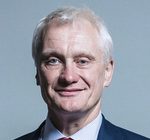
  • Graham Stuart – 2020 Comments on the General Export Facility

    Graham Stuart – 2020 Comments on the General Export Facility

    The comments made by Graham Stuart, the Minister for Exports, on 7 December 2020.

    UKEF’s support for smaller businesses is shifting up a gear. The new General Export Facility will make a huge difference for entrepreneurs who need the financial backing to go global and benefit from our free trade agreements. It will help us bring genuine optimism back to exporters.

    We were the only top ten exporting nation to grow exports last year. I’m determined for that success to continue as we recover from Covid-19. By transforming access to the world’s best export credit agency, we can unlock the entrepreneurial energy needed to make that a reality.

  • Mims Davies – 2020 Comments on the Job Entry Targeted Support Programme

    Mims Davies – 2020 Comments on the Job Entry Targeted Support Programme

    The comments made by Mims Davies, the Minister for Employment, on 5 December 2020.

    Many people are sadly facing unemployment due to the pandemic, for the first time in years, and will need help to build their confidence, get back on their feet and apply for new roles – JETS gives people the tools and support they need to succeed.

    During such a challenging time, our new employment support is already helping thousands of jobseekers to get back into work and I’ve met with JETS providers to see first-hand the vital help this programme has already given people across Britain.

    Our Plan for Jobs is supporting people of all ages – we’re doubling the number of Work Coaches across our Jobcentres, creating thousands of opportunities for young people through our Kickstart Scheme and our SWAP scheme is helping people retrain in new industries.

  • Ed Miliband – 2020 Comments on Small Business Saturday

    Ed Miliband – 2020 Comments on Small Business Saturday

    The comments made by Ed Miliband, the Shadow Business Secretary, on 5 December 2020.

    Shops, pubs, manufacturers, hotels and hairdressers, beauty salons and suppliers, breweries and bakeries, and small businesses of all kinds have been on the frontline of the economic crisis.

    This is a day to celebrate the millions of these small businesses at the heart of our communities and the workers they employ. They represent the best of our country.

  • Keir Starmer – 2020 Comments on Small Business Saturday

    Keir Starmer – 2020 Comments on Small Business Saturday

    The comments made by Keir Starmer, the Leader of the Opposition, on 5 December 2020.

    Small businesses across the country have made a monumental effort during this crisis. They have stepped up when it was most needed, supporting their local communities and making huge sacrifices to help tackle the spread of the virus. Now we must repay them.

    The Government must ensure businesses, particularly those facing the toughest restrictions, are supported to see them through the winter.

    This Small Business Saturday and beyond, we can all do our bit to stand by small businesses, by shopping safely where we live, including online, or ordering from local restaurants.

    On behalf of the Labour Party I want to celebrate the small businesses who are at the heart of our communities. We will stand by them over the crucial months ahead in fighting for the support they need.

  • Paul Scully – 2020 Comments on Arcadia and Debenhams

    Paul Scully – 2020 Comments on Arcadia and Debenhams

    The comments made by Paul Scully, the Parliamentary Under-Secretary of State for Business, Energy and Industrial Strategy, in the House of Commons on 2 December 2020.

    Speaking as the retail Minister, let me say that I hope the right hon. Member for Doncaster North (Edward Miliband) realises that although the Secretary of State is not here, we take this incredibly seriously. That is why I want to focus on the detail, because it is a worrying time for the retail sector, particularly for those affected by the announcements this week.

    On Monday, Arcadia Group Ltd, which employs approximately 13,000 people, appointed administrators, who are assessing all options available to the group. They will honour orders made over the black Friday weekend. No redundancies have yet been announced and existing sales channels will continue to operate while administrators evaluate options. The Secretary of State has written to the Insolvency Service asking that it expedites consideration of the administrators’ report. Yesterday, Debenhams, which employs approximately 12,000 people, announced the decision of administrators to wind down the company. No redundancies have been announced and existing sales channels will continue to operate while administrators evaluate options. We know that this will be a worrying time for employees and their families, and we stand ready to support them. I pay a particular tribute to the hard-working staff, who have kept these well recognised businesses going in difficult times for so long.

    Although the Government have no role in the strategic direction or management of private retail companies, we are in regular contact with both companies and the administrators in order to understand fully the situation they are facing. The coronavirus crisis has made life difficult for retailers such as Arcadia and Debenhams, particularly those that were already facing challenging trading conditions before the pandemic. We acted quickly at the start of the pandemic to deliver one of the most generous and comprehensive economic packages in the world. It included: the coronavirus job retention scheme, which up to 30 September had provided £7.7 billion-worth of support to companies in the retail and wholesale sector; removing all eligible properties in the retail, hospitality and leisure sectors from business rates for 12 months—that is worth more than £10 billion; cash grants of up to £25,000 for retail, hospitality and leisure businesses with a rateable value of between £15,000 and £51,000; more than £50 billion in business loans, which supported 9.6 million jobs and provided flexibility; and legislation to protect commercial tenants from eviction.

    Through the plan for jobs, we have also announced a series of measures to protect, support and create jobs, including our £2 billion kickstart scheme and a doubling of the number of frontline work coaches, which will be important in this situation in particular. The Government have committed to supporting the retail sector, and we are working closely with industry through these unprecedented times, particularly to ensure the safe reopening of non-essential retail today. On Monday, my right hon. Friend the Communities Secretary encouraged local authorities to allow shops to open for extended hours, to accommodate more shoppers safely in the lead-up to Christmas. I will continue to work with the sector to meet future challenges. Indeed, I will co-chair the next meeting of the Retail Sector Council tomorrow to discuss our strategic approach to the sector. I have regular retail calls, including one last week, with representatives from Arcadia among the retailers on that call. We are confident that the sector has the skills, knowledge and drive to bounce back.

  • James Murray – 2020 Comments on Tax Avoidance

    James Murray – 2020 Comments on Tax Avoidance

    The comments made by James Murray, the Shadow Financial Secretary to the Treasury, on 2 November 2020.

    The Government promised to crack down on promoters of tax avoidance this year – but now all their pledges have been dropped from 2020, with no guarantee of when we’ll see them return.

    It’s irresponsible for the Government to keep dragging its feet on such a key issue. Everyone should play by the rules and pay their fair share of tax. The fact this Chancellor is pushing ahead with a key worker pay freeze while going soft on tax avoidance makes you wonder about his priorities.

  • Anneliese Dodds – 2020 Speech to Bloomberg

    Anneliese Dodds – 2020 Speech to Bloomberg

    The speech made by Anneliese Dodds, the Shadow Chancellor of the Exchequer, on 2 December 2020.

    This has been an extraordinary year. As it draws to a close, and with the prospect of a vaccine on the horizon, thoughts are turning to recovery, and how we can build a better, more secure future for the United Kingdom. That will require contributions from everyone; public, private, mutual and voluntary sectors. In particular it will require the support of the finance industry— where Britain is a global leader.

    But it must also start with an honest appraisal of where our weaknesses lay, which have been so ruthlessly laid bare during this crisis.

    The UK entered the pandemic with worryingly low levels of household financial resilience, after a decade that saw insecure work rise and wages flat line. A quarter of all families had less than £100 in the bank when the crisis began. Since March, 4 and a half million people have accumulated over £6 billion in debt and arrears.

    We also entered the pandemic as one of the most unequal countries in Europe. That too has accelerated. As more and more economic activity was locked down, people on higher incomes, who could work from home, put money away. Their savings have risen. But those on the lowest incomes have been, on average, £170 a month worse off – losing 14% of their pre-crisis income.

    And we entered the pandemic after a decade of too many examples of poor corporate practice. High profile collapses like BHS and Carillion indicated severe shortcomings in governance.

    During the pandemic, most businesses have made herculean efforts to support their staff and local communities. But coronavirus has also shone a spotlight on problems: the Boohoo’s supply chain, the gaping hole in Arcadia’s pension scheme, the ‘fire and rehire’ approach taken at companies from British Airways to Pret a Manger.

    When we emerge from the crisis we must deal with those challenges- of financial resilience, inequality and poor corporate practice. We all want life to return to normal. But that cannot mean a return to business as usual. We should never again let our country, or our economy, be so vulnerable to external shocks. Because we count the cost of that in lost jobs and businesses gone to the wall.

    Financial services have an essential role to play in the recovery, and in laying the foundations for a better, more secure future. In fact, the recovery cannot happen without them. That’s one of many reasons why I’m so pleased to be addressing you today.

    A well-functioning, responsible banking sector can help people save and build their financial resilience. Pension funds can take the money workers set aside for tomorrow, and put it to work, backing the businesses of today. As the stewards of our largest businesses, asset managers can raise the standard of corporate behaviour. And insurance companies can direct the money we all put by in case the worst happens, and make sure it builds a better, greener future.

    Those aims hark back to the origins of the financial sector. A sector that saw its role as helping build social fabric, encouraging saving and resilience. Often those origins lay in Scotland. It was the Scottish minister Henry Duncan who is credited with founding the world’s first commercial savings bank. (Though I have to say that there was such a bank established by a female social entrepreneur in Tottenham. But she was not such a good publicist!!) And it was two other Scottish churchmen, Robert Wallace and Alexander Webster, who founded the first funded pension—the Widows Pension Fund to look after the wives and children of their fellow clergymen. The link between finance and social reform threads its way through the ‘friendly societies’ of the nineteenth century to the origins of trade unionism and, indeed, the Labour Party. And the purpose of financial services, helping people save, to transact, to share risk, to fund responsible business, is especially important to me. My father was an accountant, who ran his own small business. I saw first-hand how committed he was, to enabling his clients to do the right thing, grow their businesses and support the local economy.

    Yet some firms have strayed a long way from this approach. When the finance sector stops thinking of itself as providing a means to empower individuals or businesses, but instead as an end in itself – it loses its way. And for a country like the UK, with such a large and powerful financial services industry, it is a huge lost opportunity. Indeed the results can be catastrophic.

    By 2008, the finance sector had lost its way. But in 2020, we have often seen the sector at its best. Setting up huge new systems overnight to get government-backed loans out to businesses who were desperately short of cash. Helping those who ran into difficulty to keep a roof over their head. Partnering with charities to support those most in need.

    We must harness that sense of active commitment as we plan for the recovery- a recovery which must be environmentally productive, not destructive; and one marked by providing additional opportunity, not wasting it.

    Many in financial services are already blazing a trail here in many ways, with the amount raised in green bonds on the London Stock Exchange having nearly tripled in the last three years. But we know too there is much more to do. The UK is only just over a third of the way to achieving the targets we need to hit to reach net zero, and we will not get there without the power of the finance sector to mobilise capital and put it to sustainable use.

    We need to go further, faster. That’s why Labour has called for it to be mandatory for all listed companies to report in line with the recommendations of the Task Force on Climate-Related Disclosures next year, when the UK hosts the COP26 conference. And it’s why we sought to amend the Pension Schemes Bill – working hand in hand with pensions providers – so that pension schemes become aligned with the Paris Agreement.

    Sadly, the government’s ambition in this area still falls far short of what is needed. Ahead of last week’s Spending Review, we called on government to bring forward £30bn of green investment in the next 18 months, supporting the creation of 400,000 jobs. That in turn could stimulate more private capital. Unbelievably, when it came to it the Chancellor actually cut £300 million of capital spending next year, compared with previous plans.

    The second area where responsible finance has a critical role to play is in extending opportunity to every part of our country. We know, of course, that the UK’s financial services sector is more than just the City of London – with two-thirds of the sector’s 2.3 million jobs being outside the capital – but it is telling that people continually use that shorthand. This is symptomatic of a broader sense in which our economy is out of kilter. Holding all else equal, people living in the North of England have been more likely to be made redundant during this crisis- and of course, many are now, along with people in the Midlands and Yorkshire, much more likely to be living under the highest additional Covid-related restrictions.

    Instead of accepting that regional inequality, we need to make every single part of this country the best place in the world to grow up in and the best place to grow old in. For that to happen, we need opportunities on people’s doorsteps –not at the other end of the country. That means businesses in every town that people want to work for, and where they can envisage their children working. And every part of the country must feel like a good place to set up home. That needs decent and genuinely affordable, energy-efficient homes. We can’t achieve any of that without the finance sector getting money to where it needs to be.

    To deliver on those two aims – a greener economy, with opportunities right across the country– requires policymakers to work hand in hand with the finance sector. Because responsible financial services firms deserve a responsible government in return.

    Too often, in recent years, we’ve seen precisely the opposite. A sector which accounts for 10% of our economic output has been almost totally left out of the government’s trade negotiations with the EU. What started as plans for an ambitious financial services chapter in a free trade agreement, with talk of mutual recognition and super equivalence, has been watered down and watered down. Now the Conservative Government is trying desperately to dress up a sow’s ear as a silk purse – their unilateral decision to grant access to UK markets, with the hope – hope, not guarantee- that we might get offered the same in return.

    It is not a foregone conclusion that we will emerge with a deal, as last weekend’s revelations indicated. If we do obtain a deal, media reports suggest it will be as thin as gruel – it won’t contain anything for our largest exporting industry. And along the way, having threatened to break international law as a negotiating tactic, the government has trashed our reputation with other potential trading partners. Little wonder we’ve seen over 7,000 financial services jobs lost already and £1.2 trillion in assets poised to follow.

    Sadly, what’s true of Brexit has been true of coronavirus too. Last minute changes to economic support schemes have left businesses in all sectors not knowing what on earth is about to happen next. The Chancellor set out four versions of his winter economy plan in six weeks, all of them before winter had even begun. We have come out of national lockdown today and yet the business support packages for Tier 2 and Tier 3 areas of the country are still inadequate and unfair, and we still lack clarity about what comes next.

    We’ve still had nothing from the government on what will happen to those companies who’ve taken out loans and find themselves burdened with unsustainable debt, despite the finance sector’s best efforts to draw attention to the issue. There’s still no word on the mysterious Project Birch plans to support our most strategic industries. Above all, there is still no proper plan to see the country through to March. That’s completely irresponsible, in a situation where the UK is experiencing the worst economic downturn in the G7 – and where the OECD yesterday forecast that our recovery will take longer than the rest of the G7, too.

    It doesn’t have to be like this. Politicians and financial firms should be working hand in hand to lay the groundwork for our recovery. I want us to have a genuine partnership so that together we can deliver security and opportunity for every part of the country.

    I’ve said today what a responsible financial services industry might look like.

    My promise in return is that from Labour, under new leadership, you would get responsible government. A government that plans for the long-term, not chopping and changing every five minutes. A government that knows the value of one of our most important sectors and seeks to maximise it. A government that, once it has set the regulatory framework and the operating environment, will do all it can to ensure stability. That way, businesses and finance can plan for the future and deliver the fair and sustainable growth, and much-needed jobs, that every part of our country deserves.
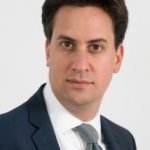

  • Ed Miliband – 2020 Comments on Arcadia and Debenhams

    Ed Miliband – 2020 Comments on Arcadia and Debenhams

    The comments made by Ed Miliband, the Shadow Secretary of State for Business, Energy and Industrial Strategy, on 2 December 2020.

    Let me join the Minister in expressing deep sympathy for those who are at risk of losing their jobs. The test of government and indeed this House is whether that sympathy translates into action. So I have four specific questions for him.

    First, Philip Green owes the workers at Arcadia a moral duty. His family took a dividend worth 1.2bn from the company, the largest in UK history, more than three times the size of the pension deficit. The workers at Arcadia should not pay the price of Philip Green’s greed. So will the Minister now publicly call for Philip Green to make good any shortfall in the pension scheme? And will he ensure the pensions regulator takes all possible steps to make sure this happens?

    Second, we need to learn lessons. In the insolvency bill this summer, Labour put forward amendments to make pension fund holders priority creditors when businesses went bust. The Minister said it was not necessary. Does he now agree now that it was a mistake, that this change would have better protected the pensions at Arcadia and that this should be put right through legislation in the future?

    Third, on the workers at Debenhams and indeed Arcadia facing redundancy, given the scale of redundancies and the grim economic backdrop will he look at providing specific and targeted help for them to get back to work?

    Fourth, we have an emergency on our high streets with an estimated 20,000 shops closing and 200,000 workers losing their jobs since the economic crisis began. While we welcome the support that has been provided, will he recognise the Government must do more? Extending the rent evictions moratorium beyond December when it is due to expire. Increasing the support for hospitality businesses which was a call across this House yesterday. And addressing the massive disadvantage high streets face around business rates compared to online retailers?

    Today is a day of great news on the vaccine. The Government has a massive responsibility to preserve the businesses and jobs we need on the other side of this crisis. They are still not acting on a scale that meets the economic emergency our country faces. They need to do so.

  • Lucy Powell – 2020 Comments on Debenhams

    Lucy Powell – 2020 Comments on Debenhams

    The comments made by Lucy Powell, the Shadow Minister for Business and Consumers, on 1 December 2020.

    This is devastating news for the 12,000 employees at Debenhams who are facing a very worrying Christmas, and comes on top of the news that Arcadia has gone into administration.

    The Government must urgently set out how it plans to support the people affected by the collapse of these companies, including pressing Philip Green to do the right thing and plug the Arcadia pension deficit.

  • Peter Bottomley – 2020 Comments on the Comprehensive Spending Review

    Peter Bottomley – 2020 Comments on the Comprehensive Spending Review

    The comments made by Peter Bottomley, the Conservative MP for Worthing West, in the House of Commons on 25 November 2020.

    The House will be glad that the Chancellor has met the needs of the poorest, that he is going to maintain the increase to the state pension and that he is ensuring that people get opportunities to get back into work if they have been out of it. He talks about the £250 minimum for the lowest-paid people in the public sector. May I ask him whether that includes people working in local government or just national Government? That would be useful to know.

    There will be a welcome for the increase in spending for schools. There are also many other things that people will think are sensible and that could—or should—have been done as the Labour Government went through the crisis in 2008, when they also implemented a public sector pay freeze. May I put it to him that it would be incredible if the Independent Parliamentary Standards Authority were to force a pay increase on Members of Parliament when others do not get it? One way or another, will the Government—and perhaps you, Mr Speaker—talk to IPSA and ensure that that does not happen? I have the view that MPs’ pay should only be adjusted after a general election; that may be a minority view, but I think it would be wrong for us to have pay forced on us when others cannot get a pay increase.

    Let me turn to overseas aid. When the Departments were merged, the Foreign Secretary said that the 0.7% figure would be maintained. My right hon. Friend the Chancellor was elected in 2015, as I was, under a commitment to meet 0.7%. We were re-elected in 2017, and the only difference in 2019 was that the word “proudly” was put in front of that commitment. I am proud of that commitment. I will work with anyone across the House to make sure that a change of percentage does not happen. Obviously, with our GNP coming down by 10%, the amount that goes on aid will come down automatically. I fight to maintain the pledge that the Prime Minister, the Chancellor, the Foreign Secretary and I made at the last general election.