
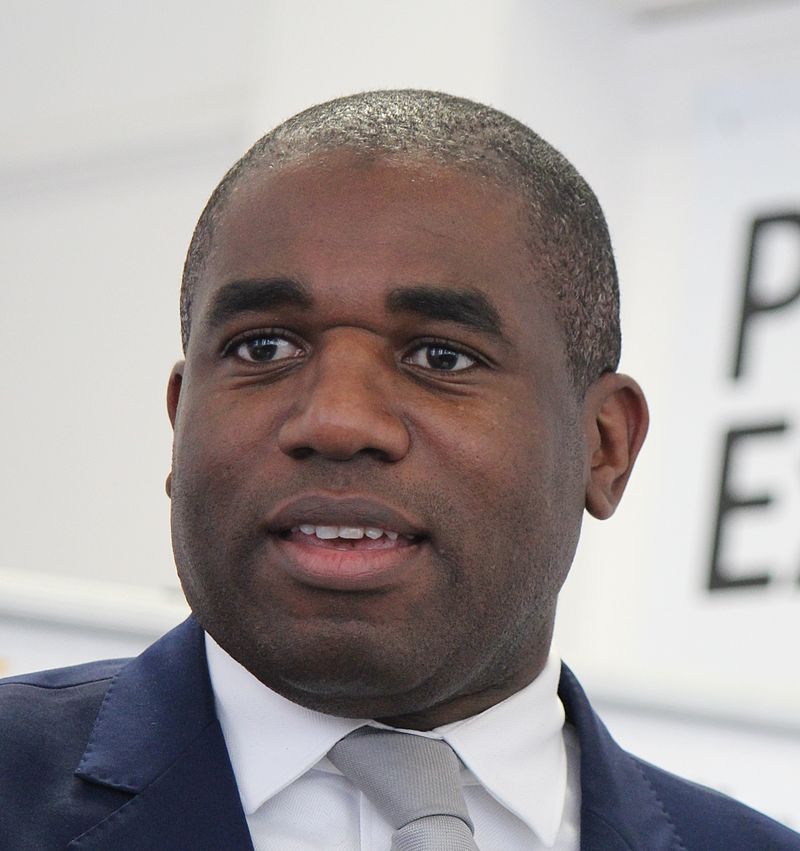
The statement made by David Lammy, the Deputy Prime Minister, on 22 June 2026.
I am making this statement on behalf of the Prime Minister. I spoke earlier today on the Prime Minister’s record across the country—stabilising the economy, driving down waiting lists in the national health service, and lifting half a million children out of poverty—but I want to start this statement by paying tribute to his record on foreign policy, which is second to none.
As Foreign Secretary when we entered government, I saw at first hand the Prime Minister rebuild our relationships across the world. The EU reset that we led put Britain at the heart of Europe once again. Embracing President Zelensky on the steps of Downing Street, on one of Ukraine’s darkest days, was symptomatic of the leadership that the Prime Minister has shown across Europe and in relation to the threats from Vladimir Putin—principled, courageous and on the right side of history. He drove investment for working people, with five trade deals in two years.
When it came to the most sober decision that a Prime Minister has to make—on a matter of life, death and war—and others were pushing for the UK to jump head first into another war in the middle east, Keir Starmer stood strong, stood firm and said, “No, this is not our war,” putting British soldiers and the national interest first. He made Britain safer, rebuilt Britain’s reputation around the world, and drove investment and growth that will support working families in Britain for decades to come. Regardless of their politics, everyone in this House owes a debt of gratitude to the Prime Minister on foreign affairs.
I turn now to the specifics of the G7 summit, and let me start with Ukraine. Once again, Russia chose to launch a huge attack on Ukraine on the eve of an international summit. In a show of its disdain for diplomacy, Russia killed innocent civilians in Kyiv and Kharkiv, and hit the 11th-century Pechersk Lavra, a sacred site at the very heart of Ukrainian culture. The G7 has a shared sense of outrage at Russia’s conduct, but we also have a shared sense that the situation is changing. Ukraine has a new-found momentum. It is increasingly able to push Russia back on the battlefield, and the mood in Moscow is turning against the war. Almost half a million Russians have now lost their lives. Each month Russia mobilises around 30,000 people, and each month it loses the same number on the battlefield, with no progress to show for it.
At the same time, the Russian economy is struggling and may already be in recession, so we will seize this moment by continuing our military support. We are providing more air defence missiles and our biggest package of drones to date, financed with the profits of seized Russian assets. We are providing vital export finance to help rebuild Ukraine’s energy system, and we are going further to increase the pressure on Russia’s economy, because we know the impact that this is having.
At the summit my right hon. and learned Friend the Prime Minister announced 70 new sanctions, bringing the UK up to around 500 sanctions on Russia this year alone, aimed at breaking up its military procurement supply chains and the illicit finance networks it uses to circumvent sanctions and, of course, targeting the Russian shadow fleet. I am sure the whole House will pay tribute to the Royal Marines who interdicted a shadow fleet vessel in the channel last weekend alongside officers from the National Crime Agency.
This is the moment to ramp up the pressure, and President Zelensky is clear that he is ready to talk, but this must recognise the reality on the ground and Ukraine’s new-found momentum. Any negotiations would need to be on the basis of the current line of control, not on Putin’s unrealistic demand for territory that he has failed to win on the battlefield. Russia should note the level of unity shown on this point and the G7’s pledge of unwavering support for Ukraine that will continue until we reach a just and lasting peace.
Let me turn to the middle east. Getting to the deal between the United States and Iran has been bumpy, but it creates a moment of opportunity to bring down the cost of living for the British people and put the middle east on a better path, which is vital for global stability. We are now working to help implement this deal to ensure that the region does not go back to war and that the 60-day negotiation period ends in a longer-term settlement.
Negotiations are the best way to secure our aims: first, that Iran is never allowed to have a nuclear weapon; secondly, that it stops its attacks across the region; and, thirdly, that the strait of Hormuz is reopened to shipping, with no restrictions and no tolls. That is why, with President Macron, we have brought together an international coalition ready to help reassure shipping. We are in talks now about how to deploy this multilateral military mission in support of the deal and to explore immediate support for de-mining in the strait.
We should also place this in the broadest possible context, recognising the need to make progress across the region. The extremely fragile ceasefire between Israel and Lebanon must be implemented in full, and I call on the Israeli Government to show restraint to that end, including in their use of inflammatory language. The G7 agreed to work together in support of their process and to strengthen the Lebanese Government, so that they can regain the monopoly on the use of force in the country.
On Palestine, I want to speak very frankly. Israel must stop blocking aid into Gaza, stop settlement expansion in the E1 area of East Jerusalem, which threatens the viability of the two-state solution, and stop settler violence across the west bank. We have a precious opportunity now to move on from the violence of the last three years in the interests of innocent people across the region. This should be our aim, bringing all our partners together in that effort.
Significant progress was also made last week on migration, with a strong G7 statement outlining practical common steps on returns and sanctioning the criminal gangs. With President Macron, my right hon. and learned Friend the Prime Minister took a big step in our bilateral co-operation by agreeing to extend the groundbreaking Sandhurst agreement, which has already prevented more than 40,000 migrant crossings into the UK. Under this deal, new police units and riot squads will be deployed to French beaches to stop migrant boats before they take to the water. This is vital and important work.
It is because of steps like that and the approach of this Government that we have removed 67,000 people with no right to be in our country. We have removed 9,000 foreign national offenders, and we are closing asylum hotels. We are turning the tide on these issues after years of failure. Under the last Government, net migration reached almost 1 million. We have reduced it by 82% in two years. UK immigration figures are the lowest today since 2012. Where the last Government failed, we are delivering.
The same is true on growth and investment. On the eve of the summit, my right hon. Friend the Prime Minister welcomed the Prime Minister of Japan to Downing Street, to deepen our strategic partnership after they met in Tokyo in January. They agreed more than £18 billion-worth of investment in this country, creating tens of thousands of new jobs in infrastructure, offshore wind and financial services. That shows the value of building such bonds. This was followed, at the summit, with deals for a further £1.3 billion of investment from France and India in clean energy and artificial intelligence, creating more than 1,300 new jobs in Manchester, Leeds and Birmingham. My right hon. Friend the Prime Minister agreed with India’s Prime Minister Modi the entry into force of the UK-India free trade agreement. This is the UK’s quickest ever turnaround from signing to entry into force, and it is one of the biggest deals either country has ever done. It will boost British GDP by £4.8 billion and boost real wages for British workers by £2.2 billion.
Finally, the House will note that tomorrow marks the 10th anniversary of the Brexit referendum. We know the world has changed fundamentally since 2016. We know that Brexit has damaged the economy, so there is no doubt in our mind where the national interest lies today—in closer co-operation with Europe. EU Commission President Ursula von der Leyen and my right hon. Friend the Prime Minister agreed to intensify work to deepen our economic ties. We look forward to a forthcoming second UK-EU summit at the earliest opportunity.
Unity on Ukraine to protect our collective security; unity on the middle east to bring down the cost of living and bring back stability; progress on tackling illegal migration, driving down the numbers day after day; and huge new investments in the UK, creating new opportunities and changing people’s lives—real results for the British people. At the same time, the Government have brought down mortgage rates and inflation to help with the cost of living, and have held them flat to fight what is happening globally.
We are supporting families with the summer savings package, so that they can spend time together this August. We are banning social media for children to keep them safe, lifting half a million people out of poverty, boosting workers’ rights and renters’ rights, and bringing down NHS waiting lists at the highest rate for 17 years. This Government are focused on what really matters: serving the national interest and delivering for the British people. I commend this statement to the House.