
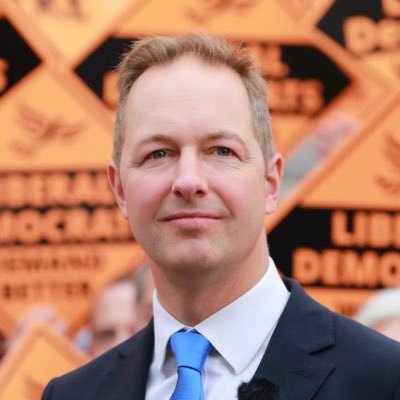
The speech made by Richard Foord, the Liberal Democrat MP for Honiton and Sidmouth, in Westminster Hall on 16 June 2026.
It is an honour to serve with you in the Chair, Sir Jeremy. I am grateful to my hon. Friend the Member for South Cotswolds (Dr Savage) for providing us with this opportunity to talk about community hospitals. In particular, I pay tribute to the fantastic NHS staff who work across Devon. They pull off an incredible level of service in spite of the constraints they are working under.
In my constituency, we have five community hospitals across Axminster, Honiton, Ottery St Mary, Seaton and Sidmouth. Years ago, they all provided in-patient beds, minor injuries units and rehabilitation services, acting as halfway houses after discharge from the acute hospital, which for us was the Royal Devon and Exeter hospital, and before home. They also provided support after operations, cared for the elderly and freed up beds in the RD&E and other acute hospitals.
Today, much of that capacity has been stripped away. Of those five community hospitals, only Sidmouth retains in-patient beds—and a mere 25 at that. For a region of 150,000 people dealing with constant discharge pressure from Exeter, that is plainly insufficient. Honiton is the only one of the five that still has a minor injuries unit. I wrote to the new interim cluster chief exec for NHS Cornwall and NHS Devon two months ago to demand assurance that our community assets and services would remain safe from closures; it concerns me that, two months later, I have not had a reply.
I ask Members to imagine being an elderly resident in Axminster faced with a medical emergency. A constituent who came to see me at a surgery in Axminster was dreadfully worried about the discharge of her husband from the acute hospital, the RD&E, because she was so frail and elderly that she felt unable to look after her frail and elderly husband. Apart from anything else, she was absolutely distraught with worry about not being able to look after him. The nearest major hospital from Axminster is an hour away at Exeter, and the journey there through the countryside is not just inconvenient for people at that stage of life; it is unmanageable.
In preparation for this debate, I spoke with the president of the Community Hospitals Association, Dr David Seamark. David is not only president of the CHA but a constituent and a GP based in Honiton. He told me that community hospitals were designed precisely to face down these sorts of challenges. Community hospitals are embedded in rural and coastal areas, which is particularly good for older and more vulnerable populations. Across the UK, there are around 500 community hospitals, and many of them are located in these sorts of places, outside of cities and where access to centralised care is far more difficult.
This is not the stuff of romance. These are not leftover legacies from a bygone era, and they are not historical; they are well placed assets for this era. They are adaptable, thanks to their autonomy, and they are capable of delivering wide-ranging, complex medical services. Our east Devon hospitals perform X-rays, surgeries and diagnostics. Despite losing their in-patient beds 10 years ago, they remain vital hubs of care for the local community.
We have seen proposals to close wings and services, and even to demolish facilities, as was the case in Seaton, where the local community understood what was at stake. It was impressive to hear about the petition that my hon. Friend the Member for South Cotswolds put together, which so many people signed in support of her community hospital. In Seaton, more than 9,000 people signed a petition to retain the community hospital there, and we had a public meeting in Colyford where people queued out the door to show their support.
These are cherished institutions, built on decades of trust and born from community investment. The chief medical officer, Professor Sir Chris Whitty, agreed when he spoke at the Community Hospitals Association’s annual conference last month. He echoed the words from his 2023 annual report, “Health in an Ageing Society”, which is well worth going back to, and said that ageing and the resulting increased frailty were key issues for the future of UK healthcare. He argued that community hospitals are in just the right places to be on the frontline and tackle this issue for generations to come in our rural and coastal communities, and described community hospitals as
“an essential part of provision for both inpatient and outpatient care for many citizens in England and the wider UK.”
That clashes with the Government’s insistence that centralisation and the creation of large neighbourhood health centres will deliver progress and better outcomes. Neighbourhood health hubs are being exposed as a contradiction in terms. They misunderstand both geography and demography: geography, because they do not fit rural and coastal areas and suck resources into the nearby conurbations, and demography because, if the challenge facing our health service is an ageing population, solutions must be about proximity, accessibility and the continuity of care.
The choice is plain for all to see: do we continue down this path of centralisation—closing, cutting and consolidating—or do we build on what we already have and cherish? When Seaton hospital was built in the 1980s, people were told that they should be a brick and buy a brick. We need to build on that legacy. Community hospitals should not be sidelined; they should be strengthened. They should be the backbone of genuine neighbourhood healthcare, not displaced by some remote health hub that, in an Orwellian turn of phrase, is moved further away and deemed to be a “neighbourhood health hub”. If the Government are serious about delivering care closer to home, supporting our ageing population and relieving pressure on our hospitals, they must invest in, not abandon, our community hospitals.