
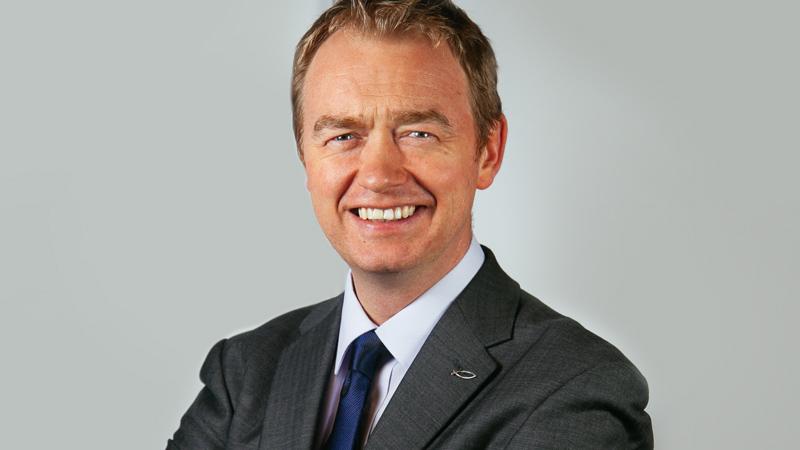
The speech made by Tim Farron, the Liberal Democrat spokesperson for the Environment, in the House of Commons on 16 June 2026.
I start by associating myself closely with the Secretary of State’s remarks about Jo Cox. It was a privilege to serve alongside her in this place, and we still miss her deeply.
I am grateful to the Secretary of State for advance sight of the statement and for the helpful briefing that I received earlier. Since Conservative privatisation more than 35 years ago, some £85 billion of billpayers’ money has flowed out like a torrent into the pockets of mostly overseas shareholders and executives paying themselves unearned bonuses. That money could and should have gone into cleaning up our waterways and modernising infrastructure. Instead, sewage was released into our lakes, rivers and seas for 1.8 million hours last year, and more than 100,000 of those were in the Thames region alone. Some 20% of our water leaks out of its pipes before it even reaches our homes. For Thames Water, the figure is even worse, with 25% of that water wasted.
Now Thames Water’s investors are asking for more time for more opportunity to take money before they inevitably run. The Secretary of State is right, then, that the creditors’ offer is a disgrace. They get to keep making money, and Thames Water billpayers get to pay even more to keep them going, while getting the privilege of seeing long-overdue infrastructure improvements delayed for yet another decade. Thames Water is taking the mickey. The Liberal Democrats say, “No more, and no thanks.”
It is clear that Thames Water has failed in its basic performance as a water company, and that gives the Secretary of State all the reason she needs to place it into special administration, so why is she not doing that instead? Her letter to Ofwat is, I am afraid, a sign of dreadful weakness. She has to beg an equally weak Ofwat to show a resolve that it institutionally lacks. Thames has failed in its performance, so just put it into special administration and migrate the company to a mutually owned model, where the billpayers own the company and call the shots. That way, investment will be made, sewage spills will stop and water leaks will cease. By doing that, she could begin the process whereby all our water companies are owned not by private equity, overseas investors or the sluggish state, but by the people. If she did that, she would win the favour of people from Witney to Windermere. Why does she not stop faffing about and do that instead?
Emma Reynolds
I thank the hon. Gentleman, I think, for his support for my statement today, although it was slightly half-hearted. He is right to say that there have been serious pollution incidents in different water companies, but especially in the Thames, and that is of grave concern to the public and to Thames Water’s customers in particular. I point out to him that there are two types of special administration regime. An insolvency SAR is an insolvency process and is for the company directors to determine. A performance SAR would be triggered if a company was in serious breach of its statutory duties or if the company breaches an enforcement order in a way that is so serious that it is inappropriate for the company to retain its licence. The Government stand ready for all eventualities, including a SAR.