
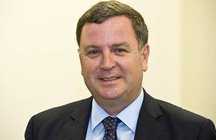
The speech made by Mel Stride, the Shadow Chancellor of the Exchequer, in the House of Commons on 18 May 2026.
This King’s Speech is an empty vessel, which is a surprise, because only last week the Prime Minister was telling anybody who cared to listen that the Government would be leaning into economic growth in a more radical way, and would eschew managerial incrementalism, yet we have heard nothing other than managerial incrementalism, at best, from the right hon. Lady just now. [Interruption.] Of course, I meant the right hon. Gentleman. If only the Chancellor were here, Mr Speaker, I would be right about everything.
The Prime Minister also said that Labour would tread more lightly on our lives. Well, we have seen what that has meant in the last few weeks. The Chancellor said that it would all be growth, growth, growth. The Secretary of State trots out and trumpets the latest uplift—a very modest one—in the International Monetary Fund’s forecast, but he neglects to mention that although it is forecasting 1% growth today, it forecast 1.3% back in January.
The Secretary of State also neglects to mention that the increase in growth in the first quarter of this year is on the back of risible growth performance in Q4 of last year. The situation in Q4 was exacerbated, according to the Office for Budget Responsibility and the Bank of England, by the Chancellor’s making every possible tax rise; that had a material impact—it depressed the economy. Some of the growth is simply a bounce back from the mistakes made at the end of last year.
The Secretary of State refused to answer the question from my hon. Friend the Member for Rutland and Stamford (Alicia Kearns) about what happened to GDP per capita, so let me tell him that it has been utterly anaemic throughout this Government’s period in office. He also failed to mention that the notes to the IMF’s comments on upgrading the growth forecast for this year point to domestic uncertainty possibly weighing down on consumer spending and investment decisions. I wonder what “domestic uncertainty” could possibly be referring to. As to our record, I remind the Secretary of State that on the day of the general election, the previous Conservative Government had inflation bang on target at 2%. It is now 50% more than that. We also had the fastest growth in the G7, employment at near record levels, and near record low levels of unemployment, and we had 13 consecutive months of real wage growth.
Max Wilkinson
(Cheltenham) (LD)
On the subject of mistakes made and growth, does the shadow Chancellor accept that the Brexit that he and his party left us has knocked between 4% and 8% off our GDP?
Sir Mel Stride
As I will come on to argue, our problems actually rest a little closer to home, rather than having anything to do with our relationship with the European Union.
The Labour party promised stability. It also—Members should try not to laugh too loudly—said that it would create the most pro-business Government in the history of our country. None of that has come to pass. It is not just the Prime Minister who is the problem; if this Prime Minister is replaced, whoever goes on to lead the Labour party will not do any better, because Labour had no plan at all for improving our economy. It had a plan for winning an election—keep as low a profile as possible, hold the Ming vase and tiptoe across the shiny floor towards that loveless landslide—but no plan for the people of our country. The Labour Government are in hock to their Back Benchers. Every time they try to do something that requires some backbone, they are stopped by their Back Benchers.
The record of this Government is appalling, and not just on growth. I notice that the Secretary of State did not mention unemployment once, and he certainly did not mention youth unemployment. Under this Government, we are seeing the highest unemployment in five years, and youth unemployment is nudging up towards 20%. Under the previous Labour Government, youth unemployment increased by more than 40%; under the previous Conservative Government, it reduced by more than 40%.
Sir Ashley Fox
(Bridgwater) (Con)
Is it not shameful that the Government are having to subsidise employers who take on young people, when it is the Government’s actions—their imposing higher national insurance charges, a higher minimum wage, and a higher burden through the Employment Rights Act 2025—that caused the problem in the first place?
Sir Mel Stride
My hon. Friend is entirely right. It is like trying to apply the accelerator while having the brake on fully. That is what this Government are doing. That is the total illogicality of their approach.
Inflation is up on where it was under the Conservatives. It is about the highest in the G7; it certainly was last year. As we lean into the challenges of oil and gas price spikes, that is a weak position to be in. Most economists will make that point. The Labour Government will have borrowed a full quarter of a trillion pounds more across this Parliament than would have been borrowed under the plans that they inherited. It is no wonder that our borrowing costs are the highest in the G7—higher than those of Greece, and higher, even, than those of Morocco. Why? We know why: it is just what socialists do. Socialists believe that you can tax your way to prosperity, but I tell the Secretary of State: you cannot.
The £25 billion of additional tax on businesses—national insurance increases—has crucified business in this country. The burden has fallen predominantly on young people, because there was not just an increase in the rate, but a reduction to the threshold at which the tax cuts in, meaning that young people have borne the brunt of that tax increase. The sectors that rely predominantly on first-time jobbers and on young, part-time and female workers have been crucified, including the retail, hospitality and leisure sectors, in which more than 100,000 jobs have been destroyed by this Government.
Alison Griffiths
(Bognor Regis and Littlehampton) (Con)
On Friday, I opened the new Premier Inn in my constituency—a project that was passed under the last Conservative Government—but many businesses in my constituency are failing because of increased costs and regulation. Does my right hon. Friend agree that this is an absolute travesty for our country?
Sir Mel Stride
My hon. Friend is absolutely right. I have had the great pleasure of visiting her constituency to speak to businesses, and that is exactly what they complain of. The Government made no effort, in the King’s Speech, to get on top of the benefits bill. There was a reference to the Timms review of the personal independence payment, but we know that in the review’s terms of reference, there is an explicit statement that it is not about controlling the welfare bill. There will be no savings as a consequence of the Timms review. That is not good enough. We have got to be about getting people off benefits and back into work.
Tom Tugendhat
Does my right hon. Friend not agree that we are seeing not only young people let down, but the deeply immoral act of people being kept on welfare? In five or 10 years’ time, people will have been on welfare for so long that they will not have any options. They will effectively have been left slaves of a state that has no concern for them. Nobody in this Chamber will have any power over how the welfare state will behave then, and those people will have no options. It will be the fault of this House and this Government for having kept those people there, and having imprisoned them.
Sir Mel Stride
That is entirely right. The Conservatives know that work matters, and getting people off benefits matters. People’s mental health is improved by going to work, and by having the social interaction, routine and sense of pride and self-worth that comes with work. That is why the level of unemployment and the failure of this Government to tackle benefits is so appalling.
Dawn Butler
(Brent East) (Lab)
I used to work in the employment service, and Thatcher encouraged us not to sign people on, and to instead put them on the sick. The Conservatives created a whole generation of people on the sick, just to manipulate the numbers. How do you like those apples?
Sir Mel Stride
All these flashbacks to the 1980s are a slightly desperate attempt to get away from the 2020s, I think.
The other thing that socialists love to do is borrow, borrow, borrow, and spend, spend, spend until they have run out of other people’s money. That is precisely what this Government have done. The Secretary of State mentioned the fiscal rules, but of course he failed to mention that in the run-up to the election, the Chancellor said that she would abide by our fiscal rules, and then promptly changed them, so that she could borrow more, flipping the definition of “debt” from public sector net debt to public sector financial liabilities. That allowed her to take her foot off the brake and borrow and spend even more.
Charlie Maynard
(Witney) (LD)
Flashing back to the 1980s, would the right hon. Member like to remind us when the Conservatives last balanced a budget?
Sir Mel Stride
The current account went into a slight surplus just around 2015-16. [Interruption.] It did, actually. That was on the back of our inheriting a £160 billion deficit in 2010, which was over 10% of GDP—another example of the disasters of a Labour Government.
The Secretary of State rightly spoke of artificial intelligence and the opportunities that it presents, but what we know of artificial intelligence is that it will have a profound and very uncertain effect on the labour market. We need a flexible skills offer to deal with that, and flexible labour markets, but through the Employment Rights Act, the Government are making the labour market more rigid, and that will hurt younger people in particular, who do not have a track record in employment, so do not be surprised if youth unemployment continues to hover around 16% or 17% as a consequence of the actions of this Government.
When it comes to leaning into these challenges, we know that there is no plan. This Government are not going to do anything. They are just involved in internecine introspection—a civil war, now—within the Labour party. They said that they would tread lightly on our lives; in fact, they are now stampeding all over them. The rivals to the Prime Minister will be looking to double-down on the ruinous policies that I have just set out.
We have seen the real effects of this in recent days. On Friday, after the former Member for Makerfield said that he would step down in order to ease the passage of Andy Burnham to this place, what happened to gilt yields? They spiked up 18 basis points. I have done a little bit of research, and I can tell the House that, if sustained through the forecast period, that would mean over £5 billion of additional debt servicing costs. That is about £300 for every working family in this country. That is the effect of Andy Burnham, and he has not even arrived here yet.
We are on the edge of a precipice economically, leaning into a very turbulent time. These are the policies of the madhouse, yet we are told not to worry. The hon. Member for Liverpool Wavertree (Paula Barker), who I believe is an outrider for Andy Burnham, said of the bond markets that they would just have to “fall into line”. Andy Burnham himself said in the New Statesman:
“We’ve got to go beyond this thing”—
Paula Barker
(Liverpool Wavertree) (Lab)
Will the right hon. Gentleman give way?
Sir Mel Stride
I will in a moment.
Paula Barker
On a point of order, Mr Speaker. My understanding is that if an hon. Member wishes to mention another hon. Member in the Chamber, they are supposed to give advance notice of that. I have received no such notice.
Mr Speaker
That is not the case. A Member should be informed if they are not here, but the hon. Lady is sitting here, quite rightly, and I am sure that the shadow Chancellor is ready to give way immediately.
Sir Mel Stride
I am always ready to give way, Mr Speaker, and to take your direction.
Paula Barker
Thank you, Mr Speaker, and I thank the shadow Minister for giving way. I agree that what I said might not have been the most eloquent of answers. However, I would say that people in this country are fed up of the bond markets dabbling in the democracy of our country.
Sir Mel Stride
That is a rather unfortunate example of doubling down or continuing to dig, if I may say so. Also, the hon. Lady’s comments pale in comparison with Andy Burnham’s comments in the New Statesman, where he said:
“We’ve got to go beyond this thing of being in hock to the bond markets”.
He also suggested that defence spending should lie outside the fiscal rules, as if spending and borrowing to defend our country were a different form of borrowing from any other borrowing that this Government might entertain. He is not so much the king of the north; he is more like King Canute, sitting in his chair on the sand, dressed in his football kit, trying to push back the tide of the bond markets and saying things like, “You’ve got to fall in line” as the waters lap at his ankles and we all ultimately get swept away. It is ludicrous.
The King’s Speech included a holiday tax that will increase the cost of the most budget holidays in this country, clobbering people who have saved up hard and just want to make some memories with their children. We also have the nationalisation of steel, which seems to be just some kind of political sop to the left on the Labour Benches.
The Government are also going to put a stop to new oil and gas exploration. This is lunacy, when we are importing gas from Norway that is extracted from the same basin. We are also importing liquefied natural gas, formerly from Qatar and now predominantly from the United States, which has four times the carbon footprint compared with if we had extracted it ourselves using our own resources. All that energy security blown, all those jobs destroyed and all that tax revenue forgone, simply because of the ideological madness of the Labour party.
Harriet Cross
The shadow Chancellor is completely right to reflect on the plight of the oil and gas sector under this Labour Government: 1,000 jobs are being lost in the sector every single month, which is affecting all our constituents, not just those in the north-east of Scotland. Does he share my dismay that a Labour Government do not take that more seriously?
Sir Mel Stride
I do indeed. I have been up to Aberdeen, met my hon. Friend and heard at first hand about the economic effect this is having. It is utter madness. If we have an opportunity in government, we will put that right.
I have already mentioned benefits. There was nothing of any substance about welfare in this King’s Speech. There was nothing about the defence investment plan. Where is it? It was promised back in September.
Then we have the regulating for growth Bill—an oxymoron if ever there was one. “Regulating for growth” says all we need to know about this Labour Government. They know nothing about the economy, nothing about job creation and nothing about businesses.
Jim Shannon
Will the shadow Minister give way?
Sir Mel Stride
Briefly.
Jim Shannon
I thank the shadow Minister for what he is saying. Does he share my concern, and the concerns of probably many in this House, that small and medium-sized businesses will suffer more than most? The figures for Northern Ireland indicate that between 85% and 89% of the job creators there are small businesses. Northern Ireland needs something special from this Government. Does he see something special coming, or are we just wondering what is going to happen?
Sir Mel Stride
I am afraid that what I see coming is what is already baked in: business rates going through the roof. In some cases, small businesses on our high streets are facing 140% increases in the amount they have to pay in business rates.
Conservative Members believe in enterprise, opportunity, aspiration and markets. We believe in risk takers, in people who work hard, and in people who get up early in the morning and do the right thing—go out and create wealth, create jobs and grow our economy. Because of that, at our last conference we set out £47 billion-worth of savings, predominantly—£23 billion—on the welfare budget. With that we could do two wonderful things: first, we could start to bear down on the deficit and get on top of the debt, which is out of control under this Government; and secondly, we could get taxes down, particularly on the productive parts of the economy. We therefore announced the abolition of stamp duty and a tax cut for young people.
There is more in our alternative King’s Speech: a Bill to back our high streets and cut business rates for a quarter of a million of our high street businesses; a get Britain working Bill to reverse the damage done by the Employment Rights Act; a reducing bureaucracy Bill to remove the mountain of environmental, social and governance regulations; a save British industry Bill to get rid of the Climate Change Act 2008 and abolish the zero emission vehicle mandate; a cheap energy Bill to get rid of renewables subsidies and bring down bills for households and businesses; a getting Britain drilling Bill to reinvigorate our North sea oil and gas industry, creating jobs and boosting our exports; and a welfare reform Bill to get the benefits bill under control and restore the two-child cap. That is the serious plan that our economy needs. That is the plan to back our businesses and deliver growth. That is a Conservative plan for a better Britain.