
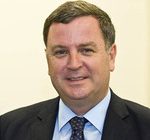
Tag: Mel Stride

  • Mel Stride – 2026 Speech on Backing Business to Create Economic Growth

    Mel Stride – 2026 Speech on Backing Business to Create Economic Growth

    The speech made by Mel Stride, the Shadow Chancellor of the Exchequer, in the House of Commons on 18 May 2026.

    This King’s Speech is an empty vessel, which is a surprise, because only last week the Prime Minister was telling anybody who cared to listen that the Government would be leaning into economic growth in a more radical way, and would eschew managerial incrementalism, yet we have heard nothing other than managerial incrementalism, at best, from the right hon. Lady just now. [Interruption.] Of course, I meant the right hon. Gentleman. If only the Chancellor were here, Mr Speaker, I would be right about everything.

    The Prime Minister also said that Labour would tread more lightly on our lives. Well, we have seen what that has meant in the last few weeks. The Chancellor said that it would all be growth, growth, growth. The Secretary of State trots out and trumpets the latest uplift—a very modest one—in the International Monetary Fund’s forecast, but he neglects to mention that although it is forecasting 1% growth today, it forecast 1.3% back in January.

    The Secretary of State also neglects to mention that the increase in growth in the first quarter of this year is on the back of risible growth performance in Q4 of last year. The situation in Q4 was exacerbated, according to the Office for Budget Responsibility and the Bank of England, by the Chancellor’s making every possible tax rise; that had a material impact—it depressed the economy. Some of the growth is simply a bounce back from the mistakes made at the end of last year.

    The Secretary of State refused to answer the question from my hon. Friend the Member for Rutland and Stamford (Alicia Kearns) about what happened to GDP per capita, so let me tell him that it has been utterly anaemic throughout this Government’s period in office. He also failed to mention that the notes to the IMF’s comments on upgrading the growth forecast for this year point to domestic uncertainty possibly weighing down on consumer spending and investment decisions. I wonder what “domestic uncertainty” could possibly be referring to. As to our record, I remind the Secretary of State that on the day of the general election, the previous Conservative Government had inflation bang on target at 2%. It is now 50% more than that. We also had the fastest growth in the G7, employment at near record levels, and near record low levels of unemployment, and we had 13 consecutive months of real wage growth.

    Max Wilkinson
    (Cheltenham) (LD)
    On the subject of mistakes made and growth, does the shadow Chancellor accept that the Brexit that he and his party left us has knocked between 4% and 8% off our GDP?

    Sir Mel Stride
    As I will come on to argue, our problems actually rest a little closer to home, rather than having anything to do with our relationship with the European Union.

    The Labour party promised stability. It also—Members should try not to laugh too loudly—said that it would create the most pro-business Government in the history of our country. None of that has come to pass. It is not just the Prime Minister who is the problem; if this Prime Minister is replaced, whoever goes on to lead the Labour party will not do any better, because Labour had no plan at all for improving our economy. It had a plan for winning an election—keep as low a profile as possible, hold the Ming vase and tiptoe across the shiny floor towards that loveless landslide—but no plan for the people of our country. The Labour Government are in hock to their Back Benchers. Every time they try to do something that requires some backbone, they are stopped by their Back Benchers.

    The record of this Government is appalling, and not just on growth. I notice that the Secretary of State did not mention unemployment once, and he certainly did not mention youth unemployment. Under this Government, we are seeing the highest unemployment in five years, and youth unemployment is nudging up towards 20%. Under the previous Labour Government, youth unemployment increased by more than 40%; under the previous Conservative Government, it reduced by more than 40%.

    Sir Ashley Fox
    (Bridgwater) (Con)
    Is it not shameful that the Government are having to subsidise employers who take on young people, when it is the Government’s actions—their imposing higher national insurance charges, a higher minimum wage, and a higher burden through the Employment Rights Act 2025—that caused the problem in the first place?

    Sir Mel Stride
    My hon. Friend is entirely right. It is like trying to apply the accelerator while having the brake on fully. That is what this Government are doing. That is the total illogicality of their approach.

    Inflation is up on where it was under the Conservatives. It is about the highest in the G7; it certainly was last year. As we lean into the challenges of oil and gas price spikes, that is a weak position to be in. Most economists will make that point. The Labour Government will have borrowed a full quarter of a trillion pounds more across this Parliament than would have been borrowed under the plans that they inherited. It is no wonder that our borrowing costs are the highest in the G7—higher than those of Greece, and higher, even, than those of Morocco. Why? We know why: it is just what socialists do. Socialists believe that you can tax your way to prosperity, but I tell the Secretary of State: you cannot.

    The £25 billion of additional tax on businesses—national insurance increases—has crucified business in this country. The burden has fallen predominantly on young people, because there was not just an increase in the rate, but a reduction to the threshold at which the tax cuts in, meaning that young people have borne the brunt of that tax increase. The sectors that rely predominantly on first-time jobbers and on young, part-time and female workers have been crucified, including the retail, hospitality and leisure sectors, in which more than 100,000 jobs have been destroyed by this Government.

    Alison Griffiths
    (Bognor Regis and Littlehampton) (Con)
    On Friday, I opened the new Premier Inn in my constituency—a project that was passed under the last Conservative Government—but many businesses in my constituency are failing because of increased costs and regulation. Does my right hon. Friend agree that this is an absolute travesty for our country?

    Sir Mel Stride
    My hon. Friend is absolutely right. I have had the great pleasure of visiting her constituency to speak to businesses, and that is exactly what they complain of. The Government made no effort, in the King’s Speech, to get on top of the benefits bill. There was a reference to the Timms review of the personal independence payment, but we know that in the review’s terms of reference, there is an explicit statement that it is not about controlling the welfare bill. There will be no savings as a consequence of the Timms review. That is not good enough. We have got to be about getting people off benefits and back into work.

    Tom Tugendhat
    Does my right hon. Friend not agree that we are seeing not only young people let down, but the deeply immoral act of people being kept on welfare? In five or 10 years’ time, people will have been on welfare for so long that they will not have any options. They will effectively have been left slaves of a state that has no concern for them. Nobody in this Chamber will have any power over how the welfare state will behave then, and those people will have no options. It will be the fault of this House and this Government for having kept those people there, and having imprisoned them.

    Sir Mel Stride
    That is entirely right. The Conservatives know that work matters, and getting people off benefits matters. People’s mental health is improved by going to work, and by having the social interaction, routine and sense of pride and self-worth that comes with work. That is why the level of unemployment and the failure of this Government to tackle benefits is so appalling.

    Dawn Butler
    (Brent East) (Lab)
    I used to work in the employment service, and Thatcher encouraged us not to sign people on, and to instead put them on the sick. The Conservatives created a whole generation of people on the sick, just to manipulate the numbers. How do you like those apples?

    Sir Mel Stride
    All these flashbacks to the 1980s are a slightly desperate attempt to get away from the 2020s, I think.

    The other thing that socialists love to do is borrow, borrow, borrow, and spend, spend, spend until they have run out of other people’s money. That is precisely what this Government have done. The Secretary of State mentioned the fiscal rules, but of course he failed to mention that in the run-up to the election, the Chancellor said that she would abide by our fiscal rules, and then promptly changed them, so that she could borrow more, flipping the definition of “debt” from public sector net debt to public sector financial liabilities. That allowed her to take her foot off the brake and borrow and spend even more.

    Charlie Maynard
    (Witney) (LD)
    Flashing back to the 1980s, would the right hon. Member like to remind us when the Conservatives last balanced a budget?

    Sir Mel Stride
    The current account went into a slight surplus just around 2015-16. [Interruption.] It did, actually. That was on the back of our inheriting a £160 billion deficit in 2010, which was over 10% of GDP—another example of the disasters of a Labour Government.

    The Secretary of State rightly spoke of artificial intelligence and the opportunities that it presents, but what we know of artificial intelligence is that it will have a profound and very uncertain effect on the labour market. We need a flexible skills offer to deal with that, and flexible labour markets, but through the Employment Rights Act, the Government are making the labour market more rigid, and that will hurt younger people in particular, who do not have a track record in employment, so do not be surprised if youth unemployment continues to hover around 16% or 17% as a consequence of the actions of this Government.

    When it comes to leaning into these challenges, we know that there is no plan. This Government are not going to do anything. They are just involved in internecine introspection—a civil war, now—within the Labour party. They said that they would tread lightly on our lives; in fact, they are now stampeding all over them. The rivals to the Prime Minister will be looking to double-down on the ruinous policies that I have just set out.

    We have seen the real effects of this in recent days. On Friday, after the former Member for Makerfield said that he would step down in order to ease the passage of Andy Burnham to this place, what happened to gilt yields? They spiked up 18 basis points. I have done a little bit of research, and I can tell the House that, if sustained through the forecast period, that would mean over £5 billion of additional debt servicing costs. That is about £300 for every working family in this country. That is the effect of Andy Burnham, and he has not even arrived here yet.

    We are on the edge of a precipice economically, leaning into a very turbulent time. These are the policies of the madhouse, yet we are told not to worry. The hon. Member for Liverpool Wavertree (Paula Barker), who I believe is an outrider for Andy Burnham, said of the bond markets that they would just have to “fall into line”. Andy Burnham himself said in the New Statesman:

    “We’ve got to go beyond this thing”—

    Paula Barker
    (Liverpool Wavertree) (Lab)
    Will the right hon. Gentleman give way?

    Sir Mel Stride
    I will in a moment.

    Paula Barker
    On a point of order, Mr Speaker. My understanding is that if an hon. Member wishes to mention another hon. Member in the Chamber, they are supposed to give advance notice of that. I have received no such notice.

    Mr Speaker
    That is not the case. A Member should be informed if they are not here, but the hon. Lady is sitting here, quite rightly, and I am sure that the shadow Chancellor is ready to give way immediately.

    Sir Mel Stride
    I am always ready to give way, Mr Speaker, and to take your direction.

    Paula Barker
    Thank you, Mr Speaker, and I thank the shadow Minister for giving way. I agree that what I said might not have been the most eloquent of answers. However, I would say that people in this country are fed up of the bond markets dabbling in the democracy of our country.

    Sir Mel Stride
    That is a rather unfortunate example of doubling down or continuing to dig, if I may say so. Also, the hon. Lady’s comments pale in comparison with Andy Burnham’s comments in the New Statesman, where he said:

    “We’ve got to go beyond this thing of being in hock to the bond markets”.

    He also suggested that defence spending should lie outside the fiscal rules, as if spending and borrowing to defend our country were a different form of borrowing from any other borrowing that this Government might entertain. He is not so much the king of the north; he is more like King Canute, sitting in his chair on the sand, dressed in his football kit, trying to push back the tide of the bond markets and saying things like, “You’ve got to fall in line” as the waters lap at his ankles and we all ultimately get swept away. It is ludicrous.

    The King’s Speech included a holiday tax that will increase the cost of the most budget holidays in this country, clobbering people who have saved up hard and just want to make some memories with their children. We also have the nationalisation of steel, which seems to be just some kind of political sop to the left on the Labour Benches.

    The Government are also going to put a stop to new oil and gas exploration. This is lunacy, when we are importing gas from Norway that is extracted from the same basin. We are also importing liquefied natural gas, formerly from Qatar and now predominantly from the United States, which has four times the carbon footprint compared with if we had extracted it ourselves using our own resources. All that energy security blown, all those jobs destroyed and all that tax revenue forgone, simply because of the ideological madness of the Labour party.

    Harriet Cross
    The shadow Chancellor is completely right to reflect on the plight of the oil and gas sector under this Labour Government: 1,000 jobs are being lost in the sector every single month, which is affecting all our constituents, not just those in the north-east of Scotland. Does he share my dismay that a Labour Government do not take that more seriously?

    Sir Mel Stride
    I do indeed. I have been up to Aberdeen, met my hon. Friend and heard at first hand about the economic effect this is having. It is utter madness. If we have an opportunity in government, we will put that right.

    I have already mentioned benefits. There was nothing of any substance about welfare in this King’s Speech. There was nothing about the defence investment plan. Where is it? It was promised back in September.

    Then we have the regulating for growth Bill—an oxymoron if ever there was one. “Regulating for growth” says all we need to know about this Labour Government. They know nothing about the economy, nothing about job creation and nothing about businesses.

    Jim Shannon
    Will the shadow Minister give way?

    Sir Mel Stride
    Briefly.

    Jim Shannon
    I thank the shadow Minister for what he is saying. Does he share my concern, and the concerns of probably many in this House, that small and medium-sized businesses will suffer more than most? The figures for Northern Ireland indicate that between 85% and 89% of the job creators there are small businesses. Northern Ireland needs something special from this Government. Does he see something special coming, or are we just wondering what is going to happen?

    Sir Mel Stride
    I am afraid that what I see coming is what is already baked in: business rates going through the roof. In some cases, small businesses on our high streets are facing 140% increases in the amount they have to pay in business rates.

    Conservative Members believe in enterprise, opportunity, aspiration and markets. We believe in risk takers, in people who work hard, and in people who get up early in the morning and do the right thing—go out and create wealth, create jobs and grow our economy. Because of that, at our last conference we set out £47 billion-worth of savings, predominantly—£23 billion—on the welfare budget. With that we could do two wonderful things: first, we could start to bear down on the deficit and get on top of the debt, which is out of control under this Government; and secondly, we could get taxes down, particularly on the productive parts of the economy. We therefore announced the abolition of stamp duty and a tax cut for young people.

    There is more in our alternative King’s Speech: a Bill to back our high streets and cut business rates for a quarter of a million of our high street businesses; a get Britain working Bill to reverse the damage done by the Employment Rights Act; a reducing bureaucracy Bill to remove the mountain of environmental, social and governance regulations; a save British industry Bill to get rid of the Climate Change Act 2008 and abolish the zero emission vehicle mandate; a cheap energy Bill to get rid of renewables subsidies and bring down bills for households and businesses; a getting Britain drilling Bill to reinvigorate our North sea oil and gas industry, creating jobs and boosting our exports; and a welfare reform Bill to get the benefits bill under control and restore the two-child cap. That is the serious plan that our economy needs. That is the plan to back our businesses and deliver growth. That is a Conservative plan for a better Britain.

  • Mel Stride – 2026 Comments on Lifting Two Child Benefit Cap

    Mel Stride – 2026 Comments on Lifting Two Child Benefit Cap

    The comments made by Mel Stride, the Shadow Chancellor, on 7 April 2026.

    Labour’s decision to scrap the two-child benefit cap is a serious mistake and one the country cannot afford.

    At a time when Britain faces a sustained cost-of-living challenge, families across the country are making difficult, often painful decisions to balance their budgets. They expect government to show the same discipline. Instead, Keir Starmer and Rachel Reeves have chosen to increase welfare spending by billions, and to tax working people to pay for it.

    Starmer and Reeves’ choice marks a significant shift in the principles that underpin our welfare system.

    The two-child cap, introduced by Conservatives in 2017, reflected a straightforward and widely understood idea: that families should make choices based on what they can afford, and that the state should mirror that reality. It ensured the system remained fair, both to those who rely on support and to those who fund it through their taxes. Labour have now chosen to abandon that balance.

    Under Labour’s plan, families on benefits can now receive thousands more for every extra child. For bigger households, that could mean well over £10,000 more a year, at a cost of around £3.5 billion each year.

    That comes on top of already high levels of public spending and over £100 billion in debt interest – double the defence budget. Given the strain on the public finances and the fact taxes are rising to record highs to pay for this, such a commitment raises serious questions about sustainability. It also raises questions of fairness.

    Working households do not receive more money when their family grows. They adapt. They plan. They make trade-offs. It is reasonable to expect that the welfare system reflects those same constraints, rather than insulating some from them at the expense of others.

    This is not about withdrawing support from those in need. Britain already has a compassionate system that protects the most vulnerable. But compassion must be matched with responsibility. Without that balance, public confidence in the system begins to erode.

    On top of that, we should all be concerned about how this decision was made.

    Before the election, Keir Starmer made clear that the cap would remain. Its removal came about because Labour’s backbenchers have Starmer and Reeves over a barrel, following a slew of disastrous u-turns. A government driven more by internal politics than by a consistent economic strategy is dangerous.

    Reform UK have taken every possible different position on the two child policy. Nigel Farage last year made a speech announcing he wanted to scrap the cap. His Treasury spokesman Robert Jenrick voted alongside Labour to lift it just a few months ago. Then they said they only wanted to partially scrap it. And now they claim they would keep it. They may deny it, but Labour and Reform are pushing more welfare spending, with no consideration for the country’s finances.

    The Conservative position is different.

    We believe in a welfare system that is robust, targeted, and fair – one that supports those who need help while maintaining a clear link between responsibility and support. That is essential not only for fiscal sustainability, but for maintaining public trust.

    Restoring the two-child cap would reaffirm an important principle: that support should be delivered in a way that is fair to all, and consistent with the realities faced by working families.

    The country does not need competing promises of higher spending paid for by yet more taxes on working people. It needs honesty about the choices we face, and an understanding of what is fair.

  • Mel Stride – 2025 Speech to Conservative Party Conference

    Mel Stride – 2025 Speech to Conservative Party Conference

    The speech made by Mel Stride, the Shadow Chancellor of the Exchequer, in Manchester on 6 October 2025.

    Ladies and Gentlemen

    I’ve just come back from another world. Silicon Valley.

    It really is a different world over there. The innovation, the dynamism, the constant yearning for faster, better, stronger.

    I visited technology companies at the very forefront of the revolution in artificial intelligence.

    Venture Capitalists ploughing billions into bristling new things.

    Lower taxes, cheaper energy and a people plugged into making things happen.

    Right there, in that place, you could almost reach out and touch the future.

    I glimpsed everything from driverless cars to humanoid robots, to AI, to advanced reasoning, to Quantum Computing, to simulated brains to neuromorphic architectures.

    And no I didn’t know exactly what that means either.

    Now you might think that a trip like that would have depressed me when I look at our own economy – stagnating under the cold dead hand of a Labour government.

    But far from it. Far from it. It raised my spirits. Because it reinforced in me the sense of what is possible for OUR country.

    For ours is a great country of drive and ambition and creativity. Of decency, of tradition and heritage. We made the modern world and we can re-make ourselves.

    For there is a path, for us, to a more prosperous future.

    Where this country, our country, can get back to a sense of ‘we can’ and ‘we will’.

    A country in which it is instinctively understood that wealth creation should be fostered and cherished.

    A country that once again understands that wealth is created not by governments, striking unions and a bloated public sector but by entrepreneurs, businesses and the hardworking millions.

    That the makers matter.

    And to business today I say loud and clear, Labour may have given up on you but this Conservative Party never, ever will, we will always be there for business!

    And I know about the vital importance of business, I have lived it all my life.

    And our great country can bring that culture of enterprise but to do so the first thing we need is hope.

    In a world of great uncertainty, of a failing government and a populist alternative that is totally detached from reality, it is our party that has to provide it.

    Not in the way of glib words, but in that deep well of thought that will provide the solutions to our many problems.

    In short: hope can only come with a plan.

    A radical plan to re-build our economy.

    And today I want to tell you how we will do it, together.

    But first let me tell you why I am so passionate about this better vision for Britain.

    Why I feel that we can reach out and seize it. Why I know that we can and we will.

    Well, I look back at my own story.

    My mother and father left school at 15 and 14 years old.

    They had to make their own way in the world.

    But they had drive. They wanted to create a family. They wanted to provide.

    So, they started their own business. And I saw close up what that really matters and means.

    The long hours. The risks. The stress. The setbacks and the triumphs.

    And my parents gave me opportunities that were not there for them. I won a free place at a grammar school. I studied hard.

    I earned a place at university the first in my family to go to university.

    And you know that I seized that opportunity with both hands and I ran with it as far and as fast as I possibly could.

    I never looked back not once. And I had those age-old words ringing in my ears ‘if you have a good education then you have the whole world laid out before you.’

    And when I left university, I didn’t go into politics. I did what my mum and dad did.

    I BUILT something. Created businesses.

    Working from scratch from the kitchen table, bringing together teams of people with a common purpose.

    And I had Nigel Lawson cutting my taxes and removing the red tape. And the whole spirit of that time was one of enterprise and opportunity.

    And I have in my mind now that image of Margaret Thatcher and Richard Branson on that boat travelling down the Thames with the light playing on the water like an endless stream of opportunity.

    And later I had in my hand a key to the first home that I owned. The foundation for the rest of my life. For the wife that I had yet to meet. For the family that I was yet to create.

    That is a Conservative vision of opportunity, aspiration and achievement. And that is what we are going to bring back! We can and we will!

    But to do that we have to fully understand and address the failings of this Labour government. To show our country that there is another way.

    That the vicious cycle of more spending, more taxes, more borrowing, more debt can be broken.

    And to demonstrate that it is our values, Conservative values of sound money, low taxes, entrepreneurship and hard work that can make that happen.

    And millions are crying out for this.

    Just look at what this government is doing.

    Constantly pumping up the size of the state.

    Increasing spending by £100 billion a year that’s ten times what they said in their manifesto.

    And they said their plans involved hardly any tax increases.

    But what have they done?

    A £40 billion tax raid, most of it on jobs.

    And now that Rachel Reeves has blown a vast hole in the public finances, yet more tax rises await.

    In fact under Labour, nothing is safe from the taxman.

    Not your job, not your home, not your pension, not your farm, not your business, not even that which you simply wish to pass on to your own children. You name it, they’ll tax it. And we say enough is enough!

    And the real-world consequences of all of this?

    Unemployment is at its highest since the pandemic.

    In the hospitality sector alone, 89,000 jobs have been destroyed. Hitting our young people the hardest. Futures crushed.

    And the cost of living is soaring.

    WE left inflation bang on target. Under Labour its doubled.

    And growth has tanked.

    You remember how Labour claimed they were pro-business?  Well just last week, the Institute of Directors said that business confidence was at its lowest level EVER.

    The result?  Thousands of wealth creators have left the country.

    Labour have no clue about how to build the economy of the future.

    Although on driverless cars, to be fair, we do have at least one in operation. Yes, it’s called the Labour Government. Led by a Prime Minister who can only do U-turns; a Chancellor who only knows how to work the brakes; and a mob of backbenchers desperate to grab hold of the wheel.

    Now of course, thanks to Labour our national debt is getting bigger, and bigger, and bigger.

    Debt is set to rise every single year until it is the size of our entire economy.

    The interest bill this year alone amounts to £6,000 for every working household in the country.

    And Labour’s profligacy means our borrowing costs are now higher than Greece.

    Lower growth and higher debt sees us weaker and increasingly vulnerable.

    That is not just irresponsible, it is dangerous.

    And look at Reform they are just as bad.

    Reform’s manifesto promised tens of billions in unfunded commitments.

    They want to scrap the two-child benefit cap, spending billions more on welfare and they want you to pay for it. We say that if you want to fund a large family then that’s great but you should look to yourself to pay, not the state.

    And Reform want to get back to the days of nationalisation and state control.

    They are marching to the left.

    Be in no doubt, they are the party of more spending and more debt. And when it comes to Reform be assured of this, that when the glitter, the shimmy of the sequined dress, the razzamatazz, the spinning plates, the fireworks have faded you will be left with emptiness. The dull bell alone. The hollowed out promises that never were.

    But Reform are being found out and it is this Conservative Party that is holding them to account!

    Let’s face it, we’re the only party that gets it.

    The only party that will stand up for fiscal responsibility.

    And that means we have to face some hard truths to which other parties turn a blind eye.

    We must get on top of government spending.

    So where Labour have failed, we will bring down our spiralling welfare bill.

    Completely overhaul our benefits system and put an end once and for all to the human tragedy of millions being consigned to a life on benefits.

    This is not just a financial imperative, it is a moral duty.

    For we believe in the dignity and decency of work. That it is essential to the health of the individual and the stability of our country.

    But equally it is the purest belief of our party, that looking after the most vulnerable is the hallmark of a civilised society.

    But to do that, we need a system that is fair and commands the widespread support of those who pay for it.

    The current system does not.

    So we will ensure that benefits are properly targeted at those most in need, with people thriving in jobs where they can and should be working.

    That includes stopping claims for people with less severe mental health problems where what is needed is treatment and support, not simply cash.

    Because we know that the stability, pride and social interaction of work actually improves these conditions.

    So we say: ‘Labour want to park you on benefits, we want to help you to a better life’.

    And a fairer system also means ensuring that only British citizens can access welfare because citizenship should mean something.

    Our approach will get the welfare bill down by £23 billion.

    The culture of ‘something for nothing’ must end, now!

    Now the civil service is too large.

    In 2016 there were 384,000 civil servants, today there are 517,000.

    We will bring the numbers back down, saving one pound in every four.

    And we simply cannot justify higher taxes at home to pay for more spending abroad.

    So we will significantly reduce the overseas aid budget.

    Now we will also take the decisive steps to deter people from coming here illegally and stop pouring billions into asylum hotels.

    That is an utter scandal. And we will put a stop to it! We can and we will.

    We will also stop spending billions on Ed Miliband’s vanity projects which are simply driving up bills.

    We will put an end to them once and for all!

    In total, the savings I am setting out today would reduce the size of government by almost £50 billion.

    Now I am a realist and we must recognise that this Labour government will be leaving huge debts behind.

    So I cannot simply say we will use all of those savings to spend more elsewhere, or to cut taxes.

    We will bring taxes down, we must, but we will only do so when that is affordable. Just as Nigel Lawson did.

    Because we know where the alternative path leads, we saw that with the mini budget in 2022.

    So let me be clear, the Conservative Party will never, ever make fiscal commitments without spelling out exactly how they will be paid for.

    We are and will always be the party of fiscal responsibility.

    Labour have trashed the finances and it is only the Conservative Party, our Conservative Party, that can be trusted to fix them! We can and we will.

    So I want to make a very clear statement to you today.

    Those savings will mean we can urgently bring down government borrowing.

    Because we cannot deliver stability unless we live within our means.

    No more pretending we can keep spending money we simply do not have.

    It falls to us, as today’s Conservatives, to do the responsible thing.

    That’s the right thing for our country. And it’s also the right thing for the next generation.

    So to younger people I say: ‘We will get debt off your back!’ We can and we will.

    And I want to go further.

    To send an unequivocal message to those young people starting out in life.

    If you work hard and do the right thing the Conservative Party is on your side.

    So as we reduce the benefits bill so we will fund tax cuts which are laser focused on aspiring young people.

    So we will introduce something called The First Job Bonus.

    When someone takes their first job, the first £5,000 they pay in National Insurance won’t go to the taxman, it will go towards  a deposit on their first home, or it will go towards their savings for later life.

    For a working couple that means £10,000.

    Helping them buy a home, build a family, save for the future.

    That is the Conservative dream!

    A dream that built my life. It is why I stand before you today.

    And I’ll fight every single day to make sure that that dream is burning bright for younger people and for the generations to come!

    But responsibility also means building a stronger society through a stronger economy.

    That is a Conservative value.

    It means understanding that it is small businesses, the collective efforts of millions, those who get up early and work all hours, who strive and serve, the little platoons that together form a mighty army. They are the force that binds communities together.

    At the heart of those communities stand our high streets. Where they thrive, we thrive. Where they fall into decay, the crime and fear seeps in. And so, I say, small businesses and our high streets are the unsung heroes, they employ, they create, they protect. They make us alive and whole.

    Yet for many businesses the burden of Labour’s tax rises is simply too much to bear.

    Pubs closing, shops sitting empty, high streets hollowed out.

    Under Labour, many have seen their business rates double. We need to get business rates down. In fact we need to go further. Much, much, further. So today I can announce that as a direct result of getting public spending under control, a future Conservative government will completely abolish business rates for shops and pubs on our high streets. End of.

    End of, finished, gone.

    For controlling spending is not an end in itself, it wills the means, it gets the taxman off your back – it sets some of the hardest working people in our country free! We can and we will!

    So let there be no doubts.

    We are the only party of fiscal responsibility.

    We are the only party that understands the deep challenges that our great country faces.

    And we are the only party that will meet those challenges head on.

    Where Labour choose debt, we choose discipline.

    Where they choose welfare, we choose work.

    Where they choose stagnation, we choose aspiration.

    All they have to offer is pessimism. Higher taxes, fewer jobs, lower growth, and a mountain of debt for the next generation.

    What we stand for is something far bigger and far greater than that.

    Conservative values.

    Opportunity, aspiration, optimism.

    We are the Party of hope.

    We are the party of the future.

    We can and we will.

  • Mel Stride – 2025 Response to the Spring Statement

    Mel Stride – 2025 Response to the Spring Statement

    The statement made by Mel Stride, the Shadow Chancellor of the Exchequer, on 26 March 2025.

    At the last Budget, the right hon. Lady said that she would bring stability to the public finances, but this statement, more appropriately referred to as an emergency Budget, has brought her to a cold—[Interruption.]

    Mr Speaker

    Order. Rightly, I wanted to hear the Chancellor, and I now want to hear the shadow Chancellor. [Interruption.] I do not need any help.

    Mel Stride

    This emergency Budget has brought the right hon. Lady to a cold hard reckoning. She has become fond recently of talking about the world having changed, and indeed it has. This country was growing at the fastest rate in the G7 only about a year ago. Just as the OECD, the Bank of England and other forecasters—including, we learn today, the OBR—have stated, growth has been halved for this year. It has been cut in two as a consequence of the decisions and the choices that the right hon. Lady has made on her watch. Inflation was down to 2%—bang on target—under a Conservative Government on the very day of the last general election. We are now told that this year we will be running at twice the level as was forecast under us in 2024. That will mean prices bearing down on households and on businesses right across the country, because of her choices.

    The OBR also says that unemployment will be rising this year, next year and the year after. In fact, across the forecast period it will not decline at all. So much for the right hon. Lady’s back to work plans. We have already seen what it means when it comes to controlling borrowing under this Chancellor. She has come forward now with a plan to squeeze spending later on in the forecast period, and she has of course told the OBR that these are the elements of spending restraint to which she will stick, but what do the markets think? Given her track record, and the fact that she has failed to control spending and borrowing to date, what does the right hon. Lady think the markets will make of her latest promises?

    Of course, the right hon. Lady says that none of this is her fault. It is the war in Ukraine, it is President Trump; it is tariffs; it is President Putin; it is the Conservatives; it is her legacy; it is anyone but her. What the British people know, however, is that this is a consequence of her choices. She is the architect of her own misfortune. It was the right hon. Lady who talked down the economy so that business surveys and confidence crashed through the floor. It was the right hon. Lady who confected the £22 billion black hole, a smokescreen that was only ever there to cover up for the fact that she and the Prime Minister reneged on their promises to the British people during the last general election, and a black hole that the Office for Budget Responsibility itself—ironically, at the Government’s behest—has said it will not legitimise. She chose to be reckless with a sliver of headroom against her fiddled targets. She borrowed and spent and taxed as if it were the 1970s. Little wonder that the Chancellor has tanked the economy, little wonder that we have an emergency Budget, all because of her choices.

    The Chancellor likes to tour the television studios and tell everyone that they should be thankful that she will not be ramping up taxes in this emergency Budget as she did before, but that will be cold comfort to the millions up and down the country who are waiting in fear and trepidation for the start of the new tax year, buckling under the burden of tax that will rise to the highest tax burden—on her watch—in the history of our country. May I ask the right hon. Lady whether, when she replies, she will give that much-needed reassurance, particularly to businesses, that she will not be ramping up taxes still further in the autumn? Even a basic economist knows that if you tax something, you get less of it. You do not need to have worked at the Bank of England for 10 years to know that.

    So what did the Chancellor tax? She taxed jobs and wealth creation. She has destroyed livelihoods. Businesses have been clobbered, big and small—small companies, the backbone of our economy—and enterprise has been crushed on the altar of her ineptitude. The Chartered Institute of Personnel and Development has told us that a third of the businesses affected will shed labour, with Morrisons losing 200 jobs, Tesco 400, and Sainsbury’s 3,000. No wonder the Federation of Small Businesses has said that outside the pandemic, business confidence has been left at its lowest level on record. However, it is not just businesses. It is charities, it is GPs, it is pharmacies, it is those who transport children with special educational needs, and it is hospices caring for the sick and the dying. In this House, the Labour party had the opportunity, yesterday and last week, to stop that, but they voted our amendments down, and we will never let their constituents forget it.

    If you ramp up taxes, Mr Speaker, and if you ramp up borrowing and spending without any commensurate improvement in productivity, it leads to growing inflation, and inflation has been increasing on this Government’s watch. It means that interest rates stay higher for longer. The Chancellor has just trumpeted the fact that there have been three interest rate cuts since the Labour party came to office. She knows full well that there would have been more than that had she managed—[Interruption.] She knows full well that interest rates are higher for longer because of the choices that she made. This has led to servicing costs for our national debt running at twice the defence budget, and today we have learnt from the OBR that debt interest is to increase still further—and none of this money will be spent on public services. It will be going down the drain.

    The real black hole is not the one that the Chancellor invented; it is the one that the Chancellor created. Is not the central problem that this Chancellor is a gambler? Even with her fiddled fiscal targets, she left way too little headroom. Is not the truth that while the right hon. Lady said of the last Budget that it was a

    “once-in-a-parliament reset”,

    she rolled the dice on a wafer-thin margin, and she lost? Reckless, with her fingers crossed, she fiddled the targets and she missed them. [Interruption.]

    Mr Speaker

    Order. I am not sure about the language being used. I think there are better and more constructive words that the shadow Chancellor would prefer to use in future.

    Mel Stride

    May I just point out that all the Chancellor’s fiscal headroom disappeared, not just some of it? In fact, she went underwater to the tune of £4.1 billion. Reeling from one fiscal event to the next is not a way to run the public finances, and breaking your fiscal rules to the extent that the right hon. Lady has in just six months is a public humiliation.

    May I now focus briefly on defence spending? We on this side of the House welcome the fact that the Government will reach 2.5% of GDP by 2027, as we pressed them to do, and we note the stepping stone along the way that the right hon. Lady has just announced, but we should go further than that. The 3% target should be brought forward to this Parliament. So may I ask the right hon. Lady: given the geopolitical tensions that she has raised, what provision she has made in her headroom, in her fiscal plans, for increasing defence spending more quickly in this Parliament, if that proves necessary? May I also ask her this: would she scrap the absurd Chagos deal, and put that money behind our armed forces?

    The economy is in a perilous state, but there was a different way. There were different choices on taxing and spending and borrowing, and on productivity, and on welfare. Let me just say a few words about welfare. It was the privilege of my life to serve as the Secretary of State for Work and Pensions, and when it came to welfare reform, with that privilege came a deep responsibility: the responsibility for welfare reform to be properly thought through, with a very clear plan—[Interruption]—I know that Labour Members do not like it, because it is an alien idea to their party—so that we could be fair to the taxpayer, but equally fair to the many people up and down the country, some of whom are highly vulnerable. That was an approach, on our watch, that led to £5 million of savings across the forecast period, and 450,000 fewer people going on to long-term sickness and disability benefits as a direct consequence.

    We would have gone further—much further—and we set out a clear plan in our manifesto to do exactly that, but those in the party opposite rushed their changes. They had no plan. There was not a single mention of the personal independence payment in the Labour party manifesto, and when they got into office, the Labour Government pussyfooted around and dithered. Why? Because it is deeply divisive within their rank and file. Then suddenly, when the Chancellor decided that she had run out of money, out went the word to find some savings in welfare, to scrabble around, to yank every lever possible.

    Then there was the spectacle, frankly, of what the OBR has said about the simply shambolic changes that were announced only last week by the Secretary of State for Work and Pensions. We have gone from incompetence to chaos. There have been more changes to this policy than there were at the last minute to the right hon. Lady’s LinkedIn profile. The result is the worst of all worlds: a wholly inadequate level of savings on welfare, with welfare costs spiralling ever higher, and changes that are likely to harm many vulnerable people. May I ask the right hon. Lady: when the Secretary of State for Work and Pensions came to the House last week with these changes, she did not provide an impact assessment, but was this because the OBR had not signed off the numbers, was it because the Department did not have enough time to produce one, or was it only provided today, as many of us suspect, because this was thought to be a good time to bury bad news?

    The forecast for growth is down, the forecasts for borrowing costs and inflation are up, and business confidence has been smashed into a million pieces. This Chancellor is constantly trying to blame forces beyond her control. The right response is not to duck responsibility, but to build a resilient economy. The right hon. Lady would have us believe that that is what she is doing, but how can we believe this Chancellor? How can we trust this Chancellor? She is the Chancellor who said she would not increase borrowing, but she did. She said she would not change her fiscal rules, but she did. She said she would not put up national insurance, but she did. She said she would not cut the winter fuel payment, but she did. She said she would not tax farmers, but she did, and she said she would not move to more than one fiscal event a year, and she just has. Now we are all paying the price of her broken promises. Today’s numbers confirm it. We are poorer and we are weaker. To govern is to choose, and this Chancellor has made all the wrong choices.

    Rachel Reeves

    I know that the shadow Chancellor has not been in his role for very long, but at least he is not misquoting Shakespeare today. If this was a Budget, it would be the Leader of the Opposition responding. I am glad that she is still in her place, but I know she will want to get back to her office for a lunchtime steak soon.

    The right hon. Gentleman talks about Budgets. Let me remind the Conservative party that the only emergency Budget we have seen in recent years was in response to their party’s disastrous mini-Budget—a mini-Budget that crashed the economy, sent mortgage bills spiralling and left a £22 billion black hole in our nation’s finances. Conservative Members may have forgotten about the damage that they did to our country, but the British people never will.

    As always, the shadow Chancellor talked a lot, but he did not offer a single alternative. He says he opposes our tax rises, but he cannot tell us whether he would cut the NHS to reverse them. He says he wants economic growth, but Conservative Members abstained on the very planning reforms that the OBR has said will kick-start growth. Mr Speaker, you do not change the country by abstaining or by sitting on the fence; you change the country by leading and by taking action, and that is what this Government are doing. The shadow Chancellor says he wants businesses to trade, but he does not want us to talk to the second largest economy in the world or, indeed, our biggest trading partners in the European Union. He simply is not serious. Four months into the job, and he has got no clue.

    The right hon. Gentleman wants to talk about growth, but he does not say anything about the fact that the OBR has upgraded growth next year and every single year after. He talks about pensioners, but he forgets that it is his party’s policy to scrap the triple lock, which we are protecting and which will mean the state pension rising next month by over £400. He talks about wages, but he forgets the fact that we are boosting wages by boosting the national living wage from next month. The shadow Chancellor says nothing about living standards or this morning’s fall in inflation, because the last Parliament was the worst on record, and the OBR has today revised up its forecast for family finances. Working people are always better off with Labour.

    The right hon. Gentleman is learning something, because at least this time he has asked a couple of questions, so let me respond to them. He asked what the markets should make of this. What the markets should see is that, when I have been tested with a deterioration in the headroom, we have restored that headroom in full. That is one of the choices that I made. He says that it is a sliver of a headroom. Well, it is 50% more headroom than I inherited from the Conservative party. When I was left with a sliver of headroom, I rebuilt it after the last Government eroded it. That is the difference that we have made. While they left the public finances and the public services in a mess, we wiped the slate clean, which means that we have the flexibility now to increase defence spending, as the leader of the Labour party has done. The Conservatives had 14 years to increase defence spending, and now they lately come to the party.

    The shadow Chancellor mentions welfare reform and his time at the Department for Work and Pensions. What a legacy: one in eight young people not in education, employment or training, and 1,000 people a day going on to personal independence payments. The OBR says today that welfare spending as a share of GDP will now start falling—a far cry from what we had under the Conservative party. The shadow Chancellor speaks about employment. The OBR says that employment will increase, that wages will increase and that living standards will increase. What a change, after 14 years of the Conservative party.

    The world is changing, and no one can be in any doubt about it, but the Conservative party is stuck in the past—divided, out of touch and carping from the sidelines. Conservative Members have no plan: no plan to kick-start growth, no plan to fix our public services and no plan to keep our country safe. The only plan for change they are working on is a plan to change their party leader, and we cannot blame them for that.

    If the Opposition have no plan, let me remind them about ours. The minimum wage up, real wages up, house building up, NHS investment up, investment in our schools up, investment in our roads up, defence spending up—and every single one of those policies is opposed by the party opposite. They are opposed by the Conservatives, opposed by Reform, opposed by the SNP, opposed by the Liberal Democrats and opposed by the Greens. It is the anti-growth coalition in action. They are the blockers. We are the builders—securing Britain’s future, protecting working people and delivering change.

  • Mel Stride – 2023 Speech to Conservative Party Conference

    Mel Stride – 2023 Speech to Conservative Party Conference

    The speech made by Mel Stride, the Secretary of State for Work and Pensions, in Manchester on 2 October 2023.

    Conference, when times are tough, it’s easy to forget the great things we achieve.

    And I am immensely proud of what we have helped to achieve at the DWP.

    Since 2010, we now have:

    • payroll employment at a record high.

    • 4 million more people in work.

    • 2 million more disabled people in work.

    • Unemployment about halved.

    • Well over a million fewer people in poverty.

    • 400,000 fewer children in poverty.

    • 700,000 fewer children living in a workless household.

    • 200,000 fewer pensioners in poverty.

    • And the basic State Pension £3,000 higher. And yes with a continued commitment to the triple lock.

    Now that is a record to be proud of.

    And can I right upfront thank my outstanding Ministers – Guy Opperman, Tom Pursglove, Mims Davies, Laura Trott, James Younger, our PPSs James Wild and Mark Logan, and our whip Ruth Edwards.

    Now Conference, as a department we’ve been busy protecting the most vulnerable, delivering unprecedented financial support for households in the face of the pandemic and global inflation.

    And the fact we’ve been able to do that at such scale and pace is down to the modern, dynamic benefits system that we Conservatives have created; and is of course a tribute to the reforms championed by my friend and predecessor Iain Duncan Smith.

    When families are struggling through no fault of their own, as Conservatives we have stepped in to support them through difficult times.

    But interventions of this kind can only ever be temporary.

    The only sustainable solutions for tackling poverty and disadvantage must contain at their core a simple contract between the state and the individual.

    A contract that says that for those who are vulnerable, who perhaps cannot work due to ill health or disability, we are here to support you.

    That is the foundation of the compassionate conservatism in which I believe.

    But there is another part of that contract, that says very clearly that where you can work, perhaps with a little help, then benefits should never be a substitute for hard work and personal responsibility.

    Because society has to be about much more than just rights and entitlements.

    We cannot live only expecting things of others, we must also have expectations of ourselves.

    So I see these as the guiding principles that should run through every part of our welfare system.

    Fairness for those most in need, supporting the most vulnerable, but fairness for taxpayers and society more generally too.

    This is a moral imperative.

    Work contributes to society in the broadest and most powerful way – for the individual it means greater self-worth, health, and well-being, and for society it drives the economic growth we need to pay for the public services which we all rely upon.

    And that is why as Conservatives – against howls of protest from the Labour Party who would rather park people on benefits for decades – we brought in Universal Credit.

    We made sure that work always pays.

    But now, Conference, we face new challenges.

    A tight labour market, with businesses struggling to fill vacancies.

    And rising numbers of people falling out of the labour market due to ill health and disability.

    We shouldn’t hide from these challenges – we should be honest about them.

    And under Rishi Sunak’s leadership, we are getting on with the job of driving forward the next generation of Conservative welfare reforms to tackle the underlying problems which have been holding our country back.

    And that starts with what we’re doing in our Job Centres.

    Just as the world of work is rapidly changing, so the ways in which we help people into work must change too.

    So we are trialling a far more demanding approach with claimants at particular risk of becoming long-term unemployed.

    This includes far more frequent work-focused requirements, with firm sanctions for those who fail to fulfil their commitments, and more support for those who need it.

    And we’ve been testing new incentive schemes for our best performing Job Centre teams. Recognising and rewarding those heroes who go above and beyond to improve the lives of others.

    The sort of approach that is common practice in successful parts of the private sector. And if its good enough for the private sector then it should be good enough for the public sector too.

    But beyond our Job Centres are many who are even further from the labour market – the economically inactive. Those who are not in work or looking for work.

    Now overall, our level of inactivity is lower than the average for the G7, the EU and the OECD.

    And thanks to our Labour Market interventions, inactivity has come down by almost a quarter of a million since its pandemic peak.

    But there is a key area where further progress needs to be made – the number of people who are inactive due to ill health or disability.

    This really matters, because when someone falls out of the labour market it’s bad for our economy.

    It’s bad for businesses struggling to recruit staff.

    It’s bad for the public finances.

    But perhaps most importantly of all it’s also bad for the person concerned.

    Having a job isn’t just good for your finances – it’s good for your mental and physical wellbeing too.

    And it pains me to think there are so many people being left on benefits who want to work and who could be thriving in work. It’s a waste of human potential.

    But for too long, Conference, politicians have taken the easy way out – in one form or another, they’ve let things drift.

    And we simply cannot afford to do that any longer. We have to deliver fundamental change for the long-term if we are to address this challenge.

    So we are reforming our sickness and disability benefit assessments for the first time in over a decade, to take account of the modern workplace.

    That is going hand-in-hand with a revolution in the employment support we’re providing for people with health problems and disabilities.

    That’s why at the last Budget we unveiled £2 billion of investment, including a game-changing new programme, Universal Support, which will place people into work, with a personal adviser providing wraparound support for up to a year while they find their feet.

    We know it’s an approach that works because we have already been delivering it, including a trailblazing scheme in the West Midlands, Thrive Into Work, led by their excellent Conservative Mayor, Andy Street.

    I have seen first-hand how they are integrating healthcare and employment support.

    And as we roll out Universal Support, we will be changing lives right across the country, so whatever your situation, if you can work you will be supported to do so.

    And if you are on benefits and able to work, you will be expected to do so.

    Contrast this with the Labour Party, who are content to leave people languishing on benefits. They have no plan.

    They left almost one and a half million people on out of work benefits for a decade.

    By the time they left office, unemployment was almost twice as high as it is today.

    Youth unemployment had increased by 45%.

    And just consider all the reforms they’ve opposed over the years.

    They opposed the household benefit cap.

    They opposed the two-child benefit limit.

    They opposed benefit sanctions.

    They even said they would scrap Universal Credit.

    They have shown time and time again that when it’s a choice between short-term political expediency or responsible long-term thinking, they will always – always – take the easy way out.

    The reality is, you and I know exactly why Captain Hindsight can’t make up his mind when it comes to welfare.

    It’s because his own instincts are totally out of touch with the majority of the British people.

    Rather like Jeremy Corbyn, Keir Starmer truly is a Marxist. Because as Groucho Marx put it, ‘I have principles, but if you don’t like them… well, I have others.’

    When Labour last left office the number of children living in a household where no one worked had risen to two million.

    That’s two million children who weren’t seeing a parent go out to work in the morning, with all the knock-on effects for their future.

    Since we came into office, that number is down by a third.

    We simply cannot afford to let them into government ever again.

    Another area of unfairness that I’m determined to address is parents who refuse to do the right thing by financially supporting their own children.

    When deadbeat dads are shirking their responsibilities to pay child maintenance, it’s the children who lose out.

    We already enforce compliance wherever we can, but it is taking far too long to get children the support they’re due and that simply is not fair.

    So I can announce that today we’re firing the starting gun to fast-track the enforcement process without the need to go through the courts.

    A process that is taking six months – we will slash to just six weeks.

    It’s also too easy for fathers to avoid paying up if their income isn’t coming through normal PAYE, so we will change the rules so that child maintenance calculations include a much broader range of earnings, such as property income.

    We will make it easier for mothers who aren’t receiving the money they’re due to have the Child Maintenance Service collect payment directly, and we will get rid of the application fee for using that service.

    And while we can already remove passports and driving licences from parents who fail to support their children, we want to go further – removing the barriers which slow this progress down.

    Let me be crystal clear: if you are refusing to pay for your children – We will make you pay.

    So, our message is simple.

    We are here to help. We are here to be fair. To stand up for our pensioners. To support the vulnerable. To support the sick and the disabled. We see that as the hallmark of a civilised society.

    But we are also the Department for Work. And we must never lose sight of that.

    Low unemployment. Improving economic activity. Rising employment.

    These achievements don’t happen by accident. They result from the endeavours of millions of people right up and down our country and from the tireless work of those at DWP day in day out, who make the gift of work a reality for thousands of men and women.

    And that, Conference, is what we will continue to do.

    For every person supported back into work, there’s a human being who is better off.

    A human being freed to be the best that they can be.

    A society made alive and whole.

    That is truly something to inspire.

    Conference, we are getting Britain working.

  • Mel Stride – 2022 Statement on State Pension and Benefits Rates

    Mel Stride – 2022 Statement on State Pension and Benefits Rates

    The statement made by Mel Stride, the Secretary of State for Work and Pensions, in the House of Commons on 17 November 2022.

    The Social Security Administration Act 1992 places an annual statutory duty on the Secretary of State to review the rates of state pensions and benefits after consideration of trends in price and earnings growth in the preceding year. I have now concluded this review for the tax year 2023-24.

    I have decided that state pension and benefit rates should increase in line with the consumer prices index (CPI) for the year to September 2022. This means that they will increase by 10.1% from 10 April 2023.

    I will deposit the full list of the new rates in the Libraries of both Houses in due course, but I am pleased to announce here the increases to some of the largest benefits. The full rate of the new state pension will increase from £185.15 to £203.85 a week. The basic state pension will increase from £141.85 to £156.20 a week. The standard minimum guarantee for a couple in pension credit will increase from £278.70 to £306.85 a week. The enhanced rate of the daily living component of personal independence payment will increase from £92.40 to £101.75 a week. The universal credit standard allowance for a couple where one or both are over 25 will increase from £525.72 to £578.82 a month; the limited capability for work and work-related activity amount will increase from £354.28 to £390.06 a month; and the child element for those born on or after 6 April 2017 will increase from £244.58 to £269.58 a month.

    This decision will increase expenditure on state pensions and pensioner benefits by £13 billion in 2023-24 compared to no change in these rates for the same period. It will meet the Government’s manifesto commitment to apply the triple lock to the new and basic state pensions. It will also extend CPI protection to those who rely on the standard minimum guarantee in pension credit at a cost of £700 million above the statutory minimum requirement.

    The decision will also increase expenditure on reserved non-pensioner benefits by £9 billion in 2023-24 compared to no change in these rates for the same period. This includes benefits for those with additional disability or care needs and increases to universal credit which provides essential support to people on the lowest incomes while they seek work, seek progression in work, or are unable to work.

    In view of the exceptional situation that currently pertains with respect to fuel costs, I have also decided to freeze the standard fuel cost deductions in housing benefit, rather than increase them in line with the normal convention of the fuel element of CPI.

    I can also confirm that the local housing allowance rates for 2023-24 will be maintained in cash terms at the elevated rates agreed for 2020-21.

    I have also completed my periodic statutory review of the levels of the benefit cap which, since 24 March 2022 and under Section 96A of the Welfare Reform Act 2012, I am obliged to undertake at least once every five years. I have concluded that each of the four benefit cap levels should be increased in line with CPI for the year to September 2022. This means that they will increase by 10.1% from April 2023. The annual benefit cap levels will therefore increase as follows:

    to £25,323 for couples and lone parents in London and £22,020 for the rest of Great Britain

    to £16,967 for single people without children in London and £14,753 for the rest of Great Britain.

    Social security is a transferred matter in Northern Ireland.

  • Mel Stride – 2022 Speech on the State Pension Triple Lock

    Mel Stride – 2022 Speech on the State Pension Triple Lock

    The speech made by Mel Stride, the Secretary of State for Work and Pensions, in the House of Commons on 8 November 2022.

    Can I open by saying that it is a pleasure to at last stand opposite the right hon. Member for Leicester South (Jonathan Ashworth) in debate at the Dispatch Box? We have heard a lot of sound and fury from the Opposition Benches, but not much illumination and light. Indeed, the entire speech was predicated on a perceived answer to the question that he has put in the motion—namely, that we will short-change pensioners in some way—and that is far from necessarily the outcome we will see.

    The right hon. Gentleman’s speech started pretty well—he read out the motion and so far so good—but it was on the intervention of my right hon. Friend the Member for South Holland and The Deepings (Sir John Hayes), who claimed him as a close friend, that he started to go down hill and lose his politics bearings. I should just correct my right hon. Friend, who I think was being over-harsh on Gordon Brown by suggesting that, in 1999, Labour put up pensions by 50p. It was, of course, 75p—a full 50% more than he suggested.

    Sir John Hayes

    I am immensely grateful to my right hon. Friend for correcting the record. I did say we were friends and I was trying to be generous to the right hon. Member for Leicester South, but adding the extra 25p would have come as cold comfort to the pensioners who suffered under Labour. We should remember that the triple lock was a Conservative policy, which is why we must stand by it.

    Mel Stride

    I thank my right hon. Friend, and given the impact his intervention had on a speech that deteriorated very rapidly thereafter, he will now be my secret weapon in every debate now; he will be there, poised.

    Ms Lyn Brown (West Ham) (Lab)

    I am actually quite offended by the idea that this is theatre and knockabout because my constituents do not see that way. Can I bring some facts to this debate? The Labour Government took 1 million pensioners out of poverty. This Government have put half a million into poverty. Does the Secretary of State not feel that this is just outrageous, and that he needs to make it clear today that the promises of his manifesto will be fulfilled?

    Mel Stride

    I will of course come on to the issue of the impact of the Government’s huge commitment to pensioners over the years on issues such as poverty that the hon. Lady has raised. However, may I begin by saying that I am slightly surprised the right hon. Member for Leicester South should have come forward with this motion at all? He was present at departmental questions just a few days ago, when the question about what the Government would do in respect of the triple lock, and indeed the uprating of benefits, was put on many occasions to me and my fellow Ministers, and we gave a very clear, rational and sound response. It is that a fiscal event will take place soon—on the 17th of this month—and, as he will know, it is completely out of order for Ministers under those circumstances to start giving a running commentary on what is expected to be included in that fiscal event. Indeed, in the event that he was in my position, stood up and pre-announced measures that were coming forward in the Budget, he would rightly be required to resign from his position. No doubt that is something that, in my case, would please him no end, but I am afraid I am not going to give him that pleasure.

    Angela Richardson (Guildford) (Con)

    On the autumn statement coming on 17 November, which is next week, it is accompanied by a full forecast from the Office for Budget Responsibility. Is that not the responsible time to talk about the uprating of pensions and benefits? It is irresponsible of the Opposition to bring this forward ahead of the full OBR forecast.

    Mel Stride

    My hon. Friend is entirely right. That is precisely the point I am making. It would be entirely irresponsible for any member of the Government to prejudge or give a running commentary on anything that may appear in that statement.

    Alan Brown

    Can the Secretary of State outline why it would be irresponsible to confirm that the Government are keeping a manifesto commitment and promise?

    Mel Stride

    As I have set out, we are facing what is being called a Budget. It is a major fiscal event and many decisions will be taken within it. It would not be right for a member of the Government at the Dispatch Box to prejudge what may be included in it.

    Sir Stephen Timms (East Ham) (Lab)

    I welcome the Secretary of State to his first Department for Work and Pensions debate. Surely he is not suggesting that the current Prime Minister was irresponsible when he said last May that the triple lock would be honoured for next April. Will he confirm that, if the triple lock is not honoured for next April, it will be almost without precedent, going back 50 years or more, for the state pension not to be uprated at least in line with inflation?

    Mel Stride

    I welcome the question from the Chair of the Work and Pensions Committee. As a former Pensions Minister, he will know that, in the situation we are in at the moment, right hard up against a major fiscal event that is about to set out major tax and spending decisions, it would simply not be right, as I have said on countless occasions, for any member of the Government to prejudge and pre-empt the measures that the Chancellor will be coming forward with.

    David Linden (Glasgow East) (SNP)

    The Secretary of State talks about prejudging, pre-empting and following due process, but he knows that, if the Department was intending to suspend the triple lock, his officials would already be preparing the relevant legislation, as was brought forward by then Pensions Minister, the hon. Member for Hexham (Guy Opperman), when the triple lock was last suspended. In the interests of being transparent and following process, can the Secretary of State see whether those officials have been instructed to draft that legislation?

    Mel Stride

    That is simply an ingenious way—I congratulate the hon. Member—of asking precisely the same question. I have noticed that Members do that in this House from time to time, sometimes quite effectively.

    The process is extremely clear. I have a duty under legislation to assess the triple lock and the uprating of benefits and, taking into account the September CPI figures and the average wage increases in the preceding period, and in conjunction with the Chancellor—because these decisions have a major impact on the Department’s annual managed expenditure—to come to a decision. That process is ongoing and will be concluded by the 17th, when the hon. Member will have the answers to all the questions he asks.

    Let me focus on part of the central charge from the shadow Secretary of State regarding what this Government have or have not done for pensioners over a long period. As has been pointed out by Conservative Members, the triple lock was brought in under a Conservative-led Government in 2011. As to what has happened to the pension in that intervening period, the basic state pension has increased by £2,300, outperforming inflation by £720. We spend £110 billion a year supporting pensioners through the pension and £134 billion if we take wider measures into account. That is more than 5% of the entire output of the economy dedicated to supporting our pensioners.

    Gary Sambrook

    Talking of wider measures, pension credit can be worth up to £3,300 for individual pensioners, and it can open the door to many other benefits such as free NHS dental treatment and other cost of living measures. There are 800,000 people in the UK, many of whom will be in Birmingham, Northfield, who could claim pension credit but do not. Will the Secretary of State take this opportunity to encourage as many people as possible to claim pension credit?

    Mel Stride

    That is a truly constructive intervention because, as my hon. Friend points out, not everybody who would be qualified for that benefit has applied. About 70% of those who we believe are eligible receive pension credit, but 30% do not. My hon. Friend the Minister for Employment did an extraordinarily good job in June in encouraging people to sign up to pension credit, through the campaign that the Department launched, and I believe there was an increase in take-up of 275% due to his efforts. My hon. Friend the Member for Birmingham, Northfield (Gary Sambrook) is right: this is important not just for the benefits that we think of, and the credit itself, worth £3,300, but in terms of recent measures that the Government have announced, the £650 of support, which is available to pensioners only if it is unlocked by access to pension credit. It is an important credit to apply for.

    Anne McLaughlin (Glasgow North East) (SNP)

    The £650 cost of living grant to those on pension credit is great, and would have been a great incentive to get that other 30% to 40% to sign up for pension credit. We know that some people feel that they should not do it, and we need to persuade them. Unfortunately, however, unless someone applied successfully by 19 August, they can no longer get that £650. My campaign to extend that deadline to 31 March has been running for a couple of months, and I have had some positive responses. Will the Minister consider meeting me to talk about the possibility of extending the deadline to the official end of winter, so that we can convince people to take it?

    Mel Stride

    I thank the hon. Lady for that intervention and I recognise the solid and important work that she has done in this area. I can correct her, and hopefully please her, by saying that the deadline is 18 December, because pensions credit can be applied for three months retrospectively, which would bring it into the reference period for the £650 payment.

    Anne McLaughlin

    The 19 December deadline only allows people to get £324. I will be getting my constituents to sign up for that on the basis of the £324, but I am asking whether somebody who applies until the end of March can get the whole amount of £650, which is a bigger incentive than £324.

    Mel Stride

    I thank the hon. Lady for that clarification and I accept the point she makes. I would be happy for the Minister for Pensions to meet her to discuss the issue she has raised.

    Richard Graham (Gloucester) (Con)

    The key point my right hon. Friend is stressing is that a huge amount has been done consistently by this Government to help pensioners since 2011—innovations that the Opposition opposed at the time or certainly did not come up with, including benefits for women who can claim pension years when they were bringing up children, and auto-enrolment with 20 million new people. I hope that the one-off payment my right hon. Friend just alluded to will be valid for a bit longer, and there is the increase of £3,200 per pensioner on the state pension alone. Does my right hon. Friend agree that today’s debate is largely designed for the Opposition, and about the shadow Minister who was behind the 1999 75p increase—[Interruption.]—trying to park his tanks—

    Mr Speaker

    Order. Mr Graham, when I stand up I expect you to sit down and not carry on your speech. Do we understand each other about the rules of this House?

    Richard Graham

    We do.

    Mr Speaker

    Right. So in future please sit down.

    Mel Stride

    Thank you, Mr Speaker. The points raised by my hon. Friend the Member for Gloucester (Richard Graham) are well made. This Government have done a huge amount over many years to do what we can.

    Ms Lyn Brown

    So why is poverty going up?

    Mel Stride

    The hon. Lady asks from a sedentary position why poverty is going up, and I will come to poverty in a moment. There is no doubt that my hon. Friend the Member for Gloucester is right: for a long time the Government have stood up for the interest of pensioners as one of our prime priorities, and we know why. Many pensioners are particularly vulnerable. When economic conditions are difficult—as they are at the moment—it is hard for them to adjust their economic circumstances, to re-engage with the workforce and so on, so it is important that we have that duty.

    I turn to poverty. Since 2009-10, 400,000 fewer pensioners are in absolute poverty—before or after housing costs—and the proportion of pensioners in material deprivation has fallen from 10% in 2009-10 to 6% in 2019-20. Over the much longer sweep since 1990, relative poverty has halved, but there is still more to be done.

    Alan Brown

    Does the Secretary of State accept that poverty analysis figures lag real time and that poverty figures are going up? We only have to look at how an estimated 6.7 million households are in fuel poverty. Will he remember that when he stands at the Dispatch Box and talks about figures coming down?

    Mel Stride

    Those figures are simple facts about what has happened to absolute poverty across the period that I quoted.

    I turn to an important issue: the economic circumstances in which the country finds itself.

    Margaret Greenwood (Wirral West) (Lab)

    Will the Secretary of State give way?

    Mel Stride

    In a moment. That is a difficult situation, largely visited upon us through a major pandemic that shut down a substantial proportion of the economy, followed by a war between Ukraine and Russia. That, of course, has had a huge impact in terms of inflation, the cost of energy and people’s bills. It is only right that we are honest with the public and honest in the House about the ramifications of that situation. On 17 November, we will see some difficult choices brought forward by the Chancellor of the Exchequer on both tax and spending. We have to understand why that is. They will be brought forward because the country must demonstrate that it will live within its means and act fiscally responsibly. As a consequence, we see bond yields and interest rates softening, which will be good for mortgage holders, good for businesses who are borrowing and good for the servicing costs of the Government and their national debt.

    Those hard choices must be made, but within them the Government have a core mission to look after the most vulnerable. Those who say that we do not do that are simply wrong. The evidence bears out my statement. The £650 cost of living payment that we have discussed is there for pensioners through pension credit and is there more widely for 8 million low-income households up and down the country. There is the £300 payment to all pensioner households. There is the £400 reduction in fuel bills, which comes through the bills themselves. There is a £150 reduction for those living in houses in council tax bands A to D—many of them will be pensioners—and a £150 payment to those who are disabled. That is on top of the household support fund administered by local authorities, who perhaps have a better grip of local need than those at the centre, which was recently expanded by £500 million to over £1 billion. Of course, there is also the energy price guarantee holding average fuel bills for the average family at £2,500, saving £700 across the winter. All those measures and more are clearly indicative that the Government care about those who have the least and are there to protect them at every turn.

    David Linden

    Going back to what the Secretary of State said earlier, one would think that before covid and the war in Ukraine everything was hunky-dory and there were no problems at all. The reality is that the cost of living crisis is not recent but a result of 12 years of Conservative austerity. [Interruption.] If only Conservative Members got so outraged about pensioner poverty. When he talks about the hard fiscal decisions that will have to be made on 17 November, does he understand that my pensioners in Belvidere are shocked that the Government are not doing enough while lifting the cap on bankers’ bonuses?

    Mel Stride

    I am surprised by the hon. Gentleman’s intervention. When a pandemic comes along and contracts the economy by a greater level than at any time since about 1709—the year of the great frost—and a war breaks out that has a huge impact on energy costs in electricity, oil and gas, very few of our constituents up and down the country would not accept that those have been major contributors to the inflation and other challenges that we face. Only yesterday, the International Monetary Fund stated that about a third of economies in the world will be going into recession. We are not an outlier; we are right in the middle of the pack of nations who are suffering the consequences of the events that I described.

    Margaret Greenwood

    The Secretary of State has been telling us that the Government are committed to protecting the most vulnerable and looking after pensioners, but that will ring hollow to pensioners in my constituency who are devastated at the squeeze on public services. They see libraries closing—places they rely on as social hubs where they can go and interact with people—and the local authority having problems providing the social care that they need. Those issues really affect them. I know that they do not come under his Department, but will he commit to speaking to the Cabinet about them?

    Mel Stride

    The hon. Lady raises a perfectly legitimate concern. We are all concerned about public services, and certainly those of us on the Government side care deeply about public services, but we must be honest with the British public in saying that times are extremely difficult and there will be some tough decisions.

    Margaret Greenwood indicated dissent.

    Mel Stride

    The hon. Lady shakes her head, but economically there are really three choices: we can either raise taxes, cut spending or borrow more money. The Labour way, we know, is to borrow, borrow, borrow. Unfortunately, we all know where that leads. [Interruption.] The shadow Secretary of State needs to calm down. He is getting a bit excited. What we need—

    Mr Speaker

    Order. Mr Ashworth, you need to calm down. [Interruption.] No, no. I will make the decision on who needs to be calm, and it is you who is going to be calm.

    Mel Stride

    Mr Speaker, you are a man after my own heart. We are on the same page and I could not agree with you more. Thank you very much indeed for that timely intervention.

    That brings me to my closing remarks.

    Alan Brown

    Will the Secretary of State give way?

    Mel Stride

    I will not.

    I respect the fact that the right hon. Member for Leicester South brought forward the motion and, to the extent that it underlines the absolute importance of standing up for our pensioners, I welcome it. Government Members will always be there to support pensioners. We always have been in the past, we are now and we always will be.

  • Mel Stride – 2014 Parliamentary Question to the Department for Education

    Mel Stride – 2014 Parliamentary Question to the Department for Education

    The below Parliamentary question was asked by Mel Stride on 2014-06-10.

    To ask the Secretary of State for Education, what progress his Department has made on increasing the number and quality of apprenticeships for 16 to 18 year olds.

    Matthew Hancock

    We are on track to deliver 2 million apprenticeships over this Parliament.

    We continue to focus on quality, insisting that all apprenticeships are jobs, have a minimum duration of a year, include on the job training and meet the needs of employers. As a result the number of ‘full’ 16-18 apprenticeship starts – those with a planned duration of a year – have doubled.

    Apprenticeship reforms will further increase quality and simplify the system, making it easier and more desirable for employers to offer more apprenticeships in the future.

  • Mel Stride – 2022 Comments on Rishi Sunak Becoming Prime Minister

    Mel Stride – 2022 Comments on Rishi Sunak Becoming Prime Minister

    The comments made by Mel Stride, the Conservative MP for Central Devon, on Twitter on 21 October 2022.

    Backing Rishi Sunak for next party leader and PM. He will bring us together by uniting talent from right across the party, heal our economy and bring us back into political contention.

  • Mel Stride – 2022 Tribute to HM Queen Elizabeth II

    Mel Stride – 2022 Tribute to HM Queen Elizabeth II

    The tribute made by Mel Stride, the Conservative MP for Central Devon, in the House of Commons on 9 September 2022.

    I rise to pay tribute to a very remarkable and wonderful lady, not just on my own behalf but on behalf of the constituents of Central Devon.

    Queen Elizabeth II, our longest-reigning monarch, a passionate Head of the Commonwealth for which she did so much, was loved, admired and recognised throughout the world in a life that spanned so much. When she came to the throne, world war two was a very fresh memory, there was still rationing and man had yet to walk on the moon. She reigned through Suez and the Cuban missile crisis; she saw the Beatles, she saw a solitary football World cup victory and she saw Concorde fly; she witnessed industrial unrest on an industrial scale; and in her own family she suffered great personal tragedy. She was there alongside us for the dawn of a new millennium. She joined James Bond for the opening of the London Olympics and Paddington for the jubilee. She said of the Lionesses and their recent triumph:

    “You have all set an example that will be an inspiration for girls and women today, and for future generations.”

    That could equally be said of her.

    Elizabeth, as we have heard, has always been here. She has always been a part of our lives and a part of our world. Perhaps, in essence, that is why she will be so sorely missed. She was certainly with us in Devon and the west country; she would have known my constituency well, as I have no doubt she did all our constituencies. She was a frequent visitor to the south-west and was there as recently as the G7 summit, where for the first time she met President Biden, one of the 13 Presidents of the United States whose acquaintance she made—all of them since Harry S. Truman, with the exception of Lyndon Johnson.

    When Her Majesty was 13, she accompanied her family, including her father King George VI, to the Britannia Royal Naval College in Dartmouth.

    She would remember that as the first time she met a young cadet—her future husband, Prince Philip of Greece and Denmark. That is something of which Devon can be particularly proud. As Queen, she returned to Dartmouth with Prince Philip before the coronation.

    Many of us have shared today our personal reflections of our contact with Her Majesty. Mine came as Comptroller of the Royal Household in our Whips Office and briefly as Lord President of the Council. My impression of her in my small number of private meetings with her was that she was sharp; that she was kindly; and that she was humorous—she had a twinkle in her eye. Indeed, when I went to see her for the first time, the equerry turned to me and, to put me at ease, told me a little anecdote about an ambassador who had gone to see her for the first time. On approaching her, to his horror, his phone sprang to life and started ringing, and he looked panicked. After he had turned it off, she turned to him and said, “Perhaps you should have answered it—it might have been something important.”

    I thought that perhaps Her Majesty could be a little mischievous on occasion. I did not know her well enough to be sure of that, but I was certain of the fact that she could be great fun—that was something that shone through when meeting her—and wise, of course, based on her huge experience of life and the world. Just as everyone told me, she was someone who put you at your ease—someone it was good to be with. She made you feel special.

    It was the honour of my life to spend a little time with her. Queen Elizabeth, thank you—you gave us all so much. Rest in peace. God save the King.