
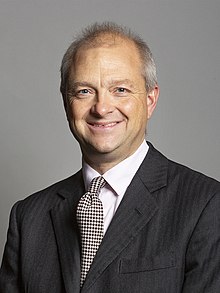
The speech made by Jerome Mayhew, the Conservative MP for Broadland and Fakenham, in the House of Commons on 13 May 2026.
Madam Deputy Speaker, you do not need me to tell you that this is a deeply unhappy Government. It is a deeply unhappy party sitting on the Government Benches, and Labour Members do not appear to understand that their core problem is a lack of economic growth. If the Labour Government were presiding over fast economic growth, the taxes would come rolling in, their ability to spend on their pet welfare projects would be unlimited, and they would be riding high in the polls. They used to know that. When they came into office, they said that their No. 1 mission was to deliver economic growth, yet what we have seen in the two years since is the most appalling example of a fundamental misunderstanding of how an economy works.
Instead of bringing in policies to increase economic growth, we have entered into the depressing doom loop of increased taxes to fund increased welfare, leading directly to reduced economic activity, which leads to increased welfare needs and therefore an increased need for tax rises. We need a leader and a Government who have a plan, not just words, to support economic growth—something that reverses the welfare taxation doom loop. And what do we have in the King’s Speech? Where is the welfare reform bill?
It is an appalling statistic that we now spend more on welfare than we recover in income tax. Four million adults receive PIP—the figure has gone up by half a million since the last general election. The Centre for Social Justice came out with a really terrifying argument the other day: according to its analysis, 25% of all full-time workers would be better off receiving benefits than they are in employment—a quarter of the working population. Yet, in this King’s Speech, there is nothing to fix the relationship between welfare and the productive economy.
Iqbal Mohamed
Will the hon. Gentleman give way?
Jerome Mayhew
I will just deliver this point and then give way.
We have the extraordinarily named “regulating for growth Bill”, which I think is oxymoronic—or perhaps just moronic—because it seems to me that the Government’s answer to anaemic growth is more regulation. We will also have “more Europe”, according to the Prime Minister.
Noah Law
Will the hon. Gentleman give way?
Jerome Mayhew
I said I would give way to the hon. Member for Dewsbury and Batley (Iqbal Mohamed).
Iqbal Mohamed
Would the hon. Member enlighten me and help me understand why the Tories, during 14 years in power, did not address the welfare ticking time bomb? What would he do to address the wage disparity whereby people on benefits can be better off than if they are in work?
Jerome Mayhew
The hon. Gentleman will acknowledge that the previous Government absolutely did take action to reduce the welfare state, although the global crisis caused by covid knocked that back a bit. The shadow Chancellor, in his previous role as Secretary of State for Work and Pensions, was bringing in wide-scale reform, which would have been effective, but it was cut short by the general election. So this was a long-term project for the Conservative Government, but it has gone into reverse as a result of the Labour Administration.
If there is one message that the election results last week should have transmitted loud and clear to all of us, it is that the country is frustrated. People feel that we are bogged down in bureaucracy, with Ministers announcing plans and then nothing happens, but it costs a fortune and takes forever, with costs spiralling. So where was the “reducing bureaucracy Bill” that would unlock the power of the state to actually get things moving? We heard the Leader of the Opposition, in her powerful response to the Gracious Address, setting out the plans of a Conservative Administration, yet without such a bureaucracy-busting Bill, this Government are doomed to failure, even on their own terms.
For that matter, without cheaper energy, manufacturing in the United Kingdom is also doomed to failure. Commercial energy in the UK is now the highest in the world, which is a sobering fact, and domestic energy is the second highest in the developed world. So Labour Members cannot be surprised when we have a decline in manufacturing if its energy, which is its primary input, is the highest in the world. It is higher not because it costs us more to produce energy in this country than elsewhere, but because of deliberate taxation and levy decisions taken by the Government. The Government have taxes and levies on electricity to subsidise expensive renewables. Where is the cheap energy Bill? They have done the opposite. The Labour Government have doubled down on their renewable levies, tying this country into the world’s most expensive energy for decades to come.
Let us look at the wider economy. The high street has been hammered by Labour, whether from the business rates revaluation, the removal of the hospitality and leisure exemption, or employer national insurance contributions. Pubs and shops right across the country—not just in my constituency, but in every one of the Labour Members’ constituencies—have been closing in record numbers. So where is our “bring back the high street Bill”? It is not there. In fact, there is no coherent plan for a stronger economy and a stronger country. Instead, the King’s Speech is just a hotchpotch—bureaucratic fiddling while the Prime Minister burns.
The Government have had two years—two years already—yet the Opposition are doing more serious thinking about solving the problems of this country than the Government, with all their resources, which is shaming. [Laughter.] Labour Members should not be laughing; they should be ashamed of themselves and of their Government, given that the Opposition have a more complete King’s Speech, with more complete answers to the problems of this country, than their Government seem able to bring forward. It is extraordinary that we have this weak legislative programme from a weak Government. The country deserves so much better.