
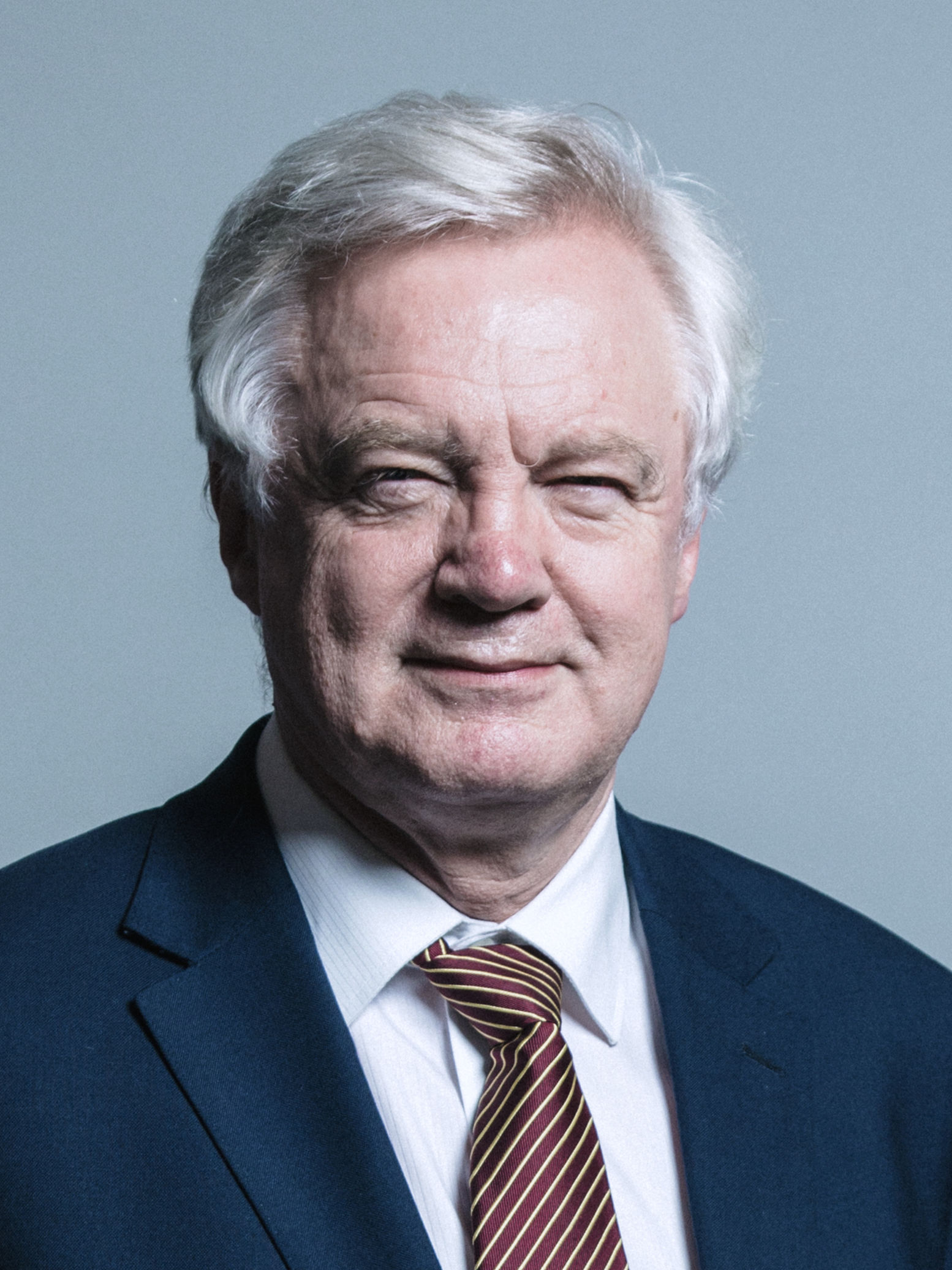
The speech made by David Davis, the Conservative MP for Google and Pocklington, in the House of Commons on 13 May 2026.
During the privileges debate, I told the House that I had hoped, a couple of years ago, that the Prime Minister would make a success of his new job. Unfortunately, this House is now debating against the backdrop of a Labour psychodrama, but that psychodrama would not have happened except for the fact that the Government have failed, and failed very clearly. In his now infamous speech, the Prime Minister said that he was going to undertake a reset. I don’t know about the Labour party, but the country certainly needs a reset.
What he said, in describing his reset, was that he needed to “explain” things better. That is not a reset; that is a re-spin of what they are doing. We need a proper reset. The hon. Member for Hornsey and Friern Barnet (Catherine West) was exactly right when she said that Labour must be
“judged on actions and not just our words”.
As a number of people have said, including the new leader of the SNP group, the hon. Member for Angus and Perthshire Glens (Dave Doogan), Labour came into office promising that its No. 1 mission was economic growth. It was right to do so, because without growth we do not have the money to do anything else, yet the consequences of its own policies in the last couple of years have been that growth has been suppressed. The IMF has literally just reduced the UK’s growth forecast by half a percentage point. That is the largest reduction in the G7.
It is not just the Opposition who are concerned about growth. I recommend that the House reads the Labour Growth Group report called, “An Honest Day”, which is aimed directly at this problem. While I do not agree with everything in it, there are a lot of good ideas that the Government should have already taken on.
When Labour took over, inflation was bang on 2%—that is something it cannot claim was disguised in any way—and now it is 3.3%. Again, Labour and the Prime Minister will try to blame somebody else, and no doubt at the moment the blame is on the strait of Hormuz. That explains energy costs in the future; it does not explain the increases in food costs in the past, or indeed a number of other costs.
Noah Law
Will the right hon. Member give way?
David Davis
No, not for the moment.
Neither does it explain the increase in borrowing costs, which are higher than any other G7 country’s and virtually double Japan’s. That is nobody’s fault but the Chancellor’s, and the horrific consequences for our public finances have been laid out already by the Chairman of the Public Accounts Committee, my hon. Friend the Member for North Cotswolds (Sir Geoffrey Clifton-Brown).
The real brake is Labour’s own policies: high taxes, massively burdensome regulation, high business rates and high energy costs. What on earth do we expect from our businesses when we saddle the country with the most expensive energy in the developed world, or indeed with the national insurance increases that the hon. Member for Angus and Perthshire Glens mentioned?
Noah Law
What was the impact of the decision by the right hon. Gentleman’s Government to block onshore wind generation on energy costs?
David Davis
It is interesting, because the hon. Member’s Government and his Secretary of State have claimed, “All these green policies are reducing the cost of our energy. Not using oil and gas is reducing the cost of energy.” What is the consequence? The highest energy costs in the world. I will be interested to hear if he can explain that when he makes his speech.
The other issue is that growth, or the loss of growth, has a material impact on the public finances. To give the House a measure of that, a 1% change in the growth rate is £10 billion to £11 billion in the first year and then more money in the consequential years, so when we lose that growth, we lose that amount of money. But even if we imagine that we could get that growth back, it still would not be enough. It would not be enough to pay the bills that we need to pay.
So what can we do? I am afraid that, because of the size of the debt, we have no choice but to cut welfare costs. I am a great believer in our welfare system, but it should be a safety net, not a lifestyle choice. People who can work should work, and the public have little sympathy for those who choose benefits over a job. It is true today, and it has been true since I was a child on a council estate, that the British working class, who Labour used to think of as its own voters, hate it when they see one of their neighbours choosing to sit at home spending the taxes that they have earned. Low growth handicaps our ability to solve our citizens’ problems.
Iqbal Mohamed
I agree, and I think most people agree, that people capable of working should be helped into work, but while the right hon. Member’s party was in government for 14 years, did it do an analysis of or have statistics on how many people on benefits across our country were actually fit to work, and what did his party do to get those people into work?
David Davis
I think the answer to the question is, “No, it didn’t,” but the hon. Member should be aware that it was only two months ago that a Labour Member described me as the MP who is never knowingly on message, which is a label I espouse—I do not mind that. No Government have got this right. We need a welfare system that looks after the disabled and people who have no choice about what they are suffering, but not one that makes it an even choice to be on the dole or in a job.
Jeremy Corbyn
Is the right hon. Member aware that the discussion held some months ago, when the former Secretary of State for Work and Pensions proposed big cuts in personal independence payments, caused unbelievable levels of stress and despair to often isolated people in receipt of PIP who have a carer who comes in to help them, and that the Government are still undertaking a review, the intention of which is to lower the personal independence payments bill? Does he agree that we should end that kind of debate and instead look at the needs of people with disabilities, particularly those who struggle to survive under the current system and especially those in receipt of PIP?
David Davis
I will be careful how I answer the right hon. Member because I have an interest to declare here: I have a disabled grandchild, and her mother is one of the people who suffers the stress he talked about. As I say, we need a humane system that deals with people properly. Our current system for supporting disabled people and people looking after disabled people is incredibly bureaucratic, unpleasant and nasty to deal with. That is not the area of welfare that we need to deal with; it is principally the area of employment that we need to deal with. We want to get people back to work, because there is no better way out of poverty than employment, rather than, as it were, being on the dole.
To come back to the thrust of my argument, what is it that we are talking about paying for? I will pick three issues—I could pick any number, but the top three issues that matter to my constituents are healthcare, education and defence. Our health service needs radical reform. I know we have a Bill in this King’s Speech, but it does not look to me like it will have a sufficiently radical impact. For some reason, we do not actually speak enough about the fundamental aims of our health service. Healthcare must be free at the point of delivery—that is an absolute—but it also must do its job of saving lives, and we turn our face away from that too often. Too many Britons are dying early and avoidably under a system that swallows money without delivering the outcomes. Every year, 125,000 deaths are listed officially as avoidable, and the situation has worsened in recent years. It went from 129 deaths per 100,000 people to 156 in the course of a decade. That is a huge increase and, as a result, we have an avoidable death rate that is higher than all our comparator nations. I am not just talking about rich nations like Japan; we are even worse off than countries like Portugal that are much poorer than we are. It is an extraordinary problem that we have to face.
Anna Dixon
I agree that patient safety is not enough of a priority in the NHS. There are too many incidents of patient harm; we see that reflected in the large clinical negligence bill. Does the right hon. Member agree that it is essential that patient safety remains one of the top priorities for not only integrated care boards, but all providers?
David Davis
That is absolutely right. My concern is that the reason we have so many excess deaths is not poor doctors or poor nurses, but poor management. We have really, really poor national health service management. To put it starkly, poor management effectively kills 15,000 people a year. If we improved that number, we could get within range of our comparator nations.
That is a huge number of people, and we could do quite a lot about it if we set our mind to it. Experiments within the health service now demonstrate that. Just over the river at St Thomas’, a high intensity theatre programme triples the number of people who can be put through an operating theatre or under the hands of one surgeon in a day. That means we can do something like 17 hernia repairs rather than five, or 12 hip replacements instead of four—those are the numbers they measured. A lot of lives are saved rather than lost, because people are put through the system and are not effectively left waiting until they die, as has happened to a number of my constituents. We need to reflect that efficiency in the management of the health service. It requires a complete change in how we select, train and organise the senior management of the national health service. For the moment, they are not up to the job and we need to put that right, but I do not see anything in the King’s Speech that will do that.
My second point is about education. A number of speakers have already said that there is an intergenerational problem in our society today, and education is where that crystalises. We are failing both very young children and young adults. Evidence shows that one in four children are not sufficiently literate or mathematically capable by the age of 11 to get any benefit from the next stage of education. To put it another way, the state has failed a quarter of our children by the time they get to 11. For poor children—those on free school meals and so on—we can double that number; in fact, we can more than double it.
When I grew up, I was lucky to be at the peak of social mobility in this country. This was one of the world’s leading meritocracies, but that is no longer the case. That is a shame on our nation and we must put it right, starting at the bottom. We must do something about it, and we can. Uniquely, using AI and software, we can do quite a lot to help children at the bottom of the scale, but we do not currently do that, and the Department for Education is not up to it. It is not under this Government and it was not under the preceding one—I spoke about this at the time, and we need to put it right.
It is not just the very young who we are letting down; a whole generation in higher education is being failed. The transition to student loans and tuition fees by the Blair Government has been an unmitigated disaster, shackling a whole generation to mortgages without houses and futures without jobs. I opposed it when it came in, I opposed my party’s decision to uphold it when we came into government, and I oppose it today. It takes away much of the point of university, because at least one in five courses do not give youngsters opportunities that will pay for their education. That means that we have to write off their loans, and in the next 50 years, the Government—the state—will pay £430 billion in unpaid loans in cash terms. From what I have seen of the calculations, I am pretty sure that that is an underestimate.
In my view, we should revise the whole policy radically, and perhaps look again at grants for certain courses—I think the Liberals have talked about this—with a 2% graduate tax to offset it, or something like that. That is better than what we have now, which leaves a loan hanging over people for their entire adult life—a loan they may never pay back. We could have grants for science, technology, engineering, mathematics, medicine, architecture and design—courses that will contribute to the economic growth of this country—and take the rest from there. We need radical reform, but we will not see it in this year’s education Bill.
Finally, I want to talk briefly about defence. There has been much criticism of the Government, rightly, for taking too long over enlarging the expenditure we put into defence, and the simple truth is that we will face challenges that will materialise much faster than we expect. The hon. Member for Dewsbury and Batley (Iqbal Mohamed) spoke in an earlier question about peace being better than war, and since Roman times we have known that being well armed is the best way to prevent war. Nobody wants warfare. At the moment, our military is depleted beyond value and would struggle in a major war, and obviously we must address that. In addition, we must ensure that our strategy and management are right. Frankly, the management of the Ministry of Defence is a disgrace—to be honest, I cannot pick a better word.
I always think that it is symbolic of the extraordinary priorities of the MOD that we have 134 admirals to oversee 63 ships, many of which are not able to set sail at any point in time—Nelson must be spinning in his grave. That is symbolic, but similarly the UK currently maintains an Army of just over 70,000 people, and the Ministry of Defence employs roughly 60,000 civil servants—a ratio that defies logic. Of those civil servants, just under a quarter are employed in procurement, operating a system that is among the worst in the world. If hon. Members need to, they should look at the Dragon, the Type 45 ships, or the Ajax. If the Chair of the Public Accounts Committee were sitting here now, he could get up and given me a dozen cases of disgraceful scandals in procurement in our Ministry of Defence, and we need to put that right.
If we are to maintain effective armed forces, we must also maintain the morale and spirit of our soldiers. The simple truth is that the first step towards that is to treat those soldiers decently, and we are not doing that. The Northern Ireland Troubles Bill, which has been carried over into this Session, is exposing soldiers who fought in Northern Ireland to being dragged through the courts, sometimes three times over the course of five years, as with Soldier B in the Coagh case. They are in their 60s, 70s and 80s. Honourable people who fought bravely for their country and did nothing wrong are being punished in their old age. That is a disgrace.
The excuse that the Government used when they started the Bill was that the previous legislation was illegal—that is what a lower court found. Last week, however, the Supreme Court overturned that judgment in the Dillon case. There is now no legal basis for the Government’s policy, yet still we are pressing on. I asked the Prime Minister, and he said that they are still pressing on with it, effectively psychologically torturing people who served this country. That is morally wrong, but moreover it is causing people to leave the SAS in numbers—this is now in the public domain and I can say it. Our best and most active regiment is being depleted and destroyed. The regiment of which the rest of the world is envious is being undermined by the Government’s strategy, and they should walk away from that policy and drop it. We should bin that Bill.
I do not want to take any more of the House’s time. I have picked three subjects, but there are many other important issues that the Government need to address. I say again that I hope the Prime Minister succeeds in resetting the Government and giving them new dynamism. At the moment, however, the only attractive part of the King’s Speech for me was the last line, which always says the same thing:
“Other measures will be laid before you.”