
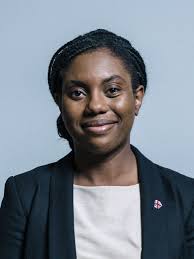
The speech made by Kemi Badenoch, the Leader of the Opposition, in the House of Commons on 20 April 2026.
I thank the Prime Minister for advance sight of his statement. His reputation is at stake, and everyone is watching, so it is finally time for the truth.
Earlier today, Downing Street admitted that the Prime Minister inadvertently misled the House. The Prime Minister has chosen not to repeat that from the Dispatch Box. I remind him that, under the ministerial code, he has a duty to correct the record at the earliest opportunity. The Prime Minister says he only found out on Tuesday that Peter Mandelson failed the security vetting. The earliest opportunity to correct the record was Prime Minister’s questions on Wednesday, almost a week ago. This is a breach of the ministerial code. Under that code, he is bound to be as open as possible with Parliament and the public in answering questions today, so let me start with what we do know.
We know the Prime Minister personally appointed Peter Mandelson to be our ambassador to the United States. We know that Mandelson had a close relationship with a convicted paedophile. We know that he had concerning links with Russia and China—links that had already raised red flags. We know that the Prime Minister announced the appointment before vetting was complete—an extraordinary and unprecedented step for the role of US ambassador.
The Prime Minister says that it was “usual” because it was a political appointment, so I remind him, and the rest of the Labour Front Bench who are heckling, that Peter Mandelson was a politician who had been sacked twice from Government for lying. That meant he should have gone through the full security process. We also know that when Peter Mandelson failed the security vetting, he was allowed to continue in the role with access to top secret intelligence and security information. This goes beyond propriety and ethics; this is a matter of national security.
Let me turn to what we do not know. We still do not know exactly why Peter Mandelson failed that vetting. We do not know what risks our country was exposed to. We do not know how it is possible that the Prime Minister said repeatedly that this was a failure of vetting, went on television and said things that were blatantly incorrect, and not a single adviser or official told him that what he was saying was not true. At every turn, with every explanation, the Government story has become murkier and more contradictory. It is time for the truth.
There are too many questions to ask in the allotted time, so I will ask the Prime Minister just six. I have taken the unprecedented step of providing these questions to the Prime Minister in advance, so he has them in front of him. I have asked for these questions to be put online for the public. They and I expect him to answer.
The Prime Minister appointed a national security risk to our most sensitive diplomatic post. Let us look at how this happened. The right hon. and learned Gentleman told me at PMQs in September 2025 that
“full due process was followed”—[Official Report, 10 September 2025; Vol. 772, c. 859.]
in this appointment. We now know that in November 2024, Lord Case, the then Cabinet Secretary, told him that this process required security vetting to be done before the appointment. He did not mention any of what Lord Case said in his statement earlier. First, does the Prime Minister accept that when he said on the Floor of the House that “full due process was followed”, that was not true?
Secondly, on 11 September last year, journalists asked his director of communications if it was true that Mandelson had failed security vetting. These allegations were on the front page of a national newspaper, and yet No. 10 did not deny the story—why?
Thirdly, will the Prime Minister repeat at the Dispatch Box his words from last week: that no one in No. 10 was aware before Tuesday that Mandelson had failed his vetting?
Fourthly, the Prime Minister says he is furious that he was not told the recommendations of the vetting, yet on 16 September, a Foreign Office Minister told Parliament that
“the national security vetting process is rightly independent of Ministers, who are not informed of any findings other than the final outcome.”—[Official Report, 16 September 2025; Vol. 772, c. 1387.]
That was the Government’s stated process, so why is the Prime Minister so furious that it was followed?
Fifthly, on 4 February 2026, the Prime Minister told me from the Dispatch Box that the security vetting that Mandelson had received had revealed his relationship with Epstein. How could the Prime Minister say that if he had not seen the security vetting?
Finally, Sistema is a Russian defence company that is closely linked to the Kremlin and Vladimir Putin’s war machine. Was the Prime Minister aware before the appointment that Peter Mandelson had remained a director of that company long after Russia’s invasion of Crimea?
Everyone makes mistakes. It is how a leader faces up to those mistakes that shows their character. Instead of taking responsibility for the decisions he made, the Prime Minister has thrown his staff and his officials under the bus. This is a man who once said,
“I will carry the can for mistakes of any organisation I lead.”
Instead, he has sacked his Cabinet Secretary, he has sacked his director of communications, he has sacked his chief of staff, and he has now sacked the permanent secretary of the Foreign Office. All those people were fired for a decision that he made.
The right hon. and learned Gentleman’s defence is that he, a former Director of Public Prosecutions, is so lacking in curiosity that he chose to ask no questions about the vetting process, no questions about Mandelson’s relationship with Epstein and no questions about the security risk that Mandelson posed. Apparently, he did not even speak to Peter Mandelson before his appointment. It does not appear that he asked any questions at all. Why? Because he did not want to know. He had taken the risk and chosen his man, and Whitehall had to follow.
It is the duty of the Prime Minister to ensure that he is telling the truth—or does the ministerial code not apply to him? I am only holding the Prime Minister to the same standard to which he held others. On 26 January 2022, he said from this Dispatch Box to a previous Prime Minister:
“If he misled Parliament, he must resign.”—[Official Report, 26 January 2022; Vol. 707, c. 994.]
Does he stand by those words, or is there one rule for him and another for everyone else?