
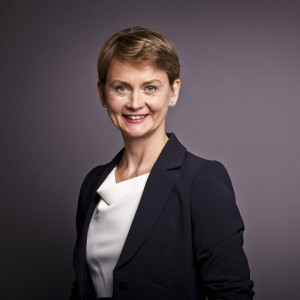
The statement made by Yvette Cooper, the Foreign Secretary, in the House of Commons on 5 February 2026.
I wish to update the House on the situation in
Sudan.
On Tuesday night, I returned from the border between Sudan and Chad, where I witnessed from the camp of 140,000 people in Adré—85% of them women and children who have fled the most horrendous violence and violations—the devastating human toll of the world’s worst humanitarian crisis. In January, Sudan passed 1,000 days of conflict between the Sudanese armed forces and the Rapid Support Forces. This is a regionalised conflict of power, proxies and profit, defined by unimaginable atrocities, by millions pushed into famine, by the horrific use of rape as a weapon of war, and by suffering that should strike at the core of our shared humanity.
That should mobilise the world’s resources and resolve, yet too often the response is to hold back and look away—catastrophically failing the people of Sudan, and Sudan’s women and girls. I am determined that we do not look away, and that we put the spotlight firmly on Sudan. That is why this week I travelled to the region to see at first hand the extent of the crisis, to listen to the testimony of traumatised women and children whose lives will never be the same again, to see how UK support is making a difference, and to see what urgently needs to be done by the international community to help arrest the spiral of bloodshed and drive urgent momentum towards peace.
In Adré, I met families who had been torn apart, mothers who had survived appalling violence only to find their daughters missing, and frightened children who had travelled vast distances in search of some semblance of safety. I met teachers, nurses, students, market traders, small businesswomen and political activists—impressive women whose lives and livelihoods back home had been stolen from them.
I met a mother separated from her children who told me she still does not know where they are and whether they are alive; a young woman who told me that most of the women she knew had been through “bad violence” on their journey, but they would not talk about it “because of the shame”; and a Sudanese community worker who told me she thought more than half the women in the camp had directly experienced sexual assault or abuse. I have heard from others in recent weeks, including a Sudanese emergency response room worker who described three sisters arriving at the response room who had all been raped. The oldest was 13, and the youngest was eight. This is a war waged on the bodies of women and girls.
But here is what I also saw: an incredible group of Sudanese women who have set up a makeshift support centre for women who have suffered sexual violence and for children with trauma. They have activities for children and support for mums. More survivors need that kind of help, so this week I announced that the UK will fund a new £20 million programme to support survivors of rape and sexual violence in Sudan, enabling them to access medical and psychological care, given the terrible stigma endured by survivors and children born of rape. That is part of our international action to tackle a global emergency of violence against women and girls.
What I did not see in Adré is just as disturbing: the fathers, husbands and brothers missing, either killed, drawn into the fighting or migrating further and leaving family behind. Reports from El Fasher after the RSF attacks were of atrocities so appalling that they could be seen from space—blood-soaked sand, multiple piles of bodies and mass graves—but aid agencies are still facing barriers to getting in. There are reports that the Sudanese Armed Forces are refusing to let desperately needed humanitarian aid through, even though right now some 30 million people need lifesaving assistance due to this war, and up to 7 million face famine. That is nearly equivalent to the entire population of London—every person across the entire city we stand in today.
In December, the UK provided an additional £21 million for food, shelter and health services, and we have committed £146 million to support over 800,000 people this year alone. Since the conflict began, we have reached over 2.5 million people, delivering water and medicine to hard-to-reach areas. We will continue to make Sudan a top priority for UK humanitarian support, and we will support reforms such as the steps advocated by UN humanitarian chief Tom Fletcher and the International Rescue Committee to strengthen prioritisation and closer work through local partners on the ground. But for aid to save more lives, the deliberate barriers to humanitarian access must be lifted.
Aid alone will not solve this crisis; we need an immediate and urgent ceasefire, we need those responsible for these atrocities to be held to account, and we need a pathway to peace. There is no military solution to the conflict—that only results in devastation for Sudan—yet the military men driving this conflict still refuse to agree a truce, and there is disturbing evidence that they are seeking and getting hold of ever more dangerous weapons.
This crisis is compounded by regional rivalries and vested interests, with the real risk of further escalation within Sudan and beyond as fighting spreads to the Kordofan regions. I am very fearful that the RSF advances on the city of El Obeid risk turning it into another El Fasher. Co-ordinated and determined international pressure are needed to halt this bloodshed and pursue an immediate truce, with a halt to the arms flows, tangible pressure from all those who have backed the RSF and SAF or who have influence upon them to deliver a ceasefire, and pressure from the entire international community too.
The US has been working intensively to secure a truce, drawing together other Quad countries—the United Arab Emirates, Saudi Arabia and Egypt—and discussing humanitarian support, military withdrawal, civilian transition and action to stop arms flows. I am in close contact with all members of the Quad, including Secretary Rubio and the President’s senior adviser on Africa, as we urgently push for a way forward. The UK is particularly involved in a process to support Sudanese civilians to build their capacity.
African partners in the region also have a critical role. In Addis Ababa earlier this week, I met Foreign Ministers from Ethiopia, Kenya, South Sudan, Chad, and the African Union’s chairperson and peace and security commissioner, to discuss what more can be done by border countries, and their assessment of the action needed to achieve a ceasefire. We need to build the same focus and momentum behind a peace process for Sudan as we had last year around Gaza, with countries from across the world coming together to back a ceasefire. That is why I am so determined that the UK will keep the international spotlight on Sudan. This month the UK holds the presidency of the United Nations Security Council, and we will use it to press for safe, unimpeded humanitarian access, accountability for atrocities, and international co-operation for a ceasefire. We will use it to ensure that the voices of Sudan’s women are heard in the Security Council Chamber.
As we look to the third anniversary of this devastating conflict in April, the UK and Germany will jointly convene a major international conference on Sudan in Berlin. In November, UK leadership at the UN Human Rights Council secured international agreement for an urgent UN inquiry into crimes in El Fasher, following its capture by the RSF. Later this month we will receive the report of that UN fact-finding mission, because as well as pursuing peace, we must also hold the perpetrators to account.
Today I can announce new action that the UK is taking to apply pressure deliberately on the belligerents, with fresh sanctions targeting senior figures in the SAF and RSF who have committed atrocities across Sudan. We are also targeting a network of individuals operating behind the scenes to procure weapons and recruit mercenary fighters. These designations send a clear message that the UK will hold accountable those suspected of perpetrating and profiteering from the most egregious violations of international humanitarian law.
To look away from crises such as Sudan is not just against our values but against our interests. Wars that rage unresolved do not just cause harm to civilians, because their destabilising effects ripple across borders and continents through migration and extremism. Let 2026 be the year that the world listens to the women of Sudan, not the military men who are perpetuating this conflict. Let 2026 be the year that the world comes together to drive urgent new momentum for peace. I commend this statement to the House.