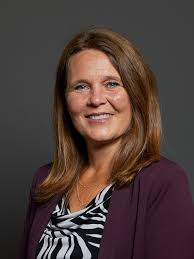
The speech made by Vikki Slade, the Liberal Democrat MP for Mid Dorset and North Poole, in Westminster Hall on 6 January 2026.
I thank the hon. Member for Southport (Patrick Hurley) for that really moving account. We know that cancer affects us all. In my family it claimed my mum Lin; my sister-in-law Lisa and my stepmum Sally have both beaten it, and now my dad Ray is living with terminal cancer. One of my team is also undergoing treatment for cancer, so we know that it is prevalent among all our lives. All of them were fit, healthy people who did everything right, as are so many others each year who get the horrible news or—worse—turn up in A&E after becoming suddenly unwell. According to a Cancer Research study, many of those patients had visited their GP but had not been referred for tests, either because they did not meet the thresholds or because they had been missed altogether. This is not a criticism of our GPs, who are working in highly difficult situations. Indeed, when I shadowed Dr Wright from Walford Mill surgery in Wimborne, he had the sober task of sharing a diagnosis and undertaking a very personal test during his appointment, which he let me witness.
If diagnosis doubled across the six least survivable cancers alone, an additional 7,500 lives a year would be saved. Each year in my constituency of Mid Dorset and North Poole, there are 540 diagnoses of cancer and 300 cancer deaths. Although 85% of them should be starting treatment within 62 days, the number is actually only 60%. What is the Minister doing to bridge that gap? If we met the target in my constituency, 70 additional people would be getting on with their lives. Across the country, 45,000 additional people would be given a greater chance of not just surviving but having a life shared with those they love.
Furthermore, once they get to hospital, patients are faced with out-of-date machinery and not enough specialist nurses. Macmillan Cancer Support says there is an acute shortage and calls for a cancer nurse fund to increase the numbers by 3,700. Will the future cancer strategy include such funding?
I want to speak briefly about pancreatic cancer, which claimed the life of my cousin Colin, a super-fit former Welsh Commonwealth games cyclist who died in his 50s despite the best care available. Many other constituents have written to me about poor prognosis for this treatment. They have flagged that the NHS has approved selective internal radiation therapy, but only for colorectal and liver cancers—not those whose primary cancer was in the pancreas and then spread to the liver. These families are keen for urgent trials to be undertaken to allow the treatment to be used, given the incredibly short life expectancy faced by patients. Will the Minister consider that?
We have been waiting such a long time for this cancer strategy. We need the workforce plan and the road map for the NHS plan. Nine hundred and fifty people will be diagnosed with cancer today, and those people need hope.