Tag: Speeches

  • Sadiq Khan – 2021 Comments in Response to London Floodings

    Sadiq Khan – 2021 Comments in Response to London Floodings

    The comments made by Sadiq Khan, the Mayor of London, on 27 July 2021.

    The serious flash flooding in London over the last two weekends will have caused major concern and anxiety for many Londoners and it shows that the dangers of climate change are now moving closer to home. I’d like to thank partners including the London Fire Brigade, the Met Police and local councils who responded to hundreds of calls throughout Sunday afternoon and evening.

    Despite having limited powers in the area, it remains a key priority for myself and London’s council leaders that more is done to urgently tackle flooding and the other impacts of climate change. This is why I have brought together all of the key partners to see what more can be done, including the water companies who have to address the localised issues with infrastructure that may exacerbate the impact of flooding.

    I continue to lobby the Government to devolve more funding and powers to local leaders to enable us deal with both flooding and the wider impacts of climate change.

    COP26 this year provides an opportunity for the Government to show global leadership and give us the powers and resources we need to take even bolder action on climate change.

  • Alok Sharma – 2021 Update on the COP26

    Alok Sharma – 2021 Update on the COP26

    The comments made by Alok Sharma, the COP26 President, on 26 July 2021.

    Over the past two days, Ministers from more than 50 countries have gathered in London, as well as online.

    We have discussed the critical issues in the COP26 negotiations.

    As we have done so, heavy rains and flash floods have swept London.

    A sobering reminder of the urgency of our task.

    This was the first face-to-face meeting of this kind involving Ministers for more than eighteen months.

    It was a hugely refreshing experience, to be sitting across the table from one another.

    In person, there was a very positive atmosphere in every session.

    There was a sense of common endeavour and a shared desire to address the climate crisis before us.

    It was wonderful to see colleagues renew existing relationships, and build new ones.

    To sit around the table and have a discussion.

    And we all heard, loud and clear, the message from Ministers from climate vulnerable countries on the need for renewed urgency to tackle the climate crisis. And their lived experience of extreme climate change.

    We made progress over these two days. And there was a clear spirit of cooperation.

    However, the issues we have discussed are complex.

    There are still significant differences that persist.

    We have moved closer together. But still, on these vital issues we are not yet close enough.

    There is much more work to be done ahead of COP26 and in Glasgow itself.

    And we have agreed ways to keep the conversations going and drive action forward in the 97 days that remain to COP26.

    Over the past two days, we have reached a common understanding that COP26 needs to keep 1.5C within reach.

    This was also agreed by the G20 agreed to do last week.

    There was also a shared understanding from many that coal power and financing are not compatible with a 1.5 degree future.

    And so the UK Presidency will take forward work on how the Glasgow outcome will respond to any gap in ambition to keep 1.5C within reach.

    On adaptation, and adaptation finance particularly, we agreed we need a clear way forward

    And together, we have emphasised the need for COP26 to accelerate progress on the Global Goal on Adaptation.

    On finance, I have recently called for developed countries to publish a clear plan for how, together, we are going to deliver the $100 billion a year in international climate finance, which has been promised since 2009, between 2020 and 2025.

    I am delighted that Minister Flasbarth of Germany and Minister Wilkinson of Canada have agreed to lead this process. This will bring much needed transparency and predictability to developing countries and also reinforce the trust that needs to be maintained.

    On Article 6, I am grateful that Minister Fu of Singapore and Minister Rotevatn of Norway have agreed to continue their informal ministerial consultations.

    Additionally, Minister Mujawamariya of Rwanda, and Minister Sommaruga of Switzerland, will take forward my invitation to consult with ministers on Common Time Frames for NDCs.

    We will be initiating other ministerial consultations, including on transparency at the appropriate time, in the coming weeks.

    Of course our experts and negotiators will also continue their discussions.

    I hope that all this work will allow us to arrive in Glasgow in the best possible position to reach agreement.

    It is incumbent on every country to give their all to this process.

    There will be nowhere to hide at COP.

    Each of us will be in the spotlight.

    And we will only deliver by working together.

    I have said all along how important it is to have real in-person discussions on these difficult issues.

    We have gone to great lengths to make this Ministerial meeting happen and I’m grateful to everyone who joined us here and online.

    Now we must deliver.

    It is essential that, six years on from Paris, we agree these final elements of the Rulebook, that we forge a way forward on finance, adaptation and other critical issues.

    Ultimately, our response must reflect the urgency of the crisis we face.

    Between now and COP, we must, and we will, make every single day count.

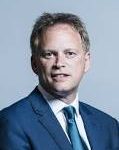
  • Grant Shapps – 2021 Comments on a Greener Road Freight

    Grant Shapps – 2021 Comments on a Greener Road Freight

    The comments made by Grant Shapps, the Secretary of State for Transport, on 27 July 2021.

    Through our bold and ambitious transport decarbonisation plan, we’re leading the way in the transition to zero emission vehicles by becoming the first country in the world to commit to ending the sale of all new fossil-fuelled road vehicles by 2040, subject to consultation.

    From Doncaster to Scotland, by working in partnership with industry, this funding will allow us to better understand the role of zero emission HGVs while levelling up the industry and boosting regional economies.

  • Boris Johnson – 2021 Comments on Beating Crime Plan

    Boris Johnson – 2021 Comments on Beating Crime Plan

    The comments made by Boris Johnson, the Prime Minister, on 27 July 2021.

    When I first stood on the steps of Downing Street as Prime Minister, I promised to back the police and make people safer, because we cannot level up the country when crime hits the poorest hardest and draws the most vulnerable into violence.

    That is why my government has remained unstinting in its efforts to protect the British public and this plan delivers a fresh commitment, as we emerge from the impacts of the pandemic, to have less crime, fewer victims and a safer society.

  • Liz Kendall – 2021 Comments on Government’s Social Care Plan

    Liz Kendall – 2021 Comments on Government’s Social Care Plan

    The comments made by Liz Kendall, the Shadow Social Care Minister, on 24 July 2021.

    Two years since his promise to the nation on the steps of Downing Street, the British people are no closer to seeing Boris Johnson’s plan to ‘fix the crisis in social care’.

    After ten years of the Tories in power, Britain deserves better. Either the Prime Minister lied about having a plan to fix social care or he lied about not raising taxes.

    Every day the Government delays their plans for fixing the crisis in social care is another day that staff don’t get the pay and training they deserve, another day that thousands of people go without the basic help they need, to do things like get up, washed, dressed and fed, and another day that families are pushed to breaking point.

    Ministers must now put in place a ten-year plan for investment and reform that puts social care on a sustainable footing, and provides all older and disabled people with the dignity and security they deserve.

  • Tulip Siddiq – 2021 Comments on National Adoption Strategy

    Tulip Siddiq – 2021 Comments on National Adoption Strategy

    The comments made by Tulip Siddiq, the Shadow Minister for Children and Early Years, on 26 July 2021.

    The Conservatives have created a postcode lottery in adoption.

    This government has failed to ensure people from all backgrounds can easily adopt, and the result is hundreds fewer children in care are now being adopted.

    Labour would put children at the heart of our pandemic recovery. It’s time the Conservatives match our ambition for every child, including rebuilding children’s services and fixing the adoption system.

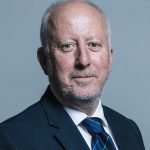
  • Andy McDonald – 2021 Comments on Workers’ Rights

    Andy McDonald – 2021 Comments on Workers’ Rights

    The comments made by Andy McDonald, the Shadow Employment Rights and Protections Secretary, on 26 July 2021.

    Millions of workers are in insecure employment with low pay and few rights and protections, particularly key workers whose efforts got the country through the pandemic.

    A lack of basic rights and protections forces working people into poverty and insecurity. This is terrible for working people, damaging for the economy, and as we have seen throughout the pandemic, devastating for public health.

    We need a new deal for working people. Labour would ensure that all work balances the flexibility workers want with the security they deserve.

  • Kate Green – 2021 Comments on Vaccinating Students

    Kate Green – 2021 Comments on Vaccinating Students

    The comments made by Kate Green, the Shadow Secretary of State for Education, on 27 July 2021.

    It is essential that all eligible adults get their vaccine. Instead of criticising young people, the Conservatives must get a grip and help them to get their jabs, including by setting-up vaccine centres on university campuses.

    The chaos, delay and incompetence at the heart of Boris Johnson’s government is costing lives and has cost thousands of students their university experiences.

    Supporting all students to get double jabbed ahead of winter will help reduce disruption on campus and limit the spread of the virus, helping to protect the NHS as we head towards winter.

  • Michael Gove – 2021 Statement on Digital Delivery

    Michael Gove – 2021 Statement on Digital Delivery

    The statement made by Michael Gove, the Chancellor of the Duchy of Lancaster, in the House of Commons on 22 July 2021.

    The covid-19 pandemic has strained our country’s resilience like nothing we have seen out of wartime, and the public have endured huge sacrifices. Our mission now is to respond by transforming the country for the better, levelling up, and making opportunity more equal. To achieve these changes, Government must be reformed.

    The recently published “Declaration on Government Reform”, set out a plan for the renewal and rewiring of Government, as a means to deliver the better Britain that the public demands and deserves. As part of its focus on improving performance, the declaration committed to improving the cross-Government functions and strengthening standards and spending controls, to ensure the Government are delivering both excellence and value for money.

    The Government are today publishing two independent and separate reports which each contain recommendations on how to improve the cross-Government functions and digital delivery. These two reports are:

    1. A review of the cross-cutting functions and the operation of spend controls, by the right hon. Lord Maude of Horsham; and

    2. Organising for digital delivery report presented to the Digital Economy Council.

    Lord Maude’s advice and the “Organising for Digital Delivery” report presented to the Digital Economy Council are critical to driving reform activity within the cross-Government functions, and the reports were invaluable input in finalising the commitments and actions in the declaration.

    Lord Maude’s recommendations are centred around a strong functional model with three essential elements of leadership, capability and mandate. Strong progress is being made on the functional reform activity, overseen by myself and Lord Agnew, and a board chaired by Alex Chisholm, the chief operating officer for the civil service. Some examples of progress so far include:

    New leadership put in place for the digital data and technology function, as announced in January this year. This included the establishment of the central digital and data office to work with the Government digital service and lead the digital, data and technology function for Government, also taking on responsibility for the Government automation taskforce.

    The Infrastructure and Projects Authority’s publication of its mandate in January, which sets out clearly its own responsibilities and those of departmental accounting officers for major Government projects and programmes. This is critical to making sure they are set up for success from the outset, supporting the Government to meet their ambitions.

    Steps have been taken to strengthen spending controls, and increase their reach and effectiveness. More organisations are now in scope and the controls are being applied more consistently within Departments.

    Lord Maude’s report advises on the need to set in train (or complete, where already underway) assessment and accreditation programmes; multiple functions are actively exploring how this should be achieved. Investment in professional expertise, recognising its importance, will be an integral part of Government functions. For example, the training and accreditation of contract managers across Government is being led by the Government commercial function, which is critical to driving excellent value for money for taxpayers.

    We are implementing a programme of modernisation to strengthen and unify the communications profession across Government, to provide more efficient, responsive and effective communication which delivers Government priorities with one voice. This will build fulfilling careers for people and allow us to attract and develop the best talent.

    The shared services strategy for Government was published in March 2021. Following Lord Maude’s advice, and working across Government, a core element of the strategy is the plan to consolidate all back office services into a maximum of five centres. This will achieve better quality services for staff, better people data and reduced cost, encouraging greater collaboration and improving interoperability across Government.

    Copies of both reports have been placed in the Libraries of both Houses.

  • Chloe Smith – 2021 Statement on the Boardman Review

    Chloe Smith – 2021 Statement on the Boardman Review

    The statement made by Chloe Smith, the Minister for the Constitution and Devolution, in the House of Commons on 22 July 2021.

    On 12 April, the Government announced that the Prime Minister had asked Nigel Boardman to investigate the development and use of supply chain finance in Government, especially the role of Lex Greensill and Greensill Capital (including associated companies or companies in its group) and any related issues that Mr Boardman considered were in scope.

    In accordance with the terms of reference, Mr Boardman has provided the Prime Minister with a report which sets out Mr Boardman’s findings of fact. This was provided to the Prime Minister yesterday and is being made available to the House today.

    In producing this report, Mr Boardman interviewed 45 individuals, for a total of over 100 hours. Mr Boardman had access to all the papers he requested, totalling several thousand pages of written evidence. This is a non-statutory review, but in line with long-standing convention, the Prime Minister made clear at the outset his expectation that all Ministers, special advisers and civil servants, whether current or former, should co-operate fully. Those individuals who participated, or their personal representative where applicable, were provided with relevant documents to assist their evidence. They were then offered the opportunity to discuss the relevant documents and provide any comment during an interview with Mr Boardman. These comments were considered, in good faith, as part of the review.

    The purpose of the review was to establish the facts and any lessons to be learnt. As set out in the terms of reference, the review does not form part of a disciplinary process, nor is it intended to apportion blame or criticism to individuals. In establishing and setting out the facts, however, Mr Boardman attributes actions to named individuals, some of which could be read as critical of individuals. Where this is the case, the individuals concerned, or their personal representative where applicable, were given the opportunity ahead of the report being finalised to make representations on those sections of the report that could be perceived as criticisms to correct factual inaccuracies.

    The Government thank Mr Boardman for all of his work in examining the evidence and setting out his judgement on the facts of what occurred. Mr Boardman will be providing the second part of his report, including any specific recommendations, shortly. The Government will respond to Mr Boardman’s findings, and any recommendations, in due course.

    I am depositing a copy of the report in the Libraries of both Houses, and publishing it on gov.uk.