Tag: Speeches

  • Alok Sharma – 2021 Speech on Functioning Voluntary Carbon Markets

    Alok Sharma – 2021 Speech on Functioning Voluntary Carbon Markets

    The speech made by Alok Sharma, the COP26 President, on 29 July 2021.

    Friends, the clock is ticking down on the climate crisis.

    We are running out of time to protect our precious planet from its worst effects, and to keep the goals of the Paris Agreement within reach.

    To keep 1.5 degrees alive, as the UK COP26 Presidency is determined to do, we must halve global emissions by 2030.

    And that means everyone playing their part – governments, investors, civil society and business.

    Alongside companies setting science-based targets to cut emissions to net zero, and building resilience, voluntary carbon markets can play a vital role, enabling us to do more.

    A voluntary carbon market with integrity can incentivise emissions reductions, and it can encourage technology innovation, and promote reforestation.

    And it can raise finance, fast, getting funds to emerging markets and to nature-based solutions, including forest protection.

    This of course is invaluable.

    Because without finance, the task ahead is near impossible.

    But integrity is the watch word.

    With less than a decade to keep 1.5 alive, there is simply no room for greenwashing.

    The era of carbon offsetting delaying meaningful climate action is over.

    We need transparent, reliable markets playing a role in robust emissions reduction strategies, supporting companies to deliver, providing confidence to consumers and investors, and keeping 1.5 degrees alive.

    That is why the work of the Voluntary Carbon Markets Integrity Initiative, working alongside private sector initiatives, is so important.

    And why the UK Government is proud to support it.

    But it will only succeed with your help.

    So I urge all governments, businesses, civil society organisations and Indigenous Peoples listening to engage as fully as possible with the VCMI’s work.

    Help to establish the principles necessary for transparent, functioning voluntary carbon markets, for it to be presented at COP26.

    Together, let’s build our resilience, drive down global emissions, and keep 1.5 degrees alive.

  • Jeremy Quin – 2021 Speech at UK Space Command

    Jeremy Quin – 2021 Speech at UK Space Command

    The speech made by Jeremy Quin, the Defence Minister, at RAF High Wycombe on 29 July 2021.

    It’s great to be here and I was delighted to have the privilege of cutting the ribbon which formally and officially stands up our Space Command.

    And it’s not a moment too soon. Space is in the news like never before.

    As scientists test the limit of our abilities to conduct space travel and billionaire entrepreneurs explore the commercial potential of space tourism, our competitors are trying to assert their dominance by recklessly testing anti-satellite missiles.

    And this is why our dependence on space has never been greater. Satellite constellations in low-earth orbit link up almost every aspect of our daily lives, from mobile phones, the internet and television to transport networks, and even banking systems.

    Militarily, our Skynet satellite system is critical for communication and reconnaissance, weather tracking and navigation.

    But with dependency comes vulnerability.

    That’s why in our recent Integrated Review we recognise space as a major strategic challenge.

    And that’s also why our Defence Command Paper set out our determination to invest in space capabilities over the coming years, backed by around £1.4bn funding on top of the £5bn already being invested in Skynet.

    We’re using that money to set up a National Space Operations Centre, so that we can track activity and ensure our awareness.

    And we’re developing a UK-built Intelligence, Surveillance and Reconnaissance satellite constellation.
    We’ll shortly be handing out our first ever space badges to these pioneers.

    But the key part of the plan is our Space Command. It will allow us to do three things:

    First, it will strengthen the military’s command in space, helping to coordinate commercial space operations and leading to the development of new space-based capabilities.

    Second, as a corollary of that, it will open up exciting new opportunities for industry.

    Our nation has bold space ambitions that will require the most imaginative and innovative companies to come forward with cutting-edge solutions; solutions that enhance our reputation as a science superpower.

    Third, this Command will help us bolster our bonds with key partners like Australia, France and, especially, the US.

    I’m delighted Air Vice-Marshal Godfrey has already welcomed his US counterpart General Dickinson here to discuss joint operations.

    And we’re also delighted to welcome Lt Gen Shaw, Deputy Commander of US Space Command, here today, further emphasising our close cooperation in the Space Domain.

    I know they are acutely aware that, at a time when there is limited international agreement on how to regulate satellites and a lack of clarity on international standards to encourage their use, we have a joint responsibility to safeguard the space commons.

    That means properly understanding this complex domain, protecting our whole space enterprise – be that on Earth or in orbit – and stopping our upper atmosphere becoming a cosmic junkyard.

    In the coming months, we’ll be publishing a Space Strategy and alongside that will be a Defence Space Strategy, with both setting out our plans in more precise detail.

    But, before I hand over, perhaps there is another aspect to what we’re doing in the space domain.

    It is now 30 years since Helen Sharman became the first British person to go into space.

    After 18 months of intensive training, the then 27-year-old embarked on an eight-day mission to the Mir satellite.
    She inspired a generation, in the same way Tim Peake is doing so today.

    And so, I hope Space Command’s work will have a similarly inspiring effect of the next generation.

    Filling them not just with a sense of wonder and majesty for our universe but a sense of the boundless possibilities for their future, because the sky is literally no longer the limit.

    And the dawn of a new space age starts here.

  • Angela Rayner – 2021 Comments on Government Misusing Public Funds on Polling

    Angela Rayner – 2021 Comments on Government Misusing Public Funds on Polling

    The comments made by Angela Rayner, the Deputy Leader of the Labour Party, on 29 July 2021.

    This has the hallmarks of a racket, not a government acting in the national interest during a pandemic.

    Taxpayers’ money that has been abused in this way should be paid back by the Conservative Party. Taxpayers’ money is not the personal cashpoint of Conservative Ministers to dish out to their mates.

    We need a fully independent inquiry into the Government contracts that have been handed out over private email and WhatsApp so we can get to the bottom of this scandal.

  • Sarah Jones – 2021 Comments on Police Numbers

    Sarah Jones – 2021 Comments on Police Numbers

    The comments made by Sarah Jones, the Shadow Minister for Policing and the Fire Service, on 29 July 2021.

    The Tories have spent a decade cutting our police workforce, leaving communities across the country exposed.

    These figures expose the decimation the Tories have caused community policing. While cuts to police staff mean that even new police recruits will end up behind desks backfilling staff roles, instead of on the beat.

    The Government’s new crime plan is in reality a bunch of rehashed policies designed to distract from the damage they have caused. When coupled with an insulting police pay freeze and failure to consult them on the crime plan, it’s no wonder frontline police have lost confidence in the Home Secretary.

  • Luke Pollard – 2021 Comments on the Climate Crisis

    Luke Pollard – 2021 Comments on the Climate Crisis

    The comments made by Luke Pollard, the Shadow Environment Secretary, on 29 July 2021.

    The severe impacts of the climate crisis are happening here and now, putting people, nature, and our economy at risk. But the Tories are failing to meet their emissions reduction targets.

    Re-announcing inadequate plans can’t hide the Government’s woeful failure to protect communities and businesses. We need urgent action to reverse this climate and ecological emergency.

    Labour would replace the Government’s piecemeal approach with a comprehensive Green Recovery to decarbonise and transform our economy.

  • Anna McMorrin – 2021 Comments on Youth Custody and Reoffending

    Anna McMorrin – 2021 Comments on Youth Custody and Reoffending

    The comments made by Anna McMorrin, the Shadow Minister for Victims and Youth Justice, on 29 July 2021.

    The Conservatives have completely lost control of youth custody, resulting in shocking welfare and rehabilitation for children, as well as a failure to protect the public from crime and reoffending.

    Youth reoffending rates remain unacceptable, well above adult figures, while incidences of self-harm and assault are disproportionately high compared to the number of children in custody.

    Labour is calling for an independent review to tackle the disastrous deterioration in youth custody. Ministers must heed our calls and swiftly get a grip.

  • Justin Madders – 2021 Comments on Number of Closed Testing Centres

    Justin Madders – 2021 Comments on Number of Closed Testing Centres

    The comments made by Justin Madders, the Shadow Health Minister, on 29 July 2021.

    Hundreds of testing centres opening weeks after they’re needed typifies the Government’s shambolic approach to the pandemic.

    A proper plan is needed to prevent the chaos of last autumn when people struggled to access tests. Ministers must fix this now.

  • Peter Kyle – 2021 Comments on Ofqual Analysis

    Peter Kyle – 2021 Comments on Ofqual Analysis

    The comments made by Peter Kyle, the Shadow Schools Minister, on 29 July 2021.

    Today’s reports confirm what we already knew – that in amongst the shambles of last year’s examinations, the Conservatives hung state school pupils out to dry.

    Rather than coming forward with a clear plan to ensure fairness in this summer’s results, the Government has been asleep at the wheel. That carelessness is putting young people’s futures at risk.

    With exam results coming in just a fortnight’s time, the Government must urgently lay out what support will be available to pupils, parents and teachers on Results Day to ensure every child can progress in education or employment. A repeat of last year’s fiasco cannot, and will not, be tolerated.

  • Richard Harries – 2021 Comments on Human Rights in India

    Richard Harries – 2021 Comments on Human Rights in India

    The comments made by Richard Harries in the House of Lords on 22 July 2021.

    My Lords, I have enormous admiration for the people of India, especially for the resilience and sheer joy shown by so many of them even when living in dire poverty. I recognise the early birth of its culture 4,500 years ago in the Indus valley, and note the brilliant contribution of Indians in the fields of mathematics and astronomy over many centuries. I appreciate the long tradition of public debate and intellectual pluralism in India, as illustrated by Amartya Sen in his wonderful book, The Argumentative Indian. I marvel at the way in which a country of 1.4 billion people can hold democratic elections in which nearly 70% of the people vote. I also believe that many aspects of British policy and behaviour during the imperial period are deeply shaming. As Gandhi responded when asked what he thought of western civilisation, “It would be nice”.

    So it is with real sadness that I have to bring this Question before the Committee this afternoon, sadness that, over the past few years, India has joined the growing list of countries that have combined an increasingly autocratic rule, an appeal to a narrow nationalism and a denial of fundamental human rights.

    Fundamental to human rights and the long tradition of Indian public debate and intellectual pluralism is academic freedom. There are now numerous reports showing how this in increasingly under threat, with academics who hold views that the Indian Government do not like being put under pressure to resign, and with permission from the Government now being required to hold an international webinar if it relates to certain sensitive subjects. A recent headline in an Indian newspaper asked, “Is academic freedom any longer viable?” Another cited what can happen even in a privately funded Ivy League-equivalent university such as Ashoka. When Pratap Bhanu Mehta was pressured to resign, he said:

    “After a meeting with founders it has become abundantly clear to me that my association with the University may be considered a political liability. My public writing in support of a politics that tries to honour constitutional values of freedom and equal respect for all citizens, is perceived to carry risks for the university.”

    I should also mention journalists. Between 2010 and 2020, 150 were arrested, detained and interrogated, 67 in 2020 alone.

    NGOs—in India, they are called civil society organisations—are another group being put under great pressure. Even before Covid, they were finding it difficult to obtain visas. Since Covid, they have been harassed by new laws against protesters, and some have had their bank accounts frozen. So serious is this that Amnesty International, for example, has had to stop its work in India.

    A no less serious cause for concern is the position of Muslims. There are some 200 million Muslims in India—about 14% of the population. One recent survey revealed that 35% of Muslims in north-east India said that they had experienced discrimination over the past year and were now adopting a survival strategy in the realisation that an anti-Muslim Hindutva policy was now the dominant narrative.

    Christianity in India is not a western import. Christians have been there for 2,000 years, and were certainly well established in Kerala by the sixth century. There are 28 million Christians in India—about 2.3% of the population. They, too, are suffering from the present Hindutva policies. Their stigma is increased not only by the fact that they are not Hindu but because they are sometimes regarded—quite wrongly—as a legacy of western imperialism and because many of them are Dalits who converted to Christianity, as others converted to Buddhism, partly to escape the stigma of being treated as untouchable.

    So I come to the Dalits and other marginalised groups, such as the tribal peoples. It must be emphasised that the Indian constitution is in many ways admirable, in particular its emphasis on equality for all India’s diverse peoples. Its architect was the polymath, scholar and jurist Dr Ambedkar, who was recently honoured by having a new portrait unveiled at Gray’s Inn, where he studied. He was born into a family of what were then referred to as untouchables in 1891, and wrote:

    “Untouchability is far worse than slavery, for the latter may be abolished by statute. It will take more than a law to remove the stigma from the people of India. Nothing less than the aroused opinion of the world can do it.”

    His constitution was a step towards achieving that but, despite that constitution, Dalits continue to suffer disproportionately by every indicator. The policies and practices of the present reveal that the stigma is still there and being reinforced.

    When it comes to access to clean water and sanitation, Dalits lag far behind; when it comes to access to education and health, again they are disproportionately failed. The conscience of India can rightly be aroused when a student on a bus in Delhi is abducted, raped and murdered—as happened not long ago—but rapes of young Dalit girls in isolated villages happen frequently and get very little publicity. A high proportion of Dalits are bonded or day labourers—groups who are particularly vulnerable to violence. It is particularly distressing when Dalits try to get justice for some outrage and, again and again, fail to achieve it. A Dalit Christian village might be burned, as has happened, and the perpetrators known, but justice is delayed and delayed.

    At the moment, more than 24 Dalit rights activists are in jail on unproven charges, including 80 year-old poet Varavara Rao and, until he died on 5 July, 83 year- old Jesuit priest Father Stan Swamy. Father Swamy spent nine months in jail under the anti-terror law, the Unlawful Activities (Prevention) Act, was denied bail and medical care and was transferred to a hospital only when his condition became critical. At the time of his arrest, Stan Swamy was already suffering from Parkinson’s disease, significant loss of hearing in both ears and other serious underlying health issues. His death in custody and the continued incarceration of other defenders is a tragic indictment of India’s human rights record and the global community’s human rights commitments. India sits on the United Nations Human Rights Council and the United Nations Security Council, which carry specific human rights commitments.

    As I said at the beginning, it is a real sadness to note what is happening in India today. I believe that all true friends of India should protest about this and make it clear to the Mr Modi that this is a denial of what is best in Indian culture and is totally unacceptable. I know the Minister very much shares this concern about human rights, and I look forward to hearing from him about the action that Her Majesty’s Government are taking. I beg to move.


     

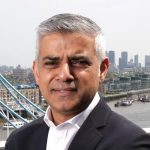
  • Sadiq Khan – 2021 Comments on Terrorism Threat in London

    Sadiq Khan – 2021 Comments on Terrorism Threat in London

    The comments made by Sadiq Khan, the Mayor of London, on 27 July 2021.

    Nothing is more important to me than keeping Londoners safe. Londoners have a right to expect us to be prepared for any potential attack on our city and that is why I have asked Lord Harris to undertake a fresh review into London’s preparedness.

    Whilst we have made some significant improvements since 2016, a lot has changed. The attacks on our city in 2017, the Manchester Arena bombing, and more recently, the attacks in Streatham and at Fishmongers’ Hall, means there’s much more to be learned. We know extremists are set on exploiting the uncertainty and hardship caused by the pandemic for their own gain and are adapting their tactics – including using the internet during lockdown to spread disinformation as well as attempting to radicalise the vulnerable to commit violent acts.

    We must adapt and strengthen our city’s capability to prepare and respond to the evolving threat of terrorism and the impact of the pandemic. Lives depend on it.