Tag: Speeches

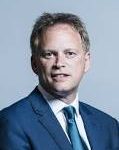
  • Grant Shapps – 2022 Statement on International Travel

    Grant Shapps – 2022 Statement on International Travel

    The statement made by Grant Shapps, the Secretary of State for Transport, in the House of Commons on 24 January 2022.

    With permission, Mr Speaker, I wish to make a statement on international travel.

    It is less than two months since the first cases of omicron—the most infectious variant to emerge since the start of the pandemic—were confirmed in the UK. Thanks once again to the nationwide army of medical staff and volunteers and the huge public response to our booster programme, today, with more than 137 million jabs administered, including nearly 37 million boosters, Britain is one of the most vaccinated countries in the world, and omicron is in retreat. Thanks also to the decisions taken by the Prime Minister, we have managed to turn the tide on the virus in remarkable time, while keeping our domestic society one of the most open in the world. Today, I can confirm to the House that our international travel regime will also now be liberalised, as part of our efforts to ensure that 2022 is the year in which restrictions on travel, lockdowns and limits on people’s lives are firmly placed firmly in the past.

    From 4am on 11 February, and in time for the half-term break, eligible, fully vaccinated passengers arriving in the UK will no longer have to take a post-arrival lateral flow test. That means that, after months of pre-departure testing, post-arrival testing, self-isolation and additional expense, all that fully vaccinated people will now have to do when they travel to the UK is to verify their status via a passenger locator form.

    We promised that we would not keep these measures in place a day longer than was necessary. It is obvious to me now that border testing for vaccinated travellers has outlived its usefulness, and we are therefore scrapping all travel tests for vaccinated people, not only making travel much easier, but saving around £100 per family on visits abroad, providing certainty to passengers, carriers and our vital tourism sectors for the spring and summer seasons.

    Let me explain to the House how this will work in practice. For now, we will maintain our current definition of “fully vaccinated” for the purpose of inbound travel to the UK. That means two doses of an approved vaccine, or one dose of a Janssen vaccine. We will go further. The measures for those arriving in the UK who do not qualify as fully vaccinated have not changed since last March, so the time has come to review that position, too. Today, I can announce that passengers who do not qualify as fully vaccinated will no longer be required to do a day 8 test after arrival or to self-isolate. They will still need to fill out a passenger locator form to demonstrate proof of a negative covid test taken two days before they travel, and they must still take a post-arrival PCR test. This is a proportionate system that moves us a step closer to normality while maintaining vital public health protections.

    For kids travelling to the UK, under-18s will continue to be treated as eligible fully vaccinated passengers, which means that they will not face any tests at the UK border. Today I am pleased to confirm that from 3 February, 12 to 15-year-olds in England will be able to prove their vaccination status via the digital NHS pass for international outbound travel. Again, this should help families to plan holidays for February half-term.

    Reconnecting with key markets not only boosts the UK economy but will help the hard-hit aviation sector to take back to the skies, so I can also confirm that from 4 am on 11 February we will recognise, at the UK border, vaccine certificates from 16 further nations, including countries such as China and Mexico, bringing the vaccine recognition total to more than 180 countries and territories worldwide.

    One consequence of covid and of rapidly changing infection patterns across the world has been a border regime that, while necessary, has at times been complex, confusing and very difficult to navigate. That has been a challenge for many people who have been travelling over the past two years, so we will also simplify the passenger locator form, making it quicker and easier to complete, and from the end of February we will also make it more convenient by giving people an extra day to fill it out before they travel. Although the option for a red list of countries will remain in place to provide a first line of defence against future covid variants of concern arriving from other countries, we are looking to replace the managed quarantine system with other contingency measures, including home isolation, provided that we can develop new ways to ensure high levels of compliance. In the meantime, our contingency measures remain available. As the House knows, there are currently no countries on the red list. However, I must make it clear that those contingency measures will be applied only if we are particularly concerned about a variant of concern that poses a substantial risk—one that is even greater than omicron.

    The UK Health Security Agency will continue to monitor threats and will maintain a highly effective surveillance capacity, monitoring covid infections overseas. But I can announce that, over time, we intend to move away from blanket border measures to a more sophisticated and targeted global surveillance system. I also commit us to developing a full toolbox of contingency options to provide more certainty on how we will respond against future variants. The Government will set out our strategy, including how we will deal with any future new strains of the virus, next month. We will continue to work with international partners, including the World Health Organisation, to help all countries to achieve a level of genomic sequencing to monitor variants that is much closer to our own world-leading capacity.

    We are moving into a new phase of the fight against covid. Instead of protecting the UK from a pandemic, our future depends on our living with endemic covid, just as we live with flu, for example. We will set out our strategy for that transition in the spring. But as we navigate our recovery, and as we return to more normal travel next month, our advice to all eligible adults who have not been vaccinated stays the same: please get jabbed as soon as possible, and if you have had two jabs, please get boosted. I have recently been speaking to many of my opposite numbers around the world, and they have made it clear to me that regardless of what we do, they are very likely, by this summer, to require that people have had the booster jab. So my advice to anyone who wishes to travel this year, including during the summer, is: do not leave it too late to get your booster as you are very likely to be required to have had it by the third country that you are flying to.

    We already have one of the most open economies and societies in Europe, with the result that our GDP has outpaced that of other G7 countries. With the changes announced today, we have one of the most open travel sectors in the world. Of course we know that covid can spring surprises, but everybody should now feel confident about booking holidays, business trips, and visits to families and friends abroad. Be in no doubt: it is only because the Government got the big calls right—on vaccination, on boosters and on dealing with omicron—that we can now open up travel and declare that Britain is open for business. Today we are setting Britain free. I commend this statement to the House.


  • Chloe Smith – 2022 Statement on Supporting Terminally Ill Claimants

    Chloe Smith – 2022 Statement on Supporting Terminally Ill Claimants

    The statement made by Chloe Smith, the Minister of State for Work and Pensions, in the House of Commons on 24 January 2022.

    Today the Department for Work and Pensions is introducing an amendment to the Universal Credit Regulations 2013 and the Employment and Support Allowance Regulations 2013 to exempt people who are terminally ill from the requirement to accept a claimant commitment to be eligible for benefits.

    A claimant commitment sets out what an individual agrees to do in return for benefit, including any work search requirements and a duty to report any changes in their circumstances. Anyone claiming benefits under the special rules for terminal illness would already be exempt from work search requirements. However, there is currently no blanket exemption for terminally ill claimants from the requirement to accept a claimant commitment more generally. This means that the requirement to accept a claimant commitment can only be waived on a case by case basis.

    To streamline the process and provide certainty to those approaching the end of their lives, the statutory instrument laid on the 24 January will therefore create a specific exemption from claimant commitments for terminally ill people.

    The regulations will apply in Great Britain and will come into force on 15 February 2022. The Northern Ireland Assembly intends to mirror the regulations and is in the process of putting this into place.

    We are committed to ensuring the benefit system supports people nearing the end of their lives. Further to the changes we are making today, we will be bringing forward regulations shortly to replace the current six-month rule for determining eligibility for the special rules for terminal illness with a 12-month, end of life approach in universal credit and employment and support allowance with changes to personal independence payment, disability living allowance and attendance allowance being made when parliamentary time allows.

  • Trudy Harrison – 2022 Statement on Active Travel England

    Trudy Harrison – 2022 Statement on Active Travel England

    The statement made by Trudy Harrison, the Parliamentary Under-Secretary of State for Transport, in the House of Commons on 24 January 2022.

    I am pleased to inform the House that the Department for Transport is to create a new Executive Agency, Active Travel England, with its headquarters in York. This builds on the Government’s commitment to level up the country and locate more civil service roles outside of London and the south-east, as well as their commitment to boosting cycling and walking.

    This Government are investing a record amount in active travel to help deliver our priorities for a healthy, safe and carbon-neutral transport system. Active Travel England will work to ensure that this, and wider transport investment, is well spent, and will help raise the standard of cycling and walking infrastructure.

    Active Travel England will manage the national active travel budget, awarding funding for projects which meet the new national standards set out in 2020. It will inspect finished schemes and ask for funds to be returned for any which have not been completed as promised, or which have not started or finished by the stipulated times.

    ATE will also begin to inspect, and publish reports on, highway authorities for their performance on active travel and identify particularly dangerous failings in their highways for cyclists and pedestrians.

    In these regards, the commissioner and inspectorate will perform a similar role to Ofsted from the 1990s onwards in raising standards and challenging failure.

    As well as approving and inspecting schemes, ATE will help local authorities, training staff and spreading good practice in design, implementation and public engagement. It will be a statutory consultee on major planning applications to ensure that the largest new developments properly cater for pedestrians and cyclists.

    ATE’s establishment follows the Government’s unprecedented commitment of £2 billion for cycling and walking over this Parliament and comes in the wake of our ambitious “Gear Change” strategy to transform active travel.

    The agency will become fully operational later in 2022.

    I am also pleased to confirm the appointment of Chris Boardman MBE as the first Active Travel Commissioner for England. He will take the helm on an interim basis to spearhead the establishment of Active Travel England.

    This underlines this Government’s ongoing commitment to boosting cycling and walking and to building back greener from the pandemic.

  • Andrew Stephenson – 2022 Statement on High Speed Rail from Crewe to Manchester

    Andrew Stephenson – 2022 Statement on High Speed Rail from Crewe to Manchester

    The statement made by Andrew Stephenson, the Minister of State at the Department of Transport, in the House of Commons on 24 January 2022.

    Today the Government will introduce the High Speed Rail (Crewe – Manchester) Bill—a key part of building back better after the covid-19 pandemic. Alongside the High Speed Rail (Crewe – Manchester) Bill and accompanying Environmental statement, the Government are also publishing:

    the Government’s response to the second Design Refinement Consultation; and an update on the Strategic Outline Business Case.

    The Integrated Rail Plan for the North and Midlands (IRP) set out the Government’s commitment to invest in rail infrastructure across the North and Midlands. Delivering the Western Leg of HS2 is a vital part of this commitment. This includes plans for the Crewe Hub and Crewe Northern Connection, allowing HS2 trains to call at Crewe and Manchester and enhancing connectivity to north-west England, Wales, and Scotland.

    This next stage of HS2 from Crewe to Manchester will increase passenger capacity, improve connectivity, and reduce journey times. It is integral to delivering on the Government’s commitment to level-up the country. HS2 will join up the North, Midlands, and London by effectively halving the journey times between the centres of the UK’s three largest cities. The scheme will contribute towards sustainable growth in towns, cities, and regions across the country, spreading prosperity and opportunity more widely. It will act as a catalyst for job creation, the development of new homes and ultimately, the regeneration of major cities and towns along the HS2 route.

    HS2 will help provide a cleaner and greener form of transport, offering significantly lower carbon emissions per passenger kilometre than long distance car journeys or domestic air travel. HS2 has the potential to deliver world-class low-carbon transport to bring our biggest cities closer together, spread opportunity and support the UK’s transition to a ‘net zero’ economy.

    The Bill includes the powers necessary to construct and operate the HS2 route between Crewe and Manchester. It is accompanied by an Environmental statement which describes the railway, alternatives considered, the environmental effects that are likely to arise from its construction and operation, and the measures proposed to avoid or reduce the negative effects. It has been informed by the consultation on the working draft Environmental statement held in autumn 2018 as well as through engagement with stakeholders. An equalities impact assessment is also being published.

    The Government’s response to the Western Leg Design Refinement Consultation is an important part of introducing this Bill. The October 2020 consultation set out four technical refinements to the Western Leg of Phase 2b: a new Crewe Northern Connection to support the vision for a Crewe Hub; changes to the rolling stock depot at Crewe; expansions to both Manchester Piccadilly and Manchester Airport High Speed stations; and a new train depot at Annandale in Dumfries and Galloway. Having considered the feedback from all the respondents, the Government have decided to confirm these four changes.

    The update on the Strategic Outline Business Case (SOBC) sets out the clear, strategic case for the HS2 Crewe-Manchester scheme, together with up-to-date cost range for the programme of between £15 billion and £22 billion—2019 prices. This SOBC contains the first cost estimate that has been produced specifically for the scheme between Crewe and Manchester. As the project progresses in design maturity, the cost estimate will be further refined and will inform the full business case, which will be presented to Parliament in due course.

    Copies of the Government’s response to the second Design Refinement Consultation will be placed in the Libraries of both Houses and are also publicly accessible online through the www.gov.uk website.

  • Kevin Foster – 2022 Statement on Immigration Rules

    Kevin Foster – 2022 Statement on Immigration Rules

    The statement made by Kevin Foster, the Parliamentary Under-Secretary of State for the Home Department, in the House of Commons on 24 January 2022.

    My right hon. Friend the Home Secretary (Priti Patel) is today laying before the House a statement of changes in immigration rules.

    The Migration Advisory Committee are undertaking a review into the impact of the ending of free movement on the social care sector. While the MAC are not publishing their full report until the end of April 2022, they felt they had sufficient evidence with which to make a recommendation in their annual report to add care workers to the Health and Care visa and the shortage occupation list. Their recommendation was made in the context of increased demand for adult social services, increasing vacancies and issues with staff retention. They have re-asserted their position of the underlying cause of recruitment and retention problems being mainly due to pay, terms and conditions, and lack of progression in the sector. This is now coupled with pay in other competing sectors—such as catering, retail and cleaning—catching up to the adult social care sector, due to the rise in the national living wage.

    In light of the clear evidence which the MAC have presented and the important role the sector is playing in face of the exceptional situation during the pandemic, the Government announced on 24 December that we were agreeing to their recommendation. As recommended by the MAC, the salary threshold will be in line with the rest of the shortage occupation list—with a reduced minimum salary threshold of £20,480 in place—compared with a general threshold of £25,600 for non-shortage occupations—and applicants will need to meet all of the other requirements, such as having a job offer from an approved Home Office sponsor and meeting English language requirements.

    Taken together with the wider package of support measures for the adult social care workforce announced since September—including the £462.5 million to help local authorities and care providers retain and recruit staff over winter, on top of the £500 million for workforce training, qualifications and wellbeing announced as part of the health and social care levy, they will help us ensure sustainability and success for our long-term vision for this sector.

    As the MAC do not believe immigration can solve all, or even most, of the problems associated with social care recruitment, but can help to alleviate difficulties in the short term, we are therefore creating an initial 12-month application window whereby workers can apply for visas in this occupation. During this time, successful applicants will have all the same rights, benefits and obligations as other health and care visa holders—including the right to bring dependents and to settle permanently in the UK. This decision will be reviewed by Government later this year to determine the success of this change in relation to wider changes in the sector to attract and retain staff, the position with regard to the impact of the pandemic and whether it remains appropriate for this occupation to remain on the shortage occupation list.

    This does not signal a departure from the RQF 3 threshold and the points-based system more broadly, which the MAC agree strike the right balance between access to international talent and resident labour. Employers must continue to invest in training, opportunities and wages for the resident workforce to ensure the UK’s hard-working care workers get the type of rewarding packages they deserve and which are common in other sectors.

  • Sajid Javid – 2022 Statement on Covid-19

    Sajid Javid – 2022 Statement on Covid-19

    The statement made by Sajid Javid, the Secretary of State for Health and Social Care, in the House of Commons on 24 January 2022.

    As part of our commitment to reducing the cases of hospitalisation and serious illness due to covid-19, the Government accepted the JCVI’s recommendation on the 29 November that all young people aged 12 to 15 years old should be offered a second dose of covid-19 vaccination a minimum of 12 weeks after their first.

    To ensure that 12 to 15 year olds were able to demonstrate their covid status for international travel prior to the Christmas holidays, on 13 December, the Government launched the NHS covid pass letter service for children who are double vaccinated.

    From 3 February, the Government will ensure that all children aged 12 and over will also be able to get a digital NHS covid pass for international travel to support our efforts to open up travel. The digital NHS covid pass will provide a record of covid-19 vaccinations received and will show evidence of having recovered from covid-19 up to 180 days following a positive NHS PCR test. The steps that the Government have taken ensure that families are not prohibited from travelling where countries require children over the age of 12 to be able to digitally demonstrate their vaccination status or proof of prior infection.

    The covid pass will be available via the NHS.UK website for those aged 12 and over and via the NHS app for those aged 13 and over. To request an NHS covid pass, the child will first need to register for an NHS login, which will require them to verify their identity using their passport.

    The Government have also sought to ensure that this solution can be used by children in both Wales and the Isle of Man. In Wales, 12 to 15 year olds will be able to generate a digital pass via NHS.UK. In the Isle of Man, they will be able to use both NHS.UK and the NHS app. Further information will be available shortly from the Department of Health for citizens in Northern Ireland. Paper youth passes are already available for citizens in Scotland and further information on the digital solution will follow in due course.

  • Lord Agnew – 2022 Resignation Statement in the House of Lords over Coronavirus Fraud

    Lord Agnew – 2022 Resignation Statement in the House of Lords over Coronavirus Fraud

    The statement made by Lord Agnew, the Minister of State at the Cabinet Office and Treasury, in the House of Lords on 24 January 2022.

    I thank the noble Lord for his important question. I am here to defend the Government’s record in the deployment of counter-fraud measures over the last two years or so. However, I will only be able to do that in part. The assertion made by the Economic Secretary to the Treasury in the Commons debate last week that the priority was speed of distribution of funds is absolutely correct, but what has followed has been nothing less than desperately inadequate. Given the time available, I will focus on one or two emblematic failures, but these issues run far wider.

    The oversight by both BEIS and the British Business Bank of the panel lenders of the BBLS has been nothing less than woeful. They have been assisted by the Treasury, which appears to have no knowledge of, or little interest in, the consequences of fraud to our economy or society. Much store has been given to the extra money allocated to HMRC, but it took a year to happen, and this department was already the most competent and well-funded in that discipline; whereas at the beginning of Covid, BEIS had the grand total of two counter-fraud officials on its staff, neither of whom were experienced in the subject. They refused to engage constructively with the counter-fraud function that sits in the Cabinet Office, has considerable expertise and reports directly to me.

    Schoolboy errors were made: for example, allowing more than 1,000 companies to receive bounce-back loans which were not even trading when Covid struck. They simply failed to understand that company formation agents hold in stock companies with earlier creation dates. I have been arguing with Treasury and BEIS officials for nearly two years to get them to lift their game; I have been mostly unsuccessful.

    We move now to a new and dangerous phase: banks’ ability to claim on the 100% state guarantee for non-payment. We do this without implementing a standard bar of quality assurance on what we expect as counter-fraud measures; we know that we have serious discrepancies. For example, three out of the seven main lenders account for 87% of loans paid out to companies already dissolved. Why is the ratio so skewed? Two of the seven account for 81% of cases where loans were paid out to companies incorporated post-Covid, as I referred to a moment ago. One of the seven accounts for 38% of the duplicate BBL application checks that were not carried out after the requirement was enforced. Bizarrely, it took six weeks to get the duplicate check into place, during which time 900,000 loans, or 60% in total, were paid out, bearing in mind that some £47 billion has been paid out.

    If only BEIS and the British Business Bank would wake up, there is still time to demand data and action on duplicate loans. Why will they not do it? Despite pressing BEIS and the BBB for over a year, there is still no single dashboard of management data to scrutinise lender performance. It is inexcusable. We have already paid out nearly £1 billion to banks claiming the state guarantee. The percentage of losses estimated to be from fraud rather than credit failure is 26%; I accept this is only an early approximation, but it is a very worrying one. I will place in Hansard a copy of my letter to the chairman of the British Business Bank, sent on 16 December, addressing some of these points. I have still not received an answer.

    I have at least four differences of opinion with Treasury officials: first, on urgent improvements in lender performance data, I simply want the bar to be set at what the best of the panel banks can deliver—to repeat, there is not even a common definition of fraud to trigger the payment of the guarantee; secondly, far greater challenge of lender banks when we uncover inconsistency in data; thirdly, educating Treasury officials as to why reliance on audits is far too reactive and generally happening well after the horse has bolted; fourthly, a failure by Treasury or BEIS officials to understand the complete disjunction between the level of criminality—probably hundreds of thousands of pounds—and enforcement capability. For example, NATIS, a specialist agency, can handle around 200 cases a year; local police forces might double that.

    Noble Lords can see that it is my deeply held conviction that the current state of affairs is not acceptable. Given that I am the Minister for counter-fraud, it feels somewhat dishonest to stay on in that role if I am incapable of doing it properly, let alone of defending our track record. It is for this reason that I have, sadly, decided to tender my resignation as a Minister across the Treasury and Cabinet Office with immediate effect. I would be grateful if my noble friend would pass this letter to the Prime Minister at his earliest convenience. It is worth saying that none of this relates to far more dramatic political events being played out across Westminster. This is not an attack on the Prime Minister, and I am sorry for the inconvenience it will cause. Indeed, I think any Prime Minister should be able to reasonably expect that the levers of government are actually connected to delivering services for our citizens.

    I hope that, as a virtually unknown Minister beyond this place, giving up my career might prompt others more important than me to get behind this and sort it out. It matters for all the obvious reasons, but there is a penny of income tax waiting to be claimed here if we just woke up. Total fraud loss across government is estimated at £29 billion a year. Of course, not all can be stopped, but a combination of arrogance, indolence and ignorance freezes the government machine. Action taken today will give this Government a sporting chance of cutting income tax before a likely May 2024 election. If my removal helps that to happen, it will have been worth it.

    It leaves me only to thank the noble Lord, Lord Tunnicliffe, for his courteous but attentive role as shadow Minister of my portfolio, and to thank noble friends, many of whom I know will carry on their scrutiny of this important area. Thank you, and goodbye.

  • Denis Healey – 1972 Speech on Rhodesia

    Denis Healey – 1972 Speech on Rhodesia

    The speech made by Denis Healey, the then Shadow Foreign Secretary, in the House of Commons on 19 January 1972.

    May I first thank the right hon. Gentleman for his statement and ask him for an assurance that he will make a further statement to the House tomorrow in the light of any information he may receive between now and then?

    May we be told the names of the three Africans who have been arrested with Mr. Todd and his daughter? I assure the right hon. Gentleman that my hon. Friends are not just concerned but are appalled by the arrest of Mr. Todd and his daughter, particularly against the background of the firm promise conveyed to the House by the right hon. Gentleman from Mr. Smith that normal political activities would be permitted throughout the period of consultation.

    Is the right hon. Gentleman aware that Mr. Todd is one of the few Europeans in public life in Rhodesia who has won the confidence of the Africans, that he is an ex-Prime Minister aged 63, that Mr. Smith may have taken a step which will lead to the very violence that he purports to hope to avoid and that many of us will feel that this may well have been his purpose in carrying out the arrests, for it is already evident that all the evidence produced to the Pearce Commission by Africans in both the urban and tribal areas shows that there is overwhelming opposition to the proposals for a settlement?

    Is the right hon. Gentleman aware that my hon. Friends and I must rely entirely on newspaper reports for our understanding of what is happening in Rhodesia at this moment? Is he further aware that reports in newspapers which cannot be considered to be hostile to Her Majesty’s Government—newspapers like the Daily Telegraph and the Financial Times—make it clear, first, that all the shootings and bayonetings which have taken place in Rhodesia in recent days have been carried out by the security forces responsible to the Smith régime and not by the Africans; secondly, that the violence in Gwelo followed and did not precede the use of tear gas against a peaceful demonstration by Africans who were seeking to present their views to representatives of Her Majesty’s Government in the Pearce Commission inside Gwelo; and, third, that all the newspaper reports show that representatives of the African National Council did their best.
    even after the use of tear gas by the Rhodesia forces, to prevent the use of violence by the demonstrators?

    Has the Pearce Commission yet had an answer to the question it put to the Smith régime almost a week ago about the complaints made by the African National Council of interference by the Smith régime in its attempted activities in the tribal and urban areas?

    Will the right hon. Gentleman assure the House that unless Mr. Smith can produce satisfactory evidence that Mr. Garfield Todd, his daughter and the three arrested Africans have already taken action calculated to disturb public order in Rhodesia, he will insist on their immediate release.

  • Alec Douglas-Home – 1972 Statement on Rhodesia

    Alec Douglas-Home – 1972 Statement on Rhodesia

    The statement made by Alec Douglas-Home, the then Foreign Secretary, in the House of Commons on 19 January 1972.

    With your permission, Mr. Speaker, and that of the House, I wish to make a statement.

    Since I last spoke in this House on Rhodesia, hon. and right hon. Members will have been concerned at the reports of violence from different parts of that country, especially in the Gwelo district.

    It is in the Government’s view essential that the Pearce Commission should be enabled to carry out its task of testing Rhodesian opinion in conditions free of intimidation and violence, in which normal political activities are possible.

    Against this background, the House will have been concerned, too, to have received the news of the arrest of Mr. Garfield Todd, his daughter and three others. On hearing the reports last night I immediately sent a personal message to Mr. Smith seeking to establish the facts behind these arrests.

    In his reply Mr. Smith has said that they are cases of preventive detention arising from the internal security situation that has developed in the midlands area of Rhodesia during the last fortnight, under the 1970 Emergency Powers Regulations.

    He has said that the reasons for detaining Mr. Todd and his daughter were not based on their publicly stated opposition to the settlement proposals, but that the decision was, on the contrary, taken solely on the grounds of security and the need to maintain law and order in Rhodesia, without which, as recent events in Gwelo have shown, it is not possible for the Pearce Commission to carry out its task.

    It is, of course, for the Commission, which has the advantage of being on the spot, to satisfy itself that normal political activities are being permitted in Rhodesia, provided, as the proposals for a settlement make clear, that they are conducted in a peaceful and democratic manner. Lord Pearce, who has himself issued a statement in Salisbury expressing deep concern at these detentions, and has asked the Rhodesian Government for their reasons, will no doubt be considering the position in the light of Mr. Smith’s reply and other information available to him in Salisbury.

    I am arranging to send to Salisbury tonight the Head of the Rhodesia Department in the Foreign and Commonwealth Office so that he can, in consultation with our liaison officer there, and after discussion with all concerned, let me have an up-to-date assessment of the situation in the light of the recent events which have caused general concern.

    In a matter of such importance I am sure that hon. Members will appreciate that it would not be right for me to say more about these arrests until I have received further full information from Rhodesia. I will keep the House informed.

  • John Parker – 1972 Speech on Banning Cigarette Advertising

    John Parker – 1972 Speech on Banning Cigarette Advertising

    The speech made by John Parker, the then Labour MP for Dagenham, in the House of Commons on 19 January 2022.

    I beg to move,

    That leave be given to bring in a Bill to prohibit the advertising of cigarettes; and for purposes connected therewith.

    Since 1962, we have had a succession of reports from the Royal College of Physicians on the question of tobacco smoking generally, and particularly cigarette smoking. Each of them pointed out more strongly the dangers arising from the increase in cigarette smoking and demanded drastic action, but no effective action has been taken either by this House or by the Government.

    The problem is very serious. There has been a very big increase in the smoking of cigarettes. Cigarette smoking is the problem rather than tobacco smoking in other forms. In 1940, 25,000 people died from tuberculosis and 5,000 from cancer of the lung. In 1970, hardly any people died from tuberculosis but nearly 50,000 died from lung cancer. Cigarette smoking has become the killer disease in this country.

    It is important to compare the figures with the figures for deaths from other causes. In 1970, as many people died in this country from cigarette smoking as were killed in our bomber crews in the whole of the last war. Four times as many people were killed by cigarettes in 1970 as were killed in road accidents. Far more people died from smoking cigarettes than from taking drugs. There is an enormous campaign in this country against the sale of drugs and drug peddling, but no one organises against the “pushing” of cigarettes.

    Sir Gerald Nabarro (Worcestershire, South)

    I do.

    Mr. Parker

    I pay tribute to the hon. Gentleman, but there has not been a campaign against cigarette smoking comparable with the big campaign which has been, quite rightly, mounted against drug pushing.

    The great increase in the incidence of lung cancer is not the only result from the smoking of cigarettes. There has been a big increase in the incidence of cancer of the stomach and the very painful cancer of the bladder. The figures for coronary thrombosis have been affected by the increase in cigarette smoking. Most important of all, the incidence of chronic bronchitis—the “English disease”—has been very much on the increase. We have had clean air legislation to deal with the atmosphere, but in many public places the increase in cigarette smoking has increased the liability of many people to suffer from chronic bronchitis. Many people are dying painfully and many people are dying young who might otherwise have led useful lives.

    What should be done? I am well aware that on both sides of the House there is a great deal of support for what is called “the new liberalism”.

    In other words, the right of the individual must be asserted on all possible occasions. But there are occasions on which the right of the community as a whole needs to be stressed, particularly when we are considering what action should be taken.

    Many people may say that a man has the right to kill himself by smoking cigarettes if he wishes. I do not quarrel with the right of a man to kill himself in that way if he so desires. But we must look at the consequences of that. What happens to the family of a man who dies in his early forties? The community must keep his wife and children. There are 50,000 people a year dying from this disease, who thus make a call on the National Health Service. This means that the whole National Health Service must be organised to meet the needs of this section of the population when the rest of the population may well require other sectors of the National Health Service to be given greater priority.
    I mentioned the question of chronic bronchitis. The extreme consumption of tobacco by cigarette smokers can affect the health of people with whom they come in contact. That is something which must be considered from the community’s point of view. My case is that the community has the right to take certain action in order to halt the spread of this habit and to ensure that young people, in particular, do not become addicts of the cigarette.

    Hence this proposed Bill to prohibit cigarette advertising. If passed, it will prohibit the advertising of cigarettes, whether in the Press, in magazines or on radio, as has happened in connection with television. It will prevent the sponsoring of sporting events by cigarette companies and prohibit cigarette advertising on billboards. It will make a clean sweep of advertising in cinemas and theatres. It is an extreme action, I agree, but it will have one big advantage: no great army of bureaucrats would be required and no red tape would be necessary to enforce a law of this kind. It would be very effective.

    Last year, the tobacco interests spent £52 million on promoting the sale of tobacco, particularly of cigarettes. However, only £100,000 was spent on health education in this respect. The tobacco companies would not spend £52 million unless it showed results. If we prevented advertising, there would undoubtedly be a very big drop in the sale of cigarettes, which is the object of the exercise. It would be very effective in checking the enormous death roll from tobacco smoking.

    Up to now, the only action which the Government have effectively taken is to get the tobacco companies to agree that a warning about the dangers of smoking should be put on cigarette packets. That has been tried in the United States. In the first year after the law was introduced in America, the consumption of cigarettes declined by 1 per cent. It is now higher than it was before the law came into force. No effective results will ensue from such action taken by the Government of this country.

    The Government are frightened at the possible loss of revenue if there were a very big drop in cigarette smoking. They should be prepared to face that loss and to make it up from other sources if necessary. The ending of large-scale cigarette advertising would not only affect cigarette smoking. Young people would no longer feel that it was the right thing to do or that prestige was to be gained from cigarette smoking. That is another point which should be borne in mind.

    This is a moral issue. We are fighting for the younger generation. It is right that we should take steps to prevent them from becoming addicts. This House has fought such battles in the past. I ask hon. Members to remember the very important battles over the question of the abolition of the slave trade and slavery itself as a result of back-bench Members raising the matter. Back benchers forced legislation on the Government of the day and against powerful vested interests who fought back hard on their own behalf. We have the tobacco barons fighting hard now to keep the existing law. I hope the House will be prepared to fight the tobacco barons as our predecessors were prepared to fight the slave traders in the past.