Tag: Speeches

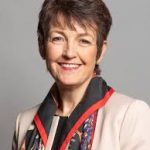
  • Jo Churchill – 2022 Speech at Agri-Tech and Environmental Sustainability Conference

    Jo Churchill – 2022 Speech at Agri-Tech and Environmental Sustainability Conference

    The speech made by Jo Churchill, the Minister for Agri-Innovation and Climate Adaptation, on 21 April 2022.

    Good morning,

    Thank you for the warm welcome. It gives me great pleasure to be here with you all today at the Agri-Tech Centres conference.

    As the Minister for Science and Innovation at Defra, I am so excited about the potential for technology across the agri-food sector, and I really believe that the opportunities are endless.

    I have travelled around the country I have been to events such as today and indeed travelling across to Dubai and across the world we do lead and we need to be brave and we need to shout about it. If we can take that and our enthusiasm and drive the sector forward we have something quite fantastic to offer the world.

    I’m particularly pleased that so many of you are here today – so that we can share that knowledge and collaborate because there is no point in having bright ideas if we don’t actually expand them within our own networks but more broadly. Now those challenges we face, some of the most pressing challenges that we face are omnipresent in all our lives and I’d argue as we design the solutions everybody has sustainability at the forefront.

    Just recently, I attended Expo 2020 in Dubai – it was absolutely phenomenal to discover a whole range of projects with international partners, from the reduction of methane emissions in livestock, and feed alternatives, to deregulation in the genetic technologies space.

    I want to start by taking a moment to reflect. Recent events in Ukraine, and the impact of the Covid pandemic, are a stark reminder, if we need one, that domestic food production matters. It gives us national resilience. We do have a high degree of self-sufficiency, but I want to say here and now that we will always support our farmers and growers, and importantly our innovators.

    Of course, food production and environmental protection go hand in hand. They are two sides of the same coin. The steps we are taking to encourage a more sustainable model of agriculture are also helping the resilience and profitability of farm businesses – but innovation is crucial. And, for fear of repeating myself, super exciting.

    I am proud that the UK is playing a leading role when it comes to innovation. Whether it’s the Hands Free Hectare, now Hands Free Farm at Harper Adams, agricultural technology at the John Innes Centre – who knew that peat could be so interesting, The National Institute of Agricultural Botany with its work on climate resilient crops, the James Hutton Institute in Scotland and its work on vertical farming they are doing, or the work of Rothamsted Research on genetic technology, we have an awful lot to shout about in relation to R&D and we also have so many dynamic farmers and growers adopting these technologies, but we need to help them trust them and adopt quicker.

    But, as we look to the future, that need to go further and faster to address the challenges that we all face – is obvious. Whether it’s food production in a changing climate, how we meet net zero by 2050, and even how we address some of the challenges we face around issues like labour supply – and I look forward to publishing the automation review and our response shortly. No single thing is the answer, we need to look and make sure though, that we have the right pieces.

    We are making significant investments to unlock innovation and translate our world-leading research into practical, farmer-led solutions that help them invest in their businesses, improve productivity and profitability, and boost environmental sustainability and resilience, and move towards net zero emissions.

    We have just increased the Farming Investment Fund for small technology grants from £17 million to more than £48 million – supporting over 4,500 farmers with their investment plans this year. But I would argue demand is outstripping supply. There is so much energy and so many bright ideas out there. Alongside that boost in funding, we have also provided £25m for round one of the large technology grant offer – Improving Farm Productivity, which supports farmers and growers to invest in robotics and automation technology to increase farm productivity and efficiency. Last month, we opened applications for a further £20.5 million from our Farming Innovation Programme.

    The Farming Futures Research & Development Fund will provide up to £12.5 million for innovation projects that help boost a climate-smart farming sector.

    And the Large Research & Development Partnership competition will offer up a further to £8 million for collaborative, business-led R&D projects, benefiting farmers and growers across England, and importantly the innovators thinking of ideas to support them, benefitting everyone, with a focus on the future commercialisation of new solutions. Like last October’s opening rounds, both will be delivered in partnership with Innovate UK.

    We are therefore making a significant investment and this support will continue over the coming months and years, but in building on our food security, resilience and ambition for net zero we need to ensure that our funding trajectory offers best value and that all parts of the innovation jigsaw, which currently feels like all the little pieces in a box without the picture, is really put together in a way which really allows people to understand what that picture and what that opportunity gives us.

    There is a wide world out there full of opportunity for our innovators, but they also need proof of concept, so our farmers need to help.

    I have never met so much excitement, enthusiasm, bravery, great ideas, but kept so quiet. Please shout, please tell everyone how good you are at what you do. Because I am one voice, and if you can amplify that voice and explain to people why we might change, how we can use innovation, why science matters.

    It is part of that broader picture for helping our customers on the journey, but also to helping to inspire young people to look at Agri-Tech and everything it offers, as far as reading the world, and being inspirational.

    I visit a lot of schools and very rarely do young people say “oh I want to go into Agri-Tech”, they should, and I often, coming from a rural part of the country, tell them they should. Because it is one of the most exciting parts of science, and it does so much good.

    It not only looks after the welfare of animals, but you have that combination of the health of humans. You have really large challenges out there, whether it is climate change, challenges with obesity, we can change the way we do things, we can innovate because we are good. And I want you to help me amplify that message about why we need to do this.

    Now we are looking to unlock the potential of gene editing in England, which will allow us to breed drought and disease resistant crops which perform better and with fewer inputs. Reducing the cost to farmers as well us reducing impact on the environment, as well as helping us develop crops that can adapt to the challenges of climate change.

    Water scarcity, I know that better than most coming from the East of England, will be a major impact not only in this country though. This is where we can look across the world.

    Recently on the trip to Dubai, understanding that their food security is about 15%. Looking at them trying to grow things and the challenges that face the nation, and breeding crops that can help them overcome those challenges.

    How water scarcity will be that major impact on climate change, and it will mean that land in some parts of the world that can currently be farmed, will no longer be viable unless we can get that breeding technology right, and keep pace with both the challenge of climate change and also the challenge of delivery.

    Elsewhere, we are currently supporting and investing in research and engaging with partners to develop a robust evidence base on the soil carbon market, including considering several robust methodologies and techniques for monitoring, and verifying and reporting on changes in soil health. This would cover carbon storage and maintenance in natural and farmed landscapes.

    Today’s event is a great chance for us to come together – government, industry, in all its various forms, and academia – and consider the opportunities that agri-tech and innovation can bring, not only to this room, not only to your businesses, but to the broader and wider society, both in this country, but across the world. Because, together, I feel certain that we can foster the potential that exists and we can nurture it, because that is what many of you in this room do. We can watch it grow and we can send it out into the world to say look at what we can do. So, I wish you a very good conference, and a power to your elbows to keep on doing what you are doing. Thank you.
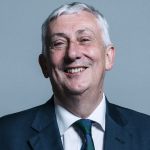

  • Lindsay Hoyle – 2022 Statement on Referring Boris Johnson to the Committee of Privileges

    Lindsay Hoyle – 2022 Statement on Referring Boris Johnson to the Committee of Privileges

    The statement made by Lindsay Hoyle, the Speaker of the House of Commons, in the House on 21 April 2022.

    Before we begin, I believe it would assist the House if I remind Members of the decision in question and the procedure on this motion. The decision before the House is whether or not to refer the matter to the Committee of Privileges at this time. It will be for the Committee to report back on whether it considers there has been a contempt. While it is perfectly in order for hon. Members to question the veracity of the Prime Minister’s responses to the House cited in the motion, it is not in order to challenge more generally the truthfulness of the Prime Minister or any other hon. or right hon. Member. Good temper and moderation must be maintained in parliamentary language.

    Much of what might be said today has already been said in response to the Prime Minister’s statement on Tuesday. Previous debates on such motions have been relatively short. Since 2010, the longest such debate has been for one hour and 29 minutes, and debates have been as short as seven minutes. That said, an amendment has been selected and the motion is of great importance. The debate may continue for as long as it takes unless either there is a successful closure motion to bring the debate to an end or we reach 5 o’clock, in which case the debate will be adjourned to a future day. I would also say that if the debate becomes very repetitive, we may have to consider whether to do closure earlier, but I will leave that to how the debate develops. Any Members who wish to speak need to stand to ensure that they catch my eye at the beginning of the debate.

    The right hon. and learned Member for Holborn and St Pancras (Keir Starmer) has tabled a motion for debate on the matter of privilege, which I have agreed should take precedence today. I inform the House that although I have selected the amendment in the name of the Minister for the Cabinet Office, I understand that it is now the Government’s intention not to move it. I call Keir Starmer to move the motion.

  • Christian Matheson – 2022 Speech on Human Rights in Colombia

    Christian Matheson – 2022 Speech on Human Rights in Colombia

    The speech made by Christian Matheson, the Labour MP for City of Chester, in Westminster Hall on 20 April 2022.

    It is a great pleasure to serve under your chairmanship, Ms McDonagh. Seven months would be me just getting warmed up. I congratulate my hon. Friend the Member for Liverpool, Wavertree (Paula Barker) on securing the debate and on her fantastic introduction.

    Like many, I suspect, my involvement and interest in Colombia started when I was a trade union official. As we have heard from colleagues, Colombia was the most dangerous place in the world to be a trade unionist 20 years ago, and my message for the Minister is that we must not take our eye off that ball.

    There are two harsh realities in Columbia. No. 1 is that the peace process does not enjoy universal support. It did not at the time; when ex-President Santos put it to the vote, it was narrowly rejected. There is still a large, residual resentment at the peace process and at the fact that the Government and the state made peace with FARC. We heard that in the intervention from my hon. Friend the Member for Rochdale (Tony Lloyd), who talked about the pressures to revert to the previous state of civil war, which was the longest-running civil war in the world at the time.

    That is one harsh reality. The other, for those who oppose the peace process in Colombia, is that it is the only show in town; it is the only way forward. Peace cannot be established and won just because a document was signed at Cartagena in 2016; it has to be a long and ongoing process. That is why it is so important to see colleagues here from Northern Ireland—my good friend the hon. Member for Strangford (Jim Shannon) and the hon. Member for Belfast South (Claire Hanna). I pay tribute to our representatives in the UK from Northern Ireland, including the right hon. Member for Lagan Valley (Sir Jeffrey M. Donaldson), who chairs the all-party parliamentary group on Colombia, and Lord Alderdice, and to all the parties in Northern Ireland, who are going—not have been—through a peace process, which is difficult at times for all of them. They demonstrate to the people of Colombia that peace must be invested in day after day, month after month and year after year. Peace cannot be achieved simply by signing a piece of paper—and then we all go home. Peace is difficult. It may not be as difficult as conflict, although some in the large cities of Colombia who have been insulated from the violence might be happy to go back to that situation. We have to continue to give that message and support the people of Colombia.

    One big problem the people of Colombia face is that the Government—the state—still do not control large areas of territory in Colombia. Chapter 1 of the peace agreement foresaw comprehensive rural reform, giving people a stake in their own land and life. It also gave them security to carry on their lives without the threat of paramilitaries from either side. That section on rural reform has fallen badly behind in areas where there is no state presence. One set of paramilitaries has been replaced by another. As my hon. Friend the Member for Liverpool, Wavertree said, they are narco-traffickers or former right-wing paramilitaries, or they sit in the middle bit of the Venn diagram and might be a mixture of them all.

    I am pleased to say that the number of armed combatants has fallen. The rough guess of the independent Bogotá think-tank Indepaz is that there are about 5,200 to 5,500 armed, organised paramilitaries, which is lower than the combined total of 50,000 20 years ago. If we include all the different armed groups, there are probably about 17,000 in total, so progress is certainly being made. However, as my hon. Friend said, the number of murders of social leaders and human rights defenders jumped in 2020 and remains stubbornly high.

    Four main sources keep count of the numbers of social leaders, human rights defenders and trade unionists murdered in Colombia: the UN High Commissioner for Human Rights; a Colombian Government agency, the human rights ombudsman, Defensoría; and two non-governmental organisations, Somos Defensores and Indepaz. Of those, even the organisation with the lowest confirmed count, the UN high commissioner, still finds that a social leader has been murdered in Colombia every 3.2 days since the peace accord came into effect in December 2016.

    A further consequence of the lack of peace and the failure to control territory is illegal deforestation and attacks on the environment. I pay tribute to British groups, such as the Earlham Institute and Kew Gardens, that are doing extremely important work with Colombians and Colombian academics in support of biodiversity programmes. However, deforestation continues, with a 36.9% increase in deforestation in Colombia’s Amazon basin between 2019 and 2020.

    The second chapter of the peace accord focuses on political participation and seeks to establish guarantees for people to petition the state or to practise opposition politics. Before and during the decades of the armed conflict, people with reformist or leftist views participated in politics at great personal risk. Thousands were killed, including much of the membership of a political party originally linked to the FARC, the Patriotic Union, in the ’80s and ’90s.

    Political participation guarantees still do not go much further than a few nominal changes in the law. My hon. Friend the Member for Liverpool, Wavertree mentioned the Kroc Institute’s monitoring report, which found that there is still stagnation on the commitments that would allow progress towards structural reforms of democracy, due to the absence of a political consensus for their substantial and comprehensive progress.

    Spending on the peace process in Colombia fell by 18% from 2020 to 2021 and the Colombian Comptroller General argues that that contributes to increasing the lags in the implementation of the comprehensive security system for political participation. Peace is expensive—we know that, and we also know that Colombia has spent a lot of money supporting Venezuelan refugees, and has also had to deal with the pandemic—but it is so fundamental to social progress in Colombia that it is not an area where budgets can be cut.

    Chapter 5 of the peace accord covers the processes that could deliver peace. It sets up a comprehensive system for truth, justice, reparations and non-recurrence. The Special Jurisdiction for Peace is a transitional justice tribunal that is prosecuting the most serious human rights abusers. Again, it does not enjoy full support, but something that enjoyed full support from one side or the other probably would not be the compromise that a peace deal would bring. A unit to search for the disappeared is working with victims and communities in an attempt to locate some of the 80,000 people who went missing during the years of the conflict. Again, that is similar to what happened in Northern Ireland.

    We cannot have peace without justice, we cannot have justice without peace, and we cannot have environmental protection without peace. All are absolutely essential, but let us not forget the trade unionists and civil society leaders who are being murdered.

  • Paula Barker – 2022 Statement on Human Rights in Colombia

    Paula Barker – 2022 Statement on Human Rights in Colombia

    The statement made by Paula Barker, the Labour MP Liverpool Wavertree, in Westminster Hall on 20 April 2022.

    I beg to move,

    That this House has considered human rights in Colombia and implementation of the 2016 peace agreement.

    It is a pleasure to serve under your chairship, Ms McDonagh. I will start with a health warning: my Hispanic is not fantastic, so please forgive in advance any incorrect pronunciation. I am delighted to have been given the opportunity to lead today’s debate on human rights in Colombia and implementation of the 2016 peace agreement.

    The situation in Colombia stretches back many decades, and one cannot overstate its complexity for international observers and activists who care deeply about human rights and peace. According to Colombia’s National Centre for Historical Memory, the conflict has claimed about 262,000 lives—84% of them civilians. A further 6.9 million have been forced from their homes. More than 37,000 people were kidnapped and nearly 18,000 children recruited into armed groups. Thousands of people disappeared, and others were raped and tortured.

    Many will know that the polarising conflict, summarised in a simple form, has involved actors on both the far left and the far right, including armed groups and paramilitaries, as well as Government forces. Historically, nearly all have blood on their hands—some more than others—and others continue to have bloodstained hands as we gather in this place today. The victims, the innocent, have always been the people of Colombia: children, the indigenous, social leaders, activists, those who practise religion and trade unionists.

    Colombia may not occupy any column inches or any seconds on our newsreels, but it is one of the most long-standing and brutal internal conflicts in recent human history. The conflict serves as an example of societal breakdown, where barbarism and violence reign supreme and where the very worst of our depravity as human beings is on full show. Despite all that turmoil, those who campaign for peace, human rights and justice are some of the bravest people that we will ever encounter.

    At this point, I want to thank the campaign group Justice for Colombia, which does so much in the UK context to educate people and raise awareness of the situation in Colombia, both historically and as it unfolds to this day. I am proud of the work undertaken by many British trade unions with Justice for Colombia. Trade unions in Colombia need our international solidarity.

    Rachel Hopkins (Luton South) (Lab)

    My hon. Friend is making a powerful speech. She mentions trade unionists. Does she agree that Colombia is the most dangerous place in the world to be a trade unionist? According to the International Trade Union Confederation, between March 2020 and April 2021, 22 trade unionists were killed in Colombia.

    Paula Barker

    I thank my hon. Friend for her intervention. I wholeheartedly agree: Colombia is the most dangerous place in the world to be a trade unionist. I think that sometimes in Britain we take for granted our ability to go about our daily duties as trade unionists and as members of trade unions. That must be protected at all costs, because it is incredibly important. As I said, I am incredibly proud of the work undertaken by many British trade unions with Justice for Colombia. Trade unionists in Colombia need our international solidarity just as much today as they did 20 years ago.

    Ellie Reeves (Lewisham West and Penge) (Lab)

    My hon. Friend is talking about the work of Justice for Colombia. I was privileged to go on delegations to Colombia with that organisation in 2007 and 2012, and I learned about the human rights abuses that are happening across that country. Does my hon. Friend share my concerns that those human rights abuses seem to be escalating ahead of May’s presidential elections, and does she agree that the UK Government should be doing everything they can to condemn that escalation in violence and stop it happening?

    Paula Barker

    I thank my hon. Friend for that intervention, and I completely concur with the views she shared. As we have heard, Colombia is the most dangerous place in the world for trade unionists. More than 3,000 have been murdered since 1989—more than in the rest of the world combined. They are murdered with impunity, often by right-wing paramilitary groups with links to Colombia’s state apparatus, and no one is brought to justice.

    The 2016 peace agreement was meant to change that and so much beside for trade unionists and those campaigning for workers’ rights, peasant farmers, former FARC combatants who laid down their arms, and those who sought justice for the crimes inflicted on their families and communities by the likes of FARC. For all Colombians, 2016 was a marker to alter the direction of the entire nation. Indeed, it still can be. Despite the setbacks, it is important to avoid falling into the trap of total cynicism and despair. However, elections are looming next month, and for so many progress is still too slow. Although the violence proves relentless, we are in a volatile period with the forces of peace and chaos delicately balanced. It is the job of Colombia’s international partners, such as the UK, to continue to promote peace, support the outcome of next month’s election and work closely with the incumbent or any newly elected Government on our common objectives.

    The key tenets of the 2016 peace agreement between ex-President Juan Manuel Santos and the then commander-in-chief of the ultra-left revolutionary FARC group, Rodrigo “Timochenko” Londoño, included a ceasefire and disarmament, justice for victims, action on drug trafficking, the political process that saw FARC become registered as a political party, and wholesale land reform. It must be said that there has been some progress, such as the election of 16 victims into special peace seats in Colombia’s House of Representatives. Some 14,000 FARC combatants have laid down their arms and joined the peace process; the majority have moved out of camps and into civilian life. The Kroc Institute for International Peace Studies in the US asserts that, as late as last year, 29% of the accords had been fully implemented, which is significant given that the process is expected to last 15 years.

    On the polarising matter of justice for FARC victims, progress is being made, although it is too slow for some and not far enough for many, who want positive, not transitional, justice. On the other hand, the security situation is either deteriorating or static. The current Government have failed to grasp the severity of the threat posed by the far-right paramilitary groups that threaten to jeopardise the peace process. The current President has a responsibility to safeguard the peace process, and that means affording protection to those taking part in it. Many believe that security, or a lack of it, and the escalating violence are the biggest threats that could tip the balance of forces in favour of chaos.

    Tony Lloyd (Rochdale) (Lab)

    My hon. Friend touches on a really important point. One of the groups who have been systematically murdered is ex-members of FARC. The signal that that gives to others is that making peace is potentially the wrong road; it encourages people to go back into the jungle and take up arms again. That is the wrong message. There has to be action by any Colombian Government on that.

    Paula Barker

    I thank my hon. Friend for his intervention, and I completely concur.

    The early part of this year makes for very grim reading. The murder of Jorge Santofimio, the former FARC fighter turned environmentalist, was harrowing. The number of former FARC combatants killed since 2016 is now over 300. More than 900 social leaders have been killed since the peace agreement was signed in 2016. In the first three months of 2022, 48 social activists and 11 former FARC combatants have been killed, and 27 massacres have taken place. It goes without saying that if those who laid down their arms feel that they are not afforded protection, there is a risk that they will take up arms again. My hon. Friend the Member for Rochdale (Tony Lloyd) made that point very well.

    Lord Ahmad of Wimbledon, at the UN Security Council briefing on Colombia, called on the Colombian Government

    “to continue to expand its efforts to provide adequate protection and security, improve state presence in conflict-affected areas…and strengthen the institutions that can investigate and prosecute those responsible for these crimes.”

    I must also note the murder of the indigenous leader Miller Correa on 14 March this year. Only eight days prior to his death Miller was named alongside other activists in a threat signed by a group identifying itself as the far-right Black Eagles. It was a great loss, and many other leaders now face increased threats. Perhaps the UK Government could obtain clarity from the Colombian Government about why authorities have withdrawn the security detail from indigenous Senator-elect and human rights defender Aída Quilcué, after she faced similar threats to those made about the murdered Correa, again by the Black Eagles. The same Black Eagles group is now making threats against progressive political forces in the historic pact—most recently, Francia Márquez, who is the frontrunner to secure the vice-presidency in May.

    In summary, in the run-up to May’s presidential elections, the Colombian Government must step up in defence of the peace process; expand the security afforded to those participating in the process; commit to protect religious, indigenous, sexual, trade union and labour rights; and, without question, accept the outcome of May’s election. The UK Government must aid the Colombian Government in those aims, if they are sincere in pursuing them, and must without question support any new Government that is elected in May.

  • Liz Truss – 2022 Statement on Accountability for Atrocities in Ukraine

    Liz Truss – 2022 Statement on Accountability for Atrocities in Ukraine

    The statement made by Liz Truss, the Foreign Secretary, in the House of Commons on 20 April 2022.

    The Government are appalled by the atrocities being committed in Ukraine by Russian forces, including the targeting of civilians, mass graves, and rape and sexual violence being used as weapons of war. We will hold the Putin regime accountable for its crimes.

    The UK has been at the forefront of international efforts to ensure there is no impunity.

    The UK led a group of 37 other states to refer the atrocities in Ukraine to the International Criminal Court—the largest group referral in the ICC’s history—now supported by 42 states. The ICC Prosecutor, Karim Khan QC, has jurisdiction to prosecute perpetrators for war crimes, crimes against humanity and genocide. We are working with allies to provide the ICC with support for its investigation. We have provided £1 million additional funding to the ICC, together with technical assistance from military and police personnel.

    We have worked with partners to establish a Commission of Inquiry through the UN Human Rights Council, and a fact finding Mission of Experts under the OSCE Moscow Mechanism. The OSCE Moscow Mechanism is a long-standing and well-established process to address human rights concerns within an OSCE country. The Mechanism has been in place since 1991 and was agreed by all OSCE participating states, including Russia. Investigations and reports are undertaken by independent experts that examine information from a range of sources.

    The Moscow Mechanism report was published on 13 April and found credible evidence of Russian war crimes, from the torture, rape and killing of innocent civilians to the forced deportation of over 500,000 people.

    Sir Howard Morrison QC was appointed by the Attorney General to support the Ukrainian Prosecutor General Iryna Venediktova’s domestic investigations into war crimes.

    The preservation and collection of evidence is vital. The UK is funding independent organisations to gather evidence of war crimes. The Metropolitan Police has set up an online reporting tool for witnesses, including refugees to submit evidence. I launched a £10 million Civil Society Fund to support organisations in Ukraine, including those helping women and girls and people affected by conflict-related sexual violence.

    On 13 April, the Minister of State, Lord Ahmad of Wimbledon, jointly launched the Murad Code at the United Nations Security Council alongside Nobel Peace Prize Winner Nadia Murad and the Institute for International Criminal Investigations. The code is a vital step to ensure justice for survivors of sexual violence by setting global standards for the safe and effective gathering of evidence from survivors and witnesses, including in Ukraine.

    Following the horrific images in Bucha and other towns, on 5 April under the UK’s presidency, the United Nations Security Council held a meeting with the UN Secretary General and Ukrainian President Zelensky. On 7 April the United Nations General Assembly voted overwhelmingly to suspend Russia from the Human Rights Council.

    We will continue to work with Ukraine, partners and international mechanisms in their investigations and to collect and preserve evidence of war crimes in Ukraine. Those responsible will be held to account.

  • Kwasi Kwarteng – 2022 Statement on Reforming Competition and Consumer Policy

    Kwasi Kwarteng – 2022 Statement on Reforming Competition and Consumer Policy

    The statement made by Kwasi Kwarteng, the Secretary of State for Business, Energy and Industrial Strategy, in the House of Commons on 20 April 2022.

    I wish to inform the House that the Government have today published their response to the consultation “Reforming Competition and Consumer Policy—Driving growth and delivering competitive markets that work for consumers”, which was published in July 2021.

    In this response the Government reaffirm their commitment to boosting consumer rights and preventing scams and rip-offs. This includes modernising the existing framework of consumer rights to better reflect today’s shopping practices and in particular increasing digitalisation. We set out an ambitious set of proposals to enhance enforcement of consumer rights, by sharpening the powers of the Competition and Markets Authority (CMA) and the courts, delivering our manifesto commitment to tackle consumer rip-offs and bad business practices. The response sets out reforms to competition law to further the dynamism of UK markets, and ensuring the CMA is able to act quickly and effectively to support this.

    Implementing these reforms will create a prosperous economy where consumers can engage in markets with full confidence that they will get a good deal; and where vigorous competition drives growth and innovation while minimising burdens on business.

    This agenda was consulted on in summer 2021, and received strong support from a broad range of interested parties and stakeholders. We received 188 written responses to the consultation, and further engaged directly with stakeholders in a series of roundtables and meetings on specific matters to determine how to best implement these ideas. We are grateful for the views received through the consultation process and will use these views to refine our reform programme and seize the opportunity to build back better.

    The Government have also published today:

    The results of a UK consumer protection study; and a post-implementation review of the Competition Appeal Tribunal Rules 2015, including the response to the related call for evidence of March 2021.

    Copies of the consultation response, together with the other documents, may also be found online at:

    https://www.gov.uk/government/consultations/reforming-competition-and-consumer-policy.

    https://www.gov.uk/government/consultations/post-implementation-review-of-the-competition-appeal-tribunal-rules-2015-call-for-evidence.

    https://www.gov.uk/government/publications/consumer-protection-study-2022.

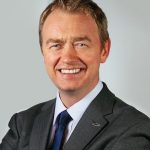
  • Tim Farron – 2022 Speech on Sewage Discharges

    Tim Farron – 2022 Speech on Sewage Discharges

    The speech made by Tim Farron, the Liberal Democrat MP for Westmorland and Lonsdale, in the House of Commons on 19 April 2022.

    I beg to move,

    That leave be given to bring in a Bill to provide for mandatory targets and timescales for the ending of sewage discharges into waterways and coastal areas; to make provision about the powers of Ofwat to monitor and enforce compliance with those targets and timescales; to require water companies to publish quarterly reports on the impact of sewage discharges on the natural environment, animal welfare and human health; to require the membership of water company boards to include at least one representative of an environmental group; and for connected purposes.

    It is such a privilege to be in this place to speak for the people of the lakes and dales of Cumbria. Cumbria is one of the most beautiful places on earth. It is also, on occasion, one of the wettest. It needs to be; how else could we keep the lakes, tarns, meres, waters, rivers and becks filled and flowing? Cumbria is home to two national parks and two world heritage sites, yet its waterways are shamefully often polluted by sewage discharges, and those discharges take place legally and without sanction. Our lakes and rivers are our natural treasures, yet water company bosses are degrading those natural treasures to keep a hold of their own treasure. Last year, the water companies made profits of £2.7 billion and paid out £27 million in bonuses. Their chief executives earn seven-figure sums, yet they are free by law to preside over enormous numbers of dangerous discharges that damage our environment and our wildlife, and are a threat to human life, too.

    This Bill aims to stop the water companies putting their personal treasure ahead of our natural treasure. The Government choose to let them get away with it, but this Bill will stop them. In 2021, raw sewage was pumped into the River Lune near Sedbergh in my constituency for 5,351 hours—the equivalent of 222 continuous days. This is not just a problem for me and my constituents; it is a colossal crisis affecting the entire country. Water companies pumped sewage into rivers nationwide 772,000 times in the last two years—more than 1,000 discharges each day. Some of those discharges lasted almost a whole year, and all of them were legal. Sewage discharges happen far too frequently and for far too long for the Government and the water companies to be able to credibly hide behind the excuse that they are caused only by exceptional rainfall. As a result of these discharges, only 14% of England’s rivers now meet the criteria to be defined as ecologically good.

    It is true that our sewerage systems are shamelessly out of date, but the water companies responsible for improving them have little impetus to do so because the Government are barely holding them to account. The British public pay these companies to not just provide us with clean water, but ensure safe and clean processes for waste water and sewage. Too often, it feels as though the companies forget about half of that bargain, and this Government let them. United Utilities, our local water company in the north-west, was the culprit in four of the 10 longest sewage discharges in 2021—the most of any water company in the country. Meanwhile it posted profits of £602 million and dished out £6 million in bonuses—also the most of any water company in the country. Far from being punished or held accountable for the degradation of our waterways, the water bosses, it appears to the public, are being rewarded for it. Those 772,000 discharges were legal. They happened under the Government’s nose while the rest of us had to hold ours.

    The water companies are also guilty of emissions that have broken the law, but they are rarely held to account. That is, of course, something of a theme for this Government. Between 2018 and 2021, only 11 fines were issued to water companies for pumping sewage into our lakes and rivers. Only three of those fines were over £1 million, and four were less than £50,000. The Government make it cheaper for water companies to pay a fine than to take action to stop the discharges. It is no wonder that the companies do not invest enough in cleaning up our lakes and rivers.

    I can confirm that I left the lakes this morning without a coat, because spring is here. The visitors are with us in Cumbria, and summer is around the corner. The UK’s waterways will soon be teeming with swimmers, dippers and paddlers, nowhere more so than in the English lakes and most of all Windermere, at the heart of the most visited part of the UK outside London. Windermere has three designated bathing sites, all of them ranked as being of good standard. It is currently a safe place to visit, but the Government’s weak regulation is putting that at risk.

    United Utilities legally dumped sewage into Windermere on 71 days in 2020. How can that be considered anything other than outrageous? The Government allow such discharges because they are considered to be storm events. Well, Cumbria has more rainfall in a month than many places have in a year. Things that might strike Ministers in London as storm events are actually mild drizzle for those of us in the lakes. By allowing the water companies to hide behind storm events as an excuse to pollute our lakes and rivers, the Government show their ignorance of communities such as ours in Cumbria and allow the water companies to pollute Britain’s wettest places the worst.

    Tourism and hospitality employs 60,000 people in Cumbria. It is by far our biggest employer, being worth £3.5 billion a year to our local economy. I do not want the Government to put that at risk by allowing our lakes to be polluted. I want them to protect the wellbeing of everyone who visits and lives in the lakes.

    As well as the human impact, there is an ecological impact. Maintaining the quality of our rivers, streams and lakes is crucial to protecting biodiversity for centuries to come. The Environmental Audit Committee has reported that

    “rivers in England are in a mess.”

    The population of 39 of the 42 main salmon rivers in England are categorised as at risk or probably at risk. When one part of the complex interconnected life of a river is damaged, the whole ecosystem is hurt, from duckweed and dragonflies to otters and trout.

    We must not be duped into thinking that the Government took action to deal with this in the Environment Act 2021. We remember they had to be dragged kicking and screaming by Members of the other place into moving an amendment, but that amendment is essentially meaningless. It sets no timescales or targets. It is a wish list, not an action plan.

    This Bill would put that right by ensuring that action is taken. It would provide for mandatory targets and timescales for the ending of sewage discharges into waterways and coastal areas. It would also strengthen Ofwat, the Water Services Regulation Authority, to hold water companies accountable. Furthermore, it would take the radical step of placing representatives of local environmental groups on the board of these companies so that executives have nowhere to hide from the impact of their practices on our waterways, on the wildlife that depends on them and on the economies and communities they underpin.

    The Bill would also help to get to the heart of the problem, not just the headlines, by making sure we get the right information. The Government tell us how long discharges happen and how often they happen, but not the volume of sewage discharged into the watercourses. Without that information, we cannot know the scale of the problem. In small rivers and becks, or in the confined space of a lake, volume has a much bigger and more damaging impact on humans, animals and ecology.

    Both the Government and the water companies hide behind asking inadequate questions, and therefore getting inadequate answers. For instance, the Government’s Environment Agency has to test for nutrients and chemicals in the water, but it does not have to test for bacteria, yet bacteria are the greatest health concern. Unless a watercourse is designated as bathing water, and barely any rivers are designated as bathing water, bacteria is tested for only by concerned citizens such as the marvellous people I recently met on the River Kent in Staveley. Testing for bacteria must become compulsory.

    The River Kent in Cumbria is designated as a site of special scientific interest. Among other things, it hosts protected species such as pearl mussels, which are rarer than the giant panda, yet sewage is being legally discharged into this protected river almost every day.

    The House can see why this Bill matters to my community and the whole United Kingdom. The Bill would require water companies to produce accurate and comprehensive quarterly reports on the impact of sewage discharges on animal welfare, human health and the environment. The public have a right to know what our water companies are being allowed to do. With the cleansing impact of public scrutiny, and the literally cleansing effect of water companies spending their money on upgrades rather than bonuses, hopefully the public will soon see encouraging signs to give them faith in our waterways and renewed faith in our political system that the polluters will actually be held to account for dumping sewage into our lakes and rivers, that they will no longer be permitted to do so, no matter how powerful they may be, and that companies making billions in profit will no longer be protected by a Conservative Government who permitted them to discharge sewage 772,000 times in two years.

    What, then, shall we protect: the inflated profits of water companies, or the safety and beauty of our lakes and rivers? It is time for all of us in this House to take action and to pick a side.

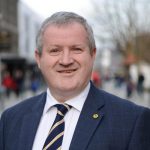
  • Ian Blackford – 2022 Speech on Parties in Downing Street

    Ian Blackford – 2022 Speech on Parties in Downing Street

    The speech made by Ian Blackford, the Leader of SNP at Westminster, in the House of Commons on 19 April 2022.

    Let us remind ourselves that, on 8 December 2021, the Prime Minister denied that any parties happened at No. 10 Downing Street—the very same parties that the police have now fined him for attending. People know by now that the rules of this House prevent me from saying that he deliberately and wilfully misled the House, but maybe today that matters little, because the public have already made up their mind.

    YouGov polling shows that 75% of the British public, and 82% of people in Scotland, have made up their mind on the Prime Minister. The public know the difference between the truth and lying, and they know that the Prime Minister is apologising for one reason, and one reason only, and it is the only reason he ever apologises: because he has been caught. After months of denials, his excuses have finally run out of road, and so must his time in office. The Prime Minister has broken the very laws he wrote. His trying to argue that he did not know that he had broken his own laws would be laughable if it were not so serious. Prime Minister, you cannot hide behind advisers. He knows, we know and the dogs in the street know that the Prime Minister has broken the law. This is the first Prime Minister to be officially found to have broken the law in office—a lawbreaking Prime Minister. Just dwell on that: a Prime Minister who has broken the law and who remains under investigation for additional lawbreaking—not just a lawbreaker but a serial offender. If he has any decency, any dignity, he would not just apologise but resign.

    The scale and the seriousness of the issues we all now face demand effective leadership from a Prime Minister who can be trusted. The Tory cost of living crisis and the war crimes being inflicted on the Ukrainian people need our full focus. In a time of crisis, the very least the public deserve is a Prime Minister they can trust to tell the truth. For this Prime Minister, that trust is broken and can never be fixed. The truth is that a majority of people across these islands will never against trust a single word he says.

    The questions today are not so much for a Prime Minister desperately clinging on to power. The real question is for Tory Back Benchers: will they finally grow a spine and remove this person from office? Or is the Tory strategy about standing behind a Prime Minister whom the public cannot trust with the truth?

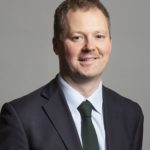
  • Neil O’Brien – 2022 Statement on the UK Shared Prosperity Fund

    Neil O’Brien – 2022 Statement on the UK Shared Prosperity Fund

    The statement made by Neil O’Brien, the Parliamentary Under-Secretary of State for Levelling Up, Housing and Communities, in the House of Commons on 19 April 2022.

    Last week, my Department announced the launch of the £2.6 billion UK Shared Prosperity Fund, publishing a prospectus that sets out the fund’s objectives, priorities and local allocations, as well as how the fund will be delivered. This starts the process of places across the country developing local plans to deliver the fund.

    It represents the culmination of concerted effort and joint working across Government, with the devolved administrations in Scotland, Wales and Northern Ireland, and local partners across the UK. It is a key component on our journey to transform the country, set out in the Levelling Up White Paper, and our central mission to level up and spread opportunity and prosperity to all of our communities.

    We are investing in domestic priorities and targeting funding where it is needed most: building pride in place; supporting high quality skills training; supporting pay, employment and productivity growth; and increasing life chances.

    The UK Shared Prosperity Fund is a marked shift from the EU structural funds it succeeds. Under the EU, organisations had to go through a lengthy application process. Indeed, the process between first application and approval could easily exceed 12 months. The UK employed hundreds of civil servants to facilitate this, with projects only getting paid in arrears. The EU had strict, rigid requirements on what money could and could not be spent on, but our approach is much more flexible, empowering local people who know best.

    In contrast, the UK Shared Prosperity Fund provides a three-year allocation to local authorities, with the goal of approving investment plans within three months. The fund will be much more flexible and locally led, freeing communities from the bureaucratic, rigid and complex processes of the EU structural funds. Bureaucracy will be slashed, and there will be far more discretion over what money is spent on. EU requirements for match funding, which impacted poorer places, will be abolished.

    Instead of regional agencies, funding decisions will be made by elected leaders in local government, with input from local Members of Parliament and local businesses and voluntary groups. The fund will lead to visible, tangible improvements to the places where people work and live, alongside real investment in people’s skills, giving communities up and down the UK more reasons to be proud of their area.

    All areas of the UK are receiving an allocation from the fund, with even the smallest places receiving at least £1 million, recognising that even the most affluent parts of the UK contain pockets of deprivation and need support. Funding will also match in real terms what was previously spent through the European Social Fund and European Regional Development Fund in Scotland, Wales, Northern Ireland and each Local Enterprise Partnership area of England, meeting the UK Government’s commitment to match EU funding. We are ramping up UK Shared Prosperity Fund funding as EU funds tail off, and when that funding ends, the UK Shared Prosperity Fund will match the annual average spending of EU funds, reaching around £1.5 billion per year, which is more generous than the average EU funding budget, which is around £1.3 billion average per year.

    As funding is confirmed for three financial years—2022-23, 2023-24 and 2024-25—this will facilitate places’ planning and allow the UK Shared Prosperity Fund to act as a predictable baseline element of local growth funding. It comes alongside other funding to level up the UK, including the £4.8 billion Levelling Up Fund and £150 million Community Ownership Fund, and builds on the £200 million for UK Community Renewal Fund projects that we announced last year.

    A key part of the fund is Multiply, the adult numeracy programme. With up to £559 million in funding available, this programme will offer local and national support for people to improve their numeracy skills—equipping adults across the UK with the skills they need to progress in life. It is being led by the Department for Education in England and funding will be distributed to the Greater London Authority, all Mayoral Combined Authorities, and upper tier/unitary authorities outside of these areas in England. In Scotland, Wales and Northern Ireland, Multiply will be delivered alongside wider programmes of UK Shared Prosperity Fund activity.

    Further information about the fund and the investment planning process, as well as local allocations, is included in the UK Shared Prosperity Fund Prospectus and the Multiply Prospectus, both of which have now been published.

    The next step is for each place to work with the private sector, civil society and others, as well as the devolved administrations in Scotland, Wales and Northern Ireland, to develop a local investment plan. This should set out how they will target their funding on local priorities, against measurable goals. Once this is in place and agreed with the UK Government, they can unlock three years of investment.

    This new fund is a clear manifestation of our commitment to level up all of the UK. Alongside historic levels of investment confirmed through Spending Review ’21, it will make a significant contribution to overcoming geographic disparities, spreading opportunity and boosting employment, wages and life chances right across England, Scotland, Wales and Northern Ireland.

  • Robert Courts – 2022 Statement on the Portishead Branch Line

    Robert Courts – 2022 Statement on the Portishead Branch Line

    The statement made by Robert Courts, the Parliamentary Under-Secretary of State for Transport, in the House of Commons on 19 April 2022.

    I have been asked by my right hon. Friend the Secretary of State (Grant Shapps) to make this written ministerial statement. This statement concerns the application made by North Somerset District Council under the Planning Act 2008 for the construction of a new railway on the track-bed on the former branch line from Bristol to Portishead.

    Under section 107(1) of the Planning Act 2008, the Secretary of State must make his decision within three months of receipt of the Examining Authority’s report unless exercising the power under section 107(3) to extend the deadline and make a statement to the House of Parliament announcing the new deadline.

    The Secretary of State received the Examining Authority’s report on the Portishead branch line-MetroWest phase 1 development consent order application on 19 July 2021 and, following an earlier extension of four months to allow further consideration of environmental matters, the current deadline for a decision is 19 April 2022.

    The deadline for the decision is now to be extended to 19 February 2023—an extension of seven months—to allow North Somerset District Council further time to demonstrate that funding for the entire scheme has been secured.

    The decision to set the new deadline is without prejudice to the decision on whether to grant or refuse development consent for the above application.