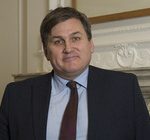
The speech made by Michael Heseltine, the then Secretary of State for Trade and Industry, in the House of Commons on 22 March 1993.
The Budget sets in place one more step in our strategy for industry. When coupled with the autumn statement, it must be seen as a comprehensive response to our industrial needs. First, it provides a sound economic background against which our companies can more effectively enhance their competitiveness. Secondly, it backs our drive on the export markets. Thirdly, it addreses a range of specific measures that industry has raised with us. Fourthly, it recognises the vital role that small and medium-sized firms play in economic vitality.
No Government have done more to create a favourable climate for enterprise and wealth creation. Interest rates have been cut by 9 per cent. As a consequence, industry’s costs have been reduced by £11 billion a year. The Government’s privatisation programme is perhaps one of the most radical changes in the United Kingdom’s economic and industrial structure since 1945.
In 1978–79, the nationalised industries received subsidies of some £2.2 billion in today’s prices. In contrast, in 1990–91, the privatised companies paid £3 billion to the Exchequer. The privatised industries are achieving striking improvements in productivity. British Airways has increased its productivity by more than 20 per cent. The number of customers per employee in respect of British Gas has increased by about 19 per cent. Productivity at British Steel, which is now considered to be one of the world’s most efficient steel producers, has increased dramatically. It now takes only 4.8 man hours to produce a tonne of liquid steel, compared with 13.2 man hours in 1979–80.
Those improvements in productivity have been passed on to consumers as lower prices and rising standards of service. Since privatisation, gas prices have fallen by 18 per cent. for domestic customers and by 40 per cent. for large industrial customers. Those industries are, in many cases, now acting as flagships for Britain in overseas markets.
During the Prime Minister’s visit to India last month, British Gas signed an agreement with the Gas Authority of India enabling both companies to take gas from offshore Bombay and send it through a new distribution network to more than 60,000 offices, factories and homes.
In Argentina, British Gas has won a $300 million contract to replace the Buenos Aires distribution system. The company is working as far afield as Indonesia and Kazakhstan. It is developing the Uisker oil field in Tunisia and converting the German town of Spremberg to natural gas.
Since privatisation, Rolls-Royce——
Mr. David Winnick (Walsall, North)
The Secretary of State has mentioned gas and electricity and there is much confusion in people’s minds outside this place. Will the Government fully compensate pensioners, and particularly those on very low incomes, in respect of the imposition of VAT? Is it not necessary for the Government to be quite clear, before the vote at 10 pm, precisely what is to be done, bearing in mind the tremendous hardship and misery that so many people on low incomes already face when they pay their heating bills during the winter months?
Mr. Heseltine
Of course that is important and that is why the Chancellor of the Exchequer made the position clear in his Budget statement and why my right hon. Friend the Prime Minister built on what the Chancellor had said when he addressed the House last Thursday. I will return to that subject when I reach that part of my speech.
As I was saying, since Rolls-Royce was privatised in 1987, its share of the world civil engine market has risen from 10 per cent. to no less than 22 per cent. Its aero-engine order book has more than doubled and currently stands at £6.7 billion. More than 70 per cent. of its output is exported. Its industrial and marine activities are also world wide. It recently won power supply contracts worth £67 million in India and the subsidiary, NEI Parsons, secured a £100 million contract for turbines in Singapore.
Ten years ago, British cars were hardly seen on the streets of Tokyo. In 1991, Rover exported 10,000 vehicles to Japan. The company produced 395,000 vehicles in 1991, of which about 40 per cent. went overseas, the bulk to other members of the single market.
As I said in the House last week, British Telecom is now one of the world’s foremost telecommunications companies. Last year, it won a £350 million contract to install a network for the New South Wales Government.
Our water companies are making formidable strides in overseas markets. Thames Water is expected to sign a contract for £450 million for a water supply scheme in Izmit in Turkey to build, operate for 15 years and then transfer the scheme to the Turkish Government.
Mr. Andrew Mackinlay (Thurrock)
What about the unemployed in Dock road, Tilbury? What about real people?
Mr. Heseltine
I heard the hon. Gentleman say, “What about real people?” Does the hon. Gentleman believe that real people do not work for those real companies? What sort of real people does the hon. Gentleman have in mind if people who export for Britain and design and manufacture for Britain are not considered by the Labour party to be real people? I suppose that, in the language of the Labour party, the real people are those who disrupt industrial relations, try to undermine Britain and talk the nation down: the real people of the left; yesterday’s real people.
Mr. Dennis Skinner (Bolsover)
Will the right hon. Gentleman give way?
Mr. Heseltine
Here is one of them. One of yesterday’s real people stands before us.
Mr. Skinner
As a matter of fact, I am making inquiries about today’s real people. The Secretary of State knows as well as I do that the mining industry could do with participating in the exports to which he referred. After a 15 to 20 per cent. reduction in the value of the pound, we could be exporting coal and today’s real miners could be taking part in that.
Will the Secretary of State tell us today that the 20 million tonnes of coal imported into Britain will be massively reduced and that he will launch an export drive for coal? If we are exporting all those things to all those parts of the world, why has there been a announcement today of an increase in the balance of payments monthly deficit of £1.3 billion?
Mr. Heseltine
I can help the hon. Gentleman. Yes, we can export coal the day that we produce it at a price which the export market will absorb. If the hon. Gentleman had put his mind years ago to advising his constituents about the productivity gains that we are beginning to see in the mining industry, we might not have these imports of foreign coal. The price that we have paid for the views expressed by the hon. Member for Bolsover (Mr. Skinner) and his right hon. and hon. Friends and their failure to bring home the realities of a competitive marketplace to the miners of this country is now being visited on those very people.
Thames Water, as I said, expects to sign a contract for £450 million. Anglian Water has won a stake in a winning consortium for a Buenos Aires water privatisation project. North West Water, in conjunction with an Australian engineering firm, has signed a contract for 100 million Australian dollars to improve water quality in Melbourne.
That is a remarkable transformation. Not only are those privatised companies no longer loss making, in tax terms, but they are paying large sums of money to the Exchequer. They are now winning for Britain in a way in which, for the past 30 or 40 years, we denied them the opportunity even to try to.
I am not sure whether the hon. Member for Dunfermline, East (Mr. Brown) is in his place at the moment.
Mr. Rhodri Morgan (Cardiff, West)
I am grateful to the right hon. Gentleman for giving way before he goes off on one of those manic, last deckchair attendant on the Titanic performances. Does he not realise that the reason why the water companies are able to make flash investments in places such as Turkey and New South Wales has nothing to do with the technology which they have to offer? It has everything to do with the guaranteed and ludicrously high prices which they are allowed to charge by the over-generous terms on which they were privatised by the Government in 1989. As a result of having that guaranteed income, the companies can spend overseas the capital which they have accumulated from the ordinary water and sewerage users in the United Kingdom. It is capital which we, the taxpayers, have provided. It is nothing to do with the skills of the companies.
Mr. Heseltine
Here we have the revisited Labour party. This is the Labour party which does not want to see real people involved in making real products. We now have a new concept: if a privatised British company goes out and wins in the marketplace of the world, somehow it is doing so because it is taking on loss-making contracts. That is what the hon. Member for Cardiff, West (Mr. Morgan) said. British companies are not winning on their merits. They are winning contracts because, somehow or other, they are being artificially supported in the domestic marketplace.
What sort of message does the hon. Gentleman think that he is sending to countries that are considering taking British tenders? The message has come from the British Labour party that it is a giant fix—that these are not competitive tenders but have all been sorted out on the back of the domestic market by the British Government.
I hope that all those people out there who are selling for Britain are listening to this debate and to the support that they are getting from the Labour party in the House. Labour Members of the revitalised Labour party say that they are backing Britain. They are backing Britain everywhere except when it comes to winning contracts in the overseas marketplace. If the hon. Member for Dunfermline, East (Mr. Brown) were here today——
Mr. George Foulkes (Carrick, Cumnock and Doon Valley)
Get on with it!
Mr. Heseltine
The hon. Gentleman should not worry: I shall get on with it. The hon. Member for Dunfermline, East said: The central questions are how we invest in people for the future, how we invest in industry and how we invest in the social and economic fabric of our country to ensure that we will have not only rising production in industry but rising standards of living.”—[Official Report, 17 March 1993; Vol. 221, c. 296.] That was the great sort of interrogation to which the Chancellor and the Chief Secretary were subjected by the hon. Gentleman.
What is happening to improve the living standards? What are the facts? As a result of the changes which I have been talking about, real spending on the national health service in England has increased by 60 per cent. since 1979. There are 19,000 more doctors and dentists and almost 38,000 more nurses and midwives, and 45 per cent. more acute in-patients and day cases are treated each year.
Dame Elaine Kellett-Bowman (Lancaster)
Real doctors, real nurses, real patients.
Mr. Heseltine
My hon. Friend is right: this is another example of real people doing real things because a Tory Government have made it possible.
The investment programme in the privatised water industry is heading for an additional £30 billion by the end of the century. There has been record public expenditure on roads and the urban programme has been transformed. The essence of the matter is that, while Labour Members continue to talk about these problems, the Tory Government continue to do something about them. There has been much comment about the Chancellor’s commitment to extend VAT to fuel bills. That applies with a rate of 8 per cent. in the year starting 1994 and moves to the full rate in April 1995. The Chancellor made his position clear in his Budget speech. On Thursday, the Prime Minister told the House that there would be extra help for less well-off pensioners and other people on low incomes. They will get the extra help from next April before the higher fuel bills come in. That help will be additional to the future increases in pensions and other benefits which will take place automatically. Cold weather payments will also be adjusted to reflect increases in fuel costs.
I was intrigued to read in The Observer that the Chancellor and I were engaged in a furious row on the subject. Apparently, I was furious that I had not been consulted. Perhaps I may say a word about the matter. I was consulted in an orderly way. I made no protest, for the simplest of all reasons—I shared the Chancellor’s judgment that it was necessary to raise taxes in the Budget.
Of course any tax increases are likely to be difficult, but, frankly, I am not prepared to cop out of the difficult tax decisions on the most contemptible of arguments—that I agree with what the Chancellor is doing in principle, but I disagree with some specific examples of the difficult decisions which he must take. That is the sort of stuff of which Opposition arguments are made. That is the sort of argument which the Labour party relishes. Indeed, it is the sort of argument which keeps Labour Members pinned to the Opposition Benches.
Why did not The Observer take the trouble to check the facts about this great row between me and the Chancellor? It cannot be because it did not know exactly how to get hold of me. That cannot be the case, because I received a telephone call from The Observer on Saturday wanting to take my photograph. The House will be delighted that I turned down that extremely generous offer. If the picture editor of The Observer knows how to find me, is it too much to think that the serried ranks of industrial and political correspondents somehow cannot manage the same trick—or were they frightened that, if they put to me the straight question, they would get the truth and the truth would deny them any sort of headline at all?
I can see that this will be the revisiting of the inglorious past of the hon. Member for Livingston (Mr. Cook). This afternoon he will be in his element. If ever there was a story tailor-made for the hon. Gentleman, this is that story. There are millions of pensioners to frighten and spectres of ill-health and hardship to conjure up. The hon. Gentleman knows the arguments backwards, because, over the years, he has invented most of the arguments backwards. He is the seasoned practitioner on whom all those people out there will wish to make a judgment.
In The Times of 14 December 1987, the hon. Gentleman described the Government’s intentions as to leave the NHS as a ghetto service for those who are too poor to afford anything better”. In The Times of 1 February 1989, he said of GP budget holders: For the first time, GPs will have an incentive to turn away patients with a high price tag, the elderly, the disabled and the chronically sick. In The Independent of 5 October 1990, he spoke of an NHS in which pensioners queue up for their operations in an end-of-season sale”. What happened? All the trusts are still in the public sector, and 1 million more patients are being treated than when the hon. Gentleman was making his statements.. The hon. Gentleman is a man with a record. He has been through it all before. He should be judged by how true it all turned out to be.
I took a little time off last Wednesday to listen to the hon. Member for Dunfermline, East, and I am glad to welcome him to our deliberations today. Some of us had the privilege to watch him. He was at his most ferocious. Psychologically, the red flag was up—I see that it is round his neck today. Red blood was flowing all over the carpets as he ended his speech with these fighting words: There is no one left for this Government to betray; they have no credibility in this country. The electorate will never trust them again. If Britain is to have a new start, it will need a new Government—and that will be a Labour Government.”—[Official Report, 17 March 1993; Vol. 221, c. 298.] Trust a Labour Government! In September 1964, the Leader of the Opposition, Mr. Wilson, said: Over the period of a Parliament I believe that we can carry out our programme without any general increase in taxation. When that Government left office, they were collecting £2 for every £1 collected when their promise was made. In the same election campaign, the late George Brown—[Interruption.] Oh yes. Opposition Members may laugh now. I know that it is a long time ago, but it is a long time since we had a Labour Government. The reason why it is a long time is because the Labour party said these preposterous things and was found out.
The late George Brown said: For new mortgages we have something in mind of the order of 3 per cent. By the time that Government left office, mortgage rates were 8.5 per cent. By the late 1960s we had the then Prime Minister, Lord Wilson, proclaiming on 17 April 1969: The Industrial Relations Bill is an essential Bill, essential to full employment and essential too for the Government’s continuation in office. On 18 June 1969, the Bill was withdrawn from the legislative programme.
For those who are interested in the flights of fancy of the hon. Member for Dunfermline, East about trusting a Labour Government, what about all the bravura claim in October 1964: Labour will abolish poverty in Britain”? Six years later, the Child Poverty Action Group had sadly to conclude: in many ways the plight of poor families is now worse than when the Labour Government took office. Worse it was, worse and always it will be. Trusting the Labour party is not a matter of investing in risk. It is a matter of investing in certainty. All out. All up. All over.
The hon. Member for Bolsover asked a question about coal. I recognise, as will the House, that there has been much speculation in recent days about the coal contracts. Some progress has been made in respect of the base contracts. Work has continued now through several weekends. I hope that I am about to be able to report on the position. I hope that I may be able to do that in the not-too-distant future. However, as I have said many times, I have no powers to make people sign contracts. In the meantime, I have agreed that British Coal can extend the redundancy terms until the end of December this year.
Increases in productivity are often accompanied by falls in employment. We have had to face that problem in the coal industry over many years. But we are familiar with the general trend throughout manufacturing industry. Indeed, manufacturing employment peaked as far back as 1966. That phenomenon is not confined to the United Kingdom. Some decline in employment in manufacturing is evident in most industrial countries.
Increased competition and continuing technical progress mean that many firms will reduce employment to stay competitive. That does not mean that those firms are in difficulties. Far from it. The vehicle industry in the United Kingdom is producing 300,000 more vehicles a year than 10 years ago, but it employs 100,000 fewer people. The paper, printing and publishing industries increased their output by more than a quarter between 1980 and 1991, but employment fell by 12 per cent.
In many industries, successful firms are cutting jobs as they invest for the future to stay ahead of the competition. New firms and new businesses were the key to employment growth in the 1980s and they are undoubtedly the area of the economy to which we must look for new jobs in the future. We have been more successful in job creation than other European Community countries. The work force in employment grew by almost 1.5 million over the last economic cycle, between 1979 and 1990, so it is of critical importance that we recognise that every degree of support that we can give to new companies is most relevant to creating new jobs and new opportunities in our economy.
The next matter of dramatic importance in what we seek to achieve and must achieve is support for our export companies. Our companies know that there is no such thing as a secure market. Overseas firms face the same pressure to win as we do. We are pushing forward with fresh initiatives to help exporters.
Last November the Minister for Trade announced an export strategy to maximise our strengths and minimise our weaknesses. I have invited British companies to second to my Department 100 men and women to help us in the promotion of our exports. I am extremely gratified by the response that I am achieving. I believe that we shall have 100 such people by the summer of this year. That will give us experts with first-hand knowledge of overseas markets who will aim to identify and promote opportunities to help our companies to fulfil their potential.
Mr. John Townend (Bridlington)
I am sure that my right hon. Friend agrees that our exporters are doing a fantastic job, but is not the United Kingdom’s problem the fact that we import too much? Do we not have a cultural problem? A large part of the British buying public still believes that it is smarter or better to buy foreign, even when British goods are competitive and of the right quality.
I give my right hon. Friend an example from my constituency. I represent more pigs than people. We produce the finest pigmeat in the world. British charter bacon is of top quality and is internationally competitive. Yet 50 per cent. of the bacon bought by housewives is from Holland or Denmark. Is not that a national disgrace?
Mr. Heseltine
I understand my hon. Friend’s anxiety. That is why I was delighted to notice the seminar which my right hon. Friends the Prime Minister and the Minister of Agriculture, Fisheries and Food, with leaders in both the retail and producing sectors of the food industry, held recently to address some of those difficult issues. As my hon. Friend says, that part of our economy is particularly important because it represents one of the largest deficits in our balance of trade.
The Budget of my right hon. Friend the Chancellor of the Exchequer will help business build on the achievements of the 1980s. It will promote the economic recovery by providing concrete benefits for business and a stable framework for business decisions. His Budget has successfully combined three aims, at least two of which were widely said to be incompatible before he rose last Tuesday and showed how it could be done. His Budget has avoided damaging the inevitably fragile early stages of recovery; it has achieved a substantial improvement in the public finances into the medium term; and it has done all this while keeping inflation within clearly defined limits. All three aims, and especially the continued control of inflation, are of vital importance to business.
We now hear less than we did two or three years ago about short-termism as a feature of our industrial and commercial life. To a large extent, this is because we have got inflation down, yet I do not doubt for one moment that deep-seated short-term attitudes are prevalent in our affairs; or that this is one important strand in understanding why we as a nation have performed less well than many of our competitors.
Such attitudes have led us to invest less than we might in technology and advanced means of production. They have encouraged growth in companies by acquisition and financial engineering, rather than through organic development and building on products and markets. They have led us to place far too great an emphasis on comparisons of near-term financial results in judging our companies, instead of considering the strength of management and its underlying strategy.
Those attitudes are all of a piece. They reflect much that is cultural, and they can be changed only slowly. But they have one great mechanism of reinforcement—inflation. Inflation is an evil which narrows the focus of attention into the short term. Inflation must be kept low in the years to come if our performance is to be improved. The Budget measures will reduce burdens on business by £1 billion in the year ahead. They will assist small and medium enterprises to do what they do best—create the wealth on which the rest of the country depends.
Ms Liz Lynne (Rochdale)
On that specific point, can the President of the Board of Trade say why the Chancellor did not introduce a statutory requirement to pay interest on late payment of debt? That would have helped small businesses considerably.
Mr. Heseltine
We have no doctrinal view on that measure, but there are many doubts about whether it would have the effect that the hon. Lady suggests. We have discussed the matter. My noble Friend Lady Denton has exercised significant influence on late payment of debts. There has been a substantial improvement in the rate of payment. Not the least reason for that is that the Government have paid their bills in a timely way and encouraged large companies to do the same. My noble Friend has made it clear that she will take up specific cases if they are drawn to her attention.
Mr. Robert Sheldon (Ashton-under-Lyne)
I wish it were true that Government Departments had been settling their bills promptly. The Public Accounts Committee took evidence from the Property Services Agency, which was only paying when it received payment, and I shall shortly be criticising that strongly.
Mr. Heseltine
I fully acknowledge the high position of responsibility that the right hon. Gentleman has in our affairs. If he has examples that my Department should explore, I assure him that we shall do so, as that is an important matter. We have tried to do what we can to speed up payments, but we are aware that a statutory process might not improve matters in the way that people think, and have therefore hesitated to move in that direction.
For the second year running, no business will face a real increase in its rates bill. The package of value added tax measures introduced by the Chancellor will also be welcomed by every small firm. Finance for small businesses—a subject of great concern—will also be given a boost by the changes in premiums and loan size limits, under the small firms loan guarantee scheme. I have no doubt that my right hon. Friend the Chancellor has thrown a challenge to the banks. The Government have taken an initiative and it is now up to the banks to judge business plans and to make their loans in a way that will help businesses to grow.
The changes to capital gains tax will encourage reinvestment by not penalising those who use their profits to start another business.
I have referred to the need to help exporters. We are making available an additional £1.3 billion of cover for key markets. Together with the changes in the autumn statement that will mean that annual cover for United Kingdom exporters in priority markets will have increased by more than 75 per cent. in just four years. Premium rates have also been cut and are now more than 25 per cent. lower than in 1991–92. Those reductions will bring the average level of premiums charged in the United Kingdom down to around the average charged by the United Kingdom’s competitors.
The Chancellor announced a special scheme in the Budget to help persuade foreign-owned companies to choose the United Kingdom as a location for international headquarters companies. The present advance corporation tax rules are an obstacle to their doing so. The new rules, which will be implemented next year, will remove that obstacle, which should attract new business to the United Kingdom, and bolster London’s role as Europe’s premier financial centre.
I know that oil companies have always recognised the responsiveness and stability that our North sea tax regime offers. However, the petroleum revenue tax regime was introduced in 1975, with the last substantial amendment in 1983. In keeping the tax system under review, it was important to keep in mind the fact that the North sea was maturing as an oil province—new fields tend to be smaller, and older fields are gradually declining. The Chancellor has now reduced petroleum revenue tax from 75 to 50 per cent. for existing fields from 1 July 1993, and abolished the tax for future fields given development consent on or after 16 March. The Chancellor’s proposals move the North sea from a high-tax to a low-tax regime.
Conditions for recovery are in place. The United Kingdom has the lowest inflation rate for 25 years; the lowest interest rates since 1977; and the lowest base rates in the European Community. Interest rates have fallen by nine percentage points since autumn 1990, knocking £11 billion a year off industry’s costs.
We have a fiercely competitive exchange rate; a set of Budget measures to boost confidence and stimulate growth; and confidence is rising. The Confederation of British Industry, the chambers of commerce and the Institute of Directors show rising confidence in their surveys. Retail sales are at record levels; car sales are up sharply; manufacturing investment in the fourth quarter of 1992 was up by 5.5 per cent. on the start of the year; the increase in average earnings is the lowest for 25 years and we expect a further decline in the coming months.
Rapid productivity growth means that United Kingdom manufacturing unit wage costs are lower than those in Germany or Japan, on recent OECD estimates, and they have fallen during the past 12 months. However, further pay restraint is vital to maximise the competitive advantages of sterling depreciation. This month’s fall in unemployment is welcome, but too much should not be read into one month’s figures, as the fall might not be immediately sustained and it may be some time before the underlying trend takes a downward turn. Unemployment is likely to be one of the last indicators to respond to any recovery in the economy.
Exports and productivity are at record levels and Britain is moving ahead. British business now has clear advantages in competing in the rest of the world.
Mr. Anthony Steen (South Hams)
While I agree with all that my right hon. Friend is saying, does he agree that the rules and regulations affecting small firms prevent them from competing with other countries on that famous level playing field? Something needs to be done to reduce the number of rules and regulations affecting small firms. Can he tell the House what the deregulation unit is doing about future and existing regulations, which are preventing the recovery that small firms so badly need?
Mr. Heseltine
As my hon. Friend knows, we have started to review proposed regulations and those already on the statute book and are applying the review to domestic and European Community regulations. We have been fortunate in securing the services of Lord Sainsbury and those of various other chairmen and significant figures from the private sector, who have helped us to establish seven task forces, to consider the 7,000 existing regulations, which obviously create the climate in which industry has to operate. I shall report to the House as progress takes place.
Mr. Peter Hain (Neath) rose——
Mr. Heseltine
I shall not give way.
I assure the House that in all those ways the Government will play their full part to help the private sector in difficult circumstances.
As I told the House in a recent debate, we live in a competitive world. As we export such a high proportion of our output, it is impossible to believe that we can operate as an island economy. We are broadly comparable with many economies in the world. During the past year industrial production has fallen by 2 per cent. in Italy, by 2.5 per cent. in France, by 6.5 per cent. in Germany and by 7 per cent. in Japan, but in this country industrial production has risen in that period.
Japanese gross domestic product fell by 0.75 per cent. in the second half of 1992, output fell in France and Italy and there were three successive quarters of decline in Germany. Since 1981—the trough of the last recession—United Kingdom manufacturing output has risen by more than a fifth, manufacturing investment is up by nearly two fifths and manufacturing productivity by two thirds. Our export volumes are at an all-time high and by the end of 1990 there were about 400,000 more businesses operating in this country than in 1979.
The underlying strength of our manufacturing base can also be seen from our ability to attract inward investment. In 1991, we attracted one third of all inward investment into the European Community.
So, as we have said many times, despite the severity and length of the recession, Britain is in a strong position to take advantage of prevailing domestic and world economic circumstances. That can be done only by making this country’s economy competitive, which can be achieved only by the relentless grind on costs and the pursuit of improved quality.
The Opposition are incapable of understanding those arguments, and view the British economy as an island apart from international pressures and the international marketplace. They keep peddling their view of an industrial strategy, which is simple and based on clear but irrelevant ideas: higher taxes to finance higher public expenditure; bigger training budgets; pushing up education standards; helping workers with statutory rights; and embracing the social chapter. They have pursued all those ideas in France, where their income taxes are higher and their education system renowned. They have extensive public ownership and have turned the social chapter into a Domesday book. What has happened under one of Europe’s most substantial socialist Governments? The people living under it are sick to death of what is happening.
The French election result, if replicated in this country, would take a scythe to the parliamentary Labour party. It would be down to a rump of about 10 people; the impregnable Labour strongholds might be all that would be left if we had a Labour socialist Government. What would that Government look like? Perhaps the hon. Member for Merthyr Tydfil and Rhymney (Mr. Rowlands) would be Foreign Secretary; the hon. Member for Rhondda (Mr. Rogers) would be Chancellor of the Exchequer; the hon. Member for Liverpool, Riverside (Mr. Parry) would be Home Secretary; and presumably there would be an early return to the Front Bench for the right hon. Member for Islwyn (Mr. Kinnock) as Secretary of State for Wales. We could count on the fact that the hon. Member for Bolsover would be there clambering on to any convenient barricade, searching for a starring role in “Les Miserables”. What a brilliant piece of casting that would be, but it would be casting in the world of make-believe. The Budget contains real policies for the real world; I commend it to the House.