Tag: Speeches

  • Thangam Debbonaire – 2022 Speech on the Restoration of the Palace of Westminster

    Thangam Debbonaire – 2022 Speech on the Restoration of the Palace of Westminster

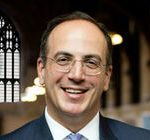
    The speech made by Thangam Debbonaire, the Labour MP for Bristol West, in the House of Commons on 12 July 2022.

    I welcome the opportunity to contribute to this timely debate on how we will govern the essential programme of works needed to preserve the heart of our democracy for years and generations come.

    Only yesterday, the sitting of this House was suspended as water poured in. It is not the first time that business has been disrupted by a potentially unsafe working environment, and while yesterday’s sitting was suspended for only an hour, who knows how long we could be forced out next time? Electrical, plumbing or mechanical failure—there is urgent work to be done, so I am glad that we have the chance to get things moving again today.

    Whether it is the weight of history on one’s shoulders as one walks through the 11th-century Westminster Hall, or the beauty of the sunlight beaming across New Palace Yard through the colonnades, the honour of working on a UNESCO world heritage site comes with a duty to be a responsible custodian. It is an honour to work in the Palace of Westminster, with all its architectural, cultural and historical significance. We also have legal and moral obligations to preserve this listed building, which around the world is a symbol of Britain and our democracy. But those who work here need to be able to carry out the functions of a modern-day Parliament, and those who visit here ought to be able to experience the Palace in all its glory, and they must be able to do so safely.

    Whether they are working or visiting, everyone on the parliamentary estate must not only be but feel safe—safe from falling masonry, safe from asbestos, safe from a catastrophic failure of the building. I share the fears of my hon. Friend the Member for Rhondda (Chris Bryant) that we are heading for that catastrophic failure if we do nothing. I recognise the concerns of right hon. and hon. Friends and Members in all parts of the House that that is where we are heading.

    When I say everyone, I truly mean it. The estate must also be made more accessible to people with disabilities. Not only does the lack of accessibility make visiting the estate difficult, but it disenfranchises a talented group of people from working in Parliament. Restoration and renewal could provide opportunities to improve access and step-free accessibility, as well as visitor facilities.

    I think no one is likely to disagree with anything I have said, which is similar to much of what the Leader of the House said, so Members could be forgiven for wondering why we are here—why we are where we are in the restoration and renewal of the Palace. In 2018, the Commons and the Lords agreed that work was pressing and rightly concluded that it should be undertaken by a statutory sponsor body and delivery authority. Subsequently, as my amendment highlights—it pains me to have to say this, but I do have to and I notified the right hon. Gentleman that I would—the former Leader of the House of Commons, the right hon. Member for North East Somerset (Mr Rees-Mogg), worked to undermine progress and spent time wrangling with experts instead of working with them to secure the future of the building.

    We must follow the evidence and the advice of experts. I did think that the Government could have learnt by now that ignoring experts is just not advisable. I am afraid to say that in my view there is a political dimension. The Leader of the House asked me not to make it a party political matter. I am afraid to say that there is a huge aspect that is. It is on certain members of the Government that we are here. The right hon. Member for North East Somerset just kept changing the goal posts. I have seen that happen. That is typical of the whole Government.

    However, today’s motion, much as I might regret that we are here, is purely about the governance structure of the works. As shadow Leader and therefore member of the House of Commons Commission, I was part of the Joint Commission that took this decision, as the right hon. Gentleman said. I will support the motion. I do so not because I am happy with how we got here—I am very much not—but because it seems to me that we are running out of other options. I do not want to undermine the skill and undoubted dedication of the people involved in the Sponsor Body, but for whatever reason—there is a range of reasons—confidence had been lost over emerging costs and so on. The Independent Expert Panel reviewed the situation and has concluded that the current model is unlikely to be viable.

    Mark Tami (Alyn and Deeside) (Lab)

    My hon. Friend talks about costs and we have heard about spiralling costs. The Sponsor Body has been honest about what the costs are. One of the biggest problems in this place is that we come up with figures—the Queen Elizabeth Tower being a classic example—that are totally unrealistic. We have to be honest that this project will cost a lot of money.

    Thangam Debbonaire

    My right hon. Friend is exactly right. We do not have to be expert builders to see that this is going to cost money and it is going to take time. I see no alternative to both Houses having to move out for a period of time, as yet undetermined.

    I also say in response to my right hon. Friend that this shows the critical role of the Commons Finance Committee, the Parliamentary Works Estimates Commission, chaired so ably by my right hon. Friend the Member for Newcastle upon Tyne East (Mr Brown), and the Public Accounts Committee, which has done such excellent work. Members of the PAC are here today and are very knowledgeable and skilled at exactly that sort of line by line scrutiny. We would need that whoever was commissioning the works—whether it was the Sponsor Body, and both Committees have paid close attention to the current structure, or any future structure.

    Karin Smyth (Bristol South) (Lab)

    In 2015, I was a member of the Public Accounts Committee, ably chaired by my hon. Friend the Member for Hackney South and Shoreditch (Dame Meg Hillier). On that basis, I went to see the works and the operations of this building. It is still remarkable to me that we keep the entire thing going. My hon. Friend, the shadow Leader of the House, mentioned people who work here and their expertise. Is she confident that account has been taken of their judgment about the way they can continue to operate the building while this procrastination goes on and that we can support them in the difficult work that they do?

    Thangam Debbonaire

    I thank my hon. Friend for that question. She is right to raise it and to pay tribute to the work of the Public Accounts Committee. Am I confident? I am not currently confident or certain of where we are at the moment in terms of delivering anything in the way that we wanted to, but I am confident that we need to do it. Having spoken to the Delivery Authority, I am confident that it views this as doable, and it is the authority that will be carrying out the work. Having reviewed the situation, the Independent Expert Panel noted:

    “in principle the existing governance model could be made to work, but that lost confidence and momentum means that retaining the current model is unlikely to work.”

    What it has also said, which might speak to my hon. Friend’s question, is that the recommendation of bringing the Sponsor Body function in-house should be viewed as a pragmatic measure to cover what is needed for the next 12 to 24 months—the decision phase if you like. It has also recommended that that pragmatism should not preclude alternative future options. We need to see this as part of a process to get us to the decision. Regrettable though it may be, and I do regret it, that we are where we are, this appears to be a compromise way of moving forward, with best value for money, safety and time.

    Dame Meg Hillier

    I thank my hon. Friend for her comments about the Public Accounts Committee. To be clear, the role of that Committee is no substitute for the role of a proper sponsor or client function that keeps a close eye on the cost on a day-to-day basis. We look at things retrospectively, although we may make recommendations. Nor are we, as the Public Accounts Committee, expert enough to deliver this process. She talks about our report. Our report said that we regretted that decisions were made secretively and in private on a decision that was before the House and an Act of Parliament of this House. Does she have any comment about how we got from that Act of Parliament to where we are today?

    Thangam Debbonaire

    I completely support what my hon. Friend says. Why are we here? I have already mentioned my own view on why we are here, at least partly. We need to note here that the Sponsor Body was repeatedly asked, as if we had had a referendum—goodness me—and asked people to keep voting on it until they came up with the answer that was wanted. It is very difficult to avoid looking at some of what has happened over the past couple of years and coming to the conclusion that there were people who were just going to keep asking until they got a different answer and, eventually, when they got a different answer, they said, “I don’t like that answer.”

    That is problematic. My hon. Friend is absolutely right that it is not the duty of the Public Accounts Committee to scrutinise the day-to-day spending of this body, whether it is in-house or external. It will need a very strong programme board, which will need expertise. There will also have to be extremely tight accounting measures.

    I do not yet know exactly who will be on the programme board. I urge all those right hon. and hon. Members who have not just an interest—interest alone is not enough—but actual skill in this area, and ideally some of those who have history, having sat on so many Committees, as my right hon. Friend the Member for Alyn and Deeside (Mark Tami) and the hon. Member for The Cotswolds (Sir Geoffrey Clifton-Brown) have, to consider whether they should be part of the programme board. I certainly urge them to think about it.

    Doing nothing is not an option. There is no doubt that large-scale work is needed. Asbestos, leaks, wires, plumbing nobody knows the function of, a building at risk of fire and flood—my hon. Friend the Member for Hackney South and Shoreditch (Dame Meg Hillier) is quite right that the fire remediation works mean that we are protected, but the building is not—this work has to happen. It is testament to the hard-working House staff and to contractors that we thankfully have not yet witnessed a catastrophic failure of the building, as has been seen in others around the world, but at some stage that hard work will not be enough.

    I want that on record. We must make sure that we are not the Parliament that delayed, at the cost of this magnificent building with its magnificent history. The parliamentary estate is in desperate need, and it is important that the restoration and renewal process works well with Parliament’s maintenance teams, who do such a good job. We have therefore no choice but to find a way out.

    I note the amendment in the name of my hon. Friends the Members for Rhondda and for Hackney South and Shoreditch and other right hon. and hon. Members, who are incredibly knowledgeable. I agree with their desire for urgency and that everything must be done to avoid unnecessary delay, cost and risk. I particularly pay further tribute to my hon. Friend the Member for Hackney South and Shoreditch for the work she has done on the Public Accounts Committee. I reiterate that in its recent report, the Committee encouraged further scrutiny. Value for taxpayers is important.

    Before I close, I also recognise my right hon. Friend the Member for Newcastle upon Tyne East, who in his role as Chair of the Finance Committee and the Parliamentary Works Estimates Commission has been invaluable, and my right hon. Friend the Member for Alyn and Deeside. Many hon. Members have sat on the Committees for many years, but I do believe he may be the only one to have sat on pretty much all of them for a significant amount of time. His incredible wealth of knowledge seems to me to be unmatched.

    However, having made my points, I will not test the House’s patience by pushing the amendment in my name to a vote. I will end by saying that we are the generation who have been given the honour, the privilege and, yes, we could say the burden of sorting this problem out. I think it is an honour and a privilege. Some of us will not see the end of it—either we will be no more, or we will be no more Members of Parliament. That is just where we are. We are the generation who decided to put it off no longer. We must go on record as having done everything we can to get the process moving, to preserve and enhance the Palace of Westminster so that it can go on as a safe, thriving and accessible workplace for many, many more centuries to come.

  • Mark Spencer – 2022 Statement on the Restoration of the Palace of Westminster

    Mark Spencer – 2022 Statement on the Restoration of the Palace of Westminster

    The statement made by Mark Spencer, the Leader of the House of Commons, in the House on 12 July 2022.

    I beg to move,

    That this House:

    reaffirms its commitment to preserving the Palace of Westminster for future generations and ensuring the safety of all those who work in and visit the Palace, now and in the future;

    notwithstanding the Resolution of 31 January 2018, welcomes the report from the House of Commons and House of Lords Commissions proposing a new mandate for the Restoration and Renewal works and a new governance structure to support them;

    accordingly endorses the recommendations set out in the Commissions’ report; and

    in consequence, approves the establishment of a joint department of the two Houses, under the terms of the Parliament (Joint Departments) Act 2007.

    May I say at the outset what an honour it is to stand here, in this historic and iconic Chamber, which is recognised around the world. We are truly privileged to represent our constituents here. However, we also have a responsibility to ensure that it is here for future generations, and a responsibility for its upkeep and preservation. We take those responsibilities very seriously. So today, on behalf of the House of Commons Commission, I am asking the House to endorse the report from the House of Commons and House of Lords Commissions—which was unanimously agreed on a cross-party basis—recommending a revised mandate for the Restoration and Renewal programme, and to approve the motion before the House.

    The building needs to be repaired; that is not in question. The Commissions are united in recognising that, and we reaffirm our commitment to protecting this historic palace for future generations. The Commissions have worked constructively and across party lines to address Parliament’s shared challenge, and I therefore welcome the signature of the spokesman for the House of Commons Commission, my hon. Friend the Member for Broxbourne (Sir Charles Walker), on the motion.

    In that context, the amendment proposed by the shadow Leader of the House, the hon. Member for Bristol West (Thangam Debbonaire), is somewhat disappointing, and contrary to the spirit in which work has proceeded so far. I think that the hon. Lady and I have a constructive working relationship, and I hope that we can get back on an even keel and find a way through this. We certainly agree that the need for the work is urgent, that delay in starting it will increase the costs and risks, and that it should be started as soon as possible to—in the words of the Joint Commission—

    “ensure the maximum value for money”.

    There is definitely no blank cheque available from the taxpayer.

    The hon. Lady’s amendment does not really add anything to the report of the Joint Commission; rather, it is at odds with the consensual and productive cross-party approach taken by the Joint Commissions of both Houses. Rebuilding the Palace of Westminster is a huge task and it will require all parliamentarians to take difficult decisions and both Houses to be in agreement. If we are divided or deliberately partisan, our tasks will become near impossible. I hope the hon. Lady will reflect and withdraw her amendment, but I look forward to hearing her words when she gets to her feet. I hope we can work constructively together in the near future to deliver the project.

    Nevertheless, the question will no doubt arise: why are we here again? Surely the debates of 2019 finished the issue and we should not be back revisiting it. In fact, we are at a crossroads where decisions are required in a radically different context. In 2018, decisions on the structure of the programme were made at a time when estimates were in the region of £3.5 billion, with a programme to decant for approximately six years. This was the context in which the two Houses agreed the current approach. But in early 2022, the Sponsor Body published its essential schemes options. It estimated the cost to be between £7 billion and £13 billion and that the work would take between 19 and 28 years and require a full decant of the Palace of Westminster for between 12 and 20 years. Those are certainly very different from the figures with which we were presented in the past. The Sponsor Body also concluded that work would probably not begin until 2027 at the very earliest.

    This is a very different proposition. A gap has emerged between what is realistic, practical and can be justified to taxpayers, and what is being proposed by the Sponsor Body. These estimates make it difficult to proceed down this path only two years after the pandemic and facing a challenging fiscal context. In 2019 it was thought that an independent body was best placed to act on behalf of Parliament and guide this project, but we must now recognise the flaws in that model. As the independent panel says, the governance structure envisaged in the Parliamentary Buildings (Restoration and Renewal) Act 2019 was based on certainty: a project flows through a standard business case cycle with clear progress, “unimpeded by the Client”. But Parliament presents a particularly complex environment, and this is a programme spanning multiple Parliaments, so the governance structure must, in the words of the panel, be able to

    “anticipate and adapt to changing demands”.

    Chris Bryant (Rhondda) (Lab)

    The right hon. Gentleman knows that I am very critical of what the Commissions have done in this regard because I have a terrible fear that if we just keep on changing the governance structure time after time, we will never move forward until there is some catastrophe in the building. That is precisely what happened in the 19th century, and it looks as if we are going to do it all over again, with politicians meddling in something that should be done for generations. Can he confirm, however, that his motion today will not be contradictory to a full decant of both Houses across eight years, which I know is his personal preference?

    Mark Spencer

    I am happy to confirm that to the hon. Gentleman, who I know has taken a great interest in this project. It is important to be clear with the House today that taking the Sponsor Body back in-house and back under the control of the House does not rule out any option. It does not rule out the option of a decant of 20 years. What I am saying to the House is that I do not think that that is a deliverable option. We need to look at some more practical measures, and I will come to that later in my speech. It is difficult to comprehend how we can deliver a project of this magnitude without some form of decant, but I am not an expert and, as the hon. Gentleman says, lots of Members are not experts in this field, so we need the delivery authority, which will have that expertise, to guide us and to come to those decisions very quickly.

    Dame Meg Hillier (Hackney South and Shoreditch) (Lab/Co-op)

    The Leader of the House has acknowledged that he is not an expert, and that most of us in this House are not experts on running major projects. The original intention of the Act of Parliament passed by this House, which has been unpicked in private in the Commissions, was that an expert body, the Sponsor Body, would be created to deliver that expertise. That body has now been abolished. He says that it has been brought in-house, but many people have left it. Can he be very precise with the House about exactly what will replace it, and where he thinks that expertise will come from in the Commissions, which in both Houses do not have the inbuilt expertise to deliver this project?

    Mark Spencer

    I will come to that, but the hon. Lady is absolutely right. What we need to do is get on with this project and stop dilly-dallying, which is why the direction of travel was not as rapid as the Commissions and I wanted. We were heading for a huge confrontation with this House, because I do not think the plans would have been palatable to Members when we finally got there. There is a shortcut we can take to expedite this process, and I will come to the structure later. I think we can get to a place where we can all agree to tap into the expertise she says we need, and that is what we are trying to establish.

    John Redwood (Wokingham) (Con)

    Do we not also need some common sense and realism? Surely the priority is to do those works that are essential to the safety of the building and its occupants. We have to understand the mood of the times and say to the experts that to allow this enormous escalation in the project’s cost, scope and timing is simply not acceptable.

    Mark Spencer

    I honestly think we can do both. I think we can get to an understanding and a place where, with expert advice, we can get value for taxpayers’ money, where we can progress this as rapidly as possible and where we can take a more common-sense approach.

    The Commissions have taken all these points on board, carefully assessed the options and sought independent advice on the best way forward. The Commissions, with cross-party representation and independent and external members, have taken a unanimous decision that it is necessary to revise the approach to the governance and mandate of the R&R programme.

    We need a governance structure that is responsive to the requirements of the parliamentary context, is accountable to Parliament and is better placed to build the necessary consensus. The Commissions have judged that this can be best achieved through an in-house structure. The Parliamentary Buildings (Restoration and Renewal) Act will remain in place and will continue to provide the statutory underpinning.

    The current Sponsor Body will be abolished, and its functions under the Act will be transferred to two corporate officers who will become the statutory duty holders. The Act provides for this flexibility by allowing for the Sponsor Body to be abolished and for its functions to be transferred. The proposed in-house governance structure will consist of two tiers: a client board on which the two Commissions have strategic oversight; and a programme board with external expertise that will be central to resolving critical choices and priorities.

    Chris Grayling (Epsom and Ewell) (Con)

    One of the reasons why those of us who sat on the Joint Committee seven years ago—it is sad that so much time has gone by—did not look to do this in-house was that we judged that the expertise did not exist in-house. Although there are some fantastic people working here, I am afraid the House does not have a great track record of delivering projects cost-effectively. Why does my right hon. Friend think this will now somehow change?

    Mark Spencer

    That is a little disingenuous. The cast-iron roof project, for example, was delivered in-house and was delivered on time and on budget, which demonstrates that the House authorities do have that ability, but I think they would also recognise that they do not have the expertise, which is why it will be brought in. The programme board will be the structure that has experts who are able to advise and come forward with proposals.

    Sir Geoffrey Clifton-Brown (The Cotswolds) (Con)

    Following on from my right hon. Friend the Member for Epsom and Ewell (Chris Grayling), it is certainly a fact that the people who will be in the joint department have signed off projects in this House such as the Elizabeth Tower, which has trebled in cost. Can the Leader of the House give the House an absolute guarantee that the expert panel will be in place throughout the project and that the joint department will actually take its advice?

    Mark Spencer

    That would require this House to change that model again if that were the case. That expertise will be brought in and accessed, which is what we require; we do require that expertise. My hon. Friend said that he did not think there was a huge track record, but the model on which we were operating was driving us towards a huge cliff edge where we were going to be faced with a bill of the top side of £20 billion and a decant of 20-plus years, which I do not think this House would tolerate or vote for. We would be completely hamstrung. In that circumstance, what I am suggesting, as are the two Commissions, is that in this model we can come forward with some more practical measures and reprioritisation, which I will come to in a moment.

    The relatively small staff team of the Sponsor Body will be brought in-house as a Joint Department, accountable to the Corporate Officers, delivering the strategic case and working in tandem with Strategic Estates. Let me emphasise that the Delivery Authority’s role will remain unchanged; that valuable expertise and experience will remain in place. The senior leadership of the Delivery Authority will continue and, following recent discussions, I am confident and positive about their ability to work within the new governance structure.

    Kirsty Blackman (Aberdeen North) (SNP)

    On the staff team and the Sponsor Body, will the Leader of the House give a commitment that all of the staff team will be brought in-house and that that will be done speedily so that they do not find themselves in the limbo they are currently in?

    Mark Spencer

    They are currently planned to TUPE across, and they will be taken across. Some of them have already left, but it is important to understand that the real expertise is within the Delivery Authority. We have secured the use of those individuals and they are busy on other projects within the House.

    There is a need, highlighted in the Public Accounts Committee’s report—one that the Commissions absolutely recognise and have sought to address in their report—for the programme to enable long-term decision making. The Commissions’ report recommends that an end-state vision should be developed. Having a clear end goal in sight allows granular decisions to follow, and Parliament will have to accept compromises and take some difficult decisions in setting that long-term direction. But we cannot anticipate all the needs or events of the future. Opportunities for periodic review allow the programme to adapt to changing fiscal, societal and political contexts. Neither can we override parliamentary sovereignty. It is just realistic to recognise that there must be opportunities for future Parliaments to review decisions.

    The House is further being asked to endorse a revised approach to the works, one that puts safety first. Parliament must be guided by rigorous value-for-money considerations. In these economic times, financial responsibility must be our watchword. As I said earlier, there is no blank cheque from the taxpayer.

    Chris Bryant

    May I try again?

    Mark Spencer

    Of course.

    Chris Bryant

    The Leader of the House keeps talking about how every Parliament has to be able to reform and change the system, but that is just like procurement in the Ministry of Defence; we just keep changing the specification of the tank and it gets more and more expensive, because we never move forward. That is the real danger that a lot of us are worrying about, which is why we wanted to have an arm’s-length organisation. The membership of the Commissions does not even stay the same. I am guessing it might change when he is no longer Leader of the House, perhaps on 6 September. All these changes just make it impossible for us to drive forward a project in a cost-effective and non-risky way.

    Mark Spencer

    The hon. Gentleman is wrong, in that we are changing the structures but he has to recognise that if this project is to take 25 years to deliver to its final conclusion, it is entirely possible that the circumstances in 25 years’ time will not be the same as they are today. It is clearly possible to imagine a circumstance, in fairly recent times, where the internet did not exist, and clearly that technology was not considered when we were adapting and changing the House—that has had to be built in. I do not know, as I do not have a crystal ball, what technology may be required in the future. We need to have the flexibility of foot to be able to accommodate any of those future changes.

    Sir Bill Wiggin (North Herefordshire) (Con)

    Is it not the case that this project may never end, because as things go on breaking and evolving, we will be doing this forever. Therefore my right hon. Friend is right to take it in-house, and to keep the bills low, because my constituents want the potholes in their roads repaired and they want a hospital. They are very happy with this but they are not as bothered about this place as they are about their own? So is not this just going to be an endless process, which we need to manage on an ongoing basis?

    Mark Spencer

    Where my hon. Friend is right is that it is a little bit like the Forth Bridge, in that there will always be something that will need to be maintained, protected or made safe. In the short term, we need to prioritise those things. There are four areas that the Commissions want to prioritise; I hope the House will agree that they are all very important priorities. No. 1 is fire and safety; that is absolutely fundamental to what we should be driving towards. Building services are second, then asbestos, and then building fabric conservation. I hope Members will agree that those are indeed urgent priorities for us to focus on.

    Dame Meg Hillier

    On the point of fire safety, could the Leader of the House confirm that the tens of millions of pounds—£140 million or so—that has been spent on the fire safety system to date protects those of us who may be working or in the building at the time, so that we could escape; but it does not protect the building? Would he also confirm that he is aware of, and understands, the responsibilities that UNESCO places on the Government of the day to make sure that this world heritage site does survive?

    Mark Spencer

    Of course; it is absolutely vital. I hope that the hon. Lady will recognise that actually Notre Dame burned down—a terrible disaster—because workmen were in there. They had actually decanted, and it was the workmen who were working in there that finally burnt down Notre Dame. So we do have a responsibility to make sure not only that people are safe, but that the building is here for hundreds of years to come. I think we can achieve that by making those our four most important priorities.

    For the medium and long term, the Commissions’ report sets out the parameters of how to deliver the works, above all advocating better integration of all the various safety, repair and renewal works that are taking place across the palace. That approach could allow decisions to be brought to Parliament quicker, work to start faster, and priorities to be flexed where required.

    Turning to the next steps, the motion before the House is to endorse the recommendations of the Joint Commission and agree the change to the response function and the revised mandate to the works. Secondary legislation will be required to give effect to some of these decisions. So over the next year options will be reviewed, and a strategic case will be presented to the House in 2023. It is important for Members to understand that the House is not being asked for a decision on decant or costs today. Members will be consulted, and will have opportunities to engage with the decision making, and the House will need to take future decisions on these issues at a later date. In the meantime, the Commissions have endorsed a pragmatic approach that will allow work to be undertaken in the interim.

    Sir Geoffrey Clifton-Brown

    This is a critically important point. The Leader of the House has said that an outline business case will be presented, with options, in 2023. Following that, can he tell the House when a contract to start the work is likely to take place—that it is likely to take place in this Parliament? That would make it less likely that a following Parliament would alter the decision?

    Mark Spencer

    That clearly would be the ambition—to try and get on with that as soon as possible, but there is lots of other work that we can get on with in the meantime. For example, there is a plan to renovate the Victoria Tower at the other end of this building. That was going to be left until the restoration and renewal project was fully under way, but under this model we shall be able to get on with that much more quickly, and make sure that that masonry is secure and in place for future generations.

    Let me turn to amendment (b) tabled by the hon. Member for Rhondda (Chris Bryant) and others. To be clear, the House is not being asked for a decision on decant today: the extent to which the House should move is ultimately for Members to consider. The report does not make a recommendation on length, the moves or location, nor does anything in the motion or Commissions’ report predetermine any outcome. So we may well end up in the place advocated in amendment (b). However, I am asking the House today not to bind the hands of those who are looking at this—to give them a free hand to go and consider these things in a timely way and to come back with a very firm and clear plan.

    The intrusive surveys, which are nearing completion, will offer us a clearer view of the condition of the House. The proposed amendment would further tie our hands and require us to make a decision on the basis of incomplete information and evidence. Let us allow the Delivery Authority to do its job and complete the intrusive survey, then take the decision on decant informed by the evidence in 2023, as originally planned. In my view, the state of the building is such that a period of decant will be required, but unlike some hon. Members, I do not wish to pre-emptively decide on a timeframe.

    Many Members will agree with the spirit of this amendment. The Commissioners present will hear what Members say during the debate, and I hope their views will be taken on board as we move forward. I urge my right hon. and hon. Friends not to press the amendment. This is not the time to commit the House or to bind the Commissions’ hands. I hope that we can join together and move forward. The Commissions have unanimously agreed to propose a new way forward, one that allows us to balance our requirements of a working legislature and our responsibility to take decisions appropriate to the economic context in which we find ourselves today. I bring this motion to the House on behalf of the Commissions.

  • Ian Byrne – 2022 Speech on Employment Agencies and Trade Unions

    Ian Byrne – 2022 Speech on Employment Agencies and Trade Unions

    The speech made by Ian Byrne, the Labour MP for West Derby, in the House of Commons on 11 July 2022.

    I would like to put on record that I am proud member of Unite the union and the GMB. I start by paying tribute to all those in Liverpool, West Derby and indeed across the country who are facing real-terms cuts to their pay, attacks on their conditions and security of work, attacks on their pensions, redundancy and attacks on health and safety in the workplace, and are having to take industrial action as their absolute last resort. I stand in absolute solidarity with them.

    While the workers worry about their families and their families worry about their futures, as they are forced to leave the industry they have dedicated their whole lives to and are forced into poverty and using food banks, we have the disgraceful spectacle of a morally bankrupt Government using this Parliament to attack fundamental workers’ rights—and this is in the middle of a cost of living crisis, when workers are fighting against real-terms cuts to a wage so that they can actually put a meal on the table.

    Mick Whitley (Birkenhead) (Lab)

    My hon. Friend is making a fantastic speech. Does he not think that to be a working person in Britain today, to have lived through a decade of stagnating wages, to have seen their pay collapse in real terms while prices soar and to know their own Government refuse to lift a finger forces people on low pay to take strike action to try to force—

    Madam Deputy Speaker (Dame Eleanor Laing)

    Order.

    Ian Byrne

    Absolutely. I agree with everything my hon. Friend said.

    This is a Government who furiously defend the class interests of those they represent in this place, and that is never the working class. The Trades Union Congress has pointed out that the action is a violation of trade union members’ right to strike, which is safeguarded by international law. Make no mistake, this is a risk to public safety, and standards will be lowered. Any consequences of these actions will lie at the foot of this Government.

    The Government’s cynical regulations that we are debating tonight put agency workers, who they know have limited rights, in the position of having to turn down an assignment with the prospect that they will be denied future work by the agency if they do not want to cross a picket line. Many agency workers, such as supply teachers and bank nurses, will be trade union members themselves, and they have suffered terribly in this pandemic.

    The regulations highlight the insecurity of the labour market, the erosion of workers’ rights and how flawed and immoral it all is. The pandemic shone a light on this immorality when workers with covid had to continue working because they had no sick pay. The employment model is broken for millions. We should be legislating and learning lessons from covid, and enhancing worker protections, including sick pay. Instead, tonight we are voting on a scab charter for bad employers from a Government who have picked their side.

    Trade unions are the transformational vehicle for positive change—they have been for centuries and, despite the efforts of this wretched Government, will continue to be so for future generations. I will always be proud to stand shoulder to shoulder with them supporting workers in the struggle who refuse to be poor.

    Tonight is yet another sad day for democracy in this place. I stand in absolute solidarity with all those trade unions and trade union members who are fighting so hard for our communities and the rights of workers everywhere. Their fight for economic and social justice has never been needed more.

  • Barry Gardiner – 2022 Speech on Employment Agencies and Trade Unions

    Barry Gardiner – 2022 Speech on Employment Agencies and Trade Unions

    The speech made by Barry Gardiner, the Labour MP for Brent North, in the House of Commons on 11 July 2022.

    The Government seem to think that most workers are unskilled or uncertified, but agency workers are simply not there with the relevant skills and certification to perform their work in a way that is safe. I began today at the St Monica Trust, at two sites just outside Bristol, to speak to workers there who have withdrawn their labour because of the appalling offer they have been given of being fired and rehired unless they accept lower wages and terms and conditions. They were earning, on average, between £16,000 and £17,000 a year—about what a Secretary of State’s severance pay is—and they made it clear to me that their main worry and their main reason for going on strike was not actually for their own sake. They were concerned for the welfare of the residents of the residential homes and the retirement village.

    I want to ask the Minister tonight whether she will please report the St Monica Trust to the Health and Safety Executive and ensure that a positive inspection is carried out there, because the workers out on the picket line were very concerned about the safety of employing unskilled workers who do not understand the residents and are not able to care for them in the way that they have all the way through covid. They were there on Christmas day and all the time when relatives could not visit; they treated them as their family. The agency workers cannot do that.

    I want to make a couple of other brief points. Agency workers are generally paid significantly more than permanent staff, and that reflects the intermittent nature of their work. However, the employer, by paying agency rates to strike breakers in a dispute, actually makes the union’s case for it, because it shows that the employer actually can pay higher rates for the job. How very foolish of them.

    Finally, I want to ask whether the Minister might, in her summing up, explain whether the Secretary of State for Business, Energy and Industrial Strategy has replied to the letter written at the end of June by Hays, Adecco, Randstad and Manpower, in conjunction with the TUC, in which they said:

    “We can only see these proposals inflaming strikes—not ending them”.

    It seems to me that, when we have the employers of the agencies themselves saying that this is a bad thing to do, the Government should listen.

  • Beth Winter – 2022 Speech on Employment Agencies and Trade Unions

    Beth Winter – 2022 Speech on Employment Agencies and Trade Unions

    The speech made by Beth Winter, the Labour MP for Cynon Valley, in the House of Commons on 11 July 2022.

    I am not going to waste any of my time responding to the appalling and abhorrent comments by the hon. Member for Stoke-on-Trent North (Jonathan Gullis), which were also completely inaccurate and insulting.

    I want to put on record my opposition to the regulations, and there are three main reasons. First, it is a flagrant attack on employment rights and a purposeful attempt to inflame industrial relations. The Government are only pursuing these measures to continue to impose their decade-long low pay agenda, holding down the pay of key workers below inflation. It is the Government’s low pay approach that is generating industrial action, and this is a draconian attempt to force people into poverty.

    Mary Kelly Foy (City of Durham) (Lab)

    Does my hon. Friend agree that the easiest and best way to stop strike action is to give workers decent pay and good, decent terms and conditions?

    Beth Winter

    I totally agree. That is what we do in Wales.

    These measures are unsafe, putting workers and the public at risk. They have been rejected by the Trades Union Congress and the Recruitment and Employment Federation, which said:

    “Bringing in less qualified agency staff to deliver important services will endanger public safety”.

    I oppose the first of these instruments, in particular, because, as the hon. Member for Arfon (Hywel Williams) said, it conflicts with Welsh Government legislation—the Trade Union (Wales) Act 2017, passed in the Senedd. This Government have made it clear that they intend to legislate to remove that Act through primary legislation when parliamentary time allows. The First Minister of Wales has made it clear that the proposal by the UK Government to revoke the Act is unacceptable. He has said that it is “deeply disrespectful”—

    “Not a word in advance, not a letter to say that this is what they intended to do”.

    It is hard to believe that any UK Government with a grain of principle and care for the Union could behave in such a cavalier manner. If anyone is going to be responsible for the break-up of the Union, it is this Tory Government by riding roughshod over the devolution settlement. The general secretary of Wales TUC, Shav Taj, has said:

    “We will fiercely oppose any attempt to attack workers’ rights and we look forward to a future where workers throughout the UK have the strongest employment rights in Europe, instead of the weakest”,

    as it currently stands. This is the act of an out-of-touch Government unaware of their own unpopularity.

    We also have to remember why this proposal has come about now. The Government are in a confrontation —they are actually stoking confrontation—with key workers who do not wish to have yet another of this Government’s annual real-terms pay cuts. In the RMT they have found a trade union that is willing to challenge them, and it has my full support, as do all the other unions that are being forced—forced—to consider industrial action, which is always a last resort.

    In Wales, the Welsh Government are not in conflict with the RMT. In fact, no industrial action is being taken on Transport for Wales trains, which are publicly owned. The UK Government could have followed suit and taken Network Rail into public ownership, as happened in Wales during the pandemic. The UK Government have so much to learn from the Welsh Government, where a different approach is being taken. The Welsh Government’s approach includes passing legislation to work with trade unions in partnership—the Public Procurement and Social Partnership (Wales) Bill. That is the model that we need to see. The Government are giving a role in statute to businesses and trade unions, and employers and employees, in developing and supporting an atmosphere of co-operation and partnership instead of risk, division and confrontation.

    What discussions has the Minister had with the First Minister and Counsel General in Wales on this matter? What discussions has he had with the TUC and trade unions in Wales? What do employer bodies in Wales, or in the rest of the UK, think about his proposals? What consultation has happened with them? What is the view of the new Welsh Secretary on these proposals? I am disappointed that he has not already committed to pausing any progress on overriding the Welsh Government and Welsh legislation while we have a caretaker Government. Is it the Government’s intention to bring forward primary legislation to revoke the Trade Union (Wales) Act 2017, and if so, when will it happen?

    This is a Government doubling down on their cost of living crisis. People will not accept it and we will fight back.

  • Jonathan Gullis – 2022 Speech on Employment Agencies and Trade Unions

    Jonathan Gullis – 2022 Speech on Employment Agencies and Trade Unions

    The speech made by Jonathan Gullis, the Conservative MP for Stoke-on-Trent North, in the House of Commons on 11 July 2022.

    The hon. Member for Glasgow South West (Chris Stephens) talked about my alleged withdrawal of labour last week. The only withdrawal of labour that the people of Stoke-on-Trent North, Kidsgrove and Talke are seeing is 70 years of failed Labour Governments, failed Labour MPs and a failed Labour-run council. By not investing in high streets, investing in heritage, building the new homes we need or creating the new jobs, the Labour party once again shows it is out of touch and is forgetting the people of Stoke-on-Trent North, Kidsgrove and Talke.

    I am fully supportive of the specific SI on trade unions. I welcome the Minister to her place and congratulate her on an excellent opening speech. I spent eight and a half years teaching in state secondary schools in inner London and inner Birmingham. I was also a trade union shop steward for the NASUWT in that time, and there was many a time when we came close to potentially having to ballot on strike action, but only as a last resort, after negotiations had failed, freedom of information requests had not been granted and there was a breakdown of morale in the school. It is the absolute last resort.

    What we have seen from the RMT is a politicisation from the communists and Putin apologists who want to use this opportunity to bring this country to a halt and make sure, very clearly, that tourism to the great city of Stoke-on-Trent is destroyed, that people cannot get to work and earn a salary, and that those uni students who travel in by train to Staffordshire University cannot sit their summer exams.

    Then we have the “not education union”. Hansard always corrects me when I say the “not education union”, but that is its name. I do not want to hear its official name, when it is obsessed with bringing these silly 120-point plans for when schools can reopen during covid—one of which was somehow about reforming the welfare state, which had nothing to do with education—and when it has the audacity to tell kids that it will potentially have teachers out on strike at the start of the new term, further damaging the education of children who have been affected by covid. The Labour party is silent about that. Labour does not have it in it to stand up to those trade union barons on their six-figure salaries, in most cases earning more than the Prime Minister of this country, because it simply wants to make sure those donations keep coming in to its party coffers and its constituencies as well.

    This Government are trying to take action to ensure that if the service level is being lowered and agency workers want the opportunity, or wish to choose—it is a choice—to cross the picket line, they should have that right. It is deeply Conservative to allow people to choose. I know that the Labour party, or the socialists opposite, are obsessed with us having one set standard for all, but that is not what the people of Stoke-on-Trent North, Kidsgrove and Talke want.

    The people of Stoke-on-Trent North, Kidsgrove and Talke want to see a party that is on their side, helping to get their schools open and ensuring that hospitals are running and public sector workers are working. They want to see the very best, world-class services. It is under this Government that they have already seen £56 million from the levelling-up fund, £31 billion from building back better, 500 brand new Home Office jobs, £29 million from the transforming cities fund and £17.6 million in the Kidsgrove town deal, which means that Kidsgrove sports centre, which Labour closed—they did not want to save it for £1 back in 2017—will be refurbished and reopened.

    That is the record of this Government. That is why this Government want to make sure that areas such as Stoke-on-Trent North, Kidsgrove and Talke have people on their side. I welcome the Minister for all her fantastic work and I hope the socialists opposite will realise the error of their ways.

  • John McDonnell – 2022 Speech on Employment Agencies and Trade Unions

    John McDonnell – 2022 Speech on Employment Agencies and Trade Unions

    The speech made by John McDonnell, the Labour MP for Hayes and Harlington, in the House of Commons on 11 July 2022.

    These two small pieces of legislation could have the most serious impact of any we will be considering in this Session. BA has been mentioned. That is in my constituency. Let me explain what happened. When we went into the covid crisis, the airport was shut down. Many workers were asked to remain in post to bring in essential supplies and, as we repatriated people back into this country, two of our immigration officers caught covid and died. Others continued to go into work. When hon. Members went out to applaud key workers on the doorsteps, we went out to applaud our workers at the airport who were putting their lives at risk.

    We negotiated a deal. The union accepted that there would have to be some jobs reduced in the short term and wages reduced to ensure that the company survived. That was the negotiation. The assurance given was that, as we became fully operational again, wages would be reinstated. When we became nearly fully operational—at 80%—the company reneged on that commitment for a group of workers. Members can imagine how angry those workers were. They were not asking for a pay rise; they were asking for the 10% cut to be reinstated. That was all. We did the normal thing that we do at the airport: we went into negotiations and we settled the dispute, but there was a threat of industrial action. If that had happened, my whole community would have supported it.

    If there had been any hint of bringing in agency workers, not only would that dispute not have been settled, it would have been bitter and long-winded. Members should not think that other workers in the airport, not implicated in that dispute, would have stood on their own. They would not have taken illegal action; it is easy for workers to find a grievance at the airport if they want to. They would have gone through the legal procedures and that airport would have been shut down. Do not tell me that agency staff can fill in for air traffic controllers, firefighters, baggage handlers who have security clearance—it takes months to get that security clearance—immigration officers and others.

    This is a serious piece of legislation going through tonight, and it will exacerbate industrial relations across the whole of the country. I say to hon. Members from all parts of the House to be careful what they wish for, and to be careful what they legislate for. I am fearful about what this legislation could do. It is not just the public sector that is affected, but the private sector at Heathrow and elsewhere. Interestingly, with regard to the fines imposed, not a single example could be quoted of where the existing system was not working. In addition, unions are meticulous in the way they go forward on these matters, but where they are not, the injunction route for the employer has worked effectively. At the airport, we had one problem in the cabin crew dispute where the union was unsure who it was balloting, because halfway through some of the staff had been made redundant. An injunction came in, the union started again, the process was legitimised and the dispute took place, and we resolved the dispute through negotiation.

    These measures will cause animosity and division, but if that is what this Government are all about, I say, “I think you’ve misjudged the public mood when it comes to support for trade unions in this country at the moment.”

  • Craig Mackinlay – 2022 Speech on Employment Agencies and Trade Unions

    Craig Mackinlay – 2022 Speech on Employment Agencies and Trade Unions

    The speech made by Craig Mackinlay, the Conservative MP for South Thanet, in the House of Commons on 11 July 2022.

    It is always a pleasure to follow many of the Members in this House, and the hon. Member for Easington (Grahame Morris) knows I have great regard for him. I am glad that he discussed issues of the here and now—the P&O issue united the House in opposition to the behaviour of that employer, and it certainly meant a lot for the community of my hon. Friend the Member for Dover (Mrs Elphicke) —but I was somewhat entertained when he started to go on about indentured labour. I thought we had gone back not to the 1970s, which is part of this debate, but to the 19th century. I found that quite entertaining.

    There are two usual ways of getting new staff into businesses, and we are discussing whether they can cross a strike action. Currently, a normal employment business is the one that cannot provide. The other type of employment business—the employment agency model—can. I do not think that I would much know the difference, if I went inside an employment business or an employment agency. At the end of the day, it is the staff that the business wants.

    Much has been said about whether this change is being made on the back of the recent strikes. Well, perhaps it is. I have had so many emails from people who could not get to work on that day. We in this House had great inconvenience, which I am afraid was not assisted by possibly the worst London Mayor we have ever seen. I have local residents who have suffered fines because they rarely drive in London; they had to face the ultra low emission zone charge, box junctions everywhere that they could not get out of because of the chaos on the roads, and the local traffic networks that had closed much of London in the first place. We are into fairness. Is that fair on people who are trying to get to work and who usually rely on trains—trains that have had £16 billion of taxpayers’ money over this period, and not one job lost? Is it fair on everybody who is just trying to do the right thing: to run their own business, get to a hospital appointment, get to the doctor, or get to their exams?

    I have every regard for the trade unions, but they have intentionally used the cost of living crisis—I do not blame them; best of luck to them—to get more than most people would ever be able to get. Let us not go back to the 1970s wage-price spiral. The hon. Member for Easington said that people’s wages will go backwards. Well, they will go backwards every year if we end up with a wage-price spiral.

    Alec Shelbrooke

    As I said in my speech, some of the wage demands are inappropriate. To put them into context, given the way in which MPs’ salaries are set with the raise in the average public sector pay, if all these wage demands were to go through, we would get an £8,000 pay rise next year. How does my hon. Friend think the public would react to that?

    Craig Mackinlay

    I thought about such issues when I was drafting my speech. There would be absolute outrage from the public if we were to get such pay rises. I do not particularly want such a pay rise; I assure hon. Members of that. We must guard against a wage-price spiral. I support these regulations, because it is not unreasonable for people to be able to get to work.

    The other industry that was going down this route was British Airways. BA workers have come to a settlement, which is very good. If BA had effectively closed down over this holiday period, what would that have meant for the employment of London? What would have happened to the tourists who spend a lot of money in London and other tourist areas around the country, including in my own coastal town? What would that strike at BA have done?

    I am glad that the dispute has been settled, but it seems to me that unions are picking off certain industries in order to cause the maximum upset, with little regard for normal people trying to go about their normal business. I have every respect for what unions are trying to achieve. That is what they are for, and they have done marvellous work in the past. At this time, however, we need to pull together as a nation—I really wish that we could pull together as a nation.

    I have heard from those on the Labour Front Bench. I have heard from my friend, the hon. Member for Glasgow South West (Chris Stephens), who raised the spectre of danger. He knows very well that these industries are so regulated and that the staff are so qualified that the reality of agency workers being able to carry out this work is pretty low, so he is raising a spectre of something that does not really exist.

    I am supportive of these measures. I hope that they do not need to be used. I hope that we can get common sense, get people back to work and get some of these disputes settled.

  • Grahame Morris – 2022 Speech on Employment Agencies and Trade Unions

    Grahame Morris – 2022 Speech on Employment Agencies and Trade Unions

    The speech made by Grahame Morris, the Labour MP for Easington, in the House of Commons on 11 July 2022.

    I, too, would like to draw Members’ attention to my entry in the Register of Members’ Financial Interests. I want to acknowledge the excellent contribution of the right hon. Member for Elmet and Rothwell (Alec Shelbrooke) and congratulate him on the conclusion he has arrived at. I am a proud trade unionist. I have worked ever since I left school, for 43 years, and I have always been a member of the appropriate trade union. I am involved with numerous parliamentary groups and trade union groups related to the justice unions, the Public and Commercial Services Union, the National Union of Journalists and the RMT. [Hon. Members: “Hear, hear.”] Thank you. I am also a member of Unite and have the honour of chairing its parliamentary group.

    I suspect we are here because the Government have engineered strikes in the rail industry that could have been avoided. Sadly, the country was brought to a standstill, which was completely avoidable. The right hon. Member for Welwyn Hatfield (Grant Shapps), who wants to be Prime Minister, is the culprit; he is the roadblock to successful negotiations between rail operators and the trade unions. My advice is: lift the restrictions on the rail operators, let them negotiate fairly and freely, and a settlement can be secured.

    I suspect the Government wanted strikes, however. First it was to distract from some of the shenanigans in Downing Street, and now they want to pitch worker against worker to cover for some of the economic failures of another prospective Prime Minister, the right hon. Member for Richmond (Yorks) (Rishi Sunak). The Government want to break strikes and force working people who are organised in trade unions to accept job losses, worse pay, worse pensions, and worse terms and conditions.

    Enough is enough. People who work for a living refuse to be poor. It is not too long ago that Conservative Members were applauding public sector workers for their selfless contribution. Many in the transport sector and the national health service gave their lives to provide services and protect us during the pandemic, but memories seem to be short. So we will be organising, and I am firmly of the belief that we should not accept real-terms cuts in wages, whether in the private sector or the public sector.

    Make no mistake: these statutory instruments come off the back of the recent RMT rail strikes, and the Government aim to sow political division. My colleagues on the Front Bench mentioned that employers and industry figures, including the Recruitment and Employment Confederation, oppose these changes. Let me just say for the record that the trade union co-ordinating group, a coalition of 11 national unions, not all of which are affiliated to the Labour party, has published a statement calling these proposals

    “a shameless ideological assault on the millions of trade union members…in this country who are already suffering from the cost-of-living crisis.”

    The Government’s plan is unworkable, but these SIs have not been designed to be workable. They have been designed to undermine strikes, irrespective of the damage they will do to working people, to their living standards, and to the economy and businesses in the meantime. The Government want untrained agency staff to take over safety-critical infrastructure as a means of breaking strikes. The public must be warned that if the Government cut corners to break strikes, safety standards will be compromised. The Minister said in her opening remarks—although she would not take my intervention—that this would not affect the safety of the public, but not too many months ago we saw P&O Ferries replace over 900 seafarers with agency crew, leading to the most appalling safety failures. Inexperienced seafarers who replaced experienced crews were involved in 31 separate incidents, including safety-critical failures such as not being able to operate lifeboats safely. In fact, one ferry was left adrift in the Irish sea after engine failure—

    Madam Deputy Speaker (Dame Eleanor Laing)

    Order. The hon. Gentleman was speaking with such authority that I did not notice he had exceeded his four minutes. I am afraid I will have to stop him there. I call Craig Mackinlay.

  • Alec Shelbrooke – 2022 Speech on Employment Agencies and Trade Unions

    Alec Shelbrooke – 2022 Speech on Employment Agencies and Trade Unions

    The speech made by Alec Shelbrooke, the Conservative MP for Elmet and Rothwell, in the House of Commons on 11 July 2022.

    The behaviour and the pay demands of the public sector at this time are unjust. Plenty of my constituents who work in the private sector will receive nowhere near those pay demands, and to threaten strike action to achieve them is an insult to my constituents whose livelihoods will be disrupted and whose taxes will probably have to be increased to pay for them.

    However, the saying goes, “Act in haste, repent at leisure.” This agency worker measure was not in our manifesto, and it seems to have been done very quickly in reaction to what is going on in the public sector. Do not get me wrong; I think that action is wrong, but public sector employees represent a small proportion of employees in this country and the private sector has quite a few unscrupulous employers. If people lose their ability to have an effect when they withdraw their labour, I am afraid they will effectively lose the ability to withdraw their labour.

    We cannot change the rules to require the service levels that the public demand while ignoring the considerably larger impact on private sector workers. Private sector employers might turn around and say, “I am sorry, but costs have gone up so high that I am cutting your wages back to minimum wage.” Their workers might withdraw their labour, to which the employer might say, “Fine, I will bring in agency workers.” That takes away all the rights of working people to make such decisions. Over history, and certainly many decades back, there have been plenty of examples of people working in terrible conditions, and being able to be part of a collective and to withdraw labour got those conditions improved. We are all gobby in this place—that is how we got here. We all feel it within us, and we all stand up and say something. Most people are not like that at all; they want someone to stand up and do it for them, and we then have negotiations and go to those levels.

    I take issue with the right hon. Member for Ashton-under-Lyne (Angela Rayner), but I fully expected her speech to go down as it did. In many ways, we have invited it, but I do not believe the cost of living crisis is created by this Government; many issues in the world are creating a cost of living crisis. It is inflationary to try to chase those pressures, and this will have to be fair for the private sector. However, for the first time in my parliamentary career, I shall be voting against the Government tonight on the measure to bring in agency workers.