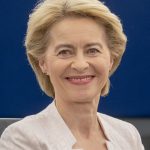
The address made by Ursula von der Leyen, the President of the European Commission, on 14 September 2022.
A UNION THAT STANDS STRONG TOGETHER
INTRODUCTION
Madam President,
Honourable Members,
My fellow Europeans,
Never before has this Parliament debated the State of our Union with war raging on European soil.
We all remember that fateful morning in late February.
Europeans from across our Union woke up dismayed by what they saw. Shaken by the resurgent and ruthless face of evil. Haunted by the sounds of sirens and the sheer brutality of war.
But from that very moment, a whole continent has risen in solidarity.
At the border crossings where refugees found shelter. In our streets, filled with Ukrainian flags. In the classrooms, where Ukrainian children made new friends.
From that very moment, Europeans neither hid nor hesitated.
They found the courage to do the right thing.
And from that very moment, our Union as a whole has risen to the occasion.
Fifteen years ago, during the financial crisis, it took us years to find lasting solutions.
A decade later, when the global pandemic hit, it took us only weeks.
But this year, as soon as Russian troops crossed the border into Ukraine, our response was united, determined and immediate.
And we should be proud of that.
We have brought Europe’s inner strength back to the surface.
And we will need all of this strength. The months ahead of us will not be easy. Be it for families who are struggling to make ends meet, or businesses, who are facing tough choices about their future.
Let us be very clear: much is at stake here. Not just for Ukraine – but for all of Europe and the world at large.
And we will be tested. Tested by those who want to exploit any kind of divisions between us.
This is not only a war unleashed by Russia against Ukraine.
This is a war on our energy, a war on our economy, a war on our values and a war on our future.
This is about autocracy against democracy.
And I stand here with the conviction that with courage and solidarity, Putin will fail and Europe will prevail.
THE COURAGE TO STAND WITH OUR HEROES
Honourable Members,
Today – courage has a name, and that name is Ukraine.
Courage has a face, the face of Ukrainian men and women who are standing up to Russian aggression.
I remember a moment in the early weeks of the invasion. When the First Lady of Ukraine, Olena Zelenska, gathered the parents of Ukrainian children killed by the invader.
Hundreds of families for whom the war will never end, and for whom life will never go back to what it was before.
We saw the first Lady leading a silent crowd of heartbroken mothers and fathers, and hang small bells in the trees, one for every fallen child.
And now the bells will ring forever in the wind, and forever, the innocent victims of this war will live in our memory.
And she is here with us today!
Dear Olena, it took immense courage to resist Putin’s cruelty.
But you found that courage.
And a nation of heroes has risen.
Today, Ukraine stands strong because an entire country has fought street by street, home by home.
Ukraine stands strong because people like your husband, President Zelenskyy, have stayed in Kyiv to lead the resistance – together with you and your children, dear First Lady.
You have given courage to the whole nation. And we have seen in the last days the bravery of Ukrainians paying off.
You have given voice to your people on the global stage.
And you have given hope to all of us.
So today we want to thank you and all Ukrainians.
Glory to a country of European heroes. Slava Ukraini!
Europe’s solidarity with Ukraine will remain unshakeable.
From day one, Europe has stood at Ukraine’s side. With weapons. With funds. With hospitality for refugees. And with the toughest sanctions the world has ever seen.
Russia’s financial sector is on life-support. We have cut off three quarters of Russia’s banking sector from international markets.
Nearly one thousand international companies have left the country.
The production of cars fell by three-quarters compared to last year. Aeroflot is grounding planes because there are no more spare parts. The Russian military is taking chips from dishwashers and refrigerators to fix their military hardware, because they ran out of semiconductors. Russia’s industry is in tatters.
It is the Kremlin that has put Russia’s economy on the path to oblivion.
This is the price for Putin’s trail of death and destruction.
And I want to make it very clear, the sanctions are here to stay.
This is the time for us to show resolve, not appeasement.
The same is true for our financial support to Ukraine.
So far Team Europe have provided more than 19 billion euros in financial assistance.
And this is without counting our military support.
And we are in it for the long haul.
Ukraine’s reconstruction will require massive resources. For instance, Russian strikes have damaged or destroyed more than 70 schools.
Half a million Ukrainian children have started their school year in the European Union. But many others inside Ukraine simply don’t have a classroom to go to.
So today I am announcing that we will work with the First Lady to support the rehabilitation of damaged Ukrainian schools. And that is why we will provide 100 million euros. Because the future of Ukraine begins in its schools.
We will not only support with finance – but also empower Ukraine to make the most of its potential.
Ukraine is already a rising tech hub and home to many innovative young companies.
So I want us to mobilise the full power of our Single Market to help accelerate growth and create opportunities.
In March, we connected successfully Ukraine to our electricity grid. It was initially planned for 2024. But we did it within two weeks. And today, Ukraine is exporting electricity to us. I want to significantly expand this mutually beneficial trade.
We have already suspended import duties on Ukrainian exports to the EU.
We will bring Ukraine into our European free roaming area.
Our solidarity lanes are a big success.
And building on all that, the Commission will work with Ukraine to ensure seamless access to the Single Market. And vice-versa.
Our Single Market is one of Europe’s greatest success stories. Now it’s time to make it a success story for our Ukrainian friends, too.
And this is why I am going to Kyiv today, to discuss this in detail with President Zelenskyy.
Honourable Members,
One lesson from this war is we should have listened to those who know Putin.
To Anna Politkovskaya and all the Russian journalists who exposed the crimes, and paid the ultimate price.
To our friends in Ukraine, Moldova, Georgia, and to the opposition in Belarus.
We should have listened to the voices inside our Union – in Poland, in the Baltics, and all across Central and Eastern Europe.
They have been telling us for years that Putin would not stop.
And they acted accordingly.
Our friends in the Baltics have worked hard to end their dependency on Russia. They have invested in renewable energy, in LNG terminals, and in interconnectors.
This costs a lot. But dependency on Russian fossil fuels comes at a much higher price.
We have to get rid of this dependency all over Europe.
Therefore we agreed on joint storage. We are at 84% now: we are overshooting our target.
But unfortunately that will not be enough.
We have diversified away from Russia to reliable suppliers. US, Norway, Algeria and others.
Last year, Russian gas accounted for 40% of our gas imports. Today it’s down to 9% pipeline gas.
But Russia keeps on actively manipulating our energy market. They prefer to flare the gas than to deliver it. This market is not functioning anymore.
In addition the climate crisis is heavily weighing on our bills. Heat waves have boosted electricity demand. Droughts shut down hydro and nuclear plants.
As a result, gas prices have risen by more than 10 times compared to before the pandemic.
Making ends meet is becoming a source of anxiety for millions of businesses and households.
But Europeans are also coping courageously with this.
Workers in ceramics factories in central Italy, have decided to move their shifts to early morning, to benefit from lower energy prices.
Just imagine the parents among them, having to leave home early, when the kids are still sleeping, because of a war they haven’t chosen.
This is one example in a million of Europeans adapting to this new reality.
I want our Union to take example from its people. Reducing demand during peak hours will make supply last longer, and it will bring prices down.
This is why we are putting forward measures for Member States to reduce their overall electricity consumption.
But more targeted supported is needed.
For industries, like glass makers who have to turn off their ovens. Or for single parents facing one daunting bill after another.
Millions of Europeans need support.
EU Member States have already invested billions of euros to assist vulnerable households.
But we know this will not be enough.
This is why we are proposing a cap on the revenues of companies that produce electricity at a low cost.
These companies are making revenues they never accounted for, they never even dreamt of.
In our social market economy, profits are good.
But in these times it is wrong to receive extraordinary record profits benefitting from war and on the back of consumers.
In these times, profits must be shared and channelled to those who need it the most.
Our proposal will raise more than 140 billion euros for Member States to cushion the blow directly.
And because we are in a fossil fuel crisis, the fossil fuel industry has a special duty, too.
Major oil, gas and coal companies are also making huge profits. So they have to pay a fair share – they have to give a crisis contribution.
These are all emergency and temporary measures we are working on, including our discussions on price caps.
We need to keep working to lower gas prices.
We have to ensure our security of supply and, at the same time, ensure our global competitiveness.
So we will develop with the Member States a set of measures that take into account the specific nature of our relationship with suppliers – ranging from unreliable suppliers such as Russia to reliable friends such as Norway.
I have agreed with Prime Minister Støre to set up a task force. Teams have started their work.
Another important topic is on the agenda. Today our gas market has changed dramatically: from pipeline gas mainly to increasing amounts of LNG.
But the benchmark used in the gas market – the TTF – has not adapted.
This is why the Commission will work on establishing a more representative benchmark.
At the same time we also know that energy companies are facing severe problems with liquidity in electricity futures markets, risking the functioning of our energy system.
We will work with market regulators to ease these problems by amending the rules on collateral – and by taking measures to limit intra-day price volatility.
And we will amend the temporary state aid framework in October to allow for the provision of state guarantees, while preserving a level playing field.
These are all first steps. But as we deal with this immediate crisis, we must also look forward.
The current electricity market design – based on merit order – is not doing justice to consumers anymore.
They should reap the benefits of low-cost renewables.
So, we have to decouple the dominant influence of gas on the price of electricity. This is why we will do a deep and comprehensive reform of the electricity market.
Now – here is an important point. Half a century ago, in the 1970s, the world faced another fossil fuel crisis.
Some of us remember the car-free weekends to save energy. Yet we kept driving on the same road.
We did not get rid of our dependency on oil. And worse, fossil fuels were even massively subsidised.
This was wrong, not just for the climate, but also for our public finances, and our independence. And we are still paying for this today.
Only a few visionaries understood that the real problem was fossil fuels themselves, not just their price.
Among them were our Danish friends.
When the oil crisis hit, Denmark started to invest heavily into harnessing the power of the wind.
They laid the foundations for its global leadership in the sector and created tens of thousands of new jobs.
This is the way to go!
Not just a quick fix, but a change of paradigm, a leap into the future.
STAYING THE COURSE AND PREPARING FOR THE FUTURE
Mesdames et Messieurs les Députés,
La bonne nouvelle est que cette transformation nécessaire a commencé.
Elle a lieu en mer du Nord et en mer Baltique, où nos États membres ont massivement investi dans l’éolien en mer.
Elle a lieu en Sicile, où la plus grande usine solaire d’Europe produira bientôt la toute dernière génération de panneaux solaires.
Et elle a lieu dans le nord de l’Allemagne, où les trains régionaux roulent désormais à l’hydrogène vert.
L’hydrogène peut changer la donne pour l’Europe.
Nous devons passer du marché de niche au marché de masse pour l’hydrogène.
Avec REPowerEU, nous avons doublé notre objectif : nous voulons produire dix millions de tonnes d’hydrogène renouvelable dans l’Union européenne, chaque année d’ici 2030.
Pour y parvenir, nous devons créer un animateur de marché pour l’hydrogène, afin de combler le déficit d’investissement et de mettre en relation l’offre et la demande futures.
C’est pourquoi je peux annoncer aujourd’hui que nous allons créer une nouvelle Banque européenne de l’hydrogène.
Elle aidera à garantir l’achat d’hydrogène, notamment en utilisant les ressources du Fonds pour l’innovation.
Elle pourra investir 3 milliard d’euros pour aider à construire le futur marché de l’hydrogène.
C’est ainsi que se bâtira l’économie du futur.
C’est cela, notre Pacte vert pour l’Europe.
Et nous avons tous vu au cours des derniers mois à quel point le Pacte vert pour l’Europe est important.
L’été 2022 restera dans les mémoires. Nous avons tous vu les rivières asséchées, les forêts en feu, la chaleur extrême.
Et la situation est bien plus grave encore. Jusqu’à présent, les glaciers des Alpes ont servi de réserve d’urgence pour des rivières comme le Rhin ou le Rhône.
Mais comme les glaciers d’Europe fondent plus vite que jamais, les sécheresses futures seront beaucoup plus graves.
Nous devons travailler sans relâche à l’adaptation climatique et faire de la nature notre premier allié.
C’est pourquoi notre Union poussera pour un accord mondial ambitieux pour la nature lors de la conférence des Nations Unies sur la biodiversité qui se tiendra à Montréal cette année.
Et nous ferons de même lors de la COP27 à Sharm el-Sheikh.
Mais à court terme, nous devons aussi être mieux équipés pour faire face au changement climatique.
Aucun pays ne peut lutter seul contre les phénomènes météorologiques extrêmes et leurs forces destructrices.
Cet été, nous avons envoyé des avions de la Grèce, la Suède ou d’Italie pour combattre des incendies en France et en Allemagne.
Mais comme ces évènements deviennent plus fréquents et plus intenses, l’Europe aura besoin de plus de capacités.
C’est pourquoi aujourd’hui j’annonce que nous allons doubler notre capacité de lutte contre les incendies au cours de l’année prochaine.
L’Union Européenne achètera dix avions amphibies légers et trois hélicoptères supplémentaires pour compléter notre flotte.
Voilà la solidarité européenne en action
Honourable Members,
The last years have shown how much Europe can achieve when it is united.
After an unprecedented pandemic, our economic output overtook pre-crisis levels in record time.
We went from having no vaccine to securing over 4 billion doses for Europeans and for the world.
And in record time, we came up with SURE – so that people could stay in their jobs even if their companies had run out of work.
We were in the deepest recession since World War 2.
We achieved the fastest recovery since the post-war boom.
And that was possible because we all rallied behind a common recovery plan.
NextGenerationEU has been a boost of confidence for our economy.
And its journey has only just begun.
So far, 100 billion euros have been disbursed to Member States. This means: 700 billion euros still haven’t flown into our economy.
NextGenerationEU will guarantee a constant stream of investment to sustain jobs and growth.
It means relief for our economy. But most importantly, it means renewal.
It is financing new wind turbines and solar parks, high-speed trains and energy-saving renovations.
We conceived NextGenerationEU almost two years ago, and yet it is exactly what Europe needs today.
So let’s stick to the plan.
Let’s get the money on the ground.
Honourable Members,
The future of our children needs both that we invest in sustainability and that we invest sustainably.
We must finance the transition to a digital and net-zero economy.
And yet we also have to acknowledge a new reality of higher public debt.
We need fiscal rules that allow for strategic investment, while safeguarding fiscal sustainability.
Rules that are fit for the challenges of this decade.
In October, we will come forward with new ideas for our economic governance.
But let me share a few basic principles with you.
Member States should have more flexibility on their debt reduction paths.
But there should be more accountability on the delivery of what we have agreed on.
There should be simpler rules that all can follow.
To open the space for strategic investment and to give financial markets the confidence they need.
Let us chart once again a joint way forward.
With more freedom to invest. And more scrutiny on progress.
More ownership by Member States. And better results for citizens.
Let us rediscover the Maastricht spirit – stability and growth can only go hand in hand.
Honourable Members,
As we embark on this transition in our economy, we must rely on the enduring values of our social market economy.
It’s the simple idea that Europe’s greatest strength lies in each and every one of us.
Our social market economy encourages everyone to excel, but it also takes care of our fragility as human beings.
It rewards performance and guarantees protection. It opens opportunities but also set limits.
We need this even more today.
Because the strength of our social market economy will drive the green and digital transition.
We need an enabling business environment, a workforce with the right skills and access to raw materials our industry needs.
Our future competitiveness depends on it.
We must remove the obstacles that still hold our small companies back.
They must be at the centre of this transformation – because they are the backbone of Europe’s long history of industrial prowess.
And they have always put their employees first – even and especially in times of crisis.
But inflation and uncertainty are weighing especially hard on them.
This is why we will put forward an SME Relief Package.
It will include a proposal for a single set of tax rules for doing business in Europe – we call it BEFIT.
This will make it easier to do business in our Union. Less red tape means better access to the dynamism of a continental market.
And we will revise the Late Payment Directive – because it is simply not fair that 1 in 4 bankruptcies are due to invoices not being paid on time.
For millions of family businesses, this will be a lifeline in troubled waters.
Der Mangel an Personal ist eine weitere Herausforderung für Europas Unternehmen.
Die Zahl der Arbeitslosen ist so niedrig wie nie zuvor.
Das ist gut!
Aber gleichzeitig liegt die Zahl der offenen Stellen auf Rekordniveau.
Ob Lastwagenfahrer, Kellnern oder Flughafenpersonal.
Ob auch Krankenpfleger, Ingenieurinnen oder IT-Technikerinnen.
Von Ungelernt bis Universitätsabschluß, Europa braucht sie alle!
Wir müssen daher viel stärker in die Aus- und Weiterbildung investieren.
Dazu wollen wir eng mit den Unternehmen zusammenarbeiten.
Denn sie wissen am besten, welche Fachkräfte sie heute und morgen brauchen.
Und wir müssen diesen Bedarf besser in Einklang bringen mit den Zielen und Wünschen die Arbeitssuchende selbst für ihren Berufsweg haben.
Darüber hinaus wollen wir gezielter Fachkräfte aus dem Ausland anwerben, die hier Unternehmen und Europas Wachstum stärken.
Ein wichtiger erster Schritt ist, ihre Qualifikationen in Europa besser und schneller anzuerkennen.
Denn Europa muss attraktiver werden für die, die etwas können und sich einbringen wollen.
Deshalb schlage ich vor, 2023 zum Europäischen Jahr der Aus- und vor allem auch der Weiterbildung zu machen.
Sehr geehrte Damen und Herren Abgeordnete,
zu meinem dritten Punkt für unseren Mittelstand und unsere Industrie.
Unabhängig davon, ob wir über maßgeschneiderte Chips für die virtuelle Realität sprechen oder über Speicherzellen für Solaranlagen – der Zugang zu Rohstoffen ist entscheidend für den Erfolg unserer Transformation hin zu einer nachhaltigen und digitalen Wirtschaft.
Lithium und seltene Erden werden bald wichtiger sein als Öl und Gas.
Allein unser Bedarf an seltenen Erden wird sich bis 2030 verfünffachen.
Und das ist ein gutes Zeichen!
Denn es zeigt, mit welchem Tempo unser Europäischer Green Deal vorankommt.
Das Problem ist nur, dass derzeit ein einziges Land fast den kompletten Markt beherrscht.
Wir müssen vermeiden erneut in Abhängigkeit zu geraten wie bei Öl und Gas.
An diesem Punkt kommt unsere Handelspolitik ins Spiel.
Neue Partnerschaften helfen uns, nicht nur unsere Wirtschaft zu stärken, sondern auch unsere Interessen und unsere Werte global voranzubringen.
Mit gleichgesinnten Partnern können wir auch außerhalb unserer Grenzen Arbeitsstandards und Umweltstandards sichern.
Wir müssen vor allem unsere Beziehungen zu diesen Partnern und zu wichtigen Wachstumsregionen erneuern.
Ich werde daher die Abkommen mit Chile, Mexiko und Neuseeland zur Ratifizierung vorlegen.
Und wir treiben die Verhandlungen mit bedeutenden Partnern wie Australien und Indien voran.
But securing supplies is only a first step.
The processing of these metals is just as critical.
Today, China controls the global processing industry. Almost 90 % of rare earths and 60 % of lithium are processed in China.
We will identify strategic projects all along the supply chain, from extraction to refining, from processing to recycling. And we will build up strategic reserves where supply is at risk.
This is why today I am announcing a European Critical Raw Materials Act.
We know this approach can work.
Five years ago, Europe launched the Battery Alliance. And soon, two third of the batteries we need will be produced in Europe.
Last year I announced the European Chips Act. And the first chips gigafactory will break ground in the coming months.
We now need to replicate this success.
This is also why we will increase our financial participation to Important Projects of Common European Interest.
And for the future, I will push to create a new European Sovereignty Fund.
Let’s make sure that the future of industry is made in Europe.
STANDING UP FOR OUR DEMOCRACY
Honourable Members,
As we look around at the state of the world today, it can often feel like there is a fading away of what once seemed so permanent.
And in some way, the passing of Queen Elizabeth II last week reminded us of this.
She is a legend!
She was a constant throughout the turbulent and transforming events in the last 70 years.
Stoic and steadfast in her service.
But more than anything, she always found the right words for every moment in time.
From the calls she made to war evacuees in 1940 to her historic address during the pandemic.
She spoke not only to the heart of her nation but to the soul of the world.
And when I think of the situation we are in today, her words at the height of the pandemic still resonate with me.
She said: “We will succeed – and that success will belong to every one of us”.
She always reminded us that our future is built on new ideas and founded in our oldest values.
Since the end of World War 2, we have pursued the promise of democracy and the rule of law.
And the nations of the world have built together an international system promoting peace and security, justice and economic progress.
Today this is the very target of Russian missiles.
What we saw in the streets of Bucha, in the scorched fields of grain, and now at the gates of Ukraine’s largest nuclear plant – is not only a violation of international rules.
It’s a deliberate attempt to discard them.
This watershed moment in global politics calls for a rethink of our foreign policy agenda.
This is the time to invest in the power of democracies.
This work begins with the core group of our like-minded partners: our friends in every single democratic nation on this globe.
We see the world with the same eyes. And we should mobilise our collective power to shape global goods.
We should strive to expand this core of democracies. The most immediate way to do so is to deepen our ties and strengthen democracies on our continent.
This starts with those countries that are already on the path to our Union.
We must be at their side every step of the way.
Because the path towards strong democracies and the path towards our Union are one and the same.
So I want the people of the Western Balkans, of Ukraine, Moldova and Georgia to know:
You are part of our family, your future is in our Union, and our Union is not complete without you!
We have also seen that there is a need to reach out to the countries of Europe – beyond the accession process.
This is why I support the call for a European Political Community – and we will set out our ideas to the European Council.
But our future also depends on our ability to engage beyond the core of our democratic partners.
Countries near and far, share an interest in working with us on the great challenges of this century, such as climate change and digitalisation.
This is the main idea behind Global Gateway, the investment plan I announced right here one year ago.
It is already delivering on the ground.
Together with our African partners we are building two factories in Rwanda and Senegal to manufacture mRNA vaccines.
They will be made in Africa, for Africa, with world-class technology.
And we are now replicating this approach across Latin America as part of a larger engagement strategy.
This requires investment on a global scale.
So we will team up with our friends in the US and with other G7 partners to make this happen.
In this spirit, President Biden and I will convene a leaders’ meeting to review and announce implementation projects.
Honourable Members,
This is part of our work of strengthening our democracies.
But we should not lose sight of the way foreign autocrats are targeting our own countries.
Foreign entities are funding institutes that undermine our values.
Their disinformation is spreading from the internet to the halls of our universities.
Earlier this year, a university in Amsterdam shut down an allegedly independent research centre, which was actually funded by Chinese entities. This centre was publishing so-called research on human rights, dismissing the evidence of forced labour camps for Uyghurs as “rumours”.
These lies are toxic for our democracies.
Think about this: We introduced legislation to screen foreign direct investment in our companies for security concerns.
If we do that for our economy, shouldn’t we do the same for our values?
We need to better shield ourselves from malign interference.
This is why we will present a Defence of Democracy package.
It will bring covert foreign influence and shady funding to light.
We will not allow any autocracy’s Trojan horses to attack our democracies from within.
For more than 70 years, our continent has marched towards democracy. But the gains of our long journey are not assured.
Many of us have taken democracy for granted for too long. Especially those, like me, who have never experienced what it means to live under the fist of an authoritarian regime.
Today we all see that we must fight for our democracies. Every single day.
We must protect them both from the external threats they face, and from the vices that corrode them from within.
It is my Commission’s duty and most noble role to protect the rule of law.
So let me assure you: we will keep insisting on judicial independence.
And we will also protect our budget through the conditionality mechanism.
And today I would like to focus on corruption, with all its faces. The face of foreign agents trying to influence our political system. The face of shady companies or foundations abusing public money.
If we want to be credible when we ask candidate countries to strengthen their democracies, we must also eradicate corruption at home.
That is why in the coming year the Commission will present measures to update our legislative framework for fighting corruption.
We will raise standards on offences such as illicit enrichment, trafficking in influence and abuse of power, beyond the more classic offences such as bribery.
And we will also propose to include corruption in our human rights sanction regime, our new tool to protect our values abroad.
Corruption erodes trust in our institutions. So we must fight back with the full force of the law.
Honourable Members,
Our founders only meant to lay the first stone of this democracy.
They always thought that future generations would complete their work.
“Democracy has not gone out of fashion, but it must update itself in order to keep improving people’s lives.”
These are the words of David Sassoli – a great European, who we all pay tribute to today.
David Sassoli thought that Europe should always look for new horizons.
And through the adversities of these times, we have started to see what our new horizon might be.
A braver Union.
Closer to its people in times of need.
Bolder in responding to historic challenges and daily concerns of Europeans. And to walk at their side when they deal with the big trials of life.
This is why the Conference on the Future of Europe was so important.
It was a sneak peek of a different kind of citizens’ engagement, well beyond election day.
And after Europe listened to its citizens’ voice, we now need to deliver.
The Citizens’ Panels that were central to the Conference will now become a regular feature of our democratic life.
And in the Letter of Intent that I have sent today to President Metsola and Prime Minister Fiala, I have outlined a number of proposals for the year ahead that stem from the Conference conclusions.
They include for example a new initiative on mental health.
We should take better care of each other. And for many who feel anxious and lost, appropriate, accessible and affordable support can make all the difference.
Honourable Members,
Democratic institutions must constantly gain and regain the citizens’ trust.
We must live up to the new challenges that history always puts before us.
Just like Europeans did when millions of Ukrainians came knocking on their door.
This is Europe at its best.
A Union of determination and solidarity.
But this determination and drive for solidarity is still missing in our migration debate.
Our actions towards Ukrainian refugees must not be an exception. They can be our blueprint for going forward.
We need fair and quick procedures, a system that is crisis proof and quick to deploy, and a permanent and legally binding mechanism that ensures solidarity.
And at the same time, we need effective control of our external borders, in line with the respect of fundamental rights.
I want a Europe that manages migration with dignity and respect.
I want a Europe where all Member States take responsibility for challenges we all share.
And I want a Europe that shows solidarity to all Member States.
We have progress on the Pact, we now have the Roadmap. And we now need the political will to match.
Honourable Members,
Three weeks ago, I had the incredible opportunity of joining 1,500 young people from all over Europe and the world, who gathered in Taizé.
They have different views, they come from different countries, they have different backgrounds, they speak different languages.
And yet, there is something that connects them.
They share a set of values and ideals.
They believe in these values.
They are all passionate about something larger than themselves.
This generation is a generation of dreamers but also of makers.
In my last State of the Union address, I told you that I would like Europe to look more like these young people.
We should put their aspirations at the heart of everything we do.
And the place for this is in our founding Treaties.
Every action that our Union takes should be inspired by a simple principle.
That we should do no harm to our children’s future.
That we should leave the world a better place for the next generation.
And therefore, Honourable Members, I believe that it is time to enshrine solidarity between generations in our Treaties.
It is time to renew the European promise.
And we also need to improve the way we do things and the way we decide things.
Some might say this is not the right time. But if we are serious about preparing for the world of tomorrow we must be able to act on the things that matter the most to people.
And as we are serious about a larger union, we also have to be serious about reform.
So as this Parliament has called for, I believe the moment has arrived for a European Convention.
CONCLUSION
Honourable Members,
They say that light shines brightest in the dark.
And that was certainly true for the women and the children fleeing Russia’s bombs.
They fled a country at war, filled with sadness for what they had left behind, and fear for what may lie ahead.
But they were received with open arms. By many citizens like Magdalena and Agnieszka. Two selfless young women from Poland.
As soon as they heard about trains full of refugees, they rushed to the Warsaw Central Station.
They started to organise.
They set up a tent to assist as many people as possible.
They reached out to supermarket chains for food, and to local authorities to organise buses to hospitality centres.
In a matter of days, they gathered 3000 volunteers, to welcome refugees 24/7.
Honourable Members,
Magdalena and Agnieszka are here with us today.
Please join me in applauding them and each and every European who opened their hearts and their homes.
Their story is about everything our Union stands and strives for.
It is a story of heart, character and solidarity.
They showed everyone what Europeans can achieve when we rally around a common mission.
This is Europe’s spirit.
A Union that stands strong together.
A Union that prevails together.
Long live Europe.