Tag: Speeches

  • Volodymyr Zelenskyy – 2022 Speech to the Parliamentary Assembly of the Council of Europe

    Volodymyr Zelenskyy – 2022 Speech to the Parliamentary Assembly of the Council of Europe

    The speech made by Volodymyr Zelenskyy, the President of Ukraine, on 13 October 2022.

    Thank you so much for your support and for such profound words. Very clear, important words, actions, messages from you!

    Dear Mr. President!

    Dear Mrs. Secretary General!

    Dear Ladies and Gentlemen, attendees!

    Dear Europeans!

    I am grateful for the opportunity to address you today.

    These days, Ukraine wakes up every morning with two questions: what else became the target of Russian terror overnight and where else did our forces manage to defeat these terrorists?

    And when I say “these days”, I don’t mean two days or a week, or even a month.

    The Russian terrorist war against Ukraine has been ongoing for 232 days – after 8 years of war in Donbas.

    I think you are well informed about what Ukrainians have to go through these days. There is no shortage of information in the European media about specific manifestations of Russian terror, about the specific course of this war. The Ukrainian delegation to PACE also works quite effectively, emphasizing what is important for Ukraine and the whole of Europe.

    So, I will not waste time telling you about new targets of Russian terrorists and events on the frontline.

    I want to focus on something else – on how and when we will be able to put an end to “these days”.

    When the war will end. When peace will come. When our territorial integrity and peace on the entire Ukrainian land will be restored.

    I remember when I became President of Ukraine in 2019, our state was experiencing pretty complicated relations with the Council of Europe. Then the Russian delegation returned to the PACE hall. In fact, there was an attempt to write off everything that Russia did against Ukraine and European values, starting in 2014. Write off under the guise of stories that it was necessary to maintain dialogue with Russia at all possible levels.

    Then the word “dialogue” masked the desire to turn a blind eye to reality. And even worse, this word masked the desire of some subjects to join the corrupt flow of money from Russia to Europe, which caused a lot of trouble in European politics.

    There is nothing like this this year. And I am grateful to you for that. Sincerely grateful.

    When Russia launched a full-scale invasion, you quickly made a principled decision and expelled the aggressor state from the Council of Europe. You also adopted resolutions condemning Russian terror and the crimes of this state against international law. Principles reign at all other levels of European institutions as well.

    But what does all this actually mean? This is evidence that a real dialogue has finally begun. An honest dialogue. A needed dialogue. And it’s not just the word “dialogue” that masks something. It is the real search for solutions.

    A dialogue between Europeans.

    A dialogue about how to save people’s lives and how to protect our values. About how Europe can withstand when everything that is fundamental to peace is attacked and when this attack is carried out not by some marginal political group, which has already happened in Europe, but by the geographically largest state in the world. The state that has been preparing for war for decades and turned the destruction of human rights into its ideology.

    And we see the historically important results of this dialogue in Europe – between Europeans. We see actions that have strengthened Europe in an unprecedented way.

    Never in history has a united Europe been as strong as it is now. Focused on everything necessary to prevent Russian terrorists from ruining our lives. This is the power of dialogue.

    We isolate Russia together. Together we punish terror and make it feel the price for the war it unleashed.

    Thanks to our dialogue, we have significant defense and financial support programs for Ukraine. And support programs for Ukrainians – those who left their homeland to escape hostilities.

    Thanks to our dialogue, a lot has been done to protect Europe from Russian energy weapons. What has been called for for decades has become a priority for both national governments and European institutions.

    And we should continue this kind of dialogue. Dialogue between us. Dialogue with our partners in the world.

    I ask you at all levels – in politics, in the media, in communication with voters – to defend the provision of Ukraine with a sufficient number of modern anti-aircraft and anti-missile defense systems. Already this year, we need to protect our sky from the terror of Russia. If this is done, it will be a fundamental step to end the entire war in the near future.

    We must continue our dialogue to further reduce Russia’s ability to finance the war. In particular, it is vitally necessary to deprive the aggressor state of profits from the export of oil and gas. Russia must see zero in the accounts to start thinking about the benefits of peace. This should be the purpose of EU sanctions packages.

    We must continue our dialogue in order to finally find a way to force Russia to comply with the demand of the IAEA and without exaggeration all of humanity – to ensure the demilitarization of the Zaporizhzhia nuclear power plant. Russia must not only withdraw military equipment from there, but also take away all its militants.

    We must continue our dialogue in order to hold Russia as the aggressor state and each of the Russian murderers and torturers to account for all crimes in this war, for every manifestation of terror. When these legal mechanisms are established and operational, it will be one of the most powerful guarantees of long-term peace.

    Ladies and Gentlemen! Dear Europeans!

    This year we saw that Russia deliberately rejects any real dialogue with us. Russia wants to speak the language of terror only. And that’s a fact.

    This fact must be recognized at all levels: politically, legally and on the battlefield in Ukraine – by supporting our defense capabilities. And I am grateful for the fact that the PACE can become the first international organization that designates Russia exactly this way – as a terrorist state.

    But we also saw the power of a real dialogue between us. Dialogue on how to stop terror.

    As a result, Europe is much stronger than anyone thought. And potentially, our ability to protect freedom, the rule of law, human rights and social justice is even stronger than we think about ourselves even now.

    Europe can play a historic role in the creation of the Special Tribunal for the crime of Russian aggression against Ukraine. Let’s do it! This will be the best way to protect the principles of international law.

    Europe can take the lead in the efforts to compensate for the damage caused by this war. We have to create an appropriate compensation mechanism – and we suggest the way to create it. The corresponding project has already been prepared by Ukraine. I urge you to support it – both in Europe and at the level of the UN General Assembly.

    All the more so since it is in Europe that the lion’s share of Russian assets is concentrated – both of the state itself, and of corrupt officials and corrupt businesses associated with the aggressor state. Russian assets should be directed to compensation for war losses.

    If you put your hand on your heart, each and every one of you knows perfectly well what elements should be in the formula of peace. All of you hear what the dialogue is about in Ukraine, in Europe, in the world to end this war and restore peace.

    Ukraine offered its way to peace. This is the European way.

    The way of dialogue and principles. The way of implementation of the agreed decisions for the protection of Ukraine and humanity and constant increase of the price of the war for the aggressor. The way of bringing the perpetrators of the war to justice and compensation for damages. This is the way to victory.

    It is much shorter than it seems. But only on the condition that the dialogue for its sake is honest, between all those who really value freedom, and that the word “dialogue” does not mask the desire to turn a blind eye to war.

    I thank you for your attention! I thank you for your great support!

    Long live Europe!

    Glory to Ukraine!

  • Volodymyr Zelenskyy – 2022 Speech to the Second Ministerial Roundtable Discussion for Support to Ukraine

    Volodymyr Zelenskyy – 2022 Speech to the Second Ministerial Roundtable Discussion for Support to Ukraine

    The speech made by Volodymyr Zelenskyy, the President of Ukraine, on 12 October 2022.

    Ladies and Gentlemen,

    Dear attendees,

    Dear friends!

    Thank you for such attention to Ukraine!

    These days, our state has become the target of another blatant terrorist attack by Russia. More than a hundred Russian cruise missiles and fifty combat drones in less than two days against our civilian infrastructure and energy facilities. And that’s just one attack. An attack that purposefully affected or damaged about a third of the Ukrainian energy industry.

    But the full-scale war against our country has been ongoing for more than 230 days, and the man who appropriated Russia is not going to end this war. He will spend tens and tens of billions of dollars more and approve many more attacks until we force Russia to make peace – with or without him.

    Our cooperation brings this moment closer – brings the victory of Ukraine closer.

    The more help Ukraine receives now, the faster the Russian war will end and the more reliably we will guarantee that such a cruel war will never spread to other countries again.

    I really appreciate that you all understand this! Thanks for all the support!

    I am thankful to the United States of America, President Biden, Congress for their special support. 8.5 billion dollars are aimed at fulfilling our social obligations – payment of salaries, pensions, support of the social sphere of Ukraine.

    I am thankful to the World Bank and the International Monetary Fund for their leadership at the institutional level in the implementation of aid programs for Ukraine.

    I am thankful to the European Union and all our partners who contributed to the stabilization of Ukraine’s financial situation.

    You all see that Ukraine is strong enough to endure this war. However, it is necessary to maintain consistency in the support of our state and develop the existing lines of aid.

    Each specific step in support of Ukraine is a real reduction of Russian aggression. I want to offer you three more such steps now.

    First, I believe that it would be useful to create a coordination format for financial support of Ukraine similar to the one created in Ramstein for defense support.

    Mrs. Kristalina Georgieva and I discussed the importance of donor coordination. We should create a permanent working group that would deal with the financial support of Ukraine and work efficiently at different levels – at the level of international donors and at the level of countries participating in aid.

    The second is to reliably cover the deficit and ensure the basics of people’s lives. We see that Russian terrorist attacks may be intensified. Therefore, we must symmetrically intensify cooperation for assistance – both for the restoration of the destroyed and for guaranteeing the financial stability of our state.

    You know the data – this year, Russian terror led to the decline of the Ukrainian economy by more than a third. Similarly, the real income of our people decreased by a third. Thousands of enterprises and infrastructure facilities were destroyed. Millions of people became internally displaced.

    As of now, we have two key state financial needs. This is 38 billion dollars to cover the state budget deficit next year. These are the salaries of teachers, doctors, social benefits, and pensions. This is a guarantee of life for the Ukrainian people.

    Another 17 billion dollars, which are verified by the World Bank and are needed for the reconstruction of critical infrastructure within the RDNA. These are schools, hospitals, critical transport and energy infrastructure, as well as damaged housing. In fact, everything that has become a primary target for Russia.

    We need targeted loans of 2 billion dollars to rebuild the electricity infrastructure after the destruction and to expand exports to Europe.

    Also, taking into account the crisis situation created by Russia on the entire continent, we need credit limits for the purchase of gas and coal for the next heating season. The volume of this level of support is at least 5 billion dollars. We might not have to use these limits, but they should be there to ensure stability.

    In this context of countering the deficit and guaranteeing stability, the new program of cooperation with the International Monetary Fund is critically important. The realistic volume is up to 20 billion dollars. We must finally approve such a program as the main source of covering the deficit.

    And the third thing I would like to offer you today is concrete investment support tools for Ukraine. In order to activate the economy and for businesses to start investing in Ukraine now, a military risk insurance mechanism for new investment projects is needed.

    I hope we can launch this mechanism together with the World Bank.

    Another element of protection of economic activity can be the opening by partner countries of the limits of export-import agencies for the supply of equipment to Ukraine. This is what can strengthen your companies right now – in cooperation with us.

    Ladies and Gentlemen!

    Right now, when the terrorist state is trying to intimidate us all even more, we must respond to Russian terror with even stronger and meaningful cooperation. This is real protection. Our common protection – of our common democracy, our way of life.

    Terror must lose. Ukraine must win. This is absolutely real – with your support.

    Again, I am grateful to everyone who helps!

    Glory to Ukraine!

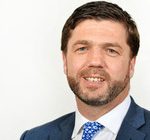
  • Jamie Wallis – 2022 Statement Calling for Liz Truss to Resign

    Jamie Wallis – 2022 Statement Calling for Liz Truss to Resign

    The statement made by Jamie Wallis, the Conservative MP for Bridgend, on 16 October 2022.

    In recent weeks, I have watched as the Government has undermined Britain’s economic credibility & fractured our Party irreparably.

    Enough is enough.

    I have written to the Prime Minister to ask her to stand down as she no longer holds the confidence of this country.

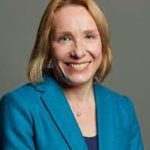
  • John Shipley – 2022 Speech on the Growth Plan (Baron Shipley)

    John Shipley – 2022 Speech on the Growth Plan (Baron Shipley)

    The speech made by John Shipley, Baron Shipley, in the House of Lords on 10 October 2022.

    My Lords, two crucial matters relating to growth were missing in the Minister’s introductory speech. I was surprised, because she said we must get the economy growing again—I think the whole House would agree with that sentiment—but there was absolutely no admission of, first, the impact of Brexit, which, as a number of noble Lords have pointed out, has damaged the country’s growth prospects. Will the Government admit that the forecast by the National Institute of Economic and Social Research that the reduction in GDP as a consequence of Brexit will lie between 4% and 5.5% is correct? It clearly matters in relation to growth.

    The second issue, immigration, has been raised by a handful of noble Lords, but in particular my noble friend Lord Fox. Do the Government have an immigration policy? I ask because a major difference of opinion is clearly emerging between the Prime Minister and the Home Secretary. This matter needs to be explained. As the noble Lord, Lord Birt, said, there is a huge need for a bigger labour force in agriculture and a number of other industries, but what is the Government’s policy in relation to that, and to the number of students? I understand that we have record numbers of international students in the United Kingdom, which I welcome. This is a good thing, but they clearly count as part of the immigration numbers. Who is in charge of immigration policy? The problem we have is a problem now, while we address the skills deficit and the lack of productivity we have suffered from in recent years.

    I look forward to the Minister’s reply on both those matters, but I will say this on the growth plan: you do not drive growth by making poor people poorer, by making rich people richer or with huge unfunded tax cuts. You do not drive growth by losing the confidence of the markets through a mini-Budget that was not subject to independent scrutiny, leading to the pound crashing, interest rates rising and a pensions crisis requiring £65 billion of emergency intervention. You do not drive growth by cutting corporation tax when it is investment incentives that drive growth, not the exact level of corporation tax.

    The Prime Minister has called for “growth, growth, growth”, as though this is something only the libertarian right believes in, but good, clean, green growth is surely central to our future security. Yet achieving net zero seems of no interest or concern to the present Government. That is very worrying, because our country can grow as we deliver net zero.

    The mini-Budget has worsened the cost of living crisis, particularly for aspiring home owners. From next year, the average mortgage bill on a new deal will increase by £1,500 a year on a £200,000 mortgage. We face major cuts in public spending. The Government have not said where these might fall—maybe we will find out on 31 October. The Government must drive fairness. We have heard of the number of children who will be pushed into poverty if benefits do not rise with inflation.

    The Government have lots of proposals for which the detail is not yet clear. There are investment zones, very similar to enterprise zones, but what is the impact on those areas immediately outside them? Finally, what can the Government do to increase foreign direct investment, bearing in mind that it has increased 72% across the north of England in the last five years whereas in the rest of the country it has dropped?

  • Nicola Sturgeon – 2022 Comments on the Scottish Economy

    Nicola Sturgeon – 2022 Comments on the Scottish Economy

    The comments made by Nicola Sturgeon, the Scottish First Minister, on 17 October 2022.

    Scotland has an abundance of skilled people, innovative businesses, and natural resources. We have everything it takes to be just as successful as comparable independent European countries. Our analysis from the first paper in the Building a New Scotland series shows that a dynamic economy and social justice go hand in hand. Each makes the other stronger.

    Scotland’s economy is one of the best performing in the UK – however the UK economy, particularly post-Brexit, is now lagging behind many EU and international comparators. The UK economic model is demonstrably failing and increasingly holding Scotland back. Independence is now essential to build an economy that works for everyone. The paper we are publishing today will help people make a clear, informed choice about independence and how we can forge a path towards becoming a fairer, greener, wealthier country.

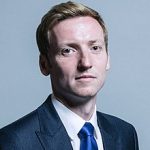
  • Brandon Lewis – 2022 Speech at the Approbation Ceremony for the New Lord Mayor of London

    Brandon Lewis – 2022 Speech at the Approbation Ceremony for the New Lord Mayor of London

    The speech made by Brandon Lewis, the Lord Chancellor and Secretary of State for Justice, at the Robing Room at the Palace of Westminster on 17 October 2022.

    My Lord Mayor Elect, I am commanded by His Majesty the King to express His Majesty’s express approval of the choice of the citizens of London in electing you to be Lord Mayor for the coming year.

    I think we’ll all be acutely aware that the last time those words were spoken, it was on Her Majesty Queen Elizabeth’s behalf – and that this will be the first time in living memory that this ceremony has referred to His Majesty the King.

    I am delighted to welcome you, Lord Mayor Elect, as well as your wife and soon to be Lady Mayoress, Felicity and other distinguished guests – to formally convey this message on His Majesty’s behalf.

    Let me also thank the Recorder of London and High Steward of Southwark for his address – and congratulate on him on being one of the few people in public life with a title as long and complicated as mine.

    I would also like to recognise the late Lord Mayor, Vincent Keaveny’s time in office. My late Lord Mayor, your year at Mansion House has been characterised by the theme of “People and Purpose”.

    You have visited countless countries to promote the City and UK legal services, received ministers and ambassadors from around the world, and spoken out on a range of issues – from social mobility to climate change and digital trade.

    As the first Irish citizen to be the Lord Mayor of London, it was no surprise to see you award the Freedom of the City to Ed Sheeran, who is himself of Irish descent. However, I don’t think there could be anything more British than seeing you lead 1,000 people driving sheep over London Bridge! Thank you again for all that you have done for the City of London.

    Now let me turn to the Lord Mayor Elect. Nicholas, I note that you were also born in Ireland – as they say, you wait 692 Lord Mayors for an Irishman and then two come along at once! Your career in the City has spanned more than four decades and your specialism – advising on mergers and acquisitions and raising capital – is indicative of the theme for your year in office: ‘Financing our Future’.

    The Lord Mayor is, of course, an ambassador for British business, financial and legal services – exporting all that is best of our great capital city at home and abroad. I know a focus for you will be how we use capital and expertise to boost our economy.

    My own job as Lord Chancellor is to promote English and Welsh law and the legal services that underpin our economy; and the Government has been very clear that economic growth is our first priority – so, our aims are very much aligned.

    London is, of course, at the heart of that world-beating legal services sector. The facts speak for themselves. Legal services contribute some 29 billion gross value added to our economy each year… Including billions in trade surplus and tax, as well as employing over 350,000 people directly.

    It isn’t just British businesses that benefit from the UK’s legal excellence.

    Companies from around the world carry out their business transactions here in the UK – because of our system’s reputation for probity and predictability. In fact, last year more than half of all commercial cases in the UK were brought by international businesses.

    Our legal services are undoubtedly one of our greatest exports – supporting the growth of global trade and investment not just in London but across the UK. That’s why, through our GREAT Legal Services campaign, we are doing even more to promote the English and Welsh law abroad… and, of course, London as the world’s pre-eminent centre for dispute resolution.

    It’s no coincidence that the largest international law firms in London have between 45% and 65% of their lawyers based outside of the country, demonstrating again that London is at the forefront of the way the world does business.

    But I know another focus for you, Lord Mayor Elect, will be competitiveness. As ever, we have competition – from the likes of the USA, Germany and Singapore among others. Competition is healthy but, particularly in challenging times – a world still recovering from the pandemic, and now rising to immense cost-of-living challenges – it’s crucial that we do everything to stay ahead of the game.

    So, ensuring our legal services continue to keep pace with the rest of the world… That they continue to innovate… and stay at the forefront of new ways of working… Couldn’t be more important. Similarly, we must also make sure that the law evolves to provide certainty on emerging technologies – providing certainty to the businesses that use them.

    As Lord Chancellor, I have pledged to do all I can to support legal innovation. I want the UK to be a global hub for lawtech, in the same way it has been with fintech. And I want to see our regulatory system continue to enable legal innovators to do what they do best – to innovate in the interests of better outcomes. It’s this combination of the two that will enable us to keep our world-leading status.

    My Lord Mayor Elect, I know you share our goals. The City has a long, successful history and the theme for your year in office – ‘Financing our Future’ – is all about promoting both resource and resilience. Your focus on getting capital and expertise in the right places will undoubtedly drive our economy and make us even more competitive.

    As we look ahead, I am convinced that together we can achieve so much for the City of London and for the UK more broadly. I’m looking forward to working in tandem with you to promote UK legal services and get the economy growing again. I think I might give the sheep drive a miss, however!

    I wish you and the future Lady Mayoress well for your year in office. Thank you.

  • Suella Braverman – 2022 Statement on Standards in Policing

    Suella Braverman – 2022 Statement on Standards in Policing

    The statement made by Suella Braverman, the Home Secretary, on 17 October 2022.

    The public rightly expects the highest standards of behaviour from police officers and the vast majority meet this expectation.

    But recently too many high-profile incidents and reports, especially in London, have damaged trust.

    This cannot continue.

    It’s unfair on the public and lets down other serving officers.

    Culture and standards in the police must improve.

    And where an officer has fallen seriously short of these expectations, demonstrable, public action must be taken.

    It’s absolutely vital that the police act to restore trust, return to common sense policing and treat the public and victims with the respect they deserve.

    I welcome the Met Police’s commitment to tackling the issues raised in the Baroness Casey report and hope this review will also help to address underlying concerns.

  • Keir Starmer – 2022 Comments on Crisis in Government

    Keir Starmer – 2022 Comments on Crisis in Government

    The comments made by Keir Starmer, the Leader of the Opposition, on 17 October 2022.

    The Prime Minister says she is in charge but the evidence this weekend suggests she is in office and not in power.

    Friday’s press conference completely failed to answer any of the questions the public has.

    Mortgages are rising and the cost of living crisis is being felt more acutely: the Conservative Government is currently the biggest threat to security and the finances of families across the country.

    That’s why the Prime Minister must come to Parliament on Monday, to explain what she plans to do to turn the situation around.

    If the Prime Minister won’t take questions from journalists, Liz Truss must at least take them from MPs representing the families whose livelihoods she’s putting at risk.

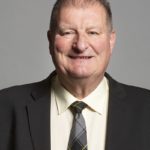
  • David Howell – 2022 Speech on the Growth Plan (Baron Howell of Guildford)

    David Howell – 2022 Speech on the Growth Plan (Baron Howell of Guildford)

    The speech made by David Howell, Baron Howell of Guildford, in the House of Lords on 10 October 2022.

    My Lords, I welcome my noble friend Lady Neville-Rolfe back to the Front Bench and I congratulate the noble Baroness, Lady Gohir, on her maiden speech. I am sorry that the right reverend Prelate the Bishop of Birmingham is leaving us.

    I begin by reminding your Lordships of something they probably do not need reminding of, but the media and many critics of the Government certainly do. After the two years of shutdown of the entire economy during Covid, plus now a war in Europe, after a huge swelling of public spending to cope with all that, and now the enormous energy cap finances and subsidies to stop the bleeding, it cannot be any surprise at all that we are in a very tight public finance situation.

    I cite the Office for National Statistics in saying that public sector debt, excluding public sector banks, at the end of last month was running at £2.428 trillion. That is a couple of hundred billion more than this time last year. That puts net public debt at 96.6% of GDP. That is a net level last seen here in the 1960s and just slightly lower than at the end of the Second World War, or some of the levels experienced in the 1930s. This is not the highest in the world by a long chalk. In fact, it is the 11th highest in Europe. I see no harm and some good in judicious tax cuts, especially those that would bring down the CPI, which has an enormous effect downwards on government finances, or those that actually increase revenue, such as lowering fuel tax or going back to the income tax top rates the country enjoyed under Tony Blair, Gordon Brown and Alistair Darling, which were quite happily accepted then but now seem to cause such agitation.

    But when all that is done, it is obvious that very big steps are now needed on the spending side. I beg Ministers to understand that the sane and effective way of bringing public finances into some sort of reputable balance is to identify and remove functions from the public sector, rather than slashing budgets all round by 10%. That is the classic Treasury style. The functions approach, which is questioning systematically the objectives of endless departmental activities and why they need to be in the state sector at all, was what we tried in the 1970s and later in the 1980s when I worked with John Hoskyns, as has been mentioned, which eventually led to taking most major industries out of state ownership, a healthy restoration of the balance between the state and the market, a real reduction in civil service manpower and a major contribution to growth.

    I take my last minute to argue on another point: to make the real case for levelling up. By that, I mean by universal capitalism, rather than trying to do it by universal income redistribution. Assets and savings in the bank are what every family in the land needs for their security and dignity. Measures to bring about a capital-owning democracy and a much fairer and more widespread form of social capitalism than we have now are what Governments of the last 50 years have shied away from again and again. Now is a much better time to approach this. This is the real levelling up—the capitalism working for everyone everywhere that Theresa May used to speak about. It is time for serious action on that front to make a real difference to people’s prosperity, certainty and prospects.

  • John Birt – 2022 Speech on the Growth Plan (Lord Birt)

    John Birt – 2022 Speech on the Growth Plan (Lord Birt)

    The speech made by John Birt, Lord Birt, in the House of Lords on 10 October 2022.

    Announcing unfunded tax cuts in the Government’s mini-Budget was all but universally condemned. There was no advance consultation, no leaning on expertise. The Permanent Secretary to the Treasury was summarily fired, the OBR’s offer of a forecast waved away. This appeared a back-of-the-envelope, “we know best” plan.

    The immediate consequences of course were dramatic. The Bank of England was selling UK debt one moment and buying it back the next. It had to mount a massive and costly rescue of pension funds. We experienced a rapid rise in interest rates, impacting both individuals and business. The estimates of the future level of government debt ballooned and the cost of financing that debt rose to 4% and is still rising.

    The impact of all these factors on redistribution will be chaotic; the full consequences ahead for public services are still unknown. The rationale, of course, was growth, and we all want more growth. The World Bank published a league table of growth rates for the G7 countries from 2008 to 2021. Is Britain in the relegation zone? No. In fact, we are near the top; we are third, behind the United States and Canada, and ahead of Germany, France and the rest—hardly a crisis.

    The US is clearly top of the tree with a 1.9% average annual growth rate versus our 1.1% over that period. So, yes, it would be nice to be up there with the US—but how? Where is the analysis: not another back-of-the-envelope plan but a deep and evidenced diagnosis to help us understand what really stands in the way of higher growth in the UK? The notion that stimulating the economy at a time of full employment and high inflation will do the trick sustainably is widely condemned and wide of the mark.

    One requirement for growth is clearly investment, yet we have now spooked the markets. Investors have a global perspective: they look for opportunity but will shy away if we fail to offer them reliability and stability too. Beyond that, what can government do?

    We know that we have vast labour and skills shortages across the economy: crops unpicked, short-staffed restaurants unable to open on the days they used to, and too few doctors and nurses. I know from my own exposure to the real economy that we are short of many more skills—for example, data scientists, digital marketeers and engineers. The Institution of Engineering and Technology estimates a current shortfall of 200,000 across the economy. We need a massive drive to bring our system of education and skills into line with the UK’s economic needs.

    Moreover—I experienced this very strongly myself—modern workers no longer live just down the road. Executives and specialists often fill jobs hundreds of miles from home, travelling huge distances each week to reach their work, crashing locally mid-week. Other workers commute long distances daily, and all travel to and from work unproductively in our crowded country, on the worst road and rail infrastructure in the developed world.

    Addressing these and other problems will improve the trend line of UK growth, but problems largely ignored for decades will take decades to put right. The notion that we can suddenly accelerate beyond the US to a sustainable annual growth rate of 2.5% is manifestly unachievable. The sooner the Government come back down to earth and face reality, the better for us all.