Tag: Speeches

  • Andrew Griffith – 2022 Speech on the Government’s “Plan for Growth”

    Andrew Griffith – 2022 Speech on the Government’s “Plan for Growth”

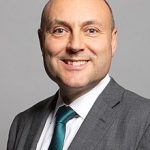
    The speech made by Andrew Griffith, the Financial Secretary to the Treasury, in the House of Commons on 19 October 2022.

    Our constituents are worried about what the current global turbulence in the economy means for their jobs, their prospects and their families. They want to know that they can afford to get by, and that once the economic storm clouds have passed—which they will—they can thrive. It is these concerns, those of our constituents, that we are thinking about, rather than—I say this in all due seriousness to the hon. Member for Leeds West (Rachel Reeves), because I think she knows better—misrepresenting global trends. We are focused on protecting the most vulnerable and looking after our economy.

    Mr Holden

    I wonder whether my hon. Friend noted, as I did, how little was said about the real cause of the current issues in the global markets: Russia’s illegal invasion of Ukraine, driving energy prices up across the globe, driving inflation up across the globe, and driving interest rates up. There was no mention of that from the Opposition. Whose side are they on when it comes to these situations? It is clear to me that they are not paying attention to the real issues underlying the global markets, and they do not understand what is going on.

    Andrew Griffith

    My hon. Friend has made a very important point. I think the whole House will want to acknowledge not only the impact on our economy of covid and the measures that Members on both sides of the House supported, but Putin’s invasion of Ukraine. It does us a great disservice to try to be over-partisan about the impacts of global trends that are happening in every western economy.

    Dame Meg Hillier (Hackney South and Shoreditch) (Lab/Co-op)

    The Minister has a strong track record of being knowledgeable about finance in the private sector, so will he acknowledge that the mini-Budget caused huge chaos in the markets? Notwithstanding the international issues which are a backdrop to this, this Government have scored an own goal by making the position a hell of a lot worse. Surely the Minister, with his financial background, will acknowledge that.

    Andrew Griffith

    The Chair of the Public Accounts Committee has made some fair points. We have acknowledged that mistakes have been made—the Prime Minister herself has said that—and I am happy to say it in the spirit in which the hon. Lady acknowledges that there are wider factors at work in the economy. It ill behoves the House to make those over-partisan points when our constituents are looking to us collectively for what we are able to do.

    Mr Perkins rose—

    Rushanara Ali rose—

    Barbara Keeley (Worsley and Eccles South) (Lab) rose—

    Andrew Griffith

    I will make a little progress and then come back to hon. Members, if I may.

    The most important thing we can do now, in the national interest, is cement that financial and economic stability. That is what is vital for all those who are concerned about their jobs, those who have to pay their mortgages, and those who are saving for retirement. It is essential for businesses investing for the future, and for society as we get through the bout of rising prices.

    Margaret Greenwood (Wirral West) (Lab)

    Last month the Bank of England had to step in with a promise to buy up to £65 billion of Government debt after pension funds managing huge sums on behalf of retired people across the country came close to collapse amid an unprecedented meltdown in UK Government bond markets following the Government’s mini-Budget. Last week the Bank had to step in again. BT’s pension scheme has revealed that the value of its assets has plummeted by an estimated £11 billion in recent weeks. Will the Minister apologise for the chaos that his party has brought to the pensions sector, and what can he say to my constituents to reassure them that their pensions are actually safe?

    Andrew Griffith

    I think we all have constituents who are rightly worried in these times of global turbulence and increasing interest rates in every part of the world. The hon. Lady will forgive me, I hope, if I do not comment on the specific operations of the Bank of England, which I think would be inappropriate—other than thanking hard-working officials for the intervention that they have made over the last couple of weeks.

    Mr Perkins rose—

    Andrew Griffith

    I will give way one more time, and then, if Members will forgive me, I will make some progress.

    Mr Perkins

    I am grateful to the Minister.

    Of course global factors meant that the situation was dangerous, but will the Minister acknowledge that it is precisely because of those global factors that the new Prime Minister and Chancellor had to tread very, very carefully? That is why what they did was so reckless and so damaging.

    Andrew Griffith

    I am not sure that I can fully accept what the hon. Member says, but the Government are committed to the independence of our institutions. It is very important that people understand that. Both the Bank of England and the Office for Budget Responsibility have a valuable role to play, which is why when the Chancellor presents his forecast to the House in just eight parliamentary days’ time he will ensure that it has been fully presented to, and signed off by, the Office for Budget Responsibility.

    John Glen (Salisbury) (Con)

    I recognise the value of stability and predictability. Given the changes to the corporation tax rate, and given that under the previous Administration my right hon. Friend the Member for Richmond (Yorks) (Rishi Sunak) was going to reduce the bank corporation tax surcharge from 8% to 3%, could the Minister confirm the Government’s intentions, and the assessment made of the effect for banks on competitiveness in financial services?

    Andrew Griffith

    I thank my hon. Friend, and pay tribute to my right hon. Friend the Member for Richmond (Yorks) (Rishi Sunak) for all that he did to put the economy in a strong position, and to navigate the very difficult shoals of the unprecedented covid pandemic.

    Geraint Davies (Swansea West) (Lab/Co-op)

    Will the Minister give way?

    Andrew Griffith

    I will make a little progress and then give way. As the Chancellor said, at this point all measures remain on the table. My hon. Friend the Member for Salisbury (John Glen) will indulge me if I do not announce that policy at the Dispatch Box today. His point is well understood, and others have made it to me, as Financial Secretary.

    John Glen

    May I simply point out that, if the rate is retained as an 8% surcharge, banks will be paying 33%? When added to the employment costs for national insurance, they may have issues in terms of competitiveness. If that is necessary, could the Minister please make it clear to banks and the markets, so that they can plan for the future?

    Andrew Griffith

    As I said a moment ago, we have just eight sitting days now until the statement. Part of my role is to stay in very close touch with our highly valued banking community, and to continue to drive the competitiveness of the United Kingdom as a place for the financial services sector to make the prodigious contribution to the economy that Conservative Members particularly value. As the Chancellor said, we will continue to prioritise fiscal stability, and the United Kingdom will always pay its way. We will fund our promises, and we remain committed to fiscal discipline. That means that we will do whatever is necessary to ensure that debt as a share of the economy comes down in the medium term.

    Rushanara Ali

    I know that the Minister is relatively new to the job; I hope that he lasts longer than some of his predecessors. The Bank of England has made it clear that the mini-Budget has caused a material risk to the UK’s financial stability. As has been said, our constituents’ mortgages have gone up, and will be going up by £500, and by up to £900 in London and the south-east. Will he tell us what his Government will do to bring down those mortgages rates, many of which will be a direct consequence of the mini-Budget’s failures and fiasco?

    Andrew Griffith

    I was in the process of telling the hon. Lady exactly what the Government will do. No one should trivialise the impact of rising global interest rates on mortgages. The last time mortgages were at this level was under her Government, and not after the backdrop of a global pandemic and a war on European soil.

    Imran Hussain (Bradford East) (Lab)

    Will the Minister give way?

    Andrew Griffith

    No, I think I have been relatively generous in taking interventions from the Opposition. I will make some progress, because I am sure that many people would like to speak. As the House knows, we will publish the medium-term fiscal plan, which will be fully reported on by the OBR and will set out our approach to fiscal responsibility: the variable that we can control in Government to help to reduce rates of interest going forward. We remain committed to pursuing growth as the driver of prosperity for all.

    Anna Firth (Southend West) (Con)

    Does my hon. Friend agree that the Government’s policy of creating investment zones will boost business and create jobs—for hard-working people in Southend West, I hope, and across the country? It is the essence of financial responsibility, and will put us on the path to long-term growth and long-term financial health.

    Andrew Griffith

    My hon. Friend the new Member for Southend West makes a very important point. We are absolutely committed to investment zones. I wish her success in her campaign to attract one to Southend-on-Sea. As the Secretary of State for Levelling Up, Housing and Communities has noted, this will be a transformational programme for the whole United Kingdom, and I hope that many Opposition Members get behind it and seek to attract such zones to their own constituencies.

    We are continuing to deliver support for families by cutting national insurance, and we will save an average of £330 for 28 million hard-working people. We will deliver reforms to boost housing supply and accelerate infrastructure projects across the country, enabling growth where it is needed the most.

    James Cartlidge

    Last week, we considered the Health and Social Care Levy (Repeal) Bill. I spoke in the debate, and said that I hoped that the repeal would not lead to the cap on social care being watered down. As I understand it, the cap may now be delayed or even not come into force at all. We should all be very concerned about that. One of the greatest achievements of the previous Prime Minister was finally introducing a tangible policy on social care. Does the Minister accept that when we repealed the levy it would have been better had we known then that it would have a material impact on social care policy?

    Andrew Griffith

    My hon. Friend makes his point typically strongly. He, like me, will look forward to hearing the medium-term fiscal strategy shortly. The hon. Member for Bethnal Green and Bow (Rushanara Ali) asked what we will do to protect households with their interest rates and mortgages.

    Barbara Keeley

    Will the Minister give way?

    Andrew Griffith

    I will not give way at the moment. The difficult decisions that were taken by the Chancellor earlier this week will ensure that we continue to grow the economy. Those decisions will raise around £32 billion every year. Perhaps the Opposition will use the opportunity of the debate to enlighten the House, but to date they have said very little about how they would find the money to do that.

    Geraint Davies

    Will the Minister give way?

    Andrew Griffith

    Not at the moment.

    That brings me to our energy price guarantee, which is a landmark policy that will help millions of people to get through this most difficult winter. Independent and external forecasts expect it to reduce inflation by around five percentage points. It is one of the most generous schemes in the world, and was the biggest single expense in the growth plan, with an estimated cost of around £60 billion between now and the end of March.

    Edward Timpson (Eddisbury) (Con)

    I think the whole House and many of our constituents can support the energy price guarantee and support scheme, but in constituencies such as mine many households are off-grid. Although there is a separate scheme, there is an issue of dual use on a single site. To ensure that there is parity and equity in rolling through that scheme, will the Minister undertake to ensure that there is an ongoing review, to ensure that none of my constituents misses out on the forthcoming generous support from the Government?

    Andrew Griffith

    Just like the constituents of Arundel and South Downs, I do not want the constituents of Eddisbury to face any prejudice. My hon. Friend makes his point well, and I am sure that the Energy Minister will be listening.

    Alan Brown (Kilmarnock and Loudoun) (SNP)

    If the so-called energy price guarantee will reduce inflation by 4% or 5%, what will inflation go to in April 2023 when the Government remove it?

    Andrew Griffith

    I have learned not to make forecasts in life.

    Alan Brown

    You just did.

    Andrew Griffith

    I was citing external forecasts, rather than making forecasts of where energy prices in an unprecedented moment of global volatility will be six months hence. Maybe the hon. Member has a greater insight into that.

    Alan Brown

    I feel I have.

    Andrew Griffith

    No. Treasury officials will lead a review regarding the appropriate measures to support households and businesses with their energy needs beyond April, but without the taxpayer picking up an inappropriate share of the burden.

    Dr Luke Evans (Bosworth) (Con)

    The energy plan means that the most vulnerable get up to £1,200 in support. When it comes to the review in April, will the Minister ensure that the most vulnerable people are again at the forefront of getting that support?

    Andrew Griffith

    Yes.

    Barbara Keeley

    Will the Minister give way?

    Andrew Griffith

    No, I am going to make some progress.

    I have talked about the measures that we are taking to support growth, and about the tough decisions that the Chancellor spoke about in the House on Monday. I reiterate that, as we must not sugar coat it. In common with every other major economy, we face economic challenges at this time for three reasons.

    First, there is the cost of covid. Through the first two years of the pandemic, the Government borrowed more than £300 billion more than had been forecast in March 2020—about £260 billion more in 2020-21 and £70 billion more in 2021-22—to fund emergency covid support, which had support on both sides of the House.

    Secondly, interest rates are rising around the world on the back of increased costs and Putin’s war in Ukraine.

    Jerome Mayhew (Broadland) (Con)

    We recently heard that inflation in this country has risen to 10.1%, but is the Minister aware that the European Union reported its inflation figures this morning, and inflation in the eurozone has risen to 10.9%?

    Andrew Griffith

    My hon. Friend is absolutely right. I was aware of that, and inflation is 11% in Germany and 17% in the Netherlands. I hope that the hon. Member for Leeds West is listening, because we are seeing this phenomenon in all major developed economies. She has a background in economics, and I hope she can devote some of her energy to sharing her wisdom and insight with colleagues.

    When it comes to interest rates, the Federal Reserve has implemented three consecutive increases of three quarters of a basis point, and the European Central Bank has increased rates at its last two meetings, including its largest ever single rate hike in September. As we hear contributions from Opposition Members, I hope that we will hear a little more about the broader context and a little less about attributing the situation to this Government.

    Mike Amesbury (Weaver Vale) (Lab)

    I thank the Minister for being generous with his time. If it is all the fault of the global economy, why was the 38-day Chancellor sacked?

    Andrew Griffith

    The hon. Gentleman is generous with his comments. In fairness, it is not the Government’s position that it is all the fault of the global economy, which is why the Prime Minister apologised and changed her Chancellor, and why different, difficult decisions have been made. In the spirit of having a proper debate on these matters, I hope the hon. Gentleman will accept that I was not saying what he suggests. I was introducing, and will continue to introduce, the very important broader context of these economic issues.

    Several hon. Members rose—

    Andrew Griffith

    I am going to finish as quickly as I can.

    I have already said that difficult decisions will have to be made. Those decisions will never be made at the expense of the most vulnerable, and I welcome the fact that my right hon. Friend the Prime Minister today reconfirmed at the Dispatch Box our commitment to protecting the triple lock, which was noticeably not forthcoming from the Opposition Front Bench.

    The fact is that since the 2008 financial crisis we have all been held back by weak economic growth. For 14 years, people’s living standards—especially the living standards of the most vulnerable, whom the Opposition claim to talk about—have not been rising as quickly as they should have been. The bottom line is that by accepting the status quo, without taking any action at all, we would condemn ourselves and future generations in Britain to decline.

    We face challenges, but we should address them from a place of optimism. I remind Members that the fundamentals of the UK economy remain resilient, with unemployment at its lowest level in nearly 50 years and with the UK forecast to have the fastest growth in the G7 in 2022. We have incredible strengths.

    I met investors this morning, and they talked about the capital they want to put to work in the United Kingdom, in science, research and technology. We have some of the world’s best universities, and those who would underestimate and talk down our prospects should not forget that we have one wonderful thing: the British people. With credibility and conviction, we are going to deliver the roads, railways and broadband we need. We will recruit the best doctors, empower the best teachers and back the bravest soldiers. And when conditions allow, when it is consistent with sound public finances, we will continue to cut taxes to further unleash economic growth.

    A few weeks ago, the Government took a bold approach to resetting our ambition for the growth rate of the economy, protecting our public services and delivering sustainably low taxes. That remains the most important challenge of our time. The question earlier this week was whether we would take action to protect the economy or whether we would not. Our response should leave nobody in any doubt that we are a Government who choose action in the national interest.


  • Rachel Reeves – 2022 Speech on the Government’s “Plan for Growth”

    Rachel Reeves – 2022 Speech on the Government’s “Plan for Growth”

    The speech made by Rachel Reeves, the Shadow Chancellor of the Exchequer, in the House of Commons on 19 October 2022.

    I beg to move,

    That this House regrets the long-term damage to the economy as a direct result of the mini budget, where mortgage rates for households have risen and the stability of pension funds has come under threat; notes that despite substantial U-turns in policy since the mini budget, the Government’s funding position has deteriorated, the cost of borrowing is expected to be higher for many years and the UK’s fiscal credibility has been undermined, all while many energy producers continue to make record windfall profits; therefore calls on the Government to take all necessary steps to stabilise the economy and make it work for ordinary working people and business through a plan for growth that puts them at its heart; and further calls on the Government to publish the Office for Budget Responsibility forecasts immediately alongside Government estimates of windfall profits for the next two years from energy producers in the UK.

    We are here because of a Tory crisis made in Downing Street but paid for by ordinary working people. The Conservative mini-Budget of 23 September will go down in history as the day that the British Government chose to sabotage their own economy. We saw the Conservatives hurl unfunded tax cuts towards the wealthiest, with excessive borrowing and yet more Government debt. The Government set our economy ablaze and, as a direct result, in the past four weeks we have experienced chaos in financial markets, repeated emergency interventions from the Bank of England, warnings from the ratings agencies and rebukes from the International Monetary Fund. Those costs are passed directly on to working people.

    Justin Tomlinson (North Swindon) (Con)

    I thank the hon. Member for being generous in giving way so early. Does she join me in welcoming last week’s employment statistics, with the highest rate since 1974? In my constituency alone, 920 extra people were in work compared with 12 months ago.

    Rachel Reeves

    The truth is that a million people are missing from the labour market and half of those have long-term health conditions. We need to do much more to get those people back to work. One reason why unemployment is low is that so many people are not even looking for work because they are waiting for NHS operations, with waiting times at an all-time high.

    Today, we learn that inflation has gone above 10% again; food inflation is at more than 14%; and in the last year alone, electricity prices are up 45% and gas prices have doubled. Despite all the extraordinary and unprecedented U-turns in recent days, the damage has been done. This Conservative Government have wrecked people’s finances and snuffed out the dream of home ownership for millions. Some 1.8 million people across the UK will pay higher mortgage bills by the end of next year—on average, they will pay £580 extra every single month—because of the reckless actions of the Government. In my Yorkshire constituency, the cost will be £360 extra a month. In the constituency of the Financial Secretary to the Treasury, the hon. Member for Arundel and South Downs (Andrew Griffith)—who is about to respond to me—it will cost people £640 extra every single month in higher mortgage payments. Families cannot afford to pay those higher mortgage costs, and they certainly cannot pay them with apologies from the Prime Minister. The public will not accept that the arsonists who inflicted this damage can put out the fire. The Tories can never be trusted with our economy again.

    Mr Toby Perkins (Chesterfield) (Lab)

    I congratulate my hon. Friend on the motion that she has tabled. It seems utterly unarguable that the crisis being wrought upon our constituents is to be laid squarely at the feet of the Government. It would appear that the Government agree, because according to briefings on Twitter, they do not intend to vote against the motion. Does my hon. Friend agree that the fact that the Chancellor has not turned up to defend the record and that Conservative Members do not even seem to disagree with the motion means that we can all agree that this is the Government’s fault?

    Rachel Reeves

    I agree that it is a shame that October’s Chancellor is not in his place today. This crisis has been co-written by every single member of the Cabinet and every single member of the Government. The Minister for the Armed Forces and Veterans was crystal clear yesterday in pointing out that all Cabinet Ministers had approved and are responsible for Government decisions, including the disastrous mini-Budget. There is no credibility or stability with this Government, just a shambles. All the time, businesses are looking at the state of the Government and deciding where and whether to invest. The Tories’ recklessness and enduring incompetence will cost jobs and investment here in Britain. The Conservatives should not be put in charge of a tombola, let alone the British economy.

    Jim Shannon (Strangford) (DUP)

    I commend the hon. Lady for what she is saying. Let me back up her comments on economic growth. We need small and medium-sized enterprises to be able to survive and to get through this period. In my constituency, a business—a Japanese restaurant—opened some two months ago. It is doing really well and it employs staff, but its bills are going up from £900 to £3,000. It is clear that unless something happens soon for businesses that are productive and create jobs, they will no longer be there. Does the hon. Lady agree that we need to have a process that helps businesses?

    Rachel Reeves

    I thank the hon. Gentleman for that intervention. Small businesses, such as the restaurant that he mentions in his constituency, are the backbone of all our constituencies and our economy more widely. An energy bill increase from £900 to £3,000 is not affordable for small businesses. The Government need to do more to help.

    David Rutley (Macclesfield) (Con)

    I know that the hon. Member takes economic issues very seriously. Protecting pensioners will obviously be a key priority. Does she join me in welcoming the Prime Minister’s confirmation that the triple lock will be protected, and can she set out Labour’s policy on that vital area?

    Rachel Reeves

    On Monday, the Chancellor said that he could not rule out breaking the triple lock, and on Wednesday, the Prime Minister said something else. We do not know which one speaks for the Government, but Labour is clear that we support the triple lock. It was in our manifesto and, unlike the Conservative party, in government we would stick by what we promised.

    Strong and independent economic institutions are essential for making Britain a great place to invest. That is why undermining the Bank of England, sacking the respected permanent secretary at the Treasury and gagging the Office for Budget Responsibility have all added to borrowing costs for Britain—for Government and for families.

    On Monday, we saw yet again the ridiculous spectacle of a Conservative Chancellor coming to the House of Commons to announce huge changes in Government economic policy without any sort of independent forecast. Failing to publish a forecast was a significant contributor to the lack of market confidence when the Government unleashed their mini-Budget three and a half weeks ago, yet no lessons have been learned.

    The Government cannot build confidence in Britain by flying blind. That is why we are asking all MPs to vote today to publish immediately the current assessments and forecasts from the Office for Budget Responsibility. For the sake of our economic stability, they must not remain hidden for a further two weeks. If the Chancellor refuses, the country will rightly ask, “What have they got to hide?”

    Sir Stephen Timms (East Ham) (Lab)

    My hon. Friend touched on the point that one of the new Prime Minister’s very first decisions was to sack the permanent secretary to the Treasury. Can my hon. Friend shed any light on why that decision was made? Was it, as appears very likely, because he was set to warn the new Chancellor about the consequences of the policies that he wanted to announce?

    Rachel Reeves

    As a former Treasury Minister, my right hon. Friend knows how things are supposed to be done. We cannot ask September’s Chancellor why he sacked the respected permanent secretary, because he is no longer in his place, but a Labour Government would respect the Bank of England, respect the independent civil service and remove the gag on the Office for Budget Responsibility.

    Today’s inflation numbers show the impact that higher gas and electricity bills are having on family finances. The Government’s mistake when they announced their package a month ago was putting its entire cost on Government borrowing. Under Labour’s plans, energy producers—including the oil and gas industries, which have said themselves that they have more money than they know what to do with—would have been asked to pay their fair share. Our plan did what a responsible Government should: it put forward a fully costed and fully funded package to freeze bills this autumn and winter.

    The Conservatives have left tens of billions of pounds on the table and have pushed all the costs on to current and future taxpayers for years to come. Now, because of their irresponsible and reckless approach, they have gone back on their word. According to the Resolution Foundation, that could mean that a typical bill will rise to at least £4,000 from next April.

    James Cartlidge (South Suffolk) (Con)

    The hon. Lady is being very generous in giving way. Can she confirm that whatever her policy on windfall tax is, the overwhelming majority of her energy support package would have been paid for by borrowing?

    Rachel Reeves

    The point is that the Government are leaving billions of pounds of unneeded and unnecessary borrowing on the table. Why leave that money on the table when even the energy giants are saying that they have more money than they know what to do with? All that money has been put on borrowing and debt to be paid back by current taxpayers. Tens of billions of pounds have been left on the table by this Tory Government.

    It has always been a question of who pays for support with bills. The Conservatives always put it on the never-never, but in the end it is working people who pay the price. In August, Bloomberg reported that the Government’s estimates of energy company windfall profits in the UK over the next two years could be £170 billion. The last Chancellor disputed that and so did the one before, but neither of them confirmed the actual figure. Why not?

    Labour’s fiscal rules would protect the economy and protect families. We should not borrow a penny more than is absolutely necessary. That is why our motion

    “calls on the Government to publish the Office for Budget Responsibility forecasts immediately alongside Government estimates of windfall profits for the next two years from energy producers in the UK.”

    Doing so is in the public interest. Refusal to publish will only confirm that the Government are again putting the profits of energy giants ahead of the sky-high bills for families, pensioners and businesses.

    Rushanara Ali (Bethnal Green and Bow) (Lab)

    Does my hon. Friend agree that the Government have still not learned a single thing? If they had learned anything from their mismanagement, the Prime Minister and the new Chancellor would have committed to using the profits of energy companies. That is what they should be doing: as my hon. Friend says, the companies want to be taxed to pay for the Government’s failures, rather than the Government cutting public services and hiking mortgage interest. Does she also agree that the Government need to get their priorities straight when it comes to getting rid of the cap on bankers’ bonuses?

    Rachel Reeves

    As a member of the Treasury Committee, my hon. Friend understands the issues well. The chief executive of BP says that his company is like a cash machine at the moment. We should be ensuring that companies pay their fair share. The war in Ukraine and the illegal invasion of Ukraine mean windfall profits that they could never have dreamed of, but they also mean the highest bills ever for families and pensioners, so the energy companies should pay their fair share.

    Anna McMorrin (Cardiff North) (Lab)

    My hon. Friend is making an excellent speech. Professor Sinha, the author of the Institute of Health Equity’s report on fuel poverty, has said that there is no doubt that children will die this winter. In July alone, 12,000 more people phoned the Samaritans. Those are the dire consequences of these political actions, yet our energy companies are taking the profits.

    Rachel Reeves

    My hon. Friend leads me on to the important issue of public services, which the Chancellor has been quick to put in his sights. This week, the respected Institute for Government gave its assessment of the state of public services after 12 years of Conservative Governments:

    “Public services are in a fragile state…Patients are waiting half a day in A&E, weeks for GP appointments and a year or more for elective treatments. Few crimes result in charges…Pupils have lost months of learning”.

    What an absolutely devastating verdict on the Government’s stewardship of our public services.

    Even the Home Secretary, when she is not arguing with tofu, admits that police forces are so stretched that they cannot respond to the victims of crime. The Tories are living on another planet if they think that after a decade of imposing austerity they can come back with season 2, wildly swinging the axe over the country’s already struggling public services.

    Catherine McKinnell (Newcastle upon Tyne North) (Lab)

    My hon. Friend is spot on and Conservative Members should be listening to her speech. We have seen 12 years of cuts to our public services and facilities, but one small glimmer of hope for people in my city was the successful levelling-up bid for a leisure centre in the outer west of Newcastle. However, the project has now been undermined because of the disastrous economic outlook and soaring inflation costs, which are partly a result of the mini-Budget. Does my hon. Friend agree that the Government must not backtrack on their promises? They must support such projects despite the rising inflation costs that are now undermining local government’s ability to deliver them.

    Rachel Reeves

    Levelling up has truly been replaced by trickle down, and my hon. Friend’s constituents are paying the price.

    We need strong public services focused on early intervention and prevention, reducing greater demand with better outcomes for people. We need the Government to stick to their manifesto commitments, including uprating benefits and pensions in line with inflation. It should not be working families, pensioners and the most vulnerable who pay the price for these Tory mistakes.

    Mr Richard Holden (North West Durham) (Con)

    Will the hon. Lady give way?

    Rachel Reeves

    I will make a bit more progress.

    Labour will get value for every pound of taxpayers’ money. That is why I announced last year that a Labour Government will introduce an office for value for money, tackling the endemic waste that we have seen under the Tories. Under the Conservatives, £11.8 billion of public money was handed to fraudsters and organised criminals because of a refusal to include the most basic security checks for covid support. That is before we get to the £7 billion spent on unusable personal protective equipment, the £13 billion wasted on failed defence procurements and the millions and millions flushed down the drain by this Government’s outsourced Serco test and trace system.

    This week, we have read reports that the Treasury is shutting down the taxpayer protection taskforce that it belatedly set up in March to try to retrieve the money that the Government gave to the fraudsters. The taskforce should not be shut down; it should be empowered to get taxpayers’ money back.

    As for the £3.5 billion handed out to friends of and donors to the Conservative party, many of whom failed to deliver on those contracts, in business if you award a contract and it does not deliver, you claw the money back. The Government must now strain every sinew to get that money back, because taxpayers demand it, and that comes before the cuts and the austerity that this Government are about to unleash.

    The Government say that working people now have to put up with eye-wateringly difficult decisions, but there are so many easy decisions that the Government could make to stop families feeling the pain. Why keep in place an outdated and unjustifiable non-dom tax status loophole which means that some of the wealthiest pay no tax on their incomes while ordinary working people face the highest tax burden in 70 years in this low-growth, high-tax economy? Labour’s principle is clear: if you make Britain your home, you should pay your taxes here. Research carried out at the London School of Economics and Warwick University has shown that the UK’s non-dom system costs us £3.2 billion a year.

    Look at the tax break for private equity managers, which was cooked up in the 1980s by a Conservative Government—a tax break of nearly £200,000 each for 2,000 private equity bosses every single year! It is not right that bosses pay a lower rate of tax on their bonuses than workers do on their wages. It is indefensible, so Labour will abolish it. At present, private schools enjoy charitable status which makes them exempt from both business rates and VAT at a cost of £1.7 billion every year, but here is the truth: private schools are not charities. We will end that exemption, and put that money back into our state schools.

    That is what a fair tax system looks like, and that is what Britain will get with a Labour Government: fiscal responsibility, and a fair tax system that puts working people first. Labour will stabilise the economy by being responsible with public finances through our strong fiscal rules. It is on that foundation that our green prosperity plan will invest in the jobs and industries of tomorrow as we meet our climate obligations and secure our energy supply here in Britain. There are great opportunities for the industries of the future, and opportunities for Government to partner with industry and invest in, for instance, domestic renewables such as wind, hydrogen and carbon capture, and nuclear as well. Labour will create a national wealth fund so that when we build British industry, the public will have a stake and receive a return on those investments. The next Labour Government will buy, make and sell more here in Britain, with an industrial strategy that is pro-worker and pro-business. We will breathe new life into our high streets by calling time on the outdated model of business rates. That is a real plan for the future, not lurching from crisis to crisis like the Conservatives.

    Mr Holden

    Will the hon. Lady give way?

    Rachel Reeves

    No. I have almost run out of time. I have been speaking for 20 minutes, and I have taken a great many interventions.

    So much damage has been done to our economy by the Conservatives’ reckless mini-Budget, but the Government can prevent things from becoming even worse. Today they can show that they have listened, and publish the OBR forecasts and assessments that they are sitting on so we can know the true state of our public finances and our economy. They should publish the assessments that they already have of the windfall profits of the energy giants in the next two years, and then set out clear steps to introduce a proper windfall tax. It is a sign of how far off the road of competence and responsibility this Conservative Government are that they have not already done those basic things.

    People can no longer afford the cost of Tory failure. We need a stronger and fairer economy from a Government committed to financial responsibility, and a serious plan for growth that puts working people first. The very least the Government can do is publish the numbers, and I urge all Members to support this motion to ensure that they do exactly that.

  • David Frost – 2022 Article Calling for Liz Truss to Resign (Lord Frost)

    David Frost – 2022 Article Calling for Liz Truss to Resign (Lord Frost)

    Comments made by David Frost, Lord Frost, in the Daily Telegraph on 19 October 2022. The full article is at https://www.telegraph.co.uk/news/2022/10/19/liz-truss-has-go-tory-party-have-chance-recovering/.

    We are where we are. I am very sorry about it, because I had such high hopes. Whatever happens to her ministers or the stability of the Government in the next few days, Truss just can’t stay in office for one very obvious reason: she campaigned against the policies she is now implementing. However masterfully she now implements them – and it doesn’t seem that it will be very masterfully – it just won’t do. She said she wouldn’t U-turn, and then she did. Her fate is to be the Henry VI of modern politics – a weak figurehead, unable to control the forces around her, occasionally humiliated, and disposed of when she has become inconvenient. Better to go now.

    Then the party must do two things: avoid making the economic situation even worse by repeating the policies of the Cameron government in totally different circumstances; and recover some political legitimacy for carrying on – because in our system legitimacy does matter. Liz Truss must leave as soon as possible. Her successor, whoever it is, must be capable, competent, and able to communicate effectively.

    In the present circumstances, the only possible way forward is a minimal programme which reflects the centre of gravity of the party and the issues raised in the leadership campaign, and which creates clear dividing lines with Labour. That means keeping the aspiration to boost growth and reduce taxes and the size of the state over time, though sadly that can’t now happen until after an election. It means real fiscal discipline now, while protecting the poorest, and avoiding irrational capital spending cuts. And the party needs to find it within itself to do some, no doubt very limited, supply-side reform and to get behind a proper fix for illegal immigration in the Channel.

  • Sadiq Khan – 2022 Statement on the Casey Report

    Sadiq Khan – 2022 Statement on the Casey Report

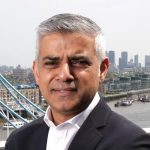
    The statement made by Sadiq Khan, the Mayor of London, on 17 October 2022.

    When I asked the Met to establish this independent review a year ago following a series of shocking scandals involving serving police officers, I was concerned that a serious cultural problem had developed within the Met which was allowing racist, sexist and homophobic behaviour to be downplayed or left unchallenged. The interim findings of this review not only confirm my concerns, but reveal a situation even worse than feared.

    It’s clear the Met’s misconduct system is simply not fit for purpose. I now expect nothing less than every single recommendation of this review to be implemented in full, and quickly. All misconduct allegations must be acted upon, cases must be resolved much faster and the disproportionality in the way allegations are dealt with must be eliminated. The majority of those serving in the Met will be appalled by these latest findings and the decent officers who want to speak out – who have clearly been let down for far too long – must be properly supported.

    As Mayor, I’ve ensured the Met is now set on a path of far-reaching systematic and cultural reform, with the appointment of a new Commissioner who acknowledges the scale of the problems within the Met. I want to assure Londoners that I will continue to hold the Met to account as I support Sir Mark in taking urgent action to reform the culture and systems of the Met and to root out all police officers found to be responsible for sexism, racism, misogyny, homophobia, bullying or harassment.

  • Sadiq Khan – 2022 Comments on the Chancellor’s Economic Statement

    Sadiq Khan – 2022 Comments on the Chancellor’s Economic Statement

    The comments made by Sadiq Khan, the Mayor of London, on 17 October 2022.

    With the markets in turmoil, high inflation and interest rates soaring, the Chancellor had no choice but to take immediate action to prevent even more economic chaos. But so much damage has already been done, with Londoners and people up and down the country paying higher mortgage and borrowing costs as a direct result of the Government’s failed approach.

    The Government is also still refusing to take the basic steps required to help those who need the most support during the worst cost-of-living crisis we have seen in decades. I will continue to call on Ministers to provide free school meals to all primary school children, to uplift Universal Credit by inflation and to ensure that the most vulnerable receive a basic amount of free energy this winter. They should also grant City Hall the power to freeze private rents in London, which would save people £3,000 over two years.

    The Chancellor has massively scaled back the Government’s energy bill support scheme. He should now do what should have been done all along – introduce a windfall tax on energy producers to help foot the bill.

    The Chancellor was also wrong to scrap the reintroduction of tax free shopping for tourists. This is something I have repeatedly called for to help boost sales and growth and to make London and the UK a more attractive place for international tourists to visit, bringing in far more money to the Treasury than it costs.

  • Chris Skidmore – 2022 Statement Confirming Vote Against Fracking

    Chris Skidmore – 2022 Statement Confirming Vote Against Fracking

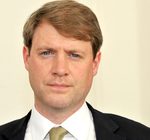
    The statement made by Chris Skidmore, the Conservative MP for Kingswood, on 19 October 2022.

    As the former Energy Minister who signed Net Zero into law, for the sake of our environment and climate, I cannot personally vote tonight to support fracking and undermine the pledges I made at the 2019 General Election.

    I am prepared to face the consequences of my decision.

  • Suella Braverman – 2022 Resignation Letter as Home Secretary Sent to Liz Truss

    Suella Braverman – 2022 Resignation Letter as Home Secretary Sent to Liz Truss

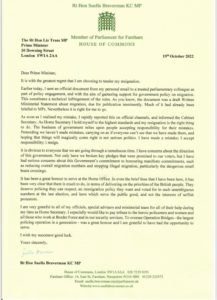
    The resignation letter sent by Suella Braverman, the Home Secretary, to Liz Truss, the Prime Minister, on 19 October 2022.

  • Liz Truss – 2022 Letter Accepting Suella Braverman’s Resignation as Home Secretary

    Liz Truss – 2022 Letter Accepting Suella Braverman’s Resignation as Home Secretary

    The letter sent by Liz Truss, the Prime Minister, on 19 October 2022.

    Letter (in .pdf format)

  • Selaine Saxby – 2022 Speech on Floating Offshore Wind Projects

    Selaine Saxby – 2022 Speech on Floating Offshore Wind Projects

    The speech made by Selaine Saxby, the Conservative MP for North Devon, in the House of Commons on 18 October 2022.

    It is a pleasure to serve under your chairmanship, Sir Christopher. I thank my right hon. Friend the Member for Preseli Pembrokeshire (Stephen Crabb) for securing this important debate. I will reinforce and reiterate much of what he and the hon. Member for Aberavon (Stephen Kinnock) said.

    I set up the all-party parliamentary group for the Celtic sea because the opportunities presented by the Celtic sea were apparent, but there was a disjointed approach, which many of my Welsh colleagues have discussed. I was concerned that we might miss out on the opportunity altogether in North Devon, and I am delighted that my hon. Friend the Member for Truro and Falmouth (Cherilyn Mackrory) is here to put in a case for the south-west of England. If we are to deliver these projects, we need a strategic approach that takes into account all the ports, skills and opportunities right the way around the Celtic sea. This is a national and international opportunity, and I am delighted to have the support of the Celtic sea APPG secretariat here today. We have been working hard to drive forward the issue, and we now have a Celtic Sea Developers Alliance. We have now established that the wind blows the opposite way in the Celtic sea, so we are delighted to have an opportunity, alongside our Scottish counterparts, to work across the whole country to see how we can deliver these projects.

    On the strategy, like others I am concerned about the UK supply chain, because pretty much everything that is planned is coming in internationally. We are not realising the economic benefits that these enormous turbines present. I have seen the work going on in Blyth, and it is clear to me that my beautiful constituency is probably not best placed to develop a big port. However, we are the closest port to the development sites, and yet I cannot see anything local that is developing the kind of maintenance system that we need to service the 250 floating offshore wind turbines that are coming at us in the next five to 10 years.

    In addition, as has been said, our ports are not ready. Much as it is lovely to hear everyone bid for projects for their ports, it would make much more sense to have a strategy that delivers the floating offshore wind manufacturing investment scheme—FLOWMIS—and liaises between the ports. Competition is great and drives innovation, but we need a decision so that we do not have three or four ports building exactly the same thing, none of them terribly well. We need to say, “This one can maintain and this one will build blades,” so that strategically we take the opportunity that we are presented with.

    That is no better demonstrated than when it comes to cables, which are a particular bugbear of mine, given what has happened on the east coast with fixed offshore wind. Now that we understand that blue carbon is released every time we disturb the ocean floor, why on earth are we not insisting that cable corridors be put in at the start of the projects so that we can connect to the grid—I will come to the problems there—and damage the floor only once? When assessing the bids, we need to consider the full environmental impact, because we tend to look just at the benefits of delivering the wind power from the turbines without considering the international components—how far they have come, how they were made and what happened to the carbon in their production—let alone the damage to the floor.

    I want to highlight some of the very small development sites, which I am sure were designed to deliver great opportunities and develop scientific insights. I have a small one in my North Devon constituency that can go into a small substation, but because there is no cable corridor connecting to the main grid, its cables go across four highly designated beaches, straight through my biosphere, and disturb all my sites of special scientific interest.

    Mr Alistair Carmichael (Orkney and Shetland) (LD)

    I am grateful to the hon. Lady for allowing me to intervene because she hits on an important point: the lack of co-operation and strategy. It is not just about cable corridors, important though they are. It is also about how floating offshore wind and, perhaps later, tidal stream generation sit with other users of the seabed. Fishermen in my constituency, and I do not doubt in hers, are already concerned about spatial squeeze. It should not be a barrier; it would be an unnecessary conflict if we do not take the opportunity now to do something meaningful, and hold the ring around the different people who want to use the sea and the seabed.

    Selaine Saxby

    I thank the right hon. Gentleman for his intervention—I agree entirely. I am also grateful for the work of the Crown Estate in trying to tackle some of these matters. We need to take a far broader strategic approach when it comes to the ocean floor.

    Once we have got things into a cable, hopefully in a corridor, and have connected into the grid, the grid is perhaps able to take 30 kW out of the Celtic sea, but is that the full potential? What work is being done to upgrade that grid? Why have we got small substations, such as the development site at Yelland, when potentially it could go into the main national grid? Alternatively, if Yelland is to become a proper substation, can we have a proper cable corridor, so that it has to go through our precious beaches only once?

    I hope that as we move forward we can look at the full environmental impact, and properly cost some of those points into the next round of contracts for difference. It is important to recognise that it is not always about price. As touched on by my right hon. Friend the Member for Preseli Pembrokeshire, other factors could be considered when awarding the contracts.

    My other big concern is skills. We do not have anyone to do any jobs in North Devon right now, to be honest. I would like to see skills incorporated in the contract for difference, and that we reward developers who are prepared to invest in science, technology, engineering and maths facilities along our ports, right around the Celtic sea, so that all of us along those patches are able to develop the next generation of engineers.

    On strike price, I would highlight concern in the industry that the price was too low in the contract for difference auction round 4, because it took into account some of the infrastructure that was already present. That is not a true reflection of where the price would be moving forward. I urge the Minister, as we look to take advantage, please can we consider some of the other elements that have been discussed today, such as the supply chain, environment and skills, and not just price, as we look to develop contract auction round 5?

    We have the world’s largest pipeline and target for the sector, and there is long-term confidence in the UK. However, it is critical that that next auction round—AR5—demonstrates that we also have the right market conditions, or we could fail to realise the investment opportunities already displayed, and see it move to more competitive markets, which will have knock-on effects for subsequent auction rounds for contracts for difference.

    Although I love the fact that my APPG has been able to drive some change. As a former maths teacher and not an engineer, I do not think I am best placed to drive this forward. I very much hope we shall see some big strategic interventions to achieve the potential of the Celtic sea.

  • James Cleverly – 2022 Comments on Chinese Consulate-General in Manchester

    James Cleverly – 2022 Comments on Chinese Consulate-General in Manchester

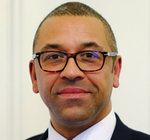
    The comments made by James Cleverly, the Foreign Secretary, on 18 October 2022.

    I’ve ordered the summoning of the Chinese Chargé d’Affaires to demand an explanation for the shocking scenes outside the Chinese Consulate-General in Manchester on Sunday.

    Peaceful protest is a fundamental right in the UK and the Chinese Government must respect that.