Tag: Speeches

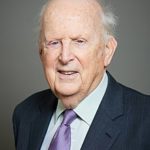
  • Malcolm Sinclair (20th Earl of Caithness) – 2022 Tribute to HM Queen Elizabeth II

    Malcolm Sinclair (20th Earl of Caithness) – 2022 Tribute to HM Queen Elizabeth II

    The tribute made by Malcolm Sinclair, 20th Earl of Caithness, in the House of Lords on 9 September 2022.

    My Lords, truly yesterday even the heavens cried, or, as they would say at Balmoral, they greeted.

    I mention Balmoral because that is where I was lucky enough to be brought up for the early part of my life. Yes, Her Majesty was the Queen, but, to me, she was a mother. To any boy aged six, as I was then, and upwards, she was primarily a mother; she was a mother who drove her children over to play with us occasionally. She was a mother who behaved as every mother I knew did. When she brought her children over, she sometimes joined in the game that we were going to play. To me, she was just another ordinary mother, as well as the Queen. She was a mother who was also interested in other people’s children. Most mothers did not bother to talk to a six or seven year-old, but the Queen did. I remember that very vividly, and the time that she was able to give to everybody and how she made us feel very special.

    A little later, I remember going to a small dance hosted by Queen Elizabeth the Queen Mother. We were doing one dance. I managed to catch my mother’s eye—that was a mistake—and I got one of those looks that only a parent can give their child. My sister and I were dancing a dance totally different to everybody else in the room. There was that lovely hiatus where I thought, “What’s going to happen now?” Well, the first thing that happened was that the Queen came over and said, “What are you dancing?” My sister explained that it was a new modern dance that she had just learned in London. The Queen said, “I’d like to learn how to do it”, and, very soon, we got the whole room doing it. It was a slight change from Scottish reels, but that is an example of the human side of Her Majesty.

    I remember Her Majesty’s love of the estate and the people who worked on it. We have heard tributes to how she cares for people. I remember her concern for everybody on that estate. I remember one particular conversation I had with her. We were sitting there on the hill, in glorious sunshine, and she said, “Malcolm, this is a very special environment. We have got to keep environments like this and our country, because that is what is important in the world.” She was way ahead of her time in thinking like that, because that is a fragile environment subject to all sorts of pressures, which we talked about only yesterday in this House.

    Nobody has mentioned the Queen’s love of animals. She was always very knowledgeable and interested in her garrons—I am not going to talk about her racehorses. The garrons played an integral part in life on the hill at Balmoral. She knew their pedigree; she knew what they did, and she knew them all by name. If one was ill, she would be very concerned as to its future. Besides her corgis, she was absolutely brilliant with Labradors. It is astonishing when you see somebody who is naturally good with dogs working a dog. There is that invisible thread that you have to be able to communicate with a working dog. The Queen had it in spades. How this person could come on to the hill, take the dog off the keeper, with the dog knowing who exactly was boss—not the keeper, but the Queen—and doing exactly what the Queen wanted it to do, was something very nice to watch and showed her great abilities.

    There were obviously times when, as a young boy, you would tend to forget that you were actually in the presence of the monarch. I remember the occasional proverbial clip round the ear by my father for some of the things I did, and I apologised to him for that, but I think that any youthful child would have done that.

    There were also times when the Queen suddenly slipped away to do something else—duty called. It was only much later in my life that I realised what that duty and that role was. Many of your Lordships have mentioned that, and I commend in particular the speeches of the Front Benches; I shall not say anything more on that.

    I would like to thank you, Ma’am, for all those wonderful happy memories and the great light that you shone in all our lives.

  • Michael Gove – 2011 Article in Daily Telegraph About Reading

    Michael Gove – 2011 Article in Daily Telegraph About Reading

    The article written by Michael Gove, the then Education Secretary, in the Daily Telegraph on 1 April 2011. The article was released as a press release by the Department for Education.

    Politicians probably shouldn’t make fashion statements. Few of us are likely to attract admiring glances on any catwalk. But this year, there is one must-have accessory that no one should be seen without: a book.

    Books complement any outfit and suit any season. But far too few of us make sure we’re carrying one. And we certainly don’t follow the first rule of fashion – to work the racks. We’re not picking up enough new books, not getting through the classics, not widening our horizons. In short, we’re just not reading enough.

    Visiting America last month, I was struck by the way a culture of reading is instilled in every child at the earliest possible age, even in schools serving the poorest pupils. In Washington DC, a group of children stopped, in the middle of an engineering project, to tell me about their favourite novels, from sci-fi to Charlotte Bronte. In one school run by the charter chain KIPP, every child was expected to carry a book at all times, so they could fill every vacant minute. In another KIPP school, children were challenged to read 50 books a year. This played to both their competitive instincts and their restless curiosity. A love of reading was seen as a winner’s trait.

    Across America, childhood reading has been encouraged in recent years by ‘Drop Everything And Read Day’ on April 12, which asks children to stop whatever else they’re doing and get lost in a book. In many charter schools, every day is a DEAR day: reading for pleasure becomes as natural as breaking for lunch.

    The children I met were smart and lively. But they were also, overwhelmingly, from the most disadvantaged homes. That didn’t mean their teachers lowered the bar. Quite the opposite. They wanted to give those children a chance to enjoy the glittering prizes – so they set expectations high, fostering a culture of excellence and making clear that nothing is as enjoyable as getting to know what the finest minds of all time have thought and written.

    I want the same culture here. I want to take on the lowest-common-denominator ethos, the “let’s not be too demanding”, “all this smacks of targets”, “the poor dears can’t manage it”, “the idea of a canon is outmoded”, “it’s all on the internet anyway” culture which is anti-knowledge, anti-aspiration and antithetical to human flourishing.

    Instead, I want a culture in which the more you read, the more you are celebrated. That’s why I have said we should set our own 50 book challenge. And that’s also why I want to develop a stronger and more durable culture of reading for pleasure. The need for urgency can’t be overstated. In the last 10 years we’ve slipped down the world rankings for literacy from 7th to 25th. And the poorest are suffering most. In 2009, more than one in five 14-year-old boys had a reading age of 9 or less: among white, working-class children, 63% couldn’t read and write properly.

    Even when children do engage with books, our constricted exam system doesn’t encourage them. The curriculum suggests authors from Pope and Dryden to Trollope and Tennyson – but the English Literature GCSE only actually requires students to study 4 or 5 texts, including one novel. In exams more than 90% of the answers on novels are on the same three works: Of Mice and Men, Lord of the Flies and To Kill a Mockingbird. Indeed, out of more than 300,000 students who took one exam board’s paper last year, just 1,700 studied a novel from before the 20th century: 1,236 read Pride and Prejudice, 285 Far from the Madding Crowd and only 187 coped with Wuthering Heights.

    This is why the government is taking action to encourage wide reading, for pleasure, again. We’ve already extended the Booktrust programme to help disadvantaged children develop their love of reading. This week, a new report has set out plans to put a new emphasis on literacy. Next year, we’re introducing a new check at age six to make sure children are on the right path. And shortly I’ll be announcing plans to ensure that our exams work to encourage broad reading.

    But we can’t just leave it to our teachers: we need to develop our own Drop Everything and Read initiative, and support competitions like the 50 Book Challenge. This country has the best children’s writers in the world. But while we celebrate Pullman and Rowling, Morpurgo and Rosen, Horowitz and Higson, many of our young people are growing up in ignorance of their work. That’s unacceptable. It’s my mission to change what we expect of young people, and reverse the fashionable assumption of far too many in education that children shouldn’t be challenged to achieve far more. In particular, I want the next generation to grow up with a real sense of style – the elegant prose style of those who have made the English language the greatest source of beauty in our world.

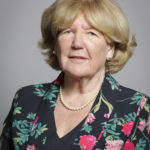
  • Ann Taylor (Baroness Taylor of Bolton) – 2022 Tribute to HM Queen Elizabeth II

    Ann Taylor (Baroness Taylor of Bolton) – 2022 Tribute to HM Queen Elizabeth II

    The tribute made by Ann Taylor, Baroness Taylor of Bolton, in the House of Lords on 9 September 2022.

    My Lords, the opening comments today have set the tone exactly right on how this House wanted to make its tributes to Queen Elizabeth. The Leader of the House, the shadow Leader, the noble Lord, Lord Newby, and the noble and learned Lord, Lord Judge, all presented, in their own ways, the whole feeling that we all have of respect, sorrow and pride in what Her Majesty had achieved—alongside the human side, which is also extremely important for us all to remember at this time. I thank noble Lords for those comments; it was the House of Lords at its best and encapsulated all that we feel.

    I will say a few words from my own personal experience. In 1997, I became the first woman to be appointed President of the Privy Council—it was an honour. It was also a strange event; the title had to be changed because previously it had been Lord President, and I am told that there were many discussions with the palace and the Cabinet Office as to whether that word—“Lord”—could be dropped. Indeed, the first time I met the Queen, she commented on the change, and we had a nice exchange of views as to what was going to happen in the future for more equality—she was very interested in that.

    Because I was President of the Privy Council, I had a one-to-one meeting with the Queen before each Privy Council meeting—every couple of weeks for that first year. During that time, I gained some insight into how she operated and what her attitude was. I will make one or two comments following on from what others have said. The Queen exhibited absolute professionalism and she was on top of everything. My noble and learned friend Lord Morris mentioned this in terms of the Welsh affairs, and the noble Baroness, Lady Benjamin, mentioned that the Queen had read every single newspaper. After each Privy Council meeting, we would gather and have a cup of tea. I sometimes thought that Her Majesty knew more about the SIs that we had just passed than many of the Ministers who had presented them—she really did her homework.

    Of course, mention has been made of the Queen’s sense of humour, which was really tested on occasions. One example is her straight face when one of my colleagues misread his instructions about kneeling at the first stool and taking the oath. He moved to the second stool—to begin kissing hands—by scurrying across the floor on his knees because he was in such deference to the occasion. It was even more amusing that this was one of my more left-wing colleagues. Although privy counsellors were trying their best not to laugh, the Queen dealt with that situation calmly.

    I think that many noble Lords have heard the story about Clare Short. We once had a Privy Council meeting to which Clare was late, so she barged into the room in a flurry, and we continued the meeting. Then Clare’s phone goes off—we were all told we must turn our phones off and leave them outside—and the Queen said, “I trust it wasn’t anybody important”, and we carried on with our proceedings.

    There was another side to the Queen: she could make her own decisions. When I was President of the Privy Council, we had a Privy Council dinner in the Royal Gallery to commemorate the 50th wedding anniversary of the Queen and Prince Philip—I think that some noble Lords here were present. The week before, there was a lunchtime reception in Banqueting House, attended by the Queen, and we had a Privy Council meeting shortly afterwards. She commented to me that the occasion at lunchtime had been very relaxed because they got speeches out of the way before they started the reception and went around talking to people. She thought it had been a nice change. So I said, “Why don’t we do that at the Privy Council dinner next week?” She said, “I think that is a good idea; I would enjoy it much more if we got the speeches out of the way”. When I returned to my office, the Queen’s private secretary was already plotting with my private office to ensure that it did not happen—but, in fact, the Queen had said that it should happen, and happen it did. So she could intervene to make decisions.

    The final point I raise is the kindness that she showed to the Ministers with whom she was dealing. It is never easy when you are sacked from the Cabinet to move on but, after I left office, I received an invitation three or four weeks later inviting me to tea. It was almost like a HR redundancy chat, because somebody was asking me about my plans and making suggestions —we were not just having a cup of tea. She then went on to talk about my family and how they talked about the situation. It is not surprising that everyone saw how close she was to her family, because she understood how other people’s families reacted to them in any set of circumstances.

    This afternoon, we have managed to capture the flavour of having such an astounding person as our monarch. At a time when the constitution is—shall we say?—challenged in some respects, to have had her there at the head of a constitutional monarchy has been a benefit to us all.

  • Martin Thomas (Baron Thomas) – 2022 Tribute to HM Queen Elizabeth II

    Martin Thomas (Baron Thomas) – 2022 Tribute to HM Queen Elizabeth II

    The tribute made by Martin Thomas, Baron Thomas, in the House of Lords on 9 September 2022.

    My Lords, the existence of Princess Elizabeth was borne in on me in 1947 at the time of the royal wedding. It was a blaze of sudden colour—and I still have the souvenir illustrated magazine that my mother kept—in a post-war world of austerity and ration books. “But where did she get the coupons for that dress?”, the grumpy ones said.

    After the shock of the death of her father, it was a struggle to find a television in our street where we could watch in black and white the Queen’s Coronation. However, the following year, I remember pouring out of school to greet her and her consort when they came to my home town of Wrexham on her coronation tour.

    I have no anecdotes. On the few occasions I met her personally, I was too tongue-tied to do much more than mumble my name. The noble Lord, Lord Wigley, and the noble and learned Lord, Lord Morris of Aberavon, referred to the first day of the opening of the Welsh Assembly, in which I played a less distinguished part. I found myself in the corridor leading from the front door to the Chamber, which was empty. At the far end, the noble Lord, Lord Elis-Thomas, the then Presiding Officer of the Welsh Assembly, was greeting Her Majesty. There were no doors, but I spotted the choir of the Welsh National Opera in an alcove; it was about to deliver a motet especially written for the Queen. As she passed along the carpet towards me, I joined the choir and did what was known in those days as a John Redwood: I opened my programme and mouthed the words as the choir of the Welsh National Opera looked at me in some astonishment.

    I knew the Queen and her family better than any family save my own—the media saw to that. She went through many highs and lows during her long lifetime. I have followed half a generation behind with my four children, encouraged and supported through the triumphs and disasters in my own family by the knowledge that she, though a Queen, had passed through similar personal difficulties with courage and determination. That is what is meant by the many people who are saying today, “She was part of my life”.

    I will speak of Balmoral. I first visited the castle and its grounds as a member of the public, as thousands do, in 1963. Ever since, I have spent much of every August in the valley of the Scottish Dee. I have walked around and above Loch Muick many times. I have climbed Lochnagar celebrating with friends in the June twilight, sitting at the summit and waiting for the sun to rise. I scaled it more than 20 years ago from the Glenshee road in solitary grief following the death of my wife, Nan. I have fished there since with my wife—my noble friend Lady Walmsley—below the famous, old military bridge across the Dee at Tulloch on the estate. On 18 August, only three weeks ago, my grandson caught his first salmon from a pool directly opposite Balmoral Castle.

    If I love that area as a tolerated visitor, how much more did Balmoral mean to the Queen? Where else could she enjoy peace, tranquillity and the absence of ceremony? I have never understood metropolitans who regard its glinting waters, dappled woods and wide, open hills as cold and boring. For me, it was entirely understandable that Balmoral should be the place where Her Majesty finally came home.

  • Sarah Teather – 2011 Article in Nursery World

    Sarah Teather – 2011 Article in Nursery World

    The article written by Sarah Teather, the then Children’s Minister, on 24 March 2011. The article was released as a press release by the Department for Education.

    Readers will know how committed this Government is to the early years – giving every child, regardless of their family circumstances, the opportunity to thrive and flourish.

    You will have seen at first hand the impact high quality early education can have on children’s life chances, but particularly for the most disadvantaged. It’s just not good enough that children from poorer families are still much less likely to access good quality early education and childcare than their wealthier peers – even though they stand to benefit the most.

    Evidence shows that less than half of all children who live in the most deprived areas achieve a good level of development at age 5 compared with nearly 70% of those living in the least deprived areas. That is why we have protected funding for free early education for 3- and 4-year-olds and have secured additional funding to provide free early education for the most disadvantaged 2-year-olds – despite the tough economic climate.

    It’s no accident that extending the free entitlement to the most disadvantaged 2-year-olds is the first clause in the Education Bill. We’re clear how important it is to the future prospects of so many children that we get this right.

    We moved a step closer to realising this ambition recently as all parties welcomed the extension of the free entitlement during the Education Bill Committee debate.

    In delivering this free entitlement, I know that many providers are doing an excellent job within the funding they receive, and we want to work with the sector to enable others to learn from their example.

    While funding levels are a matter for local authorities, we have made provision for 2-year-old places to be funded at a higher rate than 3- and 4-year-olds to reflect the higher ratio requirements for this age group.

    I know that some providers have concerns about the levels of funding they receive from their local authority. We are listening to those concerns and we are taking action to support providers:

    • All local authorities will introduce the early years single funding formula from April. This is a first step in improving efficiency and transparency in the way funding is distributed to providers in all sectors.
    • Later this year we will be consulting on the future of early education funding in the long term as part of the school funding review.
    • We are working to reduce burdens on providers who deliver free early education, minimise prescription from central government and allow more discretion at a local level. We will be working closely with colleagues from across the sector to streamline the code of practice and childcare sufficiency guidance.

    Funding for free entitlement places is just one part of a broader package of public support that providers can access. Many receive training and other assistance from their local authority to support improvements in quality and secure sufficient childcare provision.

    I hope that many providers will continue to choose to be part of the free entitlement scheme, offering a fantastic service to all families. But I accept that – for some – delivering the free entitlement may not fit within their business models and they may decide to opt out.

    During the Education Bill debate we reinforced our commitment to a universal entitlement to early education for all 3- and 4-year-olds that is completely free to parents. For the avoidance of any doubt, we do not see top-up fees as an answer to the concerns that some providers have expressed.

    The work to slim down the Code of Practice will not change the position on top-up fees, which are effectively prohibited by primary legislation. It is, however, a good opportunity to make sure all providers and local authorities fully understand the principles of the free entitlement – including what they can and cannot charge parents for. It is legitimate for providers to charge parents for lunch, additional activities or for additional hours outside of the free entitlement, but it is unacceptable for parents’ access to the free entitlement to be made in any way conditional on the purchase of these extras.

    We’re absolutely clear that making parents pay to access their free entitlement would be an insurmountable financial barrier for many families. It would mean that the very children who have the most to benefit from free provision would be unable to access it at all. As a government committed to tackling social inequality and supporting the most disadvantaged families, this isn’t something we would support.

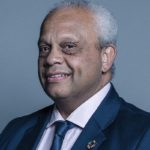
  • Michael Hastings – 2022 Tribute to HM Queen Elizabeth II (Lord Hastings of Scarisbrick)

    Michael Hastings – 2022 Tribute to HM Queen Elizabeth II (Lord Hastings of Scarisbrick)

    The tribute made by Michael Hastings, Lord Hastings of Scarisbrick, in the House of Lords on 9 September 2022.

    My Lords, I belong to a generation of Caribbean young who had parents and grandparents who bemoaned the end of the Empire. My father was from Angola, but my mother was from Sav-la-mar, Jamaica, and I will never forget her and her mother constantly wishing for the better days of the 1950s. On one occasion, I listened to my mother railing against the new democracy in Jamaica, saying “Tsk, dem all useless, but de Queen, she gorgeous.” That sense of affectionate love for this distant lady—our sovereign, her sovereign—was deep and immense.

    I also recall so clearly a radical Government appointed by election in the early 1970s who wanted to do away with the Queen’s Christmas Day broadcast. I remember from when I was a child the protests in Kingston. People came out on the streets for weeks, placarding and threatening to bombard the radio stations if they removed the broadcast. It continues to this day.

    In the opening remarks from the Leader of the House, the noble Lord, Lord True, and the Leader of the Opposition, the noble Baroness, Lady Smith, reference was made to the fact that the Queen passed through all these years without expressing an opinion. That is not quite correct, because I have the opinion in my hands in a letter from Balmoral Castle, which I am happy to show the House, dated 14 September 1976.

    Some 46 years ago, when I was just 18, I received a letter from the press secretary of Her Majesty the Queen, Ron Allison, who passed recently. He wrote:

    “I am commanded by The Queen to acknowledge your recent letter about the projected film on the life of Jesus Christ which a Mr. Jens Thorsen proposes to produce.”

    Some of the older Members here might recall the massive public debate in 1976 about a Danish filmmaker’s interest in the intimate life of Jesus. The letter goes on:

    “While Her Majesty finds this proposal quite as obnoxious as most of her subjects do, the preventing of the making of such a film in the United Kingdom, or the exclusion from this country of Mr. Thorsen, could only be accomplished within the laws of the United Kingdom. Accordingly, your letter has been referred at Her Majesty’s commands to the Home Office.”

    The then Home Secretary, Mr Merlyn Rees, found it impossible to allow entry to the country to pursue such a bizarre interest.

    Many years later, I met Ron Allison by mistake. He looked at me and said, “You’re—”, and I said, “Yes, and you’re—”. I was still in my early 20s. I said to him then, “Did you write the letter, or did Her Majesty the Queen dictate it?” He said, “Oh no, she dictated it.” So I said that she wished it be known that she had a view that this was obnoxious and, for those old enough to remember, it was front-page news for days. I still have all the cuttings from all those years ago. I featured on endless news broadcasts, as a young black man standing up at the age of 18 in defence of the faith and the Jesus she loved, and defending what should be proper process. Yes, the Home Secretary must decide, as he did, by order and command, but Her Majesty made it clear that things were “obnoxious”. That is the one view she expressed in her long reign, and I am proud to hold it in my hands.

  • David Hacking – 2022 Tribute to HM Queen Elizabeth II

    David Hacking – 2022 Tribute to HM Queen Elizabeth II

    The tribute made by David Hacking, Lord Hacking, in the House of Lords on 9 September 2022.

    My Lords, I spoke in this House on 26 May in the humble Address to Her Majesty the Queen on her Platinum Jubilee. I said that I could think of her only as a young Queen, because my early memories of Her Majesty were of when she was very young, having ascended the Throne aged 25. These memories are indelible for me.

    Coming to this House today, I was thinking of my very first memory of Her Majesty. I am quite sure that it is of her dedication address, as it is now called, broadcast from Cape Town on 21 April 1947. This has been cited by many before and since Her Majesty’s death, and was also cited in this debate by the Lord Privy Seal. I was only nine, and was not a listener to broadcasts or the radio, but my parents thought I ought to listen to this broadcast, which I did.

    I also remember clearly the circumstances of Her Majesty giving this broadcast from Cape Town. It was the first overseas visit by the Royal Family following the war and it was really made in honour of Field Marshal Smuts for his great help to our nation during World War II—he spent quite a lot of time here and almost became a member of the War Cabinet. I remember that, with no royal yacht available, the Royal Family travelled to Cape Town in the one remaining battleship after World War II, HMS “Vanguard”. I suppose it would have been a voyage of about three or four days down to South Africa.

    I am not going to add to the tributes that have already nobly been made. I endorse every tribute that I have heard, and I am sure that I will continue to endorse the further tributes that will be given in this debate. I would therefore like to turn to the new King, King Charles III, and my first memory of him.

    I have a very clear memory of when I was honoured to receive an invitation to Windsor Castle in about 1960 to attend an informal Christmas party for children and young persons. The King was only 12; I was a little older, at 22. I remember that the then Prince Charles was very shy. He stood by the Christmas tree during most of the party, just shyly observing what was happening. His Majesty the King is no longer shy, but he remains a very modest man. I have no doubt that he will be a most worthy successor to Her late Majesty the Queen.

    I now turn in my short intervention to quote from the dedication address:

    “I declare before you all that my whole life whether it be long or short shall be devoted to your service and the service of our great imperial family to which we all belong.”

    That is exactly what Her Majesty has done during the 70 years of her reign.

  • Queen Elizabeth II – 1953 Christmas Broadcast

    Queen Elizabeth II – 1953 Christmas Broadcast

    The Christmas Broadcast made by HM Queen Elizabeth II on 25 December 1953.

    Last Christmas I spoke to you from England; this year I am doing so from New Zealand.

    Auckland, which I reached only two days ago, is, I suppose, as far as any city in the world from London, and I have travelled some thousands of miles through many changing scenes and climates on my voyage here.

    Despite all that, however, I find myself today completely and most happily at home. Of course, we all want our children at Christmas time – for that is the season above all others when each family gathers at its own hearth. I hope that perhaps mine are listening to me now and I am sure that when the time comes they, too, will be great travellers.

    My husband and I left London a month ago, but we have already paid short visits to Bermuda, Jamaica, Fiji and Tonga, and have passed through Panama. I should like to thank all our hosts very warmly for the kindness of their welcome and the great pleasure of our stay.

    In a short time we shall be visiting Australia and later Ceylon and before we end this great journey we shall catch a glimpse of other places in Asia, Africa and in the Mediterranean.

    So this will be a voyage right round the world – the first that a Queen of England has been privileged to make as Queen. But what is really important to me is that I set out on this journey in order to see as much as possible of the people and countries of the Commonwealth and Empire, to learn at first hand something of their triumphs and difficulties and something of their hopes and fears.

    At the same time I want to show that the Crown is not merely an abstract symbol of our unity but a personal and living bond between you and me.

    Some people have expressed the hope that my reign may mark a new Elizabethan age. Frankly I do not myself feel at all like my great Tudor forbear, who was blessed with neither husband nor children, who ruled as a despot and was never able to leave her native shores.

    But there is at least one very significant resemblance between her age and mine. For her Kingdom, small though it may have been and poor by comparison with her European neighbours, was yet great in spirit and well endowed with men who were ready to encompass the earth.

    Now, this great Commonwealth, of which I am so proud to be the Head, and of which that ancient Kingdom forms a part, though rich in material resources is richer still in the enterprise and courage of its peoples.

    Little did those adventurous heroes of Tudor and Stuart times realise what would grow from the settlements which they and later pioneers founded. From the Empire of which they built the frame, there has arisen a world-wide fellowship of nations of a type never seen before.

    In that fellowship the United Kingdom is an equal partner with many other proud and independent nations, and she is leading yet other still backward territories forward to the same goal. All these nations have helped to create our Commonwealth, and all are equally concerned to maintain, develop and defend it against any challenge that may come.

    As I travel across the world today I am ever more deeply impressed with the achievement and the opportunity which the modern Commonwealth presents.

    Like New Zealand, from whose North Island I am speaking, every one of its nations can be justly proud of what it has built for itself on its own soil.

    But their greatest achievement, I suggest, is the Commonwealth itself, and that owes much to all of them. Thus formed, the Commonwealth bears no resemblance to the Empires of the past. It is an entirely new conception, built on the highest qualities of the spirit of man: friendship, loyalty and the desire for freedom and peace.

    To that new conception of an equal partnership of nations and races I shall give myself heart and soul every day of my life.

    I wished to speak of it from New Zealand this Christmas Day because we are celebrating the birth of the Prince of Peace, who preached the brotherhood of man.

    May that brotherhood be furthered by all our thoughts and deeds from year to year. In pursuit of that supreme ideal the Commonwealth is moving steadily towards greater harmony between its many creeds, colours and races despite the imperfections by which, like every human institution, it is beset.

    Already, indeed, in the last half-century it has proved itself the most effective and progressive association of peoples which history has yet seen; and its ideal of brotherhood embraces the whole world. To all my peoples throughout the Commonwealth I commend that Christmas hope and prayer.

    And now I want to say something to my people in New Zealand. Last night a most grievous railway accident took place at Tangiwai which will have brought tragedy into many homes and sorrow into all upon this Christmas day.

    I know there is no one in New Zealand, and indeed throughout the Commonwealth, who will not join with my husband and me in sending to those who mourn a message of sympathy in their loss. I pray that they and all who have been injured may be comforted and strengthened.

  • Queen Elizabeth II – 1954 Christmas Broadcast

    Queen Elizabeth II – 1954 Christmas Broadcast

    The Christmas Broadcast made by HM Queen Elizabeth II on 25 December 1954.

    It is now two years since my husband and I spent Christmas with our children. And as we do so today we look back upon a Christmas spent last year in Auckland in hot sunshine, thirteen thousand miles away.

    Though this was strange for us, we felt at home there, for we were among people who are my own people and whose affectionate greeting I shall remember all my life long. They surrounded us with kindness and friendship, as did all my people throughout the mighty sweep of our world-encircling journey.

    Nevertheless, to all of us there is nothing quite like the family gathering in familiar surroundings, centred on the children whose Festival this truly is, in the traditional atmosphere of love and happiness that springs from the enjoyment of simple well-tried things.

    When it is night and wind and rain beat upon the window, the family is most conscious of the warmth and peacefulness that surround the pleasant fireside.

    So, our Commonwealth hearth becomes more precious than ever before by the contrast between its homely security and the storm which sometimes seems to be brewing outside, in the darkness of uncertainty and doubt that envelops the whole world.

    In the turbulence of this anxious and active world many people are leading uneventful lonely lives. To them dreariness, not disaster, is the enemy.

    They seldom realise that on their steadfastness, on their ability to withstand the fatigue of dull repetitive work and on their courage in meeting constant small adversities, depend in great measure the happiness and prosperity of the community as a whole.

    When we look at the landscape of our life on this earth there is in the minds of all of us a tendency to admire the peaks, and to ignore the foothills and the fertile plain from which they spring.

    We praise – and rightly – the heroes whose resource and courage shine so brilliantly in moments of crisis. We forget sometimes that behind the wearers of the Victoria or George Cross there stand ranks of unknown, unnamed men and women, willing and able, if the call came, to render valiant service.

    We are amazed by the spectacular discoveries in scientific knowledge, which should bring comfort and leisure to millions. We do not always reflect that these things also have rested to some extent on the faithful toil and devotion to duty of the great bulk of ordinary citizens. The upward course of a nation’s history is due, in the long run, to the soundness of heart of its average men and women.

    And so it is that this Christmas Day I want to send a special message of encouragement and good cheer to those of you whose lot is cast in dull and unenvied surroundings, to those whose names will never be household words, but to whose work and loyalty we owe so much.

    May you be proud to remember – as I am myself – how much depends on you and that even when your life seems most monotonous, what you do is always of real value and importance to your fellow men.

    I have referred to Christmas as the Children’s Festival. But this lovely day is not only a time for family reunions, for paper decorations, for roast turkey and plum pudding.

    It has, before all, its origin in the homage we pay to a very special Family, who lived long ago in a very ordinary home, in a very unimportant village in the uplands of a small Roman province.

    Life in such a place might have been uneventful. But the Light, kindled in Bethlehem and then streaming from the cottage window in Nazareth, has illumined the world for two thousand years. It is in the glow of that bright beam that I wish you all a blessed Christmas and a happy New Year!

  • Queen Elizabeth II – 1955 Christmas Broadcast

    Queen Elizabeth II – 1955 Christmas Broadcast

    The Christmas Broadcast made by HM Queen Elizabeth II on 25 December 1955.

    No doubt you have been listening, as I have, to the messages which have been reaching us from all over the world. I always feel that just for these few minutes, the march of history stops while we listen to each other, and think of each other, on Christmas Day.

    For my husband and myself and for our children, the year that is passing has added to our store of happy memories. We have spent most of it in this country, and we have enjoyed seeing many parts of Britain which we had not visited before.

    Now a New Year will soon be upon us, and we are looking forward to seeing something of Nigeria, that great tropical land in Equatorial Africa where more than thirty millions of my people have their homes.

    For them and for all of us each New Year is an adventure into the unknown. Year by year, new secrets of nature are being revealed to us by science – secrets of immense power, for good or evil, according to their use. These discoveries resolve some of our problems, but they make others deeper and more immediate.

    A hundred years ago, our knowledge of the world’s surface was by no means complete; today most of the blanks have been filled in. Our present explorations are into new territories of scientific knowledge and into the undeveloped regions of human behaviour. We have still to solve the problem of living peaceably together as peoples and as nations.

    We shall need the faith and determination of our forebears, when they crossed uncharted seas into the hidden interiors of Africa and Australia, to guide us on our journeys into the undiscovered realms of the human spirit.

    In the words of our Poet Laureate:

    “Though you have conquered Earth and charted Sea
    And planned the courses of all Stars that be,
    Adventure on, more wonders are in Thee.

    Adventure on, for from the littlest clue
    Has come whatever worth man ever knew;
    The next to lighten all men may be you.”

    We must adventure on if we are to make the world a better place. All my peoples of the Commonwealth and Empire have their part to play in this voyage of discovery. We travel all together, just as the Maori tribes sailed all together into the mysterious South Pacific to find New Zealand.

    There are certain spiritual values which inspire all of us. We try to express them in our devotion to freedom, which means respect for the individual and equality before the law. Parliamentary Government is also a part of this heritage.

    We believe in the conception of a Government and Opposition and the right to criticise and defend. All these things are part of the natural life of our free Commonwealth.

    Great opportunities lie before us. Indeed a large part of the world looks to the Commonwealth for a lead. We have already gone far towards discovering for ourselves how different nations, from North and South, from East and West, can live together in friendly brotherhood, pooling the resources of each for the benefit of all.

    Every one of us can also help in this great adventure, for just as the Commonwealth is made up of different nations, so those nations are made up of individuals. The greater the enterprise the more important our personal contribution.

    The Christmas message to each of us is indivisible; there can be no “Peace on earth” without “Goodwill toward men”. Scientists talk of ‘chain reaction’ – of power releasing yet more power. This principle must be most true when it is applied to the greatest power of all: the power of love.

    My beloved grandfather, King George V, in one of his broadcasts when I was a little girl, called upon all his peoples in these words: “Let each of you be ready and proud to give to his country the service of his work, his mind and his heart.” That is surely the first step to set in motion the ‘chain reaction’ of the Powers of Light, to illuminate the new age ahead of us.

    And the second step is this: to understand with sympathy the point of view of others, within our own countries and in the Commonwealth, as well as those outside it. In this way we can bring our unlimited spiritual resources to bear upon the world.

    As this Christmas passes by, and time resumes its march, let us resolve that the spirit of Christmas shall stay with us as we journey into the unknown year that lies ahead.