Tag: Speeches

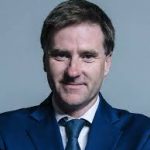
  • Steve Brine – 2022 Speech on the Government’s Preparations for Industrial Action in the NHS

    Steve Brine – 2022 Speech on the Government’s Preparations for Industrial Action in the NHS

    The speech made by Steve Brine, the Conservative MP for Winchester, in the House of Commons on 12 December 2022.

    With your indulgence, Mr Speaker, may I send our heartfelt sympathies to the parents of the little boys who have lost their lives in the west midlands overnight and say thank you to the emergency service workers, many of whom will have been from the NHS? I am sure they have done their best for those they pulled out and those they were unable to save.

    The Minister is right that we have an independent pay review process, but it seems that we are coming to an interesting junction point: either we believe in an independent pay review process, or we do not. We cannot be in a situation where everything is agreed until it is simply not, and then Ministers are negotiating pay. That is not what Ministers do.

    I am glad the Minister mentioned patients them at the end of his remarks. We must keep them as our focus. I have more information about my train services over the next few weeks than I do about health services. Is the Minister satisfied that patients have enough information about what is being affected and when, and how much it will impact on the backlog? I suspect none of this will help the workload pressures that are impacting our NHS.

    Will Quince

    I thank my hon. Friend for his question, and I echo his comments on the tragic events in Solihull, the boys who lost their lives and the heroic actions of those in the emergency services.

    My hon. Friend is also right to say that we have an independent pay review body, and we either agree and accept that that is the process, or we do not.

    On advice to the public, my hon. Friend is right that we have more to do in this space. Derogations are still being worked through with both individual unions and trusts. Patients should continue to call 999 as normal if it is an emergency and someone is seriously ill or injured. If they do not have life-threatening conditions, they should use NHS 111. Ambulances will still be responding to 999 calls. If patients have appointments, they should please turn up unless advised not to do so. He is right to make the point about communications, and I will be ramping this up when we know more about derogations.

  • Wes Streeting – 2022 Speech on the Government’s Preparations for Industrial Action in the NHS

    Wes Streeting – 2022 Speech on the Government’s Preparations for Industrial Action in the NHS

    The speech made by Wes Streeting, the Shadow Health Secretary, in the House of Commons on 12 December 2022.

    Thank you, Mr Speaker, for granting this urgent question. The power to stop these strikes likes squarely with the Government and the Secretary of State. The Royal College of Nursing and Unison have said that they will call off strikes this week if the Government are willing to negotiate with them seriously on pay. That reasonable offer of compromise is surely too good to refuse, so what on earth are the Government playing at? After 12 years of Conservative government, patients can no longer get seen on time and staff have been pushed to breaking point—and the Government cannot even be bothered to try to negotiate to prevent strikes from going ahead, at the worst possible time for patients and the NHS. The Government should ask themselves why, under a Conservative Government, nurses feel they have to take industrial action for the first time in more than 100 years and why ambulance workers are set to follow them for the first time since 1989.

    It should be obvious by now what the Conservative agenda is. The Government know that patients are going to suffer this winter and they have no plan to fix the problems of their own making, so instead of taking responsibility for their failure they want to use nurses and paramedics as scapegoats to avoid the blame. It is a disgusting plan, it is a dangerous plan, and it is a plan that will not work. The public know that the power to stop these strikes is in the Government’s hands. If they fail to act now, patients will never forgive them.

    How many operations have already been cancelled? How does the Minister expect those on the waiting list to feel if their operations are cancelled because of the Government’s gross negligence? Can he tell patients which services will be impacted if these strikes go ahead? Is the Secretary of State not embarrassed at Cobra today, asking the Army to come in to clean up the Government’s mess?

    Even at this last minute, it is not too late to prevent strikes from going ahead. Perhaps the Minister can tell us whether the meeting with the RCN later today will involve discussions on pay. And if not, why not? Because that is all it takes: just a few minutes or a few hours of talk can avoid strike action. Why will they not do it?

    Will Quince

    The fact is that Labour is all over the place when it comes to strikes. They criticise Ministers while admitting that the unions’ pay demands are unaffordable. The hon. Gentleman and his party leader are too tied to their union paymasters to be on the side of patients. He knows that we have an independent pay review body, and is important that both sides respect that independent body. We accepted the independent body’s recommendations for this year’s increase in full, meaning that over 1 million NHS staff have been given at least a £1,400 increase in their pay. That is on top of a 3% pay rise last year at a time when pay was frozen across the wider public sector. The RCN, one of the unions taking action, is asking for an increase that is 5% above the retail prices index. Based on latest figures, that is an increase of 19.2%, or the equivalent of 6.5% of the NHS budget. To meet such demands, we would have to take money away from clearing the elective backlog that the hon. Gentleman referred to, something no responsible Government would wish to do.

    Throughout this period, we have always sought to have a balanced process. Those in the private sector will not be getting a 19% uplift, and there is a clear need to be fair to the wider economy. We have to avoid inflationary pressures that would make us all poorer in the end.

    We will continue to listen to colleagues’ concerns, not just about pay but many other issues affecting the working lives of those in the NHS. We will work with them to make improvements in a range of areas, from working conditions to patient safety, because we believe there is so much that we can agree on. Strike action is in no one’s best interest. We will keep working so that the NHS continues to be there for those who need it most.

  • Will Quince – 2022 Statement on Preparations for Industrial Action in the NHS

    Will Quince – 2022 Statement on Preparations for Industrial Action in the NHS

    The statement made by Will Quince, the Minister of State at the Department for Health and Social Care, in the House of Commons on 12 December 2022.

    I am grateful to the hon. Member for his question, which I am taking on behalf of the Department as the Secretary of State is attending a Cobra meeting on contingency planning for industrial action in the NHS. He also came before the House on the subject twice last week: at departmental questions and for the Opposition day debate.

    We are all hugely grateful for the hard work and dedication of NHS staff, so we deeply regret that some union members have voted for industrial action. Our priority must be to keep patients safe. That begins with keeping the door open. The Secretary of State wrote to the Royal College of Nursing on Saturday asking for further discussions as a matter of urgency. At the same time, we are working with the NHS to minimise the disruption to patients if the strikes do go ahead. We are engaged with providers, professional bodies and trade unions to agree safe levels of cover should any action take place.

    In addition, this afternoon, Ministers—including the Secretary of State—are attending a Cobra meeting focused on our contingency plans. Our plans draw on extra support from a range of places, including service personnel and the private sector. While we aim to minimise disruption, with the NHS already under significant pressure from the covid pandemic and winter pressures, we remain deeply concerned about the risk that strikes pose to patients.

    I want to be clear that, even at this moment of uncertainty, people must keep coming forward to get the care that they need. People should continue to use NHS 111 if they need medical help and dial 999 in the event of an emergency. For more routine treatment, hospitals will do everything they can to ensure that planned procedures go ahead, but it is inevitable that any strike would mean some patients would have their treatment delayed. People will be contacted if their appointments need to be changed.

    It is our hope that patients can be spared from unnecessary and unjustified strikes. Industrial action is in no one’s best interests, especially in this difficult winter. We have had constructive meetings with the leadership of several unions, including the RCN, Unison, Unite and the GMB, and we look forward to further discussions to find a way forward together that is in the best interests of the patients we all serve.

  • Cherilyn Mackrory – 2022 Parliamentary Question on Women in the Armed Forces

    Cherilyn Mackrory – 2022 Parliamentary Question on Women in the Armed Forces

    The parliamentary question asked by Cherilyn Mackrory, the Conservative MP for Truro and Falmouth, in the House of Commons on 12 December 2022.

    Cherilyn Mackrory (Truro and Falmouth) (Con)

    What recent assessment his Department has made of the adequacy of progress towards creating a more inclusive environment for women in the armed forces.

    The Minister for Defence People, Veterans and Service Families (Dr Andrew Murrison)

    This is an important question and I thank my hon. Friend for it. Defence continues to improve the experiences of Defence women by introducing flexible service, working to improve health, instigating zero-tolerance policies on unacceptable sexual behaviours, launching the Defence Serious Crime Unit on 5 December and creating an independent bullying and harassment helpline. Defence Ministers and officials meet the servicewomen’s networks regularly. We have made progress, but we know that we must do more and continue to press ahead to make the armed forces the best place to work for women.

    Cherilyn Mackrory

    Next year, Falmouth in my constituency will host national Armed Forces Day. Following the success of last year’s G7, we hope that it will be yet another momentous occasion for Cornwall and that one of its lasting legacies will be that women and girls across Cornwall will be inspired to join the armed forces. I thank the Minister for his answer, but can he tell me to what extent the focus on inclusivity is resulting in better retention of women in the armed forces?

    Dr Murrison

    I agree with my hon. Friend and look forward to Armed Forces Day in Falmouth. Women are, of course, an integral part of our armed forces and Defence remains committed to improving their lived experience. In a competitive age, our advantage derives from the talent and skills of our people. We really must attract, recruit and retain people from the broadest base possible. Not only is that the right thing to do, but it is mission-critical to our operational effectiveness. We are committed to making the changes required to create a more inclusive environment for all women to pursue long and successful careers—including my two serving daughters.

  • Philip Hollobone – 2022 Parliamentary Question on Defence Support for Ukraine

    Philip Hollobone – 2022 Parliamentary Question on Defence Support for Ukraine

    The parliamentary question asked by Philip Hollobone, the Conservative MP for Kettering, in the House of Commons on 12 December 2022.

    Mr Philip Hollobone (Kettering) (Con)

    How many (a) armoured vehicles, (b) anti-tank weapons and (c) multiple-launch rocket systems his Department has donated to Ukraine for use against Russian forces in that country.

    The Secretary of State for Defence (Mr Ben Wallace)

    The UK is the second largest donor in military aid to Ukraine. We have gifted almost 200 armoured vehicles and more than 10,000 anti-tank missiles to Ukraine. We have also delivered a number of multiple launch rocket systems to counter Putin’s brutal use of long-range artillery, but, for reasons of operational security, I am unable to give a precise quantity.

    Mr Hollobone

    His Majesty’s Government have led Europe in arming Ukraine against Russian aggression. What assessment has the Secretary of State made of the equipment and personnel losses incurred by the Russian armed forces as a result of the deployment of British weaponry in theatre?

    Mr Wallace

    Although we do not specifically collect data on UK use of weapons, we can say that we estimate that more than 100,000 Russians are either dead, injured or have deserted. Russia has also lost 4,500 armoured vehicles, 63 fixed-wing aircraft, 70 helicopters, 150 unmanned aerial vehicles, 12 naval vessels and more than 600 artillery systems, and failed to capture a single one of its major objectives from day one. President Putin’s three-day war, or special operation, turns out to have been a disaster for him and his army.

    Richard Foord (Tiverton and Honiton) (LD)

    Ukrainians have been buying Mitsubishi L200 pick-up trucks from west country farmers to adapt them for use as impromptu fighting vehicles. As the first Boxer armoured vehicles arrive with the British Army in the coming months, what consideration are the Government giving to passing some of the retiring Warrior infantry fighting vehicles to Ukraine?

    Mr Wallace

    First and foremost, the type of weaponry and vehicles that the Ukrainians are buying off the shelf like that is not necessarily because of a lack of need elsewhere, but because of the speed and innovation that they require. When we transfer something like a Warrior armoured personnel carrier, it is tracked, it is—if my memory serves me right—28 tonnes, and it comes with a huge long logistical supply chain. We are very interested in making sure that we keep them supplied with equipment that they can use almost immediately rather than having to deal with the huge logistical tail that will come with it. We focus on giving them what we can. We have obviously supported the renovation of armoured vehicles and we will continue to do so.

    Boris Johnson (Uxbridge and South Ruislip) (Con)

    The House will know that supplies of British, American and other western equipment have been vital in helping our Ukrainian friends to protect themselves against the continuing and merciless Russian attacks, and I thank my right hon. Friend and the Government for all that they have done and continue to do. Does he agree that we and our allies must help our Ukrainian friends not just to take out the drones and missiles, which means supplying them with anti-aircraft systems and fixed-wing aircraft to help shoot them down, but to take out the launch sites of those missiles and drones by supplying the Ukrainians with the use of longer-range missile systems, such as army tactical missile systems? That is the way, truly, to protect our Ukrainian friends and to bring the war to an end as soon as possible.

    Mr Wallace

    Without my right hon. Friend’s support of me and Ukraine, none of this would have been possible. I place on record my great appreciation of his support through that process. He is right that the Russians are taking advantage of the short-range capability of the Ukrainian armed forces by using Iranian kamikaze drones and, against all the rules of law, including the Geneva conventions, by the mass targeting of critical civilian infrastructure. That is not only a war crime, but a war crime that we must see does not go unpunished. I constantly review the weapons systems we could provide; I hear his call for ATACMS from the United States, but we too have in our armoury potential weapon systems that are longer range and, should the Russians continue to target civilian areas and break those Geneva conventions, I will be open-minded about what we do next.

    Sammy Wilson (East Antrim) (DUP)

    At a recent event in Monkstown Boxing Club in my constituency, which was arranged to show support for Ukrainians located in the greater Belfast area, there was huge support and thanks for the work our Government have done to help Ukrainians to defend themselves against Russians. The question is this: we are supplying equipment, but there is talk now that we are only supplying very limited ammunition for that equipment. Is the Secretary of State convinced, first, that we are supplying what is needed and, secondly, that we have the capacity to supply what is needed in the future?

    Mr Wallace

    We are providing ammunition, although some of it is in the form not necessarily of mass shells, but of more sophisticated weapons systems such as Brimstone missiles or Saab Thales next generation light anti-tank weapons, made in Belfast. We continue to supply those and indeed resupply ourselves. For the areas where we do not have something, we have set up an international fund with the Danish, which has so far raised €600 million, and we will be announcing the first block of purchases from the international community or from production lines to make sure we help Ukraine to get through 2023.

  • James Duddridge – 2022 Parliamentary Question on Tackling Violent Extremist Organisations in Africa

    James Duddridge – 2022 Parliamentary Question on Tackling Violent Extremist Organisations in Africa

    The parliamentary question asked by Sir James Duddridge, the Conservative MP for Rochford and Southend East, in the House of Commons on 12 December 2022.

    Sir James Duddridge (Rochford and Southend East) (Con)

    What steps his Department is taking to help tackle violent extremist organisations in Africa.

    The Minister for Armed Forces (James Heappey)

    We are concerned by the growth of Daesh and the continued presence of al-Shabaab and Boko Haram across Africa. We are working closely with our partners across the continent, as well as with our international allies, to ensure that we counter the shared threats of violent extremism and terrorism. Obviously we are supportive of the missions led by the United Nations and the African Union, but we are also increasingly looking at how the UK can support regional solutions for regional problems, and how the UK works with friends such as Kenya, Ghana and Nigeria to support their leadership in the Sahel, the Lake Chad basin, the eastern Democratic Republic of the Congo and Somalia.

    Sir James Duddridge

    The Minister talks about recognised current terrorist organisations, but what assessment has he made of the Wagner Group in Africa, and would he recommend its proscription as a terrorist organisation?

    James Heappey

    Wagner’s presence in Africa is obviously deeply unhelpful, and it is cynical and opportunistic. It has no interest in the countries in which it operates; it is simply there to extract the maximum value for Russia, and potentially to cause as much chaos as it can for those of us who are trying to help on the continent. However, the Government do not routinely comment on whether an organisation is being considered for proscription.

  • Gagan Mohindra – 2022 Parliamentary Question on Supporting Defence Jobs

    Gagan Mohindra – 2022 Parliamentary Question on Supporting Defence Jobs

    The parliamentary question asked by Gagan Mohindra, the Conservative MP for South West Hertfordshire, in the House of Commons on 12 December 2022.

    Mr Gagan Mohindra (South West Hertfordshire) (Con)

    What steps his Department is taking to support defence jobs in the UK.

    Antony Higginbotham (Burnley) (Con)

    What steps his Department is taking to support defence jobs in the UK.

    The Minister for Defence Procurement (Alex Chalk)

    The most recent estimate shows that Ministry of Defence investment supports 219,000 jobs in industries across the United Kingdom. Continued high and focused investment in defence, along with the changes that we continue to make as part of our defence and security industrial strategy, will contribute to further economic growth and prosperity across the Union.

    Mr Mohindra

    I thank the Minister for that answer. Ahead of Armistice Day last month, I was contacted by Northwood military headquarters in my constituency to help organise a tour of this place for the submarine service. I thank Captain James Clark and Conservative Friends of the Armed Forces for their help in making that happen. Does the Minister agree that during this time of global turbulence we should do all we can to support and champion the members of our armed forces?

    Alex Chalk

    My hon. Friend is absolutely right, and I pay tribute to him for taking the time to visit the Northwood military headquarters. There are 1,600 active service personnel at Northwood HQ, and their work is crucial to protecting our people, territories, values and interests at home and overseas. He is right to pay tribute to them, and I join him in that.

    Antony Higginbotham

    Thanks to this Secretary of State for Defence, Lancashire is home to the newest part of the armed forces, the National Cyber Force. That brings huge opportunities to our county, not only through the thousands of armed forces personnel who will eventually be stationed there, but with the cyber-security companies that we hope will cluster around the site in the years ahead. To really seize the opportunity, however, we need to ensure that we give local people the skills they need to join the NCF or other cyber-security businesses. Will the Minister meet me to discuss what steps we can take to ensure that the MOD supports the growth of its cyber-cluster, centred on the NCF, and the links between the NCF and local education providers?

    Alex Chalk

    I thank my hon. Friend for his question and for the close interest he has taken in the establishment of the National Cyber Force in Samlesbury, which has cemented the north-west’s position as a key UK cyber-cluster. He will be aware that last week we announced the trilateral international partnership between the UK, Japan and Italy to develop next-generation Tempest fighters, which will also benefit the north-west. He is absolutely right that, with regard to skills, we need to encourage the creation of local partnerships between Government, industry and universities. I am pleased to note that Lancaster University has announced a £19 million investment in data and cyber-security research, teaching and innovation. I would, of course, be delighted to meet him.

    Mr Kevan Jones (North Durham) (Lab)

    The Defence Committee recently had before us representatives from Boeing, which has been awarded some £6 billion-worth of contracts in recent years. A representative confirmed that Boeing directly employs only 1,600 people in the UK. Does the Minister not agree that that is a pretty poor return on the investment and that it certainly would not be the case in the United States?

    Alex Chalk

    I met Boeing recently, and we are always keen to see investment in the UK. We are absolutely delighted that, because of the pipeline of investment that the Government have commissioned—from ships to cyber to space—we are investing in jobs and capability, and we are ensuring that we take expertise from wherever it is in the world, securing jobs in this country.

    Mr Speaker

    I call the shadow Secretary of State.

    John Healey (Wentworth and Dearne) (Lab)

    We welcome the Government’s commitment to job creation; the problem is that they are creating jobs abroad, including in Spain. The Defence Secretary has just picked a Spanish firm to build the Royal Navy’s three new fleet support ships. At least 40% of that work will go abroad and the best that the Defence Secretary could tell the Scottish Affairs Committee the other day was that the contractor will

    “fully assemble the final ship in a UK yard.”

    As a result of the Defence Secretary’s decision, how many jobs will be created in Spain and not in the UK?

    Alex Chalk

    Respectfully, I completely reject the tenor of that question. We should be celebrating the fact that, as a result of the commitment that we are making to UK shipbuilding, there will be 2,000 jobs in the UK and there will be shipbuilding industries in Appledore and in Northern Ireland. That comes on top of the 1,700 jobs secured as a result of the Type 26, the 3,000 jobs as a result of cyber investment and further jobs in respect of the future combat air system. This Government are investing in defence, in shipbuilding, in land, in sea and in air. We will continue to do exactly that.

    John Healey

    Well, the Minister told me in answer to a parliamentary question that the

    “number of jobs sustained in Spain…is a matter for the contractor”.

    We could have had 100% of the jobs in Britain. This is a dodgy decision, whichever way we view it. On 21 November, I received confirmation in a written answer that the prime contractor for this £1.6 billion contract will be a company that was registered only in May, with no trading history, with capital of just £10,000 and with two directors, both living in Spain. What guarantees can the Minister give the British taxpayer and the Royal Navy that this contract will not betray British jobs and UK industry?

    Alex Chalk

    What I genuinely do not understand is why the Opposition are not welcoming a deal that is bringing more than £70 million into Belfast, securing jobs in the shipbuilding industry in this country and ensuring, by the way, that the base of industrial support goes beyond the traditional Scottish yards to include yards in Belfast and, indeed, in Appledore. That is good news. As for the right hon. Gentleman’s point about other countries playing a role, let us not forget that one of the great successful procurements is the F-35. That is an American plane—of course it is—but who produces 15% of the components? The United Kingdom does. That is exactly what happens in these sorts of contracts, and it gets value for money for taxpayers.

    Mr Speaker

    I call the SNP spokesperson.

    Dave Doogan (Angus) (SNP)

    All credit to Babcock—maybe the Minister will join me in congratulating it—for securing the Natural Environmental Research Council’s £45 million fleet renewal programme. Of course, Babcock and BAE should be gearing up to do 100% of the fleet solid support ships in a distributed model across the UK, but they are not, because this Tory Government have awarded a £1.6 billion contract for three ships to Navantia in Spain. When Sir John Parker, in his national shipbuilding strategy—[Interruption]—maybe the Secretary of State could pipe down a second. When Sir John Parker stressed that the Ministry of Defence should embrace smart procurement, invest in yards and apprenticeships, and commission ships with an eye to export, did the Government realise that he was talking about yards in the UK, not in Spain?

    Alex Chalk

    I listened very carefully to that question but, with respect, we will not take lectures from an SNP Government who put a ship in the water in 2017—a ferry that has now failed to be developed. We are proud that we have got behind the Type 26, which is benefiting the Scottish economy, and indeed the British economy, with an additional 2,000 jobs as a result of the five vessels that we have continued to commission. This Government are investing in broad-based maritime capacity in this country, now and in the future, and developing our capability here in Britain.

    Dave Doogan

    We hear all the time about the strength of the Union for orders into Scottish yards, but Scotland, still stuck in this necrotic Union, loses out no matter what happens, when this Secretary of State awards work to Cádiz that should have gone to the UK—it’s heads, the UK wins; tails, Scotland loses. I wish Appledore in Devon and Harland and Wolff in Belfast all the best, but without the requisite workforce or skills, they are simply the Union flag gift-wrapping that this Defence Secretary has given to the Spanish shipbuilding industry. I ask the Government and the increasingly ridiculously titled shipbuilding tsar: contrary to his own claims, when the bulk of this work is delivered in Spain, will this Secretary of State and his ministerial team resign?

    Alex Chalk

    It is very important that the House is not misled in any way. It is not the case that the bulk will be built in Spain. Quite the opposite: the majority will be built in the United Kingdom. All the assembly and all the integration will happen here in the United Kingdom. I hope the hon. Gentleman will celebrate the fact that the Type 26, built in Scotland, secures 1,700 jobs and includes the potential for exports. Govan, Rosyth, Scotstoun—all those yards are being nurtured and supported by the power and might of the UK Union. That means that Scotland’s place is better in the Union, and the British Union is advantaged as well.

  • G7 + Ukraine – 2022 Joint Leaders’ Statement

    G7 + Ukraine – 2022 Joint Leaders’ Statement

    The statement made by the G7 and Ukraine on 12 December 2022.

    We, the Leaders of the Group of Seven (G7), met on 12 December, to reflect on progress of our cooperation under Germany’s Presidency to jointly address global challenges at a time of severe geopolitical crisis and critical moment for the world economy. We were joined by Ukraine’s President Volodymyr Zelenskyy. This year in the face of Russia’s illegal, unjustifiable and unprovoked war of aggression against Ukraine, we stood more united than ever, together with Ukraine and in unwavering commitment to our shared values, the rules-based multilateral order and international cooperation.

    Today, we reaffirm our unwavering support for and solidarity with Ukraine in the face of ongoing Russian war of aggression for as long as it takes. We condemn Russia’s continuous inhumane and brutal attacks targeting critical infrastructure, in particular energy and water facilities, and cities across Ukraine, and recall that indiscriminate attacks and attacks on the civilian population or civilian objects, constitute a war crime. We also condemn those who are facilitating Putin’s illegal war. We are determined to help Ukraine repair, restore and defend its critical energy and water infrastructure. We will help Ukraine in meeting its winter preparedness needs, will continue to support Ukraine’s civilian resilience, and will further enhance our efforts on this during the international conference to be held in Paris on 13 December. We are determined that Russia will ultimately need to pay for the restoration of critical infrastructure damaged or destroyed through its brutal war. There can be no impunity for war crimes and other atrocities. We will hold President Putin and those responsible to account in accordance with international law. We reiterate that Russia’s irresponsible nuclear rhetoric is unacceptable and that any use of chemical, biological, or nuclear weapons would be met with severe consequences.

    Building on our commitments so far, we will continue to galvanise international support to help address Ukraine’s urgent short-term financing needs. We ask our Finance Ministers to convene shortly to discuss a joint approach for coordinated budget support in 2023. We affirm that the International Monetary Fund (IMF) should be central to this effort.

    We firmly support efforts to secure Ukraine’s immediate financial stability and its recovery and reconstruction towards a sustainable, prosperous and democratic future, in line with its European path. We will build on the outcomes of the International Expert Conference on the Recovery, Reconstruction and Modernisation of Ukraine held on 25 October in Berlin, as well as at the Ukraine Recovery Conference on 21-22 June 2023 in London. In particular, with a view to supporting Ukraine’s repair, recovery and reconstruction, together with Ukraine and our international partners and in close coordination with relevant International Organisations and International Financial Institutions, we will establish a multi-agency Donor Coordination Platform. Through this platform, we will coordinate existing mechanisms to provide ongoing short- and long-term support – with particular responsibility by the Finance Track for short term support – , coordinate further international funding and expertise, and encourage Ukraine’s reform agenda as well as private sector led growth. We will also set up a Secretariat for the Platform. We will each designate a senior government representative to oversee the set-up of the platform and ongoing coordination efforts, and ask them to convene as soon as possible in January 2023.

    With a view to a viable post-war peace settlement, we remain ready to reach arrangements together with Ukraine and interested countries and institutions on sustained security and other commitments to help Ukraine defend itself, secure its free and democratic future, and deter future Russian aggression in line with its rights enshrined in the UN Charter.

    We will continue to coordinate efforts to meet Ukraine’s urgent requirements for military and defense equipment with an immediate focus on providing Ukraine with air defense systems and capabilities.

    We also reiterate our strong condemnation of Russia’s continued seizure and militarization of Ukraine’s Zaporizhzhya Nuclear Power Plant, the abduction and reported abuse of Ukrainian personnel, and the willful destabilization of its operations. We support the International Atomic Energy Agency’s (IAEA) efforts to establish a Safety and Security Zone.

    Russia’s war of aggression must end. To date, we have not seen evidence that Russia is committed to sustainable peace efforts. Russia can end this war immediately by ceasing its attacks against Ukraine and completely and unconditionally withdrawing its forces from the territory of Ukraine. We welcome and support President Zelenskyy’s initiative for a just peace.

    We remain committed to our unprecedented coordinated sanctions measures in response to Russia’s war of aggression. We will maintain and intensify economic pressure on Russia and those who evade and undermine our restrictive measures. We will continue to shield vulnerable countries that are severely impacted by the repercussions of Russia’s war of aggression and its weaponization of energy and food.

    We reaffirm our intention to phase out Russian-origin crude oil and petroleum products from our domestic markets. During the week of 5 December 2022, the price cap on seaborne Russian crude oil entered into force in our respective jurisdictions, delivering on our commitment to limit Russia from profiting from its war of aggression against Ukraine, to support stability in global energy markets and to minimize negative economic spillovers of Russia’s war of aggression, especially on low- and middle-income countries. We encourage third countries that seek to import seaborne Russian-origin crude oil and petroleum products to leverage the price cap. We reiterate our decision that the price cap on Russian origin petroleum products will enter into force on 5 February 2023.

    Russia’s war in Ukraine is exacerbating existing fragilities in the global economy, with direct impacts on the cost of living of people in our own countries, and on the world’s most vulnerable. We will continue to use all available policy tools to maintain global financial, macroeconomic and price stability and long-term fiscal sustainability, while providing targeted support to those most in need and working collaboratively to strengthen our collective economic security to external shocks and wider risks. We will make public investments and structural reforms to promote long term growth. We will further coordinate to respond to the urgent needs of most vulnerable countries and will encourage private investment in developing and emerging markets as a key enabler of sustainable economic pathways.

    We will keep up our ambition to address global food insecurity, including through the Global Alliance for Food Security. We will keep supporting the delivery of grain and fertilizers to vulnerable countries in need and welcome the recent operations led by the World Food Programme (WFP) on this front. We welcome the extension of the Black Sea Grain Initiative (BSGI) alongside further efforts to bring Ukrainian food to the world, namely the European Union’s Solidarity Lanes and the “Grain from Ukraine” Initiative.

    Reaffirming our steadfast commitment to implement the Paris Agreement and the outcomes of COP26 and COP27, we commit to urgent, ambitious, and inclusive climate action in this decade to limit global warming to 1.5°C above pre industrial levels. We reaffirm our commitment to reach net-zero emissions no later than 2050. To that end, and building on our statement adopted in June in Elmau, we endorse the Climate Club’s terms of reference as established by the Climate Club Task Force and hereby establish an open and inclusive international Climate Club. Focusing in particular on the decarbonisation of industries, we will thereby contribute to unlocking green growth. We invite international partners to join the Climate Club and to participate in the further elaboration of its concept and structure. In doing so, we will continue working closely together with relevant international organizations and stakeholders. We ask the Organisation for Economic Cooperation and Development (OECD), in tandem with the International Energy Agency (IEA), to host an interim secretariat working together with other international organizations.

    Recalling our commitment to halt and reverse biodiversity loss by 2030, we will work intensively towards a successful outcome at CBD COP15, in particular the adoption of an ambitious and effective global biodiversity framework, with clear and measurable targets and its prompt and swift implementation. In this regard we are committed to mobilising resources from all sources and to substantially increasing our national and international funding for nature by 2025 to support the implementation of ambitious global framework. We encourage countries beyond the G7 to join us in this endeavor.

    Accelerating our contributions to the Partnership for Global Infrastructure and Investment (PGII) to make our global partners a better offer on sustainable, inclusive, climate-resilient, and quality infrastructure investment, we welcome the progress on the Just Energy Transitions Partnerships (JETP) with South Africa and Indonesia as flagship projects for multilateral cooperation, just energy transition and sustainable investment and look forward to swiftly concluding negotiations on a JETP with Vietnam, as well as to making further progress with India and Senegal. We will intensify our cooperation within a PGII working group to deliver on our joint ambition to mobilize up to 600 billion dollars by 2027, and on JETPs, we will coordinate through the JETP working group.

    Reaffirming our full commitment to realise gender equality and to consistently mainstream gender equality into all policy areas, we welcome the key recommendations by the Gender Equality Advisory Council (GEAC) and look forward to receiving the GEAC’s full report by the end of the year. We thank this year’s GEAC for its important work, reiterate our intention to convene the GEAC as a standing feature of all G7 Presidencies, and look forward to further strengthening it.

    This year, we have achieved progress to improve the global health architecture with the WHO at its core, our capacity to prevent, prepare for and respond to future global health emergencies and to achieve universal health coverage, especially through the G7 Pact for Pandemic Readiness endorsed in Elmau. We welcome the successful Seventh Replenishment of the Global Fund for AIDS, Tuberculosis and Malaria (Global Fund). We will step up our efforts on training and qualifying health workforce as well as strengthening surveillance capacities to detect outbreaks and variants as early as possible by integrating the One Health approach. We will continue to support science to develop safe and effective vaccines, therapeutics, and diagnostics.

    Under the German Presidency, we, the G7, together with other international partners, have demonstrated our resolve to jointly addressing both major systemic challenges and immediate crises of our time. Our commitments and actions pave the way for progress towards an equitable world. As we look to the 2023 G7 Summit in Hiroshima under the Japanese Presidency, and in our support to the Indian G20 Presidency, we stand strong, united and absolutely committed to rebuilding a peaceful, prosperous and sustainable future for all.

  • James Cleverly – 2022 Speech on Human Rights Day

    James Cleverly – 2022 Speech on Human Rights Day

    The speech made by James Cleverly, the Foreign Secretary, on 12 December 2022.

    As you gather to mark International Human Rights Day:

    • in Ukraine, civilians gather in shelters from bombardment, as prosecutors gather evidence of atrocities and sexual violence, committed by Vladimir Putin’s forces
    • in Iran, brave peaceful protestors continue to gather on the streets in spite of the brutal crackdown. The Islamic Revolutionary Guard Corps report that the average age of those arrested is 15. We know many are young girls, who have gathered the courage to call for freedoms they’ve never had before
    • in Afghanistan, women and girls are also being targeted. And erased from all spheres of public life
    • and in China and Russia, we’ve seen protestors so concerned about speaking out, that they hold aloft blank sheets of paper

    2022 has been a bad year for the respect for human rights in many, many countries.

    If you take a step back for a moment, all this evidence confirms my belief, that autocracy and repression are always fundamentally wrong, and fundamentally destabilising. And that human rights, and transparent democratic government, are in the interests of all people, all economies and the long term stability of every nation.

    That is why I believe in human rights. There are now 8 billion people on this planet, and each and every one should be able to enjoy their rights and fundamental freedoms, as set out in the Universal Declaration and subsequent Conventions, and I will do all I can as Foreign Secretary to ensure that they can.

    On Friday, on International Anti-Corruption Day, the UK government announced a package of sanctions targeting those involved in serious human rights abuses and violations, and serious corruption. Sanctions are one of a wide range of diplomatic and development tools that we will use to promote human rights, to promote freedoms, and to promote democracy.

    We will continue to shine a spotlight on human rights violations – including through the UN Human Rights Council.

    We will not shy away from difficult conversations – be it on the arbitrary detention, torture or forced labour in supply chains.

    We will offer advice and expertise to improve human rights adherence – as we do with countries across the world.

    We will strengthen our partnerships with allies to promote and protect rights and accountability – as we did at the PSVI Conference.

    We will defend the international human rights system – and use it to hold those who violate or abuse human rights to account.

    Hand-in-hand with standing up for human rights, we will continue to build democratic resilience, promote civil space, and nurture the institutions of free and open societies. Central to which, we will continue to support and work with civil society, particularly human rights defenders and free media.

    Because human rights cannot be fully enjoyed without democratic freedoms. And democratic freedoms cannot be fully realised where there is a lack of respect for human rights.

    Human rights, underpinned by democratic values and the rule of law, have the power to unite, to transform lives, and to change the world for the better. As Foreign Secretary I will work tirelessly with all our allies to promote and protect them.

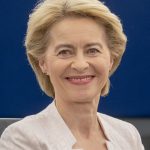
  • Ursula von der Leyen – 2022 Speech at REPowerEU: Outlook on EU Gas Supply in 2023

    Ursula von der Leyen – 2022 Speech at REPowerEU: Outlook on EU Gas Supply in 2023

    The speech made by Ursula von der Leyen, the President of the European Commission, on 12 December 2022.

    Good afternoon,

    I am very happy to welcome here Fatih Birol. We had a very good discussion on an energy outlook for Europe and how to deal with the unprecedented disruptions that have been caused by Russia’s atrocious war. Russia has indeed cut its pipeline supplies by 80% – if you compare September of this year to September of last year. We all know that these pipeline gas cuts have added unprecedented pressure on the global energy markets, with severe knock-on effects on Europe’s energy system. But I want to emphasise that despite these enormous cuts, we have been able to manage, we have been able to withstand the blackmail. We have acted, and we have acted successfully. Seven months ago, in May, we have presented our response to this Russian blackmail by putting on the table REPowerEU, our plan to reduce the demand for Russian gas by two-thirds before the end of this year. And we have underpinned this proposal with an investment plan of up to EUR 300 billion. In just a few months, we have turned the REPowerEU plan into many different legislative proposals and actions on the ground. And I think it is worth looking at that. Basically, we have taken ten different actions in the last ten months.

    The first one is: we have enormously diversified away from Russian fossil fuels, away from Russian gas supplies towards other reliable, trustworthy suppliers. Second, we are saving energy. We have introduced, as you all know, the target to reduce gas demand by 15%. If we look at the data from early autumn, we are very well on track. It is good that we are saving energy and we have to keep on saving energy. The third point is: we are boosting the roll-out of renewables. If you look at the year 2022, we will have added almost 50 gigawatts of new capacity that is almost doubling the additional capacity of renewable energy, mostly from wind and solar. For us, this is very important because this is not only good for the planet, but we know that renewables are home-grown, they create good jobs here and they create independence and security of supply.

    The fourth point is that, in this context of renewables, we have proposed to speed up drastically the permitting process for renewables. We know that many projects are basically ready to go if the permitting was there, so this has to be faster. Therefore, we have put a proposal on speeding up the permitting process on the table. The fifth point is that we have put in place a minimum gas storage obligation. Our storages are now filled by more than 90%, so we have overshot the target, that is very good, and we are well above the previous five-year average.

    The sixth point is on solidarity. We have proposed default arrangements for the supply of gas between Member States where solidarity agreements are not yet in place to make sure that in an energy emergency, we can ensure that the gas is going and flowing where it is most needed. The seventh point is: we have set up a platform for the joint purchasing of gas, to increase our negotiation leverage and get better prices. I think it is unacceptable that different Member States are outbidding each other on the global market and thus driving up the prices. Therefore, it is important that we join forces for the negotiation on a global level.

    The eighth point is: we have improved our infrastructure. We have four new interconnectors that became operational this year. It is the Baltic Pipe, it is the interconnector Poland-Lithuania, the interconnector between Bulgaria and Greece, and the gas interconnector between Poland and Slovakia. The ninth point I want to highlight is the fact that we have put out a legal framework that enables Member States to skim off the windfall profits, the super profits of energy-producing companies, to take this money and to support by that the vulnerable households and the vulnerable businesses in a targeted manner. And finally, the tenth point is: we proposed a market correction mechanism, also known as the price cap, to limit spikes in gas prices at TTF level.

    Many of these measures have been adopted, some at record speed. And there are many examples that show that change is beginning – for example the massive and rapid uptake of heat pumps in Poland. The result of all these actions is that we are safe for this winter. Russia’s blackmail has failed. However, some of our proposals are still under discussion and they are essential for our energy preparedness. Therefore, I call on the Council to adopt them swiftly, because preparing for the next winter of 2023-2024, starts now. Now that we are turning our focus to the winter 2023-2024, I am very pleased, dear Fatih Birol, that we have worked on that so intensively together. One month ago, your message was very clear and you underpinned your message with figures. You said very clearly the coming winter will be even more challenging. And Europe needs to step up its efforts in several fields. You outlined the risks: It might be possible that Russia cuts the rest of the pipeline gas supply; China could lift the COVID-19 restrictions and thus go back to energy demand on the global market on pre-COVID-19 level; and of course, this year we benefitted from an extraordinary warm winter – this could also be different next year.

    I know from your data that despite the actions that we have taken, we might still face a gap of up to 30 billion cubic metres of gas next year. The actions that we have set in motion will help cover part of this, but more is needed. Here, I want to look at a few priorities we need to focus on. The first one is of course the LNG supply. I am confident that we will secure similar volumes of LNG next year as we had this year. This year, we had up to 130 billion cubic metres of LNG. For this, we of course have to further intensify our outreach to our international partners.

    My second point is: It is now time that we make joint purchasing a reality. We have the Energy Platform in place, now we have to operationalise the joint purchasing mechanism. Every day of delay comes with a price tag. We have discussions with Member States, partner countries and their companies that are ongoing. This evening, I will discuss this with the Norwegian Prime Minister, for example. We can launch the first tender for demand aggregation by the end of March. But for that, we need to have an agreement on the Emergency Regulation we proposed on 18 October, and we need it now.

    And my final point is that the greatest potential for energy in the European Union is in our own hands. We must scale up and accelerate the deployment of renewables. We must go big and we must be fast. With the right policies in place, we can even double the capacity of renewable energy that we will add to the market next year. And the case has never been stronger. In 2022, we had record additions of wind and solar capacity in the European Union. And we expect renewable capacity to rise even further in the coming year, replacing around 12 billion cubic metres of gas. And you are showing us with your additional measures that we can add an additional 7.5 billion cubic metres. So, if you look at the overall scope: efficiency, savings, joint purchasing, renewables – this might be the mixture we need to make up for the missing gas next year. We have taken the action that is necessary. Our proposals are now on the table.

    My last comment is on the bigger picture. Because if we look at the bigger picture, we also see that we need an increase in public investments in the energy transition. Mostly to ensure the competitiveness of our European industry in the energy transition, we need additional public investments at national level and at European level. You know that in the short term, we will propose to boost REPowerEU. REPowerEU is our vehicle, the framework for investment in clean tech. And this is one part of our response to the US Inflation Reduction Act. But we also know that in the mid-term, we have to step up. There, we will work on setting up a sovereignty fund to make sure that Europe continues to be the global leader in clean tech. Where we have to help our industry is now, in this high energy price environment, to bridge the transition to green, clean energy that is affordable and secure. Therefore, this funding is necessary.

    Our work has been good this year, we see the progress, we have come quite a long way. But we know that we are not done with our work until families and businesses in the European Union have access to energy that is affordable, that is secure and that is clean.

    Thank you so much.