Tag: Speeches

  • Dehenna Davison – 2022 Statement on the Community Ownership Fund

    Dehenna Davison – 2022 Statement on the Community Ownership Fund

    The statement made by Dehenna Davison, the Parliamentary Under-Secretary of State for Levelling Up, Housing and Communities, in the House of Commons on 12 December 2022.

    Over the weekend I was delighted to announce the outcome of round 2 window 1 of the £150 million Community Ownership Fund, which will see £6.7 million awarded to 32 projects across the United Kingdom. Combined with round 1 projects, this additional funding takes our overall funding total to £16.7 million for 70 projects.

    This targeted support is delivering much needed investment to ensure that important parts of our social fabric, such as pubs, sports clubs, theatres and post office buildings, can continue to play a central role in towns and villages across the United Kingdom. In this round we will be funding a diverse range of projects, from the Margaret Haes Riding Centre in Bury to the Llandyrnog Community Shop in the Vale of Clwyd.

    The Community Ownership Fund is helping to reduce geographical disparities across the United Kingdom. To this end, the funding provided in round 2 window 1 will see over £800,000 awarded to projects in Scotland, £1.1 million to Wales and £555,000 to Northern Ireland. This, so far, brings the total funding awarded across Scotland, Wales and Northern Ireland to £4.9 million collectively.

    The funding provided in round 2 window 1 will also see £4.2 million awarded to projects in England. This brings the total funding awarded across English regions to £11.8 million collectively.

    The projects supported by the Community Ownership Fund, such as the United Kingdom’s most remote pub, The Old Forge in Scotland, Ballymacash Sports Academy in Northern Ireland, and the Leigh Spinners Mill in Greater Manchester, are already making a genuine difference to their communities. With the additional investment awarded in this bidding window, I am delighted to be supporting many more small but mighty local assets across the United Kingdom, levelling up the places we love and cherish.

    Interested groups can submit an Expression of Interest form to start their application process at any time. With a four-year window until 2024-25 for investment to be released, there is plenty of opportunity for interested community groups to apply to take over invaluable community assets and to run them as businesses—by the community, for the community.
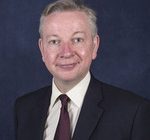

  • Michael Gove – 2022 Statement on the Local Government Finance Settlement in England

    Michael Gove – 2022 Statement on the Local Government Finance Settlement in England

    The statement made by Michael Gove, the Secretary of State for Levelling Up, Housing and Communities, in the House of Commons on 12 December 2022.

    Today the Government have published details on the Local Government Finance Settlement for the next two years for English councils, which prioritises protecting local taxpayers and vital core services. Local government has long called for greater certainty on funding following repeated one-year settlements, greater local control of finances, and a focus on social care. This two-year policy statement delivers on all of these fronts.

    The Government estimate that on average councils will see an increase of around 9% in their funding next year. We have delivered on the sector’s requests for additional funding through the £2.8 billion announced at the autumn statement for social care. We are also ensuring that this year’s settlement provides support across all tiers of local government through a new, one-off funding guarantee that ensures all local authorities will see a minimum 3% increase in their core spending power before taking any local decisions on council tax levels. Councils are best placed to make local decisions to meet pressures and ensure that our most vulnerable in society get the support they need, and therefore it is for individual local authorities to determine the level of flexibility they use in setting council tax. The policy statement confirms a core referendum principle of up to 3% for both 2023-24 and 2024-25.

    The Government’s manifesto commit to continuing to protect local taxpayers from excessive council tax increases, and it is for the House of Commons to set an annual threshold at which a council tax referendum is triggered. This is an additional local democratic check and balance to avoid the repeat seen under the last Labour Government when council tax more than doubled. This package of referendum principles strikes a fair balance. The council tax referendum provisions are not a cap, nor do they force councils to set taxes at the threshold level.

    Councillors, mayors, police and crime commissioners, and local councils will rightly want to consider the financial needs of local residents at this challenging point in time, alongside the public’s support for action on keeping our streets safe and providing key services.

    The Mayor of London has requested flexibility to levy an additional £20 on band D bills to the Greater London Authority precept to provide extra funding for Transport for London. The Government have expressed ongoing concern about the management of TfL by this Mayor, and it is disappointing that London taxpayers are having to foot the bill for the GLA’s poor governance and decision making. While the Government will not oppose this request, any decision to increase the precept is solely one for the Mayor, who should take into account the pressures that Londoners are currently facing on living costs and his decision to raise council tax by 9.5% last year.

    This will be a settlement that also recognises the importance of funding adult social care by confirming significant additional funding for social care. Additionally, for social care authorities, the Government will consult on a 2% precept, for both 2023-24 and 2024-25. When taking decisions on council tax levels, local authorities should recognise the pressures many households are facing.

    In addition, the policy statement has set out key assumptions behind the second year of the settlement. This includes confirming that the review of relative needs and resources and a reset to business rates growth will not be implemented in the next two years, to give councils more certainty for budget planning. For 2024-25, the policy statement refers to the significant new funding stream expected from the extended producer responsibility for packaging scheme.

    Finally, we are encouraging local authorities to consider whether they can use their reserves to maintain services in the face of immediate inflationary pressures, taking account, of course, of the need to maintain appropriate levels of reserves to support councils’ financial sustainability and future investment. The Government note the significant increase in some local authority reserves over the two years of the pandemic.

    All of the proposals set out in the policy statement will be subject to the usual consultation process within the Local Government Finance Settlement.

    This written ministerial statement covers England only.

  • Robert Halfon – 2022 Skills Update

    Robert Halfon – 2022 Skills Update

    The statement made by Robert Halfon, the Minister of State at the Department for Education on 13 December 2022.

    As part of the Government’s commitment to provide a comprehensive and clear skills offer for employers and individuals, the Government have decided to integrate the Traineeship programme into 16-19 study programme and adult education provision from 1 August 2023. Integrating Traineeships into general provision means the Department for Education will no longer fund the delivery of Traineeships through a standalone national programme. All the elements of the Traineeship programme—English and maths, work experience, employability and occupational skills, and qualifications—will continue to be funded for 16-19 year olds as part of the national 16- 19 study programme, and for adults through the adult education budget. This means that providers with access to funding can choose to continue to offer Traineeship programmes for young people who need support to get into work, apprenticeships or further learning.

    In addition, there are other great alternative opportunities provided by other programmes such as T-levels and the T-level transition programme, Bootcamps, Apprenticeships, and Sector-Based Work Academies.

    In areas where the adult education budget has been devolved, Mayoral combined authorities and Greater London authority will decide on how best to support young adults in their areas.

    Integrating the national Traineeship programme will simplify the skills landscape making it easier to navigate for young people and employers. It will also enable employers, training providers and local authorities to tailor their programmes, as they will have greater flexibilities to design a Traineeship around the learner or business need as we will be removing the national framework which sets strict requirements on providers, in how they must deliver a Traineeship. This will better support individual learners and focus on local needs to support growth at a local level, and help young people gain the skills they need to get into apprenticeships and sustainable employment.

    The Traineeship programme has been running for nearly 10 years and the number of starts has remained relatively low. To encourage growth, we introduced occupationally specific Traineeships, an employer incentive and featured Traineeships within various communications campaigns. However, the 17,400 starts achieved in the 2020-21 academic year and the 15,500 starts in 2021-22 remains a small number of starts for a nationally administered programme. It is right, therefore, that we focus our offer on our mainstream provision. This change will make it easier for young people and employers to navigate our skills offer and will enable providers to better tailor their programmes to deliver the key skills needed to drive growth in local communities.

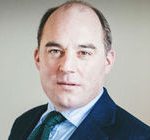
  • Ben Wallace – 2022 Statement on Skynet 6

    Ben Wallace – 2022 Statement on Skynet 6

    The statement made by Ben Wallace, the Secretary of State for Defence, in the House of Commons on 12 December 2022.

    I am pleased to inform the House that I am today laying a departmental minute to advise that the Ministry of Defence (MOD) has received approval from His Majesty’s Treasury to recognise new contingent liabilities associated with the Skynet 6 programme. This programme, as set out in the defence Command Paper “Defence in a Competitive Age”, will provide the MOD with a world class, modern military satellite communications network to support our and our allies’ operations globally. This will be achieved through new capital investment in the ground stations, spacecraft and user terminals that form the Skynet strategic capability. These new contingent liabilities are specifically related to the launch of our first next generation satellite, known as Skynet 6A, which is scheduled to take place in financial year 2025-26 using a SpaceX Falcon 9 launch vehicle from Cape Canaveral. This follows four Skynet 5 satellites (A, B, C and D) currently in orbit, which will be initially supplemented, and then incrementally replaced by 6A and a further four satellite systems being procured through the Skynet 6 enduring capability (EC) project. His Majesty’s Treasury approved the proposed three contingent liabilities and Chairs of the Public Accounts Committee and Defence Committee were notified on 23 June 2020.

    Three contingent liabilities are recognised.

    The first contingent liability relates to loss of capability of the Skynet 6A system. The MOD will take ownership of the Skynet 6A spacecraft at launch and has not sought to secure insurance for the launch or acceptance phases, as it was assessed as not providing value for money. The post mitigation worst-case financial exposure of risk of loss of capability related to these events, assuming the need to re-procure a spacecraft with similar capabilities, has been assessed at a value of £720 million.

    The second contingent liability relates to long delay of launch. The MOD has agreed to bear the allowable costs of a launch-related delay which arise for reasons entirely outside of the control of the contractor. A long launch delay would result in the MOD incurring additional storage, prelaunch insurance, maintenance, launch service provider and other delay-related allowable costs. The post mitigation worst-case financial exposure of a long launch delay has been assessed at a value of £253 million.

    The third contingent liability relates to a cross-waiver of liability in favour of the Skynet 6A launch service provider. Cross-waivers are standard practice in space launches. The MOD has agreed a cross waiver of liability in favour of SpaceX and related parties in respect of damage to Ministry of Defence property and personal injury, death or property damage incurred by Ministry of Defence employees. This liability is assessed as unquantifiable due to the nature, scope, range, and scale of possible scenarios that might occur, which means that it is not currently possible to provide a realistic estimate of cost.

    The attachment can be viewed online at: http://www.parliament.uk/business/publications/written-questions-answers-statements/written-statement/Commons/2022-12-12/HCWS436/.

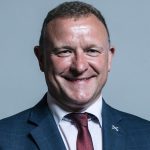
  • Drew Hendry – 2022 Speech on British Council Contractors in Afghanistan

    Drew Hendry – 2022 Speech on British Council Contractors in Afghanistan

    The speech made by Drew Hendry, the SNP MP for Inverness, Nairn, Badenoch and Strathspey, in the House of Commons on 12 December 2022.

    Thank you, Mr Speaker.

    I, too, congratulate the hon. Member for Basildon and Billericay (Mr Baron) on securing this important urgent question. It is morally indefensible that, more than a year after the disastrous withdrawal from Afghanistan, there are still innocent Afghans who worked for the British Government and military who have received zero support from this Government and the Home Office. It is not acceptable to use terms such as “something like.” Exactly how many former British Council staff, including support staff, are still living in Afghanistan in fear of their lives and livelihoods? When the Government say they have brought 6,300 Afghans to “safety,” what exactly does that mean? How many of them are former British Council employees?

    The Taliban’s so-called kill list is an active threat. Do the Government know how many of their former employees are on that list? Finally, it is appropriate that 540 staff are working on the Ukraine schemes but, if the Government are taking Afghanistan as seriously as they are supposed to be, why do the figures show a maximum of eight people working on the Afghan schemes?

    Mr Mitchell

    The frustration expressed by the hon. Gentleman is shared by many of us. It is not possible to quantify the figures in precisely the way he requests, but I will ensure that we write to him with the closest possible approximation.

  • Fabian Hamilton – 2022 Speech on British Council Contractors in Afghanistan

    Fabian Hamilton – 2022 Speech on British Council Contractors in Afghanistan

    The speech made by Fabian Hamilton, the Labour MP for Leeds North East, in the House of Commons on 12 December 2022.

    I again thank the hon. Member for Basildon and Billericay (Mr Baron) for securing this urgent question. He has been a great champion of the British Council in this place. We know that hundreds of British Council contractors are still stranded in Afghanistan following this Government’s botched evacuation from Kabul. Earlier this year, the Minister told the House that the Government were “supporting those in need” and that 50 British Council contractors had been evacuated. However, a recent report in The Guardian indicated that, as the hon. Gentleman said, the Government had not granted a single ACRS application since the programme was opened—not one. Furthermore, fewer than 10 staff are currently working on the scheme at the FCDO.

    I am contacted frequently by British Council contractors who are suffering terribly, and I would be grateful if the Minister would allow me to raise these cases with him privately. Many of those that are still in Afghanistan are former security guards who protected British staff at the embassy, and they undertook an extremely difficult task during the evacuation in August last year. We owe so much to those courageous British Council contractors, and the fact that they are still in Afghanistan and facing daily violence and threats as a result of their co-operation with the UK is nothing short of a disgrace.

    The last time I put these questions to the Government, answers were not forthcoming, so I am hopeful that this time I might be able to get some clarity. Can the Minister tell us how many former British Council contractors are still stuck in Afghanistan, what measures are being put in place to evacuate the rest of the British Council contractors still stranded in Afghanistan and what engagement he has had with regional partners to facilitate safe passage for British Council staff who attempt to leave? And message does it send to other British Council contractors who work in challenging environments around the world if the UK Government will leave these contractors stranded in this way?

    Mr Mitchell

    I thank the hon. Gentleman for his comments, and he is quite right to express deep concern about those who are caught in this way. He asks me whether he may raise cases privately with me, and of course the answer is yes. I will make arrangements for those meetings to take place straight after this urgent question is over. He asks a number of questions, and if I do not answer them fully, I will ensure that we write to him. He is right to say that we keep in very good contact with regional partners in countries to try to advance this issue. This particular stream only opened in June this year. The Foreign Office has processed and is informing something in the region of 200 of those who are eligible in principle, and if the dependants are added to that, it is something like 750. So those are proceeding, and it is of course up to the Home Office to procure the necessary security clearance prior to them securing entry clearance. So, the process is going on, but I fully accept his frustration—it is a frustration we all share in this matter—and as I say, perhaps we can proceed with a private meeting, as he has requested.

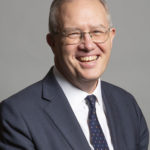
  • John Baron – 2022 Speech on British Council Contractors in Afghanistan

    John Baron – 2022 Speech on British Council Contractors in Afghanistan

    The speech made by John Baron, the Conservative MP for Basildon and Billericay, in the House of Commons on 12 December 2022.

    Thank you for granting the urgent question, Mr Speaker. Let me start by both welcoming the Foreign Secretary’s speech on foreign policy this morning, which called for a long-term, resilient approach that will build the long-term, trusting relationships that this country needs for the future, and underlining the fact that that is precisely the purpose of the British Council, which has been building connections for this country throughout the world, quietly, consistently and effectively, since the 1930s. I hope that the Minister sees, as I do, the key role that the British Council can play in helping to achieve those objectives.

    I make no apologies for asking this urgent question, because people’s lives are at risk. I went through the regular channels a year ago, and was told that progress was being made, which is more or less what the Minister has just said. I raised it again in October/November, but there has been no response. The progress has not been made.

    For more than 16 months since Operation Pitting and the fall of Kabul, about 200 British Council contractors and their families have been stuck in Afghanistan. As has recently been highlighted in the media, many of them are in hiding and in fear of their lives, unable to seek medical advice when it is necessary for themselves and their families, and family members have died as a consequence. As the Minister said, British Council contractors are eligible under ACRS pathway 3, but those 200 or so contractors remain stuck in Afghanistan because of a blockage of red tape here in the UK. Until that blockage is cleared they will remain in danger, possibly for a second Afghan winter. Since its launch in January, the scheme has not repatriated a single person from Afghanistan: I have received confirmation of that from the British Council. In July and August, an application window closed for the contractors to submit expressions of interest. British Council employees worked at pace with the FCDO to identify those who had actually worked with them, yet there has still been no progress whatsoever. Having used all the regular channels, I would now like to ask the Minister to do all he can before Christmas to clear these blockages and get these contractors back to the UK.

    Mr Mitchell

    I thank my hon. Friend for what he has said. He eloquently extols the brilliance of the British Council. I had some responsibility for it 10 years ago, and I know very well that what he says about it is entirely correct. He is quite right about the eligibility, and we very much understand the urgency to which he refers. This particular pathway process started on 20 June and remained open for eight weeks. The Foreign Office has looked at every single one of the applicants, and the process is moving through. I would just say that, although it is taking a lot of time, it is right that officials should look carefully at each and every one of those cases. There is a balance to be struck, but I will ensure that my hon. Friend’s words and concerns are reflected across Government as a result of this urgent question.

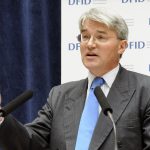
  • Andrew Mitchell – 2022 Statement on British Council Contractors in Afghanistan

    Andrew Mitchell – 2022 Statement on British Council Contractors in Afghanistan

    The statement made by Andrew Mitchell, the Minister of State at the Foreign Office on 12 December 2022.

    The Minister who is responsible for Afghanistan—the Under-Secretary of State for Foreign, Commonwealth and Development Affairs, my hon. Friend the Member for Aldershot (Leo Docherty)—is travelling. I am a poor substitute, but I am most grateful to my hon. Friend the Member for Basildon and Billericay (Mr Baron) for raising this very important matter.

    During Operation Pitting, nearly all British Council staff and some contractors were evacuated and offered resettlement through the Afghan relocations and assistance policy. Some British Council contractors, plus dependants, remain in Afghanistan and are eligible for consideration for resettlement under the Afghan citizens resettlement scheme. The scheme will see up to 20,000 people from Afghanistan and the region resettled in to the United Kingdom. It provides a safe and legal route for some of those affected by events in Afghanistan to come to the United Kingdom and rebuild their lives.

    The first year of ACRS pathway 3 is focused on eligible at-risk British Council and GardaWorld contractors, as well as Chevening alumni, honouring the commitments made by the Government to those three groups. The Foreign, Commonwealth and Development Office opened an online process on 20 June this year to seek expressions of interest in resettlement from those groups. They have played a key role in supporting the UK mission in Afghanistan, and it is right that we are honouring the commitments made during the evacuation to support those at risk. Up to 1,500 people from Afghanistan and the region will be referred for resettlement in the UK in the first year of pathway 3, including eligible family members.

    The FCDO received more than 11,400 expressions of interest, which are being assessed in terms of eligibility. People are being notified of the outcome, and we are sending names to the Home Office for security checks. Once the checks have been completed, we will provide advice on the next steps for those who are being referred for a place on the ACRS. It remains a priority to honour the commitment made to eligible at-risk British Council contractors, and to offer a route for resettlement in the UK under the scheme. I want to thank the council for its excellent co-operation with the FCDO to date, as we work together to resettle eligible contractors under pathway 3.

    We are doing everything we can to bring the first British Council and other arrivals under pathway 3 to the United Kingdom as soon as possible, where we will help them to rebuild their lives. Anyone who is eligible and resettled through the ACRS will receive indefinite leave to remain in the UK, and, under existing rules, will be able to apply for British citizenship after five years in the UK. This is one of the most ambitious resettlement schemes in our country’s history, and we are proud to offer a safe and legal route to those affected by events in Afghanistan.

  • Margaret Greenwood – 2022 Speech on the Government’s Preparations for Industrial Action in the NHS

    Margaret Greenwood – 2022 Speech on the Government’s Preparations for Industrial Action in the NHS

    The speech made by Margaret Greenwood, the Labour MP for Wirral West, in the House of Commons on 12 December 2022.

    These strikes are not just about pay levels; they are also about patient safety. NHS workers care deeply about their patients, and I stand in solidarity with them. Members of the Royal College of Nursing have told me how stressed and burned out they are because they do not have enough colleagues to work alongside them. That is dangerous and extremely unfair on both patients and staff, and it is the result of the failure of consecutive Conservative Governments to provide enough resources and training places and to carry out the necessary workforce planning. The Minister mentions the independent pay review body, but he knows full well that there is a role for Government in ending this dispute. Will his Government get around the table with the unions and avert the strike action?

    Will Quince

    The hon. Lady is right that this issue is about more than just pay. That is what the unions are telling us. It is about things such as staffing levels and working conditions. If that is indeed the case, let me repeat: my door is always open, and I would be happy, as would the Secretary of State, to discuss those issues with the unions at any point they would like.

  • Steven Bonnar – 2022 Speech on the Government’s Preparations for Industrial Action in the NHS

    Steven Bonnar – 2022 Speech on the Government’s Preparations for Industrial Action in the NHS

    The speech made by Steven Bonnar, the SNP MP for Coatbridge, Chryston and Bellshill, in the House of Commons on 12 December 2022.

    Scotland’s First Minister has managed in one day to do what the Tory Government could not—agree with the nursing unions to call off strikes planned for this month. NHS workers are the backbone of these countries. If they do not work, the country does not work, and if the country is not working, it is broken. Britain is broken, is it not? And Brexit has broken Britain, has it not? The Tories will not negotiate and the Labour Opposition spokesperson has branded the British Medical Association as “hostile”, while in Scotland the strikes are off, and they are off permanently. An offer of 7.5% has been negotiated and agreed, with an 11.24% pay rise for the lowest paid across the board in NHS Scotland. Why are the UK Government refusing to give public servants a decent pay increase when they have all the financial power to do so?

    Will Quince

    I thank the hon. Gentleman for his question. My understanding is that the industrial action in Scotland has been suspended, not cancelled, as the hon. Gentleman suggested. The Scottish Government have made a considerably higher offer, partly because a politician has got involved in pay negotiations, directly in contrast to the independent pay review body, and it will be interesting to see whether the First Minister of Scotland is going to do this every single year and go against the recommendations of their pay review body.

    Would the hon. Gentleman like to confirm—I appreciate he cannot do it now—whether the Scottish Government have also looked at things such as leave and working times? I think it is important to stress that every 1% increase for the “Agenda for Change” workforce equates to about £750 million. That is £750 million that will come out of the NHS budget and that we will not be able to spend on things such as tackling the elective backlog, which is so important to people up and down the country.