Tag: Speeches

  • Anne-Marie Trevelyan – 2023 Speech at the Agriculture Breakthrough Ministerial Meeting

    Anne-Marie Trevelyan – 2023 Speech at the Agriculture Breakthrough Ministerial Meeting

    The speech made by Anne-Marie Trevelyan, a Minister of State at the Foreign Office, on 9 May 2023.

    Thank you, Juan-Lucas, and welcome friends, colleagues and our Breakthrough co-lead, Egypt. I want to thank our hosts, and offer congratulations to the USA and UAE for their global leadership on AIM for Climate, which has spurred on a wonderful group of partners in this race we are all in to innovate for a more resilient and sustainable food system.

    Because as we meet, our food systems continue to be rocked by the effects of the climate crisis and armed conflicts, including Russia’s illegal invasion of Ukraine. A cruel act, which has also caused turmoil in food, fertiliser and fuel markets, triggering economic instability and plunging millions into food insecurity. This turmoil has contributed to increasing the number of food-insecure people around the world, currently standing at nearly 350 million people.

    And yet, instability is only one of the risks that we face. Climate change and the steady erosion of our ecosystems pose a continuing severe threat. And agriculture itself is the second largest producer of greenhouse gas emissions, the primary cause of biodiversity loss, and the leading driver of deforestation.

    So innovation has never been more urgent. With a lot of research and a little ingenuity, we can rise to the challenge. Scientific and technological advances over the last fifty years have allowed the world to make huge strides in tackling global hunger. The science of the Green Revolution increased GDP per capita in the lowest income countries by 20% by 2010. And modern crop varieties alone avert as many as 6 million infant deaths each year.

    But as we confront the triple challenge of climate change, biodiversity loss and food insecurity, we need a new revolution – a truly green revolution, founded on innovation, that can deliver food security for all.

    Fertilisers, for example, were highlighted as a priority in last year’s Breakthrough Agenda Report. From February to April last year, global fertiliser index prices rose by 30%, severely testing supply chains already buffeted by the pandemic. The highest global fertiliser prices since 2008, only piled on the pressure.

    So that’s why I am pleased to announce today that the UK is joining the Global Fertiliser Challenge and will commit £3 million to a new research consortium, together with the USA and the Foundation for Food and Agriculture Research. The Efficient Fertiliser Consortium will be dedicated to the development and testing of novel fertiliser products with the potential to transform productivity around the world, while safeguarding the natural resources on which we all depend.

    So we invite others here, to join us in supporting this critical new research. We need everyone’s engagement, because innovation alone is not enough.

    We need to get better at putting technologies to use, at scale. Too often, transformative ideas sit on the shelf, because market, policy, or investment barriers stand in the way of farmers’ access to them. And this is where the Agriculture Breakthrough comes in.

    The Agriculture Breakthrough, which we launched during the UK’s COP26 Presidency, aims to “make climate-resilient and sustainable agriculture the most attractive and widely-adopted option for farmers everywhere by 2030”.

    So at the heart of the agenda is international collaboration: the idea that, together, we can overcome those barriers that block widespread adoption of sustainable solutions:

    From cutting-edge solar irrigation, which can transform the productivity of smallholder farmers in Africa, to climate resilient crops, such as the Vitamin A sweet potato which is nourishing millions, to promoting crop diversity by intercropping with beans and pulses which build soil health, to investing in cutting edge AI, predictive modelling and big data to extend credit to smallholder farmers, transform their productivity and enable them to grow more whilst avoiding land expansion and protecting those precious natural resources.

    The opportunity is huge; agricultural innovation can unlock growth worth an additional $1.7 trillion to GDP in the Global South, and indeed could reduce global food prices by 16%.

    At COP27, we welcomed thirteen new countries to the Breakthrough. But it is still young and we will hear from some of our newest members joining the group today, and I encourage others to join ahead of COP28 as we take on this enormous challenge together.

    This meeting – standing as it does between COP27 and COP28 – is the ideal time for us to take stock and I am looking forward to the Breakthrough Agenda Report authors offering a preview of their findings for 2023. Their analysis will challenge us to do more together to accelerate the adoption of technologies.

    Because as governments, we can create the conditions to make this happen. If we don’t, who will? Public support for agriculture is a key source of funding worth around £700 billion a year. There is compelling evidence that increasing the proportion spent on the development and deployment of climate-resilient, sustainable agriculture innovations, could yield substantial gains for the planet, for the economy and for everyone.

    I urge you to grasp this opportunity over the coming months, as we all consider the Report’s recommendations and translate them into the Breakthrough action plans that we will set together at COP28.

    Thank you.

  • Gillian Keegan – 2023 Speech to the Education World Forum

    Gillian Keegan – 2023 Speech to the Education World Forum

    The speech made by Gillian Keegan, the Secretary of State for Education, at the Education World Forum in London on 8 May 2023.

    Good afternoon everyone.

    I’d like to welcome you all to this annual gathering of education ministers.

    You find us all in a celebratory mood and many world leaders from your countries joined us to celebrate.

    The coronation of His Majesty King Charles showcased what this country is known for around the world.

    Pageantry, tradition, our history, the importance of continuity. But it is not just a celebration of the past. We’re also focused on the future, even an ancient monarchy like ours is constantly evolving.

    Who would have thought back in 1953 when we last held a coronation that the next monarch would be one of world’s original environmental champions?

    Curiosity and flexibility are vital at any time but especially when the world is changing so fast.

    That is why we need education – it allows us to change, it allows us to adapt, it ensures we can meet the future head on.

    Many of us will be facing the same challenges. Others will have to tackle problems that are particular to them.

    But one challenge we all face is this: How do we make sure our young people leave school or college with the skills to prepare them for a life of opportunity?

    We have all found ourselves in situations when our skills didn’t go far enough. I once found myself on a plane travelling to Japan for a major negotiation with nothing but a book on etiquette.

    What saved me was a huge appetite to learn from my hosts and my new-found karaoke skills.

    Every child has an inbuilt sense of curiosity. None of them want to be left behind, they want to learn and do well.

    It’s our job to give them the opportunity to do so. And if we do, we all benefit.

    Give people the opportunity to learn and the end result almost always sparks innovation.

    The more we collaborate and work together to solve our problems, the more we’re likely to see the power of innovation.

    Take the pandemic for example. Look at what the power of global unity achieved when it came to vaccinating our populations. It showed that those who were quickest to innovate in a crisis were more likely to be the first out of it.

    So, how do we make this work in education.

    I learnt in business, you may not always be first but you can learn from the best and that is what we have done in the UK. We’ve learnt from all of you, and we want to continue doing so.

    To inform our Skills for Jobs White Paper, we looked at world leading technical education systems, like in Germany and the Netherlands and those which have implemented more recent reforms, such as Ireland.

    Our new vocational qualifications, T-levels, drew heavily on evidence from the Norwegian, Dutch and Swiss technical education systems.

    Our reforms to the national curriculum in 2014 have given us world-class standards across all subjects and have drawn on best practice, such as how maths is taught in Singapore and Shanghai.

    We benchmark ourselves against all of you – to drive improvement and instil innovation in our education system.

    Working with thousands of businesses, we are learning all the time as we partner to design qualifications and provide work experience and training for young people.

    But we don’t just want to take excellence from others, we want to share our own too.

    The Teaching for Success Tunisia is a project with the British Council, the Ministry of Education and the British Embassy which will give teachers the skills, knowledge and confidence they need to teach English more effectively. So far it has resulted in more than 5,000 primary school teachers learning simultaneously online.

    While Heriot-Watt Dubai was the first campus of an overseas university to open in Dubai International Academic City in 2005. There were 120 students to start with. Now there are nearly 4,000.

    I hope that this conference can be the first of many conversations I have with you about how we can work together to innovate and improve our education systems further.

    Innovation and collaboration are essential for economies at every level and in every corner of the Earth.

    No country has a monopoly on bright ideas so the more we talk to one another, the greater the scope for coming up with solutions.

    One of the most fruitful ways of doing this is by encouraging international students.

    We are proud that the UK remains a destination of choice for so many students. With four out of the top 10 universities in the world, the UK’s higher education sector is truly world class. In fact, 55 current world leaders were educated right here in the UK, only one country is educating more world leaders and that is the US.

    International mobility is increasing but so is global competitiveness for talent. We are in a global race, not just for talent but for technology. The industries of the future, whether AI, quantum computing, green technology or life sciences, rely not just on having talent in our own countries but on deep and lasting partnerships.

    For example, I am proud that Nobel Laureate Elizabeth Blackburn was able to come from Australia and study here in the UK at Cambridge. Her research on enzymes and genetic material could pave the way for people to live longer, healthier lives.

    Human rights advocate Ambiga Sreenevasan, travelled from Malaysia to graduate in Law from Exeter University in 1979. She eventually became president of that country’s Bar Council and has been awarded the US International Women of Courage Award.

    So I am hugely proud that we are welcoming more than 600,000 international students every year.

    International education is popular. It makes us all richer. We all benefit as we build partnerships and lasting bonds. That’s something we value hugely.

    And of course, we are equally keen to see our students go and study abroad. Which is why I am delighted that the Turing Scheme, our global programme to study and work abroad, is now approaching its third year.

    This year the scheme is unlocking opportunities for more than 38,000 UK students and learners who will gain international experience, developing skills and expertise.

    I’m especially pleased that this scheme is extending the horizons for students who might never have had that chance. 51% of the international placements across 160 countries all over the world have been earmarked for those from disadvantaged backgrounds.

    The Turing Scheme is truly global in scope, with every country in the world eligible as a destination for UK students, including EU countries. This is great news for all students, including those studying languages, as many more countries, cultures and languages are within reach for UK participants.

    Thanks to Turing, Lanchester Primary School in Durham was able to take 16 children to their partner school in India.

    The children found themselves immersed in a totally new world and as their head teacher Jane Davis said: ‘they experienced more in a week than some of us experience in a lifetime’.

    Whether it’s construction students from South West College in Northern Ireland, who went to Canada to improve their knowledge of green building techniques, or budding entrepreneurs from Nottingham Trent University getting to sample work and study, and probably some dance moves, in Latin America, the Turing Scheme is unlocking international opportunities for students, pupils and learners across the UK.

    Actually Turing who also taught and studied internationally was, as many of you will know, widely considered to be the father of theoretical computer science and artificial intelligence.

    Which brings me to a subject that divides opinion and that is the use of Artificial Intelligence, particularly in education settings.

    I know in some countries there is a knee-jerk reaction to AI. It’s going to be the end of mankind as we know it, some cry.

    To challenge this response to a future technology I want to call on a voice from the past. Winston Churchill once said “A pessimist sees the difficulty in every opportunity; an optimist sees the opportunity in every difficulty.”

    We’ve had the difficulties. Now let us make the most of our opportunities.

    Which is why here in the UK, AI is making a difference in schools and universities already but there is far greater scope for really transformative change.

    AI could have the power to transform a teacher’s day-to-day work. For example, it could take much of the heavy lifting out of compiling lesson plans and marking. This would enable teachers to do the one thing that AI cannot and that’s teach, up close and personal, at the front of a classroom.

    We need to respond to it just as we have to other technical innovations in the past like the calculator, or more recently Google. We’ll learn about it, then apply it to deliver better outcomes for students.

    We’re excited to learn about what it can do. Whether it could radically reduce the amount of time teachers spend marking, how effective it could be for personalised and adaptive learning and how it might be used as an assistive technology to improve access to education.

    My department has already begun this journey by publishing a statement that examines the opportunities, as well as the risks, that generative AI brings to education.

    We have a lot more thinking and learning to do to understand the potential here and I am committed to working hand-in-hand with experts, educators and all of you in this room as we do that thinking.

    I’d like to thank you Dominic and your team for all your hard work in organising EWF and enabling ministers from so many countries around the world to meet today.

    Innovation, resilience, a desire to learn. This is how we will be stronger after the pandemic. We must embrace change and learn from each other.

    Alexander Graham Bell, a man whose innovation, resilience and desire to learn, have totally transformed life for all of us, once said: “When one door closes, another opens; but we often look so long and so regretfully upon the closed door that we do not see the one which has opened.”

    Sometimes a door opening can lead to the most extraordinary places which is how I find myself here before you today.

    Let us overcome our fear and open these doors and be ready to embrace the opportunities that are waiting there.

    Thank you.

  • James Cleverly – 2023 Statement on the Execution of Habib Chaab

    James Cleverly – 2023 Statement on the Execution of Habib Chaab

    The statement made by James Cleverly, the Foreign Secretary, on 7 May 2023.

    I am appalled at news the Iranian regime executed Swedish-Iranian dual national Habib Chaab.

    The UK strongly opposes the death penalty. We call on the regime to stop all executions, now.

    We will continue to work with Sweden and other partners to hold this regime to account.

  • James Cleverly – 2023 Comments at Coronation Small Island Developing States Reception

    James Cleverly – 2023 Comments at Coronation Small Island Developing States Reception

    The comments made by James Cleverly, the Foreign Secretary, in London on 5 May 2023.

    Welcome, your Royal Highnesses, your excellencies, my lords, ladies and gentlemen.

    It is a privilege to meet you all this morning at the start of a historic weekend for our country as well as for observers across the world. Tomorrow marks a new era for the United Kingdom.

    This chapter of world history will be defined by our efforts to survive and thrive in spite of the immense and unique threats we currently face.

    As such, His Majesty the King has asked that sustainability be a central theme of the Coronation. Concern for the state of our planet characterised his work as Prince of Wales and no doubt will distinguish his reign as King.

    His Majesty’s government shares his passionate engagement with this pressing issue and has so far set the international standard for climate action.

    We have committed £11.6 billion for climate finance, have pledged to reach net zero by 2050 and are tirelessly working to realise the epic potential of the Glasgow Climate Pact. The time for complacency is long gone. The need for action has never been more urgent.

    This is true first and foremost for Small Island Developing States. Our friends and partners in SIDS are on the frontline of climate change, suffering from natural disasters, facing catastrophic sea level rises and daunting adaptation challenges.

    This is compounded by extraordinary economic challenges. Island economies experienced some of the harshest economic downturns globally as a result of COVID-19.

    These unique structural vulnerabilities mean that you deserve all the support and provisions required to protect your people and safeguard your economies.

    I recently saw for myself in the Solomon Islands and Papua New Guinea the challenges governments and communities face when it comes to climate change. It touched me deeply. Exposure to extreme elements is a burden whose brunt should be borne by as many powers as possible.

    That is why we’ve proposed the expansion of disaster risk finance. We must ensure that the right resources are readily available so that you can respond rapidly to shocks like hurricanes and the loss of critical infrastructures like water and health when they are needed most.

    SIDS leadership is unmatched in calling for ambitious climate action. You also have a special role as large ocean states in protecting rich biodiversity and nature.

    We want to support your vital leadership. In that spirit we have set out an ambitious vision for SIDS in our development strategy. It is a vision that focuses on climate and economic resilience.

    But the UK cannot do this alone – others in the international system must strive to meet this challenge. Our most revered poet, William Shakespeare, once wrote ‘a touch of nature makes the whole world kin’. The dangers of our rapidly transforming environment ought to do the same; ought to alert us all to the perilous prospect of an inhospitable habitat.

    The 2024 SIDS Summit is perhaps our last best chance to agree collectively on how to make this happen.

    In my view, an international system that is fit for purpose for SIDS is one that is:

    • country-focused – with rules and processes suited to small states and to the unique situation of our SIDS partners
    • pragmatic – adapting to realities on the ground, and not stuck in outmoded models; and one which is
    • committed – and fully focused on delivering tangible change

    We are not there yet. The international community has squandered too much time bickering over the direction our lifeboat should take, rather than attending to its maintenance and plugging potentially lethal leaks.

    Reforming international finance is a good starting point for action. Indeed, the international financial system desperately needs reform. The Bridgetown Initiative has been a clarion call for change across the IMF, World Bank and regional development banks.

    The UK is prioritising international finance reform to better address developing countries’ needs. And we believe that the 2024 UN SIDS Summit is our opportunity to get priorities right for you.

    I will visit Jamaica later this month for the biennial UK-Caribbean Forum and the UK-Jamaica Strategic Dialogue. And beyond the SIDS Summit many of us will gather in Samoa for the Commonwealth Heads of Government Meeting. I look forward to further discussions at those events including our shared values, our commitment to democracy and our people-to-people links.

    We are a proud and vocal partner of SIDS in international forums and will continue to be so. As Prime Minister Mottley said “How many more surges must there be before the world takes action?  None are safe until all are safe.”

    We must work together. Not just to survive, but to thrive, and to thrive indefinitely. Thank you and welcome to London.

  • Rishi Sunak – 2023 Comments on the Coronation

    Rishi Sunak – 2023 Comments on the Coronation

    The comments made by Rishi Sunak, the Prime Minister, on 6 May 2023.

    Today’s Coronation is a moment of extraordinary national pride. No other country could put on such a dazzling display. But it is not just a spectacle. It’s a proud expression of our history, culture, and traditions. It is a vivid demonstration of the modern character of our country. And a cherished ritual through which a new era is born. God Save The King.

  • Anthony Seldon – 2023 Comments on Boris Johnson’s Vision Being “His Own Advancement”

    Anthony Seldon – 2023 Comments on Boris Johnson’s Vision Being “His Own Advancement”

    The comments made by Sir Anthony Seldon in his book “Johnson at 10 – The Inside Story” published in May 2023. The text was quoted by the Guardian newspaper.

    To those many people who say, ‘Of course he believed in Brexit’, the evidence is absolutely clear. From the beginning it was striking that he believed that there was a cause far higher than Britain’s economic interests, than Britain’s relationship with Europe, than Britain’s place in the world, than the strength of the union. That cause was his own advancement.

  • Adam Heppinstall – 2023 Report into the Appointment of Richard Sharp

    Adam Heppinstall – 2023 Report into the Appointment of Richard Sharp

    The report written by Adam Heppinstall, published on 28 April 2023.

    Text of Report (in .pdf format)

  • Lucy Powell – 2023 Comments on the Resignation of Richard Sharp

    Lucy Powell – 2023 Comments on the Resignation of Richard Sharp

    The comments made by Lucy Powell, the Shadow Culture Secretary, on 28 April 2023.

    I have this morning received the report of the investigation into Richard Sharp which Labour instigated. The report is clear: Mr Sharp breached the rules expected of candidates by failing to disclose his involvement in a personal loan to the then PM.

    As a result, this breach has caused untold damage to the reputation of the BBC and seriously undermined its independence as a result of the Conservatives’ sleaze and cronyism.

    This comes after 13 years of the Tories doing everything they can to defend themselves and their mates. From Owen Patterson to Dominic Raab, and now Richard Sharp, instead of doing what’s best for the country the Prime Minister was more interested in defending his old banking boss. The Prime Minister should have sacked him weeks ago. Instead it took this investigation, called by Labour, to make him resign.

    Rishi Sunak should urgently establish a truly independent and robust process to replace Sharp to help restore the esteem of the BBC after his government has tarnished it so much.

  • Lucy Frazer – 2023 Letter to Richard Sharp Following his Resignation

    Lucy Frazer – 2023 Letter to Richard Sharp Following his Resignation

    The letter written by Lucy Frazer, the Culture Secretary, to Richard Sharp, the outgoing Chair of the BBC, on 28 April 2023.

    Dear Richard

    Thank you for your letter notifying me of your decision to resign from your position as Chair of the British Broadcasting Corporation. I understand and respect your decision to stand down.

    As you have stated the BBC is a great national institution. Over the past 100 years it has touched the lives of almost everyone in the United Kingdom and plays a unique part in our cultural heritage. It is respected globally, reaching hundreds of millions of people across the world every week. No other country in the world has anything quite like it.

    I would like to take this opportunity to thank you for the work you have done and the leadership you have provided as Chair of the BBC. You have been a champion for what a strong BBC can achieve, not only for audiences at home, but also for the BBC’s contribution to the economy and to the UK’s global soft power. I would like to express my gratitude for your work with the government to maintain the BBC World Service in its unrivalled status as the world’s largest international broadcaster, and supporting its crucial role in tackling harmful disinformation through providing trusted news and analysis globally.

    I know that you are held in high regard by the BBC Board. You have clearly demonstrated your commitment to public service, and I especially applaud the work you did during the pandemic. Your decision to step down in the wider interests of the Corporation is further testament to that commitment.

    Certainty and stability for the Corporation are clearly a shared priority. In this context, I have spoken to the Board and they have proposed that you stay in place until the next Board meeting on 27 June 2023, whilst an Acting Chair is appointed in line with the Charter. I have accepted this and would like to thank you for your continued service to assist in ensuring an orderly and smooth transition takes place. We will also move to launch a process to identify and appoint a permanent new Chair.

    Thank you, once again, for your service and I wish you well for the future. I am sure there will be further opportunities for you to make a significant contribution to public life.

    Yours sincerely

    Rt Hon Lucy Frazer KC MP

    Secretary of State for Culture, Media and Sport

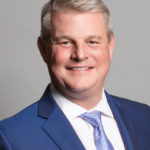
  • Steve Barclay – 2023 Speech to the Association of the British Pharmaceutical Industry Annual Conference

    Steve Barclay – 2023 Speech to the Association of the British Pharmaceutical Industry Annual Conference

    The speech made by Steve Barclay, the Secretary of State for Health and Social Care, to the Association of the British Pharmaceutical Industry annual conference held on 27 April 2023.

    Well thank you, Richard [Torbett] – good afternoon, it’s great to be able to join you.

    As you’ve just been touching on some of my past roles, it’s over five years since I was last in the Department of Health working then as a Minister of State.

    And in those five years, we’ve seen game-changing breakthroughs in science and technology.

    We’ve seen a once-in-a-generation pandemic.

    We’ve seen Britain depart, as you’ve just mentioned, from the European Union.

    And we’ve also seen the full consequences of the pandemic itself.

    And those factors have come together to shape a landscape that is very different today, than it was five years ago in 2018.

    The application of AI into almost every aspect of our lives might be receiving lots of attention today, particularly with things such as ChatGPT.

    But the potential of AI in life science is something we in this room have long been alive to, from detecting cancers to scanning potential transplant organs.

    Equally, pharmaceutical breakthroughs and their rapid deployment through the NHS have been turning the tide on diseases like HIV and Hep-C, and helping to bring us to a point where we can realistically talk about elimination – something which 10 years ago would have been unimaginable.

    Next, the pandemic has ushered in some powerful new ways of working. The Vaccines Taskforce brought many of us in government to working very closely with industry and academia in ways that we had not done before.

    And in its simplest terms we learned a lot about how to make things happen at pace.

    And it offers much promise for breakthroughs in some other areas dealing with health challenges that we face in the months and years ahead.

    And the third big shift is that the UK left the European Union, just as the pandemic began to take hold across Europe.

    And as Brexit Secretary leading our exit at that time, I recognised that in taking control of our rules and regulations we have a chance to show global leadership in important areas including life science.

    Now, with your help and support, we are doing just that. Building a more bespoke regulatory system that’s ready for the innovations of today but is also building the agility to respond quickly to the innovations of tomorrow.

    Now the question we’ve been trying to answer today, in the sessions I’ve been hearing that you’ve been having is how do we seize those opportunities?

    And I know you heard from some of my colleagues, from June Raine and Ros Campion earlier, on ‘How we build on the UK’s global strengths’. And we’ve heard about the Medicine and Healthcare products Regulatory Agency’s (MHRA) laser-like focus on ‘process, partnerships and people’.

    And this afternoon, I want to add some of my own thoughts on how we seize the opportunities that are in front of us.

    The first way is with an unashamedly pro-innovation approach to regulation.

    Now the theme of today’s conference is ‘Growing the UK as a Global Hub for Life Sciences’ and we have the largest life sciences sector in Europe.

    And the benefits of that to the UK economy are vast, not just from the jobs created, but from the transformative change it offers for the NHS. A key priority is to ensure that great science is then fast-tracked into the very bloodstream of our NHS.

    And that is why in the Budget, we announced an extra £10 million of funding for MHRA, so they can put in place a quicker, simpler, regulatory process for all approvals for innovative treatments, without compromising, in any way, patient safety. And that is building on the ever-closer working relationship that the MHRA and NICE have developed through the ILAP pathway.

    Now we aim to develop the most effective regulatory approvals process of anywhere in the world. And we are fortunate to have the MHRA – one of the most respected drug regulators globally – and, of course, the first to license a vaccine for Covid.

    From next year, the MHRA will set up a swift new approval process for the most cutting-edge medicines and devices to grow the UK’s role as a global hub for their development. And at the same time, from next year, they will allow the near-automatic sign-off for medicines and technologies already approved by trusted regulators in other parts of the world such as the United States, Europe, and Japan.

    And the real value is that near-automatic recognition of other regulators in some areas, such as license extensions, will in turn free up valuable regulatory resource to focus on other cutting-edge areas, like AI in medical devices.

    And this kind of smart regulation – made possible by the greater agility brought by our Brexit freedoms – meets our twin goals: Growing the UK as a global life sciences hub, while ensuring patients in the NHS have access to some of the most innovative medicines and treatments that can be found anywhere in the world.

    Now many of you will be aware that this coming change was an interim recommendation from the report into Life Sciences regulations, which is going to be published next month. And I want to put on record, Richard, my thanks to everyone who played their part in that important piece of work.

    Not least the ABPI, who have been so keenly engaged, including how you worked with the independent champions.

    I’m looking forward to hearing further recommendations and the benefits they can bring to the sector and patients alike.

    Now today, I also want to briefly comment on VPAS. The government and the pharmaceutical industry came together to negotiate a voluntary agreement, which has endured for many decades and created a stable basis for investment, access, and uptake. And it has done so while saving the NHS billions of pounds – which in turn has been reinvested into patient care.

    The negotiations for a successor agreement will begin soon and I very much welcome the appointment of Sir Hugh Taylor, who brings vast experience in this area, and I hope assures Richard, colleagues, as to the seriousness with which we are taking these negotiations.

    And you heard a little earlier from the Prime Minister, which I hope further underscores our desire to deliver a successor to VPAS – which needs to be a deal that is good for patients, good for the NHS, and good for you too.

    The core value that sits at the heart of all of this – whether it’s innovative regulation or VPAS – is that the government is a committed partner.

    And we are guided by our Life Sciences Vision, which sets out our ten-year plan for the sector, including seven missions for all of us – government, industry, the NHS, academia, medical research charities and others – to solve together.

    And together, our work on everything from cancer to dementia, cardiovascular disease to mental health will not only support the NHS but it will help the wider economy by improving productivity and life expectancy.

    Now we’ve already been putting this into practice.

    In January we signed a memorandum of understanding with BioNTech to bring innovative vaccine technology to this country, with the potential to transform outcomes for cancer patients. The partnership means that, from as early as this September our patients will be amongst the first to participate in trials and tests to provide targeted, personalised and precision treatments. And that will use transformative new therapies to both treat existing cancers – and to help stop them from returning.

    That deal builds on the 10-year partnership we struck with Moderna in December to invest in the mRNA research and development in the UK and establish a state-of-the-art vaccine manufacturing centre here.

    We want to partner with those who share our commitment to scientific advancement, innovation, and cutting-edge technology.

    We’re the third biggest investor of government funding into health R&D as a proportion of GDP in the world and we’re upholding our promise to increase research and development spending to £20 billion a year. And that is at a time when there are many competing challenges for the Chancellor to meet.

    It’s not just something I’m proud of for its own sake, but something I’m determined we use to its full potential, so we can transform people’s lives and opportunities both here and abroad.

    And if there’s one message I want you to take from my speech today it’s this: we need companies – including a great many represented by you in this room today – to invest in UK clinical trials.

    I know there are challenges, and we are listening, not least on how we can support those consultant clinical academics who drive medical breakthroughs.

    It is why we have commissioned James O’Shaughnessy to conduct an independent review of the UK commercial clinical trials landscape.

    And James has been kind enough to share some of his early findings and we will formally respond in the coming weeks.

    And I know you’ve also heard from June Raine earlier about the MHRA’s work to simplify requirements and remove barriers.

    There’s a lot of potential around clinical research and the changes ahead can bring a huge number of wins.

    Wins for patients – who will get access to the latest innovative medicines that will become the Standard of Care in years to come.

    Wins for the NHS – not just to boost to their income, but also because we know that hospitals that are active in research have better outcomes.

    And wins for industry – who can work with a single NHS – from leading institutions and hospitals to primary care.

    Because, with its unrivalled scale, breadth and potential, the NHS should be the research partner like no other on Earth. But I recognise that, for those of you in the room, that has too often not been the case.

    Notwithstanding the need for change, clinical research in the NHS has already been responsible for some of the UK’s biggest successes – like the RECOVERY trial. And since Covid, public engagement in health research is at an all-time high.

    But I want that to go further – so we’ll build in a clinical research environment that is people-centred, that is digitally enabled, and all embedded within the NHS.

    And you can see that coming to life through initiatives like the NIHR’s ‘Be Part of Research’ which makes it even easier for people in England to find and register their interest in suitable research opportunities – including through the NHS App that we are developing at pace.

    Seizing these opportunities on clinical trials will not only leave patients and the NHS stronger but give us a much more joined up life sciences sector and a more dynamic economy too.

    So, we have a coming together of giant technological leaps:

    Innovative new ways of working from the pandemic.

    A post-Brexit regulatory environment that offers the agility to design a more bespoke and effective environment.

    And a new way forward for clinical trials through implementing the James O’Shaughnessy review.

    Taken together, it means the UK is well-placed to seize these opportunities – working in partnership with the talent we have within the Department of Health and its arm’s length bodies, with our fantastic NHS – including frontline medical staff, and in partnership with you on behalf of the industries that you represent.

    I look forward to working with you Richard, to colleagues in the room, to achieve that shared common goal. Thank you very much.