Tag: Speeches

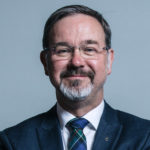
  • Leo Docherty – 2023 Speech at the Pledging Conference on the Humanitarian Crisis in Yemen

    Leo Docherty – 2023 Speech at the Pledging Conference on the Humanitarian Crisis in Yemen

    The speech made by Leo Docherty, the Minister for Europe, on 27 February 2023.

    Friends and colleagues,

    As we have heard, the humanitarian situation in Yemen is dire.

    Millions of people continue to suffer the consequences of years of conflict,

    And this suffering is made worse by the deteriorating economy, and damaged public services.

    I would like to thank the UN, Switzerland, and Sweden for hosting this conference, and all of those generously pledging today.

    Your contributions will save lives and alleviate suffering, and the United Kingdom will continue to play its part. This includes resolving the immediate threats posed by the Safer oil tanker. We have a chance to get Safer done if donors and the UN are bold and brave in the next few months.

    We have provided more than one billion pounds in aid to Yemen since the start of the conflict.

    Over the next financial year, the UK hopes to match last year’s budget and will pledge up to 88 million pounds.

    This will feed at least 100,000 Yemeni people every month,

    provide lifesaving health care and nutrition services through 400 health care facilities,

    and treat 22,000 severely malnourished children this year.

    In addition to funding, we must also ensure that aid is delivered as effectively as possible.

    The recommendations from the 2022 Inter-Agency Humanitarian Evaluation must be implemented to improve the quality of the response.

    But humanitarian teams working on the ground are facing increasing challenges right now.

    Bureaucratic restrictions are hampering aid delivery,

    And mahram, requiring women to be accompanied by a male guardian, is preventing female aid workers from working. Without them, the response cannot meet the needs of women and girls.

    It is vital that the authorities authorise independent assessments and monitoring to ensure aid goes where it is needed most.

    We must also listen to the voices and views of ordinary people in Yemen.

    This will enable the international response to be accountable to the people we are trying to help.

    A return to full-scale conflict has been avoided in Yemen, which is indeed good news.

    Now, is the time to build a better future for the Yemeni people.

    Parties to the conflict must seize this opportunity for peace, which is the only way to end this humanitarian crisis for good.

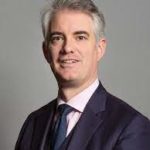
  • James Cleverly – 2023 Speech at the UN Human Rights Council

    James Cleverly – 2023 Speech at the UN Human Rights Council

    The speech made by James Cleverly, the Foreign Secretary, on 27 February 2023.

    Mr President, 75 years ago, Eleanor Roosevelt dubbed our newly adopted Universal Declaration of Human Rights ‘an international Magna Carta’. She was referring, of course, to that Great Charter’s role in laying the first of the many foundation stones on which the concept of human rights has been built.

    In 1215, it established that sovereign power is limited by legal constraint. That States are answerable to their citizens. And that justice requires due process. Inspired by Magna Carta, generations of lawyers and statesmen in the United Kingdom and around the world created what we now call the rule of law.

    But for centuries, the rule of law stopped at national borders. Until 1948, our predecessors took a gigantic step forward for humankind and made the rule of law universal.

    I’m proud of my country’s long role in the struggle for human rights. A struggle that continues today across the world.

    Russia and Ukraine

    Russia’s invasion of Ukraine and illegal so-called annexations are a blatant violation of international law and the UN Charter.

    The Commission of Inquiry, which this Council established last year, has concluded that war crimes have been committed in Ukraine. Abuses and violations of human rights have been committed by Russian forces on a systematic scale: torture and killing of civilians, rape and sexual violence, forced deportation.

    The Human Rights Council must condemn Russia’s actions. We cannot allow this behaviour to go unanswered. These barbaric acts must never be repeated. The Ukrainian people must have justice.

    That is why this session must renew the Commission of Inquiry’s mandate.

    We remind Russia of the international human rights obligations, which it has freely undertaken. And of its obligations under the UN Charter.

    We call upon Russia to:

    • enable humanitarian access into Ukraine and safe passage for civilians
    • restore human rights, within its own borders and outside, and
    • to immediately withdraw its forces from Ukraine

    Russia

    But the Ukrainians are not Putin’s only victims.

    We call for the release of all those detained in Russia on political grounds, including Alexei Navalny. And for those imprisoned for their opposition to Russia’s illegal war in Ukraine, like Vladimir Kara Murza, to be freed.

    Together with our international partners, the UK has invoked the OSCE’s Moscow Mechanism which evidenced Russia’s repression of its own people.

    We will support the UN Special Rapporteur’s work on human rights in Russia. We will attend the trials of human rights defenders in Russia. And we will use sanctions to hold human rights violators to account.

    China

    Last year, the High Commissioner for Human Rights published a report that found evidence of arbitrary detention, torture, sexual and gender-based violence, forced sterilisation, and the destruction of religious sites taking place in Xinjiang. And it found these abuses may amount to crimes against humanity.

    Surely, such serious and well-evidenced findings merit further and proper discussion by this Council. But instead China has consistently sought to deny these findings and obstruct discussion.

    I now urge China to engage with the Council and uphold the international obligations into which it has freely entered.

    Hong Kong

    Last year, the Human Rights Committee published its report on the implementation of the International Convention on Civil and Political Rights in Hong Kong.

    Under the National Security Law, independent media outlets have been closed down. The right to freedom of speech and assembly guaranteed in Hong Kong’s Basic Law has been eroded. Those who speak out, including journalists or businessmen like Jimmy Lai, have been arrested.

    We call on the Hong Kong and Chinese authorities to uphold the Sino-British Joint Declaration and urge them to implement the recommendations of the HRC Report.

    Afghanistan

    In Afghanistan, curtailment of women’s human rights, including the ban on women going to university, is unacceptable. We will continue to press the Taliban on these issues.

    Iran

    In Iran, the killing of Mahsa Amini last September was yet another shocking reminder of the regime’s callous disregard for the lives of its own citizens. Since October, we’ve introduced 5 separate sanctions packages targeting those individuals and entities responsible for serious human rights violations.

    We reaffirm our commitment to support the fact-finding mission established by this Council in November. We must ensure that the voice of the Iranian people continues to be heard.

    Conclusion

    Mr President, the United Kingdom will always ensure that human rights are upheld around the world and that we hold to account those who systematically violate them.

    To achieve this, we want this Council to succeed. We will work with our international partners to ensure that it does. And we will back up our words with actions.

    Thank you.

  • Leo Docherty – 2023 Speech at the UN Conference on Disarmament

    Leo Docherty – 2023 Speech at the UN Conference on Disarmament

    The speech made by Leo Docherty, the Minister for Europe, in Geneva on 27 February 2023.

    Every member state of this Conference has the responsibility to work towards a more peaceful and stable world, through disarmament. For the vast majority represented here, that is indeed our shared objective.

    But all too often, we see some States doing the opposite.

    It is over a year since Russia launched their illegal invasion of Ukraine.

    It is an unprovoked, premeditated and barbaric attack against a sovereign democratic state.

    And an egregious violation of international law and the UN Charter.

    We continue to see mounting evidence of horrific acts committed by Russia’s forces against civilians.

    The UK and our allies will continue to support the Ukrainian government in the face of this assault on their existence.

    Russia’s announcement last week that it has suspended participation in the New START treaty further shows their willingness to undermine strategic stability.

    We continue to urge Russia to immediately return to full compliance of the Treaty and engage constructively with the USA on this matter.

    We will continue to explore every diplomatic avenue to uphold international law, and strengthen our collective disarmament architecture.

    In addition to major nuclear armed states willing to flout international norms of behaviour, we collectively face a range of challenges.

    We face continuing proliferation concerns about the activities of the Democratic People’s Republic of Korea and Iran.

    We are concerned with DPRK’s continued escalation of its nuclear and ballistic missile programmes. We condemn these tests which are in clear breach of United Nations Security Council Resolutions.

    We face Assad’s willingness to use chemical weapons.

    And emerging threats posed by new and disruptive technologies.

    To overcome these we must refresh our thinking, and redouble our commitment to build on the foundations of our common disarmament and non-proliferation institutions.

    The Nuclear Non-Proliferation Treaty – or NPT – remains the cornerstone of international nuclear security. And the only pragmatic route to a world without nuclear weapons in our current security environment.

    The UK remains firmly committed to the NPT, and to fulfilling our obligations under all three pillars of the Treaty.

    We remain committed to the long-term goal of a world without nuclear weapons.

    And firmly believe the best way to achieve this is through gradual multilateral disarmament, negotiated within the framework of the NPT, including in this Conference.

    Collectively we have the ability to create a safer and more stable world, where countries with nuclear weapons feel able to relinquish them.

    However, the deteriorating security environment means we must remain realistic about what can be achieved in the short term.

    The UK is focused on preparing the ground for what can pragmatically be achieved over the next NPT review cycle and beyond.

    We are working with other States on the verification and irreversibility challenges, which will need to be addressed as part of final disarmament.

    We will continue to play a leading role on transparency, within the limits placed by our non-proliferation obligations and our overarching national security concerns.

    We will continue to develop concrete initiatives on reducing the risk of the use of nuclear weapons.

    And we will continue to press for the entry into force of the Comprehensive Test Ban Treaty.

    And the beginning of negotiations, in this Conference, on a Fissile Material Cut-off Treaty – the logical next step along the road to a world without nuclear weapons.

    Mr President,

    We only have to look to President Putin’s assault against Ukraine…

    and Assad’s on his own people…

    and the lives blighted by the illicit trade in small arms and lights weapons across the world…

    to realise that the use of conventional and chemical weapons remains a present, real and urgent threat.

    The diversion and misuse of conventional weapons – particularly small arms and light weapons – costs hundreds of thousands of lives every year…

    destroys security and sustainable development…

    and fuels conflict, crime and terrorism.

    The effective control of conventional weapons and ammunition should therefore be a goal that unites us all.

    The United Kingdom was proud to sign up to the Political Declaration on Explosive Weapons in Populated Areas in Dublin in November. I warmly commend the Government of Ireland for its leadership in this endeavour. As Putin’s missiles rained down on Ukrainian homes and civilian infrastructure, the Declaration is a powerful commitment to strengthening the protection of civilians in urban warfare under International Humanitarian Law.

    The UK will continue to play a leading role in tackling the scourge of landmines, cluster munitions and other explosive remnants of war, including as a result of the conflict in Ukraine.

    We must also do more work together to counter IEDs, and prevent non-State actors and violent extremists from obtaining the components to make them.

    The United Kingdom condemns Syria’s use of chemical weapons in Douma and in multiple other attacks.

    It is time for the disarmament community to move from severe condemnation to severe consequences, for those that use them.

    The UK will continue to work for a world free from chemical and biological weapons, and we urge all states to play a constructive part in this process.

    As the Biological Weapons Convention nears its 50th year in force, the UK will strive to make the most of the process we all agreed at last year’s Review Conference to bolster our implementation of this Convention. It represents a once-in-a-generation opportunity to meet the evolving threats from biological weapons in the 21st century. We must seize it and endow the Convention with the scientific and technical advice it needs, and explore ways in which new technologies can help assure compliance with its obligations.

    Mr President,

    Just as the threats we face in the nuclear, biological, chemical and conventional domains have evolved, so it is in outer space.

    We are pleased to see progress in the Open-Ended Working Group on reducing space threats through norms, rules and principles of responsible behaviours.

    All of our societies and economies rely on a cooperative approach to the use of technologies in space.

    So we encourage all states to engage constructively and work towards a consensus report, that can inform next steps in the UN General Assembly.

    This Conference also has a vital role to play in negotiating agreements on preventing an arms race in outer space, whether legally binding or otherwise.

    To conclude, Mr President.

    The UK is firmly committed to playing a full role in advancing the international disarmament agenda.

    And we are grateful for the cooperation of all partners who approach these thorny issues constructively, and with integrity.

    Let me point out that many of those partners are not members of this Conference, and are being barred from taking up their rightful seats as observers by the Russian delegation. We deplore this obstructionism, and call for all UN Member States to be allowed to participate in the work of this Conference as has long been our practice.

    The challenges facing our collective work are monumental.

    We must take a constructive and open-minded approach to finding new solutions to old problems.

    But we must also stand by the frameworks and agreements that we have so painstakingly built.

    And hold all states accountable to agreed norms and standards, and the commitments they have made.

    Thank you.

  • Andrew Mitchell – 2023 Statement on the Turkey and Syria Earthquakes

    Andrew Mitchell – 2023 Statement on the Turkey and Syria Earthquakes

    The statement made by Andrew Mitchell, the Minister of State at the Foreign Office, in the House of Commons on 1 March 2023.

    With permission, Madam Deputy Speaker, I will make a statement on the situation in Turkey and Syria. I know that the House will join me in offering sincere condolences to all those affected by the recent earthquakes.

    Last week when I visited Turkey, I witnessed at first hand the terrible scale of human suffering. I also had the opportunity to speak to Syrian partners and the United Nations about their work on the immediate response. I pay tribute to the hundreds of British personnel engaged in specialist health, humanitarian and rescue work in Syria and Turkey. I saw for myself the outstanding work that Britain is doing on the ground to save lives and support those who are suffering. Throughout these events and our responses, there has been excellent co-ordination across the Foreign Office, the Ministry of Defence and the Department of Health and Social Care.

    Today, the death toll across Turkey and Syria stands at more than 48,000, and at least 118,000 people have been injured. Approximately 25 million people have been affected, with homes, businesses and key infrastructure destroyed. The further earthquakes on 20 and 27 February, which have tragically led to additional deaths, show that the danger has not passed. In Syria, this disaster adds to years of turmoil inflicted by conflict, striking hardest in the very place that has borne the brunt of Assad’s war machine.

    I turn to the initial response. Turkey requested international support immediately after the earthquakes. The UK Government delivered aid as swiftly as possible, working closely with Turkey, the United Nations, international partners, non-governmental organisations and charities. That included deploying a 77-strong search and rescue team in Turkey, along with state-of-the-art heavy equipment. We also quickly announced £4.3 million in new support to Syria Civil Defence—the White Helmets—who have carried out search and rescue operations in 60 villages, helping thousands of civilians. The British Government rapidly engaged with the Turkish Government at the highest level, and the Foreign Secretary, my noble Friend Lord Ahmad and I immediately spoke to the senior UN humanitarian officials to ensure a rapid and co-ordinated response in Syria.

    As part of the immediate response, the Ministry of Defence and the Foreign Office set up a field hospital in Türkoğlu, including an emergency department and a 24/7 operating theatre. I saw for myself 150 UK-Med and Ministry of Defence personnel working side by side with Turkish medics to save lives. I was deeply impressed and moved during my visit by the lifesaving work that those teams are doing. Together, they have treated more than 5,000 patients so far.

    Meanwhile, the UK has delivered 465 tonnes of relief items to Turkey and Syria through civilian and Royal Air Force flights. That includes tents and thermal blankets for families made homeless in freezing conditions, as well as solar lanterns, water purification tablets and hygiene kits. On 15 February, we announced a further £25 million in funding to bolster our humanitarian response. That is supporting the work of the UN and aid agencies on the ground in Syria, helping communities ravaged by war, as well as by this natural disaster. It also continues to support the recovery effort in Turkey, led by its Government.

    Beyond our support to the White Helmets, UK-funded charities and NGOs in northern Syria have cared for the injured through mobile medical teams and health centres. The UN has distributed food and other essential items, to which the UK has contributed. Further assistance will be delivered in the coming days as part of the UN’s Syria cross-border humanitarian fund, to which the UK is one of the most significant donors. The fund has already allocated $50 million to scale up the response. There is a particular focus on displaced families, the elderly, women, children and people with disabilities.

    The UK has also supported and bolstered the response through our existing support to key multilateral organisations that are helping in Turkey and Syria. The UN’s global fund, Education Cannot Wait, announced a $7 million grant for Syrian children affected by the earthquake, and the Global Partnership for Education will provide $3.75 million to support the emergency education response. The UK is one of the most significant donors to both funds.

    We are also a long-standing partner and donor to the World Bank, which announced $1.7 billion to assist Turkey, and the United Nations central emergency response fund, which has released $50 million for the crisis. Most significantly, our constituents—the British public—have demonstrated extraordinary generosity through the Disasters Emergency Committee appeal, raising more than £100 million. That figure includes £5 million from the UK taxpayer in matched seed funding.

    His Majesty the King visited Turkish diaspora groups and members of the British Syrian community at Syria House, a donation point in Trafalgar Square, on 14 February. My right hon. Friend the Foreign Secretary visited Syria House on 16 February.

    It is clearly vital to ensure that humanitarian aid reaches those who need it as efficiently as possible in Syria. I will continue to engage with the United Nations to ensure maximum access for as long as is required. We welcome the accelerated pace of United Nations deliveries and are monitoring the situation closely in the Security Council in New York.

    The House will understand that the scale of this tragedy is immense. The UK will continue to stand in solidarity with Turkey and with the people of Syria during these most testing of times. I commend this statement to the House.

  • Robert Neill – 2023 Speech on the Independent Public Advocate

    Robert Neill – 2023 Speech on the Independent Public Advocate

    The speech made by Robert Neill, the Chair of the Justice Committee, in the House of Commons on 1 March 2023.

    I pay tribute to the right hon. Member for Garston and Halewood (Maria Eagle), a fellow member of the Justice Committee, for the work she has done, and to the former Prime Minister, my right hon. Friend the Member for Maidenhead (Mrs May).

    The former Prime Minister’s point about the risk of cover-ups by those in authority is an important one. That is why, while I very much welcome what the Secretary of State has said—it is an important step—I hope that when engaging on how best to refine and advance these proposals, he looks again at the Justice Committee’s recommendation that there should be an extension of legal aid availability. Although the situation has already improved, we should be extending non-means-tested legal aid to all cases where there are mass fatalities, or where public bodies are potentially at fault. It is not fair—there is no equality of arms—when those public bodies are represented by teams of lawyers, but the bereaved families have to rely on sometimes getting legal aid and sometimes not, or on pro bono representation. Equality of arms would surely mean representation as a matter of right in those cases.

    Dominic Raab

    I thank my hon. Friend, the Chair of the Select Committee. I think that this policy will create stronger advocacy on behalf of the bereaved, the victims and the families, and having panels with the right expertise, range and status will go a long way towards getting the answers.

    Again, I understand the point about compulsion of evidence. There is not a theological objection to it, certainly as far as I am concerned: it is a question of reconciling competing powers when an inquiry is set up. I will, of course, look at the Justice Committee’s report and recommendations on that issue. In general, of course, inquiries are not supposed to be adversarial, which is why the rules in relation to legal aid are as they are, but we will look at this and work with colleagues in all parts of the House as we introduce these important clauses.

  • Matt Hancock – 2023 Statement on Leaking of WhatsApp Messages

    Matt Hancock – 2023 Statement on Leaking of WhatsApp Messages

    The statement made by Matt Hancock on 2 March 2023.

    I am hugely disappointed and sad at the massive betrayal and breach of trust by Isabel Oakeshott. I am also sorry for the impact on the very many people – political colleagues, civil servants and friends – who worked hard with me to get through the pandemic and save lives.

    There is absolutely no public interest case for this huge breach. All the materials for the book have already been made available to the inquiry, which is the right, and only, place for everything to be considered properly and the right lessons to be learned. As we have seen, releasing them in this way gives a partial, biased account to suit an anti-lockdown agenda.

    Isabel and I had worked closely together for more than a year on my book, based on legal confidentiality and a process approved by the Cabinet Office. Isabel repeatedly reiterated the importance of trust throughout, and then broke that trust.

    Last night, I was accused of sending menacing messages to Isabel. This is also wrong. When I heard confused rumours of a publication late on Tuesday night, I called and messaged Isabel to ask her if she had ‘any clues’ about it, and got no response. When I then saw what she’d done, I messaged to say it was ‘a big mistake’. Nothing more.

    I will not be commenting further on any other stories or false allegations that Isabel will make. I will respond to the substance in the appropriate place, at the inquiry, so that we can properly learn all the lessons based on a full and objective understanding of what happened in the pandemic, and why.

  • Maria Eagle – 2023 Speech on the Independent Public Advocate

    Maria Eagle – 2023 Speech on the Independent Public Advocate

    The speech made by Maria Eagle, the Labour MP for Garston and Halewood, in the House of Commons on 1 March 2023.

    I welcome the fact that the Government want to legislate for a public advocate, five years after the consultation that they undertook closed, but I am very disappointed with the provisions as the Secretary of State has set them out. His proposed public advocate would not be independent, would not be a data controller, and would not be able to act only at the behest of families. It would be directed by the Secretary of State. It would not have the power to appoint independent panels such as the Hillsborough independent panel—but at a much earlier stage following a disaster than the 23 years it took us to get that report out—and it would not have the power to use transparency to get at the truth at an early stage and torpedo the cover-ups that public authorities set about undertaking in the aftermath of disasters. This must be something that the families themselves can initiate and use to get at the truth at an early stage.

    The public advocate having the power to compel—to produce documentation and shine the light of transparency on what public authorities have done in the immediate aftermath of a disaster—would stop cover-ups. It would mean people not still having to fight to get at the truth 34 years later. That prize is within our grasp if we set this up right, so does the Secretary of State accept that if he does not beef up his proposals significantly, he will be missing an important opportunity to stop things going wrong for families? For what it is worth, I am perfectly willing to indicate to him in detail quite how those proposals ought to be improved.

    Dominic Raab

    I thank the right hon. Lady for her question. She has worked tirelessly on this issue, and we have very good engagement on it; I am happy for that to continue. I take her point about the power of initiative. The families of the bereaved will have a power of initiative through consultation, but if there are conflicting views—something that I have seen before at first hand—the Government will have to reconcile those views in the last analysis.

    Secondly, on the point about data, I am happy to keep listening and working on this issue, but if we have an inquiry that has powers to compel evidence of its own, the problem will be how we reconcile those powers where they are competing in a process. But as I have said, it is important that we bring this policy forward. There will be full scrutiny of it, and as we develop the clauses, I am very happy to keep working with the right hon. Lady.

  • Theresa May – 2023 Speech on the Independent Public Advocate

    Theresa May – 2023 Speech on the Independent Public Advocate

    The speech made by Theresa May, the former Prime Minister, in the House of Commons on 1 March 2023.

    I thank my right hon. Friend for bringing this statement to the House today and welcome the decision to introduce an independent public advocate, which was of course a commitment in our 2017 manifesto. However, as I am sure my right hon. Friend will understand, I want to ensure that this body will meet the ambition of the commitment that we made in that manifesto. I am happy to work with him to do that.

    For today, though, could my right hon. Friend please just go back to two particular issues? One is the question of whether the families, victims and survivors will be able themselves to initiate the independent public advocate, so that they are not relying on the Government to do that for them. Certainly, in the case of Hillsborough, it was the fact that the state and state authorities shut their doors to people that led to the 34 years’ wait for any answers for the families. Also, in line with that, will my right hon. Friend ensure that the IPA is able to compel the provision of information and evidence to the families? He is assuming that an inquiry will always take place, but that might not be the case. It is essential that the families have answers to their perfectly reasonable questions.

    Dominic Raab

    I thank my right hon. Friend and pay tribute again to her for her campaigning and advocacy on this issue. On the right of initiative, the Government will ultimately have to decide the shape of any IPA that is set up. The right of consultation is clearly set out, but of course, one of the challenges will be where different views are expressed as to how the IPA should be configured for a particular inquiry. Ultimately, where there are differences, the Government will have to try to reconcile those, so in committing to an IPA, I think it is right to allow the Government to engage and to allow the victims, the bereaved and the families the power of initiative to call for an IPA and make their representations, but to allow the Government to decide the precise configuration of that IPA.

    I listened very carefully to what my right hon. Friend said about the compulsion of evidence. As I said before, I am very happy to engage with her and with other hon. Members as this policy comes forward. I take her point that an inquiry may not be set up, but where one is set up, the piece that we need to reconcile is making sure that we do not have conflicting powers. But again, I am very happy to work with my right hon. Friend on the detail of this policy and, in due course, on the clauses.

  • Steve Reed – 2023 Speech on the Independent Public Advocate

    Steve Reed – 2023 Speech on the Independent Public Advocate

    The speech made by Steve Reed, the Shadow Lord Chancellor and Shadow Secretary of State for Justice, in the House of Commons on 1 March 2023.

    I thank the Secretary of State for advance sight of his statement. For decades, the Hillsborough families fought for justice and for the truth about how 97 innocent children, women and men were unlawfully killed in wholly avoidable circumstances. They faced a cover-up by public authorities that hid the truth and blamed the victims. Those brave families did more than seek justice for their loved ones; they sought to shine a light on what had gone so tragically wrong, because that is how we learn how not to make the same mistake again, but it should never have taken more than three decades.

    I was in Sheffield on that fateful day in 1989, just a mile or so from Hillsborough, with a junior doctor friend who was called back to the hospital to treat the victims and deal with the aftermath, so I vividly remember the horror of what we heard unfolding from the football stadium. I pay tribute to those families for their long struggle for justice and to those who have spoken up for them, notably: my right hon. Friend the Member for Garston and Halewood (Maria Eagle); my hon. Friend the Member for Liverpool, West Derby (Ian Byrne); the former Prime Minister, the right hon. Member for Maidenhead (Mrs May); Lord Wills; and the Mayor of Manchester.

    Today is a chance to balance the scales of justice and give those victims the voice that they need and the power to make it heard, but it is a chance that the Government have missed. Their proposals do not go far enough and will be too weak, as they stand, to prevent future cover-ups. The public advocate needs to be a fully independent, permanent figure that is accountable to the families, not a panel of advisers appointed as a signposting service by the Government if they see fit.

    It is critical that the public advocate has the full power of data controller, not just the power to make representations, as we heard from the Secretary of State. That means having the power to access all data, communications, documents and other information to torpedo cover-ups before they even happen. We know from the Hillsborough Independent Panel that the existence of such powers would be a massive deterrent to future cover-ups.

    Will the Secretary of State reconsider and establish a fully independent public advocate? Will he agree to give it the full power of data controller from the start? That matters immensely because without control over the data that can expose the truth, there can be no transparency, and without transparency, there can be no justice. How many more tragedies will it take to wake the Government up? How many more lives need to be lost?

    Labour is committed to real change. In government, we will establish a fully independent public advocate that is accountable to survivors and victims’ families. We will arm it with the power it needs to access documents and data to expose the truth about what went wrong, and, importantly, to stop cover-ups before they happen. That will be part of a Hillsborough law with teeth that will also give victims’ families access to legal aid and impose a duty of candour on public officials. We will do that because we believe that victims must be at the heart of the justice system and that they must have a voice and the power to make it heard, and because we understand that a system that fails to learn from its mistakes is doomed to repeat them.

    Dominic Raab

    I thank the hon. Gentleman for his partial welcome of the announcement. I listened carefully to what he said. We share, and I personally share with him, the commitment and desire to set up the most credible advocacy for the bereaved, the victims and the families. I am very happy to work with him and hon. Members on both sides of the House on the detail, but I do not accept his characterisation.

    The hon. Gentleman said that the IPA was not independent, but in fact it will be decided on the basis of consultations with the victims and the bereaved. That must be right to make sure that we have the right range of experts to deal with the particular circumstances of the tragedy in question. It would act on their behalf; it would not act on behalf of the Government.

    The hon. Gentleman has referred to data controller powers. I understand exactly the point he makes, and as I said in my statement, it is important that there will be consultation with the families. The IPA will be able to consult with a putative independent inquiry, but the hon. Gentleman has to recognise that the independent inquiry will have many of those powers itself. Therefore, how would he reconcile that with duplicated powers in the IPA? However, this is something that we should talk about—I know it is an issue that has been raised by the right hon. Member for Garston and Halewood. We want to get this right, but what we risk is a conflict of functions, which is something we would all want to avoid.

    The hon. Gentleman also mentioned other measures, such as the duty of candour. That is a broader issue for the Government’s response to the wider Hillsborough report, which is expected in the spring. I know it has been a long time coming, but it is right to deal with those broader issues. Although the IPA is only part of the redress and the accountability, I felt that we were in a position to not just bring forward the policy announcement but in due course, very shortly, to be able to say something about the legislative vehicle. Because this is such an important issue for the bereaved, the victims and the families, I felt it was right to do that now, not wait any longer.

  • Dominic Raab – 2023 Statement on the Independent Public Advocate

    Dominic Raab – 2023 Statement on the Independent Public Advocate

    The statement made by Dominic Raab, the Lord Chancellor and Secretary of State for Justice, in the House of Commons on 1 March 2023.

    Today I can announce that we intend to legislate as soon as possible to introduce an independent public advocate; to put victims and the bereaved at the heart of our response to large-scale public disasters; to make sure they get the support they deserve through public inquests and inquiries; and to make sure they get the answers they need to move forward in their lives.

    I know the whole House will recall that fateful day of 15 April 1989, when thousands of fans prepared to watch the FA cup semi-final between Liverpool and Nottingham Forest. Ninety-seven men, women and children lost their lives, unlawfully killed in our country’s worst ever sporting disaster. What happened at Hillsborough was a monumental and devastating tragedy. To this day, I remember watching the scenes in horror, and the impact is felt to this day, especially by the families and friends of the victims.

    Of course, for Hillsborough’s survivors and the bereaved, that terrible day was just the beginning of a 34-year ordeal. It was followed by an appalling injustice. Fans were blamed for their own injuries. Survivors and the bereaved were blocked at every turn in their search for answers. We must learn the lessons of Hillsborough and we must make sure they never happen again.

    In the wider context, major disasters involving significant loss of life are mercifully rare in this country. But, as Hillsborough, Grenfell and the Manchester bombings have shown, when they do happen, victims, families and communities have not received the answers to their questions, nor the support they need. We are duty bound, as a Government and as a House, to make sure that that never happens again and, positively, to ensure that those families and communities never again have to struggle in anguish against a system created to help them, in order to get the truth, and some measure of accountability.

    The IPA will go some way to making good on the Government’s longstanding promise to ensure that the pain and suffering of the Hillsborough victims, and other victims, is never repeated. It will be passed into law, and made up of a panel of experts to guide survivors and the bereaved in the aftermath of major disasters. It will deliver in six important respects that I will outline for the House.

    First, the IPA will provide practical support to the families of the deceased, and individuals, or their representatives, who have suffered a devastating or life-changing injury. That practical support will include helping them to understand their rights, such as their right to receive certain information at inquests or inquiries, and signposting them to support services, for example financial or mental health support. In particular, the IPA will help victims every step of the way, from the immediate aftermath of a tragic event, right through to the conclusion of investigations, inquiries or inquests. We will make IPA support available to the closest next of kin relative, both parents where they are separated or divorced, or to a close friend if there is no close family. That support will also be there for those whose loved ones die after the tragedy as a result of their injuries—a particular issue in relation to Grenfell, as I know from my experience as housing Minister. The IPA will also offer support to injured victims or their representatives.

    Secondly and critically, the IPA will give the victims a voice when they need it most. It will advocate on their behalf with public authorities and Government, for example, where they have concerns about the engagement and responsiveness of public authorities such as the police or local authorities, or where the victims and bereaved want an investigation or inquiry set up more swiftly, to ensure maximum transparency.

    Thirdly, the IPA will give a voice to the wider communities, not just the directly affected victims and bereaved, that have been affected most by the tragedy in question. To achieve that, we will set up a register of advocates from a range of different professions, backgrounds and geographical areas, including doctors, social workers, emergency workers, clergy, people with media-handling experience—often that is another burden that victims will not have experienced—and others. Communities will be able to nominate an advocate to act on their behalf, in order to express their particular concerns and ensure that their voice is heard as a community.

    Fourthly, the IPA will be supported by full-time, permanent staff so that it can act swiftly when a tragedy occurs to make sure that the support is there for the victims and the families from day one. Critically, the IPA will be there to consult with and represent victims and their families before any inquiry is set up, so it will be able to make representations on the type of inquiry, whether it is statutory or non-statutory, and other important functional issues, such as the data controller powers available to any inquiry and the relationship it may have with the IPA in the exercise of such functions.

    Fifthly, the scope of the IPA will be extended to cover events in England and Wales, but of course we are mindful of the devolved settlements, so we will work with all the devolved Administrations to ensure that our plans are co-ordinated with the support offered outside England and Wales. Finally, although the IPA is first and foremost about doing better by the victims and survivors, it is worth acknowledging that it is also in the wider interests of the public. It will ensure that we achieve a better relationship between public bodies, the Government and the bereaved; that we get better, quicker answers; and that we can learn and act on the lessons from such tragedies more decisively.

    I can tell the House that the preparatory work is well under way to establish the IPA, and we will place it on a statutory footing as soon as possible. I will say more about the legislative vehicle shortly.

    Of course, there have been other important reforms in recent years to support and empower victims and their families. We have made inquests more sympathetic to the bereaved with a refreshed, accessible guide to coroner services, so the process, which can feel like a minefield to navigate, is easier to digest and understand. We have removed means testing for the exceptional case funding for legal representation at an inquest, which means that applying for legal aid is easier and less intrusive. People who have suffered a traumatic bereavement no longer have to submit the details of their personal finances to the Legal Aid Agency; if their case meets the exceptional case funding criteria, they will be entitled to legal aid whatever their means.

    More broadly, we are putting victims at the heart of our justice system by quadrupling victims funding compared with 2010, and we are giving them a louder voice through the upcoming victims Bill. The creation of an independent public advocate to give greater voice to the victims and the bereaved of major tragedies is the next important step forward.

    I know that hon. Members on both sides of the House will join me in paying tribute to the Hillsborough families for their courage and determination despite every setback and to their long-standing struggle to stop other families from enduring the same anguish in future. They have always maintained that their struggle for truth and justice for the 97 was of national significance, and I agree entirely. I also pay tribute to the families of those who died at Grenfell and the Manchester Arena bombing. Our hearts go out to them for their loss and I pay tribute to them for their dignified courage.

    I also take the opportunity to pay tribute to hon. Members in this House and those in the other place who have campaigned tirelessly on the issue, including my right hon. Friend the Member for Maidenhead (Mrs May), the right hon. Member for Garston and Halewood (Maria Eagle), the hon. Member for Liverpool, West Derby (Ian Byrne), Lord Wills, the Mayor of Liverpool and others, for their steadfast commitment to establishing an IPA. I will continue to work closely with all those hon. Members, the Hillsborough families, the Grenfell groups and the families of the victims of the Manchester Arena bombing to ensure that their experiences are taken into account and we get the detail of the IPA right as we establish it.

    I pay particular tribute to the right reverend James Jones KBE for his work on Hillsborough and his important report. I met him last week and the Government will respond to the wider report this spring. We know in our heads and hearts that there is still much more to do to heal the wounds from that horrendous and heartbreaking tragedy, but this is an important step forward. The IPA will make a real difference. I commend this statement to the House.