Tag: Speeches

  • Priti Patel – 2020 Comments on Sentencing for Assaults on Emergency Workers

    Priti Patel – 2020 Comments on Sentencing for Assaults on Emergency Workers

    The text of the comments made by Priti Patel, the Home Secretary, on 13 July 2020.

    Our police officers, firefighters and other emergency workers go above and beyond every single day – running towards danger to protect us all.

    They are our frontline heroes who put their lives on the line every single day to keep us safe, and yet some despicable individuals still think it’s acceptable to attack, cough or spit at these courageous public servants.

    This consultation sends a clear and simple message to the vile thugs who assault our emergency workers – you will not get away with such appalling behaviour and you will be subject to the force of the law.

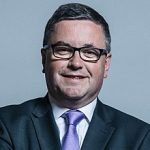
  • Robert Buckland – 2020 Comments on Sentencing for Assaults on Emergency Workers

    Robert Buckland – 2020 Comments on Sentencing for Assaults on Emergency Workers

    The text of the comments made by Robert Buckland, the Justice Secretary, on 13 July 2020.

    Being punched, kicked or spat at should never be part of the job for our valiant emergency workers who put their lives on the line to keep the public safe.

    Now more than ever they must be able to do their extraordinary work without the fear of being attacked or assaulted, which is why we’re determined to look at how our laws can protect them further.

    We will continue to do everything in our power to protect our police, prison officers, firefighters and paramedics – and ensure those who seek to harm them feel the full force of the law.

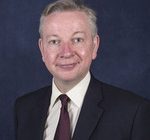
  • Michael Gove – 2020 Comments on £705 Million Cost of Securing UK/EU Border

    Michael Gove – 2020 Comments on £705 Million Cost of Securing UK/EU Border

    The comments made by Michael Gove, the Chancellor of the Duchy of Lancaster, on 12 July 2020.

    We are taking back control of our borders, and leaving the single market and the customs union at the end of this year bringing both changes and significant opportunities for which we all need to prepare. That is why we are announcing this major package of investment today.

    With or without further agreement with the EU, this £705 million will ensure that the necessary infrastructure, tech and border personnel are in place so that our traders and the border industry are able to manage the changes and seize the opportunities as we lay the foundations for the world’s most effective and secure border.

  • Priti Patel – 2020 Comments on Channel Crossings

    Priti Patel – 2020 Comments on Channel Crossings

    The text of the comments made by Priti Patel, the Home Secretary, on 12 July 2020.

    I have been in France today seeing first-hand the significant work undertaken on that side of the Channel to address the unacceptably high levels of small boats, alongside the efforts of Border Force and the National Crime Agency in the UK.

    But despite all of the action taken by law enforcement to date – intercepting the boats, making arrests, returning people back to France and putting the criminals responsible behind bars – the numbers continue to increase.

    This simply cannot be allowed to go on. Today, I have signed an agreement with the French to create a joint intelligence cell which will crack down on the gangs behind this vile people-smuggling operation and impressed on my French counterpart the need to stop these illegal crossings for the benefit of both our countries. This is the start of a new operational approach with the newly appointed French Interior Minister.

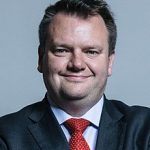
  • Nick Thomas-Symonds – 2020 Comments on Sentencing for Assaults on Emergency Workers

    Nick Thomas-Symonds – 2020 Comments on Sentencing for Assaults on Emergency Workers

    The text of the comments made by Nick Thomas-Symonds, the Shadow Home Secretary, on 13 July 2020.

    We will look closely at the full details of what the Ministers bring forward. However, if the Government had listened to Labour MPs like Chris Bryant and Holly Lynch in 2018 the principle of a two-year sentence for attacks on frontline workers would already be in place.

    Police officers have faced some appalling attacks in recent weeks while going about their work to keep people safe – this is unacceptable and we should do all we can to protect them, including tougher sentences for those who attack them.

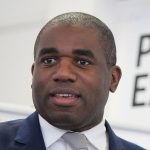
  • David Lammy – 2020 Comments on Sentencing for Assaults on Emergency Workers

    David Lammy – 2020 Comments on Sentencing for Assaults on Emergency Workers

    The text of the comments made by David Lammy, the Shadow Justice Secretary, on 13 July 2020.

    Emergency workers put themselves in danger to keep the rest of us safe. It is right that anyone who assaults a firefighter, prison officer, paramedic or police officer should face the full force of the law.

    We will look closely at these proposals, but recognising the bravery of emergency workers requires more than just increasing sentences for those that assault them. After a decade of austerity, the Government should promise to end the cuts that have left our emergency services understaffed and overworked even before this crisis began.

  • Oliver Dowden – 2020 Statement on the Coronavirus

    Oliver Dowden – 2020 Statement on the Coronavirus

    The text of the statement made by Oliver Dowden, the Secretary of State for Digital, Culture, Media and Sport, on 9 July 2020.

    For months now, our lives have been on hold.

    When the call came in March, we pressed pause on many of the things that brighten our lives.

    Meals with friends.

    Trips to the cinema or theatre.

    We had to close our gyms and swimming pools.

    Cancel our holidays.

    And postpone some of our favourite events.

    But as we’ve made huge progress against this disease, we’ve gradually seen the things we love return.

    Today, I’m very pleased to announce we can go a little bit further. As of this weekend, our artists, musicians and dancers can start performing live outside to audiences. We’ll also have the resumption of recreational sport, followed later by the reopening of our gyms, swimming pools and leisure centres.

    Normal life is slowly returning.

    This is an important milestone for our performing artists, who have been waiting patiently in the wings since March. Of course we won’t see crowds flooding into their venues. But from 11 July, our theatres, operas, dance and music shows can start putting on outdoor performances to socially distanced audiences.

    That means theatregoers can experience a live play for the first time in months at places like the stunning Minack Theatre in Cornwall. And music lovers can attend Glyndebourne this summer.

    We are taking various measures to make these places safe as they reopen. Venue capacity will be reduced, and organisations encouraged to move to electronic ticketing, to help test and trace.

    But our performing artists deserve an audience. And now they will be getting one.

    And while those outdoor performances get underway, we will be working with the public health experts to carefully pilot a number of indoor performances – from the London Symphony Orchestra at St Luke’s, to Butlins – to work out how we can confidently usher socially-distanced audiences indoors as soon as possible.

    At the same time, we’re funding scientific studies to help us understand and mitigate some specific public health risks, like the impact of singing, wind and brass instruments on transmission.

    The more we know about coronavirus in every setting, the safer we will be.

    We’re also taking steps through the planning system to protect theatres and venues from demolition or change of use, and of course all of this comms on top of the unprecedented £1.57 billion package of emergency support to help arts, heritage and cultural institutions weather the COVID storm.

    But, of course, we want to see all of our venues open as soon as it’s safe to do so.

    Today’s announcement brings us a further step closer towards that reality.

    Having allowed hairdressers to reopen, beauticians, tattooists, spas, tanning salons and other close-contact services can now do the same I’m pleased to say from Monday. Of course that will be subject to some restrictions on particularly high risk services.

    As I’ve seen myself at the Royal Academy this morning, the National Gallery, and as we’ll see shortly from National Museums Liverpool, our cultural institutions are beginning also to welcome back visitors.

    As these places begin to reopen their doors, I’m really urging people to get out there and to play their part. Buy the tickets for outdoor plays and music recitals, get to your local gallery and support your local businesses.

    We have seen in recent weeks how our landlords, waiters and shop assistants have welcomed customers back with open arms, while doing so much to keep their communities safe. It’s time to give other businesses those same opportunities.

    The Chancellor this week set out a bumper package of tourism and hospitality tax breaks, to get these industries firing on all cylinders once more and protect the millions of people who work for them.

    That means a VAT cut on everything from tickets to shows, theatres, amusement parks, museums and zoos.

    Lower costs for hotels, inns, caravan and campsites.

    Vouchers for food and non-alcoholic drinks.

    I’m urging the British people to make the most of this summer safely. We need them to support the places that we all love.

    And today there is good news for our nation’s fitness.

    As we all know, exercise is incredibly important for both physical and mental health. Even at the height of lockdown it was considered an essential activity – with countless people hitting their parks for their daily run or transforming their living rooms into temporary gyms.

    From this weekend onwards, millions of people will be able to rejoin their local sports teams as soon as their organisations publish approved guidance. Recreational cricket is back on this weekend. Five-a-side football, basketball, hockey and countless other sports will follow shortly after.

    From this Saturday, they’ll also be able to enjoy outdoor pools and waterparks.

    And from Saturday 25th, people will no longer have to work out in the park or on their living room floor. They’ll be able to get back into their gyms, their indoor swimming pools, their leisure centres, and jump on the spin bike or treadmill for the first time in months.

    Now we’ve made a number of positive visits to gyms in recent weeks, and of course had hoped to do this sooner. But we really do have to phase this properly. We will be giving gyms the certainty, clarity and time they need to reopen safely, so that the maximum number can open their doors in just two weeks’ time.

    Again, we’ve worked intensively with both professional bodies and the experts to get us to this point, and facilities will have to take a number of measures to protect their communities. That includes for example using timed booking systems to limit the number of people using the facility at any one time, and reduced class sizes. Equipment will be spaced out, and there will be enhanced cleaning throughout.

    As always, the public will need to do their bit and follow the guidance sensibly and safely. All of the measures we are taking are conditional and reversible. And we will not hesitate to impose lockdowns where there are local spikes – as we saw in Leicester, where things remain closed and of course in any other place when that is necessary.

    But the return of gyms and recreational sport is a vital part of our battle against coronavirus.

    We need to get the nation to get match-fit to defeat this disease.

    And our fight began with a collective effort, and I really hope it will end with one. At the beginning, we all stayed home to protect the NHS and save lives.

    Now the British public has a new part to play.

    It’s time to eat out to help out.

    To enjoy the arts to help out.

    And to work out to help out.

    It’s over to all of you to help the country recover safely.

    Thank you.

  • Dominic Raab – 2020 Speech at India Global Week

    Dominic Raab – 2020 Speech at India Global Week

    Below is the text of the speech made by Dominic Raab, the Foreign Secretary, on 10 July 2020.

    Hello, and thank you for having me as part of India Global Week.

    Covid-19 is a global challenge.

    And the UK has been proud to stand alongside India in its international response.

    As we have responded to this crisis, we have been privileged to have 25,000 Indian professionals working in our brilliant National Health Service here at home. We hugely value their contribution.

    With India’s help, we were able to obtain vital supplies of paracetamol at the height of the crisis, critical in the fight against Covid-19.

    Over the past few months, we’ve brought home UK nationals from India, and worked closely with the Government of India to get Indian nationals home safe and sound.

    Throughout this crisis, we’ve worked together.

    So I’d like to thank the Government of India, and my colleague and friend Dr Jaishankar for their invaluable assistance in this extraordinary effort.

    As leaders in the international response, the UK and India have also co-authored the G20 Action Plan, providing an immediate package of $200 billion of global support to the most vulnerable countries around the world.

    Even before Covid, UK was India’s second biggest research partner, with our joint research estimated to be worth £400m by 2021.

    And with India’s contribution to the recent GAVI vaccine summit, together we smashed the target for vaccine funding, with $8.8 billion raised.

    But we have the potential to do more.

    A vaccine created by British scientists and manufactured in India, if successful in clinical trials, will reach 1 billion people across the developing world, thanks to Oxford University and India’s Serum Institute.

    That would be an extraordinary achievement – benefitting not only the British and Indian people, but making it accessible for the most vulnerable people, right across the world.

    Working together, we can make it happen.

    Beyond the immediate challenge of Covid, the friendship between Britain and India is strong, and we want to take it to the next level.

    Our trade relationship is growing.

    Bolstered by entrepreneurs, business founders and innovators, it increased by nearly 10% to over £24 billion in 2019.

    We issue more skilled work visas to India than the rest of the world combined.

    And the number of Indian students in the UK has tripled in the last three years.

    Bound by our shared aspirations, the UK and India will be energetic champions of free trade, to boost small businesses, cut the cost of living, and create the jobs of the future.

    We also believe our friendship with India will be crucial, as the UK fulfils its ambition to be an even stronger force for good in the world.

    When the UK hosts COP26 in 2021, we will be key partners in tackling climate change.

    And as India returns to the UN Security Council next year and takes up the G20 Presidency in 2022, I look forward to deepening our cooperation on international issues.

    Bound by the depth of friendship between our peoples, we will look to India as partners, not only in our response to this current crisis, but as we build back better and stronger than ever.

    Britain will continue to be a part of India’s success story, and India will continue to be a part of ours.

    Thank you.

  • Dominic Raab – 2020 Statement on the 25th Anniversary of the Srebrenica Genocide

    Dominic Raab – 2020 Statement on the 25th Anniversary of the Srebrenica Genocide

    The text of the statement made by Dominic Raab, the Foreign Secretary, on 11 July 2020.

    On the 25th anniversary of the Srebrenica genocide, we remember the victims and the anguish of their families.

    During my time in The Hague between 2003 and 2006, pursuing those responsible for this dark chapter in European history, I was reminded daily of the heinous cruelty perpetrated against the innocent.

    The UK is determined to end impunity and help rebuild those countries affected – as our commitment to the ICC, and UK investment and support for Bosnia demonstrates.

  • Michael Gove – 2020 Article on the UK’s Future Outside of the EU

    Michael Gove – 2020 Article on the UK’s Future Outside of the EU

    The text of the article written by Michael Gove, the Chancellor of the Duchy of Lancaster and Minister for the Cabinet Office, on 12 July 2020.

    Leaving the European Union is, I’ve often argued, a bit like moving house. Instead of being lodgers under someone else’s roof we are choosing a new place in the world where we’re in control. Four years after we made the decision to leave the EU, the reasons for moving are stronger than ever. Taking back control of our economy means we can put in place the right measures for our Covid recovery.

    Taking back control of the money we send to Brussels means we can spend it on our priorities: investing in the NHS, spreading opportunity more equally across the UK and strengthening our Union. We can build a trading relationship with our European neighbours that serves all our interests and develop new economic partnerships across the world.

    The deal the Prime Minister struck last year, and which the country backed in the general election, ensured we left the EU in January and means we can look forward with confidence to the end of the transition period on December 31. But, just like a house move, we need to make sure all the practical arrangements for our new future are in place.

    Everyone has their part to play, starting with the government.

    That’s why on Sunday we’re investing £705 million to make sure our borders are ready for full independence. We’re investing in new infrastructure, more jobs and better technology to help goods move smoothly, make our country more secure and our citizens safer. The money will ensure that Great Britain’s new borders will be ready when the UK takes back control on January 1 2021, and will also lay the foundations for us to build the world’s most effective border by 2025.

    Modernising our border means we can introduce a migration policy that ensures we’re open to the world’s best talent. A new points-based immigration system will ensure we can attract the scientists, innovators and entrepreneurs who can power future economic growth. It will also help us ensure our NHS has the very best professionals from across the world working in our hospitals. And the new technology we’re introducing will allow us to monitor with far greater precision exactly who, and what, is coming in and out of the country, enabling us to deal more effectively with organised crime and other security threats.

    Alongside the investment we are making in infrastructure we’re also launching a major new public information campaign, “The UK’s new start: let’s get going” to give everyone the facts we need to be ready for January 1 2021. Whether you’re the managing director of a multinational conglomerate or a family business; a UK citizen resident in the EU or planning to work abroad, the new campaign will clearly set out the steps that will help this big change go as smoothly as possible.

    A straightforward checker tool at gov.uk/transition will quickly identify the specific steps any business or individual needs to take to be ready, and will allow companies and citizens to sign up for bespoke updates. Taking these steps will equip everyone for this new chapter in our country’s story.

    Helping businesses adjust to life outside the EU Customs Union will enable them to more easily access the new opportunities being an independent trading nation will bring, such as those presented by trade deals with the Japan, Australia, New Zealand and other growing Pacific economies as well as deeper ties with North America and the developing world.

    We’re negotiating hard, of course, to get the best possible trading relationship with our neighbours in the EU but we won’t back down on the essential principles the country voted for when we chose to leave. We won’t accept control of our laws by the EU or allow our new-found independence to be compromised. Whatever the nature of our trading relationship with the EU we’ll be outside the single market and the customs union – and that means the preparations for new export arrangements and new border processes will be needed whatever the negotiations bring.

    These have been challenging times for our country, but, as the Chancellor reminded us this week, government can help lay the foundations for recovery and future growth. That’s what we’re doing this week as we prepare for our new life fully outside the EU. We’re building the border that allows us to take back control. Let’s get going.