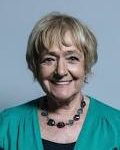
Tag: Margaret Hodge

  • Margaret Hodge – 2022 Speech on the Online Safety Bill

    Margaret Hodge – 2022 Speech on the Online Safety Bill

    The speech made by Margaret Hodge, the Labour MP for Barking, in the House of Commons on 5 December 2022.

    I pay tribute to all the relatives and families of the victims of online abuse who have chosen to be with us today. I am sure that, for a lot of you, our debate is very dry and detached, yet we would not be here but for you. Our hearts are with you all.

    I welcome the Minister to his new role. I hope that he will guide his Bill with the same spirit set by his predecessors, the right hon. Member for Croydon South (Chris Philp) and the hon. Member for Folkestone and Hythe (Damian Collins), who is present today and has done much work on this issue. Both Ministers listened and accepted ideas suggested by Back Benchers across the House. As a result, we had a better Bill.

    We all understand that this is groundbreaking legislation, and that it therefore presents us with complex challenges as we try to legislate to achieve the best answers to the horrific, fast-changing and ever-growing problems of online abuse. Given that complexity, and given that this is our first attempt at regulating online platforms, the new Minister would do well to build on the legacy of his predecessors and approach the amendments on which there are votes tonight as wholly constructive. The policies we are proposing enjoy genuine cross-party support, and are proposed to help the Minister not to cause him problems.

    Let me express particular support for new clauses 45 to 50, in the name of the right hon. Member for Basingstoke (Dame Maria Miller), which tackle the abhorrent misogynistic problem of intimate image abuse, and amendments 1 to 14, in the name of the right hon. and learned Member for Kenilworth and Southam (Sir Jeremy Wright), which address the issue of smaller platforms falling into category 2, which is now outside the scope of regulations. We all know that the smallest platforms can present the greatest risk. The killing of 51 people in the mosque in Christchurch New Zealand is probably the most egregious example, as the individual concerned used 8chan to plan his attack.

    New clause 15, which I have tabled, seeks to place responsibility for complying with the new law unequivocally on the shoulders of individual directors of online platforms. As the Bill stands, criminal liability is enforced only when senior tech executives fail to co-operate with information requests from Ofcom. I agree that is far too limited, as the right hon. and learned Member for Kenilworth and Southam said. The Bill allows executives to choose and name the individual who Ofcom will hold to account, so that the company itself, not Ofcom, decides who is liable. That is simply not good enough.

    Let me explain the thinking behind new clause 15. The purpose of the Bill is to change behaviour. Our experience in many other spheres of life tells us that the most effective way of achieving such change is to make individuals at the top of an organisation personally responsible for the behaviour of that organisation. We need to hold the chairmen and women, directors and senior executives to account by making those individuals personally liable for the practices and actions of their organisation.

    Let us look at the construction industry, for example. Years ago, building workers dying on construction sites was an all too regular feature of the construction industry. Only when we reformed health and safety legislation and made the directors of construction companies personally responsible and liable for health and safety standards on their sites did we see an incredible 90% drop in deaths on building sites. Similarly, when we introduced corporate and director liability offences in the Bribery Act 2010, companies stopped trying to bribe their way into contracts.

    It is not that we want to lock up directors of construction companies or trading companies, or indeed directors of online platforms; it is that the threat of personal criminal prosecution is the most powerful and effective way of changing behaviour. It is just the sort of deterrent tool that the Bill needs if it is to protect children and adults from online harms. That is especially important in this context, because the business model that underpins the profits that platforms enjoy encourages harmful content. The platforms need to encourage traffic on their sites, because the greater the traffic, the more attractive their sites become to advertisers; and the more advertising revenue they secure, the higher the profits they enjoy.

    Harmful content attracts more traffic and so supports the platforms’ business objectives. We know that from studies such as the one by Harvard law professor Jonathan Zittrain, which showed that posts that tiptoe close to violating platforms’ terms and conditions generate far more engagement. We also know that from Mark Zuckerberg’s decisions in the lead-up to and just after the 2020 presidential elections, when he personally authorised tweaks to the Facebook algorithm to reduce the spread of election misinformation. However, after the election, despite officials at Facebook asking for the change to stay, he ensured that the previous algorithm was placed back on. An internal Facebook memo revealed that the tweak preventing fake news had led to “a decrease in sessions”, which made his offer less attractive to advertising and impacted his profits. Restoring fake news helped restore his profits.

    The incentives in online platforms’ business models promote rather than prevent online harms, and we will not break those incentives by threatening to fine companies. We know from our experience elsewhere that, even at 10% of global revenue, such fines will inevitably be viewed as a cost to business, which will simply be passed on by raising advertising charges. However, we can and will break the incentives in the business model if we make Mark Zuckerberg or Elon Musk personally responsible for breaking the rules. It will not mean that we will lock them up, much as some of us might be tempted to do so. It will, however, provide that most powerful incentive that we have as legislators to change behaviour.

    Furthermore, we know that the directors of online platforms personally take decisions in relation to harmful content, so they should be personally held to account. In 2018, Facebook’s algorithm was promoting posts for users in Myanmar that incited violence against protesters. The whistleblower Frances Haugen showed evidence that Facebook was aware that its engagement-based content was fuelling the violence, but it continued to roll it out on its platforms worldwide without checks. Decisions made at the top resulted in direct ethnic violence on the ground. That same year, Zuckerberg gave a host of interviews defending his decision to keep holocaust-denial on his platform, saying he did not believe that posts should be taken down for people getting it wrong. The debate continued for two years until 2020, when only after months of protest he finally decided to remove that abhorrent content.

    In what world do we live where overpaid executives running around in their jeans and sneakers are allowed to make decisions on the hoof about how their platforms should be regulated without being held to account for their actions?

    Mr David Davis

    The right hon. Lady and I have co-operated to deal with international corporate villains, so I am interested in her proposal. However, a great number of these actions are taken by algorithms—I speak as someone who was taken down by a Google algorithm—so what happens then? I see no reason why we should not penalise directors, but how do we establish culpability?

    Dame Margaret Hodge

    That is for an investigation by the appropriate enforcement agency—Ofcom et al.—and if there is evidence that culpability rests with the managing director, the owner or whoever, they should be prosecuted. It is as simple as that. A case would have to be established through evidence, and that should be carried out by the enforcement agency. I do not think that this is any different from any other form of financial or other crime. In fact, it is from my experience in that that I came to this conclusion.

    John Penrose (Weston-super-Mare) (Con)

    The right hon. Lady is making a powerful case, particularly on the effective enforcement of rules to ensure that they bite properly and that people genuinely pay attention to them. She gave the example of a senior executive talking about whether people should be stopped for getting it wrong—I think the case she mentioned was holocaust denial—by making factually inaccurate statements or allowing factually inaccurate statements to persist on their platform. May I suggest that her measures would be even stronger if she were to support new clause 34, which I have tabled? My new clause would require factual inaccuracy to become wrong, to be prevented and to be pursued by the kinds of regulators she is talking about. It would be a much stronger basis on which her measure could then abut.

    Dame Margaret Hodge

    Indeed. The way the hon. Gentleman describes his new clause, which I will look at, is absolutely right, but can I just make a more general point because it speaks to the point about legal but harmful? What I really fear with the legal but harmful rule is that we create more and more laws to make content illegal and that, ironically, locks up more and more people, rather than creates structures and systems that will prevent the harm occurring in the first place. So I am not always in favour of new laws simply criminalising individuals. I would love us to have kept to the legal but harmful route.

    We can look to Elon Musk’s recent controversial takeover of Twitter. Decisions taken by Twitter’s newest owner—by Elon Musk himself—saw use of the N-word increase by nearly 500% within 12 hours of acquisition. And allowing Donald Trump back on Twitter gives a chilling permission to Trump and others to use the site yet again to incite violence.

    The tech giants know that their business models are dangerous. Platforms can train their systems to recognise so-called borderline content and reduce engagement. However, it is for business reasons, and business reasons alone, that they actively choose not to do that. In fact, they do the opposite and promote content known to trigger extreme emotions. These platforms are like a “danger for profit” machine, and the decision to allow that exploitation is coming from the top. Do not take my word for it; just listen to the words of Ian Russell. He has said:

    “The only person that I’ve ever come across in this whole world…that thought that content”—

    the content that Molly viewed—

    “was safe was…Meta.”

    There is a huge disconnect between what silicon valley executives think is safe and what we expect, both for ourselves and for our children. By introducing liability for directors, the behaviour of these companies might finally change. Experience elsewhere has shown us that that would prove to be the most effective way of keeping online users safe. New clause 17 would hold directors of a regulated service personally liable on the grounds that they have failed, or are failing, to comply with any duties set in relation to their service, for instance failure that leads to the death of a child. The new clause further states that the decision on who was liable would be made by Ofcom, not the provider, meaning that responsibility could not be shirked.

    I say to all Members that if we really want to reduce the amount of harmful abuse online, then making senior directors personally liable is a very good way of achieving it. Some 82% of UK adults agree with us, Labour Front Benchers agree and Back Benchers across the House agree. So I urge the Government to rethink their position on director liability and support new clause 17 as a cross-party amendment. I really think it will make a difference.
  • Margaret Hodge – 2022 Speech on Economic Crime and Corporate Transparency Bill

    Margaret Hodge – 2022 Speech on Economic Crime and Corporate Transparency Bill

    The speech made by Margaret Hodge, the Labour MP for Barking, in the House of Commons on 13 October 2022.

    It is a pleasure to follow the hon. Member for Cheadle (Mary Robinson), who has been a passionate and strong advocate on behalf of whistleblowers and the very important part they play in fighting economic crime, money laundering and fraud.

    Many of us have waited with eager anticipation for the Bill that the Government promised would enable us to rid Britain of the influence of oligarchs and kleptocrats and of the cancer of money laundering, fraud and other economic crime. That is particularly true of the large and ever growing group of Back Benchers who are working together across the House on these issues. Although we all welcome the fact that the Bill is now before us, many of us deeply regret that, yet again, the Government have failed to demonstrate the strategic vision, determination and ambition that are plainly needed if we are to translate our shared aim into reality on the ground and convert our warm words on economic crime into real action. The Bill contains good and important changes, but it does not allow us to make the big leap forward that we need to systematically drive this pernicious and pervasive illegal activity out of our economy and our society.

    Let me remind Members why tackling economic crime really matters. Bluntly, the cost to the UK economy is immense. People have talked about the figure of £290 billion a year, but a recent study by the University of Portsmouth gives us a figure just short of £350 billion. The mind boggles. That is somewhere between a quarter and a third of total public spending every year. It is the enormity of the sums that gives the UK the shameful and dubious distinction of being the jurisdiction of choice for oligarchs, kleptocrats and criminals around the world—people who choose us to hide and launder their ill-gotten gains.

    Governments of both the main political parties have long championed the UK’s financial services, and the success of our financial services has contributed significantly to economic growth over recent decades. We boast of our professionals, our institutions, a trusted legal jurisdiction, the English language, an attractive property market and the lure of London as a place in which to live and work—all things that help to create a vibrant financial services sector. At the same time, though, our weak regulations, our woefully inadequate enforcement capability, our relationship with the UK tax havens in the Crown dependencies and overseas territories, our lack of transparency and our deficient accountability protocols have meant that it has become all too easy to wash the dirty money along with the clean here in Britain.

    The human impact of this is beyond awful. We have all seen the horrific, heartbreaking images of Putin’s vicious assault on Ukraine and the effect that it is having on innocent Ukrainians. However, we must face up to the understanding that the dirty cash is laundered and cleaned by Putin and his kleptocratic friends both in and through the UK. Ukraine is now paying the price for corruption and economic crime. We are helping to enable Putin’s assault. Our corporate structures, our lawyers, bankers, company service providers and accountants, and our links with places such as the British Virgin Islands all facilitate the accumulation of stolen wealth and power that helps to fuel the criminal onslaught on an independent nation and its people.

    We have allowed that to happen. It is an utterly appalling truth that, since Putin came to power more than 20 years ago, there has not been one single prosecution for economic crime launched against any individual Russian oligarch—not one. Similarly, the explosion of fraud in Britain has led to endless instances of misery and harm, which other Members have cited. The authorities, as my right hon. Friend the shadow Home Secretary said, reported 5.1 million incidents of fraud in the year to September 2021, and we know that much fraud remains unreported. The published figure means that at least one in 11 adults were the victim of fraud in that year. People such as Len, who, at the age of 96 and with a proud record of service in the Army and a successful career as a chartered surveyor, was getting 600 scam communications a month. Although he did not keep track of his total losses, he knew that in one 10-day period he had spent and lost £600. It is the lack of enforcement action that contributed to Len’s misery and that has allowed fraud to spiral into the most common crime in Britain today.

    The Government are absolutely right to bring forward legislation. In fact, I would argue that if we do not eradicate money laundering, fraud and other economic crime we will cause lasting damage to our financial services sector, because we will lose our reputation as a trusted jurisdiction, and the plentiful supply of clean money across the world will go to other more reputable countries. We will lose business, not attract it. Britain can never enjoy sustained economic growth on the back of dirty money.

    I welcome the good and important changes the Bill will bring about when it is passed into law. The reform of Companies House, which other hon. Members have talked about, is warmly welcomed and hugely important. None of us wants more regulation, but we do need much smarter regulation, and that is what these provisions aim to achieve. We need to tackle and stop scandals such as the Danske Bank scandal, where an Estonian branch of the Danish bank allowed $8.3 billion of suspect payments to move through the bank using British registered companies. Many of those companies were limited liability companies, and we now know that 90% of the more than 800 limited liability companies involved in the scandal were set up by one rogue company service provider and registered at the same address in Birmingham. We need to stop the practices that meant that in the FinCEN files leaks 3,267 UK shell companies were named—more than in any other country. We need to tackle the reasons that led to Transparency International’s finding in a 2017 investigation that 766 UK shell companies were involved in corruption and money laundering cases worth up to £80 billion, with half of those 766 companies registered at just eight different addresses.

    Kevin Hollinrake

    The right hon. Lady is making a fantastic speech, and it is always a pleasure to listen to her and to work so closely with her from our respective positions on the Back Benches. She refers to Danske Bank; the total amount of money laundering through that Estonian branch was €200 billion, much of it Russian money from kleptocrats moving the money out of Russia. The bank has not been fined yet. It will probably get a fine of £2 billion or £3 billion, but the likelihood is that not a single individual will be held to account. That is absolutely wrong. Fines are seen as a cost of doing business. I know she agrees that we need to extend the failure to prevent an offence to include economic crime and things such as false accounting, and we must have individual directorial responsibility.

    Dame Margaret Hodge

    Hear, hear! I completely concur with the hon. Gentleman, and it is a real pleasure to work with him on all these matters. He is completely right. The interesting thing about Danske Bank is that, were there to be any prosecutions, they would not happen in the UK. They might happen in other jurisdictions, particularly America, but they will never happen in the UK because of the weakness of our enforcement agencies.

    The provisions in the Bill are essential to help tackle some of the wrongs in the examples I have given, but I hope the Minister will assure the House when he winds up the debate that he will seriously consider amendments that we intend to table to strengthen the reform of Companies House and prevent potential loopholes. I also welcome the proposals to allow organisations such as banks to share information where that could help to prevent or detect wrongdoing, and the proposals to treat cryptoassets just like cash or any other assets for the purposes of seizure and enforcement.

    However, the Bill too often tinkers with the challenges at the margin instead of boldly adopting a more holistic and systemic approach to bearing down on dirty money. For example, instead of proper and much-needed reform of the supervision of the professional enablers who are responsible for implementing anti-money laundering regulations, we get new cost caps for the Solicitors Regulatory Authority and new powers for the Legal Services Board—piecemeal reform, not systemic reform.

    Instead of reforming the present outdated criminal offences in relation to the responsibilities of companies and their directors to prevent economic crime, which the hon. Member for Thirsk and Malton (Kevin Hollinrake) referred to, so that we can really hold those who enable, facilitate or collude with economic crime to account, we get new pre-investigation powers for the Serious Fraud Office—important, but piecemeal reform. Instead of a systemic reform of the broken suspicious activity reports regime, we tinker at the edges by reforming part of the regime, the defence against money laundering SARs—again necessary, but yet another example of the piecemeal approach being taken.

    Not only does the Bill tinker at the edges; it also fails to address key matters that are all vital to a comprehensive approach to preventing, detecting and punishing money launderers and fraudsters. Where are the proposals to seize, as well as freeze, the assets taken from sanctioned individuals and states? We want the money that Putin and his kleptocratic cronies stole from Russia to be used to fund the reconstruction of Ukraine. We need similar powers to those that already exist in other European countries such as Italy and in nations across the world such as Canada.

    Where are the proposals for a sustainable funding regime for the enforcement agencies, so that they can use the powers they have? For instance, as the hon. Member for Glasgow Central (Alison Thewliss) stated, the cost of registering a new company with Companies House is a mere £12. It would still be a bargain at £50 or £100, with the extra income ringfenced to fund Companies House properly.

    Where are the proposals to do away with the requirement that our enforcement agencies pick up the tab for the legal costs incurred by individuals who succeed in resisting a prosecution for economic crime? The US enforcement agencies, which are far more successful in securing convictions, do not have to pay the costs of the person prosecuted if they lose a case. We should follow that example. Our system acts as a brake on our enforcement agencies. They fear the financial costs of losing, so they fail to prosecute aggressively, and because of that fraudsters, criminals and money launderers get away with awful actions.

    Where are the proposals, which the hon. Member for Cheadle called for in her contribution, to protect the brave whistleblowers on whom we are so dependent? Where are the proposals to ensure accountability to Parliament and the public, so that we can see whether our reforms deliver? Where are the proposals to tackle the abuse of our defamation laws by oligarchs who want to silence those of us wanting to hold them to account? Where are the proposals to close the loopholes on transparency for trusts and the ownership of land, which continue to act as secret ways to launder money into or through the UK? Where are the reforms to the SARs regime, to the supervision of AML supervision or to corporate criminal liability laws?

    In the wake of the 7/7 attack in Britain, we treated the reform of counter-terrorism as a mission requiring strong and comprehensive action, and we are now rightly proud of our capabilities in that area. The war in Ukraine should be our 7/7 moment in the battle to eradicate dirty money. It has helped us to understand the horrors that allowing illicit finance to infect our financial services sector, our economy and our society can bring, both at home and abroad.

    This Bill is a once-in-a-generation opportunity to put things right. We cannot and must not waste it. I look forward to working with my colleagues across the House and with Ministers in Government to achieve our shared and crucial objective: to show that we are a country that consistently demonstrates zero tolerance for all illicit finance and is determined to grow a strong, trusted financial services sector in a jurisdiction that boasts the smartest regulation, first-class enforcement of the rules, maximum transparency and strong accountability. There lies the way to economic growth.

  • Margaret Hodge – 2022 Tribute to HM Queen Elizabeth II

    Margaret Hodge – 2022 Tribute to HM Queen Elizabeth II

    The tribute made by Margaret Hodge, the Labour MP for Barking, in the House of Commons on 9 September 2022.

    What has been so remarkable about the words that have been spoken about Her Majesty Queen Elizabeth since her death is just how many people’s lives she touched. It was not simply the length of her reign or her complete commitment to duty, but her character and the way in which she did her work that meant that she was loved by so many and will be missed by us all. Many of us here today had the privilege of meeting her and talking to her. Like the right hon. Member for Chingford and Woodford Green (Sir Iain Duncan Smith), I, too, had the drinks at Christmas. I remember wishing that I had known a bit more about cocktails, because I went for the safe gin and tonic instead.

    I wish to remember Queen Elizabeth at the start of her reign and then recall two of the times that I was with her. I was eight when she was crowned. To my right hon. Friend the Member for Derby South (Margaret Beckett), I say that we were still rationed in those days if she remembers. The reason that the chocolate was so welcome was that it was rationed chocolate—we did not care about the eggs and the meat being rationed, but the chocolate was important. We did not have a television in our home, so we huddled and crowded around a small black and white television in one of our neighbour’s houses. I really remember seeing the coach, the glittering jewels on the Queen’s crown and her stunning white dress. It was simply like a fairy tale—a Cinderella or a Snow White—coming true. That magical moment of beauty, hope and goodness has stayed with me throughout her long reign.

    There were two occasions when I met the Queen that also remain strong in my memory. First, in the early 1980s, when I was leader in Islington, the Queen visited Sadler’s Wells. We laid on a session for her with a group of old-age pensioners—women living in Finsbury. We were running a keep fit dancing class under the tutorship of Sadler’s Wells teachers. The warmth of the Queen’s smile when she walked into the room, the utter joy of the women at being watched by Her Majesty and the calm way that she put them at ease when she talked to them was simply brilliant. For the Queen, it was probably just another day, but for the women, it was probably one of the most eventful days in their lives.

    The second occasion was when the Queen visited Barking and Dagenham in July 2015—she was nearly 90—to mark the 50th anniversary of the creation of the borough. She spent almost the whole day there: opening a community centre; lunching at a local theatre; visiting schools and watching a swimming display. Thousands of my constituents came out to see her and many met her. She enjoyed a rapturous reception. The fact that she had chosen to spend so much of her time with us on what must have been a tiring day—she was getting on for 90—demonstrates, I think, her total commitment to duty and to us, her people. Among the sea of Union Jacks that met her, I just remember the placards that said, “Welcome our Queen. We love you.”

    At a time of a constant change, Queen Elizabeth II gave us stability. At a time of uncertainty, tension and conflict, she always provided a path to reconciliation. As a nation and community, she provided leadership that brought recognition, respect and status, and love to all of Great Britain and all of our people. We will miss her.

  • Margaret Hodge – 2022 Speech in the No Confidence in the Government Motion

    Margaret Hodge – 2022 Speech in the No Confidence in the Government Motion

    The speech made by Margaret Hodge, the Labour MP for Barking, in the House of Commons on 18 July 2022.

    The right hon. Member for Gainsborough (Sir Edward Leigh) is right that these confidence motions can descend into pointless political attacks, but the reality is that this Government and this Prime Minister, and what they have done, make us oppose today’s motion, which is fundamental for anybody who wants to uphold democracy, defend integrity and restore trust.

    It is not just about partygate, dreadful though that was, nor the failed attempt to defend the indefensible behaviour of Owen Paterson, nor the abhorrent culture of tolerating bullying and sexual harassment from political allies; these contribute to a loss of confidence, but they do not stand alone. There is also the endless list of incompetence and waste—taxpayers’ money being tossed around like confetti, with £16 billion fraudulently squandered on covid business support. There are the shameful failures in ambulance waiting times, 6 million citizens waiting for hospital treatment, people unable to travel because of the crippling delays at the Passport Office, and a stream of rail strikes and chaos at the airports.

    All that is unforgivable, but it is the creeping culture of corruption and the determination to close down those whose job it is to keep a check on Executive power that makes this Government unfit for office. There is a growing body of evidence of corruption: dodgy Russian money funding MPs and the Tory party; an explosion in illicit finance, with Londongrad now the international capital for dirty money; peerages for pals like Cruddas and Lebedev; jobs for mates, from those like James Wharton to people from the Prime Minister’s City Hall days; and contracts for cronies, with only £0.2 billion of the £17.3 billion in contracts for PPE subject to open competition. This is not the Prime Minister’s money and not the Conservatives’ money. It is our money—taxpayers’ money, earned through hard work—and we expect it to be honestly and efficiently spent.

    This Government have no moral compass. Look at their reaction when criticised by institutions that provide a check on their power. When the courts found that the Government had illegally prorogued Parliament, the Government looked to limit judicial review. When international laws prove inconvenient, they break or ignore them. Parliament’s role in holding Government to account has been eroded, with Ministers refusing to appear at Select Committees, the Prime Minister interfering in parliamentary elections, and legislation being rushed through with scant scrutiny. The independence of the civil service has been undermined, with permanent secretaries sacked for speaking truth to power and Ministers appointing their cronies as non-executive directors. Those in the press who dare to criticise the Government get sidelined. The Government tried to keep sections of the press out of No. 10 briefings. Their answer to criticism from Channel 4 is to privatise it, while the BBC’s reward for unbiased public service broadcasting is the licence fee slashed. A free press, a strong Parliament, an independent judiciary and an impartial civil service are essential to a healthy democracy. This Government have undermined these institutions, and it is shameful. This debate is essential to call a halt to the dangerous Trumpian assault on everything we value in our British democracy.

    This should not be about Conservatives against Labour. Every MP needs to ask themselves, “Can I have confidence in a Government who mislead with impunity, abuse office to reward friends with jobs and lucrative contracts, put self-interest above the national interest, allow their party to accept cash for access, influence and honours, and whose members indulge in egregious lobbying or sex, bullying and sleaze scandals?” Can any hon. or right hon. Member in good conscience walk through the Lobby and declare their confidence after the litany of bad behaviours that have marked this Government’s time in office? The answer must be no.

  • Margaret Hodge – 2022 Speech on Anti-corruption Sanctions in Kazakhstan

    Margaret Hodge – 2022 Speech on Anti-corruption Sanctions in Kazakhstan

    The speech made by Margaret Hodge, the Labour MP for Barking, in the House of Commons on 3 February 2022.

    I thank Mr Speaker for granting this debate and the Minister for joining us. I also thank a host of civil society experts who have helped me—too many to name—but I give special thanks to Professor John Heathershaw of Exeter University, Adam Hug of the Foreign Policy Centre and Sue Hawley of Spotlight on Corruption.

    Earlier this week, the Foreign Secretary announced welcome moves to toughen up the sanctions regime against Russia, but we should not be waiting for a potential military crisis before we act against illicit finance at home and corruption overseas. We should act and use the powers we have now.

    Today, I want to shine a light on foreign corruption in another state, not simply because that is important in itself, but because I want to highlight the UK’s role in facilitating shameful wrongdoing. Put simply, Britain enables kleptocracy. My ask of the Government is twofold. First, they should act proactively by sanctioning wrongdoers in Kazakhstan. Secondly, now that they have committed to tabling an economic crime Bill in the next Session, they must ensure the Bill’s provisions are fit for purpose, tough, effective and appropriate so that Britain can show by what we do that we are seriously committed to fighting the scourge of dirty money.

    It is 30 years since Kazakhstan, a multi-ethnic, resource-rich central Asian state, emerged from the disintegration of the Soviet Union. In those years, Kazakhstan has, by some indicators, been a success. Its GDP growth has outstripped that of many of its neighbours, including Russia. Living standards are higher and until the 2010s Kazakhstan appeared to enjoy political stability.

    But there is another side to the Kazakhstan story. The country is ruled by a kleptocratic elite that has grown rich off the back of money stolen from its people. Until 2019, its autocratic dictator was Nursultan Nazarbayev. In Kazakhstan, just 162 people own 55% of the wealth—mostly members of Nazarbayev’s family or close associates. The country has a poor human rights record and little media freedom.

    As early as 2006, Jonathan Winer, former Deputy Assistant Secretary of State for International Law Enforcement in the Clinton Administration, said:

    “I can’t think of a leader in the free world as notoriously corrupt as Nazarbayev… We’ve know about his corruption for at least 15 years”.

    Yet in Britain, we turned a blind eye, ignored the corruption and helped the Kazakh regime launder and spend its dirty money.

    Three examples confirm my view. Between 2008 and 2015, we issued 205 Kazakh kleptocrats with golden visas to settle with their dirty money in the UK, which was the fifth most common country for users of the Tier 1 Investor scheme. A recent Chatham House report reveals that the Kazakh elite owns over half a billion pounds of property in the UK. Around £330 million of that belongs to Nazarbayev’s extended family, including Sunninghill Park, allegedly bought by Nazarbayev’s son-in-law for £15 million—£3 million over the asking price. The Organised Crime and Corruption Reporting Project has revealed how Nazarbayev secretly controls four charitable foundations with at least $7.8 billion-worth of assets, invested in everything from hotels to banks. This global fortune is part-owned through a UK listed holding company set up in 2020—Jusan Technologies.

    We have opened our borders, our property market and our financial structures to the Kazakh ruling class, enabling them to launder their illicit wealth and spend it. Worse, we do not even enforce our existing laws against any of this wrongdoing.

    Why does this matter now? Because the fault lines of the corrupt Kazakh political elite have exploded. Protests, initially triggered by the soaring costs of liquidised petroleum gas, quickly developed into a national movement against the governing regime. The response from the new President, Tokayev, allegedly handpicked for the job by Nazarbayev, was initially to distance himself from the old regime. He then requested support from Russia, which sent in troops. Finally, on 7 January, he deployed the military against the protesters, with a “shoot to kill without warning” order. Protesters, most of whom were peaceful citizens, were gunned down without so much as a warning shot. According to some experts, this shocking, violent suppression has left 225 dead, 4,500 injured and 10,000 arrested.

    That terrible loss of life in Kazakhstan should lead to a moment of reflection for us in Britain. We are complicit in what is happening in Kazakhstan. Our lack of transparency over foreign property ownership, our lax regulatory regime and our weak enforcement agencies have all aided and abetted the Kazakh elite.

    Yet it is not too late for us to act. The Government have put in place a new regime of anti-corruption sanctions to complement our Magnitsky sanctions. They allow us to designate foreign, corrupt actors, freeze their UK assets, stop them entering Britain and limit their access to our financial or legal enablers. Sanctions are powerful tools, but, Minister, they must be used. That is why the Government should impose sanctions on the Kazakh oligarchs, who have systematically robbed their people to line their own pockets. The recent violence demonstrates the true cost of kleptocracy. It is surely up to us, in the UK, the jurisdiction that has done so much to facilitate corruption in Kazakhstan, to act and hold these individuals to account.

    Our all-party group on anti-corruption and responsible tax is co-operating with representatives from legislatures in Europe and America. We have formed the Inter-Parliamentary Alliance against Kleptocracy, and together we are urging Governments in the UK, the US and the EU to issue sanctions against the kleptocrats of Kazakhstan. Today, I am calling for action from the UK to designate anti-corruption sanctions against the following individuals, whom I shall name, all of whom are allegedly involved in asset seizure and bribery. The details I will provide are limited because of time, but every story is shocking.

    There is Timur Kulibayev, his wife Dinаra Nazarbayeva —the daughter of Nazarbayev—and their associate Arvind Tiku. Evidence suggests that Kulibayev abused his position to accrue vast wealth. In 2020, the Financial Times showed that Kulibayev benefited from a secret scheme to divert profits from big state pipeline contracts. He has faced money laundering and bribery investigations in other jurisdictions. His worth, according to Forbes, is $2.9 billion, and he owns at least £60 million of real estate here in the UK.

    There is Dariga Nazarbayeva and her rumoured husband Kairat Sharipbayev. Dariga is Nazarbayev’s eldest daughter. Her empire, estimated by Forbes at $595 million, is hidden in an incredibly complex system of offshore companies, foundations and trusts. Three of her London properties were subject to a failed unexplained wealth order, but investigators at Source Material allege that Nazarbayeva may have misled the UK High Court. Meanwhile, Sharipbayev is allegedly one of the beneficiaries of a $334 million fraud at Kazakh bank Bank RBK, which has been labelled

    “the bank of the Nazarbayev family”.

    There is Nurali Aliyev, son of Dariga and grandson of the former ruler. Aliyev was appointed deputy chairman of a private Kazakh bank called Nurbank—after the grandfather—at the age of 21, and chairman at 22. UK court documents show he received a $65 million loan from a bank in 2008, through a company which then made a further loan. According to Nurali’s lawyers, he used some of those funds to purchase a £39.5 million house in Bishops Avenue.

    There is Karim Massimov, and his associate Aigul Nuriyeva. Massimov is a former Prime Minister of Kazakhstan who has been subject to bribery allegations, including from UK listed companies, as reported in the FT. He was also implicated in allegations of bribery by Airbus for the purchase of 45 helicopters. Nuriyeva is a Kazakh banker and alleged proxy for Massimov, who is himself implicated in major bribery scandals totalling $64 million with the Swedish telecoms company Teli.

    Vladimir Kim is Kazakhstan’s richest man, worth some $4.3 billion. He chaired Kazakhmys plc, the first Kazakh company to list on the London Stock Exchange. A Global Witness report claimed that Kim acted as a proxy owner, and that Nazarbayev actually controlled the company. In 2017, Kim’s daughter Kamila, then 18, bought three flats worth $60 million in Knightsbridge. His associate, Eduard Ogay, is co-owner of Kazakhmys—sorry if I am pronouncing these names wrongly—and is alleged to have given bribes to the country’s Prime Minister.

    Kenes Rakishev is a mysteriously wealthy Kazakh businessman worth up to $1.6 billion, with close ties to the political elite, and a close associate of the head of the Chechen Republic, who has been sanctioned by the US.

    Sauat Mynbayev was Minister for energy and mineral resources, yet he secretly co-owned a Bermuda-based company worth $3 billion, which won public contracts in Kazakhstan despite the obvious conflicts of interest with his ministerial role. His wife and son own property in the UK.

    Alexander Mashkevich, Patokh Chodiev and an associate who died were known as the “Trio”, renowned for their ownership of Eurasian Natural Resources Corporation, a Kazakh-based mining company also listed on the London Stock Exchange. In 2013, the Serious Fraud Office launched a criminal investigation into the company, following allegations of bribery to African political figures.

    Bulat Utemuratov is a former chief of staff to Nazarbayev. A US diplomatic cable reported allegations that Utemuratov was the President’s “personal financial manager” and his own website assesses his personal wealth at $3.9 billion.

    Bolat Nazarbayev is Nursultan Nazarbayev’s very wealthy brother. In 2008, he purchased a £20 million apartment in Manhattan’s ultra-exclusive Plaza Hotel. He is accused of involvement in armed groups that helped to spark the January violence.

    Akhmetzhan Yesimov, chairman of the sovereign wealth fund, allegedly abused his position to give his former son-in-law, Galimzhan Yessenov, related party loans through secretive British Virgin Islands companies to buy a UK entity called Kazphosphate. Yessenov is now one of Kazakhstan’s richest men.

    Kairat Boranbayev’s daughter married Nazarbayev’s grandson—it is all in the family. He held a number of positions, including one involved in the notoriously corrupt transit of gas from Turkmenistan. He owns a £25.4 million mansion in an exclusive gated community in Virginia Water, a £60 million flat in One Hyde Park, and three luxury apartments, worth more than £15 million, in Knightsbridge.

    Then there is Alexander Klebanov and his son Yakov. Alexander has an estimated wealth of $374 million and chairs the Central Asian Electric Power Corporation. The two act as financial proxies for the former president’s family, and are thought to have helped Dariga Nazarbayeva to avoid the unexplained wealth order.

    Nurlan Nigmatulin, Baurzhan Baibek and Marat Beketayev are senior figures in the ruling Nur Otan party and are close associates of Nazarbayev. They are embedded in supporting corruption and allegedly responsible for human rights abuses.

    A UK High Court has highlighted how Aliya Nazarbayeva, Nazarbayev’s youngest daughter, moved over $300 million out of the country through complex offshore structures, including in the BVI. Aidan Karibzhanov is accused by his former wife of having profited from his position as a banker by selling the Kazakhstan national telecoms company and, I quote,

    “privatization of public assets resulting in huge profits to politically connected insiders at the expense of the state”.

    Kairat Satybaldy and Samat Abish are Nazarbayev’s nephews, enjoying significant wealth through offshore structures. Both are key players in Nazarbayev’s inner circle, involved in the current power struggle that is undermining peace and security.

    I have named those people. Imposing sanctions on this corrupt elite will not of itself root out evil practices or lead to a radical democratic transformation in Kazakhstan, but it will demonstrate that we mean what we say when we commit to fighting dirty money and corruption. The cost of inaction is high. The reputation of London and our financial services sector is already sullied, with the UK seen as the jurisdiction of choice for dirty money. With swift action, we can begin to restore the idea of a good global Britain and demonstrate to our allies that we will not provide a safe haven for kleptocrats or oligarchs.

    I ask the Minister whether he will consider the individuals I have named and impose sanctions on those who have stolen from their country, laundered their money here, used UK structures to hide their ill-gotten gains, used the golden visa route to gain entry to the UK or committed human rights abuses. Will he act now? Only by strengthening transparency, legislating for tougher regulations and ensuring consistent, strong enforcement will we be able to hold our heads up high again as a trusted jurisdiction that lives by the highest standards. We must finally turn the warm words of successive Governments into firm actions in the promised economic crime Bill. Will the Minister confirm that the Bill will be considered this year? If the Government fail yet again on these two fronts, the only ones who will be delighted are people such as the criminal kleptocrats from Kazakhstan who will be laughing all the way to the bank.

  • Margaret Hodge – 2022 Tribute to Jack Dromey

    Margaret Hodge – 2022 Tribute to Jack Dromey

    The tribute made by Margaret Hodge, the Labour MP for Barking, in the House of Commons on 2 February 2022.

    My husband Henry introduced me to Jack and Harriet when we got together in the ‘70s. We were, as ever, at some conference, Jack was, as ever, preoccupied with fixing some vote, and I was in total awe of Harriet and Jack. Fortunately, I got the seal of approval and we have been friends now for nearly 50 years. Those who knew him well know what a generous, kind, funny, enthusiastic, interested and interesting, loyal, unselfish and consistent friend Jack was.

    Jack’s life was filled by his total passion for social justice, his tribal loyalty to the Labour party, his consummate determination to be at the heart of any and every campaign that might help to make the world a better place, and his relentless optimism that he would always win. Jack’s life achievements were so many, his campaigns so eclectic, that it is impossible to capture everything in a short tribute. I want to focus on his work before he became an MP. From the Grunwick strike to fighting to maintain the Rosyth and Plymouth dockyards, from corralling the first ever equal pay strike at Trico to observing the Luanda mercenary trials in Angola, seeking to stop the execution of three British mercenaries, wherever there was injustice, Jack was there. I remember Jack in the ‘70s leading the occupation of Centre Point in London, when London was littered with empty new office buildings while the homeless slept on the streets; in the ’80s, when he bravely led the trade unions to oppose Militant in Liverpool; in the ‘90s, when he served on Labour’s national executive committee and worked to modernise the Labour party and make us fit to govern; and in the noughties, when he organised the cleaners’ strike here in Parliament when they were earning as little as £5 an hour.

    Finally, two personal memories. In all our fantastic adventurous holidays together, whenever we arrived at a new destination, Jack’s first question was always, “What’s the wi-fi code?” He was not looking for a local restaurant. He was not finding a place for us to have a drink. His first priority was always, “Is everything okay in Erdington?” On new year’s eve, we would always have a sing-song, me playing the piano and everybody else singing. Each year, Jack, with his great singing voice, would give us a solo performance, that harked back to his Irish roots, of “Danny Boy”, with the women joining in to help him with the high note at the end. We always brought in the new year with a bang.

    Our grief at his loss is an expression of our love for the man. Jack will continue to live on in all our todays and tomorrows as we take forward the campaigns he worked on and enjoy the successes he achieved. Thank you, Jack, for everything, and for just being you.

  • Damian Hinds – 2021 Speech on Online Anonymity and Anonymous Abuse

    Damian Hinds – 2021 Speech on Online Anonymity and Anonymous Abuse

    The speech made by Damian Hinds, the Conservative MP for East Hampshire, in the House of Commons on  24 March 2021.

    How deeply upsetting for everybody to hear that very powerful speech by the right hon. Member for Barking (Dame Margaret Hodge). It is humbling to follow it. I congratulate her on what she said and the bravery she has shown. I congratulate my hon. Friend the Member for Stroud (Siobhan Baillie) on securing this debate and thank the Committee for granting it.

    Of course plenty of people are anonymous without ever being abusive and, God knows, plenty of abuse comes from people who are perfectly open about who they are, but there is something of a media hierarchy in human nature. I think we all recognise that there are many people who would say things to someone on the phone that they would not say in person, who would put things in email that they would not say on the phone, would put things on Twitter that they would not write in an email, and yes, will post anonymously something they would never want to see their name written next to.

    I do not want to ban anonymity, any more than my hon. Friend the Member for Stroud would. People have long sought its sense of freedom, its disinhibiting effect, its privacy and occasionally its hilarity and enjoyment, and there is nothing wrong with any of that. As long as there is no harm to anybody else, it is no business of the state. It is also important, of course, for activists in oppressive regimes, or for people seeking advice on sensitive issues, to discover a community out there, to know that they are not alone. But while in one context anonymity can give voice to the voiceless and empower the oppressed, in another it can coarsen public discourse and facilitate abuse. Surely it is possible for us to have the one without having to have the other. In this debate we will hear, indeed have already heard, about some really nasty abuses—in many cases, criminal abuses, where the issue with anonymity is really one about registration; it is about the impediments to enforcement action. Many of those cases will be about people in the public eye.

    I am also concerned about lower-level effects—the impact on the general tone of public discourse, and the consequences for our social cohesion and mutual understanding. I am concerned not only, or even mainly, about public figures, but also about everybody else—about moderate, normal people of all views who fear to put their head above the parapet, and those deterred from entering public life in future for fear of what their children might see written about them on Twitter.

    Free speech is at the heart of our traditions, but we have another long tradition that pamphlets declare who they are from—the imprint. Writers might write under pseudonyms, but someone—the publisher—is ultimately accountable. Social media platforms deny that responsibility, so anonymity could also make it easier for those foreign powers and others who want deliberately to confuse and divide us. It can be hard to know whether you are interacting with a person, a machine or something in between.

    There are many possible permutations; there are also many pitfalls, and this warrants proper debate and deliberation. My proposal, like that of my hon. Friend, is a pretty mild one, and a safe one—that if you are on general-usage, mass-market social media using your real identity, you should have the right, if you choose, to hear only from other people using their real identity.

  • Margaret Hodge – 2021 Speech on Online Anonymity and Anonymous Abuse

    Margaret Hodge – 2021 Speech on Online Anonymity and Anonymous Abuse

    The speech made by Margaret Hodge, the Labour MP for Barking, in the House of Commons on 24 March 2021.

    I congratulate the hon. Member for Stroud (Siobhan Baillie) on securing this debate.

    Legislating on online harms gives us a vital opportunity to call a halt to the extremism, misinformation and avalanche of harmful abuse that has become commonplace on social media. Whether on big platforms such as Twitter or fringe platforms such as Telegram, harmful content is now all-pervasive. Recently, another tsunami of racist abuse was directed at the footballers Marcus Rashford, Lauren James and Anthony Martial. Sometimes, the perpetrators can be identified, but too often those responsible do not reveal who they are. In the past, we argued that online anonymity supported open democratic debate; I am now convinced that anonymity encourages online harm that is not just hateful in itself but is used to spread lies about individuals and aims to undermine their credibility and so shut down their voices. Far from nurturing democratic debate, anonymity undermines democracy.

    My work challenging Jew-hate reached a climax last autumn, with the publication of the Equality and Human Rights Commission report into antisemitism in the Labour party. Community Security Trust found that my public comments at that time led to 90,000 mentions on social media. The vast majority were abusive, racist and misogynistic.

    Let me share just a few; some are very offensive.

    “I hope she dies soon. Dumb bitch”;

    “nothing but a couple of shit-stirring…cum buckets, bought and paid for by Israel.”

    I was told I was a “Mossad agent”, a “Zionist stooge”, a wrinkly “pedo-lover”. “Traitor.” “Snake.” “Rat.” “Shill.” “Nazi”. This abuse is aggressive, harmful, yet sometimes I have no idea who said it.

    Ending anonymity for those who promulgate hate or harm is key to effectively combating it. We must compel social media companies to be able to identify all users. We know that is easily done. Take the online payment company PayPal. Everyone using PayPal must provide their identity when setting up an account. Users’ identity is not public, but it can be traced if required. If social media companies acted similarly, those who use online anonymity for good, such as whistleblowers, or victims of child abuse or domestic abuse, could continue to do so, but those who use anonymity to spread harmful content would be identifiable, and could be dealt with by the appropriate authorities. Knowing that would, at a stroke—

    Mr Deputy Speaker (Mr Nigel Evans)

    I am sorry; we will have to leave it there. Time is up.

  • Margaret Hodge – 2021 Speech on Unsafe Cladding

    Margaret Hodge – 2021 Speech on Unsafe Cladding

    The speech made by Margaret Hodge, the Labour MP for Barking, in the House of Commons on 1 February 2021.

    It is a pleasure to follow the hon. Member for Harrow East (Bob Blackman).

    In June 2019, Samuel Garside House, a block of flats in Barking, was consumed in a wild inferno, going up in flames in seven minutes. It is a miracle that because the fire occurred in daylight, nobody died, but many residents, mainly leaseholders, lost all their possessions. In Barking, leaseholders are families who a generation ago would have been housed by the council, but with the shocking lack of affordable social housing, their only option is to stretch their finances to the absolute limit by buying a lease. They live on the edge from one pay cheque to the next, and they cannot even afford household contents insurance. They, and thousands of others in my constituency, certainly cannot afford to pay for putting right the mistakes of others. They are locked into an absolute nightmare in unsafe homes, unable to sell, unable to remortgage, and facing mounting bills to fix a crisis they did not create. The Government’s response today had little basis in reality. They have, in truth, shunted this into the “too difficult to tackle” box and abandoned leaseholders,

    In three minutes I have three issues. First, the Government must act to protect all multi-occupancy buildings. Fire does not discriminate between one height and another. Samuel Garside was below 18 metres but it was a lethal fire trap. Arbitrary height thresholds do not work. All leaseholders must be covered and existing buildings must also be remediated.

    Secondly, I have spent months of research trying to identify the owners of blocks in Barking. Ownership is often hidden. The properties are sometimes held through companies located in tax havens. Freeholders who make easy money by charging a ground rent are getting away scot-free. Freeholders must contribute towards the massive remediation costs, alongside developers, contractors, suppliers and regulators.

    Thirdly, the Government must solve the spiralling cost of building insurance. Some are struggling to find any insurance cover at all. Residents of one block are facing a 900% hike in their building insurance. The Association of British Insurers told me that the Government are simply not engaging in a realistic dialogue to produce a scheme where risks are shared between the taxpayer and insurance companies. They have done so on covid issues but they have singularly failed where people are living in danger in their own homes.

    I have not forgotten my constituents, but the Government have failed them. Those living in the Ropeworks, Academy Central, Spring Place, Samuel Garside, Central House, Benedicts Wharf, Rivermill Lofts, 360 Barking and Spectrum Building are all being left behind, abandoned by the Government.

  • Margaret Hodge – 2021 Speech on Holocaust Memorial Day

    Margaret Hodge – 2021 Speech on Holocaust Memorial Day

    The speech made by Margaret Hodge, the Labour MP for Barking, on 28 January 2021.

    I congratulate the right hon. Member for Preseli Pembrokeshire (Stephen Crabb) on his very good contribution. It seems incomprehensible that so many people were complicit by their action or inaction in the uniquely horrific extermination of 6 million Jews, yet the holocaust is not an isolated genocide. Today, Uyghurs and Rohingyas are living through the nightmare of persecution, segregation, imprisonment and murder. Only by acting together, confronting prejudice and hate and being the light in the darkness can we conquer this evil.

    I recently read my grandfather’s diaries, written when he escaped to Britain from Austria. Old and ill, he was interned in Huyton because he was deemed an enemy alien. His diaries reveal the trauma, the constant worry about relatives and the challenges faced by refugees. An eternal optimist, his diaries also describe the talent imprisoned with him—musicians, artists and academics—and that made me realise how many brilliant philosophers, musicians and scientists were lost because they were murdered by the Nazis.

    As holocaust survivors inevitably die, it falls to us to keep the knowledge of what happened alive. My grandmother’s letter, written nine days before she was killed, in which she says twice, “Don’t forget me completely”, sealed my determination to fight racism and antisemitism wherever and whenever I meet it.

    When I was first an MP, I was a Labour MP who happened to be Jewish, but when antisemitism moved to the mainstream of my party, I became a Jewish Labour MP—my identity interwoven with my work. The last five years have been difficult, long and lonely. I did enjoy support from the brave activists in the Jewish Labour Movement and from those colleagues who did call out antisemitism, and I will never forget the friendship and support between the four Jewish Labour women: Louise Ellman, Ruth Smeeth, Luciana Berger and myself. It was the women who stood together, worked together and simply would not give up. The tragedy is that they are no longer MPs. I salute their brave contribution, and I miss them.

    A year has made a huge difference. By his actions, our party’s new leader is demonstrating zero tolerance of Jew hate, not just suspending and expelling individuals but transforming our culture and re-establishing trust with the Jewish community, who were hurt and genuinely frightened. As a party, we are finally focused on eliminating antisemitism, responding to the shameful findings of the Equality and Human Rights Commission report and restoring our core values.

    The history of the Jews and our knowledge of present day genocides tells us that if we ignore prejudice and hate, it can deepen and destroy. I came into politics to fight racism, so I will always do all I can to nurture the light and conquer the darkness.