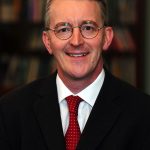
Tag: Hilary Benn

  • Hilary Benn – 2014 Parliamentary Question to the HM Treasury

    Hilary Benn – 2014 Parliamentary Question to the HM Treasury

    The below Parliamentary question was asked by Hilary Benn on 2014-04-10.

    To ask Mr Chancellor of the Exchequer, how many VAT431C claims have been submitted in each of the last 32 quarters.

    Mr David Gauke

    Data on these forms is not kept on a quarterly basis.

  • Hilary Benn – 2014 Parliamentary Question to the Department for Transport

    Hilary Benn – 2014 Parliamentary Question to the Department for Transport

    The below Parliamentary question was asked by Hilary Benn on 2014-05-07.

    To ask the Secretary of State for Transport, what research his Department has undertaken on the relationship between levels of street lighting and (a) road traffic accidents and (b) injuries to pedestrians.

    Mr Robert Goodwill

    The Highways Agency is responsible for lighting on the strategic road network and local authorities for street lighting in their areas. It is for the authorities themselves to decide the level of service they wish their street lighting network to deliver.

    No recent research has been undertaken by the Department for Transport on the relationship between levels of street lighting and (a) road traffic accidents and (b) injuries to pedestrians. The Department does, however, collect accident data and this will include factors including whether or not the area was in darkness or lit.

    In 2006 investigations were carried out by the Highways Agency which concluded road lighting reduced the number of night-time personal accident injuries on the strategic road network by 10% on motorways & dual carriageways, and 12% on single carriageway roads. The Highways Agency has not conducted any specific research on the impact of road lighting on accidents involving pedestrians due to their low numbers on the strategic road network.

    Where the Highways Agency has undertaken the switching off of lights at midnight at certain site locations, these were subject to a detailed safety assessment. By selecting sites with a good safety record and where night-time traffic flows are low, the Highways Agency is confident there will be no adverse impact on road safety.

    This Government is providing over £4.5 billion from 2010 to 2015 to local highway authorities in England for highways maintenance, including street lighting. If a local highway authority is considering upgrading or improving their street lighting stock, the Department for Transport encourages them to consider the "Invest to Save" Guidance produced by the Association of Directors of Environment, Planning and Transport (ADEPT) which is available from the Institution of Lighting Professionals.

  • Hilary Benn – 2022 Tribute to HM Queen Elizabeth II

    Hilary Benn – 2022 Tribute to HM Queen Elizabeth II

    The tribute made by Hilary Benn, the Labour MP for Leeds Central, in the House of Commons on 9 September 2022.

    I rise on behalf of my constituents in Leeds Central as we, together, mourn the Queen’s passing, offer our heartfelt condolences to His Majesty the King and to the royal family on their private grief borne so publicly, and mark an extraordinary life.

    It was at my first meeting of the Privy Council that I came to understand that the Queen was determined that things should be done correctly. We were waiting outside the door, and one of the footmen opened it to see what was going on. As he closed it, he turned to his colleague and said, “She’s moving the footstools again!”, to which he received the reply, “She’s the Queen. If she wants to move the footstools, she can move the footstools.”

    Hers was a life that, above all else, embodied constancy. We have known no other, and we feel the Queen’s passing so keenly precisely because she was always here. Her devotion to duty, to service and to representing our country ran like an unbroken thread through the decades, and through each of our lives. Like the passing of time and the changing of the seasons, she was always here, and although, as we have heard, so many things changed during her reign, she did not change. Above the noisy clamour of politics and public debate, she carried on and showed us what service means—carried out with grace and with humour.

    And now the day has come, as we long feared but knew it would, when she is no longer here; and, as the people of Leeds and of Yorkshire and of the country come to terms with their deep sense of loss at this moment in the history of our nation, our United Kingdom, let us give thanks for her uniquely long and well-lived life. Just as faith, hope and love abide, so will our memories of the Queen: her constancy, her service, and her profound sense of duty. Thank you for everything that you did, ma’am, and may you rest in peace eternal.

  • Hilary Benn – 2004 Speech on Increases in the Foreign Aid Budget

    Hilary Benn – 2004 Speech on Increases in the Foreign Aid Budget

    The speech made by Hilary Benn, the then Secretary of State for International Development, at Church House in London on 2 June 2004.

    In government, Labour has given a lead in international efforts to tackle global poverty.

    Compared with 1997, today more of our nation’s wealth is being spent on overseas aid – to directly improve the lives of millions of men and women living in poverty – with whom we share this small and fragile planet.

    The UK will spend £4.5 billion on aid by 2005/06 – a 93% increase in the aid budget since 1997. In sharp contrast to this record, the Tories are committed to a real terms cut of £229 million in the Department for International Development’s budget over two years, reducing aid to some of the world’s poorest people.

    In office, we have created a separate Department for International Development – recognised around the world as one of the most effective development agencies in the international system. We have led international action to wipe out debt for the poorest nations – relieving $70 billion worth of debt so far – with the UK providing 100% bilateral debt relief for the world’s poorest countries. And we have introduced the International Development Act which says that British aid must be used for the reduction of poverty. Our resources are now targeted on supporting the internationally agreed UN Millennium Development Goals, and by next year we will focus 90 per cent of our bilateral aid on the poorest countries in the world, including £1 billion a year to Africa.

    Since 1997, this Labour government has spent £800 million on helping children to get into school around the world; over the next four years this will rise to £1 billion going on education. The UK is now the world’s second largest bilateral donor in the global fight against HIV/AIDS, and we have committed $280 million to the Global Fund to fight AIDS, tuberculosis and malaria up to 2008.

    Labour’s increase in development assistance has helped to bring real improvements in the lives of the world’s poorest people. Kenya now has an additional 1.2 million children in school thanks to a UK grant of £10 million. Poverty in Rwanda, where the UK is the largest bilateral donor, has decreased from approximately 70 per cent in 1994 to under 60 per cent in 2002. In Uganda immunisation coverage has increased from 41 per cent to over 70 per cent. And there are many more success stories.

    Four years ago, the international community united in committing itself to the Millennium Development Goals: to halve world poverty, reduce infant and maternal mortality, and get all of the 113 million children of primary age, not in school currently, into a classroom. We must now ensure that the promises we have made on aid, trade, debt relief and sustainable development are delivered. It is my belief that international development should be an area where there is consensus between the mainstream political parties. Britain is, after all, leading the fight to tackle global poverty, and for our fight to succeed in persuading international partners abroad, our hand should be strengthened by support at home across the political spectrum.

    Despite the poor Tory record on overseas aid – in office, the Conservatives halved the aid budget as a proportion of national income from 0.51 per cent of GDP in 1979 to 0.26 per cent in 1997 – I had hoped we had seen a conversion. In 2002, the then Shadow Chancellor Michael Howard said the Tories would support measures we announced in that year’s Spending Review to increase the budget for international development.

    But the two-year cash freeze in international development announced by the current Shadow Chancellor Oliver Letwin would mean a real terms cut of £229 million in the development budget.

    So, having pledged to meet our commitments, the Conservatives have now broken that pledge, and in doing so have set their face against the growing international consensus about the need for more aid. They have committed themselves to a real terms cut in public spending which would affect help for some of the poorest people in the world.

    With typical candour John Bercow has admitted, “I cannot say to you that a freeze would not apply to the international development budget.” It would be disingenuous for the Tories to pretend a cut of this scale could come from waste or without eating deep into the international commitments we wish to make. This is especially so given Oliver Letwin’s confirmation last week that the Tories are looking to reduce public spending as a share of GDP.

    Let me illustrate the scale of the cuts the Tories would need to find.

    The first year of Conservative cuts would amount to the equivalent of eliminating the UK’s annual programmes for the Sudan (£14 million), Sierra Leone (£40 million) and Ethiopia (£57 million).

    92,000 people could be lifted out of poverty each and every year with the money the Tories want to cut.

    690,000 children in Africa could be provided with school places each year with the money the Tories want to cut.

    For each £100m spent on education in Asia, we could put an additional 2 million children in school. Spent on health in Asia, this could save the lives of another 250,000 children under 5, or avert over 50,000 maternal deaths

    The Tories must now explain where the £229 million cut from DFID’s budget over 2 years would be found.

    They must also explain why, having supported EU action to co-ordinate overseas aid as part of the Maastricht Treaty in 1992, they are now calling for withdrawal from the EU overseas aid programme.

    Europe plays an important role in our efforts to alleviate global poverty. The EU is the biggest donor in the world for humanitarian aid and the third largest donor for development assistance. The EU is a major contributor, for instance, to the Palestinians in the Occupied Territories.

    Labour believes we should continue to press for reform in the way EU aid is used: to increase the proportion spent in low-income countries and to focus aid where it can have most impact. We also want Europe’s complex and slow procedures to be further streamlined and simplified.

    With Labour, Britain has led the demand for fundamental reform of the EU’s development programmes to contribute to global poverty reduction. This is in contrast to the Tories who did nothing to improve the quality of EU aid while in government and now claim that they can withdraw the UK’s contribution to the EU’s aid programme. This isn’t possible. The Tories cannot simply unilaterally withdraw from existing treaty obligations without the agreement of the 24 other EU member states – but they have yet to identify one country that would support them. It is not credible for the Tories to pretend they can fulfil this commitment unless they plan to withdraw from the EU.

    Oliver Letwin has now placed the Tories in a position where they are reneging on a pledge to match Labour’s spending on international development. They have made what should be an issue of consensus an issue of contention, and it is the very poorest people in the world who would suffer from their cuts.

    And that’s why Labour intends to continue making international development a priority. Because it is the right thing to do. It is the moral thing to do. And because unless we tackle poverty, injustice and inequality, then we will never have a safe and secure world in which we can all live.

  • Hilary Benn – 2022 Speech on a Strategy for International Development

    Hilary Benn – 2022 Speech on a Strategy for International Development

    The speech made by Hilary Benn, the Labour MP for Leeds Central, in the House of Commons on 6 July 2022.

    I had the great privilege of serving for nearly four years as the International Development Secretary, and I worked with many people— including the right hon. Member for Sutton Coldfield (Mr Mitchell), who it is a great pleasure to follow because he was a terrific Development Secretary—who were passionate about the betterment of human kind. I was able to work with some absolutely wonderful, determined and passionate civil servants at DFID. I must be frank that it was a job that changed the way in which I think about the world, see it and seek to understand it.

    We meet here today to look at the wreckage that has resulted from the Government’s reversal of many things that were achieved by the creation of DFID, under Governments of both parties, and I for one am greatly saddened. I think the Prime Minister’s decision to abolish DFID, to break his word and to cut the aid budget was a terrible mistake. It has had material consequences for girls’ education, safe motherhood and access to contraception, as well as for children’s education. The precious opportunity that going to school gives us opens a window on the world and gives us the knowledge, confidence and aspiration to make our way in our lives.

    Many of DFID’s programmes, which were funded by the generosity of the British taxpayer, have had to cope with the consequence of sudden cuts. To take one example, UK aid to the Democratic Republic of the Congo has been cut by about 60%. Picking up the point just made by the right hon. Gentleman, that is a country where 27 million people are experiencing, to use the jargon, acute food insecurity. The funding cut from girls’ education—how on earth did that happen?—has now been restored this year, following the Foreign Secretary’s appearance before the International Development Committee, but it will only be the same in cash terms as it was in 2019, so it will in fact be a real-terms reduction.

    The process of making those cuts has had a huge impact on our relationship with partner countries, multilateral institutions, non-governmental organisations and other aid organisations. It is a terrible self-inflicted wound that is not just about the money, because Britain had a reputation in the world of development. We had respect, we were listened to and we had great influence in debates about peace and security. I do not wish to appear to be dwelling on glories of the past and I recognise that times change—I will come in a moment to the challenges facing the world—but when we undermine our role as a world leader in development, it is really important that we are honest about what has been lost.

    I have read the Government’s new strategy for international development, which was published in May. It talks about providing a “better offer”—whatever that is—and “honest and reliable investment” as if the cuts to our development budget had happened in a completely parallel universe. Whatever else might be said about what has occurred, what Ministers have done has shown that we are not a reliable partner. So, when Samantha Power, the administrator of the United States Agency for International Development wants to pick up the phone to talk to Britain, who does she ring in the FCDO? What does that mean for our relationship with other countries? The right hon. Gentleman and I, and others in the Chamber who served in DFID, know that building consistent relationships with other people and creating trust is essential if we are to solve problems, and trust can easily be lost, as the Prime Minister is in the process of finding out.

    I am afraid it is the casualness with which that happened that angers me more than anything else. I was sitting in the Chamber when the Prime Minister stood at the Dispatch Box and uttered the words that DFID was like

    “some giant cashpoint in the sky.”—[Official Report, 16 June 2020; Vol. 677, c. 670.]

    The right hon. Gentleman winces, and rightly so. I listened to that and thought, “This man clearly has no understanding whatsoever of what DFID is and what it has achieved.” While all that has been happening, not a single other G7 country has cut its aid budget—not one—even though they face the same pressures from covid and from the international economic situation and rising prices. Indeed, France and Germany are moving further towards 0.7%. Notwithstanding the rather clever tests that the former Chancellor set on when we will return to 0.7%, I am not sure whether we will see that any time soon.

    Having said all of that—and feeling slightly better for having done so—I will address the rest of my remarks to the challenges that confront the world, because that is what we will have to address with the resources now available to the FCDO. The events of the last decade have reminded us of a very important truth. We may think that we have overcome the crises of the past, we may hope that they may never be repeated and we may believe that, because things are as they are today, they will ever be thus, but, sadly, that is not true. The global crash of 2008-09 was the worst since the crash and subsequent depression of the 1930s. The collapse of the Soviet Union was not the end of history; it was a semicolon, as the terrible war in Ukraine is currently demonstrating.

    We have achieved incredible things with the gifts that the earth gives us. Look around at every single thing that human beings have built, created or made, from computers to skyscrapers and from vaccines to placing a rover on the surface of the planet Mars: every single one of them has come from things that are either on the earth or lie beneath it. That shows the extraordinary capacity of human beings to interact with what we have and to build and create. What we have done—the development that we have wrought in our own country and in others—would astonish our forebears and ancestors, but, if we thought that the process could be never-ending and that we could continue without consequence, the crisis in the natural world and the climate crisis have taught us that that is not the case, either.

    I make that argument not to depress colleagues. On the contrary, I believe that we can overcome those challenges and build something better precisely because human beings have shown their ability to achieve extraordinary things, but we need the process of politics, international relationships, persuasion, encouragement, leadership, ideas, innovation and a lot of determination to be able to do that. When I look at my constituency in Leeds, I see big differences in life expectancy, health, wealth, opportunity and income between those who have and those who do not. The absolute poverty is, of course, very different to that which we are discussing in our debate today, but the challenge to overcome it is exactly the same. We face it as a country and we face it as a world.

    I look also at the consequences of the threats to peace and security and how war causes millions to flee. We know that most people will seek to find somewhere safe. Although a lot of them will dream of being able to return home, sometimes that will not be possible. In our human response to those who seek shelter, wherever that happens in the world, we always need to ask ourselves one really important question. If it was us, how would we like to be treated, to be welcomed? When I read that some people who are seeking asylum in this country may have ankle tags fitted, or that some people who are seeking asylum in this country may be put on a plane to a country 5,000 miles away where they know no one and do not speak the language, I think that that, too, is a mistake.

    Layla Moran

    Does the right hon. Gentleman agree that the answer is not to detain them indefinitely in places like Campsfield House, which closed under this Government in 2018 but which they intend to reopen? That would be a retrograde step and shows that their plans are simply not working. It is the wrong approach and it should not reopen.

    Hilary Benn

    The right approach is to consider an asylum application and to make a swift decision. As the right hon. Member for Sutton Coldfield pointed out, the large majority of those seeking to come to the country are found to have a perfectly valid claim for asylum.

    If we do not meet the challenges of war, insecurity, economic development, climate change and damage to the natural world, then people will not stay in the place where they were born and raised. They will do what human beings have done since the dawn of time, which is to move. When the history of this century is written, I think there will be a really big chapter on global migration. Whether it is fleeing in search of food or a better life, getting away from war and persecution, or moving because it has stopped raining where they were living—I have met people who have done precisely that—people will move. All these issues are interconnected—all of them. They cannot be dealt with separately. So, when we argue that Britain should have a strong voice in the world on all these matters, we are making the argument not just because it is morally right but because it is in our self-interest.

    There are those, particularly populists, who seek to pretend otherwise. These are the people who pursue narrow nationalism and seek to gain power by sowing division. All I say to them is that if they think we can shut the doors, close the curtains, get into bed, pull up the bed covers and hope that the rest of the world and the rest of the future will go away, they are profoundly mistaken. There are no fences strong enough and no walls high enough that will resist an onward tide of human beings who are on the move. I say that, because the very condition of humankind at the beginning of the 21st century is defined by our interdependence. We depend one upon another. We share a very small and very fragile planet, and we have to co-operate and work together to succeed.

    I am not arguing for a separate approach to development, because from my experience I regard security, foreign policy, defence, trade and responding to humanitarian catastrophes as part of a continuum—and of course, development is not something that we bring like some benevolent former colonial power to the partner countries with which we work. Development is something that people, communities, societies and countries do for themselves, and our job is to assist them in that process. If a Government want to get all their children into school but do not have the cash to make it possible, then of course they welcome help from countries like ours to employ the teachers, build the schools, buy the textbooks and put in the desks. We know from our experience—this is another truth—that, in 1,000 years of history, we have made just about every mistake that is possible. I sometimes felt slightly embarrassed about talking to Ministers from developing countries, because I was conscious of that history, and I would say, “I don’t want it to take you as long as it took us to progress from where we were to where we are today”.

    We have learned that we can make progress through a process of political, social and economic development, which has transformed the lives of our citizens. We know what the essential building blocks are: peace; good health; the right to go to school; the rule of law; intolerance of corruption; trade; economic opportunity and justice; and sustainability when it comes to the natural world and the climate. All those can help to enable people to improve their lives.

    In a world where there is so much change and uncertainty, where what we rely on today may not be relied on tomorrow, it is really important that Britain is seen as a reliable, trusted, consistent and honest partner. I am afraid that the events of the past two years, which are reflected in the estimates before the House, have done that aim great harm. That is why I look forward to the day when that harm is undone.

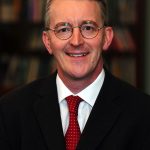
  • Hilary Benn – 2022 Speech on the Northern Ireland Protocol Bill

    Hilary Benn – 2022 Speech on the Northern Ireland Protocol Bill

    The speech made by Hilary Benn, the Labour MP for Leeds Central, in the House of Commons on 27 June 2022.

    The Bill is proof, if ever it were needed, that Brexit is not done. It was always going to be difficult to reconcile leaving the EU with the challenge of an open border and so it has proved. Let us be absolutely frank from the start: our relationship with the European Union is now in a very bad place. Perhaps that has something to do with the right hon. Member for Uxbridge and South Ruislip (Boris Johnson) because, before he became Prime Minister, he promised he would never ever put a border in the Irish sea. When he became Prime Minister, he promptly did that. He described the protocol, when he negotiated it, as in perfect conformity with the Good Friday agreement. He then said that there would be no checks on goods going from GB to Northern Ireland. That was not true and it is probably one of many reasons why so many people do not trust the Prime Minister, including many EU leaders.

    What can we conclude from that process? Despite the fact that the impact assessment made it very clear that there would be checks—what would happen—the Government either did not fully understand the protocol they had negotiated, thought it would not be a problem, mis-sold it, or always intended to resile from it later. Whatever the explanation is, it does not reflect terribly well on Ministers.

    But having made that point, we are where we are and we have a problem. The problem is that the Northern Ireland Assembly and the Executive are not functioning and all of us should be worried about that. I should have said at the beginning that it is a great pleasure to follow the right hon. Member for Skipton and Ripon (Julian Smith) because I think he spoke extremely wisely.

    As the right hon. Member for Maidenhead (Mrs May) pointed out, I suppose in the Government’s eyes, the test of the Bill is, will it work to bring the institutions back up and running again? None of us knows for sure the answer to that, but in the meantime the Foreign Secretary is taking a very big gamble and in the process in my view she is trashing Britain’s international reputation as a country that can be trusted to keep its word.

    I do not propose to dwell on the detail of the Bill—others have done that effectively—but it is just not the way to solve the problem. I oppose it because it will lead to a prolonged stand-off with the European Union, it will prolong the problems the right hon. Member for Lagan Valley (Sir Jeffrey M. Donaldson), who speaks for the Democratic Unionist party, has just referred to, it will worsen relations and, if everything goes horribly wrong, we could end up in a trade war with the EU at a very difficult time for us economically and when we have a real war on our hands between Russia and Ukraine. So we have to find another way of resolving this, and that requires the UK and the EU to sit down and negotiate.

    I have heard all the arguments from both sides—“It’s the other lot who are not doing the talking; we are willing” and so on and so forth. They can carry on blaming each other until the cows come home but, as long as they do that, both sides will be failing to fulfil their political responsibility to find a political solution to what is a political problem. At the heart of this is the question: how do we protect the integrity of the single market while not interfering unreasonably with goods moving from Great Britain to Northern Ireland? That is why the protocol refers to goods “at risk”. That is the key phrase that we have to bear in mind.

    I think there are some pretty easy places to start. For example, on supermarket deliveries travelling from Cairnryan to Larne, to shops that are only in Northern Ireland, what exactly is the risk of those goods undermining the integrity of the single market? As far as I can see, there is none, so why should they require an export health certificate? In the 18 months for which the grace periods have been extended, can anyone point to a single example of the integrity of the single market having been undermined? I am not aware of one.

    I genuinely cannot fathom why the EU is so insistent on requiring a customs code to be provided by supermarkets and others. What is it going to do with the statistics? Is it actually going to publish stats on the movement of baked beans and baby food between GB and Northern Ireland? We are aware of the other problems—seed potatoes, organic products, divergence on certain ingredients. In making that point—

    Ian Paisley rose—

    Sammy Wilson rose—

    Hilary Benn

    I am not going to give way, as I want to keep to time.

    Of course there are products where it can reasonably be argued that there is a potential risk. I wish we had spent the time talking about those products, one by one, because if there is a good case I am sure the Government will respond. While the EU says it has offered to reduce paperwork, it is important to remember that it is a reduction compared with the full application of the rules; it is an increase compared with what is currently the case because of the extension of the grace periods. That is why I have said to the EU and all I have spoken to that the EU needs to move to make this negotiation work. Surely we can reach some agreement on SPS checks on the basis that almost all the food produced in Britain is produced to exactly the same standards as it was while we were members of the EU.

    I find this very frustrating because we hear Simon Coveney say on the radio, when the idea of a green lane is put to him, “We have proposed something very similar”. Well, why cannot the two parties get on with the negotiation to make this happen? Heaven forbid, if we can negotiate the Belfast/Good Friday agreement—an astonishing achievement, the phrase of my good friend my hon. Friend the Member for Hove (Peter Kyle), the shadow Secretary of State for Northern Ireland—are the Government really incapable, with the EU, of negotiating for a prawn sandwich to cross the Irish sea without a lot of accompanying paperwork? This cannot be beyond the wit and ability of politicians.

    In my view, this is a Bill borne of desperation rather than principle. It is a Bill trying to solve a problem that is entirely of the Government’s own making. It does Britain’s international standing no good whatsoever. And it will make the negotiation, which is the only way this is going to be solved in the end, harder rather than easier. There are so many more pressing things for us to be talking about with the EU—our biggest, nearest and most important trading partner still—not least the war in Ukraine and not least climate change. The current crisis in the Government in respect of Northern Ireland arises from a practical problem and requires a practical solution. We need those old virtues of patient diplomacy and negotiation, which take as their starting point the purpose of the rules, which is to protect the integrity of the single market, rather than the rules themselves. Frankly, it is now time for the Government, together with the EU, to get back around the table and sort this out.

  • Hilary Benn – 2022 Speech on Achieving Economic Growth

    Hilary Benn – 2022 Speech on Achieving Economic Growth

    The speech made by Hilary Benn, the Labour MP for Leeds Central, in the House of Commons on 18 May 2022.

    This morning, the Foreign Secretary said:

    “We are in a very, very difficult economic situation”.

    We all recognise that that is true. Although there are some things that no Government can control, I encourage Ministers to reflect a little more on some of the difficulties that they have brought upon themselves and British business.

    In his speech, the Chief Secretary to the Treasury somehow neglected to mention the fact that our goods trade with the European Union since January 2021 has had to contend with red tape, bureaucracy and costs, including transport costs, which the Government have dumped on British business via the deal that they concluded. We know that we have small and medium-sized companies that are struggling to export to the EU. The right hon. Member for Ashford (Damian Green) talked about the importance of the cultural sector, but we know that musicians and performing artists face visa applications and customs declarations, which they find incompatible with trying to tour in Europe.

    We know that farmers are suffering from a shortage of labour. On Monday, when I was in Kent—I am co-convenor of the UK Trade and Business Commission—I talked to a fruit farmer. He said that, last year, he could not pick 8% of his crop. What has he done this year? He is reducing the amount that he plants. What does that do for British food security? It has benefits for other countries that are growing more, but it is making it harder for British farmers to grow more here.

    While businesses are having to cope with all that cost, the Government have for the fourth time postponed checks on EU businesses exporting into the United Kingdom, so they face less of the checks and costs that the Government have just dumped on to British businesses. The Office for Budget Responsibility, as Members will know, says that the UK has,

    “missed out on much of the recovery in global trade”.

    According to Her Majesty’s Revenue and Customs, the number of UK businesses exporting goods to the EU fell by an astonishing 33% last year compared with the year before. That is mainly small businesses that have said, “We can’t be bothered with all of this. We’re giving up exporting.” How does that help economic recovery?

    Kevin Hollinrake

    The right hon. Gentleman is making a strong point, and I am not a remoaner in any shape or form, but of the Bank of England’s evidence to the Treasury Committee this week, the evidence from the Governor of the Bank of England, his written evidence or the minutes of the Monetary Policy Committee meetings on the labour shortages the UK faces, not a single one mentioned Brexit. Why does the right hon. Gentleman think that is? Is it not the case that we must confront the brutal facts if we are going to solve some of these problems?

    Hilary Benn

    I can only report what I was told by the farmer on Monday. He has relied over the years on workers who have come from eastern Europe, and he says, “They’re just not coming in the same numbers, and that’s why I can’t pick my crops.” That is the point I am making.

    Harriett Baldwin

    The right hon. Gentleman had the pleasure, as I did, of having lunch with some senators who were visiting here from France. I believe he was at the very conversation where they said how difficult it was for them too to find seasonal agricultural workers, because of the disruption caused by the pandemic.

    Hilary Benn

    Undoubtedly, disentangling the impact of the pandemic and other factors is continuing work; the Office for National Statistics makes that point when it publishes the statistics. However, there is no doubt at all that the change in the visa regime being operated by the Home Office now is having an impact on British farmers, and that was the point I was trying to make. I long for the day when these things—

    Matt Rodda (Reading East) (Lab)

    Will my right hon. Friend give way?

    Hilary Benn

    Very quickly, because of the time constraints.

    Matt Rodda

    My right hon. Friend is making an excellent point. I have been given the same feedback by small businesses. Does he agree that there is also a serious connection between the rising cost of food and the lack of labour for British farms, and that that particular area could be driving inflation?

    Hilary Benn

    There is no doubt that if we put more costs, bureaucracy, red tape and increased transport costs on businesses, prices will increase. That is one of the ways businesses cope. Those things need to be sorted out but, as long as there is no trust between the European Union and the United Kingdom, it is frankly not going to happen.

    The principal cause of that distrust is the stand-off over the Northern Ireland protocol, which is the other issue I want to raise. We have two problems. One is that the Northern Ireland Government is not functioning and the second is that the Northern Ireland protocol is not working. The Good Friday agreement and the power-sharing and peace it has brought cannot be jeopardised by trade problems caused by the protocol.

    It is extremely tempting to dwell on the miserable history of how we got here—how the Prime Minister moved from promising that he would never put a border in the Irish sea to promptly doing so when he became the occupant of No. 10, and then to describing it as “a great deal” for Northern Ireland—but, in all honesty, the Prime Minister’s failings and inconsistencies are not a reason to inflict damage on Northern Ireland or on the British economy when so many people are struggling.

    We all knew that leaving the European Union would create difficulties over Ireland. The only thing everyone agreed on—practically the only thing—was that there could be no return to a hard border. That is why the most important part of the protocol talked about goods at risk, and this is at the heart of the debate: goods at risk, having entered Northern Ireland, of going into the European Union, as opposed to goods that are going to stay in Northern Ireland. That was never defined, and the joint committee was given the task of dealing with it.

    We have a stand-off at the moment. In one way, that stand-off could just be extended and extended and the Government could continue to prolong the grace periods—unlawfully, as per the protocol—with the EU starting legal action and staying it while they try to negotiate. That is one way of dealing with it. In fairness, the EU moved on medicines, and I praise Maroš Šefčovič for that. He changed EU law to allow NHS patients in Northern Ireland to get NHS medicines, which is pretty obvious really.

    I said to Mr Šefčovič on Thursday, when he appeared before the Parliamentary Partnership Assembly, “Thanks for doing that, but if you can move on that, can you not move on other things as well?” We all know the list of remaining problem areas: seed potatoes, parcels, guide dogs, supermarket deliveries to shops, organic food and divergence on the use of titanium dioxide, an ingredient in cakes and ice cream that I was not previously aware of. The EU proposals would provide more checks and problems than the current stand-off, and it is important to recognise that.

    I say to the Government, as I said to the Foreign Secretary yesterday, that threatening to disapply the protocol will not work. In the end, it will result in retaliation. If retaliation results in further obstacles to trade or, heaven forbid, a trade war, that will make the cost of living crisis even worse. We have a real war in Europe going on; we do not need a trade war with our biggest trading partner.

    At the same time, the EU needs to understand that it has to move to help to bring this crisis to an end. If one takes those supermarkets that sell only to shops in Northern Ireland, what exactly is the risk to the integrity of the single market from a sandwich, a cake or a chicken—I speak as a vegetarian—that is bought in a supermarket in Strabane or Belfast? Can anyone point, in the 16 months the grace period has operated, to a single example where the integrity of the single market has been damaged? I am not aware of any. There is a problem with divergence, but I hope that a way of mutually recognising each other’s food production standards arrangements can come.

    In conclusion, this crisis arises from a practical problem and it requires a practical solution. That is what politics is meant to deliver. That is our job. We need patient diplomacy and negotiation that takes as its starting point the purpose of the rules—they are there for a purpose—rather than the rules themselves and applies that to the unique and particular circumstances of Northern Ireland. Could we have less squabbling and more cool heads? Could we have less escalation and more conciliation? My message to both sides in the partnership council is a simple one: “You’ve got the power to deal with this. Sort it out.”

  • Hilary Benn – 2021 Speech on Foreign Aid Cuts

    Hilary Benn – 2021 Speech on Foreign Aid Cuts

    The speech made by Hilary Benn, the Labour MP for Leeds Central, in the House of Commons on 13 July 2021.

    Since Ministers announced that the UK was going to be the only G7 country to cut its aid this year, despite all the other countries facing the same fiscal pressures, there is not one Member of this House who is not now aware of the consequences of the decision that Ministers have taken—a cut of 85% in the support that we give to the United Nations Population Fund to prevent maternal and child death and unwanted pregnancy; a cut of 95% to the Global Polio Eradication Initiative, at the very moment when the world is closer than it has ever been to eradicating that dreadful disease; and a cut of 50% in the support we give to the humanitarian mine action programme, which stops people losing their arms, their legs and their lives to unexploded ordnance. It is a very long list, and every one of those things harms our reputation and does not help us to persuade others, because other countries judge us not by what we say, but by what we do.

    The choice before the House today is a very stark one: do we act to put this right, or do we accept the double lock that has been proposed? I urge the House to reject it, because there is a principle here. What is it about the level of Government spending on helping the world’s poorest people that means that it alone is going to be subject to these tests? No other area of Government expenditure is: just this one. If this is about protecting the public finances, why is this area of Government expenditure—the money we spend on getting children into school, or on vaccinating children so they do not die of diseases that our children do not die of—being singled out? I have great admiration for the OBR, but determining the level of our international aid spending is not part of its responsibility. It is the Government’s responsibility, it is a political responsibility, and Ministers should not try to pass the buck on to someone else, especially since the latest OBR forecast makes clear that it is exceedingly unlikely that the two tests would be met in the next five years.

    Mr Harper

    Can I just pick the right hon. Gentleman up on that point about other areas of expenditure? The Treasury and the Chancellor have set out these tests—promises that are in our manifesto, and which we mean to keep. The comprehensive spending review is taking place this year, and it seems to me that we will be judging all other areas of Government expenditure by these same measures. I see the Chancellor nodding, so it seems to me that we are being very consistent here, and it is important that we keep our promises about our fiscal responsibilities as well as getting back on track to meet our aid responsibilities.

    Hilary Benn

    I am afraid that I take a different view of the Government’s consistency from the right hon. Gentleman’s, because they have chosen quite specifically, knowingly and deliberately to break a cast-iron promise to the world’s poorest people that was also contained in that manifesto. As I said in my last contribution on this subject, most of those people probably have no idea that this House made that commitment together, but the Government have chosen to break it, and the choice we are making today is whether we think that is right or wrong.

    The Chancellor might think that the double lock is a way out of this political problem, but I do not think it is, because the issue before us has not gone away. It is just the same as it was on the day when the original cut was announced, and the question before us is whether it is right—morally, practically or politically—to break our word to the world’s poorest people. I would argue that it is not: it is wrong in principle and it is harmful in practice, as we have heard from excellent speeches made by Conservative Members. It is not who we are; it is not the country that we should aspire to be; and I ask the House to reject this motion so that we can restore aid to 0.7% and keep the promise that we made to the people of this country and the people of the world.

  • Hilary Benn – 2021 Speech on HRH The Duke of Edinburgh

    Hilary Benn – 2021 Speech on HRH The Duke of Edinburgh

    The speech made by Hilary Benn, the Labour MP for Leeds Central, in the House of Commons on 12 April 2021.

    I must confess that, like many people, there are things I have learned in the last few days about the life of His Royal Highness Prince Philip, the Duke of Edinburgh, that I did not previously know. They include the difficult circumstances of his early life, his mother’s bravery in hiding a Jewish family from the Germans in Greece during the war, for which she is remembered at Yad Vashem as one of the righteous among the nations, and just how deep and long-standing was his personal commitment to wildlife and nature conservation, which was in many ways, as others have said, ahead of its time.

    We were all aware, however, that the Duke of Edinburgh was famous for his plain speaking. I particularly enjoyed the story that when he discovered that the Parliament of Ghana had only 200 Members, he quipped, I trust with a smile on his face, “That is about the right number. We have 650 and most of them are a complete bloody waste of time.” How one describes that or any of his other more famous comments—he certainly said what he thought—requires us to understand from whence they and he came. In over 70 years of public service in which carried out with distinction the role of first consort, a job without a description, he went into countless rooms and was introduced to countless lines of people, all of whom were waiting for him to say something. Which one of us would be able to do that for over seven decades without, on occasion, saying something that we might later come to regret—or, in the Duke’s case, probably not?

    The Duke was, as are we all, a product of the age in which he was born and of his upbringing. When he was born in 1921, Queen Victoria had died only 20 years previously and Lloyd George was Prime Minister. It was another era. As we sometimes wrestle with our past and how we should come to terms with it, we cannot forget that fundamental truth about how each one of us is shaped. Nor can we truly understand the person without also understanding the age in which they lived, as the Duke of Edinburgh always sought to do, and he lived for a very long time. Even if we did not know all that he was doing, he was ever present our lives, as he was that constant strength to Her Majesty the Queen. As we have watched the tributes and the newsreels about his life, we have inevitably reflected upon our own lives, upon what has changed and what that has meant as we ourselves have got older. This is, after all, the human condition. As the American baseball player Satchel Paige wisely observed:

    “Age is a case of mind over matter. If you don’t mind, it doesn’t matter.”

    I suspect that the Duke would have agreed with that sentiment.

    As we all express our condolences to Her Majesty the Queen and the royal family on their loss, we should also remember that the passing of a public figure is, for the family that loved him, also a deeply felt private loss. There is the public mourning, but there is also the private grief, which is very personal, and it can be difficult to endure amid all the public attention. However, of one thing we can be sure. All the comments, all the recollections, all the stories that have been told about the Duke of Edinburgh in the past few days will surely be a great comfort to the royal family, as they would be to anyone who has lost a loved one—and oh, how many of our citizens have experienced such a loss in the last year. Why? Because when someone close to us dies, to know that their life was well lived, to know that it had meaning, and to know that they will be remembered is perhaps the greatest comfort of all. May he rest in peace.

  • Hilary Benn – 2021 Speech on Unsafe Cladding

    Hilary Benn – 2021 Speech on Unsafe Cladding

    The speech made by Hilary Benn, the Labour MP for Leeds Central, in the House of Commons on 1 February 2021.

    I am pleased to follow the hon. Member for Stevenage (Stephen McPartland), whose amendments to the Fire Safety Bill I have signed. I will speak on behalf of my constituents in Leeds—they include Hayley Tillotson, whose story has moved us all—who find themselves in desperate circumstances not of their making. They saved up. They bought what they thought was the home of their dreams. It has now turned into a nightmare as the outer layers have been peeled back on each block to reveal the full horror underneath. Their homes are firetraps. They are worthless. They cannot borrow against them. They cannot sell them. They are trapped by waking watch bills, trapped by rising insurance, and trapped by the fear that they will be told they must pay to fix this, even though they are not in any way responsible.

    The impact on the mental health of my constituents is enormous, because every day they wake up and are reminded of this nightmare with no apparent way out. Today’s debate is so important, because we, together on both sides of the House, need to give them hope by calling on the Government to draw up a plan to sort the situation out.

    Ministers know that the building safety fund will not deal with the problem. Why? Because the cost of making every home safe is way in excess of the money allocated so far, and we know that Ministers are looking at a loan scheme. I am not opposed to a loan scheme in principle, provided that leaseholders are not required to pay the loans back. After all, they did not fail to put in the firebreaks or cover the blocks in unsafe cladding, so why on earth should they have to pay?

    This is a story of monumental regulatory failure and of flats being built as cheaply as possible—in many cases without even complying with the building regulations. Like the Minister, I applaud those freeholders and developers who have taken responsibility and sorted things out, but I deplore those who have tried to walk away and claim that it is nothing to do with them. Those who developed and constructed the buildings should pay, the industry as a whole should pay, and the Government should pay because they allowed it to happen. We all have a responsibility for that.

    The most important thing of all, however, is that we act now to bring this crisis to an end, because that is what the leaseholders I represent and Leeds Cladding Scandal, which has done such a great job, want. More than anything else they just want to feel safe and secure in their homes once again, so that they can get on with their lives. We have a responsibility to make sure that that now happens.