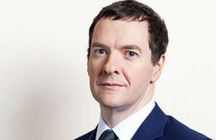
Tag: George Osborne

  • George Osborne – 2013 Mansion House Speech

    gosborne

    Below is the text of the speech made by the Chancellor of the Exchequer, George Osborne, on the 19th June 2013 at the Mansion House in London.

    My Lord Mayor, Ladies and Gentlemen.

    Tonight marks the end of an era.

    Mervyn King is leaving the Bank of England in two weeks time.

    He has attended 194 Monetary Policy Committee meetings;

    He has appeared 102 times before Parliament;

    He has attended 37 gatherings of the IMF;

    And eaten his way through 15 of these annual dinners at the Mansion House,

    And Lord Mayor, on behalf of your guests, I thank you and the City of London for your wonderful hospitality tonight.

    Mervyn King was appointed during the premiership of the late Margaret Thatcher as one of the Bank’s directors in 1990.

    And since then, first as Deputy Governor, and then Governor, Mervyn, you have helped to lead our country through an extraordinary period of its economic history.

    More than that, you have been the original thinker who has taken Britain on the journey that began with inflation targeting, to monetary independence, and now to the far-reaching reforms to prudential regulation and financial oversight.

    I can think of few people who have done more to shape our public discourse in the last thirty years.

    And you have done so with integrity, intelligence and patriotism.

    And also with a seemingly endless supply of sporting metaphors.

    So here we go: you had to play on a sticky wicket, but you leave with our economy now emerging from the Ashes. When it comes to leaving presents, you’re a difficult man to get something for.

    There’s not much point getting you the traditional gold watch when you already work on top of £200 billion worth of the stuff.

    And as you already know, the Chief Secretary, or as you call him, the left arm opening bowler on the Governor’s Eleven, has already confirmed that the Government will support your charity Chance to Shine, matching the £25 million it has raised to help introduce our national game back into our schools.

    And I’m delighted to be able to tell everyone here something you’ve known about for a few days.

    It’s just been announced by Downing Street that the Prime Minister has recommended to Her Majesty the Queen that the Governor be raised to the peerage, and Her Majesty has been graciously pleased to approve that. Lord King, we here today salute this worthy honour and thank you for your life of service to your country.

    And we thank Barbara, Lady King, for being such a support at your side.

    Lord King is a hard act to follow.

    But Mark Carney is a worthy successor.

    Mark, if you’re watching this on TV, just so you know, this is how we British eat every night.

    Mark has an outstanding record at the Bank of Canada, great economic expertise, he’s at the centre of global financial regulation and has firsthand experience of the private sector.

    I believe he’s quite simply the best qualified person in the world for the difficult job that lies ahead.

    And isn’t it a credit to our country that we accept without question that someone who is not British but who is the best in the world, can lead our central Bank? We all wish Mark Carney every success in his new role.

    He arrives at an important moment for our economy.

    The situation in the Eurozone remains fragile.

    Some of the data from the emerging economies has underwhelmed.

    And Britain remains encumbered by debts built up over many years.

    Recent volatility in financial markets is a reminder that no recovery from such a deep and damaging global recession is going to be straight-forward.

    But, equally, the economic news here in Britain has been better in recent months. The economy is growing.

    Record numbers are in work.

    Unemployment is falling.

    And the surveys of confidence and future activity are stronger.

    Let me say tonight: the British economy is healing.

    We are moving from rescue to recovery.

    But while Britain has left intensive care, we still need to secure the recovery – and make sure we continue to treat the ailments that brought us low in the first place.

    Full recovery won’t be easy but I won’t let up in my determination to put right what went so badly wrong.

    A public sector that was too big, paid for by a private sector that was too small.

    An unbalanced economy that was too reliant on too few industries in too few parts of the country.

    A business community that was not connected enough to new, fast growing parts of our globe and not helped by an uncompetitive tax system.

    And a banking system that was badly regulated, ran risks it didn’t understand and had to be bailed out at huge cost by the taxpayer.

    Addressing these more deep seated problems, as well as the short term challenges, must be central to our economic plan.

    These are the elements of that economic plan.

    First, active monetary policy to support demand and help keep lending rates low.

    That is anchored by a tough, credible fiscal policy that bears down on our excessive deficit, the second element of our plan.

    Finally, far-reaching structural reform to improve the supply potential of our economy – the only lasting way to raise our nation’s living standards and succeed in the global race.

    And that must include structural reform to parts of our banking system.

    We want our banks to support our national economy, not be supported by our national economy.

    Tonight, I’d like to say a little about each component of the economic plan.

    About how they will develop as we move from rescue to recovery.

    Let’s start with active monetary policy.

    The Bank of England has had the difficult task of balancing the risks from inflation with the need to support the economy.

    I believe they have largely got that balance right.

    Innovations in monetary policy have included the Funding for Lending scheme, which Mervyn and I both launched at this Mansion House dinner a year ago.

    As a result, bank funding costs have fallen quite dramatically.

    But Funding for Lending must still do more for small businesses, so we have extended the scheme and sharply increased the incentives for new lending to SMEs.

    Monetary activism also means using the credibility of the Government’s balance sheet to fix other parts of the impaired financial system, like mortgage finance.

    Mortgage rates have fallen, again thanks to Funding for Lending.

    But the average deposit required for a first time buyer is a staggering four fifths of annual income.

    I suspect almost everyone in this room owns their own home.

    But I ask this: how many of you could have afforded the kind of deposit on your first house that many young families are expected to provide today?

    Very few of you.

    Let’s be clear: the market is not functioning normally.

    And that’s why we’ve introduced Help to Buy.

    I want to make sure an entire generation doesn’t miss out on the reasonable aspiration to buy a home. The equity loan component has been operating since April and in the words of the House Builders Federation, it is already “an unqualified success”.

    The mortgage component will begin early next year.

    And we have reformed our planning laws to allow for a sensible increase in home building.

    To guarantee that Help to Buy is temporary, the Financial Policy Committee of the Bank of England will have to give its consent before it can be extended beyond its three year life.

    And this brings me to the important question of how monetary policy should balance the ongoing need for stimulus with emerging signs of recovery.

    Each step along the path must, without question, be for the judgment of independent central banks including our own. The sharp jumps in bond yields we’ve seen in too many countries in recent years have been a sign of confidence departing.

    But if the recovery gathers strength then a steady rise in bond yields across the largest developed countries will be a sign of confidence returning.

    The recent turbulence in financial markets has emphasised the vital importance of clear communication.

    There is a risk that poor communication could lead to stimulus being inadvertently withdrawn too soon.

    More clarity about the future path of interest rates could help keep financial markets more stable.

    So this year I’ve given the Bank of England a new remit that takes into account innovations in monetary policy and asked the Monetary Policy Committee to report back in August on the use of forward guidance and intermediate thresholds.

    I want to make sure the new Governor and his Committee have all the tools they need at their disposal to maintain price stability and secure the recovery.

    Active monetary policy is a key part of our economic plan.

    But it has to be anchored by credible fiscal policy.

    That remains as important in the recovery as it was in the rescue.

    Three years ago, at my first speech to this dinner, I said we would have to take difficult decisions over a number of years to reduce our country’s dangerously-high budget deficit. This was very controversial at the time.

    Many opposed our plan to cut spending and increase revenue.

    We were told that the private sector would never replace the public sector jobs lost.

    Instead, private sector job creation has offset public sector losses more than three times over.

    We were told crime would rise, education standards would fall and hospital waiting times would increase.

    In all those cases the exact reverse has happened.

    Every single step we have taken, the money saved, every programme cut, every welfare benefit reformed, has been fought against by a noisy combination of vested interests.

    Those opponents are now losing the argument. But listen carefully and they still assert that if we borrow more we will borrow less.

    The evidence doesn’t support it and the public doesn’t agree.

    Look at the progress we have made.

    The budget deficit is down by a third.

    The structural deficit – the part that remains even when the economy fully recovers – has fallen by more here than in any other G7 country.

    But at over 7 per cent, our deficit remains too high and endangers our recovery.

    We can’t afford to let up – and you have my commitment – we won’t.

    In a week’s time, I will set out the government’s spending plans for the year 2015-16.

    With tough negotiating by the Chief Secretary, those plans are almost complete.

    There are more difficult decisions.

    There have to be when the country is living way beyond its means.

    But we will not shy away from taking them.

    And next week we are going to prioritise spending on the economic infrastructure of tomorrow – in the roads and railways, the schooling and the science that will help Britain compete and succeed.

    These are part of our structural reforms – and the third component of our economic plan.

    Thanks to long term policy decisions we’ve taken, Britain is now ranked in a recent global index as the number one place in the world to invest in infrastructure.

    Our goods exports to India are up 60 per cent; to China they’ve nearly doubled.

    When other countries are retreating from their civil nuclear programmes, we are restarting ours.

    Our G8 Summit started with the launch of trade talks between the US and Europe that could lead to the largest bilateral trade deal in history.

    And strong, profitable and safe financial services are an integral part of the reforms we’re bringing to Britain.

    In the City of London, you provide Britain with a great global asset.

    I couldn’t be clearer.

    I want this City to grow as the pre-eminent centre of international finance.

    So I’ve worked hard with the Chinese government to get the first renminbi bonds issued here.

    With my Indian opposite number, we’ve just agreed to create new debt funds here for Indian infrastructure.

    And when the World Islamic Economic Forum meets for the first time this year outside the Muslim world – they’re meeting here in this city.

    We’ve launched a special drive to bring more insurance and reinsurance business here to Britain.

    And I can tell you tonight that Santander has chosen London as the base of its worldwide investment management business.

    The very landscape of our city, with the Gherkin, the Walkie Talkie and the Cheese Grater – like some giant’s kitchen table – is a visible sign of growth. While underground Crossrail continues to burrow through the City.

    We’re fighting for better regulation from Europe.

    Just this week we secured a big step forward by getting the derivative exchanges market opened up to competition.

    But while some European countries talk of introducing damaging financial transaction taxes, here in Britain I’m abolishing a financial transaction tax – getting rid of stamp duty on AIM-listed shares.

    And even though it’s been controversial, I reduced the top rate of income tax.

    Why?

    Because it was the worst of both worlds: a tax rate that discouraged enterprise but didn’t raise more money from the best off.

    So whether its legal services, accountancy, insurance, hedge funds or shipping, we stand ready to promote our world beating financial services.

    And those world-beating services include our global banks.

    They need to be part of our successful future.

    To do that, we must resolve what I described two years ago at this dinner as the ‘British Dilemma’.

    How can we remain the international centre for banking, while protecting taxpayers from the catastrophic costs when banks fail?

    The financial crisis has cost Britain billions in lost economic output.

    People are entitled to feel angry – at the regulators and government that failed them; and at the financial institutions whose reckless behavior brought us to the brink of bankruptcy.

    But anger can be a destructive, vindictive thing – it can cost this country jobs and prosperity.

    We’re talking here about an industry that employs one million of our citizens.

    So we need to channel legitimate anger into a positive force for change.

    That is what this Government has sought to do over the last three years.

    We’ve changed entirely the failed system of financial regulation, so that from this April we have the Bank of England exercising its judgements as the prudential regulator of our financial system and a monitor of its emerging risks – a role that should never have been taken away from it.

    Paul Tucker has done an incredible job in overseeing these historic reforms.

    He has announced he’s stepping down from the Bank.

    Paul, we thank you for years of service, we wish you well with your next challenge and I’m sure we won’t be seeing the last of you in the public sphere.

    It is not just the system of regulation that has changed fundamentally.

    This year the Government is legislating in Parliament to ring-fence our retail banks from their investment banking arms. In future, if someone doing my job faces that dreadful weekend decision about using huge amounts of taxpayer’s money to bail out a bank, they will have real choices my predecessor was denied.

    Now we need to make further changes. Today the Parliamentary Commission on Banking has reported.

    I want to thank Andrew Tyrie – here tonight – and his distinguished colleagues, for an intensive and thorough piece of work.

    I think the decision to go for a quick Parliamentary inquiry, rather than a lengthy public inquiry, has been vindicated.

    The Commission have rightly not spared in their criticism where they feel some in the industry have done wrong.

    But they’ve also come forward with practical solutions that enhance the personal responsibility for practitioners and the professional judgment of regulators.

    It’s a very impressive Report.

    The Commission’s central judgment is absolutely right.

    As they put it: “High standards in banking should not be a substitute for global success. On the contrary, they can be a stimulus to it”.

    There’s a lot of detail here – I will respond more fully next month.

    We’ve already supported the recommendations on new criminal sanctions and cancelling bonuses where banks are bailed out.

    And let me be clear: where legislation is needed, the Banking Bill currently before Parliament will be amended to ensure the recommendations can be quickly enacted. The Commission also supports the creation of new banks on our high street.

    I strongly agree.

    We’ve made it easier this year to start and grow new banks.

    Britain’s banking scene is changing.

    Northern Rock has been returned to the private sector.

    Lloyds is launching TSB back to the high street this summer, and preparing to float this business as a true new “challenger” bank.

    RBS will follow suit.

    Today, the Office of Fair Trading has announced that it will bring forward its market review of small business banking – to make sure our small firms get a fair, competitive deal from the banks.

    As part of this work, I have asked the OFT to review the impact that new challenger banks created by Lloyds and RBS will have on strengthening competition in small business banking, and to identify what more can be done.

    That begs a question about the proverbial elephant in the room for Britain’s financial services – the future of the taxpayer’s stakes in two of our largest banks, RBS and Lloyds.

    Our objectives for our shareholdings in Lloyds and RBS are exactly the same.

    We want to maximize the ability of these important banks to support the British economy.

    We want to get the best value for money for the taxpayer.

    And we want to do what we can to return them to private ownership.

    In achieving these three objectives, let’s be clear about where responsibility lies.

    RBS and Lloyds are led by their managements and their Boards in the interests of all shareholders, including the taxpayer.

    It would be wrong for politicians to get into the day-to-day business of determining who they should lend to, and the details of their strategy.

    UK Financial Investments plays an important role in making sure the Government’s shareholdings are managed on an arms length, commercial basis.

    So one area where I disagree with the Banking Commission is on their recommendation that UKFI be abolished.

    But equally, as Chancellor, I have a responsibility to represent the interests of taxpayers.

    The British public own 81 per cent of RBS and 39 per cent of Lloyds.

    They were forced to give over £65 billion of the money they worked hard to earn to bail out these banks.

    Of course the taxpayer is going to have a clear interest in the direction of each bank.

    It would be a dereliction of my duty not to represent that interest.

    In the case of RBS, the bank lends more to small and medium businesses in this country than anyone else.

    There’s no doubt that the bank has come a long way since the perilous situation it faced in 2008.

    Stephen Hester has done a very good rescue job in shrinking both the non-core assets and the investment banking operations.

    He provided leadership in a time of crisis – and deserves our appreciation.

    But while the bank is healing, let’s be frank: it has not healed as quickly as we all hoped.

    It has not done as much to support the recovery as any of us would have liked.

    And we as taxpayers are still a long way from getting our money back.

    So the following needs to happen.

    The plan set out, independently, by the board of the bank needs to be pursued aggressively. Under this, RBS will focus on its core UK business, serving its personal, SME and corporate customers.

    It will not aspire to be a global full-service investment bank, and the ongoing reduction of its markets business will continue, as it needs to

    And UKFI have made it clear that the Government has no strategic interest in RBS owning one of the largest regional banks in the US – and the method of exit from Citizens must achieve maximum value for all shareholders.

    All this meets both the first objective of maximizing the ability of RBS to support the economy and our second objective to get the best value for money for the taxpayer.

    What about the third?

    The return to the private sector.

    I don’t want a quick sale of our RBS shares. I want the right sale – the right sale for the British people.

    I will only sell our stake in RBS when we feel the bank is fully able to support our economy and when we get good value for you, the taxpayer.

    In our judgment, when it comes to RBS that moment is some way off.

    So what more can we do to help RBS recover?

    There’s no doubt that, despite all the progress of recent years, RBS remains weighed down by too many poor assets – loans issued in the boom that have gone bad and may take a long time to improve.

    The question is – do we remove those poor assets from RBS, and set up what’s known as a Bad Bank.

    This would then enable RBS to focus on the good parts of its business – supporting the British economy and maximising the benefits for the taxpayer.

    With hindsight, I think splitting RBS into a Good Bank and a Bad Bank was probably what should have happened in 2008. That is with hindsight.

    I wasn’t in office.

    I didn’t suggest it in opposition.

    And I’m not criticizing my predecessor who had to act quickly in a desperate situation.

    The question before us now is not about what happened then, but what should happened now.

    Is taking bad assets that are still weighing down RBS out of the bank altogether the right answer today?

    Opinion is divided – some say the disruption isn’t worth it; others that it’s the only way we’ll really restore our banking system to health.

    I’ve always believed the answer for Britain is to confront the difficult decisions, not wish them away.

    So I can tell you today that we will urgently investigate the case for taking the bad assets – those mistakes of the past – out of RBS.

    We will judge whether this will allow the Bank to focus on its future supporting the British economy.

    We will see whether its right for Britain to, in effect, see RBS broken up.

    The review will be swift.

    It will be conducted by the Treasury with external professional support.

    We’ll look at a broad range of RBS’s assets, but particularly assets in Ulster Bank and UK commercial real estate.

    We’re not prepared to put more taxpayer capital into RBS as part of this process.

    We will establish a Bad Bank if it meets our three objectives: if it supports the British economy; if it’s in the interests of taxpayers – and if it accelerates the return to private ownership.

    But if the review reveals that it would not achieve these things, then we won’t do it.

    We want to get on with this, so we’ll conclude the review and make a decision this autumn.

    Once the decision is taken, and we’re confident that RBS is focused on being that UK corporate and retail bank it needs to be, then the Government is ready to discuss how, for a fair price, we get rid of the Dividend Access Share.

    That would be a milestone on the road back to full private ownership for RBS, a destination we all want to reach.

    For Lloyds, the three objectives of taxpayer value, maximising support for the economy and restoring private ownership are exactly the same – but we’re much closer to achieving those objectives.

    To be fair, Lloyds was, all along, a much simpler bank.

    Now its core retail and commercial business generate healthy returns, and there’s no trading arm. Thanks to Antonio Horta-Osorio and his team Lloyds has a clear strategy and is improving its capital position, as it was asked to do.

    Lloyds is in a good position.

    Investor interest is growing.

    And shares are already trading at around the price where selling would reduce the national debt.

    That’s something we all want to see.

    I can announce that we are actively considering options for share sales in Lloyds.

    Of course, we will only proceed if we get value for the taxpayer.

    And we have no pre-fixed timescale or method of disposal.

    For the first block of government shares, an institutional placement is likely to be the most effective way of managing risk and getting value.

    So five years on from the financial crisis, we can now take the first steps to returning Lloyds to the private sector where it belongs.

    And for later sales of shares, we will consider a retail offering to the general public.

    My Lord Mayor, nothing better signals Britain’s move from rescue to recovery than the fact that we can start to plan for our exit from government share ownership of our biggest banks.

    And nothing would do more to help us, as a country, draw a line under the mistakes of the past and look to a brighter future. We’ve come a long way these past few years. Reducing our deficit.

    Building up the private sector.

    Making our country more competitive.

    Creating a banking system that supports the British economy rather than being supported by it.

    Enhancing Britain’s global leadership in financial services.

    This is our economic plan.

    It is working.

    The Government is determined in its task, and I thank you for helping us see it through.

  • George Osborne – 2013 Speech on Benefits

    gosborne

    Below is the text of the speech made by the Chancellor of the Exchequer, George Osborne, on the subject of welfare and benefits made on 2nd April 2013.

    Good afternoon, thank you for inviting me to be here at Morrison’s today.

    One of your company slogans – “every penny matters” – is a very fitting catchphrase for what I want to talk about.

    I want to talk about the major changes we’re making to our tax and welfare system this month.

    Changes that are all about making sure that we use every penny we can to back hard working people who want to get on in life.

    Changes that are all about backing people like you.

    For too long, we’ve had a system where people who did the right thing – who get up in the morning and work hard – felt penalised for it, while people who did the wrong thing got rewarded for it.

    That’s wrong.

    So this month we’re going to put things right.

    This month, 9 out of 10 working households will be better off as a result of the changes we are making.

    This month we will make work pay.

    Now, those who defend the current benefit system are going to complain loudly.

    These vested interests always complain, with depressingly predictable outrage, about every change to a system which is failing.

    I want to take the argument to them.

    Because defending every line item of welfare spending isn’t credible in the current economic environment.

    Because defending benefits that trap people in poverty and penalise work is defending the indefensible.

    The benefit system is broken; it penalises those who try to do the right thing; and the British people badly want it fixed.

    We agree – and those who don’t are on the wrong side of the British public.

    But this isn’t just an argument about whether these changes are fair or not.

    It’s really about the future of our country.

    When I think about the future, I think about the kind of country my kids and your kids are going to grow up in.

    The world is going to be quite a different place.

    We’re facing more and more competition from vast new economies like China and India.

    There are quite literally billions of people who are joining the world economy.

    That’s human progress.

    If we’re not careful, Britain risks being out-worked, out-competed and out-smarted by those hungry for a better life.

    Fortunately, this country has a lot of strengths. British people are some of the hardest workers in Europe.

    Our companies produce some of the best inventions in the world.

    But we aren’t going be able to compete if politicians waste your money or we rack up debts we can’t afford to pay off.

    When I became Chancellor, we were forecast to have the biggest deficit of any major economy in the world.

    The deficit is the gap between what the Government spends and what it raises – and in Britain that gap got bigger than almost anywhere else.

    By taking hard decisions in the last few years to save money, this government has cut that deficit by a third.

    But it’s still too high.

    Because of that deficit six pence in every pound of tax you pay is going to be wasted.

    It will have to be spent not even on paying off the national debt – but just servicing the interest on that debt.

    You spend hours here working hard.

    You pay your taxes out of your earnings.

    I want every penny of that money to be spent on the things that matter to you and your family: a better NHS, good schools and policing, strong defence, and decent pensions.

    Not on paying the interest bills on the national debt.

    Some politicians seem to think we can just wish away Britain’s debt problem.

    They want to take the cowardly way out, let the debt rise and rise and just dump the costs onto our children to pay off.

    I don’t think that would be fair.

    And I don’t think we’d get away with it.

    The interest charges would soar.

    Interest rates would rocket.

    People with mortgages would struggle.

    Businesses with loans would go bust.

    Jobs would be lost.

    So we are making changes to our tax and benefit system so this country can live within its means and compete in the global race the Prime Minister has spoken of.

    That’s what this speech is about – that’s what the changes we are making this month are about.

    It’s about making the country fairer – and protecting our future.

    And there are three things we are doing.

    First, reforming the welfare system so it’s fair on people like you who pay for it, and fair on people who need help to look for work.

    Second, creating jobs in our economy.

    And third making sure when people are in work, they can keep more of what you earn.

    Let me take each in turn.

    Let’s start with the welfare system.

    I think people in this country understand that the welfare system needs to change.

    In 2010 alone, payments to working age families cost £90 billion.

    That means about one in every seven pounds of tax that working people like you pay was going on working age benefits.

    To put that into perspective – that’s more than we spend on our schools.

    That’s one reason why we’ve got such a big deficit.

    But the system was not just unaffordable.

    It was fundamentally broken.

    The system became so complicated, and benefits so generous, that people found they were better off on the dole than they were in work.

    And the figures show what happened as a result.

    Even at the end of the economic boom in 2008 there were more than four million working age people on out of work benefits.

    And here’s the saddest fact of all.

    We had nearly two million of our children living in families where no-one worked – the highest proportion of any country in the European Union, including countries much poorer than us.

    That’s a worry for the future.

    Once it becomes the norm in an area not to work, welfare dependency can become deeply entrenched, handed on from one generation to the next.

    And governments of all colours let too many unemployed people get parked on disability benefits, and told they’d never work again.

    Why?

    Because people on disability benefits don’t get counted in unemployment figures that could embarrass politicians.

    It was quick fix politics of the worst kind – and the people who lost out were you, hard working taxpayers who had to pay for all this…

    …and those on disability benefits who could have worked but were denied the opportunity to do so.

    What this government is trying to do is put things right.

    We’re trying to make the system fair on people like you, who get up, go to work, and expect your taxes to be spent wisely.

    And we’re trying to restore hope in those communities who have been let down by generations of politicians by getting them back into work.

    So our reforms have one simple principle at their heart – making sure people are better off in work than on benefits.

    Take Housing Benefit.

    When I took this job, I discovered there were some people who got £100,000 pounds a year in Housing Benefit.

    £100,000 a year in benefit.

    No family on an ordinary income could ever dream of affording a rent like that.

    And you can imagine what that does for someone’s incentives to get a better paid job – because almost everything extra they earn will just be taken away from them in lower housing benefit.

    We can’t have a system that penalises you for going out to work and wanting to get on.

    So we’ve put a stop to those staggering payments and put a cap on housing benefit.

    We’ve made sure that you can’t get more than £400 pounds of Housing Benefit a week in this country.

    That’s still a pretty generous amount.

    And yet when we did the pressure groups and welfare lobby attacked it as not enough.

    They still say that people should get more than £400 a week housing benefit.

    They don’t seem to realise that the money to pay these benefits comes from people who work hard, who pay their taxes, and many of whom can’t afford £400 a week in rent.

    This week, we’re bringing in further common sense changes to benefits.

    We’re making savings to council tax benefit – that’s a benefit that went up by 50% under the last Government.

    And we’re also changing the housing benefit rules.

    We’re saying that if you continue to live in a council house that’s bigger than you need, you’ll need to make a contribution towards the extra bedroom.

    We’ve got 1.8 million families waiting for social housing, and yet there are a million spare rooms across the sector.

    If you live in private rented accommodation and receive Housing Benefit – these rules already apply – and have done for nearly 20 years.

    You don’t get money for a spare room.

    Treating both groups of people the same regardless of which landlord owns their house is only fair.

    Another change is taking place too.

    Next week, on April 8th, we’re also making sure that benefits, in the economic jargon, are only uprated by one percent.

    What this means in reality is that benefits won’t increase more than many people’s wages.

    In these difficult economic times, many people in jobs haven’t seen their incomes rise by much, if at all.

    Some have even seen it cut.

    And we’re also having to impose a one percent salary increase on people in the public services like nurses and teachers.

    So it’s only fair and right that the same rules apply to people on benefits.

    Fair to you, people in work.

    There’s another, even more significant change we’re making this month.

    Families out of work can claim various different benefits – and they can end up with an income far higher than an average working family.

    Why on earth would someone go out to work if that’s the case?

    So this April we’re introducing the new Benefit Cap.

    The Benefit Cap has a very simple principle at its heart: no family that’s out of work should receive more in total benefits than the average family gets in work.

    The cap will be set at £500 pounds for a couple, or someone with children, and £350 a week for a single adult.

    That’s £26,000 pounds a year for a family, or £18,000 for a single adult.

    Most working people think frankly that’s pretty high – yet still the pressure groups complain it’s not high enough.

    The opposition oppose any cap at all.

    Who here, who pays their taxes, and pays for the benefit bills of others thinks £500 a week in benefits is too little.

    Who here, who goes to work and sends money to the government, thinks families that aren’t working should get more than £26,000 a year.

    Exactly.

    Those who campaign against a cap on benefits for families who aren’t working are completely out of touch with how the millions of working families, who pay the taxes to fund these benefits, feel about this.

    We are on your side.

    The new Benefit Cap will be introduced in parts of London from 15th April – before we roll it out across the country this summer.

    With all our welfare changes, we’re simply asking people on benefits to make some of the same choices working families have to make every day.

    To live in a less expensive house.

    To live in a house without a spare bedroom unless they can afford it.

    To get by on the average family income.

    These are the realities of life for working people.

    They should be the reality for everyone else too.

    And we’re going to go further – replacing all those complicated benefits and tax credits with a single, simple Universal Credit which ensures you’re always better off working.

    We’re trialling it in the North West of England this month – to make sure it’s ready for national roll out later this year.

    Be in no doubt: reforming the welfare system is a big job, and it’s hard.

    But I’m proud of what we’re doing to restore some common sense and control on costs.

    In recent days we have heard a lot of, frankly, ill-informed rubbish about these welfare reforms.

    Some have said it’s the end of the welfare state.

    That is shrill, headline-seeking nonsense.

    I will tell you what is true.

    Taxpayers don’t think the welfare state works properly anymore.

    When did this start to happen?

    When we created a system that encouraged people to stay out of work rather than find a job.

    Our reforms are returning to welfare to its most fundamental principles – always helping the most vulnerable, but giving people ladders out of poverty.

    And the politicians who should have to explain themselves are those who have given up on trying to get people working again.

    In reality there’s nothing “kind” about parking people who could work on benefits. There’s nothing fair about a something for nothing culture.

    The pundits and politicians who are spending this week firing off letters to newspapers, or touring the television studios, are missing what people actually want.

    People don’t want a welfare system that keeps them in poverty.

    Most people on benefits want to work.

    They want a welfare system that helps them into work, that lifts them up, that gives them pride, self-worth and dignity.

    That’s why we’re building a benefits system that means you’re always better off in work.

    And that’s why we’re building an economy that creates real, lasting jobs.

    For it wasn’t just our benefits system that was broken.

    Our economy broke too.

    Fixing that economy has been a hard, difficult process.

    And yes, it’s taken longer than anyone hoped.

    But we’re getting there.

    We’re fundamentally rebalancing our economy, away from debt, away from the public sector, away from relying on a select few industries like the banks, away from being dependent on the City of London…

    …to an economy where prosperity and businesses are shared across the country; an economy that invests in the industries of the future; an economy which makes things again and where there are good, well paid jobs not just for this generation – but for our children too, in that competitive world I told you about.

    And we’re delivering results.

    Over one million private sector jobs have been created in our economy over the last three years.

    The rate of employment has risen faster here than in the US and three times as fast as in Germany.

    Last year, more businesses started in this country than in any other year before.

    And in industries like car manufacturing, Britain is now back to being a world leader.

    So as well as all the benefit changes this April we’re also doing even more this month to make sure Britain competes and thrives and jobs are created here instead overseas.

    Yesterday, corporation tax was cut to 23 percent – that means it’s lower here than in the other largest economies in the world.

    And we will get it lower still, to 20%.

    This week we are also introducing new research and development tax breaks so companies can invest in the high technology and intellectual property that are the future of the British economy.

    And we’ll be abolishing the jobs taxes altogether on many hundreds of thousands of our small businesses in the coming year.

    To help people who work in construction, and support families who want to own their own home but can’t afford the deposits these days, we’re launching our new Help to Buy scheme this week.

    And here’s another change we’re making.

    On Saturday, the top rate of tax will be reduced from 50p to 45p.

    I know this is controversial – but if we’re serious about Britain succeeding in the world, it’s an economic essential.

    In a modern global economy, where people can move anywhere in the world, we cannot have a top rate of tax that discourages people from living here, setting up businesses here, investing here, creating jobs here.

    If you don’t believe me, ask France.

    They’re planning to whack up their top rate of tax – and you know what’s happening?

    Job creation is down as people are leaving the country.

    The opposite is happening here because we are welcoming entrepreneurs and wealth creators – and the jobs they bring with them.

    Let’s be clear.

    The 50p tax was a big tax con.

    The Labour Government brought it in just weeks before they were kicked out.

    They pretended it would raise more money from the rich.

    But when the 50p rate was introduced, the amount collected in income tax fell by billions of pounds as the wealthy paid less.

    So we got the worst of both worlds: a tax rate that discouraged enterprise and didn’t raise more money from the rich.

    You can’t pay down the deficit with that.

    You can’t fund the health service with money that never arrives.

    Giving Britain a sensible top rate of tax may not be a popular decision – but my job is not to take decisions that please everyone.

    My job is to take the hard decisions that are right for the economy and the country – decisions that help create jobs and help Britain get ahead in this world and help gives all our kids a brighter future.

    So we’re reforming welfare to encourage work.

    We’re boosting the private sector to create jobs so that those who want to work, can work.

    The third part of our plan is to make sure when people are in work, they get to keep more of what they earn.

    In other words to make sure you get to keep more of what you earn.

    I’m a low tax Conservative.

    I believe what you earn is your money, not the government’s money.

    So I want to take away less of it in tax, and leave you to spend it how you wish.

    Give me the choice between people choosing how to spend their own money, or a politician choosing how to spend it, and I know who I would pick.

    That’s good for the economy.

    That’s good for society – the more people get to keep from what they earn, they more likely they are to work, the more independent and responsible they will be.

    And it also simplifies the system.

    Today, we have the bizarre situation where hundreds of thousands of people on low incomes pay tax, only to have to apply to get their money back again in benefits.

    But it has to be a real tax cut – paid for by doing the hard working of cutting back government spending.

    Not a tax cut paid for with borrowed money – borrowed money that is paid for with higher taxes in the future.

    This week – because we’ve done the hard work on spending – we’re bringing in the largest tax cut in a generation.

    And it’s paid for.

    From this Saturday, the personal allowance – the amount of money you can earn before you start to pay tax – will rise from £8,105 to £9,440.

    Nine out of ten working households will be better off as a result of the reforms we’re making this month.

    And the average working household will be better off by over £300 a year.

    That’s roughly equivalent to an average monthly shop here at Morrison’s.

    And next year, we’re going further.

    We’re going to increase the personal allowance to £10,000.

    Let me repeat that– from next April, you won’t pay any income tax at all on the first £10,000 you earn.

    This will mean nearly three million more people will pay no income tax at all.

    That’s £700 pounds less in tax for working families than when we came into office.

    And let me make clear: we’re not doing it by borrowing more money – meaning you’ll pay for it down the road.

    No, we can afford this because as a country we have taken some difficult decisions together on public spending– and it’s only right that the British taxpayer gets rewarded for that.

    Let me end by saying this.

    You sitting here know that there’s no easy way out of the problems that had built up in this country.

    We’re going through some tough times.

    The last government spent a decade putting everything on the national credit card, and now we’re having to cut up the cards and start living within our means.

    I said at the start that there would be a big political fight this week.

    And we will hear plenty from the people who want to say there’s no debt problem.

    People who say that there’s no benefits problem either.

    That the changes we are making are unnecessary and unfair.

    But remember.

    These are the people who wasted your hard earned money.

    Who left massive debts behind for other people to clear up.

    Who created a welfare system that penalised hard working people who played by the rules and rewarded those who didn’t.

    What’s fair about that?

    What we’re doing this coming week is making welfare fairer, helping to create jobs, and making sure all of you can keep more of what you earn.

    We’re supporting hard working people.

    That’s the way to protect our future, and make the country fairer too.

    Thank you.

  • George Osborne – 2013 Budget

    gosborne

    Below is the text of the Budget Speech made by the Chancellor of the Exchequer, George Osborne, in the House of Commons on 20th March 2013.

    Mr Deputy Speaker, this is a Budget for people who aspire to work hard and get on.

    It’s a Budget for people who realise there are no easy answers to problems built up over many years.

    Just the painstaking work of putting right what went so badly wrong.

    And together with the British people we are, slowly but surely, fixing our country’s economic problems.

    We’ve now cut the deficit not by a quarter, but by a third.

    We’ve helped business create not a million new jobs, but one and a quarter million new jobs.

    We’ve kept interest rates at record lows.

    But Mr Deputy Speaker, despite the progress we’ve made, there’s much more to do.

    Today, I’m going to level with people about the difficult economic circumstances we still face and the hard decisions required to deal with them.

    It is taking longer than anyone hoped, but we must hold to the right track.

    And by setting free the aspirations of the nation, we will get there.

    Our economic plan combines monetary activism with fiscal responsibility and supply side reform.

    And today we go further on all three components of that plan: monetary, fiscal, and supply side reform.

    But we also understand something else more fundamental.

    Our nation is in a global race – competing alongside new centres of enterprise around the world for investment and jobs that can move anywhere.

    Building a modern reformed state we can afford.

    Bringing businesses to our shores with competitive taxes.

    Fixing the banks.

    Improving our schools, our skills, our infrastructure, and our industry.

    For years people have felt that the whole system was tilted against those who did the right thing: who worked, who saved, who aspired.

    These are the very people we must support if Britain is to have a prosperous future.

    This is a Budget for those who aspire to own their own home; who aspire to get their first job; or start their own business;

    A Budget for those who want to save for their retirement and provide for their children.

    It is a Budget for our Aspiration Nation.

    Mr Deputy Speaker, the forecast from the independent Office for Budget Responsibility today reminds us of the economic challenge at home and abroad.

    But it also reminds us that job creation and employment remain brighter spots.

    Since the Autumn Statement, the OBR has revised down again its forecast for global economic growth and sharply revised down its forecast for world trade.

    Growth in the US and Japan was flat in the last quarter, while the eurozone shrank by 0.6 per cent – the largest fall since the height of the financial crisis.

    The problems in Cyprus this week are further evidence that the crisis is not over, and the situation remains very worrying.

    I can confirm that people sent to Cyprus to serve our country, in our military or government, will be protected in full from any tax on their deposits.

    The OBR have today sharply revised down their future growth forecast for the eurozone, and expect it will remain in recession throughout this year.

    In their words, the “underlying situation remains very fragile”.

    I will be straight with the country: another bout of economic storms in the eurozone would hit Britain’s economic fortunes hard again.

    40 per cent of all we export, we export to the eurozone.

    There is a huge effort across this government to grow Britain’s trade with the fast growing parts of the world – and exports to Brazil, India and China are up almost two thirds.

    UK firms now export more goods to non-EU countries than to EU countries: the first time this has happened in over two decades.

    But we are still very exposed to what happens on the continent.

    Indeed last year, domestic demand was actually stronger than forecast; but it was the weakness of net trade that helps account for much of the weakness in GDP.

    As the OBR make clear, “the unexpectedly poor performance of exports is more than sufficient on its own to explain the shortfall”.

    GDP for last year has turned out to be a little higher than the OBR forecast in December, but this year, their output forecast is reduced to 0.6 per cent growth.

    Despite the recession in the eurozone, the OBR’s central forecast today is that we avoid a second quarter of negative growth here in the UK.

    While less than we would like, our growth this year and next year is forecast by the IMF to be higher than France and Germany.

    It is a reminder that all western nations live in very challenging economic times.

    The OBR then expect the recovery to pick up to 1.8 per cent in 2014, 2.3 per cent in 2015, 2.7 per cent in 2016 and 2.8 per cent in 2017.

    Crucially, jobs are being created.

    Indeed, in the words of the OBR, the picture on employment “continues to surprise on the upside” in this forecast.

    Mr Deputy Speaker, when we started the unavoidable task of reducing the size of the public sector workforce, some in this House expressed doubts that the private sector would be able to make up the difference.

    I’m glad to report to the House, that their lack of confidence in British businesses has proved misplaced.

    It is a tribute to the energy and enterprise of British companies that for every one job lost in the public sector in the last year, six jobs have been created in the private sector.

    The employment rate has been growing faster than in the US and three times as fast as in Germany.

    And so despite the weaker GDP, at this Budget the OBR have now revised up further their forecasts for employment.

    Compared to this time last year, the OBR now expect 600,000 more jobs in 2013 – and there will be 60,000 fewer people claiming unemployment benefit.

    We’ve seen more people in work than ever before – including a record number of women.

    A quarter of a million fewer workless households than two years ago.

    And the unemployment rate is lower than when we came to office.

    Mr Deputy Speaker, the deficit continues to come down.

    We have taken many tough decisions to bring that deficit down – and we will continue to do so.

    The deficit has fallen from 11.2 per cent of GDP in 2009-10, to a forecast of 7.4 per cent this year.

    That is a fall of a third.

    It then falls further to 6.8 per cent next year, 5.9 per cent in 2014-15.

    5 per cent in 2015-16.

    Then 3.4 per cent the following year – reaching 2.2 per cent by 2017-18.

    These numbers all exclude the transfer of the Royal Mail pension fund to the government which reduces the deficit still further for this year alone.

    Borrowing then falls from £108 billion next year and falls again to £97 billion in 2014-15.

    Then £87 billion in the last year of this Parliament.

    Before falling again to £61 billion and £42 billion in the following two years.

    And to ensure complete transparency, the OBR publish the numbers without the APF cash transfers.

    They show, that on that measure too, borrowing is just forecast to fall.

    We committed at the start of this Parliament to a fiscal mandate that said we would aim to balance the cyclically adjusted current budget over the following rolling five years.

    I can confirm that the OBR says we are on course to meet our fiscal mandate – and meet it one year early.

    However, the likelihood of meeting the supplementary debt target has deteriorated.

    Public sector net debt is forecast to be 75.9 per cent of GDP this year.

    79.2 per cent next year, and 82.6 per cent the year after.

    85.1 per cent in 2015-16.

    85.6 per cent in the year after.

    Before falling to 84.8 per cent in 2017-18.

    In response, there are those who would want to cut much more than we are planning to – and chase the debt target.

    I said in December that I thought that with the current weak economic conditions across Europe that would be a mistake.

    We’ve got a plan to cut our structural deficit.

    And our country’s credibility comes from delivering that plan, not altering it with every forecast.

    And that’s why interest rates remain so low.

    Our judgement has since been supported by the IMF, the OECD and the Governor of the Bank of England.

    I don’t propose to change that judgement three months later. Mr Deputy Speaker, I’ve also had representations at this Budget for measures that would add £33 billion a year extra to borrowing on top of the figures I’ve announced.

    It’s from people who seem to think that the way to borrow less is to borrow more.

    That would pose a huge risk to the stability of the British economy, threaten a sharp rise in interest rates and leave the burden of debts to our children and grandchildren.

    I will not take that gamble with the future of this country.

    Mr Deputy Speaker, the spending reductions we promised have been more than delivered.

    Welfare reforms have been legislated for and are taking place.

    And here’s a clear sign of progress: the proportion of national income spent by the state has fallen from 47.4 per cent three years ago to 43.6 per cent today; and it’s on course to reach 40.5 per cent at the end of the period.

    We’ve set out the deficit plan – and we’re delivering that plan.

    Taken together, the measures I will announce today are fiscally neutral overall.

    Ask the British people and they’ll tell you: our problem as a country is not that we’re taxed too little but that the government spends too much.

    I agree with them.

    So the tax cuts in this Budget aren’t borrowed; they are paid for.

    That’s our way – and it’s the only responsible way to lower taxes.

    Mr Deputy Speaker, it is the central plank of our economic plan that a tough and credible fiscal policy creates the space for an active monetary policy.

    Recovering from the financial crisis has exposed the shortcomings of conventional monetary tools.

    We in Britain have had to innovate and develop new tools.

    So have other countries.

    I confirm today that the Asset Purchase Facility will remain in place for the coming year.

    We are now actively considering with the Bank of England whether there are potential extensions to the successful Funding for Lending Scheme that will boost lending still further.

    And we are also setting out our plans for lending from our new Business Bank.

    But I want to make sure that an active monetary policy plays a full role in supporting the economy.

    So I am today setting out an updated remit for the Monetary Policy Committee.

    Alongside it, we’re publishing a review of the monetary policy framework.

    This Budget confirms the primacy of price stability and the inflation target in Britain’s monetary policy framework.

    The updated remit reaffirms the inflation target as two per cent as measured by the twelve month increase in the Consumer Prices Index.

    The target will apply at all times.

    But as we’ve seen over the last five years, low and stable inflation is a necessary but not sufficient condition for prosperity.

    The new remit explicitly tasks the MPC with setting out clearly the tradeoffs it has made in deciding how long it will be before inflation returns to target.

    To ensure a fuller communication between the Bank and the Treasury, I am changing the timing of the open letter system so that when inflation is above target, the Governor will write to me on the day the minutes of the next MPC meeting are published to allow for a more substantive exchange of views.

    The new remit also recognises that the Monetary Policy Committee may need to use unconventional monetary instruments to support the economy while keeping inflation stable.

    And it makes clear that the Committee may wish to issue explicit forward guidance, including using intermediate thresholds in order to influence expectations on the future path of interest rates.

    For example, that is what the US Federal Reserve has now done – making a commitment to keep interest rates low while unemployment is high, provided inflation is not expected to rise too much.

    This can help the economy because it gives families planning their futures, and businesses wondering whether to invest, more confidence that interest rates will stay lower for longer.

    So I am asking the MPC to provide an assessment of how intermediate thresholds might work in Britain, and to give that assessment in its August 2013 Inflation Report.

    That Report will be the first issued under the Governorship of Mark Carney.

    Whether intermediate thresholds are used will be an operational matter for the independent MPC.

    I can confirm Mervyn King and Mark Carney have both seen the new remit and they have both agreed it.

    Mr Deputy Speaker, active monetary policy can only operate freely when securely anchored by credible fiscal policy.

    That is the next component of our economic plan.

    We have instituted new public spending controls in government.

    When money is short, we make no excuses for the rigorous financial management we have run across Whitehall.

    Let me be clear with the House: that is one of the reasons why we have got forecast borrowing falling in this year and next.

    The traditional splurge of cash by departments at the end of the financial year, just to get the money spent, has been curtailed.

    And thanks to the tough financial control of my RHF the Chief Secretary, government departments are forecast to underspend their budgets by more than £11 billion this year.

    If you want to bring borrowing down, then you have to control spending – and that is what we have done.

    Now we want to ensure departments have budgets that are more closely aligned to what they actually spend.

    So both next year and the year after, we will reduce resource departmental expenditure limits by the equivalent to a 1 per cent reduction for most departments.

    The schools and health budgets will remain protected – because our promise to our NHS is a promise we will keep.

    Local government and police allocations for 2013-14 have already been set out and will not be affected.

    We also deliver in this coming year on this nation’s long-standing commitment to the world’s poorest to spend 0.7 per cent of our national income on international development.

    We should all take pride, as I do, in this historic achievement for our country.

    As previously, the DfID budget will be adjusted to ensure we don’t spend more than 0.7 per cent.

    Mr Deputy Speaker, departmental budgets have yet to be set for the year 2015-16, which starts before the end of this Parliament.

    This will done in the Spending Round that will be set out on 26th June.

    I said last Autumn that we would require around £10 billion of savings for that Spending Round.

    I confirm today that we will instead be seeking £11.5 billion of current savings.

    We’ve got to go on making difficult decisions so Britain can live within its means.

    And because we make those decisions – we can get our deficit down and focus on our nation’s economic priorities.

    Total Managed Expenditure for 2015-16 will be set at £745 billion.

    How the savings will be achieved will be a matter for the Spending Round, but existing protections apply.

    We’re also taking steps to help all departments achieve the savings required.

    Together, my RHFs the Chief Secretary and the Minister for the Cabinet Office have indentified that a further £5 billion of savings in efficiency and cutting the cost of administration can be made.

    This will go a huge way towards delivering the Spending Round in a way that saves money but protects services.

    So too will action on pay.

    The Government will extend the restraint on public sector pay for a further year by limiting increases to an average of up to 1 per cent in 2015-16.

    This will apply to the civil service and workforces with Pay Review Bodies.

    Local government and devolved administration budgets will be adjusted accordingly in the Spending Round.

    We will also seek substantial savings from what is called progression pay.

    These are the annual increases in the pay of some parts of the public sector.

    I think they are difficult to justify when others in the public sector, and millions more in the private sector, have seen pay frozen or even cut.

    I know that is tough but it is fair.

    In difficult times with the inevitable trade off between paying people more and saving jobs, we should put jobs first.

    However, there is one area of pay where we should be more generous.

    Today is also the tenth anniversary of the start of the Iraq War.

    The awarding of a posthumous Victoria Cross to Lance Corporal James Ashworth this week reminds us of the courage and sacrifice that all who serve in our armed forces are still making to defend our country.

    We will exempt our military from changes to progression pay.

    We are also accepting in full from 1st May this year the Armed Forces Pay Review Body’s recommended increase in the so-called X Factor payment made to military personnel to recognise the particular sacrifices they make.

    And I can also announce that further awards from the LIBOR banking fines have gone to good military causes, with money for Combat Stress to help veterans with mental health issues and funds for Christmas boxes for all our troops on operations this year and next.

    Those who have paid fines in our financial sector because they demonstrated the very worst values are paying to support those in our armed forces who demonstrate the very best of British values.

    Mr Deputy Speaker,

    Ultimately as a country we will not be able to spend more on the services we all value, from our NHS to our armed forces, or invest in our infrastructure, unless we go on tackling the growth of spending of welfare budgets.

    The public spending framework introduced by the previous government divided government spending into two halves: fixed departmental budgets and what is called Annually Managed Expenditure.

    Except in practice it was annually unmanaged expenditure – and it includes almost the entire welfare budget as well as items like debt interest and payments to the EU.

    I can tell the House that according to the OBR forecast today, the European Budget deal secured by my RHF the Prime Minister has saved Britain a total of £3.5 billion.

    We will now introduce a new limit on a significant proportion of Annually Managed Expenditure.

    It will be set out in a way that allows the automatic stabilisers to operate – but will bring real control to areas of public spending that had been out of control.

    We will set out how more detail on how this new spending limit will work at the Spending Round.

    All decisions, on welfare, pay and departments are tough.

    And they affect many people.

    But if we didn’t take them then what is a difficult situation for them and for the whole country would be very much worse.

    Mr Deputy Speaker, active monetary policy and a responsible fiscal policy are two components of our economic plan.

    We also need supply side reform – to throw the full weight of our efforts behind the entrepreneurial forces in our society.

    Our fundamental overhaul of the planning laws are now helping homes to be built and businesses to expand.

    Our reform of schools, universities and apprenticeships is probably the single most important long-term economic policy we’re pursuing.

    Our support for European free trade agreements with India, Japan and the US is a priority of our foreign policy.

    And we’re building the most competitive tax system in the world.

    We now need to do more.

    First, we can provide the economy with the infrastructure it needs.

    We’re already supporting the largest programme of investment in our railways since Victorian times – and spending more on new roads than in a generation.

    We’re giving Britain the fastest broadband and mobile telephony in Europe.

    And the Treasury is now writing guarantees to major projects from supporting the regeneration of the old Battersea Power Station site to building the new Power Stations of tomorrow.

    We’ve switched billions of pounds from current to capital spending since the spending review.

    But on existing plans, capital spending is still due to fall back in 2015-16.

    I don’t think that’s sensible.

    So by using our extra savings from government departments, we will boost our infrastructure plans by £3 billion a year from 2015-16.

    That’s £15 billion of extra capital spending over the next decade.

    Because by investing in the economic arteries of this country, we will get growth flowing to every part of it.

    And public investment will now be higher on average as a percentage of our national income under our plans than it was in the whole period of the last Government.

    In June, we will set out long term spending plans for that long term capital budget.

    And we will use the expertise of Paul Deighton, the man who delivered the Olympics and who now serves in the Treasury, to improve the capacity of Whitehall to deliver big projects and make greater use of independent advice.

    The second thing we can do to support enterprise is to give our great regional cities and other local areas much greater control over their economic destiny – and back sectors that are global successes.

    Private sector employment has been growing more quickly in the North East, North West and Yorkshire than across the country as a whole.

    But we can do more.

    So I accept Michael Heseltine’s excellent idea of a single competitive pot of funding for local enterprise.

    I also fully endorse the report of Doug Richard to make the most our apprenticeships.

    We have the second largest aerospace industry in the world.

    For the first time in forty years we manufacture for export more cars than we import.

    Our agritech business is at the global cutting edge.

    We’re backing international successes like these with £1.6 billion of long-term funding for the industrial strategy the Business Secretary launched this week.

    And today we build on our new tax reliefs coming in this year for the creative industries like high-end television and animation with new support for our world-class visual effects sector.

    To help small firms, we’ll increase by fivefold the value of government procurement budgets spent through the Small Business Research Initiative.

    We will fund the proposal to make growth vouchers available to small firms seeking advice on how to expand.

    And we’re putting new controls on what regulators can charge, and giving the Pensions Regulator a new requirement to have a regard for the growth prospects of employers.

    Mr Deputy Speaker, a vital sector for our economy, and a cost of doing business for everyone, is energy.

    Creating a low carbon economy should be done in a way that creates jobs rather than costing them.

    The granting of planning permission yesterday at Hinkley Point was a major step forward for new nuclear.

    Today, with the help of my HF the Energy Minister, we also announce our intention to take two major carbon capture and storage projects to the next stage of development.

    We’ll support the manufacture of ultra low emission vehicles in Britain with new tax incentives.

    The HM for Stoke on Trent Central has argued passionately and in a non-partisan way about the damage energy costs are doing to his city’s famous ceramics industry – and he’s persuaded me.

    So we will exempt from next year the industrial processes for that industry and some others from the Climate Change Levy.

    And in the Spending Round we will provide support for energy intensive industries beyond 2015.

    For the North Sea we will this year sign contracts for future decommissioning relief, the expectation of which is already increasing investment there.

    But I also want Britain to tap into new sources of low cost energy like shale gas.

    So I am introducing a generous new tax regime, including a shale gas field allowance, to promote early investment.

    And by the summer, new planning guidance will be available alongside specific proposals to allow local communities to benefit.

    Shale gas is part of the future.

    And we will make it happen.

    Mr Deputy Speaker, we can help companies grow and succeed by building infrastructure, backing local enterprise and supporting successful sectors.

    But nothing beats having the most competitive business tax system of any major economy in the world.

    That is what this government set out to achieve.

    That is what we’re delivering.

    The accountants KPMG do a survey of investors that ranks the most competitive tax regimes in the world.

    Three years ago, we were near the bottom of that table.

    Now we’re at the top.

    But in this global race, we cannot stand still.

    So today, we step up the pace.

    Our Seed Enterprise Investment Scheme offers generous incentives to investors in start ups.

    My HF for Braintree and David Young have done a great job helping promote it around the country.

    They have asked me to extend the CGT holiday – and I will.

    Employee ownership helps create an enterprise culture.

    So we’re making our new employee shareholder status more generous, with NICs and income tax relief.

    And we’re introducing capital gains tax relief for sales of businesses to their employees.

    Companies that look after their employees, and help them return to work after periods of sickness, will get new help through the tax system too.

    And we’re going to double to £10,000 the size of the loans that employers can offer tax free to pay for items such as season tickets for commuters.

    This is a great idea from my HF for Witham, and I’m happy to put it into practice.

    My HR for Enfield North and others have put forward proposals to help investment in social enterprises.

    I have listened and we will introduce a new tax relief to encourage private investment in these social enterprises.

    Research and development is absolutely central to Britain’s economic future.

    So today I’m increasing the rate of the above the line R & D credit to 10 per cent.

    Along with our new 10 per cent corporation tax rate on profits from patents coming in next month, this will help make us one of the most internationally attractive places to innovate.

    I also want Britain to be the place where people raise money and invest.

    Financial services are about much more than banking.

    In places like Edinburgh and London, we have a world beating asset management industry.

    But they are losing business to other places in Europe.

    We act now with a package of measures to reverse this decline – and we will abolish the schedule 19 tax which is only payable by UK domiciled funds.

    Many medium sized firms and start-ups use the Alternative Investment Market to raise funds to help them grow.

    Many observers of the British tax system complain that it has long biased debt financing over equity investment.

    So today I am abolishing altogether stamp duty on shares traded on growth markets such as AIM.

    In parts of Europe they’re introducing a financial transaction tax.

    Here in Britain we’re getting rid of one.

    From April next year, this will directly benefit hundreds of medium-sized UK firms, lowering their cost of capital and supporting jobs and growth across the UK.

    Mr Deputy Speaker, we also out compete the world with our headline rate of corporation tax.

    In Germany, the corporate tax rate is 29 per cent.

    In France it is 33 per cent.

    In the United States its 40 per cent.

    Here in Britain we’ve cut corporation tax from the 28 per cent we inherited to 21 per cent next year.

    But I want to go further.

    Today, I want us to send a message to anyone who wants to invest here, to create jobs here, that Britain is open for business.

    So in April 2015 we will reduce the main rate of corporation tax by another 1 per cent.

    Britain will have a 20 per cent rate of corporation tax – the lowest business tax of any major economy in the world.

    That’s a tax cut for jobs and growth.

    We will have achieved in one Parliament in these difficult times the largest reduction in the burden of corporation tax in our nation’s history.

    And with it we will achieve major simplification of our business tax system.

    By merging the small company and main rates at 20p, we will abolish the complex marginal relief calculations between them, and give Britain a single rate of corporation tax for the first time since 1973.

    As with previous reductions in the corporate tax rate, I do not intend to pass the benefit onto to the banking sector – so I will offset this reduction by increasing the Bank Levy rate next year to 0.142 per cent.

    Mr Deputy Speaker,

    Britain is moving to low and competitive taxes.

    But we should insist people and business pay those taxes, not aggressively avoid them or evade them.

    That’s the right way to succeed in the global race.

    Today, I am unveiling one of the largest ever packages of tax avoidance and evasion measures presented at a Budget.

    The details are set out in this Red Book.

    They include agreements with the Isle of Man, Guernsey, and Jersey to bring in over a billion pounds of unpaid taxes.

    New rules to stop the abuse of partnership rules, corporate tax losses and offshore employment intermediaries.

    That’s another two billion pounds.

    This year we’re giving Britain its first ever General Anti-Abuse Rule.

    And we will name and shame the promoters of tax avoidance scheme.

    My message to those who make a living advising other people how aggressively to avoid their taxes is this:

    This Government is not going to let you get away with it.

    And this year, we are leading international action on tax avoidance, through our Presidency of the G8, with the OECD and at the G20.

    We want the global rules governing the taxation of multinational firms to be updated from the 1920s when they were first written, and made relevant to the global internet economy of the twenty first century.

    This is the right and fair thing to do.

    Mr Deputy Speaker, a tax system where people and businesses pay what is expected of them is part of the glue that holds society together.

    So too is the expectation that those who work hard, who play by the rules, who save for their future and try to be independent of the state are not undermined but supported.

    So to the working parents struggling with the costs of childcare, and the mother wondering whether it makes financial sense to get a job, we offer this:

    Tax free childcare.

    The plans were set out yesterday.

    New tax-free childcare vouchers for working families: 20 per cent off the first £6,000 of your childcare costs for each child.

    And increased childcare support for those low income working families on universal credit.

    And for those who aspire to put aside money for their retirement: we offer this.

    A simple, flat rate pension accessible to everyone and worth £144 a week.

    Any one pound you save, will be a pound you can keep.

    We’re bringing forward the introduction of the new Single Tier Pension to 2016.

    It will help the low paid, the self-employed and millions of women most of all.

    Of course, if there’s no longer the old state second pension, there’s no longer anything to contract out of.

    For employers that means paying the same employer national insurance as those without defined benefit schemes.

    Private sector employers can adjust their pension benefits to accommodate the extra cost;

    Public sector employers will have to absorb the burden, as is always the case with tax changes.

    Any spending review in the next Parliament will, of course, take the £3.3 billion cost into account.

    As we have already made clear, public sector employees, and the relatively small number of private sector employees in defined benefit schemes, will from 2016 pay more national insurance then they do today.

    So they will pay the same rate of national insurance as the rest of the working population, and in return, they will get a larger state pension than before.

    For example, someone who is 40 years old when the single tier pension is introduced, and who has always been contracted out, will pay an extra £6,000 in national insurance over the rest of their working life – and in return get an extra £24,000 in state pension over the course of their retirement.

    That’s a fair deal.

    And it’s a progressive pension reform.

    We’ve also made clear before that the extra £1.6 billion raised in employee national insurance will not be kept by the Treasury.

    Mr Deputy Speaker, there’s another group of savers I want to talk about today.

    I am proud to be part of a government that has helped compensate the policy holders of Equitable Life who had suffered a great injustice.

    But we’ve not extended help to those who bought their With Profits Annuity before 1992.

    Now we can.

    I’d like to acknowledge the work of my HF for Harrow East on behalf of these people.

    We will make ex-gratia payments of £5,000 to those elderly policyholders; and we’ll make an extra £5,000 available to those on the lowest incomes who are on pension credit.

    We’re not doing this because we’re legally obliged to; we’re doing it because quite simply it’s the right thing to do.

    Helping with aspiration also means helping those who want to keep their homes instead of having to sell it to pay for the costs of social care.

    That’s what our new cap will deliver – as Andrew Dilnot recommended.

    It’ll also come in in 2016.

    It will be set to protect savings above £72,000, and we’ll raise the threshold for the means test on residential care from just over £23,000 to £118,000 that year too.

    For decades politicians have talked of doing something for savers and those who have to sell their homes to pay for care; and yet nothing has been done.

    Until this week.

    And I want to do much more.

    For unless we fire up the aspirations of the British people, light the fires of ambition within our nation, we are going to be out-smarted, out-competed and out-performed by others in the world who are prepared to work harder for success than we are.

    So this Budget makes a new offer to the aspiration nation.

    And what symbolises that more than the desire to own your own home.

    Today I can announce Help to Buy.

    The deposits demanded for a mortgage these days have put home ownership beyond the great majority who cannot turn to their parents for a contribution.

    That’s not just a blow to the most human of aspirations – it’s set back social mobility and it’s been hard for the construction industry.

    This Budget proposes to put that right – and put it right in a dramatic way.

    Help to Buy has two components.

    First, we’re going to commit £3.5 billion of capital spending over the next three years to shared equity loans.

    From the beginning of next month, we will offer an equity loan worth up to 20 per cent of the value of a new build home – to anyone looking to move up the housing ladder.

    You put down a five per cent deposit from your savings, and the government will loan you a further 20 per cent.

    The loan is interest free for the first five years.

    It is repaid when the home is sold.

    Previous help was only available to those who were first time buyers, and who had family incomes below £60,000.

    Now help is available to all buyers of newly built homes on all incomes.

    Available to anyone looking to get on or move up the housing ladder.

    The only constraint will be that the home can’t be worth more than £600,000 – but this covers well over 90 per cent of all homes.

    It’s a great deal for homebuyers.

    It’s a great support for home builders.

    And because it’s a financial transaction, with the taxpayer making an investment and getting a return, it won’t hit our deficit.

    The second part of Help to Buy is even bolder – and has not been seen before in this country.

    We’re going to help families who want a mortgage for any home they’re buying, old or new, but who cannot begin to afford the kind of deposits being demanded today.

    We will offer a new Mortgage Guarantee.

    This will be available to lenders to help them provide more mortgages to people who can’t afford a big deposit.

    These guaranteed mortgages will be available to all homeowners, subject to the usual checks on responsible lending.

    Using the government’s balance sheet to back these higher loan to value mortgages will dramatically increase their availability.

    We’ve worked with some of the biggest mortgage lenders to get this right.

    And we’re offering guarantees sufficient to support £130 billion of mortgages.

    It will be available from start of 2014 – and run for three years.

    And a future Government would need the agreement of the Bank of England’s Financial Policy Committee if they wanted to extend it.

    Help to Buy is a dramatic intervention to get our housing market moving:

    For newly built housing, Government will put up a fifth of the cost.

    And for anyone who can afford a mortgage but can’t afford a big deposit, our Mortgage Guarantee will help you buy your own home.

    That is a good use of this Government’s fiscal credibility.

    In the Budget Book, we also set out more plans for housing:

    – Plans to build 15,000 more affordable homes

    – Plans to increase fivefold the funds available for building for Rent

    – And plans to extend the Right to Buy so more tenants can buy their own home.

    Mr Deputy Speaker,

    People also have the aspiration to keep more of what they earn.

    That’s a difficult aspiration for any Chancellor to help with – when economic times are tough and money is short.

    But we’re doing the hard work to reduce current spending.

    We’ve set out a tough package to raise money from tax avoiders.

    And that means that with this Budget we can stick to the path of deficit reduction, increase capital spending, and still find ways to help families.

    Let me turn to duties.

    We inherited a fuel duty escalator that would have seen above inflation increases in every year of this Parliament.

    We abolished the escalator and we’ve now frozen fuel duty for two years.

    This has not easy.

    The government has forgone £6 billion in revenues to date.

    But oil prices have risen again.

    Families budgets are squeezed.

    And I hear those who want me to do more to help them get by.

    My HF for Harlow has again spoken up for his hard working constituents.

    He’s been joined by many other HFs, like the Member for Argyll and Bute.

    We’ve all listened to the people we represent.

    Today, I am cancelling this September’s fuel duty increase altogether.

    Petrol will now be 13 pence per litre cheaper than if we had not acted over these last two years to freeze fuel duty.

    For a Vauxhall Astra or a Ford Focus that’s £7 less every time you fill up.

    Mr Deputy Speaker, there’s another duty escalator – the annual two percent above inflation increases in alcohol.

    We’re looking at plans to stop the biggest discounts of cheap alcohol at retailers.

    But responsible drinkers – and our pubs – should not pay the price for the problems caused by others.

    The sad fact is that we’ve lost 10,000 pubs in the UK over the last decade.

    Many HM’s have raised their concerns with me like my HF for Bristol North West.

    My HF for Burton and Uttoxeter in particular has been a committed champion of the famous brewing industry that employs many of his constituents.

    I intend to maintain the planned rise for all alcohol duties – with the exception of beer.

    We will now scrap the beer duty escalator altogether.

    And instead of the 3p rise in beer duty tax planned for this year I am cancelling it altogether.

    That’s the freeze people have been campaigning for.

    But I’m going to go one step further and I am going to cut beer duty by 1p.

    We’re taking a penny off a pint.

    The cut will take effect this Sunday night and I expect it to be passed on in full to customers.

    All other duties will remain as previously announced.

    Mr Deputy Speaker,

    Of course, freezing petrol duty and cutting beer duty will not transform the finances of any family.

    But it helps a little to have some bills that aren’t going up.

    And it helps a lot to be able to keep more of the money you earn before you pay tax on it.

    This Government supports people who work hard and want to get on.

    When we came to office, the personal income tax allowance stood at under six and a half thousand pounds.

    In two weeks time, the allowance will reach £9,440 with the single largest cash increase in its history.

    24 million taxpayers will see their income tax bill cut by an extra £200.

    Over 2 million of the lowest paid will be taken out of tax altogether.

    In this Budget, the Government reconfirms its commitment to raising the personal allowance to £10,000.

    In fact, we go one better.

    Mr Deputy Speaker, we said we would raise the personal allowance to £10,000 by the end of the Parliament.

    Today I can confirm we will get there next year.

    From 2014, there will be no income tax at all on the first £10,000 of your salary.

    £10,000 of tax free earning.

    That’s £700 less in tax for working families than when this Government came to office.

    Almost three million more of the lowest paid will pay no income tax at all.

    It’s a historic achievement for this government and for hard working families across the country.

    Mr Deputy Speaker, there is one final tax change I want to tell the House about.

    And it’s about jobs.

    For in the end, aspiration is about living in a country where people can get jobs and fulfil their dreams.

    The ending of contracting out that I talked about generates extra employee national insurance revenues for the Exchequer.

    I want to put those revenues to good use.

    I want to support jobs and the small businesses that create them.

    And I want to do it with a reforming tax cut – in fact it’s the largest tax cut in the Budget.

    The cost of employing people is a burden on small firms.

    And it is a real barrier to taking an extra person on.

    To help create jobs and back small businesses in this country I am today creating the Employment Allowance.

    The Employment Allowance will work by taking the first two thousand pounds off the employer National Insurance bill of every company.

    It’s a tax off jobs.

    It’s worth up to £2,000 to every business in the country.

    And it will mean that 450,000 small businesses – one third of all employers in the country – will pay no jobs tax at all.

    For the person who’s set up their own business, and is thinking about taking on their first employee – a huge barrier will be removed.

    They can hire someone on £22,000, or four people on the minimum wage, and pay no jobs tax.

    98 per cent of the benefit of this new Employment Allowance will go to SMEs.

    It will become available in April next year once the legislation is passed.

    And we’ll also make it available to charities and community sports clubs.

    Today this Government is taking tax off jobs.

    Mr Deputy Speaker, a new Employment Allowance.

    A 20 per cent rate of Corporation Tax.

    A £10,000 Personal Allowance.

    Major achievements delivered by this Government in difficult times.

    We understand that the way to restore our economic prosperity is to energise the aspirations of the British people.

    If you want to own your own home;

    If you want help with your childcare bills;

    If you want to start your own business;

    Or give someone a job;

    If you want to save for your retirement;

    And leave your home to your children;

    If you want to work hard and get on – we are on your side.

    This is a Budget that doesn’t duck our nation’s problems.

    It confronts them head on.

    It is a Budget for an aspiration nation.

    It is a Budget for a Britain that wants to be prosperous, solvent and free.

    And I commend it to the House.

  • George Osborne – 2013 Speech on Banking Reform

    gosborne

    Below is the text of a speech made by the Chancellor of the Exchequer, George Osborne, on the subject of banking reform. The speech was made in Bournemouth on 4th February 2013.

    Thank you for welcoming me to JP Morgan here in Bournemouth.

    When you think about where to give a speech on culture and ethics and the future of British banking, the offices of one of the world’s largest American investment banks may seem like an odd choice of venue.

    But it’s a deliberate one.

    For the four thousand people who work here are, each one of you, a reminder that when banking works, it works for the families and communities of the whole of Britain.

    You, each one of you, are a reminder that when we attract international firms to our country – firms that could go anywhere in the world to do their business – those firms bring jobs, and investment and prosperity.

    That for every one of the people employed here at the largest business in Dorset, there are many more employed in the businesses that support this office, in the shops that take your custom, and in the local economy that has grown stronger on your back.

    I’m going to see two of those businesses after I speak here – a catering company and a landscaping business called Stewarts.

    Four of the employees at that landscaping business work full time on JP Morgan site, jobs that wouldn’t exist without your presence.

    From JP Morgan, one of the world’s biggest companies, to Stewarts landscaping, Bournemouth teaches us that Britain should continue to aspire to be a home to the world’s financial services.

    And what is true for Bournemouth is also true of Bristol, and Edinburgh, Leeds, Cardiff, Birmingham and Manchester.

    In all these cities, financial services are some of our largest and most innovative employers.

    And it’s true about London too – and the City of London.

    Generations have created in the City something extraordinary – a global centre of finance.

    The global centre of finance.

    Whether its insurance and accountancy, shipping and legal services, hedge funds, private equity, asset management or investment banking, when the world wants to transact – it wants to transact through London.

    And we want to keep it that way in the years ahead.

    That’s why it’s been good to see Britain and London maintain its number one spot as the home of global financial services.

    That’s why it’s been exciting to see the first Renminbi bond issued anywhere in the world outside of Chinese sovereign territory issued in London in the last twelve months.

    For that is not just good for their future, it’s good for ours too.

    It’s how we will win in the global race.

    It’s what I am personally determined to achieve.

    And part of having a successful financial services industry is having successful British banks, who want to lend at home and compete around the world.

    Think of some of the most important moments in your life.

    When you bought your own home with a mortgage.

    When you took the plunge and started your own business.

    When you retired and drew on your pension.

    On each of those occasions, you relied on the financial system and put your trust in them

    That is why it’s so important to have that trust reciprocated and a banking system that works for you.

    And that is what I’m working night and day to deliver for you.

    Like all this Government’s reform – to welfare, to the economy, to schools and to banking – we want to back aspiration and be on the side of those who want to work hard and get on.

    Our principles are simple: if you do the right thing, government should support and help you, and remove the barriers in your way.

    If you do the wrong thing, you should take responsibility for your actions.

    And sadly, nowhere have these simple principles been broken more clearly and indefensibly than in our banking system over the last decade.

    Irresponsible behaviour was rewarded, failure was bailed out, and the innocent – people who have nothing whatsoever to do with the banks – suffered.

    For many, the financial crash was confirmation of what they felt about our society: that those who are only out for themselves get away with it; and those who work hard and play by the rules get punished.

    That is why, five years on from that crash, people are still so angry.

    And when people discover more about what went so wrong:

    – the mis-selling of interest rate swaps to small firms who went bust as a result;

    – the greed and corruption on the LIBOR trading floor.

    They get angrier still.

    I understand that anger.

    I feel it too.

    But anger can be a negative, destructive thing if it is not channelled into change.

    Change for the good.

    Any bunch of politicians can bash the banks, chase the headlines, court the populist streak.

    But what good would that do our country?

    The jobs, the investment, the banking system we all need would go with it.

    Let’s take the anger we feel about the banks and turn it into change to build the banking system that works for us all.

    That is precisely what we are doing.

    And through the work we’ve done, the expert help we’ve enlisted, we can make 2013 the year of change in our banking system.

    2013 is the year when we re-set our banking system.

    So the banks work for their customers – and not the other way round.

    So that those who guard over the banks to keep our economy safe are the right people with the right weapons to do the job.

    And so that when mistakes are made, it’s the banks and not the taxpayer that picks up the bill.

    Let me explain how.

    Let me tell you about the four concrete things that are going to change this year.

    First, we’ve got a brand new watchdog with new powers to keep our banks safe so they don’t bring down the economy.

    Second, we’ve got a new law to separate the branch on the high street from the dealing floor in the city to protect taxpayers when mistakes are made.

    Third, we’re going to start, with the industry, changing the whole culture and ethics of the business, so they work for you.

    Fourth, we’re going to give customers the most powerful weapon of all: choice.

    Real choice about who you bank with – and choice to change who you bank with if you want a better deal.

    Let me take each in turn.

    First, protecting our economy by keeping our banks safe.

    The decision taken by the last government to divide responsibility for financial stability from banking supervision was one of the worst economy policy mistakes of the modern era.

    The Bank of England was stripped of its responsibility for keeping the banking system safe.

    The Financial Services Authority was only focussed on compliance, with a myriad of individual rules, and missed the wood for the trees.

    The Treasury’s banking division was run down.

    No-one saw it as their job to monitor risks across the whole system.

    So no-one spotted the increase of debt.

    Staggeringly, total debt reached five times the size of the entire economy.

    The fire alarm was ringing when Northern Rock handed out 120 per cent mortgages.

    The fire alarm was ringing when the Royal Bank of Scotland made its reckless purchase of ABN AMRO, after the credit markets had already seized up.

    The fire alarm was ringing, but no-one was listening.

    And when the crisis hit, the fire was then so great that the whole economy was sacrificed to put it out.

    Ten per cent of the entire wealth of this country was lost.

    Hundreds of thousands of people lost their jobs and their livelihoods.

    Yes, those responsible should be held to account.

    But British people need to know that lessons have been learnt.

    And they have.

    This April, the FSA is being abolished.

    This April, the Bank of England will be in charge of keeping our financial system safe.

    With the authority that comes from its history, and the new powers we have given it for the future, the Bank of England will be the super cop of our financial system.

    The Bank is ready.

    The logistics are in place.

    And from day one, we will have a powerful new watchdog with real teeth.

    Not just to intervene and stop individual wrong doing.

    But the power to make a judgement call about the whole system – the power to spot increases in debt or warn of risky practices.

    The power to call time before the party gets out of control.

    But also the power to support the economy if credit conditions get too tight.

    The Bank of England won’t be just empowered to protect us from the excesses of a banking boom, but also to help the bank support us in a bust.

    And we’re also creating from April a strong new conduct regulator, the FCA, to ensure London and the UK have the best, most open, and transparently policed markets in the world.

    That will win business for Britain, attract investment.

    And through the Funding for Lending scheme, we’re giving banks incentives to boost lending to families and businesses.

    We’ve already seen the availability and cost of borrowing coming down, but we are monitoring it closely to ensure that rates and availability continue to improve.

    Good regulation.

    Watchdogs with real teeth.

    Open markets with clear rules, properly policed.

    These support innovation.

    For the industry that suffers most when something goes wrong in finance – is finance itself.

    Second, this year we’re going to start separating the high street banking we all depend on from the City trading floor.

    When the RBS failed, my predecessor Alistair Darling felt he had no option but to bail the entire thing out.

    Not just the RBS on Britain’s high streets, but the trading positions in Asia, the mortgage books in sub-prime America, the property punts in Dubai.

    I want to make sure that the next time a Chancellor faces that decision they have a choice.

    To keep the bank branches going, the cash machines operating, while letting the investment arm fail.

    No more rewards for failure.

    No more too big to fail.

    No more taxpayers forking out for the mistakes of others.

    The same rules for the banking business as any other business in a free market.

    When the Government came into office, there was no agreement about how this massive task would be achieved.

    That’s why we spent two and a half years painstakingly building a consensus on the future structure of our banking industry, working with leading experts and Members of Parliament and I want to thank Vince Cable for his help in doing that with me.

    The work that Sir John Vickers and his Commission has done has won respect all around the world, and has already influenced the European debate.

    Today, we are published the legislation that will turn their ideas and this consensus for change into law.

    A law for the first time ever, to separate the retail and investment arms of banks, and erect a ring fence around the retail bank so its essential operations continue even if the whole bank fails.

    I’m sending the legislation to the House of Commons today and I expect them to be passed by Parliament this time next year.

    It won’t mean banks won’t make mistakes.

    But it does mean that if they do, those parts of the banking system that are vital for families and businesses can continue without resort to the taxpayer.

    Today, we will go further than previously announced, enshrining in law these simple principles.

    I can announce that your high street bank will have different bosses from its investment bank.

    Your high street bank will manage its own risks, but not the risks of the investment bank.

    And the investment bank won’t be able to use your savings to fund their inherently risky investments.

    My message to the banks is clear: if a bank flouts the rules, the regulator and the Treasury will have the power to break it up altogether – full separation, not just a ring fence.

    We’re not going to repeat the mistakes of the past.

    In America and elsewhere, banks found ways to undermine and get around the rules.

    Greed overcame good governance.

    We could see that again – so we are going to arm ourselves in advance.

    In the jargon, we will “electrify the ring fence”.

    I want to thank Andrew Tyrie and the fellow members of the Banking Commission we established for help developing this important new idea.

    Let’s get on and pass it all into law.

    Let me turn to the third force for change – a change in the culture and ethics of the banking industry itself.

    I have to say nowhere is this more keenly appreciated than in the responsible parts of the financial community itself.

    You here work hard in a great business.

    You service customers all over the world.

    You don’t want the name of your whole industry to be besmirched because of the crimes of a few.

    And nor do I.

    That’s why the LIBOR scandal is about far more than atoning for the mistakes of the past.

    It’s about becoming a catalyst for change in the future.

    We know what happened.

    From 2005, traders, brokers and bank officials attempted manipulation of one of the most important reference rates in our economy – a rate which affects the mortgage payments and loan rates of millions of families and hundreds of thousands of firms, large and small.

    Deliberately submitting false rates for no motive other than greed.

    “Lowballing” their Libor submissions to conceal how vulnerable their banks really were.

    Years of manipulation, in twenty banks on three continents.

    Over a billion pounds of fines have already been applied worldwide.

    And we still haven’t seen the full extent of it – more revelations will come.

    We’re expecting reports into what happened at RBS very shortly.

    I expect there will be even more public anger – if that’s possible.

    But anger is not enough – we need to channel the anger into change.

    And I want to do the right thing for the hundreds of thousands of people in the banking sector – like you – in all parts of our country who do conduct themselves with professionalism – and make sure the reputation and standards of the industry are restored.

    LIBOR manipulation happened in many countries.

    But no country has responded as quickly as decisively as we have now done.

    Where people have broken the law, the authorities will have all the resources they need to make sure they are punished.

    I’ve changed the system I inherited so that fines paid by banks for wrongdoing got to good causes not back to the industry – I have already announced that £35 million pounds of Barclay’s fines will go to British Armed Forces charities to help those who fight on all our behalves.

    The first million has been allocated to the Fisher House Project, which will help the families of wounded soldiers being treated at the Queen Elizabeth Hospital in Birmingham to stay close by.

    And we’re now stepping in to regulate previously unregulated markets and we’re making it a criminal offence to make misleading statements about LIBOR.

    Shockingly that was not the case before.

    And as we approach bonus season let me say this.

    This country now has the toughest and most transparent pay regime of any major financial centre in the world.

    City bonuses fell by almost two thirds last year, and are less than a quarter of their peak before the crash.

    Everyone should exercise restraint and responsibility, but it’s important to remember that the vast majority of people in the banking sector – like the people in this room – do not receive million pound bonuses.

    We all know there are Libor investigations ongoing into RBS in both the UK and the US.

    Any UK fine will benefit the public.

    And when it comes to RBS, I am clear that the bill for any US fine related to this investigation should on this occasion be paid for by the bankers, and not the taxpayer.

    But the change to the culture and ethics of banking go beyond bonuses and fines.

    I believe we need proper professional standards in the banking sector – just as we have for doctors and lawyers.

    I want to see the industry take pride in those standards, as our medical and legal professions do.

    And I want to see how we can strengthen the sanctions regime for senior bankers – for example, should there be a presumption that the directors of failed banks do not work in the sector again?

    I have asked the Parliamentary Commission to look at how to improve the professional standards and culture of the banking sector.

    Their work is underway and will report in the spring.

    I would encourage the Commission to come forward with far reaching proposals.

    The fourth and final change we need to banking is more choice.

    Choice is the most powerful tool we have to improve markets and customer service, reward good companies and penalise poor ones.

    Yes, our new regulator can pick up the pieces from the interest swap mis-selling or PPI.

    Yes, I believe we must do much more to expose hidden charges and remove the conflicts of interest that plague too much so called independent financial advice.

    But I also want to see more banks on the high street, so customers have more choice.

    One of the prices we’re paying for the financial crisis is that our banking sector is now dominated by a few big banks.

    It verges on an oligopoly.

    75% of all personal current accounts are in the hands of just four companies.

    I want new faces on the high street.

    I want upstart challengers offering new and better services that shake up the established players.

    We’ve made a start: with the sale of Northern Rock to Virgin Money, and the proposed sale of Lloyds branches to Co-op.

    We’re seeing new banks like Metro Bank on our high streets – but I want to make it easier to start a small bank and grow the business.

    This year, in 2013, we’re taking a huge step towards making that happen – by making it easier for customers to move banks if they can get a better deal elsewhere.

    From September this year, every customer of every bank in Britain will be able to switch their bank account from their existing bank to another one in seven days.

    All they will have to do is sign up to a new bank – and the rest will follow.

    All the direct debits, the standing orders, everything will be switched for you with no hassle.

    This is a revolution in customer choice.

    But today, we will go further.

    Payments systems sit at the heart of the banking system.

    They are the hidden from view wirings that operate every time you get wages paid into your bank account, deposit a cheque or withdraw money from an ATM.

    It’s how the money flows around the system.

    And it’s a bit like the electricity grid, every person and every business needs to be plugged into them to enter the banking market.

    At the moment, a new player in the industry has to go to one of the existing big banks to use the payment system.

    Asking your rival to provide you with the essential services you need at a reasonable price is not a recipe for success.

    And it other walks of life, like telecoms, we don’t operate like that.

    There are no incentives on the big banks to deliver new and better services for users – like saving the cheque or creating new services like mobile payments.

    Why, in the age of instant communication, do small businesses have to wait for several days before they get their money from a credit or debit card payment?

    It should be much quicker.

    Why do cheques take six days to clear?

    Customers and businesses should be able to move their money round the system much more quickly.

    Why is it that big banks can move their money around instantly, but when a small business wants to make a payment it takes days?

    The system isn’t working for customers, so we will change it.

    I can announce today that the Government will bring forward detailed proposals to open up the payment systems.

    We will make sure that new players in the market can access these systems in a fair and transparent way.

    The last Government let the established players off the hook by failing to implement the conclusions of the review they themselves commissioned, and allowing the big existing banks to regulate themselves.

    This Government will make sure payment systems serve the needs of consumers, not the needs of the established banks.

    Bank working for their customers, not themselves.

    Taxpayers’ money protected.

    The guardians of financial stability with the tools they need to keep us safe.

    On all these fronts, we are making major changes.

    A financial industry that is strong, successful and inspires the pride of all those who work for it.

    That’s what Government should be about – taking the big tough decisions because they’re right for the long-term good of our country.

    Our country has paid a higher price than any other major economy for what went so badly wrong in our banking system.

    The anger people feel is very real.

    Let’s turn that anger from a force of destruction into a force for change.

    Change that will give us a banking system that will work for us all.

    In 2013, thanks to the changes we are making, that goal is in sight.

  • George Osborne – 2012 Speech at Speaker’s House

    gosborne

    Below is the text of a speech made by the Chancellor of the Exchequer, George Osborne, at Speaker’s House on 22nd October 2012.

    Thank you Mr Speaker for that kind introduction and for inviting me to give this evening’s lecture.

    Many of your previous speakers have talked about their experiences in Government and the changes they have seen over their long careers.

    I certainly hope that it’s a little too early in my career for a retrospective, and since this series features those who have occupied great Offices of State, I’d like to talk about the long history of the Office I occupy and add a few of my own observations of its modern role.

    Of all the Great Offices of State and all the Departments, few evoke such strong feelings as Chancellor of the Exchequer and the Treasury.

    The late Sir Alistair Morton, whose role as Chief Executive of the Channel Tunnel put him at loggerheads with the holder of his purse strings, accused the Treasury of doing “more damage to the British economy than the Luftwaffe…”

    Even that former Treasury official, John Maynard Keynes said the department is “an essential bulwark against overwhelming wickedness”.

    A central Treasury has been a part of our national life since at least the time of the Norman Conquest.

    The Domesday book can be seen as our first national tax register.

    A brisk tour through Treasury’s highs and lows takes in the full sweep of Britain’s social, economic and political history – few institutions could claim their interests and decisions are more deeply ingrained in our national life.

    Of course, not only is the Treasury a part of our history; it continues to play a central role on our nation’s behalf.

    Or should I say “roles”, because the Treasury performs a number of different functions.

    Tonight, I’d like to say something about the origins of those functions and about how they are performed today.

    Let me start in a rather unexpected place: in Llantrisant in South Wales.

    There is the home of the Royal Mint – a small part of the Treasury family that is more ancient than the Treasury itself.

    It was established in the second half of the ninth century, and has been minting coins on behalf of the Crown ever since.

    Its job has always been to provide confidence in the nation’s money – a job these days more than shared with the rest of the Treasury and the Bank of England, who print our banknotes.

    The Master of the Mint is the Chancellor of the Exchequer, and has been since Victorian times.

    Every year in the City, the Trial of the Pyx takes place.

    It is our country’s most ancient judicial ceremony.

    First held in 1248, it is the annual occasion when the Master of the Mint is held to account for the quality of the coinage.

    So I can say, hopefully without eliciting headlines that I have been put on trial twice.

    In former ages, it was an essential occasion.

    Unscrupulous medieval governments would debase the money supply by diluting the quality of the precious metal.

    In the last century, the Treasury found more sophisticated ways to achieve the same thing.

    When coins were made of silver or gold, they were constantly subject to counterfeiting or clipping by unscrupulous citizens.

    Successive Masters of the Mint tried to tackle the problem – the most successful Master at doing so was Sir Isaac Newton.

    He rebased the entire medieval coinage, because it had become so debased.

    And he would personally inspect the coins in the taverns of Westminster to police the quality of the coinage.

    These days, the Treasury officials are known to undertake similar field work in the Westminster Arms and the Red Lion.

    When I first came to office I made the foolish error of thinking that since I was Master of the Mint, I could have some say over coin design.

    After all, I regularly write to Her Majesty to ask her permission for new coin designs.

    But when it comes to those designs, I have discovered I have little influence.

    The true power lies with the Royal Mint Advisory committee.

    Indeed, when early on I tried to reject one coin design I didn’t much like, I was told in a roundabout way that I couldn’t – and then discovered that Alistair Darling has also tried and failed to reject exactly the same coin design.

    One of my first decisions as Chancellor that did stick was to reject plans to privatise the Mint.

    When something has been part of your State for eleven centuries, you should think twice before getting rid of it.

    And indeed, these days the Royal Mint leads the world in modern designs and technology – replacing our 5p and 10p coins with nickel-plated steel versions, producing new commemorative coins with colour in them – including a red poppy for Remembrance Day, minting this summer’s Olympic and Paralympic medals and making coins for over 60 countries.

    I am happy to say that because of its overseas sales, it makes a handsome profit for the British taxpayer, and that money flows into the Exchequer.

    Which is appropriate as after the Mint, the oldest part of the Treasury is the exchequer, which collected and issued money on behalf of the Crown.

    The name “exchequer” comes from the chequered table – a sort of medieval excel spreadsheet – used from the beginning of the 1100s for calculating expenditure and receipts.

    The Exchequer was overseen by a Lord High Treasurer and a Lord Chancellor.

    The Lord High Treasurer was responsible for superintending all spending, while the Lord Chancellor acted as a check upon the accounts of the Treasurer.

    By the 13th Century, the Treasurer and the Lord Chancellor had delegated most of their duties to an Under Treasurer and the Chancellor’s clerk – so in the reign of Henry III, the Clerk became an officer of the Court as the “Chancellor of the Exchequer”.

    Exchequers were held twice a year when the Chief Justice, the Lord Chancellor, and the Treasurer sat round the chequered table, auditing the accounts of each local Sheriff who collected and spent money on behalf of the Crown.

    A historical remnant of that event is that today, the Chancellor still has a role in the appointment of Sheriffs.

    The money received by the Treasury in medieval taxes was recorded using tallies – eight inch long sticks, with notches to indicate the amount of money involved.

    The stick would be cut in two, and one half given to the Sheriff as a receipt for the money.

    These tallies were stored in vast quantities until 1834 when they caught fire and destroyed the Palace of Westminster – an early example of the sometimes incendiary relationship between the Treasury and Parliament.

    Until the 17th century, a succession of Lord Treasurers had used their role in the Exchequer to consolidate their family’s personal power and wealth.

    This reached its zenith when Sir Robert Cecil used his position as Queen Elizabeth I’s Treasurer to control not only the public purse but even to pay a network of spies to smooth the succession of his favoured candidate, King James I.

    That’s why exactly 400 years ago this year, on Robert Cecil’s death in 1612, King James replaced the Lord Treasurer with the Treasury Board, to ensure that no one person could hold that level of power and influence over the Monarch.

    That Treasury Board still exists today – and it is from the seat on this Board that the modern role of the Chancellor of the Exchequer began.

    The most senior Board Member is, of course, the First Lord of the Treasury and by the 18th century was seen as the natural head of the Government – or the “Prime Minister”.

    The door of 10 Downing Street still to this day bears the plaque “First Lord of the Treasury”.

    And from 1827, the Second Lord of the Treasury was always the job of the Chancellor of the Exchequer.

    At around this time, it also became tradition for the Chancellor to live at No.11 Downing Street, a tradition only overturned by Tony Blair when he realised the living quarters in No.11 were bigger and kicked the Chancellor next door.

    As well as the First and Second Lords of the Treasury Board, there were three other Lord Commissioners, who have evolved into the modern Government Whips.

    They still play a key role today, signing around 200 documents a year on behalf of Treasury, at any time of day or night.

    To celebrate its 400th anniversary, we convened a very brief meeting of the Treasury Board this summer, for the first time in twenty nine years, and only the second time in a hundred years.

    The First and Second Lords attended, along with the remaining Lords Commissioners, the Financial Secretary and the Permanent Secretary.

    We held the meeting in the Treasury Boardroom, a magnificent eighteenth century room in the Cabinet Office.

    A throne is still there in case Her Majesty wishes to attend a meeting, although a monarch has not done so for over 200 years.

    And by what romantic name is this historic Treasury boardroom at the heart of Government now called?

    Conference Room A.

    Not that the Treasury can complain.

    Winston Churchill’s war time bedroom on the ground floor of the Treasury building is named “Ground floor 18”.

    When we held our Treasury Board meeting earlier this year, the agenda reflected both the enduring and new functions of the Treasury.

    First, the enduring: the Board approved a Warrant under the Duchy of Cornwall Management Act, permitting the Duchy to borrow £900,000 for an extension to a Chocolate Factory at Poundbury.

    Oversight of royal expenditure is still a modern function of the Treasury and the Chancellor is a Trustee of the Royal Household.

    The second item on our agenda reflected the new functions of the Treasury: the Board signed a number of Asset-Freezing regulations against individuals hostile to the interests of the UK– a reminder of the vital but little known role the modern Treasury plays in helping to keep our country safe and upholding international law – implementing financial sanctions against the Taliban and Al Qaeda, and regimes such as Iran and North Korea.

    That evening, we celebrated with a dinner at the Guildhall– attended by over 150 present and former Treasury Board members and Treasury Ministers – including those who had served in the Wilson and Heath administrations, and one who earned his invitation four times over – as a Lord Commissioner, as Chief Secretary, and as Second Lord and First Lord of the Treasury – Sir John Major.

    But before you raise an eyebrow at such a lavish affair in these austere times – please be assured that when the Treasury throws a party, we get someone else to pay for it – on this occasion; the Corporation of London generously paid the Bill.

    So what does the Exchequer part of the Treasury look like today?

    Since Pitt the Younger’s day, there really is a single government bank account – it’s called the “Consolidated Fund”.

    It was – and remains – a fundamental part of expenditure control

    As William Pitt put it: “one fund into which shall flow every stream of public revenue, and from which shall come the supply for every service”.

    Tax revenues, fines, penalties and other receipts come in.

    And most payments to government departments flow out.

    Last year, £514 billion pounds flowed through the Fund.

    These days, it’s the job of the 19 civil servants in the Exchequer Funds team in the Treasury to make sure things run smoothly.

    If you were looking for the irreducible core of the Treasury, this would be it: the cash register of the Government.

    Every banking day, they essentially “write the cheques” so that millions of welfare payments, pensions and interest on government debt are paid out, and our schools and hospitals and other public services have money in the bank when they need it to pay salaries or buy supplies.

    There is careful contingency planning to ensure this can always happen, whatever the circumstances.

    To make the best use of taxpayers’ money, every day Treasury officials estimate how much cash the Government has, how much it needs and how much it has to borrow overnight from the markets.

    It’s known as the Swing.

    Most days, it’s easier to forecast what’s going to happen.

    Some days it is more difficult.

    This summer, the Treasury civil servant operating the Swing on Black Wednesday retired.

    In fact, he wasn’t supposed to be on the Swing at all – the normal operator was off having had a heart bypass operation.

    It is probably the largest number of transactions ever in a single day of Government operations, and things that had never been an issue before – like the fact that the Bank of England’s system could only cope with transactions of less than £100 million – suddenly caused problems.

    Of course, if you pay out then you have to collect in – and tax collection has been a function of government since the birth of the English State.

    Even before 1066, the Anglo-Saxon Treasury collected taxes – such as the “danegeld”, which was first levied as a tribute to the Vikings to persuade them – sometimes unsuccessfully – to stay away.

    These days there is a whole international division of the Treasury tasked with dealing with our troublesome neighbours.

    The foundations of Parliament itself in 1254 owes itself to King Henry III’s need to seek consent from the nobles of England for taxes he wished to impose.

    The nobles advised the king to summon knights from each shire to help and advise and consent to the new tax.

    In the 1260s, men from the towns were included with the knights, forming the beginnings of the House of Commons.

    In those days, tax collection was done by a few local sheriffs – who were usually local judges or crown officials – who had to submit their accounts to the Exchequer.

    These days, under Permanent Secretary Lin Homer’s leadership, 66,000 people at Her Majesty’s Revenue and Customs collect around half a trillion pounds from 33 million people.

    Just under 10 years ago, the historic departments of the Inland Revenue and Customs and Excise were merged into this single non-ministerial department operating at arm’s length from government and focussed on collecting taxes and administering benefits, but very much part of the Treasury family.

    At the same time, responsibility for strategic tax policymaking was transferred to the Treasury itself.

    That brought the risk that those who knew how to actually collect taxes were no longer involved in designing the taxes.

    I have sought to improve the relationship between the Revenue and the Treasury.

    This year, we appointed as second permanent secretary at HMRC the most senior official on tax at the Treasury, and asked him to remain on the Treasury’s Board.

    I would like to develop the relationship still further over the next few years, with the Treasury leading on the strategy, but informed by HMRC’s deep knowledge of the operational challenges.

    This brings me onto the Treasury’s role in devising tax policy.

    Every time you walk past a beautiful Georgian house and see a wall where a window used to be, you’re witnessing a visible sign of the Treasury’s well thought through tax policies in action.

    When the Window tax was introduced in 1696, it was designed to make sure the wealthy paid more in tax.

    These fine motives were soon undermined by as a new form of avoidance emerged.

    Simply brick up the window.

    Luckily we don’t have to deal with these sorts of issues today.

    The window tax was hugely unpopular because it was seen as a tax on light and air – and nothing can be more essential than that.

    Except as I discovered this year, the British people’s attachment to hot takeaway snacks.

    In 1799, when William Pitt the Younger needed to fund the Napoleonic wars, he introduced a simple temporary tax to pay for it – called the “income tax”.

    212 years later it is still temporary – and requires the annual Finance Bill to renew it.

    The Napoleonic Wars meant the share of the nation’s wealth taken in tax almost doubled, from 12 per cent to 23 per cent of national income – and at the same time, the national debt ballooned from five per cent of national income in 1688 to twice the national income in 1815.

    War has always been a consistent driver of the Treasury’s rising power, since the Treasury’s success at financing wars was inextricably linked with British victories.

    William Pitt created the income tax and the consolidated fund, but it was William Gladstone who created the modern job of the Chancellor.

    That is the reason his painting hangs in the Chancellor’s study in No.11 Downing Street.

    It was Gladstone’s force of character, and his compelling vision of free trade, simple taxation and sound public finances which established not only his own place as one of the towering political figures of the 19th century – but also the annual Budget’s place in the UK’s political economy.

    It was Gladstone who initiated the Northcote-Trevelyan report which ushered in recruitment of civil servants by open competition and promotion on merit in the Treasury and other departments of government.

    It was Gladstone who created the Public Accounts Committee, increasing Parliament’s role in scrutinising waste and corruption in the use of public money.

    And of course, almost every Chancellor is reminded of Gladstone’s instrumental role in the Treasury when they hold up his red box on Budget day.

    When I took office, I was told the red box was too fragile to use.

    But I insisted on using it one last time for my first Budget, before consigning the original to a display cabinet in the House of Commons and reluctantly commissioning a replica.

    To an outsider, the theatre of Budget day can seem like just another strange English tradition.

    But I believe it is more than that.

    It is an annual reminder of what Gladstone instilled in us like no other – that sound public finances are the bedrock of stability on which our country is built, and that what government spends has to be paid for.

    These days around 750 Treasury civil servants – almost three quarters of the department – are involved in ensuring all the various policies come together on the day.

    Although for all the innovations and endless tax rates announced in modern Budgets – it’s worth remembering this fact: of the £470 odd billion pounds of revenue collected last year, £350 billion came from just three taxes: income tax, national insurance and VAT – taxes that have been in place since 1799, 1911, and 1973.

    Of course, tax isn’t the only way of raising money – at least in the short term.

    The other method is debt – and managing the public debt is another vital function of the Treasury.

    Medieval kings had always borrowed money to fight wars.

    But the first UK government debt dates from 1694, money borrowed to rebuild the navy after a crushing defeat by the French at the Battle of Beachy Head.

    A 1.2 million pound loan, at 8% interest with no fixed repayment dates was arranged with a collection of financiers.

    This, incidentally, was the origin of the Bank of England – since the subscribers were incorporated by the name of the Governor and Company of the Bank of England – in exchange for giving the bank exclusive possession of the government’s balances, and was the only limited-liability corporation allowed to issue bank-notes.

    The costs of borrowing grew as the Government’s fiscal credibility deteriorated, and in 1711, the Chancellor at the time, Robert Harley, unveiled an ingenious scheme to reduce the cost of the national debt.

    He offered people the option to buy stock in the South Sea Company.

    The expectation of vast wealth from trade with the South Sea was used to encourage the public to buy shares at hugely inflated prices, while the founders of the scheme engaged in insider trading to amass a vast personal fortune.

    Thankfully, nothing like that happens these days…..

    When the South Sea Bubble finally burst in 1720, thousands of investors lost their money, and the whole country suffered.

    It’s a reminder that dealing with the consequences of financial speculation and banking failure can do enormous damage to the real economy.

    The Chancellor of the time was sent to the Tower – a reminder to modern Treasury officials that there was a fate worse than the P.A.C.

    These days, as we pick up the pieces of perhaps the greatest banking collapse in our history, the Treasury has over a hundred officials devoted to financial services policy.

    Since becoming Chancellor, I’ve had to make the difficult decision to allow one bank to fail.

    The 250 depositors received protection under the Financial Services Compensation Scheme up to the insured limit of £85,000, but not beyond this level.

    And do you know the name of the bank I allowed to fail?

    The South Sea Mortgages and Investment Company.

    Thankfully, no government debt was invested with this particular South Sea Company.

    Since 1998, a part of the Treasury called the Debt Management Office is responsible for raising money on the Government’s behalf.

    You could argue that the 100 strong team at the DMO do the single most important job in the British civil service.

    Without their gilt auctions and overnight money operations, the Government would literally run out of money.

    As the scale of the UK’s debts has risen, so too has the scale of the challenge for the DMO.

    In the entire period between 1694 and 1998, the Bank of England sold some £355 billion of government debt.

    Last year, just thirteen years into its existence, the Debt Management Office sold its trillionth pound of debt.

    Of course, one of the present Government’s overriding objectives is to ensure those debt sales are reduced sharply as we bring the public finances back under control.

    And because of the market’s confidence in the credibility of government policies, I have established a new record – 1.9% today.

    I am currently borrowing money at a lower rate than anyone who has done my job in its 800 year history.

    It’s more than a record.

    It saves Britain billions of pounds a year – and it’s a reminder that when the Treasury loses the confidence of investors, debt interest can quickly squeeze out all other spending in government.

    This brings me to spending control – a function of the Treasury that employs a huge amount of time and effort.

    It was naval humiliation which laid the foundation of modern public expenditure control.

    Naval spending dwarfed everything else in those days, but King Charles II was so poor that the English Navy was seriously underfunded, culminating in the humiliating seizure of the navy’s flagship by the Dutch in 1667.

    So in that same year, with George Downing as Secretary, the Treasury Board obtained the powers over public spending it holds today.

    The Treasury Board ordered that individual Treasurers – the forerunners of departments “do forebear making any payments without directions from the Commissioners of his Majesty’s Treasury”.

    So the Chancellor of the Exchequer owes George Downing not only his or her home, but also their ability to control expenditure.

    That principle – that all public money must have specific Treasury’s approval, even if it has already been voted for by Parliament – still largely holds – today.

    In 1961, the job of Chief Secretary was created to give the Treasury a Cabinet Minister focussed exclusively on spending control.

    That brings the total number of Treasury Ministers in the Cabinet to four – if you include the Prime Minister and the Chief Whip.

    The military remained the biggest item of spending until the early twentieth century – when what you can describe as the modern welfare state was founded.

    In 1900 the British state consumed around 15 per cent of national income.

    Today, it consumes 46 per cent – a number I regard as far too high.

    If one Chancellor could claim more responsibility for this trend than any other, it would of course be David Lloyd George – the third Chancellor whose portrait hangs in No.11 Downing Street, alongside Gladstone and his rival Disraeli.

    Lloyd George’s famous People’s Budget of 1909 introduced social insurance for the first time, funded by taxes on cars, on petrol, and a new tax on land and property.

    Though those tempted by a modern version of a property tax should note Lloyd George’s land tax was eventually abandoned when it cost more money to collect than it raised.

    The 1909 Budget and the row that followed increased the power of the Treasury – it could not fail to do so as more of national income came under Government control while the power of the House of Lords to scrutinise bills was removed.

    But it was about more than just money.

    For the first time, Lloyd George expressed the intent to redistribute wealth among the British public – using tax and spending to deliver the Government’s social objectives in a way that we now take for granted.

    He said of himself: “I am the only Chancellor who ever began by saying and meaning to spend money”.

    Quantity of spending matters a lot to the Treasury.

    So should quality.

    In today’s Treasury, spending teams shadow each of the main Whitehall departments – so there is a Treasury health team, an education team, a defence team and so on, providing scrutiny and challenge to departments, and advice to the Chief Secretary and I on decisions requiring Treasury approval.

    And as we’ve both discovered, we are constantly bombarded with requests for more money – with everyone arguing that their area should have a bigger slice of the pie – and everyone devising ingenious schemes that you’re told pay for themselves if only the Treasury would pay a little money upfront.

    There is a never ending stream of vested interests, trade unions, pressure groups and politicians all defending every line item of government spending and asking for more.

    But for every lobby group or trade union that appears on the Today programme, there are millions of normal hard working people who never appear on the radio, but have to pay for the demands of those who do.

    So I am proud that the only vested interest that my Treasury defends is the taxpayer.

    As Sir Thomas Heath, permanent secretary to the Treasury during World War One put it, someone must “stand between the country and national bankruptcy”.

    You cannot talk these days about the modern Treasury and the public finances without a mention of the Office for Budget Responsibility.

    I believe its creation can already be seen as a major milestone in the long evolution of the Treasury.

    As Chancellor, I have renounced the power over the economic and public finance forecasts that all my predecessors held in one form or another over the centuries.

    That power was ultimately illusory – Treasury forecasts and the temptation to fiddle them, doesn’t alter the economic reality the Chancellor has to confront.

    Indeed, I would argue that because the OBR strengthens the credibility of the macro-economic framework – it in turn strengthens the credibility of the Treasury.

    We may have lost the role of making forecasts – but the Treasury is very much in the business of improving the performance of the economy that stands behind them.

    The final role I’d like to touch on is the Treasury’s role not just as a finance ministry, but as an economics ministry too.

    The Second World War changed everything in this respect.

    Coordination of the economy had been vital to Britain’s military success, and the devastation of Britain’s economy meant there could be no return to business as usual once the war ended – direct control of imports, control of consumption and savings all remained in force for years to come.

    It was by no means a foregone conclusion that this economics ministry job would fall to HMT.

    During the war, the Cabinet Office had held the reins on central economic planning.

    It was only when Sir Stafford Cripps’, who had been Minister for Economic Affairs under Atlee, became Chancellor in 1947 and brought his portfolio with him that the Treasury gained this job.

    Harold Wilson attempted to split the roles again in 1964, giving responsibility for economic planning and growth to a newly formed Department for Economic Affairs.

    His rationale was primarily political – he had a George Brown problem– and was delighted with the opportunity to give his rival a post appropriate to his status, without actually giving him control of the nation’s finances.

    But it also partly reflected Wilson’s view that a commitment to controlling public spending was somehow antithetical to the promotion of economic growth.

    Five years later, the new Department of Economic Affairs was abolished and I remember as a new backbench MP many a happy conversation with the last junior Minister in the department and then Father of the House, Alan Williams, about how it lost its fight for survival against the mighty Treasury of Jim Callaghan and Roy Jenkins.

    But the debate about whether to split economics and finances did not die with the Department of Economic Affairs.

    But my experiences at the Treasury have made me even more convinced that Wilson was wrong to think that finance ministry objectives and economic growth are natural enemies.

    The Treasury must be more than just a finance ministry – it must be the driver of economic reform across the government.

    And that is my priority today.

    I think the Chancellor before me who best understood that was Nigel Lawson.

    He combined a finance ministry with a strong economics ministry, reforming taxation, reducing marginal tax rates and abolishing ineffective taxes not simply for reasons of revenue but to promote enterprise and economic performance.

    Nigel made his Treasury the powerhouse of ideas in Margaret Thatcher’s government championing privatisation and economic deregulation.

    Today, the Treasury is focussed on both the public finances and economic performance.

    When I look back at the decisions I have taken, I ask myself.

    Would a finance ministry faced with a huge budget deficit have reduced corporation tax to boost growth?

    Would a finance ministry looking for Whitehall budgets to cut have protected science spending, even though it’s one of the easiest taps to turn off?

    I believe it would have been more, not less difficult to make these tradeoffs if there was an institutional split – and it’s right that the Chancellor of the Exchequer is accountable for getting that balance right.

    In the Treasury today, we seek to integrate all the functions: whether on European policy and tax, or the supply side and spending, or banking and growth.

    And when my excellent Permanent Secretary, Sir Nick Macpherson and I have found barriers between different parts of the Treasury, we have broken them down.

    We have reflected this in the organisation of the Treasury, abolishing baronial directorates of 200 or so staff and replacing them with more flexible groups of 70 or so officials, supported by a flexible team which can move resources to where they are most needed.

    We have brought HMRC officials more closely into the policy making process – if tax policy is to be effective, it must be deliverable.

    The Treasury of the future needs to be sufficiently flexible to deal with the great issues of the day – the recovery from a banking crash, the global race in competition, the problems with the euro, the renewal of our nation’s infrastructure, even Scotland’s role in that nation.

    I want the Treasury to be the challenge to conventional wisdom in Whitehall and the source of new ideas.

    And I want it to retain sufficient hard-headed expertise to fulfil its enduring role as the nation’s economics and finance ministry.

    In the long history of the Treasury, there have seldom been more challenging times – as we recover from the greatest banking crisis, deal with the largest deficit in our peace time history and the continuing economic crisis across the globe.

    I am proud to serve as Chancellor of the Exchequer, and of what the Treasury has achieved over the last two and a half years and I’ve been fortunate enough to hold this Great Office of State.

    But I’m just as proud to work alongside the brilliant Treasury officials who perform a vital role on behalf of our country – as they have done for a thousand years – and it is to them we all really owe a huge debt of gratitude.

  • George Osborne – 2012 Speech to the Scottish CBI

    gosborne

    The below speech was made by the Chancellor of the Exchequer, George Osborne, on the 6th September 2012.

    Thank you Nosheena, for your introduction and may I say it’s a real pleasure to be here.

    I would like to begin by congratulating the CBI and the Scottish business community.

    Over the last few years you have achieved amazing things in difficult economic times.

    Of the 900,000 new private sector jobs created in the UK over the last 2 years, 85,000 have been here in Scotland.

    Of the 15,000 net new manufacturing jobs created in the UK over the last year, 4,000 – almost one third – have been here in Scotland.

    That is the fastest increase in the number of Scottish manufacturing jobs since records began.

    Politicians often claim that their Government has “created” thousands of jobs.

    But I know that’s not true.

    Governments don’t create jobs – you do.

    The people in this room and beyond, who take risks, have the ambition and drive to build businesses.

    And our job is to create the conditions to help you do it.

    That’s why the message of all the changes we have made this week is simple: this Government means business.

    In my own department I’m particularly delighted that Paul Deighton, the man who delivered the best Olympic Games ever, has agreed to join the Government as the Minister responsible for delivering the economic infrastructure that the whole United Kingdom needs if we are to remain competitive.

    The economic outlook remains uncertain but there are some positive signs.

    Our economy is healing – jobs are being created, manufacturing and exports have grown as a share of our economy, our trade with the emerging world is soaring, inflation is down, much of the necessary deleveraging in our banking system has been achieved, and the world is once again investing in Britain.

    But the scale of the challenge is so great that there are no quick fixes or easy routes to recovery.

    The debts built up in our economy over the last decade will take time to unwind.

    Added to that was a steady decline in competitiveness, the full extent of which was masked by the tide of the borrowing boom but which has been exposed once that tide receded.

    None of this has been made easier by the eurozone crisis, which first flared up the weekend before this Coalition Government was formed and has cast a long shadow of uncertainty over our economy ever since.

    Our strategy remains the same one set out at the beginning of this Government.

    Fiscal responsibility to show the world that we will deal with our debts and keep interest rates low.

    Monetary activism to support demand and spread the benefits of those low interest rates through the economy.

    And a far-reaching programme of supply side reform to restore our lost competitiveness and deliver real prosperity for the future instead of the illusion of prosperity built on debt.

    Despite strong headwinds that strategy is already delivering results.

    The deficit is down by a quarter in just two years, and the safe haven status that our credibility has earned is delivering record low interest rates.

    That is a direct benefit to the taxpayer, our private sector and our indebted banking sector – and without it our economic future would be bleak.

    Imagine what a sharp rise in interest rates would do now to Scottish businesses and Scottish families.

    Monetary policy has supported demand and steered a steady path through a series of external price shocks so that inflation is coming back towards target.

    But monetary activism means much more than this.

    Last month the Treasury and Bank of England launched the multi-billion pound Funding for Lending Scheme.

    It is already having an impact through reducing the price of mortgages and business lending and it is a perfect example of the firepower that the UK as a whole is able to deploy.

    And this week we are introducing a new Bill in the Westminster Parliament that will allow us to use our hard-won fiscal credibility to provide guarantees for new infrastructure projects right across the UK.

    The full benefits of our programme of supply side reform will only come in the medium term but it is already having an impact.

    Yesterday the World Economic Forum confirmed that the UK has improved its global competitiveness ranking for the second year in a row, from 11th to 10th and now to 8th in the world.

    As they put it, “The United Kingdom continues to make up lost ground in the rankings this year, rising by two more places and now settling firmly back in the top 10.”

    We have already embarked on radical reforms right across government, not least in welfare where we are tackling deeply entrenched problems to ensure that work always pays.

    We have already made our corporate tax system one of the most competitive in the world with a commitment to get to a 22p headline rate – the lowest of any major western economy – and a clear ambition to go further.

    So much so that global companies like WPP, who left the UK only a few years ago, are now returning to our shores.

    And the changes this year to the taxation regime in the North Sea, with new certainty on decommissioning costs and a new gas field allowance, are forecast by the industry to generate billions of pounds of new investment.

    I will be making new announcements about the North Sea tax regime tomorrow that should bring more investment and more jobs here in Scotland.

    We are already reducing regulatory burdens and reforming employment law, with an extension of the qualifying period for unfair dismissal from one year to two years and the introduction of fees for employment tribunals.
    But now, in all these areas and more, I am determined that we will go further, deliver more and make our competitive edge even sharper.

    That is precisely what the Scottish economy needs in order to deliver prosperity for the Scottish people.

    Now I know there are those on both sides who call for a change of course.

    Some say cut more; others say “no”, spend more.

    We are pushing for more economic reform and faster delivery..

    But nobody is offering a credible or convincing alternative economic strategy.

    There is no easy path to recovery and prosperity.

    We in Britain have to confront our problems head on, be honest about the scale of the challenge, and be consistent in our determination to succeed.

    Of course the challenges we face are not simply economic and financial.

    Last year the Scottish Government won a mandate to hold an independence referendum.

    As a result Scotland is facing its biggest decision for three centuries.

    My sense is that people want the referendum process settled quickly so we can move on to the real debate about Scotland’s future.

    Scots rightly want to know where they stand on a whole host of issues – business prospects, jobs, pensions, public services…

    That’s why the UK Government is committed to facilitating the process and ending the uncertainty that is disruptive for UK and Scottish business alike.

    There’s a deal to be done.

    We’re ready to do it.

    And we can do it – if the Scottish Government is serious about honouring its election promise to let the Scottish people have their say.

    Respect for the right of the Scottish Government to hold an independence referendum should not be misinterpreted as indifference about the outcome.

    This Government passionately believes that Scotland is stronger as part of the UK and the UK is stronger with Scotland in it.

    As the Prime Minister has already said, our argument is not that Scotland can’t go it alone as a separate country should Scots choose to do so.

    It’s why would you want to?

    Why would you want to, when as a United Kingdom we’ve already achieved so much?

    And when – by pooling our talents and resources across the UK – we can achieve so much more.

    I spoke earlier about the unprecedented economic challenges we face.

    I’ve spent many, many hours discussing with my fellow Finance Ministers within the European Union how best to respond to the continuing hangover from the financial crisis and the decade of debt.

    As the members of the Eurozone strive to come closer together, the world would be rightly puzzled if Britain’s response was to break apart one of the most successful political and economic unions there has ever been.

    The British union – and its success – is as much a Scottish creation as it is the creation of any other part of the UK.

    Scots were among the first – and most successful – in taking advantage of the new trading opportunities opened up by union.

    Glance at any atlas and you’ll find Scottish place names on every continent.

    The influence of Scots has been felt in economic development across the globe.

    David Dunbar Buick – born in Arbroath – who founded the famous Detroit car company.

    Thomas Glover – an important figure in Mitsubishi’s history – who made an immense contribution to the modernisation and industrialisation of Japan.

    And William McKinnon whose businesses – forerunners of Inchcape – spanned the shores of the Indian Ocean, from the coast of East Africa to the new lands of Australia.

    Today the advocates of independence argue that Britain’s value to Scotland is spent.

    That union is no longer in Scotland’s economic interests.

    And that those who continue to believe in Britain are wallowing in nostalgia.

    I want to take this argument head-on.

    I make no apology for sharing all of the instinctive emotional attachment to Scotland’s place within the UK.

    Our shared history and culture.

    Distinct yet intertwined identities.

    A whole greater than the sum of its individual parts.

    And I reject the idea that while Britain has a glorious history, it has little relevance in tackling the challenges and grasping the opportunities of the modern world.

    300 years of working together means that today the hard-headed economic interests of Scotland and the rest of the UK are inextricably bound up together.

    Our economic integration and interdependence runs wide and deep.

    Working people, investment, goods and services all move freely across the UK.

    There are more than 800,000 Scots who live and work in other parts of the UK and half a million people from other parts of the UK who live and work in Scotland.

    Each year around 50,000 people move to Scotland from the rest of the UK, and nearly as many people move the other way.

    High levels of investment come from the rest of the UK into Scotland, with UK firms employing one in five Scottish workers and contributing around a quarter of Scottish turnover in 2010.

    Just as there are Scottish firms, like Scottish and Southern Energy, First Group and RBS who are significant employers in other parts of the UK.

    This deep integration means, for example, that Scottish manufacturers can produce goods in factories financed through capital in the City of London and built by Scottish engineers.

    Goods that combine raw materials from Wales and components built in England, powered by electricity from Scotland’s offshore wind industry.

    And goods which are sold to the rest of the UK and across the world through the UK’s road, rail and port infrastructure.

    Each year Scotland exports around £45bn worth of goods and services to the rest of the UK – equivalent to 40 per cent of Scotland’s total output.

    This is more than twice as much as Scotland exports to the rest of the world put together.

    And what better illustration of our shared economic interests and mutual dependence could there be than two of Scotland’s most important sectors – renewable energy and financial services.

    The energy that Scotland generates helps us to meet demand across the whole of the UK.

    It is the larger UK consumer base that ensures the significant investment costs required for this infrastructure are widely spread and do not fall on Scots alone.

    And then there is Scotland’s 90,000 strong financial services industry with its distinct contribution to the overall strength of the UK’s world-leading financial services sector.

    Scotland is renowned for the expertise of its investment managers and life companies – the Alliance Trust, Baillie Gifford and Standard Life to name but a few.

    Those working in the industry would be the first to acknowledge the benefits they derive from the close ties with the rest of the UK industry and, in particular the City of London.

    Just as those in the City will recognise the historic role and expertise within the financial centres of Edinburgh, Glasgow, Aberdeen and Dundee.

    It’s little wonder that the economic fundamentals of the Scottish economy are so aligned with the rest of the UK, and that its structure and movements are similar.

    Productivity in Scotland is 99 per cent of the UK average, the closest of any nation or region within the UK to the overall UK average.

    The employment rate in Scotland is 101 per cent of the UK average, again the closest of any nation or region.

    And earnings are now 97 per cent of the UK average, rising in recent years.

    These facts reflect the hard work – including by many of you in this room – who have strengthened the Scottish economy and fostered enterprise.

    So I am clear: full political and economic union across the UK – a source of many of our past successes – continues to underpin the UK’s and Scotland’s strength and credibility today and into the future.

    At the heart of the UK’s strength are the institutions and frameworks we share.

    It’s these institutions that support our fully integrated domestic market – more deeply integrated than any single market between separate states could ever be – and help to drive our prosperity.

    Now I know that the proponents of independence – applying the most reassuring bed-side manner – say that an independent Scotland would retain everything from the pound and the Bank of England to UK financial services regulation.

    However, I simply don’t think it’s credible to suggest simultaneously that in an independent Scotland everything will change and nothing will change.

    For one thing, although Scotland has always shared the benefit of the UK’s interest rates, which are now at record lows, it’s very unlikely that the government of an independent Scotland could borrow as cheaply.

    And it’s the interest rate on government bonds that is one of the key determinants underpinning the cost of all credit in the economy.

    So there would be higher interest rates: a sobering thought for all Scottish households with mortgages and all Scottish businesses.

    And let’s be clear:  independence would change the UK’s current institutional arrangements for ever.

    Scotland and the rest of the UK would become separate, foreign countries.

    What’s the point otherwise?

    Let me take one of our oldest institutions, our single UK currency, the pound Sterling.

    A single currency that has supported more than three centuries of economic and social integration.

    How can we foresee what effect abandoning this 300 year-old commitment – or even talk of abandoning it – could have on confidence and prosperity?

    After flirting with the Euro and floating other possible arrangements, the Scottish Government’s  latest position is that an independent Scotland would seek to enter a formal monetary union within a sterling zone.

    But the conundrum of the Eurozone crisis is how difficult it is to combine currency union with full fiscal and political independence.

    The members of the Eurozone are now faced with what I’ve described as the “remorseless logic” – the very lesson of the Eurozone crisis – that you can’t have monetary union without greater fiscal and political integration.

    Greater fiscal integration – because membership of a monetary union means greater interdependence, not greater independence.

    That’s why the eurozone are developing plans to control the fiscal positions of individual member states so that they can avoid the risks of contagion for all members of the union.

    Greater political integration – because sharing a currency – and perhaps a central bank – means policies that are consistent not divergent.

    Members must be prepared to forgo individual interests and circumstances for the interests of the union as a whole.

    So it’s difficult to argue for establishing a monetary union while pursuing fiscal and political separation.

    In a world in which a separate, independent Scotland wished to pursue divergent economic policies, what mechanism could there be for the Bank of England to set monetary policy, as it does now, to suit conditions in both Scotland and the rest of the UK?

    As Chancellor of the Exchequer, I have seen no such credible mechanisms proposed by those advocating independence.

    I am not clear they exist.

    If the Scottish Government cannot provide answers to these basic questions about Scotland’s currency then the Scottish people are entitled to ask this basic question in return: what path is the Scottish Government leading them down?

    We’re better together.

    And what about regulation of key sectors of the economy such as financial services or energy?

    Do the separatists propose to dismantle established regulatory regimes for markets that are highly integrated on a UK-wide basis?

    Or are they saying that the point of achieving independence is to surrender regulatory authority over key sectors in the Scottish economy to what would become a foreign sovereign authority?

    These are choices independence forces upon you, with consequences that are unknown – and unknowable – at the time you make them.

    Again, if the Scottish Government cannot provide answers to these questions, then the Scottish people are entitled to question what path the Scottish Government is leading them down.

    By contrast devolution within the UK provides Scotland with the best of both worlds.

    Substantial control over its own national affairs combined with the strength that flows from being an important part of a much larger entity.

    In a globalised economy the UK’s scale matters.

    Far from holding Scotland back, the UK provides Scotland with a strong, stable and secure platform.

    The UK has broad shoulders.

    When Alistair Darling was doing my job, UK taxpayers spent £45bn recapitalising RBS – and the bank also received £275bn of state support in the form of guarantees and funding.

    This support is equivalent to around two years of Scotland’s total output on any measure.

    A disorderly collapse of Scotland’s banks would have been devastating for depositors, jobs and growth in Scotland.

    That’s why I argue that the whole of the UK benefits from having a Government with the necessary fiscal firepower, backed by a credible central bank, which can deliver an effective co-ordinated response to a major bank failure.

    The UK has a large and diversified economy supported by a broad tax base of 30 million individual taxpayers and nearly 2 million registered businesses.

    We’re better together.

    And together our voice is heard abroad.

    However broad our shoulders, future prosperity depends – as it has always done – on our success as a trading nation.

    I particularly want to thank the CBI for all the work they are doing to push Scottish exports.

    Scots have never been parochial in their view of the world.

    You have always lifted your gaze beyond the horizon.

    At a time when the global community is striving to remove barriers to trade, I don’t believe it’s in anyone’s interests here at home to erect new borders and barriers to Scotland’s ability to compete in the world market.

    Being part of the UK opens doors for Scotland and Scottish business.

    There are enormous advantages to being part of one of the biggest and best Embassy, Consular and trade networks anywhere in the world.

    14,000 people in nearly 270 diplomatic offices, backed by a further 10,000 locals in the 170 countries in which we operate.

    This is just one example of a broader and fundamental point.

    Britain’s influence – and Scotland’s reach – is truly global.

    Scotland walks taller and shouts louder as part of the United Kingdom.

    So here in Glasgow tonight – a City that has played and continues to play such an important part in the story of Scotland and Britain.

    Let’s remember the great contributions of the past.

    Celebrate the great work being done today by businesses the length and breadth of this country.

    And look forward to what we can achieve together in the days, months and years to come.

    For our vision for Britain is of an economy, open to trade …

    …a Britain that extends choice and opportunities for all the people of the UK…

    …a Britain that cherishes the rich diversity of these islands…

    …a Britain that taps into the talents to be found in every part of our country to build a more prosperous future for us all.

    Scotland has played and continues to play a central role in making Britain the country it is today.

    A country attractive to inward investment.

    A country exporting around the globe.

    One of the best places in the world to do business.

    And I hope that when the Scottish people come to deliver their verdict, Scotland will continue to play that central role within the United Kingdom in shaping our country’s future.

    We are better together.

  • George Osborne – 2011 Speech on New World, New Capitalism

    gosborne

    This is the text of George Osborne’s speech made at the 2011 New World, New Capitalism seminar in Paris on 6th January 2011.

    Let me start by saying thank you to Minister Besson for inviting me to speak here today.

    This is my second visit to Paris since becoming Chancellor and builds on the Anglo-French Summit in London last year.

    It is a great privilege to be given the opportunity to address such a prestigious audience.

    In my remarks today I would like to briefly touch on what I see as some of the key economic challenges in 2011.

    What are the three key questions facing the international community this year?

    The first challenge facing economic policy-makers relates to the future of the international financial institutions.

    How can institutions created in the 20th Century be relevant in the economy of the 21st Century?

    Or to put it another way – how can the IMF, the WTO or the FSB remain relevant during the economic recovery?

    In an economic crisis, different countries face a common problem, so it is easier to find a common solution.

    Now we need to create a system that can manage the new pressures.

    There has been considerable progress already – on financial regulation, with Basel 3, and on reform of the IMF governance, for example.

    Two years ago few people would have said that these deals were possible.

    I think this year there is a great opportunity for the French Presidency of the G20, and I welcome their ambitious vision.

    I am aware that the issue of how to manage the huge flows of capital circulating around the world economy, and the issues around the international monetary system, will be a major challenge.

    But the starting point must be strong, legitimate and well-resourced global economic and financial institutions.

    We need an IMF that is more focused on identifying the major risks, especially from the systemic economies and the interaction between them.

    That’s why the G20 Finance Ministers need to deliver on what we promised in Seoul, to help us identify any build up of large global imbalances.

    We need a World Trade Organisation that can drive forward liberalisation of trade in goods and services.

    We now have a critical window of opportunity to conclude the Doha trade round, and as the G20 agreed conclude it we must.

    The Financial Stability Board has proved to be a flexible and useful platform for reform, as we have seen in the agreement of Basel 3.

    All members of the G20 must now make sure that Basel 3 is implemented.

    We also need to give the FSB more muscle, by making sure it is better resourced and more accountable.

    There is a huge G20 agenda ahead of us, and I want to say very clearly that the British Government wants to work with the French Presidency so that we can make good progress in 2011.

    There are very good signs that the French G20 agenda is going to be ambitious and significant.

    But there is also a great responsibility to make it successful.

    I wish you all the best in this endeavour.

    The second key question facing us in 2011 relates to the problems in Europe.

    And I want to be clear – I include the UK in my definition of Europe.

    Last year I was the first ever British Chancellor to attend a meeting of the Eurogroup – so that alone must tell you that something wasn’t quite right.

    Over the past year we have been seen instability and uncertain across the Eurozone.

    We really do not want to be back here, a year from now, in January 2012, still discussing the future of the euro.

    We need a comprehensive package early this year to address this.

    The Eurozone must follow the logic of the single currency and stand behind the euro in a more convincing way.

    Britain, of course, is not a member of the euro.

    But Britain wants the euro to be a complete success and we will support you in achieving that.

    Ultimately that cannot happen, however, without a credible plan to reform and strengthen Europe’s banks.

    That is the next challenge facing European governments.

    The inability of many European banks to absorb losses on their balance sheets was at the heart of the crisis and underpins much of the current market uncertainty.

    Dealing with this issue will first require an understanding of the depth of the problem.

    It is rather revealing that the stress tests conducted last July identified a capital shortfall, across the whole of Europe, of just €3.5billion.

    A few months later the Irish banks alone required ten times that amount – €35billion.

    That is why the UK has already gone much further with tougher stress tests and now has banks that are well capitalised.

    As well as tackling today’s problems, we need to strengthen Europe’s banks so that they, and not taxpayers, pick up the bill for future crises.

    Basel 3 does this by increasing bank capital, introducing new liquidity requirements, moving to a binding leverage ratio, and ending the double-counting for certain financial instruments.

    Don’t forget – this was a package put together by Europeans.

    These proposals were developed under the leadership of three of the Eurozone’s most distinguished central bankers: Mario Draghi, Jean-Claude Trichet, and Nout Wellink.

    Their work has ensured that Europe’s concerns are reflected.

    Having agreed this balanced package, it is vital that we do not now weaken the measures as they are translated into European law.

    This is an urgent task for ECOFIN this year.

    Any talk of “European specificities” not already accounted for, and any delay to the agreed timetable will simply reaffirm markets’ suspicion that we are failing to address the difficult issues.

    Similarly, let me say the following about the competitiveness the financial services sector in Europe.

    Badly thought-through regulations will needlessly undermine European competitiveness in financial services.

    Talk of competition between London, Paris and Frankfurt misses the point.

    It is the relative competitiveness of Europe and rival centres in Asia and America that is the real issue.

    And alongside a more competitive financial sector, we also need a structural reform programme to make our whole economies more competitive.

    Opening up product markets, liberalising labour markets, promoting enterprise and reforming welfare states – those must be our priorities.

    We need an ambitious structural reform plan to kick-start growth and boost employment, including in new growth sectors such as green goods and the digital economy.

    But of course the biggest challenge this year is perhaps a domestic one.

    We need to get our own houses in order.

    The rest of the world does not owe Europe a living.

    If we are to calm the fears around the solvency of sovereigns across our continent, action at a European level needs to be matched by difficult domestic decisions.

    The sense of crisis may have eased since the start of last year, but wide spreads and high market interest rates still stalk several European economies.

    Countries need plans to reduce deficits, tailored for their circumstances, based on credible institutions that can underpin market confidence, especially in countries with large financial sectors.

    Here the British experience offers a useful insight.

    When we came into Government in the UK, we were predicted to have the largest budget deficit in the G20.

    Until Ireland overtook us, we were going to have the largest budget deficit in the European Union.

    The affirmation of the UK’s triple-A credit rating and the fall last year in our market interest rates, at a time when other countries’ are going up, demonstrates that it is possible to earn credibility with a convincing deficit reduction plan.

    This week saw the plan start to take effect with the tough but necessary step of increasing Value Added Tax to 20%.

    And deficit reduction can also go hand-in-hand with greater structural reform across our economies.

    We are investing in our priorities – early years education, transport infrastructure and, almost alone in the world, putting resources into meeting our 0.7% target for international aid.

    I would like to finish on an optimistic note.

    Because despite these challenges, I remain profoundly optimistic about the future.

    The opportunities offered by the modern world economy are immense.

    Because every day around the world, in places like China, India, Brazil, Indonesia and Vietnam, millions of people leave the grinding poverty that has trapped their families for generations and become connected to the global economy.

    They leave behind subsistence farming and go to work in factories.

    And so nations of manufacturers are taking their first step in their journey to prosperity.

    And as they become richer, they will become nations of consumers, hundreds of millions of people who will want to buy the things that British and French companies can sell them.

    Our pharmaceutical firms will provide them with modern medicines and branded goods.

    British and French companies will sell them insurance, banking, accountancy.

    Over time they will become consumers of tourism and visit Paris and London.

    And they will hopefully fly here on Airbus planes with Rolls Royce engines.

    The whole world can be our market place.

    And that is why we should be optimistic about this world we have helped create.

    Thank you.

  • George Osborne – 2011 Mansion House Speech

    gosborne

    Below is the text of the speech made by the Chancellor of the Exchequer, George Osborne, at the Mansion House in London on 15th June 2011.

    Lord Mayor, a year ago, standing here just five weeks after the Government had come to office, I spoke about the financial crisis and I quoted what Winston Churchill had said in this very room in the middle of the war.

    “Now this is not the end. It is not even the beginning of the end. But it is, perhaps, the end of the beginning.”

    I believe that sentiment of cautious optimism has been borne out by events in the twelve months since then.

    The British economy is recovering.

    Output is growing.

    The necessary rebalancing of the economy, away from debt-fuelled consumption towards investment and exports has gained momentum.

    Half a million new private sector jobs have been created, the second highest rate of net job creation in the whole G7.

    Today’s unemployment figures showed a fall of 88,000 – the fastest pace for more than a decade.

    Our budget deficit is now falling from its record highs.

    Stability has returned.

    Britain is on the mend.

    But it is taking time.

    External shocks have made that recovery more difficult.

    The dramatic and debilitating rise in the world’s oil price – up almost 60% since last June.

    The terrible Japanese earthquake and the impact on the supply chain.

    The on-going crisis in the Eurozone, our largest market for British goods and services.

    The softness in the US economy.

    Across the world, choppy economic waters have become choppier still.

    But the truth is this.

    Even without these substantial headwinds, the journey the British economy has to travel would be a hard one.

    As I said at the time of the Autumn Forecast last November: “recovery was always going to be more challenging than after previous recessions”.

    For we are seeing the unwinding of debts built up over an entire decade.

    Of all the major economies in the world, Britain’s was the most over-borrowed.

    Our families were more in debt than any other in the G7.

    Our house price bubble was bigger than America’s.

    Our government deficit higher than that of Greece.

    And the balance sheets of our banks went from around 300% of GDP in 1998 to a staggering 550% just a decade later.

    Now those bank balance sheets are shrinking.

    Not just because of new rules from regulators.

    But because the markets themselves demand it.

    So money and credit growth remain weak.

    And that acts as a powerful drag anchor on recovery.

    Here is a striking fact about the British economy over the last six quarters since the recession ended – a fact little understood but crucial to understanding our challenge.

    For five out of those six quarters, the financial sector has continued to contract.

    While our economy as a whole has grown by 2.5%, the financial sector has shrunk by 4%.

    Take the financial sector out of the equation, and economic growth in the rest of the economy during the recovery has actually been above its average rate of the last two decades.

    Put the financial sector into the equation, and economic growth has been below trend.

    Our banking system fuelled the boom.

    Now it is slowing the recovery from the bust.

    That might surprise you. Look around the City today, and activity is growing.

    The investment banks are hiring again – and they’re hiring here in London.

    There are some 25,000 more jobs in the Square Mile than a year ago.

    I’ve seen it – I’ve been at the openings of new headquarters and new buildings.

    Funds are out there investing.

    Law firms, accountants and insurance are busy.

    And this year, for all the doomsayers who warn of decline, London has topped the global league table of financial centres.

    We’re officially the number one place to do business – so instead of talking ourselves down, let’s agree to go around the world and say so.

    Of course, we’ve got to stay in pole position.

    That’s why, even in these straightened times, we’ve committed to the multi-billion pound Crossrail link – the greatest urban infrastructure investment in the western world today.

    We’ve changed our taxation of overseas earnings, so that multinationals are moving back to Britain instead of leaving it.

    I’ve made it clear that the 50 per cent tax rate I inherited must only be temporary – not permanent, as some politicians now propose.

    And this week we’re publishing plans that end the uncertainty over tax residence rules and the treatment of non-domiciles, and set out new plans to encourage their investments.

    All the activity and wealth creation you see in the City today is very welcome.

    But sadly it does not compensate for the many billions of pounds being shed from the balance sheets of our banks.

    Economists like Ken Rogoff and Carmen Reinhart warned us that this would be the case – that recoveries from recessions with a financial crisis are always slower than recoveries from other less severe recessions.

    How can Government respond?

    For a start, we have to avoid that now well-trodden path from banking crisis to sovereign debt crisis.

    Unsustainable borrowing in our banks must not lead to unsustainable borrowing by the government.

    I promised you a year ago that we would take conscious and determined action.

    And we have.

    The benefits are there to see.

    In a world where so many countries are seeing their credit ratings put on negative outlook or downgraded, our country’s triple-A rating has come off negative outlook and been affirmed.

    We have a deficit larger than Portugal, but virtually the same interest rates as Germany.

    That is the huge stimulus our plan delivers to our economy.

    And abandoning our deficit reduction plan would take that stimulus away.

    That was the IMF’s verdict last week.

    In the recovery from a banking crisis, stability and low market rates are precious, hard-won achievements.

    And we will do nothing to undermine them.

    Instead, we should try to manage the nature and pace of the deleveraging.

    A large part of the rapid build up of borrowing within our banking sector consisted of lending from one part of the financial system to another.

    That can be reduced without directly impacting the real economy, even if it reduces the measured contribution of banking to GDP.

    What is crucial is that this inevitable process of deleveraging does not strangle the supply of credit to businesses and families who need it.

    We are taking action to ensure this doesn’t happen.

    We are resolving regulatory uncertainty and encouraging new capital investment in our banking system, so that deleveraging is not only achieved through smaller balance sheets.

    In the G20 and the Basel Committee, Britain has successfully argued for higher capital and liquidity standards, but crucially for standards that are phased in over long time periods.

    And the new Financial Policy Committee has been mandated to take an overview of our financial system, and watch that our own regulators do not act in a pro-cyclical way.

    We have struck the Merlin deal with the banks to prevent small and medium sized businesses becoming the innocent victims of shrinking balance sheets.

    I very much welcome the commitments from the BBA’s taskforce and the new Business Growth Fund that is now investing in Britain’s businesses.

    But the banks should also be in no doubt that I will use every tool available to me to hold them to the published lending commitments they made.

    Lord Mayor, the Government can also actively help to rebalance our economy by being unequivocally pro-business and pro-enterprise.

    Our Plan for Growth set out a new wave of supply side reforms to restore Britain’s competitiveness.

    We’re investing in apprenticeships, cutting employment tribunal costs, reforming pensions and anti-growth planning rules, reducing regulation, creating a Green Investment Bank, reforming the welfare system and taking low paid people out of tax.

    And we’re actively pursuing the lowest business tax rates of any major western economy – a 5% reduction in the rate of corporation tax in the space of just four years.

    From Shanghai to Seattle, investors can see that Britain is open for business.

    So while the gradual unwinding of the debts built up in the boom creates powerful headwinds, all of this demonstrates that we are not powerless to respond.

    But the legacy of the financial crisis does confront us with a very simple dilemma – what you might call ‘the British Dilemma’.

    As a global financial centre that generates hundreds of thousands of jobs, a successful banking and financial services industry is clearly in our national economic interests.

    But we cannot afford to let it pose a risk to the stability and prosperity of the nation’s entire economy.

    We should strive for global success in financial services, but that success should not come at an unacceptably high price.

    We should be clear that we want Britain to be the home of some of the world’s leading banks, but those banks cannot be underwritten by the British taxpayer.

    I said here last year that the uncertainty hanging over your industry was causing real damage; that it couldn’t be resolved overnight, but that I owed you a process that would lead to a conclusion.

    And one year on, I believe we are much closer to a consensus on how we can achieve both successful, competitive financial services and a healthy, balanced economy.

    That consensus is about:

    What is the right culture of regulation;

    How the international rules apply;

    And where successful banks fit in.

    First, the culture of regulation.

    The failure of the tripartite system was not a series of unfortunate accidents – it was hard-wired into its design.

    The decision to divide the responsibility for assessing systemic financial risks from the responsibility for applying that assessment to particular financial institutions created a world in which no one was in charge.

    Yet at the same time the system required endless box ticking and costly processes.

    We had the worst of both worlds

    This new Government proposes, therefore, a completely new culture of regulation.

    Tomorrow we publish our White Paper and the detailed draft legislation.

    A permanent Financial Policy Committee will be established inside the Bank of England.

    Its remit will be set by Parliament and refined by the Chancellor on an annual basis.

    And its job will be to monitor overall risks in the financial system, identify bubbles as they develop, spot dangerous inter-connections and deploy new tools to deal with excessive levels of leverage before it is too late.

    This has never been done before.

    The Committee will work alongside a new Prudential Regulation Authority that will also sit in the Bank of England.

    This will assess the safety and soundness of individual firms.

    I’ve heard your argument that insurance companies face different risks, so I can announce that we will set a specific statutory objective for them.

    The operation of markets, and the protection of consumers, will be the responsibility of a new Financial Conduct Authority.

    I am delighted that Martin Wheatley, who brings valuable experience as Hong Kong’s market regulator, will be the new CEO.

    Here too we’ve listened to representations, and I confirm tonight that as well as protecting consumer interests, the Financial Conduct Authority will have a new primary duty to promote competition.

    If the result of all these changes is simply that some brass plates on some doors have changed, then we will have failed.

    We don’t undertake the institutional change for the sake of it. We do it to change the culture.

    We want to move away from the tick-box mentality of the current system, where there’s no shortage of costly regulation but too little room for invaluable judgement.

    In its place we will have clear lines of accountability and the space for regulators to exercise judgment.

    You will have the freedom to innovate, grow your businesses, and compete in the world.

    You will be constrained if you put taxpayers or consumers at undue risk.

    A new culture of regulation is the first step towards solving the British Dilemma.

    But getting supervision right in one country is not enough.

    As the world’s leading financial centre, we are particularly exposed to financial instability elsewhere in the world.

    And you are all exposed to fierce overseas competition.

    For both these reasons, global standards are strongly in our national interest.

    So we want to see the full implementation of the new Basel standards, right around the world, including here in European Union.

    It’s vital that those European rules give national regulators the discretion to add to the Basel requirements when national circumstances require it.

    This is what the de Larosière committee themselves recommended. It would help the FPC do their job.

    We need European coordination, to enforce common rules in a single market, and it’s good news that the headquarters of the new European Banking Authority is here in London.

    We support their efforts to make this year’s stress tests mode credible than last year’s.

    But we will always fight hard against badly thought-through European regulation that undermines Europe as a location for wholesale finance, or London’s role as this continent’s pre-eminent global centre for it.

    That’s a fight we won on the regulation of hedge funds, and we’re still fighting on EMIR, the new derivatives regulation.

    Pay in the financial services sector should also be regulated internationally, to avoid a race to excess.

    Britain now has world-beating standards of transparency.

    The Financial Stability Board have come up with good principles and must now focus on their consistent implementation.

    So, Lord Mayor, these are the first two steps towards solving the British Dilemma:

    A new culture of regulation that judges unacceptable risks, while creating the space for innovation and commercial success.

    And an agreed set of international rules that makes the global financial system safer and protects us from competitive arbitrage by other financial centres.

    But history teaches us that that risk can never be reduced to zero.

    We cannot hope to abolish boom and bust.

    So the British Dilemma will remain as long as taxpayers are first on the hook if things do go wrong.

    When this Government came to office there was no agreement in Britain about how this ‘too-big-to-fail’ problem should be addressed.

    Indeed, I’ve sat as a guest at this very dinner in years past listening as one speech from this lectern was completely contradicted by the speech that followed.

    That’s why when I first spoke here, I announced the names of five highly respected individuals whose job it would be to listen to all sides of the argument, propose a solution and help bring an end to the uncertainty.

    The Independent Commission on Banking has now published its Interim Report and I would like to pay tribute to Sir John Vickers and his fellow Commissioners for the excellent job they have done.

    It has commanded respect at home and huge interest abroad.

    The Independent Commission on Banking has put forward two particularly important proposals.

    Bail-in instead of bail-out – so that private investors, not taxpayers, bear the losses if things go wrong.

    And a ring fence around better capitalised high street banks to make them safer, and to protect their vital services to the economy if things go wrong.

    Today I have told the Commission that the Government endorses both these proposals in principle.

    Of course, the Commissioners are still consulting and preparing their final report – and I won’t pre-empt their conclusions.

    We will judge their final proposals in practice against the following conditions:

    All banks should be allowed to fail safely without affecting vital banking services;

    Without imposing costs on the taxpayer;

    In a manner applicable across our diverse sector;

    And consistent with EU and international law.

    In line with the interim report, we agree with the need for further capital requirements on systemically important banks, but I agree with the Commission that outside the ring-fence this is best done internationally.

    I also strongly welcome the Commission’s proposal on increasing competition in retail banking.

    For healthy competition is a powerful defender of consumers’ interests.

    Lord Mayor, we will make these changes to banking to protect taxpayers in the future.

    But we still have to clear up the mess of the past.

    Taxpayers today own a large part of the banking system, and underwrite guarantees to parts of the rest.

    It’s time we started to plan our exit.

    So I’ve opened the Credit Guarantee Scheme to early redemption.

    I’m pleased that banks are taking up the opportunity and they are ahead of schedule in repaying the Bank of England’s special liquidity support.

    This is a sign of confidence in our banking system.

    And I remind everyone with deposits that we have increased the level of deposit insurance to 100% for sums up to £85,000 and we have made clear that there is no implicit taxpayer guarantee for sums above that level.

    Once all these other forms of subsidy are removed, our direct shareholdings in banks still remain.

    It will take some time – possibly several years – before we can sell them all.

    But we can start that process.

    I can announce tonight that on behalf of you the British taxpayer, I have decided to put Northern Rock up for sale.

    Images of the queues outside Northern Rock branches were a symbol of all that went wrong, and its chaotic collapse did great damage to Britain’s international reputation.

    Its return now to the private sector would help to rebuild that reputation.

    It would be a sign of confidence and could increase competition in high street banking.

    We could start to get at least some of our money back.

    The sale process will be open and transparent and in line with state aid rules.

    Any interested parties can bid for it, including mutuals, which this Government is actively committed to promoting.

    We will continue to own Northern Rock Asset Management, the separate “bad bank”, whose assets are being run down over time.

    This does not mean that other options to return Northern Rock to the private sector have been ruled out.

    But the independent advice I have received is that a sale process is likely to generate substantially the best value for the taxpayer and should be explored as a first option.

    And it would be a very important first step in getting the British taxpayer out of the business of owning banks – and a sign of confidence in the industry.

    Lord Mayor, last year I came here with debates raging about all these questions of regulation and the future of banking.

    I was not the cause of them – but I told you that it was my job to resolve them.

    And I said that our goal should be a new settlement between our financial system and the British people.

    A new settlement where the City is able to be the leading financial centre in the world, without putting at risk the entire economy.

    I believe we are now within touching distance of that new settlement.

    If we achieve it, then we will have answered the British Dilemma – and put our country on the path to prosperity.

    I want the City of London to be a thriving centre of enterprise, more interested in serving its customers than in what Government might do to it next.

    Resolving the British Dilemma is the way to do that.

    Thank you.

  • George Osborne – 2011 Institute of Directors Annual Convention Speech

    gosborne

    Below is the text of a speech made by the Chancellor of the Exchequer, George Osborne, at the 2011 Institute of Directors annual convention on 11th May 2011.

    Good afternoon.

    Thank you Miles for the very kind words of introduction.

    Thank you for your hard work at the helm of the Institute of Directors over the past 7 years.

    You have done a great job – and been a powerful voice for business. We all wish you well for the future.

    My message today is straightforward – this coalition Government is unequivocally pro-business.

    Our approach is based on the simple truth that when you succeed, we will succeed, and the country will succeed.

    By promoting enterprise and rewarding aspiration we will enable you, the wealth creators of Britain, to generate the jobs and growth our country needs.

    The truth is – we have to be realistic about where we’re coming from and optimistic about where we’re going to.

    First the realism.

    We are recovering from the biggest banking crisis our country has ever seen.

    We are coming out of the deepest recession in living memory.

    And we are dealing with the largest budget deficit in our peacetime history.

    And that is why, as I warned last year, the recovery will be choppy.

    High commodity prices, the earthquakes in Japan and uncertainty in the Eurozone are all weighing down on growth across the world.

    Yet while we must remain realistic about the challenges, I think we can also be optimistic about the future.

    For despite these headwinds, progress has been made in the last twelve months .

    400,000 private sector jobs have been created.

    89,000 people have come off unemployment rolls.

    Manufacturing up almost 5%.

    Business investment is up 11%.

    Export volumes are up 16%.

    I am glad that the Bank of England is forecasting a steady recovery. As the Governor said this morning, they “expect that the recent softness in activity will prove temporary”.

    This is all part of essential rebalancing of our economy:

    From imports to exports;

    From debt to investment;

    From public to private;

    And it lays the foundation of a competitive, business-led growth we need to see.

    This would simply not be possible without the crucial steps we’ve taken to instil confidence in Britain’s ability to pay its way in the world.

    Let’s not forget where we were exactly one year ago to the day. May 11th 2010.

    A country with the highest budget deficit of any in the G20 – and whose credit rating was on negative outlook.

    This at a time when the sovereign debt crisis was raging in Europe.

    It was a moment of real economic danger. But we overcame it.

    We made a firm commitment to tackle the nation’s debts.

    Within 50 days we had put in place a credible deficit reduction policy.

    A year on, much of it has been legislated for, and its first measures have taken effect.

    Our credit rating has come off negative outlook – when other countries are facing downgrades.

    We have brought much-needed stability at home and attracted near universal confidence abroad.

    To anyone still wondering whether we needed to take these difficult decisions, I say – just look at what has happened to other countries over the past year.

    First Greece, then Ireland, then Portugal, and now Greece again.

    Three countries which failed to convince the world that they could pay their way.

    Now they are all being bailed out at huge cost.

    In the US, now itself with a credit rating on negative watch, President Obama has unveiled a deficit reduction proposal that actually goes faster than our own.

    I want to thank the Institute of Directors for your steadfast support on this issue.

    It has proved vital.

    Miles, you were right to say this morning that you remain “absolutely supportive of the speed and extent of [public spending] cuts” while “not enough recognition has been made of the upside … of reducing public debt”.

    The real practical impact of what we have achieved together is there to be seen in the interest rates you – the businesses and families of Britain – face today.

    The market interest rates in Britain are now at 3.4%. In Italy they are 4.6%, 5.3% in Spain, 9.7% in Portugal, 10.6% in Ireland and over 15% in Greece.

    And over the past year, the gap between Britain’s market interest rates and those in Germany has narrowed – to just about a quarter of a percentage point – while for France, Italy and Spain the gap with Germany has widened.

    In other words, we have the interest rates of Germany, despite having a bigger budget deficit than Greece and Portugal.

    That is our achievement. And let me make this clear one year on.

    This Government, is as united today in our mission to reduce Britain’s deficit as we have ever been.

    We are unwavering in our commitment to economic stability and recovery. Last year, this year and for the four years to come.

    Every business in this country depends on a strong Government and a credible economic policy – and we will deliver just that for the next four years.

    But we know that stability on its own is not enough.

    You and others rightly made the point that alongside a plan for the deficit, we also needed a plan for growth.

    In this year’s Budget we answered those calls.

    Let’s face it – over the past decade, Britain’s economy lost ground compared to our competitors.

    Our tax system became uncompetitive, our businesses were constrained by red tape, and we fell behind the rest of the world in the skills of our workforce.

    We simply could not go on like that.

    So we have set four economic ambitions for Britain.

    First, we want Britain to have the most competitive tax system in the G20 bar none – and I know on this that Miles has been a tireless advocate.

    For a good reason – a decade ago we had the third lowest corporate tax rate in Europe. By last year, we had the seventh highest.

    That had to change – and last month the main rate of corporation tax came down from 28% to 26%.

    It will keep coming down each of the next three years to reach 23% in 2014 – the lowest rate ever and the lowest in the G7.

    Instead of going ahead with the last Government’s planned increase in the small companies rate to 22%, we’ve cut it to 20%.

    That’s not all.

    We have also made the taxation of international profits far more competitive.

    Britain has become a place for international business to move to – not to leave.

    We are introducing a patent box – an ultra competitive 10% rate that will attract knowledge industries from around the world.

    We have started the enormous task of simplifying the tax system, by abolishing over 40 complex tax reliefs in the Budget.

    We’ve also begun the work of merging the systems for income tax and national insurance – a huge reduction in payroll red tape for businesses, and we need your help to make it happen.

    And, as I said at the Budget, high personal taxes can be as damaging to growth as high corporate taxes, so I am clear that the 50 pence tax rate would do lasting damage to our economy if it were to become permanent, as some suggest.

    It should be a temporary measure.

    Our second economic ambition is that Britain should be the best place in Europe to start, finance and grow a business.

    Over the last decade, the UK fell behind in the Global Competitiveness Index, going from 4th in 1998 to 12th in 2010.

    So how are we going to regain this lost ground?

    On regulation, in this Budget we stopped £350m of costly business regulations.

    Vince Cable and I have now imposed a moratorium on new domestic regulations on small businesses.

    On planning, one of the great obstacles to growth that no government has had the courage to tackle, we are now shifting the balance from delay and objection towards development and expansion.

    On research and development, we have just increased the support available to SMEs through R&D tax credits from 175% to 200%. Next year it will go up again to 225%.

    On finance for start-ups, I have made it easier to attract enterprise investment capital, including with an increase in income tax relief from 20% to 30%, which has already come into effect.

    We have also delivered on the promise – that I made here to your conference last year – to scrap the most damaging part of the planned increase in employer’s National Insurance.

    Since last month, it is cheaper for businesses to employ anyone earning under £21,000 a year.

    And when the day comes when you want to sell your business, we have doubled and then doubled again the level of entrepreneurs’ relief.

    Cuts in business taxes. Increases in entrepreneurs’ relief. More tax breaks for investment. None of these things are easy to do when you have a high budget deficit.

    But they are this Government’s priority. And we want you to make the most of them.

    Our third ambition is for Britain to become a more balanced economy, by encouraging exports and investment.

    Consider this shocking statistic – during the boom years before the bust, private sector employment actually fell in a region as important as the West Midlands.

    We want private sector jobs and growth that is spread across the country.

    That is why we are establishing 21 new Enterprise Zones to give an extra boost to areas with real potential – and I hope your members get involved in them.

    That is why we have continued to invest in our science and transport networks – over the next four years we will invest some £30billion in transport projects, more than during the past four years.

    And next week, we will launch the new £2.5billion Business Growth Fund, paid for by the banks as part of the Merlin deal, which will provide equity finance for growing businesses.

    But a more balanced economy also means more exports and investment across every sector of our economy.

    That’s why we’ve got Stephen Green, one of Britain’s global business leaders, to become our Trade Minister.

    This week he set out his plans to boost exports to new markets, supported by a newly focused Foreign Office, whose presence is felt in countries like China and India.

    Our fourth ambition is to have a more educated and better skilled workforce – something I know the IoD has campaigned on this year.

    Between 2000 and 2009, Britain fell from 4th to 16th place in the world league tables of science, 8th to 28th place in mathematics.

    In this global economy – where we must compete on skills and innovation – that is a recipe for long-term decline.

    So this Government has embarked on radical reforms to education.

    More academies have been created in the last 12 months than in the last 13 years.

    We have taken the difficult, but absolutely essential decision, to reform student finance to ensure that our universities continue to be well funded.

    Many would have ducked that challenge. We did not.

    And we are addressing the long-standing issue of poor vocational training, with 100,000 work experience places for young people, 250,000 more apprenticeships, and at least 24 University Technical Colleges.

    So more competitive taxes. More support for businesses. More balanced growth. And a better educated workforce.

    That is our Plan for Growth

    There is one more thing that I will say.

    Delivering this will not be easy.

    The forces of stagnation will try to stand in the way of the forces of enterprise.

    For every line item of public spending, there will be a union defending it.

    For every regulation on business, a pressure group to defend it.

    Your voice, the voice of business, needs to go on being heard in the battle.

    Let me give just one example of an issue which businesses have raised with me many times over the years – the costly impact of our employment laws and regulations.

    For many years, no Minister was willing to tackle this issue and make the argument that yes, employees have rights and they should be respected, but what about the right to get a job?

    What about the right to start a business and not be sued out of existence or drowned by paperwork?

    Well, this Government has had the courage to answer those questions.

    Not only did Vince Cable announce earlier this year that there will be fees and reforms to deter vexatious claims at employment tribunals.

    I can tell you today that the Government will publish a detailed timetable for the wholesale review of employment law in this country.

    It includes plans to:

    Review the unlimited penalties currently applied in discrimination Employment Tribunals;

    Simplify the administration of the national minimum wage;

    Review the TUPE regulations;

    And reform the consultation period for collective redundancies;

    Some of these may be controversial. Unions and interest groups may oppose them.

    So I say to the business community – to all of you in this room – don’t be passive observers.

    Don’t stay on the sidelines. Get stuck into the argument and support us in making the case for growth.

    An enterprising Britain cannot be built by government alone.

    An enterprising Britain can only be built on the endeavour, aspiration and ambition of the people in this room.

    So let us get on and build that enterprising Britain together.

    Thank you.

  • George Osborne – 2011 Speech to Festival of Business Conference

    gosborne

    Below is the text of the speech made by George Osborne, the Chancellor of the Exchequer, to the Festival of Business Conference on 16th September 2011.

    Good morning and thank you Damian for those kind words of introduction.

    Let me congratulate the Telegraph for organising this Festival of Business.

    The people in this room come from all parts of our country – from Aberdeen to Devon, from here in the North West to the South East.

    You run businesses that offer totally different services and goods – from components engineering to video production, to retailing to accounting.

    But you have one thing in common.

    You epitomise the spirit of enterprise.

    You – together – are the engine room of the British economy.

    Most of the businesses represented here today are not the largest in our country, nor are they the smallest.

    You are somewhere in between.

    The medium of small and medium businesses.

    You have market caps of millions not thousands or hundreds of millions.

    You are not sole traders or one-man bands.

    You employ dozens or hundreds of people but not thousands.

    And often – because you are neither the biggest nor the smallest – you get overlooked by governments and policy-makers.

    I know your type of company very well.

    I grew up with one.

    Over 40 years ago my father set up his own business, manufacturing and selling home furnishings.

    Over the years it’s grown to employ a couple of hundred people.

    Growing up, the rhythms of the business’s life and the rhythms of my family life were one and the same.

    I remember the ups and downs.

    The new orders won. The new collections launched. The excitement when the first sales were made in America.

    And I know the kind of pressure that you are under.

    To compete, to stay ahead and to make a profit.

    But from that pressure great things can emerge – new ideas, new products, new jobs.

    That is why your businesses are the real engine of growth.

    You are working flat out for our economy.

    And let me tell you – this Government is working flat out to help your businesses not only survive but thrive.

    You know as well as I do that these are very challenging economic times.

    In recent months we have seen the succession of bad economic news across the world.

    The oil price has soared.

    And our biggest export markets, in Europe and America, have all but stopped growing.

    There is a lack of belief in the ability of political systems in the Eurozone and North America to respond.

    All these factors are weighing down on global confidence and having an impact at home in the UK.

    But these are just some of the symptoms.

    They all have the same root cause – excessive levels of debt across the world.

    What started as a debt crisis in the banking sector in 2008 has now turned into a wider crisis of sovereign, banking and private sector debt.

    And Britain cannot blame the rest of the world for these debts – for we were one of the biggest contributors to them.

    We need a much better international response.

    The agenda for coordinated global action should be clear – deal with the debts, sort out the banks, become more productive and free up trade.

    Immediately after this event I will be flying to Poland for a meeting of European finance ministers.

    At this meeting, crucial discussions about the crisis in the Eurozone are due to take place.

    Britain is, of course, not in the euro – and I fought hard with others to keep us out.

    Let us take no relish at all from their problems – let’s have no schadenfreude.

    A successful euro is massively in our interest.

    So at today’s meeting I will be looking for my Eurozone colleagues to send a clear signal that they truly recognise the gravity of the situation and are dealing with it.

    Time is short. The Eurozone must now:

    – implement as quickly as possible their 21st July agreement;

    – resolve the uncertainty with respect to Greece;

    – specify how they intend to fulfil the commitment made at last week’s G7 meeting to “take all necessary actions to ensure the resilience of banking systems and financial markets”.

    Crucially, my European colleagues need to accept the remorseless logic of monetary union that leads from a single currency to greater fiscal integration.

    Here at home we are not immune to what is going on at our doorstep.

    America and the Eurozone are our two biggest export markets.

    But I am confident that we can weather this storm.

    We had an Emergency Budget last summer on our own terms, not this summer on the market’s terms.

    That decisive action put us ahead of the curve.

    It has delivered record low interest rates. Protected our credit rating. Given us stability when many countries had none.

    Our plan was designed for both good times and tough times.

    Flexible enough to let the automatic stabilisers work.

    Strong enough to command the confidence of world markets.

    If we abandoned it now there would be a collapse in that confidence and a surge in interest rates.

    Look at our neighbours.

    In Greece markets interest rates are almost 23%.

    In Italy 5½%.

    Our market interest rates this week were the lowest they have ever been in our history.

    Below 2½%.

    Every business in this country depends on a strong Government and a credible economic policy – and this coalition will always deliver just that.

    But that stability on its own is not enough.

    We also need growth.

    You – the wealth creators and innovators of Britain – can deliver that.

    But only when we in Government create an environment in which your business endeavour is supported not stifled.

    At this year’s Budget in March I published our Plan for Growth.

    It was based on four economic ambitions for Britain.

    First, we want Britain to have the most competitive business tax system of any of our major competitors.

    So I have already cut corporation tax – from 28% to 26%.

    It will come down again next year, and again in 2013 and again in 2014 to reach just 23%.

    That’s the lowest ever rate in the UK and the lowest in the G7.

    I have also cut the small companies rate to 20%.

    I am making the taxation of international profits a lot more competitive.

    Cutting tax on profits arising from patents developed in this country.

    That should help keep multinationals and knowledge industries in this country.

    When the day comes when you want to sell your business, we have doubled and then doubled again the level of entrepreneurs’ relief.

    We have also delivered on our promise to scrap the most damaging part of Labour’s planned jobs tax.

    Cutting business taxes is not politically popular. It doesn’t win me any votes.

    But it is essential to the competitive future of our country and a sign of our commitment to your companies.

    Our second economic ambition is that Britain should be the best place in Europe to start, finance and grow a business.

    Over the last decade the UK fell behind in the Global Competitiveness Index, going from 4th in 1998 to 12th in 2010.

    But here’s some good news at last – last week we re-entered the top ten.

    Britain is becoming once again a competitive place to do business.

    Why?

    Because we’re tackling the suffocating burden of red tape.

    In the first half of this year, we scrapped over £3 billion worth of unnecessary regulation.

    We’ve imposed a moratorium on new regulations on small businesses.

    And we are battling with Europe – the origin of so much new red tape – to make them stop and realise that if they carry on then they will price our entire continent out of the world economy.

    We are also making it easier for start-ups to attract finance and investment capital, including with an increase in income tax relief from 20% to 30%, which has already come into effect.

    Another area where action is needed is planning.

    Planning delays also cost the economy around £3 billion a year.

    Over half of small firms who applied for planning permission in the last two years found the process too complex.

    Almost every serious independent study of the British economy has said the planning system is holding back growth.

    So we are changing it.

    Replacing over 1,000 pages of planning guidance with around 50.

    Putting in a presumption in favour of sustainable development.

    Helping you to grow and create jobs.

    Helping young families get their own home.

    These changes have been opposed by some – including the newspaper hosting this conference.

    That’s fine. That’s their democratic right. But let’s have a reasonable debate based on facts not myths.

    We are not destroying England’s beautiful countryside.

    The Green Belt, Areas of Outstanding Natural Beauty, National Parks are all protected.

    We are not taking decisions away from local communities – we are giving them the power to create their own local plan.

    What we are doing is making sure our economy can grow and our people can be housed.

    Don’t underestimate our determination to win this argument.

    That is part of our Plan for Growth and let us hear the loud and clear support of the business community for it.

    Our third ambition is for Britain to become a more balanced economy, by encouraging more exports, investment and private sector employment.

    We are doing this by introducing new Enterprise zones – including one right here at Manchester Airport.

    By investing in our science base – like the fantastic technology park near here in Daresbury.

    We are putting money into transport.

    Let’s take Manchester.

    Here alone we are investing in the A556, increasing capacity on the M60 and the M62.

    And we are also funding an extension to Manchester Metrolink and creating a link between Manchester’s two main railway stations, enhancing the Manchester Rail Hub.

    And, of course, our High Speed Rail proposals will almost halve the journey time between London and Manchester.

    We are investing in the country’s infrastructure – and we are doing so without delay.

    As Nick Clegg announced on Wednesday, we will identify up to 40 top priority growth enhancing infrastructure projects across the transport, broadband and energy sectors.

    We will then focus on unblocking any barriers to delivery.

    A more balanced economy also means more exports.

    That’s why we’ve got Stephen Green, one of Britain’s global business leaders, to become our Trade Minister.

    He is the man who will help companies of your size enter new markets, with new export products like trade finance services and specialised trade advice designed to support you.

    If you want help on how to start exporting abroad, speak to UK Trade and Investment – there is a stall here today.

    Our fourth ambition is to have a more educated and better skilled workforce.

    In today’s global economy you can only compete on skills, innovation and know-how.

    That is why this Government has embarked on radical reforms to education, including:

    – 700 Academies opened since April;

    – 24 Free Schools opened in the past month;

    – the largest ever investment in apprenticeships – 100,000 more than last year;

    – and we have taken the difficult but essential decision to reform student finance to ensure our universities continue to be well funded.

    Many would have ducked these challenges. We did not.

    So there it is.

    More competitive taxes. Better business support. More balanced growth. And a better skilled workforce.

    That is our plan for growth.

    And I will be announcing further measures alongside the Autumn Forecast at the end of November, including a package of support for mid-sized companies.

    Because when you look at the British economy, there is an obvious gap in the way Government supports business.

    It’s a gap that exists between our successful SME sector and our world-class large corporations.

    In that gap there are many mid-sized companies that are often at the heart of local communities.

    Between them they employ millions of people, and turn over billions of pounds.

    But they don’t always get the same focus as the smallest or the largest.

    As a result, they find it hard to grow and meet their full potential.

    This has been a well-known problem for Britain.

    The issue might be growing your exports – we know mid-sized businesses often find this harder than large firms.

    It might be finding the right source of finance.

    Or it might be finding the right staff or skills.

    So I think the time has come to fill that gap – starting today.

    We should all learn the lessons from the successful Mittelstand model which has operated in Germany for many decades – the medium sized companies that are such a source of strength for that country.

    In the UK, mid-sized businesses like yours are often at the centre of our supply chains.

    Your prospects depend on the decisions of larger firms at the top of the chain.

    And the success of those larger firms in turn depends on having reliable and efficient suppliers.

    So today I can tell you that some of Britain’s biggest businesses have agreed to share their global success with their supply chain.

    It is a simple idea.

    Today’s successful firms helping you grow into the big companies of tomorrow.

    It’s in your interest, it’s in their interest, and it’s in the interest of the UK economy.

    I can tell you today that Tesco, Centrica, Virgin, GSK, Network Rail, GE, Carillion and BAE Systems have already signed up to work with us – and we hope that other big British firms will join this endeavour.

    We would like to set a shared aspiration to secure support, advice and practical help from each of these companies.

    The Government and the CBI will work with these firms to develop that offer of support.

    We hope it will include:

    – opening up new export opportunities, helping British businesses access new markets around the world where the big name is already established;

    – sharing expertise, with opportunities to work shadow top executives, access training courses, and build apprenticeship opportunities;

    – creating new intellectual property by sharing R&D facilities and collaborating on new technology;

    – building more sustainable models of financing and payment arrangements that help access to working capital;

    – and many other exciting opportunities, which we will set out in full later this autumn.

    I hope many of you in this room will benefit from this initiative.

    Government helping business to help business.

    That is our agenda.

    It’s an agenda for jobs. For business. For growth.

    Making Britain more competitive is not easy.

    Many obstacles stand in our path.

    For every wasted pound of government spending, there will be a pressure group that pops up on the radio to defend it.

    For every totally unnecessary piece of regulation, a trade union that will fight to keep it.

    We need your support to overcome the forces of stagnation that hold our country back.

    Help us.

    Work with us.

    You are the forces of enterprise and together we will get this economy moving and put Britain on the path to prosperity.

    Thank you.