Tag: George Osborne

  • George Osborne – 2012 Speech at ICT Olympics Event

    gosborne

    Below is the text of the speech made by George Osborne, the Chancellor of the Exchequer, at the ICT Olympics Event held on 3 August 2012.

    It’s a great pleasure to be here today.

    Thank you all for joining us at Lancaster House for this Olympic trade event.

    We’re here to celebrate the best of British technology and innovation, and to help forge new business partnerships with companies and countries from across the world.

    It was a week ago today that millions of people tuned into the Olympic opening ceremony, and witnessed the wonderful tribute to the British inventor of the World Wide Web, Sir Tim Berners-Lee.

    What a special moment that was.

    Not just because it was great to see Tim’s achievement honoured in such a generous way, though that was certainly the case.

    To me it was so special because of what it said about Britain in 2012.

    It showed that Britain is a country that’s so passionate about technology that an entire section of our opening ceremony was dedicated to the man who created the Web.

    I’m proud that this message was heard around the world last week.

    And it’s a message that I want all of you to leave this event with today.

    Because our passion for technology is not only reflected in our brilliant opening ceremony – it’s reflected in our economy as a whole.

    The statistics speak for themselves.

    Earlier this year, a report by Boston Consulting Group showed that the internet economy was responsible for 8.3% of UK GDP in 2010.

    This is a far bigger share than any other G20 economy.

    The report found that the same is true when it comes to e-commerce.

    13.5% of UK purchases were made online in 2010 and this is projected to rise to 23% in 2016.

    In fact, British shoppers make more purchases online than any consumers in any other country in the world.

    This isn’t just great for retailers, but it also means that a bigger proportion of advertising budgets are spent online in the UK than anywhere else.

    No wonder that the UK web economy is projected to grow at a rate of 11% a year between now and 2016 – a growth rate better than the US or China.

    So it really is no exaggeration to say that the UK is the most “wired” economy on the planet.

    And I’m here to tell you that the British Government is every bit as pro-technology as our economy.

    You really will not find a government anywhere that is more supportive of new technologies, or doing more to back technology entrepreneurs and investors.

    We are pulling out all the stops to ensure that you – the world’s leading investors and technology companies – have everything you need to innovate and succeed right here in the UK.

    Let me explain how.

    First, tax.

    We are making the bold changes to the tax system that businesses and investors need.

    We are cutting the top rate of income tax…

    …Cut our corporation tax to the lowest level in the G20.

    And introduced the most generous early stage investment tax breaks of any country in the world, along with new tax reliefs for animation video games production.

    In my view, this video game tax break is a fantastic complement to our long-term incentives for film production.

    These film tax breaks have brought billions of pounds of investments and thousands of new jobs to the UK, and they are very much here to stay.

    A great example of this investment is the £100m that Warner Brothers has invested to create a world class studio at Leavesden.

    And I’m pleased to be able to reveal today that the first film shot at Leavesden Studio will be a major production starring Tom Cruise and our own London-born Emily Blunt.

    This will create over 500 jobs – many of which will be in digital and special effects.

    This is a great example of how our tax policies are creating the right environment for investment and innovation.

    But we recognise that technology investors in particular have specific challenges and needs, so we have put in place special policies to help.

    Take our Research and Development tax credits, for example, which offer a tax relief of up to 225%.

    In case you didn’t catch that, let me say that again.

    A tax relief of up to 225%.

    So investing £1 million in R&D could mean getting up to £2.25 million back in tax relief.

    No country in the world can match that.

    And we have also introduced a tax incentive we call the Patent Box, which offers a corporation tax rate of just 10% on profits generated from patents created in the UK.

    So if your company is doing R&D and creating intellectual property, there really is no better place in the world to do it than the UK, and no better time to do it than right now.

    These, then, are the tax policies we’ve put in place to support technology entrepreneurs and investors.

    But, even for a Chancellor, tax isn’t everything.

    So let me tell you about some of the other ways that we’re making the UK the best place in the world for technology and innovation.

    We know that top business talent is truly global.

    So we’re rolling out the red carpet for the next generation of technology entrepreneurs by introducing a brand new Entrepreneur Visa.

    This Entrepreneur Visa enables venture capital backed start-ups to move to the UK quickly and easily.

    So if you’re investing in early stage companies outside the EU, you can bring them to London using this targeted Visa.

    We’re not only changing our immigration system, we’re also overhauling the way that ICT is taught in schools.

    For too long, our young people have been taught how to use computer programmes, not how to write code.

    We are putting an end to this, and making sure that our school system is producing the next generation of coders that technology companies need.

    We’re being just as ambitious when it comes to investing in fibre broadband – the fundamental infrastructure of the internet economy.

    Earlier this year, I announced a further £50 million – bringing Govt investment up to £150 million – for ultra fast (80 megabit+) broadband rollout in Britain’s major cities. This is in addition to £530million already committed for superfast broadband in local areas across the UK.

    This investment in super-connected cities will mean that the UK has the fastest internet speeds in Europe by 2018, providing the bandwidth that technology companies need to expand and flourish.

    So right across the board, the British Government is leading the world when it comes to ensuring that our policies are supporting technology and innovation, not holding it back.

    Nowhere is this more true than when it comes to Tech City, the technology cluster in East London, which is home to some of the UK’s most innovative companies, such as Mindcandy, Songkick and Mendeley.

    In November 2010, the Prime Minister launched the Government’s major initiative to support the growth of this exciting cluster.

    Ever since then, we have been pulling out all the stops to help this cluster go from strength to strength.

    We have created a dedicated unit, the Tech City Investment Organisation, which can help global investors and companies come to East London.

    And we are bringing cutting edge research facilities to Tech City to ensure that the cluster isn’t just at the forefront of today’s innovation, but tomorrow’s too.

    Take the Open Data Institute, for example, which is being built in Shoreditch with public and private funding.

    This “ODI” will be an incubator where businesses and researchers can come together to work on innovative new products that take advantage of the incredible power of big data.

    We’re also bringing together two of London’s leading universities, University College London and Imperial College London, to create a Smart Cities research centre in Tech City.

    No wonder that the world’s leading technology companies are beating a path to London.

    Google has opened a seven storey “Campus” in the heart of Shoreditch, housing literally hundreds of start-up entrepreneurs.

    Intel is establishing a cutting edge research facility in East London that will develop new technologies to make 21st Century cities more connected and efficient.

    And the likes of AirBnB, Yammer and General Assembly have made Tech City their European home.

    In the last week alone, we have seen two of the world’s technology giants unveil major new investments in London.

    Facebook has committed to open its first non-US engineering base, right here in London.

    As Facebook software engineer Philip Su put it, “London is a perfect fit for Facebook engineering.”

    And just a few days later, Amazon announced that it is establishing an eight-floor, 47,000 square foot research and development facility in Tech City.

    Why did Amazon choose Tech City?

    In their words, it was because “London is a hotbed of tech talent”.

    I couldn’t agree more.

    And I am pleased today to be able to reveal three major new investments in Tech City.

    First, Vodafone.

    Vodafone is today announcing the creation of a new technology lab and incubation centre in East London.

    Vodafone xone [pronounced Zone] will help bring together Vodafone’s technology experts and VC investors with start-up companies in East London.

    It’s a brilliant example of how large companies can support the growth of the Tech City ecosystem, and we applaud Vodafone for making this far-sighted investment.

    The second new investment in Tech City I can reveal is by Barclays, who are opening a 4,000 square foot space in Shoreditch right next to the Google Campus.

    This “Central Working” hub will be a collaborative space for local entrepreneurs to come together, share ideas and find the support they need to take their company to the next level.

    Barclays estimate that this space will help over 10,000 businesses over the next decade, which will be a huge boost for entrepreneurs in East London and beyond.

    The third and final new investment that I’m pleased to be able to announce is from GREE, one of the world’s largest social gaming companies.

    GREE is today announcing that it will establish a new game development studio in Tech City, making the most of East London’s talent base to create the next generation of video games.

    Taken together, these major investments by Vodafone, Barclays and GREE represent a triple whammy for Tech City.

    Coming so quickly after the announcements from Facebook and Amazon, British technology has hit a purple patch.

    You will not find a country anywhere in the world that is more open to technology more open to investment and more open for business.

    We’re putting in place the right vision and the right policies to help your company succeed right here in the UK.

    That’s why the world’s leading technology companies are beating a path to our shores.

    And that’s why we will continue to do everything we can to help technology investors and entrepreneurs invest, innovate and succeed in the UK.

    Thank you.

  • George Osborne – 2012 Speech on Energy Sector Day

    gosborne

    Below is the text of the speech made by George Osborne, the Chancellor of the Exchequer, at Lancaster House in London on 7 August 2012.

    I am delighted to be here at the Energy Sector Day at Lancaster House when the world is here in London for the Olympics.

    The Global Business Summit is a demonstration of how the UK can lead the world in the energy sector: securing investment, creating jobs and building a more prosperous future.

    And there is no better example of the significant contribution that this sector makes to our economy than the UK oil and gas industry.

    This has long been one of our great industrial success stories, supporting a third of a million jobs, and extracting the equivalent of over 40 billion barrels of oil to date.

    We recognise that companies operating in the North Sea work in a truly global market – and that we have to work hard to attract their capital and their jobs.

    We are committed to ensuring that these businesses continue to see the UK and the UK Continental Shelf as an attractive location for that investment.

    To making the most of our remaining oil and gas reserves.

    And to ensuring that the UK economy continues to benefit from the fruits of this remarkable industry.

    That is why, at this year’s Budget, I introduced an ambitious package of tax measures to encourage investment and innovation in the North Sea.

    I announced that we would end the uncertainty that has hung over the industry for years by introducing a contractual approach to oil and gas decommissioning.

    This will stimulate the market in North Sea assets, release billions of pounds of capital for further investment, and give companies the assurance they need to continue investing in mature fields.

    I also announced changes to the field allowance regime to encourage investment in commercially marginal fields.

    Including a £3 billion allowance for large and deep fields, to open up the West of Shetland, the last area of the basin left to be developed.

    And it is great to see the very important Rosebank project pressing ahead as a result.

    Building on this success, last month we introduced a further allowance for large shallow-water gas fields. Following this announcement, we have seen confirmation of the £1.4 billion investment in the Cygnus gas field.

    This will be the largest gas development in the Southern North Sea in the past 25 years. Once in production, it is estimated that the field will deliver 5% of the UK gas demand and contribute significantly to UK security of supply.

    This reinforces our commitment to gas as the biggest source of energy in the UK.

    With 80% of the project’s expenditure destined for UK companies, Cygnus is expected to create around 4,000 jobs across the UK.

    Just today, the companies involved have awarded contracts to a number of UK suppliers, including yards in Hartlepool and Fife.

    These contracts alone will support 1,235 jobs.

    I am proud that highly skilled supply companies such as these have developed a global reputation of excellence and expertise.

    Proud that the UK is home to businesses that lead the world in cutting edge research and technology.

    As we are committed to providing the best possible environment for investment in oil & gas, so we want to the UK continue as an open, competitive location for investment in electricity generation.

    We have an independently regulated market that welcomes investment from all over the world.

    This helps provide the UK with the expertise and resources available around the world and with a diverse and secure supply of power.

    We have a clear and stable investment regime which allows investors to commit funds with confidence.

    The carbon price floor provides a clear cost trajectory for gas and coal generators.

    The new support rates announced for renewable technologies will ensure that low carbon generation remains affordable for consumers whilst providing certainty for investors.

    Last month we made clear that we expect gas to play a key role in meeting electricity demand for the UK throughout the 2020s and beyond.

    We will provide more detail in the autumn on steps we will take to make the UK an even more attractive place for gas investors.

    Together these polices will enable billions of pounds of investment in the UK economy; creating jobs, and securing the UK’s position as a world leader in energy technology development.

    And this Government is committed to ensuring the UK maintains its competitive edge in science, and to putting innovation and research at the very heart of its growth agenda.

    That’s why top businesses such as BP are investing in the UK and supporting our world-leading universities in delivering cutting edge research.

    It gives me great pleasure today to welcome BP’s announcement to create an International Centre for Advanced Materials.

    The fact that Manchester University is the hub for this great project and that two of the three spokes are at Cambridge University and Imperial College clearly demonstrates the UK’s strength in science and innovation.

    The centre will play a key role in helping to maintain the world-leading status of the UK in the research of advanced materials and I want to acknowledge the substantial investment by BP in creating 25 new academic posts, 70 post-grad researchers and 50 postdoctoral fellows.

    In my capacity as a local MP as well as the Chancellor of the Exchequer, I am delighted that this investment will further strengthen Manchester and the North West of England as a world-leading centre of expertise in materials technologies.

    It complements the £50m investment to create a Graphene Global Research and Technology Hub based in Manchester that the Government announced last year.

    It will also strengthen other centres of materials expertise such as the National Composites Centre in the South West, and the Advanced Manufacturing Research Centre in Sheffield, which are working in partnership with global businesses such as Airbus, GKN and Rolls Royce, and Boeing.

    The UK’s research base is second only to the USA for number of citations, and it is the most productive country for research in the G8 in citations and publications per pound.

    Our research institutes include world-leading facilities that combine flexibility to pursue innovative research with a unique environment for developing outstanding students and early career researchers.

    Throughout the energy sector and beyond, we are committed to creating an environment that allows research and innovation to flourish, ensuring that world-leading businesses, including energy businesses, continue to see the UK as an attractive location for investment.

    And we are committed to harnessing their success to drive our economy forward.

    Thank you.

  • George Osborne – 2016 Speech on the Economy

    gosborne

    Below is the text of the speech made by George Osborne, the Chancellor of the Exchequer, in Cardiff, Wales on 7 January 2016.

    Scott, thank you and thank you for such a warm Cardiff welcome.

    It’s good to see so many business leaders here today.

    It’s fantastic to be back here again to see the Cardiff Business Club and talk to the people who are helping to drive forward the Welsh economy.

    And it is fitting that we have Cardiff Bay as our beautiful backdrop, in typical sunshine.

    From this Bay, the people of South Wales set off to lead the industrial revolution around the world.

    But by the 1970s, after decades of decline, it was left derelict.

    Today it is thriving again. Audiences flock to the Millennium Centre from all over the world – and get to experience that famous Welsh hospitality when they do.

    Much of the development that underpinned this happened during the 1980s, spearheaded by local people working in partnership with my colleagues Nick Edwards and Michael Heseltine.

    And we owe a particular debt to the late Sir Geoffrey Inkin for driving the redevelopment forward.

    It is an example of the government working with you – the job creators – to deliver for Wales.

    As we look across the Bay, we can all see the Welsh Assembly building on the other side.

    Today I make this offer to the next Welsh government: work with us to make Wales stronger still.

    We have our plan for Wales, one that support jobs, pay and rising living standards.

    And the question for the whole United Kingdom is this: are we going to see through the economic plan that is delivering growth at home and security from risks abroad?

    For I worry about a creeping complacency in the national debate about our economy.

    A sense that the hard work at home is complete and that we’re immune from the risks abroad.

    A sense we can let up, and the good economic news will just keep rolling in.

    To the people peddling those views, I have a very clear warning.

    Last year was the worst for global growth since the crash and this year opens with a dangerous cocktail of new threats from around the world.

    For Britain, the only antidote to that is confronting complacency and delivering the plan we’ve set out.

    Anyone who thinks it’s mission accomplished with the British economy is making a grave mistake.

    2016 is the year we can get down to work and make the lasting changes Britain so badly needs.

    Or it’ll be the year we look back at as the beginning of the decline.

    This year, quite simply, the economy is mission critical.

    We have to finish the job.

    So let me explain, first, how the economy is mission critical here in Wales.

    A lot has been done since 2010.

    70,000 thousand jobs have been created.

    Unemployment has fallen by 30%.

    Superfast broadband has been rolled out to over half a million homes and businesses.

    We pulled the eyes of the world to Newport when we chose to bring the huge NATO Summit here.

    The UK Investment Summit with over 150 global investors that followed soon after saw £240 million of new investment across the UK.

    And we’re seeing results: since 2010 Wales has grown faster than any part of the UK outside of London, and in the latest data employment is rising almost twice as fast as in the capital.

    But ambition for Wales should not end there. I know yours doesn’t; well mine doesn’t either.

    For while we’ve come a long way, we cannot be complacent.

    Wales still faces the decades-old challenge that it lags behind much of the rest of the UK.

    Unemployment is higher, pay is lower, and output is lower. Wales could be doing so much better.

    The government recognises that Wales needs more investment.

    That is why, working with Stephen Crabb, our strong and effective Welsh Secretary, we’ve just announced we’ll boost capital investment by £900 million over the next five years.

    We recognise that Wales needs to be better connected to the rest of the UK.

    So we are electrifying the Great Western Mainline to Swansea and giving the Welsh government early access to the capital borrowing powers to help fund the M4 relief road.

    And by bringing the massive investment in HS2 to Crewe six years early, we will bind North Wales ever more closely into the Northern Powerhouse and the rest of the UK too.

    We also recognise that more decisions affecting Wales should be taken here in Wales.

    The Welsh Assembly already has the power to legislate on health and education; we’ve given them power to set business rates, and, from 2018, the power to set Stamp Duty and Landfill taxes too.

    And soon the Assembly will have unprecedented power to set income tax as well.

    Crucially, this means that the Welsh government is now going to be responsible for how they raise money, as well as how they spend it.

    That will focus attention on who can deliver low taxes for the people of Wales and Welsh businesses, and who can deliver value for money. That is attention I want to see.

    As a UK government we’ve committed to a City Deal for Cardiff.

    This City Deal can transform this city as much as the development around the bay did a generation ago. It’s a deal that will secure Cardiff’s bright future.

    We will support a new infrastructure fund for the Cardiff Capital Region as part of this.

    It demonstrates our ambition for the Cardiff region and I want to see the deal signed by the time of the Budget in March. So let’s get on with it.

    Wales is an incredibly exciting, innovative nation, home to world class research and pioneers of technology. I want Wales to be at the centre of the high tech economy of the future.

    Steven and I have been to Cardiff Uni to see brilliant work on semiconductors with companies such as IQE.

    So today I can tell you that we will establish a new UK national centre – based here in Wales – that will develop the semiconductors that are at the heart of modern technology. It will be part of our network of R&D catapults.

    It will bring together scientists and businesses with expertise in this cutting edge technology. It will create jobs, here. Bring investment here.

    And I’m committing £10 million this year and every year for the rest of the decade, £50 million in total, so that we build the future here in Wales.

    I see it as a down-payment on our side of the deal.

    Here’s a striking fact and a challenge for us all.

    If the growth rate in Wales matched that of the UK average, the economy would be around £6 billion bigger by 2030.

    That is almost £1,900 more per person here than if Wales continues at its current pace.

    And if employment increased by as much in this Parliament as in the last, there would be over 60,000 more people in work in Wales by 2020.

    There can be no room for complacency about Wales’ future.

    And there can be no room for complacency when it comes to Britain’s economic future too.

    We are only seven days into the New Year, and already we’ve had worrying news about stock market falls around the world, the slowdown in China, deep problems in Brazil and in Russia.

    In just one week in December South Africa had three separate finance ministers…a stat no Chancellor likes to read about.

    Commodity prices have fallen very significantly.

    Oil, which was over $120 a barrel in 2012, dipped below $35 earlier this week.

    That is good for consumers and business customers here in Britain, bad news for the oil and gas industry, worrying for the creditors who have lent to it, and a massive problem for the countries that depend on it.

    And all of it adds to the volatility and sense of uncertainty in the world.

    Meanwhile, the political developments in the Middle East, with Saudi Arabia and Iran, concern us all.

    Alongside this short-term turbulence there is a long-term trend economists worry about.

    It is an idea that date back to the depression-era 1930s dubbed ‘secular stagnation’

    And it results in predictions that Western economies might not grow at all.

    The concern is that demographic changes – an aging population – means a rise in global savings.

    At the same time entrepreneurs stop innovating.

    They don’t want to set up companies or expand and so don’t want to borrow those savings to invest.

    But when the demand for borrowing is so weak firms will only take a loan when interest rates are ultra-low.

    And the so called ‘natural’ rate of interest – this is the rate needed to keep the economy growing at a healthy pace – falls permanently.

    Some of the predictions from the 1930s were stark.

    They spoke of “sick recoveries which die in their infancy.”

    Slumps with an “immovable core of unemployment.”

    That’s not been Britain’s story these last few years.

    But think of much of the rest of the western world since the crash.

    Many places have seen stop-start recoveries; others persistent high unemployment.

    Some economists have revived the idea of secular stagnation for the modern age – warning that we will either get stagnation and unemployment, or, where there is growth it will be pinned on asset price bubbles.

    They pose these economics for us what seems like an impossible choice:

    Do you keep rates ultra-low to boost your economy, but accept the risk of bubbles?

    Or do you hike rates to avoid bubbles, and accept an economic slowdown?

    I’m determined to show that this choice is a false one.

    That you can have sustained growth and new innovation and a strong savings culture, and by doing these things lay the foundations for higher living standards for decades to come.

    And our economic plan – which backs investment and the generation of new ideas like the catapult here for compound semiconductors, and puts in place checks on debt and bubbles – is the way to achieve that.

    Economies grow and prosper when there is a security and confidence about the long term. We’re providing that here in Britain with our economic plan.

    So what is our response to the current risks in the global economy?

    It’s not to cut ourselves off, and isolate Britain.

    You don’t avoid the world’s problems by trying to pretend, in the modern age, that we can be completely self-contained.

    No, our problem is that we haven’t had strong enough links with many of the fastest growing parts of the world.

    That is because we were complacent in the run up to the crash. We didn’t go out there and build those links with the rest of the world.

    Well now we are.

    Our determination to be China’s strongest partner in the West is opening up new markets for our businesses and bringing new investment and jobs to our shores.

    We have an excellent relationship with India but we can do more. So we will, and the Indian Finance Minister Arun Jaitley is coming to Britain later this month to make that happen.

    We’re working with the US and the EU to agree a new Transatlantic Trade and Investment Partnership, a big trade deal that could increase the size of our economy by £10 billion per year.

    And with our partners in Europe, we’re seeking ambitious reforms that will make a real difference to the British people.

    What could be more complacent than acknowledging Europe needs to change and can work better for Britain; but then to say: that’s just the way it is in Europe – there’s nothing we can do about it?

    Under the strong leadership of David Cameron, we’re working flat out to get a better deal and then we’ll put it to a vote and the British people will decide.

    There’s also much more we can do at home to strengthen our economy and build for the future.

    Productivity lies at the heart of a healthy, growing economy. Because when output per hour is higher firms can pay their workers more, and return larger dividends to their investors.

    What does that mean? It means more money and higher living standards for families.

    Delivering that requires action to address historic weaknesses in the British economy.

    We have suffered a chronic shortage when it comes to skills for decades – so next year we’re introducing our important new apprenticeship levy on all large firms.

    The levy will fund three million apprenticeships in England – with firms offering apprenticeship able to get out more than they put in. And Wales will get its fair share of the support too.

    It’s a major reform to raise the skills of the nation.

    Another weakness is that Britain has always been too slow to build.

    Late last year I set up the National Infrastructure Commission.

    Its independent group of world-class experts; it’s already hard at work, led by Andrew Adonis.

    Today we are publishing a consultation which set outs the structure and operation of the commission.

    It represents a huge shift.

    The old way – short termism and a failure to think ahead – is out.

    Long term thinking is in.

    And I’m looking forward to receiving the first ideas from the new Commission by the time of the Budget.

    Getting infrastructure decisions right in 2016 is mission critical.

    So too is our plan to boost the wages of Britain’s low paid.

    If we’re complacent, Britain could find itself going the way of some other Western nations and become a society of higher welfare bills, higher taxes to pay them and lower wages as a result.

    We need to do the opposite. That doesn’t happen by itself. It needs a plan and decisive action.

    So we’re reducing welfare costs and ensuring it always pays to work, with major reforms to our benefit system.

    We’re cutting taxes on income – in April the tax-free personal allowance will reach £11,000.

    We’re making further major cuts to corporation tax to give us the lowest rate of any major economy in the world.

    And we’re bringing in the new National Living Wage in April. The new rate of £7.20 will mean a £900 increase in the annual earnings of a full-time worker.

    This is how we build the higher wage, lower welfare, lower tax society Britain needs.

    And we’re going to make sure those wages go further too.

    So we have committed to a big push on competition. Again, competition doesn’t just happen.

    If you’re not active in promoting it, monopolies creep in, vested interests take control.

    Last autumn I asked Treasury economists to look at 10 core markets – things like banking, telecoms, the utilities and insurance – to make sure customers are getting good deals.

    They found a typical household spent close to 40% of their disposable income in these markets.

    But they also found inefficiencies: a lack of competition in some markets, opaque pricing and people paying too much in others.

    The steps we are taking to cut out those distortions mean households could save close to £500 a year.

    And over the course of this Parliament we will go further, removing the obstacles to allow new competitors to enter protected markets.

    I’ll give you some examples. It means online pharmacies that deliver prescriptions to the door; it means giving people choice over their water supplier; and making it easier for places like supermarkets to provide legal services.

    One of the biggest monthly bills many people pay is their mortgage – and an important source of income for people is their savings.

    So it’s no wonder that people are starting to talk about what a rise in interest rates might mean for us all.

    Of course, interest rates are not something for me to set. That’s for the independent Monetary Policy Committee at the Bank of England.

    But inevitably, with the US Federal Reserve having made their decision to raise rates last month, there is a discussion about how and when we begin to move out of a world of ultra-low rates.

    Let’s be clear, higher interest rates are a sign of a stronger economy.

    The job of government is to make sure we’ve got in place the policies to monitor overall levels of indebtedness across families and the wider economy, while backing savings too.

    That doesn’t just happen by itself.

    It requires positive action and a plan, and that’s what we’ve put in place.

    So I’ve created a powerful new Financial Policy Committee in the Bank of England that can check overall levels of debt in the economy, and deal with specific risks such as the buy-to-let mortgage market.

    These steps are not always popular, but they do make our economy more resilient.

    British families have also worked hard these past few years to reduce their debts – and so debt as a proportion of income has fallen.

    But there is more to do to make sure British household finances are sound.

    40% of British adults don’t have a week’s wages put aside to cover an unexpected expense, and almost half don’t have any pension savings.

    Of course, putting money aside is often difficult, every family is different – and it’s up to each one to make their own decisions about when it’s right to borrow and when it’s right to save.

    But that is not an excuse for government inaction and complacency.

    Overall we must make it easier and more attractive for people to save.

    For while there may be a global glut of savings, here in Britain not enough people on lower and middle incomes are saving for their retirement.

    That’s why we’ve got a plan to change that: auto-enrolment – the scheme where employers enrol all employees into a pension – is having a huge impact: there are three million more people are saving into a pension compared to just two years ago.

    We’ve made pension saving more attractive – by removing the restrictions on how people can spend their savings when they reach retirement.

    We’ve massively increased ISA limits – the most popular way for people to save tax-free.

    Last month we launched our Help to Buy ISA – already over 140,000 people have opened an account and are starting to save for their first home.

    And in April we’re introducing our new state pension. It will be far simpler than the current system, more progressive and much fairer to women.

    It’s all part of supporting saving for everyone. And there’s more critical work to do in 2016.

    There’s also work to do to shake the national debate out of that sense of complacency about our economic prospects that I talked about earlier.

    Yes, the British economy has performed better than almost anyone dared to hope. And as an issue, the economy has slipped down the list of everyday concerns.

    But the biggest risk is that we all think that it’s “job done”. Many encourage this, irresponsibly suggesting that we can just go back to the bad old ways and spend beyond our means for evermore.

    Though the year is only seven days old, already we’d had their predictable calls for billions of pounds, literally billions more debt-fuelled public spending.

    They reject all the reforms we propose to deliver better-quality public services for less taxpayers’ money.

    Today I want to issue this warning: unless we finish the job of fixing the public finances, to get Britain back into the black by finally spending less than we borrow, all of the progress we have made together could still easily be reversed.

    That’s why we’ve got to go on fixing the roof while sun is shining.

    The prize for us all if we do is that Britain could become the most prosperous of all the major nations in the world in the coming generation.

    In 2015 we won the support of the British people for our economic plan – and we set out in the Budget and Autumn Statement the means to achieve that.

    We established new fiscal rules to reduce debt and get that surplus.

    We set out department spending plans that mean we live within our means.

    Taken together, it is part of a huge national effort to get our house in order – what the Office for Budget Responsibility describes as the biggest reduction in government consumption outside of demobilisation in over 100 years.

    If 2015 was the year for setting out that plan – 2016 is the year for the delivery of it.

    That is why it is so critical.

    Economic security and sound public finances don’t just happen – they require hard effort and continued application.

    And this year we will require that. You know – as do I – that none of us can see the future.

    We don’t know what exactly will happen to the global economy.

    We don’t know when the next turn of the cycle will come.

    But we do know that we haven’t abolished boom and bust.

    So there is no excuse for inaction. We are in charge of our own destiny.

    We can back infrastructure investment and innovation.

    We can be an outward facing nation – forging new and stronger links with the rest of the world.

    We can continue to support higher pay, lower tax and consumer markets that foster choice and competition.

    We can do more to support savers.

    This plan is what Wales, and the UK, needs.

    And it is why the economy remains centre stage to everything we want to achieve in this country.

    So 2016 is not mission accomplished. But our future is very much in our hands.

    This year is mission critical year.

    Now is the time to make the long term decisions to secure our country’s future.

    And in the forthcoming Budget and beyond, that’s precisely what I’ll do, for Wales and for the whole of the UK.

  • George Osborne – 2015 Speech on Daesh

    gosborne

    Below is the text of the speech made by George Osborne, the Chancellor of the Exchequer, at the United Nations Security Council in New York, United States, on 18 December 2015.

    Thank you very much, and let me begin as others have done by congratulating you, Jack, for suggesting this meeting, where the finance ministers of the Security Council came together for the first time in the history of the United Nations. And let me congratulate the Secretary-General and the head of the Financial Action Taskforce for the leadership they have shown on this issue.

    Let me start by offering my condolences and the condolences of the British people for those who lost their lives in Paris as a result of those dreadful attacks, but also of course those who lost their lives in Ankara, in Beirut, in California, and indeed the Russian holidaymakers travelling home from Sharm el Sheikh who lost their lives.

    Of course, these acts of violence were designed to intimidate and divide us but they have failed and I think it’s very striking, if you look at this table, this Security Council room, this is often where divisions of the world have been most evident, yet today the unity of the world is on display and far from dividing us, actually the terrorists in Daesh and ISIL are actually uniting us and we are determined to take the fight to them, to deprive them of their financing and to defeat them.

    Now, of course, all of us around this table have been grappling with threat that terrorism poses. In the last year alone, in the United Kingdom, our security forces have prevented 7 different plots to attack citizens in the United Kingdom. But I would say this, at a time when people question whether we can defeat these terrorists, we are defeating these terrorists and we are making progress. In the last year, the coalition against Daesh/ISIL has liberated over 40 percent of the territory under their control in Iraq. We are stemming the flow of foreign fighters to their ranks, we are exploiting the vulnerabilities in their financial network and we’re successfully targeting their oil supply. And as British Prime Minister David Cameron said here at the United Nations in September, we are leading the efforts to tackle their propaganda so that fewer people around the world are influenced by their message of hate.

    Now we know that those who seek to commit acts of terror will not stop, and so neither should our resolve to defeat them. And when our values, democracy and freedom are threatened, when efforts are made to undermine the international peace and security that this Council protects, we must all unite to condemn those actions and prevent further tragedy.

    Since the council first adopted resolution 1267 back in 1999, the threat from terrorism has evolved. In Daesh we face a new type of threat, oppressing those in the territory that they physically control, inspiring foreign terrorist fighters to join their cause in places like Syria and Iraq and now of course potentially in Libya too, and radicalizing individuals to inspire them to commit atrocities at home. It’s a new breed of terrorism and a challenge for us as governments and the international community and it calls for a new response and today I think we’re making significant further steps to strengthen that response. I very much welcome the adoption of the very comprehensive resolution today, and thank the Secretary-General and his team at the UN for their work on this agenda.

    I just wanted to briefly set out the areas that the UK judges to be key to strengthening the global efforts to combat terrorist financing, combat the financing of Daesh and make full use of this resolution.

    First, I want us to ensure that we’re using the existing tools we have to combat the threat of terrorist financing to their full effect. In September this year the United Kingdom put forward a list of names of British nationals who have travelled to Syria and recommended them for listing them under UN sanctions. Today, I would urge other Member States to do the same. To propose the designation of individuals who pose a real threat, so their assets can be frozen around the world and we can cut off the resources they need before they can commit their planned acts of terror. Domestically too we must ensure we are using our counter terrorist financing regimes to full effect. I agree with what Secretary-General was saying earlier, we need to make sure that all members ensure they have a regime in place that criminalizes the financing of terrorists for any purpose, and that they implement the UN sanctions regime to fully and promptly and I thought this was a point that the President of FATF raised and was an extremely important one, this gap between the sanctions being announced and the sanctions being implemented is crucial in a world where you can move money in matter of seconds.

    In the United Kingdom, we’ve taken a long look at our regime and I can confirm today that we will legislate domestically to make sure we can implement UN sanctions without any delay. We are currently like other members of the European Union, reliant on an EU process that takes too long, and we want to work with our partners in the European Union to streamline that process and to make it more rapid, and to make sure we at European level are able to implement UN designations immediately.

    Second, I want to make sure that we are responding to the evolving nature of the terrorist threats with new measures too. We’ve already heard today about the value of the Syrian oil fields to Daesh, that this alone is providing them with millions of dollars a day, estimated $1.5 million each day. We know that military action which the United Kingdom through our air forces, proud to be taking with our allies is having success in limiting this resource, this oil money. But let us as finance ministers also take action too, we should make clear as we do with this resolution today that the UN sanctions regime can and will be used to target not just the terrorists but the traders, the middlemen, the people who facilitate the illegal trade in oil which provides Daesh with one of its principal sources of revenue and we should apply the same focus on the illegal trade in cultural artefacts, which I thought the finance minister of Jordan spoke very powerfully about. We are seeing literally the history of some of these countries being stolen from them, and there is much more we can do, frankly, to shine a light on this opaque trade in cultural artefacts.

    But of course, as we limit one arm of Daesh’s financial network, we know they’ll attempt to strengthen another, so we must be ready to respond to their evolving financial needs, such as financing through kidnap for ransom or organized crime. And I’m delighted that the resolution makes that clear as well. And I also want to look at new ways of gathering and sharing information internationally between our law enforcement agencies and indeed, domestically between law enforcement agencies and the private sector including our banking systems. This was a point that was raised by a number of speakers and I think it’s a very important one. And we are taking steps in UK as the home of one of world’s largest, indeed the world’s largest financial centre, we’re taking steps to make sure we have that partnership with the financial sector, working together to tackle illicit financial flows.

    The third and final point I want to make is this. I want to make sure that this group continues to work together to consider how we implement the recommendations, on how we do more to tackle terrorist financing, because as the threat is constantly evolving, so must our response to match it. I welcome the special meeting of Financial Action Taskforce last weekend, specifically focused on our collective response to terrorist financing. In particular, I was pleased to see a commitment from the group to update their report on Daesh financing, working with the counter-ISIL finance group and others. And I think it would be sensible for finance ministers to perhaps meet again in the Security Council in the months ahead at some point to review the evolving situation and to consider proposals for further measure. Let’s be clear, passing a resolution is one thing, implementing the resolution is of course another, and we’ve all committed to report to United Nations on the progress we make on that and I think that’s something that we should therefore put into action.

    So that’s where I see the priorities for action, ensuring we’re making the most of existing tools we’ve got, implementing new measures to respond to the particular threat that Daesh poses to us, and continuing to work together to develop our response further and reporting back here at the United Nations until we fully destroy this evil.

    Thank you.

  • George Osborne – 2015 Budget Speech

    Below is the text of the speech made by George Osborne, the Chancellor of the Exchequer, to the House of Commons on 18 March 2015.

    Mr Deputy Speaker,

    Today, I report on a Britain that is growing, creating jobs and paying its way.

    We took difficult decisions in the teeth of opposition and it worked – Britain is walking tall again.

    Five years ago, our economy had suffered a collapse greater than almost any country.

    Today, I can confirm: in the last year we have grown faster than any other major advanced economy in the world.

    Five years ago, millions of people could not find work.

    Today, I can report: more people have jobs in Britain than ever before.

    Five years ago, living standards were set back years by the Great Recession.

    Today, the latest projections show that living standards will be higher than when we came to office.

    Five years ago, the deficit was out of control.

    Today, as a share of national income it is down by more than a half.

    Five years ago, we were bailing out the banks.

    Today, I can tell the House: we’re selling more bank shares and getting taxpayers’ money back.

    We set out a plan. That plan is working. Britain is walking tall again.

    So Mr Deputy Speaker, the critical choice facing the country now is this: do we return to the chaos of the past?

    Or do we say to the British people, let’s go on working through the plan that is delivering for you?

    Today we make that critical choice: we choose the future.

    We choose, as the central judgement of this Budget, to use whatever additional resources we have to get the deficit and the debt falling.

    No unfunded spending.

    No irresponsible extra borrowing.

    For no short term giveaway can ever begin to help people as much as the long term benefits of a recovering national economy.

    In the Emergency Budget I presented to this House 5 years ago I said we would turn Britain around – and in this last Budget of the Parliament we will not waiver from that task.

    For we choose the future.

    Our goal is for Britain to become the most prosperous major economy in the world, with that prosperity widely shared.

    So we choose economic security.

    This Budget commits us to the difficult decisions to eliminate our deficit and get our national debt share falling.

    We choose jobs.

    This Budget does more to back business and make work pay, so we create full employment.

    We choose the whole nation.

    The Budget makes new investments in manufacturing and science and the northern powerhouse for a truly national recovery.

    We choose responsibility.

    This Budget takes further action to support savers and pensioners.

    We choose aspiration.

    This Budget backs the self-employed, the small business-owner and the homebuyer.

    We choose families.

    This Budget helps hard-working people keep more of the money they have earned.

    This is a Budget that takes Britain one more big step on the road from austerity to prosperity.

    We have a plan that is working – and this is a Budget that works for you.

    Economic forecasts

    Mr Deputy Speaker, the British economy is fundamentally stronger than it was five years ago – and that is reflected in the latest forecasts from the Office for Budget Responsibility.

    Today, figures are produced with independence and integrity by Robert Chote and his team, and I thank them for their work.

    The OBR confirm today that at 2.6%, Britain grew faster than any other major advanced economy in the world last year.

    That is fifty per cent faster than Germany, three times faster than the euro-zone – and seven times faster than France.

    There are some who advise us to abandon our plan and pursue the French approach.

    I prefer to follow the advice the Secretary General of the OECD gave us all last month: “Britain has a long term economic plan – and it needs to stick with it”

    “A long term economic plan” – now there’s someone with a way with words.

    We need to stick with that plan at a time when global economic risks are rising.

    The biggest development since the Autumn Statement has been the further sharp fall in the world oil price.

    This is positive news for the global economy. But the overall boost this provides has not yet offset the rising geo-political uncertainty it causes.

    And the Eurozone continues to stagnate.

    So at this Budget, the OBR have once again revised down the growth of the world economy, revised down the growth of world trade and revised down the prospects for the Eurozone.

    And they warn us that the current stand-off with Greece could be very damaging to the British economy.

    I agree with that assessment.

    A disorderly Greek exit from the euro remains the greatest threat to Europe’s economic stability. It would be a serious mistake to underestimate its impact on the UK, and we urge our Eurozone colleagues to resolve the growing crisis.

    The problems in Europe remind us why Britain needs to expand our links with the faster growing parts of the world.

    We’ve made major progress this Parliament. I can report that the trade deficit figures published last week are the best for 15 years.

    And we will do even more – so today I am again increasing UKTI’s resources to double the support for British exporters to China.

    We have also decided to become the first major western nation to be a prospective founding member of the new Asian Infrastructure Investment Bank, because we think you should be present at the creation of these new international institutions.

    Mr Deputy Speaker, you would expect weaker world growth, weaker world trade and weaker European growth to lead to weaker growth here in the UK.

    However, the OBR haven’t revised down Britain’s economic forecasts – they have revised them up.

    A year ago, they forecast growth in 2015 at 2.3%.

    In the Autumn Statement that was revised up to 2.4%.

    Today, I can confirm GDP growth this year is forecast to be higher still, at 2.5%.

    It is also revised up next year, to 2.3%.

    That is where it remains for the following two years, before reaching 2.4% in 2019.

    So the OBR report growth revised up – and their numbers confirm that growth is broadly based.

    For we are replacing the disastrous economic model we inherited.

    Between 1997 and 2010, investment accounted for less than one fifth of Britain’s economic growth – four fifths came from debt-fuelled household consumption.

    Meanwhile manufacturing halved as a share of our national economy, and the gap between the North and South grew ever larger.

    I can report since 2010:

    Business investment has grown four times faster than household consumption.

    Britain’s manufacturing output has grown more than four and a half times faster than it did in the entire decade before the crisis.

    And over the last year, the North grew faster than the South.

    We are seeing a truly national recovery.

    Employment

    Mr Deputy Speaker let me turn now to the rest of the forecasts.

    This morning we saw the latest jobs numbers.

    It is a massive moment. Britain has the highest rate of employment in its history.

    A record number of people in work.

    More women in work than ever before.

    And the claimant count rate is at its lowest since 1975.

    For years governments have talked about full employment – the government is moving towards achieving it.

    Unemployment today has fallen by another 100,000.

    And compared to the Autumn Statement, the OBR now expect unemployment this year to be even lower.

    It is set to fall to 5.3% – down almost a whole 3 percentage points from 2010.

    When we set out our plan, people predicted that a million jobs would be lost.

    Instead, over 1.9 million new jobs have been gained.

    Because our long term plan is based on the premise that if you provide economic stability, if you reform welfare and make work pay, and if you back business, then you will create jobs too.

    Today’s figures show that since 2010, 1000 more jobs have been created every single day.

    The evidence is plain to see – Britain is working.

    And Mr Deputy Speaker, what about those who say “the jobs aren’t real jobs; they’re all part time; they’re all in London.”

    Nonsense.

    How many of the jobs are full time? 80%

    How many of the jobs are in skilled occupations? 80%

    And where is employment growing fastest? The North West.

    Where is a job being created every ten minutes? The Midlands.

    And which county has created more jobs than the whole of France? The great county of Yorkshire

    We are getting the whole of Britain back to work with a truly national recovery.

    Living standards

    Mr Deputy Speaker, it is only by growing our economy, dealing with our debts and creating jobs, that we can raise living standards.

    To the question of whether people are better off at the end of this Parliament than they were five years ago we can give the resounding answer “yes”

    You can measure it by GDP per capita, and the answer is yes – up by 5%

    Or you can use the most up-to-date and comprehensive measure of living standards which is Real Household Disposable Income per capita.

    In other words, how much money families have to spend after inflation and tax.

    It is the living standards measure used by the Office for National Statistics and by the OECD.

    On that measure I can confirm, on the latest OBR data today, living standards will be higher in 2015 than in 2010.

    And it confirms they are set to grow strongly every year for the rest of the decade.

    The British people for years paid the heavy price of the great recession.

    Now, the facts show households on average will be around £900 better off in 2015 than they were in 2010 – and immeasurably more secure for living in a country whose economy is not in crisis anymore, but is instead growing and creating jobs.

    Mr Deputy Speaker because we have strong growth and a strong economy we can also afford real increases in the National Minimum Wage.

    This week we accept the recommendations of the Low Pay Commission that the National Minimum Wage should rise to £6.70 this autumn, on course for a minimum wage that will be over £8 by the end of the decade.

    And we’ve agreed the biggest increase ever in the apprentice rate.

    It’s the oldest rule of economic policy. It’s the lowest paid who suffer most when the economy fails and it’s the lowest paid who benefit when you turn that economy around.

    Inflation

    Mr Deputy Speaker household incomes also go further because we now have the lowest inflation on record.

    The OBR today revise down their forecast for inflation this year to just 0.2%, and revise it down for the following three years.

    It is driven by falling world oil and food prices. Not by the kind of stagnation we have seen on the continent.

    But we will remain vigilant.

    I am today confirming that the remit for the Monetary Policy Committee for the coming year remains the 2% symmetric CPI inflation target.

    And I am also confirming the remit for our new Financial Policy Committee too, so that this time we spot the financial risks in advance.

    The fall in food prices is good for families; but it reminds us of the challenge our farmers face from volatile markets.

    The National Farmers Union have long argued they should be allowed to average their incomes for tax purposes over five years; I agree and in this Budget we will make that change.

    We will also use this opportunity to lock in the historically low interest rates for the long term.

    I can tell the House that we will increase the number of long-dated gilts that we sell.

    We’ll also redeem the last remaining undated British Government bonds in circulation.

    We’ll have paid off the debts incurred in the South Sea Bubble, the First World War, the debt issued by Henry Pelham, George Goschen and William Gladstone.

    And Mr Deputy Speaker, since the pound goes further these days, now is a good time to confirm the design of the new one pound coin.

    Based on the brilliant drawing submitted by 15 year old David Pearce, a school pupil from Walsall, the new 12 sided pound coin will incorporate emblems from all four nations – for we are all part of one United Kingdom.

    Banks and debt

    Mr Deputy Speaker, I now turn to the national debt.

    Lower unemployment means less welfare.

    Compared to the Autumn Statement, welfare bills are set to be an average of £3 billion a year lower.

    Lower inflation means lower interest charges on government gilts; those interest charges are now expected to be almost £35 billion lower than just a few months ago.

    Rising unemployment, and compounding debt interest, contributed to our national debt problem.

    But they weren’t the only cause.

    It sent the national debt rocketing up by a third.

    We have already sold the branches of Northern Rock; and raised £9 billion from Lloyds shares. Now we go further.

    Today I can announce that we are launching a sale of £13 billion of the mortgage assets we still hold from the bailouts of Northern Rock and of Bradford and Bingley.

    Lloyds bank has returned to profit and is paying a dividend – so we can continue our exit from that bailout too.

    We will sell at least a further £9 billion of Lloyds shares in the coming year.

    The bank sales, lower debt interest and lower welfare bills presents us with a choice.

    We could treat it as a windfall, even though we know the public finances need further repair.

    And with an election looming, some of my immediate predecessors may have been tempted to do this.

    But that would be deeply irresponsible.

    We’d be spending money we didn’t really have.

    Racking up borrowing our country couldn’t afford.

    We’d be repeating all the mistakes the last government made – instead of fixing those mistakes.

    So today, the central judgement of this Budget is this: we will use the resources from the bank sales and the lower interest payments and the lower welfare bills to pay down the national debt.

    We put economic security first.

    For higher national debt leaves our nation exposed, harms potential growth and costs taxpayers billions of pounds in debt interest.

    That would be throwing away billions of pounds we should be using to fund our public services and lower taxes.

    Five years ago, national debt was soaring.

    That’s why in my first Budget I set a target that we would have national debt falling as a share of GDP by 2015-16, the last year of this Parliament.

    The Eurozone crisis made that task here at home all the more difficult, and for much of the last five years it looked like we might fall short.

    I can announce this to the House:

    The hard work and sacrifice of the British people has paid off.

    The original debt target I set out in my first Budget has been met.

    We will end this Parliament with Britain’s national debt share falling

    The sun is starting to shine – and we are fixing the roof.

    So the OBR report today that debt as a share of GDP falls from 80.4% in 2014-15; to 80.2% in the year 2015-16.

    And it keeps falling to 79.8% in 2016-17; then down to 77.8% the following year, to 74.8% in 2018-19 before it reaches 71.6% in 2019-20.

    Mr Deputy Speaker, national debt as a share of our national income has been increasing every single year since 2001.

    Those thirteen years amount to the longest year-on-year rise in our national debt since the end of the seventeenth century.

    Today we bring that record to an end.

    And there’s a consequence for our fiscal plans.

    Because the national debt share is falling a year earlier than forecast at the Autumn Statement – the squeeze on public spending ends a year earlier too.

    In the final year of this decade, 2019-20, public spending will grow in line with the growth of the economy.

    We can do that while still running a healthy surplus to bear down on our debt.

    A state neither smaller than we need; nor bigger than we can afford.

    For those interested in the history of these things, that will mean state spending as a share of our national income the same size as Britain had in the year 2000.

    That’s the year before spending got out of control and the national debt started its inexorable rise.

    Deficit

    Mr Deputy Speaker, when we came to office, the deficit stood at more than ten per cent of our national income – one of the highest of any major advanced economy and the largest in our peacetime history.

    The IMF says we’ve achieved the largest, most sustained reduction in our structural deficit of any major economy.

    Today, the OBR confirm that it now stands at less than half of the deficit we inherited.

    But at 5% this year, it’s still far too high – and it must come down.

    With our plan it does.

    The deficit falls to 4% in 2015-16; then down to 2% the following year; and down again to 0.6% the year after that.

    The deficit is lower in every year than at the Autumn Statement.

    In 2018-19, Britain will have a budget surplus of 0.2%; followed by a forecast surplus of 0.3% in 2019-20.

    We will also comfortably meet our fiscal mandate and Britain will be running a surplus for the first time in 18 years.

    That leads to borrowing. Every one of the borrowing numbers is lower than at the Autumn Statement too.

    We inherited annual borrowing of over £150 billion from the last government.

    This year borrowing is set to fall to £90.2 billion; a billion lower than expected at the Autumn Statement.

    It falls again in 2015-16 to £75.3 billion; then £39.4 billion the year after that, before falling to £12.8 billion – in total that’s £5 billion less borrowing than we forecast just three months ago.

    In 2018-19, we reach an overall surplus of £5.2 billion – a £1 billion improvement compared to December.

    In 2019-20 we are forecast to run a surplus of £7 billion. So growth is up.

    Unemployment is down.

    Borrowing is down in every year of the forecast.

    We reach a surplus.

    All contributing to a national debt now falling as a share of national income. Out of the red and into the black – Britain is back paying its way in the world.

    Spending

    Mr Deputy Speaker, lower borrowing and falling debt as a share of GDP will only continue with a credible plan to control public spending and welfare.

    As we end the Parliament, we can measure the scale of the achievement.

    The administrative costs of central government will be down by 40%.

    We have legislated for welfare savings of over £21 billion a year.

    And because savings have been driven by efficiency and reform, the quality of public services has not gone down – it’s gone up.

    Satisfaction with the NHS is rising year on year.

    Crime is down 20%.

    One million more children attend good or outstanding schools.

    But the job of repairing our public finances is not done.

    And here’s a very important point the country needs to understand.

    National debt as a share of GDP is now falling.

    We’ll only keep it falling if we commit to the fiscal path set out in this Budget.

    If we deviate from this path, if we go slower or borrow more, the national debt share will not keep falling – it will start rising again.

    After all the hard work of the British people over the last 5 years to reach this point, that reversal would be a tragedy.

    Britain is on the right track; we mustn’t turn back

    And in order to deliver that falling debt share we need to achieve the £30 billion further savings that are necessary by 2017-18.

    I am clear exactly how that £30 billion can be achieved.

    £13 billion from government departments.

    £12 billion from welfare savings.

    £5 billion from tax avoidance, evasion and aggressive tax planning.

    We have done it in this Parliament; we can do it in the next.

    Fairness

    The distributional analysis we publish today confirms that that the decisions since 2010 mean the rich are making the biggest contribution to deficit reduction.

    I said we would all be in this together and here is the proof.

    Compared to five years ago:

    Inequality is lower.

    Child poverty is down.

    Youth unemployment is down.

    Pensioner poverty is at its lowest level ever.

    The gender pay gap has never been smaller.

    Payday loans are capped.

    And zero hours contracts regulated.

    Even more than this, opportunity has increased; the number of university students from disadvantaged backgrounds is at a record high, apprenticeships have doubled and there are fewer workless households than ever before.

    And in this Budget we are providing funding for a major expansion of mental health services for children and those suffering from maternal mental illness.

    Those who suffer from these illnesses have been forgotten for too long.

    Not anymore.

    We stand for opportunity for all.

    And we have created a fairer tax system. Further proof we are all in this together.

    The share of income tax paid by the top 1% of taxpayers is projected to rise from 25% in 2010 to over 27% this year – that is higher than any one of the thirteen years of the last government.

    We’re getting more money from the people paying the top rate of tax.

    Because we understand that if you back enterprise, you raise more revenue.

    And the House will also want to know this – the lower paid 50% of taxpayers now pay a smaller proportion of income tax than at any time under the previous government.

    We are delivering a truly national recovery.

    Tax avoidance

    Mr Deputy Speaker in this Budget everything we spend will be paid for and this requires the following decisions.

    We have already taken steps to curb the size of the very largest pension pots.

    But the gross cost of tax relief has continued to rise through this Parliament, up almost £4 billion. That is not sustainable.

    So from next year, we will further reduce the Lifetime Allowance from £1.25 million to £1 million.

    This will save around £600 million a year.

    Fewer than 4% of pension savers currently approaching retirement will be affected.

    However, I want to ensure those still building up their pension pots are protected from inflation, so from 2018 we will index the Lifetime Allowance.

    We have had representations that we should also restrict the Annual Allowance for pensions and use the money to cut tuition fees.

    I have examined this proposal.

    It involves penalising moderately-paid, long-serving public servants, including police officers, teachers and nurses, and instead rewarding higher paid graduates.

    In 2010, city bankers boasted of paying lower tax rates than their cleaners; the rich routinely avoided stamp duty; and foreigners paid no capital gains tax.

    We’ve changed all that – and it was this Prime Minister who put tackling international tax evasion at the top of the agenda at the G8.

    We will now legislate for the new Common Reporting Standard we have got agreed around the world.

    Our new Diverted Profits Tax is aimed at large multinationals who artificially shift their profits offshore.

    I can confirm that we will legislate for it next week and bring it into effect at the start of next month.

    I am also today amending corporation tax rules to prevent contrived loss arrangements.

    And we’ll no longer allow businesses to take account of foreign branches when reclaiming VAT on overheads – making the system simpler and fairer.

    We will close loopholes to make sure Entrepreneurs Relief is only available to those selling genuine stakes in businesses.

    We will issue more accelerated payments notices to those who hold out from paying the tax that is owed.

    And we will stop employment intermediaries exploiting the tax system to reduce their own costs by clamping down on the agencies and umbrella companies who abuse tax reliefs on travel and subsistence – while we protect those genuinely self-employed.

    Taken together, all the new measures against tax avoidance and evasion will raise £3.1 billion over the forecast period.

    I can also tell the House that we will conduct a review on the avoidance of inheritance tax through the use of deeds of variation. It will report by the autumn.

    We will seek a wide range of views.

    Mr Deputy Speaker, my RHF the Chief Secretary will tomorrow publish further details of our comprehensive plans for new criminal offences for tax evasion and new penalties for those professionals who assist them.

    Let the message go out: this country’s tolerance for those who will not pay their fair share of taxes has come to an end.

    Banks

    Because we seek a truly national recovery, today I also ask our banking sector to contribute more.

    Financial services are one of Britain’s most important and successful industries, employing people in every corner of the country.

    We take steps to promote competition, back FinTech and encourage new business like global reinsurance.

    But as our banking sector becomes more profitable again, I believe they can make a bigger contribution to the repair of our public finances.

    I am today raising the rate of the bank levy to 0.21 per cent. This will raise an additional £900 million a year.

    We will also stop banks from deducting from corporation tax the compensation they make to customers for products they have been mis-sold, like PPI. Taken together these new banking taxes will raise £5.3 billion across the forecast.

    The banks got support going into the crisis; now they must support the whole country as we recover from the crisis.

    Libor and charities

    Mr Deputy Speaker, in each Budget we have used the LIBOR fines paid by those who demonstrated the very worst values to support those who represent the very best of British values.

    Today I can announce a further £75 million of help.

    Last week’s service of commemoration reminded us all of the debt we owe to those brave British servicemen and women who served in Afghanistan.

    We will provide funds to the regimental charities of every regiment that fought in that conflict; and we will contribute funding to the permanent memorial to those who died there and in Iraq.

    And in the 75th anniversary year of the Battle of Britain we will help to renovate the RAF museum at Hendon, the Stow Maries Airfield and the Biggin Hill Chapel Memorial so future generations are reminded of the sacrifice of our airmen in all conflicts.

    We will provide £25 million to help our eldest veterans, including nuclear test veterans.

    Many members on this side have also written to me asking for support for their local air ambulances.

    We’ve backed brilliant local charities in the past, and we do so again today – with funds for new helicopters for the Essex & Herts, East Anglian, Welsh and Scottish air ambulances, and for the Lucy Air Ambulance that transports children requiring urgent care.

    Our blood bike charities also do an incredible job. I am today responding to the public campaign and refunding their VAT.

    We’ll also set aside £1 million to help buy defibrillators for public places, including schools, and support training in their use to save more lives.

    Talking about people who save lives, and who sometimes sacrifice their own life to do so, we will also correct the historic injustice to spouses of police officers, firefighters, and members of the intelligence services who lose their lives on duty.

    And there’s additional money today to support the fight against terrorism.

    The £15 million Church Roof Fund I set aside at the Autumn Statement to support church roof appeals has been heavily oversubscribed – so I am today more than trebling it.

    Apparently, we’re not the only people who want to fix the roof when the sun is shining.

    Every weekend thousands of people go out and raise sums for their local charities across Britain through sponsored events and high-street collections.

    I am significantly extending the scheme I introduced that allows charities to claim automatic gift-aid on those donations – increasing it from the first £5,000 they raise to £8,000.

    That will benefit over 6,500 small charities.

    And, Mr Deputy Speaker, we could not let the 600th anniversary of Agincourt pass without commemoration.

    The battle of Agincourt is, of course, celebrated by Shakespeare as a victory secured by a “band of brothers” It is also when a strong leader defeated an ill-judged alliance between the champion of a united Europe and a renegade force of Scottish nationalists.

    So it is well worth the £1 million we will provide to celebrate it.

    National recovery

    Mr Deputy Speaker

    Our country does not rest on its past glories.

    Within just fifteen years we have the potential to overtake Germany and have the largest economy in Europe.

    Five years ago, that would have seemed hopelessly unrealistic; economic rescue was the limit of our horizons.

    Today, our goal is for Britain to become the most prosperous of any major economy in the world in the coming generation, with that prosperity widely shared across our country.

    London is the global capital of the world, and we want it to grow stronger still.

    Today we confirm: new investment in transport; regeneration from Brent Cross to Croydon; new powers for the Mayor over skills and planning; and new funding for the London Land Commission to help address the acute housing shortage in the capital.

    For we don’t pull the rest of the country up, by pulling London down.

    Instead we will build on London’s success by building the Northern Powerhouse.

    Working across party lines, and in partnership with the councils of the north, we are this week publishing a comprehensive Transport Strategy for the North.

    We are funding the Health North initiative from the great teaching hospitals and universities there.

    We are promoting industries from chemicals in the North East to Tech in the North West

    And I can today confirm agreement with the West Yorkshire Combined Authority for a new city deal.

    Our agreement with Greater Manchester on an elected mayor is the most exciting development in civic leadership for a generation – with the devolution of power over skills, transport and now health budgets.

    I can announce today that we have now reached provisional agreement to allow Greater Manchester to keep 100% of the additional growth in local business rates as we build up the Northern Powerhouse.

    For where cities grow their economies through local initiatives, let me be clear: we will support and reward them.

    We will also offer the same business rates deal to Cambridge and the surrounding councils, and my door is open to other areas too.

    For our ambition for a truly national recovery is not limited to building a Northern Powerhouse. We back in full the long term economic plans we have for every region.

    The Midlands is an engine of manufacturing growth. So we are today giving the go-ahead to a £60 million investment in the new Energy Research Accelerator and confirming the new national energy catapult will be in Birmingham.

    And we’re going to back our brilliant automotive industry by investing £100 million to stay ahead in the race to driverless technology.

    And to encourage a new generation of low emission vehicles we will increase their company car tax more slowly than previously planned, while increasing other rates by 3% in 2019-20.

    We’re also connecting up the South West, with over £7 billion of transport investment, better roads, support for air links, and – I can confirm today – a new rail franchise which will bring new intercity express trains and greatly improved rail services.

    We are confirming the introduction of the first 20 Housing Zones that will keep Britain building, along with the extension of 8 enterprise zones across Britain, with new zones in Plymouth and Blackpool too.

    We’re giving more power to Wales. We’re working on a Cardiff city deal and we are opening negotiations on the Swansea Bay Tidal Lagoon.

    The Severn Crossings are a vital link for Wales. I can tell the House we will reduce the toll rates from 2018, and abolish the higher band for small vans and buses.

    It’s a boost for the drivers of white vans. The legislation devolving corporation tax to Northern Ireland passed the House of Lords yesterday. We now urge all parties to commit to the Stormont House agreement, of which it was part.

    In Scotland, we will continue working on the historic devolution agreement, implement the Glasgow City Deal, and open negotiations on new city deals for Aberdeen and Inverness.

    While the falling oil price is good news for families across the country, it brings with it challenges for hundreds of thousands whose jobs depend on the North Sea.

    Thanks to the field allowances we’ve introduced we saw a record £15 billion of capital investment last year in the North Sea.

    But it’s clear to me that the fall in the oil price poses a pressing danger to the future of our North Sea industry – unless we take bold and immediate action.

    I take that action today.

    First, I am introducing from the start of next month a single, simple and generous tax allowance to stimulate investment at all stages of the industry.

    Second, the government will invest in new seismic surveys in under-explored areas of the UK Continental Shelf.

    Third, from next year, the Petroleum Revenue Tax will be cut from 50% to 35% to support continued production in older fields.

    Fourth, I am with immediate effect cutting the Supplementary Charge from 30% to 20%, and backdating it to the beginning of January.

    It amounts to £1.3 billion of support for the industry.

    And the OBR assesses that it will boost expected North Sea oil production by 15% by the end of the decade.

    Mr Deputy Speaker, it goes without saying that an independent Scotland would never have been able to afford such a package of support.

    But it is one of the great strengths of our three-hundred year old union that just as we pool our resources, so too we share our challenges and find solutions together.

    For we are one United Kingdom.

    Science and innovation

    Mr Deputy Speaker, we back oil and gas and we back our heavy industry too, like steel and paper mills.

    I’ve listened to the Engineering Employers, and I will bring forward to this autumn part of our compensation for energy intensive plants.

    But since we aim to be the most prosperous major economy in the coming generation, then we must support the latest insurgent industries too.

    So we take steps to put Britain at the forefront of the on-line sharing economy.

    Our creative industries are already a huge contributor to the British economy – and today we make our TV and film tax credits more generous, expand our support for the video games industry and we launch our new tax credit for orchestras.

    Britain is a cultural centre of the world – and with these tax changes I’m determined we will stay in front.

    And in the week after Cheltenham, we support the British racing industry by introducing a new horse race betting right.

    Local newspapers are a vital part of community life – but they’ve had a tough time in recent years – so today we announce a consultation on how we can provide them with tax support too.

    Future economic success depends on future scientific success. So we’ll add to the financial support I announced at the Autumn Statement for postgraduates, with new support for PhDs and research-based masters degrees.

    We’re also committing almost £140 million to world class research across the UK into the infrastructure and cities of the future, and giving our national research institutes new budget freedoms.

    And we’ll invest in what is known as the Internet of Things. This is the next stage of the information revolution, connecting up everything from urban transport to medical devices to household appliances.

    So should – to use a ridiculous example – someone have two kitchens, they will be able to control both fridges from the same mobile phone.

    All these industries depend on fast broadband.

    We’ve transformed the digital infrastructure of Britain over the last five years.

    Over 80% of the population have access to superfast broadband and there are 6 million customers of 4G that our auction made possible.

    Today we set out a comprehensive strategy so we stay ahead.

    We’ll use up to £600 million to clear new spectrum bands for further auction, so we improve mobile networks.

    We’ll test the latest satellite technology so we reach the remotest communities.

    We’ll provide funding for Wi-Fi in our public libraries, and expand broadband vouchers to many more cities, so no-one is excluded.

    And we’re committing to a new national ambition to bring ultrafast broadband of at least 100 megabits per second to nearly all homes in the country, so Britain is out in front

    Small business

    Mr Deputy Speaker,

    You can’t create jobs without successful business. As well as the right infrastructure, businesses also need low, competitive taxes.

    In two weeks’ time, we will cut corporation tax to 20%, one of the lowest rates of any major economy in the world.

    There are those here who are committed to putting the rate of corporation tax up.

    They should know that this would be the first increase in this tax rate since 1973, and a job-destroying and retrograde step for this country to take.

    And rather than increasing the jobs tax as some propose, we’re going to go on cutting it.

    This April we will abolish National Insurance for employing under 21s;

    Next April we will abolish it for employing a young apprentice;

    And I can confirm today that 1 million small businesses have now claimed our new Employment Allowance.

    From this April we’re also extending our small business rate relief and our help for the high street.

    But in my view the current system of Business Rates has not kept pace with the needs of a modern economy and changes to our town centres, and needs far-reaching reform.

    Businesses large and small have asked for a major review of this tax – and this week that’s what we’ve agreed to do.

    The boost I provided to the Annual Investment Allowance comes to an end at the end of the year.

    A better time to address this is in the Autumn Statement.

    However, I am clear from my conversations with business groups that a reduction to £25,000 would not be remotely acceptable – and so it will be set at a much more generous rate.

    Today I’m announcing changes to the Enterprise Investment Schemes and Venture Capital Trusts to ensure they are compliant with the latest state aid rules and increasing support to high growth companies.

    Mr Deputy Speaker, businesses, like people, want their taxes to be low. They also want them to be simple to pay.

    We set up the Office of Tax Simplification at the start of this Parliament and I want to thank Michael Jack and John Whiting for the fantastic work they have done.

    To support five million people who are self-employed, and to make their tax affairs simpler, in the next Parliament we will abolish Class 2 National Insurance contributions for the self-employed entirely.

    And today we can bring simpler taxes to many more.

    12 million people and small businesses are forced to complete a self-assessment tax return every year. It is complex, costly and time-consuming.

    So, today I am announcing this.

    We will abolish the annual tax return altogether.

    Millions of individuals will have the information the Revenue needs automatically uploaded into new digital tax accounts.

    A minority with the most complex tax affairs will be able to manage their account on-line.

    Businesses will feel like they are paying a simple, single business tax – and again, for most, the information needed will be automatically received.

    A revolutionary simplification of tax collection. Starting next year.

    Because we believe people should be working for themselves, not working for the tax man.

    Tax really doesn’t have to be taxing, and this spells the death of the annual tax return.

    Duties

    Mr Deputy Speaker, we want to help families with simpler taxes – and with lower taxes too.

    So let me turn now to duties.

    I have no changes to make to the duties on tobacco and gaming already announced.

    Last year, I cut beer duty for the second year in a row and the industry estimates that helped create 16,000 jobs.

    Today I am cutting beer duty for the third year in a row – taking another penny off a pint.

    I am cutting cider duty by 2% – to support our producers in the West Country and elsewhere.

    And to back one of the UK’s biggest exports, the duty on Scotch whisky and other spirits will be cut by 2% as well.

    Wine duty will be frozen.

    More pubs saved, jobs created, families supported – and a penny off a pint for the third year in a row.

    Fuel

    Mr Deputy Speaker,

    I also want to help families with the cost of filling up a car.

    It’s a cost that bears heavily on small businesses too.

    The last government’s plans for a fuel duty escalator meant taxes would rise above inflation every year.

    But I want to make sure that the falling oil price is passed on at the pumps.

    So I am today cancelling the fuel duty increase scheduled for September.

    Petrol frozen again. It’s the longest duty freeze in over twenty years.

    It saves a family around £10 every time they fill up their car

    Personal Allowance

    Mr Deputy Speaker.

    We believe that work should pay – and families should keep more of the money they earn.

    When we came to office, the personal tax-free allowance stood at just £6,500.

    We set ourselves the goal – even in difficult times – of raising that allowance to £10,000 by the end of the parliament

    We have more than delivered on that promise.

    In two weeks’ time it will reach £10,600

    That’s a huge boost to the incomes of working people and one of the reasons we have a record number of people in work.

    Today I can announce that we go further.

    The personal tax-free allowance will rise to £10,800 next year – and then to £11,000 the year after.

    That’s £11,000 you can earn before paying any income tax at all.

    It means the typical working taxpayer will be over £900 a year better off.

    It’s a tax cut for 27 million people and means we’ve taken almost 4 million of the lowest paid out of income tax altogether.

    Because we pass on the full gains of this policy, I can make this announcement today

    For the first time in 7 years, the threshold at which people pay the higher tax rate will rise not just with inflation – but above inflation.

    It will rise from £42,385 this year to £43,300 by 2017-18.

    So an £11,000 personal allowance.

    An above inflation increase in the higher rate.

    A down-payment on our commitment to raise the personal allowance to £12,500 and raise the Higher Rate threshold to £50,000.

    An economic plan working for you.

    And in this Budget the rate of the new transferable tax allowance for married couples will rise to £1,100 too.

    That’s the allowance coming in just two weeks’ time to help over 4 million couples – help that they would take away, but we on this side are proud to provide.

    Savings

    Mr Deputy Speaker,

    This Budget takes another step to move Britain from a country built on debt, to a country built on savings and investment.

    Last year I unlocked pensions with freedom for millions of savers.

    But there is more to do to create a savings culture.

    Today I announce four major new steps in our savings revolution.

    They are based on the principles that cutting taxes increases the return on savings, and that people should have freedom to choose how they use those savings.

    First, we will give five million pensioners access to their annuity.

    For many an annuity is the right product, but for some it makes sense to access their annuity now.

    So we’re changing the law to make that possible.

    From next year the punitive tax charge of at least 55% will be abolished. Tax will be applied only at the marginal rate.

    And we’ll consult to ensure pensioners get the right guidance and advice.

    So freedom for five million people with an annuity.

    Second, we will introduce a radically more Flexible ISA.

    In 2 weeks’ time the changes I’ve already made mean people will be able to put £15,240 into an ISA.

    But if you take that money out – you lose your tax free entitlement, and so can’t put it back in.

    This restricts what people can do with their own savings – but I believe people should be trusted with their hard earned money.

    With the fully Flexible ISA people will have complete freedom to take money out, and put it back in later in the year, without losing any of their tax-free entitlement

    It will be available from this autumn and we will also expand the range of investments that are eligible.

    Third, we’re going to take two of our most successful policies and combine them to create a brand new Help to Buy ISA.

    And we do it to tackle two of the biggest challenges facing first time buyers – the low interest rates when you build up your savings, and the high deposits required by the banks.

    The Help to Buy ISA for first time buyers works like this.

    For every £200 you save for your deposit, the Government will top it up with £50 more.

    It’s as simple as this – we’ll work hand in hand to help you buy your first home.

    This is a Budget that works for you.

    A 10% deposit on the average first home costs £15,000, so if you put in up to £12,000 – we’ll put in up to £3,000 more.

    A 25% top-up is equivalent to saving for a deposit from your pre-tax income – it’s effectively a tax cut for first time buyers.

    We’ll work with industry so it’s ready for this autumn and we’ll make sure you can start saving for it right now.

    So Mr Deputy Speaker:

    Access for pensioners to their annuities.

    A new Flexible ISA.

    Backing home ownership with a first time buyer bonus.

    And one other reform.

    Today I introduce a new Personal Savings Allowance that will take 95% of taxpayers out of savings tax altogether.

    From April next year the first £1,000 of the interest you earn on all of your savings will be completely tax-free.

    To ensure higher rate taxpayers enjoy the same benefits, but no more, their allowance will be set at £500.

    People have already paid tax once on their money when they earn it. They shouldn’t have to pay tax a second time when they save it.

    With our new Personal Savings Allowance, 17 million people will see the tax on their savings not just cut, but abolished.

    An entire system of tax collection can be scrapped.

    At a stroke we create tax free banking for almost the entire population.

    And build the economy on savings not debt.

    Conclusion

    Mr Deputy Speaker, five years ago I had to present to this House an Emergency Budget.

    Today I present the Budget of an economy stronger in every way from the one we inherited.

    The Budget of an economy taking another big step from austerity to prosperity.

    We cut the deficit – and confidence is returning.

    We limited spending, made work pay, backed business – and growth is returning.

    We gave people control over their savings and helped people own their own homes – and optimism is returning.

    We have provided clear decisive economic leadership – and from the depths Britain is returning.

    The share of national income taken up by debt – falling.

    The deficit down.

    Growth up.

    Jobs up.

    Living standards on the rise.

    Britain on the rise.

    This is the Budget for Britain.

    The Comeback Country.
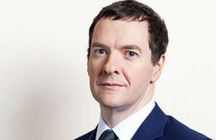
  • George Osborne – 2015 Speech to BDI Conference

    gosborne

    Below is the text of the speech made by George Osborne, the Chancellor of the Exchequer, to the BDI Conference in Berlin on 3 November 2015.

    I am very honoured to be asked to address this impressive gathering of German industry and ingenuity today.

    I’ve come to Berlin to talk to you about trade – for Britain and Germany trade €140 billion of goods and services every year.

    I’ve come to talk to you about investment – for Britain and Germany invest €1.9 trillion in each other’s economies.

    I’ve come to talk to you about business – for German companies like BMW, Bosch and Siemens are household names in Britain; while for British companies like Rolls Royce, GlaxoSmithKline and Vodafone, Germany is of course one of their biggest markets.

    Indeed I have just been to a Siemens factory in Berlin, which manufactures gas turbines which are sold into Britain but the fan blade is manufactured in Birmingham, exported to Germany and then exported again into Britain.

    So I’ve come to talk about the economic relationship, but I’ve also come to talk to you today about a friendship between our two countries that has brought peace and security to our continent for my entire lifetime.

    And I’ve come to talk to you about the shared values that we have together. The Wertegemeinschaft we both seek to build.

    A Wertegemeinschaft, a “community of shared values”, based on mutual respect and tolerance of differences; openness and a commitment to freedom.

    Each time I return to Berlin, I am reminded of what a beacon of freedom this city has been throughout my life.

    When I was a child, this city was divided, and so was my continent.

    And, like so many families in Europe, my family felt that division.

    My grandmother was Hungarian. She was born in Budapest, and she married an Englishman.

    And for most of her life she was not allowed to return to the country of her birth.

    And my mother remembers, as a child in 1956, her home in north London filling up with refugees from the Hungarian Uprising.

    She was telling me the other day about the extraordinary range of people who came through the door that autumn in 1956.

    One day they had a professor from Budapest University sleeping on a mattress on the floor.

    And then the next day there was a shepherd who had fled from the Hungarian countryside and made it to London.

    And of course as a young adult, I remember the lines of refugees crossing the Hungarian border again in 1989.

    And that night when we crowded around our TV screen to watch the Wall that ran through this city quite literally being torn down, remains the single most extraordinary and exciting and exhilarating political moment of my lifetime.

    I would never have imagined back then when I was just 18 that all these years later, 25 years later, as the British Finance Minister, I’d be working in partnership with Wolfgang Schauble – that remarkable man who negotiated and signed the Treaty to unify Germany.

    I had dinner last night with Wolfgang – he took me to an Italian restaurant – and we reflected on the fact that we are Europe’s two longest serving finance ministers.

    And while we have been sitting at the G7 table, we’ve seen 18 other finance ministers come and go.

    And in my many conversations over the years with Wolfgang, we’ve spoken of the history of Britain and Germany, of the deep links between our two cultures, and of the differences too of those shared values of tolerance and freedom – the Wertegemeinschaft I spoke about – that we apply today, each in our own way, to the challenges of our age.

    Those values are on display in Germany today as you deal with the mass of refugees seeking shelter and sanctuary in your country.

    And for all the challenges that represents, the whole world has been impressed by your generosity and your hospitality to those fleeing conflict and seeking a better life.

    Britain has a long tradition too of being a country that helps those in need.

    We are the home of Europe’s most multi-ethnic and diverse society, and we have a rapidly growing population within our shores.

    We are the only major country in the world that will spend 0.7% of our national income on overseas development assistance this year.

    We’re spending far more on aid in the region around Syria than any other European nation.

    Our military presence is greater there than any other European nation.

    And, because of this huge commitment of British resources and British military effort going in to help families on the Syrian border, it means more of them will feel they do not need to make that treacherous journey across the Mediterranean in the first place.

    Now we may not be part of Europe’s Schengen area. And that is true to our island’s story. But we will help you strengthen Europe’s external borders in countries like Greece.

    For Britain and Germany are both countries that do not shirk our responsibilities – but are ready to shoulder them.

    And today we both have a responsibility also to show economic leadership in Europe.

    For there is a simple truth: we are Europe’s engine for jobs and for growth.

    Since the economic crash 7 years ago, our two economies each expanded by the same 13%. The rest of Europe has grown by just 4%.

    We have together provided two-thirds of all the economic growth in Europe.

    And while we have together created over 3 million jobs, jobs have been lost across the rest of the European continent.

    Why have our two economies succeeded where too many others have struggled?

    I believe that’s because we have risen to the challenge of reform.

    We’ve both made difficult decisions to make our labour markets more flexible – not so it is easy to fire people, but because we wanted it to be easy to hire people.

    We’ve both made difficult decisions to fix our public finances and to live within our means.

    This year you have achieved a budget surplus; and I will be shortly setting out the measures required to achieve that surplus in Britain.

    For we both understand that without sound finances there is no economic security.

    We’re two countries that have reached out the hand of economic partnership to the new, great emerging economies of Asia.

    You are by far and away the largest European exporter to China.

    We attract more Chinese investment into Britain than France and Italy and Germany put together.

    We’re two societies that respect hard work, invest in science and embrace new technology.

    Four of the world’s top 10 universities are in Britain; and Germany tops the European league table for investment in research and development.

    This Anglo-German partnership is on display in the new Formula One Champion – the ingenuity of a British driver, Lewis Hamilton, powered to success by a German Mercedes car.

    I make this observation: The fastest car that Mercedes makes is the only car that they make in Britain.

    So we have driven economic reform in our own countries.

    And we have seen other countries like Spain and Ireland rewarded for their reform efforts.

    And now we need to drive economic reform together across our own continent, in the European Union.

    I said the friendship between our two countries was based on shared values.

    And one of those values is that we don’t insist on central uniformity, but instead we respect different histories and traditions and approaches.

    It is that respect for difference that has brought four nations together in one United Kingdom, and it’s the same respect for difference that united ancient kingdoms like Saxony and Bavaria with city states like Hamburg and Bremen in the great success of the Bundesrepublik.

    We should show the same respect to the difference of approaches our two countries take towards the European Union.

    I have huge respect for the leadership Germany has shown, alongside other countries like France and Italy and the Low Countries in first creating the European Union and now the effort you are making to ensure the common European borders work and the Eurozone is a strong and resilient currency area.

    And let me be absolutely clear. We want you to succeed in all these endeavours. It’s hugely in Britain’s interests, let alone Europe’s, that you do.

    And I know, in turn, you respect the fact that Britain has a different relationship with the European Union.

    We are not part of the single currency.

    Nor are we part of the Schengen single border area.

    But we are a huge part of the European economy.

    After you, we are the largest contributor to the European Budget.

    We – along with the French – provide the military capabilities to ensure Europe’s voice is heard on security and defence issues around the world.

    And in partnership with you, and our friends in Paris, we provide the diplomatic heft to help resolve crises the tragedy in Syria, and trying to bring Iran in from the cold.

    I think you would agree that Britain has been the strongest and most consistent voice in Europe for expanding the EU’s single market; for concluding free trade deals with other parts of the globe; for enlarging the borders of the EU to include first the countries of Central and Eastern Europe, and now the Balkans.

    And as you know, we’ve been arguing in favour of closer ties with Turkey for many years.

    So my country too has made a big contribution to the development of the European Union.

    The question now facing Britain is whether we remain in the EU, or we leave.

    It is the question that the law will require us to put to the British people in a referendum by the end of 2017, at the very latest.

    Remain or leave, it is the question our democracy has demanded we put because, quite frankly, the British people do not want to be part of an ever closer union.

    And we will not succeed as nations by ducking the big issues, or thinking we can avoid the key questions.

    We want Britain to remain in a reformed European Union.

    But it needs to be a European Union that works better for all the citizens of Europe – and works better for Britain too.

    It needs to be a Europe where we are not part of that ever closer union you are more comfortable with.

    In the UK, where this is widely interpreted as a commitment to ever-closer political integration, that concept is now supported by a tiny minority of voters.

    And I believe it is this that is the cause of some of the strains between Britain and our European partners. Ever closer union is not right for us any longer.

    And that is what the discussions we’re now having with the German government, other member states and the European Commission and European Parliament are all about. And they are getting more intensive now.

    So how do we build a better European Union?

    There are a number of changes needed to make that happen.

    If freedom of movement is to be sustainable, then our publics must see it as freedom to move to work, rather than freedom to choose the most generous benefits.

    If politicians are to be accountable then we’ll need to strengthen the role of national parliaments.

    And as Britain’s Chancellor, in charge of economic policy, speaking to German industry, I want to focus on two further specific changes today – and to ask for your support.

    For I believe these changes we seek are not just in our interests – they’re in the interests of the whole European Union, including Germany.

    And I very much welcome what Chancellor Merkel said on this stage just an hour ago, when she gave her support to our negotiations and she says when it comes to issues like competitiveness and making the EU work better, Britain’s plans are our plans too.

    So what are those changes? The first concerns the strength and competitiveness of the European economy.

    Europe is losing ground to the rest of the world, and the people who pay the price are our citizens.

    One fifth of young people in the European Union cannot get a job.

    US companies can get new products licensed and to market within days, yet it can take weeks or months in Europe.

    And a decade ago the Commission estimated a total administrative burden to EU businesses of €125 billion a year. Now, progress has been made, but only about a fourth of this cost has been reduced – much more needs to be done.

    Let’s be clear about what is at stake here.

    If the EU allows itself to be priced out of the world economy, the next generation will not get jobs, living standards will decline and the Union will lose the popular consent of the people of Europe.

    Now the decline of the European economy is not inevitable. Far from it. Our destiny is in our hands – and we have at our disposal today the tools to reverse it.

    The British government has fought hard, with others like you and the Dutch, to force the reduction of bureaucracy onto the EU’s agenda.

    Now, Jean-Claude Juncker and Frans Timmermans and others have succeeded in reducing the amount of new regulation coming out of the Commission by 80%.

    It’s a real achievement that we should acknowledge.

    But we need to tackle the existing body of European regulation – and I think we should set clear targets for doing so, and powerful mechanisms for delivering them.

    All of Europe’s citizens will benefit directly from the new agreement to cut mobile phone roaming charges – it is an example of the single market working for people.

    But where, in the age of the internet that Sigmar Gabriel talked about, where is the digital single market?

    I can buy a CD from a German music store with a British credit card while I’m here in Berlin, but I can’t log on to a German website with my British account and download a song.

    Now, we always, as Europeans, come together at conferences like this and lament the fact that the world’s biggest internet companies aren’t European companies; but that’s because we haven’t created the world’s largest market for them here in the European Union.

    Let’s do it, now – not in 2 years time or 5 years time.

    The Capital Markets Union has the potential to be a huge boost for Europe’s businesses, especially its small and medium sized businesses.

    And I congratulate Commissioner Jonathan Hill on what’s being achieved

    But let’s face it – some of Europe’s self-imposed regulations and rules have actually made this continent a less competitive place to run a financial services business.

    That’s not in Britain’s interests, as home to the world’s largest financial centre, but it is not in the interests of Germany either to see the centres of European finance move outside of Europe.

    We both have huge service economies – services make up 70% of Germany’s output, and 80% of Britain’s output.

    Yet trade in services in Europe is far too low.

    We’ve allowed the opponents of economic reform and the liberalisation of services to win the day.

    We should complete the single market for services and create millions of jobs in doing so.

    I welcome the Internal Market Strategy the Commission published last week.

    It reflects much of what Britain said it should. But now let’s turn a strategy document into reality.

    The free trade deal that the EU completed with South Korea is estimated to benefit the UK economy by £500 million a year alone.

    But there are trade deals with Japan and America, and an investment agreement with China, waiting to be concluded.

    Let Britain and Germany, whose cities were once at the heart of the great Hanseatic League, now meet in alliance to overcome the forces of protection – and make Europe the centre of a global network of free trade agreements.

    And I welcome Angela Merkel’s strong leadership on this, as on so many other things.

    So the policies and plans are all there. We’re making progress with them – but it’s all too slow.

    We need to pick up the pace.

    We need to make Europe more competitive, make this the place to start and grow a business, ensure the policies of the EU make us the home of jobs and growth and innovation.

    Do that and we will go a long way towards reconnecting the EU with the support of its citizens – including the citizens of Britain.

    That is the change we seek, and we want your help to achieve it.

    There is a second change to the EU we need to see – and that is we need to fix the relationship between the member states in the Eurozone and those outside the Eurozone, so it works better for everyone.

    And again, it is in Britain’s and Germany’s interests we succeed – so help us to achieve it.

    Today at this conference, Mr Grillo, as President of the BDI, you recognised that countries like Britain should not be forced into ever closer integration.

    I think it is a very strong example of the help you can provide – and I thank you for it.

    As many in Germany have recognised, the EU as currently constituted does not provide the strong legal and constitutional basis needed to make the euro the stronger currency you want it to be.

    Ideas like the Banking Union and the Single Resolution Mechanism have been real steps forward, but they have been put together through inter-governmental agreements and unsuitable single market provisions.

    And nor are you going to achieve the kind of binding commitment you want to see to improving competitiveness in other Eurozone countries if you rely on the current legal framework.

    In the end the inexorable logic of monetary union will mean the Treaties will have to be changed to support the financial and economic union required for a permanently stronger eurozone – the stronger eurozone we want you to build.

    At the same time, the current European Union arrangements are also not suitable for countries that aren’t in the euro, like Britain.

    Indeed, the fact that the Treaties simply assert that the euro is the currency of the EU shows that it does not reflect the reality of a Europe of many currencies today.

    As Wolfgang and I observed in an article we wrote together in the Financial Times last year:

    As the euro-area continues to integrate, it is important that countries outside the euro area are not at a systematic disadvantage in the EU.

    So future EU reform and treaty change, must include reform of the governance framework to put euro area integration on a sound legal basis, and guarantee fairness for those EU countries inside the single market, but outside the single currency.

    So let me be candid: there is a deal to be done and we can work together.

    Rather than stand in your way, or veto the Treaty amendments required, we, in Britain, can support you in the Eurozone make the lasting changes that you need to see strengthen the euro.

    In return, you can help us make the changes we need to safeguard the interests of those economies who are not in the Eurozone.

    What are those changes?

    Let me say more than we have done in public about what they are, and what they are not.

    We are not looking for a new opt-out for the UK in this area – we have the opt-out from the single currency we need.

    Nor are we looking for a veto over what you do in the Eurozone.

    Instead, what we seek are principles embedded in EU law and binding on EU institutions that safeguard the operation of the Union for all 28 member states.

    The principles must support the integrity of the European Single Market.

    That includes the recognition that the EU has more than one currency and we should not discriminate against any business on the basis of the currency of the country in which they reside.

    The principles must ensure that as the Eurozone chooses to integrate it does so in a way that does not damage the interests of non-euro members.

    And there will be cases where non-euro members want to participate in developments like the banking union. But that participation must be voluntary, and never compulsory.

    We must never let tax-payers in countries that are not in the euro bear the cost for supporting countries in the Eurozone.

    This is exactly what was attempted in July, when, out of the blue, in flagrant breach of the agreement we’d all signed up to, and without even the courtesy of a telephone call, we were informed we would have to pay to bail out Greece.

    That would have been grossly unfair.

    We have fought hard, with German help, to stop that happening – and we succeeded.

    But we shouldn’t have to fight a running battle on these issues.

    We should put things on an orderly basis with agreed principles.

    We need to recognise that just as financial stability and supervision have, rightly, become a key area of competence for Eurozone institutions like the European Central Bank – so financial stability and supervision are a key area of competence for national institutions like the Bank of England for countries not in the euro.

    We can achieve that at the same time as we go on building the single market in financial services.

    And these principles need to recognise that we are all partners in this European Union – when there are issues that affect all member states, they should be raised, discussed, and decided by all member states.

    We seek to make these principles permanent and legally binding – and we want to design a simple mechanism to ensure the principles are enforced. These are the kinds of checks and guarantees that exist in other parts of the EU’s governing rules.

    Today, for the first time I am spelling out more of the detail of the changes we need to stay in the European Union.

    And when it comes to the relationship between those who use the euro, and those who do not: here’s the deal.

    You get a Eurozone that works better.

    We get a guarantee that the Eurozone’s decisions and costs are not imposed on us

    You get a stronger Euro.

    We make sure the voice of the pound is heard when it should be.

    A deal that’s written into the law

    A deal that’s good for Britain.

    And a deal that’s good for Germany too.

    And the result will be a better European Union.

    Stronger economically – so it becomes more competitive in the world, and supports the creation of jobs and higher living standards for all its citizens.

    Stronger constitutionally – so it works better for the 19 countries of the Eurozone, and better for the 28 countries of the single market.

    I ask you to work with us to make these changes, and to form a partnership.

    A partnership of the two strongest economies in Europe.

    A partnership of two nations who respect difference and accommodate diversity.

    A partnership of two nations who share values of tolerance and openness and freedom.

    A partnership of two nations who will work together to build that Wertegemeinschaft – that community of shared values – in Europe.

    Let Britain and Germany work together as partners for a European Union that works better for all of us.

    And deliver that brighter and more secure future for all of our citizens.

    Danke schön.

  • George Osborne – 2014 Speech at UK-China Financial Forum

    gosborne

    Below is the text of the speech made by George Osborne, the Chancellor of the Exchequer, in London on 18th June 2014.

    Ladies and Gentlemen,

    We all share an interest in greater economic relations between the UK and China. And nowhere is that more important than in finance.

    That’s why I wanted to hold this conference here in London – the world’s leading financial centre.

    As someone who is a passionate believer in the importance of the UK-China relationship, can I begin by expressing my huge thanks to Premier Li for joining us this morning.

    Premier Li – your passion and your leadership is driving radical reform in China.

    It is a hugely exciting agenda that you set out in the Third Plenum – one that I am confident will bring prosperity and economic security to the people of China, and to the global economy.

    I want Britain to play a major role in helping you achieve those reforms – and I look forward to hearing from you today about the opportunities for closer financial cooperation.

    Yesterday, with Premier Li and Prime Minister David Cameron we spent many hours writing the next chapter in the story of the UK-China partnership.

    We have seen historic agreements between our countries.

    Agreements on energy – with multi-billion pound contracts for UK companies, and further steps towards a historic deal that could bring billions of pounds of Chinese investment into our new civil nuclear programme.

    We have seen agreements on science investment and research partnerships – as two nations dedicated to expanding the frontiers of human knowledge.

    But today we focus on finance, and the momentous progress that China, and the UK and China together, have made in this arena.

    Modern finance is constantly changing.

    But the number of historic changes in our financial world are relatively few: the emergence of the dollar as the world’s reserve currency after the First World War, is one; a second was the disintermediation of banks and growth in securities markets in the 1980s as savers sought higher returns.

    And I believe the emergence of China’s currency as one of the world’s leading currencies will be the next huge change.

    And, bluntly, I want the City to facilitate that change and be central to it.

    In the last three years, Renminbi has overtaken 23 other currencies to become the seventh most used currency in international payments.

    And that presents huge opportunities – both to China, who benefits from more investment, greater returns, and more diversification – and also to the UK.

    We are the world’s leading financial centre.

    And since coming to office I have been determined to make sure we capitalise on that position – and lead the way in this exciting new market.

    In 2011 there was almost no offshore Renminbi activity in London.

    Now we account for two thirds of Renminbi trading outside China and Hong Kong.

    Two years ago we saw the first UK bank, HSBC, issuing an RMB bond.

    Last year, with the permission of the Chinese government, we saw the first Chinese bank do the same. And now Chinese banks will soon be able to apply to set up wholesale branches here.

    We have made huge steps forward – and I am hugely grateful to my Chinese colleagues with whom we have worked so closely over the last four years.

    I have worked in partnership with my good friend Governor Zhou in particular on many occasions, and I look forward to continuing that strong relationship.

    We are so pleased to welcome you today, and my colleague, Finance Minister Lou Jiwei.

    Today we build on the progress we have made so far.

    First, I am delighted that yesterday the People’s Bank of China, with the Bank of England’s agreement, selected China Construction Bank as the Renminbi clearing bank in London.

    That makes it the first RMB clearing bank outside of Asia.

    It’s hugely important in underpinning the future growth of London’s RMB business.

    Second, I am very pleased to announce that UK Export Finance will now provide guarantees for transactions denominated in RMB.

    That’s a huge boost for UK businesses looking to export to China.

    This week UK Export Finance signed an agreement to commence work on its first transaction involving an RMB guaranteed loan, with a view to completing a major transaction later this year.

    Third, I welcome the news that the Chinese authorities have awarded new licenses to UK companies so they can make RMB denominated investments into China.

    Licenses will go to UK asset managers, HSBC Asset Management and Blackrock’s UK subsidiary.

    This was a major outcome of my visit to Beijing last October.

    And now that agreement is being put into practice, giving UK investors more opportunities to invest directly into Chinese securities.

    And finally, I welcome the news that the People’s Bank of China will launch direct trading between sterling and Renminbi on the China Foreign Exchange Trading System.

    Another boost to bilateral trade and investment – building further economic ties between our two great nations.

    We have made huge progress in the last four years.

    Everyone here has played a role in making the London RMB market what it is today.

    And I would like to thank you for the many contributions that you and your firms have made.

    And to thank the City of London initiative for all that they have done over the past three years.

    But of course, what we have achieved so far is just the beginning.

    And today we gather to work out what the next steps in our relationship should be.

    Here are some of my ideas:

    Firstly, I want to see the links between our financial markets grow further.

    For example, Hong Kong and Shanghai are developing arrangements to connect their stock exchanges. I want London to explore something similar.

    Secondly, we have already secured licenses for asset managers in London to invest RMB directly into China.

    I now want us to explore ways for Chinese individuals and institutions to invest RMB into London’s global capital markets.

    Thirdly, I want to see more British businesses grow in China, including in the very exciting Shanghai Free Trade Zone.

    And finally, as Chinese companies go global, I want them to find London the most attractive place to set up their international headquarters.

    But more than that, as Premier Li set out last night, I want UK and Chinese companies to be working together in third countries.

    Because that is the true sign of a successful partnership.

    These are just some of my thoughts, but there will be many others discussed at this conference.

    It’s a hugely exciting agenda, where the future belongs to those ambitious for reform.

    Let me be clear.

    Our long term economic plan is working, but the job isn’t done.

    We need to export to fast growing economies like China, and attract more investment to our shores.

    To do that we need to make sure China’s currency, as it emerges onto the world stage, is used and traded here – as that will not only be good for China, but good for UK jobs and investment too.

    Together – the people here in this room – we’ll work to make that happen.

  • George Osborne – 2014 Mansion House Speech

    gosborne

    Below is the text of the speech made by George Osborne, the Chancellor of the Exchequer, at the Mansion House, London, on 12th June 2014.

    My Lord Mayor, Ladies and Gentlemen, it is again an honour to attend this wonderful dinner and to speak to you as Chancellor for the fifth time.

    Lord Mayor, I remember coming here to Mansion House, just weeks after the government was formed in 2010 – with Britain on the brink of an economic crisis – to give my first major speech on the task ahead.

    I set out for you the economic plan we would follow, and I drew on the words Winston Churchill had uttered in this very hall, to say that while Britain could not pretend our travails were at an end, we were at least at the end of the beginning.

    In the four years since, supported by the resolution and sacrifice of the British people, we have worked through that plan.

    Now we are starting to see the results:

    Britain growing faster than any advanced economy in the world.

    A record number of people in work.

    Now strong business investment on the back of low business taxes.

    And a budget deficit this year set to be half what it was.

    Last week, the IMF said that our resolute fiscal policy had been in their words an ‘anchor for the British economy’ that had maintained confidence and stability in the face of the storm.

    And I want to say to the business and financial community: you did not waver; you stuck with us and I thank you.

    But the task is far from complete; and there are many risks to the progress we have made.

    Abroad, the risks stem from the weak eurozone, unpredictable geopolitics and the slowdown in some emerging markets.

    At home, our economy is still too unbalanced, so I am the first to say we need to continue our efforts to boost business investment, exports and housing supply.

    But the biggest risk comes from the tendency in parts of our body politics – the left and now too the populist right – to wage a war on enterprise, regulate prices, propose penal taxes, close Britain to business and return to the old ways of borrow and spend.

    We must win this battle.

    And go on confronting Britain’s problems with long term answers that will build an economy for everyone.

    So while I know this is my fifth speech to you as Chancellor; I hope it is not my last.

    For I want to finish the job.

    Lord Mayor, tonight we are joined by someone attending their first Mansion House dinner.

    Our Governor of the Bank of England.

    Mark, we all thank you for the integrity, intelligence and international reach you have brought to the challenges of the last year.

    And we look forward to what you have to say.

    Our 3 new Deputy Governors – Jon Cunliffe, Ben Broadbent and Minouche Shafik, together with Andrew Bailey, complete what I immodestly think is the strongest team of any central bank in the world.

    The Court continues the oversight of the Bank’s work, and at the end of this month Anthony Habgood will replace David Lees as its Chair.

    David, thank you for helping steer the Bank through the big reforms of recent years and the appointment of a new Governor.

    And thank you too to Charlie Bean for the 6 years he has given our nation as Deputy Governor.

    We are lucky that one of our greatest economists has chosen to dedicate his life to public service for so long.

    The Bank of England now sits back where it belongs, at the heart of our financial system – supervising the prudential regulation of our banks and insurers, thanks to the reforms I announced in my first speech here at the Mansion House in 2010.

    And in each speech since, I have set out new steps to strengthen the resilience of our economy and the financing that underpins it.

    2011, Ringfencing our retail banks

    2012, launching funding for Lending

    Last year, restructuring the Royal Bank of Scotland and firing the starting gun on the sale of our stake in Lloyds.

    It would be tempting this year, at the Mansion House, to pause for breath.

    But our task is far from complete – and today I will announce further changes to build that resilient economy for all and the strong, competitive financial services that should contribute to it.

    Lord Mayor, the City of London has emerged from the wreckage of what went so badly wrong, stronger and better regulated, more international and more responsive to the needs of customers here at home.

    Our financial exports grew 10% last year, and our surplus in finance and insurance has reached £45 billion – twice as much as our closest competitors.

    We’ve welcomed to Britain the headquarters of some of the world’s largest insurance firms.

    And we have been chosen as the location for the International Forum of the world’s Sovereign Wealth Funds.

    In my first Mansion House speech, I said I wanted British financial firms and markets to be at the heart of financing China’s extraordinary expansion.

    Now two thirds of all Renminbi payments outside of China and Hong Kong now take place in London.

    Chinese bonds are being issued here, Chinese assets are being managed here, Chinese banks will be able to apply for branches here, a Chinese clearing bank is soon to be appointed here – and next week, when the Chinese Premier visits, we will take the next big step forward in the economic partnership of our two great, historic trading nations.

    I can also confirm tonight our intention in the next few weeks, subject to market conditions, for Britain to be the first western nation to issue a sovereign sukuk – an Islamic bond.

    For I want Britain to be not just the western hub of Chinese finance – but of Islamic finance too.

    It is with these active steps that together we are making Britain the undisputed centre of the global financial system.

    But all this can so easily be put at risk.

    By badly-conceived EU rules that only reinforce the case for reform in Europe.

    By populist proposals for self-defeating bonus taxes and punitive income tax rates.

    And by the potential break up of our nation.

    Edinburgh is even stronger as a world-renowned centre for asset management because it is part of a United Kingdom that is a world-renowned centre of finance.

    And let us hope it remains so, for we are better together.

    We should be candid tonight about another risk.

    The risk that scandals on our trading floors call into question the integrity of our financial markets.

    People should know that when they trade in London, whether in commodities or currencies or fixed income instruments, that they are trading in markets that are fair and effective.

    The revelations about the manipulation of LIBOR added further damage to reputation of financial services, here and abroad.

    In Britain, thanks to the leadership of Martin Wheatley and Andrew Tyrie, we acted swiftly to punish the wrongdoers and fix the system.

    Let us not wait for the next wave of scandals in financial markets to hit us before we respond.

    The integrity of these markets matters to us. London is home to 40% of the global foreign exchange business; 45% of over-the-counter derivatives trading; and 70% of trading in international bonds. And Mark Carney and I intend to keep it that way.

    So today I can announce that the Treasury, the Bank of England and the Financial Conduct Authority will conduct a comprehensive review of standards in our fixed income, currency and commodity markets.

    The Fair and Effective Markets Review will be chaired by the new Deputy Governor, and former Deputy Managing Director of the IMF, Minouche Shafik – and she will be joined by Martin Wheatley and Charles Roxburgh.

    This Review must work closely with industry. So I am establishing a panel of market practitioners, chaired by Elizabeth Corley, chief executive of Allianz Global Investors.

    The Review will produce its report in a year’s time.

    And some of its recommendations may require international agreement.

    In the meantime, we will act here at home.

    I am today announcing that we will extend the new powers we put in place to regulate LIBOR to cover further major benchmarks across foreign exchange, commodity and fixed income markets – many of which are currently entirely unregulated.

    Based on the Review’s conclusions we will publish and consult on the full list of benchmarks to be covered by this autumn, and we will have the new regime in place by the end of the year.

    I am also extending the senior managers regime to cover all banks that operate in this country, including the branches of foreign banks.

    And I can also announce that we will introduce tough new domestic criminal offences for market abuse, rather than opt into European rules we do not think suitable or sufficient for our needs.

    For let me make this clear, so no one is in any doubt.

    The integrity of the City matters to the economy of Britain.

    Markets here set the interest rates for people’s mortgages, the exchange rates for our exports and holidays, and the commodity prices for the goods we buy.

    I am going to deal with abuses, tackle the unacceptable behaviour of the few, and ensure that markets are fair for the many who depend on them.

    We’re not going to wait for more scandals to hit– instead we are going to act now, and get ahead.

    Ladies and Gentlemen,

    Robust financial markets are an important part of building a resilient economy.

    But tonight, I want to address another market which can create a risk to Britain’s economic stability and prosperity.

    Not a new risk, but an old and very familiar one to us in this country – and that’s our housing market.

    The challenge is that we want several things which don’t sit comfortably together.

    For most people, their home is the biggest investment of their lifetime. And, of course, they want that asset to increase in value over time.

    But a home is also a place to live and build our lives – and we want all families to be able to afford security, comfort and peace of mind. That means homes have to be affordable – whether you’re renting or buying.

    The only way that can be achieved over the long term is by building more, so supply better matches demand.

    But we are a small and crowded island, keen to protect our green spaces and ready to object to new development.

    So the British people want our homes to go up in value, but also remain affordable; and we want more homes built, just not next to us.

    You can see why no one has managed yet to solve the problems of Britain’s housing market.

    Instead we have the repeated cycle of financial instability driven by high household debt; and we see the social injustice of millions of families denied good homes.

    But that should not deter our generation from trying to fix the housing challenge – for the price of failure is too high.

    So my message today is this.

    As Chancellor, I have never shied away from confronting Britain’s problems.

    The housing market is no exception.

    I’m determined to back aspiration in every way I can, including the aspiration to own your own home.

    But I’m not going to opt for the easy route of some of my recent predecessors: duck the issues, risk a housing boom, and keep my fingers crossed that it won’t damage the economy.

    So no irresponsible gambles with stability; no short-term fixes.

    Housing is a long term problem – and our economic plan will provide long term answers.

    Here’s how.

    First, we have to be clear-eyed about where the risks to economic stability lie today.

    The risks come when people borrow too much to pay for rising house prices.

    In excess, that debt can cause serious difficulties for them and the banks who lent to them.

    And it can cause difficulties for the economy as a whole if an overhang of debt suppresses consumer spending.

    Now, today, house prices are still lower in real terms than they were in 2007 – and are forecast to stay below that peak for some years to come.

    At the same time debt-servicing costs remain at near record lows and rental yields are in line with long term trends.

    So there is no immediate cause for alarm.

    Indeed the most recent data shows that mortgage approvals have actually slowed in the last couple of months.

    But we need to be vigilant.

    For there are on the horizon things that should give us some causes for concern.

    If London prices were to continue growing at these rates that would be too fast for comfort.

    And the rate of price rises is now beginning to spread beyond London. Across the country, the ratio of house prices to incomes is high by historical standards.

    And while average loan to value ratios for new lending are still well below normal, average loan to income ratios have risen to new highs.

    Let me spell it out: does the housing market pose an immediate threat to financial stability today? No, it doesn’t.

    Could it in the future? Yes, it could, especially if we don’t learn the lessons of the past.

    So we act now to insure ourselves against future problems before they can materialise.

    Because economic security comes first.

    The first challenge is to be clear about the issue, and we are.

    The second is to act on it.

    When I spoke to you in 2010, I said one of the weaknesses of the system of financial regulation I’d inherited was that no one was looking for broader risks across the economy, in areas like housing.

    So no one saw the rising debt levels – or had the tools to do anything about them.

    I have changed that.

    The new Financial Policy Committee in the Bank of England has been given the authority and the macro-prudential tools to act.

    They have also insisted on the toughest stress tests for our banks, so that this time round they can withstand the worst.

    Before Christmas, the Bank acted with the Treasury to refocus the Funding for Lending Scheme away from mortgages towards small business lending.

    And earlier this year, our regulators put much more rigorous mortgage standards in place.

    These are all important steps.

    The FPC already have further tools in their armoury. But today we go further.

    I want to make sure that the Bank of England has all the weapons it needs to guard against risks in the housing market.

    I want to protect those who own homes, protect those who aspire to own a home, and protect the millions who suffer when boom turns to bust.

    So today, I am giving the Bank new powers over mortgages including over the size of mortgage loans as a share of family incomes or the value of the house.

    In other words, if the Bank of England thinks some borrowers are being offered excessive amounts of debt, they can limit the proportion of high loan to income mortgages each bank can lend, or even ban all new lending above a specific loan to income ratio.

    And if they really think a dangerous housing bubble is developing, they will be able to impose similar caps on loan to value ratios – as they do in places like Hong Kong.

    It’s important that decisions to use these powerful tools are made independently of politics by the Bank of England.

    We saw from the last crisis the dangerous temptations for politicians to leave the punch bowl where it is and keep the party going on too long. And just in case there is any doubt.

    I say today, very clearly: the Bank of England should not hesitate to use these new powers if they think it necessary to protect financial stability.

    And I commit that while the Bank and the Treasury will need to design how these powers will work in detail, and will want to consult on them, I will make sure that they are legislated for and in place before the end of the Parliament.

    And I also commit today that if the Bank does act in future to limit mortgage lending then the same rules will be applied to every single Help to Buy mortgage.

    I know that some would take a more ideological position and end the Help to Buy scheme altogether.

    They would return to the situation where only those first time buyers lucky enough to have rich parents would be able to afford the large deposits demanded by the banks.

    My approach will be dictated by the facts, not by ideology.

    And the facts show that Help to Buy is working as intended.

    As the IMF concluded last week, it is helping lower income families, overwhelmingly first-time buyers outside London, to buy homes priced well below the national average.

    It is not fuelling house price inflation in London or at the top of the market.

    It is helping families, and that is how we intend to keep it.

    So today I’ve taken big new steps to protect financial stability, strengthen the new role of the Bank of England and completed the range of tools at their disposal.

    This addresses the economic problem of how we stop rising house prices leading to an unsustainable rise in household indebtedness, and threatening the wider economy.

    But it does not address the social problem of how we stop young families being priced out of the housing market altogether.

    That requires a third pillar to our housing strategy, alongside the clear analysis and new financial weapons.

    We need to see a lot more homes being built in Britain.

    The growing demand for housing has to be met by growing supply.

    The alternative, as in any market, is that prices will rise so that homes become unaffordable to many of our citizens and take up ever more of their incomes.

    We’ve already taken big steps to deliver those new homes.

    We’ve reformed our antiquated planning system.

    The changes were hard –fought and controversial, like all things worth battling for in politics, and now they are already starting to work.

    Last week we saw permissions for new homes rising by 20% in a year.

    We’ve got the biggest programme of new social housing in a generation; we’re regenerating the worst of our housing estates; and we’ve got the first garden city for almost a century underway in Ebbsfleet.

    Now we need to do more. Much more.

    We have beautiful landscapes, and they too are part of the inheritance of the next generation. To preserve them, we must make other compromises.

    If we want to limit development on important green spaces, we have to remove all the obstacles that remain to development on brown field sites.

    Today we do that with these radical steps.

    Councils will be required to put local development orders on over 90% of brownfield sites that are suitable for housing.

    This urban planning revolution will mean that in effect development on these sites will be pre-approved – local authorities will be able to specify the type of housing, not whether there is housing.

    And it will mean planning permission for up to 200,000 new homes – while at the same time protecting our green spaces.

    Tomorrow, Boris Johnson and I will jointly set out plans for new housing zones across London backed by new infrastructure, so that we see thousands of new homes for London families.

    And we’ll take the same approach in the rest of the country; with almost half a billion pounds of financial assistance in total set aside to make it work.

    Now I suspect there will be people who object to new building, even on the brownfields of our cities.

    But let me be clear.

    I will not stand by and allow this generation, many of whom have been fortunate enough to own their own home, to say to the next generation: we’re pulling up the property ladder behind us.

    So we will build the houses Britain needs so that more families can have the economic security that comes with home ownership.

    And today I will give the Bank of England the powers it needs over mortgages, so that Britain’s economic stability always comes first. And that is what our long term economic plan is delivering.

    Lord Mayor, Ladies and Gentlemen,

    Insisting on the integrity of our financial markets.

    Confronting the risks from our housing market.

    Tackling the long term challenge of housing supply.

    These are the further actions I take today to ensure that we learn from the mistakes of the past and build a resilient economy for all.

    These last four years have required difficult decisions.

    We embarked on the hard task of rebuilding our economy; and making sure our country could pay its way in the world.

    That task is not complete.

    Our national prosperity is not yet secure.

    But if we carry on working through our long term economic plan then we can say with confidence that brighter days lie ahead.

  • George Osborne – 2014 Speech in Brazil

    gosborne

    Below is the text of the speech made by George Osborne, the Chancellor of the Exchequer, in Brazil on 7th April 2014.

    Thank you for inviting me here today.

    It is great to be back in Brazil – but it has been a long time. Too long.

    I have not been to this country for 25 years.

    As a student I took a river boat from Benjamin Constant along the Amazon, stopping at villages along that great water course as far as that great capital of the rainforest, Manaus. It was one of the most extraordinary travels of my life. But I wish I had travelled further.

    I wish I had made it to Rio or to São Paulo.

    I wish I had appreciated then that you were laying the foundations then for 25 years of extraordinary economic growth and extraordinary social progress and the consolidation of an open, vibrant democracy.

    And I wish that others in Britain had better appreciated your achievements.

    I wish more British Finance Ministers had visited Rio and São Paulo.

    Today, Britain and the British government and this Finance Minister are determined to put that right. It’s why I’m here now. Why my friend, our Foreign Secretary William Hague was here in February.

    This is the most pro-Brazil British government for over 70 years; because being pro-Brazil means being pro-British too.

    We both flourish, we both succeed, we both grow, both create jobs when we do business and work together.

    We have woken up and understood that.

    What you have achieved over the last 20 years is one of the most impressive and important economic transformations in the global economy.

    We are in awe of the tremendous growth you have achieved over this generation – twice what we have achieved in Europe. We admire your record at conquering inflation, and bringing down your debts – thanks to the efforts of President Cardoso’s reforms and continued ever since.

    We marvel at your achievement in lifting 35 million people out of poverty and improving access to healthcare and education for millions who had previously been marginalised – thanks in particular to the reforms of Lula and now President Dilma.

    And we applaud the success in the last decade of your fight against deforestation.

    What you have achieved in the last 20 years is incredible.

    And I wish that Britain had been a bigger part of it – and I deeply regret that we were not.

    In 2010, just 1% of our exports came here.

    We were doing twice as much trade with Denmark, a country almost seven times smaller.

    We are still exporting less to Brazil than France and Italy – and our trade with Brazil is almost four times less than Germany’s. We are committed to changing that. We want to be a big part of your future – just as we were a big part of your past.

    And how did we get to this point?

    Britain and Brazil were once extremely close allies and trading partners.

    It was one of our greatest British Foreign Secretaries, George Canning, who helped to negotiate Brazil’s independence in 1822 – and who persuaded others in Europe to accept it.

    It was Britain who helped lead the campaign for the abolition of slavery – in Brazil and around the world.

    And it was British finance and British business which provided the capital and the expertise – not to mention the raw materials – for your industrial revolution.

    The entire São Paulo railway, the pumps and mines of Minas Gerais, and the pillars of the Manaus Opera House are all built with British steel.

    We even introduced you to football – although we quickly came to regret that one.

    And we both benefited from close trading links. One hundred years ago around a quarter of your exports came to Britain. And 50% of foreign investment in Latin America as a whole came from Britain.

    But in recent decades we’ve exported less and less. Our investments abroad went to Europe and North America.

    We never made a conscious decision to turn our back on Brazil. It’s just we never made an active decision to raise our eyes from our nearest neighbours and see what was happening in the world.

    We didn’t make the deliberate effort to connect with the fast growing emerging economies, not just here in Brazil – but in India and China and other parts of Latin America too.

    That was a huge mistake. And it is the determined objective of the government to put it right.

    That is why I am here this week, the first British finance minister to visit in over 15 years.

    It’s why the British Foreign secretary has just made his second visit.

    And it’s why our Prime Minister made coming to Brazil an early priority – only the second Prime Minister to make a bilateral visit in our history.

    And it is not just about Ministers visiting.

    It is about our efforts across the whole of British government, across British business to breathe new life into old partnerships, build new trade relationships, export more, invest more and connect our nation to the fast growing, successful economies of the world.

    That energetic effort is starting to pay off.

    In the last four years our exports to Brazil have gone up by two-thirds – and the number of companies UKTI is helping do business here has grown five-fold.

    Twice as many Brazilians are now coming to Britain on holiday.

    The number of Brazilian students studying there has gone through the roof.

    We are now the fourth largest foreign investor in Brazil.

    But there are so many exciting opportunities to do more together – and that’s why I’m here this week.

    I’m here to be an unabashed salesman for the best of British – the best of British science, the best of British finance, the best of British engineering. I’m here to say: let Britain and Brazil be partners in each other’s economic transformation, and the social progress it will bring.

    I’m seeing that partnership in practice here this week.

    I’m seeing the best of our engineering prowess later today when I visit Rolls Royce to unveil a major new investment they will be making in a marine facility at Duque de Caxias to build the latest engines and thrusters for the rigs and drillships and platforms that help your country pull oil and gas from under the seabed of the Atlantic – one of many British companies using the expertise we developed in the North Sea to become the very best offshore industry in the world, now put to use for the benefit of the people of Brazil.

    Britain and Brazil as partners.

    And Brazilian companies are playing a massive role in the UK too. The largest company in Northern Ireland, for example, is the Brazilian firm Marfrig.

    And today I’m also promoting the best of British finance – visiting Lloyds of London, now the largest overseas reinsurer in Brazil – to announce new British companies investing in Brazil to support Brazilian businesses and Brazilian families, giving them the best products and financial protection in the world from the best financial centre in the world.

    Britain and Brazil working as partners.

    And I’m here to support the British companies who, helped by my colleague Paul Deighton the Chief Executive, who put on, in my impartial and unbiased view, the best Olympic Games ever, in London 2012, and who will work with you as the hosts to make the Rio games brilliant too.

    How could they not both be brilliant in a country as beautiful as this and with a people as passionate about sport as yours? Paul is with me here in Brazil, so too are British firms working on 60 separate contracts worth over £150 million.

    Britain and Brazil working as partners.

    And on Wednesday I will see the best of British and Brazilian science, when I visit São Paulo University which has strong links with several British universities. I will announce new funding to support that scientific collaboration.

    Funding that could help companies like Oxitech – a new spin out from Oxford University that are in the process of opening a new factory here so we can work together on tackling mosquito borne diseases. Saving lives with science.

    Brazil and Britain as partners.

    In engineering and oil exploration, finance and infrastructure, science and sport, there is much we are doing – but so much more we can do.

    And I want you to understand that this is not some add-on to my economic policy, not something on top of our economic plan.

    This is our economic plan.

    This is integral to my efforts to fix what went wrong in Britain, address the historic weaknesses that were so cruelly exposed when our economic boom turned to bust.

    We thought, like some other Western economies, that we could borrow more and more money from the rest of the world in order to buy the things they made for us.

    So exports went down and deficits went up.

    As we have learnt to our cost: that economic model was not sustainable.

    It was not sustainable for us, and it was not sustainable for the global economy either.

    Later this week I will join my good colleagues Guido Mantega and Alexandre Tombini at the Spring Meetings of the IMF in Washington, along with other finance ministers and central bank governors of the world.

    We will assess the risks in the global economy today. The situation in the Ukraine will feature. So too will the challenge of how to manage the withdrawal of Western monetary stimulus – and we should agree both that those monetary authorities like the Federal Reserve and the Bank of England should continue to communicate their exit plans clearly with forward guidance; but that emerging markets must also continue with their crucial structural reforms.

    We will look to see what more we can do together to build resilience in our financial systems and support growth in our economies.

    Roberto Azevedo has already achieved a tremendous amount as Director General of the World Trade Organisation. The historic Bali trade deal that he secured is really important – and I congratulate him, and Brazil.

    Now let Britain and Brazil lead the efforts to complete the EU-Mercosul free trade agreement that could add £2.5bn to our economy, with even greater benefits to yours.

    And let’s implement the reforms we have agreed to in our international institutions like the IMF so that countries like Brazil have the enhanced status and say that your economic strength earns you the right to.

    The failure of the US Congress to ratify the agreed IMF reforms is bad for the institution and bad for the international community.

    I urge the Administration and Congress to act to pass them now.

    But ultimately it is not international cooperation alone that can deliver for our peoples – it is action at the domestic level that will determine whether we can build sustainable growth.

    In Britain our GDP had fallen sharply, our banks were weak and our public finances were in a mess. It would have been easy to give up and duck the challenge, but thanks to the hard work of the British people we are rising to it.

    We’ve put in place a long term economic plan – and now the British economy is growing faster than almost any other Western economy and creating a record number of jobs.

    We will see tomorrow what the latest IMF forecast holds for the UK, but we’re clear that the progress we’ve made – and the progress we now need to make depends on working through our plan.

    That plan means tough decisions to achieve sound public finances: a more competitive business environment; investment by business and in infrastructure; and more exports so we see ‘made in Britain’ around the world. Let me examine what each mean for you and jobs.

    First, we’ve learnt that we all need to maintain sustainable public finances.

    What the world needs are stable economies – and an end to sovereign debt crises.

    So I congratulate successive Brazilian governments for bringing down public debt from 72% of GDP in 2002 to 64% now.

    As we say in Britain, you were fixing the roof while the sun was shining.

    We weren’t.

    Our deficit was forecast to be larger than any other in the G20.

    So we had to cut public spending to bring down our deficit.

    But that was not easy.

    Our critics said that our strategy would mean borrowing going up. Instead, this year it will be down by a half.

    They said it would reduce growth. Instead, there is no economy in the G7 growing faster.

    They said it would mean more unemployment. Instead we now have a record number of jobs.

    Sound public finances are necessary for sustainable growth – but they alone are not sufficient.

    We also need to make our nations competitive – that is the second requirement.

    Every country has to take its own judgement about how to do that.

    But I can tell you about the approach I am taking in the UK.

    Just last week, I cut our corporate tax rate again – down from 28% to 21%.

    One of the most competitive rates in the world.

    But we’re not stopping there – this weekend we’ve been cutting all the main business taxes, making our employment laws more flexible but also family friendly, and reforming our welfare system so work always pays.

    Being competitive also means providing the best schools and hospitals for our citizens. That is right at the heart of our economic plan in the UK.

    I congratulate Brazilian governments on their determination to improve health and education.

    Brazil is a country determined to improve its skills, and looking to the world to help it do so.

    I congratulate President Dilma on launching over 100,000 students abroad in the Science Without Borders programme.

    I am delighted that the UK is the second most sought after country in the world by those students. We have already received 6,000 and I look forward to more.

    The third thing we both need to do is invest more in our infrastructure.

    In the UK we’ve underinvested for decades. But we’re starting to turn that around.

    Now the largest infrastructure project in Europe, Crossrail, is being tunnelled under London.

    And we’re building new high speed rail links.

    The biggest investment in our railways in a century.

    Massive upgrades to our roads.

    A huge commitment to science.

    New high speed broadband networks.

    New nuclear power.

    New exploration for shale gas – and new renewable energy investment too.

    That’s how we’re building Britain’s economic future.

    And what we are doing mirrors many of the ambitious infrastructure plans of the Brazilian government here.

    With our expertise and our capital and our shared vision, we are natural partners on infrastructure.

    And I want to make sure that becomes a reality.

    We must invest more, but we must also export more – that is the final requirement for growth.

    For we can grow more prosperous – each of us apart, and all of us together – through trade and our economic cooperation. So I welcome the Brazilian government’s greater openness on capital markets.

    And I want to end today by talking about new reforms I am pursuing to boost British exports.

    Because for decades we have not been exporting enough – not just to Brazil, but to all the fastest growing markets in the world.

    So I am confronting that historic weakness head-on.

    In my Budget last month I fundamentally reformed our export regime.

    I cut the tax on flights to emerging markets, including Brazil, so that you don’t pay more to fly to Rio or São Paulo, or indeed Beijing, than Washington or New York.

    And I massively extended the financial support we give to our exporters.

    I am doubling the amount of government lending for exports and cutting the interest rates on that lending, by a third.

    I am clear: Britain will no longer have some of the least competitive export finance in Europe. We are going to have the most competitive export finance in Europe.

    But the job is never done and so today I can announce further reforms.

    Where Budget boosted government lending – today we will boost private lending too.

    Banks will now have access to a special Bank of England facility that will make it much less risky for them to extend loans to our exporters.

    That should mean billions of extra lending will be made available to our exporters.

    And it will mean cheaper lending – saving potentially millions of pounds for large projects.

    That’s how we make British exporters competitive.

    And to make sure our businesses can make the most of that new facility, our export arm -UK Trade and Investment – is going to treble the number of advisers able to help our mid sized firms export. We’ve already increased our trade promotion presence in Brazil by 40% since we came to government – and that’s helped our companies win over a billion pounds of new business last year.

    Today we’re expanding our presence again – here in Brazil and across Latin America.

    When we say trade and investment with this continent is our priority – we mean it.

    We put our money where our mouth is.

    Maintaining sustainable public finances. A more competitive economy. More investment and more exports.

    These are the challenges that we both face.

    And I want our two nations to work together, to draw on our shared history, our shared interests, our shared values so that Britain and Brazil are partners.

    Partners so that we give to all our citizens the security that comes with a job.

    Partners so that we give to people the best education and healthcare available.

    Partners so that together we provide peace of mind and prosperity to the people of Britain and the people of Brazil.

  • George Osborne – 2014 Speech in Cambridge

    gosborne

    Below is the text of the speech made by George Osborne, the Chancellor of the Exchequer, at the Laboratory of Molecular Biology in Cambridge on 25th April 2014.

    It’s a great pleasure to be here at the Laboratory of Molecular Biology today.

    To be here in this tremendous building.

    This lab has a fantastic pedigree – the discovery of DNA by Watson and Crick; 9 Nobel prizes; various spin out companies. And now here you are, the heart of the Cambridge Biomedical campus.

    You are testament to the world leading science and innovation that we have in Britain. And particularly here in Cambridge. What you have achieved, together with the rest of the British scientific community, is one of Britain’s greatest and most exciting success stories.

    I’m here to talk about British science because it is something that I am personally passionate about.

    I get that this is something Britain is brilliant at – and that it is vitally important to our economic future.

    So I have made it my personal priority in government to support you in your endeavour. I’ve made difficult decisions elsewhere in order to protect the science budget.

    And now over the rest of this decade we are going to invest more in science than ever before.

    And I’ve come here with our brilliant Science Minister, David Willetts, to explain more about that.

    Our scientific achievements are extraordinary – and I want to celebrate that today.

    But we must also confront the hard truths. For decades we have done too little to turn British ingenuity into commercial success. Again and again we have seen the best research in the world developed here in the UK – and then commercialised overseas.

    We’re getting much better at avoiding this – we’re making real progress. But we’ve still got a long way further to go.

    This support for and application of science is right at the centre of our long term economic plan.

    Because that plan is not just about fixing what went wrong in the crisis. It’s about building a resilient recovery.

    It’s about creating a balanced economy, that can provide prosperity and economic security for the people of Britain in a global race.

    A more productive economy where we invest more, export more, and manufacture more.

    And only by capitalising on our great science, can we be the best in the world at manufacturing, at pharmaceuticals, and at technology.

    That is the way that we will export more – that is how we will invest more.

    That is how we will provide the best jobs and opportunities in the world.

    That is the goal of our long term plan for science. Right at the heart of our long term economic plan.

    Of course, scientific endeavour is inherently worthwhile in its own right.

    It is driven by our deep curiosity about the world around us. Our urge to understand – a mark of our humanity, shared across history and cultures.

    And I am hugely proud that Britain has contributed so much to that quest for knowledge – with extraordinary scientific achievements from Newton and Darwin to Higgs and Hawking.

    I am proud that we continue to lead the way, even as the race to understand intensifies. Whether exploring the first moments of the universe, or the deep structure of matter, or the power of genetic code – scientists in Britain are leading the way.

    Over the past century we have won 78 Nobel prizes. In the past decade alone we have won 12. We have had at least one UK scientist receiving a Nobel Prize in Stockholm every year since 2009.

    These British Nobel Prize winners were born in Batley and Hampshire and Newcastle. But we are also a home of world class scientists born in places like Russia and Cyprus. I have been privileged to meet both Konstantin Novoselov and Andre Geim, the co-discoverers of graphene. Both born in Russia, both working in Manchester, and both now knights of the realm. Britain has continued to play a leading role in international projects.

    As scientific research becomes ever more global – our openness and diversity makes us ever stronger.

    Almost half of our scientists now publish with an author abroad.

    We play a leading role in projects like the Large Hadron Collider.

    We are now taking a key role in the Square Kilometre Array, the big international radio astronomy project of the next half century.

    And next year we will at last have a British astronaut on the International Space Station. These are all massive global projects and it is right that Britain plays a big part in them.

    All of this is a source of great excitement for me and for many others.

    I’ve seen that excitement in the crowds at the Science Museum, at exhibitions like Collider.

    I’ve felt that excitement at places like the new Imperial West campus – where I saw a heart muscle beating on a Petri Dish.

    And recently we were honoured to have the British-made Mars Rover vehicle parked for a while in the reception of the Treasury – they said it was trying to find signs of human life.

    What you in this room have achieved – what the scientific community of Britain contributes to our country and to the world – is extraordinary. Today I honour that and I celebrate that.

    Britain can be rightfully proud of its scientific prowess.

    But as I have said, we must also recognise our historic weakness when it comes to translating those scientific achievements into commercial gain.

    Time after time, Britain has led the way in scientific research – only to see the commercial benefits accrue overseas.

    British computer scientist Tim Berners-Lee invented the World Wide Web. But it was US tech giants who did the most to turn this technology to massive commercial advantage.

    We did the research that led to Liquid Crystal Displays and the flat screen computers and TVs that are now in everyone’s living room and office. But it was countries like Japan and Switzerland who exploited it.

    We developed a rocket that could launch satellites into space as early as the 1960s. But we abandoned it. Only now, a generation later, are we once more investing in launch technologies.

    UK researchers first spotted the huge potential strength of lightweight carbon fibre, and the Ministry of Defence patented it. It is now a $13 billion market – stretching from lightweight planes to wind turbines. But it is manufactured mainly abroad – not here.

    We have some of the best research universities in the world.

    But we file fewer patent each year than the US, Japan, Germany, France, China, and South Korea.

    And we are getting much less income from our intellectual property than universities in the US.

    This is bad for our economy.

    It means a less resilient economy.

    An economy not playing to its strengths.

    Fewer opportunities – fewer jobs.

    So a key part of our economic plan is our long term plan for science.

    Our plan to break the habit of a lifetime, and get British innovation into British businesses.

    So let me tell you how we can make that ambition a reality. How our long term plan for science will give you the backing you need to deliver this nation’s economic future.

    There are three parts to that plan – backing scientific clusters; helping scientists make the transition from the lab to the market; and committing long term funding to science.

    First, we’re backing Britain’s scientific clusters. Clusters like Cambridge.

    Because you are showing just how much Britain can achieve when we turn scientific ingenuity into commercial success.

    Cambridge has long been home to one of the world’s greatest universities. And you have some of the world’s greatest laboratories – including this one.

    But on the back of that, over the last generation you have built a cluster of innovation that has been phenomenally productive.

    Your work has resulted in some of our most important scientific and commercial successes.

    Like the antibodies behind six of the world’s top ten best selling drugs – all of which you discovered here in Cambridge.

    Or like gallium nitride – used in everything from LED lighting to high performance electronics. Developed here by Sir Colin Humphries, and now being manufactured at scale in Plymouth.

    Or Raspberry Pi – a single board computer not much bigger than a credit card. Developed by Cambridge scientists and now selling 2.5m units, all of which have been manufactured out of an abandoned TV factory in South Wales.

    Ideas developed here, commercialised here, and now at the centre of Britain’s industrial recovery.

    The Cambridge cluster has now spawned 1,500 technology based firms. 60,000 jobs.

    Firms created by Cambridge University Computer Lab alumni alone have created £250 million in revenue.

    And fourteen tech companies here are worth a billion dollars or more – including companies like ARM, who design the chips inside a significant proportion of the world’s laptops and mobile phones.

    It’s an extraordinary story – and I know that with the right support from government, you can do even more.

    So I’m here to tell you: we will continue to back Cambridge.

    A little over a month ago, in the Budget, I committed funding for a groundbreaking city deal here. That will mean up to £500 million of extra investment in Cambridge – including much needed investment in housing and transport.

    Earlier today I also announced £6 million of new funding for the Babraham incubator here. Babraham has already had a huge impact, providing a space where start-ups can be supported to grow with public and commercial investment.

    And later today you will be breaking ground on an exciting new graphene and electronics building here. That’s funded with £17 million from the Engineering and Physical Sciences Research Council. This will be a place for cutting edge research to be translated into everyday uses for this astonishing material.

    I know there has also been a long debate about bringing together our world-class heart and lung centre at Papworth hospital with Addenbrooke’s hospital on the site of the Cambridge BioMedical Campus – and Papworth is working closely with the Department of Health to make sure that its plans are affordable.

    But I can see myself a strong case in favour of bringing these two great institutions more closely together, creating a hub of leading-edge medicine, research and pharmaceutical development.

    What you’ve achieved here has been called ‘The Cambridge phenomenon”. I want it to be the British phenomenon.

    So the government is backing clusters across the UK…

    – we are backing the IT and aerospace cluster around Bristol and the South West

    – motor car manufacture and motor sport in the Midlands

    – oil and gas and offshore engineering in the North East

    – the world class life sciences in the cluster stretching from Dundee across to Glasgow and Edinburgh

    – and we are investing in the exciting tech cluster linking Daresbury and Manchester

    I want new clusters to grow around big data – that’s why in the Budget last month I funded investment in a new world-class Turing Institute for big data research. That centre will keep UK at the forefront of this rapidly moving, globally competitive discipline.

    I want new clusters around graphene – with new research centers starting up both here and in Manchester. So backing more clusters like Cambridge – that’s the first thing we are doing to help you.

    Second, we’re investing in the centres and in the programmes that help scientists take their inventions from the lab to the market.

    I asked James Dyson – one of our greatest inventors, and greatest entrepreneurs – to develop a long-term vision for science and engineering.

    He came up with the idea of technology centres – which bring researchers and businesses together to help commercialise technology.

    Now, translated into government – we have already set up seven of these so-called Catapult Centres.

    They cover everything from Cell Therapy to Transport Systems, the Digital Economy to Future Cities, Offshore Renewable Energy, Satellite technology, and High Value Manufacturing.

    Two new ones will kick off next year in Energy Systems and Precision Medicine.

    Each one is focused on a globally important area where we show real leadership.

    Take the High Value Manufacturing Catapult, which I visited in Coventry earlier this year. I saw their cutting edge 3D printing technology – a technology which could revolutionise everything.

    And I saw how they were harnessing incredibly powerful lasers to weld and cut mechanical components with a level of precision and efficiency well in advance of current manufacturing standards. I was told that there’s only one laser in the world more powerful – and that’s the one NASA have to shoot down missiles.

    And our Research Partnership Investment Fund has proved that if we invest in great science – business will too. So far we have supported 22 projects with just over £300 million, and delivered a total investment of more than £1 billion.

    Cambridge has been a notable beneficiary – the new Maxwell centre will be a centrepiece for industrial partnership in the physical sciences.

    Our resources aren’t infinite. We’ve got to make choices.

    So we have identified eight great technologies where Britain has real distinctive strengths and there is a global market – and we’re backing them with sustained investment.

    Some of them are IT data- based technologies – from big data to satellites and robotics. Others are biological based – synthetic biology, regenerative medicine, agri-tech.

    We’re getting behind Britain’s success stories.

    Backing our successful clusters.

    Backing our successful technologies, getting our innovations to the market here in Britain.

    And as a result of our plan, we’re starting to get better.

    When we came to government the UK was ranked 14th in the Global Innovation Index.

    Now we’re third.

    Business research contracts are up year on year.

    We’re now producing more spin-out companies per dollar spent than the US.

    But there is one more thing we have to do, if Britain is to become the best place to do science and apply it: we have to give British science the funding it needs for the long term.

    We’ve had to make difficult choices to cut public spending.

    The easy route would have been to cut science spending.

    But it would have been painful for the economy and the wrong answer for Britain.

    It would have completely undermined our long term economic prospects.

    So instead I took difficult decisions elsewhere, so that I could protect science funding at £4.6 billion a year – we’ve in fact increased capital investment in science to record levels.

    I can confirm today that we will deliver over the next five years the biggest sustained programme of investment in new science capital ever. We are increasing capital investment to £1.1 billion in 2015-16 and then growing this in line with prices each year to 2020-21.

    Investment certainty to the end of the decade –never before has a government set such a long term commitment.

    I know that certainty is absolutely vital if you want to attract investment from businesses and charities. If you want to attract world-class researchers and research projects – and global businesses – to Britain. And if you want to embark on the most ambitious, long-term projects that might previously have seemed unreachable.

    Today I can announce funding for one such project – a project that exemplifies this government’s long-term commitment to British science.

    I am today committing over £200 million to build a new polar flagship.

    Britain has a great history of polar exploration and science – a history of Scott and Shackleton, and many other explorers, who all had a close link to this city, home of the British Antarctic Survey and the Scott Polar Institute.

    In recent years our scientists have made some astounding breakthroughs at sea. We have detected the world’s most extreme deep sea volcanic vents in the Cayman Trough. And made the first ever extensive measurements under a rapidly melting Antarctic shelf.

    We understand that what happens in the Arctic and Antarctic have a huge impact on us – and research we do there will have a massive impact on our understanding of changes in our climate, and in our ability to forecast the weather. That’s hugely important.

    We have two aging polar exploration ships reaching the end of their life.

    The easy choice would have been to not replace them. But that would have been a huge mistake for the long term.

    Britain must keep a presence in these parts of the world.

    So instead we’re going to replace our aging ships with the best in class.

    Our new £200 million polar flagship will be the most advanced oceanographic research vessel in the world. It will be carrying the latest cutting edge technologies.

    And will mean scientists can do research for more of the year, can reach areas they’ve never been able to penetrate before, and will be able to bring back huge amounts of data on the ocean and marine biology.

    We have a proud history of pushing at the boundaries of scientific discovery.

    Today we’re making sure we continue that tradition- at the most extreme ends of the world, where there is still so much discovery to be done.

    This is just one of the many projects we can invest in because we’ve taken the difficult decisions necessary to protect the science budget.

    It’s just a small part of a huge wave of new investment in science that we are now embarking on.

    In total we are talking about £7 billion of capital investment in science over the next parliament. And this Autumn we will set out in detail how it will be allocated.

    But rather than us deciding where all that money goes, I’ve come to ask you.

    My message here today is that it is over to you.

    The government is committing a historic £7 billion to science investment.

    Today I’m launching the consultation – asking you, the science community, and business too – how best to invest that funding.

    How to maintain excellence – and where are the new opportunities that will put Britain ahead in the global race?

    There are many cutting edge projects and facilities that we could invest in.

    We could invest in ramping up the power of the Large Hadron Collider.

    New investment could enable scientists to search for particles that explain the dark matter that seems to make up the bulk of the material in our universe but still remains a theoretical mystery.

    That research could potentially unlock nuclear fussion – with massive economic benefits to this country and the world. And we could invest in bridging the gap between genomics and phenomics.

    We were at the head of the genome revolution. Phenomics is the next big challenge.

    Research in this area could result in much higher crop yields and better treatments for diseases – with potentially huge benefits to our agricultural and biotech industries.

    We could invest in next generation imaging technologies which would step up the speed and scale of biological research. We could see robot scientists sequencing huge numbers of samples automatically. That would be invaluable in designing new drugs and therapies for patients.

    The Central Laser facility operates five state of the art lasers for UK researchers and business. But without continued investment these facilities could fall behind.

    The Vulcan laser delivers a focused beam which for one tiny fraction of a second is 10,000 times more powerful than the national grid. This puts us at front of the world – but to stay there Vulcan needs to be made twenty times more powerful.

    This would give us the highest intensity laser anywhere which could also develop new ways of producing nuclear power.

    And we could invest in new research facilities to keep British manufacturing at the sharp edge of innovation.

    This might mean new systems for producing materials without interruption 24 hours a day.

    And it would complement our hugely successful High Value Manufacturing Catapult and have huge benefit to advanced manufacturing across the UK.

    These are just a fraction of the opportunities we have before us.

    We have some tough and exciting decisions to make over the coming months – and I’m relying on the help of you in this room and the rest of the scientific community to make sure we get it right.

    In this country we really are on our way to be the best place in the world to do science. The best place to innovate.

    But the rest of the world won’t just stand still.

    That’s why, as part of our long term economic plan, we have to keep working through our long term science plan. That’s why we’re:

    – backing successful clusters like Cambridge

    – investing in the eight great technologies where Britain has distinctive strengths

    – helping innovators as they make the journey from the lab to the market

    – taking difficult decisions on other areas of public spending, so we can commit to unprecedented long term investments in science

    And – as I’ve announced today – that’s why we are making sure all our decisions to invest will be led by the real experts, in the scientific community.

    I’m proud of British science. I’m proud of you in this audience today.

    That’s why we will keep taking the difficult decisions, and keep investing in our long term plan for science.