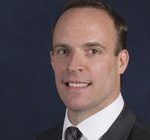
Tag: Dominic Raab

  • Dominic Raab – 2021 Statement to the UN Human Rights Council

    Dominic Raab – 2021 Statement to the UN Human Rights Council

    The statement made by Dominic Raab, the Foreign Secretary, on 22 February 2021.

    Madam President, Excellencies.

    The UK places the promotion and protection of human rights at the very top of our list of international priorities. So we are very pleased to return to the Human Rights Council. And we will continue to uphold and defend the international rule of law, and the rights and freedoms of people right around the world.

    We place a particular focus on: championing freedom of religion and belief; defending media freedom; and also championing the values of liberal democracy. We will use all of the diplomatic and development levers available to us to pursue these ends, support states to meet their human rights obligations, and uphold the values on which the United Nations was founded.

    The Human Rights Council has a key role to play. And at this moment, when we see the democratic dominoes falling across the world, when we see appalling human rights violations, and when we see some governments using Covid as a pretext to row back on personal freedoms, the Council’s role is even more important than ever.

    But, like any institution, we know the Council is not perfect. Some members do not meet the human rights standards we vow to uphold. And the Council’s agenda does not consistently reflect where the most pressing human rights issues are. We need to address that, as well as other institutional concerns. For our part, the UK will continue to engage with all sides to find ways to do so. For example, we must find ways to reduce the practical barriers to small island developing states engaging fully.

    This Council lives up to the best traditions of the United Nations when it shines a spotlight on the very worst violations of human rights, and demands accountability for those responsible. So let me highlight some of the most pressing human rights situations that we see today.

    The position in Myanmar gets worse. The violations and abuses are well-documented, including arbitrary detention and draconian restrictions on freedom of expression. That crisis presents an increased risk to the Rohingya and other ethnic minorities. That’s why the UK and the EU led a special session of the Council on this issue earlier in the month. It resulted in a consensus resolution demonstrating the strength of feeling in the Council about the actions of the military.

    The UK has also led strong statements from the G7 and the UN Security Council condemning the situation. The UK is sanctioning individuals for serious human rights violations that took place during the coup. The military must step aside. Civilian leaders must be released. And the democratic wishes of the people of Myanmar must be respected. That’s why at this session we will again cosponsor the resolution renewing the mandate of the Special Rapporteur on Myanmar, so he can continue his essential work.

    Let me now turn to Belarus. Last year’s rigged Presidential elections and Mr Lukashenko’s brutal crackdown against those calling for change has resulted in a human rights crisis. There is no other way to describe it.

    The UK has been at the vanguard of the international response. This includes an OSCE investigation, an urgent debate at the Council in September, and greater support for civil society and the independent media. With Canada, we acted decisively in implementing sanctions against Lukashenko and his inner circle.

    Now, this Council must continue with a comprehensive investigation of human rights violations, including accusations of torture, cruel, inhuman and degrading treatment. The Belarusian authorities must stop their campaign of repression, agree to meaningful dialogue and now hold new elections. The UK will support initiatives to keep Belarus on the Council’s agenda for as long as it is necessary, and until the Belarusian people are able to enjoy their democratic rights and their fundamental freedoms.

    Now turning to Russia, where we face a truly dire and shocking situation from a Permanent Member of the UN Security Council. The authorities there must respect citizens’ human rights, including the right to freedom of expression, the right to a fair trial, and the freedom from torture.

    We are deeply concerned by the legislative amendments and constitutional changes which amount to a wholesale attack on individual rights and freedoms. That includes allowing ordinary individuals to be treated as foreign agents. It is disgraceful that Alexey Navalny, himself the victim of a despicable crime, has now been sentenced on arbitrary charges.

    The UK has sanctioned six individuals and an entity responsible for Mr Navalny’s poisoning. His treatment and the violence inflicted on peaceful protesters can only further reinforce the world’s concerns that Russia is failing to meet its international obligations. We’ve made our concerns clear here in this Council as well as at the G7, at the OSCE and in the Council of Europe. And we call on other members of the Council to consider whether Russia’s actions are in line with its international human rights obligations and the values that we seek and that we have pledged to uphold.

    Now, I must address China. We stand with the growing number of international partners, UN experts and NGOs concerned about the deteriorating human rights situation that we see in China. No one can ignore the evidence anymore.

    In Hong Kong, the rights of the people are being systematically violated. The National Security Law is a clear breach of the Sino-British Joint Declaration and is having a chilling effect on personal freedoms. Free and fair legislative elections must take place, with a range of opposition voices allowed to take part.

    In Tibet the situation remains deeply concerning, with access still heavily restricted. Meanwhile, we see almost daily reports now that shine a new light on China’s systematic human rights violations perpetrated against Uyghur Muslims and other minorities in Xinjiang. The situation in Xinjiang is beyond the pale. The reported abuses – which include torture, forced labour and forced sterilisation of women – are extreme and they are extensive. They are taking place on an industrial scale. It must be our collective duty to ensure this does not go unanswered.

    UN mechanisms must respond. The UN High Commissioner for Human Rights, or another independent fact-finding expert, must – and I repeat must – be given urgent and unfettered access to Xinjiang. If members of this Human Rights Council are to live up to our responsibilities, there must be a resolution which secures this access.

    The UK will live up to our responsibilities. So last month, I announced measures aimed at ensuring that no company profiting from forced labour in Xinjiang can do business in the UK, and that no UK businesses are involved in their supply chains. We will continue to raise our voice for the people of Hong Kong and for minorities in China suffering this appalling treatment. And we urge others who share our commitment to open societies and universal human rights to speak up.

    Finally, we will continue to lead action in this Council: on Syria, as we do at each session; on South Sudan; and on Sri Lanka, where we will present a new resolution to maintain the focus on reconciliation and on accountability.

    Madam President, we want to see an effective international human rights system that holds to account those who systematically violate human rights. The Human Rights Council must be ready to play its role in full, or I fear we will see its reputation sorely damaged.

    The UK wants the Council to succeed. And we will work with our international partners. We will continue to speak up in this Council for what is right. And we will continue to back up our words with actions.

    Thank you.

  • Dominic Raab – 2021 Statement on Ukraine

    Dominic Raab – 2021 Statement on Ukraine

    The statement made by Dominic Raab, the Foreign Secretary, on 20 February 2021.

    The UK stands with Ukraine against the illegal annexation of Crimea and we will continue supporting those whose lives have been impacted by Russia’s illegitimate aggression.

    Russia is trying to cover up its human rights abuses by preventing access to Crimea for international monitors. But we will work closely with the UN and international partners to ensure Russia is held to account.

  • Dominic Raab – 2021 Statement on Myanmar

    Dominic Raab – 2021 Statement on Myanmar

    The statement made by Dominic Raab, the Foreign Secretary, on 20 February 2021.

    The UK condemns the shooting of peaceful protesters, which only places the military regime further beyond the pale. We will consider further measures, with our international partners, to hold to account those responsible for crushing democracy and choking dissent.

  • Dominic Raab – 2021 Comments on Brexit and Trade Agreements

    Dominic Raab – 2021 Comments on Brexit and Trade Agreements

    The text of the comments made by Dominic Raab, the Foreign Secretary, on BBC’s Andrew Marr Show on 14 February 2021.

    ANDREW MARR:

    Now, I want to talk to you about the results so far of Brexit. There’s been a huge amount of rhetoric and argument on both sides all across the media. I’d like to just focus on a real life actual situation, and somebody called Tony Bowker. He runs a company in Sheffield which imports precision engineered goods from Japan and then exports them to the EU. And under your Brexit deal he says he has to pay duties because of rule of origins requirements. Many of his products now require export licences and every shipment to Europe has gone from costing him zero to costing hundreds of pounds. He has been advised that his best option now is to relocate the majority of his operations from Sheffield to the continent, and he wants to know from you is the government going to change the elements of the Brexit deal which make his business model unviable, or should he move out of the UK?

    DOMINIC RAAB:

    We certainly want all businesses to stay here. We want to manage the risks regarding exports that you describe. We’ve put a huge amount of money into supporting those businesses. The BBC itself was reporting that in terms of freight the flows of freight, both into the UK and out of the UK, are now back to 99 per cent of the pre-end of transitional period level. So that’s good news.

    We talked last time I was on the show about some of the teething problems, and I think on the BBC’s own reporting, based on the data, that’s been to a large extent resolved and we’ll continue to keep a very close eye on that. And of course there are all the wider export opportunities with the rest of the world with the new free trade deals we’re doing. But we have also been clear that there are changes that come with exiting the transition period and what we’re trying to do is support businesses as best we can to manage those.

    ANDREW MARR:

    50% of the lorries that you’re talking about were empty. We know that too. And in terms of teething trouble, Mr Bowker, like many other businesses, is actually facing an existential challenge. Stay in Sheffield or move to the continent. And unless things change he’s going to have to move, and it’s not just smaller businesses like him. Peter Cowgill, who’s the chairman of JD Sports, a huge business, says: ‘when we had a free trade agreement – we were told we were going to get a free trade agreement, that is really not the case. If you source from the Far
    East and bring it into the UK and ship to stores in every country in Europe where tariffs apply, then your business needs to relocate
    and find a distribution centre in Europe.’ And if that doesn’t happen, then the employment is going to go from the UK. There are lots of businesses facing real practical, day to day problems right now. What are you going to do for them?

    DOMINIC RAAB:

    We’re already doing, as I said, a huge amount to support them with advice, with guidance, particularly into mediating things like customs declarations, and we’ve been clear all along that come the end of the transition period there would be changes, and we’ve put a significant amount of money into supporting those businesses. I think it’s also fair to say, for the sake of balance and context, there have also been lots of other businesses investing in the UK because they see the certainty that a free trade deal provides, and/or because they think that the UK is a great source for business because of its own merits. There are also the new opportunities for export that come with breaking down barriers to trade. For example, if you look at the Japanese free trade agreement that we’ve got and its extension into areas like digital and data, a really important area of comparative advantage for the UK. So yes, there’s some change, but we can manage the risks, grasp the opportunities, and I’m very confident overall. We can always take individual cases and I know they all matter, for the businesses and the employers, but overall we’re in an excellent position now to grasp the opportunities of a global Britain out there, particularly investing in the areas of the IndoPacific region, but also maintaining our key trading relations with Europe.

    ANDREW MARR:

    Well, let’s try and move away from individual businesses to the wider picture. And I don’t deny at all that there will new opportunities for all sorts of businesses going ahead, but the truth is that Boris Johnson promised a deal that you signed would – and I quote – ‘if anything, allow our companies and our exporters to do even more business with our European friends.’ And the truth is that because of all sorts of new paperwork, there are now twenty page export health certificates for vets, there’s the 27-page catch certificate for exporting fish, there’s duties for goods of all kinds which don’t meet rules of origin requirements, and if that is going to make trading with business – with Europe harder and harder and harder, then the common sense conclusion is that people will do less of it.

    DOMINIC RAAB:

    Well, no. First of all, of course you’re right to say that the EU regulatory requirements, the red tape of the paperwork that they will apply to the UK, the same as they apply to other businesses from other countries around the world, if they ramp that up and they don’t take a sensible smart approach to that of course it will have an impact. It will also have an impact on them. I think if you take a 10-year view as well as looking at the short term risk, which it’s right to do, actually the growth opportunities of the future are going to come from emerging and developing economies around the world, in particular the Indo-Pacific, and having the freedom, the latitude to trade, bespoke Britain-friendly terms and conditions with those growth markets in the future is a huge opportunity, when it comes to jobs, when it comes to
    livelihoods, when it comes to startup and to scale up. So you’ve got to look at this in the round, but of course we will want to also manage those short term challenges, and reduce them, mitigate as far as we can the bureaucratic obstacles that the EU is imposing.

    ANDREW MARR:

    So are you saying in effect we should stop thinking quite so much about Europe and think more about the Far East?

    DOMINIC RAAB:

    I wouldn’t put it quite in those terms, but it’s certainly right to say we want to bank, if you like, the baseline of our European trade, it’s very important to us and also our neighbours. But if you look at the opportunities and the growth for the future for UK companies, bearing in mind the comparative advantage of our businesses, I think the growth markets and the growth economies are going to come from the Indo-Pacific region and actually if you look at what the EU says, they agree with that analysis, which is why it’s so important we’ve got the latitude to strike the best deals with those economies, which Liz Truss is already now doing, to really maximise the opportunities and that’s the long term sustainable approach.

    ANDREW MARR:

    Let me turn to one of the most important industries in terms of tax revenue coming in and Britain’s traditional strength which is the City. Now in the week just passed Amsterdam took over London’s leading role in terms of the centre for European equities being dealt with and there are lots of pieces of evidence now, again hard evidence of actual companies moving hundreds of people out of the City and onto the Continent of Europe. And a certain sense that something may have been changing. This may be a fulcrum moment for what has been one of Britain’s great industries and we may be beginning to see the City being eclipsed by the EU. And my point I suppose to you is that really that given that the EU wants to take that business into its own territory we don’t have many levers to, as it were, use against them.

    DOMINIC RAAB:

    Well I certainly don’t accept the sort of binary zero sum sort of attrition with the EU … What matters to the UK and to the City is the comparative advantage we have in the fundamentals. So for example you were citing Equities, but actually the boss of Barclays has been saying recently how the long term future of the UK and its leadership role is unparalleled, unrivalled. And the crucial question for the EU, it may be able to, if you like, nick a bit of business here or there from the City, but the problem is the measures that they will take to achieve that will undermine their own competitiveness. If I’m really – I think to be really honest about it the challenge to London as the global financial centre around the world will come from Tokyo, New York and other areas rather from those European hubs, particularly if they start to erect barriers to trade and investment.

  • Dominic Raab – 2021 Comments on Aung San Suu Kyi

    Dominic Raab – 2021 Comments on Aung San Suu Kyi

    The comments made by Dominic Raab, the Foreign Secretary, on 16 February 2021.

    The charges against Aung San Suu Kyi are politically motivated, and the latest example of the Myanmar military undermining democratically elected politicians. Aung San Suu Kyi and all other elected politicians arbitrarily held must be released immediately.

    The UK and likeminded nations will not ignore these violations. We will ensure those responsible are held to account.

  • Dominic Raab – 2021 Speech in Cyprus

    Dominic Raab – 2021 Speech in Cyprus

    The speech made by Dominic Raab, the Foreign Secretary, on 4 February 2021.

    Thank you very much. It’s a huge pleasure to be here. Both to renew the connections and friendship we have between the UK and Cyprus, but also, given the upcoming talks, to help make progress to support our friends here in Cyprus.

    I want to thank the President of the Republic, Mr Anastasiades, and also you Foreign Minister for your friendship, your hospitality, and for the constructive discussions that we had today. I also look forward to meeting Turkish Cypriot leader, Ersin Tatar, later this afternoon.

    The UK-Cyprus relationship is strong. We have a lot of history, a lot of water under the bridge in our relationship. We have shared values, shared legal systems, joint membership of the Commonwealth, and a very big web of people-to-people relations, including students – we talked a bit about that as well today.

    We have got great partnerships and a network of personal relations, particularly in education, science, research, and security, all of which serve our joint interests and contribute to our friendship.

    We want to continue strengthening those links and we want to reinforce and nurture these relations, and perhaps widen them as well.

    So we will continue to work together to uphold the values that we both share and deal with the challenges we both face, whether that is including tackling Covid, climate change and regional challenges.

    You can count on our friendship, you can count on our support and you can count on us on playing an active and full role.

    And we also want to play a supporting role in helping the people of Cyprus, both sides of this dispute, to move things forward, to break the deadlock, to find a settlement that works in everyone’s interest.

    We are a problem solving nation by instinct, we are a Guarantor Power, we are a permanent member of the UN Security Council.

    But above all, the UK feels we are also a long standing friend of the Cypriot people across the island.

    So we want to see a permanent, enduring and lasting end to the dispute.

    And I hope that all parties should seize the opportunities that the 5+1 talks present to really change the conversation and give the children, the young people of the island, the brightest prospects for the future in years ahead.

    I think it’s an opportunity to push for a settlement which will benefit both sides but also have a premium dividend, if you like, for regional stability, security and prosperity.

    I think a failure to reach a settlement after so many efforts will benefit no-one.

    So again, I urge all sides to come to the talks with a willingness to demonstrate flexibility and compromise and I was very heartened by my conversations at the scope for that.

    We will work with the Cypriot people and the UN of course, to finally resolve the Cyprus problem and achieve a just and lasting settlement.

    So that, again, the young people, the next generation of Cypriots, can fulfil their aspirations, their dreams and evade their fears and anxieties that appear in both communities.

    A reunited, Cyprus can achieve its full potential as a beacon of democracy, stability, prosperity and, frankly, the underlying values that Nicos and I, that Brits and Cypriots share.

    Thank you very much again for your very warm welcome.

  • Dominic Raab – 2021 Statement on Zimbabwe

    Dominic Raab – 2021 Statement on Zimbabwe

    The statement made by Dominic Raab, the Foreign Secretary, in the House of Commons on 1 February 2021.

    On 1 February 2021, I imposed asset freezes and travel bans on four individuals under the Zimbabwe (Sanctions) (EU Exit) Regulations 2019.

    The four individuals designated were involved in brutal crackdowns by the Government of Zimbabwe on public protests. This includes events that led to the deaths of six demonstrators in August 2018 and of 17 demonstrators in January 2019, and resulted from the Zimbabwean security forces’ use of excessive and disproportionate force. As a result, the designations focus on some of the most egregious human rights violations since President Mnangagwa took power.

    This is the first set of designations of individuals under the UK’s autonomous Zimbabwe sanctions regime since the regulations came fully into force on 31 December 2020. These sanctions are not targeted at the wider economy or the people of Zimbabwe. The UK is on the side of the Zimbabwean people and we will continue to work to reduce poverty and help Zimbabweans secure their constitutional freedoms. This sanctions regime seeks to press the Government of Zimbabwe to: respect democratic principles and institutions and the rule of law in Zimbabwe; refrain from actions, policies or activities which repress civil society in Zimbabwe; and comply with international human rights law and respect human rights.

    These sanctions sit alongside the asset freeze on Zimbabwe defence industries, which was transferred from the EU Zimbabwe sanctions regime to the UK’s autonomous Zimbabwe sanctions regime at the end of the transition period on 31 December.

    The full list of designations is below:

    Owen Ncube – Minister of State for National Security

    Anselem Nhamo Sanyatwe – Formerly Brigadier General, Commander of the Presidential Guard and Tactical Commander of the National Reaction Force

    Godwin Matanga – Commissioner General of the Zimbabwe Republic Police

    Isaac Moyo – Director General, Central Intelligence Organisation (CIO).

  • Dominic Raab – 2021 Comments on Alexey Navalny

    Dominic Raab – 2021 Comments on Alexey Navalny

    The comments made by Dominic Raab, the Foreign Secretary, on 18 January 2021.

    It is appalling that Alexey Navalny, the victim of a despicable crime, has been detained by Russian authorities. He must be immediately released. Rather than persecuting Mr Navalny Russia should explain how a chemical weapon came to be used on Russian soil.

  • Dominic Raab – 2021 Statement on Gibraltar

    Dominic Raab – 2021 Statement on Gibraltar

    The statement made by Dominic Raab, the Foreign Secretary, in the House of Commons on 13 January 2021.

    In the UK approach to negotiations on the future relationship with the EU as published in February 2020, the Government stated that they would act in these negotiations on behalf of all the territories for whose international relations the UK is responsible, which includes Gibraltar.

    We have worked side by side with the Government of Gibraltar to honour this commitment. As a consequence of the EU’s negotiating mandate which it adopted in February 2020, Gibraltar was not within scope of the UK-EU trade and co-operation agreement (TCA). The Commission made a declaration alongside the TCA stating that this would “not preclude the possibility to have separate agreements between the Union and the United Kingdom in respect of Gibraltar”, and that it stood ready “to examine any request from Spain, in agreement with the United Kingdom, to initiate the procedure for the negotiation of such separate agreements should they be compatible with Union law and Union interests”.

    To that end, the UK, working side by side with the Governments of Gibraltar and Spain, reached agreement on 31 December over a political framework to form the basis of a separate treaty between the UK and the EU regarding Gibraltar. We have sent this framework to the European Commission in order to initiate negotiations on the treaty.

    The political framework covers issues of key importance to Gibraltar and the surrounding region, including on border fluidity. It creates the basis for a bespoke model for Gibraltar’s future relationship with the EU that will permit an absence of physical checks at the land border with Spain, and therefore ensure fluidity of movement of people and goods between Gibraltar and the EU. The Governments of both the UK and Gibraltar judge that this framework provides a firm basis to safeguard Gibraltar’s interests.

    The UK and Gibraltar are committed to ensuring that cross-border arrangements can continue in the interim, until a new treaty enters into force. Arrangements have been agreed with Spain that include provisions for the border (goods and people), road transport, healthcare, waste disposal, and data. In addition, the UK Government provided financial and other support to ensure that Gibraltar was fully prepared for the end of the transition period.

    We remain steadfast in our support for Gibraltar, and its sovereignty is safeguarded.

  • Dominic Raab – 2021 Statement on the Situation in Xinjiang

    Dominic Raab – 2021 Statement on the Situation in Xinjiang

    The statement made by Dominic Raab, the Foreign Secretary, in the House of Commons on 12 January 2021.

    With permission, Mr Speaker, I would like to update the House on the situation in Xinjiang and the Government’s response.

    The evidence of the scale and severity of the human rights violations being perpetrated in Xinjiang against the Uyghur Muslims is now far-reaching. It paints a truly harrowing picture. Violations include the extrajudicial detention of over 1 million Uyghurs and other minorities in political re-education camps; extensive and invasive surveillance targeting minorities; systematic restrictions on Uyghur culture, education and, indeed, on the practice of Islam; and the widespread use of forced labour. The nature and conditions of detention violate basic standards of human rights. At their worst, they amount to torture and inhumane and degrading treatment, alongside widespread reports of the forced sterilisation of Uyghur women.

    These claims are supported now by a large, diverse and growing body of evidence that includes first-hand reports from diplomats who visit Xinjiang and the first-hand testimony from victims who have fled the region. There is satellite imagery showing the scale of the internment camps, the presence of factories inside them and the destruction of mosques. There are also extensive and credible third-party reports from non-governmental organisations such as Human Rights Watch and Amnesty International, with the United Nations and other international experts also expressing their very serious concerns.

    In reality, the Chinese authorities’ own publicly available documents also bear out a similar picture. They show statistical data on birth control and on security spending and recruitment in Xinjiang. They contain extensive references to coercive social measures dressed up as poverty alleviation programmes. There are leaks of classified and internal documents that have shown the guidance on how to run internment camps and lists showing how and why people have been detained.

    Internment camps, arbitrary detention, political re-education, forced labour, torture and forced sterilisation —all on an industrial scale. It is truly horrific—barbarism we had hoped was lost to another era is being practised today, as we speak, in one of the leading members of the international community.

    We have a moral duty to respond. The UK has already played a leading role within the international community in the effort to shine a light on the appalling treatment of the Uyghurs and to increase diplomatic pressure on China to stop and to remedy its actions. I have made my concerns over Xinjiang clear directly to China’s Foreign Minister Wang Yi. We have led international joint statements on Xinjiang in the United Nations General Assembly Third Committee and the UN Human Rights Council. In the Third Committee, we brought the latest statement forward together with Germany in October last year and it was supported by 39 countries.

    China’s response is to deny, as a matter of fact, that any such human rights violations take place at all. They say it is lies. If there were any genuine dispute about the evidence, there would be a reasonably straightforward way to clear up any factual misunderstandings. Of course China should be given the opportunity to rebut the various reports and claims, but the Chinese Government refuse point blank to allow the access to Xinjiang required to verify the truth of the matter.

    We have repeatedly called for China to allow independent experts and UN officials, including the United Nations High Commissioner for Human Rights, proper access to Xinjiang, just as we in this country allow access to our prisons, our police custody suites and other parts of the justice system to independent bodies who hold us to account for the commitments to respect human rights that we have made.

    China cannot simply refuse all access to those trusted third-party bodies that could verify the facts and, at the same time, maintain a position of credible denial. While that access is not forthcoming, the UK will continue to support further research to understand the scale and the nature of the human rights violations in Xinjiang. But we must do more, and we will.

    Xinjiang’s position in the international supply chain network means that there is a real risk of businesses and public bodies around the world, whether inadvertently or otherwise, sourcing from suppliers that are complicit in the use of forced labour, allowing those responsible for violations to profit—or, indeed, making a profit themselves—by supplying the authorities in Xinjiang. Here in the UK, we must take action to ensure that UK businesses are not part of supply chains that lead to the gates of the internment camps in Xinjiang, and to ensure that the products of the human rights violations that take place in those camps do not end up on the shelves of supermarkets that we shop in here at home week in, week out.

    We have already engaged with businesses with links to Xinjiang; we have encouraged them to conduct appropriate due diligence. More widely, we have made a commitment to tackling forced labour crystal clear. With the introduction of the Modern Slavery Act 2015, the United Kingdom was the first country to require companies by law to report on how they are tackling forced labour in their supply chains. Today, I can announce a range of new measures to send a clear message that those violations of human rights are unacceptable and, at the same time, to safeguard UK businesses and public bodies from any involvement or links with them.

    I have been working closely with my right hon. Friends the Home Secretary, the Secretary of State for International Trade and the Chancellor of the Duchy of Lancaster. Our aim, put simply, is that no company profits from forced labour in Xinjiang, and that no UK business is involved in their supply chains. Let me set out the four new steps that we are now taking.

    First, today the Foreign, Commonwealth and Development Office, and the Department for International Trade have issued new, robust and detailed guidance to UK businesses on the specific risks faced by companies with links to Xinjiang, and underlining the challenges of conducting effective due diligence there. A Minister-led campaign of business engagement will reinforce the need for UK businesses to take concerted action to address that particular and specific risk.

    Secondly, we are strengthening the operation of the Modern Slavery Act. The Home Office will introduce fines for businesses that do not comply with their transparency obligations, and the Home Secretary will introduce the necessary legislation setting out the level of those fines as soon as parliamentary time allows.

    Thirdly, we announced last September that the transparency requirements that apply to UK businesses under the Modern Slavery Act will be extended to the public sector. The FCDO will now work with the Cabinet Office to provide guidance and support to UK Government bodies to exclude suppliers where there is sufficient evidence of human rights violations in any of their supply chains. Let me say that we in the United Kingdom—I think rightly—take pride that the overwhelming majority of British businesses that do business do so with great integrity and professionalism right around the world. That is their hallmark and part of our USP as a global Britain. Precisely because of that, any company profiting from forced labour will be barred from Government procurement in this country.

    Fourthly, the Government will conduct an urgent review of export controls as they apply, specifically geographically, to the situation in Xinjiang, to make sure that we are doing everything we can to prevent the export of any goods that could contribute directly or indirectly to human rights violations in that region. The package that has been put together will help to ensure that no British organisations—Government or private sector, deliberately or inadvertently—will profit from or contribute to human rights violations against the Uyghurs or other minorities. I am of course sure that the whole House would accept that the overwhelming majority of British businesses would not dream of doing so. Today’s measures will ensure that businesses are fully aware of those risks, will help them to protect themselves, and will shine a light on and penalise any reckless businesses that do not take those obligations seriously.

    As ever, we act in co-ordination with our like-minded partners around the world, and I welcome the fact that later today Foreign Minister Champagne will set out Canada’s approach on these issues. I know that Australia, the United States, France, Germany and New Zealand are also considering the approaches they take. We will continue to work with all of our international partners, but the House should know that in the comprehensive scope of the package I am setting out today the UK is again setting an example and leading the way.

    We want a positive and constructive relationship with China, and we will work tirelessly towards that end, but we will not sacrifice our values or our security. We will continue to speak up for what is right and we will back up our words with actions, faithful to our values, determined, as a truly global Britain, to be an even stronger force for good in the world. I commend this statement to the House.