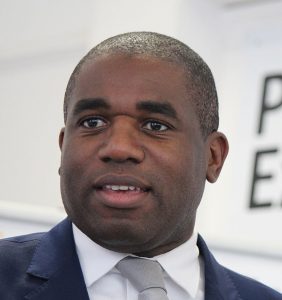
Tag: David Lammy

  • David Lammy – 2020 Speech on Sentencing Law Changes

    David Lammy – 2020 Speech on Sentencing Law Changes

    The comments made by David Lammy, the Shadow Justice Secretary, on 16 September 2020.

    It is totally hypocritical for Boris Johnson to play tough on law and order in the same week that he ordered his MPs to vote to break the law.

    The Conservatives’ rhetoric on crime never lives up to the reality. Under this government we have the lowest charging rate for reported crimes since records began.

    Labour will scrutinise this proposed legislation on sentencing closely. Our priority is to keep the British public safe.

  • David Lammy – 2020 Comments on Reports Government are Abandoning Commitment to Human Rights Laws

    David Lammy – 2020 Comments on Reports Government are Abandoning Commitment to Human Rights Laws

    The comments made by David Lammy, the Shadow Justice Secretary, on 13 September 2020.

    Labour is proud of our country’s role in developing human rights at home and abroad.

    Instead of giving unattributed briefings designed to distract the government should focus on getting a Brexit deal and defeating the virus.

    Any attempt to abandon human rights would make life in Britain less secure and hold our country back on the world stage.

  • David Lammy – 2020 Comments on Courts Backlog

    David Lammy – 2020 Comments on Courts Backlog

    The comments made by David Lammy, the Shadow Justice Secretary, on 5 August 2020.

    The Tories’ disastrous sell-off of courts in England and Wales has created a situation where dangerous offenders could now be released onto the streets.

    This could threaten public safety as well as being another insult to the generation of victims who are being denied justice by endless delays.

    Tory vandalism has created chaos and permanently damaged the justice system. It’s unbelievable that the Government plans to close further courts.

    The Government must stop dithering over its roll out of Nightingale Courts. We urgently need more capacity to deal with the immediate crisis. The Conservatives must also promise to make no new plans to close more courts while in government.

  • David Lammy – 2020 Comments on Self-Harm Incidents in Custody

    David Lammy – 2020 Comments on Self-Harm Incidents in Custody

    Comments made by David Lammy, the Shadow Justice Secretary, on 30 July 2020.

    The fact that we are witnessing record levels of self-harm in our prisons is deeply alarming. It comes following 10 years of cuts that have left prisons overcrowded and understaffed.

    These statistics show the massive scale of this problem even before emergency lockdown measures were introduced to the prison estate. With prisoners isolated in their cells for 23 hours per day during the pandemic, the number that are self-harming may have further increased.

    It is vital that prisoners get access to the mental health support they need, which will also help them rehabilitate.

  • David Lammy – 2020 Comments on Chaos in Criminal Justice System

    David Lammy – 2020 Comments on Chaos in Criminal Justice System

    The text of the comments made by David Lammy, the Shadow Justice Secretary, on 19 July 2020.

    The government clearly does not recognise the scale of the crisis in our justice system.

    The backlog in criminal cases was in the tens of thousands before the pandemic began, Coronavirus has only made an existing problem worse. The fact that several of the new ‘Nightingale’ courts are former courts which the government closed down exposes the cost of ten years of cuts to the justice system.

    The government must do much more to ensure victims of crime are no longer denied justice because of delay.

  • David Lammy – 2020 Comments on Sentencing for Assaults on Emergency Workers

    David Lammy – 2020 Comments on Sentencing for Assaults on Emergency Workers

    The text of the comments made by David Lammy, the Shadow Justice Secretary, on 13 July 2020.

    Emergency workers put themselves in danger to keep the rest of us safe. It is right that anyone who assaults a firefighter, prison officer, paramedic or police officer should face the full force of the law.

    We will look closely at these proposals, but recognising the bravery of emergency workers requires more than just increasing sentences for those that assault them. After a decade of austerity, the Government should promise to end the cuts that have left our emergency services understaffed and overworked even before this crisis began.

  • David Lammy – 2020 Comments on Backlog of Court Cases

    David Lammy – 2020 Comments on Backlog of Court Cases

    Below is the text of the comments made by David Lammy, the Shadow Justice Secretary, on 30 June 2020.

    There can be no more dithering or delay when it comes to co-opting empty public buildings to act as temporary courts during the pandemic, as Labour has been telling the government to do for months.

    This is a backlog which has been building up long before Covid-19, due to a decade of court closures and cuts. Now the virus has compounded the problem even further, the government must take urgent action.

    Justice delayed too long becomes justice denied.

  • David Lammy – 2020 Speech on the Probation Services

    David Lammy – 2020 Speech on the Probation Services

    Below is the text of the speech made by David Lammy, the Labour MP for Tottenham, in the House of Commons on 11 June 2020.

    I thank the Secretary of State for advance sight of his statement. I, too, want to give my thanks to the National Probation Service and for the work of our CRCs, particularly at this challenging time. The Opposition welcome the U-turn that the Government are announcing. It is a U-turn that we have called for for many years. Anyone who looks at Hansard for debates in this Chamber and indeed looks at successive Select Committees will be aware that the Secretary of State has made an important announcement.

    The playwright Alan Bennett wrote that the probation service is about the

    “remedying of misfortune…which…has no more to do with profit than the remedying of disease”.

    The probation service may seem abstract to many who have had lives of privilege. Unlike the health service, most of us will never come into direct contact with it, but every Member of Parliament knows that a properly run probation system is essential. At its best, it can be the national service of second chances: offenders rehabilitate, former criminals become good citizens and people are allowed to make up for their past mistakes.

    Just as our national health service must be publicly run, so, too, must probation services, but the Conservative Government’s part-privatisation of the probation service was the deepest privatisation that the criminal justice system has ever experienced. The reforms led by the right hon. Member for Epsom and Ewell (Chris Grayling)—it is such a shame he has not made it to the Chamber—transferred 70% of the work done by the public probation service to private and voluntary sector providers. Coming in 2015, in the middle of a decade of austerity, these were, in essence, cost-cutting measures. The Government were warned, but, as we have seen with so many of their attempts to cut corners through underinvestment, ultimately these measures have cost much more in the long run. Since the reforms, reoffending rates have climbed up to 32%. Members of the public and victims of crime across the country would not have been subject to the trauma they were put through had this privatisation not been introduced in the first place. One service provider, Working Links, was found to be wrongly classifying offenders as low risk to meet Government targets. Profit was put before public safety, ethics were compromised and lives were lost. It does not matter what language the Secretary of State uses in this House, he should apologise for that mistake made by his party.

    The Government cannot say that they were not warned about the devastation that their part-privatisation of the probation service would cause. Trade unions, including Napo and Unison, have been campaigning for probation ​services to be fully publicly run for seven years. The Labour party, too, has warned this House of the dangers of these reforms again and again. The chief inspector warned that the use of private firms to monitor offenders serving community sentences is irredeemably flawed. Lord Ramsbotham, the former chief inspector of prisons, even produced an interim report on how the Government can best return the services to public hands.

    The Opposition welcome the Government’s U-turn today, but the obvious question is why the Government tried to make profit out of probation in the first place, and why it took so long for them to realise their mistake. More than a year ago, the Justice Secretary’s predecessor announced that the system was not working. He outlined that offender management would be renationalised, so why did the Government fail to renationalise the second pillar of the private probation service then? Why were unpaid work programmes and accredited programmes still put out for private tender? When the Government knew that their model was broken, why did they only go part of the way in fixing it?

    As we move towards the return of the probation services into public hands, this Opposition will scrutinise every detail seriously. Probation services are too important to be messed around with again, so what is the timescale for reintegration of all probation services into the state? Can we be assured that this will not be used as an excuse for any more cuts? Will all the savings from not renewing private probation contracts go towards an improved, better staffed, trained and managed National Probation Service? Keeping expertise is vital. How will the Government ensure that private probation staff will be encouraged to continue their work? Local probation services must be able to draw on the voluntary sector and create connections with local employers, adult education colleges, health authority and jobcentres. How will the Government ensure that the National Probation Service is organised so that there are those strong local links?

    Many prisoners are released without suitable accommodation, so the connection to local authorities is absolutely vital. Ex-offenders need to be helped to find a home from which they can start a better life. The Government want to frame these reforms as purely down to the coronavirus, but we all know the truth: the problems are much deeper than that. Let this momentous U-turn be the end of the assumption that the private sector always knows best. The Government outsourced school dinners and we ended up with obesity and turkey twizzlers. The Government outsourced the cleaning of hospital beds and we ended up with the highest rates of the superbug. The Government outsourced probation and we ended up with higher reoffending rates. The private sector is not the answer for everything.

    However, probation is founded on the idea of second chances. It is in this spirit that we are open minded to the Government as they try to atone for their past sins. Will the Government commit to making these changes part of a broad, coherent strategy for investment in rehabilitation and greater safety for the public? The Government should not just try to put the clock back. They should work with the Opposition, work with our unions and work with our non-governmental organisations and other experts to build a better probation service than we have had before. This is how they can make up for their past mistakes.

  • David Lammy – 2016 Speech on Mental Health Services

    davidlammy

    Below is the text of the speech made by David Lammy in the House of Commons on 28 April 2016.

    I am grateful to have the opportunity of this debate on this very serious subject. I am pleased to be joined by my hon. Friend the Member for Hornsey and Wood Green (Catherine West), who stands with me on this debate and also wants to speak about our mental health services in Haringey.

    Let me state from the outset that I have the utmost respect for and gratitude towards all the staff working within Barnet, Enfield and Haringey Mental Health NHS Trust, who tirelessly care for some of the most vulnerable members of our community. Not least among those is the trust’s chief executive, Maria Kane, who has been recognised by the Health Service Journal as a top NHS chief executive who was shown to be doing a stellar job in the recent BBC “Panorama” film, “Britain’s Mental Health Crisis”. They have all been asked to do, frankly, an impossible job in the constituency and in the London borough of Haringey, which has 12 of the most deprived wards in the country where 2,284 people are receiving personal independence payments, over 270 different languages are spoken, 1,334 people have had their benefits sanctioned, and 826 households have found themselves homeless in the past year. Social tensions are high, funds are tight, and there is an ever-increasing need for urgent help, from mental health services for children and young people to dementia services for the old.

    I bring this debate to the House today because it is unacceptable that, despite the fact that mental health problems cost the economy £100 billion per year, three out of every four people with mental health problems in England receive little or no help for their condition. I suspect that that figure is far higher in my constituency, given the high level of need. Today in this country mental health problems are not just some form of rare disease. The truth is that one in every four people will suffer from mental health problems during the course of this year.

    For the most greatly affected, mental health problems are fatal. It simply cannot be right that in our country in 2016 those who suffer from the most severe mental illnesses die, on average, 15 to 20 years earlier than the general population. I have already brought to the attention of this House the fact that, on average, an adult male in my constituency can expect to live to just under 75 years of age. It is a sobering picture, then, that the average age of a male suffering from a severe mental health problem in my constituency may be under 55. But premature death is not the only complication for my constituents suffering from mental health problems. The Mental Health Taskforce commissioned by NHS England in February this year found that men of African and Caribbean heritage are up to 6.6 times more likely to be admitted as in-patients or detained under the Mental Health Act 1983, indicating a systemic failure to provide effective crisis care for these groups. The taskforce’s draft report also revealed that men from these groups are, on average, detained for five times longer.
    As mental health problems affect so many lives, 23% of the UK’s burden of disease is mental health. That figure is higher than the burden of disease in cancer or in cardiovascular disease, which stands at 16.2%. Why then do mental health services receive only 11% of the NHS’s budget? It is clear that institutional bias against providing proper care for people suffering from mental health problems persists in 2016.

    It was as far back as February 2011 that the coalition Government published their strategy for improving the nation’s mental health, which stated the now much-trumpeted concept of parity of esteem—an idea that began with a Lords amendment from Labour peers in the other place. Then, the very first section of the coalition Government’s infamous Health and Social Care Act 2012, which contained the central duty imposed on the Secretary of State in relation to our treasured national health service, was amended to put these services on an apparently equal footing. However, the reality already facing mental health patients across the country in 2014 was something different: mental health funding was cut for the first time in 10 years, and there were fewer services for children and young people, fewer beds, and more people on acute psychiatric wards.

    Many other strategies and documents were published, promising an improvement in services and repeating the mantra of parity of esteem, until the Prime Minister himself returned to the issue at the beginning of the year and finally announced some funding. However, given that the budget had previously been cut, I find it difficult to see how it was a net increase, not least given the pressures of an ageing population. The Prime Minister announced that those particular funds would be targeted towards helping new and expectant mothers with poor mental health and towards liaison between mental health services, A&E departments and crisis teams, but that is not what I am seeing on the ground.

    As demonstrated so vividly in BBC’s “Panorama”, the truth on the ground could not be more different. Far from the level of funding being equal between physical and mental health services, or the gap decreasing, mental health hospitals have had far deeper cuts imposed on them. The reality is that 3,000 mental health beds have been cut across the country in the past five to six years.

    However bleak the national picture, it does not get anywhere close to the gaping holes in funding for mental health services that face the patients of Barnet, Enfield and Haringey Mental Health NHS Trust. Despite the obvious and ever-increasing need, that trust, on top of the vast inequality between physical and mental health services, receives a lower share of income proportionately than any other mental health provider in London. It is hard to understand how an area that includes Tottenham gets the lowest level of funding in London.

    The trust has already done so much cost-cutting over the years that it is the most efficient NHS mental health provider in London. It already has the lowest number of acute mental health in-patient beds in London and higher productivity than other providers. It has also been proven to be underfunded over the course of not one or two, but three independent reports. The first of those reports was back in early 2014, the second in late 2014, and the third in October 2015. The independent evidence is that the trust needs £4 million a year, but it has not received a penny extra in funds, and no firm plan has been established to address the funding gap, which means that the trust now anticipates a deficit of £12.9 million in 2016-17.

    The reality locally is that St Ann’s hospital in my constituency has lost a third of its beds in the past eight years alone, and this is a hospital that is obliged under section 136 of the Mental Health Act 1983 to find a bed for every patient detained under that section because they pose a risk to their own life or to the lives of others. We are not talking about varicose veins or wisdom teeth; losing beds in these circumstances has a dire impact.

    My hon. Friend the Member for Hornsey and Wood Green will be aware of a recent case in the constituency. A young man whom I have known all his life attempted suicide and it has had a life-changing physical effect on his body. My hon. Friend might say a little more about that case, but it happened directly because there was no bed for him.

    St Ann’s hospital is constantly running at over 100% capacity, while other mental health providers in London run at 85% to 90%. With each new admission, St Ann’s wards each have to nominate their “least ill patients” for discharge back into the community. Despite the efforts of staff, does that really present a safe outcome for those vulnerable patients and their families? Is that really a safe outcome for the community that requires the trust to serve it as best it can?

    The shortfall in income is not the only problem the trust faces. Far from the Government’s rhetoric of parity of esteem, the truth in Haringey is that patients are condemned to treatment in a hospital that was designed to meet the needs of 19th-century fever patients, long before the discovery of antibiotics, rather than the delivery of therapeutic interventions appropriate to current patients’ needs.

    Indeed, the most recent Care Quality Commission inspection found that

    “the physical environment of the three inpatient…wards”

    on the St Ann’s site was

    “not fit for purpose due to its age and layout. This impacts on the trusts ability to deliver safe services within this environment.”

    That is a problem that the site has tried to resolve on the 28-acre St Ann’s site over the last decade.

    Finally, the trust submitted plans to develop the site last year. It hopes to fund a new hospital and other health services on one third of the site by building homes on the remaining land. I have to say that I oppose those proposals, because they include only 14% affordable housing, even though London has a housing crisis. Despite my objections, the trust was granted planning permission in March last year.

    There is an alternative proposal—it is a great proposal, which needs support—to build a community land trust. That is exactly what successive Mayors of London have said they want to see. It would result in affordable homes being built on the site, it would be holistic and it would fit with the mental health plan. I hope that the Minister might take an interest in it and that the next Mayor of London, whoever that is, will also take an interest.

    The trust’s plan would not require any capital from NHS England. I have to ask why, on this site and in this constituency, and given the circumstances in which the trust finds itself, no capital is forthcoming from NHS England. It seems that the decision about whether to build a new hospital has, once again, been pushed by the Government into the long grass, and we have been given no date at all.

    This debate about mental health comes on the back of a debate that I secured about the situation of primary care in the borough. I have raised both those subjects because I am seriously worried about health in the London Borough of Haringey and in my constituency. Despite myriad problems, only 16 months ago the independent Carnell Farrar review of the affordability of mental health services provided by the trust found that there was no compelling evidence to support merging the trust with any other organisation; that the trust is relatively efficient; and that there is a clear case for clinical commissioning groups to invest in it.

    I had hoped that that would mark the end of the speculation about the trust’s future, but the CQC report, published in March this year, of the routine inspection conducted in December 2015 gave the trust an overall rating of “requires improvement”. It is no surprise to me that that is the case, despite the efforts of staff and leadership, when funding is so tight and the level of need is so high. The CQC report stated that out of 11 areas, five required improvement, five were good and one was outstanding.

    The report concluded that mental health admission wards for adults required improvement, community-based mental health services required improvement, child and adolescent mental health required improvement, specialist community health services for children and young people required improvement and crisis mental health, including home treatment teams, required improvement. Many detailed recommendations have been made by the CQC to improve services, but no extra money has been put on the table to enable the trust to comply.

    I am grateful to the Minister for last week agreeing to my November request for a cross-party delegation of local MPs to come and discuss our concerns about the trust. Let me put on record what I call on him to do to help the trust, to ensure that the services that it provides are safe and that work begins to ensure true equality between physical and mental health services in Haringey. The context is important, not just because of the suicide rate in England—the number of suicides recently soared to 4,881 in 2014—but, most disturbingly, because the draft version of that report stated that had just £10 million extra been spent on services for people who were suicidal, 400 extra lives would have been saved. For the sake of £25,000, which is less than the national average salary, each of those lives could have been saved.

    I call on the Minister urgently to look at the plans for the redevelopment of the St Ann’s site. I understand that the north London estates plan will be finalised by the end of June, and I seek an assurance that a decision, including consideration of the community land trust’s proposal, will now be made. I ask the Minister to visit the St Ann’s site to see the problems for himself, and I ask him to earmark appropriate funding for the crisis team and children’s mental health services.

    I must warn the Minister that we have seen some terrible cases in my constituency. A young boy was injured and died outside his secondary school as he left with three friends. Police officers were assaulted with a machete. We have seen suicide and attempted suicide, with catastrophic consequences, in the recent past. I trust the Minister will ensure that the trust receives the funding it needs, and that he will recognise the CQC recommendations. By having this debate, I am putting him on notice of the real concerns about the development of the St Ann’s site and the real need to bear down on the pressures that the trust is under, in this pretty tough part of north London.
  • David Lammy – 2016 Speech on BBC Diversity

    davidlammy

    Below is the text of the speech made in the House of Commons by David Lammy on 14 April 2016.

    I beg to move,

    That this House notes the crucial cultural role the BBC plays in modern Britain; welcomes the fact that one of the public purposes outlined in the BBC Charter is to represent the UK, its nations, regions and communities; notes with concern that the last employment census in 2012 showed the number of black, Asian and minority ethnic people working in the UK creative media fell by 30.9 per cent between 2006 and 2012; believes that a BBC target of 14.2 per cent for 2017 is insufficient; further notes that this target falls short of other UK broadcasters; and calls on the Government to recognise these failings when considering the BBC’s charter renewal and make representations to the BBC to ensure that the corporation is not failing in any of its diversity objectives, including, but not limited to, delivering high quality programming which reflects modern Britain accurately and authentically and that the Corporation must advance equal opportunities to diversify and develop its workforce and senior leaders so that they better reflect audiences.

    I am grateful to the Backbench Business Committee for allowing me to bring this motion before the House today, and to my colleagues the hon. Members for Maidstone and The Weald (Mrs Grant) and for East Renfrewshire (Kirsten Oswald) for co-sponsoring this debate.

    Over the past few weeks I have met and spoken to many people, both black and white, who work in our creative industries. They do an extraordinary job, and our creative industries rightly have an envied international reputation. I am acutely aware that this is the first time in the history of the BBC that matters of diversity have been debated on the Floor of this House.

    This is certainly not, however, a new issue. I must begin by acknowledging those who have called for many years for greater diversity in the arts, especially in television. I salute the work my good friend Lenny Henry has done. Back in 2013 he called on me to help him as he began to think about the issues more deeply. In 2014 he laid out his plan for the BBC to set aside money for black, Asian and minority ethnic shows. Earlier this year, Idris Elba came to Parliament and spoke of the

    “disconnect between the real world and the TV world”,

    and the even bigger gap

    “between people who make TV, and people who watch TV”.

    I pay tribute to the Minister for Culture and the Digital Economy, who is in his place. In his six years in post he has been a champion of diversity in the media. I absolutely agree with his comments on “Channel 4 News” last week, when he said that the current position on diversity across our broadcasters is unacceptable and that more progress is needed. He has taken our broadcasters and the wider arts and culture sector and held their feet to the fire. I am grateful to him for doing so. On this issue, there is very little between us.

    Let me make it clear that diversity is not of course just about black and minority ethnic individuals; there is still significant work to be done to improve the representation within broadcasting and across our public life of women; of lesbian, gay, bisexual and transgender individuals; and of people with disabilities. It is also right to say that class and social mobility play a role in representation across the BBC. I am quite sure that colleagues in the House are also concerned that, despite some progress, there is a north-south divide in England. There is still some way to go, particularly on the representation of the depth and range of voices across the north of this country.

    Diversity is an issue across the whole media sector, not just in broadcasting and certainly not just within the BBC. From Fleet Street to Hollywood, there are clearly many more rivers to cross. City University’s latest survey, conducted just last month, found that British journalism as a whole is 94% white, and that there was not a single BAME face among the entire list of nominees for the 2016 Oscars. In 2006, representation of BAME people in the creative media industries stood at 7.4%; yet in 2012, the figure fell to 5.4%, and in television it fell from 9.9% to 7.5%, so it is going in the wrong direction.

    Directors UK has said that the number of BAME directors working in UK TV is “critically low”. A sample of 55,000 episodes drawn from 546 titles found that only 1.29% of programmes were made by black, Asian and minority ethnic directors. In some areas—period dramas, talk shows, panel shows and sketch shows—not a single episode had been made by a black, Asian or minority ethnic director. This is just not good enough in 2016.

    We are privileged in this country to enjoy so much public broadcasting. That goes beyond the BBC: ITV, Channel 4, Channel 5, S4C, STV and UTV have a public service broadcasting remit, meaning that they operate for the public benefit rather than purely for commercial purposes. Taken together, those channels account for 70% of all TV watched in the UK.

    Mr Angus Brendan MacNeil (Na h-Eileanan an Iar) (SNP) The statistic the right hon. Gentleman read out about programmes produced by black and ethnic minority people is shocking. I would support his argument by pointing out that when a population of 60,000—I am talking about the Gaelic speakers of Scotland—is given the opportunity, tremendous talent comes forward and great programmes are made. I think the point he is making is that if that opportunity was available to others, the same would happen. I support him in that.

    Mr Lammy The hon. Gentleman is absolutely right. We have gone beyond the point where we say, “The talent is not there. Can we do some training?” The talent exists. Can we now bring it forward and get the change that is required?

    One of the central statutory responsibilities of public service broadcasters, as outlined in the Communications Act 2003, is to ensure that the diversity of the UK is reflected in their output. They must broadcast

    “programmes that reflect the lives and concerns of different communities…within the United Kingdom”.

    Ofcom has made it clear that all public sector broadcasters must do more on diversity and the portrayal of under-represented groups. Its latest research found that 26% of black viewers saw people from black ethnic groups on TV daily. Over half of black viewers feel both under-represented and unfairly portrayed across our public service broadcasts. Some 55% of viewers from a black ethnic group felt there were

    “too few people from black ethnic groups on TV”

    and 51% felt that black, Asian and minority ethnic people were shown negatively on TV.

    Since its inception at Alexandra Palace in Haringey, my home borough, the BBC has time and again proved its worth as a national broadcaster in the quality, depth and breadth of its output. Its great programmes bring the nation together, its outstanding journalism brings stories to life, and its online offering has seen the Beeb continue to flourish and serve its audience in the digital age.

    Over the years, the BBC has made significant strides in reflecting Britain’s increasing diversity. In 1964, it made the groundbreaking documentary “The Colony”, about West Indian immigrants living in Birmingham. In 1967 “Rainbow City” was the first drama series that saw a black man in a leading role. There was not a huge number of black actors on television when I was growing up, but Benny in “Grange Hill” was one of them and I was grateful for him. I remember Moira Stuart reading the news, beginning in 1981; the Tavernier family arriving on the set of “EastEnders”; and Diane-Louise Jordan presenting “Blue Peter” for the first time, as I made my way to university—not to mention great shows such as “Black Britain”, “The Lenny Henry Show”, “The Real McCoy” and “Goodness Gracious Me”.

    Seeing black faces on the BBC, the national broadcaster, has helped show Britain’s black community that they belong and that they are part of the nation’s social fabric. The BBC is the cornerstone of public service broadcasting in our country and our most important cultural institution. Most of all, it is the recipient of huge amounts of money, receiving £3.7 billion from the licence fee. Tony Hall, the director-general, has admitted that although this is “a truly cross-industry challenge”,

    “the BBC must take the lead because of our unique funding and responsibility to licence fee payers”,

    which comes with that funding.

    Let me state categorically that I am a friend of the BBC; I love its output. Today, my remarks are strong because I think my friend is in trouble. Too many people from ethnic minority backgrounds who work in the organisation have contacted my office over the past few weeks to say that they cannot speak up because they do not want to be labelled a troublemaker. Well, I have no problem with being called a troublemaker. That is why I and so many colleagues are in this House to speak up on their behalf.

    Between 1999 and the inquiry of the Select Committee on Culture, Media and Sport into the future of the BBC in 2014—within 15 years—the BBC ran 29 initiatives aimed at black and ethnic minorities, but the situation is still not improving. In September 1999, it published a statement of promises, pledging better to reflect the UK’s diversity. In 2000, it published a cultural diversity action plan, promising that the corporation would

    “reflect the UK’s diversity in our programmes, our services and workforce”.

    It set up a new recruitment agency to reach out to “different communities”, a mentoring programme and a development scheme to enable

    “minority ethnic staff to compete for senior positions within the BBC”.

    In 2011, the BBC published “Everyone has a story: The BBC’s Diversity Strategy 2011-15”, which outlined its

    “determination to visibly increase our diversity on and off air”

    and five separate

    “strategic equality and diversity objectives”.

    Diversity was outsourced to various divisions, which were told to create divisional diversity action plans and diversity action groups.

    In 2014, Tony Hall unveiled yet another action plan to tackle on and off-air representation, stating

    “we need to do more”.

    He announced a senior leadership development programme, under which six talented people from black and minority ethnic backgrounds would come forward, and a diversity creative talent fund.

    We heard last year, and we are hearing it again, that at the end of this month the BBC will publish an equality and diversity report. Yet another one is coming very shortly, and it is all going to be fixed—£3.7 billion! It will be another strategy to get our teeth sunk into, and we will fix this challenge. If the BBC is genuinely a universal broadcaster, we have to ask these questions. This can no longer be about skills training. The skills are there. This is about the institution and the change that is now required. That is why we brought this debate forward.

    I am growing tired of strategies, new approaches, action plans, initiatives and press releases. The net result of all these strategies and initiatives is, sadly, very little. Despite the good intentions, the rhetoric has not been matched by real progress. In 2011, the proportion of the BBC’s workforce that was from a black, Asian or minority ethnic background was 12.2%. Tracked against the progress of its 2011-15 strategy, we see modest rises to 12.3% in 2012, 12.4% in 2013, 12.6% in 2014 and 13.1% in 2015. In four years, we have seen a 0.9 increase. In 2003, BAME employment was 10%, so in 12 years, it has increased the proportion of black, Asian and minority ethnic staff by just 2.2 percentage points.

    That is still not reflected by an increase in management roles in the organisation. We can all go into Broadcasting House and see black staff in security and at the junior end, but when we walk into that newsroom and think about the editorial decisions that are being made, we must ask ourselves, “Is this really representative of our country as a whole?”

    Everyone I have spoken to recognises that over the past two to three years, on-screen representation has improved significantly. There are areas of the BBC’s output that, frankly, are fantastic. I have young children, and children’s television is one of the areas that is really diverse. Anyone here who has teenagers or slightly older children who watch BBC Three’s output will know that it is really diverse. Documentary-making is another strong area. Last year, my constituency was portrayed in a documentary called “This Is Tottenham”, which showed the lives of people in that part of north London. However, in many areas, there is still a huge amount of work to be done.

    Let us take the headlines around the BBC’s new drama, “Undercover”, which people can see on BBC iPlayer at the moment. It is a great drama, but it was announced with great fanfare as, “The first time we’ve had a drama with two black leads.” In 2016? That was not news in the 20th century, let alone in this century.

    We must also ask questions about current affairs. I love sitting next to Andrew Neil on a Thursday night, when I occasionally stand in for my hon. Friend the Member for Hackney North and Stoke Newington (Ms Abbott).

    Andrew Marr is a great guy, as are John Humphries and David Dimbleby—when they allow me on the show, which they have not for almost five years. But they are white, patrician men. What does that communicate about our country—that there cannot be a voice that is not a southern one? That there cannot be a woman? That there cannot be someone from a diverse background? Those men are the arbiters of current affairs in this country. We have to be brave and hold our public broadcaster to account. It cannot just appoint the same old faces from the same old schools to the same old jobs. That is not acceptable from a public broadcaster that takes licence fee money from all our constituents. We must hold it to account and say that yes, those individuals are brilliant, but more needs to be done to get that diversity across the spectrum.

    A lot of this comes back to senior management, and with systemic change what really matters is who the decision makers are. As I have said, there has been a lot of focus on training schemes and apprenticeships to open up the industry, but we need to change the culture and practices that stop black, Asian and minority ethnic people rising to the top; it should not just be that new schemes are set up to encourage more people to get in from the bottom. Only one of the BBC Trust’s 16 trustees is from a black, Asian and minority ethnic background. The executive directors are really important, as they are the controllers—the people who really govern the decisions on the executive board. Of the BBC’s eight executive directors, none is from a black, Asian and minority ethnic background, and only two are women.

    My question to the BBC is simple: what will it take to see a black, Asian or minority ethnic channel controller? When will we get there, I wonder? What have we got to do to see a black commissioner in an important area—current affairs, or drama—in the BBC? Is our public broadcaster really saying that across the population of this great country there are no individuals from a BAME background who could take up those posts today? That is what it has to explain to us over the coming weeks as it heads towards its diversity strategy.

    Mr Gareth Thomas (Harrow West) (Lab/Co-op) Given the lack of diversity at the very top of the BBC, on its board, is it not now time to think about having a radical reorganisation of the BBC’s top management, potentially with elected directors for the board?

    Mr Lammy My hon. Friend is good at radical ideas—he is known for them—and that is certainly one. I am not going to stake my name today on what the change should be, but clearly we have come to a point—perhaps that is why the issue is on the Floor of the House for the first time—where we want step change. Change cannot be incremental any longer. I say that because if we treasure our public service broadcaster and the universality that it represents, I am afraid that in a multi-platform world, where people can turn to other services, that broadcaster is going to be in deep trouble if it does not step up pretty quickly.

    In 2015, 9.2% of the BBC’s senior leadership were black, Asian and minority ethnic. Looking beneath the surface, in TV the percentage drops to 7.1%; in news, the figure for senior leaders who are BAME drops to 5.8%. The lack of diversity at management and senior levels creates a dangerous vicious circle. If those decision makers are not from diverse backgrounds, content and programming will lack fresh narratives and insight, and will not speak to the breadth of this country. When we have all the same people at the top, hiring people in their own image, the circle simply stays closed.

    Bob Stewart (Beckenham) (Con) I really commend the right hon. Gentleman on his speech, which has highlighted the issue to me and educated me. I hope very much that, because of the brilliance of his speech and the force with which it is being given, the BBC board will insist on change.

    Mr Lammy Well, I am very grateful to the hon. Gentleman for that, but I am only halfway through—just hold fire.

    Let us look at targets. The BBC has set itself a target of increasing representation in its workforce to 14.2% and increasing onscreen portrayal to 15%. As I have outlined, the track record does not fill me with absolute confidence that those targets will be met. The targets also fall short of those set by other broadcasters. Take Sky, for example. It has said that all new TV shows in Sky Entertainment will have people from black, Asian and minority ethnic backgrounds in at least 20% of significant onscreen roles. All original Sky Entertainment productions will have someone from a BAME background in at least one senior role, either producer, series producer, executive producer, director or head of production—my God, that is tall order. It has also said that 20% of writers on all team-written shows across all Sky Entertainment productions will be from a BAME background. Looking at the statistics from January and February 2016, Sky has also made progress in current affairs and news: on “Sky News” 15% of interviewers were BAME; on “Murnaghan”, the figure was 17%; on “Sunrise” it was 22%; and it was 17% on “Ian King Live”.

    Let us look at Channel 4’s targets in its “360° Diversity Charter”. One is that by 2020 20% of all Channel 4 staff will be BAME, a 33% increase from the 15% figure in 2015. Another is that of the top 120 people in the Channel 4 organisation—executive teams, heads of department and senior commissioning executives—15% will be from a BAME background, a big increase on the current figure of 8%.

    Instead of being behind the curve, the BBC should be setting the gold standard. This issue does not affect only in-house teams. Broadcasters commission a lot of their work from independent production companies. The relationship between the BBC and those third-party suppliers is growing in importance, because the BBC is moving towards a new, more fluid production model, whereby BBC Studios will operate in the market and produce programmes for other broadcasters, and the BBC will allow independents to compete for more of the corporation’s commissioning spend.

    If we look at the BBC’s editorial guidelines, which apply to all content made by a third party working for the BBC, we will see 19 separate subsections and eight appendices, but not one is specifically related to diversity and representation. Nudity, violence, the watershed, the right of reply, privacy, religion, editorial integrity and conflicts of interest are all covered specifically and in great detail, but there is not a single section on diversity. In a 228-page document, there is not even a mention of the 14.2% target that the BBC is setting for itself internally. In section 4, on impartiality, production companies sign up to providing a breadth and diversity of opinion, but they do not sign up to any diversity in terms of equality and representation.

    The BBC’s latest equality and diversity report, published in 2015, made this promise:

    “We will be clear with our suppliers about our diversity requirements so that they are able to deliver on them.”

    To find out just how clear the BBC is with its suppliers about diversity, I submitted a freedom of information request asking to see the agreements that BBC makes with its supplier for one show, “Question Time”. I was told that the information would not be supplied to me because it is

    “held for the purposes of journalism, art or literature”.

    Although the BBC is promising to be clear with its suppliers about diversity requirements, it is altogether less clear with its audience and those who pay the licence fee about what exactly those diversity requirements are. I therefore ask the Minister to look at the freedom of information rules that are enabling the BBC to be less than wholly transparent on these issues. I am sure that he, and all Members here today, would agree that a publicly funded body must adhere to the highest standards of openness. Over 50% of the FOI requests put to that organisation are denied. That cannot be right.

    Mr MacNeil The right hon. Gentleman’s point about transparency and openness is very important. The Liberal Democrats used to be in the position that the Scottish National party is in now, and I have asked “Question Time” and “Any Questions” for an impression of what the Liberal Democrat representation on those programmes was like compared with the representation of the SNP at the moment. An answer was not forthcoming.

    Mr Lammy The hon. Gentleman makes his case.

    By comparison, Channel 4’s diversity commissioning guidelines cover on-screen and off-screen diversity, and all commissions must adhere to one guideline in each section. For example, at least one lead character must be black or minority ethnic, disabled or LGBT. At least one senior off-screen role—executive producer, director, series editor, or executive producer—for all factual and scripted programmes must be from an ethnic minority or have a disability, and at least 15% of the entire production team or crew of a factual or scripted programme must be from an ethnic minority or have a disability. Channel 4’s expectations seem altogether much clearer, which means that production companies know exactly what is expected of them.

    Last month, Trevor Phillips presented research to the Oxford Media Convention that showed that in 2015 BBC 1 had a 21.9% audience share, but only 13.3% of BAME audience share. BBC 2 had a 5.7% share of the total audience, which falls to 3.3% for the BAME audience. Because the BBC is failing in its duty to reflect modern Britain, ethnic minorities are well within their rights to ask why they should continue to pay their licence fee at all, given that it is used to fund a service that does not serve them.

    The BBC, Channel 4, ITV and Sky have come together to create a diversity monitoring scheme to provide detailed, consistent and comparative data on diversity, and that will go live imminently. Project DIAMOND is a groundbreaking project that will shine a light on the industry, and provide independent data to show where we are with diversity in broadcasting so that we can make comparisons. Its monitoring and transparency will be clear, which I welcome, and I am sure the Minister will say more about that.

    The current BBC charter runs to the end of this year, so renewal provides a vital opportunity to drive real change if the BBC wants to be serious about being a leader in delivering diversity. I believe that diversity requirements should be stated clearly in the new charter as one of the BBC’s public purposes, and a core value at the heart of what the BBC does. We need something stronger, more ambitious and—importantly—more tangible than the current requirement for it to represent the UK, its nations and communities, which is frankly too woolly. I call on the Minister to assure the House that diversity will be front and centre of new ongoing debates about the BBC charter.

    A new public purpose should be written into the BBC charter, including a specific commitment accurately to reflect the diversity of the UK in its on-screen and off-screen workforce, and in its programming, including, but not limited to, promoting equal opportunities irrespective of age, gender, race, ethnicity, disability, sexual orientation or gender reassignment. It is time to update the BBC’s founding mission for the 21st century so that it becomes “to inform, educate, entertain and reflect”. Writing diversity into the heart of the charter would be a bold first step. If we are to have another strategy at the end of this month and more initiatives, the BBC must propose specific actions to secure progress each year, together with details of how that progress will be measured objectively. To be taken seriously, we need answers to the questions of “how?” and “when?”

    Money talks, and money alone will drive real change. We have hard evidence of what works when it comes to addressing under-representation. The BBC had a problem when it came to representing the nations and regions, so it did something about that which involved a dedicated pot of money. It did not rely on mentorship or apprenticeship schemes—there was structural change, and the move to Salford was part of that. Since 2003, there has been a 400% increase in the number of network programmes produced in the English regions. As of this year, half the network spend will be outside the M25, and the amount of spend in Scotland and Wales has matched or exceeded the size of the population since 2014. I absolutely agree with that direction. I was a culture Minister at that time, and there were real concerns in Scotland because it paid 9% of the licence fee and had none of the programming. That has changed in recent times, although I am sure there is more to do.

    The BBC’s core purpose is to represent the UK’s nations, regions and communities. It seems to have got there or beyond for the first two, but what about BAME communities? I am sure that moving production spend out of London has not led to more employment for people of Chinese heritage in Liverpool, of Somalian heritage in Cardiff, or of Pakistani heritage in Glasgow. A focus on improving the representation of nations and regions has also seen areas with high concentrations of BAME people—such as Birmingham and London—lose out. We need something similar to act as a counterbalance, and if that is not in this next strategy, it will have failed. The holistic approach has not worked. After 15 years of focusing on people, skills and mentoring, it has not delivered the step change that we need in the institution.

    This is a seminal moment for the BBC and its position as our national broadcaster, and it must rise to the challenge. It is not enough for the director general to make the right noises. The will is clearly there, but the institution is big and it will take more than good intentions to turn such a huge tanker around. We cannot rely on individuals pushing the agenda; we need systemic change.

    Charter renewal is around the corner. We have reached a point of fragmentation in the TV industry where more content is available than ever before and viewers are consuming it online, and watching it on demand and through Netflix and Amazon Prime. They are challenging the BBC’s position at the centre of our national conversation. That national conversation is hugely important, especially when things go wrong and we see something awful. I was culture Minister in 2005 when there were those terrible bombs in London, and we looked to the BBC for that national conversation.

    Let us get it right. We cannot have people from BAME backgrounds turning to mother-tongue cable stations because they do not see themselves represented on the BBC. Take the Chinese community in this country. My God, it has been here for more than 100 years—talk about invisible! That community is not just invisible in this House—I recognise that the Government have made some progress on their Benches—but it is totally invisible among our broadcasters. I secured this debate because it is time for change, and I welcome the leadership shown by the Minister, and the fact that so many people have gathered across the House to debate these issues this afternoon.