
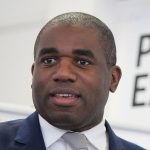
Tag: David Lammy

  • David Lammy – 2022 Dr. Jean Mayer Global Citizenship Award Address

    David Lammy – 2022 Dr. Jean Mayer Global Citizenship Award Address

    The speech made by David Lammy, the Shadow Foreign Secretary, in the United States on 31 March 2022.

    Thank you to the institute for Global Leadership and The Fletcher School at Tufts University for hosting me to speak about foreign policy at this extremely important moment.

    In the late 1990s I had my first taste of Massachusetts when I studied just a short bus ride away…

    …at Harvard Law School.

    It was an inspiring time.

    I will never forget my first big exposure to the American constitution.

    The first lesson I learned was that democracy as proclaimed by America’s founding fathers is…

    …always has been…

    …and always will be…

    …a work in progress.

    I also learned that the great story of the 20th century is one of how different groups…

    …the working class, people of colour, women, LGBT+…

    …fought hard to secure rights long denied their forebears.

    Back in the late 90s, so much was changing.

    We were living in the wake of two liberal revolutions.

    The first was social and cultural…

    …with its roots in the swinging 60s.

    The second was economic…

    …the free market revolution set alight by Ronald Reagan and Margaret Thatcher in the 1980s.

    The Soviet Union had collapsed not long before.

    Communism and autocracy had capitulated to capitalism and democracy.

    Francis Fukuyama suggested this marked the “end-point of mankind’s ideological evolution…

    …and the universalisation of Western liberal democracy as the final form of human government.”

    Progressives were winning or about to win on both sides of the Atlantic.

    Bill Clinton was in the White House.

    Tony Blair had just won a Labour landslide in the UK.

    The march towards a 21st century future was filled with hope.

    But as we reached the global financial crisis of 2008…

    …that hope had started to evaporate.

    The twin liberal revolutions had come at a high price.

    Creating a hyper-individualistic culture…

    Where rights overtook responsibilities.

    Where we could reach billions of others instantly on our smartphones…

    …but had fewer meaningful connections.

    Where the rich got richer…

    …inequality accelerated.

    …and the pursuit of profit was prioritised over democratic values.

    The age of individualism was defined by another paradox.

    The more atomised we became…

    …the more we sought belonging in tribal identities.

    From the relatively benign…

    …to the outright destructive.

    Islamist Extremism.

    Far-Right terrorism.

    Organised crime gangs.

    Online, our opinions did not gain the nuance that results from sophisticated debate.

    We gained access to infinite amounts of information, but we lost the guardrails that sorted fact from fabrication.

    Algorithms designed by tech companies to grip eyeballs pushed many of us to new extremes.

    The common ground upon which democracies depend began to crumble.

    And malign actors…

    …including governments like Vladimir Putin’s…

    …turned to ethno-nationalist authoritarian politics…

    …and exploited online spaces to interfere in our democracies…

    …with disinformation and lies.

    Abroad, Putin took advantage of unsuccessful Western interventions…

    …the decline of American hegemony…

    …and a newly multi-polar world.

    He invaded and still occupies part of Georgia.

    He annexed Crimea.

    And sought to carve off parts of eastern Ukraine.

    He used the strength of his armed forces to prop up the monstrous Bashar Al Assad who used chemical weapons against the Syrian people.

    …and helped drive a refugee crisis that reached Europe…

    Which was seized upon by hard right populists to inflame new divisions between Us and Them.

    Meanwhile…

    …authoritarians and their acolytes…

    …from Nigel Farage, to Donald Trump, to Matteo Salvini and Marine Le Pen…

    …publicly expressed sympathies with Vladimir Putin…

    …as they rose to prominence in our own democracies.

    Parading their illiberalism as patriotism.

    Pretending to be protectors of their nations…

    …while attacking the values of freedom, equality and democracy that they were founded upon.

    At the same time, Putin saw we were in a cost-of-living crisis…

    …A climate crisis…

    …And a global pandemic.

    After years of sowing disunity in our democracies…

    …exploiting the vulnerabilities left by the two liberal revolutions…

    …it is no coincidence Putin saw this as our moment of maximum weakness…

    …and chose it as the moment to start his barbaric and illegal invasion of Ukraine.

    Under the fog of disorder, he thought he could act with impunity.

    But the strength and unity of the opposition Putin has faced shows he cannot.

    Remarkable and courageous defence of their homeland by the Ukrainian people.

    Tougher global sanctions than many thought possible.

    Unity within an EU previously considered fractured.

    A turning point in defence policy for Germany, Sweden, Finland and Poland.

    NATO with more focus than ever since the cold war.

    And 141 countries in the UN’s general assembly voting to condemn Putin’s war of aggression.

    Despite the strong reaction we have seen…

    …this is not a moment to be complacent.

    It is time for a radical re-think in foreign policy…

    …and a reboot of our diplomacy.

    Mistakes of the west

    Putin’s invasion is shocking.

    The images of tanks rolling across the borders of European nations reopens the deepest wounds of our continent’s history.

    Many have said the world changed on February 24th.

    It did.

    The horrific war in Ukraine is solely of Putin’s making…

    …but it also highlighted contradictions in the West’s relationship with Russia…

    …as well as flaws in our broader foreign policy assumptions.

    Many in Europe believed the era of wars between states was over.

    We reshaped our security, defence, intelligence and diplomacy to tackle different threats – allowing core capabilities to dwindle.

    Just months before Russia’s invasion, Boris Johnson said that the era of tank battles on European soil was over…

    …Now we see tanks rolling across frontiers in Europe.

    Borders changed by force.

    Nuclear threats issued.

    We must adjust our mindset and adapt our thinking.

    For too long, Western governments…

    …including Britain’s Conservatives…

    …believed they could ignore domestic policies which undermined our

    foreign policy.

    We tolerated dependence on Russian oil and gas…

    …funding Putin’s war chest…

    …regardless of his aggression and despite the urgent need to decarbonise.

    Dirty Russian money…

    …the loot of Putin’s dictatorship…

    …was embraced…

    From our football clubs to our politics…

    …Oligarchs and kleptocrats used Britain’s capital as both the hiding place and service industry for their ill-gotten gains.

    A spider’s web of dirty money spread across London.

    Fuelling crime on our streets.

    Making property unaffordable.

    Laundering reputations.

    Silencing critics.

    And sustaining Putin’s authoritarian regime.

    This disregard for the contradictions in our policy has been exposed by this crisis.

    We must end the hypocrisy.

    Too often we saw the world as we wanted it to be…

    …not as it was.

    Some believed Putin could be moderated and influenced by our engagement…

    What the Germans called

    …change through trade.

    We have repeatedly been overly optimistic, even naïve…

    …particularly when we stood to profit.

    Even when Putin broke international law…

    …and invaded his neighbours…

    …our responses were weak.

    The tame response to the seizure of Crimea in 2014 is one of the reasons we could not deter Putin this time around.

    We must finally be realistic about the worldview in the Kremlin.

    We’ve long known that Putin saw the collapse of the Soviet Union not as liberation but as humiliation…

    …A catastrophe with consequences he told us – time and again – that he wanted to reverse.

    Putin seeks a sphere of influence…

    …a reconstituted Russian empire…

    …whether we like it or not.

    Putin believes that domestic survival depends on total dominance of the political sphere…

    …the elimination of opponents…

    …and the fanning of bigotry, nationalism and nostalgia.

    He will ruthlessly pursue Russia’s interests as he sees them…

    …in zero-sum terms.

    And he has taken lessons from the Arab Spring.

    Seeing democratic revolutions as contagious.

    When he saw the 2014 democratic revolution in Ukraine, he feared that dangers of one in Russia as well.

    It is time to understand Putin on his own terms.

    But it is not only Britain’s Conservative government which made strategic mistakes on Russia.

    Trump’s disastrous spell in the White House…

    …Where he cosied up to dictators from Putin to Kim Jong Un…

    …while distancing the US from its traditional allies in the EU…

    …and institutions like NATO…

    …shows the danger of turning against the institutions the West has created.

    For too long parts of the left…

    …even some members of my own party…

    … falsely divided the world into two camps.

    America and the West on one side…

    …and their victims on the other.

    This has never been right…

    …but this view has now been exposed for all to see as a farce.

    The rising aggression of countries including Russia, China and Iran…

    …In particular Putin’s barbaric and illegal invasion of Ukraine…

    …are definitive proof the world’s wrongs do not all stem from western actions.

    We must confront our own historic mistakes…

    …but if we fail to see beyond them…

    …and falsely believe Western nations have nothing to contribute…

    …we miss the value of making common cause for people fighting for democracy around the world.

    And we forget the value of the international institutions that arose to protect us all.

    Lessons from the Cold War

    Many people have drawn historical analogies with our current situation.

    Some have suggested we are entering a new Cold War.

    The Cold War analogy has limitations.

    The world today is far more interdependent and economically interconnected than it was in the days of the Iron Curtain.

    Unlike China, Russia is not a serious economic competitor to the West.

    It does not represent a coherent ideology like Communism.

    It is a nuclear superpower but it is a middling and unbalanced economy in freefall…

    …with a leader clinging to a blood and soil nationalism of the past.

    But there are some reflections we can draw from the Cold War that may be useful for the months and years ahead.

    We need a patient, long-term strategy.

    To equip ourselves for the task of a sustained confrontation…

    …not just with Putin but with Putinism and its imitators.

    Dictatorships are no longer controlled by one bad actor in isolation.

    But by interlinked networks of illicit finance, security services and peddlers of misinformation.

    Not only inside one country, or even one region.

    But across the world.

    They aren’t unified by one particular political ideology.

    But the shared desire to hold power at any cost to their people – and enrich themselves.

    To counter this network of Putinists, we must show that we can ditch the short-termism.

    …On energy, on economics, on politics and on security…

    …that for too long has dogged our approach.

    The first step to signalling this change should be to ban all foreign campaign contributions from our politics…

    …saying a clear no to malign interference in our democracies.

    And we must properly regulate big tech…

    …so that it is forced to quickly remove disinformation campaigns…

    …or face punishing fines.

    We must also double down on unity.

    Our strength comes from our alliances…

    …rooted in common values…

    …not the transactional marriages of convenience or coercion, which characterise Russia’s alliances.

    We must capitalise on the united economic front that has been formed against Putin.

    In the Cold War, there were mechanisms like COCOM…

    …the Coordinating Committee for Common Export Controls…

    …to sustain common approaches to export controls.

    We should consider whether we need new structures to ensure the UK, US, Europe, Japan, Australia, Canada and others partners can maintain a common approach.

    And we should seek to build the widest possible diplomatic coalition in opposition to this war.

    This neo-imperialism is not just a challenge to the West.

    If one sovereign UN member-state can be carved up on a whim, all states are threatened.

    The Cold War also teaches us the imperative to manage the risks of escalation.

    Both lessons to learn and mistakes to avoid.

    Preventing a catastrophic conflict took strategy and resolve, diplomacy and deterrence.

    Even before this crisis we had already lost too much of the architecture of arms control built in the Cold War and post-Cold War period…

    …such as the INF and Open Skies Treaties.

    We should maximise pressure on Putin, and support the Ukrainians in their fight, including with arms…

    …but also keep open channels of communication, maintain military transparency and seek to avoid miscalculation.

    NATO was right to rule out a No-Fly Zone, which would bring Russia and NATO into direct conflict.

    But Russia must know our absolute commitment to the principle that if a NATO Ally is the victim of an armed attack…

    …each and every other member of the Alliance will respond.

    And we need to be ready for modern acts of aggression…

    …with accelerating and enhancing joint cyber defences among NATO member states.

    Finally the Cold War teaches us that we must remain open to the Russian people.

    Ordinary Russians did not start this war.

    Many have courageously protested against it.

    It takes real courage to challenge your government if you live in an authoritarian state.

    We must always distinguish between Putin and the Russian people.

    And reach as many as we can with objective news.

    Allies should coordinate to get credible information to the Russian public through whatever means available…

    … with direct financial and diplomatic support to civil society and independent journalism.

    We must think creatively about how to strengthen the voices of moderation and reform.

    And we must be a safe haven to Russians fleeing political persecution.

    Labour’s Foreign Policy

    Living in an age of authoritarians means re-assessing our strategic priorities.

    This must mark a turning point for Britain, and for our allies.

    After years of distraction and insularity, Britain can carve a new leading position on the world stage.

    First, we must strengthen our defences and lead the debate about the future of European security.

    Britain has left the EU. The task now is to make Brexit work. On both sides of the channel.

    It is time to leave behind the petty diplomatic spats with our neighbours pursued by this UK government…

    …designed only to serve short term domestic political interests.

    The British government must stop putting peace on the island of Ireland at risk…

    …with its reckless threats to the Good Friday Agreement.

    We need a government that can rebuild relations of trust and mutual respect with our closest neighbours on the continent…

    …based on our shared values and common interests.

    We need to end more than a decade of cuts to the army and rethink the assumptions in the Integrated Review.

    The Government has pursued an Indo-Pacific tilt…

    …but it must not do so at the cost of our commitments to European security.

    As war ravages parts of our continent…

    …we need to put past Brexit divisions behind us.

    Stop seeking rows with European partners…

    …and use this moment to explore new ways to rebuild relations with European allies through a new UK-EU security pact.

    Second, we must sprint towards decarbonisation and end our dependency on dirty fossil fuels.

    Much of the funding for Putin’s war machine has come from us and our partners…

    …running our industries…

    …heating our homes…

    ….and filling our cars with oil and gas from Russia…

    …$700m per day from Europe…

    We can revolutionise that if we have the will.

    The UK Government has said that the UK will end Russian oil imports to the UK by the end of 2022.

    We support this.

    But on its own this move will not shield us from rocketing energy prices.

    Our Prime Minister’s moves to fill the gap of Russian energy have so far been to look for new authoritarians from which to buy oil.

    Whether Iran, Saudi Arabia or elsewhere….

    Short-termist.

    Ill-judged.

    And not learning the lessons of Putin.

    Fossil fuels empower the worst sorts of dictators

    The only true form of energy independence is through clean energy.

    This is why a Labour government in Britain would quadruple investment in a Green recovery…

    …£225bn over the next 8 years.

    Third, we must finally end our role as a facilitator of illicit finance and cleanse our society from dirty money…

    …not just from Russia…

    …but from corrupt elites across the world who have used Britain and our overseas territories to hide their ill-gotten wealth under our noses.

    Fourth, we must restore our soft power

    Because it is not only tyrants’ actions we must change…

    …but the minds of their publics.

    The United States and the UK together do so much good through the development we lead across the world.

    But Britain has stepped back from its former leadership, cutting billions in aid, and mismanaging the merger of our development and foreign ministries, leaving them less than the sum of their parts.

    Facing the largest refugee crisis in Europe since the Second World War…

    …the importance of humanitarian aid and long-term development could not be greater.

    One of the UK’s greatest exports is the BBC World Service…

    …which plays a unique role…

    …both in delivering information to populations living in authoritarian regimes…

    …and embodying the free speech and independent media that are cornerstones of our democracies…

    …reaching nearly 400m people per week.

    In the first weeks of Putin’s invasion…

    …the BBC’s Russian language service audience tripled, and has now been subject to new restrictions in Russia.

    But the fact that just 13% of Russians see Russia as the aggressor in Putin’s illegal war shows the scale of the task.

    A Labour government would truly value the BBC World Service.

    …alongside a refreshed British Council

    And be a beacon for our values around the world.

    Conclusion

    I started this speech by saying my time in the US taught me the great story of the 20th century is one of how minority groups gained rights through liberal democracy.

    If this is true, the story of the 21st century is so far a story of the reverse.

    Every year freedom house releases a report of the state of global democracy.

    This year’s was titled: ‘The Global Expansion of Authoritarian Rule’

    These times are dark…

    …but they are not without promise.

    We should take encouragement from Vladimir Putin’s current failure to achieve his objectives in Ukraine.

    Russia’s huge, poorly organised army being out fought by Ukraine’s smaller but more skilful and determined troops…

    …Because unlike the Russians, they actually know what they’re fighting for.

    It’s the same thing that generations of British and American troops, diplomats, activists, and ordinary people have struggled for…

    …the hope that our democracies are supposed to represent.

    Ukraine’s formidable and courageous leader…

    …Volodymyr Zelenskyy…

    …has called upon our collective conscience…

    …he has shown what it means to fight for a democratic nation state.

    Using Ukraine’s heroics as inspiration…

    …Together Britain, the United States, the EU and the rest of our allies and partners around the world have the chance to move past the age of authoritarians.

    Reaffirming our commitment to the values we share…

    …freedom, democracy and the rule of law.

    Restoring the international institutions that spread them.

    And giving hope to our nations once again.

  • David Lammy – 2022 Speech on Nazanin Zaghari-Ratcliffe and Anoosheh Ashoori

    David Lammy – 2022 Speech on Nazanin Zaghari-Ratcliffe and Anoosheh Ashoori

    The speech made by David Lammy, the Shadow Foreign Secretary, in the House of Commons on 16 March 2022.

    I thank the Foreign Secretary for giving me advance sight of the statement. For too long, the Iranian Government have been depriving British nationals of their liberty to use them as political bargaining chips. Nazanin Zaghari-Ratcliffe has been detained in Iran for almost six years. Anoosheh Ashoori has faced the same fate for almost five years. The suffering they have endured during those years is unimaginable. The moments of laughter, joy and hope that they and their families have lost are irretrievable The Iranian Government are entirely to blame for these acts of cruelty. The whole House will be overjoyed that their detention has now come to an end, and that Nazanin and Anoosheh can return to British soil to be reunited with their families and take the breath of freedom once again. We must pay tribute to their tireless families, who have shown extraordinary strength, resilience and courage in the face of an unimaginable ordeal.

    I also give credit to my hon. Friend the Member for Hampstead and Kilburn (Tulip Siddiq) for all her efforts over so many years, and to my hon. Friend the Member for Lewisham East (Janet Daby) for continuing to raise these issues. I give them credit for their tireless work in campaigning to secure the freedom of their constituents. We join the Government in thanking the Government of Oman for their help. I also give credit to the tireless work of British officials, as well as to the Foreign Secretary for her role in securing justice. She has shown more skills in diplomacy than her bungling boss, who appeared to do more damage than help while he held her current post.

    Serious lessons need to be learned from this appalling episode. We need stronger international measures to combat the use of arbitrary detention as a political tool and to end hostage diplomacy. We also need a review of these cases. We need to understand what could have been done by the British Government to secure these releases sooner. I note that the Foreign Secretary said that she had

    “stepped up these efforts over the last six months.”

    I give her credit for that and welcome it, but I want to ask her what efforts were not taken by her predecessors that could have been. A review must also consider whether comments made by Ministers contributed to the extended detention. It is also good news that Morad Tahbaz has been released on furlough. Can the Foreign Secretary elaborate on the next steps to support his case? We note that other British nationals are still in detention and seeking help from the British Government. Can she update the House on the latest number and on what efforts are in place to help them?

    We welcome the Government’s parallel announcement that the IMS debt has been repaid. We have long called for the Government to find a way to pay back that internationally recognised legitimate debt. What guarantees have the Government been given that this sum of money will be used only for humanitarian purposes? Today, though, let us focus on the main point of this statement. The whole House and the whole country can share in the triumph of welcoming Nazanin and Anoosheh home.

  • David Lammy – 2022 Speech on Sanctions on Russia

    David Lammy – 2022 Speech on Sanctions on Russia

    The speech made by David Lammy, the Shadow Foreign Secretary, in the House of Commons on 28 February 2022.

    I thank the Secretary of State for advance sight of her statement, and for the briefing that she continues to give me on Privy Council terms.

    We have all been inspired by the gallant and tenacious actions of Ukrainians in defence of their country. This is true courage under fire. President Zelensky has epitomised the bravery, dignity and resolve of a nation fighting back, and fighting for values that we all share—democracy, freedom and the rule of law. The Foreign Secretary is right when she says that Putin’s invasion is not so far going to plan, but does she agree that we must not let our focus slip for even a second? We will continue to stand united with our allies and partners, supporting Ukraine and opposing this outrageous campaign of aggression.

    This morning, I had the honour, with the shadow Defence Secretary my right hon. Friend the Member for Wentworth and Dearne (John Healey), of meeting Ukraine’s ambassador. He thanks all sides of this House for the united opposition we have shown to Vladimir Putin’s illegal war and the support we continue to show for Ukrainian sovereignty. Putin is not only facing a united west; he is facing a truly United Kingdom. Together, we have enacted sanctions that are having a strong effect. The rouble has crashed by over 40%, the main borrowing rate is up 20%, and inflation is reportedly hitting about 65% per year. Oligarchs are being frozen out of their bank accounts and the central bank of Russia is being blocked from part of the $640 billion war chest that it holds in foreign reserves. Labour’s priority is to cut off Putin’s rogue state from our economic system and to undermine his campaign of aggression in Ukraine.

    We recognise that on 24 February the European security order changed. Our continent faces a transformed strategic context. Our world is at the start of a new era. I pay tribute to the political courage shown by all our partners, particularly our allies in Germany who have recognised that by taking the difficult and brave decisions to provide Ukraine with lethal weapons for its fight and to commit to the significant increases in defence spending that this new reality demands.

    Yesterday, President Putin raised the alert level of Russian nuclear forces. As the five nuclear weapon states, including Russia, reaffirmed in January, a nuclear war cannot be won and must never be fought. What assessment has the Foreign Secretary made of that decision, given the understandable concern it will have caused among the public?

    Turning to sanctions, we welcome the further steps the Government have announced today. Labour has been calling for some time for progress by the UK, the EU and the US on cutting off Russian banks from SWIFT. The moves finally to clamp down on dirty money—so long demanded by Labour and colleagues across the House—are long overdue. It is regrettable that it has taken so long and a crisis of this nature for such action, but we welcome the steps and will study them carefully. However, there is still more the Government can do.

    The last time I stood at the Dispatch Box, I asked what steps the Government had taken to ensure that members of Russia’s legislature, the Duma, could be sanctioned. Still today, I am waiting for that answer. Similarly, although I welcome the Foreign Secretary’s action against Russia’s financial sector, the Government should go further to ensure sanctions can also be placed against Russia’s extractive industries, energy industries and technological industries. We must ensure that the insurance industry cannot underwrite and de-risk Putin’s war. As I said at my last time at the Dispatch Box, it is vital that the sanctions are broad enough to inflict damage on every aspect of Russia’s economy. We welcome the moves the Government have taken to ensure Russia is cut out of the SWIFT banking system, but can the Foreign Secretary explain what dialogue she has had with our allies on cutting the country out of the Visa-Mastercard system, too?

    Finally, can the Foreign Secretary give assurances that Putin will also feel the consequences of his despicable actions in terms of international opportunities available to the country in sports and culture? The diplomatic unity of the west is crucial, but we must also widen the global coalition opposing the war. Some countries, such as Kenya, have spoken out with clarity and elegance against Putin’s imperialism, but others have stayed silent. Some are even allies of the UK and fellow democracies. What steps is the Foreign Secretary taking to ensure the widest possible range of voices speaks up in opposition to this war?

    As well as commending the bravery of the Ukrainians defending their country, we must also praise the courage of the ordinary Russians taking to the streets of Moscow, St Petersburg and beyond under the threat of repression to show their opposition to this despot. This is the fifth day of fighting. Ukraine is still facing an all-out war from Putin’s army. It is a mark of the bravery of Ukraine’s forces that neither Kyiv nor Kharkiv have fallen. We salute their courage, and this whole House will continue to stand with them.

  • David Lammy – 2022 Comments on the Attack on Him and Keir Starmer

    David Lammy – 2022 Comments on the Attack on Him and Keir Starmer

    The comments made by David Lammy, the Shadow Foreign Secretary, on 7 February 2022.

    No surprise the conspiracy theorist thugs who harassed Keir Starmer and I repeated slurs we heard from Boris Johnson last week at the despatch box.

    Intimidation, harassment and lies have no place in our democracy. And they won’t ever stop me doing my job.

  • David Lammy and Rachel Reeves – 2022 Joint Letter on Ukraine

    David Lammy and Rachel Reeves – 2022 Joint Letter on Ukraine

    The joint letter send by David Lammy, the Shadow Foreign Secretary, and Rachel Reeves, the Shadow Chancellor of the Exchequer, to Liz Truss, the Foreign Secretary and Rishi Sunak, the Chancellor of the Exchequer, on 7 February 2022.

    Dear Foreign Secretary and Chancellor,

    Re: The Ukraine crisis and illicit finance

    Since the crisis on Ukraine’s borders began, we have been clear in our robust support for Ukraine’s sovereignty and our opposition to Russian aggression. We have supported the government’s diplomatic efforts and the practical defensive support provided to Ukraine.

    We believe however that there is much more that can be turn to address the UK’s openness to suspect Russian money.

    This week in the House of Commons, the government outlined its plans to bring forward new legislation to enable a robust and extensive package of economic sanctions against Russia in the event of any incursion or attack on Ukraine. We believe such sanctions must be broad, severe and comprehensive.

    However, these sanctions are all conditional on Russia’s actions. Their purpose is to form a serious deterrent, which, when matched by unified action across the West, will make President Putin think again.

    There is much more we must do irrespective of the decisions made by President Putin; measures it should not have taken an army threatening Ukraine to put in place and which we have repeatedly urged the government to take.

    For years, the Labour Party have raised the alarm about the role of dirty money in the UK and the lack of action from the Conservative government. Despite repeated warnings, the government has been asleep at the wheel and needlessly left our defences down at home.

    London is the destination of choice for the world’s kleptocrats. It is home to the services and enablers who help corrupt elites to hide their ill-gotten wealth. Britain has a completely deficient system of corporate registration that permits layers of secrecy to obscure the proceeds of corruption and crime. It is shameful that Britain is repeatedly described as the money-laundering capital of the world.

    Now this openness to illicit finance has begun to damage our diplomatic efforts, with the Biden administration being warned that the widespread presence of suspect Russian money in the UK could jeopardise Britain’s response to this crisis.

    We welcome the Prime Minister’s answer at Prime Minister’s Questions this week committing the government to bring forward an Economic Crime Bill in the third session of parliament. I hope the government recognises that had we already legislated for this then the UK would be in a stronger position to address dirty money from Russia.

    This is not simply a matter of targeting some individuals or entities through sanctions but about fixing a broken system – Britain’s openness to fraud and money laundering, inadequate regulation of political donations, lax mechanisms of corporate governance, and weakness to foreign interference.

    We believe we must take a broad range of robust steps to address these deficiencies and the Conservatives must do more including with the donations it receives. We would therefore be grateful if you address the following questions:

    When will the government undertake comprehensive reform of Companies House to prevent fraud at home and abuse from abroad?

    On what date will the government bring forward the Register of Overseas Entities Bill it has promised for years?

    Will the government bring forward a Foreign Agent Registration law?

    Where are the new counter-espionage laws, announced in the Queen’s Speech but still delayed?

    When will the government reform the Tier 1 so-called ‘Golden Visas’?

    Where is the replacement to the outdated Computer Misuse Act, as recommended by the Russia Report?

    Where is the additional resource and power for the Electoral Commission, which will strengthen our democracy’s defence from overseas governments and interests?

    Why does the government’s Election Bill make these problems worse by enabling limitless political donations from donors based overseas?

    Donors who have made money from Russia or have alleged links to the Putin regime have given £1.93m to either the Conservative Party or individual Conservative associations since Boris Johnson took power in July 2019. Will the Conservative Party agree to return it?

    Will the government reform the rules on political donations to defend our democracy from overseas interests using loopholes to influence British politics?

    These steps to strengthen our national security and democracy at home are not distinct from sanctions or diplomacy abroad – they must form part of a unified and coherent response.

    We can’t stand up to Russia’s aggression abroad while ignoring Russian-linked corruption at home.

    It is in our national and economic interests for the government to address the challenges of hostile influence and interference which the government’s inaction and behaviour have regrettably permitted.

  • David Lammy – 2022 Comments on New Beacon Bookshop

    David Lammy – 2022 Comments on New Beacon Bookshop

    The comments made by David Lammy, the Shadow Foreign Secretary, on 1 January 2022.

    This New Year let’s save New Beacon Bookshop. The UK’s first specialist black bookshop, it would be a tragedy if it had to close after 55 years. A loss not just for the black community but our countries collective history. Independent bookshops are vital.

  • David Lammy – 2021 Comments on Foreign Office Whistleblower

    David Lammy – 2021 Comments on Foreign Office Whistleblower

    The comments made by David Lammy, the Shadow Foreign Secretary, on 7 December 2021.

    This devastating testimony alleges that while Kabul fell and British troops risked their lives, the Foreign Secretary was asleep at the wheel and the department’s response was shambolic and incompetent.

    This whistleblower paints a picture of chaos and dysfunction, for which innocent Afghans have paid the ultimate price. Crucial emails left unread. The crisis centre chronically understaffed. Afghan allies abandoned. Only 5% of those needing help receiving it. And a foreign secretary – and still the Deputy Prime Minister – who was lounging on the beach and had lost all grip of his department.

    This evidence raises the most serious questions of competence during a moment of international crisis. The Foreign Secretary must urgently come to the House and address these claims.

  • David Lammy – 2021 Comments on Dominic Raab’s Conference Speech

    David Lammy – 2021 Comments on Dominic Raab’s Conference Speech

    The comments made by David Lammy, the Shadow Justice Secretary, on 5 October 2021.

    After eleven years of Tory Government, court backlogs have reached record levels, violence and self-harm in prisons have soared, rape convictions have plummeted, and many women have lost confidence in the criminal justice system.

    Yet instead of addressing any of these problems, the new Justice Secretary chose to focus on vague threats to take away ordinary people’s rights.

    The only thing Dominic Raab has demonstrated today is that the Conservatives have no plans whatsoever to fix the crisis they’ve created in the criminal justice system.

  • David Lammy – 2021 Comments on Crown Court Backlogs

    David Lammy – 2021 Comments on Crown Court Backlogs

    The comments made by David Lammy, the Shadow Justice Secretary, on 30 September 2021.

    11 years of Conservative cuts and the closure of 295 courts since 2010 has led to a record-breaking Crown Court backlog.

    These delays are failing victims of rape, domestic abuse, violent assault, trafficking and every kind of serious crime.

    In government Labour would put victims first, by rolling out further Nightingale courts, guaranteeing 33,000 extra sitting days and by ensuring the justice system is never left so vulnerable again.

  • David Lammy – 2021 Speech to Labour Party Conference

    David Lammy – 2021 Speech to Labour Party Conference

    The speech made by David Lammy, the Shadow Secretary of State for Justice, in Brighton on 28 September 2021.

    David Lammy, Tottenham CLP.

    I am excited to give my first ever conference speech, it has only taken me 21 years as an MP to get here.

    When I first entered Parliament people told me I looked like Denzel Washington. These days I look more like Forrest Whittaker. But I am proud to stand here as the first ever Black Shadow Justice Secretary.

    Conference, I am proud that my parents arrived in the UK as part of the Windrush generation. My mother worked for the London Underground to support our family single-handedly. My aunts gave their working lives to the NHS.

    Growing up in the shadow of Tottenham’s Broadwater Farm Estate, life was tough. In Thatcher’s Britain, we lived under the indignity of poverty. Racism was rife. Signs saying “No Blacks, No Dogs, No Irish” had only just disappeared.

    I was just twelve when I was first stopped and searched by the police. They said I matched the description of a mugger. The reality was just like how Gavin Williamson confused Marcus Rashford with Maro Itoje, they could not tell one Black person from another.

    Conference, I will never forget where I came from. I understand how justice is intertwined with everything else. Education, economics, class, race, work, welfare, housing, even health.

    Prison is only for other people until someone you know ends up there. The courts are only distant until you become a victim of crime. The justice system is only abstract until it is not. We take it for granted at our peril.

    But conference, taking justice for granted is exactly what the Conservatives have done. The pandemic has hit the justice system like a baseball bat but the Tories had knocked it onto its knees already.

    Since 2010, the Tories closed 295 courts. The Crown Court backlog is now at an all-time high of 60,000 cases. Victims are giving up on the criminal justice system altogether. They are not being given court dates until up to four years later – if they get one at all.

    Prosecutions and convictions for rape are at an all-time low. The government is now desperately setting up temporary ‘Nightingale courts’ to deal with the backlog they created. But just 30 nightingale courts are open, a fraction of the hundreds of permanent courts this government closed.

    It is a classic example of Conservative false economy. Cutting infrastructure over a decade. Now having to pay more to Sellotape the broken parts together again.

    Conference, we are all proud of the legal aid system that was created by Clement Attlee’s Labour government in 1949. Its purpose is to provide legal advice for those who cannot afford it. But since 2010, the Conservatives have cut legal aid by 38%.

    What’s left is a legal system that only serves the rich.

    In government, Labour will ensure that courts, prisons, the Probation Service, and Legal Aid are never left so vulnerable again. Probation, once the national service for second chances, has been abused by failed Tory ideology.

    We should take a moment to celebrate that this year the government have finally listened to Labour and the trade unions by performing a screeching U-turn. The National Probation Service is back.

    Conference, I want to pay a tribute to the hidden heroes working in our probation service, our prisons, our courts, and right across the justice system. For sacrificing so much to keep the wheels of justice turning in a pandemic with little help from the government.

    To you, we say this: thank you. But now the Tories are coming after the rule of law. Conference, they are coming after your human rights. We will fight them.

    Conference, they are coming after Judicial Review. We will fight them.

    Conference, whatever rights they come for next we will fight them.

    This government is slapping the victims of Grenfell, Hillsborough and the Windrush scandal in the face. Victims who depend on their legal rights to hold the government to account. Unlike the government which wants to water them down, Labour will strengthen your Human Rights.

    Building on the internationalist, progressive values we all share in government Labour would legislate to bring The United Nations Convention on the Rights of the Child into domestic law. Make no mistake, the values that make our country great: openness, community and the rule of law are all being trampled by Boris Johnson’s government.

    A charlatan who swept to power by championing division, bigotry and lawlessness.

    The tragic deaths of Sabina Nessa, Sarah Everard, Bibaa Henry and Nicole Smallman this year should have been a turning point for change. But instead of addressing the epidemic of violence against women and girls, the Tories have ignored it. Proposing tougher sentences for those who graffiti statues than the minimum for those found guilty of rape.

    Enough is enough. Women have to feel safe on our streets.

    Labour is putting ending violence against women and girls at the very top of our agenda. Fast-tracking rape and sexual assault cases in our courts, increasing minimum sentences for rapists, creating a new offence for street harassment, ensuring victims of domestic abuse get the legal aid they need and, finally conference, making misogyny a hate crime.

    Labour will put victims first.

    The Tories have promised a Victims’ Bill in several Queens’ speeches but never delivered. Labour have produced legislation that would enshrine victims’ rights in law. It has been published. Introduced to Parliament. It is ready to go.

    It has been another year of widening inequality. City Law firms are making billions in profit while low-paid workers see their tax bill rise and wages fall.

    Labour recognises the importance of the private sector working in partnership with the public sector. That’s why today we are announcing that a Labour government would support the introduction of a new national pro-bono service. With binding pro bono targets to support those who can’t afford legal advice and are ineligible for legal aid.

    Conference, it cannot be right that 51% of children in prison are Black, Asian or minority ethnic. Labour will address the unfairness that runs right through the justice system. Finally implementing the Lammy Review. Introducing targets to bring in more women and more ethnic minorities to the most senior positions in our courts. We will reform the judiciary so that judges look more like the people they judge.

    Under the Conservatives, everything in the justice system that is meant to be up is down and everything that is meant to be down is up. Anti-social behavior is up, convictions are down, the court backlog is up, rehabilitation is down, racial unfairness is up, access to justice is down.

    Boris Johnson promised he would level the country up but instead he is levelling the country down. Labour will turn what is supposed to be up, up. And everything that is supposed to be down, down.

    The Conservatives are bringing the country down, Labour will bring the country up.

    Together we can make the UK the fairest country in the world.

    Thank you.