

Tag: David Davis

  • David Davis – 2022 Loyal Address Speech

    David Davis – 2022 Loyal Address Speech

    The speech made by David Davis, the Conservative MP for Haltemprice and Howden, in the House of Commons on 10 May 2022.

    It is a privilege to follow the hon. Member for Rochdale (Tony Lloyd), as I have done many times over the years. While I may not always agree with him, he always speaks with level-headed common sense, and that is a privilege for the House.

    The proverb tells us that the good die young, and in this House that could not be more true than it has been this year; three of our most valued Members—David Amess, James Brokenshire and Jack Dromey—left us before their time. David Amess was a particularly close friend of mine, so it is a privilege to speak after his successor, my hon. Friend the Member for Southend West (Anna Firth), who gave a storming maiden speech. When she was telling her Mackintosh joke, I was reminded of a maiden speech made about 30 years ago by an Opposition Member. A rather striking redheaded Scot Nat made an absolutely stonking maiden speech, and John Smith, I think it was, jumped up and said, “That was no maiden speech; that was a brazen hussy of a speech.” The speech that my hon. Friend the Member for Southend gave was too elegant for that to be said about it, but I will say this, and it is perhaps the greatest compliment I can give her: David would have been proud of her.

    There is a great deal to welcome in the 38 Bills in this Queen’s Speech. Those who have been pooh-poohing them perhaps ought to wait until they see the details. There is mention of tackling economic crime; embracing the freedoms that Brexit offers, though that is too late; reforming and securing our energy supply; and resolving the Northern Ireland legacy issues. These are all massively important issues, and there are many others like them that the Government are addressing, and on which they should have our undying support.

    There are some issues—those on the Front Bench would be disappointed if I did not say this—that perhaps require more careful handling. For example, the Online Safety Bill is very necessary and well-intentioned, but it is so complex that it will have dozens of unintended consequences, including, possibly, that of curbing free speech. We have to make sure that we give that enough time to be looked at carefully. Similarly, the national security Bill is undoubtedly necessary, but we will have to handle it carefully because it replaces the Official Secrets Act, and while it protects the state from its enemies, we must make sure that it does not curb the rights of honourable whistleblowers.

    A Queen’s Speech is built on sand if it is not underpinned by strong economic foundations. Indeed, this Queen’s Speech says that the Government

    “will drive economic growth to improve living standards and fund sustainable investment in public services”,

    but taxes today are too high, so we need to get some fundamentals right. High taxes do not deliver growth; they stifle it. Low taxes deliver investment and higher productivity, and therefore growth, and they are the pre-emptive answer to stagflation, which is the biggest threat on our horizon in the coming year.

    I rather agree with the points from some on the Opposition Benches about the need for an emergency Budget, but I do not agree with the argument for windfall taxes, which would be self-defeating. There is certainly a need to act quickly. The Prime Minister talked about deploying our “fiscal firepower”, but we need to do that now, when our constituents need it, not after they have suffered the increases in prices that they face, and the further increases that they will face in the latter part of the year. This is a good Queen’s Speech.

    Sammy Wilson

    The right hon. Gentleman is absolutely right that having lower taxes puts money into people’s pockets—money that they can spend on things that they find it difficult to afford at present. Is he worried that the decision to use this firepower in a couple of years’ time, when we are coming up to an election, rather than using it to deal with the issues that are hurting people badly now, will be seen as cynical?

    Mr Davis

    The right hon. Gentleman is exactly right. If we increase national insurance for a large part of the population, and so increase their suffering and their inability to eat and to heat their house at the same time, but drop income tax one year before an election, I am afraid that would be seen in the working men’s clubs of Yorkshire as a cynical deployment of state power. I suspect it would be the same in Belfast and the rest of Northern Ireland, where, as we have heard already, the problem is even bigger than in the rest of the United Kingdom. He is right, and that is why we should give the people their money back now. My right hon. Friend the Member for Wokingham (John Redwood)—

    John Redwood rose—

    Mr Davis

    I was about to quote my right hon. Friend; I give way to him.

    John Redwood

    Does my right hon. Friend agree that as there will be a big windfall element from extra North sea oil and gas taxation—there is already a double corporation tax windfall element, and there will be a big increase in VAT on domestic heating and a big increase in tax on pump diesel and pump petrol—that money, at least, should be given back through other tax bills?

    Mr Davis

    My right hon. Friend is right. He has been the icebreaker in this argument, which I refer to as the Redwood argument. We have record tax collections this year because of fiscal drag and for a variety of other reasons, including underestimates by the Treasury. That is money that we should give back to the people. We do not need to balance the budgets twice over. We need to get that right.

    There are respects in which we need to reinforce or increase what is in the Queen’s Speech. My favourite line in the Queen’s Speech is the same every year:

    “Other measures will be laid before you.”

    We are Conservatives. We believe in a property-owning democracy. Governments of all powers and all persuasions for 30 or more years—since Margaret Thatcher, in truth —have failed on that issue. Two thirds of my generation bought their own home; today it is a quarter. That is a scandal. I approve of the Prime Minister talking about the right to buy for housing associations—I should do; I first came up with the policy in 2002 when it was my responsibility, and we still have not implemented that policy. However, it will not solve the problem. We are at least a million houses short, in a period in which the population has increased by 7 million. We are about 100,000 houses a year short in what we are constructing, in addition to that million.

    We need to find a way of addressing the issue that does not hit what people call the nimby problem, in which people, when objecting to things, talk about protecting their environment. We need to find a way around that, and we need to look very hard at what was done in the 1920s with garden villages and garden towns. We need to use the increased wealth that they create to pay for the community centres, surgeries, schools, roads and wi-fi that are necessary. There would be plenty of added value to make the farmers rich at the same time. Politically, it would not be straightforward, but it would be an easier policy than we might think.

    We Conservatives are also believers in social mobility. I think all Members are believers in social mobility. We used to be the best on that in the developed world; now we are among the worst. When inequality is greater, social mobility is more important. Indeed, the only real moral argument for an unequal society is that everybody has an opportunity and a chance to take part. In the last 20 years or so, the top 1% of the population have roughly trebled their income whereas the median has roughly flatlined, so there is a stronger argument for social mobility today than there was before.

    The best mechanism for social mobility is the education system, and there are some good proposals in the education Bill in the Queen’s Speech. Adding to the academy system will help at the margins, however, and will not solve the problem; it has not solved it for the last 20 years and it will not solve it now.

    The great scandal is that half of children from free school meals families are failed by the education system by the time that they are 11. They cannot meet the requirements in English or mathematics to make progress in education, so their lives are effectively over in terms of social mobility at that point. We need to get a grip of that, which means re-engineering our classrooms and helping our brilliant teachers with more artificial intelligence, more software support and more augmentation. The technology is there now—it exists, it is proven and it is available. I hope that the House will not laugh too much when I say that I went to see it demonstrated at Eton of all places, where it was brilliant at bringing on the weakest children.

    Debbie Abrahams (Oldham East and Saddleworth) (Lab)

    Does the right hon. Gentleman recognise that if a child is hungry, as many of our children are because they are living in poverty, that will not help their educational attainment?

    Mr Davis

    I agree entirely; I have arguments that I will not deploy today on universal credit and so on that relate directly to that point. One of the outcomes of having a technologically augmented teaching and assessment system, however, is that the teacher knows within days if a child has a problem that they did not have before and if their educational performance suddenly falls, perhaps because the parents have separated, there is trouble at home, they are going hungry or whatever. The hon. Lady is right and I agree with her basic premise, but technology would help even with that if we did it. I want to see us do that and deal with the scandal.

    The last area that I will speak briefly about is the fundamental one of healthcare. We all support the national health service and no doubt applauded the brilliant staff—doctors and nurses—who did a fantastic job. We tell ourselves over and over again that we have the best healthcare system in the world, but that is simply not true. We have those committed doctors and we now spend more than the OECD average on healthcare, but we are not delivering more than the OECD average. Whether it is on survival rates in all the different categories of cancer care, coronaries, strokes, diabetes or whatever, we are not doing as good a job as we should be for the money, work, skill and commitment that go into it.

    My argument is that we should look at the other countries that are doing better than us, such as Germany, France, Estonia, Austria, Sweden, Canada or Australia. They all have different systems that are all free at the point of delivery. I was a beneficiary of the Canadian system, which is an insurance-based system that is free at the point of delivery and supported by the state if people cannot afford it—and it works better than our system. We need to look at those other systems and learn from them. We need to stay with the fundamental principles of the health service but learn and improve what we can.

    Karin Smyth (Bristol South) (Lab)

    Will the right hon. Gentleman give way?

    Mr Davis

    If the hon. Lady will forgive me, I am just about to sit down.

    We Conservatives need to rebuild our party as a party of low taxes, a party of and for homeowners, and a party of aspiration, opportunity and security. It is time for a new model conservativism that is fit for a new Britain in a new world.

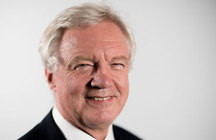
  • David Davis – 2021 Speech on Foreign Aid Cuts

    David Davis – 2021 Speech on Foreign Aid Cuts

    The speech made by David Davis, the Conservative MP for Haltemprice and Howden, in the House of Commons on 13 July 2021.

    I consider myself an economic Thatcherite, yet when I come to choose between money and lives, I always choose lives. This House should remember—this should be at the forefront of every Member’s mind today—that this is a vote where we are choosing whether or not to intervene to save lives. That is the key issue, not the monetary issue, which I will return to in a second.

    The Government argue that this is a policy the United Kingdom cannot afford, but while we have heard about this being a small fraction of our borrowing, we should remember that it is an even smaller fraction of our spending. We spend, in a non-covid year, at least £800 billion; the £3.5 billion saving we are talking about is less than 0.5% of that. That is what the Treasury tells us is the critical, overwhelming measure that forces us to do something that has such dramatic consequences.

    The Chancellor might say, as his press spokesman did in the course of last week, “Well, you find the money from somewhere else”—saying that to a past Public Accounts Committee Chairman is very dangerous for a Chancellor. We were in Chesham and Amersham a week or two ago, as my right hon. Friend the Member for Sutton Coldfield (Mr Mitchell) said, and Cheryl Gillan would have said to the Chancellor, “Well why don’t you just cancel HS2?” That is between £100 billion and £200 billion; it would pay for 25 to 50 years of this shortfall. It is really that simple.

    So I do not really accept what the Chancellor is saying—that the only place, indeed the best place, for savings to be found is cutting aid, which will cost lives. Such a choice is morally reprehensible. Let us be clear about that—morally reprehensible.

    Mr Mitchell

    My right hon. Friend is making an incredibly good point, but has he also noticed that, in the Chancellor’s outstanding policy on spending announced last November, the cut that he is referring to—this cut of 1% of the borrowing on covid last year—is the only cut that has been announced?

    Mr Davis

    My right hon. Friend is right. The prioritising of this cut makes it even more morally reprehensible. Indeed, at the same time, as I think the spokesman for the SNP, the hon. Member for Dundee West (Chris Law), said, we are increasing spending on defence. I happen to agree with increasing spending on defence, but I do not agree with cutting spending on things that will lead to the need for more defence because of migration, civil wars and the rest of it.

    As my right hon. Friend the Member for Sutton Coldfield, the hon. Member for Rotherham (Sarah Champion) and the Leader of the Opposition have pointed out, the Government’s proposed double lock on returning to 0.7% is deceptive. It is designed to look reasonable. However, in fact, none of the people who have spoken so far has actually stated the full case. Although we say that the condition has been met only once since 1990, under a Conservative Government, and has never been met, really—well, it was once, just about—since the 0.7% policy was put in place, it has actually never been met since 1970, because the wording is not “a current budget surplus” but

    “a sustainable current budget surplus”.

    All the current budget surpluses we have been talking about so far have been for one year—and frankly, the one under us in 2018 lasted about 10 nanoseconds; it was a very tiny surplus. In practice, we have not had a sustainable current surplus since the 1970s, so I am afraid that, under the actual wording in the statement, we are not looking at 0.7% for a very long time indeed. We heard the Leader of the Opposition say it would be years, possibly decades, possibly never, and I think he is right about that.

    Even if the conditions were to be met, the proposal will do nothing to deal with the crises that are caused by the policy already, right now. The Government argue that the cuts are temporary, but death is never temporary—and this will cause deaths.

  • David Davis – 2021 Speech on the Use of Patient Data

    David Davis – 2021 Speech on the Use of Patient Data

    The speech made by David Davis, the Conservative MP for Haltemprice and Howden, in the House of Commons on 24 June 2021.

    In winding up the last debate, the Minister for the Armed Forces referred to volunteering a mucker for the guardroom. I hope that my entire speech does not sound like that to the Secretary of State; it is not intended to.

    Every couple of years, Whitehall, like an overexcited teenager expecting a new mobile phone, becomes fixated with data. Most recently, it has been about the power of big data mining, and I am sure that that is not just because of the influence of Mr Dominic Cummings. The Department of Health and Social Care wants to open our GP medical records—55 million datasets or thereabouts—to pharmaceutical companies, universities and researchers.

    Managed properly, that data could transform, innovate and help to overcome the great challenges of our time, such as cancer, dementia and diabetes. Those are proper and worthwhile ambitions in the national interest, and I have little doubt that that was the Government’s aim, but that data is incredibly personal, full of facts that might harm or embarrass the patient if they were leaked or misused. Psychiatric conditions, history of drug or alcohol abuse, sexually transmitted infections, pregnancy terminations—the list is extensive. Revealing that data may not be embarrassing for everyone, but it could be life-destroying for someone.

    Unfortunately, in keeping with the Department’s long history of IT failures, the roll-out of the programme has been something of a shambles. The Government have failed to explain exactly how they will use the data, have failed to say who will use it and—most importantly—have failed to say how they will safeguard this treasure trove of information. They describe the data as “pseudonymised” because it is impossible to fully anonymise medical records, a fact that is well understood by experts in the field.

    Even pseudonymised, anyone can be identified if someone tries hard enough. Take Tony Blair, who was widely known to have developed a heart condition, supraventricular tachycardia, in October 2003. He was first admitted to Stoke Mandeville and then rushed to Hammersmith. One year later, in September 2004, he visited Hammersmith again for a corrective operation. Even the name of the cardiologist is in the public record. A competent researcher would make very short work of finding such individual records in a mass database. That cannot be for the public good. Moreover, the Government seem to intend to keep hold of the keys to unlock the entire system and identify an individual if the state feels the need to do so.

    Jim Shannon (Strangford) (DUP)

    I congratulate the right hon. Gentleman on securing the debate; I have been inundated with the same concerns from many of my constituents. Does he agree that a system that allows a diversion from the court-appointed warrant to collect information is a dangerous precedent in terms of judicial due process? We must ensure that anyone who opts out is completely opted out, as is promised.

    Mr Davis

    I take the hon. Gentleman’s point and will elaborate on it as I make progress. As presented, the plan is to collect the data first and think about the problems second, but the information is too important and the Department’s record of failed IT is too great for it to be trusted with carte blanche over our privacy.

    There is also the so-called honeypot problem. Data gathered centrally inevitably attracts actors with more nefarious intentions. The bigger the database, the greater the incentive to hack it. If the Pentagon, US Department of Defence and even Microsoft have been hacked by successful cyber-attacks, what chance does our NHS have?

    Mr Deputy Speaker (Mr Nigel Evans)

    Order. As we are coming towards 5 o’clock, I will just go through the following technical process.

    5.00pm

    Motion lapsed (Standing Order No. 9(3)).

    Motion made, and Question proposed, That this House do now adjourn.—(James Morris.)

    Mr Davis

    Thank you, Mr Deputy Speaker. I take it you do not want me to start from the beginning again. That might test people’s patience a little.

    As I was saying, if the giants of data security can be hacked, what chance the NHS? Big databases and big systems are intrinsically vulnerable. In 2017, a ransomware attack brought parts of the NHS to its knees. Trusts were forced to turn away patients, ambulances were diverted and 20,000 operations were cancelled. That highlights significant problems the Government have not yet had time to address. Despite those problems, the Government have been determined to press ahead with their data plans regardless. They undertook no widespread consultation, provided no easy opt-out, and showed no particular willingness to listen as would be proper with such an important move. The public were given little over a month to opt out of a data grab that few knew existed. The plan was described by the British Medical Association as “a complete failure” and “completely inadequate”.

    The Government’s riding roughshod over our privacy was halted only when a coalition of organisations, including digital rights campaign group Foxglove, the Doctors’ Association UK, the National Pensioners Convention and myself, challenged the legality of the state’s actions. Our letter before legal action and threat of injunction forced a delay of two months. That is a welcome pause, but it has not resolved the issue.

    Earlier this week, the Secretary of State published a data strategy that raised the possibility of using health data to improve care, something I know is close to his heart, but plans for securing and handling our data were consigned to a single paragraph—almost an afterthought. If the Government do not take corrective action to address our concerns, there will inevitably be a full judicial review. I have no doubt that, without clear action to both protect privacy and give patients control of their own data, the Government will find themselves on the losing side of any legal case.

    Today, I hope and believe the Government will have the courtesy to listen. Indeed, if I may, I will thank the Secretary of State for being here personally today. It is very unusual for a Secretary of State to take the time to be here—he must be the busiest man in the Government—and address the issue today. That he has done so is, I think, a compliment to him.

    A comprehensive health database undoubtedly has the potential to revolutionise patient treatment and save hundreds of thousands of lives. However, this data grab is not the correct approach. There are much better, safer and more effective ways to do this in the national interest. No system is ever going to be 100% safe, but it must be as safe as possible. We must find the proper balance between privacy and progress, research and restrictions, individual rights and academic insights. That also means controlling the companies we allow into our health system. Patient trust is vital to our NHS, so foreign tech companies such as Palantir, with their history of supporting mass surveillance, assisting in drone strikes, immigration raids and predictive policing, must not be placed at the heart of our NHS. We should not be giving away our most sensitive medical information lightly under the guise of research to huge companies whose focus is profits over people.

    Of course, this was not Whitehall’s first attempt at a medical data grab. The failed care.data programme was the most notorious attempt to invade our privacy. Launched in 2013, NHS Digital’s project aimed to extract data from GP surgeries into a central database and sell the information to third parties for profit. NHS Digital claimed the data was going to be anonymised, not realising that that was actually impossible. The Cabinet Office described the disaster as having

    “major issues with project definition, schedule, budget, quality and/or benefits delivery, which at this stage do not appear to be manageable or resolvable.”

    The project was ended in July 2016, wasting £8 million before it was scrapped.

    However, care.data was just one example. I am afraid the Department has a long and problematic history with IT. Before care.data the NHS national programme for IT was launched by Labour in 2003. It sought to link more than 30,000 GPs to nearly 300 hospitals with a centralised medical records system for 50 million patients. The initial budget of £2.3 billion—note billion, not million—ballooned to £20 billion, which had to be written off when the programme collapsed in 2011. My old Committee, the Public Accounts Committee described the failed programme as one of the

    “worst and most expensive contracting fiascos”

    ever.

    The possibilities to make research more productive, quicker and more secure are goals worth pursuing. There is no doubt that we all agree on the aims, but the path to progress must be agreed on, and there is clear concern among the public, GPs and professional bodies about this new data system.

    Rachael Maskell (York Central) (Lab/Co-op)

    I am very grateful to the right hon. Gentleman not only for giving way, but for leading today’s very important debate. It has been a really difficult year both for clinicians and for the public. The public understand the importance of research and planning, but they need confidence that their data—often about very intimate health needs—is secure. Given the need to maintain the special relationship between the clinician and patient, does he agree that the insufficiency of the current processes will damage that relationship, and therefore that we need a complete rethink about how data is collected and then used appropriately?

    Mr Davis

    I do absolutely agree. I think there is a common interest, frankly, between everybody in this House, including those on the Front Bench. The worst thing that can happen to this is a failure of trust. The failure of public trust in the care.data system saw some 2 million people opt out, and that is not what we want to see here, but we could easily exceed that figure with this programme now.

    A lack of trust will undermine the usefulness of the dataset the Government hope to collect. The Guardian reported this month:

    “All 36 doctors’ surgeries in Tower Hamlets…have already agreed to withhold the data”

    had the collection gone ahead on 1 July as was planned. Other parts of the country are seeing more than 10% of patients withdraw their data via their GP surgery, and that is with little to no public awareness campaign. Much of this would have been avoided had the Government trusted Parliament and the public with a detailed and carefully thought-through plan. As the BMA noted:

    “Rushing through such fundamental changes to confidential healthcare data, losing the confidence of the public and the profession, will severely undermine the programme and threaten any potential benefits it can bring”.

    It is entirely correct.

    Despite the errors so far, this proposal need not necessarily be consigned to the ash heap of NHS history. There are ways of safely achieving the vast majority of what the Government want. The programme OpenSAFELY is a new analytics platform, principally authored by Dr Ben Goldacre, Liam Smeeth and Seb Bacon, that was created during the pandemic to provide urgent data insights, so I know the Health Secretary will be very familiar with it. Working with 58 million NHS records distributed across a range of databases—not centralised, but on a range of databases—their software maintains health data within the secure systems it was already stored on. It is not transported outside the existing servers and it does not create a central honeypot target.

    The programme sees the data, but the researcher does not. Furthermore, all activity involving the data is logged for independent review. The way it works is that the researcher sets up the experiment, and the programme returns the results, such as a hypothesis test, a regression analysis or an associational graph. At no point does the researcher need to see the raw patient data; they simply see the outcome of their own experiment. This is very important because the biggest risk with any new data system is losing control of data dissemination. Once it is out, like Pandora’s box, you cannot close the lid.

    OpenSAFELY gets us 80% to 90% of the way to the Government’s objectives. Operated under rigorous access controls, it could give the vast majority of the research benefit with very little risk to the security of the data. Therefore, this is a viable approach providing there is a properly thought-through opt-out system for patients. This approach, so far, has been severely lacking: where are the texts, the emails and the letters to the patients that should have been there at the beginning? On the “Today” programme earlier this week, the Health Secretary indicated that he was now willing to contact every patient. That is very welcome. I hope he is now writing to every single patient involved in this proposed database and informing them properly. That information should be in easy-to-understand English or other community language, not technical jargon. Everything in the letter must be easily verifiable: clear facts for clear choices. The letter should have the approval of the relevant civil organisations that campaign on privacy and medical data issues to give the letter credibility. Unlike the disastrous scenes of only a few weeks ago, this will mean that patients should be able to opt out through their choice of a physical form with a pre-paid return, an easily accessible form online, or a simple notification of their GP. As well as the physical letter, a reminder should be sent to them shortly before their data is accessed, which, again, should give the patient a clear way to change their mind and opt out. The overall aim must be to give patients more control, more security and more trust in the process, and that requires very high levels of transparency.

    However, my understanding is that the Government want to go further than the 80% or 90% that we could do absolutely safely. They want to allow, I think, partial downloads of datasets by researchers, albeit under trusted research environment conditions. They may even go further and wish to train AIs in this area, or allow outside third-party companies to do so. In my view, that is a bridge too far. One of the country’s leading professors of software security told me only this week that it is difficult to ensure that some designs of AI will not retain details of individual data. The simple fact is that at the moment AI is, effectively, a digital technology with analogue oversight. Other researchers argue for other reasons that they need to have more direct access to the data. Again, as I understand it, the Government’s response is downloading partial samples of these databases under the control of technology that will track the researcher’s every click, keystroke and action, and take screenshots of what their computer shows at any point in time. I am afraid that I am unpersuaded of the security of that approach. Downloading any of these databases, even partially, strikes me as being a serious risk.

    The stark fact is that whether it be data downloads, AI or other concerns that we are not yet aware of, there are significant ethical and risk implications. If the Government want to go beyond what is demonstrably safe and secure, an opt-out system is not sufficient. In this scenario, a database would only be viable as an opt-in system, with volunteers, if you like: people who have decided they are happy that their data is used in a system that is perhaps not perfectly secure. The risk is too great to work on the presumption of consent that an opt-out system has. The Government must make these risks of exposure and privacy absolutely clear to those willing to donate their data. It is obvious that an opt-in system will be significantly constrained by a much smaller data sample, but that is the only way we should countenance such risks. My strong recommendation to the Secretary of State is that the Government pursue the first stage properly with a closed technology like OpenSAFELY that can provide proper security, proper access for researchers, and proper reassurance to the public.

    There is no doubt that this is a complex issue. However, it would be a dereliction of our duty if this House did not hold the Government to account on what could have been, and could still be, a colossal failure. Whether it intended it or not, the Department of Health has given us the impression that it did not take the privacy and security of our personal health records sufficiently seriously. This is extremely damaging to the Government’s cause, which I have no doubt is well-meaning. The Department needs to explain to the House how it will address the legitimate concerns and safeguard this most sensitive of personal data. Only by properly respecting the privacy of the citizen, and by obtaining freely given informed consent, can the Department deliver on its prime purpose, which must be enhancing the health of the nation—something that I know is absolutely close to the Secretary of State’s heart.

  • David Davis – 2021 Speech on the Budget

    David Davis – 2021 Speech on the Budget

    The speech made by David Davis, the Conservative MP for Haltemprice and Howden, in the House of Commons on 3 March 2021.

    May I start by associating myself with the comments of the Father of the House, my hon. Friend the Member for Worthing West (Sir Peter Bottomley), on ExcludedUK and helping them, and on the leaseholder issue, which also requires help? I also associate myself with those on both sides of the House who have called for the uplift in universal credit to be rendered permanent, which I think in due course will prove sensible.

    When I applied to speak in this debate a few days ago, given the headlines in the press I thought that I might be challenging head-on the Chancellor’s strategy, in view of my concern that sudden tax increases would crush any recovery. It is therefore a pleasure today to find that that is not the case, and that I can be much more supportive of my right hon. Friend.

    Obviously covid-19 has led to incredibly difficult economic circumstances. The country has suffered the worst peacetime economic shock ever. Indeed, we have the worst outcome in the G7, and the deficit is the worst since 1944—a date that I will come back to—which, in and of itself, is extraordinary. The Chancellor faces quite remarkable economic problems that are worse than any Chancellor has faced in peacetime history, and he has handled it with remarkable sensitivity in the way he has put his policies together. I have a question about one or two, but broadly speaking, he has met this economic challenge of enormous magnitude with great skill.

    What do these numbers mean? These billions and trillions that are casually thrown about by supposedly expert commentators are incredibly difficult for ordinary people to understand. In my view, they are best understood when looked at in terms of the impact by household or by wage earner, because that gives a better idea of what they mean. For example, the latest deficit figures published before today were £394 billion a year. That is £14,000 per household—that is the size of the black hole we have to fill. Just looking at the size of the number tells us that no tax policy can solve it. The idea of imposing £14,000 per household of taxes is nonsense; it would be designed to destroy any economic recovery. Only a recovery policy designed to restore the tax base and remove the need for subsidies will close that gap, and I am pleased to see that the Chancellor has essentially adopted that strategy.

    The most recent estimate of the debt is well over £2 trillion and may be £3 trillion. Some £2 trillion or thereabouts amounts to £77,000 per household. I remember only a few days ago a BBC commentator talking about paying off the overdraft. I do not have an overdraft of £77,000. This is a big mortgage that is not paid off in one year. To pay off such a debt rapidly would be crippling. Again, the size says it all. It has to be paid off in the very long term—as the Chancellor said, over decades.

    Since this is the worst debt and deficit combination since 1944, we should treat it in the same way as they did then: with a 50-year time horizon on the loan—a war loan, if you like. Both the world war one and world war two debts were paid off this century, within the last 20 years, so that gives us an indication of what needs to be done. I have heard a number of people say, “The interest rates might go up.” To a large extent, two things are happening here. Every single country in the world has this issue, and therefore every single Government in the world has an incentive to hold interest rates down, and they now have the mechanisms to do it—they have done it time and again with quantitative easing, even before today.

    To close that £14,000 per household deficit, we need to increase growth, increase employment and increase wages. All those things will increase the tax base. The Chancellor said—and I am glad to hear him say it—that his first priority is employment. That is the centre of those aims, and that is exactly right. That requires higher domestic investment to achieve it. It requires higher foreign inward investment to achieve it. It requires higher new company formation and higher research and development, and it will, in turn, generate higher aggregate demand. Tax increases help none of those things.

    The issue of tax increases is not a Tory ideological issue; it is about what delivers the recovery. Income tax increases, whether direct or stealthy, reduce aggregate demand; they reduce the amount of money people can spend. Corporation tax increases suppress investment. Capital gains tax increases deter both domestic investment and foreign investment. The one thing I am worried about in this Budget is the proposal to go to 25% corporation tax in a couple of years. That will have precisely the deterrent effect I worry about with respect to inward investment. I am looking at my Northern Irish friend the right hon. Member for East Antrim (Sammy Wilson), who is nodding at me, because of course in the Province that is absolutely a central issue for us all. We have to worry about tax increases from that point of view.

    I was very pleased to hear the Chancellor’s emphasis on what he called the science superpower strategy, and, as he said, it is not hubristic; we are the country with the highest number of Nobel prizes per capita in the world and should be able to marshal something out of that. We have already had an announcement on setting up our equivalent of the Defense Advanced Research Projects Agency—the Advanced Research and Invention Agency; we have new strategies and new funding for science, and new tech visas. All those things will help as all—the whole kingdom—in improving our growth rate.

    What is a growth strategy worth? It is very difficult sometimes, particularly dealing with the Treasury, which is very difficult about dynamic taxation and indeed does not seem to understand it, despite the fact that the British Treasury under Nigel Lawson created the best dynamic tax demonstrator in history.

  • David Davis – 2021 Statement on Freedom of Speech in Universities

    David Davis – 2021 Statement on Freedom of Speech in Universities

    The statement made by David Davis, the Conservative MP for Haltemprice and Howden, in the House of Commons on 19 January 2021.

    I beg to move,

    That leave be given to bring in a Bill to place a duty on universities to promote freedom of speech; to make provision for fining universities that do not comply with that duty; and for connected purposes.

    I commend your efficiency, Madam Deputy Speaker. The principal reason that our kingdom is a great nation can be encompassed in one word: freedom—freedom of action, freedom of assembly, freedom of thought, freedom of belief, freedom of speech and freedom under the law. Of all those freedoms, the most precious is freedom of speech. It has been fundamental to the development of our culture, our society, our literature, our science and our economy. Indeed, our national wealth today owes more to the free exchange of ideas than to the exchange of goods. Freedom of speech is fundamental to everything we have, everything we are and everything we stand for.

    Over 300 years ago, it was this Parliament that enshrined our right to freedom of speech in law. The 1689 Bill of Rights became a symbol of hope for the rights of people everywhere throughout the globe. Since then, peoples and democracies the world over have followed our example. When representatives of the globe gathered in 1948, in the aftermath of unthinkable destruction and despair, we as one people—one human race—said, “Never again.” Fundamental to this united course of humanity was article 19 of the universal declaration of human rights, which states:

    “Everyone has the right to freedom of opinion and expression; this right includes freedom to hold opinions without interference and to seek, receive and impart information and ideas through any media and regardless of frontiers.”

    Today that is under threat, and it is under threat in the very institutions where it should be most treasured: our universities.

    Freedom of speech only matters when it is controversial —when it is challenging. That is why the greatest characterisation of free speech is attributed to Voltaire by his biographer, who said:

    “I disapprove of what you say, but I will defend to the death your right to say it”.

    In one version, it was notably:

    “I may detest what you say but I will fight to the death for your right to say it.”

    Voltaire understood that creativity and progress in a society depend on acts of intellectual rebellion, dissent, disagreement and controversy, no matter how uncomfortable, but today the cancel culture movement think it is reasonable to obliterate the views of people they disagree with, rather than challenge them in open debate. They are wrong. Why? Because the unwillingness to hear uncomfortable opinion and the refusal of platforms to people they disagree with is damaging to us all. Imagine if their censorious predecessors in the established Churches had been successful in their attempts to suppress Galileo and Darwin. People would still believe that the Earth is the centre of the universe or that the human species was created on the sixth day from clay. Of course, those ideas are ridiculous, but such falsehoods were conquered only through the freedom to speak truth to power and to shine light in the dark with the ability to advocate for science and reason.

    Today, there is a corrosive trend in our universities that aims to prevent anybody from airing ideas that groups disagree with or would be offended by. Let us be clear: it is not about protecting delicate sensibilities from offence; it is about censorship. We can protect our own sensibilities by not going to the speech. After all, nobody is compelled to listen. But when people explicitly or indirectly no-platform Amber Rudd, Germaine Greer, Peter Tatchell, Peter Hitchens and others, they are not protecting themselves; they are denying others the right to hear those people and even, perhaps, challenge what they say.

    Let us repeat our thought experiment—our conjecture —in a modern context. Germaine Greer wrote the pivotal book on feminism and was its most powerful and effective advocate. Peter Tatchell was and is an unbelievably brave and very effective campaigner on gay rights and a host of civil freedoms. Peter Hitchens is a professional iconoclast who has challenged overmighty Government of all colours through the decades. Imagine what would have happened if they and their allies had been prevented from pursuing their causes in the public domain. We would have a very different society today, and not a better one. The chilling effect on free speech would be disastrous, and the impact on academic freedom would be catastrophic. Its cost is already too high.

    Before I leave this subject, what about Amber Rudd? She was no-platformed for her connection to the Government’s handling of the Windrush scandal, yet it was a whole year after she had been explicitly cleared by an investigation that found that she had not been supported as she should have been by the Home Office. In her case, it was not just speech denied but justice denied.

    Today, views expressed in a recent survey commissioned by Britain’s biggest university academic union showed that Britain has the second-lowest level of academic freedom in all Europe. Just last month, a report by Civitas found that more than a third of our universities impose severe restrictions on freedom of speech—including, I am ashamed to say, Oxford, Cambridge and St Andrews. The fact is that a number of our international allies today protect freedom of speech much better than we do. Some have it specifically written into their country’s constitution, and others put it explicitly into law. Ireland, for example, has the Universities Act 1997, which protects

    “the freedom, within the law, in…teaching, research and any other activities either in or outside the university, to question and test received wisdom, to put forward new ideas and to state controversial or unpopular opinions”.

    Although in the UK we theoretically have laws protecting freedom of speech, in practice they are buried in education Acts, resulting in the protections not being widely known and universities not always upholding their duties. That is why I am proposing this Bill.

    What does this Bill set out to do? It would, in effect, make universities responsible for upholding free speech throughout their campuses. Freedom of speech is not, of course, absolute. With rights come responsibilities, so speech that is illegal—incitement to violence, for example—would of course be forbidden, but speech that is merely unpopular with any sector of the university would not be proscribed. Controversial views and the challenging of established positions would not be proscribed.

    Although we may not agree or approve of what is being said, the right to free speech is the foundation stone of our democracy. To stand idly by while that foundation is being eroded, is a dereliction of our duty. The Bill makes it the absolute duty of every university authority to protect that most fundamental of our freedoms: the right to free speech.

  • David Davis – 2020 Speech on Finance

    David Davis – 2020 Speech on Finance

    Below is the text of the speech made by David Davis, the Conservative MP for Haltemprice and Howden, in the House of Commons on 19 May 2020.

    In the light of the impact that coronavirus is having across all sectors of the economy, the Government have ​rightly committed, in the motion, to postponing the planned reforms to IR35, but only until next April. The effects of the pandemic are going to be felt for considerably longer than one year. On this basis, in April next year self-employed contractors will be hit with unnecessary costs, confusion and uncertainty, just as many of them are getting back on their feet after the coronavirus has wreaked havoc across the economy. It is the self-employed and small businesses that make up the beating heart of our economy, and they will power the recovery of our economy out of this crisis.

    The IR35 rules, as the Minister said, have long applied to the public sector. This is about applying them across the private sector. In that light, they were studied by the House of Lords Economic Affairs Committee in a report referred to by the shadow Financial Secretary to the Treasury. The report stated that the rules

    “have never worked satisfactorily, throughout the whole of their 20-year history. We therefore conclude that this framework is flawed.”

    The report found a system riddled with unfairness and unintended consequences and called for a wide-scale independent review—not just a few research reports, Financial Secretary—focused on how the reforms would affect the wider labour market and the costs that would be forced on businesses. The Lords Committee said that IR35 had the effect of reducing contractors to

    “an undesirable ‘halfway house’: they do not enjoy the rights that come with employment, yet they are considerably employees for tax purposes. In short, they are ‘zero-rights employees’”.

    That is, zero-rights employees effectively created by the state.

    The Lords recommended that the Government adopt the Taylor review proposals, which we as a Government promised to do years ago, as they offer the best long-term alternative solution to the off-payroll rules and provide an opportunity to consider tax, rights and risk together, as they should be. Despite what the Financial Secretary said, however, the Treasury has neither the time nor the capacity for a wholesale review right now. Therefore, the only sensible course of action is to pause these reforms and take the time to properly review the impact they will have on the self-employed. So, I will vote for this motion today, if we have the opportunity, but only in the expectation that will be back here in nine months’ time to do all this again.

  • David Davis – 2020 Speech on the Immigration Bill

    David Davis – 2020 Speech on the Immigration Bill

    Below is the text of the speech made by David Davis, the Conservative MP for Haltemprice and Halton, in the House of Commons on 18 May 2020.

    It is always a privilege to follow the Chair of the Home Affairs Committee, and I will pick up on one or two of the things she said.

    The core purpose of the Bill is to deliver on the 2016 mandate of taking back control of our borders, so it is no surprise that I wholeheartedly approve of that policy, although I say to those on both Front Benches that I have always presumed that control of our own borders allows us to create policies that protect the interests of sectors such as care homes and their dedicated workers, and I trust we will do that.

    The House should also use this opportunity to put right some deep and long-standing injustices at the heart of our immigration system. As it stands, illegal migrants can be held and detained indefinitely in psychologically inhumane conditions. Detention is meant to facilitate deportation, but we routinely detain people for extraordinary lengths of time without deporting them. By the end of 2019, the individual detained for the longest period had been in a holding centre for 1,002 days —nearly three years. These people are detained without trial or due process, without oversight and without basic freedom, and they are carrying the destabilising psychological burden of having no idea when they will be released. This flies in the face of centuries of British civil liberties and the rule of law.

    For the most part, these detainees are not hardened criminals—they are frequently the victims of human trafficking, sexual assault and torture—yet we treat them as criminals, with little compassion at all. Let me tell one story, that of Anna, a Chinese woman who speaks no English. She had fled her home in China after her husband was sentenced to death for drug offences. She was told that she was being taken elsewhere in China. After days of travel, when the doors of her vehicle ​finally opened, she was not in China, but in rural Britain, where she was forced into prostitution and several years of unpaid work—slavery by another name—under threat of being reported to the immigration authorities. She was then arrested during a raid, taken to Yarl’s Wood and held indefinitely. Anna’s story is not an isolated case; as a country, we detain about 25,000 individuals each year for immigration purposes. Any situation in which the state strips people of their liberty requires the highest possible level of scrutiny and accountability. The purpose of any incarceration should be clear. Conditions and a time for release should be set. That is why I intend to table amendments limiting migrant detention to 28 days and providing robust judicial oversight. This was backed before, at the last turn of this Bill, by a cross-party group of MPs, as well as by the Select Committee on Home Affairs and the Joint Committee on Human Rights. I will finish by saying this simple thing: the UK has a proud tradition of civil liberties and the rule of law, and it is time to honour that by bringing an end to this damaging and unjust policy.

  • David Davis – 2020 Speech on Covid-19

    David Davis – 2020 Speech on Covid-19

    Below is the text of the speech made by David Davis, the Conservative MP for Haltemprice and Howden, in the House of Commons on 11 May 2020.

    It is always a privilege to follow the hon. Member for Brighton, Pavilion (Caroline Lucas). May I commend in the strongest possible terms the speech that has just been made by the Chairman of the Science and Technology Committee, my right hon. Friend the Member for Tunbridge Wells (Greg Clark), who has given the best analysis I have heard today of the mistakes we have made? While I am at it, I also commend the Chairman of the Health and Social Care Committee, my right hon. Friend the Member for South West Surrey (Jeremy Hunt), who made a similarly incisive speech earlier.

    We should be honest: most of the western nations have handled this crisis badly. They have made mistakes, mostly in being late to control the virus—not all of them; some are different. For example, Greece, perhaps surprisingly, has controlled it much better than many of the others. It has about 15 deaths per million of the population versus us at about 477 at the moment. Those mistakes have cost thousands, if not tens of thousands of lives. A primary mistake, as pointed out by my right hon. Friend the Member for Tunbridge Wells, was the failure to test, track, trace and contain from the very beginning.

    I would like to speak, in the brief time I have, about what we did once the disease took hold, because I think there are also potential mistakes there. The Government adopted a slogan—“protect the NHS, save lives”—which we all, including myself, took to enthusiastically and enthusiastically signed up to. My question for the Minister when she winds up is: did the strategy we pursued in good faith to protect the national health service exacerbate, in some respects, the death rate?

    In addition to the lockdown, we did four things to protect the NHS and to protect it from being overwhelmed by the pressure on it. First off, we asked people with the illness to self-isolate at home and come to hospital only when the symptoms got really bad. When they did exactly this—exactly the same thing—in New York City, some of the doctors noticed that the patients were arriving in emergency too late, frankly, to be rescued. Their disease had advanced too fast, although they could have been cured earlier. My first question is: did that strategy cost lives?

    The second question is: we applied triage on the basis of the so-called frailty index so that people who got a poor score on the frailty index were simply put on ​palliative care, again partly to protect intensive care unit capacity, so did that strategy cost lives? Two Members—my right hon. Friend the Member for Chipping Barnet (Theresa Villiers) and the hon. Member for Blaenau Gwent (Nick Smith)—have already raised the question of care homes. We discharged patients from hospital early, when some of them still had this disease, into care homes, with the consequences that we have heard in graphic terms already. Did that strategy cost lives?

    The final thing we did to protect capacity was that we cancelled operations for other illnesses—cancer and other illnesses—and that almost undoubtedly cost lives. We can see it in the excess mortality rates. Indeed, Britain holds the highest place in Europe, equal with Spain I am afraid, for the highest excess mortality over this period, so the combined effect of these strategies has to be looked at very carefully indeed. Bear in mind that throughout this time our intensive care unit capacity was used only to 81%. That is normal for this time of year. The Nightingale hospitals stood almost empty, and now only 30% of ICU capacity is being taken up by covid-19 patients. Did we get this balance wrong? Did we, at the cost of lives, just give ourselves empty beds, rather than doing the best thing for the patients the NHS is there to look after? That is not the fault of the staff of the NHS; it is a question of whether the strategy was the wrong one to pursue once we were where we were.

    I finish by coming back to the point made by the Chairman of the Science and Technology Committee. The best way to protect both the NHS and the lives of our citizens is the approach taken by other countries, and that is to use testing, tracking and tracing to isolate the illness as well as to bring it down. The Prime Minister talked about the R number; that is just an average. The R number in my constituency, a rural area, is lower than that for a care home. We must put all the resources—

    [allotted time ran out]

  • David Davis – 2020 Speech on Education and the Queen’s Speech

    David Davis – 2020 Speech on Education and the Queen’s Speech

    Below is the text of the speech made by David Davis, the Conservative MP for Haltemprice and Howden, in the House of Commons on 14 January 2020.

    The first thing to say is that I will not focus solely on education today. As you know, Mr Deputy Speaker, I always focus on my favourite line in the Queen’s Speech, which is the last one:

    “Other measures will be laid before you.”

    It gives us the option of talking about whatever we like. I should also, en passant, like to say a personal thank you to the Secretary of State for his announcement of the extra funding for special needs. He may know that I have a special interest in this, a personal interest, and this funding will go to a very important sector.

    This Queen’s Speech was the longest ever Queen’s Speech I have known in terms of duration. At the beginning of the debate on the Queen’s Speech before Christmas, my hon. Friend the Member for North East Derbyshire (Lee Rowley) said that these had been “troubled times” for Parliament. But that is always the case when this country faces a point of inflection and a change of historic position. Our nation now faces a reset moment on a par with 1945, when the Attlee Government came ​in, and with 1979, when the Thatcher Government came in. Both of them had enormous national problems to solve, and we are in the same position. Thatcher’s revolution, controversial as it was, was above all a revolution of expectations, in which the United Kingdom once more realised it was able to stand on its own two feet. In truth, we are facing something similar today.

    However, in the next decade, Brexit will not be the biggest challenge to the UK Government and our nation. Fast globalisation of trade and massive technological change will create bigger challenges and bigger opportunities even than Brexit. In the past 30 years, that globalisation has raised half the world out of poverty, but that trend is not secure. We as a nation need to be ready to act, both politically to ensure that free trade remains central to the world’s economic operating systems, and commercially to seize the advantages in that for ourselves. Brexit is the catalyst in that process; it is not the outcome. Brexit by itself is not enough. To exploit the opportunities given to us by Brexit, we need to overhaul British society and the British economy. That is the challenge in front of us.

    High-quality public services, education, healthcare, social support and the rule of law are vital parts of a decent society, but the Government can provide them only if they have the resources to pay for them. That is our first challenge, and the fundamental weakness in all the Opposition arguments so far today. The reason that Labour lost hundreds of thousands of votes in the north of England is that nobody believed it was able to pay for its promises. The public were right, as always, and the Labour party was wrong.

    So what will dictate whether we are able to meet our own aims for our society? The key issue that determines the affluence of citizens, the delivery of public services and even the level of opportunity in society is one boring technical term: productivity. From shortly after the war in 1948, when they started measuring it, until 2008, productivity in this country—whether it was total productivity or labour productivity—grew by 2.25% a year. It bounced around a bit, but never by very much. It grew by 2.25%, year on year, every year in the 60 years from 1948 to 2008. Since 2008, it has been at 0.5%.

    Mike Amesbury (Weaver Vale) (Lab)

    On that point about productivity, people in my constituency and constituencies across the country cannot get trains or buses because the infrastructure has been decimated. That is because it has not been invested in for the past 10 years or so, and that has a real impact on productivity up and down the country. How are the Government going to address that?

    Mr Davis

    I will come directly to the hon. Gentleman’s question later in my speech. He is exactly right in one respect: that is a contributory factor for productivity. But he should not look just at the past 10 years if he wants to comment about our infrastructure. The most used phrase by George Osborne when he was Chancellor was to say, while pointing at Gordon Brown, that he never mended the roof when the sun was shining. That is exactly what happened through those Labour years: profligate spending—poor spending, inadequate spending —that nevertheless did not provide the services that we needed.​

    Now, what has been the effect of that change in productivity? What is the size of the impact? Had productivity continued at the level it had been for the previous 60 years, had we not had the financial collapse, which happened largely under the watch of the Labour Government and the earlier Clinton Administration in the US, then wages, income and the economy would have been about 22% bigger than they are today. The tax take would have been higher, the deficit would have been easier to pay off, austerity would have been more manageable and shorter. All those things stemmed not just from the crash, but from the damage to our ability to recover from the crash as productivity was allowed to collapse. This dramatic and apparently permanent reduction in productivity has had spectacular consequences across the whole of society and the entire economy, and that is what we have to solve.

    The productivity problem is a universal problem. No productivity means no progress. How do we deal with that? The answers include education, skills, training, research and investment, and of course, as the hon. Member for Weaver Vale (Mike Amesbury) rightly said, infrastructure. If we are to reset our economy and our society, we must be unflinching in our analysis and in the critique of our own past as well as those of the other parties.

    Mr Betts

    The right hon. Gentleman denigrates the efforts, policies and achievements of the previous Labour Government on productivity. Will he therefore explain why productivity went up by over 2% under that Labour Government on a consistent basis? Since 2010, however, productivity has hardly risen at all.

    Mr Davis

    Productivity had been at that level for 60 years. It is not difficult to keep things the same as they were before; the really hard thing is to smash productivity down from 2.3% to 0.5%, which is what the hon. Gentleman’s Government did.

    If we are to reset the economy, let us look at what we got wrong, as well as at what Labour got wrong. Take research. The past 30 years, under Governments of all persuasions, have seen the UK decline from one the most research-intensive economies to one of the least. In the past decade, China has overtaken us, and South Korea now spends three times as much as we do. The Queen’s Speech committed to establishing the UK as a world leader in science with greater investment—so far so good. In my view, we need to do even more than that in quantitative terms. In the short term, we need to double the amount of research spend not just by the Government, but by the private sector. In the longer run, we need to treble that joint expenditure, and I stress that it should be joint expenditure. We should also address the things that we have not been so good at. It is easy to put money into genetics, artificial intelligence, self-driving cars or IT—the things we are historically world leaders in—but we should also try to ensure that that money goes where it will make a big difference by improving the things that we have not been so good at.

    Historically, we have not been so good at what is called translational research. That means taking a good idea from the laboratory and making a great product, which leads to a great company, which leads to more and more jobs, more wealth creation, more tax and the rest of it. We would do well to build on some of the ​great institutions that we currently have. The University of Sheffield Advanced Manufacturing Research Centre, which is essentially an aviation-based operation, is doing fantastic, world-class, world-beating work. We should do similar things with the Warwick Manufacturing Group. There is a great deal of work to do to encourage those operations and build on them. Maybe we should even look to build a Massachusetts Institute of Technology of the north, because that is the sort of thing that we should be considering if we are to fix our economy.

    I have some sympathy with one area of Opposition Members’ comments, which is the university underpinning of the research and the response to the Augar report. I know Philip Augar very well, and I spoke to him about his review before the report. If anything, it pulled its punches. The truth is that the university tuition fees and loans scheme invented and implemented by the Blair Government and carried on by us has failed. It has done a bad job. It has delivered poor-quality education, high levels of expectations and low levels of outcome. It has landed young people—some are now middle-aged—with liabilities for almost their entire lives, putting a cap on their aspirations. It has not delivered what it was intended to deliver, which was people paying for their component, not the public advantage component. It does not work that way. It has encouraged all sorts of perverse consequences and behaviours in our universities, so we must deal with it. I would argue to the Secretary of State for Education—I know that this is wider and much bigger than just the Department for Education—that he and his colleagues should be radical and brave.

    Mr Sheerman

    When we do things on a cross-party basis, we sometimes get it right. When we had that agreement on higher education funding—the Dearing report—we said that there should be a balance between who pays: the student who benefits, the employer that benefits, and the country as a whole that benefits. What went wrong was not that there was a student contribution, but it was raised too far and too fast.

    Mr Davis

    That was not the only thing that went wrong. I recommend that the hon. Gentleman reads the Augar report carefully, because a lot of things went wrong, including the lack of restrictions on what universities could do. However, if he wants to approach the Secretary of State or have his Front-Bench team approach the Secretary of State to offer a joint approach, I am sure that the Secretary State will be very polite and talk it over with them over a cup of tea.

    Carol Monaghan

    Will the right hon. Gentleman give way?

    Mr Davis

    Yes, but this must be the last time.

    Carol Monaghan

    Does the right hon. Gentleman share my concerns about the suggestion in the Augar review that the time limit on paying back should be removed? That could saddle people with university debt for life.

    Mr Davis

    My point here is that we are not about tinkering with one or two rules. We should be rethinking the whole system. The hon. Lady will forgive me if I do not go down the route that she has laid for me, because we should think about rethinking the whole system.​

    The Secretary of State was eloquent about the achievements at school level, and he was right. While I am on my feet, I pay tribute to the Minister for School Standards, my right hon. Friend the Member for Bognor Regis and Littlehampton (Nick Gibb), who did a fabulous job of developing phonics-based education—[Interruption.] Oh, he is there on the Front Bench. He did a fabulous job on phonics—one of the great successes of all the Education Departments of the past 30 years. Of course, I take it as a given that we have done better than Labour would have and, of course, we have mostly kept up with our international competitors. However, to use a phrase that came up more times than any other in my school reports, my reaction is, “Can do better.” That was the theme or motto of my school reports, and I think we can do better here.

    In the friendliest possible way, we are not doing what some of our competitors, including the Chinese, the Uruguayans, believe it or not, and the Belgians, are doing, which is seizing an opportunity. Technology is such that we ought to be re-engineering the classroom. We ought to be able to re-engineer it so that the best can do better and the least good can be pulled up to the best possible outcome. That would be great for them, great for social mobility, and great for the economy as a whole. We ought to think hard about looking closely at all the things China has done. Something like 1,300 schools are now using artificial intelligence, which is driving its teaching systems and ensuring that every child is diagnosed to find what they are good at and what they are not good at. There is much to be done there.

    Productivity, however, will have to be fixed with a universal approach, and that includes, of course, investment. On an international scale, we do investment well. With all the furore and negativity about Brexit, people forget that we are still the third-highest recipient of foreign direct investment in the world—way above any European country—and we have been for years and we will continue to be. We must not damage that. When we come to the question of domestic investment, which has been up and down in recent years, we must ask ourselves what should guide our policies. We have the most productive industries in Europe by far, and the least productive. We have nine of the 25 fastest growing companies in Europe, but we have a long tail of poor performance.

    One notable aspect of the productivity conundrum that stands out is that it is not uniform.

    The key point in this debate is that it is the same regionally, because the golden triangle of London, Oxford and Cambridge has by far the highest productivity in Europe—the average wage in that area is 90% higher than the European average—yet some regions of our economy are down with the lowest performers in the European Union, such as southern Italy and the old East Germany. I hope the Scots Nats forgive me for including Scotland as a region in that context.

    We have to do something about that. Where productivity is low, jobs are scarce and, of course, wages are low, which is a fundamental problem that this Parliament needs to attack. It argues for targeted policies like free ports and, to come directly to the point made by the hon. Member for Weaver Vale (Mike Amesbury), for a great focus on—forgive me for the phrase—unglamorous, smaller infrastructure projects designed to sort out problems that are on the deck now. We must de-bottleneck the whole economy, because that is much more likely to be ​effective than grand vanity projects, and everyone knows what I am talking about. We can do that because we will have very low interest rates for the foreseeable future. If that is not enough, perhaps we should cancel High Speed 2 to pay for it.

    A strategy of modestly sized infrastructure projects—road, rail, air and broadband—will help but, again, it will not be enough by itself. We need to make it more attractive to stay in the regions. We need to turn more of our regional towns and cities into magnet towns and cities, places that attract talent, money and enterprise, and it can be done. If we look around the world, there are dozens of examples. From Bilbao to Pittsburgh, and from Denver to Tel Aviv, cities have transformed their futures. We must ensure that our towns and cities can do the same.

    Finally, house building has simply not kept up with the huge increase in population over the past 20 years. Year after year, the combination of a slow planning process, nimbyism and speculative land hoarding has limited the availability of housing. This has simultaneously led to higher house prices, smaller homes—our homes are now half the size they were in the 1920s, and they are the smallest in Europe—massively lower rates of home ownership, and severe rent poverty.

    It is hard to solve that in London and the crowded south-east, but it can be solved in the provinces, making them more attractive in the process. The Government are actively thinking about garden villages and garden towns, and we should step up that programme. If we allowed every planning authority in the country to nominate one garden village or garden town of between 1,500 and 5,000 houses, which is big enough to be viable for a school and shops, and so on, we would not solve, but we would seriously mitigate, our housing problem. We would make it attractive for people to live in places other than the south-east. Again, that would majorly improve productivity by attracting talent back out to the provinces.

    The problem of productivity is a tough one to tackle but tackle it we must. Research, investment, education, infrastructure, magnet cities and garden villages all have a contribution to make in simultaneously improving the lives of our citizens and helping us to solve this fundamental problem. If we do not solve it, we will not be able to afford to solve any of the others.

    If we do all of that, we will have a very good chance of making the Prime Minister’s promise of a golden future a reality for all our citizens.

  • David Davis – 2006 Speech to Conservative Party Conference

    Below is the text of the speech made by David Davis to the Conservative Party Conference on 1 October 2006.

    David Cameron wants to change the Conservative Party.

    I’m speaking today because I’d like to tell you why I agree with him.

    There is one change that I want to see more than any other.

    A change of government.

    Today, I’d like to talk about how I think we’re going to get it; why we’re going to win the next election.

    History

    The Conservative Party is the oldest and most successful political party in the history of democracy.

    We should all recognise that every single significant Conservative Prime Minister was remarkable because they changed the party and transformed the country.

    For me the first great Conservative was Pitt the Younger.

    The label certainly fitted – he was even younger than the leader we’ve got now.

    Pitt took the tired old Tory Party, the party of the shires, of privilege, of turning back the clock, and he made it into a party which was popular, modern, and successful.

    So how did he do it?

    Well he certainly didn’t do it by throwing the old Tory Party away and starting all over again.

    Pitt was a conservative.

    He took the essential principle of the Party – loyalty to the Crown and to the nation – and he made it serve the age.

    Pitt was a great patriot and a great war leader. He saved the nation from Napoleon.

    He was a brilliant administrator. He cut taxes and opened Britain to free trade.

    And above all, he was compassionate. He and his friend William Wilberforce brought about the end of slavery in Britain.

    Pitt exemplified the principle that to be Conservative is to be modern, freedom-loving, and decent.

    Other great Conservatives followed. I can only do justice to three this afternoon.

    It’s fair to say that Disraeli shook the Tory Party up a bit.

    Disraeli’s genius was that he saw what democracy could do for the Conservatives.

    And, he saw how the Conservatives could use democracy to transform our country for the better.

    He gave the vote to working men in the urban areas, and passed the largest body of social legislation in the entire Victorian period.

    So Disraeli took the Conservative party from the country to the cities.

    He made ‘One Nation’ the slogan of our party – the idea that we govern not for any class, or any interest, but for the whole country.

    And what about that towering Conservative, Winston Churchill?

    After six years of World War Two, the voters chose a Labour government to look after the peace.

    So Churchill took a hard look at his own party and realised it had to change.

    We had been so busy winning the war that the party organisation was still stuck in the 1930s.

    And, people wanted better living conditions than they’d put up with in the 1930s.

    Churchill understood that.

    And, he changed the party.

    He launched the Industrial Charter – that great document which made peace between the Conservative Party and the welfare state.

    After six years of Labour, the Conservatives were back in power for 13 years.

    In those years, earnings rose twice as fast as prices.

    Home ownership nearly doubled.

    Savings multiplied by ten.

    What was that dangerous phrase coined by Harold MacMillan?

    ‘We’d never had it so good’.

    Of course, it didn’t last. Labour got back in.

    Devaluation. Inflation. Stagflation. Strikes. Bankruptcies. Rubbish lining the streets.

    All the horrors of government by trade union.

    But then came – that’s right – Margaret Thatcher.

    Let us never forget what we owe to that lady!

    We owe her our freedom from the threat of the Soviet Union.

    We owe her our freedom from socialism at home.

    We owe her our prosperity, and our pride in our country.

    She made Britain great again, and the whole nation knows it.

    But as a party we also owe her this:

    Margaret Thatcher gave us the perfect example of how a Conservative leader should lead.

    She didn’t have an easy time of it at first.

    A lot of you will remember:

    She had to fight against the old guard that wanted her to stick with ideas from the past.

    But she persevered and she took the government of Britain and made it work for the British people.

    Like Disraeli, Margaret Thatcher made a whole generation of hard-pressed men and women into Conservative voters.

    Vision

    So what do all these leaders have in common?

    It’s simple.

    They were visionaries. Radicals, if you like.

    They took the party they loved, and turned it in a new direction: to face the challenges of the day.

    Pitt, Disraeli, Churchill and Thatcher were all agents of change, who transformed our Party, and more importantly transformed our country.

    During the dark days over the last nine years, I’ve never doubted for one minute that the Conservative Party would have the resilience and resourcefulness to recover.

    And, that is why we are the oldest and greatest party in the world.

    Because, with every generation we have been able to renew ourselves.

    To find in our philosophy the ideas that address the challenges of our time.

    And, that is what we are doing again today.

    Conservation

    We have an odd name, our Party.

    Don’t worry – I’m not going to suggest we change that too.

    That oak tree is enough for now.

    By the way, I don’t mind the oak tree.

    Have you noticed that the trunk leans to the right?

    That’s good enough for me.

    The name Conservative is right.

    We want to conserve the things that we love about our country – and which Labour hate.

    But we face a particularly formidable task.

    To do what we want to do, we are going to have to shock the British people.

    Shock them out of their growing loss of faith in our democratic system.

    Shock them out of a belief that politics in Britain is progressively more sleazy and corrupt.

    Shock them out of the idea that politicians are in it only for themselves.

    That the promise of today’s bright new government leads inevitably to the broken promises of tomorrow’s tired old government.

    And we’ll have to shake voters into the realisation that the Conservative Party is the party to mend that broken faith, clean up that grimy self interest, and deliver on those unmet promises.

    And we’ll have to do that by leading by example keeping promises and saying what we mean.

    It was Edmund Burke who said that “History is a pact between the dead, the living, and the yet unborn.”

    And so the next Conservative government should see themselves as public servants three times over:

    As servants of our history, the men and women who made Britain great and who are no longer with us. As servants of today’s nation, the people who we represent today, and as servants of the generations yet to come.

    And as Conservatives, we know the best way to serve today’s generation and tomorrow’s is by preserving the best of our country.

    Preserve our great nation, and its freedom to act in its longstanding tradition of wise and ethical action in international affairs.

    Preserve our great institutions and with them the traditions of liberty and justice, of freedom and compassion that have marked this country out over the centuries.

    Preserve our economic skills and competitive capacity, because that’s the only way can we offer security in old age to today’s generation, and a life of opportunity to tomorrow’s children and grandchildren.

    And yes, preserve our countryside and environment because only then can we pass on what Margaret Thatcher called the “full repairing lease on our planet”, to the next generation in a form that they can enjoy and that we can be proud of.

    You all know that I walk a couple of hundred miles of Britain every September.

    Well, almost every September. I was a bit distracted last year.

    This summer I walked with my son from coast to coast from St Bees to Robin Hood’s Bay across the Pennines.

    And, as usual, two things struck me.

    One is the awesome beauty of Britain.

    Hill and dale, moor and fell, river and lake – this landscape is a gift from God.

    It is our home – the most precious thing we have.

    And we’ve got to conserve it.

    So, when David Cameron talks about the environment he shouldn’t be saying anything new or surprising for a Conservative.

    There can be no more Conservative idea than the conservation of nature.

    And the other thing that struck me was this.

    The people.

    I walked through farms, villages, market towns.

    I walked along pilgrim routes, old trade roads, the tracks made over centuries by the people of this country going about their business.

    Today they go by rail, by air and by motorway.

    But they are the same people who made those tracks I walked along.

    Hardy. Strong.

    Proud but not boastful.

    Capable of great things – but happiest at home.

    The people I talked to this summer reminded me once again why I went into politics.

    I am in politics to conserve the tradition of liberty.

    Tradition – because it is part of our inherited wisdom, distilled over centuries.

    It is not some abstract invention.

    It didn’t come by bloody revolution.

    It is the bequest of ages.

    And liberty – because it is the inheritance of free men and women.

    And, we need to conserve that inheritance.

    We have to conserve it from our enemies abroad – as we did under Pitt and under Churchill and under Thatcher.

    We have to conserve it from our enemies here in Britain.

    And, the test of whether we succeed is easy.

    When I am locked in political combat with one of our opponents, and life is a bit difficult, I remind myself that what we are striving to defend was protected by millions of lives of previous generations, so a little political discomfort is worth taking.

    And I remind myself of W. H. Auden’s poem, the unknown soldier, which contains the lines:

    “To save your world you asked this man to die.

    Would this man, could he see you now, ask why?”

    That is the test we’ve got to pass. That the nation we pass on is one worth fighting and even dying for.

    We have a Government whose idea of liberty is forcing us all to carry little cards to prove who we are.

    They want to conscript us, number us, put us into little boxes.

    They want to control us, manage us, nanny us.

    They want to run our lives for us.

    They even think they can spend our money better than we can.

    And it is the eternal job of the Conservative Party to stop them – and tell them loud and clear that we are a nation of liberty.

    That is the job for us.

    Change

    So, those are things we need to conserve.

    Our country.

    Our people.

    Our tradition of liberty.

    But to conserve those things we’ve got to change ourselves..

    It has been said that a state without the means of some change is a state without the means of its own conservation.

    The same goes for parties.

    So what are the things we need to change?

    That’s easy.

    Too many people still think the Tories stand for the rich.

    For the shires of England.

    For the established and static not the inventive and creative.

    And in a sense that’s all true and right.

    We are in favour of people being rich. No shame in that.

    As Abraham Lincoln said: ‘You can’t build up the poor….by tearing down the rich’.

    We do love the shires of England.

    We do respect the long established over the newly invented.

    But we are so much more than that.

    We are the party of the unfortunate, no less than the Party of the prosperous.

    We are the party of the council tenant, no less than the landed gent or the dotcom millionaire.

    We are the party of aspiration and hope, no less than achievement and comfort.

    We are the party of all the people.

    But if we’re going to have any chance of changing perceptions then we have to change our preoccupations.

    This Conference should understand that the battle we face is no longer beating the government.

    We have done that already.

    They are doing are a good enough job of that themselves.

    After all, how many more Labour Home Secretaries do you want?

    No. The battle we face is no longer about defeating the Government, it is now about winning the people.

    We have to talk about the things that matter to ordinary voters.

    Nurseries. Schools. Hospitals and GP’s. The school run.

    Opportunities for youngsters.

    All the things that you and I talk about at home with our families when we’re planning the complicated business of life.

    And, we have to change the way we look.

    That means widening the range of people who represent us in Parliament.

    I know this can be painful.

    But we have to do it.

    And you know, it’s working.

    People out there are taking note.

    They see us changing, and they like what they see.

    Peroration

    I mentioned earlier the dark days of the last nine years.

    That was no reflection on the men who have led us these difficult last years.

    William Hague, Iain Duncan Smith, Michael Howard.

    They kept the ship upright and afloat and they kept it moving forwards, through all the storms and turbulence.

    But I am sure – in fact I know – that each of them recognises what David Cameron has done in 10 short months.

    This time last year we engaged in an honest, open and democratic debate about the future direction and leadership of this Party.

    I hope you agree that we set an example the other parties would have done well to follow.

    It was a privilege to be part of that debate.

    Some of you will remember that I said at the time that the process was designed to ensure that the next PM elected by the British people was called David.

    And you can be quite sure I wasn’t thinking of David Milliband.

    To that end, the time for debate is over. Now is the time for action; action to deliver a Conservative government.

    Ten months ago you elected the next Conservative Prime Minister.

    It is my job, and the job of all my colleagues, to get David into Downing Street.

    And it is your job too.

    Because the Conservative Party does not exist for itself.

    It certainly doesn’t exist for us, the politicians.

    It doesn’t even exist for you, the members – though it certainly wouldn’t exist without you.

    It exists for the British people.

    We are gathered here this week to re-dedicate ourselves to the job we have to do.

    Let us go out from here renewed…

    …restored in confidence…

    …committed to the fight…

    …determined to take our message into every home in Britain.

    So that once again we can see:

    A Conservative majority in Parliament…

    A Conservative government in Whitehall….

    …and a Conservative Prime Minister in Downing Street.