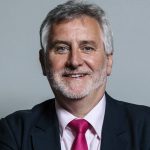
Tag: Clive Efford

  • Clive Efford – 2022 Speech on the Finance Bill

    Clive Efford – 2022 Speech on the Finance Bill

    The speech made by Clive Efford, the Labour MP for Eltham, in the House of Commons on 28 November 2022.

    I was struck by a quote I read a while back of the head of the Institute for Public Policy Research centre for economic justice, as it sums up the problem we face as a country:

    “There is a massive structural flaw in the economy that whatever the economic shock the wealthier get wealthier. If we’re going to get the whole economy into recovery, and leave no one and nowhere behind, we need to change this. Societies that are so unequal are bad for everyone and policymakers need to address this dangerous gap, or risk people losing trust in our economy and democracy.”

    At the core of that problem is the way we treat wealth in our taxation system. In an earlier intervention on the Minister I mentioned that the National Audit Office says that the total the Government invested in the economy during covid was £368 billion, which is roughly equivalent to £5,600 per head. Whichever Government had been in office at the time would have done something similar; they would have introduced a furlough scheme and helped businesses. That happened under the last Labour Government when there were crises: we stepped in on foot and mouth and the banking crisis, so forms of assistance were put in place. I therefore accept the assistance that the Government put in place, and I am not arguing about it, but it is ridiculous for the Government to argue that that money was paid and is now in the bank accounts of the people who received money during furlough or of the businesses who received assistance. It was paid to those individuals and businesses and it was used, and it has therefore moved on in the economy. That is £368 billion that has gone into the economy, and my question is: where is it now?

    Most analyses of what happened in covid that are worth reading find that the wealthiest did extremely well during covid, so my question to the Government—and I would ask this of any Government—is this: what do we do about that? These people were already wealthy and now they are getting even more wealthy, which will drive the inequality the Government themselves say they want to deal with through levelling up.

    Matt Rodda (Reading East) (Lab)

    My hon. Friend is making an excellent speech. Is he, like me, thinking about all the people who wrongly profited from selling personal protective equipment to the Government and the lack of proper assessment of some of those offers of help and the lack of proper procurement processes being followed? Does he agree that many ordinary members of the public and NHS staff found that quite wrong?

    Clive Efford

    My hon. Friend’s intervention speaks for itself and I absolutely agree; that is an example of where this Government go wrong by treating the wealthy differently from others.

    During covid, the number of millionaires and billionaires grew; we have the highest number of billionaires ever in The Times rich list and their combined income during that period grew by one fifth. So we can clearly see that inequality has been turbocharged by the money the Government put into the economy. I do not criticise the Government for putting that money in, but I do ask: where is that money now, where are the people who have benefitted most from it, and should they not, with their broad shoulders, bear more of the burden?

    We have consistently had low growth over the last 12 years under Conservative Governments. The Resolution Foundation’s recent report “Stagnation Nation?” found that in each decade from the 1970s real wages rose by an average of 33% until 2007, but that that fell to below zero in the 2010s. So today average household incomes are 16% lower in the UK than in Germany and 9% lower than in France, having been higher than both in 2007. Under the Conservatives there has been a consistent shift of wealth from average household incomes to the wealthiest in the country. The policies they have pursued have been driving inequality, and my point is that until we reform how the taxation system deals with wealth we will not address that growing divide between those at the bottom and those at the top. This Finance Bill completely fails to address that problem.

  • Clive Efford – 2022 Question on Humanitarian Situation in Sudan

    Clive Efford – 2022 Question on Humanitarian Situation in Sudan

    The question made by Clive Efford, the Labour MP for Eltham, in the House of Commons on 8 November 2022.

  • Clive Efford – 2014 Parliamentary Question to the Department for Education

    Clive Efford – 2014 Parliamentary Question to the Department for Education

    The below Parliamentary question was asked by Clive Efford on 2014-03-17.

    To ask the Secretary of State for Education, how many academy trusts account returns remain outstanding.

    Edward Timpson

    I refer the hon. Member to the answer given to the hon. Member for Coventry South, Mr Jim Cunningham, on 18 March, Official Report Column 555W.

  • Clive Efford – 2014 Parliamentary Question to the Department for Education

    Clive Efford – 2014 Parliamentary Question to the Department for Education

    The below Parliamentary question was asked by Clive Efford on 2014-03-17.

    To ask the Secretary of State for Education, how many academy trusts did not submit their account returns on time in each year since 2011.

    Edward Timpson

    The number and proportion of academy trusts that did not submit an accounts return on time is detailed in the table below:

    Financial year

    Date due

    Number late

    Percentage late

    2012-13

    31 January 2014

    166

    7.6%

    2011-12

    31 January 2013

    119

    8.2%

    2010-11

    31 January 2011

    100

    17.4%

    Academies were not required to submit accounts returns prior to 2010-11.

  • Clive Efford – 2014 Parliamentary Question to the Department for Education

    Clive Efford – 2014 Parliamentary Question to the Department for Education

    The below Parliamentary question was asked by Clive Efford on 2014-03-17.

    To ask the Secretary of State for Education, what proportion of academy trusts did not submit their account returns on time (a) in the current year, (b) in 2013, (c) in 2012 and (d) in 2011.

    Edward Timpson

    The number and proportion of academy trusts that did not submit an accounts return on time is detailed in the table below:

    Financial year

    Date due

    Number late

    Percentage late

    2012-13

    31 January 2014

    166

    7.6%

    2011-12

    31 January 2013

    119

    8.2%

    2010-11

    31 January 2011

    100

    17.4%

    Academies were not required to submit accounts returns prior to 2010-11.

  • Clive Efford – 2022 Tribute to HM Queen Elizabeth II

    Clive Efford – 2022 Tribute to HM Queen Elizabeth II

    The tribute made by Clive Efford, the Labour MP for Eltham, in the House of Commons on 10 September 2022.

    On behalf of my constituents in Eltham, I send my deepest sympathies to His Royal Highness King Charles III and his family on the passing of his mother, Queen Elizabeth II.

    Over the last few days we have identified a new syndrome, which I think will be studied for years: Queen Elizabeth II syndrome. I thought that I would be sorry for the nation at losing its Head of State; I thought that I would be very sympathetic and sorry for the family at losing a mother, a grandmother and a great-grandmother; but I must admit that I did not expect to feel such a deep personal sense of loss. I know others have expressed the same feeling.

    If we conjure to mind the images that mould us—those that make us British, if you like—it is the Queen’s image that stands out most prominently. If we think of the characteristics that we associate with Britishness—strength, fairness, dignity, dedication, determination, duty, tradition, charity—those are all attributes that we would associate with the Queen in the way that she performed her task as our monarch. They are characteristics that she applied both at home and abroad. She was the embodiment of how we would want to be seen in the world.

    The Queen’s longevity in her role gave her a deep knowledge and understanding of global politics and its personalities, which no other country benefited from. She saw politicians come and go: she reigned over 15 Prime Ministers, more than a quarter of the Prime Ministers we have ever had, and she saw 13 Presidents and six Popes. She was determined to lead by example each and every time she stepped out in public. Her generation—the war generation—is a tough generation. Her experience of that gave her the insight to know exactly what message we needed during the covid pandemic. She knew that, through our collective endeavour, we would get through, and she set that beacon at the end of the road, which will be etched forever in the rock of our nation: “We will meet again”.

    The Queen’s generation knew loss in the darkest of hours, and her dedication to duty told her that at her darkest of times she must lead by example. She sat alone wearing a mask—obeying the rules—at her husband’s funeral. I do not think I admired her more at any other time. She did not waver in her duty. It is not fair to those who will follow to say that we will not see her like again. Our King has a hard act to follow, so I say: God help the King.

  • Clive Efford – 2022 Speech on Energy Price Capping

    Clive Efford – 2022 Speech on Energy Price Capping

    The speech made by Clive Efford, the Labour MP for Eltham, in the House of Commons on 8 September 2022.

    Although the solutions to this crisis may sound complicated in this debate, the choice is straightforward for the Government: who pays at the end of the day? Let us be clear what a windfall tax is. It does not tax profits that energy companies had planned for and could have expected in all reason. This windfall has come about, as the Government have said themselves, as a consequence of what is happening in Ukraine and the aggression by Putin. The question that I have and my constituents will have is: how can the Government reasonably come to a conclusion that it is okay for those energy companies to make these huge profits on the back of that aggression by Putin?

    No matter what we do over the windfall tax, there will be a cost to the taxpayer because the Government are under pressure in other areas of expenditure. We only have to look at the newspapers today to see how, yet again, the number of people waiting for operations in the NHS has gone up to 6.8 million; and how the cost of living is forcing teaching assistants to question whether they can commit themselves to supporting children in schools or should move to higher-paid jobs, such as in supermarkets. Everywhere we look, the Government are under pressure over public expenditure on our vital public services. Yet they are prepared to wave aside the potential to pay for these increases through a windfall tax.

    Matt Rodda (Reading East) (Lab)

    I am grateful that my hon. Friend mentions teaching assistants because one contacted me recently. Many low-paid workers and others on moderate incomes be staggered by the Government’s decision to put the interests of energy companies ahead of those of normal families.

    Clive Efford

    Absolutely. My hon. Friend is absolutely right. The Government are morally wrong to turn their back on a windfall tax when they are clearly under financial pressure in other areas of public expenditure.

    In my brief contribution, I want to raise one specific issue relating to my constituency. I have a craft bakery that has survived for 100 years and is about to celebrate its centenary. It has been run by six generations of the same family. It kept feeding people in my constituency—I was not the MP at the time, I hasten to add—during the second world war, so even the Luftwaffe could not shut down this bakery. It employs 20 members of staff, in an industry where energy use is really heavy, and faces cost increases of 300% or 400%, so it is trying to renegotiate its energy contracts. As the statement published by the Government says—I have it here; on such an important crisis, its sheer length is 200 words—there will be assistance for businesses equivalent to that given to individuals, guaranteed “for six months”. The Prime Minister said—I wrote these words down—that businesses would be given some idea of what assistance they will get “within three months”, but they are negotiating now. We had no clarity from the Prime Minister in her statement. It was as though she was making a Queen’s Speech—“My Government will”—but she gave us no detail on what Ministers will be doing.

    One thing I want a guarantee on is that, if we are to get a financial statement from the Government next week or before the conference recess, we will have a proper debate in this Chamber, as we are required to have. Or will the Government avoid scrutiny—as has been a repeated action—yet again?

  • Clive Efford – 2022 Speech on Standards in Public Life

    Clive Efford – 2022 Speech on Standards in Public Life

    The speech made by Clive Efford, the Labour MP for Eltham, in the House of Commons on 7 June 2022.

    It is a pleasure to follow the hon. Member for Devizes (Danny Kruger). He did a fine job of trying to defend the indefensible, but the thing that undermines his argument is the timing of the changes to the code: the coincidence that, just as the Prime Minister is to be investigated by the Committee on Standards in Public Life, he has decided he wants to move the goalposts. That is obvious, and it is not lost on members of the public that he has changed the rules. The reason why he has done so is that he fears what is going to come in the future—the not too distant future.

    We are here having this debate today really because we have seen this conduct on an industrial scale at No. 10. The PM has been fined, the Chancellor has been fined and so have numerous members of staff. What those charged with upholding standards in the future have to look at is what has been said to this House and what rules were in place at the time the events took place that have led to the Prime Minister rushing to make these changes.

    It is worth reminding ourselves that, when the wine and cheese party took place in the garden of No. 10, people were allowed only to meet one other person from outside their household, as long as it was in a public place and 2 metre social distancing was maintained. Friends and family were not allowed to go to one another’s homes or gardens. Later in that year, after the rules had changed, the rules prohibited indoor gatherings of two or more people. An exception was allowed for work if it was reasonably necessary for work purposes, and in those circumstances the necessary participants could physically attend such meetings and social distancing had to be applied. Those charged with upholding the rules and code must satisfy themselves that what was said in this House, and the rules that applied, are consistent. We have seen photographs of the garden party, and a photograph of the Prime Minister inside No.10 at a party on 13 November. Allegra Stratton talked about a party that took place in No.10 on 18 December. She was head of media for the Prime Minister, and if she were rehearsing a response to the press about an alleged party that took place in No.10 on 18 December, it is inconceivable that she would not go to the Prime Minister and warn him that he might be quizzed about that party.

    Again, going back to the code that we are debating, we must be satisfied and demand answers to ensure that the code has been adhered to. This is what was said on 1 December at the Dispatch Box by the Prime Minister, in response to a question from the Leader of the Opposition about the party in No.10:

    “What I can tell the right hon. and learned Gentleman is that all guidance was followed completely in No. 10.”—[Official Report, 1 December 2021; Vol. 704, c. 909.]

    The following week—

    Mr Deputy Speaker (Mr Nigel Evans)

    Order. I want to give a little caution about any comments made about anything that is before the privileges committee. Please be very careful. We are talking about conduct in public life generally and about the ministerial code of conduct, but without going into detail on things that are being adjudicated and that will come before the House in time.

    Clive Efford

    I am grateful for that guidance, but I thought I would be in order because I am quoting the public record—I am reading from Hansard—on what was said in relation to these events. I am doing that because we have a debate about the code of conduct, and we must be satisfied that when the response comes back, these questions are answered.

    At the start of Prime Minister’s questions on 8 December, the Prime Minister stated:

    “May I begin by saying that I understand and share the anger up and down the country at seeing No. 10 staff seeming to make light of lockdown measures? I can understand how infuriating it must be to think that the people who have been setting the rules have not been following the rules, because I was also furious to see that clip.”—[Official Report, 8 December 2021; Vol. 705, c. 372.]

    I think it inconceivable that people were not advised that questions may be raised about the party that took place in No.10 Downing Street, and I would like that to be measured against the code we are talking about today. The Prime Minister has given repeated assurances that clearly need to be investigated further. His repeated assertions to this House were that no rules were broken and there were no parties, and we must have an answer to that question.

    Mr Deputy Speaker

    Order. I am sorry. Irrespective of whether it is in Hansard, this matter is before the Committee of Privileges, which is considering it specifically. The specifics of whether the Prime Minister misled, or inadvertently misled, the House is not for today’s debate.

    Clive Efford

    With due respect, Mr Deputy Speaker, I am not making the conclusion that he has done so; I am just raising questions that I expect to be answered.

    My next point is about how the code has been applied in the past, because Ministers have resigned when they have inadvertently misled the House. The most recent example I think of is that of the former Home Secretary, Amber Rudd, who inadvertently misled the House about immigration figures, and as a consequence of the information that was supplied to her, resigned from her post. It is not true that the ministerial code requires only a slap on the wrist for senior members of the Government—far from it. There are numerous examples of Ministers who have gone because they have inadvertently—not deliberately or maliciously—misled this House. Should the conclusion to the investigation be that people have misled the House, inadvertently or otherwise, resignations should follow. The public expect nothing less. Last night’s vote was an opportunity to draw a line under the sorry situation in which we find ourselves, because it is undermining our democracy and undermining this House, and it is time that it was drawn to a conclusion. Last night Conservative MPs missed that opportunity, but I do not think the public will when their time comes.

  • Clive Efford – 2022 Speech on Referring Boris Johnson to the Committee of Privileges

    Clive Efford – 2022 Speech on Referring Boris Johnson to the Committee of Privileges

    The speech made by Clive Efford, the Labour MP for Eltham, in the House of Commons on 21 April 2022.

    Several hon. Members have referred to the collateral damage that the Prime Minister leaves in his wake, as he has done throughout his career. For example, the Paymaster General, who is on the Front Bench today, said on 9 December during a statement on the Christmas party at No. 10 Downing Street:

    “The Prime Minister has been repeatedly assured since these allegations emerged that there was no party and that no covid rules were broken.”—[Official Report, 9 December 2021; Vol. 705, c. 561.]

    We now know that there were several parties, not just one, and that the rules were broken, because fines have been issued, one of which the Prime Minister has received. Part of the collateral damage, therefore, is that the Paymaster General came here to make a statement, based on the same information that allegedly was given to the Prime Minister, and misled the House. I accept that the Paymaster General did so inadvertently, but what has he done about that? The record needs correcting. Surely he should be investigating how he came to be misinformed and to misinform the House.

    This has happened on too many occasions for ignorance to be the defence. There is this idea that, throughout lockdown and all the occasions on which these parties took place and the rules were broken, none of the bright young things who had been invited ever thought that any one of those events might break covid rules. Is it conceivable that no one raised a single question about whether they might be breaking the rules? Some of those events were drinks events for people who were leaving. In our constituencies, people missed funerals and cancelled weddings and birthday parties. However, the people in No. 10 thought that it was okay to have leaving drinks. Where are they? What were they thinking? How out of touch with our constituents can they be to think that they can have a leaving drinks party and are more important than our constituents?

    Barbara Keeley (Worsley and Eccles South) (Lab)

    My hon. Friend is making a good speech, and that is a good point. I want to make a point about the impact of breaking the law, and how it hurt people and continues to do so. My constituent told me:

    “Boris Johnson broke the law partying with his colleagues while I watched my father die through a care home window. My father gave up on life because he could not have any proper connection with much-needed family during recovery from a stroke. I think he could still be alive today if I was able to break the law by having a close connection with him”,

    but, they say, they were not in the privileged position of the Prime Minister.

    Clive Efford

    What my hon. Friend read out speaks for itself. She has demonstrated, as have many others, through the cases they mentioned, that the problem starts at the top. The workers who organised the parties would not have done so if they thought that their bosses would be upset, would come down on them and say, “You are breaking the rules. Stop it.” We now know that on at least six occasions, the Prime Minister was present at these parties, so this problem comes right from the top.

    The Prime Minister’s defence has been different on many occasions. He started by saying that no rules were broken. He then said that there was a party, but that he was not present—but then he was. Then he said, “I wasn’t warned that it wasn’t a work do.” I did not see anything about a work do in the rules, but perhaps I missed that. The person who writes the rules cannot misunderstand them so fundamentally.

    Setting that aside, if the Prime Minister’s defence is, “I didn’t understand the rules; I needed them explained to me” and “I was misled at the outset about there having been a party, because people told me that there wasn’t one,” who misled him? What has happened to them? Are they still in their posts? Have they moved on? Have they signed non-disclosure agreements? Where are those people who misled the Prime Minister, which led him to him inadvertently misleading the House? We cannot have this both ways: either the Prime Minister knowingly came to this House and lied, or other people lied to him, which led to him misleading the House. Either way, we need to identify those people.

    The worst crime of all, however, is failing to feel the pain that our constituents felt throughout lockdown. No one who felt the agony and understood the pain that people were going through, as in the example that my hon. Friend read out, could have attended the events that happened in No. 10 Downing Street and other places. The question for Tory MPs today is this: do you stand by the people who felt that pain and vote today for—

    Madam Deputy Speaker (Dame Rosie Winterton)

    The hon. Gentleman knows that he must not use the word “you”.

    Clive Efford

    This applies to you too, Madam Deputy Speaker. Will Tory MPs stand by the people who felt that pain throughout the past two years? They deserve answers. As others have pointed out, this is about fundamental trust in our politics. When Tory MPs vote today, they should think about the damage that they are doing to the trust in our political process, because the public deserve better. They should think about that before they vote. This matter should go before the Privileges Committee. They know that, so they should vote for that.

  • Clive Efford – 2022 Speech on Simon Hinchley-Robson and His Treatment in the RAF

    Clive Efford – 2022 Speech on Simon Hinchley-Robson and His Treatment in the RAF

    The speech made by Clive Efford, the Labour MP for Eltham, in the House of Commons on 10 January 2022.

    Over the last few years, I have been supporting Simon Hinchley-Robson in his pursuit of justice for the way he was treated when he was discharged from the RAF in 1986 for being gay.

    Mr Robson signed up to serve his country for 22 years in the Royal Air Force in 1980. He came from a family with a tradition of serving their country: his brother was in the Army, his father had been in the Navy and his grandparents had served in the RAF. In 1986, while he was serving as a chef at RAF Brawdy, Haverfordwest, Wales, he became ill and was diagnosed by RAF medical staff as having glandular fever. After the diagnosis, he continued to lose weight and then requested a test for AIDS. The doctor who was examining him became extremely angry, and he was transferred to a civilian hospital, where he took the test. After 10 days, he was discharged from hospital back to RAF Brawdy. Immediately on his return, he was arrested by the RAF police—the Special Investigation Branch. The request for the test was taken as an admission that Mr Robson was gay.

    I will read Mr Robson’s own words, which describe what happened to him from the moment he arrived back at RAF Brawdy:

    “What happened next was the most horrendous and awful experience no one should ever have had to endure. I was led to an interrogation room, this, unknown to me, was to be my home for the next 4 days. I was denied food, I was denied sleep and only given small amounts of water.

    I was immediately searched, asked to strip and searched internally. They said that this was procedure. As a young 21-year-old, terrified, what do you think was going through my mind?

    I was asked to list every person in any of the services I had some sort of relationship with, this I refused. On refusing, I was assaulted and again instructed to strip, the medical gloves went on and I was again subject to what I can only say was ‘RAPE’, while I was again internally searched.

    After about 12 hours I was taken, handcuffed, to my billet and the SIB (Special Investigation Branch) then searched all my belongings and personal letters, my mattress was slit open and I was told this was because they were looking for drugs.

    My mail was taken away and read…they said, I was most likely being blackmailed and as such, they needed to make sure Defence secrets were not being passed on”—

    and this is Mr Robson’s emphasis—

    “Hello I am a chef, no access to data, aircraft, secrets etc.

    After this humiliation in front of many camp personnel as I was paraded to my billet, not driven, in handcuffs, and for all to see, I was then taken back to the interrogation room. I was thinking that this was the end, and that would most likely be the end of my career, how wrong I was.

    It was change of shift, and the process started all over again, searched, told to strip, medical gloves on, internal searches again. At this point, I was now convinced this was happening for their…pure sadistic satisfaction, yet I had no recall to complain to any officers in charge as the SIB were a law unto themselves.

    With the change of shift the process started all over again, they wanted names, none were given, and I was slapped for not helping them.”

    I should add here that Mr Robson has explained to me that the shifts changed every four hours, and on every change of shift he was stripped, searched and searched internally. We must ask what the purpose of these searches was. Given that he was in custody all of this time and had no means of obtaining drugs, how could he have anything to hide? What was taking place was a form of torture of Mr Robson for being gay. The question has to be asked: was this sanctioned by the RAF? This seems likely: after all, there was remarkable consistency in the pattern of behaviour between the shifts. How common was it for gay personnel to be abused in this way, or does the Minister believe, as Mr Robson asks, that it was to satisfy the sadistic pleasures of those inflicting the humiliation?

    Mr Robson continues:

    “They pulled out a number of birthday cards and a get-well card. In one it read, ‘Hurry up back to the kitchen Si, Paul is missing you’ with a big smile. This comment refers to a colleague chef, who I didn’t see eye to eye with, it was a joke message.

    The SIB were now convinced he was involved. This person was married was serving overseas in Cyprus with his family and that, would be the next port of call.”

    I should add here that, according to Mr Robson, two members of the Special Investigation Branch were flown to Cyprus to interview this other chef. They interviewed his wife about his sexuality, and they interviewed his primary school aged daughters.

    Returning to Mr Robson’s words:

    “Throughout the interrogation I was handcuffed and treated like a terrorist, how was this allowed to happen in Her Majesty’s Royal Air Force.

    I was a Chef, no access to any classified material unless they wanted the recipes for a lasagne, all this humiliation went on for 4 days, and to their sadistic satisfaction, it wasn’t until the 4th day we had a new female doctor arrive in camp [who] intervened and stopped the interrogation. I was immediately sent home on sick leave to await my discharge.

    I had been spat at, hit, examined by individuals that were plain animals, and all because I had admitted I was Gay.”

    Mr Robson states that officers from the SIB told him:

    “We don’t have gays in HM Royal Air Force”,

    and that they

    “should all be put on an island and nuked.”

    He was also told that he was

    “the lowest level of life.”

    The irony of all this is that, at the end, when he went back finally to sign his discharge papers, which he had to do to avoid going to prison for 18 months, he was required to sign to join the reserves for three years, meaning that, if needed, he could be called up to serve in an emergency.

    At the time that this took place, none of Mr Robson’s family was aware that he was gay. That meant that he effectively lost his job and home and risked being outed. This left him mentally distressed and suicidal. He has told me of others he knows who went through the same treatment, for whom the distress was too much and who went on to take their own lives.

    Mr Robson had signed up for 22 years with the RAF and he considered this to be his life and career. He would have received a full pension and lump sum when he left the service, but instead he receives a minor pension. As a consequence of his forced discharge under threat of being charged and imprisoned, Mr Robson lost his income and the pension that he would have been entitled to.

    Mr Robson made clear what he wants from the Government in a 2018 letter to the then Prime Minister, the right hon. Member for Maidenhead (Mrs May):

    “I want the Government to admit that these interrogations and humiliation of gay people were wrong. I should be compensated for this now that it is accepted that LGBT people can serve in the armed forces.

    I want my pension, as if I had served my full term, is that not rightful thing to do?

    I want a public apology for what I went through and many others and for those who did not have the strength to see it through and took the suicide road.”

    At the time of Mr Robson’s ordeal, the Sexual Offences Act 1967 had ended prosecutions against civilians who were gay. This did not apply to members of the armed forces until 1992. Subsequent decisions of the European Court of Human Rights clearly demonstrate that armed forces personnel were discriminated against and had their rights denied at this time. Many suffered the additional personal and physical abuse that Mr Robson endured, and have had no recognition of their treatment or compensation for the salaries and pensions that they have missed out on.

    I am aware from answers I have received in letters from Ministers that section 10 of the Crown Proceedings Act 1947 was in force at the time of Mr Robson’s discharge and that although it was subsequently rescinded, this was not applied retrospectively. In a recent answer, the then Minister for Defence People, the hon. Member for Plymouth, Moor View (Johnny Mercer), quoted the Limitation Act 1980, section 11 of which provides a three-year period after the date on which the cause of action accrued in which personnel can make a complaint.

    My view is that those regulations cannot be used to deny Mr Robson his right to justice. I would point to the illegal actions of the RAF’s Special Investigation Branch when Mr Robson was in its custody. He was physically assaulted on at least 12 occasions by multiple individuals, he was denied his right to legal representation, and his human rights were violated.

    I would argue that there is no statute of limitation that excuses this criminal behaviour and can prevent Mr Robson from being compensated by the country that he wanted to serve. Although 36 years have passed since Mr Robson was discharged from the RAF, I urge the Minister to go away and reflect on his unacceptable treatment at the hands of the SIB, and, having done so, to accept that the Government are morally bound to compensate him for being denied the chance to serve his country as he had planned, and for the physical torment that he suffered for being gay.