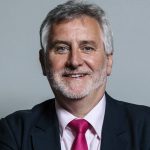
Tag: Clive Efford

  • Clive Efford – 2016 Parliamentary Question to the Department of Health

    Clive Efford – 2016 Parliamentary Question to the Department of Health

    The below Parliamentary question was asked by Clive Efford on 2016-10-07.

    To ask the Secretary of State for Health, with reference to the 46th Report of the Public Accounts Committee, Session 2014-15, HC971, An update on Hinchingbrooke Health Care NHS Trust, what the cost is to the public purse of Circle Holdings Plc’s withdrawal from delivery of its contract to run Hinchingbrooke Hospital; and if he will make a statement.

    Mr Philip Dunne

    The Trust paid no management fee to Circle under the contract. Costs incurred by the Trust as a result of the termination of the franchise were agreed as £130,000 and billed directly to Circle. Costs included recruiting to new Board positions and those filled by Circle partners; an expected increase in the scope of External Audit due to termination of the contract; time of the Department’s Legal and NHS England Estates teams; and removing the Circle branding from the hospital.

    During the operation of the franchise agreement, the Trust received £5 million from Circle between 2012 and 2014 – the maximum deficit support payment required under the contract.

  • Clive Efford – 2016 Parliamentary Question to the Department of Health

    Clive Efford – 2016 Parliamentary Question to the Department of Health

    The below Parliamentary question was asked by Clive Efford on 2016-10-18.

    To ask the Secretary of State for Health, what assessment he has made of the adequacy of patient involvement in the commissioning process for musculoskeletal services carried out by Greenwich Clinical Commissioning Group prior to the granting of that contract to Circle Holdings PLC; and if he will make a statement.

    Mr Philip Dunne

    The procurement of local health services by means of competitive tendering is a matter for the local National Health Service.

    We are advised by NHS England that Greenwich Clinical Commissioning Group (CCG) undertook the first of its engagement events on the proposed redesign of the musculoskeletal services pathway during November 2013. We understand that this initial engagement enabled the CCG to identify that the existing pathway was felt to be fragmented and complex for patients. In light of that, a new model was proposed in December 2013, and was shared with the public at workshops during 2014.

    We are further advised by NHS England that the proposed pathway was outlined in the draft service specification, which was shared with the patient reference group (PRG) during February and March 2016. We understand that the specification was sent to PRG members to cascade to their patient participation groups and other groups of which they are members, such as the Pensioners’ Forum.

  • Clive Efford – 2016 Parliamentary Question to the Foreign and Commonwealth Office

    Clive Efford – 2016 Parliamentary Question to the Foreign and Commonwealth Office

    The below Parliamentary question was asked by Clive Efford on 2016-01-05.

    To ask the Secretary of State for Foreign and Commonwealth Affairs, if he will make representations to the Colombian authorities regarding the status of the investigation into the murder of Benicio Flor Belardo Cazar on 11 October 2015 in La Meseta, Suarez.

    Mr Hugo Swire

    I was sorry to hear of the death of Benicio Flor Belalcázar. Whilst the United Kingdom cannot interfere in another country’s judicial process, we continue to encourage the government of Colombia in its efforts to prevent violence and threats against human rights defenders, trades unionists, political activists and civil society and to promptly investigate human rights violations.

    As I have said to the House on a number of occasions, I am convinced that current efforts to secure peace represent the best prospect for the rights of all Colombians. This Government remains hugely supportive of this process.

  • Clive Efford – 2016 Parliamentary Question to the Department for Culture, Media and Sport

    Clive Efford – 2016 Parliamentary Question to the Department for Culture, Media and Sport

    The below Parliamentary question was asked by Clive Efford on 2016-04-28.

    To ask the Secretary of State for Culture, Media and Sport, what discussions he has had with ministerial colleagues in other departments on whether breaches of UK laws have occurred as a consequence of secondary ticketing companies offering tickets for sale via their websites to UK-based customers for the European Football Association Championships.

    David Evennett

    It is an offence for an unauthorized person to sell a ticket for a designated football match via the internet under section 166A of the Criminal Justice and Public Order Act 1994. The Government expects companies in the secondary market to comply with the law.

    Professor Michael Waterson is chairing an independent Review of consumer protection measures applying to the re-sale of tickets for music, sporting or cultural events in the UK through secondary ticketing facilities. In supporting Professor Waterson in carrying out his Review, my officials have had discussions with their counterparts in the Department for Business, Innovation and Skills and the Home Office about online re-sale of football tickets.

    The Department agrees with the Football Association that fans of the home nations participating in the Euro 2016 Football Championships should purchase tickets through authorised channels. Such channels include UEFA’s Euro 2016 ticket resale platform.

    The safety and security of the Euro 2016 Football Championships is a matter for the French Government and UEFA. The UK Government co-operates closely with France on matters of policing and security.

  • Clive Efford – 2016 Parliamentary Question to the Department of Health

    Clive Efford – 2016 Parliamentary Question to the Department of Health

    The below Parliamentary question was asked by Clive Efford on 2016-10-07.

    To ask the Secretary of State for Health, what assessment he has made of (a) the performance of Circle Holdings Plc in the delivery of musculoskeletal services in Bedford and (b) whether Circle Holdings Plc is meeting its national access targets; and if he will make a statement.

    Mr Philip Dunne

    The assessment of the performance of musculoskeletal (MSK) services in Bedfordshire is a matter for the local National Health Service.

    Bedfordshire Clinical Commissioning Group (CCG) advises that it monitors Circle’s performance closely through monthly contract meetings and Service Quality and Performance Reports.

    The CCG advises that Circle Clinical Services Limited is the Prime Contract provider for MSK services for over 18s in the Bedfordshire area, and is responsible for managing the whole patient pathway. Circle itself does not provide clinical services to patients as part of this contract, but refers patients on to local hospital and community based providers subject to patient choice. Circle therefore does not submit data on national Referral to Treatment waiting time standards in relation to MSK services in Bedfordshire. Waiting times data is included in the data return from the patient’s hospital or community provider.

  • Clive Efford – 2016 Parliamentary Question to the Department for Transport

    Clive Efford – 2016 Parliamentary Question to the Department for Transport

    The below Parliamentary question was asked by Clive Efford on 2016-10-18.

    To ask the Secretary of State for Transport, what discussions he has had with Southeastern railway on the leasing of the current Thameslink rolling stock immediately after new Thameslink trains become available; and if he will make a statement.

    Paul Maynard

    The Department is exploring the provision of additional rolling stock to Southeastern, in order to lengthen services and increase capacity for passengers. This requires extensive commercial negotiations with Southeastern. We are continuing to work with Southeastern to develop the business case, and an announcement will be made in due course.

  • Clive Efford – 2016 Parliamentary Question to the Foreign and Commonwealth Office

    Clive Efford – 2016 Parliamentary Question to the Foreign and Commonwealth Office

    The below Parliamentary question was asked by Clive Efford on 2016-01-14.

    To ask the Secretary of State for Foreign and Commonwealth Affairs, pursuant to the Answer of 11 January 2016 to Question 20989, what information his Department holds on how many cases of murder of (a) human rights defenders, (b) trades unionists and (c) political activists there have been in the last three years in Colombia for which someone has been brought to trial.

    Mr Hugo Swire

    Although we do not compile statistics on these cases, the British Government receives regular updates from non-government organisations (NGOs) such as Human Rights Watch, Amnesty International and Peace Brigades International, highlighting the reported cases outlined by the Honourable Member. For example, Somos Defensores’ 2015 report on the number of murders and threats made against human rights defenders: http://somosdefensores.org/attachments/article/134/los-nadie-informe-semestral-siaddhh2015.pdf

  • Clive Efford – 2016 Parliamentary Question to the Department for Culture, Media and Sport

    Clive Efford – 2016 Parliamentary Question to the Department for Culture, Media and Sport

    The below Parliamentary question was asked by Clive Efford on 2016-04-28.

    To ask the Secretary of State for Culture, Media and Sport, what discussions he has had with the Football Association, Union of European Football Associations and the French government on potential risks to safety and security caused by the selling of tickets to UK-based customers for the European Football Association Championships in the secondary ticketing market.

    David Evennett

    It is an offence for an unauthorized person to sell a ticket for a designated football match via the internet under section 166A of the Criminal Justice and Public Order Act 1994. The Government expects companies in the secondary market to comply with the law.

    Professor Michael Waterson is chairing an independent Review of consumer protection measures applying to the re-sale of tickets for music, sporting or cultural events in the UK through secondary ticketing facilities. In supporting Professor Waterson in carrying out his Review, my officials have had discussions with their counterparts in the Department for Business, Innovation and Skills and the Home Office about online re-sale of football tickets.

    The Department agrees with the Football Association that fans of the home nations participating in the Euro 2016 Football Championships should purchase tickets through authorised channels. Such channels include UEFA’s Euro 2016 ticket resale platform.

    The safety and security of the Euro 2016 Football Championships is a matter for the French Government and UEFA. The UK Government co-operates closely with France on matters of policing and security.

  • Clive Efford – 2016 Parliamentary Question to the Department of Health

    Clive Efford – 2016 Parliamentary Question to the Department of Health

    The below Parliamentary question was asked by Clive Efford on 2016-10-07.

    To ask the Secretary of State for Health, what assessment he has made of the readiness of Circle Holdings Plc to deliver musculoskeletal services in Greenwich from 1 December 2016; and if he will make a statement.

    Mr Philip Dunne

    The procurement of local health services by means of competitive tendering is a matter for the local National Health Service.

    We are advised by NHS England that NHS Greenwich Clinical Commissioning Group (CCG) has taken all reasonable steps to protect the public purse with regard to the contract for the provision of an integrated Musculoskeletal (MSK) service in Greenwich, which it awarded to Circle Health.

    The contract is governed by the General Conditions of the NHS national Standard Contract, which require the service provider and commissioner to indemnify each other in respect of any losses.

    With regard to contract expiry or termination, the conditions also provide for the protection of commissioners from excess costs (and their administration) incurred in procuring the services from another party, for a period of six months from termination.

    We are also advised by NHS England that as part of the procurement process undertaken by Greenwich CCG, parties bidding to provide an integrated MSK service in Greenwich were required to provide a mobilisation plan within identified timescales, in line with the scope of service.

    We understand that the CCG and Circle Health hold weekly mobilisation meetings to track Circle’s progress and to monitor the implementation and transition of the service up to the go-live date and the post go-live transition.

  • Clive Efford – 2022 Speech on Southeastern Railway Timetable Changes

    Clive Efford – 2022 Speech on Southeastern Railway Timetable Changes

    The speech made by Clive Efford, the Labour MP for Eltham, in Westminster Hall, the House of Commons, on 6 December 2022.

    I beg to move,

    That this House has considered Southeastern railway timetable changes.

    It is genuinely a pleasure to serve under your chairmanship, Ms Harris, for the first time, I think. We are here because on 4 August Southeastern sought and got the Government’s permission to cut rail services without consultation. It is cutting two trains from the morning peak in my constituency on the New Eltham and Mottingham line, and three from the Eltham and Kidbrooke line. On the Bexleyheath line, which services Eltham and Kidbrooke, it is cutting three trains out of 15—a 20% cut in the morning peak capacity of trains that go via London Bridge. It is a similar cut in New Eltham and Mottingham, where the number of trains will go from 18 down to 16, but there is the welcome addition of one single train that goes to New Eltham via Blackfriars. Given an average of 10-car trains, the cuts on the Bexleyheath line amount to 3,000 passengers at peak time who have to find spaces on the remaining trains. It is a similar situation on the New Eltham line.

    Before the pandemic, we had PiXC—passengers in excess of capacity—on our lines. We campaigned previously for additional trains, particularly off peak, and were successful in getting them. Transport planners do not recognise that our part of south-east London is not served by the London underground and we rely very heavily on train services. The cuts take no account of that fact, nor of the fact that my constituency has a huge new development at Kidbrooke, which has had a considerable effect on the numbers of passengers getting on and off trains at Kidbrooke station.

    According to the Office of Rail and Road, there were 890,000 passenger exits and entrances at Kidbrooke station in 2010. That had risen by more than 42% to 1.5 million by 2018. During the pandemic, as we would expect, the number of exits and entrances went down to 429,000 in 2020, but it is already back over 1 million at Kidbrooke station and it is continuing to rise. There were also increases at Eltham station, but on nowhere near the scale of the increases at Kidbrooke station because of that development.

    The Kidbrooke development is approaching 7,000 homes, about half of which have been completed. Passenger entrances and exits had already increased by 640,000, as I said, but that was prior to the pandemic. Taking that as a guide, that means we will see a further 1.5 million entrances and exits at that station by the time all the properties are built. The proximity to the train station was used as justification by the developer Berkeley Homes, as well as by the Mayor of London and Transport for London, in respect of the development of 619 homes at Kidbrooke. Was that taken into consideration when the Government approved the cuts to train services?

    Back in September 2017 we all thought we had cracked the problem of overcrowding. We all campaigned to get extra trains and longer trains on the line and the Government allowed Southeastern to do that—we were told that we got 68 extra carriages. The then managing director, David Statham, said:

    “Longer trains will mean more seats, more space and more comfortable journeys…Southeastern has worked very closely with the Department for Transport and Govia Thameslink Railway to deliver this extra capacity for passengers.”

    The press release went on to say that trains to Hayes, Bexleyheath, Woolwich, Sidcup, Bromley South and Grove Park would be lengthened. We were told we were going to get extra capacity, not less. Now we are told there is a need to rationalise services post covid.

    A report on Southeastern published in July by the Office of Rail and Road shows that 2018-19 was its busiest year—but then, of course, the pandemic hit us. There were 183.2 million passenger journeys in 2018-19, but the number dropped to 40.2 million in 2019-20. In 2021-22, passenger journeys went up to 97.8 million, which is more than a 50% increase, and they are continuing to rise, so this is hardly the climate in which we should undertake cuts.

    Sir David Evennett (Bexleyheath and Crayford) (Con)

    The hon. Gentleman is doing a really good job of explaining the figures. In the London Borough of Bexley, a lot of new apartments and houses are being built and there will be increased demand.

    Clive Efford

    Absolutely. I do not think any account has been taken of the increased demand from the additional development in our part of London—certainly not the demand from the very big development at Kidbrooke. We are seeing considerable growth and no one can know where it will end.

    We see a similar pattern in passenger kilometres. Again, the highest number was in 2018-19. That dropped massively in 2020-21, but more than doubled in 2021-22. For planned trains—the trains agreed with Southeastern and Network Rail the night before they run—2018-19 was the busiest year, with 654,389 trains. The number dropped to 527,855 in 2020-21, then still further in 2021-22 to 523,965—that is a 20% drop in planned trains. If we look at the performance figures—bear in mind that the Government’s rationale is that running fewer trains makes the trains more efficient—we do not see the huge improvement in performance that we would expect from running considerably fewer trains, so the Government’s argument that fewer is better is not borne out by the facts.

    The rationale is the old chestnut that the all the trains crossing over west of Lewisham create too much congestion, which leads to knock-on effects and delays. That argument was rolled out several years ago when Southeastern wanted to take away the Victoria service from the Bexleyheath line. It was the same story: “It’s all those trains crossing over west of Lewisham.” Back then, I spoke to some rail experts about the problem and they told me that what Network Rail and Southeastern were saying was complete nonsense. There is not a problem with trains crossing over at that point unless there is bad maintenance and a lack of investment in the infrastructure.

    We need to be clear about what is happening. In Transport questions recently, the Minister said to me:

    “It is not just about taking down some costs; it is also about simplifying the line structure, so that at Lewisham, for example, there will not be as many trains crossing.”—[Official Report, 24 November 2022; Vol. 723, c. 436.]

    First, this is about cost cutting—the Minister has made that clear. There is then this issue of too many trains crossing. It might be fine to say that to people who still have trains, but we are having trains cut. Obviously, our trains cannot cross if they do not exist, so actually what the Minister says is true: the service will improve because the trains are not there. If we follow that logic, we should perhaps just get rid of all the trains; that would solve the problems on our railway.

    When I first asked questions about these cuts, I was told that cutting peak-time trains would reduce cancellations and delays. When I pressed further, I was told:

    “The number of train services in the new timetable is broadly very similar to the current timetable on both of these routes.”

    I pushed a bit further, because that answer denied that there are cuts on the Bexleyheath and Sidcup lines. The idea that the trains will run better becomes a self-fulfilling prophecy, because nobody can be criticised for a delayed train that does not exist. Given the logic of the solution that running a future railway should be based on cuts to services, I suspect we will be back here again listening to the Minister explain why we need to cut trains further because we still have a problem of poor maintenance and lack of investment in the infrastructure west of Lewisham.

    First, the Government tried to avoid admitting they had approved the cuts without consultation; I was told that they would reduce cancellations, which is not what I had asked. Then, the Government said there would be a similar number of trains, when I had asked how many cuts there would be. It has been a shameful attempt by the Government to avoid their responsibility for approving cuts to our services. Admitting now that there are cuts is a welcome step, but that will make everyone else’s trains run on time while we have to endure cuts.

    The new timetable has been imposed without listening to our constituents. It is too late to change that and the Government are determined to press ahead. What is the Minister going to do to monitor the situation so we do not go back to overcrowded trains and a poor service after the new timetable is introduced? That is what we endured before and I see nothing in the decision to cut our train services that is going to change it.