
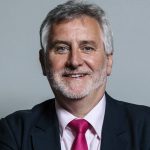
Tag: Clive Efford

  • Clive Efford – 2023 Speech on the Budget

    Clive Efford – 2023 Speech on the Budget

    The speech made by Clive Efford, the Labour MP for Eltham, in the House of Commons on 16 March 2023.

    When I looked at the clock as the Chancellor finished speaking yesterday, I was shocked that his speech had been only an hour. The speech was well padded out. I thought at one stage that he was going to tell us how much the Government planned to spend on paper clips in the next year. He started by announcing that we were not going into a recession, expecting praise for not taking us into a recession that the Conservatives had brought us to the brink of in the first place. It was a bit like an arsonist asking to be thanked, having set light to your house, for then ringing the police. Average energy bills have doubled in the past 18 months, the average mortgage is up by £2,000, and household incomes are lower in real terms than 13 years ago. Those are the worst figures since records began.

    We have had 13 years of cuts to our public services, leaving them in a parlous state, and we went into covid with record numbers on NHS waiting lists—2.5 million people. We now have an estimated 7 million people waiting for hospital appointments. According to a Nuffield Trust report published last year, our NHS is short of 12,000 doctors and 50,000 nurses and midwives, and we will need over 500,000 more NHS and care workers by 2030. Where was anything in the Budget to deal with that crisis? Oh, we did have one thing; we had a tax cut for the wealthiest 1% to keep doctors in the NHS. Only the Tories could turn a crisis in the NHS into an excuse to cut taxes for the wealthiest 1% in this country.

    Someone with a £2 million pension pot will get a tax saving of £275,000. How is that justifiable? Yet next month the tax thresholds will be frozen. For a basic rate taxpayer, that is £500 a year, for a higher rate taxpayer, that is £1,000, but in this Budget it is somehow justifiable to make that tax cut to the richest 1%. It is just not fair. In the past decade, we have seen the Conservatives stand by while a disproportionate share of national income has gone to the wealthiest. The OBR has confirmed that the cost of living crisis means that living standards will fall by 5.7% over the next two years. Average real-terms household incomes are at a 50-year low due to a decade of consistent low growth. The Resolution Foundation’s “Stagnation nation” report, published late last year, shows that in each decade since the 1970s, average household incomes rose by 33% until 2007, but since the Tories took power, weak productivity growth has fed directly into flatlining wages and sluggish income growth, with real wage growth falling below zero in the 2010s.

    The Government’s own figures show that incomes have grown by an average of 9% since 2008—0.7% a year—having grown by an average of 2.2% in each of the previous 20 years. Their excuse is to blame everyone else, but everyone else internationally has been through the same shocks as us. How do the Tories explain the fact that average household incomes in the UK are 16% lower than in Germany and 9% lower than in France, having been higher than both in 2007?

    Wealth inequality in this country has grown under the Conservatives, and a failure to tax the assets of the super-rich is leading to widening inequality. The more wealth someone accumulates, the less tax they pay. The Government should be looking at how we tax wealth and tackle that growing inequality. Since the banking crash in 2007-08, it has become easier to borrow money, which has meant that the wealthiest people have been able to buy assets, and we do not tax those assets. I would like to see a discussion about a tax on wealth above £10 million. A 1% tax on that wealth would raise £11 billion. I have spoken to many people who are in that tax bracket, and they say that a 1% tax on their wealth at that level would not cause them to take flight and go abroad—they would not notice it. No one is going to up their family and their children’s future because they would pay 1% tax on their wealth above £10 million.

    We could equalise capital gains with income tax rates. There is cross-party support for this measure, which could raise £15.2 billion. It is not a radical suggestion, because it is what Nigel Lawson did back in the 1970s. I welcome the fact that the Government are offering tax relief for investment in R&D, because that could reward people who pay their tax in that way.

    It is not fair that people who pay rent to somebody who has bought properties pay national insurance contributions on their wages, but the person they pay rent to does not pay national insurance contributions on the income from that rent. We should look at expanding the range of national insurance to make the system fair. The Labour party supports reform of non-dom status, which would raise £3.2 billion.

    There is money in the system that we can use to resolve many of the problems we face with the crisis in our public services. It is a travesty that, given the strikes we are facing and the crisis in the national health service, there was nothing about that in the Chancellor’s statement yesterday. It is time for a new form of government. It is time for a Government who will tackle inequality and create a fairer taxation system that will benefit the whole country, not leave people to sink or swim. We need an active Government who will be on people’s side, intervene when necessary and do what is necessary to create a fairer and more equitable society.

  • Clive Efford – 2023 Parliamentary Question on Operation Safeguard

    Clive Efford – 2023 Parliamentary Question on Operation Safeguard

    The parliamentary question asked by Clive Efford, the Labour MP for Eltham, in the House of Commons on 10 January 2023.

    Clive Efford (Eltham) (Lab)

    For what reason he triggered Operation Safeguard in November 2022.

    Feryal Clark (Enfield North) (Lab)

    For what reason he triggered Operation Safeguard in November 2022.

    The Minister of State, Ministry of Justice (Damian Hinds)

    There was an unprecedented short-term rate of growth in the requirement for places in adult male prisons in October and November, and Operation Safeguard creates a contingency to maintain headroom should it be needed. Meanwhile, we press on with our programme of estate modernisation and expansion.

    Clive Efford

    I am grateful for that answer. The Prison Officers Association says that the lack of staff is exacerbating the crisis in prison places. The Police Federation says that Operation Safeguard puts its members and the public in danger. Napo says that there is a link between the lack of prison places and the workload crisis, which is leading to an increase in the number of recalls. If Operation Safeguard fails, where on earth will the Government go next?

    Damian Hinds

    As I said, Operation Safeguard is a contingency that provides additional headroom; we are not currently housing prisoners in cells as a result of Operation Safeguard. The hon. Gentleman is absolutely right to identify that physical capacity is one side of the coin and staffing is the other, which is why we are putting so much emphasis on recruitment and retention in the prison service.

    Feryal Clark

    Napo has said that the insufficient capacity to hold prisoners is directly linked to staffing and workload crises in probation, as my hon. Friend the Member for Eltham (Clive Efford) said. Does the Minister agree with Napo’s view that there is a workload crisis in probation services? If so, who caused it?

    Damian Hinds

    That is similar to the point of the hon. Member for Eltham (Clive Efford). Of course, all the services are linked, but as with the Prison Service—it is a fact across many different occupations in the public and private sector—there is a very tight labour market with high rates of employment and low rates of unemployment by historical standards. Recruitment is a challenge, but we are putting a huge emphasis on recruitment into the Prison Service and probation, which fundamentally drives workload. The other side of that is, as always, making sure that we retain staff.

    Mr Philip Hollobone (Kettering) (Con)

    I do not blame my right hon. Friend for triggering Operation Safeguard—in the circumstances, it was sensible—but he would not have needed to if the 12% of the prison population who are foreign national offenders had been imprisoned in their countries of origin. The top three groups are made up of 1,300 Albanians, 800 Polish nationals and 750 Romanians. Can we have more compulsory prisoner transfer agreements so that those people are sent to jail in their own countries?

    Damian Hinds

    My hon. Friend is correct that there are a large number of foreign national offenders in our prisons, and facilitating the movement back to their home country is important. We have had the prisoner transfer agreement with Albania since May 2022, and we are looking at more.

  • Clive Efford – 2015 Parliamentary Question to the Department for Communities and Local Government

    Clive Efford – 2015 Parliamentary Question to the Department for Communities and Local Government

    The below Parliamentary question was asked by Clive Efford on 2015-12-08.

    To ask the Secretary of State for Communities and Local Government, what assessment he has made of trends in the number of homes built for social rent since 2010.

    Brandon Lewis

    Since 2010 we have delivered 270,000 affordable homes, including nearly 200,000 homes for rent.

    The majority of rented homes delivered through the Affordable Homes Programme are for Affordable Rent, delivering more homes for every pound of Government investment.

    The Spending Review committed £1.7 billion to deliver 100,000 affordable rented homes.

  • Clive Efford – 2016 Parliamentary Question to the Department for Culture, Media and Sport

    Clive Efford – 2016 Parliamentary Question to the Department for Culture, Media and Sport

    The below Parliamentary question was asked by Clive Efford on 2016-03-03.

    To ask the Secretary of State for Culture, Media and Sport, what information his Department holds into anti-doping in UK sport; and if he will make a statement.

    David Evennett

    UK Anti-Doping is an Arms Length Body of DCMS and regularly advises my Department on all anti-doping matters.

  • Clive Efford – 2016 Parliamentary Question to the Department of Health

    Clive Efford – 2016 Parliamentary Question to the Department of Health

    The below Parliamentary question was asked by Clive Efford on 2016-09-02.

    To ask the Secretary of State for Health, what assurances he has received from Greenwich Clinical Commissioning Group that the £12 million saving promised by Circle Holdings plc as part of its successful bid for the contract to provide musculoskeletal services will not affect the quality of services to patients; and if he will make a statement.

    Mr Philip Dunne

    The procurement of local health services by means of competitive tendering is a matter for the local National Health Service.

    We are advised that NHS Greenwich Clinical Commissioning Group (CCG) undertook a review of the provision of musculoskeletal (MSK) services in the area in 2014, involving local general practitioners (GPs), secondary care clinicians, other MSK clinicians and patient groups. The CCG took account of this exercise in confirming its commissioning intentions for an integrated MSK service pathway. The CCG subsequently held a GP clinical commissioner-led provider engagement event on 2 March 2016 to seek feedback on the clinical service specification and the proposed contractual model.

    We understand that, as part of the procurement process, the MSK Programme Board was fully apprised of the Our Healthier South East London initiative, the predecessor to the Sustainability and Transformation Plan (STP) in respect of elective orthopaedic centres.

    We are advised that the Invitation to Tender (ITT) developed as part of the procurement exercise explicitly stated the aspirations of these two initiatives, in addition to the proposed implementation timeline. When submitting their bids, all prospective providers were required to confirm their understanding and acceptance of the planned new model of in-patient care. Patient choice continues to apply with regard to both this local procurement and the South East London STP proposals on elective care centres.

    We understand that the ITT issued to potential service providers, was divided into sections, with each section allocated a weighting. The financial weighting was designed to ensure that the selection of the preferred provider was driven by clinical quality scores whilst remaining within the CCG’s published financial envelope. The detailed clinical service specification will be used to hold the provider to account within the format of the NHS national standard contract.

    Health Ministers have not received any representations from local health practitioners in Greenwich with regard to the provision of MSK services in the area.

  • Clive Efford – 2016 Parliamentary Question to the Department for Transport

    Clive Efford – 2016 Parliamentary Question to the Department for Transport

    The below Parliamentary question was asked by Clive Efford on 2016-10-14.

    To ask the Secretary of State for Transport, what restrictions are in place controlling flights going to and from London City Airport; and if he will make a statement.

    Mr John Hayes

    London City Airport’s operational hours are limited to minimise the impact on local residents. The airport is permitted to operate flights between the following hours:

    • 06.30 and 22.30 hours on weekdays
    • 06.30 and 13.00 hours on Saturdays
    • 12.30 and 22.30 on Sundays
    • 09.00 and 22.30 hours on Public or Bank Holidays
    • Full closure on 25 December

    The final 30 minutes of operation is solely for flights scheduled earlier which have been unavoidably delayed.

    The total number of aircraft movements (take off and landings) is limited to 120,000 per annum.

  • Clive Efford – 2016 Parliamentary Question to the Department for Transport

    Clive Efford – 2016 Parliamentary Question to the Department for Transport

    The below Parliamentary question was asked by Clive Efford on 2016-01-06.

    To ask the Secretary of State for Transport, if he will request that Southeastern Trains and Network Rail explain the reasons for disruption to services at London Bridge on 4, 5 and 6 January 2016; and if he will publish the responses of those organisations to that request.

    Claire Perry

    Network Rail has informed me that problems with signalling equipment caused delays to some Southeastern services via London Bridge on 4, 5 and 6 of January. On the morning of 4th January, a track circuit failed near Cannon Street. On the evening of 5th January a track circuit failed on the line to Charing Cross and Network Rail was not able to rectify the fault until the morning of the 6th.

    Network Rail and Southeastern worked together to ensure the issues were rectified as quickly as possible and passenger disruption was minimised.

    I remain committed to ensuring disruption is kept to a minimum while we continue the vital Thameslink Programme works to improve capacity and reliability through one of the busiest rail routes in Europe.

  • Clive Efford – 2016 Parliamentary Question to the Department for Culture, Media and Sport

    Clive Efford – 2016 Parliamentary Question to the Department for Culture, Media and Sport

    The below Parliamentary question was asked by Clive Efford on 2016-03-03.

    To ask the Secretary of State for Culture, Media and Sport, what steps he is taking to ensure that bodies undertaking anti-doping investigations in UK sport have access to the most up-to-date science and technology; and if he will make a statement.

    David Evennett

    UK Anti-Doping’s dedicated Science and Medical team work closely with the Drug Control Centre at King’s College London and others to research new substances and methods of using performance enhancing substances, as well as provide expertise in helping to develop new detection methods.

    Under the World Anti-Doping Code, UK Anti-Doping can store samples for up to 10 years to allow retrospective testing of samples as new testing methods are developed.

  • Clive Efford – 2016 Parliamentary Question to the Department of Health

    Clive Efford – 2016 Parliamentary Question to the Department of Health

    The below Parliamentary question was asked by Clive Efford on 2016-09-02.

    To ask the Secretary of State for Health, what assessment he has made of whether the award to Circle Holdings plc of the contract to provide musculoskeletal services in Greenwich will affect the Sustainability Transformation Plan for two elective orthopaedic centres in London; and if he will make a statement.

    Mr Philip Dunne

    The procurement of local health services by means of competitive tendering is a matter for the local National Health Service.

    We are advised that NHS Greenwich Clinical Commissioning Group (CCG) undertook a review of the provision of musculoskeletal (MSK) services in the area in 2014, involving local general practitioners (GPs), secondary care clinicians, other MSK clinicians and patient groups. The CCG took account of this exercise in confirming its commissioning intentions for an integrated MSK service pathway. The CCG subsequently held a GP clinical commissioner-led provider engagement event on 2 March 2016 to seek feedback on the clinical service specification and the proposed contractual model.

    We understand that, as part of the procurement process, the MSK Programme Board was fully apprised of the Our Healthier South East London initiative, the predecessor to the Sustainability and Transformation Plan (STP) in respect of elective orthopaedic centres.

    We are advised that the Invitation to Tender (ITT) developed as part of the procurement exercise explicitly stated the aspirations of these two initiatives, in addition to the proposed implementation timeline. When submitting their bids, all prospective providers were required to confirm their understanding and acceptance of the planned new model of in-patient care. Patient choice continues to apply with regard to both this local procurement and the South East London STP proposals on elective care centres.

    We understand that the ITT issued to potential service providers, was divided into sections, with each section allocated a weighting. The financial weighting was designed to ensure that the selection of the preferred provider was driven by clinical quality scores whilst remaining within the CCG’s published financial envelope. The detailed clinical service specification will be used to hold the provider to account within the format of the NHS national standard contract.

    Health Ministers have not received any representations from local health practitioners in Greenwich with regard to the provision of MSK services in the area.

  • Clive Efford – 2016 Parliamentary Question to the Department of Health

    Clive Efford – 2016 Parliamentary Question to the Department of Health

    The below Parliamentary question was asked by Clive Efford on 2016-10-18.

    To ask the Secretary of State for Health, pursuant to the Answer of 17 October 2016 to Question 48022, how he monitors the performance of clinical commissioning groups and health service providers on their delivery of the Getting it right first time requirements; and if he will make a statement.

    Mr Philip Dunne

    Getting it Right First Time (GIRFT) was a recommendation in Lord Carter’s report on Hospital Productivity published in February 2016. NHS Improvement is responsible for delivering the recommendations of that report. It is accountable to the Secretary of State for Health for the delivery of the overall programme and the Secretary of State regularly reviews progress. NHS Improvement has provided an update on its plans for delivering and monitoring performance in individual clinical commissioning groups and health service providers.

    The orthopaedic GIRFT pilot was led by the programme lead Professor Tim Briggs. The GIRFT team mined nationally available data sources and produced a report for each provider of orthopaedics in England that included a consolidated view of all available data and metrics pertaining to each provider’s clinical and financial performance at a service line/individual specialty level. Professor Briggs then visited every trust in England to discuss their data in order to reflect on variation in clinical practice, management approach and variations in procurement. The reports benchmark providers nationally and explore how clinical evidence is considered and informs practice. This is a highly detailed approach facilitating an extensive understanding of the links between practice, outcome and cost drivers, which in turn enabled a series of recommendations to be developed benefitting quality of care and finances of both providers and commissioners. Following the provider level reports and visits, a national report and recommendations were produced. The Model Hospital will provide a platform for an ongoing series of dashboards to track performance against key performance metrics. The GIRFT team will be working closely with NHS England’s RightCare programme which is aimed at commissioners to align their work to achieve joint objectives.