Tag: 2022

  • Priti Patel – 2022 Statement on the Metropolitan Police Commissioner Appointment

    Priti Patel – 2022 Statement on the Metropolitan Police Commissioner Appointment

    The statement made by Priti Patel, the Home Secretary, on 11 July 2022.

    I am pleased to announce that Her Majesty the Queen has approved the appointment of Sir Mark Rowley QPM as the new Commissioner of the Metropolitan Police Service, following my recommendation after a highly competitive recruitment process. I also had regard to the views of the Mayor of London, as occupant of the Mayor’s Office for Policing and Crime.

    The Metropolitan Police Service faces major challenges, having been moved to the engage phase by Her Majesty’s Inspectorate of Constabulary and Fire and Rescue Services (HMICFRS), and needs to demonstrate sustained improvements in order to regain public trust in London and nationally. It is vital that the right person is in place to take on the biggest leadership role in policing in this country. I expect the new commissioner to work with HMICFRS’s policing performance oversight group to make the necessary improvements.

    Sir Mark brings a wealth of experience with him and I am confident he will be able to exercise the strong and decisive leadership required, in order to deliver the sustained improvements that are so urgently needed. This will be a difficult time for the force as it seeks to regain the public’s trust, but I am confident that Sir Mark is the right person to meet this challenge.

    At a time when the Government are investing record sums into policing—including the recruitment of 20,000 additional police officers across England and Wales—the new commissioner will need to focus on delivering the aims we set out in our Beating Crime Plan: cutting crime, reducing the number of victims and make our capital and country safer. But, reflecting the context in which this recruitment has been made, I also want the new commissioner to focus on getting the basics right, restoring confidence in policing, and ensuring that Londoners and those who visit our capital city get the service they deserve from the Metropolitan police.

    Support for police is often based on personal experience, and the public have a set of basic expectations of the criminal justice system. They expect to be able to contact their local police, knowing their names and how to reach them. They want to see police in their neighbourhood confronting crime and making streets safer. They expect crimes to be investigated, offenders caught and punished, and when a case proceeds for justice to be swift and certain. The Beating Crime Plan outlines our approach to this, but to be successful the new commissioner must embed the aims and objectives in wider strategic plans.

    While it is the responsibility of the Mayor to hold the commissioner to account for the Metropolitan police’s transformation, I will be closely monitoring progress. I look forward to working with them both to drive real change in the force. The public deserve nothing less.


  • Heather Wheeler – 2022 Statement on Severance Pay for Ministers

    Heather Wheeler – 2022 Statement on Severance Pay for Ministers

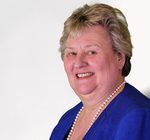
    The statement made by Heather Wheeler, the Parliamentary Secretary at the Cabinet Office, in the House of Commons on 11 July 2022.

    The severance pay for Ministers is established in legislation that was passed by Parliament in 1991 and that has been used by successive Administrations over several decades. The Ministerial and other Pensions and Salaries Act 1991 states that where a Minister of eligible age ceases to hold office and is not reappointed to a ministerial office within three weeks, they will be entitled to a severance payment of a quarter of their ministerial annual salary. The context of this legislative provision is the reality that ministerial office can end at very short notice indeed, that reshuffles are a fundamental part of the operation of Government and, by their nature, routinely remove Ministers from office, and that, unlike in other employment contexts, there are no periods of notice, no consultations and no redundancy arrangements. Section 4 of the Act therefore makes provision for severance payments.

    This is a statutory entitlement, and it has existed and been implemented for several decades, by Governments of all stripes. Severance payments were made and accepted by outgoing Labour Ministers between the Blair and Brown years, as well as during the Administration in 2007, and by Liberal Democrat Ministers during the coalition. To ensure transparency, severance payments are published in the annual reports and accounts of Government Departments. As an example of the previous operation of this provision, the data published in 2010 indicated that severance payments made to Labour Ministers in that year amounted to £1 million. Finally, let me be clear that although this is a statutory entitlement, Ministers are able to waive such payments. This is not a matter for the Government; it is an entirely discretionary matter for the individuals concerned, and this is an approach that has been taken before.

    Fleur Anderson

    Thank you very much for granting this urgent question, Mr Speaker. I welcome the fact that there is a Minister to respond. In the middle of a cost of living crisis, and with families struggling to make ends meet and get to the end of each month, the British public will be rightly watching this distracted Government with disgust. They are too busy infighting to provide real solutions, and to add insult to injury, thousands of pounds of people’s hard-earned taxes will be handed out to former Ministers. By my reckoning, £250,000 of severance pay will be given to Ministers who have not been reinstated. Five former Secretaries of State will receive more that £16,000 each, including the former Secretary of State for Education, who was in post for 36 hours and is due to receive close to the annual starting salary for a teaching assistant.

    This unprecedented wave of resignations and the avalanche of abdications make this a unique case. The vast majority were not sackings or forced resignations. The departures were caused entirely by a discredited Prime Minister clinging to office and a Conservative party unwilling to deal with it. Now our constituents are forced to foot the bill, paying for this Government’s chaos yet again. So I ask the Minister: what is the exact cost of these resignations to the taxpayer? Have any payments already been made to former Ministers? If so, how much and to whom? Will Ministers receive the severance in a one-off payment to their bank account? How do these payments represent good value for money to the public, and what arrangements are there to ensure that they can be waived, as she identified, and returned to the Treasury? Former Ministers need to look themselves in the mirror and decide if their constituents would wish them to accept this payment, and this whole Government must tell us if they can really defend this use of our money.

    Mrs Wheeler

    As I said earlier, and to answer the hon. Lady’s question, at this point no Ministers who resigned are entitled to receive a severance payment. We have a three-week window.

    Michelle Donelan (Chippenham) (Con)

    Does my hon. Friend agree that it is disingenuous of the Opposition to reference my alleged severance pay, as I made it clear almost immediately after resigning that I would not be taking such money?

    Mrs Wheeler

    Indeed, and I thank my right hon. Friend for confirming that she has already talked to the permanent secretary of the Cabinet Office and that she will not be receiving the payment.

  • Anne-Marie Trevelyan – 2022 Comments on the UK-Ukraine Infrastructure Summit

    Anne-Marie Trevelyan – 2022 Comments on the UK-Ukraine Infrastructure Summit

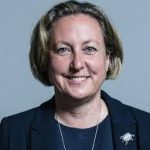
    The comments made by Anne-Marie Trevelyan, the Secretary of State for International Trade, on 11 July 2022.

    Ukrainian citizens are not only defending their country against Putin’s illegal war – they are trying to rebuild it.

    Restoring public services, unblocking disrupted supply chains and re-open life-saving evacuation routes all need urgent and concerted action. President Zelenskyy is right that these challenges must be shared by countries and businesses around the world.

    I was pleased to confirm the UK’s unflinching support to play our part in these efforts when I met Minister Kubrakov today.

    I heard how families have emerged from bomb shelters to find their properties turned to rubble. So I want to make sure that UK companies can help by providing temporary bridges and modular, prefabricated housing to help – the same type of emergency housing the UK needed after World War Two.

    Longer term, the UK will be providing expertise on the delivery of sustainable and resilient infrastructure through our brilliant UK-based businesses. And we’ll be continuing to work closely with Ukraine to offer them any help needed elsewhere, be it on energy, water, sanitation or public utilities.

    It’s particularly poignant to have held the inaugural taskforce meeting in Poland.

    Poland has been quite literally on the frontline of the efforts to support Ukraine against Putin. The government and its citizens have been extraordinarily generous in their support of Ukraine. It makes the UK even prouder than ever to call Poland a friend, and I’m pleased to have strengthened that friendship today.

  • Boris Johnson – 2022 Answers at Liaison Committee (Tax Cuts)

    Boris Johnson – 2022 Answers at Liaison Committee (Tax Cuts)

    The answers given by Boris Johnson, the Prime Minister, at the Liaison Committee held in the House of Commons on 6 July 2022.

    Darren Jones: Prime Minister, how is your week going?

    The Prime Minister: Terrific, like many others.

    Q99 Darren Jones: Did Michael Gove come and tell you to resign today?

    The Prime Minister: I think I said earlier that I am here to talk about what the Government is doing. I am not going to give a running commentary on political events.

    Q100 Darren Jones: Okay. Let’s talk about what the Government is doing. You have just said today that the Government is giving the biggest tax cut in a decade, but it is a tax cut to your own tax rise, isn’t it?

    The Prime Minister: No, what it does is it gives 30 million people—by lifting the threshold, it gives them, on average, a tax cut of £330.

    Q101 Darren Jones: Against the tax rise that you previously announced. In fact, freezing tax allowances for average income tax payers means that they are going to pay £46.8 billion more over the next four years. Tax is going up, not down, isn’t it?

    The Prime Minister: It is certainly true that what we have had to do is make sure we deal with the fiscal impacts of covid. The Committee will remember that we had a colossal fall in output. We had the biggest pandemic for 100 years, and we had to look after people and businesses to the tune of £408 billion. That money doesn’t grow on trees. In order to protect our schools and hospitals, we of course have had to—

    Darren Jones: Increase the tax levels.

    The Prime Minister: We have had the health and care levy. What we are doing now is helping people with, on average, a £330 tax cut.

    Q102 Darren Jones: Prime Minister, I asked about the tax cut that was announced today, but I will move on. Let’s look at the economy before the pandemic. You mentioned the pandemic—an event that was very difficult for the Government. Before the pandemic—between 2010, when the Conservative party came into office, and the pandemic—national debt increased by £640 billion. It is now at 100% of national wealth, and you keep announcing tax cuts and spending plans at the same time. Are you just going to keep putting more and more debt on to the nation’s credit card?

    The Prime Minister: Sorry, you were just complaining about taxes going up.

    Darren Jones: I am asking about what you are doing in government, Prime Minister.

    The Prime Minister: You need to get your story straight.

    Darren Jones: My facts are from the Treasury, Prime Minister. Debt is up.

    The Prime Minister: We have to be sensible and we have to be responsible. We are making sure we manage the public finances in a prudent way, and I think that there will be scope for further tax cuts in due time.

    Q103 Darren Jones: Maybe imminently. Prime Minister, can I move on to economic growth? You said yesterday that you welcomed your new Chancellor, Nadhim Zahawi, because he would grow the economy, presumably in a way that Rishi Sunak couldn’t.

    The Prime Minister: I don’t think I said that. Anyway, go on.

    Q104 Darren Jones: We are more likely to end up in a recession this winter, aren’t we?

    The Prime Minister: As I was saying to Stephen, the economy and people are going to be under a lot of pressure, but I think we will get through it.

    Q105 Darren Jones: Do you think there will be a recession in the winter?

    The Prime Minister: I think there will be a lot of pressure caused by the price spike. We are going to do everything we can to shield people and deal with the underlying causes of inflation, whether that is through the energy markets, the labour markets or whatever. There is a lot that we can do, and I think we will emerge stronger on the other side.

    Q106 Darren Jones: You and your supporters have often said that you have got all the big calls right as Prime Minister, but actually on tax, debt, growth and pay, things have been getting worse, not better. I understand that 14 million people voted for you in 2019; you have let them down, haven’t you?

    The Prime Minister: No, I think that what they can see is a Government that gets on relentlessly with a programme of uniting and levelling up. We have the biggest investment in infrastructure for a century—£650 billion going in on all the things that Huw was talking about: roads, rail, transport of all kinds and housing. It is a colossally ambitious programme that we are still doing. At the same time, because, as you put it, Darren, we got the big calls right—

    Darren Jones: I didn’t agree with that, by the way.

    The Prime Minister: Well, I’m going to agree with it even if you don’t. We got the big calls right on covid. We came out of lockdown faster, and we got it right with the vaccine. That has put us in a position to look after people, and that is what we are doing.

    Q107 Darren Jones: Thank you. I’m going to move on to my next question. I would like to read something out to you: “When a regime has been in power too long, when it has fatally exhausted the patience of the people, and when oblivion finally beckons—I am afraid that across the world you can rely on the leaders of that regime to act solely in the interests of self-preservation, and not in the interests of the electorate.” Who authored that quote?

    The Prime Minister: You are trying me. Was it Cicero? Was it Aristotle? Let me think—was it Plato? Was it Montesquieu?

    Q108 Darren Jones: Maybe Nero. Just to break it to you, it was you, Prime Minister. Perhaps it was foresight. I will finish, because I am about to run out of time. I made a joke there, but in all sincerity—I know this must be difficult for you personally—this isn’t funny. This is not a game. People are struggling across the country. It is not brave for you to carry on doing this. I think, in my view, you are hurting the country, Prime Minister. On a very human level, surely you must know that it is in the country’s interests for you to leave now.

    The Prime Minister: I think the country is going through tough times. You are making a point about duty, right? I look at the issues this country faces, I look at the pressures that people are under and the need for Government to focus on their priorities—which is what we are doing—and I look at the biggest war in Europe for 80 years, and I cannot for the life of me see how it is responsible just to walk away from that, as I said earlier on in PMQs, particularly not when you have a mandate of the kind we won two or three years ago.

  • Boris Johnson – 2022 Answers at Liaison Committee (Fuel Duty)

    Boris Johnson – 2022 Answers at Liaison Committee (Fuel Duty)

    The answers given by Boris Johnson, the Prime Minister, at the Liaison Committee held in the House of Commons on 6 July 2022.

    Huw Merriman: Turning to another area of policy that perhaps needs to change, at the moment 4% of the Exchequer’s revenues come from motoring taxes. Those will plummet to zero when we all drive electric vehicles. Are you serious about getting a new form of road pricing policy in place to fill that hole? If not, how will it be filled?

    The Prime Minister: Road pricing is something that we will eventually have to consider. I’m not attracted to it. I seem to remember that I successfully campaigned to remove the western extension of the congestion charge in London.

    Q89 Huw Merriman: I am not talking about road charging in that way; I am talking about—as we do at the moment—charging people per mile they drive, because that is what fuel duty does. You will have to replace that.

    The Prime Minister: I see what you mean—for electric vehicles as well, so that you charge a mileage.

    Q90 Huw Merriman: Yes, something along those lines.

    The Prime Minister: It is certainly the case that we will need a substitute for fuel duty.

    Huw Merriman: This comes back to my point about policy delivery, because—

    Chair: I am astonished. This is imminent. We are introducing electric cars.

    Q91 Huw Merriman: May I finish, Sir Bernard? For three months, Prime Minister, No. 10 has had a recommendation for a working body just to look at this, because something has to fill the 4%. The Treasury signed off on it, and for three months it has been sat in No. 10. One week, I am told somebody has signed it off; the next week, someone else has looked at it and stopped it, and it is stuck. My question is: the inertia inside No. 10—perhaps because of the events that we will go on to talk about—

    The Prime Minister: Nonsense.

    Q92 Huw Merriman: You say it’s nonsense, but it is a nonsense that we have been waiting three months just for someone to sign off on something that fills 4% of the Exchequer—that is the nonsense. Do you not agree that something should be done? If you can’t do it, do you think that perhaps someone else could come in and run it properly?

    The Prime Minister: This No. 10 was actually the first Government in Europe to set a timetable for moving away from internal combustion engine cars by 2030.

    Q93 Huw Merriman: I know. That is why you should follow through on the consequences of it.

    The Prime Minister: We have been moving at blistering speed. We are looking at all fiscal proposals to replace fuel duty, and I am happy to come back.

    Q94 Huw Merriman: You’re not. You are actually currently sitting on all proposals.

    The Prime Minister: I cannot believe that the Treasury is showing the slightest hesitation or reluctance to find a new way of taxing motorists.

    Q95 Huw Merriman: That is my point. The Treasury signed off on it. No. 10 then insisted on looking at it and has sat on it for three months. I think Andrew Griffith is currently the one who has now said, “No, I don’t like this.” We are therefore stuck, having thought we had cleared all the hurdles.

    The Prime Minister: I will take it up with Andrew.

    Q96 Chair: I was shadow Transport Secretary in 2000, and road charging was seen as the future then. Successive Governments have dodged it, but why is your Government dodging it when you are already abandoning the revenue stream from hydrocarbons?

    The Prime Minister: Sir Bernard, why do you think we necessarily are? We have got to find a way of filling the gap left by fuel duty.

    Q97 Chair: You have actually got a target for eliminating fossil-fuel cars, but you have not got any plan in place to replace the revenue.

    The Prime Minister: I think it highly unlikely that the Treasury will let any opportunity go to substitute revenue from motoring. What we want to do is, for the purposes of the environment, to encourage the take-up of low-carbon vehicles, and that is why the fiscal strategy is framed as it currently is. That is what we are doing for the time being.

  • Boris Johnson – 2022 Answers at Liaison Committee (Airport Delays)

    Boris Johnson – 2022 Answers at Liaison Committee (Airport Delays)

    The answers given by Boris Johnson, the Prime Minister, at the Liaison Committee held in the House of Commons on 6 July 2022.

    Huw Merriman: In the six minutes I have, Prime Minister, I want to talk to you about transport policy delivery—if you’re focused. I want to talk about rail, air and also road. Starting with rail, do you have all of the policy, and legal interventions and levers, that you need to end this rail strike?

    The Prime Minister: Thanks very much, Huw. I call on the union barons and the railway companies to sort this out. I think that they should be able to do it. And I think that, yes, we probably do need a few more tools.

    Q80 Huw Merriman: Specifically, what would they be?

    The Prime Minister: I think that you could have minimum service levels; you could have ballot thresholds. And as you know, we are bringing in—I think we have already brought in—the provision for agency workers where that is necessary.

    Now, that is not going to fix problems like train drivers; you are not going to get agency workers to drive a train. But the argument that I would make is that you need to modernise.

    Q81 Huw Merriman: Let me again just focus on the levers, because I think that in the Conservative manifesto there was a line that said, “Only the Conservatives could get Brexit done”, a few more things, “and stop passengers being held hostage by the unions.” And that was with the introduction of that policy of minimum service levels. Yet that hasn’t been introduced.

    The Prime Minister: It has not, but—

    Q82 Huw Merriman: And people are being held hostage, which might be your view. Why did you not bring, with an 80-seat majority, that legislation through before the strikes started?

    The Prime Minister: That is a very good question. And—

    Q83 Huw Merriman: And the answer is?

    The Prime Minister: And the answer is: we should have done it. The trouble was that we had a lot of covid stuff to deal with and I’m afraid it got pushed to the right, and I regret—

    Q84 Huw Merriman: I thought you might say that, although there have been other things we have been able to do, notwithstanding covid. Okay, let me move on to airports. There has been massive disruption to the airports—people having their holidays cancelled at the last minute. Why wasn’t more done to stop airlines from putting more flights in place than they had the bandwidth of staff to deal with?

    The Prime Minister: Well, the airlines should not be abusing passengers in the way that they have been, and I think there should be greater protections. But I think the—

    Q85 Huw Merriman: But again, this is all, “There should be”. My question is: why hasn’t there been?

    The Prime Minister: Because basically, we were trying to get any airlines flying at all. I mean, Diana has asked a very good question about passports, where we’re putting huge numbers of people to try and speed up the delivery of passports. We had a situation in which no airlines were moving at all. And we had to put £8 billion—as you will remember, Huw—into supporting the airline industry.

    Q86 Huw Merriman: Indeed. But Gatwick, for example, has controlled the number of flights that will be able to fly out during July and August, because they can see the airlines are trying to fly at 2018 levels. They could see the number of staff coming on, so they have taken action. Other airports haven’t necessarily. The regulator—the Civil Aviation Authority—doesn’t have the power, up front, to implement these types of policies. Shouldn’t it have that power?

    The Prime Minister: I am willing to be persuaded that it should.

    Q87 Huw Merriman: Because when we put a report on that basis, the recommendation was rejected by Government on the basis that there wouldn’t be a proposal to give the regulator up-front powers to take action, including to help with compensation. Perhaps we can push him a bit more on that, if you are behind it—

    The Prime Minister: Huw, I am going to have to look into what more powers we might need to take to get the airlines to behave responsibly towards their passengers. But I think the experience of the public is pretty wretched at the moment for all sorts of reasons, and they need to do much, much better.

  • Keir Starmer – 2022 Keynote Speech on a Fresh Start for Britain

    Keir Starmer – 2022 Keynote Speech on a Fresh Start for Britain

    The speech made by Keir Starmer, the Leader of the Opposition, in Gateshead on 11 July 2022.

    Good morning, everyone.

    Three days ago, my focus was on the immediate past.

    On the importance of leading with truth and integrity. On the difficult times our country faced in lockdown. And on the fact that those who make the rules shouldn’t break the rules.

    I set out my position on that question.

    And the difference between me and the Conservative Party now desperately trying to launder its integrity. Even as it stood by an unfit Prime Minister to the bitter end.

    Today I want to put my focus where it ought to be.

    Where it will be every day between now until the next General Election. On the future. On the sort of nation that Britain can be and the sort of nation Labour wants it to be.

    Because at the moment Britain is stuck.

    Stuck with a tanking economy.

    Stuck at home unable to get a passport or a flight.

    Stuck on the phone trying to book a GP appointment.

    Our taxes are going up.

    Food and energy bills are out of control.

    And many of the public services that we rely on have simply stopped working.

    Britain deserves better than this.

    We need a fresh start.

    And I know you expect me to say this but we won’t get that, from a Conservative Party infected with the chaos virus caught from Boris Johnson.

    Only Labour can reboot our economy and end the cost-of-living crisis.

    Only Labour can revitalise our public services and re-energise our communities.

    Only Labour can unite the country and clean-up politics.

    These three tasks will define my Government.

    Because until we address them, we leave ourselves vulnerable to the shocks and crises we have endured this past, long decade.

    Yet the way I see it, the challenges we face – climate change, technology, an ageing population – are an opportunity to re-energise Britain.

    Some nation is going to lead the world in new nuclear power.

    Why not this one?

    Some nation will create the first generation of quantum computers.

    Why not us?

    Some nation will design medicines personalised to match our unique DNA.

    Why not Britain?

    This determination to move Britain forward is what drives me.

    Britain should be a confident and prosperous nation.

    But at the moment it’s full of people worried about the next bill coming through the letterbox.

    Take Zoe, from Sunderland, just down the road.

    Like many people, Zoe’s gas and electricity bills have doubled.

    She says:

    “I’m struggling to get by. I haven’t managed a full shop for food in over a month. The cost of living is scaring me and the future looks terrifying”.

    I’ve been up and down the country a lot recently – it’s one of the good things about this job.

    And let me tell you:

    I’ve heard a version of Zoe’s words from almost everyone I have met.

    Her words reflect the reality facing millions of working people in Britain right now.

    People like my family.

    I didn’t come from a privileged background.

    My start in life was completely ordinary.

    Dad was a tool-maker. Mum was a nurse. Our house was a pebble-dashed semi and we had a Ford Cortina – this was the 1970s!

    But I owe everything – all my values – to my upbringing.

    My work ethic and dedication to public service.

    But the real gift my parents gave me was the opportunity to get on.

    And that is why I came into politics.

    I have been lucky enough to take a journey through my life.

    From a working-class family to head of the Crown Prosecution Service.

    So when I say I don’t want anyone in this country held back by their circumstances – you know it is not just words.

    It’s why – for me – the state of our economy is personal.

    Because when people like Zoe are so scared of the future.

    When our economy is so wracked by low growth and insecurity – then working people get stuck. And that means Britain gets stuck.

    The most important goal of my Labour government will be to grow the economy.

    And we will not accept growth that doesn’t improve people’s lives.

    An economy can grow and leave some of its people behind. But a nation cannot grow in that way.

    Not long ago I was in Burnley and was left in no doubt by the people I met there.

    They all had great ambitions, for themselves and their town.

    But they don’t have a government that shares that ambition.

    Boosterism and wishful thinking are not the same as ambition.

    If you don’t have a plan to make your hopes real, all you are selling is an illusion.

    The other thing my background gives me is impatience.

    If you are born without privilege, you don’t have time for messing around.

    You don’t walk around problems without fixing them.

    Or surrender to the instincts of organisations that look to preserve themselves rather than modernise.

    So, believe it or not, I’m not that interested in the political game.

    The daily saga of who is up and who is down in Westminster. No, not even this week or last.

    I’m impatient to get things done.

    I can see what is wrong with Britain and I want to fix it.

    It’s what I have done with our own party.

    When I took on this job in April 2020, I knew we had a big task before us.

    We had to change our party and prepare for power all in one go.

    Not change for change’s sake, but change with a purpose: to remake a Labour Party that understands its purpose is service, not self-indulgence. Country first, party second.

    That’s why we had to root out the antisemitism which had infected our party.

    That’s why we had to show our support for NATO is non-negotiable.

    Show that we want business to thrive and prosper and shed policies that won’t work.

    The Labour party was stuck. Stuck in opposition. Stuck licking its wounds after four painful defeats.

    Of course, we still have more to do, but now Labour is moving forward again.

    That is what I will do for Britain – and I will do it with a plan to tackle the three biggest issues we face.

    1. Rebooting our economy and ending the cost of living crisis

    2. Revitalising our public services and re-energising our communities

    3. Uniting the country and cleaning-up politics.

    Let me start with the economy.

    I’ve explained why this is personal.

    How my mission in politics cannot be achieved unless we get our economy growing again.

    So let me tell you now: Labour will fight the next election on economic growth.

    The first line of the first page of our offer will be about wealth creation.

    We will show how a Labour economy based on partnership and contribution can make Britain richer.

    And we won’t retreat to a comfort zone on public services and hope the focus of the country shifts.

    Many of our plans are already in place.

    Our strategy to buy, make and sell more in Britain.

    Our five-point plan to reform the Northern Ireland protocol and make Brexit work.

    Our Climate Investment Pledge that invests £28bn a year to help us win the race for the next generation of jobs.

    Gordon Brown is looking at new forms of economic devolution for us, so that every city, every town, every place has the chance they deserve to contribute to our economy.

    David Blunkett is leading a skills commission made up of entrepreneurs, business leaders, and policy experts.

    Whilst Lord Jim O’Neil is looking at how we can make Britain the best country in the world to start a new business.

    And never forget it was Labour who pushed so hard for a windfall tax on energy companies to help those struggling with their bills.

    In the weeks ahead, I will say more about how an economy based on partnership and contribution works, and how it can grow us out of the cost-of-living crisis.

    But let me say here why I think only Labour can deliver for Britain – whoever emerges from the chaotic circus now playing out in Westminster.

    Because the task as I see it, is to create an economy that is strong, secure, and inclusive.

    One that is resilient to the shocks of an uncertain world – which doesn’t just create jobs, but good, well-paid secure jobs.

    And growth that does not harm society or peoples’ lives or trash the public finances.

    I cannot believe what we are hearing from the candidates to be the next Tory leader.

    The Tory leadership race hasn’t even officially begun yet but the arms race of fantasy economics is well underway.

    Over the weekend, the contenders have made more than £200 billion worth of unfunded spending commitments. Let that sink in.

    That’s more than the annual budget of the NHS, splurged onto the pages of the Sunday papers, without a word on how it’ll be paid for.

    And on taxes, the vast majority of them served in Boris Johnson’s government.

    They went out every day for months and years to defend his behaviour.

    They backed every one of his 15 tax rises.

    They’re behaving like they’ve just arrived from the moon.

    They nodded along and trooped through the voting lobbies to support them.

    Now, it turns out they were opposed to them all along. The hypocrisy is nauseating.

    When I say decency and honesty matter, that includes being honest about how we fund every single thing we promise.

    It’s why when I say we have a plan for investing in education, I also say it’ll be funded by closing the VAT loophole for private schools.

    Or when I say we need to sort out mental health treatment in this country, I also tell you that we’ll do it by closing tax loopholes used by private equity.

    Politics means tough decisions.

    It means being frank with the public.

    It doesn’t mean tossing out tens of billions of unfunded spending commitments just to play to the gallery of Tory MPs and members.

    But it also means being frank with your own party.

    I don’t believe you can achieve a strong economy with just a tired formula of deregulation and tax cuts.

    But nor do I believe you can achieve it if all you have is redistribution and public sector investment.

    Most of all, I don’t think you can achieve it with the false choice running through the Government’s levelling up agenda – of north versus south, city versus town. That’s not partnership.

    We need every community to make a contribution to growing national prosperity.

    We can’t have people like Zoe stuck.

    That is what the Conservative Party doesn’t understand about the modern economy.

    They don’t believe in partnership. They don’t believe you need state and market, business and worker, the everyday economy and the technological frontier – all working together for a strong, secure and inclusive economy.

    But we can’t do that without first-rate public services.

    That’s the second big challenge where only Labour is the answer.

    Every Labour government inherits the same task from the Tories – to revitalise neglected public services.

    It will fall to us to do the same again – and we will.

    It is not just a social justice issue, it speaks directly to the type of economy we want to build.

    We saw that in the pandemic.

    Close public services like childcare, schools, GP surgeries and look at the impact on productivity.

    When we push forward with our plans to make sure everyone can access mental health treatment within one month, when we recruit 8,500 mental health professionals, fully-funded by closing a tax loophole on private equity – this is an investment in the economic strength of the country as well as the health and wellbeing of our communities.

    Or to take another example, hundreds of thousands of people over 50 have left the labour market since the pandemic.

    A million more people are out of work on benefits.

    The biggest drop in the employment rate of the major G7 economies.

    And as Jonathan Ashworth (Shadow Work and Pensions Secretary) is setting out today, we will reform employment support to help people get back into work.

    But, reforming public services can’t just be a question of investment.

    We will also need to think imaginatively – about how technology is expanding the range of what is possible to do, about how we can put people in control of more personalised and responsive services.

    This means we have to think differently about the purpose of each of our public services.

    In health it means finally making good on the promise to prevent illness, not just cure it when it happens.

    In education it means not just imparting knowledge, but developing the creativity, resilience, curiosity, and problem-solving abilities of every young person.

    In social care it means giving people a better quality of life and paying for it in a way that is genuinely fair.

    And in tackling crime, it means developing neighbourhood crime hubs that can prevent crime and build community cohesion rather than reacting when things go wrong.

    Each of these would mean big strategic changes to the way our public services work.

    And allow more people to fulfil their ambitions free from illness or insecurity.

    This leads me to the third defining task of my Government.

    Re-energising communities, uniting the country, and cleaning up politics.

    A Labour government will bring people back together.

    I am tired of our divisive politics. We have a government with no understanding of how to grow the economy or reform our public services.

    So it creates division to set us against one another and distract from its failures.

    Some people say to me “this is politics now”. Division is how you win.

    Let me be clear: I want no part in that.

    If this is what politics has become, then we will change politics.

    We’ve already set out plans to clean up Westminster.

    Under Labour there won’t be any MPs lobbying for their friends, but a Labour Britain will be one where we celebrate who we are.

    One which embraces both our differences and what we have in common.

    There will always be issues that divide us, points of disagreement, there is nothing wrong with that, that’s democracy.

    But even in a robust democracy, it is vital we settle those disputes in a civilised way, that we play by the rules.

    That’s the reason I took the action I did when faced with those allegations in Durham.

    I wanted to show that politicians will risk their careers on matters of principle.

    That we are not, as so many people in this country believe, only in it for ourselves.

    And that I am committed to the values which earn Britain respect all around the world – fair-play, respect for difference, the rule of law.

    Labour will end the era of divisive politics and clean-up Westminster.

    And show we are the self-confident, forward-looking, optimistic United Kingdom, I know we can be.

    I don’t think it’s too hard to describe what people want from politics.

    The mission I’ve set out today certainly isn’t complicated.

    I don’t want anyone in this country to be held back by their circumstances.

    And I want to get Britain moving again, so we can once more face the future with confidence.

    I have talked today about why that mission is personal to me.

    And I have talked previously about the moment I knew I needed to leave the law and go into politics.

    About the daily injustices I saw as Director of Public Prosecutions.

    Important examples are etched on my mind, for example, when we failed to deliver justice for Jane, the daughter of John and Penny Clough.

    Over the last few weeks, I have thought a lot about that.

    Thought about the nature of rules and how you change them.

    But what I thought back then, is what I still think now.

    There is no substitute for politics when it comes to tackling injustice and changing this country, and change is what my Labour Party will offer at the next General Election.

    We will give Britain the fresh start it needs – we will reboot our economy, re-energise our communities, revitalise our public services, unite the country, clean-up politics, and end the cost-of-living crisis.

    Thank you.

  • Boris Johnson – 2022 Answers at Liaison Committee (Meeting with Alexander Lebedev)

    Boris Johnson – 2022 Answers at Liaison Committee (Meeting with Alexander Lebedev)

    The answers given by Boris Johnson, the Prime Minister, at the Liaison Committee held in the House of Commons on 6 July 2022.

    Dame Diana Johnson: My final question. Could you confirm—I would appreciate a yes or a no—that you met former KGB officer Alexander Lebedev without officials when you were Foreign Secretary on 28 April 2018?

    The Prime Minister: I would have to check.

    Q42 Dame Diana Johnson: Are you having a lapse of memory again?

    The Prime Minister: No. You are asking me a very specific question about a very specific date. I would have to get back to you. I certainly have met the gentleman in question—

    Q43 Dame Diana Johnson: Without officials?

    The Prime Minister: He was the proprietor of the London Evening Standard when I was Mayor of London. I am certainly not going to deny having met Alexander Lebedev. I certainly have. As far as I remember, he used to own the London Evening Standard.

    Q44 Dame Diana Johnson: Yes, but with officials when you were Foreign Secretary. Did you meet him with officials or without?

    The Prime Minister: Look, I have certainly met him without officials. As I say, he is a proprietor of a newspaper.

    Q45 Chair: Perhaps you could write to us with a specific answer to that very specific question.

    The Prime Minister: Very happy to.

    Q46 Dame Meg Hillier: Can I just follow that up, Prime Minister? You said you met him without officials. Presumably that was when you were Mayor of London. When you were Foreign Secretary, did you meet Alexander Lebedev without officials?

    The Prime Minister: I think I probably did, but—

    Q47 Dame Meg Hillier: Probably did?

    The Prime Minister: As I say, I would need to check.

    Q48 Dame Meg Hillier: You are used to regularly meeting him? “Probably” because you meet him often or “probably” because you can’t remember?

    The Prime Minister: I have met him on a very few occasions—

    Q49 Dame Meg Hillier: As Foreign Secretary?

    The Prime Minister: On the occasion you mention, if that was when I was Foreign Secretary, then yes.

    Q50 Dame Meg Hillier: Without officials?

    The Prime Minister: Yes. That makes sense, yes.

    Q51 Dame Meg Hillier: Did you report to your officials that you had met him?

    The Prime Minister: I think I did mention it, yes.

    Q52 Chair: And where did you meet him?

    The Prime Minister: I met him in Italy, as it happens, but I really, you know—

    Chair: Perhaps you will write to us.

    Dame Meg Hillier: Was it a personal engagement?

    Chair: We will move on.

  • Boris Johnson – 2022 Answers at Liaison Committee (Visa System For Ukrainian Refugees)

    Boris Johnson – 2022 Answers at Liaison Committee (Visa System For Ukrainian Refugees)

    The answers given by Boris Johnson, the Prime Minister, at the Liaison Committee held in the House of Commons on 6 July 2022.

    Dame Diana Johnson: Thank you. Good afternoon, Prime Minister. A few weeks ago, I met a group of Ukrainian MPs who had travelled to the UK via the Republic of Ireland. Like every other country, the Republic of Ireland, for Europe, doesn’t require a visa. They then travelled up through the common travel area. They didn’t have anything checked. They were raising with me whether it was a sensible decision to allow such a bureaucratic visa system for Ukrainians fleeing Ukraine—if it was a sensible use of resources. As we know, it has compromised the capacity of the Home Office. What do you say to that?

    The Prime Minister: I hear you loud and clear, Diana. I think that the argument that has been put me is—well, two things. First of all, we have got to be careful that we are able to screen people properly and—

    Dame Diana Johnson: Yes, but these people are coming up through the common travel area; there’s no screening.

    The Prime Minister: I accept that, and I accept the limitations of screening, but on the other hand, you’ve got to look at what we have done so far: 135,000 visas have been issued, and I think that the record is getting better and better. The UK is hosting a lot of Ukrainians, and I think we should be very proud of that.

    Q32 Dame Diana Johnson: Okay. Perhaps I will come on to the problems with the Home Office and, as I have just alluded to, the capacity issues of the Home Office when they designed a whole new visa system. Why is it that British people are waiting so long to get their passports when we all knew there was going to be a surge in passport applications after covid, with people wanting to travel, have family holidays, get married abroad, and all of those things? Why is it that we’ve ended up with people waiting so long and having to spend so much time and money to get a passport?

    The Prime Minister: It is very frustrating, and I share everybody’s frustration. I think the answer is that the demand has been very big because people are very keen to go on holiday—

    Q33 Dame Diana Johnson: But this isn’t rocket science; you knew this.

    The Prime Minister—and we’ve rushed people into the Passport Office—

    Q34 Dame Diana Johnson: But why are we having to do that? We knew this was happening.

    The Prime Minister—and the numbers are starting to improve. I think, from memory, 91% get their passport within four to six weeks.

    Q35 Dame Diana Johnson: Well, the standard that the Home Office is supposed to operate on is three weeks. It is now 10 weeks. When will it go back down to three weeks?

    The Prime Minister: Well, I don’t know when it goes back down to three weeks, but I think that what I have in my head is that 91% get their passport within four to six weeks. I would urge everybody who is thinking of going away four to six weeks from now and hasn’t got a passport to get a passport.

    Q36 Dame Diana Johnson: Okay, so the bread-and-butter issues just aren’t being looked at by the Home Office and dealt with in a very good way. Why is it that your Government now have a backlog of 89,000 asylum claims that they have not decided? Why has that happened?

    The Prime Minister: Well, the UK has historically had very large numbers of asylum claims—

    Dame Diana Johnson: They’re stable.

    The Prime Minister—and I seem to remember that there were many, many thousands of asylum claims left un—

    Dame Diana Johnson: It is incorrect, Prime Minister.

    The Prime Minister—undecided when the last Labour Government left office.

    Q37 Dame Diana Johnson: No, Prime Minister. The asylum claims in this country have remained fairly steady in the last few years, so your Home Office has built up a backlog of nearly 90,000 claims they’ve not decided. Can I just ask you, then, why is your Government so bad at actually sending back failed asylum seekers? In 2010, we sent back 10,663; last year, we sent back 806 failed asylum seekers. Why?

    The Prime Minister: Diana, I don’t think that it’s the fault of the officials; I think they do their level best. I don’t think it’s that they’re so bad; I think it’s that our brilliant legal profession is so good at finding reasons why they should not be returned.

    Q38 Dame Diana Johnson: That’s your answer? It is not to do with the fact that you have not been able to enter into agreements with other countries and you have not got a replacement for the Dublin agreement?

    The Prime Minister: My—

    Dame Diana Johnson: No? Okay.

    The Prime Minister: If you look at what happened with the Dublin agreement, that broke down across the board. Returns agreements have been extremely hard to strike.

    Q39 Dame Diana Johnson: Well, let’s put it this way. You said about 20 people came across in small boats across the channel last year—20—and there were 28,000 who came. On the civil service cuts that you talk about—the 20%, 30% or 40% cuts—will that help the Home Office get to grips with some of these problems, or will it make the situation worse?

    The Prime Minister: I think that certainly what you need when you talk about the asylum seekers crossing the channel illegally and in very frail vessels—

    Dame Diana Johnson: No, your cuts.

    The Prime Minister: The way to fix that is not just by having more civil servants, but to have a proper deterrent for the people traffickers—

    Q40 Dame Diana Johnson: I don’t think we are talking about having more, Prime Minister. We are talking about cuts.

    The Prime Minister—and to reduce the numbers of people who are being made to risk their lives.

  • Boris Johnson – 2022 Answers at Liaison Committee (Ukraine)

    Boris Johnson – 2022 Answers at Liaison Committee (Ukraine)

    The answers given by Boris Johnson, the Prime Minister, at the Liaison Committee held in the House of Commons on 6 July 2022.

    Tom Tugendhat: Prime Minister, good afternoon. The alliance that has been brought together to dissuade Russia from further actions, and indeed to push Russia out of Donetsk and Luhansk, has clearly got a window of opportunity before the winter starts to bite and the coalition starts to fracture as energy prices in Europe rise and homes across our country start to suffer. Are you able to concentrate on building that alliance at the moment?

    The Prime Minister: Yes, and thanks, Tom. If you look at what the UK has done over the last couple of weeks, I think that the efforts of UK diplomacy, strategists, security and our armed forces have been very considerable. The G7 outcomes were at the upper end of expectations; NATO, again, probably exceeded expectations, both in the level of unity and in virtually every country around the table in NATO being determined to help President Zelensky in that window of opportunity you described.

    Q2 Tom Tugendhat: And you are seeing, of course, food prices rise around the world as the ports of Odesa are closed and Mariupol and so on are occupied. What are you doing to make sure the food is getting out from the Black sea—that such wheat as is available is able to get out? How are you supporting the United Nations, and what are you doing to prepare those states, including in the middle east and, of course, Africa, that are facing enormous food poverty, with the possibility of migration and the pressures that that will cause?

    The Prime Minister: First of all, on the grain that is being held hostage in Odesa, we are working with the UN Secretary-General, António Guterres, who is leading the negotiations. The Turks are clearly crucial: they hold the waters. What the UK is offering is both demining capabilities, including remote demining capabilities—which we are good at—and the insurance of the vessels that might be used to ferry the grain out through the Bosphorus.

    We are looking at other routes in addition to convoys through the Bosphorus. We are also doing what we can to help smaller packets of grain go through land routes, or indeed up the River Danube and out that way, and we are spending some money on upgrading the railways to that end. We are starting to see some growing quantities of grain coming out, not via the Black sea but overland and on the rivers.

    Q3 Tom Tugendhat: As you know, we are seeing enormous pressure on the weaponry that goes into Ukraine. We are seeing a lot of promises but, sadly, fewer deliveries than promised from many countries. What are you doing to increase production and co‑operation between armaments companies around Europe, and in the United States and Canada, to increase the supply?

    The Prime Minister: The UK led the way in inaugurating the Ramstein conferences, which have brought countries together to supply weaponry to Ukraine, though the Americans and I are very much in the lead on that and are certainly providing the bulk of what is going in. We will be doing more in August at the Copenhagen conference, as I am sure you know—another military donor conference.

    The supplies continue to go in. The Ukrainians are steadily getting the kind of kit that they need if they are going to expel the Russians from where they are, but it is also very important that they are trained to use the multiple launch rocket systems effectively, so that very expensive weaponry is put to good use.

    Q4 Tom Tugendhat: Your Foreign Secretary has explained that victory in Ukraine means taking back every single square inch of Ukrainian soil, including Crimea. What is your view of victory?

    The Prime Minister: We cannot be more Ukrainian than the Ukrainians. That is for them to decide. President Zelensky has set out his ambitions; it will ultimately be for him to decide what are the terms that he wants, but he has been very clear that he would like to return at least to the status quo ante 24 February.

    Q5 Tom Tugendhat: What is your view of what victory for us should look like?

    The Prime Minister: I think that victory for the Ukrainians would be a result that the Ukrainian people feel is the right one, and at the moment I think I am right in saying that 90% or more of Ukrainians believe passionately that there should be no deal that involves land for peace. They want the Russians expelled from every part of the territory that Putin has invaded.

    Q6 Tom Tugendhat: Are you confident of holding the NATO agreement—or, rather, the European and American agreement—together in making sure that that coalition sustains the Ukrainians, even when the winter prices start to bite?

    The Prime Minister: I think what was notable at Madrid was how anxieties about the friability of the coalition were proved to be unfounded. That is because the logic of the situation simply demands international unity. There is no other solution; there is no deal on offer. Even if the Ukrainians wanted to do a deal of land for peace, Putin isn’t offering any such deal. He remains utterly maximalist in his objectives. That is why we have to continue to support Zelensky in the way that we are. That’s accepted around the table.

    Q7 Tom Tugendhat: Part of your commitment to sustaining Ukrainian operations, and indeed wider British military operations, was your increase to 2.5%. Given that the various international organisations, and indeed our own statistical agencies, do not foresee any growth in the UK economy in the coming years, who are you going to take the money off in order to increase the defence budget?

    The Prime Minister: Well, I’m not certain I agree with your premise about the growth of the UK economy in the coming years. I am sure we will come to this in later sections, but both the IMF and the OECD see us going back to being at or near the top of the growth league.

    Tom Tugendhat: It’s still a percentage, rather than an absolute.

    The Prime Minister: Sure. The 2.5 is just a prediction. It is based on the—I think—reasonable assumption that we are going to have to continue with the investments we are making in the future combat aircraft system and the AUKUS agreements with the Australians and the Americans. Those are very big projects. They will be expensive, but they are the right things for the country.

    Q8 Tom Tugendhat: The last question from me will be on Sweden and Finland. Clearly, their membership of NATO is an extremely important event—not just for them, but for all of us. What are the implications for the guarding of the High North and particularly the integrity of the United Kingdom and Scotland as part of that in the Alliance? What commitments is the UK willing to make to increase co-operation with Sweden and Finland—not just in military supplies, but in training?

    Chair: As briefly as you can, please.

    The Prime Minister: We already do a lot of co-operating with the joint expeditionary force—the JEF—as you know, which is up there in the High North. The addition of Finland and Sweden is a great moment for the Alliance. I think it will strengthen the Alliance. It tells you all you need to know about Putin and his aggression that countries as peaceable as Sweden and Finland have decided to join NATO.

    Chair: Tobias Ellwood.

    Q9 Mr Ellwood: Prime Minister, it is good to see you again. We are establishing that the world is getting more dangerous; the next decade is going to be very bumpy indeed. I want to focus on UK defence capabilities. Despite the injection of £24 billion, the integrated review has seen a tilt towards cyber and space, which is welcome, but it has come at the expense of cuts to all three conventional services.

    At your last appearance before the Committee, prior to the Russian invasion, you boldly stated that tanks are not the answer to the defence of Ukraine and that “the old concepts of…tank battles on the European landmass…are over”. Prime Minister, do you now recognise the value of tanks as part of our land warfare mix? Do plans to reduce our tank numbers now need to be reviewed?

    The Prime Minister: Thank you very much, Tobias. It is certainly important for the UK to have tanks. However, what were even more valuable, for the Ukrainian purposes, were anti-tank weapons. If you look at what really changed the course of the first few weeks of the war, it was the Javelins and the NLAWs in particular that were used to destroy the tanks and make Russia’s tank warfare extremely difficult. You will have seen exactly what happened.