Tag: 2021

  • Peter Kyle – 2021 Comments on Ofqual Analysis

    Peter Kyle – 2021 Comments on Ofqual Analysis

    The comments made by Peter Kyle, the Shadow Schools Minister, on 29 July 2021.

    Today’s reports confirm what we already knew – that in amongst the shambles of last year’s examinations, the Conservatives hung state school pupils out to dry.

    Rather than coming forward with a clear plan to ensure fairness in this summer’s results, the Government has been asleep at the wheel. That carelessness is putting young people’s futures at risk.

    With exam results coming in just a fortnight’s time, the Government must urgently lay out what support will be available to pupils, parents and teachers on Results Day to ensure every child can progress in education or employment. A repeat of last year’s fiasco cannot, and will not, be tolerated.

  • Richard Harries – 2021 Comments on Human Rights in India

    Richard Harries – 2021 Comments on Human Rights in India

    The comments made by Richard Harries in the House of Lords on 22 July 2021.

    My Lords, I have enormous admiration for the people of India, especially for the resilience and sheer joy shown by so many of them even when living in dire poverty. I recognise the early birth of its culture 4,500 years ago in the Indus valley, and note the brilliant contribution of Indians in the fields of mathematics and astronomy over many centuries. I appreciate the long tradition of public debate and intellectual pluralism in India, as illustrated by Amartya Sen in his wonderful book, The Argumentative Indian. I marvel at the way in which a country of 1.4 billion people can hold democratic elections in which nearly 70% of the people vote. I also believe that many aspects of British policy and behaviour during the imperial period are deeply shaming. As Gandhi responded when asked what he thought of western civilisation, “It would be nice”.

    So it is with real sadness that I have to bring this Question before the Committee this afternoon, sadness that, over the past few years, India has joined the growing list of countries that have combined an increasingly autocratic rule, an appeal to a narrow nationalism and a denial of fundamental human rights.

    Fundamental to human rights and the long tradition of Indian public debate and intellectual pluralism is academic freedom. There are now numerous reports showing how this in increasingly under threat, with academics who hold views that the Indian Government do not like being put under pressure to resign, and with permission from the Government now being required to hold an international webinar if it relates to certain sensitive subjects. A recent headline in an Indian newspaper asked, “Is academic freedom any longer viable?” Another cited what can happen even in a privately funded Ivy League-equivalent university such as Ashoka. When Pratap Bhanu Mehta was pressured to resign, he said:

    “After a meeting with founders it has become abundantly clear to me that my association with the University may be considered a political liability. My public writing in support of a politics that tries to honour constitutional values of freedom and equal respect for all citizens, is perceived to carry risks for the university.”

    I should also mention journalists. Between 2010 and 2020, 150 were arrested, detained and interrogated, 67 in 2020 alone.

    NGOs—in India, they are called civil society organisations—are another group being put under great pressure. Even before Covid, they were finding it difficult to obtain visas. Since Covid, they have been harassed by new laws against protesters, and some have had their bank accounts frozen. So serious is this that Amnesty International, for example, has had to stop its work in India.

    A no less serious cause for concern is the position of Muslims. There are some 200 million Muslims in India—about 14% of the population. One recent survey revealed that 35% of Muslims in north-east India said that they had experienced discrimination over the past year and were now adopting a survival strategy in the realisation that an anti-Muslim Hindutva policy was now the dominant narrative.

    Christianity in India is not a western import. Christians have been there for 2,000 years, and were certainly well established in Kerala by the sixth century. There are 28 million Christians in India—about 2.3% of the population. They, too, are suffering from the present Hindutva policies. Their stigma is increased not only by the fact that they are not Hindu but because they are sometimes regarded—quite wrongly—as a legacy of western imperialism and because many of them are Dalits who converted to Christianity, as others converted to Buddhism, partly to escape the stigma of being treated as untouchable.

    So I come to the Dalits and other marginalised groups, such as the tribal peoples. It must be emphasised that the Indian constitution is in many ways admirable, in particular its emphasis on equality for all India’s diverse peoples. Its architect was the polymath, scholar and jurist Dr Ambedkar, who was recently honoured by having a new portrait unveiled at Gray’s Inn, where he studied. He was born into a family of what were then referred to as untouchables in 1891, and wrote:

    “Untouchability is far worse than slavery, for the latter may be abolished by statute. It will take more than a law to remove the stigma from the people of India. Nothing less than the aroused opinion of the world can do it.”

    His constitution was a step towards achieving that but, despite that constitution, Dalits continue to suffer disproportionately by every indicator. The policies and practices of the present reveal that the stigma is still there and being reinforced.

    When it comes to access to clean water and sanitation, Dalits lag far behind; when it comes to access to education and health, again they are disproportionately failed. The conscience of India can rightly be aroused when a student on a bus in Delhi is abducted, raped and murdered—as happened not long ago—but rapes of young Dalit girls in isolated villages happen frequently and get very little publicity. A high proportion of Dalits are bonded or day labourers—groups who are particularly vulnerable to violence. It is particularly distressing when Dalits try to get justice for some outrage and, again and again, fail to achieve it. A Dalit Christian village might be burned, as has happened, and the perpetrators known, but justice is delayed and delayed.

    At the moment, more than 24 Dalit rights activists are in jail on unproven charges, including 80 year-old poet Varavara Rao and, until he died on 5 July, 83 year- old Jesuit priest Father Stan Swamy. Father Swamy spent nine months in jail under the anti-terror law, the Unlawful Activities (Prevention) Act, was denied bail and medical care and was transferred to a hospital only when his condition became critical. At the time of his arrest, Stan Swamy was already suffering from Parkinson’s disease, significant loss of hearing in both ears and other serious underlying health issues. His death in custody and the continued incarceration of other defenders is a tragic indictment of India’s human rights record and the global community’s human rights commitments. India sits on the United Nations Human Rights Council and the United Nations Security Council, which carry specific human rights commitments.

    As I said at the beginning, it is a real sadness to note what is happening in India today. I believe that all true friends of India should protest about this and make it clear to the Mr Modi that this is a denial of what is best in Indian culture and is totally unacceptable. I know the Minister very much shares this concern about human rights, and I look forward to hearing from him about the action that Her Majesty’s Government are taking. I beg to move.
     

  • Sadiq Khan – 2021 Comments on Terrorism Threat in London

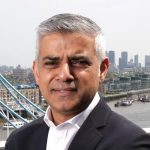
    Sadiq Khan – 2021 Comments on Terrorism Threat in London

    The comments made by Sadiq Khan, the Mayor of London, on 27 July 2021.

    Nothing is more important to me than keeping Londoners safe. Londoners have a right to expect us to be prepared for any potential attack on our city and that is why I have asked Lord Harris to undertake a fresh review into London’s preparedness.

    Whilst we have made some significant improvements since 2016, a lot has changed. The attacks on our city in 2017, the Manchester Arena bombing, and more recently, the attacks in Streatham and at Fishmongers’ Hall, means there’s much more to be learned. We know extremists are set on exploiting the uncertainty and hardship caused by the pandemic for their own gain and are adapting their tactics – including using the internet during lockdown to spread disinformation as well as attempting to radicalise the vulnerable to commit violent acts.

    We must adapt and strengthen our city’s capability to prepare and respond to the evolving threat of terrorism and the impact of the pandemic. Lives depend on it.

  • Sadiq Khan – 2021 Comments in Response to London Floodings

    Sadiq Khan – 2021 Comments in Response to London Floodings

    The comments made by Sadiq Khan, the Mayor of London, on 27 July 2021.

    The serious flash flooding in London over the last two weekends will have caused major concern and anxiety for many Londoners and it shows that the dangers of climate change are now moving closer to home. I’d like to thank partners including the London Fire Brigade, the Met Police and local councils who responded to hundreds of calls throughout Sunday afternoon and evening.

    Despite having limited powers in the area, it remains a key priority for myself and London’s council leaders that more is done to urgently tackle flooding and the other impacts of climate change. This is why I have brought together all of the key partners to see what more can be done, including the water companies who have to address the localised issues with infrastructure that may exacerbate the impact of flooding.

    I continue to lobby the Government to devolve more funding and powers to local leaders to enable us deal with both flooding and the wider impacts of climate change.

    COP26 this year provides an opportunity for the Government to show global leadership and give us the powers and resources we need to take even bolder action on climate change.

  • Alok Sharma – 2021 Update on the COP26

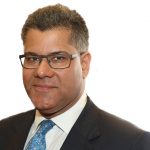
    Alok Sharma – 2021 Update on the COP26

    The comments made by Alok Sharma, the COP26 President, on 26 July 2021.

    Over the past two days, Ministers from more than 50 countries have gathered in London, as well as online.

    We have discussed the critical issues in the COP26 negotiations.

    As we have done so, heavy rains and flash floods have swept London.

    A sobering reminder of the urgency of our task.

    This was the first face-to-face meeting of this kind involving Ministers for more than eighteen months.

    It was a hugely refreshing experience, to be sitting across the table from one another.

    In person, there was a very positive atmosphere in every session.

    There was a sense of common endeavour and a shared desire to address the climate crisis before us.

    It was wonderful to see colleagues renew existing relationships, and build new ones.

    To sit around the table and have a discussion.

    And we all heard, loud and clear, the message from Ministers from climate vulnerable countries on the need for renewed urgency to tackle the climate crisis. And their lived experience of extreme climate change.

    We made progress over these two days. And there was a clear spirit of cooperation.

    However, the issues we have discussed are complex.

    There are still significant differences that persist.

    We have moved closer together. But still, on these vital issues we are not yet close enough.

    There is much more work to be done ahead of COP26 and in Glasgow itself.

    And we have agreed ways to keep the conversations going and drive action forward in the 97 days that remain to COP26.

    Over the past two days, we have reached a common understanding that COP26 needs to keep 1.5C within reach.

    This was also agreed by the G20 agreed to do last week.

    There was also a shared understanding from many that coal power and financing are not compatible with a 1.5 degree future.

    And so the UK Presidency will take forward work on how the Glasgow outcome will respond to any gap in ambition to keep 1.5C within reach.

    On adaptation, and adaptation finance particularly, we agreed we need a clear way forward

    And together, we have emphasised the need for COP26 to accelerate progress on the Global Goal on Adaptation.

    On finance, I have recently called for developed countries to publish a clear plan for how, together, we are going to deliver the $100 billion a year in international climate finance, which has been promised since 2009, between 2020 and 2025.

    I am delighted that Minister Flasbarth of Germany and Minister Wilkinson of Canada have agreed to lead this process. This will bring much needed transparency and predictability to developing countries and also reinforce the trust that needs to be maintained.

    On Article 6, I am grateful that Minister Fu of Singapore and Minister Rotevatn of Norway have agreed to continue their informal ministerial consultations.

    Additionally, Minister Mujawamariya of Rwanda, and Minister Sommaruga of Switzerland, will take forward my invitation to consult with ministers on Common Time Frames for NDCs.

    We will be initiating other ministerial consultations, including on transparency at the appropriate time, in the coming weeks.

    Of course our experts and negotiators will also continue their discussions.

    I hope that all this work will allow us to arrive in Glasgow in the best possible position to reach agreement.

    It is incumbent on every country to give their all to this process.

    There will be nowhere to hide at COP.

    Each of us will be in the spotlight.

    And we will only deliver by working together.

    I have said all along how important it is to have real in-person discussions on these difficult issues.

    We have gone to great lengths to make this Ministerial meeting happen and I’m grateful to everyone who joined us here and online.

    Now we must deliver.

    It is essential that, six years on from Paris, we agree these final elements of the Rulebook, that we forge a way forward on finance, adaptation and other critical issues.

    Ultimately, our response must reflect the urgency of the crisis we face.

    Between now and COP, we must, and we will, make every single day count.

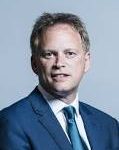
  • Grant Shapps – 2021 Comments on a Greener Road Freight

    Grant Shapps – 2021 Comments on a Greener Road Freight

    The comments made by Grant Shapps, the Secretary of State for Transport, on 27 July 2021.

    Through our bold and ambitious transport decarbonisation plan, we’re leading the way in the transition to zero emission vehicles by becoming the first country in the world to commit to ending the sale of all new fossil-fuelled road vehicles by 2040, subject to consultation.

    From Doncaster to Scotland, by working in partnership with industry, this funding will allow us to better understand the role of zero emission HGVs while levelling up the industry and boosting regional economies.

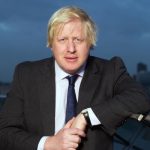
  • Boris Johnson – 2021 Comments on Beating Crime Plan

    Boris Johnson – 2021 Comments on Beating Crime Plan

    The comments made by Boris Johnson, the Prime Minister, on 27 July 2021.

    When I first stood on the steps of Downing Street as Prime Minister, I promised to back the police and make people safer, because we cannot level up the country when crime hits the poorest hardest and draws the most vulnerable into violence.

    That is why my government has remained unstinting in its efforts to protect the British public and this plan delivers a fresh commitment, as we emerge from the impacts of the pandemic, to have less crime, fewer victims and a safer society.

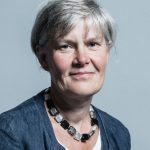
  • Liz Kendall – 2021 Comments on Government’s Social Care Plan

    Liz Kendall – 2021 Comments on Government’s Social Care Plan

    The comments made by Liz Kendall, the Shadow Social Care Minister, on 24 July 2021.

    Two years since his promise to the nation on the steps of Downing Street, the British people are no closer to seeing Boris Johnson’s plan to ‘fix the crisis in social care’.

    After ten years of the Tories in power, Britain deserves better. Either the Prime Minister lied about having a plan to fix social care or he lied about not raising taxes.

    Every day the Government delays their plans for fixing the crisis in social care is another day that staff don’t get the pay and training they deserve, another day that thousands of people go without the basic help they need, to do things like get up, washed, dressed and fed, and another day that families are pushed to breaking point.

    Ministers must now put in place a ten-year plan for investment and reform that puts social care on a sustainable footing, and provides all older and disabled people with the dignity and security they deserve.

  • Tulip Siddiq – 2021 Comments on National Adoption Strategy

    Tulip Siddiq – 2021 Comments on National Adoption Strategy

    The comments made by Tulip Siddiq, the Shadow Minister for Children and Early Years, on 26 July 2021.

    The Conservatives have created a postcode lottery in adoption.

    This government has failed to ensure people from all backgrounds can easily adopt, and the result is hundreds fewer children in care are now being adopted.

    Labour would put children at the heart of our pandemic recovery. It’s time the Conservatives match our ambition for every child, including rebuilding children’s services and fixing the adoption system.

  • Andy McDonald – 2021 Comments on Workers’ Rights

    Andy McDonald – 2021 Comments on Workers’ Rights

    The comments made by Andy McDonald, the Shadow Employment Rights and Protections Secretary, on 26 July 2021.

    Millions of workers are in insecure employment with low pay and few rights and protections, particularly key workers whose efforts got the country through the pandemic.

    A lack of basic rights and protections forces working people into poverty and insecurity. This is terrible for working people, damaging for the economy, and as we have seen throughout the pandemic, devastating for public health.

    We need a new deal for working people. Labour would ensure that all work balances the flexibility workers want with the security they deserve.